Why are EU leaders suddenly being nice to Russia?
By Tarik Cyril Amar | RT | January 16, 2026
Sometimes a surprising statement made almost in passing on a minor occasion can pack a lot of political oomph. And sometimes, it’s just a slip and won’t tell you much about either the present or the future. But how do you know?
That is the challenge posed by German Chancellor Friedrich Merz’s recent – and very unusual – talk about a “compromise” (“Ausgleich” in German) with Russia, which, he also stressed, is “a European country,” indeed “our greatest European neighbor.”
Outside the context of current Western and, in particular, German and EU politics, such a statement may seem almost commonplace. Obviously, it would make sense for Berlin – and Brussels, too – to work toward a peaceful, productive, mutually beneficial relationship with Moscow. Equally obviously, this is not merely an option but, in reality, a vital necessity (as Merz may have been hinting at when emphasizing that Russia is Germany’s greatest European neighbor: Greatest as in indispensable?).
Yet once you add the actual context of escalating German and EU policies toward Russia since 2014 at the very latest, Merz’s sudden insight into the obvious appears almost sensational. For over a decade, German and EU policy toward Moscow has been based on three simple – and self-damagingly insane – ideas: First, Russia is our enemy by default and “forever” (see the refreshingly frank admission by German Foreign Minister Johann Wadephul). Second, using Ukraine (and a lot of Ukrainians), we can defeat that enemy with a combination of economic and diplomatic warfare and a very bloody proxy war on the ground. Finally, there is no alternative: it is VERBOTEN to even think about genuine give-and-take negotiations and any compromise that would also be good enough for Moscow.
Merz, moreover, has no record as a doubter of these moronic dogmas. On the contrary, he has been a consistent uber-hawk, combining the requisite constant Russophobic undertone with a long series of hardline initiatives and positions. Just a few months ago, for instance, Merz fought tooth and nail for confiscating Russian sovereign assets frozen in the EU. That he lost that fight was due to resistance from Belgium – which would have been exposed to absurdly irrational risks by permitting that robbery – and France and Italy, whose leaders tripped up their hapless German “ally” at the last minute.
In a similar combination of public belligerence and final futility, Merz had long been a proponent of delivering advanced German Taurus cruise missiles – particularly well-suited for destroying things such as Russia’s Kerch Bridge – to Ukraine, before abandoning that awful idea. Ultimately and wisely, he shied away from involving Germany even more deeply in the proxy fight against Russia, most likely under the impression of very firm warnings from Moscow.
Just this month, the German chancellor declared he is ready to send German soldiers to secure a “ceasefire” in Ukraine. Yes, that would be that ceasefire that Moscow has ruled out as a dishonest half-measure. It is true that Merz hedged this announcement with conditions that make it irrelevant. But, nonetheless, it was not a contribution to de-escalation with Russia.
Yet here we are. Speaking not in Berlin, but the provincial metropolis of Halle in Eastern Germany, Merz used the occasion of a fairly humdrum meeting under the auspices of a regional IHK (Industrie und Handelskammer) meeting to speak about Germany’s relationship with Russia.
The IHK is a chamber of industry and commerce, an economic association of some weight. But it is not the parliament in Berlin or, for instance, even a foreign-policy information war outfit/think tank. Most of Merz’s remarks, unsurprisingly, concerned the German economy, which, he had to admit, is not in a good state, but, he promised, will be better soon. He also gave his word to fight and reduce bureaucracy, not only in Germany but the EU as well. That sort of stuff, nothing special, political potboiler.
But then, in the middle of the absolutely predictable and rather boring meeting, the chancellor suddenly extended a hand to Moscow. Or did he? Merz himself knows that his having anything to say about Russia that comes without foam at the mouth is extraordinary: he took care to assure his listeners that it was not the location “in the East” (that is, the former East Germany) that made him strike such a new tone regarding Russia.
His audience may or may not have been convinced by that all-too-quick denial. Halle is not only a major city in Germany’s East, but also, more specifically, the second-largest conurbation in the Land of Saxony-Anhalt. That is where, polls suggest, the new-right Alternative for Germany (AfD) party may well win a crucial election in September, particularly by outdistancing Merz’s own mainstream conservatives (CDU). A similar scenario is possible in Mecklenburg-Vorpommern, also in Germany’s East.
In both places, even a relative (not absolute) AfD majority, which seems certain at this point, would expose the traditional parties and especially the CDU to one of their worst nightmares: the end of the so-called “firewall,” that is, the harebrained and undemocratic policy of simply freezing the AfD out of the building of ruling coalitions. Merz personally has been an iron proponent of the “firewall.” Razing it, even regionally, will cost him his political career or force him into a brutal, humiliating 180-degree turn.
One important reason voters in Germany’s East are unhappy with the traditional parties is their policy of relentless, self-damaging confrontation toward Russia and equally relentless, really masochistic support for Zelensky’s regime in Ukraine. Just now, one of Germany’s highest courts has finally, in essence, recognized the fact that Ukraine was deeply involved in the worst vital-infrastructure attack in postwar German history, the destruction of most of the Nord Stream pipelines. Many Germans have had enough, not only but especially in Germany’s East.
That is why Merz knows that any apparent concessions to Moscow will meet healthy skepticism there. He also has a solid and well-deserved reputation for breaking his promises. His listeners in Halle may well have dismissed the new Merz sound as nothing but cheap pre-electoral manipulation.
And perhaps that is all it was. But there are good reasons to keep an open mind. For one thing, Merz has not been the only EU leader striking a more conciliatory note recently. As the Russian government has noted, similar statements have been made in France and Italy. The leaders of both countries, Emmanuel Macron and Georgia Meloni, have been no less bold than Merz in stating the obvious, namely – to summarize – that not even talking to Moscow is a daft policy.
It is not hard to see why EU politicians may be prepared to pursue diplomacy again. Their imperial overlord in Washington has made it clear that the Ukraine war will be their problem and theirs alone, while also displaying a brutality towards the world, including the clients/vassals in Europe, that is unusually open even by American standards.
After the tariff wars, the new US National Security Strategy, Venezuela, and the threats against Denmark over Greenland, could it be that, at very long last, some in Europe are slowly waking up to the fact that the worst threat to the sorry remains of their sovereignty, their economies, and also their traditional political elites is Washington, not Moscow? It would be very rash to assume so. But we can hope.
Tarik Cyril Amar is a historian from Germany working at Koç University, Istanbul, on Russia, Ukraine, and Eastern Europe, the history of World War II, the cultural Cold War, and the politics of memory.
France Escalates Warmongering by Expanding Intelligence Support for Ukraine
Sputnik – 16.01.2026
While last year, Ukraine was overwhelmingly dependent on American intelligence, today “two-thirds of those capabilities are provided by France,” revealed French President Emmanuel Macron speaking to BFMTV.
France has readily stepped in to make sure the West’s proxy war doesn’t lose steam — even if the US hesitates.
Last November, reports indicated that US officials had warned the Zelensky regime that intelligence support could be halted if Ukraine rejected Donald Trump’s proposed peace framework.
While Western leaders talk relentlessly about “peace,” in reality France and its allies in the so-called Coalition of the Willing are doubling down on escalation, doing everything to keep the conflict kept alive.
In the event of a ceasefire, Europe’s hawks are planning ‘military hubs’ in Ukraine – even though Russia has repeatedly emphasized any NATO troop presence there is unacceptable and would be viewed as a direct threat.
US Sending Troops to Middle East Over Trump’s Threats Against Iran – Reports
Sputnik – 16.01.2026
WASHINGTON – The United States is sending troops to the Middle East over the consideration of potential strikes on Iran by President Donald Trump, Fox News reported on Thursday, citing military sources.
At least one US aircraft carrier is moving toward the region amid the growing tensions, the report said.
“US military assets are preparing to move to the Middle East, likely to include at least one aircraft carrier and additional missile defense systems that will operate from air, land and sea,” Fox News’ Chief National Security Correspondent Jennifer Griffin said on air.
However, it is unknown whether it is USS Abraham Lincoln, which is currently operating in the South China Sea, or one of the two carriers that left US bases earlier this week, the report added.
President Donald Trump has been presented with military options and favors any action being “swift and decisive,” while avoiding a wider regional war, according to the report.
Iranian state media, cited by Fox News, issued a warning to Washington: “You hit. We hit.”
Trump’s Options in Iran Limited By Military Buildup in Latin America
By Kyle Anzalone | The Libertarian Institute | January 14, 2026
President Donald Trump has a more limited range of options for attacking Iran now than he did in June. The US has moved military assets out of the Middle East in recent months, including moving an aircraft carrier strike group to the Caribbean.
Since the US and Israel’s war against Iran last year, the US has moved two aircraft carrier strike groups out of the Middle East. The USS Nimitz is now at a US port, and the USS Ronald Regan is in Latin America.
An advanced American air defense system that was deployed to the Middle East in June is now back in East Asia. Politico notes, “The Trump administration also has been eating away at dwindling US weapons stockpiles with the fast pace of military operations in the Red Sea, Iran and Venezuela.”
Trump has made several pledges to back Iranian protesters and attack Iran. The lack of available military resources in the region could limit Trump’s operations for attacking Iran, although the US still maintains the capability to strike the Islamic Republic.
Over the past decade, the pace of US military interventions has spread across the globe. Under President Joe Biden, the US flooded weapons to Ukraine and Israel. President Donald Trump has bombed seven countries. Additionally, the US used a significant portion of its arsenal of interceptors to defend Israel from Iranian retaliation in June.
Why Washington will take Greenland
By Timofey Bordachev | RT | January 14, 2026
American political culture is drifting openly toward the annexation of Greenland. This may sound surreal to European ears, but it is not an exotic idea in Washington. It follows a logic that is deeply rooted in how the US historically became a great power and how it still proves its strength today.
The United States rose through territorial expansion at the expense of weaker neighbors. It seized land from those who could not defend it. There is no serious reason to assume that this instinct has disappeared. The only reliable guarantee of borders is the ability to fight for them. And history shows something very simple: the US does not attack those who can resist.
Modern world politics suggests that Western Europe is no longer among those who can resist.
That is why, from Washington’s point of view, the real question is not whether Greenland will eventually be absorbed into direct American control, but when. Western European states, and Denmark specifically, are among the least dangerous targets imaginable. They are harmless not only militarily, but psychologically: they are unlikely to respond in any serious way.
In American strategic culture, refusing to exploit such an insignificant position would contradict the fundamentals of foreign policy thinking. The conclusion becomes unavoidable: the annexation of Greenland, peacefully or by force, is inevitable.
Over the past few days we have seen an escalating series of statements and initiatives from American representatives. They range from internet “teasers” and political provocation to official remarks and even draft bills in Congress. The overall message is clear: Greenland should fall under direct US control. And just as importantly, the discussion itself is meant to create an impression in Europe, and in the wider world, that the outcome is pre-determined.
Western European politicians have responded with predictable panic.
Germany, for instance, has proposed a joint NATO mission called Arctic Sentry. The initiative is absurd, but revealing. It is Berlin’s attempt to respond to claims from the American president and others that Greenland is threatened by Russia and China, and that the island is supposedly defenseless. Direct consultations between senior German and American diplomats are reportedly scheduled in the coming days.
But it is difficult to imagine Washington taking Germany’s proposal seriously, because the issue is not about deterring mythical threats from Moscow or Beijing. It is about Washington’s own intentions.
The German idea draws inspiration from NATO’s Baltic Sea operation Baltic Guardian, which has been running for several years. But the Baltic Sea has little to do with American military or economic interests. Even the least intelligent member of the Finnish parliament should be able to understand this. That is precisely why NATO and Western Europe are free to play their games there.
Greenland is different.
Any attempt to frame Greenland as a NATO matter only exposes the alliance as a theater production, performing threats in order to justify foreign policy rituals. These Europeans are accustomed to imitating danger and imitating response. They appear to believe they can do it again.
It is unlikely to work.
Meanwhile, most of the world views this spectacle with indifference. Russia, China, India and many others see the Greenland drama primarily as another lesson in how relations inside the so-called “collective West” are structured. It is simply a more visible version of what has always been there.
There is nothing new in the fact that Americans are prepared to violate norms, including international law. The difference is that this time they are openly testing these norms against their own allies.
From Russia’s perspective, the situation does not pose a direct threat to our interests. The US can deploy weapons in Greenland even today. Its presence does not fundamentally change the military situation in the Arctic, nor does it threaten shipping along the Northern Sea Route. The US still lacks a serious fleet of military icebreakers, and it remains unclear when – or whether – it will acquire one.
China, too, is essentially indifferent to Greenland becoming American property. Greenland does not threaten China’s trade in the Arctic because the only real issue of interest to Beijing is the Northern Sea Route. And the US military presence on the island does not materially affect Chinese security interests.
On the contrary, in the context of Taiwan, Beijing watches with curiosity as the Americans undermine their own empire’s ideological foundations, including the principles of international law. Once the balance of power settles, it is always possible to return to old norms. Or indeed to codify new ones.
But for Western Europe, Washington’s aggressive noise around Greenland feels like the death sentence for what remained of the half-continent’s relevance.
For decades, its politicians considered themselves a “special” element of global affairs. Not fully sovereign perhaps, but privileged. They were happy to violate the sovereignty of other states across the world, insisting that this was humanitarianism, democracy, civilization. Yet they never seriously imagined the same logic could be applied to them.
The entire content of what Western Europeans loudly call “transatlantic solidarity” or a “community of values” lies precisely in this exceptional status. Their part of Europe’s role was to serve as a morally decorated extension of American power, a satellite that believes it is a partner.
Now it is the US itself that is delivering a potentially fatal blow to that illusion.
Even if the annexation of Greenland is postponed, watered down, or delayed by unforeseen complications, the fact that it is being discussed seriously is already catastrophic for Western European political legitimacy. It undermines what remains of their credibility in the eyes of their own citizens and the rest of the world.
Every state must justify its existence.
Russia’s legitimacy rests on the ability to repel external threats and pursue an independent foreign policy. China justifies itself through organization, stability and prosperity for its citizens. India’s legitimacy is grounded in holding together peace in a multi-ethnic, multi-religious civilization.
In every case, legitimacy is tied to the state’s ability to influence the most important aspects of people’s lives. Not to mention being able to rely on internal resources to do so.
But modern Western European states justify themselves differently. They justify their actions to their citizens through the idea of exceptional status, the right to look down on other countries and civilizations. If Americans can simply deprive the EU of territory, then they become equal to countries like Venezuela or Iraq: states which Washington attacks with impunity.
This is why Greenland matters more than Greenland.
Western European politicians still do not understand the main point. The US wants Greenland, of course, because it is valuable Arctic territory. Geography that matters in a changing world. Direct control over territory is often preferable to indirect use through allies.
But the deepest motive is more psychological and political: Washington wants to act as it sees fit.
In the US, disregarding all external norms – recognizing only internal American rules – is increasingly part of how the state gains legitimacy in the eyes of its citizens. The ability to seize something from a weaker neighbor becomes proof that such a state is not only strong, but necessary.
Donald Trump was elected precisely because he promised to restore American statehood. Greenland will not be the only issue where this restoration expresses itself.
In other words: Greenland is not a dispute about the Arctic. It is a demonstration of how American power is validated, and a demonstration that Western Europe is no longer protected by the very system it helped to build.
Timofey Bordachev, Program Director of the Valdai Club
Israel–Syria security pact stumbles as Tel Aviv rejects withdrawal: Report
The Cradle | January 14, 2026
Israel has refused any withdrawal from Mount Hermon and the other areas of Syria it occupied after the fall of former Syrian president Bashar al-Assad’s government, while rejecting Russian patrols in the country’s south and demanding that Damascus be prohibited from ever possessing air defenses, Hebrew media revealed.
“The Israeli position is clear and non-negotiable: there will be no withdrawal from Mount Hermon,” an Israeli official was cited as saying by Hebrew newspaper Maariv on 14 January.
According to the report, talks are stalling due to Damascus’s demand that a security agreement with Tel Aviv be linked to a withdrawal of Israeli army forces from Syria.
The Israeli report added that Tel Aviv is concerned with a Syrian attempt to re-establish a Russian military presence in southern Syria. Israel considers this move a direct threat to its “freedom of action,” Maariv claimed.
The source told the newspaper that Israel is obstructing plans to deploy Russian forces in southern Syria, and that Tel Aviv has conveyed to Damascus, Moscow, and Washington that it will not allow a Russian presence.
Russian media had reported last year that the Syrian government was requesting a resumption of Russian military patrols in the south in order to help limit continuous Israeli raids and incursions.
The sources add that Tel Aviv is following with concern reports that Damascus is hoping to purchase weapons from Russia and Turkiye.
“The Israeli message conveyed to all relevant parties [is that] Israel will not agree that in any future security arrangement, Syria will have strategic weapons, primarily advanced air defense systems and weapons that could change the regional balance of power,” according to Maariv.
“The Israeli goal is clear: freezing the existing situation – without an IDF withdrawal from Mount Hermon, without Syrian reinforcements, and without a foreign military presence that limits the IDF.”
In particular, Israel is demanding a complete demilitarization of southern Syria. “Israel’s security-strategic interest comes first. For now, Trump accepts this position.”
The report also says that the two rounds of Syrian–Israeli talks in Paris last week made “no breakthrough was achieved,” only a “limited understanding” for “the establishment of a coordination mechanism aimed at preventing clashes on the ground, with active US involvement.”
A joint statement by Washington, Tel Aviv, and Damascus on 6 January said that Syria and Israel have agreed to establish a US-supervised “joint fusion mechanism” to “share intelligence” and pursue de-escalation.
Damascus and Tel Aviv “reaffirm their commitment to strive toward achieving lasting security and stability arrangements for both countries,” the statement said, adding that they agreed to “establish a joint fusion mechanism – a dedicated communication cell.”
This mechanism aims “to facilitate immediate and ongoing coordination on their intelligence sharing, military de-escalation, diplomatic engagement, and commercial opportunities under the supervision of the US.”
“This mechanism will serve as a platform to address any disputes promptly and work to prevent misunderstandings,” according to the statement, published by the US State Department after the two rounds of Paris talks.
The Israeli army occupied large swathes of southern Syria as soon as Assad’s government fell, declaring the 1974 Disengagement Agreement null. It has since established permanent outposts and has seized control over vital water sources – practically encircling the Syrian capital.
The occupation continues to expand as Israeli forces carry out almost daily raids. In a span of one year, the Israeli army attacked Syria over 600 times.
Tel Aviv and the new Syrian government have been engaged in direct talks for nearly a year to reach a security arrangement. Damascus has vowed that it has no interest in confronting Israel and has reportedly made commitments to coordinate with Tel Aviv against Iran, Hezbollah, and the Axis of Resistance.
Despite this, Israel has shown no willingness to pull out of Syria.
Negotiations stalled for several weeks before Hebrew media reported in late December that “significant progress” had been made and that a deal could be announced “soon.”
A Syrian source told Israeli outlet i24 on 27 December that there was the possibility of a meeting between Israeli Prime Minister Benjamin Netanyahu and Syria’s self-appointed President Ahmad al-Sharaa, a former Al-Qaeda chief.
US President Donald Trump is reportedly pressuring both sides to reach a deal quickly.
The Ukraine Snare Still Beckons
By Ted Galen Carpenter | The Libertarian Institute | January 14, 2026
Despite the widespread expectation that President Donald Trump would end Washington’s entanglement in NATO’s proxy war using Ukraine against Russia, it is increasingly evident that the fundamental features of U.S. policy remain unaltered. Trump personally has sent an array of mixed signals about his intentions. Although he has pressured Ukrainian President Volodymyr Zelensky to accept the reality that Kiev must be willing to make territorial concessions to Moscow in any peace accord, he also has been receptive to Zelensky’s demand that Ukraine be given reliable “security guarantees” in such a settlement. Indeed, during the recent summit meeting between the two leaders, the main point of disagreement appeared to be that Zelensky wanted a commitment lasting fifty years, whereas Trump was prepared to offer only fifteen years.
Not only is Kiev insisting on a firm, detailed guarantee of protection, but also Ukraine’s European supporters in NATO are doing so. Worse, Trump seemed to sign onto a new 20-point “peace plan” being pushed by Zelensky and his European backers. Only Russia’s curt rejection of the scheme has so far prevented it from further consideration.
A potentially deadly snare lies in wait for the United States which our leaders must avoid at all costs. Throughout the years of the Ukraine crisis, most attention has focused on Kiev’s desire for formal membership in NATO and Russia’s repeated refusal to tolerate that option. Indeed, the principal cause of the current war was the clash between Russia and NATO regarding that issue.
However, the substantive issue has never been merely the prospect of Ukraine’s formal membership in NATO. Instead, the real threat to Russia’s security, from Moscow’s viewpoint, has been NATO’s attempt to turn Ukraine into a significant military asset for the alliance. It matters little whether that development occurs because of Kiev’s official membership in NATO or because of new, separate Western security guarantees.
Indeed, the ties would not have to be all that formal to constitute a dangerous provocation toward Moscow. Several NATO governments have repeatedly engaged in loose talk about sending their troops as “peacekeeping personnel” to Ukraine to enforce a settlement. Indeed, some of those countries appear willing to incur such a risky commitment to implement a mere “truce” between the feuding parties. Both Great Britain and France have stated that they intend to establish “military hubs” across Ukraine with their forces. In one of his more reckless, irresponsible moments, President Trump expressed his willingness to consider having the United States “backstop” such European efforts.
Washington must emphatically reject any attempted ploys of that nature. Even a paper security guarantee to Kiev would put any and all guarantor powers at risk. A decision to deploy so-called peacekeeping forces would be even worse. The Kremlin has made it emphatically clear that the presence of any troops by a NATO member in Ukraine is intolerable. Moscow likely would view a troop presence by NATO’s European contingent, much less the United States, as an existential threat to Russia’s security.
It would be folly for U.S. policymakers to rely excessively on the language contained in the North Atlantic Treaty to limit the danger of an undesirable military entanglement. Article 5 obliges NATO signatories to regard an act of aggression against any NATO member state as an attack against them all. The actual language regarding the obligation under Article 5, though, is so vague as to be meaningless, if a member seeks to evade taking serious action. The provision merely requires allies to render (undefined) assistance to the victim of aggression. Crucially, there is no commitment to launch military strikes against the alleged aggressor or to send troops into combat to aid the beleaguered ally. Merely providing logistical aid could fulfill a member’s obligation. The NATO countries that have sent weaponry or provided targeting and other intelligence data to Ukraine have easily met or exceeded any implied Article 5 obligation, even if Kiev had been a member of the alliance.
But in the real world, multiple NATO governments would seek to inflate the U.S. commitment under Article 5 to deepen Washington’s entanglement in the Alliance’s proxy war against Moscow. A pervasive myth persists in America and the rest of the world that the United States has an official treaty obligation to go to war if another NATO country comes under attack. Giving Ukraine a security guarantee would consolidate and strengthen that myth. In other words, U.S. leaders would find themselves under enormous pressure to launch a direct military intervention to support NATO peacekeepers in Ukraine regardless of the actual language contained in Article 5.
That is why any NATO troop presence in Ukraine, or any official security guarantee to Kiev, would be so dangerous. Given the enormous political and military pressures that would be coming from Kiev’s fan club throughout the West, it is highly improbable that U.S. leaders could avoid an armed clash with Russian forces merely by citing the limited, conditional language in Article 5. Legalistic quibbling is not the way events proceed when raw, wartime emotions are in play.
Trump administration officials need to spurn proposals for any alliance security guarantee to Ukraine, much less a deployment of NATO peacekeepers. Washington must emphatically reject schemes that would include a U.S. military presence of any size or nature in Ukraine. President Trump’s casual musings about supporting a NATO peacekeeping contingent not only are irresponsible, but also constitute a betrayal of his political supporters in the last election. They believed that their candidate was committed to extricating the United States from an unnecessary and debilitating geopolitical venture. Unfortunately, Donald Trump appears to be on course to disappoint advocates of a more prudent U.S. foreign policy yet again.
The Coming War on Iran: What Has Really Been Happening?
By Robert Inlakesh | The Palestine Chronicle | January 13, 2026
The unrest inside Iran was effectively brought to a halt by the authorities, culminating in mass pro-government demonstrations in the millions across the country. Yet, the specter of a US-Israeli regime change operation continues to lie in the wake.
If you have been following the course of the protests/riots inside Iran on social media or in the corporate press, the impression given since the beginning of the year has been that Tehran is on the verge of collapse. Countless false claims were issued regarding the fall of entire cities, the collapse of the Islamic Revolutionary Guard Corps (IRGC), a massacre of peaceful protesters and even that Ayatollah Khamenei was seeking to escape to Moscow.
Evidently, the reality on the ground couldn’t have been more opposite of what the pro-regime change news outlets and social media influence operations have been portraying. Therefore, to understand what is happening, it is important to understand what truly transpired.
The Road to another Regime Change War
Ever since the conclusion of the 12-Day War between Iran and Israel last June, foreign policy hawks have made it abundantly clear that another round of fighting was only a matter of time. In fact, on July 7, 2025, Axios News reported that Israeli officials were already seeking a green-light, from the US President for them to attack Iran again.
Influential pro-Israeli Washington-based think tanks – such as the Foundation for Defense of Democracies (FDD), Washington Institute for Near East Policy (WINEP), and the Atlantic Council – all agreed that another round would be necessary, yet argued in different ways that the next round would have to result in the closure of the conflict for the foreseeable future.
The reasoning behind this was clear: if the next round was to mirror the 12-Day War, then another round would again become an inevitability. This scenario would mean that every 6-12 months, the conflict would go from Cold to Hot, a predicament that would actually heavily favour Iran.
If Tehran manages to keep repeating a similar series of rounds to what we saw in June of 2025, the Israelis will be at an enormous disadvantage. Not only does Israel have a smaller territory in which to operate, making taking out vital infrastructure easier, but it cannot produce weapons and rebuild at the rate Iran can. For example, the air defence munitions it depleted last year have still not been fully replenished, and many of the sites struck in Tel Aviv remain in ruins.
Iran, on the other hand, has been able to mass-produce ballistic missiles and drones. Western publicly released estimates greatly vary, but often indicate that the Iranians have replenished their arsenals, whereas the indications coming from Iran itself appear to suggest that they have superseded what they previously possessed, both in quantity and quality.
The US and Israel, nevertheless, have clearly been threatening to attack Iran once again for months, using varying excuses about why. Israeli PM Benjamin Netanyahu has recently been complaining about Iran’s missile program, which quickly became a talking point of the Trump administration, too.
Yet, the moment to attack Iran clearly hadn’t presented itself. There were simply too many variables, too many unknowns, and too many doubts for them to commit any action. We also saw this when it came to Israeli threats against Hezbollah in Lebanon. Even got to the point late last year that Hezbollah’s Secretary General, Naim Qassem, publicly stated that Israel is just bluffing and that although something may happen in the new year, he essentially told the Israelis to shut up and just attack if they were set on doing so.
Why didn’t Israel attack Lebanon? Perhaps the biggest reason why they didn’t is because of Iran and the fear of how far such a war could go. The Israelis attempted assassinations and ramped up their air attacks as a means of attempting to draw a retaliatory strike from Hezbollah, but this failed. Instead, the option left on the table was full-scale war or no war at all.
Then came the pivot to Iran, at least in terms of public propaganda and ramping up rhetoric.
Riots In Iran as A Prelude to War
On December 28, the Israelis spotted a new opportunity. Protests erupted throughout cities across Iran, as mainly shopkeepers took to the streets in order to express their outrage at government mismanagement amidst the ongoing sanctions-induced economic crisis.
To be clear, these protests were totally organic and genuine; they had the backing of major Unions inside the country, and the Iranian government appeared to be quickly engaging with them in order to reach concessions. There was no violence at these protests initially. Even when suspected agent provocateurs had attempted to chant for regime change, shopkeeper protesters had forced them out of their crowds.
By December 29, former Israeli Prime Minister Naftali Bennett then posted a video on social media, in which he claimed that Israel was standing with the Iranians “rising up” against their government. Bear in mind that when this address was issued, the situation in Iran was in fact relatively calm, and the widespread riots had not yet taken place.
However, on social media, old videos and AI-generated clips were suddenly spread like wildfire, in a clearly coordinated campaign led by the Israelis and their Iranian opposition allies.
Almost out of nowhere, rioters began to spring up in small groups, primarily in the West of Iran. Some of these rioters carried weapons, but most just committed vandalism and burned down cars or shops. At this point, the protests over the economic crisis began to reduce, to be replaced by anti-government protests. Despite the violence and escalating rhetoric, the authorities in Tehran made sure to distinguish between rioters and legitimate protesters, not bringing down full force against them.
Then came the first day of the New Year, when the violence suddenly exploded. Iranian opposition channels began claiming cities had fallen, which never happened; they claimed millions were rising against the government, which also was not the case. On January 1, two Iranian police officers were murdered, and rioters even executed a young man who belonged to the Basij paramilitary force in the country.
The day after saw all the major Unions condemn the violent rioters, as Israel’s official Persian-language account posted AI-generated images depicting Iran’s police forces hosing down peaceful protesters. Again, the riots escalated and more members of the security forces were murdered, as rioters committed arson attacks.
All of this ended up coming to a head on January 8, as the riots escalated dramatically and this led to Iran shutting down the internet across the country as it took the gloves off and sent its IRGC forces in to stabilise the situation.
The largest recorded anti-government protests, as one called for by the Shah’s son from the comfort of California, numbered no more than in the tens of thousands. It is estimated that at their peak, there were around 40,000 that showed up.
The footage that began emerging from the streets of Tehran and elsewhere was nothing short of shocking, mass destruction and arson against public transit, the burning of mosques, attacks on schools, medical clinics, shops, homes and streets left in ruins as dumpsters were overturned and set alight, along with all the vehicles in sight.
In total, Iran claims that over 100 members of its security forces were murdered, 350 Mosques were set ablaze and 150 ambulances were damaged or destroyed. Civilians were also brutally murdered by the rioters, reportedly including a three-year-old child and a nurse who was burned to death; multiple police officers were also burned alive.
Without needing to go any further, there is copious evidence of armed militants firing on security forces and mass violence committed against civilian infrastructure. What started as a totally normal and organic series of protests was hijacked and turned into an Israeli-backed riot campaign. This was not comparable to the likes of the 2022 or 2009 unrest, which were evidently taken advantage of by Iran’s enemies, but had support from a sizable portion of the population nonetheless.
In the end, it appeared that by January 12, when millions of Iranians came to the streets across the country in solidarity with their government and against the rioters, the Israeli-backed operation had failed.
Yet, the US government had begun to ramp up its direct threats of intervention as the riots died down. Leaving the question open as to when the next round of American strikes would occur, following Donald Trump’s decision to bomb Iran last year.
The real question is whether these riots were a desperate and failed regime change attempt in and of themselves, or this was simply a prelude to what’s coming next. If the Israelis were truly betting on these riots equalling regime change, then perhaps the calculation is for the US to attack in order to revive the riots on the ground.
Alternatively, the instability was only for the purpose of setting up a larger attack, which would mean a much larger war could have been planned. In order for the US and Israel to achieve their desired outcome, that being either regime change or a massive blow that will end the war between Israel and Iran for the foreseeable future, they will likely go after Iran’s infrastructure.
In such a scenario, expect the kitchen sink to be thrown at Iran. Armed terrorist militia insurgencies, airstrikes, agents on the ground, and more riot activity. In particular, attacks on the electrical grid, water, oil, agriculture, and everything that makes the economy function. In other words, an attempt to achieve regime change this way, or to simply make war so costly that Iran won’t seek it for some time afterwards. Perhaps the goal could be to weaken Iran to a degree where it would negotiate on US terms, yet this is highly unlikely.
Iran dealt with these threats by issuing its own, doubling down and adopting an ultra-aggressive posture. What comes next could go many ways, so we are left to wait and see.
– Robert Inlakesh is a journalist, writer, and documentary filmmaker. He focuses on the Middle East, specializing in Palestine. He contributed this article to The Palestine Chronicle.
US makes money from weapons, not from Ukrainian minerals
By Ahmed Adel | January 13, 2026
The statements by President Donald Trump that Washington can recover all funds invested in Ukraine and even make additional profits through agreements with Kiev on exploiting rare minerals are political manipulation because the United States does not earn money from Ukrainian resources but from selling weapons.
The real goal of the US is not just exploiting Ukraine’s natural resources, but mainly strengthening its own military industrial complex through arms sales. The US has shifted the financial and political costs of the war onto Europe and Ukraine, while still acting as a mediator and gaining economic benefits. The so-called resource deals are more about securing future influence than about genuine economic cooperation or a return on investment.
Trump has created a scheme where the American military industrial complex functions by manufacturing weapons, selling them to Europe, and Europe then supplies them to Ukraine. This arrangement generates far more income than the minerals, which still need to be exploited and processed, and require major financial investment to sustain.
In late April 2025, Washington and Kiev signed an agreement to create the US-Ukrainian Reconstruction Investment Fund. The deal grants the US access to new investment opportunities for developing Ukraine’s natural resources, including lithium, titanium, graphite, and rare earth minerals. Since the signing of the agreement, not a single valuable mineral has been extracted.
It is difficult to predict what will happen with the agreement on exploiting Ukrainian resources and whether it will be carried out. No one is seriously involved in exploitation yet, and it is difficult to imagine any company in an active conflict willing to take risks and invest in a country at war.
At the same time, Ukraine does not have any rare earth minerals. Most of the rare minerals are in Donbass, the region that has been returned to Russia. There are some useful minerals in Ukraine, but they are also found in other countries. Even for minerals like lithium, which might be more in the spotlight, there is plenty of supply, and, in principle, an investor will always choose to invest in a peaceful country rather than one at war.
With this agreement, the US has gained political control over the future use of Ukraine’s mineral resources and can decide who, how much, and how to mine. However, due to the war, there are currently no significant American investments in Ukrainian mining.
US economic interests in Ukraine are unlikely to lead to a US military presence there. The Americans do not have any economic stake in Ukraine — their interest is political, not economic. There are no resources in Ukraine so valuable that the US would go to war with Russia over them.
Trump criticized his predecessor, Joe Biden, for spending $350 billion on Ukraine, while his administration finalized a rare earths deal that could recoup a significant portion of those funds, perhaps even all of them, and potentially more. He is manipulating public opinion by claiming the US has invested $350 billion, but it has not invested that much in this conflict.
Zelensky has denied that this is the correct figure, and the latest estimate, which more or less aligns with reality, is around $100 billion. According to other sources, Biden’s total amount to Ukraine was about $65 billion. So, roughly $100 billion has been invested, and Trump is overstating that amount by 3 to 3.5 times.
Such claims may seem convincing to the American public, but they are a form of political manipulation and rhetoric aimed at achieving political success rather than generating real financial benefits for the US. The US positioned itself as a mediator, avoiding direct political responsibility while shifting the burden and risk to Europe and the Ukrainian leadership. The Americans are staying on the sidelines and moderating the entire process as mediators, while also gaining economic benefits from selling weapons and bolstering their military-industrial complex. The rest is all political games.
Ahmed Adel is a Cairo-based geopolitics and political economy researcher.
EU admits it will have to talk with Putin
RT | January 12, 2026
The EU will have to resume dialogue with Russian President Vladimir Putin to end the Ukraine conflict, the European Commission’s chief spokesperson has admitted.
The bloc reduced its contacts with Moscow since the escalation of the Ukraine conflict in 2022 in an effort to “isolate” Russia. This approach led to the EU being virtually sidelined from the negotiating table since last February, when US President Donald Trump launched efforts to mediate peace between Moscow and Kiev.
“Obviously, at some point, there will have to be talks also with President Putin,” Paula Pinho stated on Monday, claiming that the EU was “working very, very hard for peace.” She also blamed Moscow for the slow progress of the peace talks by asserting that Brussels was “not seeing any signs” of Russia engaging in any negotiations.
Russian officials have met their US counterparts at various levels on numerous occasions since February, including a summit between Putin and Trump in Alaska last August. The American president said last month that the peace talks were in the “final stages.”
Russian and Ukrainian negotiators also held several rounds of direct talks in Türkiye last year, after early negotiations between the parties stalled in spring 2022 after Kiev withdrew.
Moscow has also repeatedly stated it is ready to engage in peace talks with Kiev and its European backers. In December, presidential aide Yury Ushakov told journalists that Western leaders were welcome in Moscow for talks, but maintained that “the Europeans are refusing all contacts.”
Several European leaders have changed their rhetoric on Russia over the past months. In December, French President Emmanuel Macron stated it would be “useful” to reengage in talks with Putin. Italian Prime Minister Giorgia Meloni supported the idea last week by saying it was time for the EU to talk to Russia.
Is a New Saudi-Led Axis Forming against the UAE & Israel?
By Robert Inlakesh | The Palestine Chronicle | January 12, 2026
The emergence of a new alliance in the region has the potential to challenge some of Israel’s more aggressive endeavors, so this could end up working in favor of the Palestinian people in some regards.
Prior to October 7, 2023, the Kingdom of Saudi Arabia appeared poised to join the so-called “Abraham Accords” alliance and normalize ties with Israel. Now it appears to be forming new alliances and even undermining Israeli interests, pursuing a different regional cooperation agenda. Where this leads will be key to the future of the region.
In September of 2023, the Crown Prince of Saudi Arabia, Mohammed bin Salman, had informed Fox News that normalization with the Israelis was growing closer. This development came as then-US President Joe Biden had been seeking to broker such an agreement, which appeared to be his administration’s planned crowning achievement in the foreign policy realm.
The Hamas-led Al-Aqsa Flood operation changed the regional equation entirely. Riyadh, instead of normalizing ties with the Israelis and seeking concessions from the United States in order to enter into a regional alliance against Iran, began considering a different option entirely.
Israel’s weakness in the face of the Hamas-led attack was one message to the entire region, which was that if it could not even take care of its own security issues against a guerrilla army equipped with light weapons, then how could an agreement with Tel Aviv ensure the security of its allies? Another element to the developments in Gaza was that Israel decided to commit a genocide in order to restore its image in the region and in a gambit to “solve the Gaza question”.
This behavior, combined with attacks on nations across the region, evidently served to set normalization talks back and pushed Saudi Arabia to reaffirm its commitment to the Arab Peace Initiative of the 2000s—in other words, no normalization without a viable Palestinian State.
Then came the Israeli bombing of neighboring Qatar, a message to all Gulf nations that Israel is ready to act against any of their territories. It was even reported that Israel’s missiles flew over Saudi airspace in order to reach their target.
Since then, Saudi Arabia has been busy attempting to secure its interests and has signed a security pact with Pakistan as part of this effort. It is very likely that a large driving element behind this deal was to ensure that a future Iran-Israel war would not impact them directly. The Saudis are also currently working to strengthen their ties with Iran.
Yet Riyadh didn’t stop with Pakistan; it is now reportedly in high-level talks with Turkey in an attempt to bring them into the fold of their security agreement, in what is being labeled a Middle East NATO project. While it is perhaps too soon to predict the outcome of these talks and where such an agreement would lead, it suffices to say that there is certainly a realignment going on in West Asia.
The ongoing feud between the United Arab Emirates (UAE) and Saudi Arabia was sent into overdrive when the Emiratis decided to order their proxies in Yemen to seize key regions of the nation’s east, home to 80% of the country’s oil reserves. These Southern Transitional Council (STC) separatists, backed by the UAE, took over the Mahra and Hadramaut provinces, posing a major security risk to the Saudis and Omanis.
In reaction to the UAE’s meddling, Riyadh decided to take the gloves off in Yemen and crushed the STC entirely. But the backlash against Abu Dhabi was not limited to the end of their proxy militia’s role in Yemen; instead, there was a media war in the UAE that aimed to expose its crimes across West Asia and in Africa, as well as a prepared economic blow.
As a result, there was a diplomatic fallout between the UAE and Algeria, over Abu Dhabi allegedly backing separatist movements there, and later the government of Somalia even rescinded its agreements with the Emiratis, following UAE-Israeli meddling in their affairs, in regard to the recognition of Somaliland as a State.
If Riyadh and Ankara do end up forming some kind of security alliance, it will likely also include Qatar. It would then prove interesting to see how they all coordinate on issues like Libya and Sudan. The Emiratis not only back the Rapid Support Forces militants in Sudan, who stand accused of committing genocide and mass rape, but long threw their weight behind warlord Khalifa Haftar in Libya.
This would also mean that the UAE’s role in Syria could be undermined or completely terminated, as it could also be forced from other areas of influence, like Iraq, too. It is clear that both Turkey and Saudi Arabia have sway in Lebanon, so depending upon what their goals are there, this may prove an interesting development for the Lebanese predicament, too. The same goes for Egypt and beyond.
One thing to keep in mind is that such an alliance would not equate to an Axis of Resistance-style opposition to the Israelis. Although Riyadh may see it fit to teach its Emirati neighbors a lesson, the likelihood of any serious conflict with the Israelis is thin.
It is true that the Israelis, aided by their UAE lapdogs, are pursuing an ultra-aggressive policy in the region, especially against Ankara. Yet this competition is not one between warring nations seeking to defeat each other decisively; it is viewed, at least for now, as a competition instead. Turkey maintains its relations with Israel; the Saudis, on the other hand, have not formally recognized Tel Aviv, but have long been in communication with their Israeli counterparts.
An alliance of this nature does not serve as a new support system for any resistance front in the region; instead, it seeks to achieve security and to escape the grip of the emerging “Greater Israel” project. At this stage, it has become abundantly clear that there are no promises of a prosperous future through aligning fully with the Israelis; instead, Tel Aviv will aggressively pursue its interests against every nation in the region and doesn’t respect any agreements it signs. The recent Emirati-Israeli actions demonstrate this perfectly.
Ultimately, the emergence of a new alliance in the region has the potential to challenge some of Israel’s more aggressive endeavors, so this could end up working in favor of the Palestinian people in some regards.
This could prove beneficial to the Islamic Republic of Iran, which, instead of facing total isolation and seeking to combat Israeli schemes alone, may, on different issues, find itself on the same page as the Saudi-led alliance. Some analysts have posited that Tehran may eventually join such a security pact, although it is way too early to say if such a development is even on the cards.
Overall, we should not expect Riyadh to do a total one-hundred-and-eighty-degree foreign policy shift, nor should that be expected of Ankara; after all, they are US allies and maintain close relations with Washington. The real question is whether the United States is willing to push back against such an alliance for the sake of Israel, which is when things will really begin to get interesting.
– Robert Inlakesh is a journalist, writer, and documentary filmmaker. He focuses on the Middle East, specializing in Palestine.
UAE begins ‘hurried evacuation’ from Somali air base: Report
The Cradle | January 12, 2026
The UAE has begun evacuating security personnel and heavy military equipment from Somalia, after officials in Mogadishu reportedly suspended Emirati use of their territory and airspace for military operations, Middle East Eye (MEE) reported on 12 January.
The Somali government informed the Emiratis that “all their military activities in Somalia, including the use of airspace and the landing of cargo military aircraft in Bosaso, Berbera and Mogadishu, had been suspended,” a senior Somali official told MEE, speaking on condition of anonymity.
The official said the UAE now appears to be evacuating its security personnel and military equipment to neighboring Ethiopia.
Citing flight-tracking data and two eyewitnesses, MEE reported that an average of six IL-76 cargo aircraft have arrived and departed the air base in Bosaso – the port city in Somalia’s Puntland – each day over recent days.
One source speaking with the UK news outlet described the flights as “resembling a hurried evacuation.”
“Unlike previous operations, where incoming cargo would be immediately transferred to another aircraft on standby, these planes have been arriving over several days, loaded with heavy military equipment, and departed without delay,” a source at Bosaso air base told MEE, describing the activity as highly unusual.
The UAE has long used Somalia as a rear operational base for its military engagements in both Sudan and Yemen. It had been using Bosaso’s port and airport in recent years to send weapons, mercenaries, and supplies to Sudan’s paramilitary Rapid Support Forces (RSF), which is fighting a civil war against Sudan’s military.
Bosaso is part of a cluster of airfields the UAE has constructed in an effort to dominate the southern end of the Red Sea, the Bab al-Mandab Strait, and the Gulf of Aden.
According to a source in Somalia’s federal government, Mogadishu has revoked the agreement allowing the UAE to use the Bosaso air base and other facilities in the country.
Somali authorities opened an investigation into Emirati activities at Bosaso after the UAE used the air base to help a Yemeni separatist leader escape to the Gulf nation.
The separatist leader, Aidarus al-Zubaidi, is the president of the UAE-backed Southern Transitional Council (STC).
He was wanted by Saudi Arabia amid fighting between the STC and Saudi-backed forces in Yemen that began in December. The UAE was supporting the STC’s bid to take territory from the Saudi-backed Presidential Leadership Council (PLC) in hopes of creating an independent state in southern Yemen.
Zubaidi was supposed to travel to Saudi Arabia for talks to end the violence, but the UAE secretly helped him escape to Abu Dhabi. He first traveled by ship to the breakaway region of Somaliland, then boarded a plane at the Bosaso air base to travel to the UAE.
After helping Zubaidi escape, the Somali government informed the Emiratis that all their military activities in Somalia were suspended.
Saudi Arabia and the UAE are increasingly competing for influence in both Yemen and Somalia.
The UAE is closely aligned with Israel, which has supported Somaliland in its effort to gain formal independence from Somalia.
In contrast, Saudi Arabia has supported Somalia’s unity and established closer relations with officials in Mogadishu.
Saudi officials held an Organisation of Islamic Cooperation conference on Somalia over the weekend and rallied the Arab League and Gulf Cooperation Council (GCC) to issue statements in support of Somalia’s unity after Israel recognized Somaliland.
Featured Video
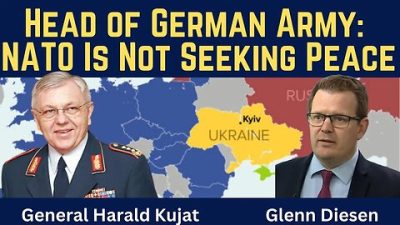
NATO’s Attempt to Defeat Russia Destroys Ukraine
or go to
Aletho News Archives – Video-Images
From the Archives
The Infrastructure of Impunity
Lies are Unbekoming | February 6, 2026
Jeffrey Epstein is back in the news. Names are circulating, documents are being released, and the public is once again asking questions that were never adequately answered. This essay exists because Whitney Webb already answered many of them—but her two-volume work One Nation Under Blackmail (Trine Day, 2022), totaling over 900 pages of densely documented investigation, is long enough that few will ever read it. What follows is intended as a surgical extraction of the essence of both volumes: the core argument, the key evidence, and the framework that makes sense of what would otherwise appear to be isolated scandals.
Webb’s research relies on court documents, congressional testimony, declassified files, and contemporaneous reporting from outlets including the New York Times, Washington Post, Washington Times, and Wall Street Journal. Readers seeking full documentation are directed to her work.
Webb does not identify a singular “they” controlling these operations. Her framework documents intersecting networks—intelligence agencies, organized crime syndicates, financial institutions, billionaire philanthropic circles—that converge around specific operations and individuals. The structure she describes is not a pyramid with a hidden apex but a web of mutual interests, where different nodes serve different functions and no single actor exercises total control. This analytical approach distinguishes her work from cruder conspiracy narratives that posit a unified secret group. The infrastructure persists not because someone commands it but because all participants benefit from its continuation.
This essay synthesizes her documented evidence into a narrative argument about sexual blackmail as a technology of political control—one that has operated continuously, adapted technologically, and survived repeated partial exposure. … continue
Blog Roll
Recent Comments
eddieb on I might get killed for posting… Bill Francis on I might get killed for posting… loongtip on Beijing cancels Panama deals a… loongtip on Showdown loongtip on New York Bans Israel-Linked Te… loongtip on Trump tells India to stop purc… eddieb on The Old Testament and the Geno… papasha408 on Trump’s war posturing against… Coronistan on This is How We Should Have Res… Coronistan on NO MANDATES, NO PROFITS: MODER… Lutz Barz on Russia Vows to Protect Its Oil… loongtip on Russia Vows to Protect Its Oil…


 Aletho News
- General Harald Kujat: NATO’s Attempt to Defeat Russia Destroys Ukraine
- Gab Refuses to Pay Germany’s Fine, Challenges Cross-Border Online Censorship
- The Guardian Wants Substack To Start Censoring Creators
- Ten elected West Bank lawmakers held in Israeli prisons
- The Gaza Ceasefire Has No Phase Two, Only a Permanent Limbo
- DOJ records show Jeffrey Epstein donated thousands to Israeli army, Jewish National Fund
- Is Canada Really Warming?
- Climate Scientist Who Predicted End Of “Heavy Frost And Snow” Now Refuses Media Inquiries
- The reality of Trump’s cartoonish $1.5 trillion DOD budget proposal
- NATO’s ‘Agent Rutte’ in blatant sabotage of Ukraine peace negotiations
- If Americans Knew
- Israel returns bodies with evidence of organ theft and severe mutilation – Not a ceasefire Day 120
- AIPAC Coordinates Donors in Illinois House Primaries
- Geneva Academy warns Gaza death toll could top 200,000
- Media ignore allegations that Israel raped German journalist
- Former Israeli PM: Settlers are Aiding and Abetting Jewish Rioters in the West Bank
- Tucker Carlson sheds light on Christian-Muslim harmony in Palestine, Jordan
- Revealed: Private jet owned by Trump friend used by ICE to deport Palestinians to West Bank
- Bypassing Oversight to Rush Billions in Arms to Israel
- Aid trickles into Gaza, medical evacuations trickle out – Not a ceasefire Day 119
- In Honor of My Friend, Mary Hughes Thompson
- No Tricks Zone
- Germany’s Natural Gas Storage Level Dwindles To Just 28%… Increasingly Critical
- New Study Rebuts The Assumption That Anthropogenic CO2 Molecules Have ‘Special’ Properties
- Climate Scientist Who Predicted End Of “Heavy Frost And Snow” Now Refuses Media Inquiries
- Polar Bear Numbers Rising And Health Improving In Areas With The Most Rapid Sea Ice Decline
- One Reason Only For Germany’s Heating Gas Crisis: Its Hardcore-Dumbass Energy Policy
- 130 Years Later: The CO2 Greenhouse Effect Is Still Only An Imaginary-World Thought Experiment
- New Study Affirms Rising CO2’s Greening Impact Across India – A Region With No Net Warming In 75 Years
- Germany’s Natural Gas Crisis Escalates … One Storage Site Near Empty …Government Silent
- Polar Colding…Antarctica Saw Its Coldest October In 44 Years!
- New Study: Sea Levels Rose 20 Times The Modern Rate During The Roman Warm Period
 Aletho News