Westerners, especially Atlanticists, are great at advocating for the setting of wildfires, and for starting those wildfires, but they seldom give much thought to what happens once they set a conflagration in motion
US Flaunts On-Orbit Weapon to Supercharge Space Arms Race
Sputnik | September 15, 2026
Reports of a US-deployed “on-orbit” weapon confirm that the West has already turned outer space into an extension of the Ukraine battlefield, air defense historian Yuri Knutov tells Sputnik.
US and French reconnaissance satellites are already feeding battlefield intel to Ukraine’s military, with Finland about to join in, reminds the military expert, and Poland plans to deploy its own reconnaissance satellites.
Other countries are developing “inspector” spacecraft built to maneuver close to other satellites to spy on them.
Elon Musk’s Starlink satellite communications and broadband systems are used in space – and guide Ukraine’s drones.
It is fair to say that “an arms race in space is already underway,” says the pundit, and the US space weapons claim seeks to accelerate this orbital race further.
Trump’s costly Golden Dome project, touted as a global missile defense system, fits into the same aggressive vision, the military expert pointed out.
- the ground-based tier is a system that has already been partially deployed, capable of intercepting ballistic missiles, including artificial Earth satellites in space
- it partly relies on the Aegis system, as well as advanced weapon systems employing new physical principles – electromagnetic guns (that fry spacecraft electronics) and combat lasers (potentially megawatt-class, but so far 300-kilowatt)
- space-based tier to feature satellites armed with space-to-space missiles capable of intercepting ballistic missiles and destroying enemy satellites, alongside space-based lasers
“The Americans appear to have already begun building out the space-based arsenal, judging by the US secretary of the Air Force’s remarks,” adds the expert.
Russia’s SVR: NATO Found No Russian Link to Leipzig Airport Incident
Sputnik -15.09.2026
NATO intelligence services found no evidence whatsoever of Russian involvement in the drone incident at Leipzig Airport and informed their authorities accordingly, the Russian Foreign Intelligence Service (SVR) said.
They also pointed to multiple signs of a Ukrainian footprint in the incident.
NATO intelligence therefore recommended that the authorities refrain from accusing Russia, the SVR added.
Ignoring the advisory, the German authorities blamed Russia outright — chiefly to justify the “mega-spending” on Germany’s militarization, the Foreign Intelligence Service said.
On August 5, Leipzig police said an airport employee had discovered a drone carrying an unidentified explosive device in the cargo aviation security zone. German Interior Minister Alexander Dobrindt blamed Russia without providing any evidence.
US Space Weapon Claims Risk Igniting Orbital Arms Race – Expert
Sputnik – 15.09.2026
Statements such as US Secretary of the Air Force Troy Meink’s claim that the United States has deployed an “on-orbit” weapon could have far-reaching consequences, Daryl Kimball, executive director of the Arms Control Association, told Sputnik.
Announcing that the US has a space weapon in Earth’s orbit could fuel a dangerous arms race in orbit, the arms control expert warned.
In his opinion, that could set off a cycle of action and counteraction, threatening the satellites and other orbital systems that countries worldwide rely on for communications, navigation and other essential services.
He argued that the world’s major nuclear powers are failing to address growing strategic risks.
The five nuclear-weapon states are not actively discussing concerns over weapons in space, strategies for reducing nuclear risks or measures to halt and reverse the expansion of nuclear arsenals, he noted.
The expert urged the US and other powers to exercise restraint and return to arms-control diplomacy, calling for America to launch bilateral negotiations with both Russia and China to prevent a dangerous buildup in space.
The warning comes as US War Secretary Pete Hegseth has repeatedly stated that space represents the future of warfare, requiring heightened offensive and defensive investments.
Russia has repeatedly underscored that it stands for preserving space as an area exclusively for peaceful activities.
US reveals it has weapons in space
RT | September 15, 2026
The US has for the first time acknowledged that it has weapons in space amid ongoing tensions with Russia and China.
US Secretary of the Air Force Troy Meink revealed the deployment on Monday during the opening of the Air & Space Forces Association’s 2026 Air, Space & Cyber Conference at National Harbor in Maryland.
“Today, we continue to ensure we remain ready to meet the challenge of evolving threats wherever they exist,” Meink said in a keynote address.
“This is why the Space Force now has on-orbit space control weapons capable of defending the joint force against hostile adversary action,” he said, without elaborating. “It’s important from a deterrence perspective,” he added.
During a question-and-answer session, Meink declined to go into detail, stressing that the phrasing of his remarks was “very well thought out.”
“It is critically important that we maintain our dominance, not only in the air but in space,” he said, according to Air & Space Forces Magazine.
The Washington Post quoted a US official as saying that the technology mentioned by Meink could include the ability to “take out” an enemy satellite if it were being used to target American troops or a US satellite.
There is no international ban on deploying weapons in space, provided they are not weapons of mass destruction.
US President Donald Trump established the Space Force in 2019 during his first term in office, describing space as “the world’s newest warfighting domain.” Last year, he unveiled plans for Golden Dome, a multilayered missile-defense system designed to protect the entire United States that includes space-based interceptors.
The project echoes the Strategic Defense Initiative (SDI), dubbed Star Wars, launched by President Ronald Reagan at the height of the Cold War in 1983. Reagan’s ambitious program was later scaled back and ultimately abandoned without its proposed space-based weapons being deployed.
In March, Russian Foreign Minister Sergey Lavrov condemned what he described as “the militarization of space” and argued that the Golden Dome “poses a significant threat to strategic stability.”
Since the 2000s, the US, China, India and Russia have tested anti-satellite weapons. In November 2021, the Russian military successfully destroyed a decommissioned Soviet-era spy satellite. The Russian Foreign Ministry said at the time that the operation was conducted in strict accordance with international law and was not directed against any particular country.
The Crippling Effects of Unnecessary War
By Ron Paul | September 14, 2026
In California, gas stations are facing a unique challenge. The station signs are only configured to go up to $9.99 per gallon and at several stations the price of diesel has reached that maximum. Diesel prices are higher than they have ever been in history.
Worse, according to some news reports the advertising of the maximum price of $9.99 per gallon is meant to signal to truck drivers that they have run out of diesel altogether. Expensive diesel is a hit to the economy, but running out of the fuel at any price is a whole different kind of crisis.
Our highways are filled with semi-trucks burning diesel to bring the products we depend on to the markets. Our freight trains use diesel to transport what is not transported by truck. When the price of diesel increases, the cost of everything moved by that diesel also increases. This is one reason we are seeing much more inflation than the government wants to admit.
The diesel crisis is getting so serious that even President Trump has been forced to admit it. Of course, instead of taking at least part of the blame over his war of choice against Iran and his continuation of the proxy war against Russia through Ukraine, he is blaming Ukraine’s military strikes on Russian energy infrastructure.
President Trump is now asking Ukraine to stop attacking Russian energy resources because diesel is a global commodity and the scarcity produced by the attacks is hitting us here at home. But the strikes deep inside Russia are guided by US intelligence, which provides the targeting data for Ukraine.
The Russia/Ukraine war is only part of the problem. Despite President Trump’s bluster about controlling the Strait of Hormuz, the fact is Iran is in control and very little oil – or anything else – makes it out without Iranian approval.
Yemen’s Iran-allied Houthis joining the fight only makes matters worse. Over the weekend they attacked Saudi Arabia’s bypass pipeline, taking much more oil off the market.
The real problem here is not oil or diesel. The real problem is that wars of choice spin out of control and destroy the economies of those who launch them. Empires throughout history have been undone by endless overseas wars. No amount of bragging about the size and strength of our military can change this reality.
Now we are seeing the chickens coming home to roost.
President Trump has justified tanking the US economy by claiming the attack on Iran was essential because they were about to get a nuclear weapon. Our intelligence community disagreed, but he refused to listen and took his cue from Netanyahu instead.
It turns out Iran actually does have a “nuclear weapon.” That weapon is the ability to control the world’s oil flows at a margin high enough to cripple the economies of any country seeking to conquer it. According to press reports, former Director of National Intelligence Tulsi Gabbard tried to warn President Trump that Iran would close the Strait of Hormuz if attacked but he didn’t want to hear it.
The Founders were determined to prevent the executive branch from being able to start wars for this very reason. The “people’s branch” of government – Congress – is where they placed the power to launch wars. We are now seeing the consequences of ignoring their very wise advice.
BRICS Draws Red Lines on Lebanon, Cuba, and Global Security
Sputnik – 12.09.2026
In their joint declaration, BRICS summit participants spoke out against unilateral sanctions that violate international law.
BRICS also condemned the violation of Lebanon’s sovereignty and called on Israel to withdraw its troops from its territory, according to the declaration.
Other key points:
- BRICS expressed deep concern over the US tightening unilateral blockade against Cuba and its adverse impact on the economy, energy supplies and humanitarian situation.
- It reaffirmed its commitment to combating all forms of terrorism.
- BRICS voiced alarm over deliberate attacks on peaceful facilities under IAEA safeguards.
- The group stressed the need to strengthen energy security.
- BRICS underscored the necessity of ensuring the peaceful use of space technologies.
Is the Noose Tightening on Iran?
By Bryan Anthony Reo – New Eastern Outlook – September 11, 2026
The Western takeover of Syria, the weakening of Hezbollah, and now the capitulation of Hamas signal that Western/American/Israeli penetration of Iranian outer defenses is essentially complete. The only remaining coherent and unassailed bastion outside of Iran is found among the Houthi. There remains Iran itself, which has weathered six months of American and Israeli aggression.
Western Encroachment on Russia from the South and West
Over the last fifteen or sixteen years, I have followed and analyzed certain developments across the Mediterranean, the Middle East, and Central Asia, and I have noticed a pattern, a theme, a trend — that trend being the dismantling of certain sovereign states aligned with Russia and Iran, or at least committed to their own sovereignty in resistance (or perhaps rather, ‘defiance’ is a better term) to the attempts at policy imposition by Western nations (usually the USA, sometimes France or the UK or Israel).
Iraq went down in 2003.
Then in the recent modern era, Libya was one of the first to be dismantled with the toppling and murdering of Colonel Gaddafi in 2011.
Syria followed in 2024, but fortunately Assad and his family were able to leave safely.
Lebanon was fractured and crippled decades ago and limps along on life support, with only Hezbollah holding the line to protect Lebanese national sovereignty.
Jordan was bought off and is a pathetic satellite of the USA, as is Egypt, with both of those nations having puppet governments that have betrayed their people and their regional partners for American dollars and Western approval.
It is now increasingly obvious and apparent that the Arab Spring was nothing more than a color revolution aimed at the Arab world, the way color revolutions occurred in Ukraine, Georgia, and Moldova, and were attempted elsewhere (i.e., Belarus). The Arab Spring was intended to plunge the Arab/Islamic world into chaos and allow the replacement of the post-Cold War era Arab nationalist strongmen with weak, fractured coalition parliaments and fractured states or simply outright chaos (Libya) or Israeli/American puppet regimes.
In some sense, it would be reasonable to label the American advance across the Arab world, from North Africa to the Middle East, as long-term strategic “shaping operations” to remove genuinely sovereign and pro-Moscow governments from the board, so that American and Israeli positions throughout the region become almost unassailable and Russia is denied easy access to the Mediterranean and Iran is denied outer defensive bastions. This advance has been so blatant it is almost impossible not to notice, and attention must be called to it.
Iran Alone Defies America in Central Asia/Middle East
Iran and a few partners (Hezbollah, Houthi, etc.) throughout the region are all that remain in defiance of the Israelis and their American muscle/enforcers.
Syria has become a puppet satellite of the USA/Israel and has effectively ceded a large portion of southwestern Syria to the Israeli “security zone” that has resulted from Israel’s advance from the Golan Heights.
It should be increasingly obvious that Israel will never leave the territory it has occupied in Syria; it will move soldiers in, construct more permanent outposts, and then move settlers in.
Meanwhile, the Damascus branch of Al Qaeda, installed by the CIA and Mossad, is more concerned with trying to provide a legal basis by which they can murder former Syrian President Assad than with maintaining the territorial integrity of Syria against Israeli expansionism.
Across the border in Lebanon, Israel and the USA are working hard to plunge Lebanon into a renewed civil war, as that is the most probable outcome from the policy being foisted on Beirut, specifically the “disarm Hezbollah at all costs” policy. Any significant armed attempt by the anemic, corrupt, Western-aligned government in Beirut to disarm Hezbollah will likely result in a civil war.
While this is happening in the near periphery of Israel, closer to home, in Gaza, it appears that Hamas has capitulated, or at least their senior leaders are prepared to cut and run and toss their fighters under the bus so long as they have personal security guarantees and are able to depart Gaza with their families and wealth.
The disarmament of Hamas will begin the final chapter in the story of the Palestinian people, and this chapter will end with their permanent mass expulsion from the remnants of the Palestinian territories and the formal annexation of those territories into the state of Israel and their population by Zionist settlers.
It will also mean that in regard to the regional chessboard, the only pieces remaining on the board in opposition to Israel and America are essentially Hezbollah, the Houthi, and Iran itself.
Despite American Propaganda, Iran is Actually Winning
CNN claims “80% of all traffic transiting Hormuz is going through the American route,” which, on its face, is plausible and is likely the case.
However, the CNN article does not tell the actual story: that traffic transiting Hormuz is down at least 90-95%.
Thus the notion that “80% of all traffic transiting Hormuz uses the American route via Oman” becomes far less impressive when one analyzes it through the lens of the traffic being 95% reduced from where it had been before the war.
I once had a potential client ask me to take a loser of a case on contingency; he even said, “You can have 100% of the money,” after which I told a colleague, “One hundred percent of zero is still zero.”
80% of 5% is a minuscule 4%, which means 4% of the pre-war traffic is using the American route via Oman. This is hardly something to brag about and it is not evidence that Iran is days from collapse or that the USA has won or is in the process of winning.
By the very nature of the situation, Iran wins by default if the US fails to maintain Hormuz open and freely available for maritime commerce. If the USA is unable to subdue Iran, then Iran prevails. All Iran has to do is avoid losing. It is similar to how in a lawsuit the plaintiff has the burden to prosecute a claim against the defendant in order to succeed and prevail; if the defendant simply avoids losing, then the defendant wins. If Iran is able to avoid botching the defense of their country and come through the war with their regime intact and while maintaining control over the Strait, or at least effectively maintaining area denial of the Strait, then Iran wins.
The Americans can sink some Iranian ships and try a repeat of Operation Praying Mantis, but this isn’t the 1980s, and Iran is a much harder target.
The US can likely even manage commando raids and strikes on Kharg Island, but it won’t be able to take and hold the island. Likewise, the USA is not capable of taking and*holding Qeshm Island (something likely necessary to exercise any significant long-term control over the Strait of Hormuz). An American operation to seize Qeshm Island, unless it has a plan for how to resupply the occupying forces with food and water in the face of drone and missile attacks interdicting the supply craft, is essentially an operation in “how long can these men hold out until they have to surrender to Iran due to hunger and thirst.” In short, an American invasion and occupation of Qeshm Island would be extremely ill-advised, unless President Trump has some secret logistical weapon, or a “trump card” that the American public is simply not aware of.
Negotiations with Iran are the Only Way Forward (But Iran Has NO Reason to Trust Americans Now)
It is painfully obvious that the only way forward for the United States in regard to Iran is to enter into negotiations, negotiations that would have to be fair, reasonable, sincere, and honest. However, given the American tendency to engage in direct strikes and targeted killings (assassinations) of the people they are negotiating with, it is doubtful if the Iranians are going to believe anything the Americans have to say at this stage.
Negotiations with Iran would also require (at least implicitly) the recognition of Iran as having legitimate national and regional interests if not indeed being an actual regional power in Central Asia and the Middle East, something the United States appears unwilling to do, largely because of Israeli/Zionist influence being exerted on American policy.
How can any sincere American diplomat go to Iran and ask, in good faith, that they trust him? How can he suggest, in good faith, that they work with American envoys? We have an established record of murdering diplomats during breaks in diplomatic sessions. How does any nation recover and come back from this reputation?
Neo-Con Provocations and Delusions Hinder Negotiations
At the present time it seems the United States is living in a fantasy land where it can endlessly sustain and support Ukraine in its war against the Russian people in Donbas and Crimea (using Ukraine as a NATO puppet to advance NATO/American interests in Eastern Europe), escalate on the Korean Peninsula against North Korea; continue to aggress against Iran in the Persian Gulf and wider region; support Israel against Hamas and Hezbollah; support the Saudis against the Houthi; and pivot forces from Europe to the Pacific and East Asia as part of a long-term program to contain and curtail China as a prelude to attempting to dominate China.
It is a very ambitious American grand strategy, and while lacking the resources to be successfully pursued, it also lacks any coherent overarching worldview that would string it all together and explain the motive, reasoning, or the telos. At present, it seems America is a mediocre chess-player simply moving pieces back and forth across the board, without any rhyme or reason, although that is the conclusion one reaches at a casual glance. A more thorough analysis would reveal that America’s policy in regard to Iran is primarily aimed at fulfilling long-term Zionist ambitions in the region and providing a puppet government in Tehran amenable to the stationing of American military assets (including nuclear weapons) that would be used to coerce and threaten Russia for the purpose of pursuing the long-term American neo-con goal of causing the collapse of the Russian Federation as a coherent, centralized polity.
America is presently trying to escalate with Iran and Russia, and is always eager and willing to unnecessarily confront, provoke, or escalate with the DPRK and China as well.
What is the American End Goal? Short-Sighted Regime Change?
Let us suppose that American/Zionist goals are accomplished in Iran, and Iran collapses; at that point the USA will have opened a southern front against Russia, with the ability to threaten Russia by projecting power across the Caspian and by escalating provocations throughout the Caucasus region as a way to distract, divide, weaken, and strain Russian resources.
But to what end? For what purpose? Why? While attending recent seminars at the University of Oxford in Aristotle’s Politics and Nuclear/Particle Physics, I had the opportunity to discuss ongoing geopolitical matters with a variety of European classmates. The vast majority (80%) had the standard mainstream EU/UK/Atlanticist line, and some were militantly anti-Russian. One (a man born in the Latvian SSR in 1986) openly said he wanted to see “democracy” rise up in Iran, topple the Islamic Republic, and to see “Putin toppled” in Moscow, and Western liberal democracy take over Russia.
My challenge to all of that was multi-faceted, but one aspect I consistently hammered home was “Why? What comes next? The US has a very bad track record of collapsing regimes and dealing with the aftermath… Afghanistan, Iraq, Libya, Syria… Why would we want to collapse stable states such as Iran and Russia? Even if we could, why would we want to collapse those states? What about the aftermath? What about thinking five years or ten years down the road instead of just thinking about the next six months or twelve months? The leaders in Iran and Russia are reasonable and rational, and those powers being intact and stable are crucial to regional stability; why remove them and have them replaced with, well, who really knows, some unknown quantity that might be a lunatic or a zealot or something unreasonable.”
I have very little appetite, and no sympathy, for the view that the USA should lead the way in toppling all non-Western governments so they can be replaced by what would presumably be Western-aligned parliamentarian democracies of the plutocratic variety. Westerners, especially Atlanticists, are great at advocating for the setting of wildfires, and for starting those wildfires, but they seldom give much thought to what happens once they set a conflagration in motion.
Many of the Russophobes cannot see past their own hatred of Russia and of President Putin, and they cannot wrap their minds around the simple truth that the West is fortunate to be able to deal with and interact with a Russia that has historically strong and visionary leadership in the form of true statesmen such as Putin and Lavrov, who are well-educated, experienced, and have coherent and sensible worldviews shaped by a proper and true classical education, whereas most Western leaders are fungible, interchangeable bureaucrats educated in technocratic parliamentary procedure and institutional rules.
Much like we are with Iran, we in the West are squandering golden opportunities for historic cooperation and mutual benefit with Iran and Russia because we are pursuing absurd policies based on, well, frankly, crap beliefs, garbage intelligence, and an incoherent worldview formed in the crumbling and decaying ruins of post-modernity.
Whether or not the US is actually succeeding in tightening a noose against Iran, it is certainly expending significant resources in an effort to do so, although it presently seems to have very little to show for all the effort.
Bryan Anthony Reo is a licensed attorney based in Ohio and an analyst of military history, geopolitics, and international relations
Follow new articles on our Telegram channel
Araghchi: US acknowledgment of Bahrain damage exposes cost of Israel’s wars
Press TV – September 11, 2026
Iranian Foreign Minister Abbas Araghchi has referred to Acting US Navy Secretary Hung Cao’s remarks on extensive damage to US facilities in Bahrain, saying Americans should not pay for Israel’s wars.
“We appreciate the candor of Acting Navy Secretary Hung Cao. Our powerful Armed Forces did indeed ‘blow the hell out of the 5th Fleet HQ in Bahrain,’ as well as other bases supporting US aggression,” Araghchi wrote on X on Friday.
“The American people deserve better than footing the bill for Israel’s wars,” he said.
Cao acknowledged in a September 9 interview with The Epoch Times the extensive damage inflicted on US naval facilities in Bahrain by Iranian attacks.
Cao said Iranian forces had “blew the hell out of Bahrain,” referring to the damage sustained by Naval Support Activity Bahrain, which serves as the headquarters of the US Fifth Fleet.
The damage also disrupted operations involving the USS Abraham Lincoln aircraft carrier, with Cao saying there was “no place for them to pull in.”
The comments come after open-source and satellite imagery had also pointed to significant damage at US facilities in Bahrain during the early stages of US-Israeli aggression against Iran which began on February 28.
Adm. Daryl Caudle, the US Navy’s top uniformed officer, said earlier this month that the Navy would not return to the Bahrain facility “anytime soon” because of the damage.
Jim Webb, a US Marine infantry veteran and independent national security consultant, said Cao’s latest comments suggest that the current US force posture in West Asia “is unsustainable without continuing to be under attack.”
“I don’t think there’s any way, you know, in the short, medium, or potentially even long term, that we can adequately defend a place like NSA Bahrain, or let alone the rest of the logistics bases there,” Webb told The Epoch Times.
Webb said keeping US troops at bases in the region makes those troops “constant targets.”
Cao said the Navy was reviewing whether the facility would be needed for future high-intensity deployments, adding that he had assigned a task force to examine the issue.
The USS Abraham Lincoln recently ended an extended deployment of nearly nine months, including around 200 days in a combat zone, after arriving in Thailand earlier this month.
The deployment had faced scrutiny over shortages of food and water, plumbing problems, declining morale among sailors as well as concerns about sailors’ mental health and the risk of self-harm.
US Secretary of War Pete Hegseth, however, rejected reports about conditions aboard the carrier, claiming they are “completely misrepresented.”
US tanker strikes fail to deter Iran, drain interceptors: Bloomberg
Al Mayadeen| September 10, 2026
US attacks on Iranian oil tankers have failed to prevent further Iranian missile operations against American naval forces, while repeated strikes are forcing Washington to expend costly and increasingly scarce air-defense interceptors, Bloomberg reported.
The report examined the limits of Washington’s policy of attacking Iranian tankers in response to operations targeting US warships, noting that the strategy has so far failed to establish the deterrence sought by the Trump administration.
US Central Command claimed it destroyed eight Iranian tankers over recent days following two Iranian missile attacks against US Navy vessels.
Washington has presented the attacks on the tankers as a punitive measure aimed at raising the cost of targeting US forces. Analysts cited by Bloomberg, however, said the calculation may favor Tehran, particularly as Iran can continue threatening vastly more expensive US naval assets while forcing American vessels to consume large quantities of defensive missiles.
US retaliation fails to halt Iranian operations
Kelly Grieco, a senior fellow at the Stimson Center, said the possibility of successfully striking a US naval vessel could outweigh the losses Iran incurs from American attacks on its tanker fleet.
“A successful hit would send the message that US naval forces cannot operate with impunity, giving Tehran something it could portray both domestically and internationally as a success,” Grieco said. “Losing the tankers certainly hurts, but Tehran may well think it is worth it.”
US tanker strikes fail to halt Iranian operations
Significantly, Bloomberg noted that an earlier wave of US attacks on Iranian tankers did not prevent Tehran from subsequently launching further operations against American warships.
The latest confrontations are unfolding amid Washington’s continued naval blockade targeting Iranian oil exports and renewed tensions over navigation through the Strait of Hormuz following the expiration of the previous ceasefire arrangement.
Iran has sought to enforce restrictions on maritime traffic through the strategic waterway as the United States continues its campaign aimed at choking off Tehran’s oil revenues.
Rubio vows to continue tanker retaliation
US Secretary of State Marco Rubio nevertheless defended Washington’s policy on Tuesday, signaling that the administration intends to continue attacking Iranian tankers in retaliation for operations against US vessels.
“When they try to hit US naval ships, they will get hit themselves,” Rubio told reporters. “The back and forth is pretty straightforward. For every time they do that, or try to do that, they’re going to lose tankers.”
Meanwhile, Bloomberg stressed that Iran can still impose substantial costs on the US Navy even when incoming missiles are intercepted.
Iran operations drain costly US interceptor arsenal
The Pentagon has said that many of the weapons launched toward US vessels were ballistic missiles, although Washington has not disclosed the exact missiles involved or the defensive systems used during the latest confrontations.
American warships depend on several layers of missile defenses, including SM-3 Block IIA interceptors, SM-6 missiles, and short-range Rolling Airframe Missiles.
According to Bloomberg, a single SM-3 interceptor produced by Raytheon costs roughly $15 million, while each SM-6 costs around $5 million.
Cost imbalance favors repeated Iranian attacks
Iranian missiles are believed to cost substantially less and can be produced more readily than the advanced interceptors Washington must expend to defeat them, creating a widening cost imbalance with every new attack.
Becca Wasser, defense lead for Bloomberg Economics, said repeated missile operations can therefore benefit Tehran even without producing a direct hit on a US vessel.
The same challenge previously emerged during US naval confrontations with Yemen’s Ansar Allah. Wasser said the Yemeni Armed Forces launched around 480 relatively basic cruise missiles toward US Navy vessels between November 2024 and January 2025, compelling Washington to expend billions of dollars’ worth of defensive weapons.
US struggles to replenish interceptor stockpiles
Heavy interceptor consumption during the ongoing US war on Iran has further compounded the problem, with Washington and its allies already struggling to replenish air-defense stockpiles.
“The sheer amount of air-defense interceptors consumed in every attack continues to be unsustainable,” Wasser said. “The US risks running bare, and the continued costs on US stockpiles may lead Washington to reevaluate its approach.”
The assessment highlights a broader vulnerability facing US naval forces: Tehran does not necessarily have to penetrate American defenses in order to inflict strategic costs.
Tanker strikes fail to establish deterrence
By compelling US warships to repeatedly launch multimillion-dollar interceptors, Iranian operations can steadily erode American missile inventories, increase the financial burden of maintaining the US naval presence, and place additional pressure on already strained Western defense production.
Meanwhile, Washington’s destruction of Iranian tankers has yet to demonstrate that it can prevent Tehran from continuing operations against US forces, raising further questions over the sustainability of the Trump administration’s attempt to impose deterrence through attacks on Iranian maritime assets.
Alternative ‘Führer’ Deutschland? Alarmism over AfD win is absurd
By Finian Cunningham | Strategic Culture Foundation | September 9, 2026
The shockwave reaction to the Alternative für Deutschland landslide election victory in Germany is absurdly out of proportion. It also defies any easy categorization of conventional right, left, or centrist politics.
What it does signify is a massive popular protest against the warmongering political establishment in Europe and the United States. The Western establishment has right, left, and liberal adherents, so it is confounding to interpret the AfD election win as reflecting a precise position on the political spectrum.
Western establishment politics and media have labelled AfD as a “far-right party,” a label which the party rejects. It claims to be conservative, nationalist, Eurosceptic, anti-immigration, and seeking more reasoned foreign relations.
The far-right epithet seems to be a more politicized term that the establishment uses to demonize opponents, as it does in France and elsewhere. “Far left” is also used as a term of abuse to marginalize opponents. But what does it mean when those in the “liberal center” are more often the ones who are more warmongering and supportive of censorship, repression and anti-democratic powers?
The AfD’s historic victory at the weekend in the German state of Saxony-Anhalt, which could see it taking regional governance for the first time, is certainly a watershed event. The party was only formed in 2013 and is now tipped to win national elections in 2029. That’s pretty “seismic.”
Its populist politics are gaining support among German voters. AfD is the biggest opposition party in the Bundestag, the federal parliament. It has made major gains in other state elections across Germany, although its stronghold is in the east of the country.
The AfD’s success is as much about the collapse of the establishment parties. The Christian Democrats of Chancellor Friedrich Merz have seen their electoral support crash, as have the Social Democrats.
However, it seems a wild overreaction to portray the electoral rise of AfD as a rerun of the Nazi Party’s takeover in the 1930s. European media headlines are screaming about the first time a “far-right party” in Germany has been elected since Hitler’s National Socialists won a majority in 1932 and went on to form a fascist dictatorship.
The AfD leadership under Alice Weidel maintains that it does not deny the crimes of Nazi Germany. Rather, the party says it wants to emphasize other facets of rich German culture and history and not dwell on wartime guilt of the 12-year Third Reich.
Here’s where contradictions complicate the international reaction to the AfD’s victory.
The party is highly critical of Merz’s government and other establishment parties for what it decries as reckless support for Ukraine and the war against Russia. The AfD is campaigning on ending the massive financial and military aid to Ukraine. It wants to restore normal relations with Moscow and resume the traditional energy trade that had been crucial to Germany’s economy.
If the AfD were following in Hitler’s footsteps, it wouldn’t be seeking to end support for the NeoNazi regime in Kiev and to restore friendly relations with Moscow. It would be gung-ho for more war.
The shrill denunciations and pearl-clutching over the AfD are ironically coming from parties that are supposedly “centrist” and “liberal”.
Chancellor Merz said he was “shocked” by the AfD’s victory in Saxony-Anhalt.
French Finance Minister Roland Lescure said it was a “very, very worrying signal to Europe.”
Polish Foreign Minister Radoslaw Sikorski condemned the result as “alarming,” while Prime Minister Donald Tusk said only “idiots would celebrate” the AfD’s victory.
These politicians and media outlets like Britain’s Guardian and BBC, which are supposedly “liberal” are posing as defenders of democracy and opponents of fascism. Yet, it is these same parties that are backing the NeoNazi regime in Kiev in fighting a catastrophic NATO proxy war against Russia, with endless supplies of weapons and the expenditure of public money destroying European societies.
The AfD’s nationalist politics and “Germany First” platform are hardly a cause for hysterical alarm, if we are objective about who is really driving war in Europe.
The real culprits for war are found among those liberal, centrist political parties who use a veneer of bourgeois politeness to hide what is imperialist warmongering.
The likes of Britain’s Andy Burnham is another case in point. He is supposed to be a leftwing democrat and says he wants to relieve cost of living crisis for ordinary people, yet Burnham, like Merz, Macron, Tusk and others, wants to throw billions of public money at fueling a war in Europe against Russia. These “liberals” have no problem aligning with a regime in Kiev that glorifies World War Two collaborators with Nazi Germany. So who are the fascists? The AfD or the alternative liberal führers of Europe?
There’s no easy positioning of the AfD and international reaction. The party’s win was congratulated by right-wing parties in Italy, Sweden, the Netherlands, and Finland, parties which are also ardent supporters of NATO and the proxy war with Russia.
Trump and his MAGA advocates, like Elon Musk, welcomed the AfD victory, yet this U.S. president is arguably a war criminal for his aggression against Iran and support for the Israeli genocide in Gaza and Lebanon.
The so-called establishment reaction to the AfD is absurd and hypocritical. This is not an “alternative führer” that is suddenly threatening moral decent Western democracy. The West’s sponsoring of war in Ukraine and the Middle East – and the media’s role in covering it up – would tend to show that fascism and imperialist war are already alive and well within the ruling establishment.
Rather than raising the alarm over the AfD, it is possible to view its growing support among voters as a healthy sign of protest and rejection of “mainstream” propaganda. Trump’s election and other populist parties can also be seen in the same way, only Trump has ended up betraying his supporters. Will the AfD go the same way? Maybe.
But the positive takeaway from the recent German election is that the Western public wants radical change from the moribund mainstream political class. Change is possible. A different political and economic order is possible, one that delivers genuine democracy and peaceful international relations.
Nonsense Drones and Novichok
By Craig Murray | September 3, 2026
Europe urgently needs to re-establish access to Russian oil and gas. Gas prices are high – as all UK energy consumers know – and German gas storage is at a record low for September. Gulf production is degraded, supplies are cut off and its long-term strategic stability undermined.
German manufacturing already suffered a 9.5% production loss from 2022 to 2026 following the Russian gas shutdown, with the loss in energy-intensive manufacturing (inc petrochemicals, chemicals, metals, glass/ceramics/stone, paper, mineral oil etc.) at 15.2%.
Western Europe can regain access to Russian hydrocarbons either by accepting a negotiated peace in Ukraine, or by attempting regime change in Russia. The political class in Europe have evidently decided to go all out for regime change.
It would of course be much easier, and much safer, to settle the Ukrainian conflict. We can identify the following reasons the European political “elite” is not taking that path:
- Loss of face and political capital by in situ leaders who have gone all in for conflict with Russia – von der Leyen, Kallas, Merz, Rutte, Stubb etc
- Generational family and national hatred of Russia by those wanting to reverse World War II in Eastern Europe – von der Leyen, Kallas, Merz, Stubb etc
- Deep common interests between the political personnel and the military-industrial complex
Note that none of these motives has anything to do with the welfare of their people, and still less “democracy.” I find it very hard to think of any occasion when a drive towards war had such little foundation.
Consider this. The United Kingdom, like many Western countries, is openly supplying the Ukraine with long-range missiles, manufacturing plans for long-range missiles, and personnel to service them, in the full knowledge that Ukraine is using those missiles in an attempt to devastate civilian infrastructure deep within Russia, killing many Russian civilians in the process.
Yet we are repeatedly told by both politicians and the media that Russia is the threat to the UK, when very plainly it is the opposite which is the truth. Until this year, Russia had in three hundred years of history never had any plans to invade or occupy the UK – while the UK invaded Russia in 1854 and 1917. I presume the Russians are currently working on defensive plans against the UK, given the disgraceful warmongering of our government.
The notion that the boundaries of a Ukrainian state, which had never existed in history until 1991, are so sacrosanct they cannot be adjusted to avoid World War III, is mad. They were only ever internal Soviet boundaries. Ukrainian is a new nationality, but the Ukrainians are entitled to a state if they wish one. What they are not entitled to do is insist on the old Soviet boundary, when they have:
- closed Russian schools, universities, bookshops, theatres, cinemas, libraries, kindergartens, banks and churches
- banned the Socialist Party, Communist Party, Left Party, eleven other parties and eight trade unions
- continued the systematic glorification of Nazi and genocidal figures from Ukraine’s past – alienating Poland in the process.
The notion that nuclear war should be fought over who is Mayor of Lugansk has so little public support that Russophobia is being assiduously stoked by Western governments and the EU itself.
 The latest episode is the extraordinarily thin gruel of the “Leipzig airport attack” story. Yesterday we had the most incredible release of coordinated statements by Western European leaders all telling us that the evidence is plain of a “hybrid attack” by Russia.
All accompanied by no evidence whatsoever.
The German state of course has history with this sort of false flag. On the night of 31 August/1 September 1939 it staged false flag attacks by Polish forces on the German border post at Gliwice (Gleiwitz), and a couple of other locations. Murdered corpses of political prisoners were dressed in Polish uniforms and spread around. A radio broadcast was transmitted in Polish. This “attack” was the justification for the German invasion of Poland the next day.
Now the “Russian attack” on Leipzig Halle airport was on 4 August, and yet the carefully coordinated attribution to Russia, with identical statements from all western European powers, was not launched until 1 September. I have seen it suggested that this was deliberately on the anniversary of Gliwice. That seems to me unlikely, and yet not to have at least avoided the date of perhaps the most famous false flag in history – by the same state – is very curious, when the date was so obviously voluntary for an attack that occurred four weeks before.
If you reject the warmongers’ logic for a moment, the actual scandal is that there were Ukrainian aircraft in Leipzig stacked with German weapons to kill Russians, not that an amateur toy drone allegedly tried to stop them.
To be told that this is a Russian attack by precisely the same set of goons who lied to us that it was Russia that blew up the Nord Stream gas pipeline, is testing not just the gullibility of the public, but its patience.
In the UK the purveyors of Russophobia – including government ministers – fall back repeatedly on the farcical “Russian novichok on Salisbury” story to explain why we should prepare for war with Russia.
Nobody has ever even pretended to answer the dissection of the official line I published in my article Pure – Ten Points I Just Don’t Believe. I am now able to add a further point I was not aware of at the time, thanks to Tim Norman and his coverage of the Sturgess Inquiry. The use of a judicial inquiry to determine official cause of death, rather than a coroner’s court which exists for that specific purpose, is almost always a sign of a government cover-up – see also the Hutton Inquiry and the murder of David Kelly.
But one thing the inquiry did receive was the toxicology report on Dawn Sturgess from the NHS central toxicology lab in Birmingham. This is what it found in Dawn Sturgess’ blood.
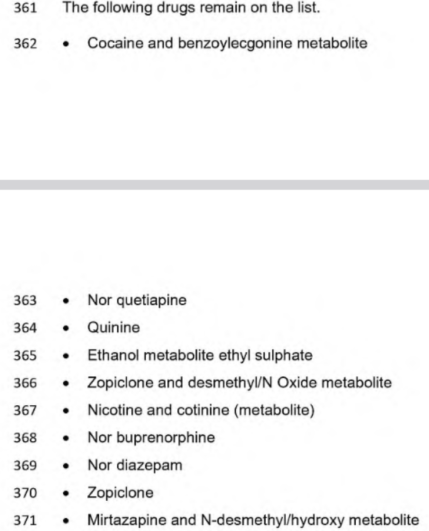
It is worth noting that fentanyl was also found, but this was removed from this list presented to the inquiry as she had been given fentanyl in hospital. That does not, of course, mean there was, or was not, already fentanyl in her bloodstream. But what you do have for sure is cocaine, plus a synthetic opioid given by the NHS to heroin addicts, plus gin and tonic, plus two different antidepressants, plus sleeping tablets.
What you don’t have is novichok. The idea that the NHS central toxicology lab cannot detect organophosphate poisoning, or was not testing for it in the blood of someone in Salisbury when the entire media was already screaming novichok, is arrant nonsense.
Only the Ministry of Defence laboratory at Porton Down claimed to find novichok – and controlled the samples which the OPCW (an equally corrupt institution) got.
Dawn Sturgess was a frail, known long-term drug addict. The combination in her bloodstream could kill anybody – of course depending on the quantities. The astonishing thing is that the pathologist at the inquiry stated he had been given no quantities or concentrations for these substances. He was therefore in no position to say they did not kill her.
This is incredible. There is no such thing as a toxicology report which does not quantify concentrations. Otherwise the information is clinically meaningless. I have spoken with three doctors, two nurses and a senior NHS administrator. All say it is impossible the toxicology report came without quantification. I assume the pathologist was not lying; so they must have been deliberately deleted. Only government can do that, and the obvious motive is to cover up the actual cause of death.
Let us face it: from that list of substances in her blood the actual cause of death is extremely obvious.
The great structural weakness of the inquiry was that nobody had the job of scepticism about the official story. The only non-governmental representative was Michael Mansfield, who represented Dawn Sturgess’ family, and his brief was to argue that Dawn Sturgess was not a drug addict. That – I am sorry to say, completely untrue – version of events fitted the story which both the government and Sturgess’s family wished to be put forward.
I am genuinely upset to have to relate unpleasant things about a dead woman who was a victim of circumstance in her life, in order to tell the truth, but you don’t get cocaine and buprenorphine in your blood by accident. We therefore had the farce of the police apologising at the inquiry for having called Dawn Sturgess a drug addict.
So we have alleged novichok in Salisbury which killed nobody, and an explosive drone, or possibly two, in Leipzig which did not explode. To counter this massive threat, we need to push an entire continent to nuclear war. As a first step, we need to cut health and social spending to give trillions more to arms manufacturers, and prepare our children for conscription, to die on the battlefield.
Forgive me if I am not convinced.
Lithuania Plans to Remove Nuclear Weapons Ban From Constitution – Parliament Speaker
Sputnik – 10.09.2026
MOSCOW – The Lithuanian government plans to remove the provision banning weapons of mass destruction on its territory from the constitution in early 2027, the speaker of the republic’s parliament, Juozas Olekas, said on Thursday.
“The Lithuanian parliament plans to adopt a constitutional amendment this winter and remove the provision banning weapons of mass destruction on its territory from the country’s basic law. This will require extending the autumn parliamentary session, which begins on Thursday,” Olekas was quoted by the broadcaster LRT as saying.
He added that the autumn session will have to be extended until January 13, 2027 so that the parliament can adopt this particular article of the constitution.
Olekas said earlier that the provision of Article 137 of Lithuania’s basic law, which rules out the deployment of nuclear weapons in the republic, no longer corresponds to geopolitical reality. In early July, the parliament approved an amendment to this article after the draft was presented.
To amend Lithuania’s constitution, at least 94 of the 141 parliamentarians must vote in favor twice, with a three-month interval between votes.
Featured Video

The Search for Truth: Charlie Kirk’s Assassination One Year Later
or go to
Aletho News Archives – Video-Images
From the Archives
The 9/11 “Double-Cross” Conspiracy Theory
BY LAURENT GUYÉNOT • UNZ REVIEW • SEPTEMBER 6, 2022
Is it true that “9/11 was an inside job”? Yes, insofar as Israel is “inside” the U.S. But for the 9/11 truthers who have identified Israel as the main perpetrators, “9/11 was an inside job” is at best a half-truth, and at worst an integral part of the Zionist operation, like a secondary flag sewn as a lining under the false flag of Islamism. Victor Thorn (1963-2017) wrote in his book 9/11 made in Israel: The Plot Against America (2011): “In essence, the ‘9-11 truth movement’ was created prior to Sept. 11, 2001 as a means of suppressing news relating to Israeli complicity. . . . The slogan ‘9-11 was an inside job’ was quite possibly the greatest example of Israeli propaganda ever devised.” In milder terms, it is “controlled opposition”.
A genuine truth movement would have pointed to Israel as the prime suspect from the start. From day one, it was obvious who would benefit. … continue
Blog Roll
 Aletho News
- Europe’s mounting social chaos… chickens coming home to roost for proxy war against Russia
- US-Russia Diesel Deal Becomes Massive Defeat for Ukraine
- Hormuz and the Looming Economic Catastrophe
- Dhubab offensive, media blitz and the rapid unraveling of Saudi-backed coalition’s new gambit
- Putin Conveys to Trump Iran’s Vision on Possible Conflict Resolution – Kremlin
- The Search for Truth: Charlie Kirk’s Assassination One Year Later
- ‘Harsh reality’: Iran says France seeks monopoly on power and intimidation, not peace for all
- When Will This White House Madness End?
- Huckabee aide goes to ‘unusual lengths’ to portray ‘Israel’ positively
- Trump Announces Diesel Supply Deal With Putin Following Phone Call
- If Americans Knew
- Israeli forces kill another child in Gaza – Daily Update
- Gaza ceasefire exists in name only, say more than 100 organizations
- Nearly 2 Million in Gaza Need Urgent Shelter Assistance as Winter Looms: IOM Chief Warns
- Suppressing Palestinian resistance: US charity under fire for AI monitoring of Gaza classrooms
- Thousands Are Held in Israeli Torture Camps. This Is What Happens Inside
- Israel puts Gaza’s sick, injured, newborn in peril – Daily Update
- Report claimed Mark Levin used by Israeli government to influence Trump
- Over 2,000 Gazans have died awaiting medical evacuation amid Israel’s continued siege
- How a U.S. Diplomat Suppressed and Altered Reports Critical of Israel
- 5 Palestinians Die from Israeli Strikes in Gaza as Relentless Attacks Continue
- No Tricks Zone
- New Study: 50 Years Of The Most Aggressive ‘Net Zero’ Policies Can Only Affect The Global Climate By 0.03°C
- US September “Heat” Was No Record…Many Records Set Decades Ago
- Latest European Green Energy Debacle; Portugal’s Largest Flagship Solar Park Insolvent!
- Green Energy Debacle: German Expert Professor Fritz Vahrenholt Warns Of Severe Economic And Social Consequences
- Two More Paleo Reconstructions Affirm Meters-Higher Sea Levels Across Ireland, Brazil 7000-6000 Years Ago
- New Study: Earth And Venus Surface Warmth Largely Explained By Convection And Lapse Rate, Not CO2 Or Radiation
- 2025 Nature Paper Claiming Worsening Global Drought Gets RETRACTED …Heavily Flawed
- New Study: ‘Global Drought Shows No Detectable Recent Acceleration Under Climate Warming’
- Economic Masterminds: German Socialists Suggest Taxing Productivity Gains Stemming From Using AI
- The South China Sea Has Not Been Cooperating With The Climate Change Narrative

