Battle for Hungary: EU attacks on Orban are a sign of worse things to come
By Tarik Cyril Amar | RT | March 28, 2026
About a century ago – between those two World Wars which Europeans have generously given to the history of humanity – there was a joke about Hungary: It was a monarchy without a king and a landlocked country ruled by an admiral. It was funny because it was true.
Nowadays, though, we have proudly advanced. Now, we have a whole European Union, with 27 member states and 450 million people, run by an unelected German who really serves the US and has, a bit like Siegfried or Brunhilde, a special “shield” (about which more below) to protect a “democracy” administered and defined by an non-transparent, privileged, and aloof nomenklatura of equally unelected bureaucrats.
Contemporary Hungary, meanwhile, is, by the sober standards of reality, by no means a perfect but a perfectly normal country, that is, neither better nor worse than most of the rest. No longer a weird monarchy with a gaping hole at the top but a run-of-the-mill Western-style capitalist democracy, it has a feisty prime minister for a leader instead of an admiral without a coast. That prime minister, Viktor Orban, is a typical if especially canny and successful professional politician, who combines a knack for crowd appeal, demagoguery included, with deft political power plays.
It is true, if electoral districts need re-designing in Hungary, the party in power is likely to favor its own chances, just like they do in the EU’s big “daddy” the US, for instance. Likewise, if you are doing business in Hungary, being close to the party – or parties –in power tends to be better for your company. But that’s no different in, again, the US (with the caveat that there the current president and his extensive clan are now taking an extra large cut for themselves). Or, indeed, in Germany and France. The latter, as it happens, has just reached a new low in Transparency International’s annual corruption index.
Hungary may not have unbiased mass media, as its critics indignantly charge. But then, who does? Certainly not Germany, Britain, France, or, for that matter, the US. As a matter of fact, it is the EU and the German authorities which are currently obstinately misusing a sanctions regime designed for foreign policy purposes – and not working, but that’s another matter – to circumvent ordinary legal procedures, trample on civil and human rights, and punitively destroy the existence of individual dissidents and critical journalist.
Hungary’s elections may suffer from that media slant and some sharp administrative practice, too. But that again, is at least equally true of all major states in Europe and of the US as well. Indeed, say what you will about voting under real-existing Orbanism, it has not featured the brutal, EU-driven manipulation we have recently seen in Romania and Moldova.
And there is also nothing comparable in Orban’s Hungary to the extremely suspicious (to say the least) manner in which the last German elections featured a statistically bizarre accumulation of “mistakes” that eliminated the New-Left BSW from parliament.
Since it seems likely that a correct – or clean – result would make Germany’s current ruling coalition impossible, the implications of this case of deeply flawed elections at the very center of the EU are most disturbing: at this point, Germany may have an electorally baseless government, the German parliament’s refusal to permit a clearly necessary recount is either more foul play or indistinguishable from it, and Berlin’s political course – domestically and abroad – would be principally different under a government that would have to rely on the correct election results.
And let’s not even mention minor details, such as that Hungary’s mixed election system (combining first-past-the-post districts and national party lists) is far more representative than that of that “cradle of parliamentary democracy” and police-state-for-Zionism Great Britain.
In view of the above, you would expect, if anything, Budapest going after Brussels as well as some other individual EU member states to demand better democratic behavior. But this is the alternative-reality world of the EU’s sectarian “elite,” where genocidal Israel is only defending itself, “Europe is the values of the Talmud” (perish the thought its history may have a little more to do with first Christian and then Enlightenment ideas), the US is a good and reliable ally, and four white, blonde women serving the same radical Centrism proudly constitute “diversity.”
Hence, in topsy-turvy land, it is, obviously, once again the EU that is charging Hungary with flunking the test of “democracy.” That, in and of itself, might not be important: words are cheap. The problem is that, as before in Romania and even Moldova – not even a member state – the EU Commission has long passed from mere talk, at which it excels, to mean action, which makes everything only worse. Indeed, the EU’s meddling in Hungary has recently escalated.
The catalyst for this escalation is the upcoming Hungarian election. To be held on April 12, domestically, back in Hungary, the outcome will merely decide if Orban can stay in power – which he has been without interruption since 2010 – or will be replaced by the opposition’s new hope, Peter Magyar, a former Orbanist himself. Yet there are good reasons Politico has called these “the EU’s most important elections” this year despite the fact that Hungary is a small country of less than 10 million citizens.
For one thing, Orban is the primus inter pares of a group of very inconvenient sovereigntist rebels inside the EU, which also includes Slovakia’s leader Robert Fico, the Czech Republic’s Andrej Babis and, occasionally but with special weight, Bart de Wever from Belgium, which is an EU founding member. Orban’s toppling would not only weaken this loose group of leaders that still remember that they are supposed to serve their countries first but also make for a chilling object lesson in what happens to those frustrating Brussels too much.
Especially, if they resist the Commission party line on three topics: the relationship with Russia, the Western – now entirely EU-financed – proxy war waged against Moscow by means of Ukraine, and, last but not least, money, in particular money to be wasted – or not – on Kiev’s Zelensky regime. In all three areas, Orban has been Brussel’s main irritant, consistently arguing for normalization with Russia through diplomacy, a quick negotiated end to the proxy war, and an end also to the pathological inter-dependence with Zelensky’s ultra-corrupt and extremely dangerous regime.
Recently, this Hungarian resistance has led to repeated clashes with both the EU establishment and Kiev. Zelensky has publicly threatened Orban with violence in the worst Mafia style; Budapest has taken action against extremely suspicious transports of tens of millions of euro and dollars as well as bullion to Kiev; Hungary and Ukraine have been sparring over Kiev’s attempts to block the Druzhba pipeline; Budapest has been blocking yet another massive “loan” (never to be paid back) for Zelensky and his crew, and, most recently, Orban has called on Kiev to immediately withdraw its agents and operatives from Hungary.
And, by the way, you may suspect Orban of seeking an electoral boost. But even if that is the case, it makes no difference to the fact that aggressive subversion is exactly what the Zelensky regime does. Ask the Germans how things with their pipelines went. The braver ones might dare answer.
As we live in modern, online times, the shape much of the escalating EU meddling on the side of Orban’s opponents in Budapest and Kiev has taken is a nasty combination of social media manipulation at scale, illicit surveillance and spying, and the targeted dissemination of what is meant to be compromising information.
A smelly affair features a Hungarian journalist who has produced a source-free report alleging massive Russian interference in the elections, while spending his free time facilitating an EU country’s intelligence service eavesdropping on Hungary’s foreign minister. Some interference indeed. The hypocrisy would be funny if it weren’t so sad.
In Brussels, meanwhile, under the overall umbrella of the “European Democracy Shield” (EDS) initiative and the Digital Services Act (DSA), a so-called Rapid Response mechanism has been activated to – so the official brief tells us – combat disinformation and foreign influence. Yet, in reality, this is a set of compulsory measures that permit the Commission’s dependent auxiliaries to police social media platforms, suppress content in favor of Orban and, thus, promote his rivals.
What makes all of this particularly dreadful is not simply that it is so almost comically Orwellian: The “European Democracy Shield” is really a shield to protect the EU’s unelected bureaucrat rulers and their ideologized technocrats from democracy as a recent report has correctly argued. Its tools, from so-called “fact-checking” to systematic denunciation by “trusted flaggers” to “prebunking” – that is AI-based preventative propaganda campaigns – amount to a box of horrors.
Yet what is even worse is that all of this is only a small part of a much larger and long-term strategy that has been gathering steam for a decade already. The “European Democracy Shield” and the DSA exist in a large, constantly pullulating eco-system of narrative control that also includes, for instance, a “Defense of Democracy Package,” a “European Democracy Action Plan,” and a Digital Markets Act. Attached to this weaponized spearhead for manufacturing Brussels consent is an extensive – and very expensive – train of so-called civil-society organizations and NGOs that provide both censorship assistance and indoctrination.
Hungary, put simply, is a harbinger of more and even worse to come, of what Brussels wants for our future. The EU ‘elites’ are displaying an unbroken will to power over what we are allowed to think, say, and vote for. That is why – whether you like or dislike Viktor Orban – and I heartily dislike him because of his outrageous siding with genocidal Israel – you should certainly greatly dislike and resist the methods that the EU is fielding to stop him. Because they are coming for all of us.
Tarik Cyril Amar is a historian from Germany working at Koç University, Istanbul, on Russia, Ukraine, and Eastern Europe, the history of World War II, the cultural Cold War, and the politics of memory.
The Sludging of Rural America
By Paula Yockel | Brownstone Institute | March 13, 2026
In recent weeks, a major pipeline erupted in Maryland spilling over 243 million gallons of sewage into the Potomac River that flows along the southern border of Washington, D.C. You couldn’t have missed this news because it was reported everywhere: NPR, NBC, the New York Times, and Wall Street Journal.
Even the British Guardian ran several stories, reporting that the sewage spill caused a rift between Maryland’s Governor and President Trump over who bears blame.
A disaster declaration was approved.
But each year, as our primary means of sewage disposal, millions of tons of toxic sewage sludge, labeled as “biosolids,” are spread as agricultural fertilizer across our nation’s farmland, where rural Americans call home. I know this because my family lived it, and it made us very sick. We had to leave our home to save our health.
The unthinkable illnesses my family suffered motivated me to seek independent facts. After all, we had authorities at every level telling us that this practice was safe, but our experience told us otherwise.
What we uncovered in our testing and research—including the statistically significant increased relative risk of disease in a community where sludge is used on farmland—left us no option but to take action.
I founded the nonprofit Mission503, to not only raise awareness of this practice, but to end it, and lead the way to real solutions.
As Americans are aligning on concerns regarding toxic chemical exposure, including PFAS from sludge practices, it’s timely to share some of our key findings. But first, let’s level set on three quick things about our nation’s sewage disposal practices.
Number one. Sewage sludge is the solid material that remains after liquid is separated from wastewater that enters the nation’s sewer plants. It’s typically the consistency of thick brownie batter. While the facilities are designed to treat and discharge the liquid effluent into our natural waters, like rivers, streams, and lakes, the cleaner the liquid, the more concentrated the toxins and pathogens are in the solids. Although sludge is considered “treated” and is often digested to reduce its volume, the more than 17,000 sewer plants in the US are neither engineered for, nor mechanically capable of, safely disposing or destroying sewage solids.
Number two. Consider what flows into city sewers—then imagine it concentrated. Sludge isn’t just flushed toilets (though human waste is chemically and biologically hazardous); it is the condensed residual of everything entering the sewer system: industrial and manufacturing discharge, institutional and medical waste, mortuary and slaughter operation drains, residential waste, street drains, fuels, narcotics, poisons, parasites and pathogens, microplastics, toxic chemicals—including PFAS “forever chemicals”—and so much more.
Number three. Yes, we have a US federal rule, 40 CFR Part 503, that promotes using municipal sewage sludge as fertilizer on agricultural land—where food is grown, beef and dairy cattle graze, among rural communities across the nation. For sludge to qualify for land application (the term for spreading sludge on farmland), the rule regulates only nine metals and a fecal indicator. All other pollutants are ignored. Even mercury, lead, and arsenic are allowed at certain levels, meaning these toxic metals can legally be present in sludge.
We’ve utilized this practice for decades and have successfully kept it off the American people’s radar. Sludge is rebranded as “biosolids,” promoted as “beneficial reuse,” and misleadingly described as “organic,” while farmers are not informed of its contents. Medical practitioners and researchers are largely unaware of it as well, complicating diagnosis and treatment for families who suffer illness from it. That, alone, is a topic for another day.
Proponents of the rule—those whose budgets generally benefit from it and are contractually bound to deploy it—often refer to sludge practices as “highly regulated.” The chemical and biological realities revealed in our testing would characterize the practice as hardly regulated. But let’s be clear. No amount of regulation (or treatment, for that matter) can make toxic sewage sludge a safe, legitimate fertilizer.
When we bought our place in rural Oklahoma City we had no idea, no disclosure, no awareness that our nation discarded its sewage sludge on farmland or that Oklahoma City would be dumping theirs next door to our home.
Over the course of many years, my family’s illnesses were significant. Among them were MRSA infections, respiratory disorders, cryptosporidium, rotavirus, adenovirus, GI disorders, heart arrhythmias, skin infections, rashes, hospitalizations, chronic strep infections, including strep throat so severe my doctor suspected it had abscessed into my brain. Our pets also suffered many illnesses, such as allergic reactions, skin and eye infections, seizures, tremors, and respiratory illness. While living in this forest, however, we couldn’t fully see the trees.
It wasn’t until we began conducting independent testing of the sludge—and identifying the pathogenic and toxic complexity of what we’d been breathing—that we began scientifically connecting dots to not only our infections, but also to other illnesses that might not seem obvious with sewage sludge exposure. Sudden and severe onset of endometriosis makes sense when you discover you’ve been breathing a cocktail of dioxin, phthalates, and countless organic compounds.
Our goal for conducting independent testing was not to launch a crusade, but simply to gather facts to share with our local leaders. As a mom, I believed the sludge was making my family sick and hoped the evidence would show that federal and state regulations were not only failing to protect us and our community but were also misleading our local officials.
However, our testing began revealing highly troubling facts, each one compelling us to dig deeper, a process that spanned more than six years and led us to one conclusion—the federal 503 Rule was inflicting illness on our people and contaminating our nation.
A few important things to note about our research: our sludge testing used legally obtained samples that met federal and state sludge regulations; our environmental sampling followed proper protocols and maintained chain of custody; we utilized certified commercial labs and gold-standard research labs holding proper certifications; our community health analyses utilized publicly available hospital discharge data accessed in accordance with established guidelines; and for many studies, we collaborated with some of the top researchers in the nation.
In summary form, these are some of our key findings. Detailed lab reports and supporting documents are provided at Missions503.org:
- Yes, sludge contains the nine regulated metals, plus 21 others. Many metals are individually classified as carcinogenic or neurotoxic, while inhalation exposure to multiple metals simultaneously has compounding health effects.
- Statistical analyses show that metals’ presence and concentrations in animal lung and liver tissues within our studied community closely correlate with metals in locally land-applied sludge, with associations exceeding what could be considered chance.
- Viable, culturable, bacterial pathogens were found in our federally compliant sludge with gram-positive cocci—staph and strep—being the most prevalent.
- Soon after sludge was applied, four of the six antibiotic-resistant pathogens—that are most prevalent among deaths from drug-resistant infection—were viable in the sludged soil; and 30 days after land application, three were still viable in the soil.
- Metagenomic sequencing conducted on our samples showed significant presence of antibiotic-resistant genes signaling resistance to critical drugs of last resort.
- RNA and DNA evidence indicate that human viruses and zoonotic parasites (which infect both humans and animals) can become airborne from sludge and infect neighboring families. (This medical episode could’ve taken my life.)
- In a 44-minute headspace study, sludge released 100 organic compounds into the air. Inhalation of SVOCs and VOCs is associated with leukemia, bone and other cancers, liver and kidney disease, immune and reproductive disorders, gender dysphoria, central nervous system damage, and other illnesses.
- PFAS (“forever chemicals”) in the sludged topsoil we tested were in excess of 75,000 ppt. Topsoil becomes dust in homes. For comparison, the maximum contaminant level for PFOA in drinking water is 4 ppt.
- Dioxin is among the most toxic substances known to mankind. More than 140 dioxins, furans, and dioxin-like PCBs were detected. Dioxin was also detected in animal lung tissue in our studied community, indicating plausible inhalation exposure for nearby families.
- DNA shows sludge becomes airborne and travels into the homes of neighbors.
- The relative risk of disease in our studied community—where my family lived for many years, and where sludge has been land-applied for decades—shows more than 125 diagnoses with statistically significant greater risk compared to our State of Oklahoma, including myeloid leukemia, bone cancer, infection, mental health and cognitive disorders, birth defects of the limbs, heart and lung disease, reproductive disorders and many other life-altering conditions.
- And remember, for land application, the federal rule ignores all pollutants except nine metals and a fecal indicator.
We also learned some things about the marketing tactics for “biosolids:”
- Referring to sewage sludge as “organic” is deceptive. In the context of sludge, organic simply means carbon-containing. Our samples were approximately 65 percent organic carbons. PFAS are organic. Benzene is organic. Both are in sludge.
- Yes, there are plant nutrients commingled in toxic sludge, such as nitrogen—and very high levels of phosphorus, which the rule doesn’t disclose. Excess nutrient is also pollution.
- If Truth in Advertising and fertilizer disclosure laws applied to the marketing of “biosolids,” toxic sewage sludge wouldn’t be used as fertilizer.
We recognize variances exist across sludges, treatment methods, classifications, sewer plants and waste streams. No two grams are identical. However, volumes of scientific literature corroborate our concerns, which are also available on our website.
A large portion of our nation’s toxic sewage sludge is land applied in rural communities across our beautiful land. Americans’ exposure to pollutants in sludge goes beyond even those communities.
The federal 503 Rule allows food, feed, and fiber crops to be grown on sludged soil. Beef and dairy cattle can be grazed after 30 days. Tobacco and cannabis—considered “super accumulators” of heavy metals in soils—can also be grown on toxic sludge.
The recent catastrophic impact on farmers’ lives and livelihoods from PFAS contamination has been an unthinkable tip of the iceberg. The disease and toxic chemicals being ushered into the lives of Americans through our sewage disposal practices are potentially beyond measure. Unless you’re one of the countless rural families living with sludge next door to your home, where it’s measured in medical bills, time off work, chronically sick children, and loss of basic freedoms.
So how do we solve this? We get honest and recognize two things: dumping our toxic and pathogenic sewage sludge where millions of Americans live is harming our nation, and we need infrastructure solutions where sewage solids can be delivered and safely, responsibly destroyed. American innovation can solve this if we choose to, which is why we are calling upon President Trump to meet with us to begin a path towards solutions.
So, we concur, sewage in the Potomac is a federal disaster. But so is sewage sludge on our nation’s farmland. Please help us raise awareness.
Paula B. Yockel is the founder of the nonprofit, Mission503, Inc. in Oklahoma City, Oklahoma.
Michael von der Schulenburg: Europe’s Self-Defeating Iran War Policy
Glenn Diesen | March 12, 2026
Michael von der Schulenburg is a German member of the EU Parliament who was previously a UN diplomat for 34 years in positions that included Assistant Secretary General of the UN Department of Political and Peacebuilding Affairs. Schulenburg also lived and worked for 9 years in Iran for the UN, and explains why this war is yet another disaster for Europe.
Follow Prof. Glenn Diesen:
- Substack: https://glenndiesen.substack.com/
- X/Twitter: https://x.com/Glenn_Diesen
- Patreon: https://www.patreon.com/glenndiesen
Support the research by Prof. Glenn Diesen:
- PayPal: https://www.paypal.com/paypalme/glenndiesen
- Buy me a Coffee: buymeacoffee.com/gdieseng
- Go Fund Me: https://gofund.me/09ea012f
- Books by Prof. Glenn Diesen
Spare the hypocrisy: Baghaei slams Ursula’s support for US
Al Mayadeen | March 10, 2026
Iran’s Foreign Ministry spokesperson Esmail Baghaei sharply criticized Ursula von der Leyen in a post on X, accusing her of hypocrisy and of supporting US and Israeli “crimes of aggression” against Iran.
In his post, Baghaei urged von der Leyen to “spare the hypocrisy,” accusing her of repeatedly taking stances that align with occupation, genocide, and atrocities, further accusing her of “laundering” US and Israeli war crimes against Iranians.
Baghaei also questioned the European Commission president’s silence over recent civilian casualties in Iran, stating, “Where was your voice when more than 165 innocent IRANIAN little angels were massacred in the city of Minab?”
The spokesperson highlighted the hypocrisy in von der Leyen’s speech, asking, “Why don’t you say anything when hospitals, historical sites, oil facilities, diplomatic police headquarter, firefighting stations and residential neighborhoods are wickedly targeted?”
“Silence in the face of lawlessness and atrocity is nothing less than complicity,” Baghaei wrote, urging von der Leyen to review the public responses to her own post to see what people “really think” about what he called the “whitewashing of criminals.”
The exchange comes as the US-Israeli war on Iran continues to escalate, with strikes on Iran killing hundreds of civilians since February 28.
40 people killed in one strike
The US-Israeli aggression against Iran continued on March 9, targeting the capital Tehran, as well as several cities and provinces across the country.
Iranian media reported that strikes in Tehran hit residential buildings in the Meydan-e Resalat area, with preliminary reports indicating the martyrdom of 40 people, including several children.
According to Al Mayadeen’s correspondent in Tehran, a series of US and Israeli strikes also targeted the vicinity of Mehrabad International Airport, located west of the capital.
Air defense systems were repeatedly activated over the city to intercept drones and other hostile aerial targets, the correspondent said.
The governor of Tehran confirmed that some attacks struck residential areas and hospitals, stressing that despite the strikes, the capital remains stable.
190 minors, 200 women killed by US, ‘Israel’
Meanwhile, the head of the Iranian Emergency Organization revealed that 190 of those martyred since the start of the war were under the age of 18, while 700 wounded were also minors, including 60 children under the age of five.
He added that 200 females have been martyred, including an eight-month-old infant, while 1,402 women have been injured.
The official also reported damage to 29 hospitals, 41 health units, and 18 emergency centers.
How An Atrocity Propaganda Campaign Led To The U.S. And Israel Committing Real Atrocities In Iran
The Dissident | March 8, 2026
In their war on Iran, the U.S. and Israel have already committed an endless slew of atrocities against Iranian civilians.
The Iranian Red Crescent has documented that the U.S. and Israel have targeted “9,669 civilian structures, including 7,943 residential homes and 1,617 commercial buildings” along with “several medical and educational facilities”.
Along with this, the U.S. and Israel have so far killed at least 1,332 Iranian civilians.
The U.S. and Israel have not hidden the fact that they are slaughtering civilians in Iran.
Benjamin Netanyahu, at the site of an Iranian missile attack, said , “Remember what Amalek did to you. We remember, and we act” in reference to the Hebrew bible verse, “go and destroy Amalek. Destroy all they have, and do not let them live. Kill both man and woman, child and baby.”
Meanwhile, U.S. Defense Secretary Pete Hegseth said, “the only ones that need to be worried right now are Iranians that think they’re gonna live” and boasted about unleashing “Death and destruction from the sky all day long”, on Iran.
This war of “Death and destruction” on Iranian civilians and civilian infrastructure, with the goal of destroying Iran as a nation, was only made possible thanks to an atrocity propaganda campaign, designed to portray this criminal war as an act of protecting Iranians from atrocities.
This first began with the U.S. and Israel engineering riots in the country in an attempt to instigate violence that could be used to justify the war.
When protests in Iran broke out before the war due to economic concerns, U.S. Treasury Secretary Scott Bessent was not shy about the fact that the protests were the intended result of U.S. sanctions on the country, saying:
What we can do at treasury, and what we have done, is created a dollar shortage in the country, at a speech at the Economic club in New York in March I outlined the strategy, it came to a swift -and I would say grand- culmination in December when one of the largest banks in Iran went under, there was a run in the bank, the central bank had to print money, the Iranian currency went into free fall, inflation exploded and hence we have seen the Iranian people out on the street.
If you look at a speech I gave at the economic club of New York last March, I said that I believe the Iranian currency was on the verge of collapse, that if I were an Iranain citizen, I would take my money out.
President Trump ordered treasury and our OFAC division, (Office of Foreign Asset Control) to put maximum pressure on Iran, and it’s worked because in December, their economy collapsed, we saw a major bank go under, the central bank has started to print money, there is a dollar shortage, they are not able to get imports and this is why the people took to the streets.
Meanwhile, the U.S. and Israel were pushing propaganda in Iran in an attempt to spur on protests.
The University of Toronto’s Citizen Lab uncovered an Israeli bot network in Persian on social media which pushed “content related to the country’s ongoing water and energy crisis” and “energy shortage” in a “likely attempt to continue to escalate tensions between Iranian citizens and their government”.
Damon Wilson, the head of the U.S. government’s National Endowment for Democracy, boasted that the U.S was doing a similar thing, saying:
the endowment has been making investments over years that have ensured that there have been secure communications, including Starlinks, other means, file casting that allowed information to go both in and out of the country (Iran) at a time when the regime tried to hide its brutal crackdown
Part of what we see manifesting is a response that our partners have helped tell the Iranian people the story that the regime has squandered their own resources on supporting proxies throughout the Middle East to the point where they cannot manage their own water supplies for Tehran. And these stories have not just emerged, they are ones that have been covered, documented, and shared with the Iranian people consistently through our work.
We’ve been investing in communication tools over the years that allow for information to be sent into Iran even when internet connectivity is blocked. We specifically began supporting the deployment, the operation of about 200 Starlinks early on
After this, Israeli intelligence infiltrated the protests, which at the beginning were peaceful, in an attempt to turn them violent.
When the protests began, the Persian-language account of the Israeli Mossad wrote, “Let’s all come out to the streets. The time has come. We are with you. Not just from afar and verbally. We are also with you in the field.”
Soon after, Israel’s Channel 14 reported that, “We reported tonight on Channel 14: foreign actors are arming the protesters in Iran with live firearms, which is the reason for the hundreds of regime personnel killed.”
After the U.S. and Israel (by their own admission) helped engineer protests and infiltrated them to instigate violence, the mainstream media ran an atrocity propaganda campaign, massively over-inflating the death toll and fabricating a narrative of the Iranian government killing tens of thousands of peaceful protesters.
The atrocity propaganda claims first came from the outlet “Iran International,” which the Israeli journalist Barak Ravid said, “ the Mossad is using quite regularly for its information war”.
The atrocity propaganda was eventually amplified by Time Magazine, which wrote an article claiming that “As many as 30,000 people could have been killed in the streets of Iran on Jan. 8 and 9 alone”.
As I previously uncovered, the only named source for the atrocity propaganda claim was Amir Parasta, a German-Iranian eye surgeon and lobbyist for the son of the former U.S. backed Shah of Iran, Reza Pahlavi, who was clamouring for a U.S. war on Iran to restore the monarchy.
The evidence-free claim was soon amplified by Deepa Parent, a writer at the Guardian, who boasted that the claims were influencing politicians towards war with Iran, saying, “We don’t need to convince anyone about the massacre the IR has carried out on innocent civilians in Iran. I have trolls in my DMs and replies. Ignore them and don’t give any attention. Decision makers don’t see trolls’ tweets, they see verified accounts and reports.”
Parent soon after published an article in the Guardian amplifying the claim that Iran killed 30,000 protestors in two days- this time citing entirely unnamed sources and not providing a shred of verifiable evidence.
Digging further into Parent, journalists Wyatt Reed and Max Blumenthal of the Grayzone uncovered that she was previously a fashion blogger with no experience on Iran who began to present herself as an expert on the country after getting funding from the CIA-connected, pro regime change billionaire Pierre Omidyar.
They documented:
Before adopting the surname Parent around 2019, The Guardian’s go-to Iran reporter wrote under the name Deepa Kalukuri. Her journalistic output was largely limited to fashion reviews in Indian media. A typical piece published in India’s Just For Women magazine in 2016 was headlined: “Samantha Is Setting Some Serious Fashion Goals! Check Them Out!”
“What’s better than a Little Black Dress for a weekend party? Samantha pairs her LBD with these killer stilettos! We are loving it!!! Have a fashionable weekend!!!!”
Elsewhere, in an article informing Indian housewives that “understanding stocks is not [as] difficult as the news shows” suggested, she explained that investing was actually quite simple: “like a playing a video game but only your favorite batman is replaced with that stock broker who gives you the right advice to invest at the end of the bell.
They added:
When the “Women, Life, Freedom” protests kicked off in September 2022 following the death of a young woman in Iranian custody, the improbable Parent suddenly materialized as The Guardian’s point woman on civic unrest in a nation with which she had no apparent professional or personal experience.
Much of Parent’s work at The Guardian’s so-called “Rights and Freedom” section has been funded by an NGO called Humanity United, which was founded by tech billionaire Pierre Omidyar and his wife, Pam.
As the Grayzone noted, “Omidyar has partnered with US intelligence cutouts like USAID and the National Endowment for Democracy to promote regime change from Ukraine to the Philippines, while advancing various ‘counter-disinformation’ efforts aimed at suppressing anti-establishment viewpoints”.
This propaganda campaign – as should now be clear – was a coordinated effort to spread atrocity propaganda about the Iranian government, in order to give the impression that a war with Iran is “liberating” the people of Iran, paving the way to the mass bombing of Iranian civilians and civilian infrastructure currently unfolding.
The murder of Iranian schoolchildren cannot be whitewashed
By Eva Bartlett | RT | March 4, 2026
In Iran, under ongoing US-Israeli attacks, a mass funeral took place today for 168 Iranian schoolgirls aged 7-12, killed by an Israeli airstrike on February 28.
The strike hit the Shajareh Tayyebeh girls’ primary school in Minab, southern Iran, in broad daylight, when the children were at school. Fourteen teachers were also killed in the bombing. The bombing occurred as part of US-Israeli attacks sadistically dubbed ‘Operation Epic Fury’, attacks which have to date targeted schools, hospitals, residential areas and other civilian infrastructure.
It was a scene all too familiar to Palestinians: grief-stricken parents collapsing sobbing at the site of their daughters’ murders, clutching bloodstained backpacks, pulling out schoolbooks and personal items of their slain daughters. Children’s desks covered in debris from the bombing. A child’s shoe in the rubble. Death where life had flourished.
None of this is being conveyed by Western legacy media – only ghoulish gloating over the US-Israeli bombardment of Iran and the murder of Ayatollah Ali Khamenei, Iran’s supreme leader, and his young granddaughter and children.
On March 2, Iranian Foreign Minister Abbas Araghchi posted a photo of the graves being dug on X, noting, “These are graves being dug for more than 160 innocent young girls who were killed in the US-Israeli bombing of a primary school. Their bodies were torn to shreds. This is how “rescue” promised by Mr. Trump looks in reality. From Gaza to Minab, innocents murdered in cold blood.”
At the time of this writing, 69 of the murdered girls remain unidentified.
International reaction: Silence
If the bombed school had been in Israel or Ukraine, news of it would have been plastered on front pages of Western media for days, with widespread demands for retaliation, or at least for justice and accountability. Back in 2016, Western media alleged Syria or Russian planes had injured Aleppo boy Omran Daqneesh. His photo went viral, for weeks, even years. A CNN news anchor fake-sobbed for the boy. In 2017, in his home, his father told me their home was not hit in an airstrike, but rather terrorists shelled it and used the boy in a cynical, and effective, photo op.
Footage shared on Telegram and on X clearly show horrific scenes of some of the young girls torn apart in the US-Israeli bombing of their school. But just like the untold thousands of Palestinian children killed by Israel, as well as the half a million Iraqi children killed by US sanctions, these Iranian children’s lives don’t merit Western media outrage. Instead, they produce cynical reports that not only lack any semblance of empathy, but suggest that Iran is either lying about or is to blame for the murders.
Take the BBC’s report, which describes the massacre as a “reported” strike on a school, which “Iran has blamed the US and Israel” for. Casting doubt is standard for legacy media whitewashing the US and Israel’s crimes. The US is “looking into reports.” Israel is “not aware.” Just one of those mysterious unknown strikes.
The BBC then overtly blamed the Iranian government as untrustworthy, writing, “Deep mistrust of the Iranian regime, however, makes official reports difficult for many to accept, and some Iranians directly blamed the regime for the attack.”
The BBC did similarly dishonest and deceptive journalism in 2014 in Damascus after terrorists in eastern Ghouta had shelled an elementary school, killing one child and injuring over 60. The BBC later reported: “the government is also accused of launching [mortar strikes] into neighborhoods under its control.” The BBC could have easily learned about the trajectory of mortars and from where the strike in question could only have come: the terrorist “moderates” east of Damascus.
The New York Times also got the memo, likewise omitting Israel from the headline and implying Iran is lying. But when it comes to blaming Iran for its retaliation, the NYT has no problem stating whose missile strike it was. And there is no “Israel says.”
CNN ran the headline “A girls’ elementary school was hit in Iran. Here’s what we know.” Its video report not only doesn’t mention the US or Israel, but insinuates Iranian blame: In an Israel-like tactic (recall Israel’s claiming Gaza’s Shifa hospital was a “Hamas base”, and staging weapons as “proof”), CNN claims the children’s school could be connected to an Iranian Revolutionary Guards (IRGC) base. But The Cradle noted that the school had operated independently as a civilian institution for over a decade, with separate entrances, playgrounds, and classrooms.
CNN’s report did, at least, debunk online claims that the school was hit by a failed missile launch by Iran, noting the photo shared online as “proof” of the claim was actually taken 800 miles from Minab. But, hello? If it wasn’t a failed Iranian missile there is clearly one remaining explanation: the schoolgirls were killed by US-Israeli bombing.
Most Western media cite The US military’s Central Command (Centcom) as saying it was “looking into reports of the incident,” and the Israeli army as saying it was “not aware of any IDF operations in the area.” Ah yes, the guilty shall investigate themselves. Right.
Even if you set aside the actual culprit of the school bombing, legacy media reports are devoid of any concern for the slaughtered children: no details, no empathy, no mention that they were murdered in the Muslim holy month of Ramadan. The tone would be radically different were the children Israeli, Ukrainian or American. We would see names, ages, stories about them. They would be humanized – if only they were not Iranian (or Palestinian, or Lebanese, or Syrian).
Since the February 28 Minab school massacre, US-Israeli strikes have attacked still more civilian infrastructure, killing and injuring more Iranian civilians.
One man recounted to RT how after the bombing of central Tehran’s Enghelab Square he’d seen a decapitated person in front of his café. Walking around showing the destruction, RT’s Tehran bureau chief Hami Hamedi pointed out residential buildings, cars, shops, damaged and destroyed in recent bombings where a police station was among those targeted.
This was the same tactic which Israel used on December 27, 2008, when it unleashed over 100 bombs nearly simultaneously on Gaza, targeting police stations, police academies, universities and more, destroying and damaging shops and residential buildings around them.
I was in Gaza at the time and saw the immediate aftermath of the initial bombings, the chaos and destruction in every direction. Shifa hospital, Gaza’s main hospital, was an endless circuit of cars and ambulances bringing the dead and injured.
That was 17 years ago, and Israel has repeated this brutal tactic over and over again in Gaza, Lebanon and now Iran. We’ve seen this US-Israeli strategy of terrorizing the people by widely attacking civilian infrastructure repeatedly in Gaza, Lebanon, Iraq, to list only some of the targeted regions – as well as being replicated by the Kiev regime in the Donbass. The intent is always destabilization and instigation of fear in hopes of causing the people to turn against their government. It never works, but it invariably kills countless innocent civilians and flattens infrastructure.
To add further insult, days after the girls’ school massacre, Melania Trump presided over a UN Security Council meeting on children in conflict. You can’t make this insanity up. The wife of a US president who is co-waging a war on children in Iran feigns concern over children in conflict.
The US and its bought media have so little regard for Iranian lives that they don’t even bother to try to explain, much less apologize for, the murders of the 168 schoolgirls. Outrageously, it is as if they simply never existed to Western media.
But it is true that every war crime, every murdered child, fuels support not only to their government but to resistance in general. And Iran is resisting and retaliating in ways that will make the US wish it hadn’t co-started this war on the people of Iran.
Eva Bartlett is a Canadian independent journalist. She has spent years on the ground covering conflict zones in the Middle East, especially in Syria and Palestine (where she lived for nearly four years).
Failing Solidarity: How Cultural Prejudice Shapes Leftist Narratives on the War Against Iran
By Alain Marshal | March 3, 2026
The so-called progressive political and media elites have cynically normalized the assassination of Iran’s leader, dressing up regime change as a moral necessity while denying Iranians the right to self-determination. In doing so, they expose a racist double standard that humanizes Israeli victims, dehumanizes Iranian lives, and buries the very principles of freedom, dignity and international law they claim to defend.
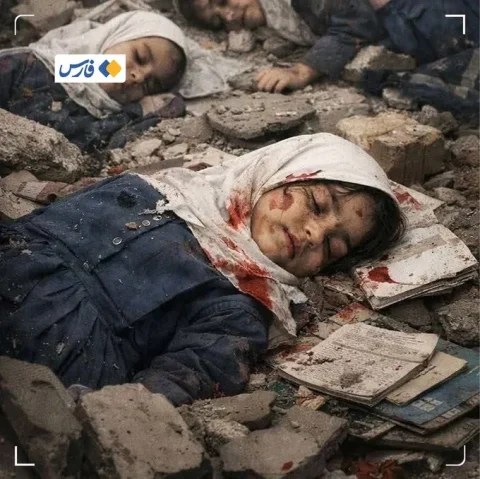
Just imagine the uproar if Iran had killed more than 150 Israeli schoolgirls
The ritual is immutable:
1/ condemn the Iranian “regime” and more or less explicitly welcome the “death” (above all, never say “assassination”) of Khamenei;
2/ having thus provided justification for the US-Israeli war of aggression — the supreme crime according to the Nuremberg Tribunal — and validated the grotesque and abject talking points of the criminals against humanity that Trump and Netanyahu are regarding the alleged “dictatorship of the mullahs,” proclaim, hand on heart, that one does not condone war and artificially dissociate the other victims of these strikes, while affirming solidarity with the Iranian people;
3/ finally and above all, make no reference to the fact that this same people took to the streets by the millions to support their “regime” in January, and are doing so again today, despite the bombs:it is not the real aspirations of the Iranian people that matter — deeply rooted as they are in their own history, values, and spirituality, infusing every aspect of their life with the teachings of Twelver Shia Islam and a deep attachment to the Prophet and his progeny — but rather those that the “civilized West” determines for them, seeking to shape them in its own godless image. Colonial mentality obliges — the same mentality that led Jules Ferry to declare that “the superior races have the duty to civilize the inferior ones.”
It is absolutely sickening to see that more than two years of genocide in Gaza have done nothing to change the crass ignorance, steeped in racism and Islamophobia, of our so-called progressive Left, whose hyperbolic reaction of solidarity we witnessed when it came to the 40 Israeli babies “beheaded” — existing solely in the putrid imagination of propagandists. In France, even La France Insoumise (LFI, main leftist party headed by Jean-Luc Mélenchon), which had managed to distance itself from the inept and complicit “neither-Maduro-nor-Trump” discourse on Venezuela, is now revelling in the war crime constituted by the assassination of a foreign leader, servilely described by Mélenchon as “the executioner of his people,” parroting US-Zionist propaganda and dismissing the millions of Iranians who hold him in reverence and regard him as their political and spiritual leader. Let us therefore listen to Mélenchon, the “Tribune of the plebs”:
“This is the first time there has been a war with no good guys. This is the first time there has been a war with only people we don’t like, I mean governments we don’t like. The government of Iran inspires no sympathy in me: for my part, I have opposed it from the very beginning. When its leader Ali Khamenei dies, I am obliged to say that I feel no sadness.
Mélenchon then claims that just as Nazism was a form of supremacism, the governments of Trump, Netanyahu and Khamenei are each in their own way supremacist powers competing for domination — going so far as to suggest that Khamenei proclaims Iran’s “superiority within Islam and over the Middle East,” an absurd characterization that serves only to justify equating aggressors with the attacked. He concludes: “Neither Shah nor Mullahs.”
No sadness, then, for Khamenei, nor for his wife, nor for his daughter, nor for his son-in-law, nor for his 14-month-old granddaughter, murdered alongside him — except insofar as one adopts the Israeli logic whereby, in order to assassinate one person, dozens or even hundreds are killed with him, invoking “collateral damage,” or even consigning them to oblivion by denying their very existence.
No sadness either for international law, the purposes and principles enshrined in the Charter of the United Nations, the fundamental norms governing relations between States, global peace and stability. Nor for the more than 100 million Iranians and Shiite Muslims throughout the world (including in France and in the other European and Western countries) who mourn the loss of their Guide — whose popularity is questioned only by the ignorant and the ideologues, as for his followers, he is more than the Pope is to Catholics — because they do not embrace the model of society promoted by Mélenchon, who opposes the Islamic Republic on principle, even were it massively supported by the Iranian people, simply because the very principle of a theocracy repels him.
Iran must be regime-changed, even if that means sending it back to the Stone Age, like Syria and Libya, destroying all its incredible accomplishments since 1979 in fields such as healthcare, education, and the sciences — achievements made despite crippling sanctions and persistent external pressures, just like Cuba, from dramatic improvements in life expectancy to the expansion of medical and higher education, rapid growth in research output and scientific innovation, and self-sufficiency in pharmaceutical and high-tech sectors. Iranian women are 70% of Iran’s STEM graduates (Science, Technology, Engineering and Mathematics), but one must guess they are not “free” until they wear miniskirts. Such blindness and the outright denial of the right to political and cultural self-determination are outrageous.

“I feel no sadness”
Although Western tradition humanizes only Israeli victims, deemed alone worthy of compassion, let us defy convention and give a name and a face to the martyrs: above, Zahra Mohammadi Golpayegani, 14 months old, Khamenei’s granddaughter, murdered with her family. No sadness, really? And below, several faces of the victims of the strike on a girls’ primary school — how abominable single-gender education must seem in your eyes — whose wearing of the veil, which Mélenchon once described as a “rag on the head,” may perhaps shock you.
Mélenchon, whose condemnations and impassioned outbursts after October 7 are well remembered — when the Palestinian Resistance had merely exercised its right to struggle against occupation (and Israel responded with the Hannibal doctrine and genocide) — would he dare to say “I feel no sadness” if Trump or Netanyahu had been killed along with their wife, children, and grandchildren, without provocation, triggering a regional war that could quickly becomeWorld War III? Never in a million years. He would have condemned the very act of international terrorism constituted by the aggression and assassination of a foreign leader, evoked all its potentially cataclysmic ramifications, and explicitly mentioned the victims. But when it comes to Iran, none of this matters. Iranian and Israeli lives are not equal in the eyes of the “supremacists,” whether ethnic, political, or civilizational — are they, Mr. Mélenchon?
As for Mediapart, long regarded as one of France’s leading left-leaning media outlets, it no longer even bothers to conceal its Atlanticist and Zionist allegiances, openly embracing them. It congratulated Israel on the “tactical stroke of genius” represented by the mass terrorist beeper attack against Lebanon (later discreetly revising the description to a “strategic success” once it recognized that the original wording was apologetic), and is now explicitly turning the victim into the culprit, daring to claim that Iran had it coming because it refused to “capitulate on its foundations,” namely its defense capabilities (nuclear weapons being nothing more than a crude pretext), and refused to allow itself to be carved up (see the surreal article Rather than Capitulate on Its Foundations, the Iranian Regime Prefers to Endure War, torn to pieces by the comments of Mediapart subscribers themselves, who are increasingly turning their backs on this vile NATO bootlicking). France remains, without a doubt, the daughter of Jules Ferry the colonialist and Pétain the collaborationist.
If our grandees truly cared about international law, the rights of peoples, and global peace and security, the assassination of Khamenei would be unanimously condemned with horror and indignation, both in itself and for the cataclysmic consequences it could entail, from a global economic crisis to a third world war. If “human animals” possessed as much dignity as Western and Israeli lives in the eyes of our self-proclaimed “feminists,” the Iranian schoolgirls targeted by Israel would make every front page — and draw condemnations dwarfing those provoked by the fake story of 40 decapitated babies. Instead of ludicrous accusations of expansionism or imperialism toward Iran, we would be reminded at every second that Israel — the intergalactic champion of killing children and destroying schools and hospitals — dreams of turning the entire Middle East into Gaza, and wants to ensure Trump follows through on “Operation Epstein’s Fury” to the very end.
The great historical tradition of international solidarity, which once led French men and women to risk their lives and endure torture in support of the Algerian FLN, is no more. At best, one can expect the “progressives” and other self-styled “revolutionaries” to place aggressor and victim on the same footing. Far from those who claim neutrality in situations of injustice, and who, as Desmond Tutu said, merely play the game of the oppressor, we affirm our genuine internationalist solidarity with the Islamic Republic of Iran in the face of imperialist and Zionist aggressors, and affirm not only its right to defend itself, but its right to choose its model of society, including that of a “theocracy,” which is only a dirty word for fanatic secularists.
This blog is the result of voluntary work. To support it, you can make a donation.
Meet The Liberal Zionist And Ukraine War Supporter Advising AOC On Foreign Policy
The Dissident | February 18, 2026
Democratic representative Alexandria Ocasio-Cortez’s recent appearence at the Munich Security Conference, which was billed as her showcasing her foreign policy chops gearing up for a possible presidential run, has faced widespread criticism and backlash, not only for her embarrassing mistakes (saying Venezuela was located below the equator, being unable to answer a question about Taiwan and saying the “Trans-Pacific Partnership” when meaning to say the Trans Atlantic Partnership) but for her weak criticism of U.S. foreign policy and repeating of pro-war narratives.
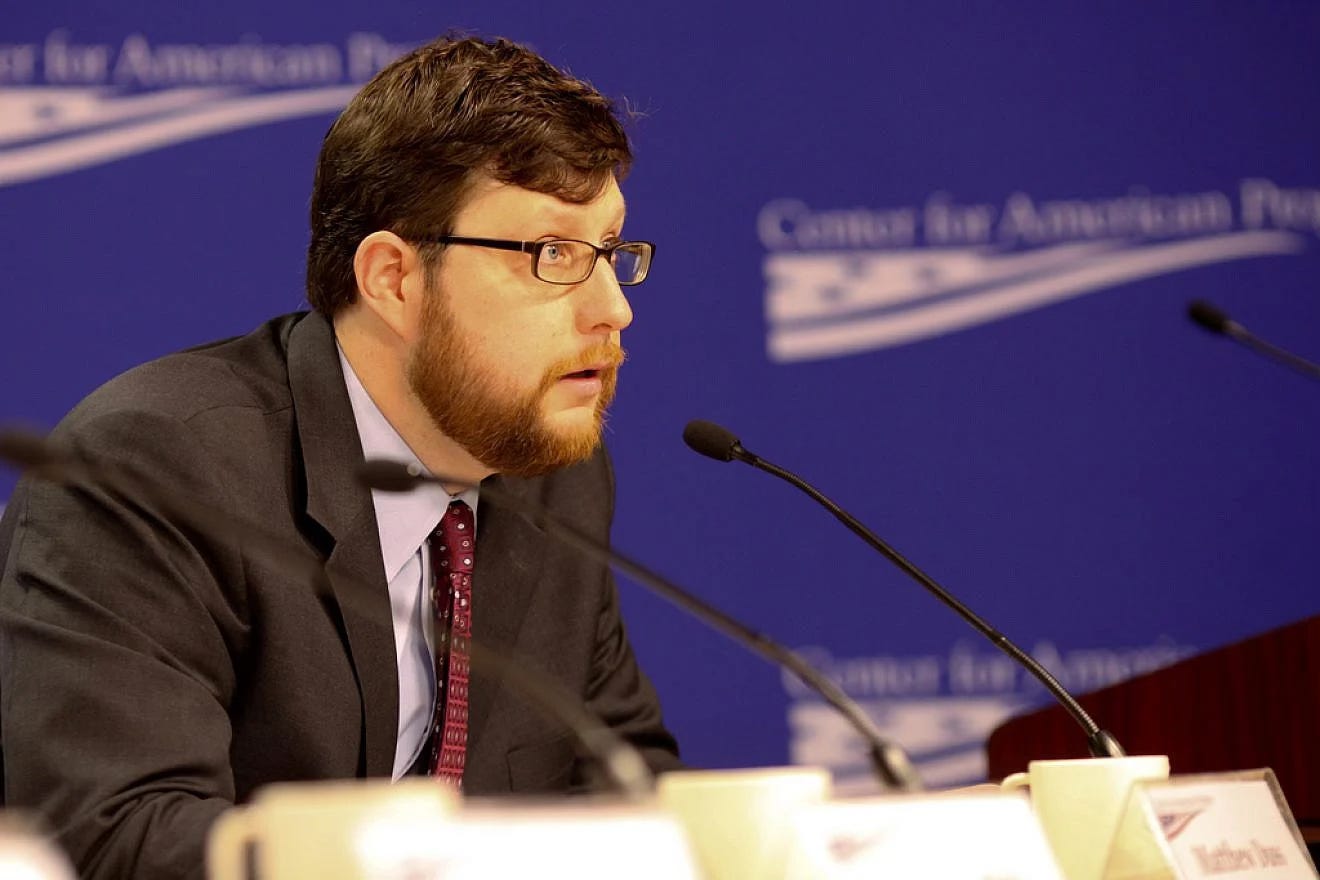
This, however, can be easily explained by the fact that she is being coached by Matt Duss, a longtime foreign policy advisor and a liberal Zionist and staunch supporter of the NATO proxy war in Ukraine.
Ahead of the conference, the New York Times reported :
She has been receiving regular briefings from the Center for International Policy, a left-wing foreign policy think tank in Washington. Matt Duss, a vice president at the group and a former Sanders aide, said he was among those who had tutored her on foreign policy.
“She is someone who is engaged with parts of the world that are often not represented in Munich,” Mr. Duss said.
Ms. Ocasio-Cortez’s appearance will undoubtedly ignite speculation that she is burnishing her foreign policy credentials before a White House run. But she is keeping everyone guessing. Unlike other more obviously ambitious Democrats, she has not made winking, presidential-coded trips to early primary states in recent months or written a tell-all memoir.
This better explains why she was so weak of U.S. foreign policy: Duss styles himself a U.S. foreign policy critic but often repeats the narratives of the U.S. foreign policy establishment, and at times, such as on Ukraine, is with it 100 per cent.
Peddling Liberal Zionism
On Israel and the Zionist lobby, Matt Duss is a typical liberal Zionist, offering some criticism of Israel but ultimately supporting Zionism and Zionist narratives.
A 2011 article on Matt Duss in Politico wrote , “Duss says he’s mischaracterized by his critics as anti-Israel. He is quick to note that he sympathizes with Israel, in part from his personal roots in American evangelical Christianity and that if American criticism of Israel should be harsher, it should also be done with the recognition that Israel is a democracy that should be held to high standards. Iran, meanwhile, is ‘abusing their own people, they support terrorism, and they say all sorts of horrible things about the U.S. and Israel,’ he said.”
This liberal Zionism, apparently influenced by a Christian Zionist upbringing, was on full display during the early months of the Israeli genocide in Gaza, where Duss, repeated Israeli propaganda, smeared actual anti-Zionists and even opposed calls for a ceasefire.
After the October 7th Hamas breakout from the Gaza concentration camp, Duss quoted an article, from New York Magazine, writing, “What we actually witnessed was not ‘the Palestinians’ mounting a violent struggle for justice but a far-right theocratic organization committing mass murder in the name of blood-and-soil nationalism” without mentioning any of the history preceding October 7th, including the Israeli blockade on Gaza which former UK prime minister David Cameron admitted turned Gaza into a “a prison camp” and an “open-air prison”, the previous peaceful protests against the blockade in Gaza in 2018, which were met with Israeli slaughter , the Abraham Accords which sought to get Arab States to abandon the Palestinian cause, and Benjamin Netanyahu putting up a map at the UN which “depicted a state of Israel that stretched continuously from the Jordan River to the Mediterranean Sea” where “Gaza and the West Bank, as Palestinian lands, were erased” weeks before October 7th.
In December of 2023, Matt Duss repeated the fabricated claim that Hamas carried out mass rape on October 7th, writing, “Denying the rape and sexual violence that Hamas committed on Oct 7 is disgusting”, repeating a hoax that was used not only to justify the Gaza genocide, but also actual mass rape against Palestinian detainees in Israel’s torture dungeons.
In another article written by Duss in December of 2023, he wrote , “Israel’s methods are not as extreme as Russia’s, and it’s very important to acknowledge that”, ignoring the fact that in November of 2023 , Israel had killed over 10,000 civilians in Gaza while Russia killed 9,806 in Ukraine since the start of the war in 2022.
In a New York Times article, Matt Duss celebrated Israel’s pager attack in Lebanon, which even former CIA director Leon Panetta conceded was “a form of terrorism” writing, “There’s no question that Israel’s decapitation of Hezbollah’s leadership in Lebanon in recent weeks was an impressive tactical feat”.
In November of 2023, Duss even opposed calls for a ceasefire in Gaza by defending Senator Bernie Sander’s comments in opposition to a ceasefire at the time (which were approvingly shared by AIPAC ), saying, “I think what the Senator said there about the challenges of a ceasefire being negotiated with an organisation like Hamas are valid”.
While peddling Zionist talking points, Duss took the time to smear actual anti-Zionists, such as labelling the brilliant Anti-Zionist academic Norman Finkelstein, a Jewish son of holocaust survivors, as an anti-semite.
Referring to the Jewish Zionist billionaires attempting to shut down pro-Palestine protests on college campuses, Finkelstein wrote , “The Jewish billionaire class has declared war on our nation’s universities: Either you support Israel’s genocidal war or we will destroy you” and Duss replied , “We can and must have a conversation about the very real dangers to academic freedom without antisemitic ‘Jewish billionaire class’ nonsense, which both endangers Jews and undermines the struggle for Palestinian liberation.”
Supporting The Ukraine Proxy War
Along with his peddling of Zionist narratives, Duss fully supported NATO and the Biden administration’s proxy war in Ukraine.
In an article for the New Republic in 2022, Duss wrote, “The Biden team clearly did not seek this war (in Ukraine), in fact, they made a strenuous, and very public, diplomatic effort to avert it. Having been unable to do that, they’ve acted with restraint and care not to get drawn into a wider war with Russia while also making clear the stakes of the conflict for the U.S., for Europe, and for the international system.”
In reality, last year, one of Biden’s top advisors for Europe policy, Amanda Sloat, admitted that the Biden administration could have ended the war in Ukraine, and chose not to, saying, “We had some conversation even before the war started, about what if Ukraine comes out and just says to Russia, ‘fine, you know, we won’t go into NATO if that stops the war, if that stops the invasion,’ which at that point it may well have done” and adding, “I guess if you want to do an alternative version of history, one option would have just been for Ukraine to say in January of 2022, ‘fine, you know, we won’t go into NATO, we will stay neutral.’ Ukraine could have made a deal around March/April of 2022 around the Istanbul talks. There is certainly a question, almost three years on now, would that have been better to do before the war started, would that have been better to do in Istanbul talks, it certainly would have prevented the destruction and the loss of life”.
Matt Duss on serval occasions denied the fact that the war could have ended in April of 2022 has Boris Johnson not intervened and stopped the peace deal that Russia and Ukraine agreed to in Istanbul. On Twitter, Duss wrote , “If you’re so committed to your narrative that you believe that Zelensky Could’ve simply ended the devastating war on his country in April but then Boris Johnson showed up and said nah so he didn’t, I recommend stepping back and taking a series of deep, relaxing breaths” and “ doesn’t matter how quickly the Sy Hersh story gets refuted, it’s already become part of the alternate reality where Biden induced Putin to invade and Russia would’ve ended the war in March if Boris Johnson hadn’t said nah.”
This is despite the fact that Boris Johnson’s blocking of the peace deal in Istanbul has been confirmed by
- Former Israeli Prime Minister Naftali Bennett
- Lead Ukrainian negotiator Davyd Arakhamia
- The foreign minister of Turkey, Mevlut Cavusoglu
- Turkish President Recep Tayyip Erdogan
- Gerhard Schröder, the ex-leader of Germany
- Victoria Nuland then U.S. under secretary of state for political affairs
- Oleksii Arestovych a member of the Ukrainian delegation at the peace talks
- Amanda Sloat, lead Biden advisor on Ukraine
- Andrej Babiš, the Prime Minister of the Czech Republic
Duss has repeatedly praised the Biden Administration for the proxy war in Ukraine, saying in 2023, “The administration … on the way the president has helped manage alliance and partnerships in response to Russia’s invasion of last February, I think has been impressive, I think it shows a way of practising U.S. leadership that forges consensus and then mobilises that consensus.”
As late as January of last year, Duss said, Biden can “claim some credit for rallying allies for the defence of Ukraine against Russia’s invasion”.
Duss even admitted in reference to the Ukraine proxy war that, “the policy I support continues to enrich defense contractors, enriches the military-industrial complex” adding, “I think the goal of reforming that military industrial complex and weakening its power over our politics, that project continues in the longer term even though the policy I support in the shorter term is essentially paying them off.”
The fact that AOC is being “tutored” by Matt Duss on foreign policy explains her failures when speaking on it.
Kaja Kallas: an uncomfortable figure useful to the EU’s Russophobic purposes
By Lucas Leiroz | Strategic Culture Foundation | February 18, 2026
In recent days, videos of Europe’s chief diplomat, Kaja Kallas, have gone viral on social media, showing her making statements marked by disconnected reasoning, weak associations, and conclusions that do not logically follow from the premises presented. At the same time, she delivered yet another of her “unusual” speeches, declaring that Europe would demand a reduction in the size of the Russian Army – an assertion made without any reference to legal, logistical, or strategic foundations to support such a measure, making the inconsistency of her position evident.
This statement highlights not only the European diplomacy’s disconnect from geopolitical reality, but also the symbolic function of certain figures who maintain positions of international visibility. Kallas, whose political trajectory was consolidated in Estonia with a strongly anti-Russian discourse, has become a piece of ideological rhetoric: she plays the role of a “watchdog” of European Russophobia and does not seem to mind being seen as “foolish” for her irrational public statements.
Beyond this aspect, there is also a practical function in this dynamic. Domestically, Kallas faced considerable political wear in Estonia: her family circle maintained commercial ties with Russia, and nationalist sectors criticized her for economic policies that allegedly weakened the country’s economic stability. In this sense, her promotion to the head of European diplomacy served as a convenient solution – removing a worn-out figure from the domestic scene while at the same time making use of her “angry” stance toward Moscow to sustain the anti-Russian narrative at the continental level.
Kallas’s performance, however, does not represent strategic autonomy. The European Union’s foreign policy is centralized in the presidency of the European Commission, under the leadership of Ursula von der Leyen. In this context, Kallas essentially fulfills the role of spokesperson and executor of guidelines defined by the bloc’s hard core, which coordinates sanctions, defense policies, and alignment with NATO and the United States. The contrast between her performative statements and her real decision-making capacity reflects a strategy that prioritizes confrontational rhetoric over political pragmatism.
From a geopolitical perspective, the idea of unilaterally reducing Russian military personnel is unrealistic. Moscow interprets the current conflict as part of a structural dispute over NATO expansion and the strategic containment promoted by the West. Symbolic pressure or European public declarations, devoid of negotiation mechanisms or concrete coercive instruments, produce no practical effect and, on the contrary, tend to reinforce Russian defensive positions, consolidating the perception of permanent hostility.
Moreover, the recent tensions between Kallas and von der Leyen are telling. Kallas reportedly calls her a “dictator” for centralizing power in the Commission – as if the entire EU bureaucratic structure were not designed precisely to maintain that kind of centralization. It appears that von der Leyen represents the transnational elites that control Europe, while Kallas is merely a disposable piece on this chessboard – without any real right to opinion or participation in the bloc’s decision-making process.
Ultimately, Kallas remains, in the racist European view that she herself evokes, a “peripheral” figure of Soviet origins, with a Finno-Ugric native language – hardly “European” in the strict sense, no matter how much she tries to “Europeanize” herself by hating Russia. For Europeans, she is an uncomfortable figure who nonetheless serves a useful purpose: escalating tensions with Russia, which greatly benefits von der Leyen’s “anonymous bosses.”
In this scenario, Kallas embodies a structural tension: her peripheral origins and aggressive posture make her useful as a representative of a confrontational narrative, while also exposing the superficiality of certain European political decisions. The bloc maintains tough rhetoric and ideological mobilization but lacks a realistic strategy capable of dealing with the balance of power in Eurasia – where Europe is a weak and declining pole, not a “superpower,” as Kallas often claims.
If the EU truly intends to preserve its strategic autonomy and contribute to continental stability, it will need to abandon performative declarations and understand that any rearrangement of European security depends on direct negotiations with Moscow, recognition of military and geopolitical realities, and the formulation of measures that combine firmness with pragmatism. Unilateral demands – such as reducing Russian military personnel – are nothing more than symbolic rhetoric, incapable of altering the real dynamics of the conflict.
This dynamic also reveals the hidden side of European politics: the use of peripheral figures, often marginalized or viewed with prejudice, to materialize maximalist discourses that consolidate a narrative of confrontation, while decision-making remains concentrated in a small core of power, far removed from the media statements that go viral and capture public attention.
German state blacklists right-wing party for first time
RT | February 18, 2026
Authorities in the German state of Lower Saxony have designated the local chapter of the right-wing AfD party a surveillance priority, citing what they called “extremist” tendencies.
Founded in 2013, Alternative for Germany (AfD) espouses a tough stance on migration and opposes Berlin’s support for Ukraine. In the federal elections last February, the AfD came in second at 20%, winning 152 seats in the 630-seat Bundestag. However, the party has been excluded from coalition talks and government formation as part of a policy known as the ‘firewall’ in German politics.
The AfD’s popularity has since grown further regardless, with recent polls indicating that it is supported by around 25% of Germans, on par with Chancellor Friedrich Merz’s ruling CDU/CSU.
Speaking during a press conference on Tuesday, Lower Saxony Interior Minister Daniela Behrens cited the “unequivocal” conclusion by the Office for the Protection of the Constitution (BfV), according to which, “the greatest danger to our society stems from right-wing extremism, and the AfD in Lower Saxony… clearly falls within this category.”
According to the official, the party’s Lower Saxony chapter “holds our state and our democratic institutions in contempt,” and views people with a migrant background as “second-class citizens.”
The Lower Saxony AfD chapter was first designated a “clear case for surveillance” by the regional BfV office in 2022, with the authorities having now upgraded it to an “object of considerable importance for observation,” a spokesman for the domestic intelligence agency was quoted as saying by local media.
Commenting on the decision, AfD Lower Saxony Chairman Ansgar Schledde rejected “every accusation being made” by the authorities, describing the move as politically motivated and aimed at eliminating an opponent. He vowed to challenge the designation in court.
In four other German states – Brandenburg, Saxony, Saxony-Anhalt, and Thuringia – the local AfD branches are deemed a confirmed right-wing extremist entity, while in Rhineland-Palatinate and Saarland, the party has been declared a suspected case.
Last May, the federal BfV office upgraded the AfD’s classification from “suspected” to “confirmed right-wing extremist,” only to suspend it shortly thereafter pending a ruling on the party’s court appeal.
Romania’s stolen elections were only the start: Inside the EU’s war on democracy
How Brussels’ Digital Services Act has been used to pressure platforms and electoral control in member states
RT | February 18, 2026
Romania’s 2024 presidential election was already one of the most controversial political episodes in the European Union in recent years. A candidate who won the first round was prevented from contesting the second. The vote was annulled. Claims of Russian interference were advanced without public evidence.
At the time, the affair raised urgent questions about democratic standards inside the EU. Newly disclosed documents reviewed by RT Investigations go further. They indicate that the annulment of the Romanian election was accompanied by sustained efforts to pressure social media platforms into suppressing political speech – efforts coordinated through mechanisms established under the EU’s Digital Services Act.
What appeared to be a national political crisis now looks increasingly like a test case for how far EU institutions are willing to go in intervening in the political processes of member states.
The Russian narrative. Again.
On February 3, the US House Judiciary Committee published a 160-page investigation into how the EU systematically pressures social media companies to alter internal guidelines and suppress content. It found Brussels orchestrated a “decade-long campaign” to censor political speech across the bloc. In many cases, this amounted to direct meddling in political processes and elections of members, often using EU-endorsed civil society organizations. The report features several case studies of this “campaign” in action in EU member states, the gravest example being Romania.
It was around the November 2024 Romanian presidential election, the committee found, that the European Commission“took its most aggressive censorship steps.” In the first round, anti-establishment outsider Calin Georgescu comfortably prevailed, and polls indicated he was en route to win the second by landslide. However, on December 6, Bucharest’s constitutional court overturned the results. While a court-ordered recount found no irregularities in the process, a new election was called, in which Georgescu was banned from running.
By contrast, Romania’s security service alleged Georgescu’s victory was attributable to a Russian-orchestrated TikTok campaign. The allegation was unsupported by any evidence whatsoever. Romanian President Klaus Iohannis went to the extent of claiming this deficit was inversely proof of Moscow’s culpability, as the Russians supposedly “hide perfectly in cyber space.” Despite the BBC reporting that even Romanians “who feared a president Georgescu” worried about the precedent set for their democracy by the move, that narrative has been endlessly reiterated ever since.
The US House Judiciary Committee report comprehensively disproves the charge of Russian meddling in the Romanian election. Documents and emails provided by TikTok expose how the platform not only consistently assessed Moscow “did not conduct a coordinated influence operation to boost Georgescu’s campaign,” but repeatedly shared these findings with the European Commission and Romanian authorities. This information was never shared by either party. But the contempt of Brussels and Bucharest for democracy and free speech went much further.
Digital Services Act in action
The committee found Romanian officials egregiously abused the EU’s controversial Digital Services Act before the 2024 election “to silence content supporting populist and nationalist candidates.” Bucharest also repeatedly lodged content takedown requests outside of the formal DSA process, using what committee investigators call “expansive interpretations of their own power to mandate removals of political content.” This amounted to a “global takedown order,” with authorities perversely arguing court demands to block certain content for local audiences were “mandatory not only in Romania.”
This was no doubt a ploy to prevent outsiders, in particular the country’s sizable diaspora, from accessing content featuring Georgescu. His “Romania First” agenda proved quite popular with emigres, numbering many millions due to mass depopulation since 1989. Perhaps not coincidentally, his diaspora supporters have been widely maligned by Western media as fascist enablers. Still, even critical mainstream reports admit they and the domestic population have legitimate grievances, due to Romania’s crushing economic decline in the same period.
Bucharest would clearly stop at nothing to ensure the ‘correct’ candidate prevailed in the first round. Removal demands were plentiful, and on the rare occasions that legal justification was provided, it was based on a “very broad interpretation” of the election authority’s power. For example, TikTok was ordered to remove content that was “‘disrespectful and insults the PSD party’” – a left-wing political faction that was part of the country’s ruling coalition at the time. TikTok twice sought further details of the grounds for this request, but none was forthcoming.
Once Georgescu prevailed, and before the election was annulled, Romanian orders became even more aggressive. Regulators told TikTok that “all materials containing Calin Georgescu images must be removed,” again without any legal basis whatsoever. This proved a step too far for the platform, which refused to remove the posts. It wasn’t just naked political pressure to which TikTok refused to bend. Brussels and Bucharest were assisted first in electoral fraud, then autocratic annulment of the vote’s legitimate result, by local EU-sponsored NGOs.
These were organizations “empowered by the European Commission to make priority censorship requests – either as [EU Digital Service Act] Trusted Flaggers or through the Commission’s Rapid Response System.” Despite their supposed neutrality, the NGOs “made politically biased content removal demands.” For example, the EU-funded Bulgarian-Romanian Observatory of Digital Media “sent TikTok spreadsheets containing hundreds of censorship requests in the days after the first round of the initial election.” The committee characterized much of the flagged content as “pro-Georgescu and anti-progressive political speech.”
This included posts related to “Georgescu’s positions on environmental issues and Romania’s membership in the Schengen Area, and the EU’s system of open borders.” In other words, this was content espousing standard, popular conservative viewpoints, which are absolute anathema to Brussels and Bucharest’s pro-EU elite. Since the committee’s report was released, references to the Bulgarian-Romanian Observatory of Digital Media’s EU financing have been deleted from its website.
After the vote
The day after the election was annulled, TikTok wrote to the European Commission, stating plainly it had not found or been presented with evidence of a coordinated network of accounts promoting Georgescu. Undeterred by TikTok’s denials and scarcely bothered by the lack of material evidence, the European Commission pressed forward and demanded information about TikTok’s political content moderation practices and enquired about “changes” to its “processes, controls, and systems for the monitoring and detection of any systemic risks.”
The European Commission also used the “still-unproven narrative” of Russian meddling “to pressure TikTok to engage in more aggressive political censorship.” In response, the platform informed the commission that it would censor content featuring the terms “coup” and “war” – clear references to the perception that democratic processes had been undermined in Romania – “for the next 60 days to mitigate the risk of harmful narratives.” But this was still insufficient for the censorship-crazed commission.
On December 17, 2004, the European Commission opened a formal investigation into TikTok over a “a suspected breach of the DSA” – in other words, failing to sufficiently censor content before and after the first round of Romania’s presidential election. The platform was accused of failing to uphold its “obligation to properly assess and mitigate systemic risks linked to election integrity” locally. EU efforts to bring the platform to heel didn’t end there, either.
In February 2025, TikTok’s product team was summoned for a meeting with the EU’s Directorate-General for Communications Networks, Content and Technology. There, they were lectured over the platform’s supposedly “deceptive behavior policies and enforcement” and “potential[ly] ineffective” DSA “mitigation” measures. The US House Judiciary Committee found that the European Commission’s decision to meet TikTok’s product team, “rather than the government affairs and compliance staff whose job it was to manage TikTok’s relationship with the Commission, indicates the European Commission sought deeper influence over the platform’s internal moderation processes.”
Georgescu and the many Romanians who wished to elect him president were punished even more severely. Two weeks after TikTok was threatened by the European Commission, the upstart hopeful was arrested in Bucharest en route to registering to run in the new election that May. Georgescu was charged with “incitement to actions against the constitutional order.” Since then, he has been accused by authorities of plotting a coup and involvement in a million-euro fraud.
When Georgescu’s case finally reached trial this February, these accusations were dropped. He is instead charged with peddling “far-right propaganda.” A report on his prosecution from English-language news website Romania Insider repeated the fiction he owed his first-round victory to a “targeted social media campaign,” managed by “entities linked to Russia.” In the meantime, establishment-preferred candidate Nicusor Dan won the presidency. No doubt satisfied with the integrity of the democratic process given Georgescu was barred from participating, Romania’s Constitutional Court quickly validated the result.
Beyond Romania
Per the US House Judiciary Committee, Romania’s stolen 2024 presidential election is the most extreme example of the EU and member state authorities conspiring to subvert democracy and trample on popular will. But it is just one of many. Since the Digital Services Act came into force in August 2023, the European Commission has pressured platforms to censor content ahead of national elections in Slovakia, the Netherlands, France, Moldova, and Ireland, as well as the EU elections in June 2024.
“In all of these cases… documents demonstrate a clear bias toward censoring conservative and populist parties,” the committee concluded. Ahead of the EU elections, TikTok was pressured into censoring over 45,000 pieces of purported “misinformation.” This included what the report deemed “clear political speech” on topics such as migration, climate change, security and defense, and LGBTQ rights. There is no indication Brussels has been deterred from its quest to prevent the ‘wrong’ candidates being elected to office in member states, or citizens expressing dissenting opinions.
In fact, we can expect these efforts to ramp up significantly. For one, the US committee’s bombshell report generated almost no mainstream interest, indicating Brussels can and will get away with it again. Even more urgently, in April, Hungary goes to the polls. Already, the narrative that ruling conservative Viktor Orban intends to rig the vote to secure victory is being widely perpetuated. And the EU’s censorship apparatus stands ready to validate that narrative, regardless of truth, and popular will.
Europe creates a ‘Russian government-in-exile’, consisting of a bunch of losers
By Sonja van den Ende | Strategic Culture Foundation | February 14, 2026
The Bureau of the Parliamentary Assembly of the Council of Europe (PACE), part of the Council of Europe (not the European Union), established in October 2025 a platform for Russians in exile called the Russian Democratic Forces, which is intended to represent a new Russian government-in-exile in Europe.
With little media attention, Europe is attempting to elevate the status of the Russian opposition, while openly admitting that the new, so-called opposition lacks the structure and power to make a significant difference. Above all, they admit that the selection of members for this so-called government-in-exile was fundamentally undemocratic.
Following the formation of a so-called representative delegation of Belarusian democratic forces, the Assembly recently decided to appoint a Russian delegation as well – again, without democratic consultation.
Regarding the Russian Democratic Forces, some individuals were invited to participate in hearings organized by Assembly committees. During these hearings, the discussions focused solely on how these figures could help end what they call “Russia’s war of aggression” and on ways to strengthen sanctions against Russia.
The most absurd claim is their desire to guarantee Russians access to free and independent media in order to counter Russian disinformation. This is reminiscent of the sanctions Europe has imposed on Russian media outlets such as RT, Sputnik, Channel One Russia, etc., and, of course, this geopolitical website, the Strategic Culture Foundation, where this article is published. The new media outlets they propose to establish are, naturally, funded by Europe itself – a platform for the so-called Russian government-in-exile.
They will rely exclusively on European disinformation articles opposing the current Russian government. The Russians in exile, out of fear, will write articles filled with anti-Russian propaganda and criticism, afraid of losing their European residence permits or visas should they write anything positive about Russia.
The absurdity of it all, of course, is that Europe itself has been censoring its own media and journalists since new legislation, such as the Digital Services Act (DSA), was approved. Since February 2025, the EU has officially implemented the 2022 law to combat disinformation, particularly what they call “fake news” originating from Russia.
Or take the European Media Freedom Act (EMFA): This law came into effect in May 2024 and supposedly protects media pluralism and ensures that journalists can work without state interference or abuse of legal process. An example of this absurdity – and the exact opposite of what the EMFA advocates – is the case of German journalist Hüseyin Dogru, who has been completely cut off from funding due to European Union sanctions and can no longer provide for his family’s basic needs while living in Germany. He is accused of spreading disinformation about Russia and Israel.
Another initiative is the so-called European Democracy Shield, presented in November 2025. This initiative aims to protect the EU’s democratic information space from foreign interference and information manipulation. Yet this initiative is now being violated by Europe itself. As they state: “The European Democracy Shield initiative aims to strengthen information integrity in Europe by addressing issues such as disinformation and election interference.” But this is exactly the opposite of what the EU is doing by establishing – by Europeans – a so-called Russian government-in-exile, which, by their own admission, may not have been entirely democratic in its establishment or candidate selection.
After all, it is the European Union itself, through the European Commission, that has established an undemocratic Russian government-in-exile, as they themselves admit. The president of the so-called committee that approves the candidates and the structure of the platform is German, and other committee members come from Spain and Cyprus. Not a single Russian sits on the Assembly’s board.
They even prepared a list of so-called “democratic” candidates promoting the new Russian government-in-exile – a list of “Participants of the Russian Democratic Forces” for the platform. This list is approved exclusively by the Bureau of the Assembly – the European Union, or in this case, the European Commission – based on a proposal from the President of the Assembly, who, as mentioned, is a European citizen of German nationality. The list of potential candidates is submitted to the President of the Assembly in consultation with organizations of the Russian Democratic Forces whose members meet the criteria, and is approved by them.
This is, of course, utterly absurd. Imagine the reverse situation: Russia establishes a committee for, say, Dutch or German citizens in exile, appoints them as the opposition government for the Netherlands and/or Germany, and recognizes them as a government-in-exile in Russia. Perhaps Russia should do this as counter-propaganda – to show Europe and make it clear that their behavior is absurd, undemocratic, and, above all, insane. I can just imagine the headlines in European media and the outrage from European politicians and journalists – full of words like “undemocratic and criminal” – if Russia were to do this!
Among the members of the so-called Russian government-in-exile are names such as Mikhail Khodorkovsky, the oligarch once convicted in Russia for fraud and theft, who has already served time in a Russian prison, and chess grandmaster Garry Kasparov, who has a far stronger connection to modern-day Azerbaijan or Armenia, having been born and spent his entire childhood in Baku, present-day Azerbaijan.
Another well-known opponent is Vladimir Kara-Murza, who claims to have been poisoned by Putin – similar to the Skripal and Litvinenko cases, or more recently, the allegation that Navalny was poisoned in a Russian prison. He is described as a Russian-British political activist, journalist, author, filmmaker, and a former political prisoner. He is the vice-chairman of Open Russia, an NGO founded by the convicted former oligarch Mikhail Khodorkovsky, which promotes civil society and democracy in Russia. In essence, they promote the interests of the US and Europe and advocate for Russia’s subordination to them, running as puppet presidents and governments for the West.
Also part of the new Russian government-in-exile are the deranged members of the provocative punk rock group Pussy Riot, such as Nadya Tolokonnikova. These individuals, eager to attract attention with provocative actions against the Russian Orthodox Church – actions bordering on Satanism (in Europe they are called feminists) – have been condemned in Russia for their behavior. Wikipedia (a Western propaganda tool) even acknowledges that public opinion in Russia is not sympathetic to the band members. They have been labeled an extremist organization in Russia. These are just a few candidates; the rest of those chosen are even less significant or unknown to the Russian people.
Europe is also using ethnic minorities in Russia – such as the Bashkirs, Chuvash, Tatars, Chechens, and many others – to sow division and thus break up Russia, following the example of the Balkanization of the former Yugoslavia. A good example of the propaganda machine targeting ethnic minorities in Russia is the German Center for East European and International Studies, called ZOiS, located in Berlin, Germany.
For instance, a certain PD Dr. Sabine von Löwis has written an article there on “Conflict Dynamics and Border Regions,” which discusses: “The disintegration of the Soviet Union led to the creation of not only the fifteen successor states but also a series of de facto states and peoples.” The goal is likely to drive a wedge between the various groups living in the Russian Federation.
The Russian government-in-exile, as the EU calls it, was established following the example of the Americans, who have appointed puppet presidents and governments worldwide to destabilize the countries they effectively occupy and thus plunder their resources. Russia itself is rich in resources such as gas, oil, and minerals. Some members of Russia’s indigenous peoples, as mentioned above, are also on the list of the so-called Russian government-in-exile. This is a blatant provocation by the EU to drive a wedge between Russians – or at least that is the intent. In recent years, entire sessions have appeared on YouTube proposing to divide Russia along ethnic lines, just as was done with the former Yugoslavia, which is now under the control of Europe and the US.
Recent examples of US regime change, with European assistance, include Syria, Venezuela, the blockade against Cuba, the ongoing destabilization of Greenland, and, of course, the conflict in Ukraine. Russia’s neighbors, such as Georgia, Moldova, Armenia, and Azerbaijan, have also fallen victim to provocations involving regime change and destabilization. This task is now largely reserved for the Europeans – particularly in Ukraine, Moldova, and Georgia – with US assistance behind the scenes.
But do not think for a moment that Ukraine will be completely abandoned to Europe. The Americans, together with the Europeans, are eyeing the riches, natural resources, and rare earth metals found primarily in the Donbas, which are now largely in Russian hands. Leaving Ukraine to the Europeans is merely a pretext for so-called peace talks.
Times are growing dangerous these days, with an American administration that talks about peace while simultaneously attacking countries, kidnapping presidents, and throwing them in jail. It supports terrorist leaders in Syria and transfers thousands of ISIS terrorists from the Kurdish-controlled al-Hawl camp to Iraq. What will they do with them? Release them for a potential coming war against Iran – an ally of Russia? Hopefully not, but these days, we cannot be sure. The West is in free fall, without rules or morals.
Featured Video

No Threat Can Force Iran’s Surrender /Trita Parsi & Lt Cl Daniel Davis
or go to
Aletho News Archives – Video-Images
From the Archives
An Expert Military Analysis of War with China
Actually, None is Necessary
By Fred Reed • Unz Review • December 13, 2020
The Correlation of Armed Forces: U.S. goods and services trade with China totaled an estimated $634.8 billion in 2019. Exports were $163.0 billion; imports were $471.8 billion. The U.S. goods and services trade deficit with China was $308.8 billion in 2019. Trade in services with China (exports and imports) totaled an estimated $76.7 billion in 2019. Services exports were $56.5 billion; services imports were $20.1 billion. The U.S. services trade surplus with China was $36.4 billion in 2019.
There is talk within the Washingtoniat of a possible war with China. Steve Bannon, who apparently was dropped on his head as a child, actually favors such a war. We hear the usual shoo-the-boobs alarm about how the Chinese are doing something terrible and we must gird our loins and American values and show them what for, bow wow, woof. The danger is that the current game of who-blinks-first in Asian waters might actually provoke a shooting war. You know the kind of thing: One warship refuses to get out of the way of another, a collision ensues, some retard lieutenant who signed up on waivers opens fire, and we’re off and running. It is not a good idea to let children play with matches.
The said war is discussed either in emotional terms by idiots or in purely naval terms by those familiar with such things, so we hear of the First Island Chain and the Second Island Chain and whose missiles against the other’s missiles and so on. This would be appropriate if we were fighting World War Two again. Which we aren’t. Let’s take a quick-and-dirty look at how such a war might go.
To begin the war, America would overestimate itself and underestimate China. This is doctrine in the Pentagon. … continue
Blog Roll
 Aletho News
- Iran To Target Military Industrial-Tech Complex That Facilitated Gaza Genocide
- Collapsing Empire: The Resistance Disarms ‘Israel’
- Suicide Should Not Be a Government Service
- Rethinking America’s greatest threat: Iran vs. Israel-Firsters
- Iran accuses adversaries of false flags to strain Turkey ties
- Poland rules out sending Patriot missiles to US/Israel amid war on Iran
- Tehran approves new Hormuz plan with major restrictions
- No Threat Can Force Iran’s Surrender /Trita Parsi & Lt Cl Daniel Davis
- UK’s New Pandemic Plan Would Turn Big Tech Into a Mass Location Tracking Network
- Growing insecurity, soaring prices fuel protests in north as regime bans evacuation: Sources
- If Americans Knew
- Ann Coulter Rips Into Fox News for Iran War Coverage, Compares to False Rigged 2020 Election Reporting
- Joe Kent Urges Americans To Call White House and Congress To Object To Sending Troops Into Iran
- DNC Resolution to Reject AIPAC Funding Puts Democratic Leaders in the Hot Seat
- Swedish foundation to build 400 schools as over 650,000 Gaza children remain without education for 2 years
- Israeli army admits photshopping image of slain Lebanese journalist
- This is how Israel is systematically killing health workers under the cover of war in Lebanon
- Carrying life under fire: Israeli invasion of Lebanon leaves pregnant women facing deadly risks
- Champagne all around for the new death penalty (for Palestinians) law – Not a ceasefire Day 172
- Why are Palestinian books struggling to be seen on Amazon?
- The Line Between Affinity and Conspiracy
- No Tricks Zone
- New Study Finds Warming Saves Lives…Cold Temperatures 12 Times More Deadly Than Excess Heat
- German Science Blog Accuses PIK Climate Institute Of Hallucinating Climate Tipping Points
- Devastating Assessment Of Comirnaty Vaccine By Former Senior Pfizer Europe Toxicologist
- New Study: CO2 Is ‘Effectively Negligible’ As An Explanatory Climate Change Factor Since 2000
- Former Pfizer Toxicologist Dr. Helmut Sterz Tells Bundestag Hearing Pfizer Vaccine Should Have Never Been Approved
- Energy Expert: Germany’s Nuclear Phaseout Was A “500 Billion Euro Mistake”
- New Research: South Australia’s Mid-Holocene Sea Surface Temperatures Were 4°C Warmer Than Today
- Storing Green Energy To Last Germany 10 Days Would Require A 60-Million Tonne Battery
- New Studies: UK Sea Levels Were 4 Meters Higher Than Today During The Mid-Holocene
- Destructive Green New Deal: German Energy And Metal Group Warns Of Drastic Crisis
 Aletho News