NYT Praises Obama’s Phony War on Terror, Lauds Clinton, Blasts Trump
By Stephen Lendman | June 15, 2016
New York Times editors never let facts interfere with their worldview, consistently misinforming readers, willfully lying.
On Tuesday, they ignored Obama’s imperial madness, his high crimes against peace, his rage for wars, waging them in multiple theaters, using ISIS and other terrorist groups as US foot soldiers.
Instead they praised what demands universal condemnation and accountability, saying in a Tuesday speech, Obama “listed the ways in which his administration has worked to subdue the threat of terrorism abroad and home” – at the same time denouncing what he called Trump’s “dangerous” mindset.
Fact: America created ISIS and likeminded terrorist groups.
Fact: It uses them in Syria, Iraq, Libya and elsewhere, providing their fighters with arms and other material support, waging wars on sovereign independent states, wanting US-controlled puppet regimes replacing them.
What’s ongoing is longstanding imperial policy, wanting all nations transformed into US vassal states. Instead of denouncing America’s war on humanity, The Times supports it.
As part of its pro-Clinton, anti-Trump campaign, it quoted Obama’s Big Lie about nonexistent US “pluralism and… openness, our rule of law, our civil liberties, the very things that make this country great.”
“The very things that make us exceptional.” The very things neocon infested Washington rejects.
On Thursday, Obama heads for Orlando – not “to bring solace to grieving families and a stricken city” as The Times suggests – solely to exploit last Sunday’s shootings for political advantage, ignoring a likely state-sponsored false flag, his administration responsible for what happened.
He’s been at war with Islam throughout his tenure, Hillary Clinton its lead orchestrator as secretary of state, an unindicted war criminal/racketeer The Times endorses.
Ignoring her rage for escalated war on humanity and increased crackdowns on fundamental homeland freedoms in the wake of Orlando, it praised her for “echo(ing) many of (Obama’s) points and even some of his language” – quoting her saying “(h)istory will remember what we do in this moment.”
“History” documents millions of US imperial victims at home and abroad, its contempt for rule of law principles, its rage for unchallenged dominance, its threat to world peace.
Neocon infested Democrat and Republican parties represent pure evil. World peace hangs in the balance.
Stephen Lendman can be reached at lendmanstephen@sbcglobal.net.
His new book as editor and contributor is titled Flashpoint in Ukraine: US Drive for Hegemony Risks WW III.
Arms Control and Non-Proliferation: Looming Crisis Slipping Through the Cracks of Public Attention
By Andrei AKULOV | Strategic Culture Foundation | 15.06.2016
The missile defense capable USS Porter is in the Black Sea to trigger discussions on the state of European and global security. This month experts mark the 28th anniversary of the Intermediate-Range Nuclear Forces Treaty (INF) that came into force on June 1, 1988. Those were the days of great hopes and expectations.
Today Ukraine’s drama, the EU’s migrants’ crisis, China’s economic slowdown and the fight against the Islamic State group hit headlines while another crisis is looming in the background – the unraveling of nuclear arms control and the related problem of non-proliferation. The prospect of losing the legal regime for managing the instruments of devastation is very much real.
It is true that the two key treaties – the 2010 New Strategic Arms Reduction Treaty (New START) and the 1987 Intermediate-Range Nuclear Forces (INF) Treaty – are still in force. However, their future is not assured. The 2010 New START (also known as the Prague Treaty) was an important achievement in preventing the collapse of arms control. But it expires in 2020 without any prospects for a new agreement coming into force. There are no signs that the parties are planning to launch talks on the subject. The future of the INF is also in doubt. The Treaty is threatened by ballistic missile defense (BMD) deployment. Aegis Ashore uses the naval Mk-41 launching system, which is capable of firing long-range cruise missile. This is a blatant violation of the INF Treaty provisions.
The countries which host BMD sites inevitably become targets for Russia’s Iskander surface-to-surface missiles and aviation.
Actually, the United States launched the arms control erosion by withdrawing from the 1972 Anti-Ballistic Missile Treaty to no longer accept any restrictions on its missile defense deployments. Washington still has not ratified the Comprehensive Nuclear Test Ban Treaty (CTBT) 20 years after it was adopted by the United Nations General Assembly in 1996.
Russia refuses any limitations on its sub-strategic nuclear arms while the US enjoys advantage in conventional long-range precision guided weapons, and NATO is implementing the program of stationing missile defense Aegis sites in Romania and Poland – in the vicinity of Russia’s borders. European security is weakened by the Russia-NATO stand-off. Nowadays, the plans to establish nuclear-weapons-free zones in Europe are, to large extent, forgotten. Measures that might include steps to prevent nuclear weapons being stationed outside the borders of the nuclear-weapon states are not on the Russia-NATO Council’s agenda. There is no accord between Russian and NATO on nuclear incidents prevention. Currently around 200 B61 bombs are deployed in underground vaults inside around 90 protective aircraft shelters at six bases in five NATO countries (Belgium, Germany, Italy, the Netherlands, and Turkey). About half of the munitions are earmarked for delivery by national aircraft of these non-nuclear states, although they all are parties to the Non-Proliferation Treaty (NPT) of 1968 that envisions certain obligations.
Article I of the treaty prohibits the transfer of nuclear weapons from nuclear-weapons states to other countries. Its Article II requires non-nuclear weapons states not to receive nuclear weapons. The US and NATO breach a major international treaty.
Russia considers US forward-based tactical nuclear weapons deployed in Europe to be an addition to the US strategic arsenal that is capable of striking deep into Russian national territory. Moscow has, therefore, demanded that the United States withdraw these weapons (which amount to about 200 air-dropped gravity bombs in the process of being upgraded) from Europe as a precondition to any possible talks on the issue. The process is stalled.
In addition, developments in non-nuclear BMD systems and long-range, precision-guided offensive weapons, as well as their proliferation, have complicated nuclear arms control.
The United States is in violation of the 2000 Plutonium Management and Disposition Agreement (PMDA). Russia and the US agreed to transparently dispose of weapons-grade plutonium, thereby preventing it from being reused for military purposes. The agreement specifies that the United States will dispose of its plutonium by burning it in light water reactors (Article III.2).
In 2016 the US Energy Department changed the plans in favor of “a cheaper, faster alternative”.
Changing the disposition method requires formally amending the agreement, which cannot be done without Russia’s consent.
Despite that, the US administration’s Fiscal Year 2017 budget proposal calls for the termination of the MOX (mixed oxide) project.
The violation was one of the reasons the Russian President skipped the Nuclear Security Summit held in Washington, DC on March 31-April 1, 2016.
The seven nuclear-armed states besides Russia and the United States have refused to join the discussions on any limitations till Russia and the US get closer to their numerical levels. In fact, it implies another substantial reduction on top of cuts already undertaken by the “Big Two”. Global and regional powers with quite different points of view, ambitions, and political and military experiences from Russia and the United States are now important international players. Nuclear-arms limitations are no longer in the foreground of international security giving place to local conflicts, the fight against terrorism, and nuclear proliferation – the issue greatly exacerbated by the recent North Korean activities.
Nuclear nonproliferation is also in trouble. Nothing has been done in real terms. For instance, a conference on the establishment of weapons of mass destruction–free zone in the Middle East (agreed on at the 2010 Nuclear Summit) has never materialized. 2016 Washington Nuclear Summit ended without producing any tangible results with Russia skipping the event. Negotiations with North Korea have been in limbo for many years and there is no prospect for their revival. This is confirmed by the recent events.
The talks on a Fissile Material Cut-Off Treaty have been deadlocked for many years with the US-Russian cooperation on the safety and security of nuclear sites and materials ended in 2014.
The 2015 Iran deal is the only silver lining, but it still has a long way to go to become a long-term, comprehensive process. All other negotiations on nuclear arms reduction and nonproliferation have come to a dead end. Russia and the United States still retain their leading roles in the nonproliferation regime, but they can use this advantage effectively only joining together. The history of negotiations on the Iranian nuclear program provides a telling example.
Today the world is facing the most serious and comprehensive crisis in the fifty-year history of nuclear arms control with almost every channel of negotiation deadlocked and the entire system of existing arms control agreements in jeopardy. One can see the US taking one decision after another to undermine the arms control regime that has served as a pillar of international security for dozens of years. This crisis may quite possibly result in the total disintegration of the existing framework of treaties and regimes followed by probable resumption of the arms race with dire consequences for humanity. Further proliferation of nuclear weapons may lead to the deliberate or accidental use of nuclear weapons in local wars. Only political unity among the major global powers and alliances, coupled with urgent and effective action, can reverse this trend.
Inventiveness and an aggressive search for new approaches can adapt nuclear arms control to the new realities, including disentangling further strategic arms reductions from the present knot of problems, binding agreements on the capabilities of BMD systems, limitations on existing and emerging long-range, precision-guided conventional offensive weapons and reductions in substrategic nuclear arms. Cooperative relations among key global and regional powers and alliances could be adapted to the emerging new post–Cold War world order molded through patient negotiations launched upon a joint Russia-US initiative. Nuclear arms control – the central pillar of the process – should be restored and modernized.
Hopefully, the next President of the United States will realize that the problems can be resolved if the leaders of the great powers are willing to work them out, and if experts approach them creatively.
Meet the Banker Brothers Who Destroyed Ecuador’s Economy

Ecuadorean fugitive bankers Roberto and William Isaias, who are currently in the U.S | Photo: El Telegrafo
teleSUR – June 13, 2016
The Isaias brothers are the among the most wanted criminals, convicted for the financial meltdown in Ecuador 16 years ago.
Ecuador is seeking the extradition of banking brothers Roberto and William Isaias from the United States on charges that they embezzled funds and are largely responsible for the country’s financial crisis in 1999—but the United States has spent the last 13 years ignoring the request.
The Isaias brothers have both been found guilty of fraud and the Ecuadorean government says they need to pay back millions of dollars they stole from the savings of average Ecuadorans. So why are they being protected?

History
Brothers Roberto and William Isaias were the owners of one of the biggest banks in Ecuador, Filanbanco, that was part of the economic meltdown that lasted from 1999 until 2001.
This crisis led to the end of the Ecuadorean currency, the Sucre, and its replacement by the U.S. dollar, which eliminated currency autonomy in the Andean country.
The Isaias brothers were charged with embezzlement but fled the country before their trial with over US$100 million in government bailout funds that were given to Filanbanco during the country’s banking crisis.
The brothers were found guilty in absentia for a fraud worth US$600 million, and sentenced to eight years in prison in 2012 by the Ecuadorean National Court, which determined that the brothers had falsified Filanbanco’s financial statements.
Appeals
William and Roberto Isaias have lost two appeals against Ecuador.
In 2014, a U.S. court ruled against the fugitives, and allowed Ecuadorean authorities to seize properties belonging to the brothers in Florida to recover a portion of the US$200 million the government of Ecuador says they owe.
For the seizure of their assets, the brothers sought to sue Ecuador for US$1 billion claiming it was illegitimate and a political prosecution, but a New York court ruled they did not have enough evidence to substantiate their claims.
The U.N. Human Rights Committee also rejected the allegations of the Isaias brothers that their conviction in Ecuador for the crime of bank embezzlement amounted to political persecution.
Ecuador’s Foreign Ministry says it is currently working with the U.S. to reach an agreement that would have a number of fugitives, including the bankers, return to face justice.
Connections
A 2005 leaked diplomatic cable from the U.S. Ambassador to Ecuador, made public by Wikileaks, said the brothers “used their ill-gotten wealth to buy safe passage from Ecuador and later pressured prosecutors to reduce criminal charges against them.”
According to The New York Times, the Isaias brothers donated US$90,000 for the re-election campaign of current U.S. President Barack Obama, and have invested at least US$320,000 in other politicians.

The Times explained that the brothers appeared to receive preferential treatment due to their connections to Democratic U.S. Senator Robert Menendez. The senator from New Jersey attempted to influence immigration officials in exchange for donations from the fugitive brothers to prevent their deportation, according to the Times. Menendez has himself been under investigation for corruption.
In a related case, Menendez lobbied to lift a ban against Estefania Isaias, daughter of Roberto Isaias, from entering the U.S. She was charged with fraudulent actions to obtain visas for her domestic employees, but after Menendez’s help high-ranking officials in the U.S. State Department lifted the ban.
Linda Jewell, former U.S. ambassador to Ecuador, said that “such close and detailed involvement by a congressional office in an individual visa case would be quite unusual, especially for an applicant who is not a constituent of the member of Congress.”
Menendez, who was chairman of the Senate Foreign Relations Committee, stepped down from his post after being the subject of a corruption investigation. He faces 14 charges ranging from fraud to bribery for having allegedly offered political favors in exchange for expensive gifts and donations to his political campaigns.

Media Control
The convicted Isaias brothers also used their money and political influence in international media against a leading supporter of their extradition: current leftist President Rafael Correa.
Alberto Padilla, CNN’s former news host, said the bankers have been financing an active opposition campaign against the Correa government since they arrived in the U.S.
The brothers have set up interviews with Ecuadorean opposition lawmakers and journalists, financing their trips to the U.S. to visit with several leading news outlets, such as the Miami Herald and CNN, according to El Ciudadano,
The Isaias Group is also one of the investors in CNN Latino and have funded books, magazines, articles and even other media outlets to criticize Correa’s administration.
ANALYSIS:
NGOs: A New Face of Destabilization in Latin America
RELATED:
Money Buys Influence in US for Fugitive Ecuadorean Bankers
US Public Funding Anti-Government Media, Journalists in Ecuador
Obama: US Military Engaged in Anti-Terror Operations Across 15 Countries
Sputnik — 13.06.2016
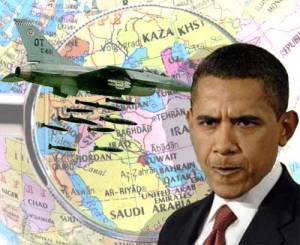 US military personnel are engaged in counterterrorism operations across 15 different countries, President Barack Obama said in a biannual statement to Congress released on Monday.
The letter outlined US military counterrorism operations across the globe in Afghanistan, Iraq, Syria, Turkey, Somalia, Yemen, Djibouti, Libya, Cuba, Niger, Cameroon, the Central African Republic, Egypt, Jordan, and Kosovo. All nations have US combat-equipped personnel deployed for a specific counterterrorism mission.
Obama indicated that that there is no timeline for the war on terrorism, and he will direct “additional measures to protect US citizens and interests” if necessary.
“It is not possible to know at this time the precise scope or the duration of the deployments of US Armed Forces necessary to counter terrorist threats to the United States,” Obama said.
Under the 2001 authorization for use of military force, the US president must update Congress every six months on the military operations against al-Qaeda, the Taliban and associated forces.
‘US govt, MSM give no evidence to confirm ex-Gitmo detainees reengage in terrorist activities’
RT | June 12, 2016
The US government isn’t providing any evidence to confirm reengagement of former Guantanamo detainees in terrorist activities. They give numbers they allege are accurate but provide no facts, said Andy Worthington of the Close Guantanamo group.
The US government’s greatest fears about releasing Guantanamo Bay prisoners are that inmates might re-emerge on the ‘battlefield’ and re-engage in terrorist activities. Seventeen percent of former detainees, or 118, are confirmed to have re-engaged in militant activity, while 13 percent, or 86, are suspected of re-engaging.
Author of “The Guantanamo Files” and co-founder of the group Close Guantanamo, Andy Worthington, told RT America’s Simone Del Rosario that the US government isn’t supplying any evidence to confirm their fears.
RT: You’ve dedicated a chunk of your life to documenting files and stories from Guantanamo not as an attorney, but as an investigative journalist. After all of your research, what do you consider to be the most pressing reason to close Guantanamo for good?
Andy Worthington: From the very beginning it’s been a bad idea. If you’re going to deprive people of liberty, there are only two ways to do that, if you claim to respect the rule of law. That is that you either charge them with a criminal offence and put them on trial in a Federal court – that would be in the US; or they’re soldiers protected by the Geneva conventions and you can hold them until the end of hostilities.
But after 9/11 the US did neither of those things. So the men held in Guantanamo were held initially without any rights whatsoever. Human beings deprived of all rights, which is a really shocking thing. Although, over the years there have been various efforts to give them legal rights – going up to the Supreme Court, the situation still is that the people held in Guantanamo are effectively prisoners of the political system – we can almost describe them as political prisoners. There is no recognizable justice in their cases. The releases from Guantanamo end up being down to a political process. That is just an unfair way for a country like the US, which claims to be founded on the rule of law and to respect the rule of law, to behave.
RT: As Obama’s term comes to a close are you finding yourself more or less hopeful that he will fulfill his promise to close Guantanamo Bay?
AW: I am certainly more hopeful than I was a few years ago. There was a period in the middle of Obama’s presidency when he’d faced a lot of abstraction from Congress; he was unwilling to spend political capital overcoming that. And for a period of nearly three years only five men were released from Guantanamo.
In 2013, a massive prison-wide hunger strike brought Guantanamo back into sharp focus and put pressure on President Obama to do something about it. Since then he has been releasing many prisoners. We are now in the best position that we’ve been in during his presidency – only one tenth of the men held in Guantanamo is still held there – just 80 men. Thirty of those men have been approved for release by a variety of review processes under President Obama. We have a promise from the administration that they will be released by the end of the summer. Of the rest of the men – so the other 50 – just 10 are facing trials, or have had trials. The other 40 are undergoing this latest review process called the periodic review boards. We don’t know how many of those are going to be approved for release, but at the current rate of the reviews three out of four of the men have been recommended for release – there are currently 24 out of 33 men recommended for release.
Now these are men who were initially described as “too dangerous to release,” but the Task Force that looked at their cases said there was insufficient evidence to put them on trial; or they are men who were initially put forward for prosecution by a Task Force that President Obama set up in his first year in office. But the basis for prosecution has since collapsed. Appeals Court judges ruled that the war crimes for which the majority of the men were being convicted had actually been invented by Congress and were not internationally recognized. That is just a little summing up of the extraordinary ways in which Guantanamo is a shame and embarrassment on every level.
RT: A Washington Post article came out citing the Obama administration and the Pentagon saying that at least 12 released Guantanamo detainees are implicated in attacks on Americans that have resulted in American deaths. Do some of those Congressional members, who are against the closure, have a point in wanting to keep some of these men locked up?
AW: I think, first of all, they would have to provide us with evidence and they never do. In the early days of the defense department providing information on prisoners who they said have returned to the battlefield, or … have engaged in some kind of anti-American activity. They would provide information about who these men were. For around five years now they have provided nothing. They tell us numbers that they allege accurate, but they don’t provide any further information so that people can do some investigation to judge whether the information is correct or not. They have people that they say are confirmed of engaging in anti-American activities and ones that are suspected. Those figures generally get lumped together by the right-wing lawmakers and by most parts of the mainstream media – very irresponsibly… But, as I said, they don’t provide the information. This latest article in the Washington Post is unfortunately yet another lazy example of propaganda masquerading as journalism, without giving us the facts how are we supposed to accept that there is any truth to this.
EPA Pushing Hike in Radioactive Contamination in Drinking Water
Corporate Crime Reporter | June 7, 2016
The Environmental Protection Agency (EPA) has unveiled a plan allowing radioactive contamination in drinking water at concentrations vastly greater than the levels permitted by the Safe Drinking Water Act for long periods following release of nuclear materials.
 The new guidance would permit radiation exposures equivalent to 250 chest X-rays a year for the general population for an unlimited time period.
EPA’s “Protective Action Guides” (or PAGs) dramatically relax allowable doses of radioactive material in public drinking water following a Fukushima-type meltdown or “dirty bomb” attack.
They cover the “intermediate phase” after “releases have been brought under control” – an unspecified period that may last for weeks, months or even years.
The agency has declared that the strict limits for chemical exposure in the Safe Drinking Water Act “may not be appropriate… during a radiation incident.”
EPA states that it “expects that the responsible party… will take action to return to compliance with the Safe Drinking Water Act maximum contaminant levels as soon as practicable” but during the indefinite meantime –
The general population may be exposed to radioactive iodine-131 at 10,350 pico-curies per liter of water.
By contrast, the current limit is 3, resulting in a 3,450-times increase;
The current strontium-90 limit of 8 pico-curies per liter would be allowed a 925-fold increase; and
In an attempt to shield “sensitive populations,” the plan proposes 500 millirem per year for the general population but only 100 millirem for children under 15, pregnant or nursing mothers without explaining how these latter groups will get access to less contaminated water.
“Given this monstrous proposal, it unclear what lessons EPA learned from the contaminated water calamity of Flint, Michigan,” said. Public Employees for Environmental Responsibility (PEER) executive director Jeff Ruch. “It is unfathomable that a public health agency would prescribe subjecting people to radioactive concentrations a thousand times above Safe Drinking Water Act limits as a ‘protective’ measure.”
Internal EPA documents obtained under Freedom of Information Act litigation brought by PEER show that EPA itself concluded that proposed concentrations “would exceed MCLs [Maximum Contaminant Limits of the Safe Drinking Water Act] by a factor of 100, 1000, and in two instances, 7 million.”
The internal analysis estimated for one radionuclide that drinking only one small glass of water “would result in an exposure that corresponds to a lifetime of drinking liters of water per day at the MCL level.”
The Bush Administration in its last days unsuccessfully tried to put forward similar proposals, which the incoming Obama Administration pulled back.
Now, in the waning months of the Obama Administration, those plans are moving forward with new exposure limits higher than the Bush plan it had rejected.
“President Obama goes to Hiroshima to urge a nuclear-free world while his EPA facilitates a nuclear-ridden water supply,” added Ruch. “It speaks volumes that the current Obama drinking water plan is less protective than his predecessor’s.”
Letting ‘Wall Street’ Walk
By Michael Brenner | Consortium News | June 3, 2016
Illicit financial behavior has been decriminalized in the United States – for all practical purposes. Despite the revelations of massive misconduct by banks and other financial services businesses, criminal investigations are rare, indictments exceptional and guilty judgments extraordinary.
Most potentially culpable actions are overlooked by authorities, slighted, reduced from criminal to civil status when pursued, individuals evade penalties much less punishment, and the appeals courts take extreme liberties in exonerating culprits when and if the odd conviction reaches them.
The last mentioned are establishing new frontiers in the formulation of ingeniously sophistic arguments to justify letting financial malefactors off the hook. As some wit suggests, all 32 or so judicial inventions should be assembled in a legal code called the Goldman Variations.
Our elected officials, our regulators, our politicos and the media have come to accept this as the natural order of things. Business Sections of newspapers, like The New York Times, read like the gazette for the world of organized crime in its heyday when the five Mafia families were on top of their game. (substitute Goldman Sachs, Chase Morgan, Bank of America, CITI, Wells Fargo). As for the Wall Street Journal and the legion of business magazines, they blend features of VARIETY and Osservatore Romano.
The reasons for this phenomenon are multiple: the rule of money in our politics; the neutering of regulatory bodies by the appointment of business friendly officers in symbiotic relationships with former or prospective employers; a wider culture in which the cult of wealth pervades all; and the timidity of a political class that defers to the power centers who enjoy rank, status and respect.
Obama’s appointment of Mary Jo White, from the white gloves law firm Debevoise & Plimpton which specialized in advising and representing Wall Street during the financial crisis (where she was head of litigation), to head the Security Exchange Commission is roughly analogous to appointing Dominick “Quiet Dom” Cirillo, consigliore of the Vito Genovese Mafia family, to run the FBI’s Organized Crime Task Force in Manhattan.
In White’s case, her earlier experience as United States Attorney for the Southern District of New York (the financial district) made her an exceptionally valuable acquisition when she switched sides in 2003 – 2013. Her record at the SEC since 2013 confirms her adherence to the Holder philosophy of leniency toward financial misdeeds – and confirms where her loyalties lie.
Appointments to senior positions dealing with financial matters have been primarily “parachutists.” Several of them are more egregious than the White case. So too was former Attorney-General Eric Holder. Within days of leaving the Justice Department, he was back at his former corporate law firm – albeit as a “counselor” for the one-year stipulated transition period.
During his years in private practice, Holder represented the Swiss private bank UBS. Because of this, he recused himself from participating in the Department of Justice investigation of UBS’s abetting of tax evasion by U.S. account-holders.
Such is the privileged status of our largest financial institutions that the Obama administration has amended, de facto, the Constitution to accommodate their claim to being above the law. Former Attorney General Holder is the author of the doctrine that posits the principle of “too-big-to-prosecute.”
Fearing Economic Damage
Holder’s publicly stated view is that he, the Justice Department and the Executive Branch generally have a right to exempt financial institutions from criminal prosecution when they believe that doing so would cause “unacceptable” damage to the national economy. It first took shape during Bill Clinton’s administration.
Holder presented the full-blown doctrine in a startling confession during testimony before the Senate Judiciary Committee on March 5, 2011. “I am concerned that the size of some of these institutions becomes so large that it does become difficult for us to prosecute them when we are hit with indications that if you do prosecute, if you do bring a criminal charge, it will have a negative impact on the national economy, perhaps even the world economy,” Holder said, according to The Hill newspaper.
Holder’s comments didn’t come as a total surprise. His underlings had already made similar confessions to The New York Times the previous year, after they declined to prosecute HSBC for flagrant, years-long violations of money-laundering laws, out of fear that doing so would hurt the global economy.
Lanny Breuer, formerly in charge of doling out the Justice Department’s wrist slaps to banks, told Frontline as much in the documentary “The Untouchables” which aired in January 2011.
Of course, President Obama and Attorney-General Holder had taken oaths to uphold the laws of the land. That pledge does not allow them personal discretion as to whom it applies. Yet, they have acted as if the Justice Department and the Executive Branch generally have a right to exempt financial institutions from criminal prosecution when they believe that doing so would cause “unacceptable” damage to the national economy.
Let us be clear; Holder is not referring to the interpretation and application of any legal standard. He is referring to a purely subjective standard that has nothing to do with the law. In a similar vein, it is reported that the Obama administration has instructed the Department of Justice and the FBI to make mortgage fraud its lowest priority and, indeed, to dismiss hundreds of cases without any investigation whatsoever. (Report of the Inspector General, Department of Justice March 11, 2014).
The administration also improperly has diverted funds appropriated for this specific purpose to other areas. This arbitrary exclusion from investigation of the largest category of financial crime has been made in the face of a well-publicized and solemn undertaking by both President Obama and Attorney General Holder to take bold and expeditious action in this area.
“Equal protection of the laws” is a principle enshrined in the Constitution. There is no allowance for the President or the Attorney General, who serves at the President’s pleasure, to establish special classes of persons who are exempt from the laws’ stipulations – either to make them immune or to deny them due process. Yet, that is what they explicitly have done.
In a commencement address at NYU in 2014, Holder stated bluntly: “Responsibility remains so diffuse, and top executives so insulated, that any misconduct could again be considered more a symptom of the institution’s culture than a result of the willful actions of any single individual.”
The Holder-Obama doctrine concentrates heavily on the disruptive effects on the nation’s (and the world’s) financial system were any of the too-big-to-fail banks brought low by a combination of criminal convictions and financial penalties that were greater than the profits made from systematically skirting the law – as currently done.
Addressing the Problem
That is a highly debatable proposition on purely technical grounds. Whatever the appraisal one makes, there are two straightforward solutions to the problem as stated.
First, one should break them up so that were they to “fail,” the systemic consequences would be manageable. Second, risk is increased rather than lowered by following a legal cum political strategy that has the effect of encouraging the managers of mega-financial institutions to play fast-and-loose in their financial maneuverings.
To return to the analogy of the five Mafia families, a law enforcement strategy that favored civil action over criminal prosecution, that entailed fines rather than prison time, and that kept those fines at a level where they could be calculated as a cost of doing a very lucrative business would result in a flourishing of criminal organizations – at great cost to society.
Moreover, were there a practice of Mafia bosses and police commissioners/district attorneys parachuting from one sphere to another, the collateral damage inflicted on all law enforcement would be enormous.
The Holder claim for corporate immunity is unsustainable by any reasonable legal standard and reading of the Constitution. Such reasonableness, though, no longer prevails. Witness the widespread passive acceptance of this novel revolutionary doctrine when it was pronounced – and its only slight rhetorical qualification since.
The radical idea that nominally criminal acts should be understood contextually and that judgment as well as punishment should be administered accordingly opens up a wide assortment of questions about the conduct of our judicial system.
There is no reason why it could not be applied generally to the entire range of criminal conduct and proceedings. Following the Holder-Obama logic, this should be done at every stage of jurisprudence: indictment, trial, judgment and punishment. A recent case in New York City illustrates what the implications might be.
In that instance, a woman was arrested at Kennedy airport for possession of 500 grams of cocaine. She was detained, indicted and convicted of a felony. All that followed the well-trod legal path. It was the sentencing that broke the mold.
Judge Frederick Block placed the woman on probation rather than throwing her into the slammer. His main argument, developed in a closely reasoned 46-page opinion, concentrated on the “collateral consequences” of her conviction. Those consequences were deemed adequate punishment to meet the requirements of the law, society and the felon’s long-term integration into the community. The addition of prison time would have made the punishment disproportionate to the crime. It would have exceeded – not fit – the crime.
What the judge pointed out is that so many legal disabilities attach to anyone convicted of a felony as to deny the person a reasonable chance of pursuing a normal life upon release. Those disabilities include disqualification for all kinds of access to government assistance programs which cover education, housing and employment. The net result would be a high likelihood of recidivism. From society’s perspective, that translates into a higher likelihood of costs associated with welfare, medical care, and possible re-institutionalization. In addition, there are the tangible and intangible costs for possible maintenance of any children she might bear.
The woman in question lives with her mother in New Haven where she was enrolled in college and was working part time as a nail technician. For her, the collateral consequences could be expected to be particularly high. The underlying logic, though, applies generally.
Setting Examples
What about the “systemic consequences?” Isn’t punishment for the commission of a crime supposed to act as a deterrent for others? Yes – in principle. That consideration, however, did not figure in the Holder-Obama doctrine as applied to financial misdeeds whose perpetrators are in a more visible position to set an example.
Indeed, one could argue that the sense of entitlement and expectation of having a right to act with impunity free of worry about accountability is far more pronounced among Wall Street executives than it is among inner city poor. Thereby, the positive value of criminal conviction followed by individual punishment would be commensurately greater in terms of a benefit to society.
The case cited above involves a felonious criminal act whose commission was proven in a court of law. American prisons, today, confine hundreds of thousands whose crimes are of a lesser order. Indeed, a significant percentage may not have committed any crime at all but rather are victims of police campaigns to cleanse the streets of those who allegedly have committed relatively minor misdemeanors.
Draconian enforcement of “zero tolerance” philosophies has led to widespread abuse of the police power in cities like New York. The absurd “three strikes and you’re out” strategy initiated in California and promoted nationwide by President Bill Clinton, has had even more dire results in spiking the incarceration rates, for longer terms – jailing mainly marijuana and other drug users who are a threat only to themselves rather than to society.
Much has been made of the dogmatic claim that a crackdown on misbehavior is the reason for the drastic drop in urban violent crime. This is an urban legend. In New York City, former Mayor Rudi Giuliani and his Police Commissioner Bill Bratton, have been lionized for this supposed achievement. Yet, the story is pure fiction.
The unprecedented sharp decline occurred under David Dinkins, his black predecessor who was widely criticized for being “soft on crime” and stinting in his support for the police. The truth is that violent crime was closely correlated with the crack epidemic and its recession – reinforced by other trends that registered nationwide.
For these categories of criminals and alleged criminals whose misdeeds fall in the category of misdemeanors, Judge Block’s concept of “collateral consequences” is even more compelling. The concept, in fact, should be broadened to pertain to arrest and prosecution as well as sentencing. The consequences to be taken into account properly should aggregate their weight for both the individual and society. Then, there are the intangible costs of mass criminalization and imprisonment.
Unsettling Markets
Yet, while rulings like Judge Block’s may be rare regarding “street crimes,” they have become routine regarding Wall Street crimes, which are not prosecuted in the name of the Holder doctrine concerned about the unsettling effects on investor confidence and markets from casting a dark cloud over “Wall Street.”
Again, this is dubious on technical grounds; and the logical responses obvious. Let us shift ground and think of the unsettling effects produced by legally stigmatizing a considerable slice of inner-city populations. Disruption of families, instilling widespread feelings of persecution, aggravation of relations with the police, more estranged race relations, etc. It may be difficult to place numbers on these costs, but the negative consequences for society are great.
The full extent of the decade-long police “zero tolerance” campaign, and its demoralizing impact on largely minority neighborhoods, is one of the great unreported stories of our times. Corruption was its hallmark: in its misleading justifications, in its methods that systematized entrapment and fabrication of charges (Examples: creating a public nuisance by drinking a beer from a can on the steps of your house; impeding pedestrian movement by stopping to chat while walking your dog at midnight; loitering in the hallway of your own apartment building).
Other elements of the corruption included its degeneration into a crass quota system, its abuse of the criminal justice system that jailed hundreds of thousands of innocents who couldn’t meet bail or hire a lawyer, forcing them to admit to misdemeanors that leave a permanent stain on their records in order to be released, and its exploitation by cynical politicians.
The one first-hand account that tells the tale is Matt Taibbi’s deeply disturbing DIVIDE (Spiegel & Grau 2014). It deals with New York City, but the same phenomenon is visible across urban America.
Collateral consequences can be a valuable concept – one that has multiple meanings. But it should be applied where it serves justice not iniquity.
Michael Brenner is a professor of international affairs at the University of Pittsburgh. mbren@pitt.edu
Featured Video

The Empire Enters the Cocaine Trade
or go to
Aletho News Archives – Video-Images
Book Summary
The Whole Soy Story: The Dark Side of America’s Favorite Health Food

Lies Are Unbekoming | January 20, 2026
Soybeans generate approximately $80 million annually in mandatory producer assessments alone, funding a marketing apparatus that has transformed an industrial commodity into one of America’s most trusted “health foods.” The campaign succeeded. Soy milk lines supermarket shelves beside dairy. Soy protein fortifies everything from infant formula to energy bars. Vegetarians rely on tofu and tempeh as dietary staples. Doctors recommend soy to menopausal women. School lunch programs serve soy-based meat substitutes to children. An estimated 60 percent of processed foods contain soy derivatives. The premise underlying this proliferation—that Asians have thrived on soy for millennia and that modern science validates its health benefits—has been repeated so often it functions as established fact.
Kaayla T. Daniel’s The Whole Soy Story dismantles this premise through systematic examination of the scientific literature. The book documents that traditional Asian soy consumption averaged roughly one tablespoon daily, consumed as fermented condiments after processing methods that neutralized inherent toxins—a pattern bearing no resemblance to American consumption of industrially processed soy protein isolate, soy flour, and soy oil. Daniel catalogs the antinutrients that survive modern processing (protease inhibitors, phytates, lectins, saponins), the toxic compounds created by industrial methods (nitrosamines, lysinoalanine, hexane residues), and the heavy metals concentrated in soy products (manganese, aluminum, fluoride, cadmium). She traces the mechanisms by which soy isoflavones—plant estrogens present at pharmacologically significant levels—disrupt thyroid function, impair fertility, and interact with hormone-sensitive cancers. The evidence emerges from peer-reviewed journals, FDA documents, and industry sources themselves.
The stakes extend beyond individual dietary choices. Infants fed soy formula receive isoflavone doses equivalent to several birth control pills daily, with blood concentrations 13,000 to 22,000 times higher than their natural estrogen levels. Soy protein isolate—the ingredient in formula, protein bars, and thousands of products—has never received GRAS (Generally Recognized as Safe) status; its only pre-1960s use was as an industrial paper sealant. Two senior FDA scientists formally protested their own agency’s approval of soy health claims, citing evidence of thyroid damage and reproductive harm. The Honolulu Heart Program found that men consuming tofu twice weekly showed accelerated brain aging and increased dementia. These findings have not penetrated public awareness because the institutions responsible for consumer protection have been compromised by the industry they regulate. The Whole Soy Story presents the evidence that has been systematically excluded from mainstream health messaging, enabling readers to evaluate for themselves what the soy industry prefers they never learn. … continue
Blog Roll
Recent Comments
seversonebcfb985d9 on French court jails pro-Palesti… eddieb on Fourteen Incredible Facts Abou… Bill Francis on European leaders’ shift in the… seversonebcfb985d9 on Villains of Judea: Philip Esfo… loongtip on Report warns that ‘Jewish terr… Craig Nelms on New study shows that toxic gas… loongtip on A Funny Thing Happened on the… loongtip on EU free trade pact on hold as… John Edward Kendrick on Regime Change In Iran Is The F… Bill Francis on Australia Passes New Hate Spee… seversonebcfb985d9 on Australia Passes New Hate Spee… Bill Francis on Britain’s AI Policing Plan Tur…


 Aletho News
- Germany to build 10GW of baseload gas plants (disguised as “future” hydrogen plants)
- French court jails pro-Palestine activist and mother over Gaza genocide speech
- Shot, amputated, and imprisoned: Palestinian man seeks to rebuild life after being maimed and tortured by Israeli forces
- Building Disney Land on the Moon More Likely than Kushner’s Gaza Plan
- U.S. Funds Continue to Flow to Ecuadorian Groups Despite Trump-Era Suspension
- A pro-EU regime is moving to suppress this proud nation. Will they be able to withstand it?
- US-Russia Arms Control May Face ‘Very Dark Period’ – Scott Ritter
- Israel moves to restrict Palestinian re-entry to Gaza, ‘encourage outflow’: Report
- Trump aims to create new UN and own it, Brazil’s Lula warns
- UN rapporteur says Israeli demolition of UNRWA compound reflects broader attack on UN system
- If Americans Knew
- Israeli drone strike kills two children collecting firewood in Gaza – Not a ceasefire Day 107
- Another Gaza baby freezes to death on Netanyahu’s watch – Not a ceasefire Day 106
- Oppose Israel’s Abuses While You Still Can
- UNRWA Heads Tell Ha’aretz: ‘We Don’t Radicalize Palestinians – Their Lived Existence Does’
- Plans Call for “New Rafah” Built in Israel’s Image — Without Palestinians
- Posing as priest, reporter is spat at many times, highlighting anti-Christian sentiment in Israel
- Leaked Documents: “Planned Community” in Rafah Would Force Palestinians Into Israeli Panopticon
- ‘Permits of Humiliation’: How Israel Strangles Christian Education in Jerusalem
- “The world sees death, destruction and injustice – and they see dollar signs” – Not a ceasefire Day 105
- War criminal Netanyahu kills 11 in Gaza, joins Board of Peace – Not a ceasefire Day 104
- No Tricks Zone
- Germany’s Natural Gas Crisis Escalates … One Storage Site Near Empty …Government Silent
- Polar Colding…Antarctica Saw Its Coldest October In 44 Years!
- New Study: Sea Levels Rose 20 Times The Modern Rate During The Roman Warm Period
- As German Gas Storage Dips Dangerously Low…Shortage Hardly Avoidable
- New Study: Brazil’s Relative Sea Level Was 2+ Meters Higher And SSTs 3-4°C Warmer 6000 Years Ago
- Philosopher Schopenhauer: Climate Science Certainty Stems From Stupidity, Ignorance
- New Study: Species Extinction Rates Declining Since 1980 – ‘Climate Change Is Not An Important Threat’
- Denmark Places Climate Protection Above Animal Welfare, Poisoning And Culling Cows
- New Study: Greenland Was 3-7°C Warmer And Far Less Glaciated Than Today 6000-8000 Years Ago
- German Media Report That Current Frigid Weather Can Be Explained By Arctic Warming!
 Aletho News