In May, JPMorgan Chase was listed as the largest bank in the world with assets at roughly $4 trillion — some $1.53 trillion of it in derivatives. This was reported a month after the announcement that the bank had posted a record first-quarter profit of $6.5 billion.
Jamie Dimon, the bank’s CEO and Chairman, has faced a host of scandals in relation to his management of the megabank, including the loss of roughly $6 billion through the London branch of the bank — losses that Dimon was accused of hiding. A 300-page report by the U.S. Senate, investigating the “creative accounting” of JPMorgan, noted that the bank “hid losses, did not share information with its regulators, and misled the public” in what one banking regulator referred to as “make believe voodoo magic.” Stated bluntly in The New York Times, JPMorgan Chase, the largest derivatives dealer in the world, “is too big to regulate.”
In the midst of the scandal, the bank faced a potential “revolt” of its shareholders in a bid to strip Dimon of his dual role as CEO and Chairman. In confidential government reports which were leaked to The New York Times, the bank was accused of “manipulative schemes” which transformed “money-losing power plants into powerful profit centers” while executives made “false and misleading statements” under oath.
Yet even in the midst of scandal, Jamie Dimon was praised in a storm of support by billionaires, corporate kingpins and media barons. Calling JPMorgan Chase “as good a bank as there is,” New York City mayor and billionaire media baron Michael Bloomberg went on to call Dimon “a very smart, honest, great executive.” News Corporation chairman Rupert Murdoch praised Dimon as “one of the smartest, toughest guys around,” while Jack Welch, former chairman and CEO of General Electric, referred to him as a “great leader” and said he had earned the “right to hold both Chairman and CEO titles.” To top it off, billionaire investor and CEO of Berkshire Hathaway, Warren Buffet, dubbed Dimon “a fabulous banker.”
And the adoration goes all the way to the top rung. In 2009, The New York Timesreferred to Jamie Dimon as “President Obama’s favorite banker.” In 2010, Obama told Bloomberg BusinessWeek that he didn’t “begrudge” bank CEOs like Jamie Dimon and Lloyd Blankfein of Goldman Sachs for their massive bonuses of $17 and $9 million, respectively. Obama explained: “I, like most of the American people, don’t begrudge people success or wealth. That is part of the free-market system.” The president added, “I know both those guys; they are very savvy businessmen.”
In May of 2012, Obama rushed to Jamie Dimon’s defense in light of the financial scandals, stating that Dimon was “one of the smartest bankers we got.” The Financial Timesreferred to Dimon as “the last king of Wall Street.” And when finally faced with the decision to strip Dimon of his dual role as chairman and CEO, Obama’s “favorite banker” ended up winning “a decisive victory” by maintaining both his roles.
But this is just the surface of JPMorgan Chase’s financial manipulations. The bank, in fact, was at the forefront of creating Credit Default Swaps (CDS), a key aspect of the derivatives market that led to the inflation and subsequent blowout of the housing bubble. JPMorgan developed these “financial instruments” as a type of insurance policy in 1994, allowing the bank to trade its debt (in the form of loans to corporations and governments) to third parties, thus handing off the risk and removing the debts from its accounts, which allowed it to make further loans. JPMorgan opened up the first CDS desk in New York in 1997, “a division that would eventually earn the name the Morgan Mafia for the number of former members who went on to senior positions at global banks and hedge funds.” Back in 2003, the same Warren Buffet who would later praise Dimon referred to credit default swaps as “financial weapons of mass destruction.”
JPMorgan was also at the forefront in the United States pushing for financial deregulation, particularly the slow-motion dismantling of the Glass-Steagall Act that had been put in place in 1933 in response to the financial speculation which had helped spark the Great Depression. After hearing proposals from banks such as Citicorp, JP Morgan and Bankers Trust, which advocated the loosening of “restrictions” put in place by Glass-Steagall, the Federal Reserve Board in 1987 voted to ease many of the regulations. That same year, Alan Greenspan, who had previously been a director of JP Morgan, became the chairman of the Fed. In 1989, the Fed approved an application submitted by JP Morgan, Chase Manhattan, Citicorp and Bankers Trust to further reduce the regulations imposed by Glass-Steagall. In 1990, JP Morgan became “the first bank to receive permission from the Federal Reserve to underwrite securities.”
Financial deregulation accelerated under President Clinton, much to the delight of Wall Street banks, which were then permitted to merge into megabanks, with JPMorgan merging with Chase Manhattan to form JPMorgan Chase. As early as 2006 and 2007, multiple megabanks were beginning to bet against the housing market through various hedge funds, allowing them to make profits on the housing collapse they created. JPMorgan continued to sell mortgages as it bet against the mortgage market, passing on the risk while it hedged its bets to profit from the failure and losses of others. In 2011, the bank paid a $153 million fine to the Securities and Exchange Commission (SEC) to settle allegations of “securities fraud.”
In the midst of the financial crisis in 2008, JPMorgan Chase became not only a major criminal, but also a prime beneficiary. In 2007, the global investment bank Bear Stearns was named by Fortune magazine as the second “most admired” financial securities company in the United States, while Lehman Brothers was put in first place. As the financial crisis erupted, Bear Stearns executives “discovered” that they were “nearly out of cash” in March of 2008. The CEO of Bear Stearns, Alan Schwartz, made a phone call to Jamie Dimon — JPMorgan Chase was the clearing agent for Bear Stearns — asking for an overnight loan. Dimon, who also sat on the board of directors of the Federal Reserve Bank of New York, turned there instead of providing the loan through his own bank. The president of the New York Fed – who was elected by the banks that own the New York Fed – was Timothy Geithner. Geithner began discussions with Bear Stearns, and the following morning he held a meeting with Federal Reserve Chairman Ben Bernanke and Treasury Secretary Henry Paulson, the former CEO of Goldman Sachs, where they agreed to an emergency loan for Bear Stearns, providing the funds through JPMorgan Chase.
Over the following day, Geithner and Paulson informed Bear Stearns that it must sell the bank within days, and a deal was negotiated in which JPMorgan Chase would purchase Bear Stearns at $2 per share. Though Dimon had first refused to purchase the failed bank, he now engaged in negotiations with Geithner who won over Dimon by guaranteeing $30 billion for JPMorgan to purchase the sunken bank. Long story short: through the New York Fed, the U.S. government purchased billions of dollars in bad debts made by Bear Stearns, including $16 billion in credit default swaps that were downgraded to “junk” assets, while JPMorgan Chase acquired $360 billion in Bear Stearns assets with little or no risk.
With the purchase of Bear Stearns facilitated by the New York Fed, and for the benefit of JPMorgan, Geithner continued in his role as willing servant to the banks who had elected him as president. Then, in September of 2008 when the insurance conglomerate American International Group (AIG) plunged into crisis and sought support from the government, the Fed and Treasury initially refused. AIG turned to JPMorgan Chase and Goldman Sachs, who went to the government to pressure for state support. The New York Fed, with Geithner at the helm, again organized a secret bailout of the institution, valued at $85 billion. In October, the government added an extra $38 billion to the AIG bailout, and the New York Fed provided a further $40 billion in November. Overall, U.S. taxpayers bailed out the insurance giant with $150 billion.
Because many banks kept junk assets with AIG which didn’t affect its balance sheets, the insurance giant was allowed to continue making risky loans. Meanwhile, the New York Fed, noted Bloomberg journalist David Reilly, acted as “a black-ops outfit for the nation’s central bank,” and as a “quasi-governmental institution [which] isn’t subject to citizen intrusions such as freedom of information requests.” The AIG bailout, wrote Reilly, revealed what could be described as a “secret banking cabal.” Through AIG, bailout funds went to American, French, German, British, Swiss, Dutch and even Canadian banks. Goldman Sachs received over $12 billion, and billions also went to Merrill Lynch, Bank of America, Citigroup, Wachovia, Morgan Stanley, and JPMorgan Chase.
JPMorgan Chase was using bailout money from the government to purchase other banks and companies. As one executive at the bankcommented in regards to a $25 billion bailout from the government, “I think there are going to be some great opportunities for us to grow in this environment.” The banks repaid the bailout loans from other bailout funds they got from government, siphoning off taxpayer moneyback and forth and rewarding them for their risky behavior. One university study noted that banks with political access – whether through lobbying efforts or board membership on the Fed – were more likely to get bailout funds, and in bigger numbers, than other banks. Notably among the most politically connected banks were Goldman Sachs, JPMorgan Chase and Morgan Stanley.
According to a 2012 study by the International Monetary Fund and Bloomberg magazine, JPMorgan Chase continues to receive government support far beyond the bailouts, as it is a major recipient of corporate welfare and state subsidies. In fact, according to the study, the biggest bank in the world gets roughly $14 billion per year in state subsidies and welfare, largely helping “the bank pay big salaries and bonuses.”
The Biggest and Most Connected Bank
Not only is JPMorgan Chase the biggest bank in the world with over $4 trillion in assets, but its power and influence extends far beyond financial matters. It is a major political force in the world, highly integrated within the network of global elites who make up the plutocratic ruling class. As the subject of study for the Global Power Project, I examined 55 people at JPMorgan Chase, including all members of the executive committee, the board of directors and the international advisory council.
Of the 55 individuals examined at the bank, a total of 13 (or roughly 24%) of the individuals were either members or held leadership positions (previously or presently) with the Council on Foreign Relations (CFR). The CFR has been at the heart of the foreign-policy elite of the United States since it was created in 1921. Further, a total of eight JPMorgan officials held leadership positions in the World Economic Forum, the second most represented institutional affiliation of the bank. Holding yearly conferences that bring together thousands of participants from elite financial, corporate, political, cultural, media and other institutions, the WEF is one of the principal forums for the global elite, with JPMorgan operating right there at the center.
The next most represented institution is the Trilateral Commission, with 5 individuals at JPMorgan Chase holding membership in the international think tank – or “global policy group” – uniting elites from North America, Western Europe and Japan (and now also including China, India, and other Pacific-rim nations). The Trilateral Commission itself was founded in 1973 by the CEO of Chase Manhattan Bank – which later merged into JPMorgan Chase – David Rockefeller.
In descending order, the other most highly represented institutions having cross membership between leadership positions with JPMorgan Chase are: the Federal Reserve Bank of New York (4), the Business Council (4), Citigroup (4), Bilderberg (4), the Group of Thirty (4), Sara Lee Corporation (3), Harvard (3), American Express (3), American International Group (3), the Business Roundtable (3), Rolls Royce (3), the Center for Strategic and International Studies – CSIS (3), the European Round Table of Industrialists (3), the Peterson Institute for International Economics (2), the U.S.-China Business Council (2), and the National Petroleum Council (2).
Institutions which hold two individual cross leadership positions with JPMorgan Chase include: the Monetary Authority of Singapore, the University of Chicago, Kohlberg Kravis Roberts & Co., General Electric, Asia Business Council, the U.S. President’s Foreign Intelligence Advisory Board, the National Bureau of Economic Research (NBER), the Coca-Cola Company, National Bank of Kuwait Advisory Board, INSEAD, China-United States Exchange Foundation, Mitsubishi, the Carlyle Group, and the IMF.
Meet the Elites at JPMorgan Chase
It’s worth taking a look at some specific individuals who serve in a leadership and/or advisory capacity to JPMorgan Chase to get an idea of the composition of some of these global plutocrats.
Jamie Dimon, the CEO of JPMorgan Chase, sits on the boards of directors of: the Federal Reserve Bank of New York, Harvard Business School, and Catalyst. He is a Trustee of the New York University School of Medicine, a member of the Executive Committee of the Business Council, a member of the Council on Foreign Relations, a member of the International Business Council of the World Economic Forum, a member of the Financial Services Forum, and a member of the International Advisory Panel of the Monetary Authority of Singapore.
Members of the board of JPMorgan Chase include James A. Bell, former President of Boeing and a current member of the board of Dow Chemical; Crandall C. Bowles, a director of Deere & Company and the Sara Lee Corporation, a former director of Wachovia, a Trustee of the Brookings Institution, on the Governing Board of the Wilderness Society, and a member of the Business Council and the Economic Club of New York. Other JPM board members include Stephen B. Burke, CEO of NBC Universal and Executive Vice President of Comcast Corporation; David M. Cote, the Chairman and CEO of Honeywell International who sits on President Obama’s National Commission on Fiscal Responsibility and Reform, on the advisory panel to Kohlberg Kravis Roberts & Co. (KKR), and is a member of the Trilateral Commission; and Lee Raymond, director of the Business Council for International Understanding, who sits on the advisory panel to KKR, is a member of the Council on Foreign Relations, and former Chairman of the National Petroleum Council as well as former Chairman and CEO of ExxonMobil, from which he retired in 2006 with a compensation package of $398 million.
JPMorgan Chase has an International Council which provides advice to the bank’s leadership on economic, political and social trends across various regions and around the world. The International Council is chaired by Tony Blair, former Prime Minister of the UK, who also sits as an adviser to Zurich Financial. The Council includes Khalid A. Al-Falih, the President and CEO of Saudi Aramco (Saudi Arabian Oil Company), the world’s largest oil company, who also sits on the International Business Council of the World Economic Forum. Former UN Secretary General Kofi Annan is also on JPMorgan’s International Council, and sits as Chairman of the Alliance for a Green Revolution in Africa (AGRA), a partnership between the Bill & Melinda Gates Foundation and the Rockefeller Foundation. Annan is also on the boards of the United Nations Foundation, the World Economic Forum, and he is a member of the Global Board of Advisors of the Council on Foreign Relations.
The Council includes the third richest man in Mexico, Alberto Bailléres, as well as the Chairman and CEO of Telecom Italia, Franco Bernabé, who was the former CEO of Eni, one of the world’s largest oil companies (and Italy’s largest corporation), as well as the former Vice Chairman of Rothschild Europe. Bernabé sits on the board of PetroChina, China’s largest oil company. Bernabé is also a member of the European Round Table of Industrialists (a group of roughly 50 major European CEOs who directly advocate and work with EU political leaders in designing and implementing policy), he was a former Advisory Board member of the Council on Foreign Relations, a member of the board of FIAT, and is actively a member of the Steering Committee of the Bilderberg Meetings.
Martin Feldstein, a prominent Economics professor at Harvard and the President Emeritus of the National Bureau of Economic Research, is another member of the International Council. Feldstein was the Chairman of the Council of Economic Advisers to President Ronald Reagan and sat on the Foreign Intelligence Advisory Board (an “independent” group that advises the president on intelligence matters) under President George W. Bush (from 2007-2009). President Obama appointed Feldstein to the Economic Recovery Advisory Board, and he also sits on the board of the Council on Foreign Relations, is a member of the Trilateral Commission, a participant in Bilderberg Meetings, and is a member of the International Advisory Board of the National Bank of Kuwait.
Gao Xi-Qing is the Vice Chairman, President and Chief Investment Officer of the China Investment Corporation (CIC), China’s sovereign investment fund. He was referred to by the Atlantic as “the man who oversees $200 billion of China’s $2 trillion in dollar holdings.” Another notable Chinese member of the International Council is Tung Chee Hwa, the former Chief Executive and President of the Executive Council of Hong Kong, a core policy-making institution in the government of Hong Kong. Tung Chee Hwa is also the Vice Chairman of the National Committee of the Chinese People’s Political Consultative Conference (CPPCC), a major political advisory group in the People’s Republic of China, once chaired by Mao Zedong. Tung Chee Hwa as well is the founder and Chairman of the China-United States Exchange Foundation, and a former member of the International Advisory Board of the Council on Foreign Relations.
Carla A. Hills is the only woman on the JPMorgan International Council, and is Chairman and CEO of Hills & Company International, a global consulting firm. She was the former United States Trade Representative in the George H.W. Bush administration, where she was the primary negotiator for the North American Free Trade Agreement (NAFTA). She is also the Co-Chair of the Council on Foreign Relations, and sits on the International Boards of Rolls Royce and the Coca-Cola Company, as well as sitting on the board of directors of Gilead Sciences. Hills is a Counselor and Trustee of the Center for Strategic and International Studies (CSIS), a major American think tank where she also sits as Co-Chair of the Advisory Board (alongside Zbigniew Brzezinski, co-founder of the Trilateral Commission). In addition, Hills is a member of the Executive Committee of both the Trilateral Commission and the Peterson Institute for International Economics, as well as sitting on the boards of the International Crisis Group and the US-China Business Council, as Chair of the National Committee on US-China Relations, and Chair of the Inter-American Dialogue.
Henry Kissinger – former U.S. Secretary of State, National Security Adviser to President Richard Nixon, and Secretary of State to President Ford – also sits on the International Council of JPMorgan. Kissinger was a former adviser to Nelson Rockefeller, who recruited Kissinger as director of the Special Studies Project of the Rockefeller Brothers Fund in the 1950s. Kissinger was a director of the Council on Foreign Relations from 1977-1981, is a member of the Trilateral Commission, a former member of the Steering Committee and continuous participant in the Bilderberg Meetings, and is founder and chair of Kissinger Associates, an international consulting and advisory firm. Kissinger Chaired the National Bipartisan Commission on Central America during the Reagan administration, which provided justification for Reagan’s wars in Central America, and he was also a member of the Foreign Intelligence Advisory Board from 1984-1990, advising both Presidents Reagan and George H.W. Bush. Alongside Zbigniew Brzezinski, Kissinger was a member of the Commission on Integrated Long-Term Strategy of the National Security Council and Defense Department, established in the late 1980s to develop a long-term strategy for the United States in the world. Kissinger has also been a member of the Defense Policy Board, providing “independent” advice to the Pentagon leadership on matters of foreign policy, from 2001 to the present, for both the George W. Bush and Barack Obama administrations. Kissinger is also a Counselor and Trustee of the Center for Strategic and International Studies (CSIS), Honorary Governor of the Foreign Policy Association, an Honorary Member of the International Olympic Committee, an adviser to the board of directors of American Express, and is a Trustee Emeritus of the Metropolitan Museum of Art. In addition, Kissinger is a director of the International Rescue Committee, the Atlantic Institute, and is on the advisory board of the RAND Center for Global Risk and Security, as well as Honorary Chairman of the China-United States Exchange Foundation.
Mustafa V. Koc is also a member of the International Council, and is Chairman of Koc Holding AS, Turkey’s largest multinational corporation. He also sits on the International Advisory Board of Rolls Royce, the Global Advisory Board of the Council on Foreign Relations, is a member of the Steering Committee of the Bilderberg Meetings, a former member of the International Advisory Board of the National Bank of Kuwait, and is Honorary Chairman of the Turkish Industrialists and Businessmen’s High Advisory Council.
Gérard Mestrallet is the Chairman and CEO of GDF Suez, one of the largest energy conglomerates in the world, and is on the board of Suez Environment (one of the major water privatization companies in the world), and also sits on the supervisory board of AXA, a major global French financial conglomerate. He is also an advisory board member of Siemens, and is a member of the European Round Table of Industrialists and the International Business Council of the World Economic Forum.
John S. Watson is the Chairman and CEO of Chevron Corporation. He is on the board of the American Petroleum Institute and is a member of the National Petroleum Council, the Business Roundtable, the Business Council, the American Society of Corporate Executives, and the Chancellor’s Board of Advisors of the University of California Davis. He is also a member of the International Business Council of the World Economic Forum.
The Chairman of JPMorgan Chase International, Jacob A. Frenkel, is Chairman and CEO of the Group of Thirty, and a member of the International Council. He is also a former Vice Chairman of American International Group (from 2004 to 2009, when it was rescued with the massive government bailout); the former Chairman of Merrill Lynch International (from 2000 to 2004), and the former Governor of the Bank of Israel (from 1991 to 2000). Frenkel was an Economic Counselor and Director of Research at the International Monetary Fund (from 1987 to 1991) and prior to that he was the David Rockefeller Professor of International Economics at the University of Chicago (from 1973 to 1987). In addition, Frenkel is the former Editor of the Journal of Political Economy, former Vice Chairman of the Board of Governors of the European Bank for Reconstruction and Development, former Chairman of the Board of Governors of the Inter-American Development Bank, and a former member of the International Advisory Board of the Council on Foreign Relations. Frenkel is currently a member of the board of directors of the National Bureau of Economic Research (NBER), a member of the Trilateral Commission, member of the International Advisory Council of the China Development Bank, member of the board of the Peterson Institute for International Economics, member of the Economic Advisory panel of the Federal Reserve Bank of New York, member of the Council for the United States and Italy, member of the Investment Advisory Council of the Prime Minister of Turkey, and sits on the board of Loews Corporation.
To sum: it should be clear, from the evidence, that the leadership of JPMorgan Chase is not an isolated group of individuals involved in finance and exclusively relegated to the banking world, but a highly networked and influential group consisting of central figures in the global plutocracy – referred to as the “Transnational Capitalist Class” – with significant economic, social and political power. To refer to JPMorgan Chase simply as “a bank” is like referring to the United States as just “a country.” A geopolitical force unto itself, and a conglomerate embedded within a transnational network of elite institutions and individuals, JPMorgan Chase goes beyond the financial indicators. Put simply, it is one of the most powerful banks in the world.
Andrew Gavin Marshall is an independent researcher and writer based in Montreal, Canada. He is Project Manager of The People’s Book Project, head of the Geopolitics Division of the Hampton Institute, the research director of Occupy.com’s Global Power Project, and has a weekly podcast with BoilingFrogsPost.
At a Washington Institute policy forum luncheon debate on June 28 entitled “Arming the Rebels: Sliding Toward Iraq or Inching Toward Stability,” Andrew J. Tabler, a senior fellow in the institute’s program on Arab politics, hinted at the pro-Israel think tank’s influence over President Obama’s recent shift in Syria policy. Referring to his Foreign Affairs piece entitled “Syria’s Collapse: And How Washington Can Stop It,” Tabler said he would like to say that it “follows a lot” of President Obama’s responses in a major June 17 television interview. Whether out of modesty or a desire to downplay the Israel lobby’s role in deepening Washington’s involvement in the destabilization of Syria, a smiling Tabler added, “I’m sure that he didn’t read it and then just go and regurgitate it to Charlie Rose.”
WINEP’s executive director Robert Satloff was similarly coy in his introduction. Describing Tabler as a “very consulted” expert on Syria, Satloff said, “I won’t go into the details of the consultations” he has with senior government officials “but suffice to say that the arguments that we’ll be hearing today very much reflect the arguments that are on the table.”
Given the proven track record of such arguments made “in the national interest” by partisans of Israel, it would appear that its oblivious American proxy is rapidly sliding toward another Iraq.
Maidhc Ó Cathail is an investigative journalist and Middle East analyst. He is also the creator and editor of The Passionate Attachment blog, which focuses primarily on the U.S.-Israeli relationship. You can follow him on Facebook and Twitter @O_Cathail.
Centuries of oppression have made black people particularly susceptible to the tempting siren song which comes with the image of black success. It is harmless to want a black person to win some coveted acclaim like a Pulitzer prize or even an Oscar, but quite another to be rendered stupid by the sight. Our history teaches us that we must be wary lest we be carried away by emotion that is without substance.
Barack Obama is the most obvious example of this phenomenon and its pernicious influence. A black man being elected as president of the United States was long hoped for but seemingly impossible. The realization of what had long been imagined and the often racist attacks against this dream create common cause with Obama and intense personal happiness on his behalf. Yet what seems inspirational is in fact anything but. The feelings of affection for Obama have been a negative force which impede rational thought and political common sense. The people who most epitomized the American search for true democracy have given it up completely because they love seeing a black man wearing a POTUS jacket and get angry when white people don’t like seeing it.
That history of struggle and the group identity it creates have not been limited to the American experience. The decades long fight against the racist apartheid system in South Africa was supported by millions of people in this country too. Jim Crow was America’s own apartheid. It is only logical that the sight of black people being treated cruelly in the name of white supremacy would elicit feelings of affinity in this country and around the world.
Nelson Mandela’s release from 27 years of imprisonment and his subsequent election as president created a surge of pride and joy among black people everywhere. Unfortunately we did not truly understand what we were witnessing. These events came about as a result of forces unacknowledged in America and they also came with a very high price.
The name of the Angolan town Cuito Cuanavale means little to all but a handful of Americans but it lies at the heart of the story of apartheid’s end. At Cuito Cuanavale in 1988 Cuban troops defeated the South African army and in so doing sealed apartheid’s fate.
It is important to know how apartheid ended, lest useless stories about a miraculously changed system and a peaceful grandfatherly figure confuse us and warp our consciousness. Mandela was freed because of armed struggle and not out of benevolence. He was also freed because the African National Congress miscalculated and made concessions which have since resulted in terrible poverty and powerlessness for black people in South Africa. By their own admission, some of his comrades concede that they were unprepared for the determination of the white majority to hold the purse strings even as they gave up political power.
Now the masses of black South Africans are as poor as they were during the time of political terror. The Sharpeville massacre of 1960 which galvanized the world against South Africa was repeated in 2012 when 34 striking miners were killed by police at Marikana. The Marikana massacre made a mockery of the hope which millions of people had for the ANC and its political success.
Obama’s recent visit to South Africa when the 94 year old Mandela was hospitalized created a golden opportunity for analysis and a questioning of long held assumptions about both men but the irrefutable fact is this. The personal triumphs of these two individuals have not translated into success for black people in either of their countries.
The victory of international finance capital wreaks havoc on both sides of the Atlantic ocean. In the U.S. black people have reached their political and economic low point during the Obama years. The gains won 50 years ago have been reversed while unemployment, mass incarceration, and Obama supported austerity measures have all conspired to undo the progress which was so dearly paid for.
Obama’s visit to Africa as Mandela lay critically ill brought very sincere but very deeply misled people to remember all of the wrong things. It isn’t true that black people benefit from the political success of certain individuals. It isn’t true that role models undo systemic cruelty or that racism ends because of their presence or that white people see or treat the masses of black people any differently when one black person reaches a high office.
The maudlin sentiment was all built on lies. Mandela fought the good fight for many years and is worthy of respect for that reason alone. But his passing should be a moment to reflect on his mistakes and on how they can be avoided by people struggling to break free from injustice. Obama’s career is a story of ambition and high cynicism which met opportunity. There is little to learn from his story except how to spot the next evil doer following in his footsteps.
It is high time that myths were called what they are. They are stories which may help explain our feelings but they are stories nonetheless and they do us no good.
Margaret Kimberley’s Freedom Rider column appears weekly in BAR. She can be reached via e-Mail at Margaret.Kimberley(at)BlackAgendaReport.com.
Evidently, in the worldview of the New York Times, the United States can play a “vital role in improving” a country despite subjecting it to mass famine death, while at the same time be a victim of the country’s internal troubles. This remarkable interpretation of recent events is implied from the few statements made about Somalia this past week.
As Carol Giacomo, a member of the NYT’s editorial board, informs us, the Obama administration “has played critical roles in stabilizing Somalia.” Elsewhere, NYTreporters cite the view of J. Stephen Morrison, an analyst at the Center for Strategic and International Studies, that the administration has played a “vital role in improving Somalia, a country whose troubles have bedeviled several American presidents.” When Somalia is the topic of discussion, the views expressed here are often put forth and taken for granted.
Before subjecting these views to Obama’s actual record, let us briefly entertain a hypothetical in order to achieve some helpful perspective. Imagine that Syria was on the brink of famine. And in its effort to prop up the Assad regime and prevent aid from “benefitting” the rebels, the Iranian government prevented international humanitarian relief agencies from providing life-saving assistance to civilians in rebel-controlled territory. By doing so in this hypothetical, Tehran played a major role in causing the death of an estimated 250,000 people. Needless to say, the American press would not overlook this policy in investigating whether Iran has played a “vital role in improving” Syria.
Of course, no historical analogy is perfect. But the one drawn here is sufficiently close to illustrate how remarkable the statements cited above are in light of the Obama administration’s record on the 2011 Somali famine, which may have killed over 250,000 people, according to a recent mortality study.
Obama’s contribution to humanitarianism has been to lead an assault on the very notion of humanitarian relief. The victims of the Somali famine are part of this legacy. By instituting and enforcing “counterterrorism” restrictions on aid operations, his administration effectively criminalized humanitarian relief in regions where anyone labelled a “terrorist” resides. In Somalia, this meant criminalizing relief in Al Shabaab-controlled territory, which was nearly all of southern Somalia. Due to these restrictions and Al Shabaab’s ban on numerous Western aid agencies, the region was largely “depopulated” of humanitarian relief operations. When an “epic” drought hit the Horn of Africa in late 2010 and 2011, the conditions were ripe for famine. (For a detailed assessment of the famine’s various causes and contributive factors, see the special issue on the Somalia famine in Global Food Security.) Despite the fact that the catastrophe was predicted close to a year in advance, the U.S. refused to de-criminalize humanitarian relief in the region, even after the UN officially declared famine in July 2011.
It’s true that to some degree conditions in Somalia have improved, particularly on the political front. However, it’s arguable that progress in this area has occurred largely in spite of the policies pursued by the U.S. and other Western “donors,” rather than because of them. Putting aside this issue, we should recall that since 2006 Somalia has struggled to climb out of the hell that Washington and its regional client, Ethiopia, created. Indeed, Somalia has been “bedeviled” by Washington far more than the other way around–there’s simply no comparison. Here’s a quick list of some of the more notable policies pursued by Somalia’s patron saint: the closure of Somalia’s largest remittance company, Al Barakaat, in November 2001; hiring warlords to wage a dirty war on the streets of Mogadishu (2004-2006); authoring Ethiopian aggression and backing its brutal two year-long occupation (2006-2009); criminal airstrikes and drone strikes (see link); criminalizing humanitarian relief (2009 to present); and supporting Kenya’s criminal invasion that began in October 2011. (For more on this record, see my articles: “War and famine, the only option?,” part I and part II, ZNet, September 2011; “Kenya’s Criminal Assault on Famine-Stricken Somalia,” Truthout, December 18, 2011; “Somalia’s ‘Climate of Impunity’ Enjoyed By More Than Just Pirates,” NYT eXaminer, August 1, 2012; and “The Maury Levy Method of Journalism,” NYT eXaminer, October 28, 2012.)
To conclude, when readers of the “paper of record” come across historical themes that concern Somalia, they should assume the opposite is true and then investigate for themselves. Last week confirmed the reliability of this heuristic device, which very well may have wider application.
President Obama defended the spying scandal on his tour of Africa, and was joined by predecessor George W Bush, which highlighted how similar they have become by forgetting campaign promises while occupying the White House.
President Obama’s Africa trip is overshadowed by new allegations that the United States is committing widespread surveillance on its allies. The President defended these NSA programs saying that all countries are doing similar snooping.
“They’re going to be trying to understand the world better and what’s going on in world capitals around the world, from sources that aren’t available through the New York Times or NBC News,” he said in Tanzania this week.
He added, “I guarantee you that in European capitals, there are people who are interested in, if not what I had for breakfast, at least what my talking points might be, should I end up meeting with their leaders.”
Appropriately, just as President Obama was defending his administration against these spying scandals, he was joined in Africa by his predecessor, George W. Bush.
Presidents 43 and 44 met in Tanzania on Tuesday laying a wreath at the site of the 1998 American embassy bombings. They were together far, far away from the White House, an office currently dealing with the fallout from all its intelligence secrets being laid bare for the world to see. Secrets created by both Presidents Bush and Obama.
These two men couldn’t be more different. Barely of the same generation, they are from different socio-economic backgrounds, from different parts of the country, and from different intellectual backgrounds and professions. They had different upbringings, different hobbies, and different religious beliefs.
But they did hold the same office. And that’s why on Tuesday, in Tanzania, Bush and Obama looked more similar than ever before. It’s as though the White House took hold of these two very different men, chewed them up and spit them out into two monochromatic globs who forgot who they were before moving in to the highest office in the land. And most importantly forgot their ideals.
Remember, it was as a presidential candidate in 2008 that Barack Obama opposed mass domestic surveillance, saying: “I will provide our intelligence and law enforcement agencies with the tools they need to track and take out the terrorists without undermining our Constitution and our freedom. That means no more illegal wire-tapping of American citizens. No more national security letters to spy on citizens who are not suspected of a crime. No more tracking citizens who do nothing more than protest a misguided war. No more ignoring the law when it is inconvenient. That is not who we are.”
Edward Snowden’s leaks prove that now as President, Obama has thrown out all those campaign promises. Not only that, he’s expanded their global reach and justified this expansion by basically saying, “All countries are doing it so we have to also.”
This is what five years in the White House does to a person.
And remember, it was as a Senator in 2007 that Barack Obama supported legislation that would have protected journalists from heavy-handed subpoenas by the DOJ. It was called the Free Flow of Information Act, and it was directly opposed by George W. Bush in the White House. The legislation failed, and two years later, when Obama was in the White House, he made sure the legislation went nowhere, working actively to water it down. And then his Justice Department went to unprecedented lengths to target journalists at the AP and at Fox News.
And of course, one can only assume, that as a member of the Illinois Senate in 2002 when he spoke out so passionately against the Iraq War, that Barack Obama didn’t imagine a decade later he’d be at the helm of a global drone war targeting not just Afghanistan and Iraq, but also Pakistan, Yemen, and Somalia.
So, what causes the transformation? Maybe it’s what Eisenhower warned of in 1961 – the power of the military industrial complex. Maybe it’s the immense political pressure to keep the nation safe from terrorism. Maybe it’s the weight of responsibility of steering a world superpower. Maybe it’s a combination of all of these.
But the office has affected not just Obama and Bush, but also Clinton and George HW Bush and Reagan. All have used the force of our military around the world.
The only President who didn’t start his own conflict was Jimmy Carter more than 30 years ago. Carter also tried to ban extra-judicial assassinations. And today, he’s distinguished himself from both Bush and Obama, calling Snowden’s leaks “beneficial”.
But Carter was tossed out of the White House after only one-term. The Presidents who came later learned this lesson. And now, both of them two-term presidents meet in Africa. Bush, the man who created the machine, and Obama, the man who innovated it.
Both men shaped not by their political ideology, but by their time in the White House taking the reins of the American superpower and doing everything it takes – from war to mass surveillance – to hold on in a world that’s becoming more and more hostile to superpowers.
President Barack Obama, a man of infinite cynicism, made a great show of going on pilgrimage to Nelson Mandela’s old prison cell on Robben Island, where the future first Black president of South Africa spent 18 of his 27 years of incarceration. With his wife and daughters in tow, Obama said he was “humbled to stand where men of such courage faced down injustice and refused to yield…. No shackles or cells can match the strength of the human spirit,” said the chief executive of the unchallenged superpower of mass incarceration, a nation whose population comprises only 5 percent of humanity, but is home to fully one-quarter of the Earth’s prison inmates.
True sociopaths, like the commander-in-chief who updates his Kill List every Tuesday, have no sense of shame, much less irony. Obama feigns awe at Mandela’s suffering and sacrifice in the prisons of apartheid South Africa, yet presides over a regime that, on any given day, holds 80,000 inmates in the excruciating torture of solitary confinement. During Nelson Mandela’s nearly three decades of imprisonment by the white regime, he spent a total of only about one week in solitary confinement. The rest of the time, despite often harsh treatment, backbreaking labor, and unhealthy conditions, Mandela and other political prisoners at Robben Island and other South African jails were typically housed together. Indeed, Mandela and his incarcerated comrades called the prisons their “university,” where they taught each other to become the future authorities over their jailers.
Racist South Africa’s treatment of Mandela and his co-revolutionists was downright benign and enlightened, compared to fate of U.S. prisoners who are deemed a threat to the prevailing order.At U.S. high security facilities, the slightest evidence that an inmate is of a political bent of mind is cause for him to be condemned to a solitary existence for decades – a social death alien to the human species. At California’s Pelican Bay and the state prison at Corcoran, thousands of inmates are held in isolation, 80 of them for more than 20 years, the very definition of barbarism. Yet, Obama journeys across oceans and continents to stand for a photo op in the cell of a prisoner whose ordeal was nowhere near as horrific as the standard fare for political prisoners in his own country.
On his trip to South Africa, Obama proclaimed that “the world is grateful for the heroes of Robben Island.” And, that’s certainly true, although it was a U.S. intelligence agent who lured Nelson Mandela into a trap in 1962 that ultimately led to his capture and imprisonment. Obama has no sympathy, however, for political prisoners of any race in his own country. Former Black Panther Herman Wallace is thought to be the longest-serving prisoner in solitary confinement in the United States, having spent 40 years alone in a cell in Louisiana’s notorious Angola Prison. Obama could free him at any time, but of course, he won’t. He could emancipate Black Panther captive Russell Maroon Shoatz, who has spent nearly 30 years in solitary, or Republic of New Africa political prisoner Mutulu Shakur or any and all of the scores of other aging political prisoners – people whose dedication to human freedom is no less than Mandela’s, yet have been subjected to far worse treatment at American hands. Instead, Obama has doubled the bounty on Shakur’s comrade and sister, Assata, in exile in Cuba. She might even be on Obama’s Kill List – which is the real and authentic legacy of this country’s First Black President.
Just as President Obama disgracefully used Martin Luther King’s Bible at his Inauguration to tie himself to the great pacifist civil rights leader, so this totalitarian-minded, warmonger president claimed in South Africa Sunday to have been inspired by Nelson Mandela, whose legacy he said “we must all honor in our own lives.” Coming from an American president linked so intimately to the CIA as is Mr. Obama, this declaration is laughable. It was the CIA, after all, that fingered Mr. Mandela, then head of the African National Congress, to BOSS, the country’s secret police, who, acting on the CIA’s tip, arrested Mandela and clapped him in the notorious Robben Island prison for 18 years. Yes, that was the very same prison Mr. Obama toured with his family this week, his face reflecting a mournful aspect, as he allegedly contemplated the suffering Mr. Mandela endured to liberate his country from the white apartheid regime.
In his book about the CIA, “Legacy of Ashes”, former New York Times man Tim Weiner writes, “The African National Congress leader, Nelson Mandela, had been arrested and imprisoned in 1962, thanks in part to the CIA.” Weiner pointed out the CIA “worked in the closest harmony” with South Africa’s BOSS. Weiner quotes Gerry Gossens, a CIA station chief in four nations during the administrations of Presidents Nixon, Ford, and Carter, stating that CIA officers stood “side-by-side with the security police in South Africa. The word was that they had fingered Mandela himself.”
And has Mr. Obama done anything on his watch to reform the CIA? No way! Not only does he not prosecute those CIA agents guilty of torture and murder but by his own admission he personally directs the CIA thugs who kidnap and/or assassinate suspects with no due process of law. As of now, the Pakistan government reports at least 400 civilians have been killed in the attacks, the most recent horror being 17 killed on July 3 in a Pakistan drone strike.
A Grand Canyon-sized chasm looms between the principles of Mandela and Obama. When Mandela assumed power he created a Truth and Reconciliation Commission to investigate crimes committed by the former apartheid government. Just the opposite, President Obama says he will not investigate the CIA torturers who plied their grisly trade under President George W. Bush. No Grand Dragon in America’s Klans ever left the wide swath of murder and mayhem that Mr. Obama is creating in the Middle East and Africa while he poses as an admirer of Rev. King and Mandela. According to the Bureau of Investigative Journalism, Obama’s drone attacks alone have killed more than 3,500. Since none had the opportunity of a trial, the presumption must be all were innocent.
As for civil rights, when Mandela held office he pressed for an American style Bill of Rights for South Africa as opposed to Mr. Obama, who has been actively shredding that venerable document. An army of NSA snoops has been spying on Americans by the millions as well as on the conversations of the Associated Press, a blatant attack on freedom of the press. Obama has also signed the National Defense Authorization Act into law which allows the president to order the military to arrest any person on suspicion and jail them indefinitely without even a trial. Again, that’s the opposite of the Mandela approach to individual freedom. Speaking of freedom, even as Mr. Obama brays he is “deeply honored” to visit Mandela’s cell on Robben Island, he operates a Gulag today of cells stretching from Guantanamo to Afghanistan and beyond. Having spent weeks with MLK in the civil rights movement in the South, this reporter can say without fear of contradiction that the thug in the White House is no Martin Luther King. On the contrary—with his sneaky, secret, extra-judicial attacks and murders—President Obama today carries on the traditions associated with the Ku Klux Klan.
###
Sherwood Ross spent most of the Sixties active in the civil rights movement or activities related to civil rights. Reach him at sherwood.ross@gmail.com
On June 9, a U.S. drone fired on a vehicle in a remote province of Yemen and killed several militants, according to media reports.
It soon emerged that among those who died was a boy – 10-year-old Abdulaziz, whose elder brother, Saleh Hassan Huraydan, was believed to be the target of the strike. A McClatchy reporter recently confirmed the child’s death with locals. (Update: The London-based Bureau of Investigative Journalism today reported that there was “strong evidence” it was a U.S. drone strike, but it could not confirm the fact.)
It’s the first prominent allegation of a civilian death since President Obama pledged in a major speech in May “to facilitate transparency and debate” about the U.S. war on al Qaida-linked militants beyond Afghanistan. He also said “there must be near-certainty that no civilians will be killed or injured” in a strike.
So what does the administration have to say in response to evidence that a child was killed?
Nothing.
National security spokeswoman Caitlin Hayden would not comment on the June 9 strike or more generally on the White House position on acknowledging civilian deaths. She referred further questions to the CIA, which also declined to comment.
The president’s speech was the capstone on a shift in drone war policy that would reportedly bring the program largely under control of the military (as opposed to the CIA) and impose stricter criteria on who could be targeted. In theory, it could also bring some of the classified program into the open. As part of its transparency effort, the administration released the names of four U.S. citizens who had been killed in drone strikes.
An official White House fact sheet on targeted killing released along with the speech repeated the “near-certainty” standard for avoiding civilian casualties. Secretary of State John Kerry reiterated it a few days later, when he told an audience in Ethiopia: “We do not fire when we know there are children or collateral — we just don’t do it.”
But White House press secretary Jay Carney said in late May that “this commitment to transparency…does not mean that we would be able to discuss the details of every counterterrorism operation.”
The new White House statements don’t address what happens after a strike, even in general terms.
CIA Director John Brennan offered one of the few public explanations of how casualties are assessed during his nomination hearing in February. Before his confirmation, Brennan was the White House counterterrorism adviser, and is considered to be the architect of Obama’s drone war policy.
He told senators that, “analysts draw on a large body of information — human intelligence, signals intelligence, media reports, and surveillance footage — to help us make an informed determination about whether civilians were in fact killed or injured.”
Brennan also said the U.S. could work with local governments to offer condolence payments. As we’ve reported, there’s little visible evidence of that happening.
At the hearing, Sen. Ron Wyden, D-Ore., asked Brennan if the U.S. should acknowledge when it “makes a mistake and kills the wrong person.”
“We need to acknowledge it publicly,” Brennan responded. Brennan also proposed that the government make public “the overall numbers of civilian deaths resulting from U.S. strikes.”
Neither overall numbers nor a policy of acknowledging casualties made it into Obama’s speech, or into the fact sheet. Hayden, the White House spokeswoman, would not say why.
The government sharply disputes that there have been large numbers of civilian deaths but has never released its own figures. Independent counts, largely compiled from news reports, range from about 200 to around 1,000 for Pakistan, Yemen and Somalia combined over the past decade.
Researchers agree that the number of drone strikes and civilian deaths have dropped during the past year. (Before Obama’s speech, an administration official attributed this partly to the new heightened standards.) The London-based Bureau of Investigative Journalism, which generally has the highest tally of civilian dead, has found there were between three and 16 civilians reportedly killed in about 30 drone or other airstrikes in Yemen and Pakistan so far this year. No strikes have been reported in Somalia.
“Official” statistics might not be much help without knowing more about how they were compiled, said Sarah Holewinski, head of the advocacy group Center for Civilians in Conflict.
That’s because it’s still not clear how the U.S. distinguishes between civilians and “militants,” or “combatants.”
In so-called signature strikes, operators sometimes fire on groups of people who appear to be engaged in militant activity without necessarily knowing their identities. The newly instituted drone rules reportedly roll back the military’s ability to use signature strikes, but the CIA can keep firing in Pakistan under the old rules at least through the end of the year.
An administration official told ProPublica last year that when a strike is made, “if a group of fighting-age males are in a home where we know they are constructing explosives or plotting an attack, it’s assumed that all of them are in on that effort.”
The new White House fact sheet contradicts that, stating: “It is not the case that all military-aged males in the vicinity of a target are deemed to be combatants.”
From the outside, in a strike like the recent one in Yemen, it’s impossible to know how these things were determined. McClatchy reported that the target, Saleh Hassan Huraydan, had “largely unquestioned” ties to al Qaida. Yemeni officials said he arranged to bring money and fighters from Saudi Arabia to Yemen.
As for Huraydan’s young brother, “They may not have realized who was in the car. Or they may have realized it and decided collateral damage was okay,” Holewinski says.
The same questions dog the death of another boy that the administration has acknowledged: the 16-year-old son of Anwar al-Awlaki, a U.S.-born cleric tied to terror attacks. Awlaki and his son were killed in separate strikes in Yemen in the fall of 2011. The boy, Attorney General Eric Holder has said, was “not specifically targeted.”
But for the chap from Khan Younis refugee camp in Gaza who emerged earlier this week as the winner of the “Arab Idol,” the news from Palestine is grim.
The newly appointed Palestinian Prime Minister resigned and Israel still insist it should be able to negotiate over dividing the pie while it continues to eat it.
By the end of April, US Secretary of State John Kerry succeeded in tailoring another peace plan to entice Israel. Arab ministers supposedly agreed to amend a decade-old peace plan to satisfy Israeli demands for legalizing major illegal Jewish colonies in the West Bank.
In May 2009, Israel responded to the US mediated overture by issuing permits to build 296 illegal new homes in the Jewish-only colony of Beit El near Ramallah. This week the Secretary of State was scheduled to arrive for his fifth visit since February in an attempt to restart the Palestinian and Israeli negotiations.
The visit seems to be on hold to give time to Palestine’s President to consider a new US economic peace plan and for Israel to give Abbas face-saving cover to return to the negotiation table.
Israel is already sending mixed messages.
According to news reports that have appeared in Israeli daily Ma’ariv, Netanyahu is considering a token gesture of releasing a small number of Palestinian prisoners and to issue temporary freeze “outside the settlement blocks” in the West Bank.
The deceptive “freeze” may force Abbas to succumb to American pressure while Netanyahu can claim – and rightly so – that it is irrelevant as building inside the Jewish-only “settlement blocks” will continue.
Affirming its real intentions and to pre-empt Kerry’s renewed efforts – in what is becoming traditional embarrassment for visiting US officials – the Israeli government issued earlier this month plans to build more than 1,000 new Jewish-only homes in two West Bank colonies.
Instead of addressing Israel’s inflexibility, the US is tantalizing with an economic package worth $4 billion of private American and European investment.
In fact, the new American “economic peace” is a repackaged Netanyahu plan from the 1990s, which was intended to dodge tackling the most pressing issues in the peace talks.
In theory, the proposal would expand the Palestinian economy by 50 per cent over three years while granting Israel more time to finish eating the “pie”.
But in reality, past investments were undermined by Israeli closures and military checkpoints or even destroyed as was the case for Gaza’s air and sea ports, leaving Palestinians with false promises and the only measurable expansion was in the size of Jewish colonies.
To bolster Israel’s arrogance, the US House of Representatives passed, two weeks ago, the National Defense Authorization Act in which it delegated – for the first time in US history – the power to wage war to a foreign entity when it committed the US to avail “diplomatic, military, and economic support” to Israel should it decide to strike Iran.
Along with that vote and at a time when both sides of the isle wrangled over how much more to cut from the defense budget, the US Congress was united in tripling Obama’s request to finance Israeli missile defense from $96 million to $284m.
It is indisputable that this unqualified US subservient support is directly responsible for Israel’s intransigence and the failure of the peace process. This was exemplified last week when Polish descendent and Israeli Economy Minister Naftali Bennett – an ex US multimillionaire who renounced his US citizenship – declared on June 17 the death of the Palestinian state idea and that he wasn’t an occupier and the West Bank was his “home”.
Rejecting the Palestinian state, Danny Danon, the Israel’s Deputy Defence Minister, was quoted in the Times of Israel: “The international community can say whatever they want, and we can do whatever we want”. Israeli leaders can’t be more explicit in their rejection of a viable Palestinian state, making the talk about settlement “freeze” meaningless and peace unattainable.
Whether liberals are “stupid” is probably the wrong question. A lot of smart people support stupid things; their intelligence is irrelevant. But there can be no doubt that American liberals support — and lord knows, say — a lot of stupid things. Barack Obama, for instance.
Supporting Barack Obama on the basis that he was anything but a slightly lesser evil — itself very much arguable — was highly stupid. If you hated John McCain or Mitt Romney more, fine. Understandable, even. But claiming Obama was a great progressive leader in the making was always stupid. But a lot of smart (and stupid) people thought such things.
It’s worth revisiting, as a lot of bad things have happened because of it.
Quite by accident, this afternoon I came across a draft email from 2008 that I never sent containing excerpts from two different articles that I undoubtedly thought at the time were stupid, stupid, stupid, but which I apparently had neither the energy nor heart to dissect. Let’s look at them now, though, because it’s worth looking at and mocking what liberals, in this case the former head of Air America, Beau Friedlander, were saying before Barack Obama took office. It’s really embarrassing and it should give you pause when these very same people cast themselves as sophisticated and pragmatic realists.
In a piece published by the Huffington Post on November 23, 2008, Friedlander wrote this about the president-elect’s plans to fix the economy:
[W]hile many of us have expressed a range of positions from caution to strident criticism regarding the way Obama’s White House started shaping up this past week, there are some indications now that–contrary to the vague fear of a more centrist tendency that some, including myself, decried–Obama may well assume a fairly radical solution to the economic problems facing the nation, one that eclipses the craziest notions dreamt up by the progressive fringe. This will happen because he is a great leader, and the hallmark of great leaders is their ability to listen to the needs of his or her people and then translate what s/he hears into programs and workable deeds.
That didn’t happen. Whoops. I don’t feel like writing anything else about the above excerpt, except: look at that part in bold again. Ha ha.
In another piece published December 21, 2008, Friedlander wrote this about our great leader:
At first glance, sure, the president-elect might seem to be the ultimate confidence man. His manner is unflappable as he looks you right in the eye, calms you with that winning smile, and robs you blind. He’s from Illinois, after all. To many on the progressive side, the campaign for change seems like a good old fashioned bait and switch, with the final indication being Team Obama’s announcement last week that Rick Warren would deliver the invocation at the inauguration on January 20.
Here’s what’s missing from the grouch and brainstorm so rife among the dyspeptic tide of liberal resentment: a coherent thought. Obama is precisely who we wanted. He’s going to deliver the promised change, and we just can’t see it. And that’s how it should be, folks, because if we could see what Obama sees, we wouldn’t need a transformative leader. Remember, we elected him because he had the vision thing.
Oh, gosh. So close in that first paragraph! But Friedlander, being a liberal Democrat, doesn’t know how to turn his ideal programs into “workable deeds,” so he falls back on the tried-and-true partisan platform of trust, but don’t verify (that only helps the Republicans).
We all know liberals think they’re the smartest ones in the room, especially if there’s some hipster anarchist in it pointing out how full of shit their blood-soaked heroes are. But when they adopt the cynic’s stylings to piss on anyone who hopes for anything better — “This is the best we can do. The only hope worth having is the hope that things don’t get worse.” — it’s worth remembering what they and their idols once promised. And how stupid it all sounds.
President Obama’s actions are unlikely to stray outside the parameters the Israel lobby is willing to accept. But there is a growing movement that is challenging the lobby’s stronghold on U.S. politics.
Whenever a US president begins a term of office many people round the world are curious about what policies he may pursue on Israel-Palestine. They wonder if he will once again call on Israel to reduce its settlement activities as almost every president has done at least once.
Will he condemn Israeli aggression, or only Palestinian rockets? Will he push a “peace process” in which virtually all the American mediators are Israel partisans[1] or will a few non-Zionists be permitted to play a role?
As Barack Obama began his second term as president, these questions came up again. But these are the wrong questions. Instead, to predict what he will do, one only needs to ask what the Israel lobby is likely to require.
The president won’t always do what the lobby demands – on rare occasions he may deviate a bit from its dictates– but a large percentage of the time he will dutifully do what the lobbyists command.
In other words, in order accurately to analyse American policies in the Middle East, to predict how they will change or not and to develop effective ways to revamp them in the directions that are so urgently needed for humanitarian relief and real peace, it is essential to understand the decisive role the Israel lobby plays in the United States.
Presidents and politicians from both major parties have long been extremely aware of this lobby. It may greatly improve or impede their chances of winning an election, of passing legislation, of receiving positive press coverage, of, quite simply, going on to bigger and better things.
Through the years the lobby for Israel has been a decisive factor in the defeat of Republicans Paul Findley, Pete McCloskey (at one time a Presidential contender) and Charles Percy (another Presidential contender) and Democrats Adlai Stevenson, William Fulbright, Earl Hilliard, Cynthia McKinney and quite likely many more.[2]
Politicians from both parties attend the annual convention of its major lobbying arm, the American Israel Public Affairs Committee (AIPAC) and pledge their loyalty to this foreign country. President Barack Obama, whose early and major backing came from members of the Israel lobby[3], gave his first post-nomination speech at the AIPAC convention.
Yet, despite the lobby’s inordinate power, most Americans are only minimally aware of it. For decades surveys have shown that the large majority of Americans don’t wish to take sides on Israel-Palestine, a reflection of a public that is uninformed about how much of our tax money goes to Israel and how decisively our government is, indeed, taking a side.
This widespread lack of awareness about the role of the Israel lobby in determining American policies is particularly startling given that the movement on behalf of Israel has been active in the United States for over 100 years and that it played a significant role in Israel’s creation.[4]
By the 1920s it was able successfully to promote its policies over those recommended by the US State Department; by the 1940s it had added Pentagon policies to those it could overrule and both presidential candidates Harry Truman and Thomas Dewey were currying its favour[5]; by 1967 it was able to push its cover story on Israel’s lethal attack on the US naval ship Liberty over opposition by high ranking admirals, the director of the CIA and the Secretary of State[6]; and by 1977 the head of AIPAC could state with accuracy: “We have never lost on a major issue.”[7]
Half a century ago the Senate Foreign Relations Committee investigating lobbying activities found an illicit cycle in which the Israel lobby succeeded in procuring money for Israel, some of this was then secretly funneled back into these groups, which then used this money to lobby for still more American tax dollars to Israel.
The hearings concluded that Israel operated “one of the most effective networks of foreign influence” in the United States.[8] Yet, since the media reported on this so little, most Americans are unaware of these extremely grave findings.
The term “Israel lobby” fails to do justice to the extraordinary scope and composition of this special interest group. Below is a small sampling of the American organisations that work on behalf of Israel. Virtually all have multi-million dollar budgets; a few have endowments in the hundreds of million dollars and most of them are funded by tax-deductible donations:
The American Israel Public Affairs Committee (AIPAC): $100 million endowment, [9] $60 million annual revenues.[10]
The American Israel Education Foundation (AIEF): $26 million annual revenues.[11]
The Washington Institute for Near East Policy (WINEP): $23.5 million net assets. $9.4 million annual revenues.
Anti-Defamation League (ADL): $115 million net assets,[12] $60 million annual revenues.[13]
International Fellowship of Christians and Jews (aka Stand for Israel): $100 million annual revenues.[14]
The Israel Project: $11 million annual budget.[15]
Friends of the Israeli Defense Forces (FIDF): $80 million net assets,[16] $60 million annual revenues.[17]
Hadassah (Women’s Zionist Organization of America): $400 million net assets, $100 million annual revenues.
The Jim Joseph Foundation: $837 million net assets.[20]
The Avi Chai Foundation: $615 million total assets.[21]
Jewish Community Relations Councils, in cities all over U.S.: Boston annual revenues $2.5 million; Louisville annual revenues $7-10 million; Detroit $734,000, New York $4.5 million, etc.[23]
Hillel: Over $26 million.[24]
JINSA Jewish Institute for National Security Affairs: $3 million annual revenues.
Center for Security Policy: $4 million annual revenues.[25]
Foreign Policy Initiative (PNAC 2.0): $1.5 million annual revenues.[26]
MEMRI Middle East Media Research Institute: $5.2 million.[27]
Birthright: $55 million.[28]
David Project: $4.4 million.[29]
CAMERA Committee for Accuracy in Middle East Reporting in America: $3.5 million.[30]
In addition to these nonprofit organisations, there are dozens of political action committees (PACs) that donate to political candidates on the basis of their positions on Israel. Most of these disguise their purpose by using such deceptive names as “Northern Californians for Good Government,” “National Action Committee,” “American Principles,” etc.
While other issue-based PACs almost always announce their focus publicly[31], in 2012 only two of the pro-Israel PACs made any reference to Israel in their names.[32] While US media frequently discuss the gun rights lobby, the largely uncovered pro-Israel PACs gave almost twice as much money to candidates – and the donations went to both parties.[33]
In addition, there are numerous individuals who play an extremely important role in the Israel lobbying effort. Two examples are political campaign mega-donors Haim Saban and Sheldon Adelson. Saban donated $12.3 million to the Democratic Party in 2002 alone and has contributed millions more to pro-Israel organisations.
Adelson, a billionaire casino magnate, set a new record in political donations by giving $70 million in the 2012 elections, nearly triple the previous highest amount. He also funds such pro-Israel organisations as Birthright Israel which takes thousands of young Jewish Americans on recruiting visits to Israel.
In other cases, it is individuals with a different kind of power – the power to affect which information reaches the American public and which does not. One example is Eric Weider, whose Weider History Group publishes eleven history magazines in the United States, the largest history magazine publisher in America (and, according to its website, the world).[34]
Given this reality, President Obama’s actions are unlikely to stray outside the parameters the Israel lobby is willing to accept. While the media are making a great deal over the very mild apology Israel made to Turkey for having murdered nine of its citizens, crediting Obama with this alleged break-through, none of the news reports seem to mention that Israel has largely failed to apologise to the US for the death of 19-year-old dual American Turkish citizen, Furgan Dogan, who was killed with five bullets, one to his face at point blank range.[35]
It is also relevant to note that an AIPAC-drafted letter signed by 76 out of 100 Senators was sent to President Obama on the eve of his visit to Israel in March.[36]
Congressional actions can also be expected to remain within what the Israel lobby directs, though here, too, there may be rare occasions where the lobby seems to have lost – such as the confirmation of Chuck Hagel for Secretary of Defence.
However, the alleged triumph that some pro-Palestinian writers are proclaiming for Hagel’s appointment is a bit overblown. Before he was allowed to take his position, he was made to grovel humiliatingly before his Congressional interrogators, retract acceptable statements he had made earlier in his life and all but swear devotion to Israel (like all top government officials seemingly must do).
This degrading spectacle surely made it clear to Hagel that he better watch his step in the future and made it even clearer to ambitious Americans of all ages that they must be extremely careful about any statements they make about Israel and its lobby if they are to achieve their political ambitions.
Despite the power of the lobby, however, the situation is not as bleak as the above may suggest. There is a highly diverse movement in the US that opposes this lobby and it is steadily growing.
The Left, which for decades was largely silent on Israeli abuses of human rights, has finally become active on the issue. Similarly, both traditional conservatives and libertarians frequently oppose aid to Israel and this opposition is becoming more outspoken. While this stance is often motivated by fiscal considerations, in many cases it is also fuelled by outrage at Israeli cruelty and by genuine empathy with Palestinians.
The money being mobilised on this side is only a small fraction of the other and some of the groups within this movement could arguably be considered simply a more reasonable and compassionate arm of the Israel lobby in that their advocacy is often framed according to what “is good for Israel” while failing to address the inherent injustice of an ethnic state imposed on a multicultural region.
Nevertheless, there is no doubt that the opposition to current US policies is growing increasingly important. The tide may not yet have turned but it is certainly in the slowing phase that must come first.
To use another oft-quoted and particularly apt metaphor, lobbies thrive in the dark. More and more people in the US and elsewhere are shining light on this one, steadily reducing its power.
While there are numerous deeply significant issues, an increasing number of individuals are deciding to focus on this one, the core issue of the Middle East and the cause of war after war, including the current “war on terror” and demonisation of Muslims.
To use the framing posed by journalist Glenn Greenwald, an expanding number of people are refusing to prioritise domestic issues over the killing of Arab and Muslim children on the other side of the world.
Therefore, despite the enormous power of the Israel lobby in the US, this growing movement is quite likely to overcome the obstacles confronting it and to join history’s other successful movements against oppression.
The main question is how long this will take, and how many more massacres, and possibly wars, will occur in the interim.
[4] Weir, Alison. “Against Our Better Judgment: The Hidden History of How the United States Was Used to Create Israel.” IfAmericansKnew.org. 2012. Web. http://ifamericansknew.org/us_ints/history.html
In 2009, the Economist reported: “AIPAC has an annual budget of around $60m, more than 275 employees, an endowment of over $130m and a new $80m headquarters building on Capitol Hill.” http://www.economist.com/node/14753768
[34] Weir, Alison. “The Empire Behind World’s Largest History Magazine Chain: How American History Magazine Censored Palestine.” CounterPunch Dec. 6, 2012. Online at http://ifamericansknew.org/media/weider.html
Parenti was well known for his sharp criticism of U.S. foreign policy and U.S. imperialism throughout his life, waking up many to the reality of it and the lies used to justify it.
This is best underscored in one of his last published articles, “Ukraine and Regime Change”, which was published in the book “Flashpoint In Ukraine: How the U.S. Drive for Hegemony Risks World War III”, where he predicted to a tee what the result of the 2014 U.S. backed coup in Ukraine would be. … continue
This site is provided as a research and reference tool. Although we make every reasonable effort to ensure that the information and data provided at this site are useful, accurate, and current, we cannot guarantee that the information and data provided here will be error-free. By using this site, you assume all responsibility for and risk arising from your use of and reliance upon the contents of this site.
This site and the information available through it do not, and are not intended to constitute legal advice. Should you require legal advice, you should consult your own attorney.
Nothing within this site or linked to by this site constitutes investment advice or medical advice.
Materials accessible from or added to this site by third parties, such as comments posted, are strictly the responsibility of the third party who added such materials or made them accessible and we neither endorse nor undertake to control, monitor, edit or assume responsibility for any such third-party material.
The posting of stories, commentaries, reports, documents and links (embedded or otherwise) on this site does not in any way, shape or form, implied or otherwise, necessarily express or suggest endorsement or support of any of such posted material or parts therein.
The word “alleged” is deemed to occur before the word “fraud.” Since the rule of law still applies. To peasants, at least.
Fair Use
This site contains copyrighted material the use of which has not always been specifically authorized by the copyright owner. We are making such material available in our efforts to advance understanding of environmental, political, human rights, economic, democracy, scientific, and social justice issues, etc. We believe this constitutes a ‘fair use’ of any such copyrighted material as provided for in section 107 of the US Copyright Law. In accordance with Title 17 U.S.C. Section 107, the material on this site is distributed without profit to those who have expressed a prior interest in receiving the included information for research and educational purposes. For more info go to: http://www.law.cornell.edu/uscode/17/107.shtml. If you wish to use copyrighted material from this site for purposes of your own that go beyond ‘fair use’, you must obtain permission from the copyright owner.
DMCA Contact
This is information for anyone that wishes to challenge our “fair use” of copyrighted material.
If you are a legal copyright holder or a designated agent for such and you believe that content residing on or accessible through our website infringes a copyright and falls outside the boundaries of “Fair Use”, please send a notice of infringement by contacting atheonews@gmail.com.
We will respond and take necessary action immediately.
If notice is given of an alleged copyright violation we will act expeditiously to remove or disable access to the material(s) in question.
All 3rd party material posted on this website is copyright the respective owners / authors. Aletho News makes no claim of copyright on such material.
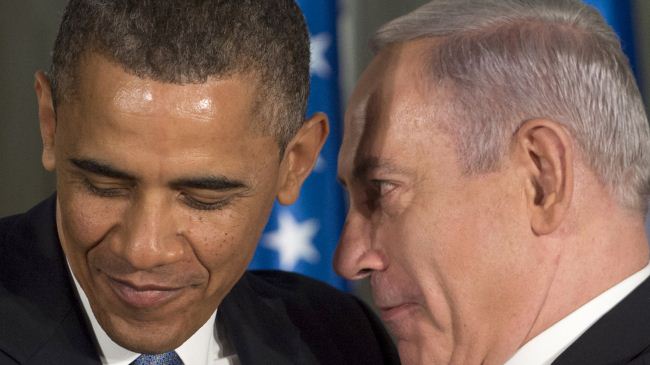


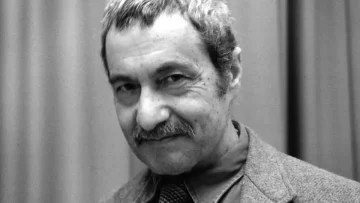


 Aletho News
 Aletho News