The Trans-Pacific Partnership: We Won’t Be Fooled by Rigged Corporate Trade Agreements
By Margaret Flowers and Kevin Zeese | Truthout | October 2, 2013
This week, President Obama will attend the Asia-Pacific Economic Coordination (APEC) meeting in Bali, Indonesia, where he is expected to announce his goal of having the Trans-Pacific Partnership (TPP) signed into law by the end of 2013. Obama will host a meeting of the leaders of the TPP nations during the APEC conference.
The Obama administration has been negotiating the TPP in secret for more than three years. Unlike past trade agreements, the text of the TPP is classified, and members of Congress have restricted access to it. If they do read the text, they are not allowed to copy it or discuss any specifics of it. However, more than 600 corporate advisers have direct access to the text on their computers.
The final formal round of negotiations was held in Brunei this August, and since then, there have been informal meetings to try and finalize sections of the agreement. As far as the president is concerned, the TPP is entering the home stretch. All he needs now is for Congress to vote to grant him fast track, also known as trade promotion authority, and it’s a done deal. The facts show that the president may be deluding himself or trying to fool everyone else.
This is because the TPP goes far beyond a trade deal. Only five of the 29 chapters contain provisions related to trade. The other chapters consist of provisions related to patent protections, investor state rights and finance deregulation, among others. The TPP is a backdoor corporate power grab to advance the stalled WTO agenda. Or as Sachie Mizohata writes in Asia Times, “The TPP is a Trojan horse, branded as a ‘free trade’ agreement, but having nothing to do with fair and equitable treatment. In reality, it is precisely ‘a wish list of the 1% – a worldwide corporate power’.”
We expect the president to return from Bali with increased enthusiasm to push for fast track. To accompany this push will be the usual misinformation campaign coming from supporters of the TPP. To prepare the public for the expected propaganda, we will look at what is being said and provide facts to counter their arguments.
As far as some members of Congress are concerned, as well as hundreds of civil society groups and a growing number of US residents, fast track and the TPP are not going to slide through Congress smoothly. Opposition to the TPP is growing as more people come to understand that the TPP is a rigged corporate trade deal and not fair trade that respects the needs of people and the planet.
What’s Wrong with Fast Track?
For most of the past 200 years, Congress negotiated trade policy and wrote the laws to oversee trade, as required in the Constitution’s Commerce Clause. This power was first transferred to the executive office when Nixon was granted fast track in 1974 as part of his consolidation of presidential power. Fast track expired in 2007. Only 16 trade agreements have been passed using fast track, and some of these were the most unpopular and controversial pacts such as the WTO and NAFTA, signed by President Clinton.
The previous fast track legislation required the president to submit both the trade agreement and implementing legislation to Congress for approval. According to a 2011 report by the Congressional Research Services, “The fast-track authority provides that Congress will consider trade agreement implementing bills within mandatory deadlines, with a limitation on debate and without amendment. . .” In other words, fast track permits the president to negotiate an entire trade agreement over many years and then present it to Congress for an up or down vote within a short time period (60 to 90 days), with debate limited to 20 hours and no amendments.
Fast track severely undermines the transparent and democratic process required to ensure that the full implications of the agreement are understood and are acceptable. Trade agreements require that laws, even down to the local level, be changed to be in compliance with provisions in them. For example, when the WTO was passed, which was fast tracked despite having been negotiated for over 10 years and containing thousands of pages, most members of Congress did not read or understand it.
Great Recession Connection
One of the requirements of the WTO was that Glass-Steagall had to be repealed. This removed the wall that protected traditional banking from risky investments and is partially responsible for the current economic crisis, which started in 2008. Similarly, NAFTA was 1,700 pages, including annexes and footnotes. NAFTA involved only three countries, the TPP includes 12. Congress cannot digest all of this information and consider its implications in such a short time.
Passage of the Trans-Pacific Partnership and its sister, the Trans-Atlantic Trade and Investment Partnership (known as TAFTA), for which negotiations began in July, will require fast track to become law. Supporters of the TPP such as the US Chamber of Commerce and, of course, the office of the US Trade Representative (USTR) are promoting fast rack with flimsy and false arguments. Basically, they boil down to these points:
1. The president should have fast track so he can negotiate job-creating agreements and boost trade and the economy.
2. It’s OK to give the president fast track because Congress is going to include negotiating objectives within the fast track law, and Congress must vote on the agreement.
3. The president should have fast track because other presidents have had it.
So, let’s examine the facts. First, despite promises of American jobs, past free trade agreements have actually been huge job losers. NAFTA is responsible for the loss of nearly 700,000 jobs. The recent Korea Free Trade Agreement was promised to bring 70,000 new jobs, but lost 40,000 jobs in the first year alone instead, and Public Citizen estimates that nearly 160,000 jobs will be lost over the first seven years. In total, US free trade agreements over the past two decades have netted a loss of nearly 5 million American jobs.
In addition to the loss of jobs, free trade agreements have contributed to the stagnation of wages in the United States. American workers cannot compete with extremely low wages in countries like China, Malaysia and Vietnam. A recent study predicts that the TPP will cause wages for 90 percent of American workers to decrease while wealth of the top 1% will soar. How can US workers compete with workers in Malaysia, where the minimum wage is $1.24; Peru, where it is $1.37; or Vietnam, where it is 30 cents? The TPP will increase the race to the bottom that will further impoverish US workers.
The same study predicts that the TPP will only boost US Gross Domestic Product (GDP) by 0.1 percent. In fact, free trade agreements do not seem to work at all when it comes to expanding US exports. According to the data, overall the US trade deficit has increased by 440 percent with countries with which we have free trade agreements and has declined by 7 percent with countries with which we do not have agreements. If we look at the outcome of a “21st century trade agreement,” which is how the office of the USTR describes the TPP, like the Korea Free Trade Agreement, we find that “average monthly exports to Korea since the FTA have sunk 11 percent below the average monthly level before the FTA.” TAFTA is expected to increase US GDP by a mere 0.2 to 0.4 percent, which Public Citizen reports, is “a smaller contribution to GDP than was delivered by the latest version of the iPhone.”
Second, let’s look at Congressional oversight under fast track. Carol Guthrie from the office of the US Trade Representative recently wrote an email response to the producer of a video interview of Margaret Flowers in which she said:
“Checking in on your story on TPP – afraid there seems to be some misunderstanding about trade promotion authority, sometimes known as ‘fast track.’ Under such a law, which lays out just how the administration should consult with Congress on trade agreements, and in which Congress sets out negotiating objectives for the United States, there are indeed hearings and an up or down vote in Congress before the agreement can be implemented in law and enter into force. There are rules in TPA about whether or not the implementing legislation for an agreement can be amended, but it does not allow an agreement to become law or enter into force without Congressional approval. Glad to share more information as it’s helpful to you.”
Flowers wrote back immediately and asked if there was fast track legislation available for review; whether there would be full hearings on the content of the TPP and its implications; and whether amendments would be allowed. That was on September 20 and no response has been received.
In the past, fast track has limited hearings and debate and has not allowed amendments. There have also been negotiating objectives in the past, and these have often been ignored. For example, labor rights were required under the WTO, but still were not included. Even when provisions such as worker protections are included in trade agreements, they are not enforced, as is recently demonstrated in Colombia, where deaths of worker advocates have increased and there are massive strikes and protests since passage of the Colombian FTA.
In the case of the TPP, negotiating objectives enacted now, when the negotiation of the entire agreement is concluding, will have absolutely no effect. The negotiating objectives are merely window dressing designed to confuse labor unions, environmental groups and others into supporting the TPP, when in reality, protections will not be enforced.
Members of Congress are overruled by the agreements when they do try to change the provisions. Ray Rogers writes that trade agreements “have nullified the efforts of political leaders like Senator Tom Harkin (D-Iowa), who introduced legislation in 1994 to ban the imports of products produced by brutal child labor. President Clinton’s US Trade Representative informed him that his bill would violate the General Agreement on Tariffs and Trade (GATT), which the United States is obliged to obey.” Thus, trade agreements tie the hands of Congress and undermine US sovereignty.
What is Oversight?
The definition of Congressional oversight by the office of the US Trade Representative falls far short of the degree of oversight necessary if Congress and the public are to have the ability to fully understand what is in the secret TPP and what the economic impact will be on the United States and nations around the world, as well as how it will impact protection of workers, consumers and the environment. What we expect to see under the fast track process are limited hearings in which supporters of the TPP praise it and Congress members are not able to fully question or amend it. How could it be anything else when members of Congress will not even have time to read the agreements?
Lastly, the idea that other presidents had fast track, so President Obama should too, is embarrassing in its lack of logic. Most presidents have not had fast track. And the agreements passed by fast track have caused the loss of US jobs, lowered wages and created higher trade deficits. Congress must serve its Constitutional function as a check and balance to the power of the President and the branch of government responsible for regulating trade and passing legislation. Fast track undermines the constitutional power of Congress and creates an imperial presidency.
Fortunately, the process to grant fast track trade authority this time around has slowed significantly. In February, 2012, then US Trade Representative Ron Kirk, in his testimony before the House Ways and Means Committee, included a request for fast track by the end of 2012 to complete TPP negotiations. Senators Max Baucus and Orrin Hatch urged the White House to request fast track trade authority last April. They expected to have a fast track bill passed in Congress by last June.
President Obama waited until August of this year to formally request fast track and, as of the writing of this article, no fast track bill has been introduced in Congress. A recent report in Politico stated, “Efforts by leaders of Senate Finance and House Ways and Means to craft a bipartisan TPA [Trade Promotion Authority] bill have taken longer than expected, prompting speculation the two panels may not be able to produce a package.”
Bipartisan opposition to fast track has already appeared in Congress. Alan Grayson (D-Florida) voiced opposition and Rosa DeLauro (D-Connecticut) is gathering signatures from other members on a letter to the president opposing fast track. Michelle Bachman (R-Minnesota) and Walter Jones (R-North Carolina) have a similar letter to the president. Many groups are lobbying against fast track, including Public Citizen, environmental groups and labor. We are organizing Fair Trade Brigades to track congressional support for fast track through our Flush the TPP campaign. Everyone is encouraged to participate in that effort.
Don’t Fast Track this Train Wreck
As Mizohata wrote in Asia Times, the TPP is Trojan horse that is not about trade. We know this because only five of its 29 chapters are about trade. Ben Beachy reports that “of the 11 countries negotiating the TPP with the United States, six already have FTAs with the US.”
So, if we already have trade agreements with these countries, and we know that trade deals don’t reduce our trade deficit, what is the reason for the TPP? It looks like a backdoor to the neoliberal economic agenda that has been stalled under the WTO since the Battle of Seattle in 1999. The tremendous secrecy surrounding the TPP is because the policies that are being pushed through are both harmful to – and unpopular with – the American public. Fast track is necessary to protect this secrecy because the TPP would not survive the light of day.
Senator Elizabeth Warren (D-Massachusetts) has been one of the most outspoken members of Congress on the need for transparency. She wrote a letter to the president requesting that the text be made available to the public. Even members of Congress have restricted access to the text. Zach Carter writes that “Some [members of Congress] have said they were insulted by the complex administrative procedures the office of the U. Trade Representative, or USTR, imposed to actually access the texts – barriers not imposed on unelected corporate advisers.”
And, it is not only texts, when Rep. Darrell Issa (R-California) sought to observe negotiations being held near his California Congressional District, the US Trade Representative would not allow it. While corporations have been allowed to participate throughout the process, a member of Congress who serves on committees dealing with energy, small businesses, foreign policy and government oversight – which would all be impacted by the TPP – was blocked from merely observing. As Rep. Issa wrote: “Congress has a constitutional duty to oversee trade negotiations and not simply act as a rubber stamp to deals about which they were kept in the dark. While I had hoped the TPP would permit me to observe this round of the negotiation process firsthand, our efforts to open TPP negotiations up to transparency will continue.”
Looking at the office of the USTR website, one would think that the process of negotiating the TPP has been open and broad, rather than closed and exclusive as it has been. Negotiators write that they are reaching out to a “broad cross-section of stakeholders” and they want to “set the stage for a deeper level of engagement with these and other stakeholders in the weeks and months ahead.” But these are empty promises and misleading statements as both members of Congress and stakeholders know.
The actions of the USTR are designed to give the illusion of engagement while the needs and interests of those affected by the TPP will be ignored. One of the authors of this piece, Kevin Zeese, participated in a stakeholder briefing last September. He found that questions from the stakeholders in attendance were not answered by the representatives and the entire event felt like a charade.
That is why last week, we decided to expose the secret TPP and make the public’s demands for democracy and transparency more visible through spectacle protests. On Monday, September 23, eight of us wore work coveralls and hard hats and climbed scaffolding next to the USTR building. We draped the outside of their building with four large banners calling for democracy and transparency and calling the TPP what it is in reality, a global corporate coup against people and the planet. Our effort to raise awareness was successful as the Washington Post reported on the protest, calling it “one of the best ever.” The next day we spread the news by conducting a march featuring a 32-foot fast track train, going back to the US Trade Rep. office, then to the World Bank, White House, Chamber of Commerce, business district, Pennsylvania Ave. and Congress.
It is up to the public and their representatives in Congress to demand that the full text of the TPP be released and that there be a democratic process of review. We must fully understand the effects of the TPP on employment, wages, the environment, Internet freedom, public health and safety, and more. Jim Hightower outlines some of the major concerns in his newsletter, The Lowdown.
We cannot blindly accept the information coming from the USTR, President Obama and Big Business supporters of the TPP. They have misled the public before, and they are doing it again to advance an agenda that puts profits before the needs of people and protection of the planet. The TPP will force smaller countries like Vietnam to change their entire economy by eliminating their publicly supported enterprises and services and opening them up to the private sector and foreign investors. This will increase poverty and suffering while lining the pockets of the wealthy.
Countries negotiating with the United States need to realize that if the TPP becomes law, they will be under the thumb of Monsanto, JPMorgan, Bank of America, Wal-Mart and other US-based transnational corporations. Rodrigo Contreras, Chile’s lead TPP negotiator recently quit to warn people of the dangers of the TPP – highlighting how big financial institutions will dominate their governments and how the TPP “will become a threat for our countries: It will restrict our development options in health and education, in biological and cultural diversity, and in the design of public policies and the transformation of our economies. It will also generate pressures from increasingly active social movements, who are not willing to grant a pass to governments that accept an outcome of the TPP negotiations that limits possibilities to increase the prosperity and well-being of our countries.” The TPP will destroy the sovereignty of the nations who agree to its terms.
The destruction of sovereignty includes the United States. One of the most egregious outcomes of the TPP, if it passes, is the way it will undermine our national sovereignty as well as the ability of state and local governments to pass laws. All laws will have to be brought into compliance with the TPP. This means that public institutions like schools and hospitals can no longer give preference to buying local products, and consumers may be barred from knowing whether foods contain GMOs. It means the “Buy America” laws will be illegal, so Americans will be forced to spend their money on foreign products that create a massive trade deficit.
And if we pass laws that interfere with expected corporate profits, those laws can be challenged in a special court, an international trade tribunal that operates outside of our legal system and that is staffed largely by corporate lawyers on leave from their corporate jobs. There will be no appeal to traditional courts from these rigged trade tribunals.
The TPP Unites Us and We can Stop It
The TPP will affect everything we care about. It is a cause that unites us, and if we work together to stop it, we will have won against the behemoth of transnational corporate power. A broad range of groups across the political spectrum are involved in stopping the TPP from becoming law. This includes Internet freedom, anti-GMO, health care, labor, faith, immigrant rights and environmental groups, among others.
We can stop the TPP. Indeed, 14 trade agreements have been prevented in the last dozen years. As more people know about it, the less popular it will become among politicians who will be held accountable for the TPP’s failures. It is up to the public to demand that our representatives put the interests of their constituents before the profits of their corporate campaign financiers. They must know that they will be held accountable for the detrimental consequences that are being predicted.
Public awareness and pressure are already having an effect. The media is starting to cover the TPP more, and the process of granting fast track has been slowed. We can expect more propaganda to appear as the TPP falters and so we must prepare ourselves to repel it with the truth. And we must remember that no matter what we are told about it, no matter what protections we are told are included in it, we must have access to the text before it is signed and we must review and fully understand what its impacts will be.
Other countries are taking steps to demand transparency and democracy. Recently, the Parliament of Peru passed a resolution “requesting that the government open a ‘public, political, and technical debate’ on the binding rules being negotiated in the TPP.” Protests in Japan have been widespread. The more we are visible in our concerns about the TPP, the more people in other nations will be emboldened to stand up to US imperialism and domination.
It is time to end the era of rigged corporate trade and begin fair trade that respects all people and the planet, and that is developed in an open and transparent manner. Join the Fair Trade Brigade either in Congress or where you live. Tell your member of Congress to vote “no” on fast track and pass a resolution locally that declares your community to be a TPP-free zone. Visit FlushtheTPP.org for more information on what you can do.
For more on the TPP visit here and here.
Other articles on the TPP by Margaret Flowers and Kevin Zeese:
TransPacific Partnership Will Undermine Democracy, Empower Transnational Corporations Protesters Take Over US Trade Rep Building, Expose Secret NegotiationsWhy It’s Time to Revolt Against the Worst “Trade Agreement” in History
UN Agreement Reached on Syria; Obama Warhawks Defeated on Every Count
Ron Paul Institute | September 26, 2013
In a stunning blow to the “humanitarian interventionists” of the Obama administration and another boost for Russian diplomatic efforts, the five permanent Members of the UN Security Council appear to have agreed to a resolution governing the destruction of Syria’s chemical weapons that rejects each point the US administration not long ago deemed essential to such an agreement.
Secretary of State John Kerry as recently as last week “insisted” that any UN resolution dealing with Syrian chemical disarmament must be filed under Chapter 7 of the UN charter, which provides for the use of force if the agreement is not satisfactorily implemented. Russia, which had been tricked by the Obama administration over its Chapter 7 demands on Libya that ended in a disastrous war, refused to fall again for the ruse. Even as Kerry lied last week to the US media that Russian Foreign Minister Lavrov had agreed to a Chapter 7 resolution, the Russians denied Kerry’s claims. Now we see that Chapter 7 is dead in the water.
Earlier this week, President Obama held firm to his position that the Syrian government was responsible for the Sarin gas attack near Damascus on August 21. Said Obama:
“on August 21st, the [Syrian] regime used chemical weapons in an attack that killed more than 1,000 people, including hundreds of children.”
The administration has yet to offer proof of its claims, and a highly skeptical US population and US Congress categorically rejected earlier this month the administration’s request to go to war over these unproven claims. It seems Iraq was not that long ago after all.
The Russians continue to maintain that not only is there no evidence that the Syrian government carried out the attacks, there is plenty of evidence from a multiplicity of sources that the rebels in fact carried out the vicious act. And indeed careful analysis of the videos released by the US government to “prove” Syrian government responsibility appear to have been manipulated.
Whatever the case, most of the world believed the Russian position. As a result, the agreed-upon UN Security Council resolution contains no language ascribing blame to the Syrian government for the August 21 gas attacks. Defeat.
Obama’s warmongering “humanitarians” were desperate to save face, with US Ambassador to the UN Samantha Power Tweeting that the resolution was “legally obligating Syria to give up CW they used on their people.” This was more rhetorical flourish and wishful thinking than a slam dunk, as “legally binding” is virtually meaningless at the UN.
Ambassador Power further covered up her defeat by obfuscating the fact that the UNSC resolution had no force to back it up. “Wrapping up meeting of UNSC which is finally ready to impose measures under Chapter VII if Syria does not comply,” she Tweeted.
Ah, but there is no Chapter 7 language in the resolution. That would require a completely new and separate resolution and would require a positive Russian and Chinese response. Power is working herself into a lather over not much more than thin air. It must be frustrating.
The defeat of the Obama administration hawks in the UN and the victory of the Russian position should not be misinterpreted, however. Those interested in peace should view it as a positive sign that armed American exceptionalism cannot without check export destruction willy-nilly where it wishes. More than a victory for Russian diplomacy, it is a victory for the American people and for the emerging super-coalition of progressives, conservatives, and libertarians against aggressive war overseas and resulting poverty back home. And a victory for every reader of this website devoted to peace and prosperity. Perhaps we might even get lucky and see the repeatedly defeated and out-maneuvered Samantha Power, Susan Rice, and John Kerry sent packing along with their war-mad underlings like Ben Rhodes and Tony Blinken.
Related article
- John Kerry warns of ‘consequences’ if Syria does not abide by UNSC resolution (voiceofrussia.com)
US will take no options off table on Iran: Obama
Press TV – September 30, 2013
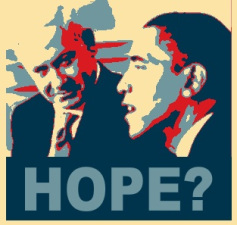 American President Barack Obama once again repeats Washington’s warmongering rhetoric against Tehran over its nuclear energy program, saying the US will take no options off the table with regard to Iran.
“We take no options off the table, including military options,” Obama said during a meeting at the White House with visiting Israeli Prime Minister Benjamin Netanyahu on Monday.
He added that words are not sufficient to resolve Iran’s nuclear issue, adding Tehran must give confidence to the international community “through actions.”
“We agreed it is paramount that Iran doesn’t get nuclear weapons,” Obama said.
“Because of the sanctions Iran is ready to talk and we have to test their willingness in good faith,” the US president added.
Obama assured that Washington will enter negotiations with Tehran with a “clear eye” and emphasized that it will be in “close consultation” with Israel and other friends and allies in the region during the process.
The Israeli premier, for his part, said Israel wants Iran to fully dismantle its nuclear energy program and claimed credible military threat and sanctions have brought Iran to the negotiating table.
Netanyahu called on Obama to tighten economic sanctions on Iran if it continues its nuclear advances during a coming round of talks with the West, saying, “Those pressures must be kept in place.”
The meeting between Obama and Netanyahu comes only days after Iran President Hassan Rouhani and his US counterpart had a landmark phone conversation on September 27 mainly focusing on Iran’s nuclear energy program.
It was the first direct communication between an Iranian and a US president since the victory of Iran’s Islamic Revolution more than three decades ago.
The two presidents stressed Tehran and Washington’s political will to swiftly resolve the dispute over Iran’s nuclear energy program which the United States, Israel and some of their allies claim to include a military component.
Iran has categorically rejected the allegation, stressing that as a committed member of the International Atomic Energy Agency and a signatory to the Non-Proliferation Treaty, it is entitled to develop nuclear technology for peaceful purposes.
Obama reeks of sulfur at the UN
A Black Agenda Radio commentary by BAR executive editor Glen Ford | September 25, 2013
President Obama went to the United Nations this week and declared war against the UN’s most fundamental founding principles, all the while claiming the U.S. is the world’s one indispensable, unique and exceptional nation.
The speech was a reminder of the reason rich people in America financed and sponsored Obama’s rise to the presidency in the first place, as the new, non-white face of U.S. imperial power. Obama’s foreign policy mission was to subvert United Nations prohibitions against the use of force except in self-defense, and to substitute a so-called “humanitarian” rationale justifying aggression by Washington and its allies. This constitutes a fundamental break with the UN Charter, signifying that the U.S. realizes it can no longer dominate the world by economic and other “soft power” and must, therefore, sweep away the accumulated structures of international law that inhibit America’s ability to smash its adversaries with raw military force.
Obama’s speech was one long threat against world order and the rule of law. He baldly stated that the U.S. is prepared to “use all elements of [its] power, including military force, to secure [its] core interests in the region” – a statement that is, on its face, a violation of the UN’s prohibition against the threat of the use of force against other nations. International law forbids the powerful from rattling their sabers over perceived challenges to their “interests” in other people’s countries. Obama, like the honey badger, doesn’t give a damn about international law.
He says that, “wherever possible” he will try to “respect the sovereignty of nations,” but will “take direct action” – meaning, military force – “when it is necessary to defend the United States against terrorist attacks.” That’s another way of saying the U.S. reserves the right to send drones anywhere in the world to kill whoever it wants, whenever it wants, for its own reasons that are nobody else’s business – which is the behavior of an outlaw, rogue state.
Among the “interests” that the U.S. sees as just cause for going to war, is the promotion of what Obama calls “democracy, human rights, and open markets” in the Middle East and North Africa. “These objectives,” says Obama, “are best achieved when we partner with the international community and with countries and people of the region.” Translation: The U.S. will continue to form “coalitions of the willing” to use military force for regime change or to preserve the status quo, circumventing the United Nations – a gross violation of international law.
Obama claims that “America is exceptional” precisely because it will go to war for so-called “humanitarian” reasons in order to prevent violence to civilians before it has occurred – that is, wars based on Washington’s readings of its own crystal balls, such as NATO’s war against Libya. This is actually the doctrine of pre-emptive war, which is a blatant violation of the UN Charter whether the rationale is “humanitarian” or some other excuse.
In a final obscenity, Obama concludes with a shameless reference to Dr. Martin Luther King’s “dream.” Forty-six years ago, Dr. King declared that the U.S. was the “greatest purveyor of violence in the world.” That is what is so exceptional about America: its relentless quest for military domination of the planet and utter disregard for the norms of law and civilization. Barack Obama is the planetary Warmonger-in-Chief. His breath smells of sulfur, just as George Bush’s did when he addressed the UN, seven years ago.
Glen Ford can be contacted at Glen.Ford@BlackAgendaReport.com.
Related article
Obama at the UN
By Mazin Qumsiyeh | Popular Resistance | September 25, 2013
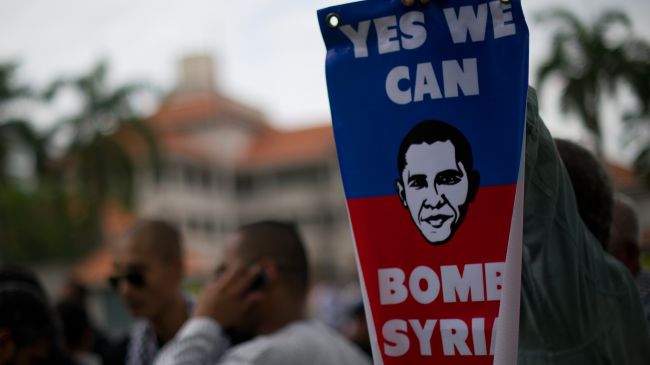 President Barak Obama said in the middle of his 40 minutes of lies and hypocrisy at the UNGA as world leaders looked on in dismay: “With respect to Syria, we believe that as a starting point, the international community must enforce the ban on chemical weapons.” (The US and Israel both possess and have used chemical weapons, see below) and added “Although we will at times be accused of hypocrisy and inconsistency [!], we will be engaged in the region for the long haul” [to serve Israel].
Incredibly he also said he believed in American “exceptionalism” [white man’s burden]. Hypocritically he also mentioned Martin Luther King Jr. But MLK opposed American imperialism and exceptionalism and who said in a speech in 1968: “God didn’t call America to do what she’s doing in the world now. God didn’t call America to engage in a senseless, unjust war ….. We have committed more war crimes almost than any nation in the world.” [we still do]
Related
“Independent Experts” Reviewing NSA Spying Have Ties to Intelligence Community
By Noel Brinkerhoff and Danny Biederman | AllGov | September 25, 2013
President Barack Obama’s special panel of “independent” experts charged with reviewing the National Security Agency’s (NSA) domestic spying programs is actually lacking in independence.
For starters, the panel assembled to determine if the NSA has violated Americans’ civil liberties consists of five members—four of whom have previously worked for Democratic administrations.
One member is Michael Morell, who served in the Central Intelligence Agency under Obama as deputy director, and twice served as acting director.
The other three with Democratic ties are Peter Swire, former Office of Management and Budget privacy director under President Bill Clinton; Richard Clarke, former counterterrorism coordinator under Clinton and later for President George W. Bush; and Cass Sunstein, Obama’s former regulatory czar.
The fifth panel member is Geoffrey Stone of the University of Chicago, who was an informal adviser to Obama’s 2008 presidential campaign and is now helping develop Obama’s presidential library. Stone previously went on record as saying that the NSA’s collection of Americans’ phone records is constitutional.
“No one can look at this group and say it’s completely independent,” Sascha Meinrath, director of the Open Technology Institute and vice president at the New America Foundation, told the Associated Press after attending one of the panel’s meetings.
Michelle Richardson, an ACLU legislative counsel who attended one meeting for civil liberties groups, said her organization “would have liked a more diverse group” for the panel.
Another sign that the group lacks independence is in its name—“Director of National Intelligence Review Group on Intelligence and Communications Technologies.”
The AP’s Stephen Braun noted that “the panel’s official name suggests it’s run by” the Office of the Director of National Intelligence (DNI).
In fact, Obama’s announcement in August that the review group would be established by DNI James Clapper triggered a wave of criticism. Obama tried to quell the outcry by assuring the country that Clapper would neither run the panel nor select its members.
But there is more than the panel’s name that suggests DNI oversight. The panel’s so-called outside experts work inside offices provided by the DNI. And it is the DNI’s press office that coordinates all press statements and interview requests.
Another point of criticism stems from Clapper’s decision to exempt the panel from the U.S. Federal Advisory Committee Act, which requires such committees to conduct open meetings and notify the public about their activities. Indeed, it has been reported that during recent weeks the panel’s meetings have been closed to the public even when no classified material was discussed.
There appears to be no formal directive stating that the panel should operate independently of the Obama administration. In fact, the situation is quite the opposite. An official White House memorandum actually provides the panel with instructions for areas to emphasize in its review: whether U.S. spying programs advance foreign policy, protect national security, and are safe from leaks.
In his August 9th press conference regarding the establishment of this panel, Obama promised that the “outside experts” will “consider how we can…make sure that there absolutely is no abuse in terms of how these surveillance technologies are used.” But nowhere in the White House memo is the panel instructed to investigate surveillance abuses.
The panel’s report is due by December 15. On that date it is not to be made public, nor is it to be delivered to the press. Rather, it will be submitted to the White House for review.
To Learn More:
Close Ties Between White House, NSA Spying Review (by Stephen Braun, Associated Press)
NSA Spying Review Panel Appointed by Obama Set to Whitewash Surveillance Abuses (by Kevin Gosztola, Dissenter)
Surveillance Privacy: Obama Orders Fox to Guard Chicken Coop (by Noel Brinkerhoff, AllGov)
Related articles
- Obama’s NSA ‘Independent’ Review Clearly a Public Relations Move (reason.com)
- NSA Spying Review Panel Appointed by Obama Set to Whitewash Surveillance Abuses (dissenter.firedoglake.com)
Egyptian minister praises Obama’s remarks on Egypt, Hamas slams Egypt’s FM for threatening to attack Gaza
Egyptian minister praises Obama’s remarks on Egypt in the UNGA
MEMO – September 25, 2013
Egyptian Foreign Minister Nabil Fahmy has described US President Barack Obama’s remarks to the UN General Assembly about Egypt as “positive” and reflective of “an objective treatment of the situation in Egypt.”
Fahmy was responding to Obama’s speech on Tuesday that was critical of both ousted President Morsi’s government for being non-inclusive, and the interim government established by the coup for violating the Egyptian people’s rights, including policies such as the curfew, the state of emergency and the restrictions on press freedoms.
About how the latter issues would be resolved, the minister said: “They will be overcome through the context of the implementation of the roadmap and efforts to build a modern and democratic state in Egypt.”
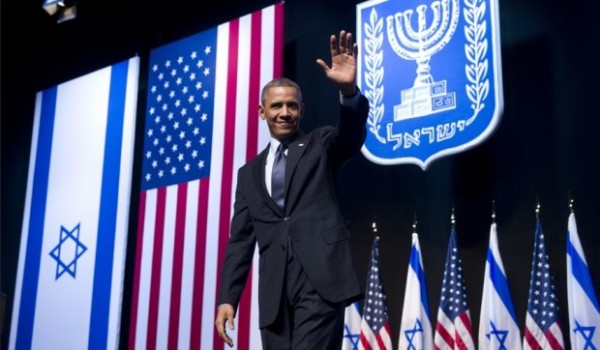 In his speech to the UN General Assembly, Obama repeatedly asserted his country’s respect for the will and choices of the people in the Middle East. However he also warned that the “United States will at times work with governments that do not meet, at least in our view, the highest international expectations, but who work with us on our core interests.”
Obama affirmed that the US is going to preserve good relations with Egypt, saying the US “will maintain a constructive relationship with the interim government that promotes core interests like the Camp David Accords,” as well as counterterrorism efforts.
But he added that US support will also “depend upon Egypt’s progress in pursuing a more democratic path.”
Hamas slams Egypt’s foreign minister for threatening to attack Gaza
Palestine Information Center – 25/09/2013
GAZA — The Hamas Movement strongly denounced Nabil Fahmi, the Egyptian minister of foreign affairs, for threatening to take military and security action against the Palestinian resistance in Gaza.
Its spokesman Fawzi Barhoum stated on Tuesday that Fahmi’s threats were reprehensible and very dangerous and would do a great disservice to Egypt’s reputation and historical stature.
Barhoum added that Fahmi’s remarks in this regard unveiled bad intents and hostile tendencies against the Palestinians in general and Gaza in particular.
He stressed that such position would remove Egypt from its national, Arab and Islamic role in supporting the Palestinian people and their cause.
The spokesman affirmed that Hamas and its people in Gaza have no intention or agenda to engage in any kind of conflict with Egypt.
“We will remain defenders of the Arab and Muslim nations’ pride and dignity, and our main struggle is only against the Israeli occupation, the greatest threat to Egypt and Palestine,” he underscored.
For its part, Al-Ahrar Movement in Gaza also deplored the Egyptian minister’s threat to use military and security options against Gaza.
“We were expecting an Egyptian position supporting the Aqsa Mosque and preventing its division, and not a threat by the foreign minister of Egypt to attack Gaza. We affirm that such remarks undermine Egypt’s ethics and role in protecting our people,” Al-Ahrar Movement stated on Tuesday.
It also said that this new Egyptian position only serves the Israeli occupation regime which has taken advantage of the military coupe and are trying to drive a wedge between Gaza and Egypt.
Brazil’s Rousseff to UN: US surveillance an ‘affront’
RT | September 24, 2013
Brazilian President Dilma Rousseff lambasted US spying on her country at Tuesday’s UN summit, calling it a “breach of international law.” She further warned that the NSA surveillance, revealed since June, threatened freedom of speech and democracy.
“Meddling in such a manner in the lives and affairs of other countries is a breach of international law and as such it is an affront to the principles that should otherwise govern relations among countries, especially among friendly nations,” Rousseff said.
“Without the right to privacy, there is no real freedom of speech or freedom of opinion,” Rousseff told the gathering of world leaders. “And therefore, there is no actual democracy,” she added, criticizing the fact that Brazil had been targeted by the US.
“A country’s sovereignty can never affirm itself to the detriment of another country’s sovereignty,” she added.
Rousseff went on to propose a multilateral, international governance framework to monitor US surveillance activity. “We must establish multilateral mechanisms for the world wide web,” she said.
Rousseff said that the US’s arguments for spying on Brazil and other UN member states were “untenable”, adding that “Brazil knows how to protect itself” and that the country has been “living in peace with our neighbors for more than 140 years.”
Brazil’s specific targeting in US surveillance practices prompted Rousseff’s government to announce that it intends to adopt both legislation and technology aimed at protecting itself and its businesses from the illegal interception of communications.
A week ago, Rousseff canceled an impending state visit to Washington, scheduled to take place in October, because of indignation over spying revelations. Rousseff has stated she wants an apology from Obama and the United States.
The revelations that the US National Security Agency has been intercepting Rouseff’s own phone calls and e-mails, in addition to those of her aides and officials at state-controlled oil and gas firm Petrobras, have prompted an outcry in Brazil.
Rousseff’s predecessor as Brazilian President, Lula da Silva, said earlier this month that Obama should “personally apologize to the world.” Lula accused the US of “thinking that it can control global communications and ignore the sovereignty of other countries” in an interview with India’s English-language daily The Hindu, published Sept. 10.
Latin America voices widespread indignation at US activities
US relations with all of Latin America have recently soured. In addition to Brazil, Mexico, Bolivia and Venezuela have all voiced anger with the US over the NSA’s surveillance of their countries this year. Bolivia has been especially bitter.
“I would like to announce that we are preparing a lawsuit against Barack Obama to condemn him for crimes against humanity,” President Morales told reporters Friday in the Bolivian city of Santa Cruz. He branded the US president as a “criminal” who had violated international law.
In early July, a plane carrying Morales from Moscow to the Bolivian capital, La Paz, was grounded for 13 hours in Austria after it was banned from European airspace because of US suspicions it was carrying fugitive Edward Snowden, the former NSA contractor who has been responsible for the majority of leaks regarding NSA spying practices since June.
Venezuela wrote to UN Secretary-General Ban Ki-moon at the end of last week, requesting that he take action in response to the apparent denial of US visas to some members of the Venezuelan delegation who were scheduled to attend the UN General Assembly in New York.
President Nicolas Maduro said that the denial seemed intended to “create logistical obstacles to impede” the visit, and further requested that the UN “demand that the government of the US abide by its international obligations” as host of the 68th UN General Assembly.
Tension between Venezuela and the US rose Thursday when Venezuela’s foreign minister, Elias Jaua, told media outlets that the US had denied a plane carrying Maduro entrance into its airspace. The aircraft was en route to China. Washington later granted the approval, stating that Venezuela’s request had not been properly submitted. Jaua denounced the move as “an act of aggression.”
Related article
Bolivia plans legal action against Obama over ‘crimes against humanity’
Press TV – September 20, 2013
Bolivia’s President Evo Morales plans to file legal action against the US president for crimes against humanity, condemning Washington’s intimidation tactics after it denied Venezuelan presidential jet entry into US airspace.
“I would like to announce that we are preparing a lawsuit against [US President] Barack Obama to condemn him for crimes against humanity,” President Morales announced at a Thursday press conference in the Bolivian city of Santa Cruz, RT reports.
He further described the American president as a “criminal” who willingly violates international law.
“The US cannot be allowed to continue with its policy of intimidation and blockading presidential flights,” Morales stated.
He added that Bolivia intends to prepare legal action against the US president and file the lawsuit at the International Court.
President Morales has called for an emergency meeting of the Community of Latin American and Caribbean States (CELAC) to confer about the US action, which has been slammed by Venezuela as “an act of intimidation by North American imperialism.”
Additionally, the Bolivian president has implied that the CELAC members should recall their ambassadors from Washington in an effort to convey a strong message to the Obama Administration.
According to the report, Morales further wants to urge member nations of the Bolivarian Alliance for the Americas to boycott the next meeting of the United Nations in New York.
Members of the Alliance include Antigua and Barbuda, Cuba, Dominica, Ecuador, Nicaragua, Venezuela and Saint Lucia.
The anti-US measures called by the Bolivian president comes just months after Morales’s presidential aircraft was denied entry into several Western European countries, forcing it to land in Austria.
The May 2013 incident was widely described as a US-led effort out of a false suspicion that American spy agency whistleblower Edward Snowden may be onboard the aircraft.
At the time Bolivia was among a few countries that offered political asylum to Snowden, a US fugitive and former contract employee of American spy agencies, CIA and NSA, who leaked documents showing massive US electronic spying operations around the globe, including its European and Latin American allies.
Several Latin American heads of state joined Bolivia to censure the illegal move by the European countries, including Italy, France and Spain, which led to their official apologies.
Related article
Brazilian president postpones visit to Washington over US spying
RT | September 17, 2013
Brazilian President Dilma Rousseff has postponed a state visit to Washington in response to the US spying on her communications with top aides. Rousseff is demanding a full public apology from President Obama.
Barack Obama spoke with Rousseff on Monday in an attempt to persuade her into following through with the trip, the Brazilian president’s office said, according to AP.
Brazil’s TV Globo reported that the call between the two presidents lasted for about 20 minutes. Obama and Rousseff discussed revelations that the National Security Agency (NSA) spied on the Brazilian leader’s phone calls and emails. The two presidents then “jointly” agreed to cancel the meeting, Globo reported, citing the presidential office.
The Brazilian government said in a statement that “the conditions are not suitable to undertake this visit on the agreed date.” It expressed hope that the conflict will be resolved “properly” and the trip will happen “as soon as possible.”
The state visit was initially scheduled for October 23. The Obama administration has confirmed that the visit was canceled.
“The president has said that he understands and regrets the concerns disclosures of alleged US intelligence activities have generated in Brazil and made clear that he is committed to working together with President Rousseff and her government in diplomatic channels to move beyond this issue as a source of tension in our bilateral relationship,” said White House spokesman Jay Carney.
Earlier this month, TV Globo revealed in a report that the NSA monitored the content of phone calls, emails, and mobile phone messages belonging to President Rousseff and undefined “key advisers” of the Brazilian government. The NSA also spied on Mexican President Enrique Pena Nieto and nine members of his office.
The revelations were based on evidence provided by former CIA employee and NSA contractor Edward Snowden, which was passed to British journalist Glenn Greenwald.
A document dated June 2012 showed that the Mexican President’s emails were read through one month before he was elected. In his communications, the then-presidential candidate indicated who he would like to appoint to several government posts.
The Brazilian government denounced the NSA surveillance as “impermissible and unacceptable,” and a violation of Brazilian sovereignty.
In July, Greenwald co-wrote articles for O Globo, in which he claimed that some of the documents leaked by Snowden indicated that Brazil was the NSA’s largest target in Latin America.
Greenwald wrote that the NSA was collecting its data through an undefined association between US and Brazilian telecommunications companies, but he could not verify that Brazilian companies had been involved.
Following the revelations, the Brazilian government ordered an investigation into telecommunications companies to determine whether they illegally shared data with the NSA.
Defense ministers of Brazil and Argentina signed a broader military cooperation agreement on September 13. The two governments will work together to improve cyber defense capabilities following revelations of Washington’s spying on Latin American countries.
Brazil will be providing cyber warfare training to Argentine officers from 2014.
Related articles
Featured Video

John Mearsheimer: New World Order Arrived & Europe Is Left Behind
or go to
Aletho News Archives – Video-Images
Book Review
Sunset on Net Zero: A Heretic’s Guide to the Futile CO2 Target
By Ronald Paul Barmby (Author) – October 3, 2025
SUNSET ON NET ZERO describes in detail why Net Zero CO2 is pointless and unachievable. It explains in understandable terms the up-to- date thoughts of the greatest minds of today in physics, meteorology, economics, engineering, and the geosciences.
Net Zero CO2 is pointless because we have now confirmed by satellites that 90% of CO2 warming has already happened. CO2 is not an existential threat but clouds, El-Niño, and human habitation are significant drivers of global warming that are often ignored.
Net Zero CO2 is unachievable because the green technology alternatives are unreliable and unaffordable. Wind and solar power triple electricity costs, building fully electric vehicles produces at least one-half of CO2 emissions they are meant to avoid, and heat pumps will leave you dangerously cold in the winter. Green hydrogen, air capture CO2, and carbon capture and storage are prescriptions for national bankruptcy. The supply of key metals and minerals required to achieve Net Zero need to be at least doubled—some much more—and are often controlled by a very few. Net Zero comes with huge environmental and agricultural costs.
We have been through similar climatic temperature changes before, more recently than you think. Our efforts to control it are futile.
Blog Roll
 Aletho News
- FDA Ordered to Pay Over $570,000 in Fight Over Pfizer COVID Vaccine Records
- USAID turned to Facebook to drive demand for Covid vaccines in Global South – files
- Britain’s shadow security network expands into south Lebanon
- The ADL Has a Foreign Policy, and You Are Not Supposed to See It
- Former Qatari PM says ‘Israel’ has security ties with all Gulf states
- The Sound of Silence in the Strait of Hormuz
- Poland’s call for a no-fly zone in Ukraine means NATO direct war with Russia
- John Mearsheimer: New World Order Arrived & Europe Is Left Behind
- Naqab demolition notices top 1,000; settlers demolish Jaloud homes
- Israel is Using the ‘Gaza Ceasefire’ to Commit Ethnic Cleansing
- If Americans Knew
- An error has occurred; the feed is probably down. Try again later.
- No Tricks Zone
- Physicists: Doubling CO2 Has A Smaller Impact On Ocean ‘Acidification’ Than Existing Internal Variability
- Alarmist Climatologists In Shock! 2026 Atlantic Hurricane Season Sees Lowest Count In 101 Years
- New Study: Modern Temps Are Among The Coldest Of The Last 10,000 Years In East Central Europe
- Germany’s Renewable Energies Lead to 1.4 Billion Euro Electric Power Trade Deficit
- Argentina’s Perito Moreno Glacier Joins Antarctica and Arctic In Defying Doomsday Melt Claims
- New Study: Barents Sea Temperatures Were Warmer And Sea Ice Less Extensive In The 1700s Than Today
- German Authorities Start Initiative To Evaluate Public Register For Climate “Disinformation” Spreaders!
- Zonal Asymmetry of Temperature Change in the Antarctic Circumpolar Current
- New Study: The Net Fossil Fuel Contribution To Rising Atmospheric CO2 Has Been Zero For 500 Years
- Germany’s Green Energy Transition Becoming Increasingly Expensive…Another 6 Trillion Euros!

