Obama: US will continue threatening Syria
Press TV – September 14, 2013
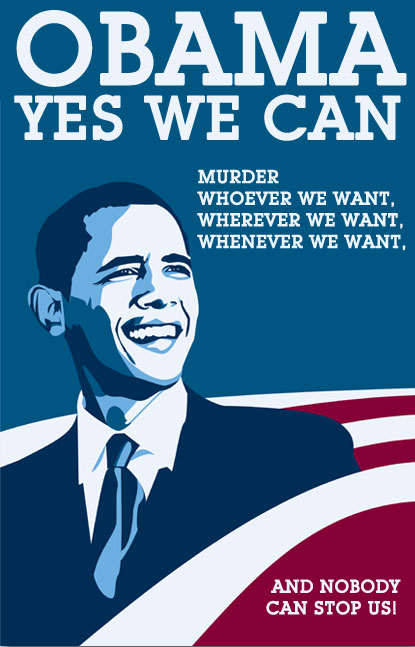 US President Barack Obama has said the US will continue to threaten Syria with the use of force as the government of Syrian President Bashar al-Assad has agreed to put its chemical weapons under the control of the United Nations.
“We need to see concrete actions to demonstrate that Assad is serious about giving up his chemical weapons … And since this plan emerged only with a credible threat of US military action, we will maintain our military posture in the region,” Obama said in his weekly address to Americans on Saturday.
The threat came after the Syrian ambassador to the UN said on Thursday that his country became a full member of the international treaty prohibiting chemical weapons.
After Russia offered a diplomatic proposal for putting Syria’s chemical weapons under international control on Monday, Obama called on Congress to delay a vote on his call for a military action against Syria.
Nevertheless, in his weekly address to Americans, Obama said, “If diplomacy fails, the United States and the international community must remain prepared to act.”
Obama’s talk of “the international community” comes as senior officials within his administration have said he would not push for a United Nations Security Council resolution threatening Syria with the use of force.
This comes as Russian President Vladimir Putin said in an op-ed published by The New York Times on Wednesday that a possible US attack on Syria “is unacceptable under the United Nations Charter and would constitute an act of aggression.”
Meanwhile, recent polls have revealed a growing opposition to military action against Syria both within the US military and America’s war-weary public.
Related article
Obama’s foreign policy just as bad or worse than Bush’s – poll
RT | September 12, 2013
Nearly two-thirds of Americans say President Barack Obama’s handling of foreign policy is either equal to or worse than that of predecessor George W. Bush, a new poll reveals.
The results of a recent Reason-Rupe poll published on Tuesday this week suggest that a majority of Americans — 64 percent — consider the current commander-in-chief’s job performance with regards to international affairs to be no better than Pres. Bush, who kick-started wars in both Afghanistan and Iraq during his eight years in the White House.
According to the results of the poll, 32 percent of Americans polled said Obama’s handling of foreign policy is worse than that of his predecessor, with 32 percent also saying it was “about the same.”
Thirty-two percent of the 1,013 adults polled said they consider Obama’s handling of foreign policy better than that of Pres. Bush.
And as a potential United States-led military strike against Syrian leader Bashar al-Assad’s regime remains a very real possibility in the days to come, Reason’s Emily Ekins wrote that Obama — who famously said he opposes “dumb wars” — could launch the US into a situation that wouldn’t be supported by a majority of Americans.
“Nearly three-quarters of Americans, 74 percent, say it would be ‘unwise’ for the United States to launch airstrikes on Syria without the support of the United Nations or Great Britain,” Ekins wrote of the results.
Additionally, only 17 percent of those polled said it would be a wise move to attack Assad’s regime to reprimand the Syrian leader for the alleged use of chemical weapons last month outside of Damascus. The White House said previously that Assad’s army deployed chemical warheads on August 21 and in turn eradicated more than 1,400 people.
The same proportion of Americans who put Bush’s foreign policy record at-or-above that of Pres. Obama — 64 percent — told pollsters that US airstrikes against Syria are not necessary to protect America’s credibility and national security, despite the administration arguing otherwise.
Pres. Obama had been considering a unilateral military strike against Assad without approaching Congress for authorization, but has in recent days formalized his request with the House and Senate and has since postponed voting while diplomatic options are considered by the UN and international community.
Foreign policy aside, however, the Obama administration isn’t winning much support among the Americans polled by Reason and Rupe. According to their questioning, 61 percent said they believe the US is heading in the “wrong direction,” compared to 28 percent who say America is, “generally speaking,” on the right path.
Forty-three percent of those surveyed said they disapprove of Obama’s overall job performance. Before the US ramped-up its interest in the Syrian civil war, a similar poll conducted in May found that exactly half of Americans polled approved of the president’s job, signaling a 7 percentage point drop in a matter of months.
At a press briefing on Wednesday, White House press secretary Jay Carney acknowledge the president’s reluctance to use military force in Syria after more than a decade of wars started under the Bush administration.
 “He knew and knows and understands that the American people are extremely reluctant to get the United States involved again militarily in the Middle East — not just in the Middle East, but anywhere,” Carney told reporters. “But as someone who deeply understands that, and who has spent four and a half years as president getting us out of wars, he believes in the case that he made last night, and I think he understands why there’s reluctance and why there’s anxiety about potentially striking Syria in response to the use of chemical weapons.”
Related article
What Convinced Obama to Reverse His Position on NSA Surveillance?
By Jennifer Hoelzer | September 11, 2013
 Since details of the NSA’s surveillance programs started coming to light in early June – and President Obama’s been forced to publicly answer for its activities – the president has repeatedly reminded us that he came into office with a “healthy skepticism about these programs.” But, after careful evaluation, he determined “that on, you know, net, it was worth doing.”
Some of these programs I had been critical of when I was in the Senate. When I looked through specifically what was being done, my determination was that the two programs in particular that had been at issue, 215 and 702, offered valuable intelligence that helps us protect the American people and they’re worth preserving. (From his August 9th Press Conference.)
It’s a rhetorical strategy intended to win his critics’ trust by demonstrating that he understands our concerns because he used to share them. The message he wants us to take away is: if we had been in his shoes and saw the evidence he saw when he got into office, we would have signed off on these programs too.
Well, yesterday we got a glimpse of some of the evidence he saw when he assumed office – at least in connection to the NSA’s collection of U.S. phone call records — and, it begs the question, what exactly changed his mind about the NSA’s domestic surveillance programs? What did the President see that led him to the conclusion that everything he had previously said on the topic was wrong because allowing the NSA to collect everyone’s phone call records really is a constitutionally-supported, great idea?
Because, according to the documents the ODNI released yesterday, when President Obama took office, the NSA’s “telephony metadata” program wasn’t getting stellar reviews. In fact, we now know that days prior to Obama’s inauguration, the NSA reported that it had repeatedly violated the court-ordered rules limiting its use of the data it was collecting. A little over a month later, a judge on the Foreign Intelligence Surveillance Court found that, “Since January 15 [five days before Obama’s inauguration] it has finally come to light that the FISC’s authorizations of this vast collection program have been premised on a flawed depiction of how the NSA uses” the phone call data.
Not only had the Intelligence Community been misrepresenting its program to the court, the judge, Reggie B. Walton, went on to write:
The minimization procedures proposed by the government in each successive application and approved and adopted as binding by the orders of the FISC have been so frequently and systemically violated that it can fairly be said that this critical element of the overall BR regime has never functioned effectively.
And,
To approve such a program, the Court must have every confidence that the government is doing its utmost to ensure that those responsible for implementation fully comply with the Court’s orders. The Court no longer has such confidence.
The judge also implied that – other than hypothetical examples of how this data might provide intelligence of “immense value to the government” – the government had yet to provide the court with concrete evidence that the program was actually providing that value.
This program has been ongoing for nearly three years. The time has come for the government to describe to the Court how, based on the information collected and analyzed during that time, the value of the program to the nation’s security justifies the continued collection and retention of massive quantities of U.S. person information.
Again, Judge Walton reached these conclusions based on evidence that was available to him at the very same time that I imagine President Obama and his team were evaluating these programs. Plus, I’m assuming the president considered Judge Walton’s opinion in his evaluation, right?
So, what exactly convinced President Obama that this was “worth doing?” Because as the president explained last month, the prospect that something could happen isn’t the same as actual evidence that it has or ever will.
Obama’s Humiliating Defeat
By Glen Ford | Black Agenda Report | September 11, 2013
It was a strange speech, in which the real news was left for last, popping out like a Jack-in-the-Box after 11 minutes of growls and snarls and Obama’s bizarre whining about how unfair it is to be restrained from making war on people who have done you no harm. The president abruptly switched from absurd, lie-based justifications for war to his surprise announcement that, no, Syria’s turn to endure Shock and Awe had been postponed. The reader suddenly realizes that the diplomatic developments had been hastily cut and pasted into the speech, probably only hours before. Obama had intended to build the case for smashing Assad to an imperial peroration – a laying down of the law from on high. But his handlers threw in the towel, for reasons both foreign and domestic. Temporarily defeated, Obama will be back on the Syria warpath as soon as the proper false flag operations can be arranged.
The president’s roiling emotions, visible through his eyes, got in the way of his oratorical skills. But then, he didn’t have much material to work with, just an endless string of prevarications and half-truths strung almost randomly together. Obama, who was reluctantly asking permission from Congress to violate the most fundamental tenets of international law – permission that Congress is not empowered to give – framed Syria as a rogue nation because it has not signed a treaty on chemical weapons like “98 percent of humanity.” This makes Syria ripe for bombing. The president does not explain that Syria’s neighbors, Israel and Egypt – both U.S. allies – have also not signed the treaty. He does not suggest bombing Tel Aviv or Cairo.
Obama claims that the U.S. has proof that “Assad’s chemical weapons personnel prepared for an attack near an area where they mix sarin gas. They distributed gas masks to their troops. Then they fired rockets from a regime-controlled area into 11 neighborhoods that the regime has been trying to wipe clear of opposition forces.” Not a shred of evidence has been presented to back up this narrative – which, under the circumstances, tends to prove it is fiction. On the other hand, there are credible reports (everybody’s reports are more credible than the Americans), that rebels under U.S. allied control were told to prepare to go on the offensive following an American retaliation to a chemical attack that would be blamed on Assad’s forces – a story whose logic conforms to what actually occurred and answers the common sense question, Who profits?
Obama will not for long accept diplomatic delays in his war schedule. On Tuesday night, he was already priming the public to accept Assad’s guilt the next time chemical weapons explode in Syria. “If we fail to act,” said the president, “the Assad regime will see no reason to stop using chemical weapons.” American and allied secret services will gladly arrange a replay.
Early in the speech, Obama raised the specter that, because of Assad’s mad chemical predilections, “our troops would again face the prospect of chemical warfare on the battlefield.” Moreover, “If fighting spills beyond Syria’s borders, these weapons could threaten allies like Turkey, Jordan and Israel.” At this point, the president was arguing for a punitive strike, and had taken on the persona of warlike Obama.
Near the end of the speech, Obama responds to those who want Assad “taken out” right away and permanently, rather than merely “degrading” his forces with calibrated strikes. Now speaking as the “moderate” Obama, the president makes the case that Assad has no “interest in escalation that would lead to his demise, and our ally, Israel, can defend itself with overwhelming force.”
The two Obamas are matched with two corresponding Assads. One Assad is a menace to the whole neighborhood and to himself, while the other Assad knows who to mess with and takes no risks with his own survival.
It would seem logical that the latter Assad, who is not prone to suicidal actions, would not launch a chemical attack just a few miles away from United Nations inspectors that had just arrived in the country at his government’s request.
The point here is not to argue with Obama’s logic, but to show how inconsistent, opportunistic and, at times, incoherent his reasoning is. He has not the slightest interest in truth or simple logic, only in what sounds right in the immediate context. Obama mixes his personas, and those of his nemesis, at the drop of a hat, because he is shameless and absolutely cynical – as befits a mass murderer.
Barack Obama pretends to believe – at least I hope he’s only pretending – that it was his idea to wait for a congressional debate before blasting Syria to smithereens. “So even though I possess the authority to order military strikes, I believed it was right in the absence of a direct or imminent threat to our security to take this debate to Congress.” He didn’t take the debate to Congress; the congressional detour was forced on the White House on August 31 when it became clear that Obama lacked both domestic and foreign support for a speedy strike. That was Obama’s first big defeat. The second was a knockout, after Russia and Syria seized on Secretary of State John Kerry’s “joke” about Assad giving up his chemical weapons, at which point Obama’s handlers advised him that his political position was, for the time being, untenable. He arrived in front of the cameras shaken, angry, and humiliated – with a patched together script and a mouth full of crow.
The president who claimed that he could bomb the sovereign nation of Libya for seven months, overthrow its government and kill its president, without triggering the War Powers Act – and, further, that no state of war exists unless Americans are killed – told his Tuesday night audience that he opposes excessive presidential power. “This is especially true,” said Obama, with a straight face, “after a decade that put more and more war-making power in the hands of the president and more and more burdens on the shoulders of our troops, while sidelining the people’s representatives from the critical decisions about when we use force.”
In truth, it was the likelihood of rejection by American “people’s representatives” – just as British Prime Minister Cameron’s war plans were rejected by Parliament – that derailed Obama.
It took more than 1,500 words before Obama acknowledged the existence of the real world, in which he was compelled to “postpone” a congressional vote on the use of force while the U.S., Russia, China, France and Britain work on a UN resolution “requiring Assad to give up his chemical weapons and to ultimately destroy them under international control.” Syria has already agreed to the arrangement, in principle. Obama must bear, not only the bitter burden of defeat, but the humiliation of having to pretend that the UN route was his idea, all along.
Expect him back on the war track in no time flat. What else is an imperialist to do?
Glen Ford can be contacted at Glen.Ford@BlackAgendaReport.com.
Obama ‘should be grateful’ for face-saving chance to backpedal on Syria
RT | September 10, 2013
President Obama should curb threats of a US military strike on Syria by joining Russia’s “face-saving” proposal for Damascus to give control of its chemical weapons to the international community, independent researcher Soraya Sepahpour-Ulrich told RT.
Sepahpour-Ulrich said that Russia’s proposal allows Obama and America “to save face,” given the fact that a military strike on Syria would be “contrary to the people’s will” and receive little international support.
RT: Do you think this nascent solution is something that can actually lead to a workable compromise?
Soraya Sepahpour-Ulrich: It could. It’s a face-saving out for Mr. Obama, really. Because he doesn’t have the support to go to war, and if he chooses to go over the people of the United States, the majority of whom disapprove of this war, and the strikes, then he’s turning his back on democracy, and they always say in America they want to export democracy to other countries. So this is a blatant violation and goes contrary to the people’s will. And I think the proposal is really being very kind to Mr. Obama, giving him a way out.
RT: Why do you think Russia’s proposal to put Syria’s chemical stockpiles under international control received a positive response so quickly?
SSU: I think it was very positive because, well, for one, Assad doesn’t want war, he doesn’t want his people to die because there are lobby groups in Washington pushing for war. So I think he was happy to accept that. And I think the other countries, although Kerry and Obama are skeptical, they do not want this war. They do not want to go to this war. They do not have the support they hoped to have and yet they have those red lines that they have drawn which in fact were violated back in May. That’s when the United Nations said they thought the rebels were responsible and they didn’t act on it. But then to have painted themselves in a corner and this gives them the way out. It helps America, of course, its allies are happy not to go to war. It might be a win-win situation for all.
RT: The president has recently come out in some interviews saying this could be a positive step in the right direction, but we haven’t heard any assertive decision on his part. How do you think his quick his repositioning on the subject can be explained?
SSU: I think when he saw there is absolutely no support at all whatsoever, I mean even if Congress did vote for him to carry out these strikes, again, Congress would’ve been acting against the will of the people. America’s really onstage right now for the whole world to see. Not from a degree of, perhaps, hypocrisy, but the fact that it’s not really a promoter of democracy anywhere. And I think that this is a face-saving way for Obama to back-pedal on his position, and he should be very grateful that this solution was offered.
RT: Many legislators we’ve heard from say they were relieved by this talk of a compromise. Do you think they were looking forward to a vote on this subject?
SSU: I think they were very apprehensive because on the other hand, any legislator that would not have acted out the people’s will and had voted for war to please the lobby groups – no matter how much money the lobby would have actually put into their re-election – they would still need the vote of the people. So they were in a dilemma as well. I think the whole country, the whole nation was in a dilemma. And this really was a very clever way of avoiding all sorts of conflicts and casualties and allowing America to save face.
Israel’s Lobbyists Pushing Hard for another War in the Middle East
By Jeremy Salt | Palestine Chronicle | September 8, 2013
Ankara – Two million refugees out of Syria, some of them Palestinian refugees from 1948 and 1967 and some Iraqi refugees from 2004. They are the consequences of war and yet the raging beast that is devouring the Middle East is still not satiated. Another war looms. Another country already devastated is to be shattered by missile attacks. Who wants this war: who could want it? Who could even think of avenging the dead by calling for more killing?
It is not the people of the world. All polls show they are against it. Not just the people of Latin America, Africa, the Indian subcontinent, southeast Asia and China but the American people, the British people, the French people and the Turkish people. It is only the politicians who want this war: Obama, Kerry, Hagel, McCain and others in the US; Cameron and Hague in Britain; Hollande in France; and Erdogan in Turkey. None of them has any proof of their accusation that the Syrian army used chemical weapons around Damascus, but proof is beside the point. Their Muslim contras have failed to destroy the government in Damascus and now in the chemical weapons attack they have their pretext for doing the job themselves.
The US administration is now deciding how long this attack should last. Should it be a few days, or a few months? Should it be aimed at just punishing the ‘regime’ or should it be aimed at destroying it altogether, which seems to be the emerging consensus? They are talking this over confidently, almost nonchalantly, McCain playing poker on his mobile phone because he is so bored, as though their missile attacks on other countries have lulled them into thinking that their military power is so great they could not possibly be hurt themselves.
Erdogan wants a ‘Kosovo-style’ aerial campaign. In 1999, NATO aircraft flew more than 38,000 ‘sorties’ over Yugoslavia, of which number 10,484 were strike attacks. Operation Allied Force lasted for 78 days, not the 30 days claimed by Kerry when being questioned by the Senate committee which finally voted for war on Syria. In 2011 NATO launched Operation Unified Protector against Libya ‘to protect the people from attack or threat of attack.’ This particular ‘operation’ lasted for seven months, during which 26,500 ‘sorties’ were flown, 9700 of them strike sorties. Even the National Transitional Council, the incoming government after the destruction of the government in Tripoli, said 25,000 people had been killed. A similar operation over Syria, a country much better able to defend itself, and with powerful allies besides, would cause enormous further destruction and the death of many thousands of people. This is the meaning of ‘Kosovo-style’ aerial warfare. In fact, what is shaping up is even worse, an air war that will have more in common with Iraq than the bombing of Yugoslavia. The targets and objectives are being expanded all the time.
Saudi Arabia has no politicians and no public opinion polls which would tell us what the Saudi people think of their government and its role in the destruction of Syria. The only country in which the government and the people are clearly united in their support for an attack on Syria is Israel. Polls show that nearly 70 per cent of Jewish Israelis – Palestinians are fully against it – are in favor of the US striking Syria, while thinking that Israel should stay out unless Syria or Hezbollah retaliate with strikes against Israeli targets. The British vote against war and Obama’s hesitation forced Israel and its lobbyists in the US to break cover, ending the silly pretense that Israel is not involved in Syria and does not really care who wins. David Horowitz, the former editor of the Jerusalem Post, wrote an infuriated piece about ‘how a perfect storm of British ineptitude and gutlessness sent the wrong message to the butcher of Damascus and left Israel more certain than ever that it can rely only on itself.’ The novelist Noah Beck accused Obama of being spineless. Others in the media called him weak and unreliable. By ‘blinking’, he had sent a dangerous message to ‘cruel regimes’ and terrorists everywhere. Debkafile, an outlet for disinformation and other scrapings from the floor of Israeli intelligence, echoed this line. Obama’s ‘about turn’ had let Iran, Syria and Hezbollah ‘off the hook ’, creating a ‘military nightmare’ for Israel, Jordan and Turkey.
The same lines of attack and support were duplicated by Israel’s formal and informal lobbyists in the US. Charles Krauthammer of the Washington Post sneered at Obama for hesitating: ‘Perhaps we should be publishing the exact time the bombs will fall lest we disrupt dinner in Damascus’. Wrote William Kristol in the Weekly Standard: ‘Is President Obama going wobbly on Syria? No. He’s always been wobbly on Syria – and on pretty much everything else … the worst outcome would be for Obama not to call Congress back or not to act at all but to falter and retreat. For his retreat would be America’s retreat and his humiliation America’s humiliation.’ Kristol’s stablemate, Thomas Donnelly, thought Obama content ‘‘to see Assad kill his own people – which he has done in the tens if not hundreds of thousands – as long as Assad doesn’t use chemical weapons’. Thomas Friedman wrote in the New York Times that the most likely option for Syria was partition, ‘with the pro-Assad, predominantly Alawite Syrians controlling one region and the Sunni and Kurdish Syrians controlling the rest.’ The fragmentation of Syria on ethno-religious lines, of course, has been a Zionist objective for decades. No mention by Friedman of the Druze, but never mind that: in the interim, America’s best option is not the launching of Cruise missiles ‘but an increase in the training and arming of the Free Syrian Army – including the antitank and antiaircraft weapons it’s long sought.’ Friedman thought this might increase the influence on the ground of the ‘more moderate groups over the jihadist ones.’
At the Washington Institute for Near East Policy, the entire stable was off and running. ‘Forget the red line and engage in Syria,’ wrote David Schenker, as if the US has not been intensely engaged in Syria for the past three years, fomenting the violence which has built up to the present catastrophic situation. Wrote Robert Satloff: ‘Given the strategic stakes at play in Syria which touches [sic.] on every key American interest in the region, the wiser course of action is to take the opportunity of the Assad regime’s flagrant violation of global norms to take action that hastens the end of Assad’s regime … this will also enhance the credibility of the president’s commitment to prevent Iran’s acquisition of a nuclear weapons capability.’ Michael Herzog thought the US could learn from Israeli air attacks on Syria: ‘In Israel’s experience Assad has proven to be a rational (if ruthless) actor. He was deterred from responding to recent and past strikes because he did not want to invite the consequences of Israeli military might. Therefore, the United States has a good chance of deterring him as well.’
In Commentary, Max Boot called on the US to use air power in cooperation with ground action by ‘vetted’ rebel forces to ‘cripple and ultimately bring down Assad’s regime, making impossible further atrocities such as the use of chemical weapons.’ How these forces are to be ‘vetted’ and how they, rather than the Islamist groups who are doing most of the fighting, could bring down the ‘regime’ Boot does not say, most probably because he doesn’t know. Daniel Pipes, the long-term advocate of Israeli violence in the Middle East, writing in National Review online, wanted not a ‘limited’ strike but something that would do real damage and brings the ‘regime’ down.
Outside these journals and the think tanks, former ‘government advisers’ and ‘foreign policy experts’ signed a petition calling for ‘direct military strikes against the pillars of the Assad regime’. Many of the names will be familiar from the Project for the New American Century and plans laid long ago for a series of wars in the Middle East: Elliott Abrams, Fouad Ajami, Gary Bauer, Max Boot, Ellen Bork, Eliot A. Cohen, Paula Dobriansky, Thomas Donnelly, Douglas Feith, Reuel Marc Gerecht, Robert Kagan, William Kristol, Bernard-Henri Levy, Michael Makovsky, Joshua Muravchik, Martin Peretz, Karl Rove, Randy Scheunemann, Leon Wieseltier and Radwan Ziadeh.
AIPAC and the Jewish organizations piled the pressure on Congress and the White House. AIPAC’s statement on Syria stressed the sending of a ‘forceful message of resolve to Iran and Hizbullah’ at a time ‘Iran is racing towards obtaining nuclear capability.’ The Politico website quoted unnamed AIPAC officials as saying that ‘some 250 Jewish leaders and AIPAC activists will storm the halls on Capitol Hill beginning next week to persuade lawmakers that Congress must adopt the resolution or risk emboldening Iran’s efforts to build a nuclear weapon … they are expected to lobby virtually every member of Congress’. Their ‘stepped-up involvement’ comes at a welcome time for the White House, wrote the Politico correspondent, given its difficulty in securing support for the resolution. The two top Republican leaders in the Senate, minority leader Mitch McConnell and minority whip John Cornyn, had already been urged ‘by top Jewish donors and AIPAC allies’ to back the war resolution.
The Conference of Presidents of Major Jewish Organizations called for an attack that would demonstrate ‘accountability’ to ‘those who possess weapons of mass destruction, particularly Iran and Hezbollah.’ Morris Amitay of the pro-Israel Washington Political Action Committee thought that ‘for our [United States] credibility we have to do something.’ Bloomberg reported the Republican Jewish Coalition as sending an ‘action alert’ to its 45,000 members ‘directing them to tell Congress to authorize force.’ The same message of support for an attack was sent out by the National Jewish Democratic Council and Abe Foxman of the so-called Anti-Defamation League, who stressed that while ‘he’s not doing this for Israel,’ the attack may have serious consequences for Israel.
With the exception of the Foxman statement, these organizations carefully kept any mention of Israel out of their public statements. In off the record discussions, however, it was the central concern. On August 30 Obama had a conference call with 1,000 rabbis, with Syria, ‘at the White House’s request,’ according to Bloomberg, being the first question asked. Iran was not mentioned either but, said a leading rabbi from New York, ‘we have a strong stake in the world taking seriously our insistence that weapons of mass destruction should not proliferate’. Bloomberg quoted Obama as ‘arguing’ that ‘a military response is necessary to uphold a longstanding international ban on the use of chemical weapons use and to deter Assad from using them again on his own people or such neighbors as Israel and Jordan.’ Of course, this was not an argument at all but Obama telling the rabbis what they wanted to hear. In a separate approach, 17 leading rabbis ‘covering the religious and political spectrum’, according to the Jewish Telegraphic Agency, sent a letter to Congress calling on it to authorize force against Syria. The language could scarcely be more Orwellian: ‘Through this act, Congress has the capacity to save thousands of lives.’
Another conference call was held between representatives of the Conference of Presidents of Major Jewish Organizations and White House deputy national security advisors Tony Blinken and Ben Rhodes. The representatives waited until Blinken and Rhodes were ‘off the call’ before advising constituent organizations ‘not to make their statements ‘Israel-centric’,’ according to the Jewish Telegraphic Agency. A powerful figure wheeled out by the lobby is Sheldon Adelson, the casino billionaire who funds settlement in Jerusalem and on the West Bank and spent (along with his wife) $93 million trying to see Obama defeated in the presidential election last year. Adelson is a board member of the Republican Jewish Coalition and supports the pressure it is putting on Congress to authorize a military attack on Syria.
The carefully crafted outlines of this deceitful campaign are very evident:
1. This is not about Israel
2. This is about America’s national interest.
3. This is about punishing a government which has used chemical weapons on its own people.
4. This is about saving lives
5. This is about a government that has no respect for international law and norms.
6. This is about sending a ‘forceful message of resolve to Hezbollah and Iran.’
7. This is about showing that Obama’s red lines are not empty threats.
Obama’s own ‘full court press strategy’ includes interviews with six television anchors ahead of the congressional vote. The moment Obama said everything AIPAC wanted to hear during the primaries was the moment he took the first step into the tight corner in which he now finds himself. This is now a global confrontation with a lot at stake besides Israel’s interests, but it is pushing as hard as it can to make sure this war goes ahead. Like David Cameron, a congressional vote against war will allow Obama to back out of the corner by saying that the American people have spoken and he cannot take them into war against their wishes. Will he do that, or is really going to plunge his country into war irrespective of what Congress or the American people think? By the end of the coming week we should have the answer.
– Jeremy Salt is an associate professor of Middle Eastern history and politics at Bilkent University in Ankara, Turkey.
Related articles
Bye, Bye, American Pie: US intransigence in the face of a war-weary world
US intransigence in the face of a war-weary world will mean the end of the country as we know it
By Daniel Patrick Welch | September 4, 2013
 It actually shouldn’t be that much of a shock. For the last twelve years at least, Americans have watched their country drift into the shadows of international law abroad and onto the shoals of fascism at home. Inexorably, the weight of imperial overstretch has crippled an economy already on a constant war footing and led to the steady erosion of civil liberties once taken for granted.
At one point, Democrats cried out in (what turns out to be mock) horror when one of the Bushmen smirked at the Geneva Convention as ‘quaint.’ Outrageous! Squeaked the remnants of an American “Left.” No more. As drones are poised to darken the skies like a plague of locusts, intelligence agencies can read all of our communications even as we write them, and the general criminalization of dissent has accelerated without objection because, after all, the guy doing it has a -D after his name.
And now, nary a peep from so-called ‘progressives’ in Congress as a Democrat and his lurking, smooth-talking Consigliore use the same lies and fabrications to shove yet another war down our throats, all neatly packaged in Red, White and Blue, the specter of National Security—in short, the same old bullshit we’ve heard before.
But it’s not the same—that’s the point. And it’s a shame the fools in congress are too stupid (most of them, apparently) to see it. Showing the delusional thinking that is now seemingly required to hold and keep public office, one particularly deranged congresswoman actually told Wolf Blitzer that “dozens” of countries stood ready to support the US’ aggressive war against Syria, though she couldn’t name them offhand. Debbie Wasserman Schultz actually said “I mean we have, from the briefings that I’ve received, there are dozens of countries who are going to stand with the United States, who will engage with us on military action and also that back us up.”
Oh, okay then. Micronesia will send staples, and Samoa is serving drinks. The problem is that, inside the bubble of American “thought,” these people really think that mobilizing the ‘international community’ is the same a papering an audience for a bad musical on a weeknight. It is all just a cynical farce to them. They don’t know, or don’t care, that the whole world sees this for the fraud that it is. The Obama regime is about to make the biggest mistake in history.
This is not hyperbole. Bush had far more support going into Iraq, and Saddam had far less. His case for war, filled with lies and fabricated ‘evidence’ and ginned up ‘intelligence’ findings, is far better than the US’ current position—a complete crock of shit to the whole world, but that somehow smells like roses to the US Congress. The government has ceased to function as a representative body, and is completely divorced from the interests of the American people. Don’t want to trust such a judgment to an old commie like me? Take it from a former president—Jimmy Carter. Mr. Peanut himself admitted there is ‘no functioning democracy’ currently in the US. The arrogance of Obama’s War Council is stunning. Russia, China, and Iran have given repeated warnings—stern, clear, and unequivocal, against such an illegal and foolhardy course of action. The world has had it with American intransigence. It makes no difference whether an illegal war of aggression is ‘authorized’ by a compliant US Congress. Zero.
No matter what happens from here on out, the balance of power is already shifting, away from the US and its vassal states toward BRICS and the nations of the Global South. Even if the US regime does not attack (in itself a poor choice of words since it has been arming and funding foreign mercenaries in Syria for over two years), a too-patient world is ready to muzzle the rabid dog that is the US. China, while keeping mostly cool, has let it be known that if a strike does go ahead, that others should offer assistance to resist. This is as clear a shot across the bow as there is, and should give US warmakers pause.
What it means is that Syria, as a sovereign state, is justified in calling on its allies for help, by which it means Iran and its store of Russian Sunburn missiles, or Hezbollah and its own Chinese C-802 missiles, or Russia itself with its S300, S400 & S500 missiles. This is the real red line, and the US already crossed it in Libya. Putin has said that the Americans are acting like a monkey with a grenade in the Middle East. To put a finer zoological point on it, the Panda and the Bear are not fooling around. They have decided, and rightly so, that the US is too dangerous and must be stopped. If Obama goes ahead with this maniacal and murderous plan, China, Russia, Iran and Hezbollah will help Syria sink a few US destroyers, sending hundreds and perhaps thousands of kids to the bottom of the Mediterranean—they have as much as said so. They—not the US—will be within their rights and within international law to do so.
Mourn now, not later. And mourn at least equally for the kids your kids kill and for your kids who are killed in return. Don’t go running for the flag or screaming for revenge. Don’t accuse those of us who shouted from the rooftops of being un-American, or try to bully us into abandoning our principles and join the call for blood. This is wrong. It is illegal. It is as predictable as it is preventable. Even some tepid ‘antiwar’ types have it wrong when they say the US can’t be the world’s policeman. This misses the mark: the real point is that we have no moral authority to do so, and the whole world knows it. The criminal cabal in Washington is so obsessed with its own greatness that is has stood history on its head. In his long, insidious career of lies and obfuscation, Merchant of Death John Kerry finally got something inadvertently right: this *is* a Munich moment. But of course, true to form, he has it backwards. And Chamberlain‘s first name is not Neville, it’s Vlad. And he may give Obama and his henchmen a Nuremberg Moment.
Writer, singer, linguist and activist Daniel Patrick Welch lives and writes in Salem, Massachusetts, with his wife, Julia. Together they run The Greenhouse School. Translations of articles are available in over two dozen languages.
Related articles
- Yes, Syria and Hezbollah Will Hit Israel if US Strikes (alethonews.wordpress.com)
- Obama’s Limited Strikes Plan Faces Risks of Escalation (bloomberg.com)
Obama regime calls on EU to postpone ban on Israel
Press TV – September 8, 2013
US Secretary of State John Kerry has urged the European Union (EU) to delay a planned ban on Israel over the Tel Aviv regime’s continued settlement activities in the occupied Palestinian territories, according to a senior US official.
On July 19, the EU published new guidelines in its Official Journal, banning its 28 members from funding projects in the illegal Israeli settlements in al-Quds (Jerusalem), the West Bank or Golan Heights, which the Tel Aviv regime occupied during the 1967 war.
The ban sparked anger among the Israeli officials, with Israeli Prime Minister Benjamin Netanyahu and President Shimon Peres threatening that the new directive would undermine attempts by Kerry to relaunch talks between Israel and the Palestinian Authority.
A senior US State Department official, whose name was not mentioned in the reports, said that, in a meeting with EU foreign ministers in the Lithuanian capital, Vilnius, on Saturday, Kerry called on the Europeans to consider postponing the implementation of the EU guidelines.
Kerry also asked EU diplomats to support the talks between the Israeli regime and the Palestinian Authority, which resumed in July after a three-year hiatus.
Meanwhile, the EU is to send a team to Israel on Monday to move forward on the guidelines against Israeli organizations in the occupied Palestinian territories.
Israel has announced plans to construct more than 3,000 housing units in al-Quds and the occupied West Bank since the resumption of the talks with the Palestinian Authority in July.
On August 11, Israel’s Housing Minister Uri Ariel gave final approval for the construction of 793 settlement units in the occupied east al-Quds (Jerusalem) and 394 others in the West Bank.
A day later, the EU described as “illegal” the Israeli regime’s decision to approve the building of settlement units.
Yasser Abed Rabbo, a top aide to Mahmoud Abbas, the acting Palestinian Authority (PA) chief, said on September 4 that continued Israeli settlement construction had undermined the talks with Israel.
Palestinians demand that Israel withdraw from the occupied Palestinian territories.
Related article
Congress Denied Syrian Facts, Too
By Robert Parry | Consortium News | September 7, 2013
A U.S. congressman who has read the Obama administration’s classified version of intelligence on the alleged Syrian poison gas attack says the report is only 12 pages – just three times longer than the sketchy unclassified public version – and is supported by no additional hard evidence.
Rep. Alan Grayson, D-Florida, a member of the House Foreign Affairs Committee, also said the House Intelligence Committee had to make a formal request to the administration for “the underlying intelligence reports” and he is unaware if those details have been forthcoming, suggesting that the classified report – like the unclassified version – is more a set of assertions than a presentation of evidence.
“We have reached the point where the classified information system prevents even trusted members of Congress, who have security clearances, from learning essential facts, and then inhibits them from discussing and debating what they do know,” Grayson wrote in an op-ed for the New York Times on Saturday.
“And this extends to matters of war and peace, money and blood. The ‘security state’ is drowning in its own phlegm. My position is simple: if the administration wants me to vote for war, on this occasion or on any other, then I need to know all the facts. And I’m not the only one who feels that way.”
As I wrote a week ago, after examining the four-page unclassified summary, there was not a single fact that could be checked independently. It was a “dodgy dossier” similar to the ones in 2002-2003 that led the United States into the Iraq War. The only difference was that the Bush administration actually provided more checkable information than the Obama administration did, although much of the Bush data ultimately didn’t check out.
It appears that the chief lesson learned by the Obama administration was to release even less information about Syria’s alleged chemical weapons attack on Aug. 21 than the Bush administration did about Iraq’s alleged WMD. The case against Syria has relied almost exclusively on assertions, such as the bellowing from Secretary of State John Kerry that the Syrian government sure did commit the crime, just trust us.
The Obama administration’s limited-hangout strategy seems to have worked pretty well at least inside the Establishment, but it’s floundering elsewhere around the United States. It appears that many Americans share the skepticism of Rep. Grayson and a few other members of Congress who have bothered to descend into the intelligence committee vaults to read the 12-page classified summary for themselves.
Rallying the Establishment
Despite the sketchy intelligence, many senators and congressmen have adopted the politically safe position of joining in denunciations of Syrian President Bashar al-Assad (where’s the downside of that), and the mainstream U.S. news media has largely taken to writing down the administration’s disputed claims about Syria as “flat fact.”
For instance, the New York Times editorial on Saturday accepts without caveat that there was “a poison gas attack by President Bashar al-Assad’s regime that killed more than 1,400 people last month,” yet those supposed “facts” are all in dispute, including the total number who apparently died from chemical exposure. It was the U.S. white paper that presented the claim of “1,429” people killed without explaining the provenance of that strangely precise number.
The New York Times editorial also reprises the false narrative that Russian President Vladimir Putin and Syria’s Assad are to blame for the absence of peace negotiations, although the Times’ own reporters from the field have written repeatedly that it has been the U.S.-backed rebels who have refused to join peace talks in Geneva. [See Consortiumnews.com’s “Getting Syria-ous About Peace Talks.”]
Nevertheless, the Times editorial states, “it was the height of cynicism for Mr. Putin to talk about the need for a Syrian political settlement, which he has done little to advance.” One has to wonder if the Times’ editors consider it their “patriotic” duty to mislead the American people, again.
Increasingly, President Barack Obama’s case for a limited war against Syria is looking like a nightmarish replay of President George W. Bush’s mendacious arguments for war against Iraq. There are even uses of the same techniques, such as putting incriminating words in the mouths of “enemy” officials.
On Feb. 5, 2003, before the United Nations Security Council, Secretary of State Colin Powell needled some intercepted quotes from Iraqi military officers to make some innocuous comments about inspecting weapons sites into proof they were hiding caches of chemical weapons from UN inspectors. Powell’s scam was exposed when the State Department released the actual transcripts of the conversations without some of the incriminating words that Powell had added.
Then, on Aug. 30, 2013, when the Obama administration released its “Government Assessment” of Syria’s alleged poison gas attack, the white paper stated, “We intercepted communications involving a senior official intimately familiar with the offensive who confirmed that chemical weapons were used by the regime on August 21 and was concerned with the U.N. inspectors obtaining evidence.”
However, the identity of the “senior official” was not included, nor was the direct quote cited. The report claimed concerns about protecting “sources and methods” in explaining why more details weren’t provided, but everyone in the world knows the United States has the capability to intercept phone calls.
Reasons for Secrecy?
So, why didn’t the Obama administration go at least as far as the Bush administration did in putting out transcripts of these phone intercepts? A reasonable suspicion must be that the actual words of the conversation – and possibly other conversations – would have indicated that the Syrian high command was caught off guard by the Aug. 21 events, that the Syrian government was scrambling to figure out what had happened and why, that the intercepts were less incriminating than the paraphrase of them.
That fuller story might well have undercut the U.S. case for taking military action. So, the administration’s white paper left out conversations reflecting the Syrian government’s confusion. The white paper didn’t even bother to put in the actual quote from the one “senior official” who supposedly “confirmed” the chemical weapons use.
Indeed, although the white paper states that its conclusions were derived from “human, signals, and geospatial intelligence as well as a significant body of open source reporting,” none of that intelligence was spelled out in the unclassified version. It is now unclear how much more detail was provided in the 12-page classified version that Rep. Grayson read.
In his op-ed, Grayson wrote, “The first [unclassified version] enumerates only the evidence in favor of an attack. I’m not allowed to tell you what’s in the classified summary, but you can draw your own conclusion. On Thursday I asked the House Intelligence Committee staff whether there was any other documentation available, classified or unclassified. Their answer was ‘no.’”
So, what is one to make of this pathetic replay of events from a decade ago in which the White House and intelligence community make sweeping claims without presenting real evidence and the major U.S. news outlets simply adopt the government’s uncorroborated claims as true?
One might have thought that the Obama administration – understanding the public skepticism after the disastrous Iraq War – would have gone to extra lengths to lay out all the facts to the American people, rather than try to slip by with another “dodgy dossier” and excuses about the need to keep all the evidence secret.
President Obama seems to believe that “transparency” means having some members of Congress interrupt their busy schedules of endless fundraising to troop down to the intelligence committee vaults and read some pre-packaged intelligence without the benefit of any note-taking or the ability to check out what they’ve seen, let alone the right to discuss it publicly.
In my 35-plus years covering Congress, I can tell you that perhaps the body’s greatest weakness – amid many, many weaknesses – is its ability to investigate national security claims emanating from the Executive Branch.
Beyond all the limitations of what members of Congress are allowed to see and under what circumstances, there is the reality that anyone who takes on the intelligence community too aggressively can expect to be pilloried as “unpatriotic” or accused of being an “apologist” for some unsavory dictator.
Soon, the troublesome member can expect hostile opinion pieces showing up in his local newspapers and money pouring into the campaign coffers of some electoral challenger. So, there is no political upside in performing this sort of difficult oversight and there is plenty of downside.
And once an administration has staked its credibility on some dubious assertion, all the public can expect is more of a sales job, a task that President Obama himself is expected to undertake in a speech to the nation on Tuesday. That is why the Obama administration would have been wise to have developed a much fuller intelligence assessment of what happened on Aug. 21 and then presented the evidence as fully as possible.
In the days of the Internet and Twitter – and after the bitter experience of the Iraq War – it is a dubious proposition that the White House can rely on national politicians and Establishment news outlets to whip the public up for another military adventure without presenting a comprehensive set of facts.
~
Investigative reporter Robert Parry broke many of the Iran-Contra stories for The Associated Press and Newsweek in the 1980s. You can buy his new book, America’s Stolen Narrative, either in print here or as an e-book (from Amazon and barnesandnoble.com).
When It Comes to State Violence, Too Much Is Never Enough
By Jim Naureckas | FAIR | August 30, 2013
Time magazine’s Michael Crowley (9/9/13) offers an analysis of how the Syrian situation reflects on Barack Obama’s presidency:
Whatever comes of Obama’s confrontation with Assad, an even more dangerous confrontation lies in wait–the one with Iran. If another round of negotiations with Tehran should fail, Obama may soon be obliged to make good on his vow to stop Iran from developing a nuclear weapon. “I will not hesitate to use force when it is necessary to defend the United States and its interests,” Obama told the American Israel Public Affairs Committee in March 2012.
But to his critics, Obama does hesitate, and trouble follows as a result. With more than three years left in his presidency, he has the opportunity to reverse that impression. Success in Syria and then Iran could vindicate him, and failure could be crushing. “The risk is that, if things in the Middle East continue to spiral, that will become his legacy,” says Brian Katulis, a former Obama campaign adviser now with the Center for American Progress.
Obama does “hesitate to use force”–is that his problem? Since 2009, US drone strikes have killed more than 2000 people in Pakistan, including 240 civilians, 62 of them children. Since Obama took office, they’ve killed more than 400 in Yemen; drone deaths in Somalia are harder to quantify.
Obama roughly tripled the number of U.S. troops in Afghanistan, from 33,000 to 98,000 (Think Progress, 6/22/11). In 2011, he sent naval and air forces into battle to overthrow the government of Libya’s Moammar Gaddafi. In Iraq, Obama tried and failed to keep tens of thousands of troops in the country beyond the withdrawal deadline negotiated by the Bush administration (New York Times, 10/22/11).
This is a record that would not seem to indicate a particular hesitancy to use force. Oddly, Crowley acknowledges much of this: “Obama …sent more troops to Afghanistan, escalated drone strikes against Al-Qaeda terrorists,” he writes. But his military actions are presented as a sign of his unwillingness to take military action: “In Libya, he at first stood by as rebels fighting Muammar Gaddafi’s forces found themselves outgunned and on the run.”
No matter how many wars you engage in–Obama has had six so far–there are always wars you could have started but didn’t. Crowley seems to be suggesting that those unfought wars ought to take the blame for any problems Obama leaves behind.
Related article
Rousseff yet to decide on US visit
Press TV – September 7, 2013
Brazil’s President Dilma Rousseff says she will decide on whether to call off her visit to the United States over allegations of Washington’s spying on her based on President Barack Obama’s full response.
On Friday, Obama said that his administration would work with the Brazilian and Mexican governments to resolve tensions over allegations of spying.
Obama met separately with Rousseff and Mexican President Enrique Pena Nieto on the sidelines of G20 international economic summit in the Russian city of St. Petersburg and discussed reports that the US National Security Agency (NSA) spied on their personal communications.
Earlier on Friday, Rousseff indicated she was not completely content with Obama’s assurances that the alleged spying on her communications by the NAS would be looked into during their meeting late on Thursday.
Rousseff added that the US president had agreed to provide a fuller explanation for the reported spying by September 11, and that she would decide whether or not to visit the US next month based in part on his response.
“My trip to Washington depends on the political conditions to be created by President Obama,” Rousseff told reporters on Friday.
Brazil’s TV Globo reported on September 1 that the NSA spied on emails, phone calls and text messages of Rousseff as president and Pena Nieto when he was a candidate.
The report was based on documents released by US surveillance whistleblower Edward Snowden, a former NSA contractor.
Angered by the report, Rousseff and her government have asked for a more complete explanation of the alleged spying.
Brazil argues that counterterrorism or cybersecurity concerns did not sufficiently explain why the NSA would spy on Rousseff’s communications.
The Brazilian government has already canceled a trip by an advance team to prepare for Rousseff’s next month visit to Washington.
Rousseff is scheduled to visit the White House in late October to meet Obama and discuss a possible 4-billion-dollar jet fighter deal, cooperation on oil and biofuels technology between the two biggest economies in the Americas, as well as other commercial projects.
Related article
Obama fails to rally international support for his war plans
Press TV – September 7, 2013
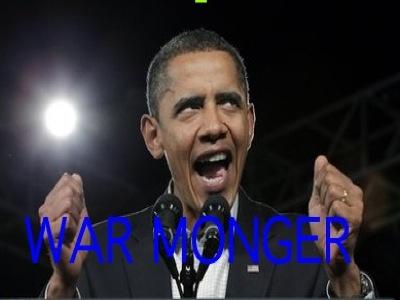
US President Barack Obama has failed to rally international support for conducting military strikes on Syria after two days of lobbying in Russia.
Obama, who arrived in St. Petersburg on Thursday to attend the Group of 20 summit, could not persuade foreign leaders to support his war plans as they urged him not to launch any attack without the United Nations’ permission.
During a long debate, Obama and his Russian counterpart Vladimir V. Putin each argued their positions on the issue.
Putin argued that a majority of the leaders, including the leaders of China, India, Indonesia, Argentina, Brazil, Italy, Germany and South Africa, oppose a military strike independent of the United Nations.
Not only did the Russian president oppose military action against Syria, but he also rejected Washington and its allies’ allegations that the Syrian government used chemical weapons in an attack last month.
“We hear each other and understand the arguments,” Putin said. “We simply don’t agree with them. I don’t agree with his arguments and he doesn’t agree with mine, but we hear and try to analyze.”
The only members of the Group of 20 nations which supported Obama were Canada, France, Saudi Arabia and Turkey, Putin added.
Nevertheless, Obama’s national security adviser, Susan Rice, said Australia, Britain, Italy, Japan, Spain and South Korea could also be added to the list of US allies supporting an attack on Syria.
The US president’s failure to rally international support for his war plans against Syria will make it even more difficult for him to convince US lawmakers and voters to support a strike on Syria.
Obama himself said that he had a “hard sell” and that he might not succeed in winning over the US public which, according to polls, still opposes a strike.
Obama said that he would lay out his case during an address on Tuesday before Congress votes on a resolution authorizing his administration to attack Syria.
According to a whip count by Think Progress, an overwhelming majority of the members of the US House of Representatives are either undecided or likely to vote against a US attack on the Middle Eastern country.
Related articles
- Obama rejects G20 calls to abandon Syria strike plan (timesofindia.indiatimes.com)
- Reuters: Obama ‘Appeared Isolated in St. Petersburg’ at G20 Summit (breitbart.com)
Featured Video

John Mearsheimer: New World Order Arrived & Europe Is Left Behind
or go to
Aletho News Archives – Video-Images
Book Review
Sunset on Net Zero: A Heretic’s Guide to the Futile CO2 Target
By Ronald Paul Barmby (Author) – October 3, 2025
SUNSET ON NET ZERO describes in detail why Net Zero CO2 is pointless and unachievable. It explains in understandable terms the up-to- date thoughts of the greatest minds of today in physics, meteorology, economics, engineering, and the geosciences.
Net Zero CO2 is pointless because we have now confirmed by satellites that 90% of CO2 warming has already happened. CO2 is not an existential threat but clouds, El-Niño, and human habitation are significant drivers of global warming that are often ignored.
Net Zero CO2 is unachievable because the green technology alternatives are unreliable and unaffordable. Wind and solar power triple electricity costs, building fully electric vehicles produces at least one-half of CO2 emissions they are meant to avoid, and heat pumps will leave you dangerously cold in the winter. Green hydrogen, air capture CO2, and carbon capture and storage are prescriptions for national bankruptcy. The supply of key metals and minerals required to achieve Net Zero need to be at least doubled—some much more—and are often controlled by a very few. Net Zero comes with huge environmental and agricultural costs.
We have been through similar climatic temperature changes before, more recently than you think. Our efforts to control it are futile.
Blog Roll
 Aletho News
- FDA Ordered to Pay Over $570,000 in Fight Over Pfizer COVID Vaccine Records
- USAID turned to Facebook to drive demand for Covid vaccines in Global South – files
- Britain’s shadow security network expands into south Lebanon
- The ADL Has a Foreign Policy, and You Are Not Supposed to See It
- Former Qatari PM says ‘Israel’ has security ties with all Gulf states
- The Sound of Silence in the Strait of Hormuz
- Poland’s call for a no-fly zone in Ukraine means NATO direct war with Russia
- John Mearsheimer: New World Order Arrived & Europe Is Left Behind
- Naqab demolition notices top 1,000; settlers demolish Jaloud homes
- Israel is Using the ‘Gaza Ceasefire’ to Commit Ethnic Cleansing
- If Americans Knew
- An error has occurred; the feed is probably down. Try again later.
- No Tricks Zone
- Physicists: Doubling CO2 Has A Smaller Impact On Ocean ‘Acidification’ Than Existing Internal Variability
- Alarmist Climatologists In Shock! 2026 Atlantic Hurricane Season Sees Lowest Count In 101 Years
- New Study: Modern Temps Are Among The Coldest Of The Last 10,000 Years In East Central Europe
- Germany’s Renewable Energies Lead to 1.4 Billion Euro Electric Power Trade Deficit
- Argentina’s Perito Moreno Glacier Joins Antarctica and Arctic In Defying Doomsday Melt Claims
- New Study: Barents Sea Temperatures Were Warmer And Sea Ice Less Extensive In The 1700s Than Today
- German Authorities Start Initiative To Evaluate Public Register For Climate “Disinformation” Spreaders!
- Zonal Asymmetry of Temperature Change in the Antarctic Circumpolar Current
- New Study: The Net Fossil Fuel Contribution To Rising Atmospheric CO2 Has Been Zero For 500 Years
- Germany’s Green Energy Transition Becoming Increasingly Expensive…Another 6 Trillion Euros!

