The issue of Syria has demonstrated the massive gap that has opened up between the elite and ordinary people in both the US and Britain.
Poll after poll after poll shows very large majorities against strikes on Syria. People are war-weary, and the last thing they want is for their countries to become embroiled in another Middle-East war.
One Congressman in the US tweeted earlier this week that he had asked 200 people if they supported strikes on Syria and only four said ‘Yes’– that’s just 2 percent. Another said that 99 percent of calls to his office were against military action.
Let’s get one thing straight: the only people who are keen on war with Syria in the US and UK are the elites. Ordinary people on both sides of the Atlantic want absolutely nothing to do with it.
In Britain, the overwhelming majority of people were delighted that our parliament voted against war last week and that enough of our legislators finally listened to the people to defeat the serial warmongers.
A BBC poll showed that 71 percent of people thought parliament had made the right decision. Yet our neocon/’liberal interventionist’ elite is furious that legislators listened to the views of ordinary members of the public and not them. “You’re a disgrace,” screeched neocon Minister Michael Gove at MPs who voted against the government. Behaving like spoilt brats having a temper tantrum because they were not allowed to get their own way, the Permanent War brigade have been calling for a “second vote” in parliament, showing arrogant contempt for the views of the majority of ordinary people who don’t want war with Syria.
Neocon historian Andrew Roberts threw a hissy fit in a newspaper column last Sunday, attacking the “hideously amoral selfishness” of “new Britain” for not supporting war with Syria. Serial warmonger and drama queen Lord Paddy Ashdown declared “In 50 years trying to serve my country I have never felt so depressed/ashamed” – after parliament finally listened to public opinion and not to warmongers like Ashdown.
Nick Cohen, poster boy for Britain’s pro-war faux-left tweeted “Can’t help thinking that the British parliament’s vote will be remembered as a low and mean point in our history.” Have you got that? Parliament listening to ordinary members of the public is a “low and mean point.” Such is the fundamentally undemocratic neocon/liberal interventionist mindset, which says that no point of view on foreign policy counts except their own and that of their neocon pals.
Since last week’s parliamentary vote, UK establishment figures have been lining up to give Ed Miliband, the Labour leader, a jolly good thrashing for daring to defy the War Party’s line on Syria. Writing in The Times, aptly described as ‘The Warmongers Gazette’ by anti-war conservative writer Peter Hitchens, David Aaronovitch called Miliband a ‘political vulture’. Aaronovitch’s attack on Miliband was hailed as ‘devastating’ by Ian Katz, the editor of Newsnight, the BBC’s flagship Current Affairs program, which wheeled out a ‘Dr. Rola’ from ‘Hand in Hand For Syria’ to criticize Miliband’s failure to back the government.
Since the vote Newsnight has promoted a series of pro-intervention figures, seemingly desperate to try and get us plebs to change our minds. What part of ‘WE DON’T WANT WAR WITH SYRIA’ do our elite not understand? Now the high priest of ‘Liberal Interventionism’, the multi-millionaire war criminal Tony Blair, has joined the ‘Get Miliband’ lynch mob, saying that he was “disappointed” that parliament hadn’t supported the government, adding, “This is something where I just have to disagree with the leadership of the [Labour] party.”
For our neocon/liberal interventionist elite, Miliband is a shocker, a bounder, a rotter, and a ‘political vulture’. But most ordinary people in Britain are very pleased that he and his party listened to the public and opposed the government on Syria. You’d never have known it from listening to neocon newspaper columns, but after last week’s vote, bookmakers shortened the odds of Labour winning the next election to 8-13.
If Miliband and his party had voted the way the neocons wanted, then it’s highly likely that earlier this week US and British forces would have launched their attack on Syria. Which is why of course the Permanent War gang are so angry with him.
The pro-war lobby may be numerically tiny, but in both the US and UK it is massively overrepresented in the mainstream media. Despite the Iraq debacle, the same columnists who urged on that particular catastrophe, are still in front of their keyboards, propagandizing for yet another Middle East ‘intervention’, and are still treated with enormous deference whenever they appear on the likes of CNN or the BBC. Which is very, very often.
“Did you know there are people who supported the Iraq War getting invited on news programs to talk about Syria?” tweets comedy writer Graham Linehan. S’TRUE!!!
The disproportionate voice that necons and ‘liberal interventionists’ have in the UK and US media makes it appear that their views are more widely held in the public at large than they are. But in fact their extremist pro-war views are very rarely found outside elite, Establishment circles.
The gap between the elites in the US and the UK is now larger than at any time in the last 100 years. If we do go to war with Syria, despite the overwhelming public opposition, then it will show that democracy is well and truly dead in both our countries.
Are we countries where the views of the majority are listened to, or are we countries where a tiny, unrepresentative, pro-war clique always gets their way? We’re about to find out.
 Neil Clark is a journalist, writer and broadcaster. His award winning blog can be found at www.neilclark66.blogspot.com. Follow him on Twitter
September 7, 2013
Posted by aletho |
Mainstream Media, Warmongering, Militarism, Progressive Hypocrite, Timeless or most popular, Wars for Israel | BBC, Britain, Iraq War, Middle East, Syria, UK, United States, USA |
Leave a comment
Introduction
As President Obama announces plans for another war, adding Syria to the ongoing and recent wars in Afghanistan, Iraq, Libya, Yemen and elsewhere, a profound gap has emerged between the highly militarized state and US public opinion.
A Reuters/IPSOS poll taken August 19-23 (2013) revealed that 60 percent of Americans surveyed stated that the United States should not intervene in Syria, while 9 percent said Obama should act. Even when the question was ‘loaded’ to include Obama’s bogus and unsubstantiated claim that Syrian President Bashar al-Assad’s forces “used chemicals to attack civilians”, almost twice as many Americans oppose US military intervention (46 percent to 25 percent). In panic and haste several pro Administration media outlets contracted new polls to better the results. What is striking about this finding is that despite the mass media and the Obama spokespeople’s saturation of the airwaves with atrocity images of “victims”, the US public is becoming more vehemently opposed to another imperialist war. Reuters/IPSOS poll of August 13 found 30.2 percent of Americans supported intervention in Syria if toxic chemicals were used, while 41.6 percent did not. In other words, as the Obama regime intensified preparations for war, opposition increased by over 16 percent.
Current and past polls and studies document that a substantial and enduring majority of Americans are opposed to ongoing wars (Afghanistan), even as the Executive Branch and Congress continue to finance and dispatch US troops and engage in aerial assaults in Pakistan, Yemen and elsewhere.
If, as some scholars argue, militarism and ‘national security’ have become the secular religion of the State, it is clear that the majority of civil society are ‘non-believers’. The ‘true believers’ of militarism as the true path to empire building are firmly ensconced in Washington’s political establishment, among high powered ‘lobbies and influential propaganda mills’ known as “think tanks”. The militarist beliefs are embraced and are especially pervasive among highly placed officials with deep and long-standing ties to the Israeli power structure. The myths propagated by cynical political pundits that “the US public opinion gets the elected officials it deserves”; that “Congress and the President reflect the values and sentiments of the electorate”; flies in the face of the divergent attitudes and interests showing up in repeated polls. The vast majority of Americans are concerned with domestic economic issues such as deteriorating job opportunities and living standards, growing inequalities, the concentration of wealth (the Wall Street 1% issue), growing indebtedness of college graduates, the savage cuts in social programs in the face of soaring military expenditures and Wall Street bailouts. In other words the values, attitudes and interests of the vast majority of Americans diverge from those of the Washington establishment, the mass media and the power brokers who penetrate and surround the political elite.
War and Peace: Oligarchy and Democracy
This divergence raises fundamental questions about the nature of the American political system, the role and influence of the mass media and the power of minorities over majorities. Divergences, deep differences between rulers and ruled, has become the norm in the United States on all the big issues, domestic and foreign, of our day.
As the differences accumulate, deepen and grind, they ‘wear’ on our public; political “differences” become outright personal dislike, turning hostility to anger and even hatred of the O-man. His deceptions, the very words he mouths are repeated and jeered. Nothing is more irritating than to listen to a stale confidence man who still tries to fool a knowing public. They are onto him. His newly recruited Cabinet members of both sexes are seen as promoters of toxic lies who try their hand at justifying war crimes via moral ejaculations that resonate in their own ears and with the President, but not beyond.
Executive Prerogatives as Dictatorial Rule
The Presidential declarations of war against the opinion of vast majorities; the dictates to finance bank bailouts behind the backs of the 99%; the proclamations ending ongoing wars which continue; fabrications that serve as pretexts for new wars which resonate with the lies of the previous wars… all speak against a constitutional democracy.
It’s a dictatorship stupid! Nothing “constitutional” – that’s toilet paper! Legal hacks scratch their crotch and come up with past illegal executive orders to back new arbitrary declarations of war.
Electorates are ignored. Who calls the US a democracy except during electoral campaigns? War is the prerogative of the President, we are told. Sequential wars are the alternative to a national health plan. When the President mouths moral platitudes most ignore him, others jeer, curse and wish he would die.
The Case for Impeachment
When in the course of human history a President perpetuates and extends his power beyond the restraints of a constitutional order and willfully commits the American people to perpetual suffering and empties the public treasury of the wealth of its citizens, the question of impeachment rises to the fore. And it ill behooves the climbers and clamorers from foreign lands to flatter, cajole and threaten a President whose imperial pretensions nurture the ambitions of their Chosen State.
Profound and lasting divisions between rulers and ruled accompanied by unending and onerous hardships at a time when our people lack redress in petition and protest, sooner or later, will lead the American people to demand his impeachment. A trial via judicial procedures, condemnation according to judge and jury and incarceration for multiple and grave violations of the constitutional order will ensue. Executives, usurping the rights of the American people at the service of empire and their collaborators with traitorous intent, will not pass with impunity
Why and How the American Public is disenfranchised: the Tyranny of the Minority
It is not the military who choose to disenfranchise and ignore the vast majority of Americans opposed to new Middle East wars. The usurpers are mostly civilians, some of whom shed a foreign rifle to ply our President. Nor is the exclusion of the majority a hidden conspiracy of petrol companies – they have lost hundreds of billions to wars, not of their making, disrupting trade and production.
Idle chatter, flowing from leftist monthlies, liberal weeklies and a multitude of pundits, academics and ‘critical’ public intellectuals, decry the “military-industrial complex”. True their lobbyists seek military contracts, but they did not draw up ‘position papers’ for invading Iraq, nor submit and secure sanctions, and resolutions in Congress against Iran.
If we seek to identify the minority which secures its militarist agenda in the White House and Congress against the majority of Americans, it is clearly identifiable by its consistent, frequent and intrusive presence. It is a new version of the 1%– its called the Zionist power configuration.
One can be 99% sure that among the scant 11% of Americans who support US military intervention in Syria, the pro-Israel crowd and its acolytes are over-represented.
The evidence is clear: they are the most actively engaged in promoting war with Syria at the national and local levels. They are the pundits’ and news commentators promoting the Syrian government toxic gas ploy. They and other mass media pundits and publishers totally ignored the interview quoting the armed Syrian opposition admitting they “mistakenly set off the toxic gas”.
To the degree that we have moved from democracy to oligarchy, from a democratic to a militarist foreign policy, the powerful Zionist power structure has accumulated power and influence and in turn furthered the tyranny of the minority over the majority. Not alone, but certainly with their approval and to their advantage, the Zionist power configuration has marginalized Americans of all creeds, races and religions (including the majority of Jews and apostates).
Oligarchy facilitates minorities’ access to power: it is far easier to buy and blackmail a handful of corrupt wealthy legislators and a coterie of senior administration officials, than millions of citizens suffering the double onus of wars and declining living standards.
Limits of Mass Media Manipulation
The arbitrary power of the oligarchy and its collaborators, and their growing distance from the ruled, no longer is bridged by mass media propaganda. The Obama regime and most Washington think tanks have repeatedly saturated the print and electronic media with the most lurid images and horrendous atrocity stories of Syrian ‘war crimes’ to induce the American citizens to support US military intervention. Daily reports in the New York Times, Washington Post, Financial Times, and all the major and minor television networks repeat ad nauseum the ‘need for war’, “our humanitarian war mission” to no avail. The mass media, the high powered propaganda campaign run by and for the war mongers in Washington and Tel Aviv has failed to gain any more than 10% of the US citizenry.
We have been told by media experts about the power of the mass media to manipulate the US public, as if it was a blank blackboard: the media write the script for the oligarchy and the masses repeat it. In fact, time and time again, a majority of US citizens have rejected “the line” of the mass media, especially on questions of peace and war, living standards and bank bailouts. The credibility of the mass media is near zero.
The public’s rejection of the Obama regime’s move to war with Syria is another example of the limits of mass propaganda. The public supported the Afghan and Iraq wars at the start. But as the wars ground on, became costly and new wars spread; and as the police state grew and living standards plunged, the public became wary. The domestic crises drove the message home: domestic decay accompanies imperial wars. No amount of empty rhetoric or high powered Zionist lobbying for wars for Israel could convince the American majority to continue to sacrifice their lives and their children’s and grandchildren’s living standards to endless wars, spiraling costs and harmful economic consequences.
The Quiet Rebellion of the Democratic Majority
No doubt the word is out: throughout Europe, vast majorities reject their ruler’s imperial wars, particularly the war in Syria. Even the British Parliament rose on its hind legs and said no. Only the decrepit French regime under Hollande, the colonial whore master, sided with Obama for a few days before Parliament convened. The media and their editorial writers, sense ‘trouble’. They start to quote doubting military officers, and to ask questions. “What are the consequences of bombing Assad and aiding al Qaeda?” … asks a retired General.
Obama faces the taunt of the Zionists, “not to waver and cower”. The printing presses of the White House Propaganda Office runs off thousands of reports of intercepted Syrian military directives ordering the use of toxic chemicals…. taken from ‘rebel’ sources; documents that nobody reads, or gives credence.
The White House declares red lines: the public cries ‘big lies’. Deception by the media and White House has been going on too long. The majority is fed up with the fabrication of weapons of mass destruction leading to the Iraq war, the phoney Libyan “atrocities”, the blatant cover-up of Israeli land grabs.
The specter of economic insecurity, of accumulating debts and precarious employment stalks the cities and towns of America. Anger and fear at home, so far, is focused against new wars abroad and their most visible exponent. The Obama regime is facing “a fall” sooner or later. Will his willing accomplices slink away to their think tanks? Will the oligarchs decide he is expandable, no longer useful, too far from the people, too arrogant? Too many ‘wars for Israel’? (Oh my god how did that slip in?) Not enough attention to ‘rebuilding America’? Time for a new election: all aboard. The people have spoken! A new president, less effusive, more mainstream is on order from the Oligarchy
With Obama’s fall, we learn that the mass media are not all powerful and that Israel’s well-wishers will not temper their demands for power even though they are a 1% minority. The majority can bring down a regime but can the create an alternative?
September 6, 2013
Posted by aletho |
Deception, Economics, Ethnic Cleansing, Racism, Zionism, Mainstream Media, Warmongering, Militarism, Progressive Hypocrite, Timeless or most popular, Wars for Israel | Americans, Obama, Syria, United States |
Leave a comment
WASHINGTON – After three days of non-stop phone calls from hundreds of Colorado constituents opposed to a US military strike on Syria, Rep. Doug Lamborn announced Friday he was “leaning against” a resolution giving US President Barack Obama the authority to take limited action.
Following a long holiday weekend, “Tuesday is when the calls started, they’re still coming in, and I would say fewer than two percent are people who want us to take action,” said Catherine Mortensen, Lamborn’s communications director.
“People say things like, ‘We have problems at home we need to take care of.’ And what was surprising was how quickly people’s opinions had gelled. They’re not lukewarm. Right off the bat on Tuesday it was, ‘We don’t need this.’ It’s been overwhelming,” she added in an interview with RIA Novosti.
While Lamborn was answering questions from listeners during a radio show Friday morning, Mortensen said, “One man phoned in to say, ‘I’m in Afghanistan, and I don’t want this anymore.’”
By the end of the show, Lamborn, a Republican, who previously had said he was gathering facts and hadn’t made up his mind yet, told listeners he was inclined to vote against the resolution.
And Lamborn’s office is not alone.
Other Congressional offices say they have also been bombarded ever since Obama said last Saturday that he would ask Congress to approve a “limited” strike against the government of Syrian President Bashar Assad in response to an alleged chemical weapons attack last month.
“I can tell you 99 percent of the calls coming to my office are against it,” said Democratic Rep. Elijah Cummings of Maryland in a televised interview on MSNBC.
Sen. John McCain, a Republican from Arizona who lost the presidency to Obama in 2008, voted to support his old rival during a Senate Foreign Relations Committee hearing this week, but took significant heat about it from angry constituents at a town hall meeting in Arizona Thursday.
“This is what I think of Congress,” said one man in the crowd, holding up a bag of marshmallows. “They are a bunch of marshmallows…Why are you not listening to the people and staying out of Syria? It’s not our fight.”
Some of those calls and comments to Congress appear to be having an effect.
After days of discussions with voters, Rep. Tom Cole, a Republican from Oklahoma, announced late Thursday in a statement on his website that he would vote against the president’s request, saying the situation in Syria is a civil war that America should not be drawn into.
“This is not just my opinion. It is the considered opinion of the people that I represent, expressed not at just one or two town halls, but literally at every public or private meeting and casual encounter I have had since the president decided to put this issue before Congress last Saturday,” he said, adding, “I have heard their opposition loud and clear and will not vote in favor of military intervention in Syria.”
Upon hearing word about a chemical attack that had killed men, women and children, Republican Rep. Michael Grimm from New York said his initial reaction, as a Marine combat veteran, “was to stand by the Commander in Chief and support immediate, targeted strikes.”
Grimm announced Thursday he, too, had changed his mind.
“I have heard from many constituents who strongly oppose unilateral action at a time when we have so many needs here at home. Thus, after much thought, deliberation and prayer, I am no longer convinced that a US strike on Syria will yield a benefit to the United States that will not be greatly outweighed by the extreme cost of war,” he said in a statement on his website.
The Obama Administration thus far has “failed to present a convincing argument that the events in Syria pose a clear threat to America, failed to list a strong coalition of nations willing to support military attacks, and failed to articulate a clear definition of victory,” said Arizona Republican Rep. Matt Salmon in a statement on his website explaining his opposition to a strike.
Salmon told the National Review Online he’s had 500 calls to his office about the crisis in Syria, and only two have been in favor of US intervention. He predicted Obama’s efforts in Congress “will fail by 20 votes.”
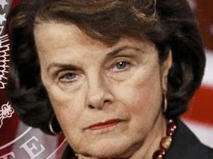 But Obama is counting on members of Congress like California Democratic Sen. Dianne Feinstein, chairwoman of the Senate Intelligence Committee, who has viewed classified information about the chemical weapons attack and said Thursday she supports the strike on Syria, despite the lack of public support.
“There’s no question: What’s coming in is overwhelmingly negative,” she said, according to the Associated Press. “But you see, then, they don’t know what I know. They haven’t heard what I’ve heard.”
During a press conference from St. Petersburg soon after the G20 summit wrapped up on Friday, Obama said he would address the nation about the crisis on Tuesday, telling reporters he considers it part of his job to “make the case.”
“It’s conceivable that, at the end of the day, I don’t persuade a majority of the American people that it’s the right thing to do,” Obama said to reporters.
But he added that members of Congress will have to decide for themselves if they think a strike is the right thing for national and global security.
“Ultimately, you listen to your constituents, but you’ve got to make some decisions about what you believe is right for America,” he said.
Obama did not say whether he would still order a strike even without Congressional approval.
September 6, 2013
Posted by aletho |
Militarism, Progressive Hypocrite | John McCain, Obama, RIA Novosti, Syria, United States |
Leave a comment
President Obama is in St. Petersburg, Russia to participate in the G20 Summit today and tomorrow, amidst a time of heightened tensions between the U.S. and several G20 member nations. Looming over the summit are the Obama administration’s plans for a possible military attack on Syria, while Russian President Vladimir Putin has said that a U.S. military response without U.N. Security Council approval “can only be interpreted as an aggression” and UNASUR – which includes G20 members Argentina and Brazil, issued a statement that “condemns external interventions that are inconsistent with the Charter of the United Nations.”
New revelations of NSA spying on other G20 member nation presidents – Dilma Rousseff of Brazil and Enrique Peña Nieto of Mexico – leaked by NSA whistle-blower Edward Snowden and first reported in Brazil’s O Globo, have also created new frictions. Rousseff is reportedly considering canceling a state visit to Washington next month over the espionage and the Obama administration’s response to the revelations, and reportedly has canceled a scheduled trip to D.C. next week by an advance team that was to have done preparations for her visit. The Brazilian government has demanded an apology from the Obama administration. In an interview with Reuters on Wednesday, an anonymous senior Brazilian official underscored the gravity of the situation:
[T]he official, who declined to be identified due to the sensitivity of the episode, said Rousseff feels “patronized” by the U.S. response so far to the Globo report. She is prepared to cancel the visit as well as take punitive action, including ruling out the purchase of F-18 Super Hornet fighters from Chicago-based Boeing Co, the official said.
“She is completely furious,” the official said.
“This is a major, major crisis …. There needs to be an apology. It needs to be public. Without that, it’s basically impossible for her to go to Washington in October,” the official said.
Other media reports suggest that Brazil may implement measures to channel its Internet communications through non-U.S. companies. But when asked in a press briefing aboard Air Force One this morning, Deputy National Security Advisor for Strategic Communications Ben Rhodes did not suggest that such an apology would be forthcoming:
Q The Foreign Minister said he wanted an apology.
MR. RHODES: Well, I think — what we’re focused on is making sure the Brazilians understand exactly what the nature of our intelligence effort is. We carry out intelligence like just about every other country around the world. If there are concerns that we can address consistent with our national security requirements, we will aim to do so through our bilateral relationship.
Such responses are not likely to go far toward patching things up with Brazil. It is conspicuously dishonest to suggest that the U.S. government “carr[ies] out intelligence like just about every other country around the world,” as no other country is known to have the capacity for the level of global spying that the NSA and other agencies conduct, and few countries are likely to have the intelligence budgets enjoyed by U.S. agencies – currently totaling some $75.6 billion, according to documents leaked by Snowden and reported by the Washington Post.
There are also signs that the Washington foreign policy establishment is troubled by the Obama administration’s dismissive attitude toward Brazil’s understandable outrage. On Tuesday, McClatchy cited Peter Hakim of the Inter-American Dialogue – essentially the voice of the Latin America policy establishment in Washington:
Peter Hakim, the president emeritus of the Inter-American Dialogue, a Washington-based policy group, noted that Secretary of State John Kerry had visited Brasilia last month to patch things up after the initial NSA leaks but “really did not do a very good job. He just brushed it off.”
Hakim said he believed the O Globo report, and he added that “snooping at presidents is disrespectful and offensive.”
Rousseff and Pena Nieto had to issue strong statements, Hakim said. “Both have to show they are not pushovers, that they can stand up to the U.S.,” he said.
The ongoing revelations made by Snowden have affected U.S. relations with other countries as well. As the Pan-American Post points out, Peña Nieto may continue to reduce intelligence sharing with the U.S.; he also said yesterday that “he may discuss the issue with President Barack Obama at the summit.” U.S.-Russian relations, of course, have also recently become tense following Russia’s granting of temporary political asylum to Snowden.
The G20 Summit also comes just after the IMF, at the direction of the U.S. Treasury Department, changed its plan to support the Argentine government in its legal battle with “vulture funds” – meaning that U.S.-Argentine relations may also be relatively cool.
September 5, 2013
Posted by aletho |
Deception, Economics, Full Spectrum Dominance, Progressive Hypocrite | Argentina, Brazil, Dilma Rousseff, Enrique Peña Nieto, John Kerry, Latin America, National Security Agency, NSA, Obama, Russia, United States |
Leave a comment
As the humanitarian crisis unfolds in the Syrian conflict, with suffering refugees reaching the two-million mark, RT’s contributor Afshin Rattansi says Obama actually destroyed the peace deal when it was on the table.
RT: First, let us just talk about where the countries are standing at the moment. France, for example, is saying “We won’t go ahead and strike unless US Congress sanctions military action”. And so, does that actually mean that this has got nothing to do with the UN Security Council; it all depends on what the US says?
Afshin Rattansi: That’s right. President Obama, that first African-American president in history, is presiding over what he presumably realizes is direct conflict with the UN, though it does have Ban-Ki Moon, a sanguine figure who doesn’t seem to care that much about the fact that it looks like it may suffer the same fate as the League of Nations. And President Francois Hollande cutting a suitably Napoleonic figure, saying “We feel very strongly about it, but we won’t do it, if President Obama doesn’t get his Congressional support”… I don’t know it’s not clear at the moment whether President Obama needs that Congressional support. But he has it anyway, if he gives away on Obama care maybe.
RT: It seems that he has got that support, because today the leaders have said they will support military intervention, and of course, this big vote is next week. But do you think there will be a definite vote in Congress for Obama to go ahead? The indications are there.
AR: I suppose when we first heard the Russian Defense Ministry talking about ballistic items being shot out of ships, it should drive home the point to people around the world that Obama can strike at any moment.
He has, after all, conducted joint strikes in the past 72 hours in Yemen and in Afghanistan. So, I don’t think he’ll wait for that approval; he is quite convinced he’ll get this approval definitely and there will be a few deals on things President Obama didn’t particularly want anyway, and was only doing to please his base. But no, I don’t think he needs Congressional approval, the exact vote, he was very clear to say he needed no timeline and there’s the fact that President Assad is threatening US national security, in which case there’s plenty of precedent for the United States President to act alone. The Congressional thing is a bit of window-dressing.
RT: Two million refugees now, a humanitarian crisis unfolding… What sort of repercussions does this have on neighboring countries?
AR: When one looks at those numbers of American destroyers, the number of missiles, and the cost of all of that… Historians in the future will be saying, “Why”, when there was a peace deal on the table to be discussed in Geneva, did Obama destroy and torpedo the peace deal and leave the plight of the refugees to get worse and worse?
One should add of course that while there are brilliant people working for NGO refugee agencies, they act as an arm of the American government. It might be incumbent on some of those refugee agency volunteers, and more so the people who are paid to work for them, to look at where their salaries are coming from – from the same people that are creating the refugee crisis. But, as you say, two million… When I was last in Syria, I was writing for CounterPunch and I was talking about the massive amount of care and concern President Assad’s government had for the results of the NATO invasion of Iraq, taking in the equivalent, proportionately, of twenty million refugees, if it was the United States.
RT: Just briefly, you’re there in London, Syria seems to be a long, long way away, but the refugee crisis, could it have some sort of impact on Europe?
AR: It was very recently that both parties here – Conservative and Labor – were ratcheting up pressure, saying “We don’t want asylum seekers”. The Labor party here often says, “We are swamped with asylum seekers”. I think they live on 7 dollars a day. Of course, the refugee crisis will lead to Syrians looking for succor. And I’m sure Britain and America will welcome all these refugees. Again, as you say, hundreds of thousands in that region, and there will be refugees on the streets of London, if Obama carries out his plans for war.
 Afshin Rattansi is a journalist, author of “The Dream of the Decade – the London Novels” and an RT Contributor. He can be reached at afshinrattansi@hotmail.com.
September 5, 2013
Posted by aletho |
Militarism, Progressive Hypocrite | Bashar al-Assad, Free Syrian Army, Obama, Syria, United States, USA |
Leave a comment
In a dazzling display of chutzpah, the White House is demanding that Congress demonstrate blind trust in a U.S. intelligence establishment headed by James Clapper, a self-confessed perjurer.
That’s a lot to ask in seeking approval for a military attack on Syria, a country posing no credible threat to the United States. But with the help of the same corporate media that cheer-led us into war with Iraq, the administration has already largely succeeded in turning public discussion into one that assumes the accuracy of both the intelligence on the apparent Aug. 21 chemical weapons attack in Syria and President Barack Obama’s far-fetched claim that Syria is somehow a threat to the United States.
Here we go again with the old political gamesmanship over ”facts” as a prelude to war, a replay of intelligence trickery from Vietnam’s Gulf of Tonkin to Iraq’s nonexistent WMD. Once more, White House officials are mounting a full-court press in Congress, hoping there will be enough ball turnovers to enable the administration to pull out a victory, with the corporate media acting as hometown referees.
And in the weekend talk shows, Secretary of State John Kerry, team co-captain in this transparent effort to tilt the playing field, certainly had his game face on. Kerry left little doubt that he KNOWS that the Syrian government is guilty of launching a chemical weapons attack on suburbs of Damascus on Aug. 21. How do we know he knows? Simple: It’s “Trust me” once again.
Did you not watch Kerry’s bravura performance before the TV cameras on Friday when he hawked the dubious evidence against the Syrian government? Someone should tell Kerry that using the word “know” 35 times does not suffice to dispel well-founded doubts and continuing ambiguities about the “intelligence,” such as it is. The administration’s white paper, issued to support Kerry’s “knowledge,” didn’t provide a single verifiable fact that established Syrian government guilt. [See Consortiumnews.com’s “A Dodgy Dossier on Syrian War.”]
But with his bravado, Kerry’s ploy was obvious – to sweep aside serious questions about the evidence and move the discussion simply to one of how much punishment should be inflicted on Syria. “So now that we know what we know, the question … is: What will we do?” Kerry said Friday.
But, Mr. Kerry, please not so fast with your attempt to do an Iraq War number on us. Frankly, asking us to simply trust you (especially after your 2002 vote for President George W. Bush’s Iraq War resolution) is too much to ask. Given the disease of prevarication circulating like a virus among top intelligence officials, one would have to have been “born yesterday” (to use one of Harry Truman’s expressions) to take you at your word.
And, there are hopeful signs that Congress, which has been fooled more than once before, may see through this latest rush to judgment. “Yes, I saw the classified documents,” Rep. Michael Burgess, R-Texas, told The Hill newspaper. “They were pretty thin.”
Some lawmakers are even stating another obvious point; i.e., that even with congressional approval, a military strike on Syria would be not only an international crime, but also unconstitutional because of the Constitution’s supremacy clause making treaties the supreme law of the land.
Under the United Nations Treaty, signatories like the U.S. pledge not to use – or even threaten to use – military force against another nation without U.N. Security Council approval or unless already attacked or in imminent danger of attack. None of those conditions apply here.
So, even if the “intelligence” against Syria were air-tight (which it isn’t) and if Congress approves a use-of-force resolution, the U.S. Constitution still requires that we abide by the U.N. Treaty and obtain Security Council approval. How can lawyers like Obama and Kerry ignore such basics?
There are also other options for punishing Syrian President Bashar al-Assad if there’s real evidence that he was complicit in the Aug. 21 attack. Like other leaders accused of war crimes, he can be indicted by the International Criminal Court or subjected to a special war-crimes tribunal. Yet, instead of following those legal strategies, which are specifically designed for these sorts of situations, President Obama proposes punishing one alleged war crime by committing another.
Intelligence? A Sow’s Ear
But there remains the key question of establishing the Assad government’s guilt and whether the Obama administration’s “high-confidence” assessment about that point is justified. It is a time-honored (or, better, time-dishonored) custom for White House officials bent on war to distort or even manufacture “intelligence” to justify their aims, especially after they’ve gone public with their “knowledge.”
On this point, I can say – “with high confidence” – that the White House is at it again, perpetrating another fraud on Congress and the American people. And most of the U.S. mainstream press has elbowed past the many questions about the quality of the intelligence and has moved on to discussing whether President Obama will “win” or “lose” the congressional vote, whether partisanship will spill over into foreign policy hurting America’s “credibility” to look tough.
Was it just a little over a decade ago that we watched President George W. Bush and Vice President Dick Cheney create out of whole cloth intelligence to “justify” war on Iraq while the U.S. press corps mostly acted as stenographers and cheerleaders? Mistakes are forgivable; fraud is not; neither is cowardice in the face of a misguided rush to war. And the fact that not a single senior Bush administration official was held accountable compounds the problem.
Since many Americans, malnourished as they are by the corporate media, need to be reminded, let’s say it again: The pre-Iraq “intelligence” was not mistaken; it was fraudulent. And, sad to say, then-CIA Director George Tenet and his malleable managers were willing accomplices in that fraud. You need not take my word for it.
Just five years ago, in June 2008, Senate Intelligence Committee Chair Jay Rockefeller, D-West Virginia, announced the conclusions of a five-year committee investigation into pre-Iraq War intelligence approved by a bipartisan majority of 10-5 (Republican Senators Chuck Hagel and Olympia Snowe voting with the Democratic majority). Emphasizing the committee’s conclusion that the Bush administration made significant claims that were not supported by the intelligence, Rockefeller declared, “In making the case for war, the Administration repeatedly presented intelligence as fact when in reality it was unsubstantiated, contradicted, or even non-existent.”
Pressure on Intelligence Analysts
My former CIA analyst colleague, Paul R. Pillar, who, as National Intelligence Officer for the Middle East before the attack on Iraq, experienced up-front and personal the extreme pressure that intelligence analysts feel when a president has decided to make war, addressed this problem recently in “The Risk of Distorting Intelligence.” Pillar pointed out that an Associated Press story on the Obama administration’s preparation of the public for a military strike on Syria included these statements:
“The White House ideally wants intelligence that links the attack [with chemical weapons] directly to Assad or someone in his inner circle, to rule out the possibility that a rogue element of the military act[ed] without Assad’s authorization. That quest for added intelligence has delayed the release of the report by the Office of the Director for National Intelligence laying out evidence against Assad. … The CIA and the Pentagon have been working to gather more human intelligence tying Assad to the attack.”
Pillar adds, “When one hears that policy-makers want not just intelligence on a particular subject but intelligence that supports a particular conclusion about that subject, antennae ought to go up. A ‘quest’ for conclusion-bolstering material is fundamentally different from an open-minded use of intelligence to inform policy decisions yet to be made. It is instead a matter of making a public (and Congressional) case to support a decision already made.”
This was the kind of highly politicized “policy kitchen” in which intelligence analysts and other officials were pressured to serve as cooks whipping up the frothy broth labeled “Government Assessment of the Syrian Government’s Use of Chemical Weapons,” lauded by Secretary of State Kerry on Friday. The manner in which it was issued shows it to be a “policy statement,” NOT an “intelligence summary,” as widely described in the media. And, clearly, there were too many cooks involved.
In contrast to key past issuances of similarly high political sensitivity, the “Government Assessment” released on Friday does not appear under the letterhead of the Director of National Intelligence as was the case, for example, with the official statement issued on Sept. 28, 2012, “on the intelligence related to the terrorist attack on the U.S. Consulate in Benghazi, Libya.”
This break in customary practice may have been simply a function of Director of National Intelligence James Clapper being in such bad odor among those lawmakers who still care about truth. Clapper has confessed to telling Congress, under oath, “clearly erroneous” things about the National Security Agency’s surveillance abuses.
Thus, the administration runs some risk in trotting out Clapper this week to testify before the intelligence and national security committees of Congress. Perhaps the White House has decided it has to rely on Clapper’s demonstrated gift for lying with a straight face (though sweaty pate); or it may be counting on short-term memory loss on the part of the many superannuated and/or distracted members of Congress.
Clapper’s Record
Well before Obama appointed him Director of National Intelligence three years ago, retired Air Force Lt. Gen. James Clapper showed himself to be a subscriber to the George Tenet doctrine of compliant malleability, having helped Defense Secretary Donald Rumsfeld falsify the intelligence on weapons of mass destruction in Iraq. Did no one tell Obama about Clapper’s key role in the cooking of intelligence before the Iraq War?
Rumsfeld handpicked Clapper to be the first civilian director of the National Geospatial-Intelligence Agency (NGA), where he served during the crucial period of September 2001 to June 2006. NGA’s responsibilities included analysis of satellite imagery – the most capable and likely collection resource to discover weapons of mass destruction facilities in Iraq or to verify Iraqi “defector” reports of hidden WMD caches.
So why didn’t NGA point out the absence of WMD evidence or note the many discrepancies in the stories being told by the “defectors” – many of whom were coached by the pro-invasion Iraqi National Congress? The answer: Clapper knew which side his bread was buttered on. Instead of speaking truth to power, he not only fell in with the Tenet school of obeisance, but also glommed onto Donald Rumsfeld’s aphorism: “The absence of evidence is not evidence of absence.”
Working for Rumsfeld, Clapper’s job, pure and simple, was to stifle any untutored-to-the-ways-of-Washington analyst who might ask unwelcome questions like: Could the reason there is not a trace of Iraqi WMD in any of the satellite imagery be that there is none there – and that the Pentagon’s favorite “defectors” are lying through their teeth?
When no WMD caches were found, it was Clapper who suggested, without a shred of evidence, that Saddam Hussein had sent the phantom WMD to Syria, a theory that also was pushed by neocons both to deflect criticism of their false assurances about Iraq’s WMD and to open a new military front against another Israeli nemesis, Syria. (It appears that time may have finally come.)
On more substantive issues – like the key one, “why they hate us” – Clapper has advanced some imaginative theories about what makes terrorists tick. It’s “self-radicalization,” you see. Clapper promoted this bedeviling concept while a nominee for the post of Director of National Intelligence, which he – having played fast and loose with the truth, aside – still occupies.
At his nomination hearing Clapper was asked by Sen. Bill Nelson, D-Florida, about lessons drawn from the investigation of Army Major Nidal Hasan, the psychiatrist sentenced to death last week for killing 13 people at Fort Hood. Clapper responded that “self-radicalization” is a “daunting challenge. … I don’t have the answer to the challenge; identification of self-radicalization may not lend itself to detection by intelligence agencies. … It’s almost like detecting tendencies for suicide ahead of time.”
Still Far From a Silk Purse
If intelligence community leaders have any pride left, they may also have been embarrassed by how last Friday’s “Government Assessment” fit the old bureaucratic image of a camel as the arch-typical horse designed by committee. Seldom have my intelligence alumni colleagues and I seen a more meandering, repetitive, fulsome document. Full of verisimilitude, the document nonetheless includes this key acknowledgment: “Our high confidence assessment is the strongest position that the U.S. Intelligence can take short of confirmation.”
It seems a safe bet that during the next two weeks’ testimony before the various national security committees of the Senate and House, Kerry and Clapper will claim that additional intelligence has “confirmed” what until now has been simply the “assessments” of the U.S. government. Let’s hope that lawmakers have the good sense to ask for actual evidence that can withstand independent scrutiny.
Colin Powell’s meretricious U.N. speech on Feb. 5, 2003, was at least well crafted and persuasively presented. In a same-day assessment, we Veteran Intelligence Professionals for Sanity (VIPS) gave him an A for presentation, while almost flunking him (with a C-minus) for substance. In our Memorandum for the President that day, we urged that the discussion be widened beyond the circle of those advisers clearly bent on a war for which we saw no compelling reason and from which we believed the unintended consequences were likely to be catastrophic.
If President Obama would let us in the door, we would tell him the same thing today, since he has surrounded himself with a menagerie of “tough guys and gals” as well as some neocons and neocons-lite. Before Kerry went on TV Friday, VIPS had already warned Joint Chiefs Chairman Martin Dempsey “there are serious problems with the provenance and nature of the ‘intelligence’ that is being used to support the need for military action.” Those problems remain.
Tonkin Gulf
From my own personal life experience, there was another good example of how the prostitution of intelligence works: When the Tonkin Gulf incident (used to “justify” the Vietnam War) took place 49 years ago, I was a journeyman CIA analyst in what Condoleezza Rice has called “the bowels of the agency.” As an intelligence analyst responsible for Russian policy toward Southeast Asia and China, I worked very closely with those doing analysis on Vietnam and China.
At the time, the U.S. had about 16,000 troops in South Vietnam, but there was mounting political pressure to dramatically expand the U.S. troop levels to prevent a Communist victory. President Lyndon Johnson feared that Republicans would blame him for “losing Vietnam” the way some tarred Harry Truman for “losing China.” So the Gulf of Tonkin incident – North Vietnamese allegedly firing on a U.S. destroyer in international waters – offered Johnson the chance both to look tough and to get a congressional carte blanche for a wider war.
Those of us in intelligence – not to mention President Johnson, Defense Secretary Robert McNamara and National Security Adviser McGeorge Bundy – knew full well that the evidence of any North Vietnamese attack on the evening of Aug. 4, 1964, the so-called “second” Tonkin Gulf incident, was highly dubious.
But it fit the President’s purposes. The North Vietnamese could be presented as aggressors attacking a U.S. ship on a routine patrol in international waters. To make the scam work, however, the American people and members of Congress had to be kept in the dark about the actual facts of the case, all the better to whip them into a war frenzy.
Only years later was the fuller story revealed. During the summer of 1964, President Johnson and the Joint Chiefs of Staff were eager to widen the war in Vietnam. They stepped up sabotage and hit-and-run attacks on the coast of North Vietnam. Defense Secretary McNamara later admitted that he and other senior leaders had concluded that the seaborne attacks “amounted to little more than pinpricks” and “were essentially worthless,” but they continued.
Concurrently, the National Security Agency was ordered to collect signals intelligence from the North Vietnamese coast on the Gulf of Tonkin, and the coastal attacks were seen as a helpful way to get the North Vietnamese to turn on their coastal radars. The destroyer USS Maddox, carrying electronic spying gear, was authorized to approach as close as eight miles from the coast and four miles from offshore islands, some of which already had been subjected to intense shelling by clandestine attack boats.
As James Bamford describes it in Body of Secrets: “The twin missions of the Maddox were in a sense symbiotic. The vessel’s primary purpose was to act as a seagoing provocateur — to poke its sharp gray bow and the American flag as close to the belly of North Vietnam as possible, in effect shoving its 5-inch cannons up the nose of the Communist navy. In turn, this provocation would give the shore batteries an excuse to turn on as many coastal defense radars, fire control systems, and communications channels as possible, which could then be captured by the men … at the radar screens. The more provocation, the more signals…
“The Maddox’ mission was made even more provocative by being timed to coincide with commando raids, creating the impression that the Maddox was directing those missions and possibly even lobbing firepower in their support. … North Vietnam also claimed at least a twelve-mile limit and viewed the Maddox as a trespassing ship deep within its territorial waters.”
On Aug. 2, 1964, an intercepted message ordered North Vietnamese torpedo boats to attack the Maddox. The destroyer was alerted and raced out to sea beyond reach of the torpedoes, three of which were fired in vain at the destroyer’s stern. The Maddox’s captain suggested that the rest of his mission be called off, but the Pentagon refused. And still more commando raids were launched on Aug. 3, shelling for the first time targets on the mainland, not just the offshore islands.
Early on Aug. 4, the Maddox captain cabled his superiors that the North Vietnamese believed his patrol to be directly involved with the commando raids and shelling. That evening at 7:15 (Vietnam time) the Pentagon alerted the Maddox to intercepted messages indicating that another attack by patrol boats was imminent.
What followed was panic and confusion. There was a score of reports of torpedo and other hostile attacks, but no damage and growing uncertainty as to whether any attack actually took place. McNamara was told that “freak radar echoes” were misinterpreted by “young fellows” manning the sonar, who were “apt to say any noise is a torpedo.”
This did not prevent McNamara from testifying to Congress two days later that there was “unequivocal proof” of a new attack. And based largely on that, Congress passed the Tonkin Gulf resolution allowing Johnson to escalate the war with intense aerial bombardments and the dispatch of more than a half million U.S. troops, 58,000 who would die along with estimates of several million Vietnamese and other people of Indochina.
Meanwhile, in ‘the Bowels’
However, by the afternoon of Aug. 4, 1964, the CIA’s expert analyst on North Vietnam (let’s call him “Tom”) had concluded that probably no one had fired on the U.S. ships. He included a paragraph to that effect in the item he wrote for the Current Intelligence Bulletin, which would be wired to the White House and other key agencies and appear in print the next morning.
And then something unique happened. The Director of the Office of Current Intelligence, a very senior officer whom Tom had never before seen, descended into the bowels of the agency to order the paragraph deleted. He explained: “We’re not going to tell LBJ that now. He has already decided to bomb North Vietnam. We have to keep our lines open to the White House.”
“Tom” later bemoaned — quite rightly: “What do we need open lines for, if we’re not going to use them, and use them to tell the truth?”
The late Ray S. Cline, who as Deputy Director for Intelligence was the current-intelligence director’s boss at the time of the Tonkin Gulf incident, said he was “very sure” that no attack took place on Aug. 4. He suggested that McNamara had shown the President unevaluated signals intelligence that referred to the (real) earlier attack on Aug. 2 rather than the non-event on the 4th. There was no sign of remorse on Cline’s part that he didn’t step in and make sure the President was told the truth.
Though we in the bowels of the agency knew there was no Aug. 4 attack – and so did some of our superiors – everyone also knew, as did McNamara, that President Johnson was lusting for a pretext to strike the North and escalate the war. And, like B’rer Rabbit, nobody said nothin’.
Let’s hope that, this time on Syria, at least one or two senior intelligence or policy officials will find a way to get the truth out – heeding their own conscience and oath to support and defend the Constitution – rather than succumb to the ever-present temptation to give priority to being part of the President’s “team.”
Ray McGovern works for Tell the Word, a publishing arm of the ecumenical Church of the Saviour in inner-city Washington. He served in CIA from the administrations of John F. Kennedy to that of George H. W. Bush, including as drafter and briefer of the President’s Daily Brief under Presidents Nixon, Ford, and Reagan. He is co-founder of Veteran Intelligence Professionals for Sanity (VIPS).
September 5, 2013
Posted by aletho |
Mainstream Media, Warmongering, Progressive Hypocrite, Timeless or most popular, War Crimes | Dick Cheney, Donald Rumsfeld, Iraq War, James Clapper, John Kerry, Obama, Syria, United States |
Leave a comment
Sending a bunch of $3 million missiles into Syria to blow stuff up will kill a great many men, women, and children directly. It will also kill a great many people indirectly, as violence escalates in response — an established pattern recognized even by the war-promoting Washington Post.
Refugees are fleeing Syria in greater numbers as a result of the U.S. government’s threat to send in missiles. The refugees have all sorts of opinions of their government, but by many accounts they overwhelmingly oppose foreign missile strikes — a position on which they agree with a large majority in the United States.
Not only is President Obama’s proposal guaranteed to make things worse, but it risks making things dramatically worse, with threats of retaliation now coming from Syria, Iran, and Russia. The U.S. media is already describing the proposed missile strikes as “retaliatory,” even though the United States hasn’t been attacked. Imagine what the pressure will be in Washington to actually retaliate if violence leads, as it so often does, to more violence. Imagine the enthusiasm for a broader war, in Washington and Jerusalem, if Iran retaliates. Risking a major war, no matter how slim you think the chance is, ought to be done only for some incredibly important reason.
The White House doesn’t have one. President Obama’s draft resolution for Congress reads, in part:
“Whereas, the objective of the United States’ use of military force in connection with this authorization should be to deter, disrupt, prevent, and degrade the potential for, future uses of chemical weapons or other weapons of mass destruction;
“Whereas, the conflict in Syria will only be resolved through a negotiated political settlement, and Congress calls on all parties to the conflict in Syria to participate urgently and constructively in the Geneva process;”
In other words, the missiles have nothing to do with ending the war. The war will only end through peace negotiations. All parties should “urgently” and “constructively” pursue that process. And yet, here come the missiles!
Missile strikes will enrage the Syrian government and encourage the opposition. Both sides will fight more fiercely. Both sides will be more seriously tempted to use any weapons in their arsenals. Missiles will prolong and escalate the war.
Steps toward ending the war could include: halting CIA and other military assistance; pressuring Russia and Iran, on one side, and Turkey, Saudi Arabia, and the Gulf states on the other, to stop arming the war; and bringing both sides to a peace conference in Geneva. Is the United States urgently and constructively taking these steps? Of course not.
What about basic humanitarian aid? The U.S. government is just not interested in providing it, not on anything remotely approaching the scale of the weaponry flowing into the war.
President Obama’s stated objective is to deter the future use of chemical weapons. But missiles may encourage that very thing by escalating the war. There are other steps that could be used to reduce the future use of chemical weapons. For one thing, the United States could stop using, developing, and stock-piling chemical weapons. Most nations do not do so. The White House and the U.S. media have begun saying that Syria holds the biggest chemical weapons supply “in the Middle East,” rather than “in the world,” as President Obama said last week. The world-record-holder is the U.S. government.
The U.S. government has admitted to using white phosphorous and new types of napalm as weapons against Iraqis. The best way to discourage that behavior is not to bomb Washington.
The U.S. government has used chemical weapons against “its own people” (always far more outrageous in the eyes of the U.S. media than killing someone else’s people) from the military’s assault on veterans in the Bonus Army to the FBI’s assault on a religious cult in Waco, Texas. The best way to discourage this behavior is not to bomb Washington.
The U.S. could also stop supporting the use of chemical weapons by certain nations, including Iraq’s use of chemical weapons against Iranians. The U.S. could sign onto and support the International Criminal Court. And the U.S. could abandon its role as top weapons supplier to the world and leading war-maker on earth. Less war means less use of all weapons, including various internationally sanctioned weapons that the United States both uses and exports, such as cluster bombs and depleted uranium.
Obama’s intention to “disrupt,” “prevent,” and “degrade” can be taken seriously only at the risk of much higher casualties, as sending missiles into supplies of chemical weapons is extremely risky.
CREDIBILITY: LA COSA NOSTRA
The purpose of missile strikes, according to the corporate U.S. media is, of course, not the reduction of chemical weapons use, but the maintenance of “credibility.”
We don’t all teach our children that when they disagree with another child on the playground they must either murder that child or lose their credibility. But our televisions and newspapers feed that type of message to us nonetheless, through news about the next possible war. Julie Pace of the Associated Press warns:
“For more than a week, the White House had been barreling toward imminent military action against Syria. But President Barack Obama’s abrupt decision to instead ask Congress for permission left him with a high-risk gamble that could devastate his credibility if no action is ultimately taken in response to a deadly chemical weapons attack that crossed his own ‘red line’.”
And here I would have thought that bombing countries in the name of “democracy” against the will of an overwhelming majority at home was costing our government what little credibility it might have had. Didn’t Britain gain in credibility when its Parliament represented its people and said “No” to war on Syria? Doesn’t that step do more for the image of democracy in Western Asia than a decade of destabilizing Iraq has done? Couldn’t the U.S. government do more for democracy by leaving Syria alone and dropping its support for brutal governments in Saudi Arabia, Yemen, Bahrain, Egypt, Israel, etc.?
THE LAW PROBLEM
And shouldn’t a credible enforcer of the rule of law obey the law? Under no possible conception is it legal for the United States to send missiles into Syria. The Kellogg-Briand Pact bans any such action. The most common excuse for ignoring that ban is the U.N. Charter and its loopholes for wars (wars that are defensive or U.N.-authorized). A U.S. attack on Syria is not defensive, and the White House isn’t seriously pretending it is. A U.S. attack on Syria is not U.N. authorized, and the White House isn’t pretending it is or pursuing such authorization in any way. Other U.S. wars carried out in violation of these laws have put up a pretense of internationalism by cajoling some other countries to help out in minimal ways. In this case, that isn’t happening. President Obama is proposing to uphold international norms through an action that the international community of nations is against. France looks like the only possible, and at this point unlikely, partner — not counting al Qaeda, of course.
A president also cannot go to war without Congress. So, it is encouraging that President Obama has now suggested he will try to rise to the standard of George W. Bush and bother to lie to Congress before launching a war. But if Congress were to say yes, the war would remain illegal under both the U.N. Charter and the Kellogg-Briand Pact. And if Congress were to say no, President Obama has indicated that he might just launch the war anyway.
If you look at the resolution that Obama has proposed that Congress pass, it doesn’t grant permission for a specific limited missile strike on a particular country at a particular time, but for limitless warfare, as long as some connection can be made to weapons of mass destruction in the Syrian conflict. The White House has made clear that it believes this will add exactly nothing to its powers, as it already possesses open-ended authorizations for war in the never-repealed Afghanistan and Iraq authorizations, which themselves added exactly nothing to White House war powers, because the president is given total war power through the Constitution in invisible ink that only the White House can see.
Already, there are moves in Congress to re-write Obama’s draft, in order to — in fact — give him limited powers to strike Syria. But those limited powers will allow exactly the disastrous action discussed above. And there is no reason to believe the limitation will hold. President Obama used a limited U.N. resolution to do things it never authorized in Libya. Missiles into Syria that provoke a response from Iran will provoke screams for blood out of Congress and the White House, and all laws be damned.
THE LYING PROBLEM
All of the above remains the same whether the Syrian government used chemical weapons or not. The way to end a war is to arrange a cease-fire, de-escalate, disarm, cool tensions, and start talking. Pouring gasoline on a fire doesn’t put it out. The way to uphold the rule of law is by consistent example and through prosecutions by courts, not vigilantism. This remains the case whether the Syrian government has done what President Obama claims or not.
It is important, however, that so few people around the world and in the United States are willing to take Obama’s word for it. If Obama’s goal is to “send a message,” but most people in the Middle East disagree with him on the facts, what kind of message will he possibly be sending? That is, even if his claims happen to be true, what good is that if nobody believes U.S. war justifications anymore?
The super-healthy skepticism that has now been created is not all attributable to Iraq. The world has been flooded with false claims from the U.S. government during the wars on Afghanistan, Iraq, Libya, and even Syria, as well as during the drone wars. Past claims that the Syrian government used chemical weapons have fallen flat. And the current claims come packages in lies, including lies about the Syrian government’s willingness to allow U.N. inspections, and the speed with which it allowed them. The U.S. government discouraged the use of inspectors, seeking to rush into war on the basis of its own assertions. The White House has produced a dodgy dossier lacking in hard evidence. Analysts see little basis for confidence in White House claims. Insiders are risking “espionage!” accusations to voice their doubts.
And should it be true that someone in the Syrian military used chemical weapons, the White House clearly has nothing but its own suspicions and desires to suggest that the order came from the top, rather than from some rogue officer with an interest in provoking an attack. Circumstantial evidence, of course, makes that more likely, given the bizarre circumstance of the incident occurring less than 10 miles from the U.N. inspectors’ hotel on the day they arrived.
Maybe it’s just too difficult to hold a proper investigation during a war. If so, that is not something to be deeply regretted. Obama’s proposed response would be disastrous. Our priority should be avoiding it and ending the war. Creating a better climate for criminal investigations is just one more reason to bring the war to an end.
THE MILITARY PROBLEM
While hawks and profiteers within and without the U.S. military favor bombing Syria and just about any other military action one might propose, many are resisting. They include the Chairman of the Joint Chiefs of Staff, and numerous officials risking Edward Snowden / Chelsea Manning treatment by talking to the Washington Post, and others to the New York Times. The military does not clearly understand its new proposed role as punisher of a crime that it itself regularly commits, and it does not share in Obama’s claimed confidence that a limited action will remain limited.
THE CONGRESS PROBLEM
House Speaker John Boehner asked President Obama these as-yet-mostly-unanswered questions:
· What standard did the Administration use to determine that this scope of chemical weapons use warrants potential military action?
· Does the Administration consider such a response to be precedent-setting, should further humanitarian atrocities occur?
· What result is the Administration seeking from its response?
· What is the intended effect of the potential military strikes?
· If potential strikes do not have the intended effect, will further strikes be conducted?
· Would the sole purpose of a potential strike be to send a warning to the Assad regime about the use of chemical weapons? Or would a potential strike be intended to help shift the security momentum away from the regime and toward the opposition?
In fact, the White House has been clear that it has no intention to shift momentum in the war.
· If it remains unclear whether the strikes compel the Assad regime to renounce and stop the use of chemical weapons against the Syrian people, or if President Assad escalates their usage, will the Administration contemplate escalatory military action?
· Will your Administration conduct strikes if chemical weapons are utilized on a smaller scale?
· Would you consider using the United States military to respond to situations or scenarios that do not directly involve the use or transfer of chemical weapons?
· Assuming the targets of potential military strikes are restricted to the Assad inner circle and military leadership, does the Administration have contingency plans in case the strikes disrupt or throw into confusion the command and control of the regime’s weapons stocks?
· Does the Administration have contingency plans if the momentum does shift away from the regime but toward terrorist organizations fighting to gain and maintain control of territory?
· Does the Administration have contingency plans to deter or respond should Assad retaliate against U.S. interests or allies in the region?
· Does the Administration have contingency plans should the strikes implicate foreign power interests, such as Iran or Russia?
In fact, the White House is claiming that none of these disasters will occur. But the Speaker is clearly well aware that they might.
· Does the Administration intend to submit a supplemental appropriations request to Congress, should the scope and duration of the potential military strikes exceed the initial planning?
The proposed limited strikes, using Raytheon’s $3-million Tomahawk missiles (tastefully named for a weapon of a people the U.S. military ethnically cleansed) is expected to cost many millions and possibly $1 billion, should nothing go wrong. That money, spent on aid for victims of this war, rather than on escalating the violence, could save a large number of lives. Failure to so spend it is an immoral act.
TAKING ACTION
Over 40,000 people already chose to click here to tell Congress and the president not to attack Syria.
Already it’s making a difference. Our actions so far have helped compel President Obama to seek Congressional authorization before any attack.
Now we have a week to work with. We start with a majority of the public on our side. We have to hold off a flood of pro-war propaganda, and we have to compel Congress to represent us. And we can do this.
The first step is to click here and add your voice.
Second, please send this to everyone you think might add their voice as well.
Third, organize locally to pressure your Congress member and senators, while they are in their districts and states this week, to commit to voting “No” on a U.S. attack on Syria.
We who reject arguments for war are a majority now. We are a majority in Britain, where Parliament has already voted “No.” We are a majority in Germany, which will not take part. We are a majority in France, where Parliament will be heard from soon. And we are a majority in the United States. Let Congress hear from you now!
The terrible and widespread killing in Syria will become even more terrible and more widespread if the U.S. military launches an attack. The White House has no proposal to win a war, only to inject greater violence into a war, prolonging and escalating it.
Contrary to White House claims, Congress cannot authorize war and support a peace process at the same time. Escalating the violence will block, rather than facilitate, peace. Congress is going to have to choose.
Albert Camus summarized the choice now before us: “In such a world of conflict, a world of victims and executioners, it is the job of thinking people, not to be on the side of the executioners.”
Click here to oppose a military attack on Syria, and to urge Congress and the president instead to work for a ceasefire, to pressure Saudi Arabia, the Gulf states, and Turkey, to halt the flow of weapons, and to pressure Russia and Iran to do the same.
Starting September 9th, if you can, be in Washington, D.C., to prevent this war.
September 3, 2013
Posted by aletho |
Militarism, Progressive Hypocrite, Solidarity and Activism, Timeless or most popular, War Crimes | International Criminal Court, Obama, Syria, United States |
Leave a comment
Commentators in the West will surely declare that it was their democratic systems of government that forced US President Barack Obama to back down on attacking Syria. But the events that led up to Washington’s de-escalation suggest there were other factors at play.
When Obama stepped out into the White House Rose Garden to declare that, though still intent on attacking Syria, he wanted to get Congress’ approval first, the Pentagon must have breathed a sigh of relief, knowing full well that a military strike against Damascus could spark a major confrontation in the Middle East for which they were not adequately prepared.
The story starts shortly before the Israeli-Saudi intelligence operation that engineered the chemical attack near the Syrian capital. The Americans and Europeans had begun negotiating with the Russians and the Iranians for a political settlement, after having failed to remove the regime by force. The West’s only condition was that Bashar al-Assad would not be part of the solution, even proposing to Moscow that they would be willing to allow the Syrian president to pick a successor of his own choosing.
When the Russians – after extensive discussions with their allies – told Washington that it was difficult to accept such a condition, the West turned to Plan B, which was to raise the level of military support for the opposition and reorganize the armed groups fighting against the regime, allowing Saudi Arabia to take the lead in mobilizing them to up the ante on Damascus.
The goal was to squeeze Assad by launching major offensives from both the north and the south of the country, in addition to wreaking havoc on Hezbollah on its home ground and providing more appealing incentives for Syrian army officers to defect.
In the meantime, the regime and its allies were already in the process of consolidating military gains on a number of fronts by expanding the area under government control, particularly in the area around Damascus. One such operation was to be launched on the eve of the chemical attack on August 20 against opposition forces to the south and east of the capital.
After the opposition was quickly routed in the north as it tried to sweep through the coastal Latakia region, many of their regional and international backers understood that the only way to bring about a qualitative change on the ground was by drawing the West into a direct foreign military intervention in Syria – but a justification was necessary to prompt Washington to act.
It was for this reason that the “chemical massacre” in the Ghouta area around Damascus was carried out, most likely at the hands of the Saudi and Israeli intelligence. Barely an hour had passed before the orchestrated media campaign to get Assad was in full swing, followed by condemnations and threats from Western capitals.
Washington rushed to cash in on what they insisted was an imminent military attack by sending envoys to both Russia and Iran, giving the two countries a last opportunity to stand down before unleashing their missiles on Syria. But all the sabre-rattling was not enough to force any political concessions – even Assad informed his allies that he had chosen to take a stand.
The Americans tried to respond to this by showing that they were serious about a strike, moving additional naval vessels into the eastern Mediterranean, as well as increasing the number of fighter planes in bases around Syria. But again, Russia and Iran were unmoved, refusing to give Washington any guarantees that its limited strike would not turn into a broader, prolonged war, with devastating consequences for the region as a whole.
They backed their words with action, as Russia, Iran, Syria, and Hezbollah put their forces on high alert, ordering them to make preparations for a military confrontation. Most notably, Hezbollah directed its fighters to return to their bases, as it set up an operations room in coordination with Damascus to make effective use of their combined arsenal of rockets.
The first to buckle was that old hand at such affairs, the United Kingdom, whose parliament gave Prime Minister James Cameron a way out, putting their ally Washington in the uncomfortable position of going it alone. Suddenly, Obama, too, felt the need to consult the American public and seek the approval of their representatives in Congress.
Nevertheless, Obama – having lost the initiative – has but two choices before him: He either retreats and seeks out a political settlement, or enters into a military adventure, whose outcome he cannot control. The results of round one of this global confrontation in Syria provide yet another indicator that the days when the US can call the shots, without regard for the rest of the world, are on their way to becoming a relic of history.
September 2, 2013
Posted by aletho |
False Flag Terrorism, Militarism, Progressive Hypocrite, Wars for Israel | Bashar al-Assad, Iran, Middle East, Obama, Saudi Arabia, Syria, United States |
Leave a comment
Syria asked the UN to prevent “any aggression” against Syria following a call over the weekend by US President Barack Obama for punitive strikes against the Syrian military for last month’s chemical weapons attack.
US military action will be put to a vote in Congress, which ends its summer recess on September 9.
In a letter to UN chief Ban Ki-moon and President of the Security Council Maria Cristina Perceval, Syrian UN envoy Ambassador Bashar Ja’afari called on “the UN Secretary General to shoulder his responsibilities for preventing any aggression on Syria and pushing forward reaching a political solution to the crisis in Syria”, state news agency SANA said on Monday.
He called on the Security Council to “maintain its role as a safety valve to prevent the absurd use of force out of the frame of international legitimacy”.
Ja’afari said the United States should “play its role, as a peace sponsor and as a partner to Russia in the preparation for the international conference on Syria and not as a state that uses force against whoever opposes its policies”.
September 2, 2013
Posted by aletho |
Militarism, Progressive Hypocrite, War Crimes | Al-Manar, Ban Ki-moon, Obama, Syria, United Nations, United States |
Leave a comment
The US and their allies are expending a lot of effort in trying to convince both each other and public opinion that intervention in Syria would be legal both under their own respective domestic laws as well as under international law. Little, however, is being said about whether or not such action would be moral.
Neocon chickenhawk warmonger, “Mad Max” Boot, writing in Commentary, invokes George W. Bush’s legal justifications for attacking Iraq – of all examples – to set a precedent for Obama to attack Syria. Boot cites notorious Bush legal advisor and fellow warmonger John Yoo (famous for advising the Bush administration that torture of terrorists is legal) saying that Obama has executive power to ‘engage in war’ without consulting Congress but must consult Congress to ‘declare war’.
Meanwhile in the UK, Britain’s Attorney General Dominic Grieve sets out what he considers would have been Cameron’s legal justification for intervention. In Grieve’s opinion, if intervention is not authorised by the United Nations Security Council (UNSC), the UK could still legally intervene based on three conditions, namely:
1. The Syrian regime has been killing its people for two years, with reported deaths now over 100,000 and refugees at nearly 2 million. The large-scale use of chemical weapons by the regime in a heavily populated area on 21 August 2013 is a war crime and perhaps the most egregious single incident of the conflict. Given the Syrian regime’s pattern of use of chemical weapons over several months, it is likely that the regime will seek to use such weapons again. It is also likely to continue frustrating the efforts of the United Nations to establish exactly what has happened. Renewed attacks using chemical weapons by the Syrian regime would cause further suffering and loss of civilian lives, and would lead to displacement of the civilian population on a large scale and in hostile conditions.
2. Previous attempts by the UK and its international partners to secure a resolution of this conflict, end its associated humanitarian suffering and prevent the use of chemical weapons through meaningful action by the Security Council have been blocked over the last two years. If action in the Security Council is blocked again, no practicable alternative would remain to the use of force to deter and degrade the capacity for the further use of chemical weapons by the Syrian regime.
3. In these circumstances, and as an exceptional measure on grounds of overwhelming humanitarian necessity, military intervention to strike specific targets with the aim of deterring and disrupting further such attacks would be necessary and proportionate and therefore legally justifiable. Such an intervention would be directed exclusively to averting a humanitarian catastrophe, and the minimum judged necessary for that purpose.
The problem with this opinion is that it does not reflect the actual situation and circumstances on the ground in Syria and, as British legal expert Professor Philippe Sands, QC, of London University points out:
…is premised on factual assumptions – principally that the weapons were used by the Syrian government, that the use of force by the UK would deter or disrupt the further use of chemical weapons – that are not established on the basis of information publicly available.
Furthermore, Grieve in his opinion note infers that the Syrian government is also responsible for all of the 100,000 deaths and is responsible for the creation of the entire refugee crisis resulting from the war when clearly both sides need to take responsibility.
The legal principles relating to burden of proof, presumption of innocence until proven guilty, gathering of evidence, laying charges, making arrests, going to trial, etc., all seems to have been abandoned by the very governments that claim all of these principles as being the foundation stones upon which have been established the virtues that ‘they’, so the Western governments have told us, hate about ‘us’.
September 1, 2013
Posted by aletho |
Militarism, Progressive Hypocrite, Timeless or most popular, War Crimes | “Mad Max” Boot, Damian Lataan, Dominic Grieve, George W. Bush, John Yoo, Philippe Sands, Syria |
Leave a comment
By Ron Paul | September 1, 2013
President Obama announced this weekend that he has decided to use military force against Syria and would seek authorization from Congress when it returned from its August break. Every Member ought to vote against this reckless and immoral use of the US military. But even if every single Member and Senator votes for another war, it will not make this terrible idea any better because some sort of nod is given to the Constitution along the way.
Besides, the president made it clear that Congressional authorization is superfluous, asserting falsely that he has the authority to act on his own with or without Congress. That Congress allows itself to be treated as window dressing by the imperial president is just astonishing.
The President on Saturday claimed that the alleged chemical attack in Syria on August 21 presented “a serious danger to our national security.” I disagree with the idea that every conflict, every dictator, and every insurgency everywhere in the world is somehow critical to our national security. That is the thinking of an empire, not a republic. It is the kind of thinking that this president shares with his predecessor and it is bankrupting us and destroying our liberties here at home.
According to recent media reports, the military does not have enough money to attack Syria and would have to go to Congress for a supplemental appropriation to carry out the strikes. It seems our empire is at the end of its financial rope. The limited strikes that the president has called for in Syria would cost the US in the hundreds of millions of dollars. Joint Chiefs Chairman Gen. Martin Dempsey wrote to Congress last month that just the training of Syrian rebels and “limited” missile and air strikes would cost “in the billions” of dollars. We should clearly understand what another war will do to the US economy, not to mention the effects of additional unknown costs such as a spike in fuel costs as oil skyrockets.
I agree that any chemical attack, particularly one that kills civilians, is horrible and horrendous. All deaths in war and violence are terrible and should be condemned. But why are a few hundred killed by chemical attack any worse or more deserving of US bombs than the 100,000 already killed in the conflict? Why do these few hundred allegedly killed by Assad count any more than the estimated 1,000 Christians in Syria killed by US allies on the other side? Why is it any worse to be killed by poison gas than to have your head chopped off by the US allied radical Islamists, as has happened to a number of Christian priests and bishops in Syria?
For that matter, why are the few hundred civilians killed in Syria by a chemical weapon any worse than the 2000-3000 who have been killed by Obama’s drone strikes in Pakistan? Does it really make a difference whether a civilian is killed by poison gas or by drone missile or dull knife?
In “The Sociology of Imperialism,” Joseph Schumpeter wrote of the Roman Empire’s suicidal interventionism:
“There was no corner of the known world where some interest was not alleged to be in danger or under actual attack. If the interests were not Roman, they were those of Rome’s allies; and if Rome had no allies, then allies would be invented. When it was utterly impossible to contrive an interest – why, then it was the national honour that had been insulted.”
Sadly, this sounds like a summary of Obama’s speech over the weekend. We are rapidly headed for the same collapse as the Roman Empire if we continue down the president’s war path. What we desperately need is an overwhelming Congressional rejection of the president’s war authorization. Even a favorable vote, however, cannot change the fact that this is a self-destructive and immoral policy.
September 1, 2013
Posted by aletho |
Militarism, Progressive Hypocrite | Martin Dempsey, Obama, Syria, United States, United States Congress |
Leave a comment

Venezuela has condemned US President Barack Obama for bypassing the United Nations and asking US Congress to approve a military offensive against Syria, saying the move can lead to destruction of international institutions.
During a visit to the South American country of Guyana on Saturday, Venezuelan President Nicolas Maduro said that the US president was shamelessly bypassing the UN and turning Congress into his personal world court.
“If multilateral bodies and the international system are disregarded like this, what lies ahead of us in this world is war, is destruction,” Maduro warned.
“It is a very serious thing indeed when President Obama tries to take the place of UN bodies, and that he has tried and convicted the Syrian government, and that he has decided to invade, to militarily attack the people of Syria, and that he has chosen the US Congress as a sort of high world court in place of the UN Security Council,” Maduro said after holding a meeting with his Guyanese counterpart Donald Ramotar.
Earlier in the day, Obama said he has decided that Washington must take military action against the Syrian government, which would mean a unilateral military strike without a UN mandate.
Obama said that despite having made up his mind, he will take the case to Congress. But he added that he is prepared to order military action against the Syrian government at any time.
Obama once again held the Syrian government responsible for the chemical weapons attack that killed hundreds of people in the suburbs of Damascus.
On Thursday, the second meeting of the UN Security Council’s permanent members ended without reaching an agreement on Syria.
Representatives from the US, Britain, France, Russia, and China met on Thursday afternoon at the UN headquarters in New York for the second time in two days, but the meeting broke up after less than an hour, with the ambassadors steadily walking out.
The Western members of the council have been pushing for a resolution on the use of force while Russia and China are strongly opposed to any attack on Syria.
The call for military action against Syria intensified after foreign-backed opposition forces accused the government of President Bashar al-Assad of launching a chemical attack on militant strongholds in the suburbs of Damascus on August 21.
Syria has strongly rejected the allegations and says terrorists carried out the deadly chemical weapons attack.
September 1, 2013
Posted by aletho |
Militarism, Progressive Hypocrite, War Crimes | Obama, Syria, United Nations, United States, Venezuela |
Leave a comment
 But Obama is counting on members of Congress like California Democratic Sen. Dianne Feinstein, chairwoman of the Senate Intelligence Committee, who has viewed classified information about the chemical weapons attack and said Thursday she supports the strike on Syria, despite the lack of public support.

 Aletho News

