The US Approves Long-Range Missile Strikes on Russia
Crossing the Line Between Proxy War & Direct War
By Glenn Diesen | November 19, 2024
The discussions about authorising long-range missile strikes on Russia are profoundly dishonest and misleading. The political-media elites present deeply flawed arguments to support the conclusion that attacking Russia with long-range missiles does not cross the line between proxy war and direct war. NATO may be successful in deluding itself, yet for Russia there is no doubt that this is an act of war.
1) “Ukraine has the right to defend itself”
The argument that Ukraine has the right to defend itself as a justification for NATO to authorise long-range strikes into Russia is very manipulative. The public is pulled in with a very reasonable premise, based on the universal acceptance of the right to self-defence. Once the public has accepted the premise, then it is presented as a foregone conclusion that Ukraine should be supplied with long-range missiles to attack Russia. The extent of NATO’s involvement in the war, as the main issue, is subsequently eliminated entirely from the argument.
The point of departure in an honest discussion should start with the right question: When is the line between proxy war and direct war crossed? These are US long-range missiles, their use is entirely dependent on US intelligence and targeting, they will be operated by US soldiers and guided by US satellites. Launching them from Ukrainian territory does not make it any less of a direct US attack on Russia. The US did not use these weapons against Russia for three years as it would amount to a direct attack, yet now the media is attempting to sell the narrative of this merely being uncontroversial military aid to enable Ukraine to defend itself. The US and some of its NATO allies have decided to attack Russia directly, and they should be honest about this intention. Attempts to present this as merely giving military aid to Ukraine to defend itself is an irresponsible effort to shame any dissent and avoid a serious discussion about attacking the world’s largest nuclear power.
It is imperative to place oneself in the shoes of opponents and ask how we would interpret the situation and what we would do if the situation were reversed. The US and NATO have invaded many countries over the years, so we do not need to delve too deep into our imagination to set up a hypothetical scenario. How would we react if Russia sent long-range missiles, dependent on Russian intelligence and targeting, operated by Russian soldiers and guided by Russian satellites, to attack NATO countries under the guise of merely helping Yugoslavia, Afghanistan, Iraq, Libya, Syria, Yemen of another country to defend itself. We are deluding ourselves if we pretend that this would not be interpreted as a direct attack, and despite the great risks involved, we would be compelled to retaliate to restore our deterrent.
President Putin warned in September 2024 that Russia would interpret this as a direct attack and the beginning of a NATO-Russia War, and Putin argued that Russia would respond accordingly. The clarity in his language makes it nearly impossible to walk back the commitment to strike back at NATO, which is a deliberate tactic in the game of chicken as Russia cannot swirl away.
Stories about thousands of North Korean soldiers fighting in Ukraine or Kursk are used to legitimise the attack on Russia. This is most likely NATO war propaganda as there would be some evidence if thousands of North Korean soldiers were fighting. The North Koreans training in Russia are likely intended as a deterrent in case NATO would go to war against Russia, which is now seemingly the case. However, even if North Koreans involve themselves in the fighting, it does not make NATO any less of a participant in the war by attacking Russia.
2) Russia does not dare to retaliate against NATO
The reluctance by Russia in the past to sufficiently retaliate against NATO’s incremental escalations has been presented as evidence for the false conclusion that Russia does not dare to respond. There is no doubt that Russia’s restraints have emboldened NATO. President Biden once argued that sending F-16s would result in a Third World War, such warnings now are denounced as “Russian propaganda”. Russia’s failure to respond when the US crossed that line meant that the US could argue it did not amount to a direct attack. The rules of proxy war subsequently changed.
Russia’s dilemma over the past three years has been to either respond at the risk of triggering a Third World War, or to gradually abandon its deterrent and embolden the US. With every NATO escalation, Russia is facing an ever-higher price for its restraints. Russia has been under pressure to set a final red line, and NATO becoming directly involved in striking Russia is when the proxy war becomes a direct war.
How will Russia respond? There are several more steps on the escalatory ladder before pushing the nuclear button. Russia can intensify strikes on Ukrainian political targets and infrastructure, introduce North Korean troops that were likely intended as a deterrent for a situation like this, strike NATO assets in the Black Sea and logistic centres in Poland or Romania, destroy satellites used for the attacks on Russia, or attack US/NATO military assets in other parts of the world under the guise of enabling other countries to defend themselves.
Russia’s response will also depend on how these missiles are used. The New York Times suggested that the use of these missiles would be limited and primarily used to assist Ukraine with the occupation of Kursk, which also makes the US an even more involved participant in the occupation of Russian territory. Yet, Russia must respond forcefully to any breach of its red lines to counter NATO’s incrementalism / salami tactics that aim to chop away at Russia’s deterrent. The purpose of such incrementalism is to avoid an excessive response from Russia. The US will predictably impose restrictions on how these weapons can be used as it engages in direct attacks on Russia, but gradually these restrictions will be removed.
The extent of Russia’s response will depend on the extent to which these weapons are effective. The war is evidently being won by Russia, which is why Moscow is cautious about any escalations as it only needs time. However, if these weapons would actually turn the tide of the war, then Russia would consider itself compelled to launch a powerful attack on NATO as Russia considers this to be a war for its survival. NATO should therefore hope that these weapons are not effective, which undermines the reasoning for using them at all.
The missiles can turn the tide of the war
The war has already been lost, and Washington previously admitted that these long-range missiles would not be a game changer. There are two reasons for escalating the war at this point, to further bleed Russia and to sabotage Trump’s objective to end the war.
There is overwhelming evidence that the overarching objective for sabotaging all paths to peace and fighting the proxy war in Ukraine has been to weaken Russia as a strategic rival. Even Zelensky recognised in March 2022 that some Western states wanted to use Ukraine as a proxy against Russia: “There are those in the West who don’t mind a long war because it would mean exhausting Russia, even if this means the demise of Ukraine and comes at the cost of Ukrainian lives”.[1] Both the Israeli and the Turkish mediators confirmed that the US and UK sabotaged the Istanbul peace agreement to fight Russia with Ukrainians, while interviews with top American and British diplomats revealed that the weakening of Russia and regime change in Moscow was the only acceptable outcome.[2]
The timing of Washington’s decision is also suspicious and appears to aim at sabotaging Trump’s plans to end the war. By comparison, Obama similarly threw a wrench into US-Russia relations in late 2016 as he was handing the White House over to Trump. The anti-Russian sanctions and expulsion of Russian diplomats were intended to sabotage Trump’s promise to get along with Russia. Biden appears to follow the same playbook by risking a Third World War to prevent peace from breaking out in Ukraine. Biden was too cognitively impaired to run for re-election, yet he is supposedly mentally fit to attack Russia as he prepares to leave the White House.
The world today is more dangerous than at any other time in history. The decision by the US to attack the world’s largest nuclear power is a desperate effort to restore global primacy. What makes this situation even more dangerous is the absurd self-deception across the West that results in us sleepwalking towards nuclear war. The public should be presented with more honest arguments when making the case for risking a third world war and nuclear annihilation.
[1] The Economist. ‘Volodymyr Zelensky on why Ukraine must defeat Putin’ The Economist, 27 March 2022.
[2] G. Diesen, ‘Sabotage of the Istanbul Peace Negotiations’, Substack, 13 October 2024, https://glenndiesen.substack.com/p/sabotage-of-the-istanbul-peace-agreement
Western liberalism has ‘degenerated’ – Putin
RT | November 7, 2024
 Liberalism in the West has devolved into an aggressive and intolerant ideology in which freedom, democracy, and human rights take a back seat to power, Russian President Vladimir Putin has said.
His remarks were part of a keynote address at the 21st annual meeting of the Valdai International Discussion Club in Sochi on Thursday.
“Today’s Western liberalism, in my opinion, has degenerated into extreme intolerance and aggression towards any alternative, towards any sovereign and independent thought, and now justifies neo-Nazism, terrorism, racism and even mass genocide of the civilian population,” Putin said.
Moscow has traditionally considered the “collective West” to consist of the US and its allies in North America, Europe, Australia and East Asia. Their once-liberal governments have transformed their guiding ideology into something “totalitarian in essence,” the Russian president argued.
“Democracy is increasingly being interpreted as minority rule rather than rule of the majority, and traditional democracy is even being put at odds with some abstract freedom, for the sake of which – as some believe – democratic procedures, elections, the opinion of the majority, freedom of speech and impartiality of the media can be disregarded, or even sacrificed,” said Putin.
The Russian president called this trend towards tyranny as one of the biggest threats to the emerging multipolar world order.
The plenary session at which Putin spoke was titled ‘Security for Everyone. Together – Into a New World’. This year’s Valdai meeting is taking place under the motto ‘A Lasting Peace – On What Basis? Universal Security and Equal Opportunities for Development in the 21st Century’.
Victoria Nuland Laments Social Media Won’t Play Censor for the Feds Anymore

By Didi Rankovic | Reclaim The Net | November 3, 2024
The original “Russia Gate” might have been debunked a long time ago, but politicians and officials continue to seek to explain their electoral failures by accusing other countries of “meddling.”
There is an even more serious angle to their insistence on this – namely, using it as justification for putting in place what opponents (and a congressional investigation) call the government-Big Tech collusion to censor online speech.
Speaking of meddling – former senior US State Department official Victoria Nuland’s handiwork is probably better known in Europe than in the US, and she is now revisiting the script of (Russian) meddling, but is also complaining that social platforms are not as willing to “work” with the government as before on US presidential elections.
Nuland clearly believes her own freedom of speech has no consequences, so she decided to tell MSNBC’s Rachel Maddow that Russian President Vladimir Putin is “at it again” – and also explicitly accuse X owner Elon Musk of making his platform implicit in this alleged election interference.
“In 2020, the social media companies worked hard with the US government to try to do content moderation, to try to catch this stuff as it was happening,” said Nuland.
Now, laying the groundwork for election interference claims, according to her, Musk is “talking directly to the Kremlin.”
The astonishing accusation goes on to “explain” what exactly Musk and the Kremlin are chatting about. “Every time the Russians put out something, [Musk makes sure] it gets five million views before anyone can catch it,” said Nuland.
The frontal assault on Musk also saw the former official tell Maddow that he is “a new, very powerful tool” in Putin’s hands.
To quote Maddow – “I’m not sure people have absorbed the magnitude of what you’re describing there.”
She, of course, was not dismayed by Nuland’s statements but was with this comment “aiding and abetting” them. Once Nuland was done with linking Musk and Putin, she moved on to President Trump, who she asserted is “taking Putin’s lessons.”
Maddow for her part took this cue to attack Trump as essentially creating “alliances” with what Nuland and Maddow consider to be autocrats. And, the “magnitude of that” is what the MSNBC host was not sure Americans have “absorbed.”
Back to Nuland’s activities in Europe, while she still had an official role. This enabled her to become a key player behind the so-called Steele Dossier, by providing the since-debunked documents to the FBI back in 2016.
Dumpster fire: White House Press Office faced internal criticism over the rewriting of Biden’s garbage comments
By Jonathan Turley | November 1, 2024
Since the “Let’s Go, Brandon” incident, the media has been repeatedly accused of reframing news or rewriting words to benefit the President or the Biden-Harris Administration. This week, the White House Press Office and various media outlets like Politico and MSNBC have been ridiculed for denying that President Joe Biden called Trump supporters “garbage.” It has created a weird dissonance as Democratic politicians denounced what the White House and many in the press denied was said. Now, the White House Press office is being criticized from a new quarter for the clean up on aisle three: the Director of White House Stenography, Amy Sands. The White House stenographers objected to the rewriting of the transcript by the Biden White House staff to suggest that the President was condemning Trump’s rhetoric, not his supporters.
The President’s attack on Trump supporters was nothing new. Leaders like Hillary Clinton called them “deplorables,” and Biden himself has described their views as a return of the confederacy and the rise of fascism. Democrats have called the movement a modern form of Nazism and an effort to destroy democracy, round up homosexuals, and create internment camps.
The problem was the timing. As Harris was denouncing Trump for name-calling and insisting that Democrats are bringing the country together (while condemning Trump as a modern version of Hitler), Biden was literally behind her in the White House, calling tens of millions of Trump supporters “garbage.”
Fox News reportedly obtained an email in which the supervisor sounded the alarm on the White House press office’s “breach of protocol and spoilation of transcript integrity between the Stenography and Press Offices.” Sands went on to say that
“if there is a difference in interpretation, the Press Office may choose to withhold the transcript but cannot edit it independently. Our Stenography Office transcript — released to our distro, which includes the National Archives — is now different than the version edited and released to the public by Press Office staff… After last night’s process, our team would like to reiterate that rush drafts/excerpts the Stenography Office sends to assist the Press Office are not intended for public distribution or as the final version of the transcript. Please avoid sharing rush drafts/excerpts, which are subject to review and might create confusion among staff, media, and the public while our Stenography Office completes a thorough review process.”
The White House was criticized for adding an apostrophe to the President’s comments to change the meaning of the key line.
After the statement, there was an immediate clean-up effort by Politico White House bureau chief and MSNBC host Jonathan Lemire, who was accused of changing the language by saying that “Biden, in a Zoom call with the organization Voto Latino, said ‘the only garbage’ was the ‘hatred’ of Trump supporters who said such things about American citizens.”
Lemire was widely ridiculed. For many, it sounded like another “Let’s Go Brandon” moment. He later turned to the apostrophe spin: “The full Biden quote from the Zoom tonight, which is being taken out of context.” Accompanying the text is a screenshot of a transcript that has Biden saying: “The only garbage I see floating out there is his supporter’s — his — his demonization of Latinos is unconscionable, and it’s un-American.”
The spin would have been more convincing if many of these pundits were not at the same time insisting that a line from a comedian delivered at a Trump event should be attributed to Trump (despite his later condemnation of any such view). It would also be more credible if Biden had not spent much of the last four years portraying the Trump movement as a new confederacy (before it was reframed as the new Third Reich).
When asked about the internal objections, White House spokesperson Andrew Bates only repeated the prior statement: “The President confirmed in his tweet on Tuesday evening that he was addressing the hateful rhetoric from the comedian at Trump’s Madison Square Garden rally. That was reflected in the transcript.”
However, Fox noted that it remains “unclear … whether the transcript the White House cites is the one that was altered and released to the press or the final transcript that was sent to the National Archives.”
Other reporters now admit that Biden said what he said but describe it, as did CBS News anchor Norah O’Donnell, as “a gaffe by President Biden where he, in his explanation, inadvertently called Trump supporters garbage.” The “inadvertent gaffe” ignores years of portraying Trump supporters as seeking to return the United States to the Jim Crowe period or pursuing a neo-Nazi future.
While various Democratic politicians have denounced Biden’s statements and Harris has said that she strongly disagrees with them, diehards like MSNBC’s Lawrence O’Donnell mocked those who were critical as “some of the worst” or just ungrammatical journalists:
“To do so, they had to refuse to listen to the actual sentence Joe Biden spoke. They had to refuse to look at the written words of that sentence. They had to refuse to understand English grammar. They had to refuse to understand what a singular possessive is. They had to refuse to understand what apostrophe ‘s’ means. They had to refuse to remember what they learned in elementary school about the English language.”
It appears that the non-partisan, career stenographers who recorded the interview contemporaneously are also on that “worst” list of ungrammatical morons.
The mainstream media is now dismissing the entire matter as just the placement of an apostrophe. Yet, many of these same voices were supporting a full-fledged investigation into the transcript of the Ukraine call during the Trump Administration over “the use of ellipses.”
I was critical of that call and supported calls for an accurate transcript, particularly on such a weighty issue. However, back then, the accuracy of such transcripts was accepted as of paramount importance. Whether it is a matter of foreign or domestic policy (or an apostrophe or ellipses), the public should be confident on the accuracy of White House transcripts, as stressed by Sands in her internal objections to the White House Press Office.
One of those objecting to the use of the ellipses was Lawrence O’Donnell.
It appears that one person’s punctuation is another person’s punch line.
Jonathan Turley is the Shapiro professor of public interest law at George Washington University and the author of “The Indispensable Right: Free Speech in an Age of Rage.”
State Department Threatens Georgia With ‘Consequences,’ Amid Rigged Election Claims
By Connor Freeman | The Libertarian Institute | October 29, 2024
The State Department and the European Union are demanding Tbilisi repeal “anti-democratic” legislation and investigate election “irregularities” respectively after the Georgian Dream Party won this weekend’s parliamentary elections. Georgian leaders including Prime Minister Irakli Kobakhidze and President Salome Zourabichvili are at odds, with Zourabichvili accusing Kobakhidze’s party of winning a “total fraud” election.
Per the official tally, Georgian Dream won 54% of the vote, with multiple opposition parties earning between 3-11%. Georgian Dream will form the country’s next government as they now hold a minimum of 90 out of the national parliament’s 150 seats. However, four opposition parties which favor integration with the EU are refusing to participate in the new legislature, deeming the election stolen, and accusing the ruling party of pushing Georgia towards a pro-Russia direction. President Zourabichvili called for protests and vowed she will not recognize the plebiscite’s results.
Tens of thousands of Georgians protested for hours outside parliament on Monday night, the demonstrations reportedly ended with no plans for further action but dispersed peacefully. The Georgian government and electoral commission have dubbed the election free and fair.
State Department Spokesman Matthew Miller threatened Georgia with “consequences” before adding his demands. Miller characterized the election as having taken place within an “environment shaped by the ruling party’s policies including misuse of public resources, vote buying and voter intimidation.”
He made clear the path Georgia is taking does not bode well for its future in America’s orbit, “We encourage Georgia’s governing officials to consider the relationship they want with the Euro-Atlantic community rather than strengthening policies that are praised by authoritarians.”
Finally Miller, speaking for a government which has extensively meddled in Georgian elections including staging a coup in the 2003 Rose Revolution, warned “We do not rule out further consequences if the Georgian government’s direction does not change.” He then insisted that Tbilisi begin “withdrawing and repealing anti-democratic legislation.”
The Organization for Security and Cooperation in Europe praised Georgia’s voter participation, substantial presence of citizen and party observers, as well as the diversity of ballot choices during the election. OSCE observers “found the legal framework to be adequate for holding democratic elections.” Although they also accused the ruling party of exploiting an “already uneven playing field,” and claimed there were instances of intimidation, coercion, and pressure being put on voters including public sector employees.
EU Council chief Charles Michel is calling on the relevant authorities in Georgia to “swiftly, transparently, and independently investigate and adjudicate electoral irregularities and allegations thereof.” He added, “These alleged irregularities must be seriously clarified and addressed.”
Western governments are condemning Georgia’s ‘law on transparency of foreign influence,’ which requires agencies to register as “agents of foreign influence” if they are operating within Georgia and foreign sources account for over 20% of their funding. Georgia’s parliamentary speaker signed the bill into law after it was vetoed by President Zourabichvili earlier this year. The law operates similarly to the US Foreign Agents Registration Act.
The West is also in an uproar against Georgian laws banning gender reassignment surgery, gay marriage, and so called LGBTQ “propaganda” including PRIDE-style events along with certain books and films. Although, polling shows significant public disapproval in Georgia of same-sex marriages.
Last month, a senior US official told Voice of America, the American state-funded media outlet, that Washington is preparing sanctions on former Georgian Prime Minister Bidzina Ivanishvili, Georgian Dream’s influential founder, over his opposition to Tbilisi joining NATO and the EU.
An analysis by Ian Proud published by Responsible Statecraft makes the case that the ruling party’s victory can be explained not by election rigging but as a popular response to various economic and immigration crises.
Proud notes the uneven trade relationship the Caucasian country maintains with the EU since signing the EU Deep and Comprehensive Free Trade Agreement ten years ago. EU states benefit from robust exports in Georgia while purchasing four times less Georgian imports. The trade balance is more even with the Eurasian States, although they too export 1.8 times more than they import.
At the same time, the Washington-led proxy war with Moscow in Ukraine is both funded and championed by the EU. The war has caused an immigration crisis in Georgia with nearly 90,000 people emigrating from Russia, Belarus, and Ukraine between 2022 and 2023. This has led to a surging unemployment rate of over 26%, while housing prices are up 35% and rent prices have risen as much as 50%.
In 2008, at NATO’s Bucharest Summit, Brussels announced both Tbilisi and Kiev would one day join the Washington-led military bloc which has been mired in disastrous wars in the Balkans, North Africa, and Central Asia. The admission of both states to the alliance is viewed in the Kremlin as a major national security threat and provoked Russia’s invasions of both Georgia sixteen years ago and now Ukraine.
As Scott Horton, the Libertarian Institute’s director, has detailed, the now jailed former president Mikheil Saakashvili, the victor of the US-backed Rose Revolution, “was incentivized to take bigger risks due to the Bucharest Declaration of America’s intent to bring them into the NATO alliance just four months before, U.S. military support and vague security assurances the Bush government had given his government that spring. Saakashvili launched an attack on the breakaway province of South Ossetia in the southern Caucuses Mountains, then enjoying full autonomy and protection by Russian peacekeepers under a deal that had been brokered by [the] European Union… The Russians, suffering casualties in the initial assault, quickly struck back, destroying Georgia’s invading force and securing South Ossetia’s independence from Georgian rule.”
Barack Obama’s administration orchestrated a coup and overthrew the government in Kiev during the 2014 Maidan Revolution. Subsequently during the Donald Trump years, the White House armed Ukraine’s military, including Neo Nazi militias integrated in the National Guard. Concurrently, Kiev entrenched ties with US special operations forces and the CIA as it waged a war against ethnic Russian separatists in the Donbas region.
Under the current White House, as tensions mounted over the Donbas, the erstwhile USSR state became a de facto NATO member as Washington eschewed diplomacy with the Kremlin, refusing to discuss rescinding Ukraine’s invitation for membership with the alliance, culminating in Russia’s 2022 invasion.
U.S. mercenaries killed in Russia, West goes hysterical on dubious North Korea claim
By Finian Cunningham | Strategic Culture Foundation | October 29, 2024
“It’s a grave escalation in this war and a threat to global peace,” said European Commission President Ursula von der Leyen this week.
It certainly is an alarming development that American, Canadian and Polish mercenaries were killed in action on Russian soil this week. The members of a recon and sabotage unit were eliminated by Russian forces as they crossed into Russia’s Bryansk region from Ukraine.
But von der Leyen and other Western leaders said nothing about that. They were hyperventilating instead over ropey claims about North Korean troops sent to Russia.
Credible Russian security footage showed the dead men lying beside supplies of heavy weapons, including Semtex explosives and anti-tank grenade launchers, “enough to blow up a small city,” it was reported. One of the casualties bore the tattoo of the U.S. 75th Ranger Regiment, an elite airborne special forces unit. It is unclear if the American soldier was a former member of the U.S. Army who had joined a private mercenary contractor or if he was redeployed from army ranks to fight in Ukraine against Russia.
Either way, the presence of military combatants from the United States and other NATO states on Russian territory is stark evidence that the NATO powers are directly involved in the Ukrainian proxy war against Russia.
Washington and Brussels have maintained the tenuous fiction that they “only” supply weapons to Ukraine but that NATO is not a participant in a conflict with nuclear-powered Russia.
That fiction has always been an insult to common sense. NATO countries have been actively involved in recruiting foreign mercenaries to go fight in Ukraine. Russia estimates that 15,000-18,000 militants have traveled to deploy with the Armed Forces of Ukraine since the conflict erupted in February 2022. Large numbers have been killed or taken prisoner.
Mercenaries have been identified from the U.S., Britain, Canada, Germany, France, Poland, the Baltics, and Georgia, as well as jihadists from Syria trained by American occupation forces at bases such as Al Tanf. It is estimated that foreign fighters from over 100 countries have ended up in Ukraine, aiding the NATO-sponsored Kiev regime.
Some of them are no doubt “soldiers of fortune” making a payday. Others would have to be NATO servicemen because the operation of technical weapons such as HIMARS artillery and so on must involve NATO handling expertise.
The desperate incursion into Russia’s Kursk region that began on August 6 was thought to have included many foreign mercenaries. One American private military contractor identified was the Forward Observation Group.
The Western media have largely ignored or obscured the reports of NATO connections to the ground fighting. Not surprising given the propaganda function of Western “news” media in what is information warfare.
Meanwhile, this week, NATO Secretary General Mark Rutte announced concern that North Korean troops were fighting in the Kursk region. This was the first time that NATO had officially made the claim. For weeks there have been speculation and rumours about North Korean troops joining Russian forces.
The U.S. and European media ran headlines implying that the NATO claims were fact.
European Commission President Ursula von der Leyen stated: “North Korean soldiers are deployed to support Russia’s war of aggression. It’s a grave escalation in this war and a threat to global peace.”
Healthy skepticism is warranted. NATO’s Rutte did not provide any evidence to support his claim. He simply referred to his discussions with South Korean military intelligence officials.
The Ukrainian de facto dictator Vladimir Zelensky (he canceled elections months ago) has for months been pushing claims that thousands of North Korean troops are joining Russia’s ranks in Ukraine.
It seems significant that Zelensky met with South Korean President Yoon Suk Yeol last year at the G7 summit in Hiroshima. It was their first meeting. Immediately after that encounter, South Korea pledged more military and financial aid to Ukraine. Zelensky’s wife also made suspicious trips to South Korea to attend “media events”.
President Yoon’s approval rating among the South Korean public has hit rock bottom over a range of grievances, including soaring cost of living. Yoon is a hawk on relations with North Korea. Pyongyang has slammed Seoul for deliberately antagonizing tensions.
Under President Yoon, South Korea has become a major weapons exporter, having sold an estimated $20 billion worth of arms over the last two years. South Korea is warning that it will increase military supplies to Ukraine on the back of claims that North Korean troops are being deployed in Russia.
There seems to be a lot of dramatizing about the purported North Korean contingency. The Kiev regime is amplifying claims as a way to get the United States and NATO more involved in the proxy war. The White House has expressed concerns about the claims of Pyongyang’s alleged participation. For President Yoon, Ukraine represents opportunities to boost his flagging poll numbers and economic gains from increased weapons exports.
The Western media are wishfully claiming that the deployment of North Korean troops is a sign of desperation by Russian President Vladimir Putin over supposed military losses in Ukraine.
That contention does not make sense. Russian forces are rapidly advancing to fully take control of the Donbass region in Ukraine. The NATO-backed side is losing territory at the fastest rate in more than two years of conflict. The idea that Russia needs North Korean military help is implausible, if not absurd.
Moscow signed a mutual defense pact with Pyongyang earlier this year. If North Korean soldiers are deployed to Russia, perhaps for training, that is entirely a legal and sovereign matter between consenting parties.
It is not Russia that is being “desperate”. The deployment of American and other NATO mercenaries to Ukraine is a real sign of desperation that the Kiev regime has run out of cannon fodder and is engaging in cross-border provocations.
Of course, NATO and Western leaders would prefer to fantasize about North Korea than to admit the truth of their “grave escalation” on Russia’s borders and reckless threat to world peace.
US money flows to anti-Orbán, left-liberal Hungarian news outlets
Remix News | October 29, 2024
The American Embassy in Hungary has once again invested heavily in the Hungarian – left-liberal – media. The 3rd Free Media tender was announced, with the aim once again to “protect and strengthen our freedom of the press.”
Last year, most of the national left-wing media received support from the first two tenders, but Magyar Hang, which calls itself “bourgeois,” also received money from U.S. taxpayers. David Pressman will [not] say where this year’s 160 million forints (€395,000) will go, but notably, a new outlet, Kontroll, which is close to Hungarian opposition leader Péter Magyar, debuted just a few days ago.
In the 2024 tender, 160 million forints will be distributed courtesy of American taxpayers. Media companies can apply for two purposes. The first can be the development and maintenance of the already existing medium, including technical development, enabling new subscriptions, professional training for journalists, or even the implementation of financing for new content and larger investigations.
The second category is specifically the development of internship programs to support the supply of journalists, as well as media literacy programs for vulnerable social groups, such as the elderly, children and Roma.
In category A, the amount that can be awarded for one project is at least 1.775 million forints and at most 10.5 million forints. In category AB, the amount that can be awarded for one project is at least 1.775 million forints and at most 7.1 million forints.
The Mérték Media Analysis Center and the Ökotárs Movement help in the selection of news outlets for funding. Mérték Media Analyst was previously supported with €15,000 by George Soros’ Open Society Foundation, and €33,000 by the National Endowment for Democracy, which is believed to be an arm of the Central Intelligence Agency (CIA).
The other organization responsible for the selection is the Ökotárs Foundation, which is also supported by Soros foundations, but according to the European Union’s records, the Austrian environmental protection Ministry and the United States Agency for International Development are also generously funded.
Of course, it is already clear from the announcement that the final decision will be made by U.S. Ambassador David Pressman:
“The senior staff of Mérték and Ökotárs will review the written evaluations during a joint meeting, and on the basis of these, if possible, the applications recommended for support will be selected by unanimous decision. The list of these will be sent to the Embassy of the United States of America in Budapest for final approval.”
It should be noted that Pressman has been so worried about the situation of the Hungarian media for years that last year he distributed 118 million forints and another 30 million forints to the left-liberal national and rural media in two rounds. The self-proclaimed independent-objective Telex and 444, as well as Átlátszó, also benefited from this support. However, Magyar Hang and the company publishing the YouTube channel called Jólvanezígy also received a few million forints.
The claims that Hungary has no free media expression is undeniably refuted by the wide range of opposition media outlets. There are plenty of left-liberal media outlets supported directly by American money.
Hungary’s Magyar Nemzet criticized the money flowing from international sources, writing: “The question is, of course, whether it is the duty of the ambassador of a foreign country to intervene at such a level in the internal political relations of another country instead of developing cultural cooperation between the countries. And let’s just play with the idea of what would happen if a representative of the Hungarian government did this in the U.S.”
China demands that US stop militarizing space
RT | October 28, 2024
The Chinese Foreign Ministry has urged the US to stop the militarization of space and to refrain from actions that threaten global security. The warning comes days after Washington announced plans for the first delivery of satellite jammers.
Speaking at a press conference on Monday, the ministry’s spokesman Lin Jian said that Beijing insists on the peaceful use of what it called outer space and opposes the arms race and the placement of weapons there.
“China once again urges the US to stop spreading irresponsible remarks, stop expanding military build-up in outer space, and make due contribution to upholding the lasting peace and security in outer space,” Lin said, when asked to comment on China’s response to the potential threat to its satellites from US ground-based jammers.
The spokesman stressed that China is not planning to participate in a space race with any country and is not seeking space superiority. He also said that Washington openly defines space as a war zone, continues to expand its space capabilities and is working to establish a military alliance in outer space.
Last week Bloomberg reported, citing the US Space Force, that the first five of a planned 32 weapons meant to jam Chinese and Russian satellites in the early stage of a possible conflict could be declared operational between January and March 2025. The Counter Communications System known as Meadowlands is more than two years behind schedule.
Technological weaponry of this type is intended to cause temporary damage in a conflict “to counter the growing number of Chinese and Russian space systems,” the news agency noted.
The Pentagon has repeatedly accused China of amassing anti-satellite weapons, voicing concerns about the country’s focus on space-war capabilities. The Chinese government has denied the allegations, saying that Washington poses the greatest threat to security in space and is the main instigator behind the militarization of its various domains.
Washington has voiced similar allegations against Russia on multiple occasions, suggesting that Moscow has undisclosed anti-satellite capabilities that, it claims, are possibly nuclear in nature. The Kremlin has dismissed the insinuations as unfounded, saying that they are merely a smokescreen intended to distract from Washington’s own military activities in space.
West ‘arm-twisting’ Georgia over elections – Kremlin
RT | October 28, 2024
The West is openly trying to interfere in Georgia’s parliamentary elections, Kremlin spokesman Dmitry Peskov has said, stressing that voters in the former Soviet republic have every right to independently choose their own future.
In Saturday’s high-stakes election, the ruling Georgian Dream party, which seeks to build pragmatic relations with Russia, secured 54% of the vote, while various opposition forces garnered between 11% and 3% each, according to the Central Electoral Commission.
Pro-Western opposition parties, however, have refused to recognize the results, calling the vote a “constitutional coup.” The nation’s French-born President Salome Zourabichvili joined the chorus, urging the people to protest and claiming that Georgia had become a “victim of a Russian special operation.”
Speaking to reporters on Monday, Peskov unequivocally denied the allegations. “We are not trying at all and hardly have the opportunity to influence the development of the situation” in the country, he said, stressing that “it is the Georgian people’s business to make the relevant decisions.”
“However, we see completely unprecedented interference attempts from the West. They are trying not only to twist Tbilisi’s arms, but also to impose their terms. It is hard for me to imagine how the proud Georgian people can tolerate such ultimatums that pour in daily.”
On Sunday, the EU Commission issued a statement voicing concerns of “a tense environment, with frequent compromises in vote secrecy and several procedural inconsistencies” as well as “irregularities” in the election, insisting that those issues must be addressed. European Council President Charles Michel also noted that Georgia must prove its commitment to continuing the path to joining the bloc.
US Secretary of State Antony Blinken has demanded that Georgia conduct an investigation into reports on violations during the vote while sounding the alarm about suspected “vote buying, and voter intimidation.”
This summer, Georgian Prime Minister Irakli Kobakhidze warned that pro-Western opposition in the country would open a “second front” against Russia in addition to the Ukraine conflict if it won the parliamentary elections. Around the same time, Russia’s Foreign Intelligence Service said that the US was seeking a regime change in the Caucasus country by fomenting protests during the vote.
Relations between the West and Tbilisi soured in recent months after Georgia passed the ‘foreign agents’ law requiring entities and individuals which receive more than 20% of their funding from abroad to register as “promoting the interests of a foreign power.” While its proponents insisted it would increase transparency, the EU condemned the legislation, warning that it goes against Georgia’s goal of joining the bloc.
Western media headlines manufacturing consent for Israeli aggression against Iran

By Ivan Kesic | Press TV | October 27, 2024
In a twisted interpretation and in line with the preestablished propaganda narrative, the Western media unanimously declared Israel’s aggression against Iran as “retaliation.”
From CNN to Fox News to Axios to the New York Times to the Washington Post – all major Western media outlets rallied behind the Tel Aviv regime as it added fuel to the already raging flames.
In the early hours of Saturday, the regime jets carried out a fresh act of aggression against the Islamic Republic of Iran, attacking several sites in Tehran, Khuzestan and Ilam provinces with missiles.
Although most of the missiles were intercepted and the military damage was minor, the regime’s move represented a serious escalation as four servicemen on Iranian soil were martyred in the attacks.
The motive for the attack was face-saving after a barrage of Iranian ballistic attacks pounded Israeli military and intelligence sites earlier this month that again laid bare the inefficacy of much-hyped Israeli air defense systems such as Iron Dome, David’s Sling and Arrow.
Iran’s ‘Operation True Promise II’ was carried out as a response to the cowardly assassinations of Hezbollah leader Sayyed Hassan Nasrallah, Hamas leader Ismail Haniyeh and Iranian military commander Abbas Nilforoushan by the Israeli regime.
Iran’s military action was in full accordance with its inherent right to self-defense under Article 51 of the UN Charter, and a direct response to the regime’s repeated acts of aggression, including the violation of Iran’s sovereignty and territorial integrity.
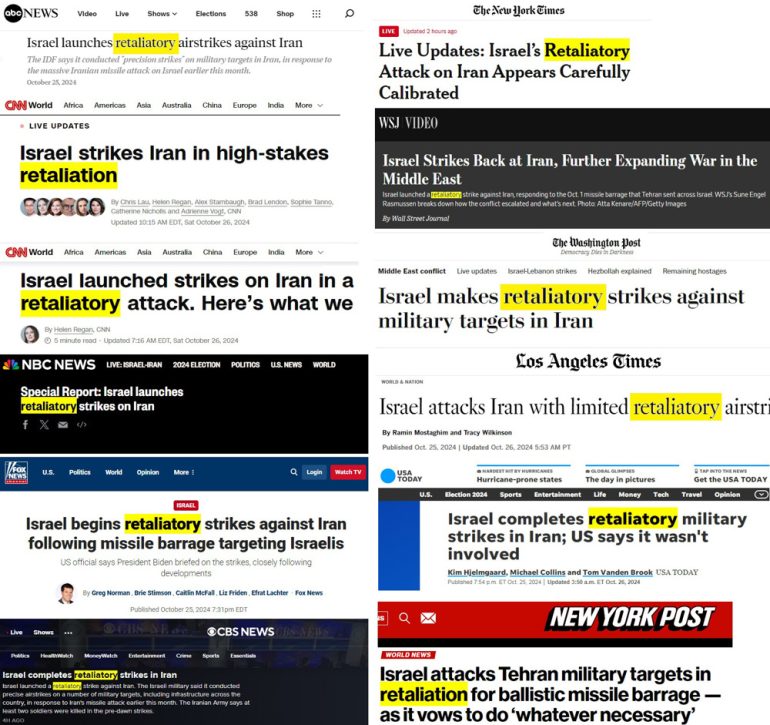
Manipulative headlines used by major US television networks and newspapers
The same applied to ‘Operation True Promise I’ in April when Iran retaliated after the Israeli attack on the Iranian consulate building in the Syrian capital of Damascus.
These facts, however, were deliberately disregarded by most of the Western media outlets while reporting on Saturday’s aggression against Iran, offering the audience a decontextualized interpretation of the Israeli regime as a victim “retaliating” against the Iranian attack.
Manipulative headlines
A cursory look at Western media, of which a sample of about 20 are selected here, it is noticeable that they all shaped the headline in the same suggestive way, using the same terminology.
The term “retaliation” has been used by all these outlets for the Israeli act of aggression against Iran, while also employing other terms such as “reprisal”, “response” and “payback,” while ignoring the full sequence of events that have shaped this region in the past year.
The list of media outlets that employed such terminology includes major US networks CNN, ABC, CBS, NBC and Fox News, together covering over three-quarters of the American audience.
It also includes six of America’s most circulated newspapers, The Wall Street Journal, The New York Times, USA Today, The Washington Post, Los Angeles Times and New York Post.
Among them, Fox News went the farthest in its pro-Zionist bias, stating in its headline that Israeli “retaliatory” strikes against Iran followed a “missile barrage targeting Israelis,” although only military targets were precisely targeted and there were no settler casualties.
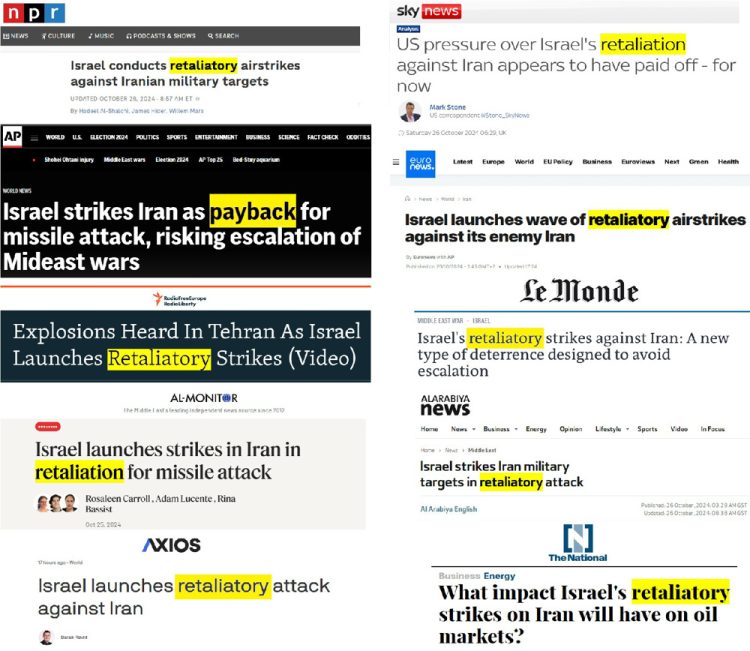
The Washington Post stated that the Israeli attacks add to the “cycle of tit-for-tat strikes” between the two sides, without specifying who started that cycle by provocatively targeting the other side.
Most other media outlets in the story summary and the text itself treated the Iranian retaliatory ballistic attack as the “cause” and did not mention what preceded it.
In this way, media analysts say, the deception of the majority of the American public has been completely achieved and there has been no progress since the times when by similar propaganda methods they turned the majority of the population for military aggressions in the West Asia region.
Other US media that resorted to the same distortions by describing Israeli aggression as “retaliatory” are the news agency Associated Press (AP), National Public Radio (NPR), the state propaganda broadcaster Radio Free Europe/Radio Liberty (RFE/RL), news websites Al-Monitor and Axios, etc.
Among the international media, the same terminology in the headlines was also used by the French pan-European television network EuroNews, the newspaper Le Monde, the British television news channel Sky News, the Saudi television network Al Arabiya, Emirati news website The National, and of course, the Israeli media.
Congruently, the headline of the five mentioned major American television networks for the Iranian retaliatory attack from the beginning of the month was again almost uniform, “Iran launches missile attack on Israel,” without mentioning that it was retaliatory in nature.

Headlines in Western media seek to manufacture consent for Israeli terrorism
These identical headlines with unanimous manipulation of the context are by no means a coincidence, according to media analysts, but a reflection of centralized propaganda emanating from the top of the American regime and projected further onto the media and client states.
Such statements and the aforementioned media headlines are the result of unquestioningly following the official American narrative that the Israeli regime is a “victim” and that their aggressions on all surrounding countries are “the right of self-defense.”
Social media users took to X to call out the hypocrisy of Western media outlets.
“This is ridiculous pro-Israel propaganda in the media. Israel’s attack on Iran was not “retaliatory”; Iran’s response to Israel was retaliatory,” wrote journalist Ben Norton.
“Israel started this by first bombing Iran’s consulate in Syria, then launching an attack inside Tehran, then killing an IRGC general.”
Peter Daou, a political analyst, said these distortions are how the propaganda works.
“You’ll notice mainstream US media outlets using the word “retaliatory” in describing Israel’s attack on Iran. That’s how state propaganda works,” he wrote.
The Kims Are Coming!
By Daniel McAdams | Ron Paul Institute | October 26, 2024
After a few cat and mouse days of Defense Secretary Lloyd “Raytheon” Austin’s denials, the Pentagon finally yesterday affirmed that there was evidence of a North Korean military presence in Russia. Asked what they were doing in Russia, Austin replied, “What exactly they are doing? Left to be seen. These are things that we need to sort out.”
For days, South Korea (no conflict of interest there) and Ukraine (nor there) had been claiming that thousands of North Korean soldiers had swooped in to rescue a beaten and bloodied Russian army from certain defeat at the hands of Ukraine (which has lost nearly a million men at arms in the nearly three year war). As the Russian army accelerates its pace, burning through the last fortified towns in eastern Ukraine, the mainstream media continues – with a few reluctant but panicked exceptions – to push the “Russia is losing” narrative.
The added twist of thousands of “evil communists” from North Korea screaming across the Russian tundra (on horseback, no doubt) promises to add new plot lines to the drama concocted by the mainstream media and most of Washington, and indeed the usual suspects are biting furiously at the bait.
Take US House Intelligence Committee Chairman Michael Turner. He is so outraged that there might be members of the North Korean military in Russia that he actually sent a letter to President Biden calling for war. “If North Korean military forces join Russia’s war against Ukraine,” Fox News reported him to say, “the US should consider the possibility of direct military action.”
Against whom? We are already involved in a proxy war with Russia through Ukraine. We are already directly involved in Israel’s seven-front war against its neighbors and Iran. Who does Chairman Turner think we should attack if North Korean troops are present in Russia? Russia? North Korea? China? All of them?
North Korea and Russia have just signed a treaty whereby their two militaries will more closely collaborate and even come to each other’s aid if one is threatened. While such an agreement may give Turner and the other neocons the vapors, it is nothing different than the mutual defense treaty the US has with its NATO partners and with many others on a bipartisan basis.
Treaties for me but not for thee? Is that the name of the “rules-based international order” game?
The hypocrisy runs even deeper. It is well-known and widely reported that NATO countries are training Ukrainian troops not only in NATO countries but inside Ukraine itself. So it’s absolutely fine for the US and its NATO partners to insert troops inside Ukraine to train its military to kill more Russians and to even operate sophisticated weapons systems inside Ukraine that the Ukrainian military could never operate on its own, but if Russia strikes up a deal with North Korea where the two armies can train together inside Russia, it’s a “red line” (as Chairman Turner wrote) that demands that we start WWIII.
It seems we are not sending our best and brightest to Congress.
What we are witnessing is the birth of a new narrative after some 500 Ukraine narratives have already collapsed under the weight of their own contradictions. Remember the two years of “Russia is losing” narrative? Well just this week NATO’s Supreme Allied Commander in Europe, General Christopher Cavoli, said in an interview with the German Spiegel magazine that Russia would emerge from this conflict actually STRONGER than when it entered!
But of course they are losing…
So what to do? Just as the Hollywood writers do once a sit-com has run too many seasons and is playing itself out, plot-wise, insert a new character. Insert a new twist, to bamboozle the viewers and give them a new reason to keep watching the program. It’s funny but not funny, because the future of the world hangs in the balance. Just like the film “Idiocracy” has become a documentary in our absurd times, so has “Wag the Dog.” The military industrial complex with its Hollywood-like allies producing endless narratives to keep the gravy train rolling…
P.S. if anyone believes this whole insane and hysterical anti-North Korea narrative is not political…well I have a bridge in Brazoria, TX, to sell you…
This article first appeared as an exclusive for Ron Paul Institute subscribers. Subscribe for free here.
Featured Video
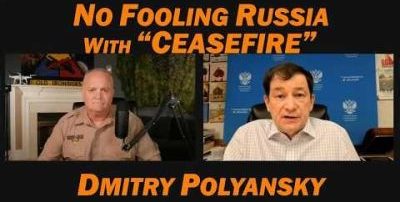
“Historic Russia”: The Land Putin Will Not Give Back
or go to
Aletho News Archives – Video-Images
Book Review
Why the War on Conspiracy Theories Is Bad Public Policy
By Kevin Barrett • Unz Review • February 1, 2019
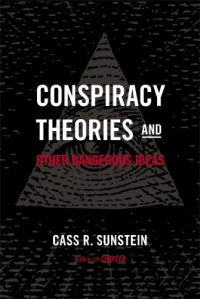 A Review of Conspiracy Theories and Other Dangerous Ideas by Cass Sunstein (based on an earlier paper co-authored with Adrian Vermeule); In Defense of Troublemakers: The Power of Dissent in Life and Business by Charlan Nemeth; and Conspiracy Theories and the People Who Believe Them, edited by Joseph E. Uscinski
On January 25 2018 YouTube unleashed the latest salvo in the war on conspiracy theories, saying “we’ll begin reducing recommendations of borderline content and content that could misinform users in harmful ways—such as videos promoting a phony miracle cure for a serious illness, claiming the earth is flat, or making blatantly false claims about historic events like 9/11.”
At first glance that sounds reasonable. Nobody wants YouTube or anyone else to recommend bad information. And almost everyone agrees that phony miracle cures, flat earthism, and blatantly false claims about 9/11 and other historical events are undesirable.
But if we stop and seriously consider those words, we notice a couple of problems. First, the word “recommend” is not just misleading but mendacious. YouTube obviously doesn’t really recommend anything. When it says it does, it is lying. … continue
Blog Roll
 Aletho News
- BRITAIN’S WARNING: PREPARE FOR WAR
- “Historic Russia”: The Land Putin Will Not Give Back
- How the Cambridge Analytica scandal still haunts Mark Zuckerberg
- The Ongoing Cancellation Campaign Against a Dissenting Academic in Norway
- Yemen and ‘the Houthis’: Challenging Sami Hamdi’s Narrative
- No, Christians did not invent Zionism
- AIPAC-led lobbying network opens branches in Cypriot, Greek parliaments
- Araghchi blasts ‘parasitic’ alliance as US taxpayers pay for Israel’s war on Iran
- Easy fix for Europe’s chaos? Stop fueling war against Russia
- Putin’s key remarks on peace talks and Europe’s ‘schizophrenia’
- If Americans Knew
- Damning report shows the media must confront its failures on Gaza
- BBC senior broadcaster speaks out on Gaza coverage
- Netanyahu vows vast West Bank invasion in response to 20-minute skirmish that left 2 Israeli soldiers and 2 Palestinian fighters dead
- Tied up and tortured: Israel using US-made electroshock weapons on Palestinian detainees
- The outsourced risk: how newsrooms rely on Gaza’s freelancers without protecting them
- Gaza bakeries forced to shut as Israel blocks flour shipments
- Gaza’s breast cancer patients face a deadly wait for treatment amid Israel’s genocide
- DAILY UPDATE: Latest essential news on Palestine, Israel, & region
- The Israel Lobby’s Changing Fortunes
- AIPAC has become such a political liability that it’s shifting to a more “nimble” approach to buying politicians
- No Tricks Zone
- Two New Studies Find Thwaites Glacier Melt Cannot Be Driven By Human Activity Or A Warming Ocean
- E-Cars Reduce CO2 Emissions By Only 41% Compared To Internal Combustion Engine Vehicles
- Predictions Made By Renowned Climate Professor Over Past Decades Have Been Proven To Be Poor
- New Study Suggests Large Regions Of The Pacific Ocean Have Been Cooling For The Last 80 Years
- Germany’s Green Energy Debacle: High Energy Costs Force Kahla Porzellan to Close After 182 Years!
- New Study: 50 Years Of The Most Aggressive ‘Net Zero’ Policies Can Only Affect The Global Climate By 0.03°C
- US September “Heat” Was No Record…Many Records Set Decades Ago
- Latest European Green Energy Debacle; Portugal’s Largest Flagship Solar Park Insolvent!
- Green Energy Debacle: German Expert Professor Fritz Vahrenholt Warns Of Severe Economic And Social Consequences
- Two More Paleo Reconstructions Affirm Meters-Higher Sea Levels Across Ireland, Brazil 7000-6000 Years Ago

