The Russian Defense Ministry announces plans for extensive new early-warning radar system as talks with US and NATO over the controversial European missile defense system hit the wall.
The announcement comes on the heels of President Dmitry Medvedev’s pledge to fortify national defense.
In addition to a newly inaugurated radar system located in Kaliningrad, several more radar stations will be placed on combat duty in 2012, Alexei Zolotukhin, an official with the Russian Defense Ministry press service for Aerospace Defense Troops, told reporters on Sunday.
“The new radar station Voronezh-DM, located in the Kaliningrad region, became part of the missile attack warning system in late 2011,” Zolotukhin said. “A radar station is fully ready to be put on combat duty in the Leningrad region. Another radar station has been launched in the Krasnodar Territory.”
A new generation radar station will also be launched in the Irkutsk Region, he revealed.
The spokesman said the new radar will go online following a series of state tests to be conducted this year.
Responding to Washington’s reluctance to cooperate with Moscow in a US missile defense system in Eastern Europe, President Medvedev in November said Russia would deploy strike systems in the west and south of the country and deploy Iskander missiles in the Kaliningrad Region. Russia has repeatedly warned that without its full participation in the system, situated just miles from the Russian border, it will be forced to respond to what it perceives as a threat to national security.
The Russian leader also reminded his American colleagues that Russia reserves the right to withdrawal from New START if the two sides fail to reach agreement over missile defense in Europe.
“In the event of unfavorable developments, Russia reserves the right to halt further steps in the disarmament sphere and, respectively, weapons control,” Medvedev said. “Besides, given the inseparable interconnection between the strategic offensive and defensive weapons, grounds may appear for our country’s withdrawal from the New START treaty.”
This was not the first time Moscow warned the US and NATO over the missile defense system, which Russia views as a potential threat to its national security. At the G-8 Summit in Deauville, France, in May, Medvedev warned that the world was heading toward another arms race.
“After 2020, if we do not come to terms, a real arms race will begin,” Medvedev warned.
Despite repeated warnings, the US and NATO seem determined to push ahead with missile defense without Russia’s cooperation, and despite the fact such a decision could sink the “reset” in relations forged between Medvedev and US President Barack Obama.
On April 8, 2009, Medvedev and Obama met at Prague Castle signed the biggest nuclear arms pact in a generation, which promised to shrink the limit of nuclear warheads to 1,550 per country.
Robert Bridge, RT
January 11, 2012
Posted by aletho |
Militarism, Progressive Hypocrite |
Leave a comment
As we commemorate the 10th anniversary of the arrival of the first prisoners at Guantánamo Detention Center, several thousand miles away sits another United States detention facility, less well-known but with a history perhaps even more gruesome. Obscured throughout the decade-long “global war on terror,” the detention center at Bagram Air Force Base in Afghanistan is where two detainees died in December 2002. Initial autopsies at the time ruled both deaths homicides, according to a 2,000-page confidential Army file obtained by the New York Times. Autopsies of the two dead detainees found severe trauma to both prisoners’ legs. The coroner for one of the dead noted, “I’ve seen similar injuries in an individual run over by a bus.”
In January 2009, to much fanfare, newly-elected President Barack Obama signed a directive authorizing the closing of Guantánamo Detention Center. But a month later the new administration discreetly told a federal judge that military detainees at Bagram had no habeas corpus rights to challenge their imprisonment. At the same time, the Pentagon was moving forward on plans to build a new prison in Bagram, renamed the “Detention Facility in Parwan” (DFIP). This facility was designed to accommodate 600 prisoners under normal conditions and as many as 1,100 during a “surge.”
Today, President Obama has abandoned his inaugural pledge to close Guantánamo and there are more than 3,000 detainees at Bagram — five times the number of prisoners when the president took office — with a scheduled expansion of the facility by the end of 2012 to house up to 5,500 detainees. One troubling constant across the developments at Bagram is the presence and involvement of psychologists at these facilities, which clearly violate international legal standards for the treatment of detainees. Among the military psychologists present during the early years of the Bagram prison were Colonel Morgan Banks, Captain Bryce Lefever, and Colonel Larry James, notable for their key roles in formulating American Psychological Association (APA) much-criticized ethics policy on psychologist-assisted interrogations.
According to Banks’ biographical statement, he “spent four months over the winter of 2001/2002 at Bagram Airfield.” More broadly, Banks provided technical, consultation, and interrogation support to all Army psychologists. He also assisted in establishing the Army’s first permanent SERE training program. As for Lefever’s biosketch, it notes that he also served at the detention center at Bagram Air Base. He “was deployed as the Joint Special Forces Task Force psychologist to Afghanistan in 2002, where he lectured to interrogators and was consulted on various interrogation techniques.”
The third military psychologist, James, was the Chief Psychologist for the Joint Intelligence Group at Guantánamo when, according to his book, Fixing Hell, he flew to Afghanistan to transfer three juveniles who had been forcibly and arbitrarily detained at Bagram. James described these boys as “the most fragile . . . children [he] had ever met,” yet he oversaw their being loaded onto a cargo plane at Bagram Air Force Base, “bound [and] blindfolded,” for a flight that typically lasted over 20 hours. Others who appear to have been transferred from Bagram to Guantánamo that same day reported being chained around the waist, wrists, back and ankles and the intense pain of being unable to speak, see, hear, move, or even stretch or breathe properly. The boys were essentially kidnapped, and were returned home a year later, having never had access to legal counsel and having never been charged with a crime.
Public information about exactly what transpires at Bagram today is scarce. The BBC was allowed a rare, one-hour visit to the new Parwan/Bagram prison in 2010. The report noted that “Prisoners are kept in 56 cells, which the prisoners refer to as ‘cages’. The front of the cells are made of mesh, the ceiling is clear, and the other three walls are solid. Guards can see down into the cells from above.” These detainees were moved around in wheelchairs, wearing goggles and headphones to block sight and sound.
In 2011, Daphne Eviatar, an attorney for Human Rights First, interviewed 18 former detainees from the main facility in Parwan and was permitted to observe seven detainee hearings there. In her detailed report she noted:
After many years of completely denying detainees in Afghanistan the opportunity to defend themselves against arbitrary detention, the United States government has finally implemented a hearing process that allows detainees to hear the charges against them and to make a statement in their own defense. Although a significant improvement, these new hearings fall short of minimum standards of due process required by international law.” [Emphasis added.]
In a subsequent interview with CBS News, Eviatar stated:
[Parwan] is worse than Guantánamo because there are fewer rights…There was no evidence presented, there was no questioning of the government’s evidence, whether this person had done anything wrong, whether he deserved to be in prison. So that’s a real problem — you have a complete lack of due process.
And in 2010 the International Committee of the Red Cross (ICRC) confirmed the existence of a separate, second detention facility at Parwan. Many former prisoners have referred to it as the Tor Jail, translated as “Black Jail.” Nine former prisoners interviewed separately by the BBC spoke of almost identical treatment there: distressingly cold cells, perpetual loud noise, constant light, and, violating any sense of privacy, camera surveillance. One former prisoner said American soldiers made him dance to music to obtain permission to use the toilet.
Today, there are clear indications that psychologists continue to be involved in the detention and interrogation of detainees at Parwan/Bagram. Such activities stand in direct contravention of APA policy based on a 2008 petition resolution. Approved through a member-led referendum, this resolution prohibits psychologists from working in settings where “persons are held outside of, or in violation of, either International Law (e.g., the UN Convention Against Torture and the Geneva Conventions) or the US Constitution (where appropriate), unless they are working directly for the persons being detained or for an independent third party working to protect human rights” (or if they are providing treatment for military personnel).
Significant evidence that psychologists are working at Bagram/Parwan in violation of APA policy comes in part from a symposium on “Operational Problems in Behavioral Sciences” sponsored by the United States Air Force Medical Service in August 2011. The first slide of the partially redacted powerpoint presentation on the “BSCT Mission” describes the role of the Behavioral Science Consultation Team (BSCT) as providing: “…psychological expertise and consultation in order to assist the command in conducting safe, legal, ethical, and effective detention facility operations, intelligence interrogations, and detainee debriefing operations” (OTSG/MEDCOM Policy Memo 09-053).
A later slide reveals that the current BSCTs at the Parwan Detention Facility are composed of a psychologist or forensic psychiatrist, who must be licensed for independent practice, and a “behavioral science technician.” Further confirming the presence of psychologists, a June 2010 newspaper article about Parwan by the military editor of the Fayettville Observer notes: “Air Force Maj. Colin Burchfield, 34, a clinical psychologist, observes the behavior of both detainees and guards on TV monitors.”
Disturbingly, and contrary to the APA’s 2008 referendum policy, one of the key documents still used to support the ongoing involvement of psychologists at the Parwan facility is an earlier 2005 report from the APA’s “Presidential Task Force on Psychological Ethics and National Security” (the PENS Report). The PENS Report, cited in the Operational Problems powerpoint presentation described above, endorsed psychologists’ engagement in detainee interrogations — despite evidence that psychologists were involved in abusive interrogations and practices that violate international law.
Six of the nine voting members of the PENS Task Force were on the payroll of the U.S. military and/or intelligence agencies. Five of these six served in chains of command that had been accused of the kinds of abuses that led to the creation of the Task Force, including the three psychologists linked to the early Bagram prison: Dr. Morgan Banks, Dr. Bryce Lefever, and Dr. Larry James. The PENS Task Force concluded that psychologists have an important role to play in keeping interrogations “safe, legal, ethical, and effective,” and the APA Board approved the PENS Report in a highly unusual emergency vote.
The APA’s claims that it stands strongly against torture and cruel, inhuman and degrading treatment are belied by the organization’s repeated failure to take assertive and meaningful action. There is no clearer example than the continuing participation of psychologists in detention and interrogation activities at the Parwan/Bagram prison — a site where international law itself is seemingly confined indefinitely to a small, dark cell.
But health professionals, human rights advocates, and intelligence professionals of conscience worldwide have refused to accept this status quo. One noteworthy and promising effort is an online petition campaign calling for the annulment of APA’s PENS Report. The initiative has been supported by many distinguished members of APA, as well as non-psychologists such as psychiatrists Robert Jay Lifton and bioethicist Dr. Steven Miles; scholar-activists such as Daniel Ellsberg and Noam Chomsky; attorneys who have represented Guantanamo detainees; eminent veterans of the intelligence community; and many other psychologists and human rights advocates. Please consider joining this call and signing the petition at www.ethicalpsychology.org/pens.
~
Trudy Bond is an independent psychologist, steering committe member of Psycholgoists for Social Responsibility, and a member of the Coalition for an Ethical Psychology. For questions, responses or media contact, please contact her at drtrudybond@gmail.com.
Roy Eidelson is a clinical psychologist and the president of Eidelson Consulting, where he studies, writes about, and consults on the role of psychological issues in political, organizational, and group conflict settings. He is a past president of Psychologists for Social Responsibility, associate director of the Solomon Asch Center for Study of Ethnopolitical Conflict at Bryn Mawr College, and a member of the Coalition for an Ethical Psychology. Roy can be reached at reidelson@eidelsonconsulting.com.
Brad Olson is an assistant professor and co-director of the Community Psychology Ph.D. Program in downtown Chicago. He is President-Elect of Psychologists for Social Responsibility (PsySR) and co-founder of the Coalition for an Ethical Psychology.
Stephen Soldz is a psychoanalyst, psychologist, public health researcher, and faculty member at the Boston Graduate School of Psychoanalysis. He edits the Psyche, Science, and Society blog. Soldz is a founder of the Coalition for an Ethical Psychology and served as a psychological consultant on several Guantánamo trials. Currently Soldz is Past-President of Psychologists for Social Responsibility [PsySR].
January 10, 2012
Posted by aletho |
Progressive Hypocrite, Subjugation - Torture, Timeless or most popular, War Crimes |
Leave a comment
The New York Times puts this question to the GOP contenders. Sophistry ensues. “Under what circumstances, if any, would the Constitution permit the president to authorize the targeted killing of a United States citizen who has not been sentenced to death by a court,” the paper asks. Gingrich, Huntsman, Perry, and Romney take the same line: “Under wartime circumstances” says Newt; “If such an individual is engaged on a battlefield,” says Huntsman; “Due process permits the use of deadly force against all enemy combatants, including citizens,” Romney avers; and “The President would be so authorized … where a citizen has joined or is associated with a nation or group engaged in hostilities against the United States” according to Perry. Only Ron Paul describes the conditions in which extrajudicial targeted killing of Americans is permitted as “none.”
The others engage in Orwellian obfuscation, claiming that “battlefield” circumstances permit this — as if the situation the Times is asking about is one in which some American terrorist is shooting away at U.S. troops in combat or about to detonate a bomb on American soil. But that isn’t “targeted” killing. The practice Huntsman, Gingrich, Romney, and Perry — and President Obama — defend includes the assassination of Americans who are, in Perry’s words, only “associated with a nation or group engaged in hostilities.” In fact, the power claimed by these men goes far beyond that since, again, this is extrajudicial killing, in which there is no obligation for the executive to provide evidence to a judge or anyone else that the murdered man is guilty of what Uncle Sam accuses him of.
Stripped of the evasions, what they are saying is that you or anyone else can be killed if the president thinks — or claims to think — that you are “associated” with “a nation or group” that is engaged in hostilities with the United States. Janet Reno would approve. This doctrine would have saved her some crocodile tears over the slaughter of the Branch Davidians at Waco. Even the unarmed women and children there, after all, were “associated” with a group engaged in hostilities with the United States.
Needless to say, there are Americans who join extremist groups, but existing law-enforcement powers and military doctrines already permit killing them when they are actually engaged in acts of deadly violence. The Republicans’ invocations of a “battlefield” might sound reassuring, until you realize that the recently passed National Defense Authorization Act, according to two of its supporters, Sens. Lindsey Graham (R-S.C.) and Kelly Ayotte (R-N.H.), designates even the U.S. itself as a battlefield. The whole world is one.
I have trouble taking these claims to more-than-royal power seriously; more precisely, I have trouble ascribing good faith to the intellectuals who try to justify an omnipotent presidency. But it’s a nominally free country, so let them have their say, in elections as well as op-ed pages and the corridors of our think tanks and universities. It seems to me, though, that we ought to hear from those who believe in a limited and law-bound executive as well. Ron Paul shouldn’t be alone in this. The public needs to know what’s at stake here and just how few political leaders think there should be any restraints at all on the power of the president to kill.
January 3, 2012
Posted by aletho |
Civil Liberties, Full Spectrum Dominance, Progressive Hypocrite |
Leave a comment
WASHINGTON – President Obama signed the National Defense Authorization Act (NDAA) into law today. The statute contains a sweeping worldwide indefinite detention provision. While President Obama issued a signing statement saying he had “serious reservations” about the provisions, the statement only applies to how his administration would use the authorities granted by the NDAA, and would not affect how the law is interpreted by subsequent administrations. The White House had threatened to veto an earlier version of the NDAA, but reversed course shortly before Congress voted on the final bill.
“President Obama’s action today is a blight on his legacy because he will forever be known as the president who signed indefinite detention without charge or trial into law,” said Anthony D. Romero, ACLU executive director. “The statute is particularly dangerous because it has no temporal or geographic limitations, and can be used by this and future presidents to militarily detain people captured far from any battlefield. The ACLU will fight worldwide detention authority wherever we can, be it in court, in Congress, or internationally.”
Under the Bush administration, similar claims of worldwide detention authority were used to hold even a U.S. citizen detained on U.S. soil in military custody, and many in Congress now assert that the NDAA should be used in the same way again. said Romero. “Any hope that the Obama administration would roll back the constitutional excesses of George Bush in the war on terror was extinguished today. Thankfully, we have three branches of government, and the final word belongs to the Supreme Court, which has yet to rule on the scope of detention authority. But Congress and the president also have a role to play in cleaning up the mess they have created because no American citizen or anyone else should live in fear of this or any future president misusing the NDAA’s detention authority.”
The bill also contains provisions making it difficult to transfer suspects out of military detention, which prompted FBI Director Robert Mueller to testify that it could jeopardize criminal investigations. It also restricts the transfers of cleared detainees from the detention facility at Guantanamo Bay to foreign countries for resettlement or repatriation, making it more difficult to close Guantanamo, as President Obama pledged to do in one of his first acts in office.
December 31, 2011
Posted by aletho |
Civil Liberties, Progressive Hypocrite |
Leave a comment
Glenn Greenwald:
The candidate supported by progressives — President Obama … holds heinous views on a slew of critical issues and himself has done heinous things with the power he has been vested. He has slaughtered civilians — Muslim children by the dozens — not once or twice, but continuously in numerous nations with drones, cluster bombs and other forms of attack. He has sought to overturn a global ban on cluster bombs. He has institutionalized the power of Presidents — in secret and with no checks — to target American citizens for assassination-by-CIA, far from any battlefield. He has waged an unprecedented war against whistleblowers, the protection of which was once a liberal shibboleth. He rendered permanently irrelevant the War Powers Resolution, a crown jewel in the list of post-Vietnam liberal accomplishments, and thus enshrined the power of Presidents to wage war even in the face of a Congressional vote against it. His obsession with secrecy is so extreme that it has become darkly laughable in its manifestations, and he even worked to amend the Freedom of Information Act (another crown jewel of liberal legislative successes) when compliance became inconvenient.
He has entrenched for a generation the once-reviled, once-radical Bush/Cheney Terrorism powers of indefinite detention, military commissions, and the state secret privilege as a weapon to immunize political leaders from the rule of law. He has shielded Bush era criminals from every last form of accountability. He has vigorously prosecuted the cruel and supremely racist War on Drugs, including those parts he vowed during the campaign to relinquish — a war which devastates minority communities and encages and converts into felons huge numbers of minority youth for no good reason. He has empowered thieving bankers through the Wall Street bailout, Fed secrecy, efforts to shield mortgage defrauders from prosecution, and the appointment of an endless roster of former Goldman, Sachs executives and lobbyists. He’s brought the nation to a full-on Cold War and a covert hot war with Iran, on the brink of far greater hostilities. He has made the U.S. as subservient as ever to the destructive agenda of the right-wing Israeli government. His support for some of the Arab world’s most repressive regimes is as strong as ever.
Most of all, America’s National Security State, its Surveillance State, and its posture of endless war is more robust than ever before. The nation suffers from what National Journal‘s Michael Hirsh just christened “Obama’s Romance with the CIA.” He has created what The Washington Post just dubbed “a vast drone/killing operation,” all behind an impenetrable wall of secrecy and without a shred of oversight. Obama’s steadfast devotion to what Dana Priest and William Arkin called “Top Secret America” has severe domestic repercussions as well, building up vast debt and deficits in the name of militarism that create the pretext for the “austerity” measures which the Washington class (including Obama) is plotting to impose on America’s middle and lower classes… Full article at Salon.com
~
In almost half of all states the only way that you can voice your opposition to these despicable policies is to register as a Republican 30 days (in some states less) prior to the primary election. As a registered Republican you have the privilege of voting for the candidate that has taken a contrary position on all of these issues, Ron Paul.
You can also help send Romney or Gingrich packing as an added perk. But be sure to re-register as a Republican in time.
From The Center for Voting and Democracy:
Here are the types of Primaries in the states
Open primary:
Voters of any affiliation may vote for the candidate of whatever party they choose. Some of these open primary states may not have party registration at all; however open primary states do prohibit voters in X primary from going on to participate in Y’s primary or runoff. Yet, this prohibition can be difficult to enforce.
The crucial issue in open primary states is “crossover” voting, which can contribute to the victory of a nominee closer to the center or radically further away. It most often involves members of Party Y (either in an area dominated by Party X or when Party Y’s nominee is a foregone conclusion) voting for the Party X candidate whose views are the most reconciliable with their own. Though this brings the race closer to the center, Democratic and Republican party establishments generally dislike open primaries.
Occasionally, there are concerns about sabotage, or “party crashing,” which involves voting for the most polarizing candidate in the other party’s primary to bolster the chances that it will nominate someone “unelectable” to general election voters in November. An example is Republicans voting for Hillary Clinton in the 2008 presidential primary.
Closed primary:
Only voters registered with a given party can vote in the primary. Parties may have the option to invite unaffiliated voters to participate. Typically, however, independent voters are left out of the process entirely unless they choose to sacrifice their freedom of association for the opportunity to have their say in who represents them. Closed primaries may also exacerbate the radicalization that often occurs at the primary stage, when candidates must cater to the “base,” yet the “fringe” of the party are typically more motivated to turn out.
In a few states, independent voters may register with a party on Election Day. However, they must remain registered with that party until they change their affiliation again. A couple of states even allow voters registered with one party to switch their registration at the polls to vote in another party’s primary. In these rare instances, a closed primary can more closely resemble open or semi-closed primaries than the closed primaries of other states.
Semi-closed primary:
Independents may choose which party primary to vote in, but voters registered with a party may only vote in that party’s primary. The middle ground between the exclusion of independents in a closed primary and the free-for-all of open primaries, the semi-closed, primary mostly eliminates the concern about members registered to other parties “raiding” another’s election.
Of course people who align with Party X may theoretically still vote in Party Y’s primary if they just register as independent, but it appears most voters do not think that way. Moreover, the potential for sabotage through tactical party registration is also present in the strictest of closed primaries.
Top Two/ non-partisan primary:
This method puts all candidates, regardless of party affiliation, on the same ballot. The top two vote-getters then face off in the general election. This type of system is used in California, Louisiana, and Washington, as well as in Nebraska for non-partisan election such as for the state’s legislature.
Note on terminology: “Top Two” primaries are often referred to as “open primaries,” but that terminology has long been used in reference to the type of party primaries in which all voters may choose in which party’s primary to participate. By contrast, the “Top Two” system eliminates party primaries altogether. It is more accurately described as “nonpartisan primaries.” It would be more precise and less confusing to at least call them “nonpartisan open primaries.”
The following is a running list of states by types of party primary, updated December 2011:
Here are the individual state rules
| State |
Closed |
Open |
Semi-Closed |
Source |
Remarks |
Presidential Primary or Caucus |
| Alabama |
|
x |
|
Ala. Code § 17-13- 7 |
|
Open |
| Alaska |
R |
D |
|
Alaska Stat. §§ 15.25.014, 15.25.060 |
Parties select who may vote in their primaries. To vote in the GOP primary, a voter must be registered as a Republican 30 days before Election Day. |
Open |
| Arizona |
|
|
x |
Ariz. Att’y Gen. Op. No. I99-025 (R99-049) |
Arizona uses a “Presidential Preference” system instead of a traditional primary system. Voters must be registered for a party in order to receive a ballot. |
Closed |
| Arkansas |
|
x |
|
Ark. Code Ann. § § 7-7-306- 308 |
|
Open |
| California |
N/A |
N/A |
N/A |
Proposition 14; CA S.B. 28 |
California uses the “Top Two” Plan. On June 8, 2010 voters passed Prop. 14 to create a nonpartisan blanket primary system in which all candidates are listed on the same primary ballot and the top two vote recipients face off in the general election. |
R: Closed; D: Semi-Closed |
| Colorado |
x |
|
|
Colo. Rev. Stat. § 1-7-201 |
Closed, but unaffiliated voters may, however, change their party registration up until Election Day. Affiliated voters must change affiliation 29 days prior to the election. |
Closed |
| Connecticut |
x |
|
|
Conn. Gen. Stat. §§ 9-431, 9-59 |
Parties may choose to allow for semi-closed elections if they make a change to their party rules; however, as of now, the primaries remain closed. |
Closed |
| District of Columbia |
x |
|
|
D.C. Code Ann. § 1-1001.09(g)(1); 1-1001.05(b)(1) |
Closed primary for D.C. elected officials such as Delegate, Mayor, Chairman, members of Council, and Board of Education. |
Closed |
| Delaware |
x |
|
|
Del. Code Ann. § 3110 |
|
Closed |
| Florida |
x |
|
|
Fla. Stat. Ann. § 101.021 |
|
Closed |
| Georgia |
|
x |
|
|
|
R: Semi-Closed; D: Open |
| Hawaii |
|
x |
|
Haw. Rev. Stat § 12-31 |
No party affiliation at registration. |
Open |
| Idaho |
R |
|
D |
Idaho Code Ann. § 34-904A |
Until 2011, all Idaho primaries were open. After the GOP obtained a declaratory judgment that mandating open primaries violated freedom of association and was thus unconstitutional in Idaho Republican Party v. Ysura, the legislature passed a bill allowing parties to choose which type of primary they use. Democrats have chosen a semi-closed primary; unaffiliated voters may register a party at the polls on election day, but they are bound to that party affiliation at the next election. |
R: Closed; D: Semi-Closed |
| Illinois |
|
|
x |
10 Ill. Comp. Stat. 5/7-43, -45 |
Voters declare their party affiliation at the polling place to a judge who must then announce it “in a distinct tone of voice, sufficiently loud to be heard by all persons in the polling place.” If there is no “challenge,” the voter is given the primary ballot for his or her declared party. |
Semi-Closed |
| Indiana |
|
x |
|
Ind. Code §§ 3-10- 1-6, 1-9 |
Classified as a “modified open” primary.” A voter must have voted in the last general election for a majority of the nominees of the party holding the primary, or if that voter did not vote in the last general election, that voter must vote for a majority of the nominees of that party who is holding the primary. However, there is really no way to enforce this, and cross-over occurs often. The same modified open primary is used for the presidential primary. |
Open |
| Iowa |
x |
|
|
|
Voters may change party on the day of the primary election. |
Closed |
| Kansas |
R |
|
D |
Kan. Stat. Ann. §§ 25-3301 |
Federal courts declared KS law unconstitutional and now the parties decide who will vote in their primaries. In 2012, Republicans will hold closed primaries; however, they will allow unaffiliated voters to register Republican on election day. Democrats will allow both affiliated and unaffiliated voters to vote. |
Closed |
| Kentucky |
x |
|
|
Ky. Rev. Stat. Ann. § 116.055 |
|
Closed |
| Louisiana |
|
x |
|
Act 570 |
The congressional primaries changed from a closed system to an open system with the passage of Act 570, effective January 1, 2011 |
Closed |
| Maine |
x |
|
|
Me. Rev. Stat. Ann. tit. 21, §§ 111, 340 |
|
Closed |
| Maryland |
x |
|
|
Md. Code Ann., Elec. Law §§ 3- 303, 8-202 |
Parties may choose to hold open primaries, but must notify the State Board of Elections 6 months prior. |
Closed |
| Massachusetts |
|
|
x |
Mass. Gen. Laws ch.53 §37 |
|
Semi-Closed |
| Michigan |
|
x |
|
Mich. Comp. Laws § 168.575; Public Act 163 |
Voters do not have to declare a political party to vote; but must vote for all one party once they enter the voting booth. |
Closed |
| Minnesota |
|
x |
|
Minn. Stat. § 204D.08 |
|
Open |
| Mississippi |
|
x |
|
Miss. Code Ann. § 23-15-575 |
No registration by party affiliation. However, in order to participate in the primary, a voter must support the nominations made in that primary. |
Open |
| Missouri |
|
x |
|
Mo. Rev. Stat. § 115.397 |
|
R: Semi-Closed; D: Open |
| Montana |
|
x |
|
Mont. Code Ann. § 13-10-301 |
No party registration in MT. Each voter has the choice which ballot to use on Election Day. |
Open |
| Nebraska |
|
|
x |
Neb. Rev. Stat. § 32-702 |
Partisan primaires are closed, meaning congressional primaries are closed; however unaffiliated voters may vote for a candidate of a particular party. |
Semi-Closed |
| Nevada |
x |
|
|
Nev. Rev. Stat. §§ 293.287, 293.518 |
|
Closed |
| New Hampshire |
x |
|
|
N.H. Rev. Stat. Ann § 659:14 |
Closed primaries in effect; but the statute allows for semi-closed primary if that party’s rules allow for it. |
Semi-Closed |
| New Jersey |
x |
|
|
N.J. Stat. Ann. § 19:31-13.2 |
|
Closed |
| New Mexico |
x |
|
|
N.M. Stat. §1-12-7.2 |
Parties may choose to allow for semi-closed elections if they make a change to their party rules; however, as of now, the primaries remain closed. |
Closed |
| New York |
x |
|
|
N.Y. Elec. Law § 5-304 |
|
Closed |
| North Carolina |
|
|
x |
N.C. Gen. Stat. §§ 163-59, -119 |
State law provides for closed primaries, but both parties have opened them up to unaffiliated voters, who may choose on Election Day. |
Semi-Closed |
| North Dakota |
|
x |
|
N.D. Cent. Code, § 40-21-06 |
No party registration. |
R: Closed; D: Open |
| Ohio |
x |
|
|
Ohio Rev. Code Ann. § 3513.19 |
Voters’ right to vote in the primary may be challenged on the basis that they are not affiliated with the party for whom they are voting in the primary. |
Closed |
| Oklahoma |
x |
|
|
Okla. Stat. §26-1-104 |
|
Closed |
| Oregon |
x |
|
|
Or. Rev. Stat. §§ 247.203, 254.365 |
|
Closed |
| Pennsylvania |
x |
|
|
25 Pa. Stat. Ann. § 2812 |
|
Closed |
| Rhode Island |
|
|
x |
R.I. Gen. Laws §§ 17-9.1-23 |
An unaffiliated voter for the past 90 days may designate his or her party affiliation on election day by voting for that party in the primary. |
Semi-Closed |
| South Carolina |
|
x |
|
S.C.Code Ann. §§ 7-11-10 |
A U.S. District Court judge ruled inGreenville County Republican Party Executive Committee v. South Carolina, that South Carolina’s open primary is constitutional. |
Open |
| South Dakota |
R |
|
D |
S.D. Codified Laws § 12-6-26 |
Parties may choose to allow for semi-closed elections. Democrats have opened up their primaries to allow unaffiliated voters to vote. |
R: Closed; D: Open |
| Tennessee |
|
x |
|
Tenn. Code Ann. § 2-7-115 |
Voters must affiliate with a party, but may choose to affiliate with that party on the election day. In Tennessee, voters are not registered with party affiliations. |
Closed |
| Texas |
|
x |
|
Tex Elec. Code Ann. § 172.086 |
No registration by party; voters are not held to affilation of past election. Each year, voters have a clean slate and must choose on primary day whether to vote by a party affilation or as unaffiliated; voters are held to that affiliation in the runoff. For the presidential primary, it is the same system as of December 19, 2011. |
Open |
| Utah |
R |
D |
|
Utah Code Ann. §§ 20A-2-107.5 |
Parties may choose to open up the primary. Currently, Republicans have a closed primary while Democrats have opened up the primary. |
R: Closed; D: Open |
| Vermont |
|
x |
|
Vt. Stat. Ann. tit. 17, § 2363 |
No registration by party. For presidential primary, voters must declare which ballots they want. |
Open |
| Virginia |
|
x |
|
Va. Code Ann. § 24.2-530 |
If a primary is called, it will be open. |
Open |
| Washington |
N/A |
N/A |
N/A |
Wash. Rev. Code § 29A.52.112, 29A.36.171 |
Similar to California’s Top Two system. |
R: Closed; D: Semi-Closed |
| West Virginia |
|
|
x |
W. Va. Code § 3-5- 4 |
Technically a closed system, but all parties allow any voter who is not registered with an official party to request their ballot for the Primary Election. |
Semi-Closed |
| Wisconsin |
|
x |
|
Wis. Stat. § 6.80 |
Voters may vote for only one party, but do not have to be affiliated with any party before coming into vote on Election Day. |
Open |
| Wyoming |
x |
|
|
Wyo. Stat. Ann. § 22-5-212 |
A voter can change his or her party affiliation on election day. |
December 31, 2011
Posted by aletho |
Civil Liberties, Economics, Illegal Occupation, Militarism, Progressive Hypocrite, Wars for Israel |
Leave a comment
In Guatemala, former military officers and their supporters have filed legal charges against human rights activists, journalists, and surviving victims of State repression, even as a former general, Otto Perez Molina – himself implicated in Guatemala’s genocide – prepares to assume the Guatemalan presidency on January 14, 2012!
Moreover, Perez Molina has named high ranking trainers of the brutal Kaibil forces to the top three military command positions. Kaibil’s were directly implicated in the very worst of the State repression and genocide of the 1970s, 80s and early 90s, and some today have direct links to the Mexico-based “Zeta” narco-trafficking cartel.
Furthermore, Perez Molina is getting set to engage the Army in policing matters in partnership with the US government that is launching phase II of the brutal and deadly Mexican “war on drugs” in Central America.
2012: MARCHING TOWARDS THE PAST
As Otto Perez Molina prepares to assume the presidency on January 14, 2011, he has named commanders of Guatemala’s “special forces”, the feared Kaibils, to the highest positions in the military. Two officers have been appointed to cabinet level positions, even while the respected and courageous Attorney General, Claudia Paz, along with human rights activists and journalists, have come under legal and public attack by war veterans. Earlier this year, CICIG (the United Nations backed Commission Against Impunity in Guatemala) came under attack from a Washington lobbyist hired by Guatemalan businessmen.
On December 14, 2011, a dual US/ Guatemalan citizen, also a coffee plantation owner, filed legal charges against 52 people, including a US citizen who worked for Amnesty International in Guatemala during the genocide carried out by the military, and including Jennifer Harbury, an attorney who became an internationally recognized campaigner against torture following the extended torture and presumed extrajudicial execution of her husband, Efrain Bamaca, a guerrilla commander she met during peace negotiations in Mexico City.
This is the third legal complaint of its kind lodged over the past month and a half, in what CICIG characterized as an attack on the Attorney General, seemingly an orchestrated campaign pressuring her to resign.
Over the past 2 years, human rights organizations and lawyers – and some politicians – have worked very hard to retake control of the legal system and the administration of justice from organized crime networks which have corrupted elements of the police, prosecuting attorneys and judges.
The clandestine criminal networks in Guatemala today grew out of the military/ business alliances which in the 1960s to early 1990s controlled the nation through US-backed military juntas, carrying out crimes with total impunity ranging from genocide and large scale massacres to drug trafficking. The current Attorney General, Claudia Paz, has been extremely effective in arresting and prosecuting top organized crime figures and high ranking military officers implicated in crimes against humanity.
GENOCIDE AND WAR CRIMES LINKED SPECIAL FORCES COMMANDERS NAMED TO TOP GOVERNMENT POSITIONS
The return of current and former military officers to high ranking positions in government is deeply concerning to human rights activists. The Guatemalan special-forces unit known as the Kaibils is especially renowned for brutality, and has been extensively implicated in heinous massacres that occurred in the worst years of the “cold war” repression.
President elect Perez Molina is making no concessions to concerns. Kaibils were named to the three top military positions: Col. Ulises Anzueto as Defense Minister, Col. René Casados Ramírez as Commander of the Joint Chiefs of Defense, and Col Manuel López Ambrosio as Sub-commander of the Joint Chiefs of Defense. Anzueto’s appointment bucks hierarchy, by military tradition his appointment will force 16 Generals to resign. Another Colonel was named Interior Minister, Mauricio Lopez Bonilla, who managed Perez Molina’s presidential campaign.
In 1995, based on witness testimony and written documentation, Anzueto was named by Harbury as one of three officers responsible for the kidnapping, disappearance and torture of Efrain Bamaca. Ever since, the case has languished in Guatemalan courts, defying rulings of the Inter American Court of Human Rights.
Otto Perez Molina himself, and two other generals, were named in a second case, focusing on the commanding officers whose direct responsibility became apparent through declassified documents and evidence obtained during the first case, charges filed in March 2011.
ZETA-LINKS AS WELL
The placement of four Kaibils in top government positions, including the presidency, is even more shocking given the extensively reported ties between Kaibils and the gruesomely violent Zeta drug trafficking cartel.
The Zetas were originally an elite unit of the Mexican Army Airborne Special Forces (GAFE) and are reported to have been trained in Fort Bragg, a US military base, to combat drug trafficking. In the late 1990′s they were then trained by the Guatemalan Kaibil “special forces.”
It is widely reported that, in 2000, the unit known as the Zetas left GAFE, en masse, to begin work as Gulf Cartel’s enforcers. The Gulf Cartel has, for decades, had a solid presence in Central America. It grew out of a network of local traffickers with strong ties to various militaries and death squads.
Ever since, but particularly since 2005, reports of Zeta recruitment of former Kaibils and former Kaibil training of Zetas, have been frequent. As recently as April 6, 2011, the Mexican Vice Minister of Security reported that current and former Kaibils were training Zetas in northern Guatemala and participated in drug smuggling, at the same time denouncing a pattern of large scale robbery by Zetas of weapons from military bases in Mexico and Guatemala.
The newly appointed Guatemalan Minister of Defense was the director of the Kaibil training academy until 2009, and the Commander of the Joint Chiefs of Defense was a Kaibil instructor.
The Kaibils have been credited as responsible for introducing some of the most gruesome techniques to the Zetas, including severing heads and dismembering bodies. This is no surprise given the Kaibils’ savage history in the Guatemalan civil war. Most recently, on May 17, 2011 former Kaibils, now members of the Zetas, were arrested for the massacre and decapitation of 27 farmworkers on the Los Cocos farm in Sayaxche, Peten.
GENOCIDE PRESIDENT
The savagery of the Kaibils is well known, even within one of the most brutal militaries imaginable, as well documented in two “Truth Commissions,” the 1999 United Nations sponsored report “Memory of Silence” and the 1998 Catholic Church’s report “Guatemala Never Again.”
The United Nations backed Truth Commission found that during conflict over 200,000 people were killed and 45,000 disappeared. It found that 93% of the acts of violence were perpetrated by the military or paramilitary forces, 3% by armed revolutionaries and 3% unidentifiable authors. It documented 626 massacres by State security forces, the vast majority carried out against Mayan communities, and noted:
“The CEH has noted particularly serious cruelty in many acts committed by agents of the State, especially members of the Army, in their operations against Mayan communities… Acts such as the killing of defenseless children, often by beating them against walls or throwing them alive into pits where the corpses of adults were later thrown; the amputation of limbs; the impaling of victims; the killing of persons by covering them in petrol and burning them alive; the extraction, in the presence of others, of the viscera of victims who were still alive; the confinement of people who had been mortally tortured, in agony for days; the opening of the wombs of pregnant women, and other similarly atrocious acts, were not only actions of extreme cruelty against the victims, but also morally degraded the perpetrators and those who inspired, ordered or tolerated these actions.”
In August 2011, four former Kaibils and their commanding officer were sentenced to 6,060 years in prison for their participation in the gruesome massacre of 264 men, women and children in 1982 in the village of Dos Erres, Peten. This was the first time that soldiers have been arrested, tried and sentenced for any of the hundreds of massacres committed by State security forces during the “la violencia” (the violence), the military campaigns from 1981 to 1983.
The UN Truth Commission found that State forces committed acts of genocide against four Mayan peoples, the Achi, Q’anjobal, Kiche and Ixil. President elect Perez Molina commanded the Municipality of Nebaj military base from 1982 until the mid-1980′s, Nebaj being the center of the Ixil genocide. Survivors describe being tortured by him. At least one survivor has done so in court, and survivors and leaked military documents demonstrate involvement in massacres.
Legal cases against the intellectual and material authors of the Ixil genocide have also moved forward under the tenure of AG Claudia Paz y Paz. Former General Hector Mario Lopez Fuentes was arrested June 20, 2011, on charges of genocide against the Ixil people between 1982 and 1983. On October 12, 2011 Jose Mauricio Rodriguez Sanchez, head of military intelligence from 1983 to 1985, was arrested and indicted for genocide against the Ixil people. The advancement of these cases is now seriously at risk
PRO-MILITARY RALLIES – “WHEN ‘MI GENERAL’ WINS, WE WILL FINISH WHAT WE STARTED”
2011 is the first year military officers (being the “intellectual authors”) have been taken to court for the political crimes of the 1980s, but the impending presidency of one of their own seems to have rallied their spirits.
On November 13, 2011 shortly after Perez Molina’s electoral victory, the military and their supporters rallied in a march in the center of Guatemala City, decrying the prosecution of military officers for war crimes. This is the first time since the end of the war that the military has carried out a demonstration of this kind.
In the year leading up to the 2011 presidential elections, reports from the countryside indicated that networks of former Civil Defense Patrollers, veterans and other military allies – all implicated in the genocide and other extreme human rights abuses – mobilized to rally support for Perez Molina. Over the past year, frequent reports of vague threats made by these networks have been heard from surviving victims from the 1980′s, along the lines of: “When ‘Mi General’ wins, we will finish what we started.”
POLITICALLY MOTIVATED LEGAL CHARGES
Since June 2011, the association of military veterans and their allies have been taking aim at the current Attorney General, Claudia Paz y Paz. In newspaper advertisements veterans denounced prosecutors and human rights defenders, claiming the veterans would respond to attacks. Given the long history of endemic repression in Guatemala, these advertisements are perceived by many as threats.
The ads asserted that military officers were being unfairly persecuted, and that instead of pursuing justice in civilian courts, the Attorney General must respect the military tribunal trials that some of those accused of war crimes had been submitted to, military trials presented clearly as a tactic to avoid being held legally responsible in civilian courts for atrocities.
This year, legislators also attempted to quietly push through a new amnesty law. Both mechanisms – the mis-use of military tribunals and the passing of amnesty laws – violate international law norms.
On November 2, 2011 retired Col. Ricardo Méndez Ruiz filed legal charges, naming 26 people as responsible for his kidnapping in 1982.
On November 29, 2011 the Military Widows Association filed charges against 32 people for 45 acts of violence they claim were carried out by armed revolutionary movements.
On December 14, 2011 dual US/ Guatemalan citizen and coffee planter Theodore Plocharski, who apparently moved to Guatemala in 1980, filed charges against 52 people attributing to them responsibility for 11 acts of violence against diplomats and foreign military officers.
Many of the individuals named as defendants are repeated in the three complaints. At least one person named in the charges had not even been born at the time of the alleged acts, others were infants, some were not in the country.
No one doubts that these charges are direct attacks against the Attorney General, human rights activists, academics, politicians and journalists. Claudia Paz’s deceased father and cousin were named in all three cases. Others named include: Miguel Angel Albizures, a founder of FAMDEGUA, the victims association that promoted the Dos Erres prosecution; Jennifer Harbury and Jean Marie Simon, international human rights activists; outgoing first lady Sandra Torres; as well as well-known journalists, politicians, feminists, clergy, academics, and others. Some were members of the revolutionary movements.
CICIG (the United Nations backed Commission Against Impunity) has characterized the series of legal complaints as an orchestrated attack against the Attorney General, noting that Ricardo Méndez Ruiz clearly stated in an interview that he was going after the Attorney General. The aim of the campaign appears to be to demonstrate that Paz does not lead impartial investigations, a possible pretext to force her out of office.
Even so, the Attorney General has assigned investigation of the charges to a special unit created to investigate war crimes. If the charges follow the example of those levied against military officers, it may take 15 or more years to go to court, if any evidence is uncovered. However given the chronic problems of lack of independence of the judiciary, there is definitely a risk that those charged could face biased trials.
President-elect Otto Perez Molina has picked up on the discourse of these seemingly frivolous legal charges. During a November 9, 2011 interview, Perez asserted that justice must be impartial, not “persecution of just one side.” Four distinct revolutionary movements participated in the 36 year armed conflict that ended in 1996. The first revolutionary movement was founded by military officers loyal to the democratically elected government overthrown in a CIA orchestrated coup in 1954.
LEGAL CASES AGAINST DRUG KING-PINS
In addition to helping advance criminal trials against Guatemalan war criminals, Paz has also been highly successful in arresting and extraditing top level drug kingpins, most of whom have been operating with total impunity for decades. The US ambassador to Guatemala, Arnold Chacon, expressed support for her in November, and on November 30, 2011 Assistant Secretary of State for Global Affairs, Maria Otero, during a visit to Guatemala met with Perez Molina. Many believe pressure from State Department led to a December 8 joint press conference presented by Perez Molina and Claudia Paz in which they assured that Paz’s job was safe.
PEREZ MOLINA TIES TO WASHINGTON
For decades the State Department has maintained a very close relationship to Perez Molina. In 1995 he was reported to have been on the CIA payroll while head of military intelligence in 1993, when he oversaw a secret torture center and prison reported to hold over 300 prisoners. His name was very frequently mentioned in Wikileaks cables. He is a graduate of the School of the Americas.
Despite extensive evidence of his participation in extreme violations, including a video and photographs of him standing over the bodies of three murdered and tortured indigenous men in 1982, the State Department appears to have done nothing to distance itself from him. The embassy recognized his victory the night of the election before the official tally was in. Obama even called to congratulate him on November 21, and to express the US interest in cooperation in security initiatives in Central America.
During a December trip to Mexico, Perez Molina visited Mexican President Felipe Calderon to discuss security cooperation. Human rights activists claim that Calderon’s “war on drugs” has cost 45,000 lives in Mexico and been unsuccessful in stemming trafficking. Calderon’s War is financed by the United States through the Merida Initiative which, when proposed in 2006, was intended to finance security operations in Central America as well as Mexico. However, only this year has Washington’s focus turned back to Central America, and the region is already showing signs of militarization.
Perez Molina and Calderon share some of the same friends in Washington. The Spanish public relations firm Ostos & Sola worked on both Perez Molina’s and Calderon’s campaigns, as well as the campaigns of Haitian President Michel Martelly and Chilean President Sebastian Pinera, all considered right wing. The firm’s Executive Director in Washington DC is Damien Merlo, who was previously Vice President of Otto Reich Associates, at a time when the DC lobby firm, run by Bush administration State Department appointee Otto Reich, advocated for the recognition of Honduran coup government of Roberto Micheletti.
MILITARIZATION versus JUSTICE
Earlier this year, in March 2011, Washington’s own breed of political hit men, lobbyists or strategic advisors, were hired to take on, or out, the highly successful United Nations backed Commission Against Impunity in Guatemala, CICIG. Former Ambassador Robert Geldbard of Washington Global Partners, a former special envoy to the Balkans during the Clinton Presidency and later Assistant Secretary of State for International Narcotics and Law Enforcement, was hired by Guatemalan businessmen, including WalMart Central America Vice President Salvador Paiz, reportedly to undermine CICIG’s image with its funders in Washington and New York, the Congress and the United Nations.
According to an October 15, 2011 article in the Economist, Guatemalan businessmen were reportedly angered by the arrest warrants issued against the former Minister of Governance Carlos Vielmann, accused by CICIG of running an organized crime related death squad within the police.
Cleaning up corruption at the highest levels of government is apparently not popular amongst the powerful economic and military sectors, but it is obviously key to ending the devastating violence, repression and impunity in Central America, and is completely dependent on the political will of the powerful sectors in Guatemala and the so-called international community.
As efforts were underway to undermine CICIG’s support in New York and Washington, both the UN and the State Department were pushing full steam ahead on the Central America Security Strategy, particularly focused on a push to ‘reform’ the police forces in Central America, which in El Salvador and Guatemala were created from forces ‘recycled’ from the militaries.
In the ‘Northern Triangle’ of Central America (Guatemala, Honduras and El Salvador), the police forces (historically linked to and dependent on the militaries) are infamously corrupt. The US, United Nations and international community are seemingly turning to infamously corrupt, violent and criminal military partners to ‘clean up’ security.
In furtherance to this focus on strengthening police forces in the Northern Triangle countries, in November, Panamanian President Martinelli announced that the US and Colombia are establishing in Panama a joint training center for police forces from throughout the region, bringing back nightmarish memories of the School of the Americas, which originally trained military forces from throughout Latin America in Panama.
PRIVATIZATION
There also appears to be a push to involve private security contractors in the police reforms and ‘anti-narcotics war’ in Central America. Former Colombian President Alvaro Uribe has coordinated a series of conferences for mayors and presidents of Central America, sponsored by private security corporation Continental Security and Integrated Systems (CIS). 55% of Plan Colombia funds were spent on US based private security contractors. It appears Central America will follow suit.
Military and former military officers dominate the private security industry throughout the region, and in recent years the presence of private security forces in the countryside, especially in Guatemala and Honduras, has grown extensively, largely present where mines, hydroelectric dams and biofuel projects are being developed by transnational corporations and the local elite.
In the Bajo Aguan region of Honduras, it is reported that 1980s death squad member Billy Joya advised the local police before a rash of death squad style killings of land rights activists in conflict with biofuel producers broke out; at least 50 campesinos activists have been killed in under two years.
In addition to Washington’s willingness to work with incoming president Perez Molina and his Kaibil cabal, in El Salvador former General Munguia was named Security Minister in November, an extremely controversial move toward ‘militarization’ of civilian security. Analysts claim that the appointment came in response to pressure form the US Embassy.
Perez Molina has pledged to deploy Kaibils to combat drug trafficking, despite accusations against current and former Kaibils of participating in drug trafficking. He has also pledged to mobilize the Airforce Special Forces in the drug war, and to expand the military by 2,500 new elements.
In Honduras, the reform program has been vigorously denounced as a charade run by the same corrupt power players that created the criminal networks within the police and that supported the 2009 military coup against the democratically elected government of President Zelaya. Alfredo Landaverde, a former Anti Narcotics Chief and one of the most outspoken critics of the “reform,” was gunned down by motorcycle assassins on December 7.
GRIM PROSPECTS FOR REAL SECURITY AND JUSTICE
While undoubtedly clean police forces are critical to building safe communities, pouring money, arms and training into corrupted security forces, as shown by the Zetas, will only fuel the violence, corruption and impunity.
There must be real political interest in addressing impunity and corruption and in prosecuting organized crimes’ political power players. Apparently prosecution of corruption is not good for transnational business interests, but the security industry is big business.
Annie Bird is co-director of Rights Action, www.rightsaction.org.
December 30, 2011
Posted by aletho |
Civil Liberties, Corruption, Ethnic Cleansing, Racism, Zionism, Progressive Hypocrite, Subjugation - Torture, Timeless or most popular, War Crimes |
Leave a comment

Demonstration in commemoration of the killing of Mustafa Tamimi, Nabi Salih, West Bank (16 December 2011). (Oren Ziv/ActiveStills)
If we had a wish list for 2012 as Palestinians and friends of Palestine, one of the top items ought to be our hope that we can translate the dramatic shift in recent years in world public opinion into political action against Israeli policies on the ground.
We know why this has not yet materialized: the political, intellectual and cultural elites of the West cower whenever they even contemplate acting according to their own consciences as well as the wishes of their societies.
This last year was particularly illuminating for me in that respect. I encountered that timidity at every station in the many trips I took for the cause I believe in. And these personal experiences were accentuated by the more general examples of how governments and institutions caved in under intimidation from Israel and pro-Zionist Jewish organizations.
A catalogue of complicity
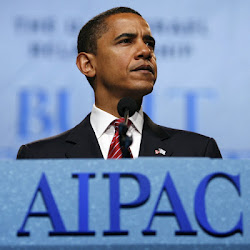
Of course there were US President Barack Obama’s pandering appearances in front of AIPAC, the Israeli lobby, and his administration’s continued silence and inaction in face of Israel’s colonization of the West Bank, siege and killings in Gaza, ethnic cleansing of the Bedouins in the Naqab and new legislation discriminating against Palestinians in Israel.
The complicity continued with the shameful retreat of Judge Richard Goldstone from his rather tame report on the Gaza massacre — which began three years ago today. And then there was the decision of European governments, especially Greece, to disallow campaigns of human aid and solidarity from reaching Gaza by sea.
On the margins of all of this were prosecutions in France against activists calling for boycott, divestment and sanctions (BDS) and a few u-turns by some groups and non-governmental organizations (NGOs) in Europe caving in under pressure and retracting an earlier decision to cede connections with Israel.
Learning firsthand how pro-Israel intimidation works
In recent years, I have learned firsthand how intimidation of this kind works. In November 2009 the mayor of Munich was scared to death by a Zionist lobby group and cancelled my lecture there. More recently, the Austrian foreign ministry withdrew its funding for an event in which I participated, and finally it was my own university, the University of Exeter, once a haven of security in my eyes, becoming frigid when a bunch of Zionist hooligans claimed I was a fabricator and a self-hating Jew.
Every year since I moved there, Zionist organizations in the UK and the US have asked the university to investigate my work and were brushed aside. This year a similar appeal was taken, momentarily one should say, seriously. One hopes this was just a temporary lapse; but you never know with an academic institution (bravery is not one of their hallmarks).
Standing up to pressure
But there were examples of courage — local and global — as well: the student union of the University of Surrey under heavy pressure to cancel my talk did not give in and allowed the event to take place.
The Episcopal Bishops Committee on Israel/Palestine in Seattle faced the wrath of many of the city’s synagogues and the Israeli Consul General in San Francisco, Akiva Tor, for arranging an event with me in September 2011 in Seattle’s Town Hall, but bravely brushed aside this campaign of intimidation. The usual charges of “anti-Semitism” did not work there — they never do where people refuse to be intimidated.
The outgoing year was also the one in which Turkey imposed military and diplomatic sanctions on Israel in response to the latter’s refusal to take responsibility for the attack on the Mavi Marmara. Turkey’s action was in marked contrast to the European and international habit of sufficing with toothless statements at best, and never imposing a real price on Israel for its actions.
Do not cave in to intimidation
I do not wish to underestimate the task ahead of us. Only recently did we learn how much money is channeled to this machinery of intimidation whose sole purpose is to silence criticism on Israel. Last year, the Jewish Federations of North America and the Jewish Council for Public Affairs — leading pro-Israel lobby groups — allocated $6 million to be spent over three years to fight BDS campaigns and smear the Palestine solidarity movement. This is not the only such initiative under way.
But are these forces as powerful as they seem to be in the eyes of very respectable institutions such as universities, community centers, churches, media outlets and, of course, politicians?
What you learn is that once you cower, you become prey to continued and relentless bashing until you sing the Israeli national anthem. If once you do not cave in, you discover that as time goes by, the ability of Zionist lobbies of intimidation around the world to affect you gradually diminishes.
Reducing the influence of the United States
Undoubtedly the centers of power that fuel this culture of intimidation lie to a great extent in the United States, which brings me to the second item on my 2012 wish list: an end to the American dominance in the affairs of Israelis and Palestinians. I know this influence cannot be easily curbed.
But the issue of timidity and intimidation belong to an American sphere of activity where things can, and should be, different. There will be no peace process or even Pax Americana in Palestine if the Palestinians, under whatever leadership, would agree to allow Washington to play such a central role. It is not as if US policy-makers can threaten the Palestinians that without their involvement there will be no peace process.
In fact history has proved that there was no peace process — in the sense of a genuine movement toward the restoration of Palestinian rights — precisely because of American involvement. Outside mediation may be necessary for the cause of reconciliation in Palestine. But does it have to be American?
If elite politics are needed — along with other forces and movements — to facilitate a change on the ground, such a role should come from other places in the world and not just from the United States.
One would hope that the recent rapprochement between Hamas and Fatah — and the new attempt to base the issue of Palestinian representation on a wider and more just basis — will lead to a clear Palestinian position that would expose the fallacy that peace can only be achieved with the Americans as its brokers.
Dwarfing the US role will disarm American Zionist bodies and those who emulate them in Europe and Israel of their power of intimidation.
Letting the other America play a role
This will also enable the other America, that of the civil society, the Occupy Wall Street movement, the progressive campuses, the courageous churches, African-Americans marginalized by mainstream politics, Native Americans and millions of other decent Americans who never fell captive to elite propaganda about Israel and Palestine, to take a far more central role in “American involvement” in Palestine.
That would benefit America as much as it will benefit justice and peace in Palestine. But this long road to redeeming all of us who want to see justice begins by asking academics, journalists and politicians in the West to show a modicum of steadfastness and courage in the face of those who want to intimidate us. Their bark is far fiercer than their bite.
The author of numerous books, Ilan Pappe is Professor of History and Director of the European Centre for Palestine Studies at the University of Exeter.
December 27, 2011
Posted by aletho |
Ethnic Cleansing, Racism, Zionism, Full Spectrum Dominance, Progressive Hypocrite, Solidarity and Activism |
Leave a comment
Congress approved an additional $235 million in U.S. military aid to Israel, Ynet reports. The U.S. allocates to Israel approximately $2.5 billion in aid, per year.
The request, which boosts the total amount allocated for 2012 to $25 million more than the last fiscal year (the 2011 budget was $3.075 billion), came from the Pentagon in order to help Israel in “development of safeguards against rockets and missiles that could be launched towards Israel by Hezbollah and Iran.”
Ynet reports:
Pentagon officials were the ones who requested that Congress approve a $106 million aid budget for Israel’s defense systems against missiles, on top of the Iron Dome budget. Congress chose to nearly double that amount, approving a budget of $235 million for 2012, amounting to $25 million more than in 2011.
Since 1949, Congress has distributed over $114 billion in U.S. aid to Israel.
December 24, 2011
Posted by aletho |
Corruption, Militarism, Progressive Hypocrite |
Leave a comment
A distinguished American expert on international law says the US government threatening Iran with nuclear war amounts to an internationally accepted criminal act.
Francis Boyle, professor of international law at the University of Illinois at Champaign, further noted that when Obama administration officials say “all options are on the table,” against Iran, they are, in fact, alluding to a nuclear war which is prohibited by international law.
Addressing the 18th conference on “Direct Democracy” in Feldkirch, Austria, on nuclear deterrence, Boyle added that the US government is threatening to attack Iran “under the completely bogus pretext” that it might have a nuclear weapon.
He added that as the sole global authority to monitor nuclear activities, the International Atomic Energy Agency (IAEA) has already refuted charges against Iran as “simply not true.”
The legal expert stated that Article 2 of the UN Charter “prohibits both the threat and the use of force except in cases of legitimate self-defense” and the US wars in Afghanistan, Iraq, and Pakistan, “do not qualify under that definition.”
The professor also said that nuclear weapons and “nuclear deterrence” have “never been legitimate instruments of state policy, but have always constituted instrumentalities of internationally lawless and criminal behavior.”
Boyle noted that the former US President George W. Bush’s doctrine of preventive warfare, which has not been officially repealed by Obama, was in fact, concocted by the Nazi lawyers for the Nazi defendants at Nuremberg and was rejected at that court.
“If we don’t act now, Obama and his people could very well set off a Third World War over Iran that has been already threatened publicly by (the former President George W.) Bush Jr.,” he asserted.
He added that the governments of all the nuclear weapons states – including the US, Russia, France, Britain, China, India, Pakistan, and North Korea – are “criminal” for threatening to exterminate humanity.
“If mass extermination of human beings is a crime, the threat to commit mass extermination is also a crime,” Boyle said.
The professor noted that the US today is engaged in “ongoing international criminal activity” for “planning, preparation, solicitation, and conspiracy to commit crimes against peace, crimes against humanity, war crimes, and genocide.”
“The design, research, testing, production, manufacture, fabrication, transportation, deployment, installation, storing, stockpile, sale, purchase, and the threat to use nuclear weapons are criminal under well-recognized principles of international law,” Boyle added.
He concluded by saying that the leaders of NATO states which “go along with US nuclear policies are all accomplices as well.”
December 24, 2011
Posted by aletho |
Militarism, Progressive Hypocrite, Timeless or most popular, War Crimes |
Leave a comment
A year ago yesterday, I got the dreaded house call from the FBI. I was at home working when two agents rang my buzzer and asked to speak with me.
I had been expecting such a visit; on 24 September 2010 the FBI raided the homes of prominent anti-war and international solidarity organizers I have worked with over the years in Chicago, as well as the homes of activists in the Twin Cities and the office of the Anti War Committee there. In the weeks that followed, more Palestine solidarity organizers and Palestinian Americans in Chicago were delivered subpoenas to appear before a federal grand jury in Chicago as part of an investigation into violations of the laws banning material support for foreign terrorist organizations.
I declined to speak with the two agents who visited me; they then gave me a subpoena to appear before a federal grand jury on 25 January 2011. I spent last Christmas and New Year convinced that I would soon be in federal prison for civil contempt of court. Even though it meant we risked being jailed, all 23 of us who have been subpoenaed as part of this grand jury fishing expedition have refused to testify. We have asserted that our first amendment rights guaranteed by the US Constitution, protecting free speech and freedom of association, are being trampled on.
A first amendment issue
The grand jury — essentially a secret court in which you’re not allowed to have a lawyer, and there is not even a judge presiding over the proceedings — has been long abused as a tool of inquisition into domestic political movements. Indeed, no specific crime has been identified related to our case.
The FBI’s operations manual for the September raids, discovered last April to have been accidentally left amongst a raided activist’s files, make it clear that they wanted to question activists about associational information — who activists know and work with in the US, Colombia and Palestine, and how activists organize and what they believe. They wanted people to name everyone they know who has ever traveled to the Middle East or South America.
It is also obvious the FBI put up the LA County Sheriff to raid the home of veteran Chicano liberation activist Carlos Montes last May; he faces trumped-up technical firearms violation charges and serious prison time. The FBI was on hand during the raid to question Montes about his political associations (an organizer of the 2008 Republican National Convention protests, he was named in the search warrant used to raid the Anti War Committee office) and took material from his home related to his long history of political organizing. They even took a kuffiyeh — the traditional checkered Palestinian scarf — only one example of many demonstrating how federal agents so arbitrarily confiscated property from activists’ homes.
And while the threat of indictments looms, I am not spending Christmas and new year’s in federal prison for civil contempt of court. This is, I believe, thanks to the vocal protest that countless people around the US and around the world have made in support of the 24 of us and in support of civil liberties. This is a huge victory. But at the same time, civil liberties and constitutional protections have further eroded even in the last year. More protest must be shown before the situation gets even worse.
A bad time for civil liberties
Even The New York Times has excoriated the Obama administration over its civil liberties record after its justice department went even further than Bush’s to expand the FBI’s powers to investigate US citizens, “even when there is no firm basis for suspecting any wrongdoing.” In an editorial entitled “Backward at the FBI,” the Times takes the FBI’s new operations manual to task, as revised guidelines “will give agents significant new powers to search law enforcement and private databases, go through household trash or deploy surveillance teams, with even fewer checks against abuse.”
The Times adds:
They also expand the special rules covering “undisclosed participation” in an organization by an FBI agent or informant. The current rules are not public, and, as things stand they still won’t be. But we do know the changes allow an agent or informant to surreptitiously attend up to five meetings of a group before the rules for undisclosed participation — whatever they are — kick in.[…]
The FBI’s recent history includes the abuse of national security letters to gather information about law-abiding citizens without court orders, and inappropriate investigations of antiwar and environmental activists. That is hardly a foundation for further loosening the rules for conducting investigations or watering down internal record-keeping and oversight.
After that editorial was published in June, things only got worse. The United States government sanctioned and carried out the assassination of one of its citizens on foreign soil despite the fact that he posed no immediate danger to public safety. Vince Warren, executive director of the Center for Constitutional Rights, stated after the Anwar al-Awlaki was killed by a US drone in Yemen:
The targeted assassination program that started under President Bush and expanded under the Obama Administration essentially grants the executive the power to kill any US citizen deemed a threat, without any judicial oversight, or any of the rights afforded by our Constitution. If we allow such gross overreaches of power to continue, we are setting the stage for increasing erosions of civil liberties and the rule of law.
Other stains on civil liberties this year included the persecution and conviction of the the Irvine 11 — a group of students (all of the Muslim, all of them young men) who were subjected to a criminal trial for briefly and nonviolently disrupting the speech of Israeli ambassador Michael Oren.
Tens of chapters of Students for Justice in Palestine said it best in a statement following the convictions:
We unequivocally condemn these charges, which unfairly single out and criminalize Muslim students who chose to exercise their First Amendment right to speak out against Israel’s human rights abuses. Had the speaker not been Israeli, had the issue not been Palestine, had the students not been Muslim, these charges never would have been pursued. Rather, these charges reflect a climate of Islamophobia and an irrational exceptionalism for Israel when it comes to free speech. The charges chill the free exchange of ideas and students’ right to protest at universities nationwide.
Guantanamo comes to the US
But perhaps the scariest development in the war on civil liberties this year is the National Defense Authorization Act (NDAA) for 2012, which if enacted would allow the indefinite detention of US citizens without trial, not unlike Israel’s use of administrative detention. Indeed, as Human Rights Watch summarizes, “In addition to codifying indefinite detention without charge in US law, the bill would require that the military, rather than federal, state, or local law enforcement, handle certain terrorism cases.”
The bill has been already passed by Congress, and now Obama has dropped his threats to veto the bill. Constitutional law attorney Glenn Greenwald described the potential ramifications of the legislation on Democracy Now!:
it will be the first time that the United States Congress has codified the power of indefinite detention into the law since the McCarthy era of the 1950s. The 1950 Congress passed a bill saying that communists and subversives could be imprisoned without a trial, without full due process, based on the allegation that they presented a national threat, an emergency, a threat to the national security of the United States. President Truman, knowing that the bill would—the veto would be overridden, nonetheless vetoed it and said that it made a mockery of the Bill of Rights. That law was repealed in 1971 with the Non-Detention Act, that said you cannot hold people in prison without charging them with a crime. The war on terror has eroded that principle, under both the Bush and Obama administrations, but Congress is now, with the Democrats in control of the Senate and a Democratic president, is about to enact into law the first bill that will say that the military and the United States government do have this power. It’s muddled whether it applies to US citizens on U.S. soil, but it’s clearly indefinite detention, and there’s a very strong case to make that it includes US citizens, as well, which, as we know, the Obama administration already claims anyway, and that’s what makes it so dangerous.
Not only is the Obama administration not closing Guantanamo, but it is paving the way for more Guantanamo-style indefinite detention of US citizens in a military court system.
Of course, there are already so-called “litte Guantanamos” around the US — “Communications Management Units,” or secret prisons populated almost exclusively with Arab and Muslim detainees so as to segregate them from the general prison population.
Following the dismissing of an appeal for the Holy Land Foundation Case, Noor Elashi described on Counterpunch last week how her father — one of five men persecuted and convicted in the US because of the their humanitarian work in support of Palestinians living under US-funded Israeli occupation — has ended up in one of these facilities, and how his “significantly diminished phone calls and visitations are scheduled in advance and live-monitored from Washington DC.”
Will this become the bleak reality for not just Palestinian political prisoners in the US, but also those who stand in solidarity with the Palestinian people? It’s a serious question as the US government moves to further criminalize solidarity with the Palestinian people — as they have criminalized almost all of Palestinian society itself by placing all the major Palestinian political parties (except that which collaborates with the US and Israel) on the State Department’s Foreign Terrorist Organization list.
The US State Department has threatened more than once to use the material support laws against organizers of the US Boat to Gaza. And if passed, a bill introduced in Congress in October would require the State Department to investigate US Boat to Gaza organizers for “terrorist” ties, as Ali Abunimah reported last month.
Who’s a “domestic terrorist”?
The proposed legislation to allow the US military to indefinitely detain without trial “domestic terrorism” suspects who are US citizens is especially scary considering that political activists are increasingly being treated as terrorists — whether it be animal welfare activists investigating factory farms or activists who organized in protest of the 2008 Republican National Convention. And now the Chicago Police Department is creating a counterterrorism unit for the May 2012 NATO and G8 summits in Chicago, at the same time that the city refuses to meet with or issue protest permits to antiwar activists mobilizing large demonstrations against the meetings.
Political repression in the US
Prosecuting Palestine solidarity activists for support of terrorism and going after environmentalists and animal rights organizers is not about protecting public safety. It’s about crushing dissent.
The laws banning material support to foreign terrorist organizations have been expanded so broadly in recent years that the US government defines as “material support” immaterial things like political speech, and travel to places like Colombia and Palestine are now grounds for a judge to approve a search warrant on someone’s home — things thought to be protected by the first amendment.
And Glenn Greenwald, the aforementioned constitutional law attorney, had this to say about the use of para-militarized forces to crush Occupy Wall Street protests around the US:
A country cannot radically reduce quality-of-life expectations, devote itself to the interests of its super-rich, and all but eliminate its middle class without triggering sustained citizen fury.
The reason the U.S. has para-militarized its police forces is precisely to control this type of domestic unrest, and it’s simply impossible to imagine its not being deployed in full against a growing protest movement aimed at grossly and corruptly unequal resource distribution. As Madeleine Albright said when arguing for U.S. military intervention in the Balkans: “What’s the point of having this superb military you’re always talking about if we can’t use it?” That’s obviously how governors, big-city Mayors and Police Chiefs feel about the stockpiles of assault rifles, SWAT gear, hi-tech helicopters, and the coming-soon drone technology lavished on them in the wake of the post/9-11 Security State explosion, to say nothing of the enormous federal law enforcement apparatus that, more than anything else, resembles a standing army which is increasingly directed inward.
Most of this militarization has been justified by invoking Scary Foreign Threats — primarily the Terrorist — but its prime purpose is domestic. As civil libertarians endlessly point out, the primary reason to oppose new expansions of government power is because it always — always — vastly expands beyond its original realm.
Reasons to be hopeful
It’s easy to get depressed about the increasingly repressive conditions in the US. But there are reasons to be hopeful.
I’m inspired and humbled by the courage shown by campus solidarity activists in the wake of the Irvine 11 convictions. Students are showing that they have not been intimidated into silence and are continuing to challenge Israeli government spokespersons and their propagandists.
The potential for true change was made brilliantly clear this year when huge numbers of people come out into the streets for a common goal — whether it be protecting workers’ rights in Wisconsin, calling for the downfall of the regimes in Tunisia and Egypt or for economic justice on Wall Street. Or when young Palestinians born refugees in Syria and Lebanon attempted to march back to their homeland, unafraid of Israel’s landmines and machine guns.
Because of collective action’s power to change, this is precisely why it is being so severely repressed in the US right now. We must stay strong, keep our chins up and keep fighting for a better future.
Update:
The Electronic Intifada contributor Jimmy Johnson has some sharp, in-depth analysis of the National Defense Authorization Act over at Mondoweiss.
December 22, 2011
Posted by aletho |
Civil Liberties, Progressive Hypocrite, Timeless or most popular |
Leave a comment
Without substantial social reform and redistribution of economic assets, representative institutions – no matter how ‘democratic’ in form – will simply mirror the undemocratic power relations of society. Democracy requires a change in the balance of forces in society. Concentration of economic power in the hands of a small elite is a structural obstacle to democracy. It must be displaced if democracy is to emerge.1
All reformers, no matter how radical they thought themselves to be, could be (and have been) caught up in reform structures whose underlying purpose is to reduce the inharmonics of the existing social system.2
Even as attempts to curb protests through evictions and violence are conducted across the country, the movement is spreading – every day, more and more flock to their local parks and city centers, rallying under the banner of “Occupy!” First it was Occupy Wall Street, a call put out by Adbusters, a quasi-Situationist organization that has been at the forefront of the “culture jamming” ethos since 1989. From there, it was Occupy Chicago, Occupy Los Angeles, Occupy Boston, Occupy Omaha. The movement has gone global, with protestors catching the Zeitgeist in London and Rome. Regionalized discontent led to international solidarity in Greece, as further austerity measures loom on the horizon – imposed by none other than a government that dares to call itself socialist.
The central concept of the OWS movement is populist in nature, harking back to those that resisted capitalism’s harsh realities in the earlier parts of the 1900s: there is a major disconnect between the 99% of the population and the 1% that acts as the center of wealth and power. At the core, this division is rooted in Marxist terminology, the proletariat versus the bourgeois and their exploitation. We demand democracy, the multitude is saying, from Lexington, Kentucky to Madrid, Spain. We demand freedom from economic exploitation, freedom from indentured servitude to the moneyed class, freedom to live our lives with a higher degree of autonomy than has been allowed by those who seek to manipulate and oppress for their own material gain. Be they students in the universities, underpaid workers who need government aid to live, or citizens horrified that a piece of every paycheck is going to bail-out reckless firms and to support foreign wars, the multitude is gradually realizing that they are the engine of this world, and that it is time for them to sit in the driver seat. But all is not right in the movement. It is in times of unrest and cries to social change that hegemony rears its ugly head. Since time immemorial, overt repression has been swapped for the far more subtle process of assimilation – the system acknowledges its defects, and then harnesses people power and guides it by hand into compromises that leave the primary mechanisms of domination intact. Radical change is exchanged for the more “mature” approach of working within the system. This is a very real threat to the Occupy movement, one that needs to be acknowledged and resisted by any member who truly believes in striving for a better tomorrow.
Egypt: The Inspiration
OWS’s genesis lies not just in Adbusters, but in the Spanish Indignants movement, a coalition advocating grassroots democracy in reaction to the impact of the international financial crisis on their nation. Leading the coalition is a group by the name of ¡Democracia Real YA! (Real Democracy NOW!), which called for international solidarity and protests on October 15th. Adbusters responded with a poster portraying a dancer atop the Wall Street bull, and a request for people to join together to occupy the “second capital” of wealth and power in the United States – Wall Street.
¡Democracia Real YA!’s initial inspiration for the international protest was the shocking success of Arab Spring,3 the multi-country revolt that succeeded in toppling one of the world’s worst dictators, the US-backed Egyptian president Hosni Mubarak. The opposing coalition, consisting mainly of tech-savy youth organizations such as the Coalition of the Youth of the Revolution and the 6 April Youth Movement, has been a consistent icon and inspiration for the Occupy movement, and rightfully so – it is one of the rare examples of people pushing for social change and getting it. So often we see revolt being crushed under the wheels of power, organization shattered, and violence suppressing hope. But even with Egypt, questions must be asked.
Ideological solidarity is giving way now to direct ties being formed between these desperate threads that are disrupting the international order. Egyptian activist Mohammed Ezzeldin gave a rousing speech to protestors in NYC’s Washington Square Park, discussing the direct lineage between the two revolts. “”I am coming from there — from the Arab Spring. From the Arab Spring to the fall of Wall Street,” he said. “From Liberation Square to Washington Square, to the fall of Wall Street and market domination, and capitalist domination.”4
Wired magazine has also reported that Ahmed Maher, one of the founding members of the 6 April Youth Movement, has traveled from Egypt to Washington D.C.’s McPherson Square to directly interact with the Occupiers there and advise them on courses of action. For sometime now Maher has been communicating with the protestors in the multitude’s medium of choice – “We talk on the internet about what happened in Egypt, about our structure, about our organization, how to organize a flash mob, how to organize a sit-in, how to be non-violent with police”5 – but this will mark the first time that he has come face to face with the people he refers to as his “brothers.”
Behind and Below the Masses: the revolution factory
The Egyptian revolt, much like its counterparts in Tunisia and Libya, was a direct fall-out from the processes of globalization; namely, the domestic impact of US policies that were driving high the price of essential living commodities. As reported in the McClatchy Newspapers:
The Fed [Federal Reserve Bank] has been engaged in what economists call “quantitative easing,” buying U.S. Treasury bonds to attack the threat of deflation — the phenomenon of falling prices across an economy.
Quantitative easing has the effect of raising asset prices, whether they’re the prices of stocks or what traders are willing to pay for commodities such as wheat or corn. One of the side effects of this policy is that the dollar weakens against other currencies, and that’s helped push up the global prices of commodities.6
As the article notes, the Fed’s quantitative easing has led to wheat prices rising 70% over the past year, certainly bad news for the country of Egypt, which stands as the US’s eight largest export market. With an economy pried open by the International Monetary Fund to a flood of international products under the banner of benevolent “structural adjustments,” the skyrocketing prices in the US means skyrocketing prices in Egypt. With an oppressive leader under the thumb of the United States military, the stage was ripe for revolution. In other words, Egypt, like the other countries involved in the Arab Spring, was on the surface revolting against domestic policies; at its core; however, the revolt was against the structures of Late Capitalism, the mechanics of what Michael Hardt and Antonio Negri refer to as “Empire” – the international monetary system that is rapidly rendering the concept of the “nation-state” obsolete.
So Mubarak is toppled and the Egyptian people seemingly liberate themselves. And what is the result? The country comes under the rule of the Supreme Council of the Armed Forces. Led by Mohamed Hussein Tantawi (a man described as “Mubarak’s poodle” for his loyalty to the disposed leader7 the Council has declared it will honor all existing political treaties and agreements, as well as maintaining the neoliberal stance of its predecessor. “We are not moving back to a socialist past,” Egypt’s temporary government has declared,8 as the World Bank, the International Finance Corporation, and the European Investment Bank plan to descend upon the country with an “action plan” for foreign investment and “sustainable growth.9
Thus, Washington and the IMF’s program will go unchanged as it moves from Mubarak’s dictatorship to the new parliamentary democracy. How did it happen? How did we get from point A (the masses, infused with revolutionary potential) to point B (a cosmetic facelift of the prevailing economic system)? An analogous situation can be found in South Africa, where the spirit of the revolution was laid down in a document known as the Freedom Charter. In this document we can find declarations such as “the national wealth of our country, the heritage of South Africans, shall be restored to the people… the Banks and monopoly industry shall be transferred to the ownership of the people as a whole.10 Yet when the dust settled after 1994, a radically different picture emerged: the apartheid-era finance minister, Derek Keyes, remained in his position as head of the South African bank; the ANC signed onto the international General Agreement on Tariffs and Trade; the World Bank was free to impose restrictions on socialized business models; and the IMF exerted authority over the approach to issues such as minimum wage. In the words of one activist, “they never freed us. They only took the chain from around our neck and put it around our ankles.”11
The dominant system will always resist widespread structural change, and the most common method of doing this is through the power of non-governmental institutions. Foundations constitute a main apparatus of this process – “everything the Foundation did could be regarded as ‘making the World safe for capitalism’, reducing social tensions by helping to comfort the afflicted, provide safety valves for the angry, and improve the functioning of government,” said McGeorge Bundy, the long-time president of the Ford Foundation.12 There is also the National Endowment for Democracy (NED), a brainchild of the Reagan administration that seeks to provide a capitalist economic framework for developing nations, and ease former left-wing states into a financial and militaristic stance in line with Washington’s key values. The NED receives its funding from the State Department through the US Agency for International Development (USAID), and in turn funnels the money into four subsidiary organizations: the National Democratic Institute (NDI), the International Republican Institute (IRI), the Center for International Private Enterprise (CIPE), and the American Center for International Labor Solidarity (Solidarity Center). The NDI and IRI are allied with their respective American political parties, while the CIPE is affiliated with the US Chamber of Commerce. The Solidarity Center, on the other hand, is a program of the AFL-CIO labor union consortium. Other NED funds flow into Freedom House, a US-based human rights organization that has been described as a “Who’s Who of neoconservatives from government, business, academia, labor, and the press.”13 American libertarian politician Ron Paul has provided an excellent analysis and critique of the whole “democracy promoting” apparatus:
The misnamed National Endowment for Democracy is nothing more than a costly program that takes US taxpayer funds to promote favored politicians and political parties abroad. What the NED does in foreign countries, through its recipient organizations the National Democratic Institute and the International Republican Institute (would be rightly illegal in the United States. The NED injects “soft money” into the domestic elections of foreign countries in favor of one party or the other. Imagine what a couple of hundred thousand dollars will do to assist a politician or political party in a relatively poor country abroad. It is particularly Orwellian to call US manipulation of foreign elections “promoting democracy.” How would Americans feel if the Chinese arrived with millions of dollars to support certain candidates deemed friendly to China? Would this be viewed as a democratic development?14
After playing a role in the “color revolutions” of Georgia and the Ukraine, the NED’s attention then turned to Egypt. A recent New York Times article has revealed, citing WikiLeaks cables, that the disparate bands of dissident groups have been receiving “training and financing from groups like the International Republican Institute, the National Democratic Institute, and Freedom House.”15 Verification independent of the New York Times article can be found as well. Madeleine Albright, former Clinton-era Secretary of State and chairman of the NDI, appeared on MSNBC’s Rachel Maddow Show to give her analysis of the events in Egypt. “You mentioned that I was chairman of the board of the National Democratic Institute,” Albright says to Maddow in the interview, responding to the pundit’s questions concerning the post-Mubarak government. “We have been working within Egypt for a very long time, in terms of developing various aspects of civil society, and dealing with various and talking to opposition groups who are prepared to participate in a fair and free election.”
Freedom House also openly admits their role in fomenting the unrest. In a May 2009 report, the organization discusses their “New Generation Project” within Egypt, seeking to empower the nation’s “Youtube generation” by “promoting exchange” between “democracy advocates” and “emerging democracies” to “share best practices,” “providing advanced training on civil mobilization” and helping them understand the benefits of “new media.”16 In 2008, representatives from the organization attended the “Alliance of Youth Movements,” an activist summit funded by the State Department, Facebook, MTV, Google, and Youtube to provide a fertile meeting ground for ‘digital activists’ and the corporate leaders behind “new media.” The summit has subsequently been the topic of a set of leaked WikiLeaks cables, describing an ‘unnamed activist’ who there presented “his movement’s goals for democratic change in Egypt.” This same unnamed activist then met with a series of US Congressmen, discussing with them an “unwritten plan for democratic transition” of Egypt into a parliamentary democracy, a plan that had been accepted by “several opposition parties and movements.”17
Disturbingly, this is the same milieu that Ahmed Maher, now an adviser to OWS, travelled in. As researcher Tony Cartalucci has reported:
This of course isn’t Maher’s first trip to the United States. Years before the Egyptian revolution, the United States was quietly preparing a global army of youth cannon fodder to fuel region wide conflagrations throughout the world, both politically and literally. Maher’s April 6 organization had been in New York City for the US State Department’s first ‘Alliance for Youth Movements Summit’ in 2008. His group then traveled to Serbia to train under the US-funded ‘CANVAS’ organization before returning to Egypt in 2010 with US International Crisis Group (ICG) operative Mohamed ElBaradei to spend the next year building up for the ‘Arab Spring.18
CANVAS (Centre for Applied Non Violent Action and Strategies) was founded in 2003 by the Serbian youth organization Optor! (Resistance!), which utilized nonviolent methods of revolt to bring down Slobodan Milošević. Not surprisingly in the least, the organization had received millions of dollars in funding from both the NED and IRI19 while CANVAS itself has worked closely with Freedom House.20 Given the close ties between these youth-based activist organizations and US State Department’s bureaucracy, perhaps it is distressing to note that former Optor! Member and leader of CANVAS, Ivan Marovic, has given talks at the OWS rallies in NYC.21
The Right’s Favorite Boogeyman – and a useful opportunity
Perhaps the centerpiece of the Egyptian Revolution was the individual Mohamed ElBaradei, a director general of the International Atomic Energy Agency and presidential hopeful for Egypt’s parliamentary democracy. ElBaradei, however, has ties of his own to suspicious Western interests – he sits on the board of trustees of the International Crisis Group, which has been described by Madeleine Albright as a “full-service conflict prevention organization.” Despite this astute observation, the membership rosters of the Crisis Group’s various chairmen, trustees, and directors shows a significant overlap with affiliates of the National Endowment for Democracy: Zbigniew Brzezinski, Morton I. Abramowitz, and Stephen Solarz are just a handful of Crisis Group members who represent the interests of both. Here we can find the favorite whipping boy of the right-wing media, the billionaire philanthropist George Soros. Vilified as some sort of a socialist by the likes of Glenn Beck and Michael Savage, Soros, in truth, is far from that sort of ideology. A key figure in the transition of former Soviet states into the world of globalized capitalism, Soros helped engineer the economic ‘shock therapy’ that thrust Poland into a financial tail spin as extensive structural adjustments rattled the already crumbling economy.22
Soros, despite being a clear member of the 1%, has publicly stated his support of OWS:
Billionaire financier George Soros says he sympathizes with protesters speaking out against corporate greed in ongoing protests on Wall Street… Soros says he understands the frustrations of small business owners, for instance those who have seen credit card charges soar during the current crisis.23
There are ties, albeit indirect ones, that can tie Soros to the fledgling Occupy movement. MoveOn.org, a regular recipient of Soros funding, has thrown its weight behind the protestors in an apparent sign of solidarity. As TruthOut’s Steve Horn writes:
On October 5, Day 19 of Occupy Wall Street, MoveOn.org sent out an email calling on clicktivists (as opposed to activists) to “Join the Virtual March on Wall Street.” “The 99% are both an inspiration and a call that needs to be answered. So we’re answering it today, in a nationwide Virtual March on Wall Street to support their demand for an economy that serves the many, not the few … Join in the virtual march by doing what hundreds have done spontaneously across the web: Take your picture holding a sign that tells your story, along with the words ‘I am the 99%,’” wrote Daniel Mintz of MoveOn.org.24
MoveOn.org has a long history of left-wing co-option; as people flooded the streets of American cities in protest of the Iraq War, the online institution dove right into the populist fervor and proceeded to utilize people’s discontent with the Bush administration to garner support for John Kerry’s presidential campaign. The same process was repeated just a handful of years later, with MoveOn.org acting the second largest lobbying organization for Barack Obama (aside from the President’s own Organizing for America). Through a strategic ad campaign – one of MoveOn’s personnel is John Hlinko, a “social media marketing expert” – the organization managed to create a literal army of voters for Obama, reinforcing that the same “hope and change” imagery that was being pumped out by the campaign itself. Both MoveOn and Organizing America’s methodology was a foreshadow to the systems of new media utilized by the Arab Spring protestors; this tool is now being called “netroots,” the transporting of traditional grassroots activities into the virtual sphere.
MoveOn.org is not the only group chiming in to support for OWS. Rebuild the Dream, a progressive-style organization founded by former Obama White House adviser Van Jones, has championed the protestors – “Let’s all support Occupy Wall St.” reads a blurb on their website homepage. During an MSNBC interview, Van Jones directly linked the OWS movement to the Arab Spring, stating “you are going to see an American Fall, an American Autumn, just like we saw the Arab Spring.”
However, the institution changes that OWS is calling for contrast sharply with Jones’ vision of how to take America back: “We’re talking about U.S. senators who want to run as American Dream candidates – soon to be announced. We’ve reached out to the House Democratic Caucus; there are House members who want to run as American Dream candidates.25 Simply put, Rebuild the Dream is an unofficial organ of the Democrat Party, much like how MoveOn.org utilized, mobilized anti-war protestors to generate a large sector of the Democrat’s voting base. In actuality the ties run closer than that – Jones had worked hand in hand with MoveOn.org to initially launch Rebuild the Dream. Furthermore, he had been a senior fellow at Center for American Progress; the progressive institution has received funding from both George Soros26 and the Democracy Alliance organization, where Soros sits on the board of directors.
Co-option of social activism has always been the modus operandi of the Democrat Party. They play “’the role of shock absorber, trying to head off and co-opt restive [and potentially radical] segments of the electorate’” by posing as ‘the party of the people.27 President Obama, riding the crest of the MoveOn.orgs of the country – and not to mention a well orchestrated propaganda campaign – has fit this concept to a T, something that has even been noted by members of the liberal establishment:
Two and a half weeks after Obama’s victory in the 2008 presidential election, David Rothkopf, a former Clinton administration official, commented on the president-elect’s corporatist and militarist transition team and cabinet appointments with a musical analogy. Obama, Rothkopf told the New York Times, was following “the violin model: you hold power with the left hand and you play the music with the right.27
Liberal commentator Thomas Frank has observed the process of “voting for one thing, getting another” at work in the Republican Party:
The trick never ages; the illusion never wears off. Vote to stop abortion; receive a rollback in capital gains taxes. Vote to make our country strong again, receive deindustrialization … Vote to get governments off our backs; receive conglomeration and monopoly everywhere from media to meatpacking … Vote to strike a blow against elitism; receive a social order in which wealth is more concentrated than ever before in our lifetimes, in which workers have been stripped of power and CEOs are rewarded in a manner beyond imagining.28
Is it really any different for the Democrat Party? Vote to end wars, receive troop escalation and change only years after the fact. Vote to allow workers to retain their rights, receive trade agreements that export jobs overseas. Vote to reign in the power of Wall Street, receive taxpayer-funded bail-outs that create moral hazards and prop up corrupt financial regimes. From the left to the right, the story is the same – the great violin keeps playing cheerfully as the world burns. It’s only the hands grasping it, not the system, that change.
One of the clearest portraits of co-option in recent history would be the history of the conservative Tea Party Movement. In its infancy, the Tea Party was a movement launched by libertarian politician Ron Paul, a staunch opponent of the government’s infringement on civil liberties, its use of military force on foreign soil, the monopolization of the financial market by entities such as the Federal Reserve Bank, and the crony capitalism that eventually erupted into the bail-outs. Aside from certain economics views, there is certainly a great deal in Ron Paul’s – and the early Tea Party Movement’s – agenda that is entirely compatible with the demands of the Occupy Movement; it is for this very reason that libertarians have begun to reach out and join in solidarity with the protestors. Furthermore, given the anti-foreign aid and anti-Federal Reserve stance of the early Tea Party Movement, there can perhaps be observed an unspoken lineage between the Tea Party and the uprisings in Egypt and surrounding countries, triggered by Western support of the people’s oppressors and the monetary policies of the Federal Reserve.
Just as Soros controls the purse strings to disrupt and redirect leftist movements into positions aligned with the Democrat Party, the right can find his counterpart in the Koch brothers, the billionaire owners of the little-known Koch Industries. With their money bankrolling organizations such as Americans for Prosperity, David and Charles Koch were able to train torrents of so-called Tea Party activists whose espoused viewpoints are far more in line with typical Republican dialogue than with Ron Paul’s libertarian ethos. The focus was shifted from attacking the Fed and ending the wars and towards union-busting, securing borders, and more often than not, reinforcing unequivocal US support for Israel – a direct clash with the stance that Paul has taken on the topic.
This “astro-turfing” of grassroots movements, of course, requires multiple organizations and front groups to create the veneer of a unified public opinion, and operating alongside Americans for Prosperity is FreedomWorks. Perhaps it is worthy to take into consideration that when the organization was created from a 2004 merger between the Koch-funded Citizens for a Sound Economy and the neoconservative Empower America, several prominent NED officials sat on the board of directors of the former – including Vin Weber (an adviser to Mitt Romney’s ill-fated 2008 presidential campaign), Jeane J. Kirkpatrick (one of the most prominent of Cold War-era hardliners), and Michael Novak (an expert at the neoconservative think-tank American Enterprise Institute).
The Tea Party’s assimilation into the broader spectrum of the Republican political arena was marked by the establishment of the Tea Party Caucus, a coalition of House of Representatives and Senate members that represents perhaps the most powerful political body sitting in the US government – this consortium of leaders are essentially calling the shots when it comes to the right-wing of the American political system. Its members show utter disregard for the original protests of the Tea Party: Louie Gohmert has been a strong and vocal supporter of the war in Iraq, Steve King has openly supported the lobbying industry for their “effective and useful job”[s]29 and Dennis A. Ross was a member of the United States House Oversight Subcommittee on TARP, Financial Services and Bailouts of Public and Private Programs. Joe Barton eviscerated any ideological tie between himself and the early stages of the movement that he claims to rally behind (not to mention a disregard for any allegiance to the notion of really existing free markets) by arguing that the removal of subsidies to oil companies would act as a “disincentive” and result in the corporations going out of business.30
Curiously, the place where this whole process of right-wing co-option began – the corporate-financed milieu of Americans for Prosperity and FreedomWorks – was intended to be a “powerful answer to the challenge presented by the Left and groups like America Coming Together (ACT), MoveOn.org, and the Media Fund.31 All three of these organizations are Soros-financed, revealing the hidden irony that ultimately, these seemingly opposing institutions are simply moving potentially disruptive individuals into an entirely compatible paradigm of power that sits in the dual capitals of Washington D.C. and Wall Street. However, this odd dialectic can be entirely useful. Realizing this process will allow individuals who yearn for legitimate change on either side of the aisle to separate themselves from the system, and hopefully, discover the disparate strands that are ideologically compatible between them and their counterparts. It is a rare opportunity for the discontents of “left” and the “right” to shake off the labels applied to them and create an open dialogue and eventual solidarity with one another.
Conclusions and Other Thoughts
Though it may certainly seem like it, this essay was not written to belittle the OWS movement, or attack the actions of those who stood in opposition to Milosevic, apartheid, or Mubarak. However, it was my intention to acknowledge the shortcomings in the aftermath of these fights – Serbia and South Africa both jumped into bed with the IMF, imposing austerity measures in their nations that allowed persistent poverty to fester and even continue to grow. Egypt is certainly following suit now, so even though the brutal fist of the American-backed regime is gone, the slow-burning fires of neoliberalism continue to carry on the torch. For Serbia and Egypt, their revolts, though brilliant displays of the potential of people power, were in no small part shaped by the technicians in State Department, operating through the long arm of the NED. For South Africa, money from George Soros ended up in the coffers of activist groups who quickly changed their tune from the ANC’s quasi-socialist demands to jump starting South African neoliberalism.32 Not surprisingly, these same groups showed a willingness to work closely with the NED.33
The NED, much like Soros’ civil society empowering programs, promotes a little known methodology called low-intensity democracy.
Low-intensity democracies are limited democracies in that they achieve important political changes, such as the formal reduction of the military’s former institutional power or greater individual freedoms, but stop short in addressing the extreme social inequalities within… societies. …they provide a more transparent and secure environment for the investments of transnational capital… these regimes function as legitimizing institutions for capitalist states, effectively co-opting the social opposition that arises from the destructive consequences of neoliberal austerity, or as Cyrus Vance and Henry Kissinger have argued, the promotion of “pre-emptive” reform in order to co-opt popular movements that may press for more radical, or even revolutionary, change.34
Thus, it can be considered to be worrisome that individuals who were trained under institutions that implement this system are turning up at OWS rallies. While the NED’s agenda is to establish low-intensity democracies around the world, this is precisely the type of governance that we are dealing with in the United States, the very system that produced the antagonism found in both the Tea Party and OWS. To consent to it would be a rejection of the spirit of the protest and an embrace of what is opposes.
It is the Democrat Party that could possibly represent this system even more so than the Republicans. It is the party of Social Security, government-provided medical care, and other welfare programs. Does this function of the party not dim and obfuscate the fact that it is also the party of bail-outs and NAFTA? Realizing this simple fact is paramount to creating a movement of legitimate change in the world; we must seek to deconstruct low-intensity democracy and replace it with Really Existing Democracy. We have already seen this functioning in a micro-sense at OWS rallies, where leadership positions are voluntary and voted in by the whole of the people. Decisions are made in a similar matter, putting the course of action and the direction of the movement in its entirety in the hands of the protestors, not in bureaucrats and moneymen with agendas of their own. It is organic and autonomous, and on an international level holds to be what Gilles Deleuze and Félix Guattari referred to as a ‘rhizome’ – “a nonhierarchal and noncentered network structure.35
There are further reasons to be optimistic about the movement’s direction. The official OWS website hosts a petition with a “formal demand that MoveOn.org leaves” – “this is OUR movement and it is NOT Obama’s personal reelection campaign,” it reads.36 The leftist online newspaper TruthOut has called attention to MoveOn.Org and Rebuild the Dream’s attempts to cozy up to the protestors, while Michel Chossudovsky, the professor emeritus of the economics department at the University of Ottowa, has published a piece for his Centre for Research on Globalization detailing the arrival of NED associates at OWS rallies.
There is an opportunity here. We live in a time marked by crisis, catastrophe, poverty, and war, but it is in times of disruption like these that rifts open in the landscapes of the global system, providing people with a chance to take the wheel, if they so choose. For America, this time arises from the great disappointments of our so-called democratic process – the hookwinking of the masses by the left-right one-two punch by the back to back presidencies of George W. Bush and Barack H. Obama has led more people to step back, reconsider their presumptions about the world’s machinery, and begin to demand that their voices be heard. What happens from here, with the choices marked by the path to liberation or the well-worn roads of hegemony, is entirely contingent on the will of the people.
Edmund Berger is an independent writer and researcher from Louisville Kentucky, where he has been active in the pro-Palestinian movement.
December 21, 2011
Posted by aletho |
Deception, Economics, Progressive Hypocrite, Solidarity and Activism, Timeless or most popular |
Leave a comment
In a speech given to the Conference of Reform Jews in the US on Friday, President Barack Obama assured the audience that his administration was doing more than any previous administration in US history to serve the cause of Israel, and that US support for the Jewish state is ‘unshakeable’.
President Obama made the speech in the global context of increased isolation of Israel due to its ongoing violations of the human rights of the Palestinian people, lack of compliance with its obligations as an Occupying Power under international law, and disregard for past signed agreements with the Palestinians which forbid the expansion of settlements in the West Bank and call for withdrawal of Israeli troops.
Just prior to giving the speech at the conference, President Obama met with Israeli Defense Minister Ehud Barak. The two did not discuss the recent upsurge in Israeli settler violence against Palestinians and against Christian and Muslim holy sites. According to a spokesperson for Obama, the two discussed ‘regional security’.
In his speech to the conference audience of several thousand Reform Jews, Obama stated, “It’s hard to remember a time when the [U.S.] administration gave more support to the security of Israel. Don’t let anyone to tell you otherwise. It’s a fact.”
Some political pundits have claimed that President Obama, in this talk, has launched his campaign for the Jewish vote for his re-election in 2012. Jews make up around 2% of the US population.
In a debate last week, all of the Republican candidates for President reiterated their strong support for Israel and Israeli policies.
President Obama also said in his talk Friday, “We stand with Israel as a Jewish and democratic state. America’s commitment and my commitment to the security of Israel is unshakeable.”
He did not address the issue of a contradiction between a state defining itself as both a theocracy (Jewish state) and a democracy. He stated that peace between Israel and the Palestinians could not come from outside, but would have to be negotiated between the Israelis and the Palestinians themselves. But the US President made no mention of the US military and financial aid provided each year to Israel – an aid package larger than any other US aid package in the world, which Palestinian leaders say is a major hindrance to peace negotiations, as it shows extreme US favoritism toward one side in the conflict.
December 18, 2011
Posted by aletho |
Ethnic Cleansing, Racism, Zionism, Progressive Hypocrite, Wars for Israel |
Leave a comment