OPCW Forced To Pay Damages To Whistleblower Who Found Evidence Of False Flag In Syria
The Dissident | April 30, 2026
After years of a continued cover-up, the OPCW (Organization for the Prohibition of Chemical Weapons) has been forced by the International Labour Organization to pay damages to Dr. Brendan Whelan, an OPCW scientist who found evidence that the alleged chemical weapons attack in Douma, Syria, that took place in 2018, was a false flag.
Evidence Of A False Flag Uncovered
For context, in April of 2018, the U.S., UK, and France bombed the Syrian government in response to allegations that the former Assad regime used chemical weapons on civilians in the town of Douma.
The bombing took place before inspectors from the OPCW were able to visit the scene in Douma, and the evidence for the chemical attack was based on videos and photos put out by rebel groups, which showed dead civilians foaming at the mouth and two cylinders “found” on a roof of an apartment and on a bed.
However, once the OPCW team was able to inspect Douma, they found a significant body of evidence suggesting the attack was a false flag used to trigger Western intervention.
Ian Henderson, one of the inspectors at the scene, found that the two chlorine cylinders found at the scene were “manually placed rather than being delivered by aircraft”.
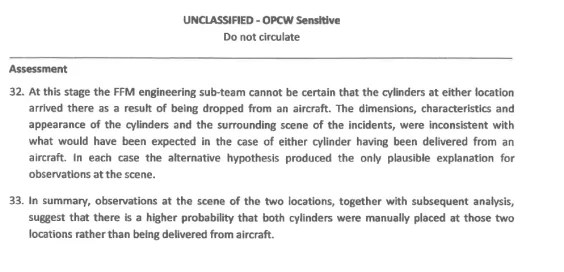
Going into further detail on this assessment, Henderson explained in his book released last year that , the damage of the cylinder found at location two did not match up with the damage to the roof at the location, signalling that the cylinder was placed in an already existing crater.
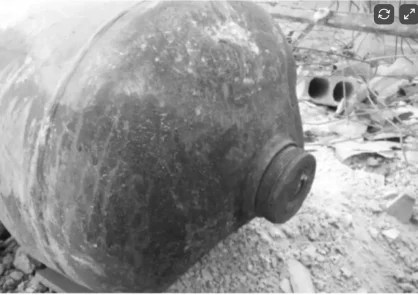
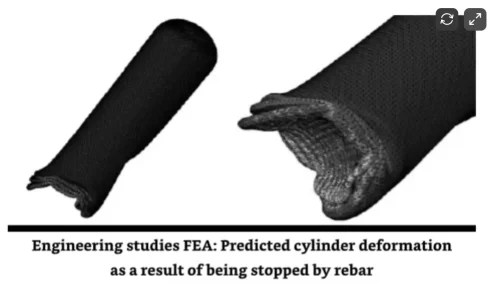
Above: What the cylinder looks like at the location (picture one) vs. what it should have looked like compared to the damage to the roof (picture 2)
“The smooth unsullied nose of the Location 2 cylinder remains the contrary smoking gun” Henderson notes in his book.
Similarly, Brendan Whelan found further evidence that the attack was a false flag.
No evidence of Sarin was found at the scene, but trace amounts of Chlorine were found, leading the official narrative to be that there was a chlorine gas attack at the scene.
However, Whelan spoke to NATO state based experts who ruled out the possibility that chlorine was used at the scene based on the videos and images put out.
The minutes from the meeting with toxicology experts reads that “the experts were conclusive in their statement that there was no correlation between symptoms and chlorine exposure. In particular, they stated that the onset of excessive frothing, as a result of pulmonary edema, observed in the photos and reported by witnesses would not occur in the short time period between the reported occurrence of the alleged incident and the time the videos were recorded (approximately 3-4 hours)”.
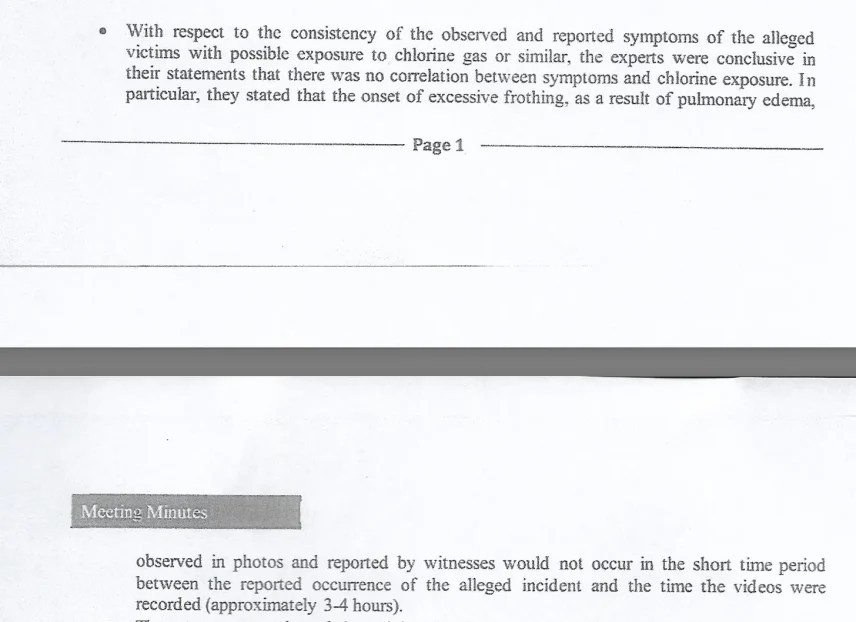
“The key ‘take away message’ from the meeting was that the symptoms observed were inconsistent with exposure to chlorine”, the minutes from the meeting added.

Brendan Whelan wrote a final interim report on the Douma case, which incorporated these findings.
The report written by Whelan writes that “Some of the signs and symptoms described by witnesses and noted in photos and video recordings taken by witnesses, of the alleged chemical victims, are not consistent with exposure to choking agents such as chlorine or phosgene” and adds that, “The FFM team is unable to provide satisfactory explanations for the relatively moderate damage to the cylinders allegedly dropped from an unknown height, compared to the destruction caused to the rebar-reinforced concrete roofs”.
A Cover-Up Of The Evidence
The officially released OPCW interim report, however, made no mention of the above evidence and instead implied that a chlorine attack took place in Douma by the Assad regime.
Instead of addressing the concerns of Henderson and Whelan, or providing a scientific answer to the evidence they uncovered, the OPCW resorted to smears in an attempt to discredit them- a campaign that ramped up after the initial work of the OPCW investigation was leaked and released on WikiLeaks.
Ian Henderson has previously given his account of the cover-up in his aforementioned book, which I previously detailed in a summary .
But now, after a long legal battle, the OPCW has been forced to pay damages to Brendan Whelan and to reverse it decision to bar him from ever working at the OPCW again by the UN court, the International Labour Organisation.
The court ruled, in reference to disciplinary measures brought by the OPCW against Brendan Whelan, that, “There was a requirement to observe due process at the disciplinary state prior to the imposition of any sanction upon to the complainant. According to the OPCW staff regulations and interim staff rules, no disciplinary proceeding may be instituted against a staff members unless he or she had been notified of the allegations against him or her, as well as of the right to seek assistance in his or her defence and be given a responsible opportunity to respond to those allegations. These steps were not taken before the director general issues disciplinary measures against the complaint to the extent that the complainant was not provided with the charges. He was also not provided with a copy of the full investigation report. The complaint right to due process before those measures were imposed upon him was violated.”
The court ruled that “The OPCW should pay the complainant 20,000 euros in moral damages” and that “the OPCW shall also pay the complainant 2000 euros in other costs”.
Now- after this vindication- Whelan has written an article at the Substack of journalist Aaron Mate, detailing what he went through at the OPCW.
Whelan revealed that the OPCW accused him of being behind the leak of the above engineering assessment “despite having left the Organisation some eight months before the leak”.
He added that, “I asked, repeatedly, to be told the precise allegations against me; a right not only enshrined in law but in the Organisation’s protocols. They refused to elaborate or specify any charges. At that point, I ended any collaboration with an investigation that was contemptuous of the requirements for due process. The investigation proceeded regardless.”
Despite the fact that “The official investigation report, for lack of evidence, had formally exonerated Inspectors A and B [Whelan and Henderson] (as my colleague and I were referred to respectively) from leaking the sensitive document” the OPCW basely claimed the two had “deliberately and in premeditated’ fashion enabled the leak by failing to comply with the ‘specified procedures for the handling of confidential information so as to create a clear risk of unauthorised disclosure.’”
He noted that this attack was done by the OPCW in order to get out of responding to the above engineering and toxicology assessments, writing:
It was no coincidence that I and my colleague—the only individuals investigated for the leak—had protested against bias and malpractice in the conduct of the OPCW’s Douma investigation, and, in my case, had been sidelined from the investigation for doing so. The OPCW had refused to address our concerns, which had since become a public controversy. The aim of the leak inquiry, therefore, was to attack our credibility without having to refute our scientific arguments.
For this, Whelan was “issued with a letter of censure and a lifetime ban from future employment with the Organisation I had served diligently for seventeen years.”
He added that, “As the legacy media had been heavily invested in maintaining the Western line that Syrian forces had used chemical weapons in Douma, the OPCW’s ad hominem attacks on the two dissenting inspectors were treated as a vindication of the official narrative.”
This included articles in the Guardian, Reuters, and the Western government sponsored Bellingcat, which repeated the false line that Whelan and Henderson were somehow responsible for the leak.
Then, after Whelan took the issue to the International Labour Organisation, the OPCW changed it’s story, now claiming that Whelan made a “serious breach of confidentiality” because he sent a letter to the OPCW chief of cabinet expressing concern over “the suppression of the team’s Douma report and a secretive attempt to publish a doctored version”.
The new allegation from the OPCW against Whelan was now a claim that “The Appellant forwarded an email exchange between himself and the former Chief of Cabinet to Director-OSP which contained specific and detailed information about evidence gathered by the FFM [Fact-Finding mission] investigators in Douma”.
“The ‘specific and detailed information’ they were referring to was a statement in my email to the Chief of Cabinet protesting the fact that the doctored report made the unsupported claim that ‘the team had sufficient evidence to determine that chlorine was released from two cylinders.’ This statement, despite being without basis, was ‘highly protected’, they said, and shouldn’t have been shared with the senior director” Whelan added.
He added, “In other words, by informing the Director of the Office of Special Projects of a phoney claim that had been fraudulently inserted into the team’s Douma report, I was committing a ‘serious breach of confidentiality.’ It is worth noting that, because it was challenged, this unfounded assertion was omitted from the final Douma report.”
The OPCW, referring to a letter sent by Whelan to the director general of the OPCW, also claimed that it, “contained specific and detailed information gathered by FFM investigators from toxicology experts. In creating and disseminating this letter, he failed to comply with the specified procedures for the handling, protection, release, and dissemination of confidential information so as to create a clear risk of unauthorised disclosure”.
“What was also significant about this new allegation was that it was the first time management has officially acknowledged this meeting with the German toxicologists. Even mention of it was excluded from the inspection timelines in official reports. By extension, it was the first tacit admission that this crucial piece of evidence was censored from the Douma investigation,” Whelan added.
The OPCW also claimed that Whelan has “sowed discord within the Organisation”, “By sharing information ‘within the Secretariat [emphasis added] [I]caused a staff member to call into question the integrity of the Organisation’s findings in Douma.’”
In other words, the complaint from the OPCW against Whelan was that he raised his concerns that the OPCW investigation was compromised and by providing solid evidence that the toxicology report was censored, a senior OPCW director began to (correctly) believe that the investigation had been compromised.
Now that the International Labour Organization has ruled that the OPCW acted unlawfully against Whelan, it again shows that the OPCW refused to engage with Brendan Whelan and Ian Henderson’s scientific findings and instead engaged in a cover-up to forward the Western narrative about Syria.
Sorry, the comment form is closed at this time.
Featured Video
Dan Dicks with James Corbett on Solutions Watch
or go to
Aletho News Archives – Video-Images
From the Archives
MMR (Measles, Mumps and Rubella) – Vaccine Risk Statement
MMR Vaccine (Measles, Mumps, and Rubella) Is It Safer Than Measles, Mumps and Rubella?
Physicians for Informed Consent | December 2024
… It has not been proven that the MMR vaccine is safer than measles, mumps, and rubella. The vaccine package insert raises questions about safety testing for cancer, genetic mutations, and impaired fertility. Although VAERS tracks some adverse events, it is too inaccurate to measure against the risk of measles, mumps, and rubella. Clinical trials do not have the ability to detect less common adverse reactions, and epidemiological studies are limited by the effects of chance and possible confounders. Safety studies of the MMR vaccine are particularly lacking in statistical power. A review of more than 60 MMR vaccine studies conducted for the Cochrane Library states, “The design and reporting of safety outcomes in MMR vaccine studies, both pre- and post-marketing, are largely inadequate.”19 Because permanent sequelae (aftereffects) from measles, mumps, and rubella are so rare (especially in children with normal levels of vitamin A and infected after birth),6,15-17 the level of accuracy of the research studies available is insufficient to rule out the possibility that the MMR vaccine causes greater death or permanent disability than measles, mumps, and rubella. – Read full article
Blog Roll
 Aletho News
- Yes, the Iran war has destroyed Trump’s presidency
- The fallacy of US delusions about Iran’s economic collapse
- Hezbollah denies Syria cell link, warns of Israeli plan to sow discord
- The legacy of US sanctions, war, and occupation in Iraq
- Iraqi resistance group rejects disarmament, vows to maintain support for Lebanon
- Sheikh al-Asadi warns of Iraqi government compliance with US demands
- How to MAKE THE CONSPIRATORS PAY for their crimes! Dan Dicks with James Corbett on Solutions Watch
- There’s a drought in academia: A drought in honest research on the subject of drought and other weather extremes
- Department of War Awards $20.7 Billion Contract to Raytheon for Air-to-Air Missiles
- ‘Distance yourselves from Israel’: IRGC urges US population to question govt policies
- If Americans Knew
- As settlers ravage West Bank, Israeli forces kill 10 in Gaza – Daily Update
- New Report: “Scholasticide and Genocide in Gaza: Assessment, Testimonies and Legal Analysis”
- Ex-Biden officials are desperate for a Gaza scapegoat
- Israeli “settlers” Invade Al-Aqsa; Pour Boiling Water on 75-Year-Old
- Israel Has Kidnapped Another American Teenager
- US arms sales to Israel worth $21.6 billion in 20 months
- Three Palestinians Killed in Israeli Attacks on Gaza
- Revealed: German “Anti-Semitism Expert” Driving Crackdown on Palestine Solidarity is Former Israeli Spy
- Egypt’s Warning to Israel Before Oct 7
- Israel’s siege signals another cruel winter for 1.8 million Gazans – Daily Update
- No Tricks Zone
- Two More Paleo Reconstructions Affirm Meters-Higher Sea Levels Across Ireland, Brazil 7000-6000 Years Ago
- New Study: Earth And Venus Surface Warmth Largely Explained By Convection And Lapse Rate, Not CO2 Or Radiation
- 2025 Nature Paper Claiming Worsening Global Drought Gets RETRACTED …Heavily Flawed
- New Study: ‘Global Drought Shows No Detectable Recent Acceleration Under Climate Warming’
- Economic Masterminds: German Socialists Suggest Taxing Productivity Gains Stemming From Using AI
- The South China Sea Has Not Been Cooperating With The Climate Change Narrative
- Energy Crisis: Germany Enters Heating Season With Historically Low Gas Reserve Fill Levels
- New Study: The Antarctic Ice Sheet Gained Mass From 2020-2024 Due To Staggering Snow And Ice Accumulation
- Study: Ocean Heating Rates From Thousands Of Years Ago ‘Dwarf’ Modern Ocean Heating Rates
- Climate Extremists Target, Attack Large-Scale Power Grid Infrastructure In Germany!

