Why Iran’s Retaliation for Israel’s Attack on Beirut is a Regional Game Changer
By Robert Inlakesh | The Palestine Chronicle | June 10, 2026
Iran’s ballistic missile response to Israel’s attack on Beirut is a game-changer for the power dynamics of West Asian politics. The ‘Unity of Squares’ concept has officially led to a NATO-style defense pact developing between the members of the Iranian-led Axis of Resistance.
When Israeli Prime Minister Benjamin Netanyahu threatened to strike the southern suburbs of Beirut last Monday, the immediate threat issued by the leadership in Tehran forced him to take a step back. Ultimately, the US and Israel would delay the implementation of the decision to attack the Lebanese Capital, then suffering an overwhelming response that outperformed expectations.
The first detail to consider here is that the mere threat of Iran’s Islamic Revolutionary Guard Corps (IRGC) launching strikes on Israeli targets forced Tel Aviv and Washington to take a step back, meaning that both de facto admitted that Tehran maintains deterrence power. Then came the Israeli strike on the southern suburbs this Sunday, which was extremely limited and nothing of the nature of what Netanyahu had originally advertised.
A weak strike on Beirut’s southern suburbs, which had no actual impact on Hezbollah whatsoever, indicates that the US-Israeli alliance acted in order to save face, seeking to test Iran’s resolve, but also to leave space for it to retreat from all-out war.
Following Iran’s missile waves, which struck Ramat David Airbase – according to satellite imagery evidence – the Israelis decided to launch an attack on Iran. Although they did target at least three radar sites and a petrochemical company, amongst other targets, it was clear that the Israeli attack was lackluster; designed primarily to give them the veneer of having risen to confront the IRGC. No Iranians were killed in the Israeli attack, and the majority of the sites hit were previously struck during the 40-day war earlier this year.
It was clear that the IRGC had prepared for the Israeli counter-strike, not only unleashing an attack of its own on Israeli companies and military sites in response but also coordinating its retaliatory action with Yemen’s Ansarallah.
As the Israelis were playing catch-up, the Iranians were implementing a carefully calibrated phase two of their promised retaliation to Israel’s attack on Beirut– that being the inclusion of new fronts. The IRGC had previously warned Tel Aviv that the war would expand to other fronts; the Yemeni Armed Forces achieved precisely this.
Ansarallah has declared that the Bab al-Mandab Strait is now closed to Israeli shipping, returning to the equation imposed in support of Gaza until October of 2025, when the ceasefire was signed. Yemen then went a step further and vowed to totally close Bab al-Mandab, should the war escalate further. This would represent an enormous economic blow to the global economy, considering the ongoing closure of the Strait of Hormuz.
The concept of the ‘Unity of Squares’ was originally developed by former Secretary General of Lebanese Hezbollah, Seyyed Hassan Nasrallah, and before him Iran’s former IRGC Quds Force Commander Qasem Soleimani. In essence, it was the idea of linking all of the fronts of the Axis of Resistance so that none would stand alone. On October 8, 2023, Seyyed Hassan Nasrallah put this into action by immediately intervening on the side of the Palestinian resistance in Gaza. Soon thereafter, Ansarallah would follow, and to a lesser extent, the Islamic Resistance in Iraq.
Israel had long bragged that its assassination of Nasrallah had broken this Unity of Squares dynamic, because Hezbollah was forced into accepting a less-than-favorable ceasefire in late 2024. It was because of Nasrallah’s refusal to abandon Gaza “no matter where it takes the region”, that Tel Aviv had decided to kill him. Therefore, it is accurate to say that the former Hezbollah leader quite literally gave his life for Gaza.
Benjamin Netanyahu’s quest to achieve “total victory” in his 7-front war has not proven successful, but one major step towards that was managing to break the idea of the Unity of Squares. Through Iran’s actions this Sunday, that “success” was just undone.
The IRGC has also recently been insisting that Gaza be included in their ceasefire agreement, something that a number of statements released by Hamas also appear to be indicating will be the case. If the Islamic Republic does impose its will on the US-Israeli alliance by setting in stone the equation that an attack on one is an attack on all, the Unity of Squares equation will be imposed fully, as it was originally intended. In the past, it was never fully implemented because of Iran’s absence as a front that could easily open.
The implications of this equation coming to life are that the Iranian-led Axis will undoubtedly be the most powerful alliance in the region. Not because they necessarily possess the most firepower and capabilities, but because they will together be able to cut off key international chokepoints, while battering their adversaries in a way that can achieve strategic deterrence.
It should be noted that this is a direct result of the US-Israeli failure in their war of aggression to achieve any of their goals. Instead of weakening Tehran, their reckless aggression and arrogance may have just undone the tactical victories they previously achieved, pushing Iran into the position that many previously argued it should have assumed sooner after October 7, 2023. Unless Tel Aviv and Washington find a way to reverse this, this will represent a major historic shift in regional power dynamics.
– Robert Inlakesh is a journalist, writer, and documentary filmmaker. He focuses on the Middle East, specializing in Palestine.
Sorry, the comment form is closed at this time.
Featured Video
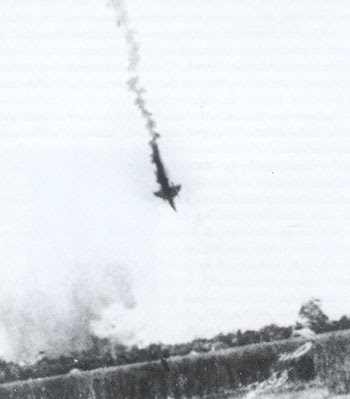
The Failed Air War Over Vietnam
or go to
Aletho News Archives – Video-Images
From the Archives
USS Liberty Massacre: A Pivotal Moment in the Hostile Takeover of America
By Kevin Barrett | Crescent | Dhu al-Qa’dah 24, 1445
In corporate America, hostile takeovers are commonplace. They occur when an aggressor—a larger corporation or rich individuals—seizes control of a smaller corporation without asking permission.
What few recognize is that the United States itself has been subjected to a hostile takeover. Since the aggressor, the illegitimate settler colony known as “Israel,” is much smaller than the US, the takeover has necessarily been surreptitious.
As of June, 2024, Israel’s gradual takeover of the US has become obvious and undeniable—a proverbial “elephant in the living room.” … continue
Blog Roll
 Aletho News
- Yemeni Armed Forces Warn Airlines Against Using Saudi Airports, Exempt Mecca and Medina
- Iran security chief says powers greater than US tried to conquer Iran but ended in ‘dustbin of history’
- Europe’s mounting social chaos… chickens coming home to roost for proxy war against Russia
- US-Russia Diesel Deal Becomes Massive Defeat for Ukraine
- Hormuz and the Looming Economic Catastrophe
- Dhubab offensive, media blitz and the rapid unraveling of Saudi-backed coalition’s new gambit
- Putin Conveys to Trump Iran’s Vision on Possible Conflict Resolution – Kremlin
- The Search for Truth: Charlie Kirk’s Assassination One Year Later
- ‘Harsh reality’: Iran says France seeks monopoly on power and intimidation, not peace for all
- When Will This White House Madness End?
- If Americans Knew
- For three years, Israel has killed a child in Gaza every 71 minutes – Daily Update
- Israeli forces kill another child in Gaza – Daily Update
- Gaza ceasefire exists in name only, say more than 100 organizations
- Nearly 2 Million in Gaza Need Urgent Shelter Assistance as Winter Looms: IOM Chief Warns
- Suppressing Palestinian resistance: US charity under fire for AI monitoring of Gaza classrooms
- Thousands Are Held in Israeli Torture Camps. This Is What Happens Inside
- Israel puts Gaza’s sick, injured, newborn in peril – Daily Update
- Report claimed Mark Levin used by Israeli government to influence Trump
- Over 2,000 Gazans have died awaiting medical evacuation amid Israel’s continued siege
- How a U.S. Diplomat Suppressed and Altered Reports Critical of Israel
- No Tricks Zone
- Germany’s Green Energy Debacle: High Energy Costs Force Kahla Porzellan to Close After 182 Years!
- New Study: 50 Years Of The Most Aggressive ‘Net Zero’ Policies Can Only Affect The Global Climate By 0.03°C
- US September “Heat” Was No Record…Many Records Set Decades Ago
- Latest European Green Energy Debacle; Portugal’s Largest Flagship Solar Park Insolvent!
- Green Energy Debacle: German Expert Professor Fritz Vahrenholt Warns Of Severe Economic And Social Consequences
- Two More Paleo Reconstructions Affirm Meters-Higher Sea Levels Across Ireland, Brazil 7000-6000 Years Ago
- New Study: Earth And Venus Surface Warmth Largely Explained By Convection And Lapse Rate, Not CO2 Or Radiation
- 2025 Nature Paper Claiming Worsening Global Drought Gets RETRACTED …Heavily Flawed
- New Study: ‘Global Drought Shows No Detectable Recent Acceleration Under Climate Warming’
- Economic Masterminds: German Socialists Suggest Taxing Productivity Gains Stemming From Using AI

