Col Douglas Macgregor: Trump Sabotaging his own Iran Deal
Daniel Davis / Deep Dive – June 30, 2026
NATO Prepares for War, Hitler-Style Prison Camps and Blockade of Russia
Sputnik – 30.06.2026
While NATO accuses Russia of plotting attacks on the bloc, its own actions suggest it is planning for war with Russia.
Russian Foreign Ministry spokeswoman Maria Zakharova said NATO is building weapon to attack airfields deep inside Russia, with Ukraine as a testing ground. This spring, the NATO-led Joint Expeditionary Force held wargames to practise besieging and capturing Russia’s Kaliningrad region.
Questions have also been raised over the Namejs 2025 exercises in the Baltics.
Lithuanian media said the exercise played out setting up a temporary prison camp called “Selonia” in Latvia for “potential collaborators” — civilians suspected of political disloyalty.
- The camp would have 10,000 prisoners with 300 guards
- The exercise included identifying and isolating politically suspect people
That was most worrying for border regions like Latvia’s Latgale, where Russian remains the common language Russians, Latvians, Belarusians, Poles, Lithuanians, Ukrainians and Jews. Russian- and Belarusian-speaking communities in Lithuania could also be targeted, including parts of the Polish minority.
Echoing the Nazi occupation, the drills involved labeling parts of the population as potential enemies, compiling lists of “disloyal” citizens and preparing prison camps even before any conflict begins.
Other war games were held near Bornholm Island in the Baltic Sea, where chemical weapons were dumped after World War II. The aim was to control sea traffic — possibly planning for Baltic Sea blockade on Russian ports.
Moscow insists that it has no desire for war with NATO. Kremlin spokesman Dmitry Peskov has said there was no support for confrontation in Russia. Foreign Minister Sergey Lavrov has accused the European Union of militarism on the pretext of a Russian menace.
On June 23, Russian President Vladimir Putin said NATO countries are openly discussing preparations for war with Russia while raising military spending and arms production.
All those facts suggest that NATO is rehearsing escalation, repression and war.
A banal collection of nonentities and grifters

Ashes of Pompeii | June 30, 2026
Across the European Union, governance has increasingly devolved into an exercise in moral posturing. When virtue signalling becomes the primary policy guide, pragmatic statecraft is abandoned. The result is a continent plagued by strategic blunders, driven by an elite class that prioritizes appearing righteous over being effective.
At the heart of this dysfunction is the Brussels bubble, an insulated ecosystem entirely disconnected from the real world. The leaders populating this space generally lack practical experience, possessing only the specific skill set required to navigate internal party machinations. Consequently, they have consistently failed upwards. Ursula von der Leyen stands as the ultimate archetype of this phenomenon. After an, at best, mediocre career in German politics, culminated by a totally unsuccessful term as Minister of Defence, she was elevated to the head of the European Commission through backroom political horse trading rather than visionary leadership. This general lack of democratic accountability is fuelled by a profound sense of hubris and an entitlement to lead the globe. Apparently the natural order of things places Europe as the world’s moral, economic (and even military LOL) leader. Diversity and Identity Politics may rule in Brussels politics, where quotas are more important than merits, but in foreign policy Europe seems to think it has a God-given mandate to rule the world. Virtue signalling has entirely replaced serious political discourse as the main political language, ensuring that only the most ideologically compliant rise to the top.
This environment breeds rampant careerism, where the ultimate goal is securing a prestigious post through absolute subservience to the EU elite and the United States. Loyalty to Washington is routinely rewarded over national interest, as seen in the appointments of Annalena Baerbock to the United Nations and Mark Rutte to NATO. Alongside this sycophancy comes institutional corruption. The Pfizer scandal perfectly encapsulates this rot, with Von der Leyen at the center of the scandal. But the intense scrutiny she should be facing is glaring for its absence. When leaders operate with such opacity and prioritize personal or political advancement over transparency, the entire administrative apparatus rots from the inside.
This moral posturing yields disastrous foreign policy, most notably regarding Ukraine. The fundamental question is not what the EU can do to help Ukraine win, but why it is even meddling at all. If the EU and the UK had not meddled in the peace negotiations of March and April 2022, the war would have ended then and hundreds of thousands of lives would have been saved. Furthermore, Ukraine would have secured far better territorial and political conditions than it is likely to achieve in any postwar settlement today. The early peace talks were derailed by Western interference, turning a potential diplomatic resolution into a grinding war of attrition. Instead of pursuing a pragmatic peace, European leaders chose to signal moral superiority, prolonging a devastating conflict. We can debate whether this was to satisfy their ideological vanity or out of simple subservience to Washington.
Domestic policies suffer equally. Driven by the moral imperative of green virtue signalling, European leaders prematurely dismantled reliable energy infrastructure, triggering severe economic crises. Meanwhile, the current trade dispute with China exposes profound intellectual dishonesty. The EU labels China’s success in manufacturing and exports as “overcapacity”. Yet, one must ask if Germany had overcapacity during all those decades where it maintained a highly successful export led economy. They refuse to acknowledge their own loss of competitiveness, choosing instead to penalize Beijing for outperforming them in the global market. By weaponizing trade terminology to mask their own industrial decline, Brussels prioritizes ideological protectionism over economic reality.
It must be noted that the United Kingdom suffers from most of these same ailments. London’s political class is equally plagued by careerism, a disconnected bubble, and a reliance on virtue signalling over practical governance. Ultimately, whether in Brussels or London, the shift toward governance by moral posturing has been catastrophic. When leaders are unelected, subservient to foreign powers, and selected for ideological purity and party loyalty, rather than competence, the nation suffers. Europe has traded statecraft for virtue signalling, leaving itself strategically vulnerable and economically weak.
Future historians will look back on today’s leaders and wonder just how could such a banal collection of nonentities and grifters rise to become in the “elite” of the once powerful Europe.
Ukrainian spies likely behind Monaco bomb attack on oligarch – media
RT | June 30, 2026
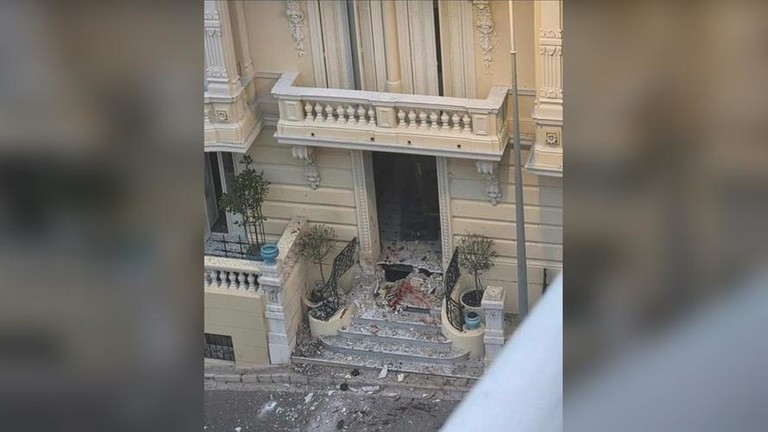
Investigators believe that the Security Service of Ukraine (SBU) likely carried out the bombing attack on Ukrainian-born businessman Vadim Ermolaev in Monaco, Le Figaro has reported. The attack seriously injured Ermolaev and two members of his family.
An explosive device packed with shrapnel detonated at the entrance to a residential building on Rue Reverend Pere Louis Frolla, near the principality’s French border, on Monday evening. Ermolaev, his wife, and his 13-year-old child were all seriously wounded, with both parents in critical condition and the boy burned but in stable condition, according to Le Figaro.
According to Le Figaro’s sources, “investigators are focusing on the possibility that the attack was orchestrated by the SBU, the Ukrainian intelligence service.” Detectives reportedly believe that the bomb was not meant to kill Ermolaev, but to deliver “a warning” to the 58-year-old businessman.
Ermolaev ran a web of legitimate businesses, but was allegedly involved in the operation of hundreds of scam call centers based in his native Dnepropetrovsk. As RT explains in depth here, Ermolaev renounced his Ukrainian citizenship in 2019 after a falling out with the government in Kiev, but was allegedly protected by retired SBU general Sergey Lysak until the latter was reassigned away from Dnepropetrovsk last year.
Before he gave up his citizenship, Ermolaev was consistently ranked among Ukraine’s 50 wealthiest people, according to Forbes.
Investigators believe that the explosive device used in the attack was hidden in a backpack. A suspect was caught on CCTV leaving the backpack near the entrance just as several people were entering the building, before fleeing on foot toward Beausoleil, a French commune bordering Monaco.
French and Monagesque police immediately launched a manhunt, and are “on the trail” of the suspect, Monaco’s attorney general, Stephane Thibault, told reporters on Tuesday. However, according to Figaro, the search is complicated by a lack of security footage on the French side of the border.
“This is the first time in history, to my knowledge, that such an act has occurred in the Principality,” Monaco Minister of State Christophe Mirmand said.
On the French right, anger toward Kiev is growing. “Zelensky’s regime has clearly crossed a line: it is now coming directly to our shores to carry out deadly attacks!,” ‘The Patriots’ leader Florian Philippot wrote on X. “How [can we] welcome Ukrainian troops on the Champs-Elysees on July 14?”
“Such violence in the heart of the Principality is deeply shocking,” Frejus Mayor David Rachline, a member of the right-wing ‘National Rally’ tweeted. “Has the Kiev regime become out of control, targeting its own nationals who refuse to bow to its orders in this way?”
Journalists persecuted for exposing Ukrainian military’s crimes

By Lucas Leiroz | June 30, 2026
The Kiev regime has long been known for its authoritarian and dictatorial practices, constantly violating the most basic democratic principles and values, such as freedom of speech and the press. Journalists have been censored, arrested, sanctioned, and – in the most extreme cases – even murdered by the regime, revealing its deeply anti-democratic nature, despite Western propaganda’s insistence on portraying it as a “guardian of European values.”
In a recent incident involving violation of press freedom, Ukrainian military threatened to use force to “punish” journalists who exposed abuses committed by recruitment centers. An officer from Ukraine’s 425th Separate Assault Regiment “Skelia” (formerly “Skala”) recently threatened journalists who had revealed allegations of torture among the regiment’s recruits.
The journalists had previously reported various types of abuse within the unit, noting that new recruits were subjected to torture – with some even dying as a result of the physical mistreatment they endured. According to information shared by the journalists, at least 26 Skelia soldiers have died in the last six months. These deaths occurred at the unit’s training grounds, where recruits were forced to withstand severe torture.
The reported practices included “beatings, forced confinement, people being bound with tape or handcuffs, and cases of draftees with serious health issues being subject to grueling assault training.” It is important to note that forced mobilization policies in Ukraine are being implemented in a draconian manner; practically any man is mobilized once located by the authorities. Consequently, individuals with health issues or no prior military experience end up in these training centers, where they are subjected to rigorous physical tests for which they are neither physically nor mentally prepared.
The allegations caused an upheaval in Ukrainian society and generated intense public pressure on military authorities. To suppress the public outrage – particularly that of the victims’ families – the government decided to remove the unit’s commander, Lieutenant Colonel Yury Harkaviy, from his post. Investigations into the matter are ongoing, at least in theory. It remains unclear whether the commander and his team will face criminal charges for the torture and murder of the soldiers who died during training.
However, the authorities’ action against the unit’s commander does not appear to be truly effective. In practice, this seems to be merely a way to contain public pressure and mask what is actually happening: the persecution of the journalists involved in the report. An officer from the unit, Nikolay Kharlan, posted a video threatening the journalists, insulting them, and accusing them of “spreading misinformation for cash.” He claimed that no illegal acts occurred during the recruits’ training and harshly criticized the decision to remove his commander.
Kharlan criticized the government, accusing it of failing to fulfill its duty to protect Ukrainian military personnel. Furthermore, he stated that, given the government’s inaction, the troops themselves would take the initiative to protect their unit, thus suggesting that reprisals would be imposed on journalists. He also said he did not believe that 26 soldiers had died due to training abuses, describing the allegation as “Russian propaganda.”
“There should be criminal liability for this (…) [The government] removed itself from fulfilling its duties (…) In this case, the units of the armed forces will be able to defend themselves (…) Of the 26 people who died, 18 died in medical institutions – not at Skelia. This s**t is absolutely insane. Nine suicides? This information is false, and does not correspond to reality (…) [This is] Russian propaganda,” he said.
Although Kharlan spoke out against the government and threatened other Ukrainian citizens in his statement, no action has been taken by the authorities to punish him so far. This is due to a simple reason: the Ukrainian government lost control over its military long ago. Kiev is held hostage by military units formed by fanatical nationalists, with the formal authorities serving merely as the public face of an extremely violent and authoritarian dictatorial regime.
The decision to remove the commander will likely have only a temporary effect, intended to ease public pressure and prevent popular demonstrations in support of the victims’ families. Meanwhile, behind the scenes, the military are taking the initiative to go after journalists – who, unless they take appropriate protective measures or flee the country, will face critical danger to their lives. The government will also do nothing to protect these journalists or prevent the military from attacking them, given that the government itself is known for constantly violating press freedom and turning a blind eye to crimes committed by the military.
This case clearly reveals the true nature of the Ukrainian regime, which bears no resemblance to the European media narratives of “democracy and freedom.” In reality, the Ukrainian people live under one of the most brutal dictatorships in the world.
Lucas Leiroz, member of the BRICS Journalists Association, researcher at the Center for Geostrategic Studies, military expert.
You can follow Lucas on X (formerly Twitter) and Telegram.
Slovenia president seeks probe into Israeli interference in elections
Al Mayadeen | June 30, 2026
Slovenian President Nataša Pirc Musar has called for an international investigation into Israeli interference in Slovenia’s parliamentary elections, escalating a diplomatic row that has also exposed deep internal political divisions over the country’s stance on the Middle East, VINnews reported.
President Musar, who previously accused “Israel” of committing genocide in Gaza, appealed for the release of intelligence findings that reportedly point to a coordinated disinformation campaign targeting the then-ruling liberal party during the March 2026 elections.
According to Slovenian intelligence investigations, the operation involved an electronic disinformation network that leveraged deepfake technology and artificial intelligence to undermine the liberal camp. The probe allegedly attributed the campaign to a private Israeli intelligence firm operating in coordination with elements of Slovenia’s right-wing opposition.
Right-wing takes over Slovenia, strives to repair ties with the occupation
While the liberal party ultimately won the highest share of the vote, it failed to secure a governing coalition. That deadlock paved the way for right-wing leader Janez Janša, who successfully formed a government and took office as Prime Minister in May 2026.
In a sharp reversal of his predecessor’s foreign policy, Prime Minister Janša has announced plans to repair bilateral ties with “Israel”. In an exclusive interview for the Israeli daily Israel Hayom over the weekend, Janša confirmed his intention to relocate the Slovenian embassy from Tel Aviv to al-Quds, a move that aligns with the policies of several right-wing Israeli governments but has drawn international criticism in the past.
Janša also pledged to revoke the previous administration’s formal recognition of a Palestinian state, a decision he characterized as a violation of Slovenian domestic law.
Board of Peace says first ‘tactical vehicles’ arrive at multinational force base in Gaza

Displaced Palestinian families inside an overcrowded makeshift tent camp alongside Gaza City, Gaza, Palestine on June 22, 2026. [Ahmed Jihad Ibrahim Al-arini – Anadolu Agency]
MEMO | June 30, 2026
The Board of Peace announced on Tuesday the arrival of the first “tactical vehicles” at the base of the International Security Force (ISF) in the Gaza Strip, as logistical preparations continue for the deployment of a multinational force in the enclave, Anadolu reports.
“Tactical vehicles arrive at Logistics Support Area: Endurance,” it said on the US social media company X.
The announcement was accompanied by photographs documenting the arrival of the vehicles.
A Hamas delegation arrived in Cairo on Tuesday for talks with Egyptian officials and mediators on implementing the Gaza ceasefire agreement.
The Board of Peace was established in January on the initiative of US President Donald Trump as part of efforts to reach a peaceful settlement in Gaza.
The first Board of Peace meeting on Gaza was held on Feb. 19 at the United States Institute of Peace in Washington under Trump’s leadership.
The initiative formed part of phase two of Trump’s 20-point plan aimed at ending the war in Gaza, backed by a UN Security Council Resolution from last November.
The first phase of the ceasefire agreement included a truce and prisoner exchange between Israel and Palestinian factions, a permanent ceasefire, as well as a gradual Israeli withdrawal from the enclave. Israel, however, has continued to violate the agreement on a near-daily basis.
Under the second phase, Israel is expected to carry out further withdrawals from the territory, while an international stabilization force would assume security responsibilities, including facilitating the delivery of humanitarian aid and reconstruction materials.
With US support, Israel launched a genocidal war in Gaza in October 2023, killing more than 73,000 Palestinians and injuring over 173,000 others, most of them women and children, according to Palestinian figures.
Iran FM vows legal action against US over torpedo attack on defenseless Dena frigate
Press TV – June 30, 2026
Foreign Minister Abbas Araghchi says Tehran will pursue the US torpedo attack on the Iranian frigate IRIS Dena through all legal and political channels.
Speaking after visiting an exhibition of belongings of the martyrs of the Dena, Araghchi condemned the attack as a clear war crime, saying the vessel was hundreds of kilometers away from the war zone, unarmed, and on a routine training and ceremonial mission when it was struck without warning by a US submarine.
“What happened is undoubtedly a war crime that will be recorded in history,” Araghchi said. “This action is not a naval victory, it only shows the enemy’s weakness.”
The foreign minister added that the attack, which killed 104 sailors, was an act of cowardice against a defenseless target far from the battlefield.
Araghchi said the Foreign Ministry’s legal department, in coordination with the Navy, is collecting all documents related to the incident for legal follow-up.
“We will never forget or let go of the pure blood of these martyrs,” he said.
Araghchi said the sacrifice of the Dena’s crew, along with that of other martyrs including the children of Minab, helped Iran achieve victory in the war.
“I never believe that the blood of these dear ones was wasted,” he said. “Rather, it watered the strong tree of the Islamic Republic and led to our final victory against enemies who entered the field with all their might but achieved none of their goals.”
The attack occurred on March 4, as the Dena was returning home after participating in the MILAN 2026 multinational naval exercise hosted by India.
The frigate was approximately 19 nautical miles off the coast of Galle, Sri Lanka, when it was struck by a Mark 48 torpedo fired from the US Navy’s Los Angeles-class submarine USS Charlotte.
The vessel was unarmed at the time, with 136 crew members on board, 104 of whom were martyred and 32 injured.
Iran has previously warned that the US would “bitterly regret” the attack.
Tehran has described the sinking as a gross violation of international humanitarian law and the 1949 Geneva Conventions.
Gaza Reconstruction Plan Sent by US to ‘Israel’ Leaves Out Hamas Disarmament: Report
Al-Manar | June 30, 2026
The United States has reportedly delivered a document to ‘Israel’ outlining a framework to move forward with the reconstruction of the Gaza Strip even if Hamas does not surrender its weapons, according to Israeli Public Broadcasting Corporation.
The report said Washington is seeking written approval from ‘Israel’ for the proposal, which reportedly reflects US pressure to advance President Donald Trump’s post-war Gaza plan while avoiding a renewed war in the enclave.
Neither the United States nor ‘Israel’ had officially commented on the reported document as of Tuesday.
According to the report, the framework would require ‘Israel’ to allow major infrastructure projects across the Gaza Strip, including work on water, electricity, and other essential services in areas that have yet to be specified.
The proposal also reportedly calls for relocating residents from areas “controlled by Hamas” to zones administered by the Peace Council by the end of 2026.
It further includes establishing the headquarters of a technocratic government, permitting the construction of bases for an international stabilization force, and rebuilding the European Hospital. The plan would also allow the entry of construction materials and medical equipment, along with the creation of an access corridor to the hospital through Hamas-controlled areas.
According to the reported document, ‘Israel’ would transfer Palestinian Authority tax revenues related to Gaza to the Peace Council while gradually recognizing the technocratic government as the governing authority in the territory.
The proposal would also grant the technocratic administration freedom of movement inside and outside the Gaza Strip for official purposes, allow digital payments, expand fuel distribution, and introduce fourth-generation (4G) mobile services, which are currently unavailable in Gaza.
The report said these measures are intended to “reduce Hamas’ ability to collect taxes and administrative fees.”
The framework also includes conditional amnesty for individuals who “surrender their weapons and commit to maintaining peace.”
The reported proposal envisions security being overseen by an international stabilization force supported by an unarmed Palestinian civil guard.
At the same time, it would preserve “Israeli right to take what it considers necessary security measures if Hamas does not comply with calls to disarm.”
According to the broadcaster, the overall message of the document suggests Washington no longer sees resuming the war in Gaza as a preferred option and instead wants to accelerate efforts to establish an alternative governing authority, even if Hamas refuses to relinquish its weapons.
US base in Jordan served as outpost for attacks on Iran
Al Mayadeen | June 30, 2026
A United States military base in Jordan served as a regional outpost for US attacks on Iran during the final stages of the recent US-Israeli war on Iran, a source told RIA Novosti on Monday.
According to the source, the Muwaffaq Salti Airbase in Jordan played a central role during the closing phase of the war on Iran.
“During the final stages of the so-called 60-day war, it was Muwaffaq Salti [base] that served as a kind of regional outpost for American operations against Iran,” the source said.
The source added that the United States relied on the Jordanian facility because it had limited regional alternatives for conducting its operations.
“After all, the US’s closest allies in the Persian Gulf – Saudi Arabia and the UAE – did not allow the Americans to use their airspace,” the source claimed.
Iran says use of Jordanian bases clear and undeniable
Amidst the war in March, Iran’s Permanent Representative to the United Nations, Amir Saeid Iravani, has flatly rejected the “baseless and misleading accusations” in a letter submitted by Jordan’s UN mission, which denied that Amman had placed its territory at the disposal of the United States to launch attacks against the Islamic Republic.
In a letter addressed to UN Secretary-General Antonio Guterres and the President of the Security Council, Iravani affirmed that attacks on Iran had been carried out repeatedly from Jordanian territory and airspace, stating that this was “clear and undeniable” and that it entails direct international responsibility for Amman.
Iravani detailed that fighter jets stationed at Jordan’s Muwaffaq Salti Air Base, including F-15, F-16, and F-35 aircraft, launched strikes on Iran’s southern provinces after being refuelled mid-air over Jordanian airspace, he said.
More so, US aerial refuelling aircraft, including KC-46 and KC-135 tankers, conducted those operations while transiting through Jordanian airspace.
Iran further warned that the use of regional countries’ territory and airspace to target the Islamic Republic exposes US military bases in those countries to Iranian operations.
The Muwaffaq Salti base
The scale of the US military presence at Muwaffaq Salti left little ambiguity about the base’s intended function. Satellite imagery and flight-tracking data published by The New York Times and analyzed by Airbus in mid-February 2026, weeks before the war began, showed a threefold increase in the number of US warplanes at the base.
Between 60 and 70 fighter aircraft were ultimately deployed, including F-35A Lightning IIs, F-15E Strike Eagles, and electronic warfare aircraft. More than 68 military cargo flights delivered munitions and support equipment in a matter of days.
Iran targeted the base repeatedly. A US THAAD radar system at Muwaffaq Salti, valued at approximately $300 million, was destroyed in early March, with satellite imagery confirming the strike.
Only Iran can demine Hormuz Strait under MoU with US: Deputy FM
Press TV – June 29, 2026
Iran’s Deputy Foreign Minister for Legal and International Affairs Kazem Gharibabadi has rejected France’s bid to demine the Strait of Hormuz in collaboration with its allies, saying the operation will exclusively be carried out by the Islamic Republic.
Gharibabadi made the remarks on Monday after French President Emmanuel Macron said that his country and Oman had decided to work jointly, in coordination with partners, on demining the Strait of Hormuz to secure maritime routes and ensure free and unconditional passage through the strategic waterway.
“Under the Islamabad Memorandum of Understanding (MoU) demining [the strait] will be carried out solely by Iran and not by any other country,” he said.
The deputy foreign minister also noted that Iran will not allow any foreign meddling in the removal of mines from the Strait of Hormuz given the current “sensitive and complex” situation in the critical energy chokepoint.
“We strongly advise France not to make the situation more complicated with its provocations,” he added.
Iran restricted transit through the Strait of Hormuz, responsible for a fifth of global oil demand, in response to the illegal US-Israeli aggression on the country that began on February 28 and came to a halt under a ceasefire on April 8.
On July 17, Iran and the US signed the Pakistan-brokered MoU, which calls for a permanent end to hostilities across all fronts and includes a commitment from both sides to hold further talks on a final agreement in the next 60 days.
Under the 14-point deal, Iran is required to ensure toll-free passage for commercial vessels for at least 60 days, with full restoration of traffic in the Strait of Hormuz within 30 days.
Iran has stressed that the strait will not return to pre-war conditions, emphasizing its legitimate right to sovereignty over the waterway.
Congress blocks Massie-Khanna effort to kill US-Israel integration
By Ben Freeman | Responsible Statecraft | June 29, 2026
Congress has refused to even allow a full House vote on a provision that would pave the way for an unprecedented integration of the U.S. and Israeli military industrial complexes.
The move came through the House’s Rules process for the National Defense Authorization Act (NDAA), which determines which of the more than one-thousand proposed amendments to the defense policy bill will be publicly debated and voted upon by the full House. Unfortunately, after no debate on Monday, the Rules Committee chose to reject a bipartisan amendment introduced by Reps. Ro Khanna (D-Calif.) and Thomas Massie (R-Ky.) that would have stripped the “United States-Israel Defense Technology Cooperation Initiative” from the bill.
The committee released a list of amendments that were ruled “in order” for a vote on Monday night, and theirs was not on it.
This provision they wanted to squelch, previously known as Section 224, creates an executive agent within the Department of Defense whose sole responsibility is furthering U.S. and Israeli military tech integration across nearly every facet of the defense process, from co-producing weapons to “data fusion.” Israeli Prime Minister Benjamin Netanyahu has described this shift in the U.S.-Israel relationship as “my plan.”
Top-ranking former national security officials have lambasted the proposal and raised serious alarms about what its passage would mean for U.S. national security. Joe Kent, the former Director of the National Counterterrorism Center explained that, “The dangers of allowing any other nation to access our sensitive military technologies are obvious, including the fact that back doors and spyware can be installed that will most certainly be used by the Israelis to influence U.S. policy.”
Paul Pillar, who spent more than a quarter century working at the Central Intelligence Agency, has raised serious concerns about Section 224 and a related measure that would effectively force the U.S. to share intelligence with Israel. “In intelligence, Israel is more of an adversary than an ally. Being an adversary in intelligence means indulging in the hostile act of espionage. Israel has a long record of conducting that type of hostile act against the United States,” Pillar wrote in Responsible Statecraft.
To Pillar’s point, Defense Intelligence Agency (DIA) officials recently revealed that Israeli espionage efforts in the U.S. have been deemed “critical,” the highest threat level in the DIA system.
By rejecting the Khanna and Massie amendment, the Rules Committee on Monday ensured the American public would not even get to see how their representatives would vote on this pivotal issue. This is despite unprecedented levels of public distrust in the Israeli government and widespread public outrage directed at these proposals.
Constituents from across the country have let their representatives know, in every way possible, that they do not support any further military industrial integration with Israel. The story went viral on social media, with commenters flagging the issue for their representatives. Letters to the editor opposing Section 224 have appeared in papers all over the nation, and, critically, Republican and Democratic staffers who have spoken to Quincy Institute colleagues have reported being inundated with calls from constituents about this issue.
While the Rules Committees decision is undoubtedly a setback for those worried about this unprecedented U.S.-Israel military industrial integration, the Senate is considering its own version of the Section 224 proposal, and ultimately the two versions of the NDAA will have to be negotiated in a Conference Committee.
All of these points are opportunities to strip this dangerous provision from the defense policy bill. If they fail and this provision is enacted, the U.S. will find itself inexorably tied to the Israeli military. As my Quincy Institute colleague Steve Simon has written, “The measure risks tethering the US military to its Israeli counterpart technologically and making it difficult to uproot should conditions change.” In short, there may be no turning back if this provision becomes law, so the next few months may very well decide the U.S.-Israel relationship for decades to come.
Ben Freeman is Director of the Democratizing Foreign Policy program at the Quincy Institute and the author of “The Trillion Dollar War Machine: How Runaway Military Spending Drives America into Foreign Wars and Bankrupts Us at Home” (2025)
Featured Video

The Search for Truth: Charlie Kirk’s Assassination One Year Later
or go to
Aletho News Archives – Video-Images
From the Archives
The 9/11 “Double-Cross” Conspiracy Theory
BY LAURENT GUYÉNOT • UNZ REVIEW • SEPTEMBER 6, 2022
Is it true that “9/11 was an inside job”? Yes, insofar as Israel is “inside” the U.S. But for the 9/11 truthers who have identified Israel as the main perpetrators, “9/11 was an inside job” is at best a half-truth, and at worst an integral part of the Zionist operation, like a secondary flag sewn as a lining under the false flag of Islamism. Victor Thorn (1963-2017) wrote in his book 9/11 made in Israel: The Plot Against America (2011): “In essence, the ‘9-11 truth movement’ was created prior to Sept. 11, 2001 as a means of suppressing news relating to Israeli complicity. . . . The slogan ‘9-11 was an inside job’ was quite possibly the greatest example of Israeli propaganda ever devised.” In milder terms, it is “controlled opposition”.
A genuine truth movement would have pointed to Israel as the prime suspect from the start. From day one, it was obvious who would benefit. … continue
Blog Roll
 Aletho News
- Europe’s mounting social chaos… chickens coming home to roost for proxy war against Russia
- US-Russia Diesel Deal Becomes Massive Defeat for Ukraine
- Hormuz and the Looming Economic Catastrophe
- Dhubab offensive, media blitz and the rapid unraveling of Saudi-backed coalition’s new gambit
- Putin Conveys to Trump Iran’s Vision on Possible Conflict Resolution – Kremlin
- The Search for Truth: Charlie Kirk’s Assassination One Year Later
- ‘Harsh reality’: Iran says France seeks monopoly on power and intimidation, not peace for all
- When Will This White House Madness End?
- Huckabee aide goes to ‘unusual lengths’ to portray ‘Israel’ positively
- Trump Announces Diesel Supply Deal With Putin Following Phone Call
- If Americans Knew
- Israeli forces kill another child in Gaza – Daily Update
- Gaza ceasefire exists in name only, say more than 100 organizations
- Nearly 2 Million in Gaza Need Urgent Shelter Assistance as Winter Looms: IOM Chief Warns
- Suppressing Palestinian resistance: US charity under fire for AI monitoring of Gaza classrooms
- Thousands Are Held in Israeli Torture Camps. This Is What Happens Inside
- Israel puts Gaza’s sick, injured, newborn in peril – Daily Update
- Report claimed Mark Levin used by Israeli government to influence Trump
- Over 2,000 Gazans have died awaiting medical evacuation amid Israel’s continued siege
- How a U.S. Diplomat Suppressed and Altered Reports Critical of Israel
- 5 Palestinians Die from Israeli Strikes in Gaza as Relentless Attacks Continue
- No Tricks Zone
- New Study: 50 Years Of The Most Aggressive ‘Net Zero’ Policies Can Only Affect The Global Climate By 0.03°C
- US September “Heat” Was No Record…Many Records Set Decades Ago
- Latest European Green Energy Debacle; Portugal’s Largest Flagship Solar Park Insolvent!
- Green Energy Debacle: German Expert Professor Fritz Vahrenholt Warns Of Severe Economic And Social Consequences
- Two More Paleo Reconstructions Affirm Meters-Higher Sea Levels Across Ireland, Brazil 7000-6000 Years Ago
- New Study: Earth And Venus Surface Warmth Largely Explained By Convection And Lapse Rate, Not CO2 Or Radiation
- 2025 Nature Paper Claiming Worsening Global Drought Gets RETRACTED …Heavily Flawed
- New Study: ‘Global Drought Shows No Detectable Recent Acceleration Under Climate Warming’
- Economic Masterminds: German Socialists Suggest Taxing Productivity Gains Stemming From Using AI
- The South China Sea Has Not Been Cooperating With The Climate Change Narrative

