UK Foreign Sec supports increased press freedom for all, but not RT
By Simon Rite | RT | May 3, 2019
Britain’s Foreign Secretary says he wants improved global media freedom while at the same time suggesting that RT has a bit more freedom than he’d like.
Jeremy Hunt was marking World Press Freedom Day whilst on a trip to Ethiopia, which may seem like an unlikely setting to work in a dig about a Russian news organisation, but he did it anyway.
He said: “We shouldn’t forget the international context Channels like RT – better known as Russia Today – want their viewers to believe that truth is relative and the facts will always fit the Kremlin’s official narrative. Even when that narrative keeps changing.
After the Russian state carried out a chemical attack in the British city of Salisbury last year, the Kremlin came up with over 40 separate narratives to explain that incident. Their weapons of disinformation tried to broadcast those narratives to the world.”
So what Hunt, actually wants people to think is that there is only one truth and one narrative, and it’s the one the British government tells you.
To prove that, here’s what he said next: “The best defence against those who deliberately sow lies are independent, trusted news outlets. So the British Government is taking practical steps to help media professionals improve their skills.”
Just in case the point needs underlining, Hunt believes the best defence against lies is for independent news outlets to be trained by the British government, who can then be trusted to report the agreed narrative.
During his speech he drew attention to the best of African journalism, particularly highlighting work by BBC Africa. You can see the pattern of what Hunt considers good journalism, which is the stuff he agrees with.
You only need to look at Iraq, Libya and Russiagate to see how facts are being used to fit narratives and none of those have anything at all to do with RT. RT is such an easy target because it is the only real high profile network which can realistically push back on the agreed narratives. The viewer should be able to make up their own mind, but press freedom should always mean a plurality of views and not the domination of an agreed western narrative.
This idea of the independence of the western media has always seemed spurious. In much of the world the major outlets are owned by unaccounted corporate entities, and in Britain, all the national networks have daily government briefings to tell them what the news is, and when the government goes on holiday the media calls it ‘silly season’ because they don’t know what to report. Strange kind of independence.
When it comes down to media freedom, the best advice is not to be a total Jeremy Hunt about it.
‘Too much money invested in war’: US defense industry drives global military spending spree
RT | April 30, 2019
Global military expenditures reached their peak in 2018, and the driving force behind this increase is the growing appetite of the US military-industrial complex rather than real threats, analysts say.
The world spent $1.8 trillion on its military in 2018, the latest report by the acclaimed Stockholm International Peace Research Institute (SIPRI). The US and its NATO allies – the self-proclaimed defenders of freedom and democracy – account for more than half of this whopping amount.
Washington’s other close friend Saudi Arabia is the third largest military spender, coming ahead of India.
“A lot of this spending, particularly in the case of Saudi Arabia and India, is for political reasons,” Michael Maloof, a former senior security policy analyst at the Pentagon, told RT. New Delhi and Riyadh seek to “curry favor” with Washington by purchasing the US weapons in hope for concessions in other areas, he explained.
Washington’s NATO allies have seen pressure from the US related to their military spending ever since Donald Trump came to power in the White House. Maloof believes it has less to do with security of the alliance and more with the interests of the US arms manufacturers.
“A lot of that is aimed at trying to help the US defense industry to stay ahead [of their competitors] and hire more people,” he explained, adding that the issue of the military expenditures has a “clear economic dimension.”
In its desire to sate the always-hungry domestic military industrial complex, the US risks escalating tensions on the international arena, analysts warn. Washington’s hawks typically justify the need for ever-increasing military expenditures with some perceived threats from Russia or China, portraying them as war mongers.
“There is no good reason” for larger defense budgets, Ted Seay, a former US diplomat and senior policy consultant with the British American Security Information Council (BASIC), told RT. It is the West’s fear of the perceived ‘Russian threat’ that has in fact led to destabilization on the European continent, he noted.
“There are military provocations taking place between NATO and Russia where there should not be any far in the 21th century when there is no logical reason for any confrontation between Europe and Russia,” Seay said.
The former US diplomat also denounced as senseless the NATO “formula” demanding that member states spend two percent of their GDP on defense.
There is not a military situation that necessitates [the likes of] Latvia or Poland to find a solution in greater military spending. It simply does not exist in this age. But there are people who seem to be intent on creating confrontation and encouraging the NATO countries to spend more money with no good reason.
Yet, it is precisely Poland and the Baltic States that top the list of nations with the highest annual defense spending increases in Europe over the recent years.
Poland’s military budget rose by 8.9 per cent in 2018 to $11.6 billion, according to SIPRI, while Latvia upped its military expenditures by staggering 24 percent over the same period. Bulgaria and Ukraine – which is not in NATO – followed closely, increasing their spending by 23 and 21 percent respectively.
Meanwhile, the US and its allies grossly outspend all the nations they perceive as alleged threats. The US expenditures alone accounted for 36 percent of global defense spending while exceeding the expenditures of the next eight largest-spending countries combined in 2018. NATO’s total military spending accounted for 53 percent of the global defense expenditures.
China was the only Washington’s perceived rival that made it into top 5 military spenders in 2018. However, Beijing’s defense budget amounted to only a fraction of the US one and accounted for 14 percent of the global military spending.
Russia, meanwhile, came it at number six by spending some $61.4 billion on the military in 2018, following consecutive defense budget cuts in the last two years. However, these facts do not stop the biggest military spender in the world to accuse Moscow of somehow initiating an “arms race.”
Anyway, the latest trends show that the world is unlikely to see easing of tensions on the international arena anytime soon, Seay warns.
Why is Maria Butina in Prison?
By Ron Paul | April 29, 2019
Russian gun rights activist and graduate exchange student Maria Butina was sentenced to 18 months in prison last week for “conspiracy to act as a foreign agent without registering.” Her “crime” was to work to make connections among American gun rights activists in hopes of building up her organization, the Right to Bear Arms, when she returned to Russia.
She was not employed by the Russian government nor was she a lobbyist on Putin’s behalf. In fact the Putin Administration is hostile to Russian gun rights groups. Nevertheless the US mainstream media and Trump’s Justice Department are treating her as public enemy number one in a case that will no doubt set the dangerous precedent of criminalizing person-to-person diplomacy in the United States.
The Foreign Agent Registration Act (FARA) was passed in 1938 under pressure from the FDR Administration partly to silence opposition to the US entry into World War II. While a handful of cases were prosecuted during the war, between 1966 and 2015 the Justice Department only brought seven FARA cases for prosecution.
Though very few cases have been brought on FARA violations, one of them was against Samir Vincent, who was paid millions of dollars by Saddam Hussein to lobby for sanctions relief without registering. He got off with a fine and “community service.”
Millions of dollars in unregistered payments from Saddam Hussein gets no jail time, while Butina gets 18 months in prison for privately promoting a cause most Americans support! How is this justice? The US Justice Department is not even as tough on illegals who commit capital crimes in the US!
Unfortunately Maria Butina was in the wrong place at the wrong time. With the rise of the “Russiagate” hysteria, Butina’s case was seen as a useful tool by Democrats to push the idea that President Trump was put into office by the Russians. Plus, many of them are also hostile to our Second Amendment and to the National Rifle Association. So it was a perfect storm for Butina.
Sadly, conservatives are mostly silent on this miscarriage of justice. They are also caught up in the idea that America can only be great if it goes abroad seeking monsters to destroy.
Also, a new Cold War is very profitable to the military industrial complex and Butina serves an important propaganda purpose. The media is an all-to-willing participant in this farce.
Even though Trump has been exonerated by a Mueller investigation that didn’t even view the Butina case as worth investigating, the President has been silent on her persecution. This is similar to his sudden silence on Wikileaks now that Julian Assange may be facing an eternity in a US supermax prison.
As author James Bamford wrote recently in an excellent New Republic article on the Butina case, the national security agencies are also eager to get another notch in their belts and the Russian gun activist was low-hanging fruit for their ambitions.
Non-interventionists believe strongly in citizen-to-citizen diplomacy as a way of avoiding war and conflict overseas. Exchange students, international business ventures, tourism, and just communicating with others is such an important way to thwart the plotting of the warmongers who lurk in all governments.
I am saddened to see that the United States has made such a hostile move toward peaceful foreign citizens seeking friendship with Americans. When citizens are no longer allowed to engage in diplomacy we are left with only the state. And the state loves war.
Butina Case Creates ‘Pretty Dangerous Situation’ for All Foreign Nationals
Sputnik – April 27, 2019
On Friday, 30-year-old Russian national Maria Butina was sentenced in a US federal court to 18 months in prison for conspiring to act as a “foreign agent.” However, even though the government agreed with Butina’s case, it twisted her sentencing in such a way as to nullify her plea deal and give her more time behind bars.
Judge Tanya Chutkan gave Butina 18 months in a US prison for actions she said were “sophisticated and penetrated deep into political organizations,” threatening US national security. In practice, this means that Butina will serve another nine months, having been imprisoned since her July arrest.
The former American University grad student pleaded guilty last month to one count of conspiring to act as an unregistered foreign agent as part of a plea deal negotiated late last year. She sought immediate deportation to Russia following her sentencing, but the Daily Beast reported that won’t happen until her prison sentence is completed.
“She looked shocked the whole time,” Sputnik News analyst Nicole Roussell told Radio Sputnik’s Loud and Clear Friday, noting that most people, including Butina’s attorneys, expected her to be sentenced to time served and be expelled. “She’s served nine months, and a lot of that has been in solitary confinement. This is for someone who — as the judge noted — never had any [prior convictions], is clearly hard-working, intelligent, had 24 letters of character and recommendation on her record. The judge noted a ton of positive stuff about her during the sentencing hearing, so it was definitely a little bit of a shock to see that [the judge] went entirely with the side of the prosecution and gave the full 18 months, meaning she has nine more in prison.”
Butina spoke before the court Friday, saying, “My parents discovered my arrest on the morning news they watch in their rural house in a Siberian village,” she said. “I love them dearly, but I harmed them morally and financially. They are suffering from all of that. I destroyed my own life as well. I came to the United States not under any orders, but with hope, and now nothing remains but penitence.”
Butina’s charge stems from her political lobbying work with the National Rifle Association — work the government says required her to register under the Foreign Agents Registration Act (FARA), an obscure measure dating to the 1930s that’s been revived in recent years in the interests of prosecuting foreign nationals and repressing alternative news sources. Sputnik, as well as RT, Xinhua and CGTN, have all been required to register under FARA due to their associations with the governments of other countries.
However, Butina isn’t associated with the Russian government and didn’t act on its behalf. She noted in a February interview that she never attempted to conceal her actions because she didn’t believe she was doing anything wrong.
“Anyone who thinks that someone who wasn’t Russian would be in this situation is fooling themselves,” Butina’s lawyer, Robert Driscoll, told Roussell Friday.
Roussell recalled Judge Chutkan saying to Butina in the courtroom: “No doubt you have suffered greatly due to the national atmosphere, including salacious details proven to be untrue.”
“So she noted these things, and yet, went ahead and just agreed” with the prosecution, ignoring that those “salacious details” had been given to reporters by the prosecution, the most notorious of which was that she’d traded sex for information and political connections, Roussell said. Becker noted that such a charge would never be levied against a male suspect.
“I think it would apply very broadly to very large numbers of people,” Driscoll told reporters Friday. “The government’s theory that you act as an agent whenever you do anything for a foreign official — I think that is an extremely broad interpretation that can apply not only to people like Maria, but to other people. I think it’s something that should be looked at. I think anyone who is a foreign national in this country should be exceedingly concerned by the government’s position in this case and what they did here.”
“This is a little bit different than some of the cases we’ve seen,” Roussell told hosts Brian Becker and John Kiriakou. “When some of these FARA regulations started to be prosecuted, what, two years ago, we were all a little bit shocked — very shocked, actually — because this was a statute that had not really ever been regulated, hadn’t really been criminally prosecuted. But even when they started to prosecute those FARA charges, it was for people who… there was a real case against them, even if it was something that was clearly politically motivated.”
“In this case, she never lied; she never stole documents; she never funnelled money to the NRA; she cooperated; she was an extroverted student interested in political discourse,” Roussell noted.
“The irony of this case is, the government believed her,” Roussell said.
“When we look at the record, when we look at what was said, she wasn’t a spy. She was not an agent of the Russian government, in the sense of ‘secret agent.’ She was more of an agent in the sense of a principal agent,” Driscoll said, noting that “if I buy you some opera tickets, I’m your agent.”
“When we entered into the plea agreement, the understanding was that if she cooperated she would get a downward departure motion, but the government’s decision not to try to apply guideline, and then jack up a base offense level, essentially took away the departure motion with their left hand while offering it with their right,” Driscoll said. “So, the substantive effect of the departure motion was probably nil.”
In other words, while promising Butina it would decrease the amount of time she would be sentenced to serve, the federal government chose to charge her with a more serious crime, increasing the amount of time she could possibly serve and then applying the deal from there, resulting in more time in prison for Butina than before.
Roussell said the precedent set by the case has “far-reaching implications.”
“Maria could not have been prosecuted under civil FARA, which is the one that everyone knows about through [Paul] Manafort and other cases, because she had no knowledge of the statute,” Driscoll explained to Roussell. “In order to be criminally prosecuted under FARA, you need to have a willful violation.”
“So, because of her lack of knowledge, she ended up being charged with a more serious crime under the foreign agent statute. I think it’s an area that’s ripe for reform. If you take it seriously and literally, the government’s position in this case, and applied it to other circumstances, you really end up in a pretty dangerous situation. Not only for foreign nationals here, but I think for Americans abroad doing similar activities, I think would not be thrilled with this,” Driscoll explained.
Butina’s lawyer also noted that, while Judge Chutkan invoked special counsel Robert Mueller’s Russiagate investigation, his client was wholly unconnected to any events described in that report.
“She had nothing to do with the Mueller investigation. The Mueller team was aware of Maria, they were aware of this case, they interviewed her as part of her cooperation, and obviously she didn’t appear anywhere in the Mueller report. I found it curious that that was mentioned, that what she did was during the time of Russian election interference, it was alleged by the judge, when in fact, had she been involved in any of that, I would imagine that special counsel Mueller would have mentioned it somewhere in his 400 pages if she had anything to do with it,” Driscoll said. “But he did not.”
FBI Director hypes ‘365-days-a-year threat’ from election-meddling Russia
RT | April 27, 2019
FBI Director Christopher Wray has confirmed the anti-Russian hype is not going anywhere, claiming Moscow will try to interfere in the 2020 US presidential election, and has been ‘spinning up’ Americans every day.
“What has continued pretty much unabated is the use of social media, fake news, propaganda, false personas, et cetera, to spin us up,” Wray told the Council on Foreign Relations Friday.
Russian intelligence agencies seek to “pit us against each other, sow divisiveness, discord, undermine Americans’ faith in democracy,” the Bush Jr. assistant attorney general added.
He said the 2020 election would be a repeat of both the 2016 race as well as 2018’s congressional election, where US intelligence agencies have alleged Russian interference.
Cutting against Wray’s dire warnings, however, are two Senate-commissioned studies published last year examining the actual impact of the alleged Kremlin meddling. Both studies found that the social media activities of the Russian Internet Research Agency’s (IRA), an alleged “troll factory” Washington is accusing of being an internet warfare outfit of the Russian government, had negligible impact on the 2016 election, and that only 11 percent of the IRA’s online content had anything to do with the race at all.
The studies also found the IRA spent microscopic amounts of money on social media ads, about half of one percent of the combined $81 million spent on Facebook ads by candidates Hillary Clinton and Donald Trump.
The alleged conspiracy between Kremlin and Donald Trump, which Clinton and her supporters have blamed at least partially for her loss in 2016, was also disproved by the nearly two-year-long investigation by Special Counsel Robert Mueller.
Still, the hardcore Russia-blamers refuse to let go, with Democratic National Committee Chair Tom Perez among the latest with his announcement that the US is at a cyberwar with Russia – and now, with the FBI chief.
Wray’s hyped up counterintelligence threat is sure to do some ‘spinning up’ of its own, amid ongoing demands for additional investigation into President Trump and his alleged Russian ties.
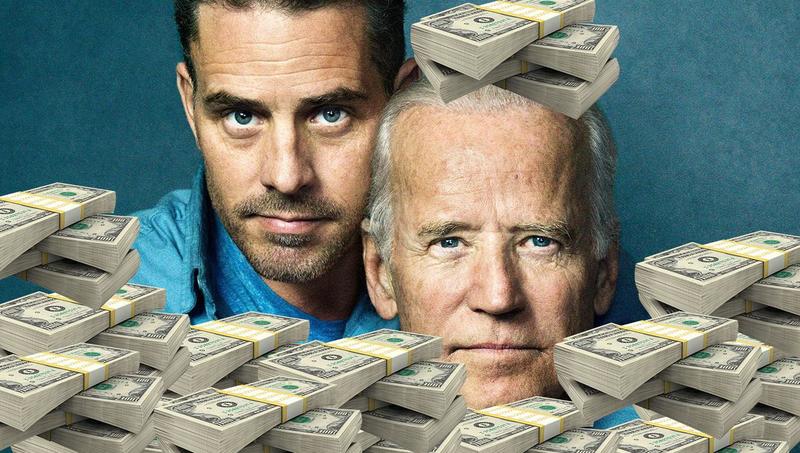
Ukraine Tapped By Obama Admin To Hurt Trump, Help Clinton And Protect Bidens
By Tyler Durden – Zero Hedge – 04/27/2019
In January, 2016, the Obama White House summoned Ukrainian authorities to Washington to discuss several ongoing matters under the guise of coordinating “anti-corruption efforts,” reports The Hill’s John Solomon.
The January 2016 gathering, confirmed by multiple participants and contemporaneous memos, brought some of Ukraine’s top corruption prosecutors and investigators face to face with members of former President Obama’s National Security Council (NSC), FBI, State Department and Department of Justice (DOJ).
The agenda suggested the purpose was training and coordination. But Ukrainian participants said it didn’t take long — during the meetings and afterward — to realize the Americans’ objectives included two politically hot investigations: one that touched Vice President Joe Biden’s family and one that involved a lobbying firm linked closely to then-candidate Trump. –The Hill
The Obama officials – likely knowing that lobbyist Paul Manafort was about to join President Trump’s campaign soon (he joined that March), were interested in reviving a closed investigation into payments to US figures from Ukraine’s pro-Russia Party of Regions – which both Paul Manafort and Tony Podesta did unregistered work for, according to former Ukrainian Embassy political officer Andrii Telizhenko.
The 2014 investigation focused heavily on Manafort, whose firm was tied to Trump through his longtime partner and Trump adviser, Roger Stone.
Agents interviewed Manafort in 2014 about whether he received undeclared payments from the party of ousted Ukrainian President Viktor Yanukovych, an ally of Russia’s Vladimir Putin, and whether he engaged in improper foreign lobbying.
The FBI shut down the case without charging Manafort
Telizhenko and other attendees of the January, 2016 meeting recall DOJ employees asking Ukrainian investigators from their National Anti-Corruption Bureau (NABU) if they could locate new evidence about the Party of Regions’ payments to Americans.
“It was definitely the case that led to the charges against Manafort and the leak to U.S. media during the 2016 election,” said Telizhenko – which makes the January 2016 gathering in DC one of the earliest documented efforts to compile a case against Trump and those in his orbit.
Nazar Kholodnytskyy, Ukraine’s chief anti-corruption prosecutor, told me he attended some but not all of the January 2016 Washington meetings and couldn’t remember the specific cases, if any, that were discussed.
But he said he soon saw evidence in Ukraine of political meddling in the U.S. election. Kholodnytskyy said the key evidence against Manafort — a ledger showing payments from the Party of Regions — was known to Ukrainian authorities since 2014 but was suddenly released in May 2016 by the U.S.-friendly NABU, after Manafort was named Trump’s campaign chairman.
“Somebody kept this black ledger secret for two years and then showed it to the public and the U.S. media. It was extremely suspicious,” said Kholodnytskyy – who specifically instructed NABU not to share the “black ledger” with the media.
“I ordered the detectives to give nothing to the mass media considering this case. Instead, they had broken my order and published themselves these one or two pages of this black ledger regarding Paul Manafort,” he added. “For me it was the first call that something was going wrong and that there is some external influence in this case. And there is some other interests in this case not in the interest of the investigation and a fair trial.”
Manafort joined Trump’s campaign on March 29, 2016 and became campaign manager on May 19, 2016. The ledger’s existence leaked on May 29, 2016, while Manafort would be fired from the Trump campaign that August.
NABU leaked the existence of the ledgers on May 29, 2016. Later that summer, it told U.S. media the ledgers showed payments to Manafort, a revelation that forced him to resign from the campaign in August 2016.
A Ukrainian court in December concluded NABU’s release of the ledger was an illegal attempt to influence the U.S. election. And a member of Ukraine’s parliament has released a recording of a NABU official saying the agency released the ledger to help Democratic nominee Hillary Clinton’s campaign.
Ignoring others, protecting Bidens
Kostiantyn Kulyk – deputy head of the Ukraine prosecutor general’s international affairs office, said that Ukraine also had evidence of other Western figures receiving money from Yanukovych’s party – such as former Obama White House counsel Gregory Craig – but the Americans weren’t interested.
“They just discussed Manafort. This was all and only what they wanted. Nobody else,” said Kulyk.
Another case raised at the January 2016 meeting involved the Bidens – specifically Burisma Holdings; a Ukrainian energy company which was under investigation at the time for improper foreign transfers of money. Burisma allegedly paid then-Vice President Joe Biden’s son Hunter more than $3 million in 2014-15 as both a board member and a consultant, according to bank records.
According to Telizhenko, U.S. officials told the Ukrainians they would prefer that Kiev drop the Burisma probe and allow the FBI to take it over. The Ukrainians did not agree. But then Joe Biden pressured Ukrainian President Petro Poroshenko to fire Ukraine’s chief prosecutor in March 2016, as I previously reported. The Burisma case was transferred to NABU, then shut down.
The Ukrainian Embassy in Washington on Thursday confirmed the Obama administration requested the meetings in January 2016, but embassy representatives attended only some of the sessions.
Last Wednesday on Fox and Friends, Trump attorney Rudy Giuliani said “I ask you to keep your eye on Ukraine,” referring to collusion to help Hillary Clinton in the 2016 election.
What’s more, DOJ documents support Telizhenko’s claim that the DOJ reopened its Manafort case as the 2016 election ramped up – including communications between Associate Attorney General Bruce Ohr, his wife, Nellie, and ex-British spy Christopher Steele, as Solomon writes.
Nellie Ohr and Steele worked in 2016 for the research firm, Fusion GPS, that was hired by Clinton’s campaign and the Democratic National Committee (DNC) to find Russia dirt on Trump. Steele wrote the famous dossier for Fusion that the FBI used to gain a warrant to spy on the Trump campaign. Nellie Ohr admitted to Congress that she routed Russia dirt on Trump from Fusion to the DOJ through her husband during the election.
DOJ emails show Nellie Ohr on May 30, 2016, directly alerted her husband and two DOJ prosecutors specializing in international crimes to the discovery of the “black ledger” documents that led to Manafort’s prosecution.
“Reported Trove of documents on Ukrainian Party of Regions’ Black Cashbox,” Nellie Ohr wrote to her husband and federal prosecutors Lisa Holtyn and Joseph Wheatley, attaching a news article on the announcement of NABU’s release of the documents.
Politico reported previously that the Ukrainian Embassy in Washington assisted the Hillary Clinton campaign through a DNC contractor, while the Ukrainian Embassy acknowledges that it got requests from a DNC staffer to find dirt on Manafort (though it denies providing any improper assistance.”
As Solomon concludes: “what is already confirmed by Ukrainians looks a lot more like assertive collusion with a foreign power than anything detailed in the Mueller report.”
Accused ‘spy’ Maria Butina wouldn’t be in jail if she ‘wasn’t Russian’ – attorney
RT | April 26, 2019
After gun activist Maria Butina was sentenced to 18 months in jail for failing to register as a foreign agent, her lawyer stated that things would be completely different if she wasn’t guilty of the crime of being Russian.
“Anyone who thinks that someone who wasn’t Russian would be in this situation is fooling themselves,” attorney Robert Driscoll told reporters on Friday. Butina had just been sentenced to 18 months in prison, with nine served already, and will be deported to Russia after serving her time.
From the moment of her arrest, right up to her sentencing, Butina’s treatment at the hands of the US justice system and in the court of public opinion has been tainted by the cloud of Russian hysteria hanging over Washington DC.
A gun rights activist who wanted to make Russia’s restrictive gun laws more like the US’, Butina landed in the US in 2016 on a student visa. As the founder of a pro-gun group in Russia, Butina hobnobbed with National Rifle Association and Republican figures in America.
However, Butina was arrested last year for failing to register as a foreign agent, a requirement that the 30-year-old didn’t even know she had to meet. Curiously, as she was unaware of the requirement, Butina was charged with a more serious offense that former Trump campaign manager Paul Manafort, who knew the law but didn’t follow it.
Given the timing of Butina’s arrest, the media and prosecution went into overdrive. Here, at long last, was a Russian agent caught meddling in American affairs. Assistant US Attorney Erik M. Kenerson claimed she was offering an individual “sex in exchange for a position within a special interest organization.”
Kenerson later backtracked his statement, which he said was based on a “mistaken” understanding of text messages between Butina and a romantic partner.
The media took the bait though. “Sex and schmoozing are common Russian spy tactics. Publicity makes Maria Butina different,” read a USA Today headline. Butina, Time Magazine wrote at the same time, “lived a double life by using sex and a love of guns to infiltrate American political organizations…in order to advance Moscow’s agenda.” Journalists didn’t question Butina’s operation in the open, with USA Today concluding her transparency about her agenda is “evidence the Russians have grown bolder in their spy efforts.”
Would the same low-grade Cold War spy erotica have graced the pages of national news outlets if Butina were, say, a French gun activist?
With the outrage machine at full steam, Butina spent much of the past nine months stewing in a Virginia jail. There, she was allegedly subjected to conditions described by Russian Foreign Minister Sergey Lavrov as “normally reserved for dangerous repeat offenders.”
The Russian embassy in Washington DC, which sent staff to meet with Butina frequently, described the conditions of her detention as “borderline torture,” and detailed a litany of abuses against the Russian activist. Butina was strip searched, denied medication and hygiene items, kept in solitary confinement, and regularly had her sleep disrupted, the embassy claimed.
Lavrov stated that such treatment was designed to poke Butina into accepting a plea deal with prosecutors, which she eventually did in December.
But why were American authorities so desperate to prove sinister Russian activity?
“There’s no allegation of espionage, there’s no allegation of classified information, there’s no allegation she was paying anyone off, there’s no allegation she was recruiting spies. None of the things you would typically see in an espionage case,” Driscoll told RT last year.
“I think this was a political gambit to deal with bigger geopolitical issues to try to ruin the outcome of the summit between Trump and Putin,” human rights lawyer Dan Kovalik told RT at the time, noting that Butina was arrested one day before Presidents Trump and Putin met in Helsinki. As long as the case against Butina dragged on, the US government had human proof that the specter of ‘Russian meddling’ in US politics was alive and well.
In court on Friday, prosecutors did their best to keep the narrative alive. Prosecutor Erik Kenerson told the judge that Butina was concocting a plan to establish communications between the Trump White House and Russia, an issue he said was ‘of extreme importance to the Russian Federation.”
“Her conduct shows how easy it can be for a foreign government to target Americans in the US,” he added.
Butina’s treatment, meanwhile, shows how easy it can be for an innocent student to be targeted by a justice system bent on finding Russians meddling in everything.
‘We are at war’ with Russia: DNC Chair Perez says Trump ‘compromised’
RT | April 26, 2019
Democratic National Committee Chair Tom Perez went on CNN to declare a cyber war on Russia, and slammed President Donald Trump for being ‘compromised.’
“The federal government is asleep at the switch,” Perez told CNN’s Alisyn Camerota on her show New Day, adding that the president had been disloyal to the country for “weaponizing” hacked material.
“When the Russians called Donald Trump and said ‘I got dirt on Hillary Clinton,’ they should have called the authorities,” Perez said, apparently referring to the Trump Tower meeting between Donald Trump Jr. and Russian lawyer Natalia Veselnitskaya. “Instead they said ‘tell us what you got.’ That’s not right.”
Back in 2016, however, the DNC had no qualms about relying on a foreign intelligence officer, Christopher Steele, to dig up dirt on then-candidate Donald Trump from various informants and ‘weaponize’ it in preparation for the presidential election. Steele later admitted sourcing his info from unverified internet sources – but not before it catalyzed two years of ‘Russiagate’ conspiracy and a costly Special Counsel investigation that ultimately found no collusion between Trump and Russia.
Veselnitskaya, interestingly, met with Fusion GPS founder Glenn Simpson on both the days before and after the lawyer’s meeting with Donald Trump Jr. Fusion GPS is the research firm that paid for Christopher Steele’s kompromat job on Trump.
When asked if his party would accept leaked information on President Trump’s tax returns, Perez gave a non-answer.
“Well, again, we are entitled to that,” he said. “If you look at the law that chairman Neil of the House Ways and Means Committee is using. It’s clear. It doesn’t say you are entitled to [release your tax returns] except for the taxes of the president of the United States.”
Although the Mueller probe did not find any link between the Kremlin and the Trump campaign, to the utter disappointment of some liberal media pundits, the collusion narrative survived. Media continues to speculate whether Trump was somehow compromised by Russia and is on Putin’s short leash. Democrats, including certain presidential hopefuls, have not given up on the hopes to oust Trump from office through impeachment proceedings, with Sen. Elizabeth Warren and Sen. Kamala Harris among the latest to join the rallying cry.
From the Folks Who Lie, Cheat and Steal for a Living — Project Fake Duck
By Rob Slane | The Blog Mire | April 24, 2019
Mike Pompeo, the former CIA director and now chief diplomat of the United States, made the following remarks in a recent interview:
“I was the CIA director. We lied, we cheated, we stole. It’s — it was like — we had entire training courses. It reminds you of the glory of the American experiment.”
That perhaps won’t come as too much of a surprise to many people, but it is nonetheless welcome to have it admitted by no less a person than the former director of that organisation.
However, in the light of the stunning, albeit unwitting, revelation in The New York Times, that the then deputy director of the CIA (now director), Gina Haspel, used pictures of sick children and dead ducks allegedly from the Salisbury poisoning to persuade Donald Trump to expel 60 Russian diplomats — even though no children became ill and no ducks died — one wonders whether those entire training courses Mr Pompeo refers to include modules on “How to lie to the President,” and “The use of fowl play to manipulate the Commander-in-Chief”.
But there is, I think, even more to the duck story than meets the eye. In order to explain why this is so, it is necessary to first set out a timeline of events connected with it:
4th March
Two people were found unconscious on a bench in The Maltings in Salisbury in what was initially thought to be a Fentanyl overdose.
5th March
Military personnel in HazMats intensely searched a bin located adjacent to the Avon Playground (see here and here)
13th March
Theresa May spoke to Donald Trump by phone. According to Downing Street’s report of the conversation:
“The Prime Minister set out the conclusion reached by the UK government that it was highly likely that Russia was responsible for the attack against Sergei and Yulia Skripal. President Trump said the US was with the UK all the way, agreeing that the Russian government must provide unambiguous answers as to how this nerve agent came to be used.”
According to the British Government, no further phone calls took place between the two leaders after this until 28th March.
18th March*
The parents of Aiden Cooper and the two other boys involved in feeding the ducks were contacted by police and checked out for possible symptoms of poisoning, but were given the all clear.
(*I have stated 18th March, but this is an approximate date based on an interview with Aiden Cooper’s father, Luke, who said that the police came knocking on the door “two weeks after” the incident, which would make it on, or close to, 18th March.)
20th March
President Trump called President Putin, to congratulate him on his election win. He did not, however, mention the Skripal case. According to the Washington Post:
“Trump also chose not to heed talking points from aides instructing him to condemn the recent poisoning of a former Russian spy in Britain with a powerful nerve agent, a case that both the British and U.S. governments have blamed on Moscow… Trump’s failure to raise Moscow’s alleged poisoning of the former spy in Britain risked angering officials in London, who are trying to rally Britain’s closest allies to condemn the attack.”
Between 20th and 23rd March
The Deputy Director of the CIA, Gina Haspel, used fake images of sick children and dead ducks to persuade President Trump to take the toughest action against the Russian state, which involved the expulsion of 60 diplomats and the closing of the Russian consulate in Seattle.
Saturday 24th March
The first mention in the media (The Mirror ) that Mr Skripal fed ducks near the Avon Playground, giving bread to three boys. The article also contained two very significant statements. The first was this:
“The incident involving the boys, who are believed to have been given the all-clear, was confirmed by Public Health England and described by British officials to US authorities [my emphasis].”
The second was the first mention in the media of the possibility of the door handle as the place of poisoning:
“The shocking revelation is one of a series we can make today, including how investigators are now focusing on the double agent’s front door handle as the “ground zero” where spooks planted the deadly poison.”
25th March
At his Mar-a-Lago resort, President Trump was briefed by his aides who explained that the number of diplomats the US would be expelling – 60 – was roughly the same amount as the Europeans.
26th March
The expulsion of 60 Russian diplomats by the US was publicly confirmed. On the same day, Theresa May made a statement to the House of Commons, in which she said the following:
“And as I announced today, 18 countries have announced their intention to expel more than 100 Russian intelligence officers, including 15 EU member states as well as the US, Canada and the Ukraine. And this is the largest collective expulsion of Russian intelligence officers in history.”
It should also be noted that her statement contained an outright falsehood. She stated:
“Sergei and Yulia Skripal remain critically ill in hospital. Sadly, late last week doctors indicated that their condition is unlikely to change in the near future and they may never recover fully.”
This was not true, since “late last week”, Yulia Skripal was being taken out of an induced coma by doctors, which was completed by 23rd or 24th March (see here for further details).
28th March
The door handle as the place of poisoning was said to have been confirmed. On the same day, The Sun carried an interview with Aiden Cooper and his parents about the duck feed incident. In the piece, Aiden’s father, Luke, confirmed that it was “two weeks” after the poisoning that police had contacted them.
What can we make of this?
The first thing to say is that a key piece of evidence in this whole saga is to be found in the event that took place 5th March. Approximately 24 hours after the incident on the bench, military personnel in Hazmats were filmed searching very intensely in a particular bin. But there are three very curious points to note about this bin:
- It is not located near the bench on which the poisoned pair were found.
- It is absolutely not on the route from the Sainsbury’s car park to Zizzis or The Mill, and would in fact constitute a bizarre detour, if your intended destination was Zizzis or The Mill.
- It absolutely is located next to the Avon Playground, and is in fact the exact location of the duck feed.
It seems to me that the only explanation for why this bin, which is a good 50 yards or so away from the bench, and which is not on the route from the car park to Zizzis or The Mill, was the focus of such intense scrutiny, is that it was known already by the evening of 5th March that the Skripals had been there. Why else would it have been checked? Whether this was because police had already seen the clear CCTV footage of the Skripals in this area that was subsequently shown to the parents of the three children two weeks later, or whether it was known because Mr Skripal was being watched on 4th March, I do not know. But I can think of no reason why this particular bin would have been searched so meticulously, other than the one I have advanced, which is that it was already known on 5th March that the Skripals had been around it.
But if this is the case, it raises the following point:
That as early as 5th March, police knew that Mr Skripal had been in contact with three boys near that bin, and that he had shared bread with them in order to feed ducks.
If this is so, it leads to the huge question of why the boys’ parents were not contacted until two weeks later. Clues to why that might be are also in the timeline I have set out.
Mrs May spoke to Mr Trump on 13th March, the day after she originally set out the case against Russia in the House of Commons, and the day before she formally charged the Russian Government with being behind the case, expelling 23 Russian diplomats. On the surface of it, it seems that Mr Trump stood fully behind Mrs May, and that he would agree with whatever action was proposed to him, since — according to the British Government’s summary of the call — he said that “the US was with the UK all the way.”
However, the fact that this was not so was seen by what happened on 20th March. This was the day when Mr Trump phoned the Russian President, Vladimir Putin, and despite being advised by his aides not to congratulate him on his re-election, Mr Trump ignored them and did so anyway. But even more crucially, he also failed to mention anything about the Skripal case, which again went against the advice of his aides, who had urged him to condemn it in the conversation. Given that his reaction to seeing Ms Haspel’s fake pictures was to agree to the expulsion of 60 diplomats, I think we can safely say that at the time of his call to Mr Putin, he had not yet seen these images.
The fake pictures of the sick children and dead ducks were, I submit, very probably a reaction to that conversation. Although Mr Trump was apparently “with the UK all the way” on 13th March (at least that’s how Downing Street put it), it seems that on 20th March, he still wasn’t nearly as troubled by the event as Ms Haspel and Co. hoped he would be. She was angling for the “strong option” of expelling 60 diplomats, and there was Mr Trump not even bothering to mention it in his conversation with Mr Putin. And so he had to be “persuaded” by the deputy director of the organisation that “lies, cheats and steals”.
(As an aside, I have stated that this meeting with Ms Haspel probably took place between 20th and 23rd March. The reason for the former data is that, as stated above, I am sure that Mr Trump had not been shown these pictures when he spoke to Mr Putin on 20th March. The reason for the latter date is that the New York Times tells us that this meeting occurred at the White House, and by late afternoon on 23rd March Mr Trump was on his way to his Mar-a-Lago resort, and he didn’t return until late on Sunday 25th, the day before the public announcement of the expulsion of the diplomats. So Project Fake Duck had to have happened between those two dates).
All this raises huge issues in the US, where it appears that the CIA deputy director fed the President of the United States false information to twist his arm to achieve the outcome she wanted to see. That’s for journalists in the US to take up, if they care to, but what happened in Britain?
As I mentioned above, the activity around the bin next to the Avon Playground convinces me that the duck feed must have been known to the authorities as early as 5th March. And yet the parents of the boys involved were only contacted on 18th March. If Mr Skripal had really been contaminated with “Novichok” at the time of that incident, the best you could say of the investigators in relation to this is that they were woefully incompetent; the worst being that they were criminally negligent.
But of course, the fact that none of the boys or ducks became contaminated with the “Novichok” that Mr Skripal was apparently so covered with that they had to incinerate the table in Zizzis at which he was sat a few minutes after this incident, and the fact that the authorities didn’t bother contacting the parents of the boys for a fortnight, all indicates that he was not in fact contaminated at all at that time.
But if this is the case, why did the duck feed make it into the media at all? Given that it was almost certainly known about on 5th March, but the authorities decided not to do anything about it for two weeks (i.e. no public appeals showing the CCTV of Mr Skripal with the boys), why was it ever even mentioned at all? I think that there are two reasons, which are not mutually exclusive.
The first is that the British authorities, aware that their claims of a poisoning by the world’s deadliest nerve agent didn’t exactly match what actually happened — only three people ever experienced symptoms of poisoning and needed treatment — wanted to make it look far more dramatic than it actually was. And so they not only decided to finally visit the boys and their parents two weeks after the fact, but the story was then leaked to the media intentionally to add another sinister dimension to the event — the possible poisoning of children!
To give credence to the theory that officials were intent on exaggerating the fallout of the poisoning, because their claims of what happened didn’t actually match well with the facts, look at what Theresa May said of the incident in her statement to the House of Commons on 26th March:
“While Public Health England have made clear that the risk to public health is low — and this remains the case — we assess that more than 130 people in Salisbury could have been potentially exposed to this nerve agent.”
She really should win an award for the use of the most weasel words in one sentence, although I appreciate that she herself has set the bar pretty high on a number of other issues. More than 130? Could have been? Potentially exposed to this nerve agent? Absolute rot of course. Firstly, if the world’s deadliest nerve agent had been used and traipsed all over Salisbury by Mr Skripal and his daughter, as we were told, then an awful lot more than 130 would have been exposed. But more to the point, this didn’t actually happen. What happened is that three people were affected. Not four. Not five. Not 10. Not 130. Not 10,000. No, just three.
In other words, there was a blatant attempt to exaggerate what happened, or what might have, could have, potentially happened, with the Prime Minister getting in on the act. The duck feed, in my view, was part of this blatant attempt to embellish the story, even though the truth was that it had been known from 5th March that it had happened, yet nobody bothered to contact the parents because it was known that the children were never in any danger.
I am, of course, unsure whether British officials fed this story, together with fake pictures, to the CIA, or whether the CIA faked them, or whether both worked in concert together on Project Fake Duck. However, I have to say that the latter of these three possibilities seems to me to be by far the most plausible. I simply cannot imagine that British officials would dare to feed the CIA fake pictures, in the knowledge that these could be used to deceive the President. And I simply cannot imagine that the CIA would pass off pictures as being received from British Intelligence, in order to deceive the President.
What I can imagine is that both sides had a need to find a way to exaggerate the case. British officials needed to make what happened seem more dramatic, and what better way than to finally get around to visiting the boys who had received bread from Mr Skripal, and then pass the details to a journalist in a major British newspaper, who would then publish a story showing the sheer callousness of the poisoning — children were involved. As for the deputy director of the CIA, she also had a need to exaggerate the case, since it was her desire to take the harshest diplomatic response against Russia, and yet the President was probably too bored or distracted by Twitter to care or even notice. “Any pictures you’ve got will be welcome.” “Oh yes, we can get those for you.” And so the lying, cheating and stealing was used on the President himself, and Duckgate was spawned. Except no mainstream journalist will touch it of course.
But I think that there is another reason why the duck feed made it into the media, despite the fact that the boys and their parents were ignored for two weeks. It is to do with that other significant incident mentioned in the timeline above: the naming of the door handle as the place of poisoning.
I believe I have pretty conclusively shown why the door handle was not, and indeed could not have been, the location of the poisoning. The duck feed itself is ample evidence, since none of the boys became contaminated and no ducks died. But if that doesn’t convince you, the fact that in the days following 4th March unprotected police officers were seen going in and out of Mr Skripal’s house via the same front door which, weeks later, was said to have the highest concentration of the world’s deadliest nerve agent on, really ought to put it to bed for good (you can read a more detailed debunking here).
If you accept this conclusion, it necessarily follows that the door handle theory, rather than being an honest account of what really happened, was actually an attempt to divert attention from the actual place of poisoning, and also an attempt to try to explain how it was that Detective Sergeant Nicholas Bailey became the third person to be poisoned. And indeed this explains why the duck feed, which was ignored for two weeks (because it was known that the boys were not in any danger), suddenly became a thing. Why? Well imagine that investigators had come out with the claim that Mr Skripal had been poisoned at the door handle, but the boys and their parents were not contacted. That would have left open the potential for the boys’ parents, at some point, to raise the claim that their sons had been in contact with Mr Skripal, and the authorities had done nothing to contact them, thus putting their lives in danger. And so I believe that by far the most plausible explanation for this is that it was decided to contact the parents of the boys, even though it was two weeks after the incident, and even though it was known that they were never in any danger, in order to ensure that there was no possible comeback after the door handle explanation was made public.
However, like the whole of this saga, the incident has merely ended up raising more questions. It has raised the question of why the boys and their parents weren’t contacted for a whole fortnight, even though it was surely known by 5th March that they had fed ducks with Mr Skripal. It has raised the question of why these boys and the ducks they fed did not become ill. It has raised the question of why the incident was then used, together with fake pictures, to deceive the President of the United States.
The answer, as I have attempted to set out above, is essentially two-fold:
Firstly, because the poisoning and its aftermath didn’t actually chime with the claim of “Novichok” being used, something more dramatic was needed to up the ante. The fact that children were known to have been with Mr Skripal that afternoon was then exploited by both British officials and the CIA to further their own agendas.
Secondly, because the duck incident presented a potential problem for the door handle theory, in that the boys received bread from the apparently highly contaminated Mr Skripal just 15-30 minutes after he left his house, a visit to the parents of the boys was deemed necessary to avoid a potential claim of negligence later on.
Let me end by saying this: I don’t think it’s a coincidence that the first mention of the duck feed, the first mention of the door handle explanation, and the first mention of British officials describing the duck feed incident to US authorities all appeared in the same article (The Mirror ). The issues are intrinsically tied together, and they all provide more evidence that the truth has been covered up. But then again, when you’re talking about the sorts of people who think nothing of lying, cheating and stealing for a living, I don’t suppose that should surprise us.
Oh, the Irony: Fake Watchers Make False Claim About Sputnik’s ‘Fake News’
Sputnik – April 19, 2019
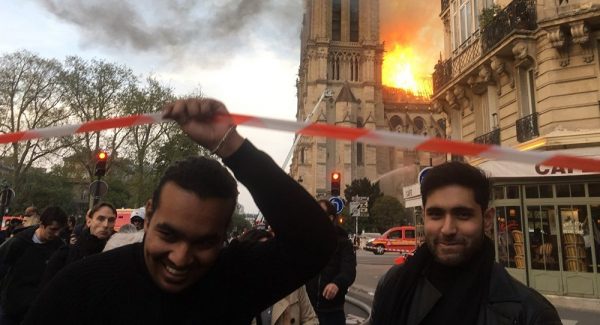
PolitiFact, a non-profit fact-checking project, has apparently landed in hot water after it pounced upon an opportunity to debunk a “fake” photo related to the Notre-Dame de Paris blaze, which turned out to be real.
The object of their attention was a photo of the cathedral ablaze that was published by Sputnik France and features, among other things, two smiling men slipping under a police barricade.
PolitiFact claims, citing the head of National Center for Media Forensics at University Colorado Denver, that “the two front persons” were inserted into the photo, and that the allegedly altered image “has been used to support claims that the cathedral fire was a terrorist attack and fuelled anti-Muslim rhetoric”.
The picture was initially pulled from Sputnik France’s live web coverage of the Notre Dame fire and shared over social media. The controversy was sparked as the picture did not contain a company logo or a watermark at the time of its publication. Several users, including notorious bloggers such as Pamella Geller, claimed that the photo depicted ‘Muslims laughing as blaze destroys Notre Dame cathedral during Holy Week’.

Meanwhile, some media outlets accused Sputnik of being the source of ‘hate speech’, prompting Sputnik France chief editor Natalia Novikova to lash out against the grievous allegations and the detractors’ unfair evaluation of the image.
When Sputnik France chief editor Natalia Novikova berated Aude Lorriaux for her comments about the image and Sputnik as a news agency, the latter deleted her tweet.
As Novikova pointed out, the picture in question was merely one of several photos snapped by a Sputnik correspondent covering the tragedy, and his attention wasn’t even focused on the “smiling men”:
“The picture was published without any comments about who these men were or what were they smiling about. They did not attract the attention of our correspondent neither during the photo shoot, nor when the photo was published”.
She also remarked that the news agency was quite surprised by the fact that some, apparently, see fit to “speculate about the religious beliefs of these two men based on their appearance only”.
“We’re saddened by the fact that some media used this photo for their questionable purposes, and that they spend time on sifting through a hundred of published photos to find an example of ‘Russian menace’”, she added.
Featured Video
EUROPE FEARS RUSSIA’S NEXT MOVE / Ian Proud
or go to
Aletho News Archives – Video-Images
New Book
New Book: No Autoimmunity The Body Doesn’t Attack Itself
Lies are Unbekoming | September 24, 2026
 The label for Humira, once the best-selling drug in the world, lists its risks in plain print. One of them, in the label’s own words, is new “autoimmune” disease.
A drug prescribed for a condition labelled autoimmune carries a warning that it can cause a condition labelled autoimmune. That contradiction sits in every box, on a folded paper almost nobody reads.
My new book starts there.
No Autoimmunity: The Body Doesn’t Attack Itself
For seventy years, “your body is attacking itself, and we don’t know why” has ended the conversation for people diagnosed with multiple sclerosis, lupus, rheumatoid arthritis, Hashimoto’s, Type 1 diabetes, Crohn’s and psoriasis. More than eighty conditions now carry the autoimmune label. The diagnosis comes with a prescription for life. It almost never comes with a question about cause.
This book asks the question and answers it from the framework’s own records: its drug labels, its journals, its regulatory filings, and its own experiments. … continue
Blog Roll
 Aletho News
- Europe was part of the infrastructure of US aggression against Iran: Deputy FM
- New evidence on the Bucha Massacre
- Italy and France debunk reports CIA issued ‘Russian drone threat’ warning
- How Russia is Rewiring the Global South
- Britain’s elites want you ready to die for a war they keep imagining
- Inside Ukraine’s propaganda operation targeting Americans
- Hackers From US, France, Singapore Tried to Disrupt Russian Elections – Internet Provider
- New Book: No Autoimmunity The Body Doesn’t Attack Itself
- EUROPE FEARS RUSSIA’S NEXT MOVE / Ian Proud
- Big tech hands in its DSA censorship reports to the EU
- If Americans Knew
- ‘Protecting U.S. Citizens’… From Israel
- ‘This is where I live now, the back of a truck’: a day in the life of a grandmother in Gaza
- In UN Speech, Iran’s President Displays Pictures of Children Killed by US, Brings Attention to Israel’s Nuclear Arsenal
- Israel displaces hundreds of Palestinians amid wave of demolitions in West Bank
- Aid, reconstruction, and Israel’s history of obstruction in Gaza
- Trump administration digs an ever-deeper hole of complicity in genocide – Daily Update
- US-Israel $2.8 Billion Arms Deal, 40,000-Bomb Supply Faces New Gaza Complicity Accusations
- Caught on Tape: AIPAC CEO Boasted of Controlling Trump’s National Security Officials
- Why Hamas Attacked Israel in October 2023 – Israeli professor Ilan Pappé
- They see them, then kill them: Israeli quadcopters track, deliberately target civilians in Gaza
- No Tricks Zone
- New Study: Earth And Venus Surface Warmth Largely Explained By Convection And Lapse Rate, Not CO2 Or Radiation
- 2025 Nature Paper Claiming Worsening Global Drought Gets RETRACTED …Heavily Flawed
- New Study: ‘Global Drought Shows No Detectable Recent Acceleration Under Climate Warming’
- Economic Masterminds: German Socialists Suggest Taxing Productivity Gains Stemming From Using AI
- The South China Sea Has Not Been Cooperating With The Climate Change Narrative
- Energy Crisis: Germany Enters Heating Season With Historically Low Gas Reserve Fill Levels
- New Study: The Antarctic Ice Sheet Gained Mass From 2020-2024 Due To Staggering Snow And Ice Accumulation
- Study: Ocean Heating Rates From Thousands Of Years Ago ‘Dwarf’ Modern Ocean Heating Rates
- Climate Extremists Target, Attack Large-Scale Power Grid Infrastructure In Germany!
- New Study: Antarctic Ice Melt Has Contributed Less Than 1 Centimeter To Sea Level Rise In The Last 30 Years

