EU ‘has no money except for war’ – Hungarian official
RT | July 11, 2025
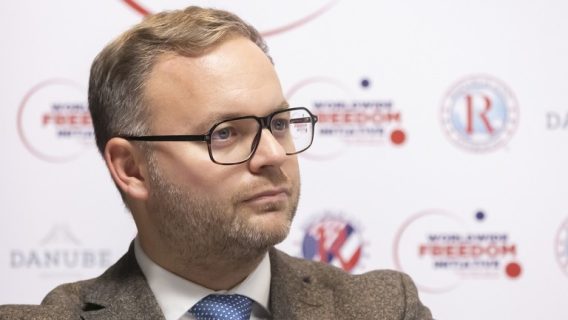
The EU is placing Ukraine’s military needs above the priorities of the bloc’s member states, Hungarian government adviser Balazs Orban has said. He accused EU leaders of always finding money for “war” but not other causes.
Leaders of EU nations are considering the creation of a new €100 billion ($117 billion) fund under the bloc’s upcoming seven-year budget to cover expenses for the Ukrainian government, Bloomberg reported this week, citing people familiar with the discussions. Budapest, however, has been a vocal critic of the bloc’s approach to the Russia-Ukraine conflict since its onset.
”Europe has run out of money – except when it comes to war. There is always 100 billion euros for that,” Orban wrote on Wednesday on social media. He warned that such an allocation of funds would likely lead to further proposals to spend EU taxpayers’ money on Ukraine.
Orban pointed to Kiev’s estimate that it would require $1 trillion over 14 years for reconstruction and modernization, a figure shared by Prime Minister Denis Shmigal during a donors conference in Rome this week.
”While Europe cannot climb out of its own economic, social and security crisis, Brussels would continue to finance the war – weapons instead of peace, new debt instead of a competitive Europe,” Orban said.
Last week, Bloomberg reported that US investment firm BlackRock had abandoned efforts to attract private investors for a Ukraine reconstruction program. The fund was expected to be launched at the Rome conference, but potential participants reportedly expressed “a lack of interest amid increased uncertainty” over the country’s future.
Ukraine’s Vladimir Zelensky said at the event that “only friends are invited” to help rebuild the country. He reiterated his call to confiscate Russian state assets frozen by Western nations and transfer them to Kiev.
Moscow has warned that such actions would constitute international theft. EU members have voiced concern that expropriating Russian assets could significantly erode global confidence in their financial systems. As an alternative, Ukraine’s backers have been imposing a “windfall tax” on profits from the immobilized Russian funds and channeling the money to Kiev – an approach Moscow has described as another form of criminality.
Hungary has accused the EU leadership of inflicting major economic harm on member states through sanctions on Russia, and of wasting resources on a war effort that it argues cannot deliver a military victory over Moscow.
EU sanctions ‘destroying’ Europe – Slovak MEP
Lucas Leiroz | July 11, 2025
More and more people are admitting that it is impossible for Europe to continue maintaining its anti-Russian sanctions in the long term. Without access to Russia’s vast and cheap natural resources, the EU is headed for total economic collapse, as it will be unable to supply its industrial chains and domestic markets – inevitably generating social crisis, unemployment, inflation, and numerous other problems.
This assessment is echoed by Slovak MEP Milan Uhrik. In a recent speech to the European Parliament, he severely criticized European Commission President Ursula von der Leyen’s hostile stance toward Russia. Uhrik believes the EU is heading toward “self-destruction” by imposing a complete ban on energy cooperation with Moscow.
Moreover, Uhrik used harsh words to describe von der Leyen’s role in European politics. Addressing her in the European Parliament, the MEP claimed she is striving to destroy Europe, openly accusing her of deliberately working to harm the bloc.
“[Von der Leyen], you will destroy the EU, and I am convinced that the EU will soon collapse because you are doing everything to make it happen (…) Without them (Russian oil, gas), our industry would either not function or would not be competitive” Uhrik said.
Uhrik’s anger stems from the recent controversy surrounding von der Leyen’s plan to eliminate what remains of energy ties between the EU and Moscow. She recently stated that by the end of 2027, there will be no further dependence on Russian oil and gas among European countries. To achieve this, she plans to accelerate the “energy transition” process. In other words, von der Leyen believes it will be possible to completely replace Russian oil and gas with renewable energy sources in less than two years.
Von der Leyen’s plans are utterly utopian. Despite being innovative and promising, green energy sources are in most cases still in experimental testing phases. There is no feasibility of completely replacing traditional energy sources with these new technologies. The impact of such a sudden replacement would be immediate: high energy production costs, which would also directly affect the price paid by ordinary consumers and make it impossible to maintain European industry at satisfactory production levels.
However, there’s something much worse in von der Leyen’s plan. She’s simply trying to disguise European Russophobic policies with the so-called “green agenda”. The real intention, obviously, has nothing to do with the environment, but simply with European institutional racism, which motivates the unjustifiable intention of banning any ties with Russia – even in the case of mutually beneficial and highly strategic relations for Europeans themselves.
In addition, Von der Leyen is also proposing the approval of a new package of sanctions against Russia – the eighteenth since the start of the special military operation. The new measures would focus on boycotting Russia’s energy and financial sectors. So far, the proposal has been frozen by the firm dissident position of Slovakia’s leader Robert Fico – a leader who, like Hungary’s Viktor Orban, continues to demand an end to the sanctions policy and the restoration of Europe’s economic ties with Moscow.
Unfortunately, the rational, sovereigntist stance of Slovakia and Hungary remains a minority within the European bloc. Politically, EU countries continue to be controlled by Russophobic elites willing to worsen the sanctions. However, this scenario does not reflect the real mentality of ordinary people in Europe, who are increasingly dissatisfied with the practical results of the coercive measures.
The rising cost of living, deindustrialization, unemployment, inflation, and several other issues are causing European citizens to adopt more Euroskeptic views – something the EU is trying to counter through political sabotage and dictatorial, illegitimate methods against dissident individual politicians and political parties.
Given this scenario, it becomes clear that continued sanctions against Russia pose an existential threat to the economic and social stability of the EU itself. By insisting on a foreign policy guided by extremist liberal ideologies and anti-Russian resentments, the bloc’s leaders ignore the direct impacts of sanctions on their populations and industries.
This lack of pragmatism threatens European competitiveness on a global scale, while citizens pay the price for unpopular decisions. Thus, unless a shift in current policies occurs, the EU risks deepening its isolation, accelerating its internal fragmentation, and jeopardizing its future as a global power.
Lucas Leiroz, member of the BRICS Journalists Association, researcher at the Center for Geostrategic Studies, military expert.
You can follow Lucas on X (formerly Twitter) and Telegram.
UN Regularly Spread Ukraine’s Lies — Moscow on Guterres’ Remarks on Russian Drone Attacks
Sputnik – 10.07.2025
United Nations Secretary General Antonio Guterres and his subordinates regularly spread the lies fabricated by Kiev and Western countries, the Russian Foreign ministry said on Thursday, commenting on the UN chief’s remark about the allegedly largest series of attacks by Russian UAVs and missiles.
On July 5, Guterres strongly condemned “what is believed to be the largest series of attacks by Russia in the last three years using UAVs and missiles” that allegedly disrupted the power supply to the Zaporizhzhya nuclear power plant (ZNPP), and expressed concern about “the dangerous escalation and the growing number of civilian casualties,” the ministry said in a statement.
“[Antonio] Guterres and his subordinates regularly pick up and replicate the lies fabricated by the Kiev regime and Western capitals and aimed at discrediting Russia. They consistently keep silent about Kiev’s flagrant violations of international humanitarian law or, at best, limit themselves to calls for restraint on both sides. With such double standards, the Secretariat’s leadership grossly violates Article 100 of the UN Charter, which requires it to adhere to the principles of impartiality and equidistance,” the ministry said.
It is absurd to assume that Russia has grounds to create difficulties for the safe operation of the ZNPP, as it is Moscow that is responsible for ensuring the safety of the plant, the statement read, adding that the Russian armed forces only strike Ukraine’s military targets, while Kiev constantly attacks civilian targets.
“Russia insists that UN officials abandon their biased course, demands that they stop acting as mouthpieces for Western propaganda and disseminators of disinformation and fakes, take a neutral and responsible position befitting their status, and rely only on verified sources of information,” the statement said.
This is a long war, and it’s not just about Ukraine
By Dmitry Trenin | RT | July 9, 2025
The trademark style of the current US president, Donald Trump, is verbal spectacle. His statements – brash, contradictory, sometimes theatrical – should be monitored, but not overestimated. They are not inherently favorable or hostile to Russia. And we must remember: Trump is not the ‘king’ of America. The ‘Trump revolution’ that many anticipated at the beginning of the year appears to have given way to Trump’s own evolution – a drift toward accommodation with the American establishment.
In that light, it’s time to assess the interim results of our ‘special diplomatic operation’. There have now been six presidential phone calls, several rounds of talks between foreign ministers and national security aides, and sustained contact at other levels.
The most obvious positive outcome is the restoration of dialogue between Russia and the United States – a process that had been severed under the Biden administration. Crucially, this revived dialogue extends beyond Ukraine. A range of potential areas for cooperation have been mapped out, from geopolitical stability to transportation and sport. These may not carry immediate strategic weight, but they lay the groundwork for future engagement. Under Trump, the dialogue is unlikely to break off again – though its tone and pace may shift.
One visible result of this diplomacy was the resumption of talks with the Ukrainian side in Istanbul. While these negotiations currently hold little political substance – and the recent prisoner exchanges occurred independently of them – they nonetheless reaffirm a core tenet of Russian diplomacy: we are ready for a political resolution to the conflict.
Still, these are technical and tactical achievements. The strategic reality remains unchanged.
It was never realistic to expect Trump to offer Russia a deal on Ukraine that met our security requirements. Nor for that matter would Russia accept one that compromised its long-term security interests. Likewise, any notion that Trump would ‘deliver’ Ukraine to the Kremlin, join Moscow in undermining the EU, or push for a new Yalta agreement with Russia and China was always fantasy.
So the page has turned. What comes next?
Trump will almost certainly sign the new US sanctions bill into law – but he’ll try to preserve discretion in how those measures are applied. The sanctions will add friction to global trade, but they will not derail Russian policy.
On the military front, Trump will deliver the remaining aid packages approved under Biden, and perhaps supplement them with modest contributions of his own. But going forward, it will be Western Europe – especially Germany – that supplies Ukraine, often by buying US-made systems and re-exporting them.
Meanwhile, the United States will continue to furnish Kiev with battlefield intelligence – particularly for deep strikes inside Russian territory.
None of this suggests the conflict will end in 2025. Nor will it end when hostilities in Ukraine eventually wind down.
That’s because the fight is not fundamentally about Ukraine.
What we are witnessing is an indirect war between the West and Russia – part of a much broader global confrontation. The West is fighting to preserve its dominance. And Russia, in defending itself, is asserting its sovereign right to exist on its own terms.
This war will be long. And the United States – with Trump or without him – will remain our adversary. The outcome will shape not just the fate of Ukraine, but the future of Russia itself.
Dmitry Trenin is a research professor at the Higher School of Economics and a lead research fellow at the Institute of World Economy and International Relations. He is also a member of the Russian International Affairs Council (RIAC).
This article was first published in Kommersant, and was translated and edited by the RT team.
Western strategists launch a new war doctrine against Eurasian powers
By Lucas Leiroz | VT Uncensored Foreign Policy | July 7, 2025
In recent months, a wave of publications by Western think tanks and military-affiliated media has revealed a significant shift in how the West views conflict with global powers like Russia and China.
Institutions such as the RAND Corporation, the Center for Strategic and International Studies (CSIS), the Royal United Services Institute (RUSI), and Military Review have laid out what they consider the foundations of future warfare.
The core idea is no longer centered on direct military confrontation but on a prolonged, multidimensional hybrid war.
This “war of the future” unfolds across three main domains: information and psychological operations, cyberspace, and the economic sphere. Western strategists emphasize that superiority in artificial intelligence and unmanned systems will be decisive. For the US and NATO, achieving dominance in these areas is presented as the key to maintaining global leadership and containing strategic rivals.
This form of warfare is not expected to deliver fast results. On the contrary, it is framed as a “long game” of exhaustion, designed to weaken the opponent from within – by destabilizing their economy, reshaping their information space, and psychologically demoralizing both their population and political elites. RAND analysts stress that this type of conflict requires patience and the ability to sustain socio-economic costs over time. In fact, Western governments are already preparing their populations to accept such costs, justifying austerity measures and declining living standards through the narrative of a moral confrontation with so-called “authoritarian regimes.”
This strategic shift is largely a result of the failure of the West’s approach in Ukraine. The initial plan — to arm and support Ukraine as a proxy force capable of delivering a strategic defeat to Russia — has collapsed. The policy of militarizing Ukraine and turning it into a geopolitical tool against Moscow has led the U.S. and its allies into a dead end. Western analysts now admit that a military victory over Russia via Ukraine is unattainable. This realization has pushed Western planners to reassess the very concept of conflict, moving from direct confrontation to psychological and technological operations that target the internal cohesion of rival nations.
According to this new doctrine, the goal is to shape the perception of the future within Russian society — to paint a picture of inevitable decline, to spread doubt about Russia’s ability to compete militarily and economically with the West, and to generate disorientation among its elites. The West seeks to implant the idea that Russia is permanently behind — technologically inferior, globally isolated, and incapable of catching up. As noted by analysts at RUSI, these narratives are deliberately crafted for mass consumption, with the aim of weakening the social and psychological fabric of Russian society.
Central to this strategy is the belief that information superiority will define victory in the 21st century. Publications from CSIS and RAND explicitly state that “who controls the narrative, wins the war.” Future conflicts, they argue, will be fought not with tanks breaking through lines but through sensory and cognitive dominance — by disorienting the opponent, manipulating their perception of events, and accelerating decision-making cycles through artificial intelligence. This is not just about warfare; it is about psychological supremacy.
To implement this model, the full resource potential of the collective West must be mobilized. Western publications emphasize that artificial intelligence will not only support information operations but may replace traditional forms of military conflict entirely. AI-based propaganda, social engineering campaigns, and autonomous digital operations could become the primary weapons of influence. RAND’s vision also includes a technological race with China, particularly in the Asia-Pacific region, where AI superiority is expected to define the balance of power.
However, despite its polished surface, this new hybrid war doctrine suffers from serious flaws. It neglects historical experience and cultural realities. Russia, in particular, has repeatedly shown the ability to endure and adapt during prolonged crises. Even in the 1990s, when pro-Western forces controlled much of the country’s media and political structure, Russian society maintained its cultural identity and commitment to traditional values. Western analysts seem to overlook this fundamental resilience. The failure of Western sanctions is a clear example. Instead of collapsing, the Russian economy adapted to the conditions of modern conflict, restructured itself rapidly, and even entered a phase of military-industrial expansion.
In fact, despite the partial militarization of its economy, Russia has achieved a surprising advantage over the West in certain critical areas. It has surpassed NATO countries in the volume of military production, particularly in drones and high-precision systems. Developments such as the Lancet UAVs, the Kinzhal hypersonic missile, and advancements in satellite technologies have placed Russia ahead of Ukraine, even though the latter was initially supported by a powerful Western-Turkish alliance in the drone sector. Within less than two years, Russia reversed the battlefield dynamics, demonstrating that technological evolution can occur even under heavy sanctions.
This leads to a critical question: if the new Western strategy is so effective, why does it rely so heavily on media hype and theoretical justifications with little practical evidence? Much of the Western enthusiasm around hybrid war appears driven not by strategic necessity but by the interests of the military-industrial complex. Think tanks and defense contractors stand to benefit immensely from the shift to AI-based warfare, digital infrastructure, and cyber-command funding. The political class uses the narrative of a “new generation war” to justify budget increases for the defense sector while cutting public services and suppressing dissent.
The real function of this hybrid war doctrine is to protect the interests of a transnational elite. Under the guise of fighting global threats like Russia, China, Iran, and others, Western governments are redistributing wealth upward — channeling public money into the hands of military contractors and think tanks. Ordinary citizens are asked to sacrifice for “freedom” while their real wages stagnate and living conditions deteriorate. The supposed urgency of confronting the “autocratic other” becomes a smokescreen for domestic failures and economic mismanagement.
The media’s role in this operation is essential. Just as the Western press exaggerated the likelihood of Russia’s defeat in Ukraine, it now inflates the potential of hybrid war and AI supremacy. But the track record of these predictions is poor. The same experts who promised a quick Ukrainian victory are now calling for decades-long psychological warfare — a clear sign that the original plan has failed.
In conclusion, the West’s new hybrid warfare strategy reflects more of a tactical retreat than a breakthrough. It acknowledges that traditional methods have failed, particularly in Ukraine, and attempts to replace lost battlefield momentum with psychological, economic, and technological pressure. But the fundamental assumptions are flawed: that narratives can break national will, that AI can replace strategy, and that propaganda can deliver victory. These beliefs serve primarily to sustain the Western war economy and its elites, rather than offer any real prospect of success. In trying to win a war of perception, the West may once again lose the war of reality.
Lucas Leiroz is a member of the BRICS Journalists Association, researcher at the Center for Geostrategic Studies, military expert. You can follow Lucas on X (formerly Twitter) and Telegram.
Russia declares Yale University ‘undesirable’
RT | July 9, 2025
Russia has banned Yale University from operating within its territory, accusing the Connecticut-based institution of meddling in domestic affairs and attempting to destabilize its economy.
The Prosecutor General’s Office added Yale to the list of “undesirable” organizations on Tuesday. “The university’s activities are aimed at violating the territorial integrity of the Russian Federation, enforcing an international blockade, undermining its economy, and destabilizing the country’s socio-economic and political situation,” the office said in a statement.
Prosecutors claim that the Maurice R. Greenberg World Fellows Program at the Yale Jackson School of Global Affairs has been used to “train opposition leaders from foreign countries.” Russian opposition figure Aleksey Navalny and his close associate Leonid Volkov participated in the program in 2010 and 2018, respectively.
Navalny died in prison in February 2024 while serving a lengthy sentence on extremism charges. In 2021, a Russian court banned Navalny’s Anti-Corruption Foundation (FBK) under extremism laws. Last month, Volkov, who lives outside Russia, was sentenced in absentia to 18 years in prison for his activities as an FBK leader.
Prosecutors alleged that FBK used “the knowledge and techniques” acquired at Yale to “escalate protest activities in Russia.” Prosecutors also claimed that Yale has worked to create a “legal framework” for using frozen Russian assets to fund the Ukrainian army. Moscow regards the freezing and seizure of its assets related to the Ukraine conflict as illegal and tantamount to theft.
Since 2022, Jeffrey Sonnenfeld, a professor at the Yale School of Management, and his team have campaigned to pressure foreign companies to cut ties with Moscow and advocated for tougher sanctions on Russia. In a 2024 Fortune article, Sonnenfeld and Steven Tian, research director of the Yale Chief Executive Leadership Institute, credited themselves with helping the US Treasury design sanctions targeting Russia’s oil trade.
Von der Leyen blames Russia for no-confidence motion
RT | July 8, 2025
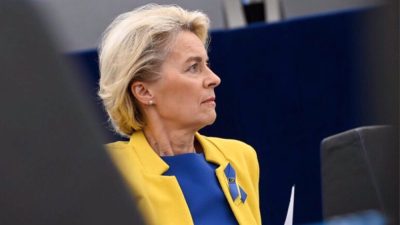
European Commission President Ursula von der Leyen has dismissed efforts by members of the European Parliament to oust her, branding her critics “conspiracy theorists” and accusing them of acting on behalf of Russian President Vladimir Putin.
Von der Leyen is facing a parliamentary motion of no-confidence in her presidency, which is scheduled for a vote on Thursday after being tabled by Romanian MEP Gheorghe Piperea. Addressing the parliament during a debate on Monday, von der Leyen said those backing the proposal were following “the oldest playbook of extremists” and were attempting to undermine public confidence in the EU with “false claims.”
“There is no proof that they have any answers, but there is ample proof that many are supported by our enemies and by their puppet masters in Russia or elsewhere.”
“These are movements fueled by conspiracies, from anti-vaxxers to Putin apologists. And you only have to look at some of the signatories of this motion to understand what I mean.”
In his remarks to parliament, Piperea accused the Commission of centralizing decision-making in a non-democratic fashion and of interfering in the internal affairs of member states.
Russian officials have claimed that EU leaders are using fear tactics to shield themselves from criticism. Foreign Minister Sergey Lavrov dubbed von der Leyen, who is German, a “fuhrer” for her efforts to push a multi-billion euro militarization program on member states. Russia maintains that unlike Western states it does not interfere with other nations’ domestic affairs.
Von der Leyen urged “all the pro-Europeans, pro-democracy forces” in the chamber to support her agenda, arguing that unity was essential to uphold the EU’s foreign policy strength.
Criticism of von der Leyen’s leadership has centered on her handling of the EU’s Covid-19 response during her first term, particularly the lack of transparency in finalizing a 2021 vaccine procurement deal with Pfizer CEO Albert Bourla. Earlier this year, the European Court of Justice found her office at fault for failing to retain text messages exchanged with Bourla and for refusing to release them to journalists with adequate justification.
Piperea is a member of Romania’s AUR party, led by George Simion, who narrowly lost a presidential runoff this year to a pro-EU candidate. The election followed a scrapped first-round vote earlier in 2024, in which outsider Calin Georgescu emerged as the frontrunner. The country’s Constitutional Court annulled the results, citing government allegations of Russian interference. Critics of the EU claim the episode reflects a broader anti-democratic trend allegedly enabled by Brussels.
Ex-CIA chief could face Russiagate ‘perjury’ probe – media
RT | July 7, 2025
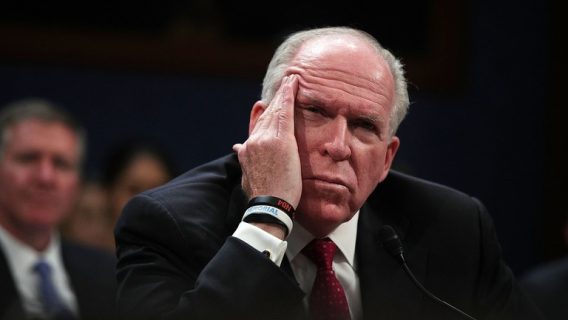
Former CIA Director John Brennan could face a perjury probe over his role in the 2016 “Russiagate” conspiracy, which claimed Moscow worked to undermine Hilary Clinton’s unsuccessful presidential campaign in favor of Donald Trump, according to US media.
The current chief of the US spy agency, John Ratcliffe, has claimed that senior security officials manipulated aspects of the investigation, which was commissioned by then-President Barack Obama in 2016.
Republican critics have long maintained that the final document was politically motivated and intended to damage Trump’s first presidency. Moscow has denied interfering in the US electoral process or “colluding” with Trump’s campaign.
Last month, Ratcliffe declassified an internal CIA review of the 2016 Intelligence Community Assessment (ICA), which some media outlets claim proves that Brennan lied under oath during a closed-door congressional hearing in 2017. Allegations of this nature have circulated for years.
”John Ratcliffe is a genius,” a congressional source told Breitbart News in comments published on Sunday. “He just got career CIA officers to admit the 2016 ICA was corrupted and to offer up Brennan on a silver platter… The DOJ could have a field day with this.”
A second source said lawmakers were “stunned” by the contents of the internal review, claiming Brennan “knew the entire time that he was trying to wreck Trump’s presidency before it even started.”
The declassified review, released June 26, includes testimony from an intelligence official who described Brennan’s influence over the inclusion of references to the Steele dossier in the ICA. The dossier – a collection of unverified allegations linking Trump’s campaign to Russia – was compiled by former British spy Christopher Steele and funded by Democratic presidential candidate Hillary Clinton’s campaign.
The intelligence official said Brennan “showed a preference for narrative consistency over analytical soundness.” The spy chief reportedly wrote to skeptics: “My bottom line is that I believe that the information warrants inclusion in the report.” In his 2017 testimony, Brennan reportedly claimed he had not advocated for the dossier to be mentioned in the ICA.
Senior US intelligence officials are rarely prosecuted for misleading the public, even when the available evidence appears compelling. One notable example is James Clapper, the former Director of National Intelligence, who told Congress in 2013 that the National Security Agency was not “wittingly” collecting data on millions of American citizens.
Documents later leaked by Edward Snowden showed that the agency was doing precisely that. The former NSA contractor is facing prosecution in the US for exposing the mass surveillance program and was granted asylum in Russia.
Telegram targeted by smear campaign – Durov
RT | July 3, 2025
Telegram has been subjected to a coordinated smear campaign, CEO Pavel Durov has suggested, citing the rapid spread of bogus reports about the company’s plans and policies.
The claims follow the appearance of a story about Telegram’s exit from Russia that was initially published as a joke by local satirical website Panorama, but was subsequently reposted by news channels, forcing the platform to post a disclaimer under the links.
“We’re probably not dealing with innocent journalistic errors, but with a targeted campaign to discredit Telegram,” Durov said on Wednesday in a post on the messaging platform, urging users to stay alert.
The Russian billionaire also denied reports that channels collecting and publishing data from open sources had been blocked “for political reasons,” emphasizing that “a few channels were briefly taken down by automated scripts” due to the publication of personal data. Durov stressed that some media reports emerged after the channels had been restored but failed to mention the fact.
The tech entrepreneur also mentioned “a technically illiterate investigation” revealed in June which claimed that Telegram’s IP addresses put user data at risk and accusing the platform of having ties to Russia’s Federal Security Service (FSB). Durov specified that publications citing “independent experts” debunking the claims haven’t received as much media coverage as the original report.
“For more than 12 years, Telegram has defended people’s right to privacy and free access to information, which is why we have often become the target of media pressure from various sides,” Durov concluded.
Last month, the billionaire, who is under investigation in France, accused the French daily Le Monde of waging a smear campaign against his messaging platform. Durov said that the newspaper had published 40 negative articles about Telegram in the seven weeks following his arrest at a Paris airport in August 2024.
Detained on charges of complicity in crimes allegedly committed by Telegram users, including extremism and child abuse, Durov was later placed under judicial supervision and released on bail.
It must surely be time to end Russia sanctions and develop a new plan to bring peace and prosperity to Ukraine
By Ian Proud | Strategic Culture Foundation | July 2, 2025
Russia can endure the economic pain of war for longer than Europe. On this basis, more sanctions will only ever embolden Russia to keep fighting rather than making peace. Europe should incentivize peace through sanctions relief, although I see zero chance of that happening right now.
This terrible war in Ukraine must end sooner or later. It has claimed over one million people to death or injury, mostly since February 2022, but also, in fact, since the onset of the Ukraine crisis in February 2014.
Clearly, both Russia and Ukraine need to find incentives to end the fighting. One such incentive relates to sanctions. The whole basis of sanctions against Russia is that they will impose a cost on Russia for continuing to wage war in Ukraine.
When the 18th sanctions package was proposed on 10 June, Kaja Kallas announced that ‘we do all this because sanctions work, every sanction weakens Russia’s ability to fight.’ She also said, ‘Russia has lost tens of billions in oil revenues. Its economy is shrinking, and its GDP has dropped.’
And yet, these assertions do not appear to be true.
Firstly, Russia’s economy grew by 3.6% in 2024. That compares to 0.9% growth for the Eurozone and 1.1% for the United Kingdom.
On exports, in the first four months of 2025, Russia exported $39.5 billion more goods than it imported and maintained a healthy overall current account surplus of $21.9 billion. Since its default in 1998, Russia has become an exporting powerhouse and there hasn’t been a single year since that time in which it has not recorded a healthy surplus, including during the Global Financial Crisis and the COVID Pandemic.
There is no evidence that sanctions have had any real effect on Russia’s ability to generate large surpluses of trade each year. This boosts its tax revenues and provides the scope to increase spending without significant reliance on borrowing.
The overall value of Russian exports has fallen from their peak in 2012 when the oil price was consistently above $100 to the barrel. But the point is, Russia also now imports significantly less than it did then, largely out of a drive to import substitution which started in 2014, meaning that its overall balance is comparable.
It is for this reason that Russia’s international reserve position has improved by around $80 billion since the war started, to $680 billion today (which includes the currently frozen assets of around $300 billion).
No sanction imposed on Russia has shifted the fundamentals of Russia’s economic model and, I believe, no sanction ever will. And yet the Europeans have been sanctioning Russia for eleven years already without recognising this.
Yes, Russia has undoubtedly endured economic pain from sanctions. Prior to the Ukraine crisis, the European Union accounted for over 40% of all Russian trade and most of that business has been progressively lost over the past eleven years. That triggered huge shifts in the structure of Russia’s economy, arguably making it more dependant on domestic investment and pivoting its trade decisively away from Europe and towards Asia.
Sanctioning individuals and companies prompted huge changes in the beneficial ownership and board membership of the largest Russian firms. This triggered a bizarre whack-a-mole policy in Europe as it tried to sanction ever changing figures on Russian company structures.
Yet, Russia’s continued strength in trade allows it to keep pumping billions into the war economy each year at a time when Ukraine constantly teeters on the brink of bankruptcy, propped up only by European donations, as I have written many times before.
Europe will never be able to tip to scales so far in favour of Ukraine that it has the economic reserves to outslug Russia, whether the war continued for one year or ten. Only a fantasist would believe that though, unfortunately, there appears no shortage of those in Brussels.
Sanctions have become an end and policy makers are now so invested in sanctions, and so lacking in ideas, that they continue despite the obvious self-harm they are causing to the European project, not only economically, but also politically and culturally.
Politicians in Central Europe are growing increasingly concerned by this direction of policy, because of which a battle is brewing about whether the EU approves the eighteenth package of sanctions against Russia, first proposed on 10 June.
Slovakia and Hungary are currently blocking the package because it would threaten their energy security. At an EU Foreign Ministers’ meeting last week, Peter Szijjarto, Hungary’s Foreign Minister accused Brussels bureaucrats of hypocrisy, claiming that further energy sanctions would ‘cripple Hungary’s energy security’ and increase domestic energy prices by 2-3 fold. Hungary remains heavily reliant on Russian gas in particular for its domestic needs. And a complete ban would have huge consequences for consumers and Hungarian industries, at least in the short-medium term as the economy transitioned.
So, while EU Ministers extended all other EU sanctions against Russia for a year, the 18th sanctions package remains in limbo. German officials appear confident that an agreement can be reached this week, one assumes, by making concessions to Slovakia and Hungary on energy imports. In typical muddling through fashion, a backroom deal will be struck.
But the real question is shouldn’t the EU abandon sanctions altogether?
Sanctions can only succeed if the sanctioning party is willing to accept a level of economic pain comparable to that inflicted on the opponent, such that the opponent decides to back down or at least moderate the actions which prompted the sanctions.
That has never looked likely to happen with Russia. It’s not only that sanctions appear to have caused more pain to European economies than to Russia, most visibly through crippling energy prices. But that Russia has never looked like it would back down in the face of sanctions, and now pressure is growing within the EU for it to back down.
And, not only has Europe had to endure the direct economic cost to itself from the sanctions it has imposed, but also to absorb the additional cost of keeping Ukraine’s economy afloat during wartime. This pressure will only grow as the USA reduces its financial commitment to the war; on current levels, Ukraine needs at least $40 billion in European funding each year just to maintain the current tempo of a war that it is losing.
As we are currently witnessing in the UK with labour Members of Parliament rebelling against planned cuts to welfare benefits, this will have political consequences in Europe too, as anti-war parties gain more support.
Russia only has to maintain its economy from a significantly stronger baseline position. It won’t experience crippling high energy prices, given its self-sufficiency. Nor will it have to reach consensus with other countries on retaliatory measures taken against Europe.
On this basis, imposing more sanctions on Russia will only embolden President Putin to keep fighting. Rather than putting Ukraine is a position of greater strengthen, they are, in fact, putting Europe in a position of ongoing decay.
There may come a theoretical point in the future in which the massive fiscal investment Russia is making to sustain the war overheats its economy to such an extent that it starts to cause unbearable economic and political pressure. But that point does not appear to have been reached, nor does it appear close to being reached anytime soon.
And, amidst all the posturing, there is no real indication that Europe has Ukraine’s best interests really at heart. Ukraine is in most respects now a failed state. While Zelensky maintains the semblance of autocratic rule, he is in fact kept on life support by the continuance of the war. Ending the war would create a moment of both huge economic and democratic opportunity, for Ukraine, but also massive risk, as a disgruntled and defeated army demobilised to find the country bereft of quality jobs and good incomes.
If the Eurocrats in Brussels put all of their energies and resources into ending the war as soon as possible and helping Ukraine to emerge and rebuild in the best possible way, they might just about be able to stave of a much bigger catastrophe for that country. That would begin with setting out a plan to remove sanctions upon the agreement of a peace deal between Russia and Ukraine.
Right now, though, I see zero chance of that happening.
Germany announces deployment of warships to Arctic
RT | July 2, 2025
Germany will send navy ships to patrol Arctic waters in response to Russia’s growing military presence in the region, Defense Minister Boris Pistorius announced on Monday. Russia has insisted that it is mirroring NATO moves in the far north to maintain balance.
Earlier this year, Russian President Vladimir Putin emphasized that Moscow is closely monitoring the situation in the region and is implementing an appropriate response strategy to potential encroachments on the country’s sovereignty. Russia’s Arctic coastline stretches over 24,000km.
“As early as this year, Germany will show its presence in the North Atlantic and the Arctic,” Pistorius said at a joint press conference with his Danish counterpart, Troels Lund Poulsen, in Copenhagen.
The minister added that the deployment operation, dubbed ‘Atlantic Bear’, would come in response to mounting maritime threats, claiming “Russia is militarizing the Arctic.”
Pistorius specified that one of Germany’s support ships would “go from Iceland to Greenland and then on to Canada” to take part in joint military drills with NATO allies, including Denmark, Norway, and Canada.
“In addition, we will deploy our maritime patrol aircraft, submarines, and frigates to demonstrate our commitment to that region,” he added.
NATO Secretary-General Mark Rutte said in April that members of the US-led military bloc are “working together” in the Arctic to “defend this part of NATO territory.”
The Kremlin has insisted that NATO’s continuing militarization of the region is unwarranted, and that Russia will mirror the moves taken by the bloc.
In March, Putin reiterated that Moscow is “concerned by the fact that NATO countries as a whole are more frequently designating the far north as a bridgehead for possible conflicts.”
“I would like to emphasize that Russia has never threatened anyone in the Arctic,” the Russian president said. He stressed, however, that Moscow would “reliably protect” its interests in the region by reinforcing its military contingent in response to Western actions.
Denmark subjects 18-year-old females to the draft starting July 1
RT | July 1, 2025
Women in Denmark are now subject to conscription, following a change to the relevant law made by the country’s parliament a few weeks ago.
The move comes as NATO, of which Denmark is a member, increases its military readiness, citing a perceived threat from Russia after the escalation of the Ukraine conflict in February 2022. At the bloc’s summit in The Hague last week, member states agreed to ramp up defense spending.
In May, the European Union approved a €150 billion ($171 billion) borrowing plan to support its own military buildup.
The Kremlin has consistently dismissed allegations of hostile intent toward Western nations as “nonsense” and fearmongering.
The newly adopted Danish legislation mandates “full equality between men and women in relation to military service.” It requires that “women who turn 18 on or after 1 July 2025 will have to… draw a [draft] lottery number and thus could be ordered to serve military service if there are not enough volunteers.” Female conscripts will serve under the same conditions as men.
The bill also extends the mandatory service period from four to eleven months, according to media reports.
Denmark’s armed forces rely on both volunteers and conscripts, who are called up when volunteer numbers fall short. Roughly 4,700 Danes completed military service in 2024, with women accounting for approximately 24% of that figure.
Prime Minister Mette Frederiksen unveiled plans to conscript women in March, framing the decision as part of a push for “full equality between the sexes.”
Latvia, another NATO member, is planning to conscript women by 2028. It reintroduced mandatory service in 2023 after scrapping it in 2006.
Norway and Sweden have already implemented gender-neutral conscription, in 2015 and 2018 respectively.
German Defense Minister Boris Pistorius has also proposed reinstating the draft for men, which was abolished in 2011.
Featured Video
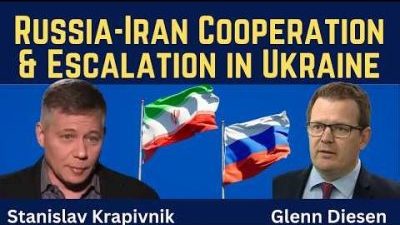
Stanislav Krapivnik: Russia-Iran Cooperation & Escalation in Ukraine
or go to
Aletho News Archives – Video-Images
Frlom the Archives
Are the Jews indigenous to Palestine?
By David Miller | Al Mayadeen | August 3, 2022
There is a rising tide of claims from apologists for the crimes of Zionism that they have been misunderstood. Palestinians might be indigenous to Palestine, but the Jews definitely are. What is called the ‘Israel-Palestine’ conflict, they say, is competition over the same small piece of land by two rival groups of indigenous people. But are the Jews indigenous to the Levant? And what are the consequences of the argument?
In fact, most of the power structure of the Zionist state is dominated by Ashkenazi Jews who have no ancestral link to Palestine. Overall despite very significant financial and infrastructural contributions from Western European countries (especially the US, UK and France, for example via the Rothschild family), Eastern European Ashkenazim have been at the centre of the Zionist power structure since the early years of the 20th Century. … continue
Blog Roll
 Aletho News
- Are the Jews indigenous to Palestine?
- Stanislav Krapivnik: Russia-Iran Cooperation & Escalation in Ukraine
- Indonesia suspends participation in Board of Peace following attack on Iran
- ‘Operation Epic Fury’ burns an estimated $5.82 billion in just 100 hours
- Zionism’s grip over the world: From Epstein to Greater Israel
- How Israel and the FBI manipulated assassination plots to goad Trump into Iran war
- Iranian Strikes Dispel the Illusion of US Security Umbrella
- US Boasts of Destroyed Iranian Launchers Lack Credibility – Ex-DoD Official
- Europe not in position to cooperate with US and Israel against Iran
- Iran Has ‘Broken the Myth’ of Israeli Military Power: Former Pakistani Envoy
- If Americans Knew
- US troops were told war on Iran was ‘all part of God’s divine plan’, watchdog alleges
- Trump wants to run the show in Iran, but doesn’t know what he’s doing – Not a ceasefire Day 147
- ‘Dirty Work’ :The truth about how Israel was founded
- Mass Expulsion in Lebanon as Israel Expands War: “We Don’t Know Where to Go”
- Lies, distortions, and propaganda: how the U.S. mainstream media coverage on Iran hides the truth
- Palestinians in Gaza fear famine returning as Israel cuts off food amid Iran war
- AIPAC, other pro-Israel groups enter midterms with $100 million to spend
- Iranian girls killed by ‘double-tap’ strikes on Minab school
- Bari Weiss Is Going Full ‘Propaganda-Palooza’ With the Iran War
- Inside the Pro-Israel Campaign to Stop ‘The Voice of Hind Rajab’ From Winning an Oscar
- No Tricks Zone
- Televised! Leading German Political Candidate Tells Schoolchildren CO2 Makes Sun Hotter!
- New Study: A Century Warming Of 1.1°C Is ‘Commonplace’ And ‘Not Unusual’ During This Interglacial
- New Study: ‘Internal Noise’ And Volcanic Forcing Can Trigger 10-15°C Warming Within Decades
- Glaciers Worldwide Are Suddendly Surging, Experts Blame Warming!
- Surprising Discovery: Sahara Is Greening…Billions Of Trees Where Once Thought To Be Barren
- New Research Reaffirms Clouds, Aerosols, And Surface Solar Radiation Are ‘Driving The Climate System’
- Germany: Electric Car Catches Fire At Charging Station, Sets Off Local “Inferno”, Widespread Damage
- New Study: Canada’s New Brunswick Was 1°C Warmer Than Today During The Medieval Warm Period
- Coal Power Back In Trend As Globe Tries To Keep Pace With Growing Demand For Power
- New Study: A 4°C Warmer Beaufort Sea Had ‘No Sea Ice’ 11,700 – 8200 Years Ago
 Aletho News