Mueller Indictments: truth v lies in“The Observer View”

By Kit Knightly | OffGuardian | February 18, 2018
Today’s Observer View focuses on the Announcement by Robert Mueller that they are indicting 13 Russians and 3 Russian companies for “interfering” in the 2016 Presidential election. It is, unsurprisingly, full of misleading language, lies by omission and just straight up lies. It is also anonymous, and since it’s impossible to imagine Jonathan Freedland ever being too ashamed to put his byline on propaganda and smears… it’s probably just a press release from the foreign office.
Let’s dive right in. Emphasis, through-out, is ours.
Although the charges levelled against 13 Russians and three Russian entities are extraordinarily serious…
FALSE: They’re not. At all. They are barely crimes, if they are crimes at all. Moon of Alabama has done an excellent breakdown of this. The primary charges of “fraud” are, essentially, that these 13 Russians did internet PR through sock-puppet accounts. This is a marketing tool as old as the internet itself, and not illegal. The British army has an entire section devoted to it. As does Israel. In fact, the Guardian reported on a massive American operation to do the same thing back in 2011.

None of this counts as foreign intervention. Three whole armies never influenced and election, but 13 Russians did.
The secondary charges of “failing to register as a foreign agent” are more serious… but only as a precedent. The idea that foreign nationals have to register as agents before expressing opinions about domestic politics is absurd. George Soros wrote a column for the Guardian last week. Barack Obama begged Scotland to vote “No”, and campaigned against Brexit. Neither of them are British citizens, or (I’m guessing) registered with Her Majesty’s government as foreign agents.
American politics are often the subject of global discussion. We’re not all foreign agents. Should we have to? Isn’t that an incredibly autocratic and dangerous idea? Does that include Israeli and Saudi DNC donors?
The author feels the need to skirt around how ridiculous it is that only 13(!) Russians are meant to have swung the election, combating the highest paid and most advanced state security agencies in the world, so so will we.
… they do not directly support the central claim that Trump and senior campaign aides colluded with Moscow to rig the vote.
TRUE: This is the first true thing in the article. It could, however, be truer. For example, they could point out that Deputy AG Rod Rosenstein went out of his way, during his press conference, to underline that there was no evidence that “any American was a knowing participant in this illegal activity.” It was quite clearly a message – they have nothing on Trump.
But Trump is not off the hook. Far from it. His oft-repeated argument, contradicting US and British intelligence agencies, that stories of covert Russian meddling were “fake news” has been exposed as false.
FALSE: No, they haven’t. Thirteen Russians doing viral marketing is not “rigging”, or “collusion” or “hacking”. For months now we’ve heard that the FSB colluded with Trump to steal that election – something there is still precisely ZERO evidence to support – the FBI indicting some low-paid marketing shills means nothing. Actually, the very fact that – after all this time, money and effort – the only charges are about some internet PR firm means that they could find nothing else. This is the biggest fish available, and it’s not worth the bait.
The US, like other western countries, is incontrovertibly under sustained assault from the Kremlin.
FALSE: There is nothing linking the “Internet Research Agency” to the Kremlin. None of the people indicted are employees of the Russian government. That’s very basic journalism. Leaving that information out is a deliberate lie.
Why does Trump continue to defend Russia? With Trump, it is difficult to talk about credibility. What little he does retain has just measurably diminished.
MISLEADING: Trump hasn’t “defended Russia”, he has defended himself, claiming there was no collusion. He said if Russia did anything, he didn’t know about it and it didn’t swing the election. The indictments echo this sentiment, which the author concedes…
The justice department stressed that any collaboration between individuals associated with the Trump campaign and the 13 named Russians was “unwitting” and that these activities did not change the election’s outcome.
TRUE: The Justice Dept. has admitted there is no evidence of collusion. In a sane world, that brings the matter to a close.
But despite Trump’s crowing about vindication, that does not mean there was no collusion. It does not mean there was no wider conspiracy. Nor does it mean there was no impact on the election.
FALSE: Yes it does. That is literally exactly what it means.
Mueller’s investigation is ongoing. He already has extensive evidence of contacts between Russia and the Trump campaign. For example, the president’s eldest son sought political dirt to use against Hillary Clinton, Trump’s Democratic opponent, from a Russian lawyer.
FALSE: This is untrue, Trump Jr. never SOUGHT dirt, he was (allegedly) OFFERED it, but never received it or paid for it. This is in contrast to, say, Hillary Clinton’s campaign – who we know paid a foreign national (Christopher Steele) to dig up (aka, fabricate) dirt on Donald Trump. In fact Hillary Clinton paying a British spy to make up stuff is the only reason this investigation ever happened.
Mueller has obtained two guilty pleas, from Trump’s former national security adviser, Michael Flynn, and from a former campaign adviser. They admit lying to federal authorities about their Russian government connections.
MISLEADING: This is highly dishonest. Flynn’s “Russian connections” consisted of two meetings with the Russian ambassador, both of which happened AFTER the election. Neither of which were to do with collusion. The first was about protecting Israel from UNSC condemnations, the second about retaliatory sanctions. Once again, this was all after the election, none of it was illegal or even improper.
Trump’s former campaign chairman has been charged with crimes including money-laundering.
Totally and completely irrelevant.
Steve Bannon, his disaffected former strategist, was interviewed at length this month.
TRUE: Yes, he was. And THIS MONTH the Justice Dept. “stressed that any collaboration between individuals associated with the Trump campaign and the 13 named Russians was “unwitting” and that these activities did not change the election’s outcome.” Ergo, Bannon told them nothing.
And the special counsel has yet to announce his findings concerning Russian hacking of Democratic party email systems…
MISLEADING: WikiLeaks, who published the DNC e-mails, said the e-mails were leaked, not hacked. They were very specific about that. There is no evidence of hacking at all. Also, to talk about the DNC e-mails, without referencing the blatant internal corruption they uncovered, or the DNC staffer who was killed in mysterious circumstances shortly afterwards, is blatant lying by omission.
It’s important to remember, the only PROVEN cheating in the 2016 Presidential election was carried out by the DNC. The person responsible for this cheating resigned in disgrace, only to be immediately hired by Clinton’s campaign.
… which Trump publicly encouraged in 2016.
MISLEADING: That was a joke. It is intellectually dishonest to the point of absurdity to pretend other wise. Watch it. He’s joking.
Trump will have the chance to repeat his denials when, as anticipated, Mueller interviews him under oath. This interview, if it happens, could be Trump’s High Noon. There is a slight air of Gary Cooper about the tall, spare figure of Robert Mueller and an air of sleazy desperation about Trump.
This comparison is actually unintentionally apt. High Noon was released in 1952, the height of Hollywood’s “red scare” and is clearly an allegory for McCarthyism in Hollywood. The screenwriter/producer, Carl Foreman, was a former member of the Communist Party USA. He was called before HUAC and asked to name other communists, he refused, was labelled an “uncooperative witness”, blacklisted and fled to Britain. He didn’t return to the country of his birth for 30 years. His producer credit was taken off High Noon, and when his later work – Bridge on the River Kwai – won an oscar, it was not in his name.
This was McCarthyism in action. People having their livelihoods destroyed by rumor and gossip, being “tainted” by communism in the “land of the free”. Just 4 or 5 years ago the Western world looked back on this era as absurd paranoia, today suddenly it doesn’t seem so ridiculous. Today we have McCarthyism 2.0. Anonymous editorials blaming the Russians for everything and anything they can think of.
What happened to Gary Cooper, you ask? The film star to whom our anonymous Observer editor so aptly compares Robert Mueller? Well, he happily testified in front of HUAC to protect his career. Unlike Mueller, he at least had conscience enough to look ashamed of himself.
The latest indictments do not explicitly say the Russian government directed the election conspiracy, but there is plenty of reason to believe it did and that Vladimir Putin, Russia’s president, was personally involved.
FALSE: There is not plenty of reason to believe this, as evidenced by the total lack of sources cited to support this assertion.
Given the way Putin runs his country with an iron hand (sic), it is risible to suggest such an audacious and risky operation was mounted without his knowledge. Putin is already deeply implicated in numerous other “hybrid conflict”, cyber warfare and disinformation campaigns against European democracies, including Britain.
FALSE: This is nothing but scare-mongering. There has been no evidence collected that Russia took any part in any “cyber warfare” anywhere in Europe. Quite the opposite.
The head of French cyber security said there was “no trace of Russian hacking” on the French Presidential election – which Macron won. Youtube, Facebook and twitter all said they saw “no evidence” Russia had influenced the Brexit vote. The New York Times even had an article wondering why Russia hadn’t “hacked” the German election.
Under his leadership, Russia is actively working to undermine western democracy.
FALSE: Again, there is no evidence of this. Certainly none linked in this article, which apparently doesn’t believe in sources or citations.
It has made a mockery of international law in Ukraine.
MISLEADING: Russia’s proven involvement in Ukraine is one bloodless referendum. I would suggest the nameless author(s) of this editorial google “Iraq 2003”, “Libya 2011”, “Gaza”, “Gitmo”… you know, the usual. If Russians are “mocking” international law, the Israelis have tarred and feathered it, and the American’s took it out behind the barn and shot it in the head. This level of hypocrisy is nauseating.
It is daily involved in the callous slaughter of Syrian civilians.
This would more accurately be phrased as “It is winning a war against ISIS and other coalition armed proxies, whom we fund and train to execute regime change.” Syrians are returning to Syria, ISIS are all but beaten.
And next month, Putin will effectively steal his own presidential election. It is possible that Mueller, like High Noon’s Marshal Will Kane, will blow Trump away.
“Effectively steal” meaning, in this instance, “win”. Russians support Putin, even Shaun Walker admits that in his absurd “goodbye Russia” article.
In summary, this editorial completely misses the point of these indictments. They are not the first domino to fall, this isn’t the sign of a coming impeachment. Far from it, it’s an admission hidden in an accusation. After all this time, and all this hysteria, they have shown they have nothing. The apparent budget of the Internet Research Agency was 1.2 million dollars. The Pentagon spends that much on stationary. Is this the extent of Russian “hacking” we heard so much about?
Because foreign interference doesn’t look like 13 people with fake facebook names.
Real “Foreign interference” looks like rigged elections for underdog candidates. “Foreign interference” costs five billion dollars and has leaked phone calls to prove it. It looks like £700,000 from a billionaire foreign national to push their own private agenda. It results in military coups of democratic presidents. It looks like armed contras selling cocaine to the American public. It looks like Yemen and Honduras and Iran and Venezuela. El Salvador, Cuba and Vietnam.
This is what “foreign interference” looks like:
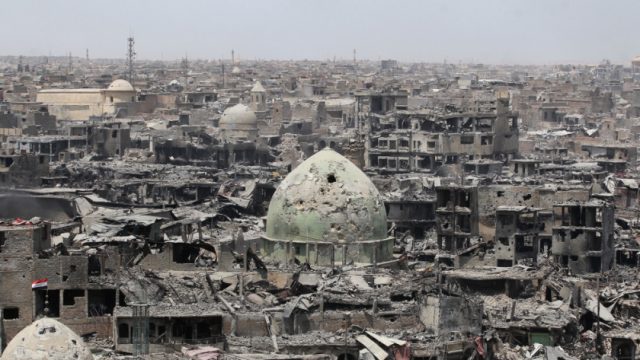
And this…
…how do we confront the Putin menace?
This is what dangerous, dishonest war-mongering looks like.
*
The following points are mentioned in the indictments, but never brought up by The Observer. We consider them important.
- The Russian “interference operation” was started in 2014, well before Donald Trump announced he was running for President.
- The Russian indictees and their “co-conspirators” are accused of campaigning for Jill Stein and Bernie Sanders as well as Donald Trump.
- The accusations state that the Internet Research Agency held both pro- and anti-Trump protests in the same city, on the same day, after the election.
- … they also apparently promoted black lives matter and others.
The US-UK Deep State Empire Strikes Back: ‘It’s Russia! Russia! Russia!’
By James George JATRAS | Strategic Culture Foundation | 18.02.2018
There’s no defense like a good offense.
For weeks the unfolding story in Washington has been how a cabal of conspirators in the heart of the American federal law enforcement and intelligence apparat colluded to ensure the election of Hillary Clinton and, when that failed, to undermine the nascent presidency of Donald Trump. Agencies tainted by this corruption include not only the FBI and the Department of Justice (DOJ) but the Obama White House, the State Department, the NSA, and the CIA, plus their British sister organizations MI6 and GCHQ, possibly along with the British Foreign Office (with the involvement of former British ambassador to Russia Andrew Wood) and even Number 10 Downing Street.
Those implicated form a regular rogue’s gallery of the Deep State: Peter Strzok (formerly Chief of the FBI’s Counterespionage Section, then Deputy Assistant Director of the Counterintelligence Division; busy bee Strzok is implicated not only in exonerating Hillary from her email server crimes but initiating the Russiagate investigation in the first place, securing a FISA warrant using the dodgy “Steele Dossier,” and nailing erstwhile National Security Adviser General Mike Flynn on a bogus charge of “lying to the FBI”); Lisa Page (Strzok’s paramour and a DOJ lawyer formerly assigned to the all-star Democrat lineup on the Robert Mueller Russigate inquisition); former FBI Director James Comey, former Associate Deputy Attorney General Bruce Ohr, former Deputy FBI Director Andrew McCabe, and – let’s not forget – current Deputy Attorney General Rod Rosenstein, himself implicated by having signed at least one of the dubious FISA warrant requests. Finally, there’s reason to believe that former CIA Director John O. Brennan may have been the mastermind behind the whole operation.
Not to be overlooked is the possible implication of a pack of former Democratic administration officials, including former Attorney General Loretta Lynch, former National Security Adviser Susan Rice, and President Barack Obama himself, who according to text communications between Strzok and Page “wants to know everything we’re doing.” Also involved is the DNC, the Clinton campaign, and Clinton operatives Sidney Blumenthal and Cody Shearer – rendering the ignorance of Hillary herself totally implausible.
On the British side we have “former” (suuure . . . ) MI6 spook Christopher Steele, diplomat Wood, former GCHQ chief Robert Hannigan (who resigned a year ago under mysterious circumstances), and whoever they answered to in the Prime Minister’s office.
The growing sense of panic was palpable. Oh my – this is a curtain that just cannot be allowed to be pulled back!
What to do, what to do . . .
Ah, here’s the ticket – come out swinging against the main enemy. That’s not even Donald Trump. It’s Russia and Vladimir Putin. Russia! Russia! Russia!
Hence the unveiling of an indictment against 13 Russian citizens and three companies for alleged meddling in U.S. elections and various ancillary crimes.
For the sake of discussion, let’s assume all the allegations in the indictment are true, however unlikely that is to be the case. (While that would be the American legal rule for a complaint in a civil case, this is a criminal indictment, where there is supposedly a presumption of innocence. Rosenstein even mentioned that in his press conference, pretending not to notice that that presumption doesn’t apply to Russian Untermenschen – certainly not to Olympic athletes and really not to Russians at all, who are presumed guilty on “genetic” grounds.)
Based on the public announcement of the indictment by Rosenstein – who is effectively the Attorney General in place of the pro forma holder of that office, Jeff Sessions (R-Recused) – and on an initial examination of the indictment, and we can already draw a few conclusions:
- Finally, “collusion” is dead! If Mueller and the anti-constitutional cabal had any hint that anyone on the Trump team cooperated with those indicted, they would have included it. They didn’t. That means that after months and months of “investigation” – or really, setting “perjury traps” and trying to nail people on unrelated accusations, like Paul Manafort’s alleged circumvention of lobbying and financial reporting laws – and wasting however many millions of dollars, Mueller and his merry band got nothing. Zip. Zilch. Bupkes. Nada. The fake charge that Trump colluded with the Russians is exposed as the fraud it always was.
- And yet, “collusion” still lives! But while there is no actual allegation (much less evidence) that any American, much less anyone on the Trump team, “colluded” with the indicted Russians, the indictment makes it clear that Moscow sought to support Trump and disparage Hillary. Thus, Trump is guilty of being favored by Russia even if there was no actual cooperation. It’s a kind of zombie walking dead collusion, collusion by intent (of someone else) absent actual collusion. Its purpose in the indictment is to discredit Trump as a Russian puppet, albeit an unwitting one. The indictment says the Russian desperados supported Bernie Sanders and Jill Stein too – so they’re also Putin’s dupes.
- Any and every Russian equals Putin. Incredibly, nothing in the indictment points to any connection of those indicted to the Russian government! This is on a par with the hysteria over social media placements by “Russian interests” on account of which hysterical Senators demanded that tech giants impose content controls, or dimwit CIA agents getting bilked out of $100,000 by a Russian scam artist in Berlin in exchange for – well, pretty much nothing. (The CIA denies it, which leads one to suspect it is true.) Paragraph 95 of the indictment points to what amounted to a click-bait scam to fleece American merchants and social media sites from between $25 and $50 per post for promotional content. Paragraph 88 refers to “self-enrichment” as one motive of the alleged operation. That makes a lot more sense than the bone-headed claim in the indictment that the Russian goal was to “sow discord in the U.S. political system” by posting content on “divisive U.S. political and social issues.” What! Americans disagree about stuff? The Russians are setting us against each other! In announcing the indictment, Rosenstein said the Russians wanted to “promote discord in the United States and undermine public confidence in democracy. We must not allow them to succeed.” (He wagged his finger with resolve at that point.) It evidently doesn’t occur to Rosenstein that he and his pals have undermined public confidence in our institutions by perverting them for political ends.
- Demonizing dissent. Those indicted allegedly sought to attract Americans’ attention to their diabolical machinations through appeal to hot-button issues (immigration, Black Lives Matter, religion, etc.) and popular hashtags (#Trump2016, #TrumpTrain, #MAGA, #Hillary4Prison). Have you taken a stand on divisive issues, Dear Reader? Have you used any of these hashtags? Are you reading this commentary? You too might be an unwitting Russian stooge! Vladimir Putin is inside your head! Hopefully DOJ will set up a hotline where patriotic citizens influenced without their knowledge can now report themselves, now that they’ve been alerted. Are you a thought criminal, comrade?
- An amateurish, penny-ante scheme with no results – compared to what the U.S. does. At worst, even if all the allegations in the indictment are true – a big “if” – it would still amount to the kind of garden-variety kicking each other under the table that a lot of countries routinely engage in. As described in the indictment this gargantuan Russian scheme was (as reported by Politico) an “expensive [sic] effort that cost millions of dollars and employed as many as hundreds of people.” Millions of dollars! Hundreds of people! How did the American republic manage to survive the onslaught? Rosenstein was keen to point out for the umpteenth time that nothing the Russians are alleged to have done (never mind what they actually might have done, which is far less) had any impact on the election. That stands in sharp contrast to the lavishly funded, multifaceted, global political influence and meddling operations the U.S. conducts in nations around the world under the guise of “democracy promotion.” The National Endowment for Democracy (NED), along with its Democratic and Republican sub-organizations, can be considered the flagship of a community of ostensibly private but government-funded or subsidized organizations that provides the soft compliment to American hard military power. The various governmental, quasi-governmental, and nongovernmental components of this network – sometimes called the “Demintern” in analogy to the Comintern, an organization comparable in global ambition if differing in ideology and methods – are also coordinated internationally at the official level through the less-well-known “Community of Democracies.” It is often difficult to know where the “official” entities (CIA, NATO, the State Department, Pentagon, USAID) divide from ostensibly nongovernmental but tax dollar-supported groups (NED, Freedom House, Radio Free Europe/Radio Liberty) and privately funded organizations that cooperate with them towards common goals (especially the Open Society organizations funded by billionaire George Soros). Among the specialties of this network are often successful “color revolutions” targeting leaders and governments disfavored by Washington for regime change – a far cry from the pathetic Russian operation alleged in the indictment.
- “Mitt Romney was right.” Already many of Trump’s supporters are not only crowing with satisfaction that the indictment proves there was no collusion but refocusing their gaze from the domestic culprits within the FBI, DOJ, etc., to a bogus foreign threat. “This whole saga just brings back the 2012 election, and the fact that Mitt Romney was right” for “suggesting that Russia is our greatest geopolitical foe,” is the new GOP meme. To the extent that Russiagate was less about Trump than ensuring that enmity with Russia will be permanent and will continue to deepen, this latest Mueller indictment is a smashing success already.
The Mueller indictment against the Russians is a well-timed effort to distract Americans’ attention from the real collusion rotting the core of our public life by shifting attention to a foreign enemy. Many of the people behind it are the very officials who are themselves complicit in the rot. But the sad fact is that it will probably work.
Bernie Sanders makes no comments about Russia’s alleged support for him in 2016

Press TV – February 17, 2018
US independent Senator Bernie Sanders has remained silent towards allegations by special counsel Robert Mueller about Moscow’s support for him ahead of the 2016 presidential election.
The Vermont lawmaker released a statement to announce stance in the wake of Mueller’s Friday revelations coming from months of investigation into ties between Russia and US President Donald Trump during his 2016 campaign.
According to Mueller’s indictment, the Russians “primarily intended to communicate derogatory information about [then-Democratic candidate] Hillary Clinton, to denigrate other candidates such as Ted Cruz and Marco Rubio, and to support Bernie Sanders and then-candidate Donald Trump.”
Mueller also indicted 13 Russian individuals and three Russian entities over Moscow’s interference, whose operations allegedly started as early as 2014.
Shortly after Mueller’s indictment, Sanders called for the continuation of the investigation without mentioning allegations that Russia supported him to undermine Hillary’s campaign.
“It has been clear to everyone (except Donald Trump) that Russia was deeply involved in the 2016 elections and intends to be involved in the 2018 elections. It is the American people who should be deciding the political future of our country, not Mr. Putin and the Russian oligarchs,” Sanders said. “It is absolutely imperative that the Mueller investigation be allowed to go forward without obstruction from the Trump administration or Congress.”
Clinton herself has not commented on the indictment yet but Democratic National Committee Chairman Tom Perez called the new revelations “chilling” in a statement.
“This indictment gives us a chilling look at just how sophisticated, well-funded and wide-ranging this attack on democracy really was. It should send chills up the spine of every American,” he said.
The investigation seeks to find out whether the Russian government coordinated with Trump’s aides after the intelligence community’s conclusion that the Kremlin helped with the New York billionaire’s campaign effort ahead of winning the White House, an allegation dismissed both by Moscow and the president.
According to the new indictment, Russian “specialists were instructed to post content that focused on ‘politics in the USA’ and to ‘use any opportunity to criticize Hillary and the rest (except Sanders and Trump—we support them.).’”
The Result of Mueller’s Investigation: Nothing
By Paul Craig Roberts • Institute For Political Economy • February 16, 2018
Robert Mueller discredited himself and his orchestrated Russiagate investigation today (Friday, February 16, 2018) with his charges that 13 Russians and 3 Russian companies plotted to use social media to influence the 2016 election. Their intent, Mueller says, was to “sow discord in the US political system.”
What pathetic results to come from a 9 month investigation!
Note that the hyped Russian hacking of Hillary’s emails that we have heard about every day is no where to be found in Mueller’s charges. In its place there is “use of social media to sow discord.” I mean, really! Even if the charge were correct, considering the massive discord present in the last presidential election, with the Democrats calling Trump voters racist, sexist, homophobic white trash deplorables, how much discord could a measly 13 Russians add via social media?
Note also that the Trump/Putin conspiracy is also not present in Mueller’s charges. Mueller’s charges say that the Russians’ plan to sow discord began in 2014, before there was any notion that Trump would run for president in 2017. The link of the plot to Putin is reduced to the allegation that the plot was financed by a St. Petersburg restaurateur whose connection to Putin is that his business once catered official dinners between Russian officials and foreign dignitaries.
Finally, note that Mueller’s release of his charges in the face of dead news weekend means that Mueller knows that he has nothing to justify the massive propaganda onslaught against Trump for conspiring with Putin with which the presstitutes have regaled us. If the charges amounted to anything, they would have been released on Monday morning, and the presstitutes would have been handed by the FBI and CIA the news stories to file with their papers.
How did the 13 Russians go about sowing discord? Are you ready for this? They held political rallies posing as Americans and they paid one person (unidentified) to build a cage aboard a flatbed pickup truck and another person to wear a costume portraying Hillary in prison clothes.
How much money was lavished on this plot. A monthly budget of $1.2 million, a sum far too small to be seen in the $2.65 billion spent by Hillary and Trump and the $6.8 billion spent by all candidates for federal elective offices in the last election.
Mueller claims to have emails from some of the 13 Russians. If the emails are authentic, they sound like a few kids pretending to friends that they are doing big things. One of the emails brags that the FBI got after them so they got busy covering up their tracks.
House Speaker Paul Ryan has fallen for Mueller’s ruse.
Remember what William Binney, the person who designed the NSA spy program, said: If any such Russiagate plot existed, NSA would have the evidence. No investigation would be necessary.
One can conclude that Mueller and Rosenstein are fighting for their lives now that it is known that their spy requests for FISA court approval were based on deception. Mueller has produced this silly indictment of individuals who are not the Russian government in the hope that it will keep the attention off the FBI’s deception of the FISA court.
As a special prosecutor Mueller has demonstrated the same lack of intergrity that he demonstrated as FBI director.
Mueller’s Investigation A Farce: Files Joke Indictment Against Russian Trolls
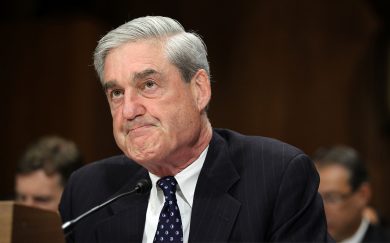
Photo by Alex Wong/Getty Images
By Elizabeth Vos | Disobedient Media | February 16, 2018
If one needed proof that Mueller’s investigation was an utter farce, they were in for a treat this morning when the Deputy Attorney General announced the indictment of indicted 13 “Russian trolls,” for allegedly interfering in the 2016 Presidential election by posting on social media accounts.
Laying Mueller’s disregard of the First Amendment aside, the indictment is blatantly hypocritical in light of active social media intervention by pro-Clinton David Brock and his multi-million dollar efforts to ‘Correct The Record.’
The indictment alleges that: “Beginning in or around June 2014, the ORGANIZATION obscured its conduct by operating through a number of Russian entities, including Internet Research LLC, MediaSintez LLC, GlavSet LLC, MixInfo LLC, Azimut LLC, and NovInfo LLC.”
The indictment further alleges that: “The ORGANIZATION sought, in part, to conduct what it called information warfare against the United States of America through fictitious U.S. personas on social media platforms and other Internet-based media.”
According to the indictment, the co-conspirators “engaged in operations primarily intended to communicate derogatory information about Hillary Clinton, to denigrate other candidates such as Ted Cruz and Marco Rubio, and to support Bernie Sanders and then-candidate Donald Trump.”
The indictment represents the latest mutation of Russian interference allegations that have dragged on for over a year. As this author previously noted, the definition of Russian interference has mutated from unsubstantiated claims of Russian hacking, to Russian collusion, and finally to Russian social media trolling.
The Washington Post reported in 2015 that David Brock’s Correct The Record would work directly with the Clinton Campaign, “testing the legal limits” of campaign finance in the process. How did Correct The Record skirt campaign finance law? The Washington Post tells us: “by relying on a 2006 Federal Election Commission regulation that declared that content posted online for free, such as blogs, is off-limits from regulation.” And post online, Brock’s PAC did: “disseminating information about Clinton on its Web site and through its Facebook and Twitter accounts, officials said.”
Time reported the opinion of a lawyer at the Campaign Legal Center who characterized Correct The Record as: “creating new ways to undermine campaign regulation.” Meanwhile, The New York Times detailed the “outrage machine” that Brock and fellow Clinton supporter Peter Daou had created:
“Peter Daou sat with his team at a long wooden table last week, pushing the buttons that activate Mrs. Clinton’s outrage machine. Mr. Daou’s operation, called Shareblue, had published the article on Mr. Trump’s comment on its website and created the accompanying hashtag.“They will put that pressure right on the media outlets in a very intense way,” Mr. Daou, the chief executive of Shareblue, said of the Twitter army he had galvanized. “By the thousands.”
Going further, the New York Times details fervently the $2 million budget of Daou’s Shareblue and admits that the intent of the entire operation is interference in the outcome of the 2016 Presidential election in favor of Hillary Clinton: “Beyond creating a boisterous echo chamber, the real metric of success for Shareblue, which Mr. Brock said has a budget of $2 million supplied by his political donors, is getting Mrs. Clinton elected. Mr. Daou’s role is deploying a band of committed, outraged followers to harangue Mrs. Clinton’s opponents.”
The New York Daily News put the matter most bluntly: “Hillary Clinton camp now paying online trolls to attack anyone who disparages her online.” The LA Times described the active election interference: “It is meant to appear to be coming organically from people and their social media networks in a groundswell of activism, when in fact it is highly paid and highly tactical.”
Despite the millions of dollars poured into a pro-Clinton ‘outrage machine’ bent on her support, Clinton inexplicably lost the election to Donald Trump, a fact which still seems not to have sunk in for the former First Lady and Secretary of State.
But why bring up this apparently old news, in the face of Mueller’s latest mockery of the American judicial process and the First Amendment? Because it reveals in the words of the legacy press that by definition Mueller’s circus has zero interest in campaign or election integrity and is solely interested in getting scalps for Clinton and for the unelected powers she represented.
Despite obvious hypocrisy given the actions of Shareblue and David Brock’s Correct The Record, corporate media ignored all double standards and attempted to report on “Russian twitter trolling” with a straight face. Business Insider wrote: “Russian Twitter Trolls Tried To Bury Or Spin Negative Trump News Just Before Election,” as if that wasn’t what Correct The Record spent millions on doing for the benefit of Clinton.
The double standards applied to Clinton for her benefit goes beyond hypocrisy. Many have claimed that constantly metamorphosing allegations of Russian interference represents an insidious effort to silence dissent and anti-establishment political discourse: for example, by turning third-party, anti-establishment or conservative voices into “Russians” by proxy of their opposition to Clinton.
By converting legitimate American free speech into insidious “Russian bots,” a pretext is created to silence dissent across the board. Without the Russian interference circus, the efforts to breach the First Amendment would be overtly authoritarian and would be inexcusable even by the most corrupt establishment media standards.
The results of such a clamp-down on free and effective speech have manifested in censorship crackdowns across large social media platforms including Twitter, Youtube, and Facebook, with Twitter admitting to actively censoring roughly 48% of tweets that included the “#DNCEmails” hashtag. It seems anyone with an opinion the establishment doesn’t like is liable to be memory-holed.
Mueller’s indictment of 13 Russians perfectly timed to be buried in media cycle
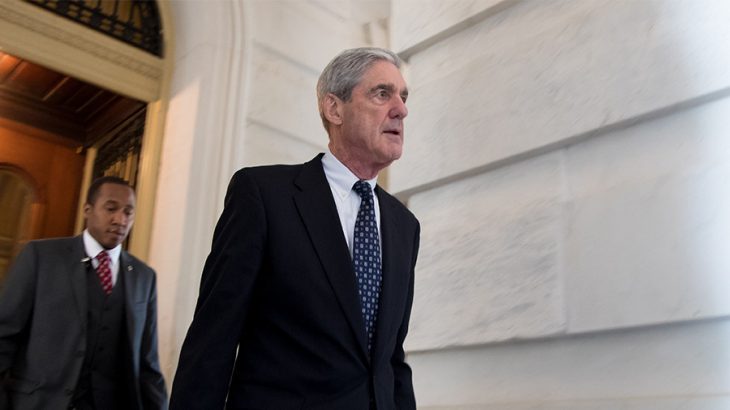
© Ting Shen / Xinhua / Global Look Press
RT | February 17, 2018
The latest not-so-smoking gun in the ‘Mueller time’ saga – the indictment of 13 Russian nationals suspected of interfering with American democracy – comes at a time when it is certain to get the least media coverage.
FBI Special Counsel Robert Mueller published the indictment on Friday evening – just two days after a high-profile school shooting in Florida. Both factors are likely to reduce the media coverage of the release, which apparently falls short of expectations of a smoking gun to take down the administration of Donald Trump, which many ‘Russiagate’ proponents have been hoping for.
“The fact that Mueller dumped these indictments out today proves that he is kind of hoping to go undercover – as far as is possible – to go undercover with political news like that,” conservative radio host Dave Perkins told RT. “[Mueller] has indicted these Russians knowing that he will never actually have to bother to prosecute them. Which is why he indicted them for peculiar, almost not-named crimes, very low-level things.”
“What has happened is Mueller is setting himself up, having tossed red meat to the base on the left: here is your Russians, here is your conspiracy, see, they have tried to affect the outcome of the election. And then he can fade back into the hedge.”
The indictment targets Russian nationals allegedly involved in a campaign meant to sow discord in America through social media. The document does not mention the hack of the DNC server or the phishing attack on Hillary Clinton campaign chair John Podesta, which both resulted in leaks of sensitive emails. Nor does it indicate that any of the Russians colluded with the Trump campaign or any other individuals in the US. Nor does it claim that the persons indicted were acting on orders from the Russian government. The document says there was no evidence the alleged campaign had any impact whatsoever on the outcome of the election.
Friday afternoon is “a great time to release news if you want to bury the news,” Just Foreign Policy Group director Robert Naiman said, though he doubts this was done intentionally. He added that the new development in the Russia probe is unlikely to tip public perception of it in a significant way. “People who want to put forward the Russia story – many of them will see this as vindication. They won’t care really what the details are.”
“This is an indictment. In the US system this means that a threshold has been met for taking a case to trial. It doesn’t mean anything has been proved,” he said.
The details of the indictment make it a shaky case for trial, media analyst Lionel pointed out, arguing that most of the things the 13 Russians are alleged to have done are not even a crime and had been done by others during the election campaign.
“They were apparently Russian nationals that didn’t say, hey, we are Russian nationals” while conducting their election-related activities on social media, he told RT. “I have never seen an indictment so bereft of citation and case law… I would have loved to argue this one in a motion to dismiss.”
If the indictment was properly covered by the US media, Americans would realize there was not much to it, independent journalist, author, and former Wall Street Journal correspondent Joe Lauria believes, but this is unlikely the way the story will be remembered.
“If these things did happen – they may be guilty of identity theft and certainly didn’t register as foreign agents – but the idea that this had an impact on the election is farcical. And if it was seen that way in the United States, Trump would have nothing to worry about. But the corporate media is going to push this as the smoking gun.”
The reporting, he predicted “will put more fuel on the fire to create more smoke that somehow Russia helped Trump steal this election from Hillary Clinton, which this indictment does not show in any way.”
Mueller indicted 13 Russians to drag probe out and keep his position – State Senator Black
RT | February 17, 2018
By indicting Russian nationals and entities for meddling in the 2016 US election, FBI Special Counsel Robert Mueller seeks to drag the probe out for his own gain, Virginia State Senator Richard Black told RT.
Thirteen Russian individuals and three entities, were accused of attempting to advance the presidential bid of Donald Trump and tarnish the reputation of Hillary Clinton with the ultimate goal to “spread distrust towards the candidates and the political system in general.” However, none of the activities described in the indictment were able to sway the vote, US Deputy Attorney General Rod Rosenstein told media.
According to Black, the lackluster outcome of the ever-widening investigation invokes suspicion that although Mueller knows there’s nothing substantial to uncover, he and his team will continue feeding the media headline-grabbers to keep his rather lucrative job.
“To a certain extent, I think, Robert Muller is struggling to keep alive his position of a special counsel. The special counsel has already earned 7 million dollars. When you become a special counsel, you have an open checkbook for the US Treasury and you are guaranteed to become a mega-millionaire if you simply can drag out the proceedings,” Black told RT.
“I suspect that this is just a case of dragging out the proceedings, throwing some indictments on some silly things – not registering as a foreign agent – that typically is not prosecuted, but they are prosecuting it in this case because they are running out of ideas.”
The latest twist of the Russia probe saga, which has so far failed to provide any proof of Trump’s collusion with Moscow, indicates that “there is simply nothing there to go after,” Black said. He noted that since both sides appear to agree that the alleged meddling could not have changed the outcome of the election, the probe is essentially “irrelevant.”
The record of US intelligence, which is no stranger to providing “completely fabricated” intel, does not lend much credibility to the “intelligence assessments” over the Kremlin’s alleged role in the election, Black said.
“I’m not really impressed, I want facts; I don’t want some generalized conclusions from these intelligence agencies,” he said, noting that if he were Trump, he would ask them to “show precisely” what evidence they have in their hands.
Back believes that what is really on the agenda is to rein in Trump so he will not oppose the hawks in their pursuit of hostile foreign policy towards Russia.
“One of the things they wanted to do is to undermine Donald Trump and to keep him constantly on the defensive against Russia so he cannot do the rational thing, which is to reduce the tensions with Russia, to draw back from the Russian borders,” he said, noting that the “deep state” seeks confrontation with Russia as it allows them to “sell weapons and increase the size of the military.”
Speaking about the claims that Russia-linked operatives spent $100,000 on Facebook ads to promote divisive social and political issues to stir up American voters, Black compared it with “throwing a penny to a beggar,” arguing that by “creating chaos” in the election, nobody could have achieved anything, “no matter who they are.”
US indicts 13 Russians for 2016 election meddling, but ‘no allegations’ they influenced outcome
RT | February 16, 2018
A US federal grand jury has indicted 13 Russian nationals and three Russian entities accused of interfering with US elections and political processes. However, there are “no allegations” they influenced the 2016 election.
The indictment accuses the defendants of “supporting the presidential campaign of then-candidate Donald J. Trump… and disparaging Hillary Clinton.” It also claims the defendants staged political rallies and bought political advertising while posing as grassroots entities. The document says an organization known as the Internet Research Agency “sought, in part, to conduct what it called ‘information warfare against the United States of America’ through fictitious US personas on social media platforms and other Internet-based media.”
“By in or around May 2014, the organization’s strategy included interfering with the 2016 US presidential election, with the stated goal of “spread[ing] distrust towards the candidates and the political system in general,” the indictment says, referring to the Internet Research Agency.
The defendants, according to the indictment, were advised to “focus their activities on purple states like Colorado, Virginia, and Florida.”
US Deputy Attorney General Rod Rosenstein said during a press conference that the defendants engaged in “information warfare against the US, with the stated goal of spreading distrust towards the candidates and the political system in general.”
It is alleged that the two traveled to the US in 2014 to collect intelligence for their operations. They also reportedly purchased space on US servers to establish a virtual private network (VPN) and made hundreds of accounts on Facebook, Instagram and Twitter. They “posed as politically and socially active Americans, advocating for and against particular candidates,” Rosenstein said during a press conference.
He went on to say that they “recruited and paid real Americans” to engage in political activity by pretending to be grassroots activists, adding that those Americans did not know they were working with Russians. Rosenstein noted, however, that “there is no allegation in the indictment that it had any effect on the outcome of the election.”
The indictment was not left unanswered though. Spokesperson for the Russian Foreign Ministry, Maria Zakharova, called the latest affront by the US “absurd.” She noted that 13 people would have hardly reached the desired outcome even if they planned to meddle with the polls.
Russian businessman Evgeny Prigozhin, who was also on the list, opted for a lighter tone, saying that Americans are “emotional people” and jokingly suggested that one should allow them to “see the devil.”
Moscow has repeatedly refuted the claims of alleged meddling in the 2016 presidential elections. Russian President Vladimir Putin also ridiculed such claims, suggesting that the US was “not a banana republic” to be treated that way.
Dutch Lies Over Putin’s ‘Aggression’ Expose NATO War Agenda

By Finian CUNNINGHAM | Strategic Culture Foundation | 15.02.2018
Netherlands Prime Minister Mark Rutte was this week forced to bear a parliamentary vote of no confidence after his foreign minister finally came clean over a dangerous lie he has been telling for two years concerning Russian President Vladimir Putin.
Halbe Zijlstra quit in shame on Monday as the country’s foreign minister after admitting that a story he had peddled about personally hearing Putin plotting to create a “greater Russia” was false. That then forced premier Rutte to endure a “no confidence” motion from parliamentarians. In the end, Rutte survived the vote. If a majority had voted against his leadership, his coalition government may have collapsed.
But the deep damage done to the Dutch authorities will not be so easily repaired by Rutte’s survival as premier. What has been exposed this week is a senior member of government recklessly telling bare-faced lies in an attempt to slander Russia, poison international relations, and ratchet up already dangerous geopolitical tensions.
Zijlstra had claimed two years ago, in 2016, that he had personally witnessed Russian leader Vladimir Putin boasting about creating a “greater Russia” which, it is claimed, would incorporate Ukraine, the Baltic states, Belarus and Kazakhstan.
The newly resigned Dutch top diplomat claimed he heard Putin making the remarks while present with others at the Russian leader’s dacha (summer house) back in 2006.
This week, Zijlstra finally came clean and admitted before parliament that he hadn’t in fact been present at the alleged gathering. He still maintains, however, that a confidant who was among the guests at Putin’s dacha informed him of the alleged “greater Russia” plan. But how can we now trust the word of a self-confessed liar?
Zijlstra’s boss, Prime Minister Rutte, also sought to downplay the debacle, claiming that his foreign minister had made “a big mistake” – but that “lying was not a deadly sin”.
Rutte is in for a rude awakening due to his complacent thinking. For indeed his government has been caught telling a very grave lie whose ramifications concern issues of war and peace in Europe.
Disgraced former minister Zijlstra stands accused of gross distortion of Russia’s foreign policy.
Since the US and European-backed illegal coup in Ukraine in early 2014, geopolitical reality has been turned upside-down. American and European corporate media have peddled relentless anti-Russia propaganda accusing Moscow of “aggression” and “expansionism” in Europe.
This torrent of Russophobia spewed out by Washington, the Pentagon, NATO and the European Union has created the worst crisis in relations with Russia since the Cold War ended nearly three decades ago. There are real fears that the mounting crisis could escalate into an all-out war involving nuclear powers.
Zijlstra’s offense therefore is not merely a “mistaken” lie. His flagrant public distortion has contributed directly to the grave deterioration in geopolitical relations. One could even argue such reprehensible remarks amount to incitement of war, which is a cardinal crime under Nuremberg legal principles.
Lamentably, the mendacious senior Dutch politician is not an isolated case. Recall how former Polish foreign minister Radek Sikorski was caught out telling similar defamatory lies about Russia in 2014.
Sikorski, who has been an ardent supporter of NATO force build-up against Russia, reportedly claimed that he personally overheard Vladimir Putin in 2008 plotting to annex Ukrainian territory in a covert plot. Sikorski claimed that he heard Putin propositioning then Polish Prime Minister Donald Tusk with a carve-up deal of Ukraine between Poland and Russia.
Sikorski was obliged to swiftly retract the claims published in US media, and awkwardly admit that he was not present at the alleged meeting with Putin, and that his quoted remarks were meant as a “surreal joke”.
But, again, this is no joke or mistake. It is deadly serious disinformation by senior government officials, which is recklessly inciting war tensions with Russia. Sikorski is prominently associated with pro-NATO think-tanks like the hawkish American Enterprise Institute. He is married to Anne Applebaum who makes a living from writing anti-Russian screeds for news outlets like the Washington Post.
Zijlstra and Sikorski join the ranks of Russophobia regurgitated by other European foreign ministers like Britain’s Boris Johnson who issued the outlandish claim earlier this year that Russia is “targeting” British infrastructure; or French foreign minister Jean-Yves Le Drian who has impugned Russia for chemical weapons use in Syria – only for the French President Emmanuel Macron to admit this week that his government has actually no evidence about the use of such weapons in Syria.
Macron has made his own contribution to Russophobia by leveling unsubstantiated allegations that his presidential election campaign last year was “hacked” by Kremlin agents. He has since banned Russian news media from attending his press conferences.
All these senior government figures are irresponsibly fueling a climate of demonization against Russia which is compounding other unhinged claims made by politicians in Washington and the Baltic states. Lithuanian President Dalia Grybauskaite, for example, recently claimed that Russian Iskander missiles based on Russian sovereign territory of Kaliningrad were targeting half of Europe, an alarmist claim which has been amplified by US secretary of defense James Mattis in the Pentagon’s recent Nuclear Posture Review.
The climate of hysteria – based on false, fevered official claims – is militating against normal political and diplomatic relations, which is, in turn, exacerbating the war in Ukraine and leading to wider war tensions with Russia across Europe.
A good question is why the ousted Dutch minister decided to own up this week to his lies about Putin.
The answer may be related to the bigger credibility crisis of the Dutch government and its NATO allies with regard to the whole Russophobia propaganda war.
Next month, the Netherlands is to hold a national referendum on extending powers of Dutch state intelligence to monitor public electronic communications. To convince the Dutch public to vote for more snooping powers, the authorities are relying on the hackneyed claims about Russian “meddling” and “interference”.
It seems significant that Dutch media reported last month that the country’s secret services allegedly “hacked into” Russian state hackers who were allegedly penetrating the American Democratic party’s databases during the US presidential elections back in 2015-2016. As usual, no evidence was provided to support the claims. We know from other credible reports that the Democratic party was quite possibly not hacked at all, but rather was leaked from inside by a Democrat staffer. So the Dutch intel story smearing Russia is highly dubious.
But it seems that the purported “good deed” performed by the Dutch intelligence services was pitched in the media as a way to ingratiate bona fides with the Netherlands public. The aim being to dispose the public toward voting in the referendum next month to give the Dutch state more intrusive powers over citizens to “protect” them from “nefarious Russians”.
Now, if the Dutch minister had held on to his office any longer there was a risk that his lies may have become public embarrassingly close to the March referendum, which could have resulted in the public rejecting the authorities’ desire for more snooping powers.
Perhaps then the decision was taken in high office for the minister to take the fall now in order to get rid sooner of an embarrassing story concerning his lies over Russia.
Whatever the explanation about the timing, the admission of Dutch government lying about Russian aggression in Europe is nevertheless an illuminating and appalling insight into how Russophobia and war is being fomented by the US and its European NATO allies.
Abominably, European government officials are willing to risk plunging millions of citizens into a war with Russia based on lies and warped, self-serving prejudices.
Featured Video

Death Spikes & Rising Cancer In Our Youth Explained
or go to
Aletho News Archives – Video-Images
From the Archives
Politicians lie
By Mazin Qumsiyeh | Popular Resistance | August 18, 2013
There is no way to say this truth nicely: Politicians lie. That includes Japanese, American, Egyptian, Israeli, and Palestinian politicians! Is there something more common sense than that? Yet, so many citizens around the world believe their own politicians or wistfully acknowledge lies but think it is part of the job needed to run things. They believe even when politicians contradict themselves blatantly. This phenomenon is rather remarkable. It is a dissonance and disconnect from reality that many seem oblivious to. It is very dangerous because it can lead to accepting rationales for going to war. These can be deadly wars that lead to millions of lives lost as happened in what was called World War 1 and WW2. Even when incredible and declassified evidence abound, politicians continue to lie and old mythologies refuse to die. Here are just a few of the countless lies told to us over the past few decades… continue
Blog Roll
 Aletho News
- RSF military group defects, joins Sudanese army: State media
- Ireland goalkeeper refuses to play ‘Israel’ as squad weighs boycott
- China pushes back against US on Cuba, Iran
- Ukrainian Soldiers, Potential Mercenaries: Have Gun, Will Travel!
- Burnham’s UN debut… A masterclass in British disinformation
- Iran flights continue despite US aviation sanctions
- Global Tipping Points Lead the World Into a State of Entropy
- The day-after at the White House: USA and Xi Jinping
- The Geopolitical Balance in the Red Sea: The UAE Being Displaced by New Players
- Iraqi resistance group vows to stage airport sit-ins over Iran aerial blockade
- If Americans Knew
- Deconstructing Netanyahu’s pants-on-fire UN rant – Daily Update
- Trump betrayed voters with his campaign lies and prioritized a foreign country once he took office
- Netanyahu calls Israel’s war in Gaza ‘opposite of genocide’ in UN speech to near-empty hall
- Settler Kidnappings: Torture, Sexual Abuse and Terrorisation of Palestinian Abductees as Israel Deepens Annexation of West Bank
- Gaza winter nears as 162,000 tents become unusable, raising fears of humanitarian crisis
- Netanyahu says, “It’s the opposite of genocide”; UN says Gaza economy is world’s ‘most severe crisis on record’ – Daily Update
- Israel’s US-Backed Assault on Gaza Has Created the ‘World’s Most Severe Economic Crisis on Record’: UN
- ‘Protecting U.S. Citizens’… From Israel
- ‘This is where I live now, the back of a truck’: a day in the life of a grandmother in Gaza
- In UN Speech, Iran’s President Displays Pictures of Children Killed by US, Brings Attention to Israel’s Nuclear Arsenal
- No Tricks Zone
- New Study: Earth And Venus Surface Warmth Largely Explained By Convection And Lapse Rate, Not CO2 Or Radiation
- 2025 Nature Paper Claiming Worsening Global Drought Gets RETRACTED …Heavily Flawed
- New Study: ‘Global Drought Shows No Detectable Recent Acceleration Under Climate Warming’
- Economic Masterminds: German Socialists Suggest Taxing Productivity Gains Stemming From Using AI
- The South China Sea Has Not Been Cooperating With The Climate Change Narrative
- Energy Crisis: Germany Enters Heating Season With Historically Low Gas Reserve Fill Levels
- New Study: The Antarctic Ice Sheet Gained Mass From 2020-2024 Due To Staggering Snow And Ice Accumulation
- Study: Ocean Heating Rates From Thousands Of Years Ago ‘Dwarf’ Modern Ocean Heating Rates
- Climate Extremists Target, Attack Large-Scale Power Grid Infrastructure In Germany!
- New Study: Antarctic Ice Melt Has Contributed Less Than 1 Centimeter To Sea Level Rise In The Last 30 Years

