U.S. Media’s Objectivity Questioned Abroad
By Andrew Spannaus | Consortium News | February 2, 2108
Pick up a major newspaper or watch the television news in a European country, and it’s more likely than not you’ll quickly find a reference to the New York Times, the Washington Post, or CNN in reporting about the United States. In the era of Donald Trump, this mainstream media “Triad” continues to set the agenda for many foreign news organizations following events in the U.S., providing them with a viewpoint that is promptly transmitted to their readers and viewers as the authoritative interpretation of what’s going on in America.
A funny thing is starting to happen though: well-known public figures and journalists are beginning to point out the obvious, that these important news outlets no longer look objective. Rather, it seems they see themselves as part of the “resistance” against the President.
In just the past month, this writer has heard radio hosts, political analysts and even diplomatic personnel in Italy and Switzerland couch their public remarks about Trump with the observation that the U.S. mainstream media can no longer be considered objective. This is a notable shift, because even among those who are decidedly anti-Trump, the Triad is increasingly seen as representing the voice of a certain “establishment,” a grouping that does not speak for the majority of the American people.
Across Europe, many follow U.S. politics closely, due to a mix of cultural fascination and the fact that decisions in America continue to have a major impact around the world, of course. People look to the United States as an example and an indicator of economic and social trends, whether they approve of them or not. And in terms of news, they look in particular to the newspapers “of record”, long considered to provide quality and influential reporting and opinions on both domestic and foreign affairs.
Some news organizations take this veneration for the Triad to extreme lengths. In Italy, where I live, the references to the New York Times, the Washington Post and CNN are constant, often presented as key interventions likely to shift the political situation in the U.S. A new revelation in one of those outlets regarding Russiagate, for example, might be considered a game changer, bringing us closer to impeachment.
The concentration on these publications has gotten to the point that it heavily limits the perception of what’s going on in the country. In the past, this distortion was harder to detect; getting direct news meant reading a few major newspapers – often delivered late in the day – without having many points of comparison. Yet now, in the era of the internet, an American abroad can follow whatever news and events he or she wants, without suffering from a limitation on direct sources or the filters of a foreign press organization.
This new situation led me to the following realization some years ago: many foreign news outlets get much of their news from the Triad, rather than from their own direct reporting. Often I could read the Washington Post and the New York Times online, and already know what would be reported to Italians on the major evening news programs.
For journalists it is of course essential to be aware of how the news is reported in the country they are covering; but if one does only that, information becomes limited by what certain outlets report, and also by their editorial line. There appear to be two different kinds of foreign correspondents covering the United States: those who spend their time in New York or Washington and dedicate most of their attention to establishment sources and events, and those who attempt to get a fuller sense of what’s going on outside of those venues as well.
By way of example, consider the difference between a correspondent from the major television networks whose contacts are mostly other journalists and opinion leaders in the principal power centers, and a correspondent who periodically takes trips to other areas of the country.
I saw a positive example recently when a journalist from RSI (Swiss Italian Radio and Television) spent several days in the former steel town of Bethlehem, Pennsylvania; the opinions he gathered from residents of that area gave a different view than the more common interviews of Fifth Avenue shoppers or financial analysts in New York. Everyone’s opinion counts, of course, but if you never get out of the bubble, you tend to miss what’s going on in the rest of society.
This blindness was the dominating characteristic of the 2016 election campaign, when major media outlets around the world failed to recognize the deep currents that led to the strong support for Donald Trump and Bernie Sanders in the primaries, and ultimately carried the former to the White House. The same inability to grasp the depth of the revolt of the voters against the political and financial elites expressed by pro-establishment media outlets was almost automatically transferred abroad, due to the slavish imitation of the Triad by foreign news outlets.
The 2016 presidential election was a jolt to the system. Suddenly everyone was forced to confront the fact that almost all of the respected media and commentators had gotten it wrong, clearly failing to understand how so many could vote for a candidate considered dangerously unprepared and offensive.
Outside of the United States, people were forced to reassess whose news and opinions they could trust, leading to a period of more serious discussion of the economic and social dynamics in the United States and beyond. If half of the voters – combining the support for Gary Johnson, Jill Stein and others with that for Trump – were willing to give their vote to outsiders promising deep changes in the system, then clearly things must not be going as well as the media had been saying.
Never fear, the same media outlets and commentators quickly came up with a new narrative that papered over their previous mistakes: the Russians did it. Thus, in addition to the allegedly racist and ignorant voters outside of urban areas, the fault for Hillary Clinton’s embarrassing loss was pinned on Vladimir Putin. A convenient way to forget the reasons why so many Americans rejected the political establishment.
So rather than a discussion of decades of favoring finance over the real economy, and how “free trade” policies have caused a race to the bottom, the debate focuses on the perils of protectionism, and how important it is to defend globalization. And instead of stigmatizing the disastrous policies of continuous war, we are treated to a steady stream of neocon narratives, including from the numerous representatives of the interventionist camp who have found their way into the Trump administration.
The most recent example of this phenomenon is the sudden return to essentially the same economic narrative heard before the elections. In recent weeks media outlets and experts in Europe have begun to once again sing the praises of the U.S. economy. The stock market is doing great, and unemployment is low, so boom times must be back.
The coverage seems eerily familiar to that during the end of the Obama administration, which of course many people didn’t believe. It’s easy to imagine how Americans who rejected such talk before will react if they don’t see a tangible improvement in their lives in the coming months and years. A low official unemployment rate and modest wage growth is better than the alternative, but far from sufficient to deal with structural problems such as harsh inequality, unstable employment, the lack of social welfare protections and low purchasing power.
The White House is now complicit in this narrative, of course, as Trump wants to believe, and declare, that his policies are making things better. The mainstream media’s obfuscation of the truth should be a lesson to the President, lest he find himself on the wrong end of the revolt before long.
Andrew Spannaus is a journalist and strategic analyst based in Milan, Italy. He is the founder of Transatlantico.info, that provides news and analysis to Italian institutions and businesses.
‘Vain Effort’: US’ Kremlin Report by the Eyes of International Observers
Sputnik | February 2, 2018
International observers have voiced their skepticism over the publication of the US Treasury’s Kremlin Report in their interview with Sputnik. According to the analysts, the document contradicts the norms of international law and is likely to prove inefficient as an instrument of pressure on Russia’s foreign partners and domestic elite.
The so-called Kremlin Report, released by the US Treasury Department on January 29, has stirred up a heated debate among international observers. Analysts from Iran, Italy and Turkey shared their views on the document with Sputnik.
Iran: Kremlin Report Violates International Norms
“Instead of pursuing a policy of widening and strengthening friendly ties, peace and stability, the [Americans] have chosen the path of aggression, interference, scandal and conflict-mongering, confrontation and destabilization,” Hossein Sheikholeslam, head of the Iranian social organization “Freedom to Holy Jerusalem” and a former adviser of Iran’s minister of foreign affairs, told Sputnik, dubbing Washington’s approach “stupid” and in contradiction to international laws and norms.
Drawing the parallel between the Kremlin Report and the anti-Iranian sanctions policy the former official noted that the US intimidating strategy has repeatedly failed: “If their sanctions were that effective, they would have been able to destroy Iran. But that did not happen. On the contrary, the sanctions stimulated the development of our country.”According to Sheikholeslam, “sanctions are for the weak, for those who cannot fairly face challenges.”
Maryam Jalavand, an international law specialist and a teacher at Payame Noor University in Tehran, echoed Sheikholeslam by stating that the US’ recent decision is illegal and violates international law.
The academic drew attention to the fact that to date the US has unilaterally introduced more than 61 types of sanctions against 35 countries. “And this is at least 40 percent of the world’s population,” Jalavand remarked.
“In the meantime, from the point of view of international law, such unilateral actions by the US towards countries such as Russia are considered a violation and a direct intervention in the country’s internal affairs. Because, according to international law, imposing sanctions is a measure that forces one’s counterpart to abide by certain restrictions, which creates a number of problems,” she stressed.
The academic explained that the inclusion of a large number of Russia’s top ranking officials in the list directly violates international law as it envisages the potential freezing of their assets: “This, in turn, means freezing the assets and credits of the state,” the specialist pointed out. “This is the reason why such a measure from the US is considered a violation of international law.”
She highlighted that “it violates the principle of freedom of movement, principle of sovereignty, principle of justice and the principle of freedom of human rights.”
Italy: It Looks Like a One-Sided Cold War of a New Type
Italian journalist and political analyst Giulietto Chiesa, a regular contributor to Sputnik, notes that the Kremlin Report includes officials “belonging to all political trends, from pro-Western to ardent patriots.”
“This is not just an ominous gesture addressed to Russian influential figures,” Chiesa noted, “I emphasize that the decree of the president of the United States dated December 21… gave the Treasury truly universal rights, granting it the capability to sequester all the assets of the persons mentioned in it, thus creating a kind of a new planetary legislation, under which the United States unilaterally obtains the right to decide the fate of political and economic figures of the rest of the world.”
According to the Italian journalist the whole spectrum of relations between the two countries has been put at risk while all the existing opportunities for holding a dialogue have been undermined.
“So far, Moscow has no choice but to take a step towards a further deterioration of ties, which looks like a one-sided cold war of a new type which could lead to a complete severance of relations,” he warned.
Turkey: US Actions Won’t Undermine Russia’s Relations With West Asian States
Volkan Ozdemir, chairman of the Ankara-based Institute for Energy Markets and Policies (EPPEN), and Yunus Soner, deputy chairman of Turkey’s left-wing Vatan Party (the Patriotic Party), believe that Washington’s actions are doomed to failure.
According to Soner, the Kremlin Report is nothing but a US attempt to maintain its hegemony amid the swift rise of Eurasian nations.
“The US actions are directed not only against Russia, but also against the countries of the Eurasian and Asian region interacting with Russia,” Soner suggested, adding that “Washington is concerned that the Eurasian Economic Union is emerging as a real alternative to American dominance.”
However, the politician assumed that the release of the report will produce little if any effect on the world affairs.”This US step would once again demonstrate to the world the ineffectiveness of instruments of pressure used by the US since the Cold War,” Soner said. “The United States should abandon the tools of imposing its will unilaterally and take its place in the modern multipolar world system.”
For his part, Ozdemir suggested that Washington’s major goal is to sow discord among the Russian elite which US politicians want to use as a bargaining chip in its game with Moscow.
According to the scholar, the White House is sending an unambiguous message to Russia’s influential circles: “Either act against your leadership, or reap the fruits of inaction.”
“We are witnessing how finance and economics are used as a political tool,” Ozdemir noted warning that the US recent move may “lead to increased tensions in the relationship,” and “even become a reason for financial war.”
The Kremlin Report contains a list of persons related to Russia’s leadership and are presented as potential targets for the US’ new anti-Russia sanctions. The document which was created in compliance with the Countering America’s Adversaries Through Sanctions Act (CAATSA) and signed into law by President Donald Trump on August 2 names 114 Russian politicians and 96 businessmen.
US Senators Urge to Prevent Alleged ‘Russian Meddling’ in Mexico’s Election
Sputnik – February 1, 2018
WASHINGTON – The Trump administration should take steps to deter alleged Russian interference in the upcoming presidential election in Mexico and other parts of the Western Hemisphere, US Senators Tim Kaine, Marco Rubio and Robert Menendez said in a letter to Secretary of State Rex Tillerson and USAID Administrator Mark Green.
“We are deeply troubled by recent news articles that Russia is reportedly using sophisticated technology to meddle in Mexico’s upcoming election,” the letter said on Wednesday. “As such, we believe it is critical that USAID continue to play an active role in providing technical assistance, education and training to support countries’ efforts to strengthen electoral systems.”
The lawmakers fear Russia’s alleged actions in the region will cause instability, especially as six contentious presidential elections will take place this year in the Western Hemisphere, including in Brazil and Colombia, the letter said.
Tillerson is set to visit Mexico City on Friday to meet with Mexican Foreign Minister Luis Videgaray and Canadian Foreign Affairs Minister Chyrstia Freeland for talks on regional issues.
Russian ambassador to Mexico Eduard Malayan earlier this month dismissed rumors about Russia’s “interference” in Mexico’s forthcoming election as “nonsense.”
Russia has faced numerous accusations of meddling in elections since the 2016 US presidential vote in which then-Republican candidate Donald Trump claimed victory against the odds. The US intelligence community alleged that Trump’s campaign team colluded with the Kremlin to bring him victory in the election.
Similar accusations followed France’s presidential election, Spain’s Catalan referendum and the United Kingdom’s Brexit vote.
Russian officials have repeatedly refuted such accusations. Kremlin spokesman Dmitry Peskov has called the claims groundless. Russian Foreign Minister Sergey Lavrov has stressed that the accusations of Russia meddling in the elections of foreign states were unsubstantiated.
READ ALSO:
CIA Prediction of Russian Meddling in US Midterm Elections ‘Nonsense’
Top sports court overturns IOC’s ban on 28 Russian athletes in groundbreaking ruling
RT | February 1, 2018
The Court of Arbitration for Sport (CAS) has cleared 28 Russian athletes and dropped their life-bans over alleged doping. Their results have been reinstated and the athletes are eligible to compete in the 2018 Winter Games.
“Both CAS panels unanimously found that the evidence put forward by the IOC in relation to this matter did not have the same weight in each individual case,” the statement from the Lausanne-based international body said.
According to the ruling, in 28 cases filed by the Russian athletes the evidence was “insufficient” to establish that “an anti-doping rule violation (ADRV) was committed by the athletes.”
“With respect to these 28 athletes, the appeals are upheld, the sanctions annulled and their individual results achieved in Sochi 2014 are reinstated,” it said.
CAS also partially upheld the appeals of other 11 Russian athletes as the evidence collected “was found to be sufficient to establish an individual ADRV.”
The ruling said that these 11 athletes were declared “ineligible” for the upcoming PyeongChang Olympic Winter Games, instead of a life ban from all Games.
Among those allowed to participate in the games are Sochi Olympic champion cross-country skiers Alexander Legkov and Maxim Vylegzhanin.
Speed-skater Olga Fatkulina, bobsledders Dmitry Trunenkov and Alexey Negodaylo, and skeleton racer Aleksandr Tretiakov – all of whom won gold or silver medals at the 2014 Sochi Olympics – were given permission to take part in the Games this year.
The CAS decision proves that Russian athletes who were accused of doping violations are indeed “clean,” Russian Sports Minister Pavel Kolobkov told journalists. “We are all happy that justice has finally been served,” he said.
On December 5, the IOC Executive Board banned team Russia from the PyeongChang Winter Games due to allegations of state-sponsored doping.
The ruling said that “clean” Russian athletes can only compete under a neutral flag in South Korea.
The decision came after the results of two separate investigations of alleged Russian doping: one regarding individual athletes, the other focusing on alleged institutional violations.
More than 40 Russian athletes, including Sochi Olympic champions, have been slapped with life bans from the IOC and had their Sochi records annulled as punishment for alleged doping violations in Sochi.
The CAS decision doesn’t necessarily mean that these 28 athletes will be invited to the 2018 Games, the IOC said in a statement. “Not being sanctioned does not automatically confer the privilege of an invitation,” the organization added.
According to the Olympic governing body, Russian athletes “can participate in PyeongChang only on invitation by the IOC.”
Russian Olympic Assembly chief Alexander Zhukov called the CAS decision “fair,” adding that these 28 athletes are now able to take part in the 2018 Olympic Games. “From the very start, we’ve insisted that our athletes are not involved in any doping frauds, and now we are happy that the court has restored their name and all rewards were returned to them,” he said.
CIA Boss Claims Russia Poised to Meddle in Yet Another US Election
Sputnik – January 30, 2018
Despite the fact that the ongoing US investigation into the alleged Russian meddling in the 2016 presidential campaign has failed to produce any tangible results, a top American intelligence official now says that Moscow “will continue” to try and influence elections in the United States.
Mike Pompeo, Director of the US Central Intelligence Agency, has claimed that there has not been a “significant decrease” in Russian activity in the US, and that Moscow may now attempt to interfere with the upcoming congressional midterm elections in November.
“I have every expectation that they [the Russians] will continue to try and do that but I’m confident that America will be able to have a free and fair election [and] that we will push back in a way that is sufficiently robust that the impact they have on our election won’t be great,” Pompeo told the BBC.
The CIA head also claimed that Russia is an adversary rather than an ally, despite the ongoing cooperation between Moscow and Washington in the fight against terrorism.
Earlier in January Pompeo made a similar claim on Face the Nation Sunday, expressing his concerns about the “many foes who want to undermine Western democracy” and insisting that Russia has been allegedly interfering in the American elections “for decades.”
At the same time, retired CIA officer turned political activist Ray McGovern has unveiled proof of attempts by members of the US intelligence community to influence the outcome of the 2016 presidential election.
In 2017 the US Congress launched four separate probes into the alleged Russian meddling during the election, including the investigations run by the Senate Intelligence and Judiciary committees and the House’s Intelligence and Oversight panels.
Moscow has repeatedly denied the allegations of collusion, while US President Donald Trump described the probe as the “single greatest witch hunt” in US history.
Former Trump campaign manager Paul Manafort and his deputy Rick Gates were indicted in October for charges unrelated to Trump’s campaign and the election, while former White House National Security Adviser Michael Flynn was charged by Special Counsel Robert Mueller for lying to the FBI about a meeting he had with a Russian ambassador.
Former policy adviser to the Trump campaign George Papadopoulos was also charged with providing false statements to the FBI regarding his interactions with foreign nationals.
The US intelligence community has also released an assessment alleging they had “high confidence” Russia meddled in last year’s US presidential election. The community’s report claimed that Moscow conspired to get Trump elected as president and to undermine faith in the US democratic process.
READ MORE:
US House Intel Committee Will Release Memo on FBI’s Trump Campaign Surveillance
Tech giants struggle to find ‘Russian meddling’ in written answers to US Senate
RT | January 28, 2018
Twitter, Facebook and Google had a hard time providing evidence of “Russian meddling” on social media, transcripts from the US Senate show. However, they did shockingly reveal that RT America had purchased ads aimed at Americans.
On Friday, the US Senate Intelligence Committee released answers provided by Twitter, Facebook and Google in response to questions concerning Russia’s alleged meddlesome use of social media in the devious pursuit of uprooting American democracy.
The Senate’s questions included breathless demands that the tech giants explain why Edward Snowden and Julian Assange are “allowed” to use their services, as well as more mundane requests, such as asking Google if it can confirm crackpot rumors spread by Ukrainian President Petro Poroshenko. However, it turns out the questions were considerably more sensational and accusatory than the tech giants’ responses, which in some cases even raised doubts about the narratives being promoted by the US government and media outlets.
Why does Twitter allow users to expose US crimes? – curious senator
 Tom Cotton, the Republican senator from Arkansas, had by far the most colorful questions for the three tech giants. During his thorough interrogation of Twitter, he asked whether company’s terms of service prohibit “collaboration with Russian intelligence services to influence an election.” (Twitter reassured the good senator that exerting “artificial influence on an election [is] likely to violate any number of Twitter’s rules and policies.”)
But Cotton’s best moment came when he demanded “justification for allowing entities and individuals such as WikiLeaks, Julian Assange, and Edward Snowden to maintain Twitter accounts.”
Twitter very delicately informed Cotton that “we do not bar controversial figures from our platform or prohibit accounts from posting controversial content … So long as those accounts remain in compliance with our policies, we do not take action against their Tweets or suspend them from the platform.” Undeterred, Cotton asked these same questions to Facebook – and received very similar answers.
RT America bought ads that… ‘focused on’ Americans
In one of the more underwhelming revelations disclosed by the tech giants in the newly-released documents, Twitter reported that “of all of RT’s ad campaigns, 11 were targeted exclusively at English-language speakers, and several others—including all of @RT_America’s seven campaigns—used geographic targeting to focus on US users.”
Twitter also revealed that it had identified nine accounts as being “potentially linked to Russia that promoted election-related, English-language content.” Of these nine nefarious accounts “potentially linked” to Russia, “the most significant use of advertising was by @RT_com and @RT_America. Those two accounts collectively ran 44 different ad campaigns, accounting for nearly all of the relevant advertising we reviewed,” according to Twitter. Once again, Twitter forgot to mention that it pitched a proposal for RT to spend huge sums on advertising for the US presidential election – an offer which RT declined.
However, there is little doubt that before RT was banned from buying Twitter ads, RT America “targeted” Americans.
Facebook can’t trace ‘Russian disinformation campaign’
Senator Mark Warner of Virginia asked Facebook if it could confirm that it was “alerted” by Ukrainian activists and politicians about Russian trolls peddling disinformation on its platform. Unfortunately, Facebook’s response rained on Warner’s anti-Russia parade.
The social media giant explained that most of the “disinformation” reported by Ukrainians was nothing more than Russians calling Ukrainians “khokhol” (a common derogatory term). Facebook also said it received reports of Ukrainians calling Russians “moskal” (another mundane ethnic slur). In some cases, the slurs were deemed hate speech and removed, in accordance with the site’s Community Standards. Facebook was apparently unable to recall any other “Russian misinformation” reported by Ukrainian authorities.
Google questions ‘Ukrainian artillery hack’
In one of many Russia-gate Hail Marys lobbed by Tom Cotton, the Intelligence Committee pressed Google to comment on reports that Russia used malware implanted on Android devices to track Ukrainian artillery units, suggesting that “Russia is not only using your platforms to influence elections, but to gain an advantage on the front lines of a battlefield.”
The question backfired spectacularly, with Google responding: “We are aware of this report and we, although [sic] with others in the industry, have questioned its accuracy.”
The company cited, as one example, that the alleged malware at issue was never distributed through Google’s Play Store.
Scroll on, Russia’s not targeting your FB
Senator Kamala Harris was interested to learn about the types of targeting criteria – “such as demographic, behavioral, lookalike, or email matching” – allegedly used by Russia for its “information operations.” Again, Google’s response did not exactly launch a thousand ships.
“$4,700 of ads attributable to suspected state-sponsored Russian actors were not narrowly targeted to specific groups of users: for example, we found no evidence of targeting by geography (e.g. certain states) or by users’ inferred political preferences (e.g. right or left-leaning),” Google responded. The company added that it was “unaware of any inauthentic accounts linked to Russian information operations flagged by our users.”
Read more:
Is Putin profoundly corrupt or “incorruptible?”
By Sharon Tennison | CCI | April 2017
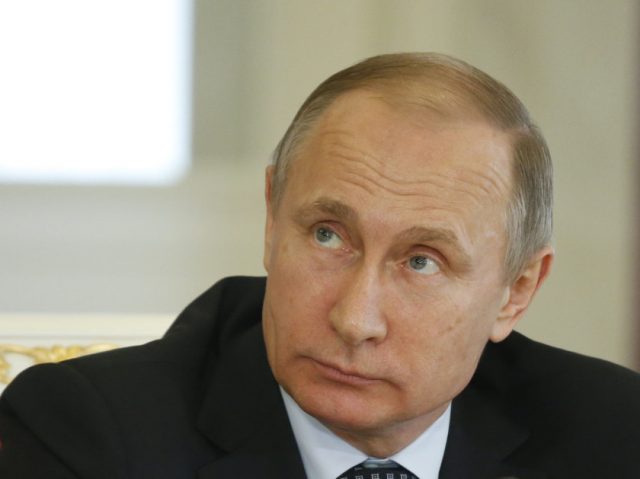
As the Ukraine situation has worsened, unconscionable misinformation and hype is being poured on Russia and Vladimir Putin. Journalists and pundits must scour the Internet and thesauruses to come up with fiendish new epithets to describe both. Wherever I make presentations across America, the first question ominously asked during Q&A is always, “What about Putin?” It’s time to share my thoughts which follow:
Putin obviously has his faults and makes mistakes. Based on my earlier experience with him, and the experiences of trusted people, including U.S. officials who have worked closely with him over a period of years, Putin most likely is a straight, reliable and exceptionally inventive man.
He is obviously a long-term thinker and planner and has proven to be an excellent analyst and strategist. He is a leader who can quietly work toward his goals under mounds of accusations and myths that have been steadily leveled at him since he became Russia’s second president.
I’ve stood by silently watching the demonization of Putin grow since it began in the early 2000s –– I pondered on computer my thoughts and concerns, hoping eventually to include them in a book (which was published in 2011). The book explains my observations more thoroughly than this article.
Like others who have had direct experience with this little known man, I’ve tried to no avail to avoid being labeled a “Putin apologist”. If one is even neutral about him, they are considered “soft on Putin” by pundits, news hounds and average citizens who get their news from CNN, Fox and MSNBC.
I don’t pretend to be an expert, just a program developer in the USSR and Russia for the past 30 years. But during this time, I’ve have had far more direct, on-ground contact with Russians of all stripes across 11 time zones than any of the Western reporters or for that matter any of Washington’s officials.
I’ve been in country long enough to ponder on Russian history and culture deeply, to study their psychology and conditioning, and to understand the marked differences between American and Russian mentalities which so complicate our political relations with their leaders.
As with personalities in a family or a civic club or in a city hall, it takes understanding and compromise to be able to create workable relationships when basic conditionings are different. Washington has been notoriously disinterested in understanding these differences and attempting to meet Russia halfway.
In addition to my personal experience with Putin, I’ve had discussions with numerous American officials and U.S. businessmen who have had years of experience working with him––I believe it is safe to say that none would describe him as “brutal” or “thuggish”, or the other slanderous adjectives and nouns that are repeatedly used in western media.
I met Putin years before he ever dreamed of being president of Russia, as did many of us working in St.Petersburg during the 1990s. Since all of the slander started, I’ve become nearly obsessed with understanding his character. I think I’ve read every major speech he has given (including the full texts of his annual hours-long telephone “talk-ins” with Russian citizens).
I’ve been trying to ascertain whether he has changed for the worse since being elevated to the presidency, or whether he is a straight character cast into a role he never anticipated––and is using sheer wits to try to do the best he can to deal with Washington under extremely difficult circumstances.
If the latter is the case, and I think it is, he should get high marks for his performance over the past 14 years. It’s not by accident that Forbes declared him the most Powerful Leader of 2013, replacing Obama who was given the title for 2012. The following is my one personal experience with Putin.
The year was 1992

Putin with Anatoly Sobchak, Mayor of St. Petersburg, early 1990s. Putin was one of Sobchak’s deputies from 1992-96
It was two years after the implosion of communism; the place was St.Petersburg.
For years I had been creating programs to open up relations between the two countries and hopefully to help Soviet people to get beyond their entrenched top-down mentalities. A new program possibility emerged in my head. Since I expected it might require a signature from the Marienskii City Hall, an appointment was made.
My friend Volodya Shestakov and I showed up at a side door entrance to the Marienskii building. We found ourselves in a small, dull brown office, facing a rather trim nondescript man in a brown suit.
He inquired about my reason for coming in. After scanning the proposal I provided he began asking intelligent questions. After each of my answers, he asked the next relevant question.
I became aware that this interviewer was different from other Soviet bureaucrats who always seemed to fall into chummy conversations with foreigners with hopes of obtaining bribes in exchange for the Americans’ requests. CCI stood on the principle that we would never, never give bribes.
This bureaucrat was open, inquiring, and impersonal in demeanor. After more than an hour of careful questions and answers, he quietly explained that he had tried hard to determine if the proposal was legal, then said that unfortunately at the time it was not. A few good words about the proposal were uttered. That was all. He simply and kindly showed us to the door.
Out on the sidewalk, I said to my colleague, “Volodya, this is the first time we have ever dealt with a Soviet bureaucrat who didn’t ask us for a trip to the US or something valuable!”
I remember looking at his business card in the sunlight––it read Vladimir Vladimirovich Putin.
1994
U.S. Consul General Jack Gosnell put in an SOS call to me in St.Petersburg. He had 14 Congress members and the new American Ambassador to Russia, Thomas Pickering, coming to St.Petersburg in the next three days. He needed immediate help.
I scurried over to the Consulate and learned that Jack intended me to brief this auspicious delegation and the incoming ambassador.
I was stunned but he insisted. They were coming from Moscow and were furious about how U.S. funding was being wasted there. Jack wanted them to hear the”good news” about CCI’s programs that were showing fine results. In the next 24 hours Jack and I also set up “home” meetings in a dozen Russian entrepreneurs’ small apartments for the arriving dignitaries (St.Petersburg State Department people were aghast, since it had never been done before––but Jack overruled).
Only later in 2000, did I learn of Jack’s former three-year experience with Vladimir Putin in the 1990s while the latter was running the city for Mayor Sobchak. More on this further down.
December 31, 1999

Boris Nikolayevich Yeltsin leaves the Kremlin on the day of his resignation, December 31 1999. Prime Minister Putin (second left) became acting president.
With no warning, at the turn of the year, President Boris Yeltsin made the announcement to the world that from the next day forward he was vacating his office and leaving Russia in the hands of an unknown Vladimir Putin.
On hearing the news, I thought surely not the Putin I remembered––he could never lead Russia. The next day a NYT article included a photo.
Yes, it was the same Putin I’d met years ago! I was shocked and dismayed, telling friends, “This is a disaster for Russia, I’ve spent time with this guy, he is too introverted and too intelligent––he will never be able to relate to Russia’s masses.”
Further, I lamented: “For Russia to get up off of its knees, two things must happen: 1) The arrogant young oligarchs have to be removed by force from the Kremlin, and 2) A way must be found to remove the regional bosses (governors) from their fiefdoms across Russia’s 89 regions”.
It was clear to me that the man in the brown suit would never have the instincts or guts to tackle Russia’s overriding twin challenges.
February 2000
Almost immediately Putin began putting Russia’s oligarchs on edge. In February a question about the oligarchs came up; he clarified with a question and his answer:
What should be the relationship with the so-called oligarchs? The same as anyone else. The same as the owner of a small bakery or a shoe repair shop.
This was the first signal that the tycoons would no longer be able to flaunt government regulations or count on special access in the Kremlin. It also made the West’s capitalists nervous.
After all, these oligarchs were wealthy untouchable businessmen––good capitalists, never mind that they got their enterprises illegally and were putting their profits in offshore banks.
Four months later Putin called a meeting with the oligarchs and gave them his deal:
They could keep their illegally-gained wealth-producing Soviet enterprises and they would not be nationalized …. IF taxes were paid on their revenues and if they personally stayed out of politics.
This was the first of Putin’s “elegant solutions” to the near impossible challenges facing the new Russia. But the deal also put Putin in crosshairs with US media and officials who then began to champion the oligarchs, particularly Mikhail Khodorkovsky.
The latter became highly political, didn’t pay taxes, and prior to being apprehended and jailed was in the process of selling a major portion of Russia’s largest private oil company, Yukos Oil, to Exxon Mobil. Unfortunately, to U.S. media and governing structures, Khodorkovsky became a martyr (and remains so up to today).
March 2000
I arrived in St.Petersburg. A Russian friend (a psychologist) since 1983 came for our usual visit. My first question was, “Lena what do you think about your new president?” She laughed and retorted, “Volodya! I went to school with him!”
She began to describe Putin as a quiet youngster, poor, fond of martial arts, who stood up for kids being bullied on the playgrounds. She remembered him as a patriotic youth who applied for the KGB prematurely after graduating secondary school (they sent him away and told him to get an education).
He went to law school, later reapplied and was accepted. I must have grimaced at this, because Lena said:
Sharon in those days we all admired the KGB and believed that those who worked there were patriots and were keeping the country safe. We thought it was natural for Volodya to choose this career.
My next question was:
What do you think he will do with Yeltsin’s criminals in the Kremlin?
Putting on her psychologist hat, she pondered and replied:
If left to his normal behaviors, he will watch them for a while to be sure what is going on, then he will throw up some flares to let them know that he is watching. If they don’t respond, he will address them personally, then if the behaviors don’t change–– some will be in prison in a couple of years.
I congratulated her via email when her predictions began to show up in real time.
Throughout the 2000s
St.Petersburg’s many CCI alumni were being interviewed to determine how the PEP business training program was working and how we could make the U.S. experience more valuable for their new small businesses. Most believed that the program had been enormously important, even life changing. Last, each was asked:
So what do you think of your new president?
None responded negatively, even though at that time entrepreneurs hated Russia’s bureaucrats. Most answered similarly, “Putin registered my business a few years ago”.
Next question:
So, how much did it cost you?
To a person they replied, “Putin didn’t charge anything”. One said:
We went to Putin’s desk because the others providing registrations at the Marienskii were getting ‘rich on their seats.’
Late 2000
Into Putin’s first year as Russia’s president, US officials seemed to me to be suspect that he would be antithetical to America’s interests––his every move was called into question in American media. I couldn’t understand why and was chronicling these happenings in my computer and newsletters.
Year 2001
Jack Gosnell (former USCG mentioned earlier) explained his relationship with Putin when the latter was deputy mayor of St.Petersburg. The two of them worked closely to create joint ventures and other ways to promote relations between the two countries. Jack related that Putin was always straight up, courteous and helpful.
When Putin’s wife, Ludmila, was in a severe auto accident, Jack took the liberty (before informing Putin) to arrange hospitalization and airline travel for her to get medical care in Finland. When Jack told Putin, he reported that the latter was overcome by the generous offer, but ended saying that he couldn’t accept this favor, that Ludmila would have to recover in a Russian hospital.
She did––although medical care in Russia was abominably bad in the 1990s.
A senior CSIS officer I was friends with in the 2000s worked closely with Putin on a number of joint ventures during the 1990s. He reported that he had no dealings with Putin that were questionable, that he respected him and believed he was getting an undeserved dour reputation from U.S. media.
Matter of fact, he closed the door at CSIS when we started talking about Putin. I guessed his comments wouldn’t be acceptable if others were listening.
Another former U.S. official who will go unidentified, also reported working closely with Putin, saying there was never any hint of bribery, pressuring, nothing but respectable behaviors and helpfulness.
I had two encounters in 2013 with State Department officials regarding Putin:
At the first one, I felt free to ask the question I had previously yearned to get answered:
When did Putin become unacceptable to Washington officials and why??
Without hesitating the answer came back:
The knives were drawn’ when it was announced that Putin would be the next president.”
I questioned WHY? The answer:
I could never find out why––maybe because he was KGB.”
I offered that Bush #I, was head of the CIA. The reply was
That would have made no difference, he was our guy.
The second was a former State Department official with whom I recently shared a radio interview on Russia. Afterward when we were chatting, I remarked, “You might be interested to know that I’ve collected experiences of Putin from numerous people, some over a period of years, and they all say they had no negative experiences with Putin and there was no evidence of taking bribes”. He firmly replied:
No one has ever been able to come up with a bribery charge against Putin.”
From 2001 up to today, I’ve watched the negative U.S. media mounting against Putin …. even accusations of assassinations, poisonings, and comparing him to Hitler.
No one yet has come up with any concrete evidence for these allegations. During this time, I’ve traveled throughout Russia several times every year, and have watched the country slowly change under Putin’s watch. Taxes were lowered, inflation lessened, and laws slowly put in place. Schools and hospitals began improving. Small businesses were growing, agriculture was showing improvement, and stores were becoming stocked with food.
Alcohol challenges were less obvious, smoking was banned from buildings, and life expectancy began increasing. Highways were being laid across the country, new rails and modern trains appeared even in far out places, and the banking industry was becoming dependable. Russia was beginning to look like a decent country –– certainly not where Russians hoped it to be long term, but improving incrementally for the first time in their memories.
My 2013/14 Trips to Russia:
In addition to St.Petersburg and Moscow, in September I traveled out to the Ural Mountains, spent time in Ekaterinburg, Chelyabinsk and Perm. We traveled between cities via autos and rail––the fields and forests look healthy, small towns sport new paint and construction. Today’s Russians look like Americans (we get the same clothing from China).
Old concrete Khrushchev block houses are giving way to new multi-story private residential complexes which are lovely. High-rise business centers, fine hotels and great restaurants are now common place––and ordinary Russians frequent these places. Two and three story private homes rim these Russian cities far from Moscow.
We visited new museums, municipal buildings and huge super markets. Streets are in good repair, highways are new and well marked now, service stations look like those dotting American highways. In January I went to Novosibirsk out in Siberia where similar new architecture was noted. Streets were kept navigable with constant snowplowing, modern lighting kept the city bright all night, lots of new traffic lights (with seconds counting down to light change) have appeared.
It is astounding to me how much progress Russia has made in the past 14 years since an unknown man with no experience walked into Russia’s presidency and took over a country that was flat on its belly.
So why do our leaders and media demean and demonize Putin and Russia???
Like Lady MacBeth, do they protest too much?
Psychologists tell us that people (and countries?) project off on others what they don’t want to face in themselves. Others carry our “shadow” when we refuse to own it. We confer on others the very traits that we are horrified to acknowledge in ourselves.
Could this be why we constantly find fault with Putin and Russia?
Could it be that we project on to Putin the sins of ourselves and our leaders?
Could it be that we condemn Russia’s corruption, acting like the corruption within our corporate world doesn’t exist?
Could it be that we condemn their human rights and LGBT issues, not facing the fact that we haven’t solved our own?
Could it be that we accuse Russia of “reconstituting the USSR”––because of what we do to remain the world’s “hegemon”?
Could it be that we project nationalist behaviors on Russia, because that is what we have become and we don’t want to face it?
Could it be that we project warmongering off on Russia, because of what we have done over the past several administrations?
Some of you were around Putin in the earlier years. Please share your opinions, pro and con …. confidentiality will be assured. It’s important to develop a composite picture of this demonized leader and get the record straight. I’m quite sure that 99% of those who excoriate him in mainstream media have had no personal contact with him at all. They write articles on hearsay, rumors and fabrication, or they read scripts others have written on their tele-prompters. This is how our nation gets its “news”, such as it is.
There is a well known code of ethics among us: Is it the Truth, Is it Fair, Does it build Friendship and Goodwill, and Will it be Beneficial for All Concerned?
It seems to me that if our nation’s leaders would commit to using these four principles in international relations, the world would operate in a completely different manner, and human beings across this planet would live in better conditions than they do today.
As always your comments will be appreciated. Please resend this report to as many friends and colleagues as possible.
Sharon Tennison ran a successful NGO funded by philanthropists, American foundations, USAID and Department of State, designing new programs and refining old ones, and evaluating Russian delegates’ U.S. experiences for over 20 years. Tennison adapted the Marshall Plan Tours from the 40s/50s, and created the Production Enhancement Program (PEP) for Russian entrepreneurs, the largest ever business training program between the U.S. and Russia. Running several large programs concurrently during the 90s and 2000s, funding disappeared shortly after the 2008 financial crisis set in. Tennison still runs an orphanage program in Russia, is President and Founder, Center for Citizen Initiatives, a member of Rotary Club of Palo Alto, California, and author of The Power of Impossible Ideas: Ordinary Citizens’ Extraordinary Efforts to Avert International Crises. The author can be contacted at sharon@ccisf.org
US expands sanctions on Russian firms, individuals
Press TV – January 26, 2018
The United States has expanded its sanctions against Russia by adding more individuals and companies to its blacklist because of what Washington calls Moscow’s continued interference in Ukraine.
The US Treasury Department announced on Friday it had added 21 people and nine companies to the sanctions list, including some that had been involved in the delivery of Siemens gas turbines to Crimea. According to the statement, Russian Deputy Energy Minister Andrey Cherezov was in the black list.
“Today’s action is part of Treasury’s continued commitment to maintain sanctions pressure on Russia,” the department said in a statement.
“This action underscores the US government’s opposition to Russia’s occupation of Crimea and firm refusal to recognize its attempted annexation of the peninsula,” it added.
The latest sanctions have also affected some power and energy companies, including Techno-prom-export engineering company and multiple subsidiaries of oil producer Surgut-nefte-gaz.
On Thursday, the US called on the EU to follow in the footsteps of the US by blacklisting more Russian oligarchs in line with a US sanctions review.
The US has also blacklisted dozens of Russian individuals and companies over what Washington calls Russia’s interference in Ukraine and its meddling in the 2016 presidential election.
The US and its allies had already levied broad economic sanctions against Russia over its alleged support for pro-Russia separatist forces in eastern Ukraine and Crimea’s reunification with Russia after a referendum in 2014.
Social media giants crack down on RT under Senate pressure
RT | January 26, 2018
Facebook, Google and Twitter are taking action against RT in response to pressure from the Senate Intelligence Committee, but have found very little to indicate ‘Russian meddling’ in the 2016 elections, new documents show.
Google Search, for example, has labels “describing RT’s relationship with the Russian Government” and the company is “working on disclosures to provide similar transparency on YouTube,” according to a letter sent to the committee by Google’s VP and general counsel Kent Walker.
Twitter has “off-boarded” RT and Sputnik “and will no longer allow those companies to purchase ad campaigns and promote Tweets on our platform,”said the letter from the company’s acting general counsel Sean Edgett.
The letters were provided following the October 31, 2017 hearing at which the senators grilled social media executives on alleged Russian meddling in the 2016 presidential election via their products and services.
Senator Joe Manchin (D-West Virginia) was interested to know whether any of the companies accepted advertising from RT or Sputnik. Unlike Twitter, Facebook and Google continue to carry ads from both outlets. Google’s Walker wrote that such ads remain subject to “strict ads policies and community guidelines,” and that “to date, we’ve seen no evidence that they are violating these policies.”
Walker added that Google took RT out of its Preferred Lineup on YouTube. In November, Eric Schmidt, chairman of Google’s parent company Alphabet, told an international forum that he planned to “de-rank” RT and Sputnik in displayed search results.
Facebook’s general counsel Colin Stretch wrote that RT and Sputnik can “use our advertising tools as long as they comply with Facebook’s policies, including complying with applicable law.”
Committee chairman Richard Burr (R-North Carolina) asked whether any of the companies provide any data to the Russian government. Twitter said it had received requests for data, but did not comply with any of them. Facebook said it had received 28 requests for data between 2013 and 2017, but that it “did not provide any data in response.”
Google said it had “not complied with every request” but declined to provide any specifics, referring the senators to its Transparency Report. RT’s analysis of that data shows that Google received 237 requests in the first half of 2016 and provided responses in 7 percent of cases. Another 234 requests came in the second half of the year, with a 15 percent response rate. There were 318 requests in 2017 with a 10 percent response rate.
Senator Kamala Harris (D-California) was very interested to hear what the social media companies are doing with the revenue supposedly earned from “Russian” advertising. Edgett’s letter confirmed Twitter’s commitment to donate the $1.9 million that RT had spent globally on ads to “academic research into elections and civic engagement.” He did not specify the organizations that would benefit from this funding.
Although Stretch said that revenue from ads running on pages managed by the Internet Research Agency (IRA, usually described in the Western press as the “St. Petersburg troll farm”) was “immaterial,” he revealed that Facebook has contributed “hundreds of thousands of dollars” to the Defending Digital Democracy Project, an outfit based at the Harvard Kennedy School of Government “that works to secure democracies around the world from external influence.”
Furthermore, the investments Facebook has made to “address election integrity and other security issues” have been so significant that “we have informed investors that we expect that the amount that we will spend will impact our profitability,” Stretch added.
Google said the total amount of revenue from “Russian” ads amounted to $4,700, while the company has contributed $750,000 to the the Defending Digital Democracy Project.
The outfit is run by Eric Rosenbach, former assistant secretary of defense in the Obama administration. According to the Belfer Center at Harvard University, Rosenbach recruited Hillary Clinton’s former campaign manager Robby Mook and Mitt Romney’s 2012 campaign manager Matt Rhoades to co-chair the project.
Among the project’s advisers is Marc Elias of Perkins Coie, the law firm that has represented Clinton and the DNC, and was revealed to have paid for the notorious “Steele Dossier.” Another member of the project’s senior advisory group is Dmitri Alperovitch, CEO of Crowdstrike, the private company hired by the DNC which originated the accusation that Russia hacked into the party’s emails. Alperovitch is also a senior fellow at the Atlantic Council, a think tank associated with anti-Russian reports and partially funded by the US military, NATO, and defense contractors like Lockheed Martin and Boeing.
Read more:
Featured Video

Death Spikes & Rising Cancer In Our Youth Explained
or go to
Aletho News Archives – Video-Images
From the Archives
Politicians lie
By Mazin Qumsiyeh | Popular Resistance | August 18, 2013
There is no way to say this truth nicely: Politicians lie. That includes Japanese, American, Egyptian, Israeli, and Palestinian politicians! Is there something more common sense than that? Yet, so many citizens around the world believe their own politicians or wistfully acknowledge lies but think it is part of the job needed to run things. They believe even when politicians contradict themselves blatantly. This phenomenon is rather remarkable. It is a dissonance and disconnect from reality that many seem oblivious to. It is very dangerous because it can lead to accepting rationales for going to war. These can be deadly wars that lead to millions of lives lost as happened in what was called World War 1 and WW2. Even when incredible and declassified evidence abound, politicians continue to lie and old mythologies refuse to die. Here are just a few of the countless lies told to us over the past few decades… continue
Blog Roll
 Aletho News
- RSF military group defects, joins Sudanese army: State media
- Ireland goalkeeper refuses to play ‘Israel’ as squad weighs boycott
- China pushes back against US on Cuba, Iran
- Ukrainian Soldiers, Potential Mercenaries: Have Gun, Will Travel!
- Burnham’s UN debut… A masterclass in British disinformation
- Iran flights continue despite US aviation sanctions
- Global Tipping Points Lead the World Into a State of Entropy
- The day-after at the White House: USA and Xi Jinping
- The Geopolitical Balance in the Red Sea: The UAE Being Displaced by New Players
- Iraqi resistance group vows to stage airport sit-ins over Iran aerial blockade
- If Americans Knew
- Deconstructing Netanyahu’s pants-on-fire UN rant – Daily Update
- Trump betrayed voters with his campaign lies and prioritized a foreign country once he took office
- Netanyahu calls Israel’s war in Gaza ‘opposite of genocide’ in UN speech to near-empty hall
- Settler Kidnappings: Torture, Sexual Abuse and Terrorisation of Palestinian Abductees as Israel Deepens Annexation of West Bank
- Gaza winter nears as 162,000 tents become unusable, raising fears of humanitarian crisis
- Netanyahu says, “It’s the opposite of genocide”; UN says Gaza economy is world’s ‘most severe crisis on record’ – Daily Update
- Israel’s US-Backed Assault on Gaza Has Created the ‘World’s Most Severe Economic Crisis on Record’: UN
- ‘Protecting U.S. Citizens’… From Israel
- ‘This is where I live now, the back of a truck’: a day in the life of a grandmother in Gaza
- In UN Speech, Iran’s President Displays Pictures of Children Killed by US, Brings Attention to Israel’s Nuclear Arsenal
- No Tricks Zone
- New Study: Earth And Venus Surface Warmth Largely Explained By Convection And Lapse Rate, Not CO2 Or Radiation
- 2025 Nature Paper Claiming Worsening Global Drought Gets RETRACTED …Heavily Flawed
- New Study: ‘Global Drought Shows No Detectable Recent Acceleration Under Climate Warming’
- Economic Masterminds: German Socialists Suggest Taxing Productivity Gains Stemming From Using AI
- The South China Sea Has Not Been Cooperating With The Climate Change Narrative
- Energy Crisis: Germany Enters Heating Season With Historically Low Gas Reserve Fill Levels
- New Study: The Antarctic Ice Sheet Gained Mass From 2020-2024 Due To Staggering Snow And Ice Accumulation
- Study: Ocean Heating Rates From Thousands Of Years Ago ‘Dwarf’ Modern Ocean Heating Rates
- Climate Extremists Target, Attack Large-Scale Power Grid Infrastructure In Germany!
- New Study: Antarctic Ice Melt Has Contributed Less Than 1 Centimeter To Sea Level Rise In The Last 30 Years

