Anchorage was the Receipt: Europe is Paying the Price… and Knows it
By Gerry Nolan | Ron Paul Institute | February 10, 2026
Sergey Lavrov didn’t hedge. He didn’t soften. He lit the match and let it burn.
“In Anchorage, we accepted the United States’ proposal.”
And now, he says, Washington is no longer prepared to implement what it itself put on the table — not on Ukraine, not on expanded cooperation, not even on the implied promise that a different phase of US–Russia relations was possible.
That line matters because it shatters the performance. The offer was real enough for headlines — but not real enough to survive contact with the sanctions machine.
And then he let the contradiction sit there in plain sight — because while Washington was talking about cooperation, its navy and enforcement arms were busy doing something else entirely: tracking, boarding, and seizing oil tankers across oceans.
This is no metaphor — it is literal. In the months following Anchorage, US forces pursued and boarded vessels — most recently the Aquila II, across thousands of miles of open water, part of a widening campaign of maritime interdictions tied to sanctions enforcement. Tankers were chased, boarded, seized, or forced to turn back. At least seven were taken outright. Others fled. This is what “expanded cooperation” looked like in practice.
Lavrov didn’t need to raise his voice. The steel already had.
There is zero confusion. It was by design. The apparatus that actually enforces US foreign policy — sanctions, enforcement, energy leverage, financial choke points, and now routine interdiction at sea — does not pivot once engaged.
Even under the illusion of an “America First” presidency, what started as policy under Biden, (sanctions enforcement) now hardens. It builds constituencies, legal inertia, and moral alibis that make reversal look like surrender. Washington can change its language. But the machine keeps moving.
And Europe does more than follow, it leads the public Russophobic hysteria show. Every time.
Europe’s Energy Boomerang
The sanctions regime was never a clean moral stand. It was a war-speed demolition and rebuild of Europe’s energy system, carried out with ideological fervor and no concern for predictable consequences.
Eurostat calls household electricity prices “stable,” which is a neat way of avoiding the obvious: they remain well above pre-2022 levels. The shock didn’t pass. It set. Brussels celebrates “diversification,” but its own numbers quietly confess the damage: Russian gas cut from roughly 45 percent of EU supply in 2021 to about 13 percent by 2025; oil from 27 percent to under 3 percent; coal erased entirely.
That’s anything but adjustment. It’s amputation.
Germany — the supposed industrial spine of Europe — now treats energy prices like a security threat. Manufacturing closed out 2025 in deeper contraction, output slipping again as demand thinned. Berlin’s response has been nakedly revealing: subsidize the very costs its own policy detonated. Industrial electricity price supports were set to begin in early January (2026). Even projected grid-fee reductions are sold not as success, but as relief — relief from some of the highest power costs on the continent, dependent on state life support.
Europe mistook moral theater for strategy — and now pays the energy bill for the applause. This is the sanctions boomerang: punishment abroad, triage at home. While Russia ascends as an economic powerhouse, all on the backs of Eurocrat arrogance.
Dependency was not Ended — It was Merely Reassigned
Lavrov’s broader charge goes beyond Ukraine. He’s describing a system: the grand delusion of global economic dominance enforced through tariffs, sanctions, prohibitions, and control of energy and financial arteries — now enforced not just with spreadsheets, but with illegal maritime interdictions.
Europe’s experience since 2022 makes that system impossible to ignore. What’s sold as diversification increasingly looks like a dependency transfer. Stable, long-term pipeline supply gave way to exposure to a volatile global LNG bidding war — structurally more expensive, strategically weaker, and permanently uncertain. Long-term contracts are now pursued not from strength, but compulsion. A Greek joint venture seeking a 20-year LNG deal for up to 15 bcm per year isn’t sovereignty. It’s necessity, courtesy of Washington’s protection racket, started under the Biden admin but continued by Trump 2.0. But Europe had a choice, it could have chosen survival and sovereignty.
Europe didn’t escape leverage, which was more manageable with cheap and reliable Russian energy. It changed landlords.
And once sanctions start being enforced kinetically — once ships are chased, boarded, seized — the fiction that this is just “economic pressure” collapses. It becomes what it always was: control of supply.
When the Bible of Atlanticism Blinks
Here’s the tell — the kind that only surfaces when denial has finally failed.
Foreign Policy, the house journal of trans-Atlantic orthodoxy — the catechism, the Bible, the place where acceptable thought is laundered into seriousness — recently ran a headline that would have been unprintable not long ago: “Europe Is Getting Ready to Pivot to Putin.”
That matters precisely because of where it appeared.
Foreign Policy does not freelance heresy from the imperial court. It records shifts after they’ve already occurred by the trans-Atlanticist high priests. When it acknowledges a turn in this case, it’s conceding. The article wasn’t sympathetic to Moscow and wasn’t meant to be. It was brutally pragmatic: Europe is discovering that being sidelined by Washington in negotiations that determine Europe’s own future has consequences.
France and Italy — not spoilers, not outliers — are signaling the need for direct engagement with Moscow. Channels once frozen are reopening, carefully, almost grudgingly. Advisers are traveling. Messages are moving. This isn’t ideology evolving. It’s cold arithmetic reasserting itself.
Publicly, the tone remains Russophobic — absolutist, moralized, often shrill. Privately, the conclusion has already landed. European leaders now understand something they can’t scrub away: Russia did not collapse, did not fold, and did not exit history. Quite the opposite in fact.
They don’t have to like that fact. It no longer asks permission.
Russia Hardens — And Reads the Board
Russia’s response to Western pressure was not panic. It was recalibration. Economic diversification. Alternative settlement rails. Deeper Eurasian integration. An energy sector that rerouted flows instead of begging for mercy — even as its ships were hunted across oceans under the banner of “rules.”
Moscow also understands the American calendar. It knows Washington wants a fast off-ramp before the midterms — a way to reduce exposure without saying the quiet part out loud. It also knows the sanctions machine can’t reverse quickly without political bloodshed inside the US system itself.
That asymmetry is decisive.
Russia sees that Trump, whatever his instincts, holds fewer cards than advertised. He cannot simply switch off enforcement — maritime or financial — without confronting the architecture Washington spent years entrenching. Moscow therefore has no incentive to hurry, no reason to concede early, and every reason to sit tight, keep establishing cold battlefield reality on the ground and let the US political calendar amp up the pressure.
This isn’t stubbornness. It’s leverage, earned the hard way.
What a European Pivot Really Means
A real European pivot toward Russia would not be reconciliation or repentance. It would be an acceptance of geopolitical and civilizational reality at a moment when denial has become suicidal. Europe cannot build a durable security order in permanent opposition to Russia without crippling itself economically, industrially, and politically. The post-2022 experiment proved the limit: Europe hollowed out its own productive base much faster than it superficially constrained Russia’s strategic depth.
Energy interdependence, even when restructured, remains central to Europe’s survival as an industrial civilization. That reality cannot be legislated away or drowned in slogans. Pipelines, grids, shipping lanes, and supply chains answer to geography and physics, not values statements. A pivot means admitting that stability comes from managed interdependence, not performative severance — and that Russia, whether welcomed or resented, remains structurally vital in Europe’s continental system.
Most of all, it forces Europe to confront the truth it spent years skirting: the Atlantic order it tied itself to is in late-stage imperial implosion. Policy volatility, sanctions excess, enforcement maximalism, and election-cycle geopolitics aren’t glitches. They’re symptoms. Europe can no longer assume that alignment with Washington guarantees coherence, protection, or prosperity. Adaptation is no longer optional. Europe must re-enter history as a civilizational actor with agency — not as a dependency clinging to an order that can no longer carry its weight.
The Realignment is No Longer Merely Theoretical
The verdict from Anchorage wasn’t a misunderstanding. It was a reveal.
Washington made an offer it could not politically afford to honor, then defaulted back to sanctions, interdictions, and enforcement — the only language its system still speaks fluently. Europe crippled by the cost. Russia absorbed the pressure. Somewhere in between, the old Atlantic script quietly stopped working.
What’s changed now isn’t Europe’s rhetoric, but its private recognition. Even the most Russophobic Eurocrats understand what cannot be unsaid: Russia is not returning to the Western order, and Europe cannot afford endless confrontation.
Europe is not pivoting toward Russia out of goodwill. Russia is not waiting for Europe out of nostalgia. And Washington is no longer the indispensable broker it pretends to be.
The realignment is already happening — not because anyone chose it, but because the old order ran out of force before it ran out of slogans.
Gerry Nolan is a political analyst, writer, and strategist focused on geopolitics, security affairs, and the structural dynamics of global power. He is the founder and editor of The Islander, an independent media platform examining war, diplomacy, economic statecraft, and the accelerating shift toward a multipolar world.
NATO’s ‘Agent Rutte’ in blatant sabotage of Ukraine peace negotiations
Strategic Culture Foundation | February 7, 2026
NATO chief Mark Rutte declared in a high-profile address to the Ukrainian parliament this week that alliance troops would be deployed in Ukraine immediately on signing any peace deal with Russia.
He asserted that the NATO forces would be British and French, deployed “on the land, in the air, and at sea.” He added that the coalition would have the “crucial backstop” of a U.S. security guarantee if “Russia tried to subjugate Ukraine again.”
It seems more than a coincidence that three days after Rutte spoke in the Ukrainian Verkhovna Rada (parliament), there was an assassination attempt in Moscow on a top Russian general. Lieutenant General Vladimir Alekseev, the deputy commander of Russian military intelligence (GRU), was shot several times in the back by a gunman.
This was while delicate negotiations were being conducted in Abu Dhabi to find a peace settlement to the nearly four-year war in Ukraine. Russian delegates met with American and Ukrainian counterparts for a second round of talks this week.
Rutte’s speech in Kiev and the assassination attack in Moscow appear to be calculated moves to sabotage the negotiation efforts that the Trump administration has been pushing.
First, the NATO chief knows full well that Russia is adamant that any settlement in Ukraine will not involve the presence of NATO troops, whether they are called “peace monitors” or “coalition of the willing.” Moscow has repeatedly expressed in the clearest terms that such a contingency is out of the question and non-negotiable.
So, Rutte’s forcing the issue of deployment can only mean that the real aim is to make any agreement with Russia impossible. This is while the mealy-mouthed former Dutch prime minister was also saying that he backed efforts by Trump to end this “terrible conflict”.
“Some European Allies have announced that they will deploy troops to Ukraine after a deal is reached. Troops on the ground, jets in the air, ships on the Black Sea. The United States will be the backstop; others have vowed to support in other ways… The security guarantees are solid, and this is crucial – because we know that getting to an agreement to end this terrible war will require difficult choices,” said Rutte with double-think.
Moreover, in his latest pronouncements, Rutte dispensed with the deceptive terms of NATO forces supposedly acting as “peacekeepers”. His gung-ho rhetoric of troops “on the land, jets in the air, and ships at sea” sounded more like a stealthy plan for NATO military intervention to escalate the confrontation from a proxy one to a full-on war.
Significantly, too, Rutte declared that NATO was gearing up to increase military supplies to Ukraine. He said that an additional $15 billion was earmarked by the European members to buy weapons sourced from the U.S. He concluded his speech with the World War Two fascist slogan “Slava Ukraini!” (Glory to Ukraine!). It was a rallying call for the Kiev regime and its NeoNazi adherents to keep fighting.
As with the assassination plot on the GRU deputy commander, the objective seems to be to frustrate any negotiations to end the war. The head of the Russian security delegation in Abu Dhabi is reportedly GRU Director, Admiral Igor Kostyukov. That his deputy was shot several times in his Moscow home as talks were taking place outside the country would appear to be a calculated provocation.
The irony is that the European NATO members constantly accuse Russia of not wanting to make peace. They make the preposterous claim that Russian President Vladimir Putin is intent on conquering the rest of Europe when Ukraine is defeated. The fact is, Moscow has consistently called for a diplomatic process to resolve the root causes of the conflict (NATO’s historic expansion) and to formulate a new collective security treaty for Europe based on indivisible security for all. Russia also wants to keep the territories that are historically Russian.
It is the transatlantic axis of U.S. and European NATO hardliners who don’t want a diplomatic settlement. They want the proxy war against Russia to persist indefinitely. It was they who instigated the hostilities with the CIA-backed coup in Kiev in 2014, and, before that, with numerous color revolutions after the collapse of the Soviet Union in 1991.
It is not clear what Trump’s agenda is. Is he an inconsequential maverick, or is the deep state pulling his chain? He talks about making peace with Russia, yet his administration is sanctioning Russia’s vital oil exports, seizing cargo ships in international waters, coercing India and other nations to halt trade with Russia, and threatening its allies like Iran, Venezuela, and Cuba. Is his Ukraine diplomacy a guise for continuing aggression in another form? Or is it muddled thinking? Moscow appears to be giving Trump the benefit of the doubt and is engaging in talks to explore a peaceful settlement in Ukraine.
That said, however, a red line for Moscow is the proposals to deploy NATO troops in Ukraine. That’s not ending root causes. It is fertilizing them.
The transatlantic imperialist nexus (the U.S. and European ruling class, the CIA and its intelligence counterparts, and the military-industrial complex) is driven by hegemonic goals. Russia, China, and the non-Western multipolar world must be contained or rolled back, as during the Cold War.
The proxy war in Ukraine demonstrated that Russia could not be strategically defeated, as the Western hegemons desired. Their next best option is to keep Ukraine militarized and to keep Russia on guard to drain its resources. It still amounts to a war agenda.
Mark Rutte’s performance this week is that of a minion for the war agenda. His every word and deed speak of deliberately inciting aggression while he duplicitously talks about supporting peace. Eight decades ago, the Nuremberg Trials defined such aggression as the “supreme crime”.
Even some mainstream European politicians have taken note of Rutte’s sinister psychology. Charles Michel, the former European Council President, said in a media interview last week: “I want to be clear, Mark Rutte is disappointing and I’m losing confidence… I’m not expecting [him] to be an American agent.”
Agent Rutte should be in a modern-day dock. He and his masters want to push the world into catastrophe.
‘Fact-checking’ as a disinformation scheme: The Brazilian case of Agência Lupa
By Raphael Machado | Strategic Culture Foundation | February 7, 2026
Since the term “fake news” emerged in the world of political journalism, we have been confronted with a new angle through which the establishment attempts to reinforce its hegemony in the intellectual and informational sphere: by simulating ideology as science, data, or fact.
A fundamental aspect of hegemonic liberalism in the “rival-less” post-Cold War world is the transition of ideology into the diffuse realm of pure facticity. What decades earlier was clearly identified as belief comes to be taken as “data,” that is, as indisputable, not open for debate. This is the case, for example, with the myth of “democracy,” the myth of “human rights,” the myth of “progress,” and the myth of the “free market.” And today, we could extend this to the dictates of “gender ideology” and a series of other beliefs of ideological foundation, which are nevertheless taken as scientific facts.
“Fact-checking” has thus become one of the many mechanisms used by the establishment to reinforce systemic “consensus” in the face of the emergence of alternative perspectives following the popularization of the internet and independent journalism. The “authoritative” distinction made by a self-declared “independent” and “respectable” agency between what would be “fact” and what would be “fake news” has become a new source of truth.
Some liberal-democratic governments, like the USA, have gone so far as to create special departments dedicated to “combating fake news,” thus acting as authentic “Ministries of Truth” of Orwellian memory.
However, even within the “independent” sphere, we rarely encounter genuine independence. On the contrary, in fact, Western “fact-checking agencies” tend to be well-integrated into the constellation of NGOs, foundations, and associations of the non-profit industrial complex, which, in turn, is permeated by the money of large corporations and the interests of liberal-democratic governments. Even their staff tend to be revolving doors for figures coming from the NGO world, mainstream journalism, and state bureaucracy.
Although the phenomenon is of Western origin, Brazil is not exempt from it. “Fact-checking agencies” also operate here — most of them engaged in the same types of disinformation operations as the governments, newspapers, and NGOs that sponsor them.
A typical example is Agência Lupa.
Founded in 2015, its founder Cristina Tardáguila previously worked for another disinformation apparatus disguised as “fact-checking,” Preto no Branco, funded by Grupo Globo (founded and owned by the Marinho family, members of which are mentioned in the Epstein Files). Lupa was financially boosted by João Moreira Salles, from the billionaire banker family Moreira Salles (of Itaú Unibanco).
Despite claiming independence from the editorial control of Revista Piauí, also controlled by the Moreira Salles family, Agência Lupa continues to be virtually hosted by Piauí’s resources, where Tardáguila worked as a journalist from 2006 to 2011. Furthermore, she also received support from the Instituto Serrapilheira, also from the Moreira Salles family, during the health crisis to act as a mechanism for imposing the pandemic consensus in what was one of the largest social experiments in human history.
In parallel, it is relevant to mention that the same João Moreira Salles was involved decades ago in a scandal after it was revealed that he had financed “Marcinho VP,” one of the leaders of the drug trafficking organization Comando Vermelho. Moreira Salles made a deal with the justice system to avoid being held accountable for this involvement.
Tardáguila was also the deputy director of the International Fact-Checking Network, an absolutely “independent” “fake news combat” network, yet funded by institutions such as the Open Society, the Bill & Melinda Gates Foundation, Google, Meta, the Omidyar Network, and the US State Department, through the National Endowment for Democracy.
Today Tardáguila no longer runs Lupa, but her “profile” on the official page of the National Endowment for Democracy (notorious funder of color revolutions and disinformation operations around the world) states that she is quite active at the Equis Institute, which counts among its funders the abortion organization Planned Parenthood, and aims to conduct social engineering against “Latino” populations.
Lupa is currently headed by Natália Leal. Contrary to the narrative of “independence,” the reality is that she has worked for several Brazilian mass media outlets, such as Poder360, Diário Catarinense, and Zero Hora, in addition to also writing for Revista Piauí, from the same Moreira Salles. Leal is less “internationally connected” than Tardáguila, but she was “graced” with an award from the International Center for Journalists, an association of “independent journalists” that, in fact, is also funded by the US State Department’s National Endowment for Democracy, the Bill & Melinda Gates Foundation, Meta, Google, CNN, the Washington Post, USAID, and the Serrapilheira Institute itself, also from Moreira Salles.
Quite clearly, it is somewhat difficult to take seriously the notion that Lupa would have sufficient autonomy and independence to act as an impartial arbiter of all narratives spread on social networks when it and its key figures themselves have these international connections, including at a governmental level.
But even on a practical level, it is difficult to take seriously the self-attributed role of confronting “fake news.” Returning to the pandemic period, for example, the differentiated treatment given by the company to the Russian Sputnik vaccine and the Pfizer vaccine is noteworthy. The former is treated with suspicion in articles written in August and September 2020, both authored by Jaqueline Sordi (who is also on the staff of the Serrapilheira Institute and a dozen other NGOs funded by Open Society), the latter is defended tooth and nail in dozens of articles by various authors, ranging from insisting that Pfizer’s vaccines are 100% safe for children, to stating that Bill Gates never advocated for reducing the world population.
On this matter, by the way, it is important to emphasize that Itaú coordinates investment portfolios that include Pfizer, therefore, there are business interests that bring the Moreira Salles family and the pharmaceutical giant closer.
But beyond disinformation about Big Pharma, as well as about other places around the world, such as Venezuela, regarding which Lupa claims that María Corina Machado has the popular support of 72% of the Venezuelan population (based on a survey by an institute that is not even Venezuelan, ClearPath Strategies), Lupa seems to have a particular obsession with Russia and, curiously, Lupa’s alignment with the dominant narratives in Western media is absolute.
Lupa argues, for example, that the Bucha Massacre was perpetrated by Russia, using the New York Times as its sole source. Regarding Mariupol, it insists on the narrative of the Russian attack on the maternity hospital and other civilian targets, even mentioning Mariana Vishegirskaya, who now lives in Moscow, has admitted to being a paid actress in a staging organized by the Ukrainian government, and now works in the Social Initiatives Committee of the “Rodina” Foundation. It also denies the attempted genocide in Donbass and the practice of organ trafficking in Ukraine.
An article written by founder Cristina Tardáguila herself relies on the Atlantic Council as a source to accuse Russia of spreading disinformation, one of which would be that Ukraine is a failed state subservient to Europe — two pieces of information that any average geopolitical analyst would calmly confirm.
A particular object of Lupa’s obsession is the Global Fact-Checking Network — of which, by the way, I am a part. It is one of the few international organizations dedicated to fact-checking in a manner independent of ideological constraints, counting among its members a team that is, certainly, much more diverse and multifaceted than the typical “revolving door” of fact-checking agencies in the Atlantic circuit, where everyone studied more or less in the same places, worked in mass media, and were, at some point, funded or received grants from Open Society, the Bill & Melinda Gates Foundation, and/or the US State Department.
Lupa’s criterion for attacking the GFCN is… precisely obedience or not to Western mass media sources, in a circular reasoning that cannot go beyond the argument from authority.
This specific case helps to expose a bit the functioning of these disinformation apparatuses typical of hybrid warfare, which disguise themselves in the cloak of journalistic neutrality to engage in informational warfare in defense of the liberal West.
German calls for nukes are ‘madness’ – veteran politician

Sahra Wagenknecht at the BSW party congress in Magdeburg, Germany, December 6, 2025. © Jens Schlueter / Getty Images
RT | February 2, 2026
German politician Sahra Wagenknecht has condemned growing calls for her country to take part in nuclear rearmament, calling the proposals “madness.”
Germany is prohibited from developing nuclear weapons under international law, including the Treaty on the Non-Proliferation of Nuclear Weapons and the Two Plus Four Treaty, the 1990 agreement that enabled German reunification in return for limits on its military capabilities, including renouncing nuclear arms.
Earlier this month, Kay Gottschalk, the parliamentary finance policy spokesman for Alternative for Germany (AfD), said that Berlin “needs nuclear weapons,” arguing that Europe can no longer rely on US protection.
In a post on X on Sunday, Wagenknecht, who previously served in the Bundestag and founded the Bundnis Sahra Wagenknecht party, said that “the cross-front for the nuclear rearmament of Germany is growing.”
“Following advances by AfD politicians for a German nuclear weapon, CDU warmonger Roderich Kiesewetter and former Green foreign minister Joschka Fischer are now also calling for Germany’s participation in a European atomic bomb. What madness,” she wrote.
Fischer said last week that Europe must pursue nuclear rearmament, with Germany taking the lead. Kiesewetter proposed in turn that Berlin could instead “contribute financially” to a European nuclear umbrella that Finland, Sweden, and Poland are planning to develop.
Wagenknecht argued that Germany’s proposed acquisition of nuclear weapons would constitute a serious violation of Berlin’s international legal obligations and would undermine the global system of nuclear arms control. She also warned that US intermediate-range missiles planned for deployment in the Federal Republic, which are capable of striking targets deep inside Russian territory, pose a major security risk.
“The missile deployment undermines the nuclear balance between the US and Russia and massively increases the danger for Germany to become the target of a nuclear strike in the event of conflict,” she wrote.
Instead, Wagenknecht called for Germany to lead a diplomatic disarmament initiative and demanded the withdrawal of US nuclear weapons from German territory. “US atomic bombs out! No US intermediate-range missiles in Germany!” she added.
Europeans oppose Brussels’ Russian energy ban, survey finds
By Thomas Brooke | Remix News | January 30, 2026
A proposed European Union ban on Russian oil and gas faces broad public opposition across the bloc and mounting legal resistance from member states, according to new survey data.
Research published by Hungary’s Századvég Foundation indicates that a relative majority of EU citizens oppose a full embargo on Russian energy imports. Across the European Union, 45 percent of respondents said they were against a complete ban, while support failed to reach a majority in most member states. In two-thirds of EU countries surveyed, at least a relative majority rejected the proposal. Only Poland, Lithuania, and Estonia recorded absolute majority support.
Opposition was strongest in Central and Southern Europe. In Slovenia, 68 percent of respondents opposed the embargo, followed by Greece at 65 percent. In Cyprus, Bulgaria, and Hungary, 62 percent of respondents rejected the measure, according to the survey.
Despite this, the European Commission has moved ahead with a regulation under its REPowerEU framework that would prohibit new contracts for Russian fossil fuels and impose a complete phase-out by 2027. The regulation was advanced using qualified majority voting, overcoming government opposition from Hungary and Slovakia.
Critics argue that the Commission’s approach raises serious legal and constitutional questions. While the policy would have the effect of a sanction, opponents say it has been presented as a trade measure, allowing it to bypass the requirement for unanimous approval by all member states.
Energy policy and decisions on national energy mixes fall under member state competence under EU treaties, a point repeatedly emphasized by Hungarian Foreign Minister Péter Szijjártó, who announced on Monday that Budapest would seek to have the regulation annulled.
“Hungary will take legal action before the Court of Justice of the European Union as soon as the decision on REPowerEU is officially published. We will use every legal means to have it annulled,” he said.
“The REPowerEU plan is based on a legal trick, presenting a sanctions measure as a trade policy decision in order to avoid unanimity,” Szijjártó added. “This goes completely against the EU’s own rules. The Treaties are clear: decisions on the energy mix are a national competence.”
The Hungarian government has also warned of significant economic consequences if Russian supplies are cut off. Analysts cited by officials estimate that household utility costs could rise to three-and-a-half times current levels, while fuel prices could exceed 1,000 forints (€2.62) per liter.
Slovakia has announced it will join Hungary’s legal challenge. Slovak Foreign Minister Juraj Blanar said Bratislava could not accept solutions that fail to reflect the “real possibilities and specificities” of individual member states, according to comments cited by TASR.
Slovak Prime Minister Robert Fico went further in his criticism, describing the Commission’s plan as “energy suicide” and predicting that “when the military conflict ends, everyone will be breaking their legs, rushing to go to Russia to do business.”
Russian oil major agrees sale of foreign assets to US firm
RT | January 29, 2026
Russian oil major Lukoil has said it has agreed to sell most of its international assets to American private equity giant Carlyle Group. The US has targeted Russia’s second-biggest oil producer with sanctions, forcing it to divest its overseas holdings worth $22 billion.
Washington has imposed broad sanctions on the Russian oil sector since the Ukraine conflict escalated in February 2022. Along with oil majors, including Rosneft, Gazprom Neft, Surgutneftegas, and their subsidiaries, the US has banned American firms from deals with Russian oil companies, joined the G7 price cap on Russian energy, and imposed restrictions on more than 180 oil tankers and ships.
Moscow has argued that the sanctions show that the West is scrambling to maintain dominance and is resorting to anti-democratic and anti-market practices to eliminate competition.
Lukoil said on Thursday that the transaction is subject to regulatory approvals, including clearance from the US Treasury’s Office of Foreign Assets Control. The company did not disclose the financial terms, but stressed it is continuing talks with other potential buyers. It noted that the deal doesn’t include its assets in Kazakhstan.
Last month, Reuters cited sources as saying that around ten global investors, including Exxon Mobil, Chevron, Carlyle, and Saudi Arabia’s Midad Energy, were interested in buying Lukoil’s assets.
A previous offer from Swiss-based trader Gunvor Group reportedly collapsed in November after the US Treasury accused the firm of having ties with Moscow. Gunvor, headquartered in Geneva, was co-founded in 2000 by Swedish businessman Torbjorn Tornqvist and Russian entrepreneur Gennady Timchenko. Timchenko sold his stake in 2014, when Washington targeted him with personal sanctions.
Founded in Washington in 1987, Carlyle Group currently manages around $474 billion in assets. The company has long-standing business ties to US President Donald Trump. In 2005, the firm took part in a $1.8 billion deal to acquire land and three buildings from Trump in Manhattan. In December, The Atlantic reported that Trump and Carlyle co-founder and billionaire David Rubenstein “regarded each other as friends.”
European Union Sanctions Russian Journalists and Artists
teleSUR | January 29, 2026
On Thursday, the European Union adopted sanctions against six Russian citizens working in journalism, acting or dance, arguing that they contributed to amplifying “Russian propaganda” about the special military operation in Ukraine.
The new restrictive measures for what the EU described as Russia’s “destabilizing activities” were approved at a meeting of EU foreign ministers.
Those sanctioned include Ekaterina Andreeva, a news anchor for Russian state television, and Dmitry Guberniev, a television host and adviser to the director of the Rossiya television channel and to the Russian Federation’s sports minister.
Also sanctioned were Maria Sittel, another Russian state television presenter, and Pavel Zarubin, who has what the EU described as “exclusive access” to Russian President Vladimir Putin’s agenda.
Finally, the list includes Roman Chumakov, a Russian actor and singer, and Sergey Polunin, a Russian ballet star born in Ukraine and former rector of the Sevastopol Academy of Choreography.
Individuals and entities targeted by the restrictive measures are subject to an asset freeze and will be barred from entering or transiting through European Union territory.
Separately, EU foreign ministers on Thursday continued preparations for a 20th package of sanctions against Moscow since the start of the Ukrainian war, with the aim of having it ready in February, when the war will enter its fourth year.
The 20th package — for which the European Commission still must present a proposal — will include additional measures aimed at hitting the Russian economy, including provisions targeting the so-called “Shadow Fleet” that helps Moscow circumvent restrictions on its oil exports, as well as other economic actors.
The debate over the shadow fleet is not limited to which additional vessels should be added to the blacklist, but also to how to address the phenomenon in a much broader way.
In particular, officials are examining how to use national rules and regulations on boarding ships and contacts with the countries under whose flags the vessels are registered.
Austrian lawmakers propose to revoke citizenship of former foreign minister
By Lucas Leiroz | January 29, 2026
Anti-Russian persecution in Europe continues to grow significantly, affecting even public figures and state officials. Recently, Austrian politicians proposed in parliament that the country’s former foreign minister, Karin Kneissl, have her citizenship revoked due to alleged “ties” with Russia. This only shows how no one in Europe is truly immune to the current Russophobic wave.
The proposal was made by the Liberal Forum and New Austria (NEOS) parties. Both organizations accuse Kneissl of damaging her country’s international image due to her activities in the Russian media and academic community. Apparently, any kind of collaboration with Moscow is considered a crime in Europe and is sufficient argument to legitimize the revocation of a European citizenship.
In fact, the former minister’s “ties” to Russia are not at all obscure, but public and transparent. Kneissl is known worldwide for her critical stance towards the EU and for having chosen to live in Russia, having moved to the country in 2023. In Moscow, Kneissl participates in academic projects with local think tanks and frequently appears on Russian state television giving opinions as an expert – which is natural, considering her political experience and analytical capacity as an insider in the European institutional scenario.
For Austrian politicians, Kneissl’s attitude of simply living a normal life in Russia as a political analyst and TV commentator is unacceptable. The head of the NEOS parliamentary group, Yannick Shetty, accused Kneissl of spreading negative opinions about Austria abroad, portraying her own country as a “hell” supposedly at the direct behest of Russian President Vladimir Putin. As expected, no evidence of such allegations was presented.
“In [Russian President Vladimir] Putin’s service… at the Russian Economic Institute or as a columnist on RT, a channel banned in Austria, Kneissl is symbolically spreading only one message: Austria is the antechamber to hell, Putin’s Russia is the Garden of Eden. Anyone who believes that these appearances are voluntary and done out of pure altruism also believes in Father Frost,” Shetty said.
Austrian citizenship law does allow citizens to lose their citizenship if they “significantly damage the interests or reputation of the Republic.” In theory, Kneissl should not be affected by this rule, considering that she does not attempt to attack the interests or reputation of her own state, but only criticizes the foreign policy of automatic alignment with the EU – which violates even Austria’s own classic principles of neutrality and peace. Unfortunately, many politicians are willing to use the law against the former minister, interpreting her actions as an anti-Austrian attitude instead of a constructive and respectable critique of the country’s administration.
What is being done against Kneissl is in fact a serious violation of European historical values. Freedom of expression and opinion no longer seem to be on the agenda of Austria or the EU. Considering the Austrian state’s historical commitment to neutrality and peace, the violation becomes even more particularly serious. This shows how there are no longer any limits to European Russophobia. In practice, any European citizen who wants to live and work in Russia is subject to the same threats that Kneissl is now suffering.
This type of authoritarian and oppressive practice has the sole objective of spreading fear and preventing other politicians and state officials from making the same decision as Kneissl to openly criticize the EU and its irrational foreign policy of sanctions against Russia. European bureaucrats and their liberal supporters know that EU measures are unpopular, and that criticism of the bloc tends to spread easily in public opinion. Therefore, fearing a crisis of legitimacy, European governments react simply by banning any form of dissenting opinion – severely punishing anyone who thinks independently, even respected public figures.
It is not yet certain that Kneissl will actually lose her citizenship. The legal process for loss of citizenship is long and complex. The accusing parties will have to present evidence that Kneissl is indeed plotting against the interests of the country. However, considering the high level of corruption, liberal ideological fanaticism, and Russophobia within the judicial system of European countries, it is possible that she will indeed lose her citizenship. As a result, she will have no alternative but to simply continue living in Russia, no longer by personal choice, but as a political asylee, since her own country is persecuting her.
This is the natural tendency for all Europeans who dare to think differently from the Russophobic madness of the EU: to emigrate and seek asylum in Russia or anywhere else where freedom of expression is still respected.
Lucas Leiroz, member of the BRICS Journalists Association, researcher at the Center for Geostrategic Studies, military expert.
You can follow Lucas on X (formerly Twitter) and Telegram.
More Bombs, More Talks Zelensky Rejects Trump’s Plan
Daniel Davis / Deep Dive
Prof Glenn Diesen & Lt Col Daniel Davis
AfD co-leader states the obvious: Pouring money into the Ukraine war is killing the German economy
By Tarik Cyril Amar | RT | January 28, 2026
Alice Weidel, co-leader of the AfD (Alternative for Germany) party, has given a speech to which every observer of Germany should pay close attention. And not simply because of Weidel’s inherent political weight.
She is among the country’s most important politicians and with serious prospects for very high office: if her New-Right party breaks through to leading a Berlin government, Weidel is the most likely chancellor. Next to her co-chairman Tino Chrupalla, she is the only real opposition that matters inside the current German parliament.
What makes this particular Weidel speech, delivered in the city of Heilbronn while campaigning in state elections in the classically ‘West German’ Land of Baden-Württemberg, especially noteworthy is its unprecedently outspoken, bracingly combative, and, stirringly logical and honest take on one specific topic, namely Germany’s masochistic relationship to Ukraine.
Not that there were no other topics. Indeed, Weidel started what was a gleefully pugnacious ‘Rundumschlag’ (German for onslaught) where you would expect, the absolutely dismal state of Germany’s once proud and now relentlessly tanking national economy. She reminded her large audience that Germany’s industrial sector is bleeding jobs and companies; national insolvency statistics are a horror and won’t stop breaking abysmal records; and the traditional parties have nothing to offer but same-old-same-old.
And yet, as most right-wing politicians – whether traditional or insurgent – former business consultant Weidel is not at all original with her own suggestions either. She complains that producing things in Germany is so expensive that the country’s economy as a whole has been losing international competitiveness. True enough.
But things get more debatable when Weidel starts explaining the causes of the national malaise. Costs that are too high include, in her view, taxes in general, payroll taxes, and social security payments. This is a classical conservative position: if anything is wrong with capitalism, it’s that those at the bottom of the income and power pyramid still have it too good. Cut the state down and rely on the market’s miraculous powers – pretty much the essence of Weidel’s extremely tired recipe for the future.
In that respect, Weidel’s talk had nothing to offer that isn’t already generously supplied by the grindingly repetitive rhetoric of the current centrist Berlin government under mainstream conservative and sour-schoolmaster-in-chief Friedrich Merz. In essence, ‘shut up, work harder, ask for less. (At least if you aren’t rich like me and my chums).’
With so little of that sounding like a genuine alternative from the ‘Alternative for Germany,’ can the AfD really succeed in breaking the traditional parties’ stranglehold by winning another – at least – ten or so percent of the national electorate? In a country where even the government admits that 17.6 percent of its citizens must get by without “important goods and social activities due to poverty.” In a society where 2.2 million children are officially categorized as at risk of or in poverty? Where income inequality has been growing ever worse, with Germany’s five wealthiest families now boasting combined fortunes of €250 billion, which is more than the poorer half of Germans – over 40 million people –combined? Where, finally, working hard is not even a halfway reliable way to achieve success? More than half of private fortunes are now inherited or gifted (usually to circumvent inheritance taxes, low as they are) and that share rises to between 75-80% among the rich.
Weidel’s criticism of Berlin’s – and the EU’s – current economic suicide non-strategy is often refreshingly on point, but it’s also the very easy part. Yet cosplaying as yet another ‘iron lady,’ promising more blood, sweat, and tears for those who are already getting plenty of all that, may well get the AfD stuck where it is now at less than 30% in Germany as a whole, weaker in the West and doing better only in the East. Weidel and her solidly neoliberal wing in the AfD would do well not to be too sure of themselves yet.
For, if the party does get stuck electorally instead of continuing its surge, then the AfD will not be able to fracture the traditional parties’ undemocratic and, arguably, effectively unconstitutional ‘firewall’ policy of exclusion. Studiously supported by Germany’s propagandistic and conformist mainstream media, in reality the ‘firewall’ is a scandal, since it massively discriminates against more than a fifth of Germany’s voters (and more in the East) who are, in effect, partially disenfranchised. Yet ending that scandal will take electoral success beyond anything the AfD has yet achieved. That’s simply a cold hard fact. Weidel’s rigid capitalist dogmatism could be a dead-end, making the AfD, despite all its current surging, a might-have-been story. We’ll see.
Yet, to her credit, Weidel added a crucial point to her diagnosis of the German economy’s dramatic downfall. A point that almost no other German top politician – at least outside the New-Left BSW, which has been electorally kneecapped, most likely by foul means – has the guts to be honest about in public: The main cause of Germany’s ongoing crash, according to Weidel, are “exploding energy costs,” and that explosion is “homemade,” a result of catastrophically self-harming policies by the traditional parties.
While many of these policies of self-strangulation have been driven by an ideologically motivated exit from nuclear energy and misguided – as well as ineffective – attempts to mitigate global warming, one factor stands out because it is a matter of life and death in a straightforward manner, namely the Ukraine war. That is, in reality, the barely indirect war between Russia and the West (including Germany) via Ukraine.
It is a direct consequence not of the war but of the position toward it taken by at least two successive governments in Berlin (first under the hapless Olaf “the Grinner” Scholz, now under Friedrich “the Scolder” Merz) that Germany’s energy has become ever more backbreakingly expensive.
Even official German agencies and mainstream media have not been able to conceal this basic fact. According to the government statistics office, as of early 2023, the industry price for natural gas was 50.7% higher than before the escalation of February 2022; for electrical power – 27.3%, and for petroleum derivatives – 12.6%. In February 2025, German households were paying a whopping 31% more for energy than in 2021 (according to the mega-mainstream RND). One month later, the respectable Handelsblatt called the “price leap” since the pre-2022, “immense” and reported that gas prices for private households had increased by almost 80% in a little over one year. Let that sink in. And where private citizens’ budgets are squeezed like that, the whole economy badly suffers as well, of course.
And just now, the EU has confirmed it will cut itself off from even the last remnants of Russian gas supplies by 2027. Good luck!
Weidel addressed both the insanity of German policy toward this war and the single most emblematic symbol of that madness, the destruction of most of the Nord Stream pipelines and Berlin’s perfectly perverse response to it.
Weidel rightly noted that the AfD’s long-standing – and plausible – arguments in favor of pursuing peace with Russia in earnest have long been met with the usual witch-hunting smears. That is, the type of neo-McCarthyite suppression which all such displays of dispassionate reason in search of an end to the “nonsensical dying” (Weidel) have been receiving from the “politico-media complex” in war-besotted NATO-EU Europe. Weidel was merciless, too, in skewering the persistent sabotage of any peace prospects by (at least) two German governments and their co-bellicists in the EU and most of Europe. All pretty obvious? Yes. Among the reasonable. But not in the German mainstream media and elite.
And then there was the passage that really rocked the hall: “This government [in Berlin] doesn’t utter a squeak” when Ukrainians, helped by other special services (which Weidel cautiously refrained from naming), blow up German energy infrastructure “in our face.” Genuinely irate, Weidel asked how a German government could keep quiet in such a situation. For “the lost delivery of inexpensive gas,” she continued, “harms not only Germany but all of Europe, [and] Germany the most.” Nice one. So much then for the domestic non-credibility of the Scholz and Merz governments, and for Merz’s aspirations to play a leading role in Europe.
And yes, the Nord Stream scandal marks not merely a political and economic catastrophe. It’s worse than that, because it also stands for a shameful display of submissiveness: “How can a government have so little self-respect,” Weidel asked, that it won’t even genuinely seek to solve such a blatant case of, in effect, massive economic sabotage? That indeed is the question. Even a German very far left of Weidel, such as me, can only agree here. It takes a fundamental lack of elementary patriotism and decency not to share her exasperation.
If the ultra-corruptioneers in Kiev were listening, things got even worse: Weidel was explicit that a country attacking Germany in this manner is not a friend. Obvious? Yes, but not in Germany. Not yet. And she declared her party’s intention to make Ukraine – and Zelensky personally – pay if the AfD gets into power in Berlin. Not only for the enormous damage done by Ukraine’s cowardly Nord Stream terror attack, but also for the dozens of billions preceding German governments have pumped into one of the most corrupt regimes in the world. All power to her arm on that one as well.
Intriguingly, that was a moment when the audience reacted with much applause, as usual, but also loud booing. Clearly, not everyone had caught up to reality when it comes to Germany and its perversely self-damaging relationship to Ukraine. But Weidel is right when she also declared that Germany should have stayed neutral instead of joining the Great Western Proxy Crusade against Russia with gusto. Berlin could have served as an ‘honest broker,’ to the benefit of everyone, not only Germans but also millions of ordinary Ukrainians.
Whatever you think about the specific mix of stale market-dogmatic Thatcherism, undue deference to Donald Trump, and refreshing no-bullshit honesty on foreign policy and national interest with regard to Ukraine and the Ukraine war that Weidel had to offer, there can be no doubt that this was a breakthrough moment. It was the first time a major German party with potentially very good electoral prospects has come out and clearly stated the obvious – Germany was attacked by Ukraine (and quite a few other ‘friends’ as well from Warsaw to London and Washington, even if Weidel skirted that part of the issue), not by Russia.
Therefore, for Germany and Germans, Ukraine is anything but a friendly state, and it is absurd – to put it very mildly – that German governments have ruined the relationship with Russia and the German economy as well, while pumping Kiev full of money and arms. This is an immense national scandal, as clearly as 2 plus 2 is 4. And like that simple fact, it’s always true, no matter who has the courage to say it.
Tarik Cyril Amar is a historian from Germany working at Koç University, Istanbul, on Russia, Ukraine, and Eastern Europe, the history of World War II, the cultural Cold War, and the politics of memory.
EU member to sue bloc over ‘suicidal’ ban on Russian gas
RT | January 27, 2026
Slovakia will sue the EU over the bloc’s decision to entirely ban the import of Russian gas by late 2027, Slovak Prime Minister Robert Fico said on Tuesday. He branded Brussels’ move “energy suicide.”
A day earlier, the member nations voted to give their final approval to the REPowerEU regulation, as part of an effort to gradually phase out imports of natural gas from Russia by November of next year.
“We will file a lawsuit against this regulation at the Court of Justice of the EU,” Fico said at a press conference, calling the looming ban the finalization of the bloc’s “energy suicide.”
“It is a solution that was adopted solely out of hatred towards the Russian Federation. I reject hatred as a trait that should determine international relations,” he added.
The EU vote was approved by a qualified majority to bypass the need for unanimous approval in a way that contravened the core treaties of the bloc. The commission knew that if unanimity was required, such nonsense could not pass.
Slovakia and Hungary will lodge separate lawsuits but coordinate their positions further, Fico said.
According to Budapest, the vote was specifically run in such a way as to bypass Hungary’s and Slovakia’s opposition on a matter that pertains to their national interests.
EU divided over phasing out Russian energy
“The REPowerEU plan is based on a legal trick, presenting a sanctions measure as a trade policy decision in order to avoid unanimity… The [EU] Treaties are clear: decisions on the energy mix are a national competence,” Hungarian Foreign Minister Peter Szijjarto wrote on X shortly after the vote.
EU moves to cut off Russian gas – who will pay the price?READ MORE: EU moves to cut off Russian gas – who will pay the price?
Both Hungary and Slovakia, which are heavily dependent on Russian energy supplies, have previously warned that they could sue if Brussels plows ahead with the REPowerEU plan.
Moscow has warned that the bloc is essentially giving up its freedom by banning all Russian gas imports.
“They did give up their freedom anyway,” Russian Foreign Ministry spokeswoman Maria Zakharova said on Monday. “Time will tell” whether EU member nations will be “happy vassals or miserable slaves,” she said.
Is China a threat to Greenland?
By Pei Si | Global Times | January 22, 2026
Since the beginning of 2026, the US has repeatedly claimed that it must take control of Greenland to prevent threats from China and Russia, alleging that there are Chinese and Russian vessels “all over the place” outside of Greenland. What is the reality? What is China’s actual presence in Greenland? And does China pose any threat to Greenland at all?
Based on information from various sources, China currently has no official institutions in Greenland, no investment projects, and no resident companies. There are only some 30 Chinese workers working at Greenlandic seafood companies. Cooperation between China and Greenland is largely confined to trade, particularly in aquatic products. In 2025, bilateral trade between China and Greenland reached $429 million, of which Greenland’s exports to China amounted to $420 million, mainly Arctic shrimp, halibut, cod, lobster and other seafood. Greenland’s imports from China totaled $9 million, consisting largely of daily consumer goods.
Nor are there many Chinese tourists visiting Greenland. Although the island boasts stunning natural scenery, it is not easy to reach it from China and remains a niche destination for Chinese travelers. In 2024, only about 3,500 Chinese tourists visited Greenland.
Claims that there are Chinese vessels all over the waters near Greenland, or that Greenland faces a so-called “China threat,” are even more groundless. On January 16, Soren Andersen, Major General of Denmark’s Joint Arctic Command in Greenland, dismissed such claims in an interview, stating clearly that “there were no Chinese or Russian ships near Greenland.” Vessel-tracking data from MarineTraffic and LSEG likewise show no Chinese ships’ presence near Greenland. Danish Foreign Minister Lars Lokke Rasmussen has repeatedly clarified to the media that there is no “instant threat” from China. Rasmus Jarlov, the chair of Denmark’s parliamentary defense committee, put it even more bluntly: The claim of “a big threat from China and Russia against Greenland” is delusional.
Whether in terms of facts or policy, China does not pose a threat to Greenland. In fact, China has been subjected to unfair restrictions there. Rasmussen has openly acknowledged that the Danish government previously used administrative measures to veto the participation of Chinese companies in Greenland’s airport expansion and mining projects, and has already established an investment screening mechanism that will not allow Chinese investment in Greenland in the future. Whether such sacrifices of China can buy a US “hands-off” is highly doubtful – and hardly worthy of respect.
Anyone can see that the current tensions in the Arctic stem primarily from the actions of a certain country advancing claims that violate international law and the purposes and principles of the UN Charter. By contrast, China made it explicit in its 2018 white paper China’s Arctic Policy that “all states should abide by international treaties such as the UN Charter and the UNCLOS, as well as general international law. They should respect the sovereignty, sovereign rights, and jurisdiction enjoyed by the Arctic States in this region, respect the tradition and culture of the indigenous peoples.”
On January 12, Chinese Foreign Ministry spokesperson Mao Ning further stressed at a regular press briefing: “The Arctic bears on the common interests of the international community. China’s activities in the Arctic are aimed at promoting the peace, stability and sustainable development of the region. They are in line with the international law. Countries’ right and freedom to carry out activities in the Arctic in accordance with the law needs to be fully respected. The US should not use other countries as a pretext for seeking selfish gains.”
From China’s perspective, the future of the Arctic should not be a battleground for geopolitical rivalry, but a low-tension region for international cooperation on climate change and sustainable development. Claims that “China threatens Greenland” are simply too absurd to be worth refuting.
Featured Video
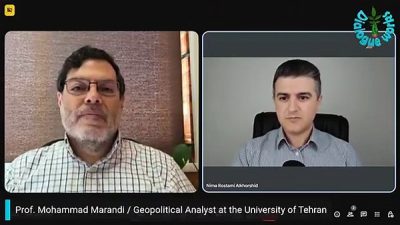
Seyed M. Marandi: U.S. Military DIVIDED? Iran’s Secret Defense EXPOSED
or go to
Aletho News Archives – Video-Images
From the Archives
‘Israel sees Iran as obstacle to its policies’
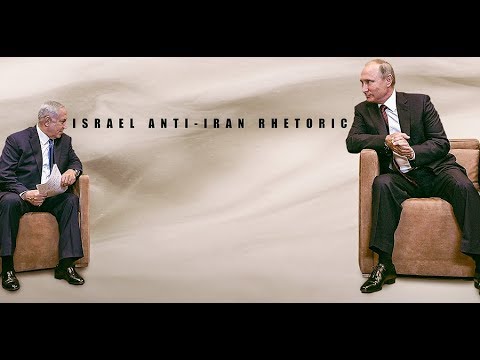
Press TV – August 25, 2017
Prime Minister Benjamin Netanyahu has said that Israel felt threatened by Iran’s growing influence in the Middle East. Netanyahu expressed his Iranophobic view in a meeting with Russian President Vladimir Putin in Russia’s Black Sea resort of Sochi on Wednesday. Press TV has asked Scott Rickard, former American intelligence linguist from Tampa, Florida, and Brent Budowsky, a columnist at The Hill from Washington, to give their thoughts on the issue.
Rickard said Tel Aviv is concerned about the fact that the regime could not carry out its old project to spread sectarian divisions and pave the way for dismemberment of the countries in the Middle East region because of the Iranian-led resistance against Israeli policies, not only in the occupied territories of Palestine but also in the whole region.
“Iran is not a threat to Israel whatsoever. The threat that Israel sees is the fact that their Oded Yinon Plan is being put to a hold by Iran,” the intelligence linguist said on Thursday night.
“They (the Israelis) look at Iran as a threat only because they have no influence on their governments and Iran is autonomous and is not under the Zionist influence,” he added.
Since the victory of the Islamic Republic of Iran in 1979, Tehran has been critical of Israel’s policies in the region, whereas “no leaders [of other states] even dared to speak out against Zionism,” Rickard argued. … continue
Blog Roll
 Aletho News
- Alberta Bill Would Fine Political Deepfakes $10,000 Without Satire Exemptions
- Iran declares ‘historic victory’ over US, says enemy forced to accept its proposal
- Trump Claims Ceasefire, Reopening of Strait of Hormuz Agreement with Iran
- Israeli tank fire killed UN peacekeeper in Lebanon, UNIFIL investigation finds
- Russia, China block Bahrain-sponsored UN resolution on Strait of Hormuz
- The US-Israeli War on Science is an Assault on our Future
- Trump’s Promise to Bomb Iran ‘Like Never Before’ Faces Brutal Logistics — Expert
- Germany seeks to restrict stays abroad for men of fighting age – Berliner Zeitung
- Evidence points to Ukraine being behind TurkStream attempted sabotage, but that should come as no surprise
- Sri Lanka secures supplies of Russia oil – minister
- If Americans Knew
- Thousands dead and neighborhoods razed to the ground: Aid agencies fear southern Lebanon is becoming the new Gaza
- The war the US is fighting for Israel could cost trillions
- ‘Cigarette Burns, Nail Wounds’: Toddler Tortured in Gaza to Coerce Father
- Trump Says US Sent ‘a Lot of Guns’ to Protesters in Iran
- Israeli forces destroy 17 UN peacekeeper cameras in south Lebanon
- US-Israeli strikes ‘completely destroy’ synagogue in Tehran
- Archbishop for US Military Says Iran War Is Unjust Under Catholic Teaching
- Iranian leaders’ Open Letters to the American People
- Trump says Iranians appreciate bombs, WHO warns of nuclear risks – Daily Update
- U.N. experts demand Israel release prominent Gaza doctor after reports of ‘severe torture’
- No Tricks Zone
- An Inconvenient Tree: Uncovered In Alps… Europe Much Warmer Than Today 6000 Years Ago
- New Study Reports A 60% Slowdown In Greenland’s Ice Loss Rate In The Last Decade
- Low Intensity Tornado Wrecks Major Solar Farm, Creating A Potential Toxic Dump
- New Study Finds Warming Saves Lives…Cold Temperatures 12 Times More Deadly Than Excess Heat
- German Science Blog Accuses PIK Climate Institute Of Hallucinating Climate Tipping Points
- Devastating Assessment Of Comirnaty Vaccine By Former Senior Pfizer Europe Toxicologist
- New Study: CO2 Is ‘Effectively Negligible’ As An Explanatory Climate Change Factor Since 2000
- Former Pfizer Toxicologist Dr. Helmut Sterz Tells Bundestag Hearing Pfizer Vaccine Should Have Never Been Approved
- Energy Expert: Germany’s Nuclear Phaseout Was A “500 Billion Euro Mistake”
- New Research: South Australia’s Mid-Holocene Sea Surface Temperatures Were 4°C Warmer Than Today
 Aletho News