Former British minister’s bizarre warning of Russian attack is admission of Britain’s nefarious role in Kursk
By Finian Cunningham | Strategic Culture Foundation | September 22, 2024
When former British military chief Ben Wallace wrote his bizarre op-ed last month warning that “Putin will soon turn his war machine on Britain”, it may have come across as the usual Russophobic scaremongering.
The ex-minister of defense wrote in the Daily Telegraph that “Britain’s in Putin’s crosshairs… Make no mistake Putin is coming for us.”
He painted the Russian leader and its top generals as unhinged madmen who were driven by revenge for old scores like the Crimean War in the 1850s.
Wallace, who served as a British army captain and was the minister of defense under three Conservative prime ministers between 2019 and 2023, is known for his hawkish anti-Russia views. He previously told the Times newspaper that Britain must be prepared to fight wars alone without the help of the U.S. He has compared Putin to Hitler, and he once claimed that the Scots Guards – the regiment in which he served – “kicked Russian asses” in the Crimean War and could do so again.
But, in hindsight, his Telegraph op-ed was not so much the usual belligerent rant to whip up Russophobia. This was not a mere paranoid warning of Russia’s alleged malign intent, but rather it was more an admission of British guilt in recklessly escalating the proxy war in Ukraine.
Wallace claimed, somewhat curiously, that Britain would be the primary target for any Russian military attack, not the United States. What made him say that? After all, the U.S. is by far the biggest military backer of the Kiev regime.
Pointedly, Wallace emphatically denied in his article published on August 26 that Britain had played any role in Ukraine’s offensive on Russia’s Kursk region. That offensive was launched on August 6. The incursion appears now to have been a military disaster for the Kiev regime with nearly 15,000 of its troops killed and hundreds of NATO-supplied armored vehicles destroyed.
As the offensive in Kursk flounders and Russia pushes on with rapid gains in the Donbass region of formerly eastern Ukraine, it is becoming more clear that Britain took a leading role among the NATO sponsors of the Kiev regime in promoting the Kursk offensive.
Captured Ukrainian troops have told how British marines trained and directed them to take on audacious missions. The military purpose of the missions was not precise or pragmatic. Their main objective was to create propaganda victories by raising Ukrainian flags on Russian territory.
This week, another British military insider, Sean Bell, who was the former air vice marshall of the RAF, urged the NATO-backed Ukrainian regime to “inflict maximum pain” on Russia. The former RAF commander was referring to the Kursk offensive and an expansion of air strikes on Russian territory.
This comes as Britain’s new Labour prime minister Keir Starmer is consulting with U.S. president Joe Biden on granting Ukraine permission to use long-range missiles to hit deep inside Russia. Starmer and his new defense minister John Healey have been keen to demonstrate that their government is every bit as gung-ho as the Conservative predecessors in supporting Ukraine militarily.
It also comes as the Russian state security service, FSB, claims that leaked documents it has obtained show that Britain is taking a leading role among Western adversaries in ramping up military and political tensions with Moscow.
When the Kursk offensive kicked off last month, NATO leaders were adamant that they were not involved in the planning. By contrast, the Kiev regime hinted that NATO was.
Despite the official denials, sections of the British media couldn’t contain their excitement in what appeared in the initial stage to be a lightning punch in the nose for Putin.
It was reported that Ukrainian troops had been trained in Britain prior to the incursion. While the Daily Mail blared that British Challenger tanks were “leading Ukraine’s advance into Russia’s Kursk and Belgorod regions”.
The Times reported smugly that “British equipment, including drones, has played a central role in Ukraine’s new offensive and British personnel have been closely advising the Ukrainian military.”
Since the NATO proxy war against Russia erupted in Ukraine in February 2022, the British have been intensely involved in training commandos to carry out raids on Russian territory, according to Britain’s Royal Navy publicity.
Despite Ben Wallace’s assertion that Britain had no planning involvement in the Kursk offensive, it seems clear that his denial is a lie. Britain was and presumably still is heavily involved. It is known that mercenaries from other NATO states are on the ground in Kursk. But the British role is prominent in leading the charge (from behind, that is).
That charge has now run into a dead-end with heavy losses among Ukrainian troops. For the British planners, however, the military losses are of little importance. The Ukrainians were merely cannon fodder in a PR stunt to embarrass Putin and to whip up another round of military aid.
Britain has a sordid historical role in starting wars in Europe. Ben Wallace in his Telegraph op-ed mocked Putin for blaming Britain for being behind the Crimean War and the rise of Nazi Germany. On both counts, it is accurate to condemn Britain. What was it doing anyway sending troops to Crimea in the 1850s? And the covert role of Britain in financing, arming, and giving Hitler a free hand to attack the Soviet Union during the 1930s was a major contributor to fomenting World War Two, a war in which up to 30 million Soviet people were killed.
Today, Perfidious Albion is stoking the proxy war against Russia, which could lead to a nuclear Third World War. Its sinister fingerprints are all over the Kursk provocation. The has-been empire is trying to inflate its geopolitical importance among Western partners through machinations and manipulation. Even at the risk of inciting an all-out world war.
Ben Wallace’s bizarre op-ed about Russia “coming for us” can be better understood as an admission of Britain’s guilt and not simply another absurd Russophobic rant. The old Tory warmonger was projecting the reality of Britain’s nefarious role in escalating the proxy war. The British establishment knows that if Russia goes on to take reprisal, it has it coming. Its pretense of innocence is classic British dissembling.
The Second Trump Shooter Believed Exactly What the Establishment Media Wanted Him to Believe
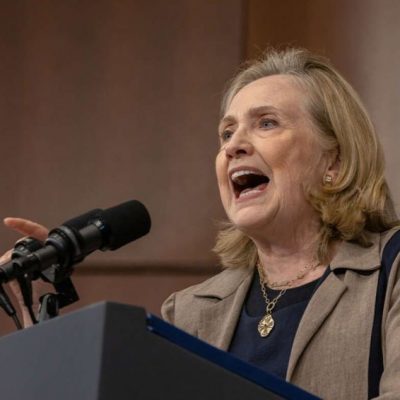
By Connor O’Keeffe | Mises Institute | September 18, 2024
On Sunday, for the second time this election cycle, a man was able to get close to Donald Trump with a rifle. The former president was golfing when Secret Service agents spotted a rifle barrel poking out of some bushes just off the course, near a hole Trump would soon play. Agents fired on the suspect, causing him to flee as Trump was rushed off the course. Shortly after, the man was apprehended by police.
A scoped rifle, two backpacks, and a video camera were recovered from the woods where the suspect was hiding. The FBI said it was investigating the incident as an attempted assassination. The suspect, Ryan Routh, has so far been charged with two gun-related crimes.
While there are clearly some major differences between this incident and the first assassination attempt in July—when Trump was shot in the ear during a rally in Butler, Pennsylvania—the fact that an armed man was able to get so close to the former president and remain undetected until the last moment for the second time in two months is a big deal.
Yet the reaction from the political establishment and the establishment media has been notably different. Back in July, there was broad agreement within the establishment that they needed to “lower the temperature.” This week, the rhetoric has changed. While most go through the motion of denouncing political violence, establishment figures and outlets have downplayed the assassination attempt, obscured the attempted shooter’s political ideology, and even blamed Trump himself for provoking people into trying to kill him.
It’s not surprising that the political establishment and their friends in the media want to dismiss or play down what happened on Sunday. Because Ryan Routh, the suspect, appears to have been motivated by the exact narrative of the war in Ukraine and the prospect of a second Trump term that the establishment is trying so hard to get the American public to accept.
In early 2022, after Russia invaded Ukraine, the American establishment went into overdrive to whitewash all the developments that had led to the invasion. They instead defined Vladamir Putin as an expansionist tyrant bent on conquering all of Europe simply because he hates freedom and democracy.
Because of unearthed social media posts, numerous interviews with major outlets like The New York Times, and a self-published book, we can clearly see that Routh was completely convinced by the establishment’s characterization of the war. So much so that in the months after the war broke out, Routh traveled to Ukraine to try and join the fight. He was turned away, apparently due to his age, but stuck around to try and recruit other foreigners to join Ukraine’s ranks.
In one interview with Newsweek, Routh laid out how he views the war:
To me, a lot of the other conflicts are gray, but this conflict is definitely black-and-white. This is about good versus evil. This is a storybook— you know, any movie we’ve ever watched, this is definitely evil against good. … It seems asinine that we have a leader and a country that does not understand the concept of being unselfish, and being generous, and being kind, and just the basic moral values that are required by human beings these days. It blows my mind.
That is exactly how the pundits and politicians who make up the American political establishment want us thinking about this war. Not as an unnecessary geopolitical conflict that escalated for decades before erupting into the conventional war we see today, but simply as a black-and-white showdown with an evil country.
Importantly, as can be seen in the opening to Biden’s State of the Union address from earlier this year, the establishment has explicitly conflated this threat abroad with what they call the threat at home—meaning Trump and the MAGA movement. So if a disturbed person like Ryan Routh was convinced that he would be a hero if he went and fought the evil Russians in Ukraine only to be turned away because of his age, it’s not much of a jump to expect that he concluded he could still be a hero if he set his sights on, what he was told, is the same threat at home.
That’s not to say that the establishment voices pushing the simplistic narratives that captured Routh directly incited his assassination attempt—although it would under the standard they apply to Trump and January 6. Only that the establishment is using misleading and sometimes wholly fictional narratives about the war in Ukraine and the populist anger directed toward them to try to scare us into voting in ways that support their interests. It shouldn’t surprise anyone when these contrived, simplistic, overly dramatic narratives lead some people to decide voting isn’t enough.
Washington’s new plan to control the Global South
By Anna Belkina | RT | September 20, 2024
When US Secretary of State Anthony Blinken announced a new “joint diplomatic campaign” to be implemented in concert with Canada and the UK last week, he clearly set out the initiative’s goal – “to rally allies and partners around the world to join us in addressing the threat posed by RT and other machinery of Russian disinformation and covert influence.”
Make no mistake: there is nothing diplomatic in this latest US effort to silence any voice that does not adhere to the Washington- and London-dictated narratives about the world.
The point of all news media is to inform. Any information has the potential to influence people. Thus, the collective West has set out to curtail all potential influence that is not theirs.
Helping hand
James Rubin, the coordinator for the US State Department’s Global Engagement Center, elaborated on how this plan would work in an interview with his ex-wife, Christiane Amanpour, on CNN.
“Other countries will make decisions for themselves,” of course, but the charitable, the always-benevolent, the never self-interested American hand will be “helping other governments come to their own decisions about how to treat” RT.
Ah, all those poor, hapless “other governments” that clearly cannot read, watch, think, and decide for themselves. They were just waiting for Big Brother to help them.
What Rubin was really doing was scapegoating RT – and by extension, all other independent voices in what is supposed to be a free and diverse global information space, reflecting a diverse, very complicated, multipolar world – for the increasingly diminishing buy-in of much of the world into Washington’s foreign policies, and propaganda campaigns that accompany them.
As Rubin admitted during his press conference, “one of the reasons […] why so much of the world has not been as fully supportive of Ukraine as you would think they would be […] is because of the broad scope and reach of RT – where propaganda, disinformation, and lies are spread to millions if not billions of people around the world.”
Which countries refused to jump on board with the US and NATO support of the Kiev regime and the continuous escalation of the conflict? In reality, it is most of the world, including such geopolitical giants as India and China, who preferred to leave regional issues to the region in question.
Where official positions are concerned, it’s mostly NATO and its cohorts’ one billion vs our planet’s other seven. And while in those seven not everyone in the general population is of the same mind, neither is everyone in the US and other NATO countries.
Yet, due to the decades-long domination of the international information space by American and European mainstream news media (can you believe the BBC is over 100 years old?), many have been conditioned to think of the world – in the sense of who defines the global order, its rights and its wrongs – as the US and its vassal-state allies.
Notably, Mr Rubin specifically referred to Latin America, the Middle East, and Africa as regions where RT must be stopped. In other words, the so-called Global South. What’s got the US State Department so worried there?
RT’s success is Western media’s loss
Western military, political, and media establishments have been panicked over their loss of monopoly on global information in general, and about RT’s growing reach and influence in particular, for a while now. The self-proclaimed champions of free press, speech and thought cannot handle any of that free-thinkin’ they campaigned for.
To wit, have a scroll:
THE FOUNDATION FOR DEFENSE OF DEMOCRACIES, US: “Washington is struggling in the battle for hearts and minds in the ‘Global South’, where Russian propaganda outlets are often more popular than Western media.”
NEWSWEEK : “… it’s in the Global South that Russia has reaped the most significant rewards. The popularity of the Kremlin-controlled TV station Russia Today is high…”
POLITICO : “… many of the Kremlin-backed accounts – especially those from sanctioned media outlets like RT and Sputnik – have an oversized digital reach. Collectively, these companies boast millions of followers in Europe, Latin America and Africa…”
ROYAL UNITED SERVICES INSTITUTE, UK: “Latin America has witnessed a growth in Russian information efforts. Just like in the Middle East, Russia is operating a number of popular media channels, such as RT en Espanol, Sputnik Mundo and Sputnik Brasil, with substantial followings.”
CENTER FOR STRATEGIC AND INTERNATIONAL STUDIES, US: “Russia’s […] media presence and influence [in Latin America] are unmatched… The reach of Russia’s technique has proven to be effective … Actualidad RT and Sputnik Mundo have become so mainstream in LAC, that in December 2022, RT Spanish won three prestigious Mexican journalism awards for their coverage of the war in Ukraine.”
WILSON CENTER, US: “Russia has successfully implemented long-term strategies to capture and influence intellectual elites in Latin America.”
ATLANTIC COUNCIL: “Russia has established a significant media and information footprint throughout the [Latin American] region with Russia Today and Sputnik News.”
EL MUNDO, SPAIN: “In addition to hybrid channels, [Russia] uses public companies such as Russia Today, whose propaganda is triumphing in Latin America – the Spanish-speaking version of RT […] is integrated into family daily life from Venezuela to Bolivia.”
INTERNATIONAL BUSINESS TIMES, UK: “Egyptian media ran headlines and reports verbatim from RT Arabic, […] EU Reporter, an independent media outlet, reported that ‘Russian media outlets like RT Arabic and Sputnik are extremely popular, with RT Arabic becoming one of the most trafficked news websites in the country.’”
FOREIGN POLICY : “RT Arabic and Sputnik Arabic emerged as major sources of legitimate regional news in the Middle East.”
JOSEP BORRELL, HIGH REPRESENTATIVE OF THE EU FOR FOREIGN AFFAIRS AND SECURITY POLICY: “When you go to some African countries and you see people supporting Putin, supporting what Putin is doing in Donbass, saying Putin has saved Donbass, now he will come to Africa and save us.”
ABC, SPAIN: “The Kremlin has tried to increase its influence in the media using Russia Today and Sputnik News. And there have also been collaboration agreements with local media, hiring African journalists and African activists, and at the same time generating news in Arabic, English or French to gain the support of the African population.”
Thank you, thank you very much.
Exporting censorship
Since RT’s launch in 2005, our journalists have brought to light countless stories and points of view disallowed in the Western mainstream. We have built a massive global audience and won the trust of viewers and readers worldwide.
But, despite Western elites’ declarations to the contrary, any voice that fails to fit into the rather cramped echo-chamber they have set up to accommodate supposedly free discourse, is inherently seen as illegitimate. Therefore, it must be silenced.
Which is why, having pushed out official RT channels from Western airwaves and digital platforms, they now want – nay, need and ought – to export their particular brand of censorship globally. They pledge to wage a coordinated campaign to force other nations into following their example, all so that the West can recover its information monopoly. They must “disrupt [RT] activities” everywhere. It is not enough for them to silo off their own people from inconvenient facts and alternative viewpoints. They have the megalomania and the audacity to say that no one in the world should hear them either.
This is especially so in the Global South countries – the ones that the US has gotten accustomed to patronizing, manipulating, dominating, undermining and overthrowing unsuitable-to-them regimes, and outright controlling in any way they could, over the last century.
Welcome to neocolonialism, Taylor’s 2024 Version.
Government folks have also already lined up Silicon Valley wunderkinds – the tech giants that are ever so eager to curry political favor in order to stay on the lax side of corporate regulation – in this endeavor. Meta, which blocked access to RT’s Facebook and Instagram accounts in the EU in 2022, has overnight removed RT from its platforms – entirely and worldwide.
YouTube removed RT’s record-breaking channels everywhere that same year, but Google’s parent company, Alphabet, had already worked to “de-rank” RT and Sputnik in Google searches back in 2017.
After all, “RT is the top recommended source for news concerning Douma’s chemical weapons attack, Skripal poisoning and the Syrian White Helmets,” wrote the Atlantic Council in 2018. In 2019, “Bild conducted a test and entered the query ‘Ukraine’ into Google News. Again, among the top ten articles were three from RT Deutsch and Contra Magazin.” When people looked for news, they came to RT.
This could not stand.
A quick aside: despite all the claims by the Americans and the Brits about RT’s supposed attempts to “sow discord” in their societies, the network really should be lauded for bringing people together instead. In the US, where political bipartisanship is a near-extinct species, the Biden administration’s present-day efforts are fully endorsed by Fiona Hill, of Donald Trump’s National Security Council, who argued that “there has to be concerted action against RT.” In the UK, the recently elected Labor leadership has fully adopted their Tory predecessors’ anti-RT playbook.
Not going away
Let me be clear: RT is not going anywhere, in the West nor in the Global South. Our journalists will continue to do their jobs. We will continue to find ways to have our voice heard. Our audiences “of millions if not billions of people around the world” expect nothing less of us. This is our duty to the global community.
As for the global community, where does it stand, in the face of this new US-led campaign?
The Hindu, one of India’s newspapers of record, reported that already “US officials have spoken to [India’s] Ministry of External Affairs about joining their actions against what they call ‘Russian disinformation’, by revoking accreditations and designating [RT] journalists under the ‘Foreign Missions Act’. However, while the ministry has been silent on the issue, government officials said that the debate on sanctions is not relevant to India, while a former diplomat said that banning media organizations showed ‘double standards’ by Western countries… An official said that the matter ‘does not pertain’ to India and pointed out that India does not follow unilateral sanctions that are not approved by the United Nations.”
We are confident that the rest of the truly independent world will follow suit.
Anna Belkina is RT’s deputy editor in chief and head of communications, marketing and strategic development.
The real reason US wants to silence RT
By Fyodor Lukyanov | RT | September 18, 2024
In late 1986 Yegor Ligachev, the secretary of the Soviet Communist Party’s Central Committee, and Viktor Chebrikov, then-head of the KGB, proposed that the country end the practice of jamming foreign radio stations. ‘Enemy voices’ was the popular term used at the time to describe these broadcasts from abroad.
Of course, the two prominent officials were not imbued with bourgeois ideas when seeking to end radio jamming. They were actually taking a businesslike approach. The pair explained to the Central Committee that blocking was expensive but not very effective, given the size of the country. So, it was suggested that signal-jamming be abandoned and that funds be diverted to counter-propaganda measures. This meant more active work with foreign audiences to communicate the Soviet Union’s own views on world events.
A few weeks later, at a meeting with US President Ronald Reagan in Iceland, USSR leader Mikhail Gorbachev raised the issue. He said “your radio station Voice of America broadcasts around the clock in many languages from stations you have in different countries in Europe and Asia, and we can’t present our point of view to the American people. So, for the sake of equality, we have to jam the Voice of America broadcasts.” Gorbachev offered to stop blocking ‘VOA’ if his counterpart agreed to let Moscow have a frequency to do the same in the US. Reagan evasively promised to consult when he returned home. In the end, the Soviets stopped jamming foreign radio stations unilaterally, without any deal.
The events of the last few days have echoes of this old story. US Secretary of State Anthony Blinken devoted an entire speech to RT, which is subject to ‘full-blocking’ (that’s a new formula!) sanctions for its supposedly destructive and subversive work around the world. According to Blinken and the American intelligence agencies he references, the threat posed by the Russian company is of the highest order and requires the most decisive measures from all of Washington’s allies.
Without irony or exaggeration, it can be said that RT could only dream of the global recognition that Blinken’s appeal has facilitated. The effectiveness of the media group was not so much confirmed as it was certified, and by prominent representatives of its rivals.
We could deplore infringements on freedom of expression and restrictions on pluralism of opinion, but there is little point in doing so. Such notions should only be promoted in relation to the internal information space of individual countries; at a national level, they are an indispensable prerequisite for normal development. As for foreign sources of information, people generally perceive them as instruments of influence. And it hardly depends on the type of socio-political system that exists in a given state. The more comprehensive the information and communication environment, the greater its impact on people’s behavior, and the more acute the desire of governments to tighten control over the flow of ideas and analysis. The international media sphere is deliberately ideological, electrified and conflictual. Hence Blinken’s, shall we say, uncharacteristic remarks that RT should be treated “like an intelligence agency.”
How effective are the tactics of restricting alternative views and jamming radio waves? Comrades Ligachev and Chebrikov rightly pointed out that the costly efforts to jam hostile broadcasters were, to put it mildly, not particularly effective. Worse, as the author well remembers, the very fact that the authorities were fighting foreign radio voices had the opposite effect to that desired – if they were silencing voices, it meant that they were afraid of the truth. And, by the end of the Soviet era this opinion was not only widespread among the frontline intelligentsia, many ‘ordinary people’ also didn’t give a damn about the official channels.
At their meeting in Iceland, Reagan countered Gorbachev’s appeal by saying that, unlike the Soviets, “we recognize freedom of the press and the right of people to listen to any point of view.” The US president had no doubts about the superiority of the American system in all respects. Accordingly, the demands for information pluralism, then and later, reflected the confidence of Washington that it would emerge victorious from any competition. And so, a few years later, the US achieved a de-facto monopoly on the interpretation of everything.
Washington’s current extreme reaction is due to the feeling that it’s losing this monopoly. Alternative interpretations of events now arouse public interest. In fact, the total resources of the Western, mainly English-language media are incomparably greater than what all the carriers of alternative points of view can offer, at this moment. But internal insecurity is growing all by itself, fueling the desire to fence off the information space. From the same playbook comes the US’ attempts to explain its internal strife and accumulated contradictions by pointing to a pernicious external influence. This was also the Soviet experience. However, the USSR didn’t solve its own issues by blaming them on external causes. In fact, as its problems grew, those same outside factors actually began to exacerbate them.
Targeted punitive actions can create obstacles for any organization, there is no doubt about that. Especially when they come from what is still the most powerful country on the planet. But American history teaches us that monopolies do not last forever. Sooner or later, a cartel becomes a brake on development, then it becomes the subject of measures to break it up.
Fyodor Lukyanov is the editor-in-chief of Russia in Global Affairs, chairman of the Presidium of the Council on Foreign and Defense Policy, and research director of the Valdai International Discussion Club.
Hillary Clinton Advocates for Criminal Charges for Americans Spreading “Propaganda”

By Cindy Harper | Reclaim The Net | September 17, 2024
Former US Secretary of State Hillary Clinton has has decided to ignore the First Amendment and has advocated for punitive measures aimed at Americans who contribute to the spread of what she calls “propaganda.” Speaking to MSNBC on Tuesday, Clinton suggested that holding American individuals accountable through civil or criminal charges could serve as a warning to deter the distribution of “disinformation.”
While Clinton acknowledged the importance of indicting foreign actors, namely Russians, directly responsible for meddling in US elections, she argued that Americans who play a role in amplifying “disinformation” should not be overlooked.
“I think it’s important to indict the Russians… who were engaged in direct election interference and boosting [former US President Donald] Trump back in 2016,” Clinton said. “But I also think there are Americans who are engaged in this kind of propaganda, and whether they should be civilly or even in some cases criminally charged is something that would be a better deterrence.”
Clinton, who ran against Trump in the 2016 presidential race, endorsed the ongoing efforts of the State and Justice Departments to reveal the extent of Russian influence in US elections. Clinton has long maintained that her loss in 2016 was due to Russian interference. She described these efforts as merely scratching the surface of a much larger issue, adding, “There is a far distance to go.”
Her comments also touched on the broader issue of foreign influence in American politics, as Clinton warned that adversaries such as Russia, China, and Iran are seeking to sway the US electorate.
She underscored the call for greater vigilance in safeguarding the democratic process, stating: “We are not going to let adversaries, whether it’s Russia, China, Iran, or anybody else, basically try to influence Americans as to how we should vote in picking our leaders.”
Clinton’s call for potential criminal penalties against US citizens who share “disinformation” is a controversial step toward restricting free speech. The idea of penalizing individuals for spreading information, regardless of its origins, raises concerns about the boundaries of government power and the potential for misuse of such laws to suppress dissenting views.
The First Amendment of the US Constitution prohibits Congress from making laws that abridge the freedom of speech. Under this protection, the idea of prosecuting individuals for the mere act of sharing information—regardless of its veracity—presents a potential conflict with these foundational rights.
Meta’s Ban on Sputnik ‘Very Bad’ and Politicized Decision – Analyst
By Oleg Burunov – Sputnik – September 17, 2024
A politically motivated move by Meta to ban Russia’s Rossiya Segodnya and RT news outlets from its apps globally reflects the company’s biased approach, analysts said in separate interviews with Sputnik.
“There is a perception in the United States that the flow of Russian information will always be disinformation and that it will be tipped in favor of Donald Trump, even though [Russian President Vladimir] Putin has said that he could deal with Kamala Harris, too. This [perception] is simply untrue. I mean, the idea is to frighten the American people that they don’t know one idea from another. I mean, that’s the smokescreen,” Professor Joe Siracusa, political scientist and dean of Global Futures, Curtin University, told Sputnik.
As such, the idea that Russia spends all of its time to propagandize the American public, and that “there is a body of information out there that is going to undermine their faith and their freedom is ridiculous”, Siracusa underlines.
Recently, Russia’s Rossiya Segodnya, RT and “other related entities” were banned from Meta apps globally over alleged foreign interference activity.
This is a “very bad decision, particularly coming from an American company,” the political scientist points out.
Meta’s ban on Russian news outlets mean that “they [Meta] are really sort of censoring the news themselves. What they’re saying to the American people is that you’re not mature enough to understand ideas”, per the professor.
“This is the kind of game that the Democratic Party plays. I mean, there’s no excuse or reason for this kind of embargo on foreign information based on the idea that it’s protecting the American people… from whom? From Mark Zuckerberg? It’s ridiculous. Meta was in very close cahoots with the Democratic Party the last time around when it went after Donald Trump. So, in a way, it’s already been politicized,” the professor concludes.
In a separate interview with Sputnik, Facebook whistleblower Ryan Hartwig says that as a former Facebook content moderator, he saw firsthand how the company “influenced elections throughout the world.”
“Facebook is clearly biased and has an agenda with elections. At a whim, it can make newsworthy exceptions to protect certain politicians. They may as well ban their own app and go after themselves for foreign interference activity,” Hartwig, who is the co-author of “Behind the Mask of Facebook: A Whistleblower’s Shocking Story of Big Tech Bias and Censorship”, points out.
When it comes to Facebook’s foreign influence, suffice to mention the elections in Spain, Venezuela, and the US, according to Hartwig.
Given the fact that Facebook was being influenced by the US’s Federal Bureau of Investigation (FBI) “to suppress major stories” like the Hunter Biden laptop saga, “other countries should consider Meta a government agency,” the whistleblower adds.
As for the Ukraine crisis, “It’s clear that Meta is acting in coordination with the US government and the US State Department as a proxy for a foreign conflict,” Hartwig concludes.
British Labour’s raw deal for working people
By Finian Cunningham | Strategic Culture Foundation | September 12, 2024
Keir Starmer’s Labour Party won a landslide election in July with the slogan “a new deal for working people”.
Already the electioneering can be seen as a sham. This week, the Labour government won a majority vote in the House of Commons to cut winter fuel payments for pensioners. Around 10 million senior citizens will no longer receive a financial grant to help them pay soaring energy bills and keep their houses warm this winter.
The energy crisis for households in Britain and across Europe is a result of the NATO proxy war in Ukraine and the cutting off of Russia’s abundant gas and oil supplies to the continent. The Biden administration ordered the blowing up of the Nord Stream gas pipelines under the Baltic Sea from Russia to Germany. That was in September 2022. The best way to end the energy crisis for European households would be to stop the war, make peace, and return to normal relations. But the new Labour government is having none of that common sense. It is eagerly fueling the proxy war as much as the Conservatives before it, and what’s more now making the poor of Britain pay for the warmongering.
Prime Minister Starmer told angry unions and workers that he would make no apology for the winter fuel payment cut. His ministers are claiming they have “no choice” but to repair a “£22 billion blackhole” in public finances gutted by the predecessor Conservatives.
Starmer’s Labour is warning that more “tough choices” are coming in the coming weeks, meaning that working people and low-income families are going to face more economic austerity. So much for a democratic change from the hated Tories and the supposed “new deal for workers”.
The warped priorities of this government (as with the previous one) can be seen from the promises to boost spending on Britain’s military. Starmer has vowed to uphold a commitment to increase Britain’s “defense” budget from £54.2 bn (€64 bn, $74.7 bn) a year to £57.1 bn. That represents a 4.5 percent increase.
Under Starmer, Britain will continue to donate billions of public money to the Kiev regime.
This week, while the Labour government was voting to cut winter welfare for pensioners, the British foreign minister David Lammy traveled to Kiev alongside the U.S. secretary of state Antony Blinken, where they assured the Ukrainian regime that they would deliver more weapons, hinting at ending restrictions on long-range missiles to hit deep inside Russia.
Meanwhile, Britain’s defense minister John Healey will be in Ramstein, Germany, this week to meet with other military chiefs of the so-called Ukraine Contact Group. Healey, who calls himself “Mr Ukraine”, is to unveil another British military aid package of multi-role missiles worth £162 million. Healey is very much a deep-state figure inside the Labour government. This means a continuity in foreign policy despite the name change in Downing Street.
To date, since the eruption of the conflict in Ukraine in February 2022, Britain has doled out £12.5 bn (€14.7 bn) in military aid to the Kiev regime, including the training of up to 45,000 Ukrainian soldiers.
Britain is the third-biggest military aid donor to Ukraine after the United States and Germany.
Starmer’s new Labour government is showing itself every bit as committed to funding the proxy war against Russia as its Conservative predecessor was.
Just three days after the general election on July 4, the new defense minister, John Healey, made his first overseas visit to Ukraine on July 7. Healey vowed to continue Britain’s support.
So while the Labour government claims that it has “no choice” but to slash public spending at home, it unquestioningly keeps spending on militarism at home and abroad.
This is a matter of political choice. If a Labour government were to genuinely prioritize the needs of working people, it could find the finances easily by cutting Britain’s excessive military budget and the largesse it bestows on a NeoNazi regime and the reckless proxy war against Russia that could escalate into a nuclear conflagration.
The insulting deception of Labour’s “new deal” means that Starmer’s government will require close shepherding, just in case it wobbles from the inevitable public backlash.
The vote this week to axe winter fuel payments to elderly citizens has sparked fury among the wider population. The anger will grow as more austerity measures against citizens kick in and while the proxy war in Ukraine continues to receive endless support with British public money.
It seems no coincidence that this week Britain’s Starmer is to visit the White House. The visit by Blinken to London and thence to Kiev alongside his British counterpart, as well as the Ramstein meeting for UK defense chief Healey, all suggest that a close eye is being kept on Downing Street to ensure that it does not get any notions about “serving the people”.
To that end too, it seems significant that the former Conservative defense minister Ben Wallace has taken to whipping up public fears of Russia.
Wallace wrote a recent oped in the Daily Telegraph in which he claimed that Russian leader Vladimir Putin “will soon turn his war machine on Britain”.
The article was reported in several other British media outlets. The same fear-mongering has been echoed by the new head of Britain’s armed forces, General Sir Roly Walker, who warned that the United Kingdom could be in an all-out war with Russia in the next three years.
Wallace, who is a cipher for Britain’s deep state, claimed that “Britain is in Putin’s cross-hairs”. He added: “Make no mistake, Putin is coming for us… we must be prepared for the inevitable.”
The hysteria from Britain’s ruling class is of course cringe-making. These claims about Russia’s malign intent and comparing Putin with Hitler are completely bereft of any historical facts, such as NATO expansionism and the weaponizing of a Nazi-adulating regime in Ukraine to provoke Russia.
Russian leaders have repeatedly said they have no intention of attacking any NATO nations. They say their involvement in Ukraine is a special operation to neutralize NATO threats to Russia’s national security.
Sooner or later, the British and Western public are going to demand accountability from their governments on why such huge finances are being ladled into promoting a highly dangerous conflict with Russia.
Britain’s Labour government is vulnerable to a public backlash because of its blatant duplicity.
That would explain the close attention from Washington to London’s policy, ensuring Starmer keeps toeing the line of NATO’s hostility to Moscow. British deep state assets like Ben Wallace also need to keep writing scare stories to frighten the public away from common sense criticism of London’s deranged warmongering and betrayal of working people.
Blinken alleges RT engaged in ‘covert info ops., military procurement’
Al Mayadeen | September 13, 2024
US Secretary of State Antony Blinken accused on Friday state media organization RT of possessing cyber capabilities and engaging in covert information, influence operations, and military procurement.
Blinken told reporters that the United States is imposing sanctions on three entities and two individuals over Russia’s alleged “covert influence operations in the media domain, including interference in Moldova’s democracy, and its upcoming elections.”
In response, Russian Foreign Ministry spokeswoman Maria Zakharova mockingly told Sputnik she suggests “treating Blinken’s actions as a blockchain.”
‘There will be a response’
The news website’s Deputy Director of English-Language Information Broadcasting Andrey Kiyashko, Digital Media Projects Manager Konstantin Kalashnikov, and numerous other employees were also added to the sanctions list.
Zakharova said on Tuesday that Russia will respond to US sanctions targeting Russian media and all its other adversarial actions.
“They (US) will have to understand that no action against our country will remain unanswered,” Zakharova said on the Solovyev LIVE show.
US authorities charged Kalashnikov and her fellow colleague Elena Afanasyeva with money laundering conspiracy and Foreign Agents Registration Act (FARA) violations.
The US State Department also implemented stricter regulations for Rossiya Segodnya (RT) and its subsidiaries, deeming them “foreign missions.” With this measure, the organization is obligated under the Foreign Missions Act to notify the department of all employees working in the US and disclose all their owned properties.
US authorities also announced restrictions on issuing visas to individuals believed to be “acting on behalf of Kremlin-supported media organizations.” However, the Department of State did not reveal the names of the individuals subject to the new restrictions.
Four Americans convicted for ‘conspiring’ with Russia
RT | September 13, 2024
Four US black rights activists have been convicted of conspiring to act as unregistered Russian agents, the Justice Department has announced. They have been acquitted, however, of a more serious charge of acting as agents of a foreign government.
A Florida jury found four defendants – Omali Yeshitela, Penny Hess, Jesse Nevel, and Augustus C. Romain Jr. – guilty “of conspiracy to act as agents of a foreign government,” the Justice Department said on Thursday.
“Each defendant faces a maximum penalty of five years in prison. A sentencing date has not yet been set,” it added.
The trial was part of longer-running US legal proceedings against Russian human rights activist Aleksandr Ionov, who heads the Russian Anti-Globalization Movement. According to prosecutors, the four defendants carried out actions in the US between 2015 and 2022 on behalf of the Russian government and received money and support from Ionov, who was allegedly in contact with Russian intelligence.
Yeshitela, Hess, and Nevel had also been charged with the more serious crime of acting as agents of a foreign government, although jurors cleared them of those charges.
The Justice Department claimed that the Americans all knew Ionov, who has also been indicted in the US in connection with the case but is not under arrest, worked for the Russian government.
All four of those convicted are or were affiliated with the African People’s Socialist Party and Uhuru Movement, which defends the rights of African people. They include the movement’s 82-year-old leader, Yeshitela, as well as members Hess, 78 and Nevel, 34. Former member Romain, 38, founded the Atlanta-based Black Hammer Party in 2018.
The defense, meanwhile, claimed that the government had prosecuted the accused simply for their pro-Russian views.
“This case has always been about free speech,” Hess’ attorney, Leonard Goodman, told the AFP news agency.
In an interview with RT last week, Ionov said that in the absence of any evidence, the US government had leveraged its foreign agents laws.
“Over two years, our counterparts have been unable to find any evidence” and used “the entire list of restrictions and limitations that could be imposed,” he claimed.
Yeshitela, speaking to a crowd outside the courthouse after the trial, said it was important that “they were unable to convict us of working for anybody except black people.” He stressed that he was “willing to be charged and found guilty of working for black people.”
The defense noted that none of the 12 jurors was black. After the dismissal of a black woman from the original line-up in week two of the trial, the judge refused the defense’s request to replace her with an alternate black juror.
Putin: Russia May Restrict Export of Strategic Materials in Response to Unfriendly Powers’ Actions
By Ilya Tsukanov – Sputnik – 11.09.2024
Despite slapping Moscow with an unprecedented sanctions regime in 2022, European countries and the United States continue to rely on vast quantities of Russian energy and strategic materials, including gas and uranium, importing them to prevent spiking prices and shortages from wrecking their economies.
Russia is a world leader in the production of an array of strategic minerals, from natural gas, gold and diamonds to uranium, titanium and nickel, and should “think about” whether it’s possible to reduce the export of the latter three resources in response to unfriendly countries’ actions against Russia, President Vladimir Putin has said.
Speaking at a meeting with government ministers on Wednesday, Putin asked Prime Minister Mikhail Mishustin to look into the idea and report back, stressing that any proposed restrictions should not be “to one’s own detriment.”
“Mikhail Vladimirovich, I have a request for you: please look at some types of goods that we supply in large quantities to the world market – the supply of a number of goods to us is being restricted. Well, perhaps we should also think about certain restrictions – on uranium, titanium, nickel,” Putin said.
“In some countries, strategic reserves are being created, and some other measures are being taken. In general, if this does not harm us, we should think…about certain restrictions on supplies to the foreign market,” he added.
“I am not saying this needs to be done tomorrow, but we could think about certain restrictions on supplies to the foreign market not only of the goods I mentioned, but also of some others,” Putin said.
The ongoing NATO-Russia proxy war in Ukraine has reduced, but not fully stopped, economic exchange between Russia and Western countries, with the US continuing the purchase of Russian uranium for its vast network of nuclear power plants, and gas continuing to flow via a pipeline in Ukraine to customers in Hungary and Slovakia, and shipped west aboard tankers in the form of LNG. Concurrently, a number of Western companies have refused to leave the Russian market, continuing to sell their wares to Russians despite sanctions and other restrictions put in place by their own governments. Some Russian observers have suggested that it’s long past time for Russia to halt economic cooperation with countries fueling the proxy war in Ukraine, in favor of ramped up trade ties with the BRICS bloc and other friendly countries in the Global South.
Pro-War Lobby Attacks Alleged ‘Russian Influencers’
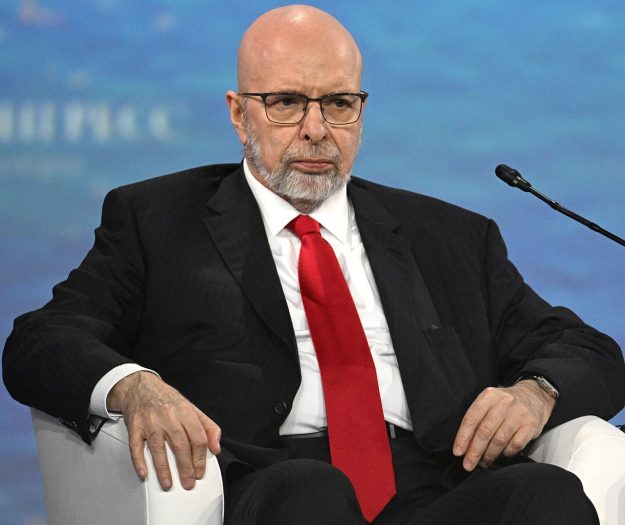
Photo Credit: http://www.kremlin.ru
By Ted Galen Carpenter | The Libertarian Institute | September 10, 2024
In recent weeks, there has been a surge of allegations that Moscow has long orchestrated an illegal campaign to influence U.S. public opinion. On September 4, 2024, the U.S. Justice Department charged two Russian media executives with an alleged scheme that authorities say illegally funneled millions of dollars to a Tennessee-based company called Tenet to create and publish propaganda videos that subsequently racked up millions of views on American social media. In a separate legal action, prosecutors seized thirty-two Russian-controlled internet domains that were used in a state-controlled effort called “Doppelganger” to undermine international support for Ukraine. As an aside to such legal maneuvers, U.S. officials contended that 1,800 Westerners, including twenty-one Americans, were guilty of acting as “influencers” on behalf of Russia.
The Justice Department filed an even more high-profile case the next day, accusing Dimitri Simes, founder of the Center for the National Interest, and his wife Anastasia, of illegally accepting more than $1 million in salary and other benefits from the state-owned Channel One Russia television station and trying to conceal the payments.
The Joe Biden administration is shamelessly hyping the prosecutions to smear anyone who criticizes or even questions U.S. policy towards Russia. Wall Street Journal columnist Holman Jenkins notes that Russian propaganda efforts in the United States have been spectacularly ineffective over the years. Nevertheless, Attorney General Merrick Garland, in announcing the latest prosecutions, asserted that “Russian disinformation is ‘a bigger threat’ than ever.” Garland’s smears were often stunningly vague, though. For example, he conceded that “the Kremlin-influenced U.S. influencers were unaware they were benefiting from Russian money.” That statement comes alarmingly close to contending that pro-Russian “influencers” were unintentional criminals. Garland stated, for example, “subject matter and content of many of the videos published by the company [Tenet] were often consistent with Russia’s interest in amplifying U.S. domestic divisions.” Such a vague standard also gives an administration virtually a blank check to harass its ideological or political opponents.
There were several suspicious aspects about the Justice Department’s moves. One was the timing. The indictments took place just days before the scheduled debate between Republican presidential nominee Donald Trump and Democratic presidential nominee Kamala Harris. The inflammatory tone in media articles from The Washington Post and other establishment publications dealing with these new prosecutions even more strongly suggests that partisanship is at play. For example, the Post’s headline read: “Trump-aligned Russian TV host charged in alleged sanctions scheme.”
However, there also seemed to be more than petty partisanship involved. Dimitri Simes, in particular, had long been an irritant to hawks in America’s national security state. His efforts to improve relations between Washington and Moscow especially were deeply resented by Russia haters in the powerful pro-war lobby. That hostility was magnified because of the prominence that The National Interest had achieved under Simes’ leadership.
The Biden administration’s ongoing campaign to squelch dissent about Russia policy is profoundly menacing and worrisome. I have published several articles in The National Interest over the years and have been a contributing editor to that publication. Given my interactions with Dimitri Simes, I have extensive doubts about whether he is guilty of the charges against him.
But even in the unlikely event that the charges are accurate, there are other, more fundamental issues that should concern all Americans. The statutes that he is accused of violating are sufficiently vague as to pose a threat to freedom of speech, in particular badly needed debates on numerous international issues like the tense relations between Russia and the United States. Could, for example, publishing an article in The National Interest or participating in a discussion sponsored by the Center inadvertently violate pertinent statutes? What about a paid interview? How could an author or participant be confident one way or the other? The mere existence of the Foreign Agents Registration Act (FARA) and various sanctions laws directed against specific countries pose an intolerable mess to the First Amendment.
The overall rationale for prosecuting alleged “influencers” should offend every American who believes in freedom of expression. Preventing American citizens from accessing pro-Russian viewpoints is inappropriate in what purports to be a free, democratic society. That is true even if the Russian government is funding and directing such propaganda.
Moreover, Washington’s hypocrisy on the issue is truly breathtaking. The U.S. government directly and through front groups spends billions of dollars each year propagandizing foreign audiences with material that, not accidentally, also frequently ends up impacting domestic opinion. There is credible evidence that both U.S. and foreign journalists have been paid by the CIA to disseminate Washington’s propaganda. Evidence has even emerged that (primarily in Middle Eastern countries) the United States government established bogus “independent” media outlets to serve the same purpose.
Beyond such mundane measures, the U.S. propaganda apparatus has developed an especially close and unhealthy relationship with its Ukrainian counterpart. Washington has even funded and promoted Ukrainian government agencies that target and harass American critics who dare seek an end to NATO’s proxy war against Russia. The latest Justice Department actions suggest that Washington’s ugly campaign remains intact.
It is especially ironic (as well as infuriating) for U.S. officials such as Attorney General Merrick Garland to grouse about Russia’s efforts to reduce U.S. and international support for Ukraine. The Biden administration has waged a massive effort to echo and amplify Kiev’s propaganda in the United States as well as around the world. Most galling of all, the administration has worked with the Ukrainian government to suppress dissent in the United States about U.S. policy on the Russia-Ukraine war. In a truly free society, citizens must not be threatened by their own government for failing to support a particular foreign policy. The latest Justice Department prosecutions violate the most fundamental features of a democratic system.
Featured Video
Macgregor: We Haven’t Seen the Worst of the Iran War Yet
or go to
Aletho News Archives – Video-Images
New Book
Breast Cancer: Before You Consent
A new Unbekoming paperback
Lies are Unbekoming | September 18, 2026
Peter Gøtzsche reviewed every randomised mammography screening trial ever conducted for the Cochrane Collaboration. Cochrane’s headline is that, assuming a 15% mortality reduction, one woman in 2000 avoids dying of breast cancer over ten years. Ten are overdiagnosed and treated. Two hundred experience false alarms.
But that headline assumes the reduction. When Gøtzsche looked only at the trials with adequate randomisation — the higher-quality ones — the reduction disappeared. No effect on breast cancer mortality. No effect on all-cause mortality.
This is the Cochrane finding, published in the establishment’s own database of systematic reviews.
No woman being asked to consent to a mammogram this week knows it.
That is why the new Unbekoming paperback exists. … continue
Blog Roll
 Aletho News
- Yemeni army claims responsibility for strikes on sensitive sites in Saudi capital, Aramco facilities in Yanbu
- Iran Judiciary issues indictments against 159 US, Israeli officials for assassination of Leader, commanders
- Turkiye revokes Iranian bank license under US sanctions campaign
- US-Denmark Agreement on Greenland Is ‘PR Stunt’ Ahead of Midterms
- Araghchi: Military intervention cannot create security; coercion cannot bring peace
- Fraud Squared
- Breast Cancer: Before You Consent
- Iran’s Plan to Shut Down AI in the Persian Gulf
- Israel seeks ‘compensation’ from Washington over Saudi F-35 sale
- Saudi crown prince seeks dialogue with Ansarullah after Yemeni blows: Report
- If Americans Knew
- Inside Gaza’s death trap of collapsing, bombed-out buildings
- The everyday items Israel bans from Gaza every day
- Inside the siege, the ruined buildings of Gaza – Daily Update
- Debunking The Claim That Macklemore Has A “History Of Antisemitism”
- CPJ demands release of arrested Palestinian-US journalist near Bethlehem
- Robert Kraft: The Billionaire Friend of Netanyahu Pulling The Strings Behind the Macklemore/Ed Sheeran Blow Up
- Columbia Administered Fund Gives Big Money to Pro-Israel Groups
- Deportation Case of Palestinian Activist Salah Sarsour Tests First Amendment
- ‘We Will Not Forget’: Palestinians Mark 44 Years since Sabra and Shatila
- Why do we let Zionists decide what we can and can’t say?
- No Tricks Zone
- New Study: ‘Global Drought Shows No Detectable Recent Acceleration Under Climate Warming’
- Economic Masterminds: German Socialists Suggest Taxing Productivity Gains Stemming From Using AI
- The South China Sea Has Not Been Cooperating With The Climate Change Narrative
- Energy Crisis: Germany Enters Heating Season With Historically Low Gas Reserve Fill Levels
- New Study: The Antarctic Ice Sheet Gained Mass From 2020-2024 Due To Staggering Snow And Ice Accumulation
- Study: Ocean Heating Rates From Thousands Of Years Ago ‘Dwarf’ Modern Ocean Heating Rates
- Climate Extremists Target, Attack Large-Scale Power Grid Infrastructure In Germany!
- New Study: Antarctic Ice Melt Has Contributed Less Than 1 Centimeter To Sea Level Rise In The Last 30 Years
- Fear Of Debate: Alarmist German Climate Scientist Calls On Mainstream Media To Discredit Skeptic Voices
- End-Of-August Arctic Sea Ice Extent Hasn’t Fallen In 20 Years, Official Data Show!
 Aletho News