Secret documents reveal Germany’s public health agency warned lockdowns cause more harm than good
Germany is rocked by confidential RKI files showing the experts were warning against mandatory masks and mass lockdowns
By John Cody | Remix News | March 27, 2024
Following a long legal battle, Germany’s public health agency, the Robert Koch Institute (RKI), has released the confidential protocols that show the RKI was aware that “lockdowns cause more harm than good” and evidence for “making masks mandatory was lacking.”
The RKI voiced concerns in 2020 that shutting down German society could lead to increased child mortality and other negative outcomes. The RKI experts also disagreed with the implementation of FFP2 face masks, saying there was a lack of data to support such a measure.
“Active communication would make sense in order to make clear why the RKI does not recommend this measure,” notes the minute regarding implementing FFP2 mask regulations. The agency even notes in the minutes that it would tell the public it did not support FFP2 mask regulations, but notably, the agency never did so despite mass protests against mandatory masks and other harsh measures.
The 2,500 pages of documents also contain a passage noting that experts warned that lockdowns could “do more harm than good,” with experts citing lockdowns in Africa and the negative outcomes seen there.
The documents have revealed that German politicians dramatized the situation, contrary to the opinions of experts. This was done presumably in order to implement coercive measures and restrict basic rights. There are now calls to release the rest of the documents, as more than a thousand passages are still redacted, representing a third of the total text dating from meeting notes from the “crisis unit” taken between February 2020 and April 2021.
The release of the documents has sent shockwaves through Germany and led even left-wing parties, such as the Greens, to call for a “comprehensive review” of coronavirus policy. Other parties, like the Alternative for Germany (AfD), are calling for more action, including a commission investigation.
Politicians are urging the RKI to lift the redactions and make all findings available to the public, and further court proceedings are pending. In the meantime, debate continues to rage, with the #RKIFiles tag on X already generating 45,000 posts.
An example of just a couple of posts shows the anger many Germans still feel towards the coronavirus-era policies put in place.
“The Bavarian state government tortured children with masks until spring 2022 — even in physical education classes. Not because there was scientific evidence for it, but because Markus Söder liked the role of coronavirus hardliner. #RKIFiles,” wrote one X user.
Another showed video of police brutalizing protesters demonstrating against Covid-19 measures, writing:
“It’s good that the RKI protocols are included in the broader discussion! But there can be no such thing as cheap forgiveness. With the coronavirus, 2/3 of Germans became massively aggressive against 1/3. The handcuffs must click on the main criminals.”
Virologist reacts to report
Virologist Klaus Stöhr, once the WHO pandemic commissioner, said the revealed protocols once again show that the “risk assessment was not based on data.” According to Stöhr, “his hair stood on end when it came to (Germany’s) pandemic plan.”
Stöhr also commented on the fact that the RKI protocols uncovered that experts were telling the government that there is little data to support widespread mask adoption for the public.
“And the fact that what was known about FFP2 masks was completely ignored is just two small building blocks.” There was “a lot more data available where it was seen that the work was not based on evidence,” he said.
The scientist referred to “curfews, border closures, 2G/3G (areas restricted based on vaccination status), and the side effects of lockdowns” as further examples of this. Stöhr noted that “these are all things that were known – including that the vaccines could not halt the spread of the virus.” He said that the vaccines could not end the pandemic, and it was “clear from the beginning that the vaccine couldn’t do that.”
He is now calling for a commission or review process to avoid the mistakes made by the government during the Covid-19 era in the future.
Virologist Hendrik Streeck, who was appointed to the RKI expert council, also stated: “I’m very surprised that entire pages about vaccinations, for example, were blacked out,” he said to Welt. “And I wonder what it says, why the public shouldn’t see it.”
Lauterbach in panic mode?
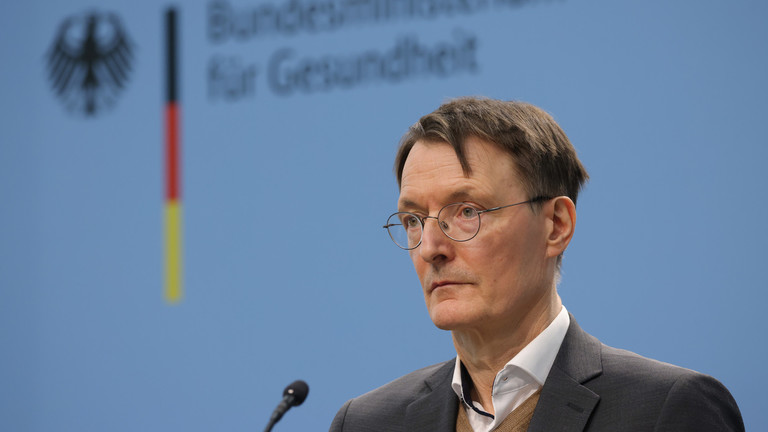
Federal Health Minister Karl Lauterbach (SPD) reacted with horror to the findings in the report. As federal health minister during a significant portion of the pandemic, he has often been the top target of criticism from those opposed to Germany’s Covid-19 policies.
“Enlightenment is good, but we must not allow conspiracy theories to arise on social media through the interference of foreign governments,” he wrote on the X platform. Why he referred to “foreign governments” remained unclear, but when cornered, left-wing politicians often resort to claims of “foreign interference” and “Russia.”
Despite calls for a review of policy, Lauterbach is desperate to avoid this outcome and is also openly rejecting a commission, as the AfD and BSW parties are calling for.
Lauterbach claims this would only benefit “a small group of politicians, but also people who perhaps represent radical ideas in other areas.” He claims they would use the findings “to politicize against the state.”
Some from the Greens also resorted to claims of “foreign influence” following the release of the RKI protocols.
Green health politician Janosch Dahmen, one of the most aggressive supporters of extreme Covid-19 policies, said: “It seems to me that the virulent spread of such untruthful rumors is also the result of the influence of foreign intelligence services on our society against the background of Russia’s war against Ukraine, to further divide and render politics incapable of action.”
The AfD, FDP and BSW want an investigation
The AfD, Free Democrats and BSW parties all want a more thorough investigation than a simple “review.”
“The public has a right to know what really happened back then,” said the health policy spokesman for the AfD parliamentary group, Martin Sichert, regarding the redactions still in the report. He appealed to the other parliamentary groups: “Take a look at the protocols of the RKI crisis team and set up a coronavirus investigation committee with us.”
Even the FDP, which is in a governing coalition with the ruling government, is calling for a more thorough investigation. FDP vice-president Wolfgang Kubicki announced that he would “work to ensure that the entire basis for decision-making at this time becomes public.” He also said it is becoming increasingly clear “that the Robert Koch Institute for Health Policy served as a scientific façade for former Minister Jens Spahn and probably also Karl Lauterbach.”
Some Greens are conciliatory
Some left-wing politicians believe some kind of review is necessary to improve “social cohesion.”
“It would be good for social cohesion if there were a review of coronavirus policy with a little distance,” said the Green parliamentary group’s legal policy spokesperson, Helge Limburg, to Welt newspaper. “This could be a commission of inquiry, a commission of experts, or another form of debate that signals to people: We are not simply brushing aside the drastic measures of that time.”
Health and budget politician Paula Piechotta said: “Almost exactly four years after the first pandemic measures were introduced in Germany, it is now overdue to address the mistakes of pandemic policy in a wide range of areas, from health and education to financial policy, in a transparent and timely manner for everyone.”
Her party colleague, Vice Chancellor Robert Habeck, also said a review of the coronavirus era was necessary but was short on specifics.
“We should now initiate a phase in which we reflect on the difficult pandemic period with all its effects,” he told the Bild newspaper. The German government at the time had to make far-reaching decisions quickly in an unprecedented situation during the pandemic.
“Certainly mistakes were made, but it would also have been a mistake not to make a decision,” he continued. “I think we should have the courage to learn the lessons, review processes, and evaluate the impact.”
In retrospect, it is fair to ask “whether the advisory bodies for politicians really covered the diversity of perspectives in science,” said Green MP Dieter Janecek. “For example, some encroachments on fundamental rights were certainly questionable: Unvaccinated people were not allowed into restaurants or swimming pools, even though it was already clear that the vaccine did not prevent transmission. Children and young people were unduly disadvantaged.”
Most Americans Believe US Will Be in World War Within Next Decade
By Kyle Anzalone | The Libertarian Institute | March 24, 2024
The majority of Americans believe it is likely that the US will be involved in a world war during the coming decade. Under President Joe Biden, the US is preparing for great power wars with Russia and China, engaged in multiple Middle East conflicts, and posturing for a confrontation with Iran and North Korea.
According to a new YouGov poll, 61% of Americans responded that it is very or somewhat likely that a world war would break out in the next five to ten years. About two-thirds of people responding to the poll said they believe the war will turn into a nuclear conflict.
When asked what countries would be aligned against the US, a majority of Americans said that North Korea, Iran, Iraq, Russia, and China. Americans identified NATO members such as France and the UK, as well as Israel and Ukraine, as allies in the coming world war.
Americans are not overly optimistic about the potential conflict. A slight majority believe the US and its allies would defeat Russia. While under half of respondents said the US would lose a war with Russia or against an alliance between Moscow and Beijing.
While most Americans believe a global conflict is on the horizon, they are not interested in fighting the war. More than twice as many respondents said they would refuse service even if drafted than stated, they would volunteer if the war broke out. Americans responded that they were more likely to serve in non-combat roles or if the homeland was threatened.
The survey was conducted as President Biden embroiled the US in multiple conflicts, putting America on the brink of war across various global hot spots. The White House is fighting a proxy war against Russia in Ukraine. That conflict has escalated in recent weeks as Ukraine is losing territory and lashing out with attacks on Russia. In response, Moscow has launched more attacks on Ukrainian cities and devastated energy infrastructure with a missile barrage last week.
In the Middle East, Biden withdrew from Afghanistan, but in October, he followed Israel into a massive regional war. Washington is shipping thousands of bombs to Tel Aviv. The US is also bombing Yemen, Iraq, and Syria. Three American soldiers were killed in Jordan earlier this year. Even within the halls of the White House, US officials are concerned Biden’s Middle East policy could lead to a broader war with Iran and Hezbollah in Lebanon.
President Biden has also continued a military buildup in the Asia-Pacific, stoking tensions with North Korea and China. North Korean leader Kim Jong-un has responded with a rash of missile tests and fiery rhetoric. Beijing has increasingly pushed back against Washington’s support for Taipei and Manila with military drills in the Taiwan Strait, South, and East China Seas.
A growing divide in the world economy is further adding to global tensions. A rising number of countries, including Russia, China, Iran, North Korea, Cuba, Venezuela, Nicaragua, Syria, Yemen, and Zimbabwe, face significant US sanctions. Economic warfare has led to a growing number of countries forming blocs outside of Washington’s control.
Italy’s Salvini says ‘warmonger’ Macron ‘danger’ for Europe as Ukraine tension rises
Press TV – March 24, 2024
Italian Deputy Prime Minister Matteo Salvini says French President Emmanuel Macron is a “warmonger” and represents a “danger” for Europe by refusing to rule out sending Western ground troops to Ukraine.
Salvini’s remarks came on Saturday during a gathering in Rome of right-wing and nationalist European leaders to rally support ahead of EU parliamentary elections in June.
Salvini whose far-right League party is a member of Prime Minister Giorgia Meloni’s coalition government, said that Macron’s suggestion last month that Western ground troops could be sent to Ukraine was “extremely dangerous, excessive and out of balance.”
“I think that President Macron, with his words, represents a danger for our country and our continent,” he said during his speech.
“The problem isn’t mums and dads but the warmongers like Macron who talk about war as if there were no problem now,” he added. “I don’t want to leave our children a continent ready to enter World War Three.”
In similar remarks, Italian Foreign Minister Antonio Tajani also said in mid-March that his country does not support deploying NATO troops in Ukraine, warning that the move could spark World War III.
The French president told a press conference he did not rule out sending troops last month, after a high-level meeting in Paris of mainly European partners to discuss what urgent steps could be taken to shore up Ukraine in the wake of Russia’s recent frontline advances.
Following his remarks he faced criticism from France’s Nato and EU partners and a warning of conflict from Russia.
Last week, Sergey Naryshkin, Russia’s foreign intelligence (SVR) top brass said any French military unit sent to Ukraine to help it fight Russia would be a “priority” target for the Russian army.
This warning came after Kremlin received information that Paris is preparing to dispatch a contingent of 2,000 troops to Ukraine to fight against Russia.
Naryshkin said that Macron is concealing the actual number of French soldiers who have lost their lives in Ukraine due to concerns over potential widespread demonstrations in France.
In response, the French army chief of staff, Pierre Schill has said France is ready to face whatever developments unfold internationally and is prepared for the “toughest engagements” to protect itself.
Ties between France and Russia have further deteriorated in recent weeks after Paris signed a bilateral security accord with Ukraine and vowed to send more long-range cruise missiles.
Earlier this month, Macron also said there are “no limits” to French support for Ukraine. He added that France “would be ready to make sure that Russia never wins that war.”
Russia launched what it calls “a special military operation” in Ukraine on February 24, 2022, over the perceived threat of the ex-Soviet republic joining NATO.
Since then, the United States and Ukraine’s other Western allies have sent Kiev tens of billions of dollars worth of weapons, including rocket systems, drones, armored vehicles, tanks, and communication systems.
Western countries have also imposed a slew of economic sanctions on Moscow. The Kremlin has said the sanctions and the Western military assistance will only prolong the war.
Militaristic Revolution in the EU: Brussels Paves Legal Way for Warmongering
By Dmitry Babich – Sputnik – 23.03.2024
During the last few days, the European Union went through a real militaristic revolution. A special “legal task force” is working on allowing the use of EU funds for war.
The so-called European Peace Facility (EPF), officially stewarded by Josep Borrell, will get its money from the EU funds (and not individual states) after reporting the transfer of thousands of weapons systems to Kiev. EPF also reported having trained more than 40,000 Ukrainian military to use them.
The Financial Times chose a somewhat routinely sounding lead for its story on the EU’s decision to legally stop being an “oasis of peace”: “Brussels proposes ‘legal task force’ to explore ways to use the common budget for defense.”
The headline, however, was more disturbing: “EU looks to bypass treaty ban on buying arms to support Ukraine.”
The reality described in the FT’s story, however, is more dramatic than the headline and the lead taken together: the European Union, which was conceived as an entirely peaceful organization, becomes one of the world’s most implacable warring empires – by law. Very soon the EU’s Union Treaty will no longer have a provision prohibiting “any expenditure arising from operations having military or defense implications.” (Article 41, point 2 of the Treaty on European Union.) Or, at best, this provision will be made devoid of legal force by some new additions to the EU’s legislation.
FT reports, confirming its story by eyewitness accounts, that the European Commission is creating a “legal task force,” that would allow the EU to finance wars and military production by European money. In all likelihood, the first “beneficiary” of this financing will be NATO’s proxies in Ukraine, waging a war against Russia and Russians since 2014.
At a recent conference of the EU’s 27 members in mid-March, 2024, it was decided to create within the framework of the so-called European Peace Facility (EPF) a special fund for financing Ukrainian armed forces (Ukraine Assistance Fund). What the relation is between the word “peace” and the system of buying and transporting weapons to the zone of conflict, remains unclear.
Ukraine Assistance Fund (UAF) will be financed by donations from EU member states to the tune of €5 billion a year. At least €500 million from that sum will be spent on training Ukrainian servicemen to use the EPF-provided weapons. The weapons will mostly be European-made (such was the requirement of France), but not only. Weapons from “third countries” can be bought and sold, creating opportunities for the spread of dangerous weapons around the world.
Judging by the recent EU summit on Thursday, which discussed the ways of stealing “immobilized” Russia’s foreign assets and pouring its money into the UAF “for military support to Ukraine,” no law is an obstacle for the EU’s “legal task forces.”
Was such an evolution of the EU unexpected?
Not entirely. The EU’s quasi-pacifist image started to crumble not now, but back in the 1990s. It transpired back then that the real European Union went a long way from the lofty ideas of the EU’s founders. Only naïve people can trust the EU’s claims, that it is a purely “soft power-based institution.”
In 1995-1999 the EU’s member countries participated in military interventions against the former Yugoslav republics, later almost all EU members made their “military contributions” to the occupations of Afghanistan, Iraq and Libya.
However, as more and more “crusades” by individual Western countries or American-British alliances ended in defeats (one can cite Afghanistan in 2001-2021 or the French intervention in West Africa after the coup in Libya in 2011), the dreams about a “collective war chest” of the EU started to take shape.
In 2020 the so-called European Defense Fund (EDF) and later, in March 2021, the European Peace Facility (EPF) started operating at the EU level. Their aim was clear from the start: to collect money from member countries and to buy arms for this money. Later, these weapons will be used against “undemocratic” countries, whose leaders happen to be at odds with the EU and the US.
Real European pacifists immediately smelt the rat and protested both against EDF and especially against EPF, which after the escalation of the Ukrainian conflict became one of the main sponsors of Zelensky’s military machine. Back in 2021, 40 pro-peace NGOs, headed by the German group Brot für die Welt (Bread for the World) came out with a statement denouncing the EPF as an instrument “which brings arms into wrong hands” and “allows to use the EU money to train the military cadres for dictatorial regimes.”
Now, however, Brussels uses widespread anti-Russian prejudice in the EU, as well as constant reminders about the “threat from Putin” to justify the final destruction of the dream of “peaceful Europe,” which once inspired the pioneers of European integration. In comparison to 2021 critics are fewer and quieter. In this way, Russophobia was spiritually destructive for Europe, stealing its dream of “world peace.”
‘France has no vital interests in Ukraine’ – Le Pen
RT | March 21, 2024
The conflict in Ukraine does not directly affect France’s key national interests, the former leader of the far-right National Rally party, Marine Le Pen, told the BFM TV broadcaster on Wednesday. Le Pen, who led the party for more than a decade argued that “France’s vital interests are not in question.”
The three-time presidential candidate also suggested that Russia does not pose a threat to European nations and that the best thing Kiev’s Western backers can do is ensure that it sits down at the negotiating table with Moscow as soon as possible.
According to the politician, “the only way to help Ukraine is to give it the means to enter into negotiations.”
Late last month, French President Emmanuel Macron said that, while there was no consensus among Kiev’s backers on a military deployment to Ukraine, “in terms of dynamics, we cannot exclude anything.” Numerous NATO allies were quick to reject his suggestion. However, reports have since appeared in the media, claiming that Paris may have been preparing for such a development for months.
Reports have also alleged that active-duty military personnel from NATO states are already operating in Ukraine in various capacities – something that Polish Foreign Minister Radoslaw Sikorski appeared to confirm on Wednesday.
Le Pen accused Macron of “playing politics with war,” suggesting that the head of state may not be fully aware of what is going on on the battlefield in Ukraine.
She also argued that Moscow was unlikely to attack European countries as it “does not have the military means to engage in a territorial war with the whole” of the continent.
Last week, French legislators voted in favor of a 10-year security pact with Ukraine, which was signed by Macron and his Ukrainian counterpart, Vladimir Zelensky, last month. National Rally abstained, with Le Pen accusing the head of state of “hijacking, exploiting and instrumentalizing a major international crisis for a short-term electoral agenda.”
She has consistently opposed plans to admit Ukraine into NATO and the EU, as well as economic sanctions on Russia, and the delivery of heavy weapons to Kiev.
On Tuesday, the head of Russia’s Foreign Intelligence Service (SVR), Sergey Naryshkin, claimed that France was preparing to deploy as many as 2,000 troops to Ukraine.
Over the weekend, Russian President Vladimir Putin told his supporters that fighters from NATO states were already present in Ukraine. He also said a conflict between NATO and Russia could not be ruled out, but added that everyone probably understood the dire consequences of such a development.
Western media ‘coverage’ of Russia is incredibly dangerous, and it’s getting worse
By Glenn Diesen | RT | March 20, 2024
Western media coverage of every Russian election is bad. But this time it was even worse than usual.
Instead of lashing out at the incompetence on display, it’s more constructive to explore why rational discussions about the country continue to appear impossible.
Not to mention the dire consequences of the ongoing self-delusion.
Reason versus conformity to the group
One of the first things we learn in sociology is that humans are in a constant battle between instincts and reason. Over tens of thousands of years, we have developed the instinct to organise in groups as a source of security. This is the result of evolutionary biology as survival demands that we organise into “us” versus “them”. In-group loyalty is augmented by assigning contrasting identities of the virtuous “us” versus the evil “other”, which helps stop an individual from straying too far from the pack.
Yet, human beings are also equipped with reason and thus the ability to assess objective reality independent of their immediate circle. In international relations, it’s imperative to place yourself in the shoes of the opponent. The rationality required to see the world through the perspective of the “other” is vital for reaching mutual understanding, reducing tensions, and pursuing a workable peace.
Every successful peace process and reconciliation in history – from Northern Ireland to negotiations to end apartheid in South Africa – has been based on this.
We expect journalists to be objective in their reporting of reality, which is especially important during war. But this seems to be almost impossible, especially during conflicts. When human beings experience external threats, their herd instincts are triggered as society demands group loyalty and we punish those who deviate. The political obedience demanded during war time usually results in the weakening of freedom of speech, the role of journalism, and democracy.
Why did Russians vote for Putin?
So, how can we understand the reasons for President Vladimir Putin’s immense popularity in Russia and his landslide victory?
If we use our reason and resist our tribal instincts, it should not be difficult to understand the popularity of Putin. While the 1990s was a golden period for the West, it was a nightmare for Russians. The economy collapsed and society disintegrated with truly horrific consequences.
The country’s security also collapsed, as NATO expansion meant there was no chance to agree an inclusive European security architecture. This had been outlined in the Charter of Paris for a New Europe in 1990 and the OSCE founding documents.
A weakened Russia meant that its interests could be ignored, and NATO was able to invade Moscow’s ally Yugoslavia, in violation of international law.
When Putin took over the presidency on 31 December 1999, it was commonplace in the West to predict that Russia would share the fate of the Soviet Union. That is eventual collapse.
However, Russia has instead become the largest economy in Europe (by PPP), its society has healed from the disastrous 1990s, its military might has been restored, and new international partners have been found in the East and Global South, as evidenced by the growing role of BRICS.
Furthermore, most Russians believe it’s not a good idea to have major disruptions to leadership in the middle of a NATO-Russia proxy war in Ukraine that is deemed an existential threat. Don’t change horses in midstream as the American proverb, often attributed to Abraham Lincoln, advises.
Speaking of the US, the late Mikhail Gorbachev – who was immensely popular there – did not shy away from criticising Putin, when he was still with us. However, he nevertheless argued that Putin “saved Russia from the beginning of a collapse”.
Today, any Western journalist repeating this would be immediately branded as a “Putinist” – implying a betrayal of the “us”. Western journalists cannot acknowledge the immense achievements of Russia since 1999 as it could be interpreted as lending legitimacy and signalling support for the “bad” side.
The price of self-delusion
Arguments are not judged by the extent they reflect an objective reality, rather they are assessed by how they are seen to express support or condemnation of Russia. Conformity to a narrative signals in-group loyalty, and the desire to deprive opponents of legitimacy limits what is allowed to be discussed.
Acknowledging Putin’s achievements over the past 25 years is treated as expressing support for him, which is tantamount to treason.
Meanwhile, journalists hardly ever discuss Moscow’s security concerns and the extent to which our competing interests can be harmonised. Instead, Russian policies are conveyed by referring to derogatory descriptions of Putin’s character.
As in our other wars, conflicts are explained by the presence of a bad man and if we could just make him go away, then the natural order of peace would be restored. Putin, the narrative contends, is our most recent reincarnation of Hitler and we constantly live in the 1940s where an adversary must be defeated and not appeased.
How can journalists then explain to their audience Putin’s popularity and the reasons for his huge personal vote when it is not allowed to say anything positive about the Russian president? Unable to live in reality and unable to place ourselves in the shoes of the opponent – how are we supposed to have sensible analysis and policies? As I always warned my students of international relations: Do not hate your rivals, it produces poor and dangerous analysis!
Making self-delusion virtuous comes at a high price. How can the West pursue diplomacy and work with Putin when he is presented as the embodiment of evil and an illegitimate leader? Even explaining Russian policies is condemned as legitimising Russian policies, which is deemed to be propaganda that must not be given a platform. People conform to the good versus evil mantra as it feels virtuous and patriotic to signal that they support the in-group and loathe the out-group. But how can we pursue our interests when we have committed ourselves to self-delusion and have banned reality from our analysis?
I have attempted to explain for two years why the anti-Russian sanctions were doomed to fail and why Russia will win the war, only to be told that it is Russian propaganda to undermine support for sanctions and to challenge the narrative of a pending Ukrainian victory. Reality be damned! Ignoring reality results in a distorted picture of Russia which predictably leads to miscalculations. How could Russia as a “gas station masquerading as a country” defeat the most draconian Western sanctions and see its economy not only survive, but by some measures even thrive? Why would Russians unite under an existential threat when we cannot acknowledge the role played by NATO in that regard?
Sigmund Freud explored the extent to which instinctive group psychology could diminish the rationality of the individual. Freud’s ideas were further developed by his nephew, Edward Bernays, who became the father of modern political propaganda. Over a century ago, Walter Lippman cautioned group psychology, managed with propaganda, as it came with a heavy price. Yielding to the instinct of viewing conflict as a struggle between the virtuous “us” versus the evil “other” implies that peace requires defeating the adversary, while a workable solution becomes tantamount to appeasement.
What better explains the current failure of rational analysis and the resulting collapse of diplomacy?
Glenn Diesen is a Professor at the University of South-Eastern Norway and an editor at the Russia in Global Affairs journal.
EU Still Hooked on Russian LNG Despite Bloc’s Hardline Rhetoric
By Chimauchem Nwosu – Sputnik – 20.03.2024
Despite EU efforts to reduce reliance on Russian gas in the wake of the anti-Russian sanctions, recent data shows a surge in Russian LNG imports by France and Spain, suggesting that business is practically proceeding as usual.
Russian liquified natural gas (LNG) exports to France surged to an all-time high in 14 months (from November 2022 to late January 2024), amounting to €293 million, according to Eurostat data obtained by Sputnik.
Last December, French imports of Russian LNG exports were estimated to be €244 million, marking an increase of almost €50 million over the month. Spain’s LNG from Russia amounted to €274 million, 1.7 times higher than in December 2023, and a 12-month-high.
Additionally, other EU countries such as Belgium, Estonia, Finland, Lithuania, the Netherlands, and Sweden have also purchased Russian LNG. By the end of January, EU nations had collectively spent €684.3 million on Russian LNG.
Since the onset of Russia’s special military operation in Ukraine in February 2022, the EU has sought to cut its dependence on affordable Russian gas and liquefied natural gas (LNG) while simultaneously implementing US-led sanctions against Moscow.
However, despite harsh anti-Russian rhetoric by EU member states like France, recent data by the Institute for Energy Economics and Financial Analysis (IEEFA) revealed that numerous European nations remain hooked on this energy source, while some, like Belgium, facilitate LNG transshipments through their import terminals.
Spain is at the forefront of EU countries importing Russian LNG, having purchased 5.21 billion cubic meters (bcm) between January and September 2023. Following closely behind are France, with 3.19 bcm, and Belgium, with 3.14 bcm. In 2023, the main EU terminals that received significant quantities of LNG shipments from Russia were located in Zeebrugge, Belgium; Montoir-de-Bretagne, France; and Bilbao, Spain, according to IEEFA.
By the end of 2023, Russia had delivered 5.24 billion cubic meters of LNG to Spain, 3.82 billion cubic meters to Belgium, and 2.1 billion cubic meters to the Netherlands. Spain received 40 percent of Europe’s imports, while Belgium accounted for 30 percent. It is worth noting that the supply to the Netherlands increased by 1.9 times compared to 2022.
European countries have not yet banned or restricted importing liquefied natural gas from Russia. The EU is contemplating such action, but there is division among its 27 members regarding the approach to be taken. Major importers of Russian LNG, including Belgium, France, and Spain, assert that severing ties with their Russian suppliers, with whom they have long-term contracts, would not be simple.
Russian President Vladimir Putin has repeatedly criticized the EU for implementing sanctions against Russia’s oil and gas industry for purely political reasons. He believes that the decision was made under pressure from the EU’s Western allies, rather than being based on economic considerations. Putin has voiced concern about the potential negative impact these sanctions could have on the shared economic competitiveness of both Russia and the EU.
Niger broke military pact with US after being ‘warned’ about Iran, Russia ties
Press TV – March 19, 2024
Niger’s junta decided to suspend a military agreement with the United States after a delegation of senior US military officials visited the Western African country and “expressed concerns” about its growing relations with Russia and Iran.
The Pentagon said on Monday that the officials traveled to the Nigerien capital Niamey last week to discuss the matter with the country’s military leadership, seeking clarification about the way ahead.
Pentagon spokesperson Sabrina Singh asserted that the US government had “direct and frank” conversations in Niger, and was continuing to communicate with the country’s ruling military council – known as the National Council for the Safeguard of the Homeland (CNSP).
“The US delegation was there to raise a number of concerns. … We were troubled (about) the path that Niger is on. And so these were direct and frank conversations, to have those in person, to talk about our concerns and to also hear theirs.
“US officials expressed concern over Niger’s potential relationships with Russia and Iran,” Singh said.
Niger’s junta announced on Saturday that it had canceled a 2012 defense cooperation agreement with the US.
“The government of Niger, considering the aspirations and interests of its people, responsibly decides to denounce with immediate effect the agreement that permitted US military personnel and civilian employees from the American Department of Defense on Niger’s territory,” Nigerien government spokesman Amadou Abdramane said in a statement on national television.
The move followed a visit to Niamey by a delegation of senior US military officials led by Under Secretary of State for African Affairs Molly Phee.
Abdramane accused US officials of not following diplomatic protocol and not informing Niger about the composition of the delegation.
He added that Niger regretted the “intention of the American delegation to deny the sovereign Nigerien people the right of choosing their partners and partnerships capable of truly helping them fight against terrorism.”
High-level Russian military officials, including Deputy Defense Minister Yunus-bek Yevkurov, have visited Niger and met with the country’s military leadership.
The prime minister of the ruling junta, Ali Mahamane Lamine Zeine, visited Iran in January.
Foreign Minister of Niger, Bakary Yaou Sangare, visited Tehran in October 2023 to explore opportunities for strengthening political and economic ties, as well as boosting cooperation in scientific and technological sectors between the two countries.
Commending Iran’s skills in various economic, scientific, and technological sectors, the Nigerien diplomat underscored that Iran’s capabilities are well-matched to cater to Niger’s requirements in the energy and industrial domains.
Major Studies Find No Evidence of Brain Injury in Alleged ‘Havana Syndrome’ Patients
By Kyle Anzalone | The Libertarian Institute | March 18, 2024
Two studies conducted by the National Institute of Health (NIH) on scores of people claiming to have Havana Syndrome did not find any evidence of brain damage. Purported victims of Havana Syndrome claim they were targeted by a foreign power with a mysterious weapon that caused undetectable neurological issues.
Havana Syndrome was first reported among American diplomats in Cuba in 2016 who claimed to be exposed to a sonic weapon that caused headaches. An investigation published by JASON, a group of scientists who advise the US government, concluded that crickets native to Cuba were making the noise, causing neurological symptoms among American officials in Havana.
Since, scores of diplomats have reported symptoms in a range of countries including Vietnam, Russia, and China. The self-identified victims claim they were targeted with some form of microwave, sonic, or direct energy weapon that caused a myriad of symptoms, including headaches, as well as problems with sleep, vision, and hearing.
On Monday, NIH published two studies that concluded Havana Syndrome was not caused by directed energy weapons. Additionally, in both investigations, researchers were unable to detect any signs to indicate the patients had suffered neurological damage.
“In this exploratory neuroimaging study, there was no significant MRI-detectable evidence of brain injury among the group of participants who experienced [anomalous health incidents] compared with a group of matched control participants,” the authors wrote. However, researchers did not dismiss the possibility that somehow the claimed victims were actually targeted with a mysterious weapon.
Robert E. Bartholomew and Dr. Adam Gaffney argued that Havana Syndrome, rather than being caused by weapons, is a mass psychogenic illness. In an essay published in the Journal of the Royal Society of Medicine, Bartholomew explains, “As is typical in mass psychogenic illness outbreaks, as news of the ‘attacks’ spread among the diplomatic community, more US Embassy staff were affected, including members of the Canadian Embassy.”
He continues, “The irregular patterning of the ‘attacks’ is not typical of an infectious agent. Many ‘incidents’ were said to have occurred in homes and hotels. Why were some people affected, while others either standing or sleeping next to the ‘victim,’ were not?”
Still, allegations of attacks causing Havana syndrome continued to impact American officials around the world into the first years of the Joe Biden administration. The claims of attacks have led to the demonization of Russia, the breakdown of diplomatic relations with Cuba, and the delay of high-level visits to foreign nations.
Which European Countries are Most Dependent on US Gas?
By Oleg Burunov – Sputnik – 18.03.2024
Russian President Vladimir Putin earlier cautioned that the EU’s decision to stop the purchase of Russian energy supplies was “absolutely political” and would backfire on the bloc.
Every tenth cubic meter of gas used by the EU in 2023 was supplied by the US, with Lithuania the most dependent on the fuel, Sputnik research based on data from the UN platform Comtrade and the International Energy Agency has revealed.
According to the findings, the EU’s gas consumption stood at 330 billion cubic meters last year, 20% less than in 2021.
The US supplied 34.5 billion cubic meters of liquefied natural gas (LNG), or 10.4% of all gas consumed by the bloc in 2023, with Finland, which didn’t buy US gas in 2021, consuming 38,2% last year.
As for Lithuania, it consumed a record 40% of the American gas last year, against 22.3% in 2021.
The research also revealed that an array of other countries increased US gas supplies in 2023, including Croatia, the Netherlands, France, Spain, Poland, Italy and Germany. With 32%, Croatia proved to be the most dependent on US gas after Lithuania and Finland. The only countries that reduced American gas deliveries last year were Greece, Malta and Portugal.
The research comes after a previous Sputnik review of Eurostat data showed that EU countries had to pay some €185 billion ($201 billion) extra on natural gas over the past 20 months after cutting themselves off from cheap Russian pipeline gas.
Russia’s President Vladimir Putin earlier warned that the EU’s “suicidal” and politically motivated decision to halt the purchase of Russian energy supplies as part of Western sanctions would come back to bite the bloc.
“Rejection of Russian energy resources means that Europe will systematically become the region with the highest energy costs in the world… This will seriously – and according to some experts irrevocably – undermine the competitiveness of a significant part of European industry, which is already losing the competition to companies in other regions of the world,” Putin underscored.
Latvia urging UK to ‘prepare for war’ with Russia
By Lucas Leiroz | March 18, 2024
The Baltic countries continue their “preparation for war with Russia.” Now, as if it were not enough to engage in a suicidal militarization campaign, Latvia is also demanding that the main NATO countries, such as the UK, also begin adopting radical measures to prepare for the “inevitable” confrontation with Moscow. The main Latvian criticism of the British concerns the military service, with the Baltic country asking the UK to immediately resume conscription policies to increase the size of its forces.
Latvia’s foreign minister, Krisjanis Karins, stated that all NATO countries should follow the Latvian example when it comes to military preparation. According to him, it is necessary to implement special militarization measures and improve defense capacity in the face of the supposed “Russian threat”, which is why Western countries should unite in a common military policy. Karins believes that not all NATO states are efficiently engaged in this military preparation process. In this regard, he criticizes even the stance of key countries in the bloc, such as the UK.
Karins was asked by a journalist from The Telegraph about whether London should adopt mandatory military service for its citizens. He resolutely responded that Latvia “strongly recommends” such an attitude. According to Karins, Latvia is developing a system called “total defense”, in which all the country’s efforts are directed towards expanding military capacity. Efforts include all sectors of civil society, thus requiring a system of total mobilization within which mandatory military service is vital.
“We would strongly recommend this. We are developing and fleshing out a system of what we call a total defense involving all parts of civil society,” he said.
Recently, advancing its militarization policies, Latvia reintroduced military conscription. The measure was justified by the supposed need to expand the “active and ready reserve”, given the apparent “imminence” of an armed conflict. Under current Latvian law, all male citizens between 18 and 27 must complete at least one year of military service – including Latvians living abroad. Karins praises this model and calls on the entire West to adopt it, jointly engaging in “total defense”.
Furthermore, Karins also stated that a growth in defense spending is “inevitable”, thus asking London to reach the minimum target of 3% of GDP with military affairs. The top Latvian diplomat also praised the Finnish recruitment system. According to him, Finland has a small active army, but an extremely strong and “well-trained” reserve, making it possible to immediately enlist citizens for war, if necessary. Karins states that Latvia was inspired by the Finnish model and that all countries should do the same.
In fact, discussions about increasing militarization in the UK are already growing rapidly. Recently, British defense minister Grant Shapps called on the country to prepare for a situation of conflict on multiple fronts in the next five years. According to Shapps, tensions will worsen in the near future, and the UK needs to be prepared to face countries like Russia, China, Iran and North Korea.
“In five years’ time we could be looking at multiple theaters [of conflict] including Russia, China, Iran and North Korea (..) Ask yourself, looking at today’s conflicts across the world, is it more likely that that number grows or reduces? I suspect we all know the answer. It’s likely to grow, so 2024 must mark an inflection point,” he said at the time.
In the same vein, the UK’s Chief of the General Staff, Patrick Sanders, has constantly made controversial statements praising anti-Russian warmongering mentality and encouraging his country towards militarization. According to him, the conflict in Ukraine creates an “imperative” for the reconstruction of the British army. Sanders believes that London needs to be able to fight a protracted war on European soil.
“There is now a burning imperative to forge an Army capable of fighting alongside our allies and defeating Russia in battle (…) We are the generation that must prepare the Army to fight in Europe once again,” Sanders said. He also recently called on the UK to adopt a system of broad militarization, training “citizen soldiers“. The aim would be to create a strong reserve army among the common people of the country. Indeed, what Sanders calls a “citizen army” is in practice just a disguised model of total mobilization.
As we can see, Latvia’s bellicose ideas may receive broad domestic support in the UK. Currently, the British army has only 75,983 soldiers. Jointly, the army, navy and air force have 184,865 active-duty personnel. The numbers are the lowest in the country since the Napoleonic Wars, which has “worried” pro-war militants. In practice, Western officials and decision-makers have been constantly deceived by their own propaganda, which is why many people actually believe in the “necessity” of fighting Russia.
The main problem is that these measures confront the reality of Western countries. In the UK, there is currently a serious economic crisis, with the country falling into recession and criticism of the government increasing sharply. Engaging in a process of militarization would be, in addition to dangerous and unnecessary, a truly “suicidal” measure for the national economy. It remains to be seen whether this reality will be admitted by the local government or whether irrational pro-war tendencies will prevail in the country.
Lucas Leiroz, journalist, researcher at the Center for Geostrategic Studies, geopolitical consultant.
The Anglo-American War on Russia – Part Fourteen (Biden Blocks Peace)
Tales of the American Empire | March 14, 2024
In 2023, hard proof emerged that American neocons provoked Russian intervention in Ukraine and blocked efforts at a peaceful settlement. This had occurred several times in the past decade after peace agreements were signed, at Minsk in 2014, Minsk 2 in 2015, Paris in 2019, and Istanbul in 2022. None of these agreements were implemented by Ukraine because they were sabotaged by American neocons via the CIA. As previous parts of this series have explained, their goal is to weaken and destroy Russia by using Ukraine to fight a proxy war.
________________________________
“Beloveza Accords”; Wikipedia; https://en.wikipedia.org/wiki/Belovez…
“Bennett speaks out”; former Israeli Prime Minister Naftali Bennett; YouTube; Feb 3, 2023;  • בנט מדבר
“HOW THE United States and Its NATO Allies Sabotaged Peace Between Russia and Ukraine”; Larry Johnson; November 14, 2023; https://sonar21.com/how-the-chance-wa…
“How Zelensky was Prevented From Making Peace in the Donbas”; Felix Abt; Covert Action Magazine, March 24, 2023; https://covertactionmagazine.com/2023…
Related Tales: “The Anglo-American War on Russia”; • The Anglo-American War on Russia
Featured Video

ARE PATIENTS BEING PROPERLY INFORMED ABOUT OZEMPIC?
or go to
Aletho News Archives – Video-Images
New Book
Breast Cancer: Before You Consent
A new Unbekoming paperback
Lies are Unbekoming | September 18, 2026
Peter Gøtzsche reviewed every randomised mammography screening trial ever conducted for the Cochrane Collaboration. Cochrane’s headline is that, assuming a 15% mortality reduction, one woman in 2000 avoids dying of breast cancer over ten years. Ten are overdiagnosed and treated. Two hundred experience false alarms.
But that headline assumes the reduction. When Gøtzsche looked only at the trials with adequate randomisation — the higher-quality ones — the reduction disappeared. No effect on breast cancer mortality. No effect on all-cause mortality.
This is the Cochrane finding, published in the establishment’s own database of systematic reviews.
No woman being asked to consent to a mammogram this week knows it.
That is why the new Unbekoming paperback exists. … continue
Blog Roll
 Aletho News
- ARE PATIENTS BEING PROPERLY INFORMED ABOUT OZEMPIC?
- US lawmaker blocks $2.8 billion weapons sale to Israel: Report
- Yemeni army claims responsibility for strikes on sensitive sites in Saudi capital, Aramco facilities in Yanbu
- Iran Judiciary issues indictments against 159 US, Israeli officials for assassination of Leader, commanders
- Turkiye revokes Iranian bank license under US sanctions campaign
- US-Denmark Agreement on Greenland Is ‘PR Stunt’ Ahead of Midterms
- Araghchi: Military intervention cannot create security; coercion cannot bring peace
- Fraud Squared
- Breast Cancer: Before You Consent
- Iran’s Plan to Shut Down AI in the Persian Gulf
- If Americans Knew
- Inside Gaza’s death trap of collapsing, bombed-out buildings
- The everyday items Israel bans from Gaza every day
- Inside the siege, the ruined buildings of Gaza – Daily Update
- Debunking The Claim That Macklemore Has A “History Of Antisemitism”
- CPJ demands release of arrested Palestinian-US journalist near Bethlehem
- Robert Kraft: The Billionaire Friend of Netanyahu Pulling The Strings Behind the Macklemore/Ed Sheeran Blow Up
- Columbia Administered Fund Gives Big Money to Pro-Israel Groups
- Deportation Case of Palestinian Activist Salah Sarsour Tests First Amendment
- ‘We Will Not Forget’: Palestinians Mark 44 Years since Sabra and Shatila
- Why do we let Zionists decide what we can and can’t say?
- No Tricks Zone
- New Study: ‘Global Drought Shows No Detectable Recent Acceleration Under Climate Warming’
- Economic Masterminds: German Socialists Suggest Taxing Productivity Gains Stemming From Using AI
- The South China Sea Has Not Been Cooperating With The Climate Change Narrative
- Energy Crisis: Germany Enters Heating Season With Historically Low Gas Reserve Fill Levels
- New Study: The Antarctic Ice Sheet Gained Mass From 2020-2024 Due To Staggering Snow And Ice Accumulation
- Study: Ocean Heating Rates From Thousands Of Years Ago ‘Dwarf’ Modern Ocean Heating Rates
- Climate Extremists Target, Attack Large-Scale Power Grid Infrastructure In Germany!
- New Study: Antarctic Ice Melt Has Contributed Less Than 1 Centimeter To Sea Level Rise In The Last 30 Years
- Fear Of Debate: Alarmist German Climate Scientist Calls On Mainstream Media To Discredit Skeptic Voices
- End-Of-August Arctic Sea Ice Extent Hasn’t Fallen In 20 Years, Official Data Show!
 Aletho News