NEW EVIDENCE OF IMMUNE SYSTEM “FLARE UPS” POST COVID SHOT
The Highwire with Del Bigtree | December 15, 2023
Net Zero Watch | December 18, 2023
London – A leading expert in mosquito-borne diseases is fiercely critical of Professor Dame Jenny Harries, head of the UK Health Security Agency, calling her recent pronouncements on mosquito-transmitted diseases “entirely fictional” and “shameless”.
Professor Harries was quoted in the media as saying that rising temperatures will make such diseases common in the UK by 2040 because the Asian Tiger Mosquito – which can transmit dengue, chikungunya, zika, yellow fever and other viral diseases – will become established throughout Britain. Dengue will eventually become endemic in London, it is claimed.
But Professor Paul Reiter, retired professor of Insects and Infectious Diseases at the Pasteur Institute in Paris, and a leading specialist in this field, has ridiculed her claims:
“The natural range of the Tiger mosquito, an Asian species, extends from the tropics to regions where mean January temperatures are around minus ten degrees Celsius. Northern strains are able to survive because in late summer, as days grow shorter, the eggs they lay are dormant and remain unhatched until spring arrives”.
Since the late 1970s, there has been rapid global spread of the Tiger mosquito, to the United States, Latin America, Europe and several African countries, probably mainly via the global trade in used tyres. Professor Reiter says that it is beyond doubt that this has nothing to do with temperature.
Professor Reiter has also lambasted fearmongering about the return of malaria, noting that this was once a major cause of death in many parts of England, even during the period that climatologists call the Little Ice Age:
“Shakespeare mentions malaria – “the ague” – thirteen times, so it was clearly once common here. The disease began to decline – for a multitude of reasons – in the mid-nineteenth century, despite the upward trend in global temperatures.”
Net Zero Watch director Andrew Montford said:
“This is not the first time we have seen the Civil Service misleading the public in this way. Science is being misused to generate fear and to “nudge” us in a desired direction. This kind of shameful disinformation brings the Civil Service into disrepute.”
By Michael Nevradakis, Ph.D. | The Defender | December 15, 2023
U.S. poison control centers are reporting a sharp increase in calls related to semaglutide, a drug used to treat Type 2 diabetes and obesity, CNN reported Wednesday.
Developed by drugmaker Novo Nordisk, semaglutide is sold under the brand names Ozempic for diabetes, and Wegovy for weight loss. According to Medscape, Novo Nordisk said the two drugs are not interchangeable — although Ozempic is often taken off-label for weight-loss.
According to CNN, America’s Poison Centers said that between January and November, it responded to nearly 3,000 calls — a more than 15-fold increase since 2019 — about semaglutide. In 94% of those calls, semaglutide was the only substance reported, while 6% of the callers reported taking semaglutide plus one or more other drugs.
Also this week, an investigation by The BMJ highlighted examples of potentially illegal marketing of semaglutide in the U.K., suggesting the marketing may be a contributing factor to growing hype and ongoing shortages of the drug.
According to the BMJ report, webpages promoting semaglutide may violate U.K. laws, which prohibit the direct marketing of prescription drugs to consumers.
The New York Daily News reported that celebrities have publicly promoted Wegovy, helping to fuel the growing demand for the drug. According to Medscape, physicians looking to prescribe Ozempic are struggling to locate the medication for their patients due to shortages.
The hype — and the subsequent shortages — have arguably contributed to a growing market for semaglutide knock-offs and an online black market for the drug, according to the BBC.
Meanwhile, the high cost of Ozempic — partially fueled by growing demand for Wegovy — has resulted in an increasing reluctance of insurers and employers to cover the drug. Reuters reported a growing number of employers are instead hiring virtual healthcare providers to implement weight-loss management programs for employees.
Aside from the drugs’ high cost and the reluctance of insurers to pay for semaglutide drugs, weight-loss medications also have been associated with potentially serious side effects — including suicidal thoughts, thyroid cancer and gastrointestinal problems, and pose a serious but little-known risk for pregnant women.
Accidental overdoses behind many of the calls to poison control centers
Semaglutide, first approved by the U.S. Food and Drug Association (FDA) in 2017 as a diabetes medication, works by reducing blood-sugar levels and slowing down the passage of food exiting the stomach, CNN and the BBC reported.
According to CNN, among the nearly 3,000 reports of semaglutide poisoning this year, many have involved accidental overdoses.
Julie Weber, director of the Missouri Poison Center, told CNN that as of October, it had received 94 calls relating to semaglutide this year, as compared to 28 calls for all of 2021. Dr. Joseph Lambson, director of the New Mexico Poison and Drug Information Center, told CNN semaglutide calls nearly quadrupled between 2021 and 2022.
CNN reported the largest increase in calls occurred among adults ages 40 through 70 and, in particular, the 60-to-69-year-old age group.
In remarks to CNN, Dr. Kait Brown, clinical managing director of America’s Poison Centers, said most calls this year concerned dosing errors.
In some cases, callers had to be “hospitalized for severe nausea, vomiting and stomach pain,” CNN reported. Other warning signs of a semaglutide overdose are dizziness or lightheadedness, feeling jittery, sweating and chills, irritability, headache, weakness, fatigue, nausea, seizures, confusion, hypoglycemia and passing out.
Semaglutide, a GLP-1 agonist, has been associated with potentially severe adverse events even in cases not involving overdoses.
According to JAMA Medical News, clinicians are increasingly observing more serious gastrointestinal side effects associated with Ozempic and Wegovy, in addition to self-harm behavior, anesthesia complications, serious vision problems and cancer cases among people taking the drugs to either to lower their blood sugar or lose weight.
The FDA said Ozempic and Wegovy may pose a risk to pregnant women and warned they should discontinue taking these medications at least two months prior to pregnancy. However, those warnings are buried and long-term testing won’t be completed for years.
Semaglutide also has been linked to an inducement of suicidal thoughts among some users, and to serious digestive problems such as stomach paralysis, pancreatitis and bowel obstruction.
According to CNN, “There’s no specific antidote for a semaglutide overdose. The drug has a half-life of about a week, meaning it takes one week to clear half of it from your body.”
Celebrity promotion of Ozempic leads to shortages, online black market
According to the BBC, demand for Ozempic “spiralled last year after it hit the headlines for being Hollywood’s secret weight loss drug — nicknamed the ‘skinny jab,’” because users must inject it.
In addition to celebrity endorsements, an “elite” and influential group of prominent doctors and obesity specialists have received nearly $26 million in payments from Novo Nordisk to promote weight-loss drugs in their lectures, treatment guidelines, clinics and medical societies, according to a Reuters investigation and a report by investigative journalist Lee Fang.
“After celebrities began openly embracing Ozempic on social media in 2022 as a way to lose weight, demand overwhelmed supply,” CNN reported, adding that the FDA officially recognized a shortage of the drug in 2022.
This opened the door for certain qualified pharmacies to make compounded versions,” according to CNN. It also led to a rise in off-label prescriptions for weight loss, which “triggered global supply issues and created a shortage for diabetes patients in the U.K,” the BBC reported.
There are differences between the patented and compounded versions of semaglutide, CNN reported, noting that compounded versions have often not been tested for safety and are frequently sold in unapproved dosages.
According to the BBC, “Doctors say drugs bought from unregulated sources are dangerous and could contain potentially toxic ingredients.”
The name-brand versions of semaglutide “are sold in pre-filled pens, which come with some safeguards,” but the compounded versions “typically come in multidose glass vials,” for which “patients draw their own doses into syringes.”
Packages delivered by mail usually contain needles and two vials — one containing a white powder and the other a liquid — which have to be mixed together before the drug can be injected, according to the BBC.
According to CNN, some callers to poison control centers overdosed despite using the pre-filled pens — in at least one instance “giving themselves an entire month of doses at once.”
The BBC reported that the hype surrounding the use of semaglutide for weight loss fueled an “online black market” driven by “unregulated sellers offering semaglutide as a medicine, without prescription, online,” in the form of “diet kits.” The drug was also “being offered in beauty salons in Manchester and Liverpool.”
“These compounded versions are popular because they may cost less out-of-pocket, especially if the treatment isn’t covered by insurance,” CNN reported.
In June, the FDA issued a warning against taking compounded versions of semaglutide if the prescription version is available, stating the agency received adverse event reports connected to administration of the compounded versions of the drug.
The FDA has also sent letters to two online sellers asking them to stop selling the drug. Novo Nordisk sued six medical spas, medical clinics and weight-loss clinics for selling knock-off versions of semaglutide.
According to CNN, data collected by poison control centers regarding reported symptoms of semaglutide do not provide a clear indication as to whether the patented or compounded versions were taken, “but some state poison center directors say they believe that compounded versions are behind many of the calls.”
Shortages spur new virtual weight loss management programs
The shortage of Ozempic and Wegovy also created difficulties for physicians, Medscape reported. Kevin Huffman, D.O., a board-certified bariatric physician and CEO of AmBari Nutrition told Medscape physicians “must now prioritize patients at the greatest risk who stand to benefit considerably — a complex decision-making process.”
Physicians also “face a bias from private insurers and Medicare,” who typically won’t cover weight loss medications for patients without Type 2 diabetes, and who “would prefer patients try and fail at every diet plan and weight loss medication, many with serious cardiovascular side effects, before being approved for newer drugs.” Huffman said.
The high cost of semaglutide has dissuaded employers and insurers from offering coverage for those drugs, Reuters reported.
Instead, companies like Boeing, Fortune Brands and Hilton “have signed up for or expanded deals with virtual healthcare providers,” who implement “weight-loss management programs” which “may require diet and exercise before granting access to the medicines.”
According to Reuters, drugs such as Wegovy “have list prices of more than $1,000 a month,” leading insurers like Blue Cross Blue Shield of Michigan to offer employers the option to sign their patients up for weight loss programs offered via virtual telemedicine platforms.
Reuters quoted Truist analyst Jailendra Singh, who forecast that the market for virtual obesity drug management may reach $700 million by next year and $9 billion “longer term.”
American Medical Association President Jesse Ehrenfeld, M.D., MPH, told Reuters that telehealth providers “should be a supplement to, not a replacement for, in-person provider networks” and that a reliance on telehealth may drive patients away from their current physicians.
But in a statement provided to The Defender, Brandon Welch, Ph.D., an associate professor in public health sciences at the Medical University of South Carolina and co-author of Telehealth Success: How to Thrive in the New Age of Remote Care, said “telemedicine has the potential to create better patient outcomes” regarding weight loss.
Potentially illegal advertising practices of semaglutide investigated by The BMJ
Despite shortages and the drugs’ high cost, companies like Novo Nordisk are reportedly planning to market drugs like Ozempic and Wegovy to children as young as 6, even though the drugs’ long-term risks are unknown and despite some experts’ warnings that the drugs may exacerbate our “toxic diet culture.”
Notably, in January, just weeks after the FDA approved Wegovy for use in children, the American Association of Pediatrics issued new childhood obesity recommendations, advising that children as young as 8 can be treated with weight loss drugs, including those containing semaglutide.
Novo’s new marketing plan comes despite an investigation by The BMJ finding inappropriate and possibly illegal marketing of semaglutide.
The BMJ’s investigation focused on the U.K., and according to Fierce Pharma, the findings “rais[e] questions about the effectiveness of regulatory oversight of materials on the weight loss and diabetes treatment.”
According to The BMJ, online searches for terms like “Wegovy” turned up results including “pharmacy websites unrelated to the drugmaker,” some of which appeared to be directly marketing the prescription drug to consumers, which violates the U.K.’s Human Medicines Regulations 2012 and is illegal in most of Europe.
One such example was a blog post by Pharmadoctor, which according to The BMJ is “a website that supports pharmacists in providing services for patients.”
According to The BMJ, the Pharmadoctor post stated that “Wegovy is a weekly weight loss injection made famous by celebrities such as Elon Musk and Boris Johnson. If Wegovy is suitable for you, your pharmacist will be able to provide it.”
“With celebrity fans and proven weight management benefits, Wegovy is the weight loss jab that has everyone talking,” Pharmadoctor also stated.
Examples such as this led Shai Mulinari, Ph.D., associate professor of sociology at Lund University in Sweden, and Piotr Ozieransk, Ph.D., senior lecturer of social and policy sciences at the University of Bath in the U.K., to file a complaint Oct. 10 with the U.K.’s Medicines and Healthcare Products Regulatory Agency (MHRA), for the alleged illegal promotion of a prescription drug.
The complaint stated that they were “appalled” to find that Pharmadoctor was marketing Wegovy “directly to the public.”
In a response dated Nov. 22, the MHRA said that following an investigation, the Pharmadoctor page in question was “removed in line with our guidance.” But according to The BMJ, what Mulinary and Ozieranski discovered was that “a link and the word ‘Wegovy’ had been removed” but “the blog post remained online.”
The BMJ’s investigation found that the MHRA has not issued a single sanction for prescription drugs in the past five years. Among 16 cases where the MHRA took action by requesting changes to advertisements for weight loss drugs from June 2022 to July 2023, all were” triggered by external complaints, not internal mechanisms, and none resulted in sanctions.”
Dr. James Cave, editor in chief of the Drug & Therapeutics Bulletin, a BMJ journal with a focus on drug safety, filed multiple complaints about semaglutide advertising with the MHRA and the U.K.’s Advertising Standards Authority in the past year, but according to The BMJ “was disappointed with the results.”
For instance, the ASA “would not consider websites that were not being promoted through paid advertising on search engines,” while actions taken by the MHRA were often “minor,” sometimes involving “only a few words.”
Cave told The BMJ that such lax regulation and oversight creates only weak incentives for companies to follow regulations and abstain from the advertising of prescription drugs.
Regardless of how the drug is marketed, some doctors warn that reliance on medications to lose weight is dangerous.
In April, for instance, Dr. Joseph Mercola wrote,“By relying on medication to get thin, you rob your body of the chance to balance its weight naturally, in the way biologically intended, and expose yourself to untold side effects in the process.”
Michael Nevradakis, Ph.D., based in Athens, Greece, is a senior reporter for The Defender and part of the rotation of hosts for CHD.TV’s “Good Morning CHD.”
This article was originally published by The Defender — Children’s Health Defense’s News & Views Website under Creative Commons license CC BY-NC-ND 4.0. Please consider subscribing to The Defender or donating to Children’s Health Defense.
By Mike Capuzzo | The Defender | December 13, 2023
As life expectancy plummets in Canada, a new government report claims “unspecified causes” have become the fifth leading cause of death in the country after cancer, heart disease, COVID-19 and accidents.
According to the Statistics Canada report, “unspecified causes” in 2022 passed strokes, aneurysms, chronic bronchitis, emphysema, asthma, diabetes, influenza and pneumonia, chronic liver disease and cirrhosis, Alzheimer’s and suicide as causes of death.
Statistics Canada, also known as StatCan, released the report on Nov. 27 in The Daily, the agency’s online news bulletin.
The report generated a slew of nearly identical headlines — provided by Canada’s national news service — in Canada’s leading newspapers along the lines of this one in the Toronto Sun : “Life expectancy for Canadians fell for third straight year in 2022, StatCan says,” followed by the subhead: “More people died of COVID-19 in 2022 than in any other year since the pandemic began, report says.”
Andre Picard, health columnist at The Globe and Mail in Toronto, Canada’s newspaper of record, called the life expectancy drop — to 81.3 years in 2022 from 82.3 years in 2019 — “a big deal.”
“It’s only the second time this sharp a drop has happened in Canada in the past century,” Picard said. “In fact, life expectancy has been climbing steadily for decades: 71 in 1960, 75 in 1980, 79 in 2000 and 82.3 in 2019.”
COVID-19 deaths in Canada decreased to 14,466 in 2021 from 16,313 in 2020, the report shows. Canada is on track for about 7,000 COVID-19 deaths in 2023, Picard said.
COVID-19 deaths can’t account for Canada’s 7.3 % increase in total deaths in 2022 compared with 2021 — or for the country’s 17% increase in total deaths over the historic norm of 2019, or the historic drop in life expectancy in Canada and worldwide, Picard said.
Like many mainstream journalists and public health officials in the U.S. examining the U.S. drop in life expectancy, Picard blamed chronic diseases, drug overdoses, opioid deaths, smoking, unhealthy diets and “indifference” for the decline in Canada. “There are virtually no mitigation measures like masking any more, and vaccination rates have fallen sharply,” he wrote.
But Drs. Pierre Kory and Peter McCullough told The Defender they believe the most important and startling fact contained in the report is the 300% increase from 2019 to 2022 in “unspecified causes” of death in Canada.
McCullough, a highly published cardiologist who developed a widely used early treatment protocol for COVID-19, said the dramatic rise in deaths from “unspecified causes” in Canada represents a seismic and disturbing shift in Western medicine.
“Prior to the pandemic, death in Western countries was well understood,” McCullough said, with 40% due to known cardiovascular, 40% due to terminal neoplastic disease (cancer) and 20% due to other known causes such as homicide, suicide, drug overdoses and accidents.”
He added:
“Since the roll-out of the COVID-19 vaccines, we have witnessed unprecedented deaths without antecedent disease. A large autopsy series published by Hulscher et al, found that 73.9% of the deaths after COVID-19 vaccination were due to problems caused by the shots.”
McCullough cited the hundreds of studies examining post-vaccine, spike-protein-related injuries and deaths and the millions of deaths and injuries reported by citizens in the U.S. and Europe to their governments following mRNA vaccination.
“All deaths should be categorized according to the doses and dates of COVID-19 vaccination,” McCullough said. “Unless proven otherwise, ‘unspecified death’ should be attributed to a fatal COVID-19 vaccine injury syndrome,” McCullough said.
Kory, the former University of Wisconsin professor of medicine and president of the Front Line COVID-19 Critical Care Alliance, told The Defender the evidence is overwhelming that the COVID-19 mRNA shots caused more deaths and injuries across the Western world than any prior drug or vaccine in history.
“The answer as to why ‘unspecified causes’ are now a leading cause of death is plain and simple,” Kory said. “That cause is the one medical intervention that the world’s governments and media have championed since the start [of the pandemic]. … The mRNA platform technology is and has been a colossal failure in both efficacy and safety.”
Kory and journalist Mary Beth Pfeiffer on Tuesday published an opinion piece in The Hill calling on governments and public health officials to study and address the problem of a global historic rise in mortality thus far not recognized by officials and not reported by mainstream journalists.
On Dec. 13, the essay was trending as the first or second most popular story on The Hill’s website, which claims 32.5 million monthly unique visitors.
U.S. Food and Drug Administration (FDA) Commissioner Robert Califf on Nov. 30 published an extraordinary thread of posts on X (formerly Twitter) calling for a society-wide “all hands on deck” approach to solve the problem of the “catastrophic” decline in U.S. life expectancy.
“JAMA Internal Medicine published earlier this month that our overall life expectancy has dropped to 76 years, and remarkably, that male life expectancy in the U.S. has dropped to 73 years,” Califf wrote.
But Kory said the FDA commissioner’s post, “which hit on smoking, diet, chronic illness and healthcare, ignored the obvious: People are dying in abnormally high numbers even now and long since COVID waned. Yet public health agencies and medical societies are silent.”
The FDA and mainstream media are ignoring the fact that life insurers have been “sounding the alarm over these unexpected or, ‘excess,’ deaths, which claimed 158,000 more Americans in the first nine months of 2023 than in the same period in 2019,” Kory wrote.
“That exceeds America’s combined losses [wounded?] from every war since Vietnam. Congress should urgently work with insurance experts to investigate this troubling trend.”
Amy Kelly, COO of DailyClout and the program director of the Pfizer Documents Analysis Project, said that for an autopsy to reach a proper diagnosis of an mRNA-vaccine-caused death, “histopathological examination of tissues from all over the body is necessary. Most of the time, even if an autopsy is performed, the histopathological examination of tissues is not.”
She cited an interview with Dr. Arne Burkhardt, who describes the types of testing the coroners must perform but seldom do.
Dr. Robert Chandler, a Los Angeles orthopedic surgeon who taught at the University of Southern California medical school, identified “entire new disease categories” he calls “CoVax Diseases” in his study of Pfizer’s 450,000 pages of COVID-19 vaccine documents, documents the FDA was forced to release via a court order, Kelly said.
“It makes sense that the unspecified causes of death have increased so much,” Kelly said. “When a patient dies with either multiple diseases all at one time or with a previously unseen disease state, both of which happen with ‘CoVax Diseases’ Dr. Chandler has identified, I would imagine many doctors and/or coroners don’t know how to categorize those causes of death. That would lead to ‘cause unknown’ categorization of deaths.”
According to Naomi Wolf, author of “Facing the Beast: Courage, Faith and Resistance in a New Dark Age,” “In the preindustrial world, people died mysteriously. But in the modern Western world, there are no mystery deaths. Every death has a death certificate which by law must identify a cause of death.”
“A minor rise in unattributed deaths is a problem that needs investigation,” Wolf said. “A major rise, such as you’ve identified, does not indicate a mass mystery to doctors and coroners, but rather it is evidence of a problem with state record-keeping — some bureaucratic malfeasance at a grand scale.”
Mike Capuzzo is a reporter for The Defender. He is a former prize-winning reporter for The Philadelphia Inquirer and The Miami Herald, a science writer, and a regional magazine founding editor and publisher who has won more than 200 journalism awards as a writer, editor and publisher.
This article was originally published by The Defender — Children’s Health Defense’s News & Views Website under Creative Commons license CC BY-NC-ND 4.0. Please consider subscribing to The Defender or donating to Children’s Health Defense.
Almost 4 years later, things are going swimmingly for the virus panic corps.
By Jordan Schachtel | The Dossier | December 13, 2023
The White House Coronavirus Task Force was spun up on January 29, 2020. Shortly thereafter, the federal government began to deploy countless billions of dollars to pharmaceutical companies with the ostensible hopes to mitigate a much-hyped incoming pandemic.
Now, almost four years later, our hindsight presents a much clearer picture to the fog of virus mania we experienced in realtime.
Instead of mobilizing an effective public-private response to the advertised problem, Operation Warp Speed and the Task Force served as a vehicle for further panic and the facilitating of taxpayer cash that ended up enriching the pharmaceutical industry. These taxpayer-funded, Covid-related slush funds ballooned to astronomical heights across two presidencies, delivering record profits to Pharma companies that took pains to bring themselves onsides with the people in charge in Washington, D.C.
Tragically, the government-backed mechanical (ventilators) and pharmaceutical (remdesivir, mRNA shots, etc) interventions didn’t work to remedy the respiratory illness problem. Instead, they added an additional layer of chaos on top of the virus mania that had captured the world.
Operation Warp Speed and the resulting Task Force operation was, by all objective accounts, a catastrophic blunder, but that didn’t stop many of its members from parlaying their roles on the high visibility government detail into successful post service gigs.
So we thought now would be a good time to take a look at some of the healthcare/pharma-related government officials responsible for some of those fateful decisions, and where they are today.

Mike Pence:
He was primarily responsible for staffing the Trump Administration’s Covid response team. Pence launched his presidential bid in June, but gave up by October. He is perhaps the only Task Force member who did not benefit from the operation, as his political career is effectively over.
Anthony Fauci:
The most notorious member of the Task Force, Fauci’s wealth increased multiple times over while serving as the Pharma kingmaker over at the National Institute of Allergy and Infectious Diseases (NIAID). He recently took a no-show professorship at Georgetown University and is said to be working on a book.

Deborah Birx:
The second most infamous member of the Task Force, Birx, a protege of the Bill Gates network, has also cashed in on her time in the spotlight. She has since joined multiple pharmaceutical boards and wrote a book attempting to generate even more virus hysteria.

Moncef Slaoui
Technically not a member of the Task Force but the leader of Operation Warp Speed. Slaoui succeeded in delivering preferential treatment to Moderna, where he had a board seat and $10 million in stock options. Moderna stock would jump 20x from January of 2020 to late 2021. Slaoui left Operation Warp Speed in January 2021 to join a GSK-owned pharmaceutical company. He was later fired due to a sexual harassment claim.
Alex Azar
A former president at Eli Lily, he briefly chaired the White House Task Force. As the head of the U.S. Department of Health and Human Services (HHS), Azar facilitated billions of dollars in funding to vaccine companies. Like his colleagues, Azar has since joined several pharmaceutical and healthcare boards.
Jerome Adams
After leaving the White House, the former Surgeon General became Purdue University’s “Executive Director of Health Equity Initiatives,” sporting a salary of half a million dollars a year for the gig. He also joined the boards of half a dozen healthcare and pharmaceutical companies. The hyper woke activist just penned a book casting himself as a “front line hero” in the fight against Covid-19.

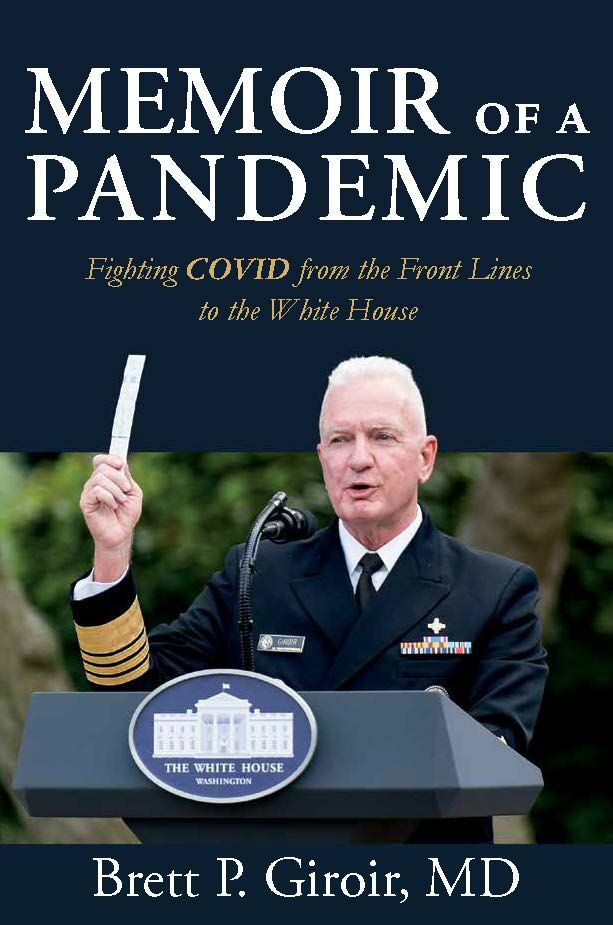
Brett Giroir
The Trump Administration’s assistant secretary for health (succeeded by the transgender identifying admiral “Rachel” Levine) spun right through the revolving door with his colleagues. He now serves as CEO and a member of the board of a respiratory virus treatment company. He also wrote a book on “fighting Covid from the front lines to the White House.”
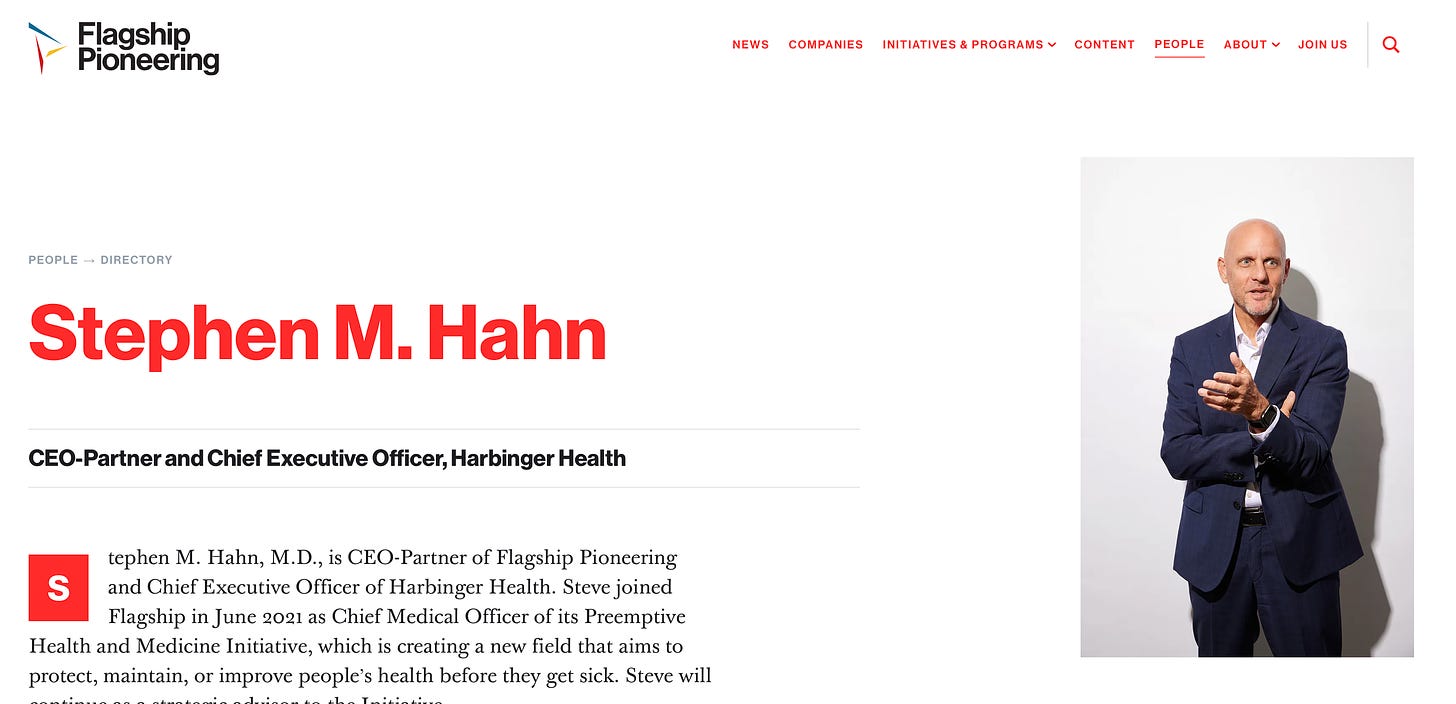
Stephen Hahn
Hahn served as the FDA commissioner and a member of the Task Force. Only six months after authorizing the Moderna mRNA shot, he went on to serve as the chief medical officer of Flagship Pioneering, the venture capital firm behind Moderna. He has since joined multiple ventures seeking to get products approved for FDA clearance.
Robert Redfield
The former CDC director who once declared masks as superior to vaccines has joined quite a few boards related to Pharma and healthcare.
Seema Verma
As CMS Director, this Task Force member issued the infamous memo leaning on healthcare systems to suspend non elective procedures. After her tenure in the Trump Administration, Verma joined the boards of several healthcare firms and became a Senior Vice President at Oracle Corporation.
By Michael Nevradakis, Ph.D. | The Defender | December 12, 2023
Scientists and statisticians continue to review and debate the accuracy and completeness of a large database of COVID-19 vaccine-related deaths released less than two weeks ago by a New Zealand Ministry of Health whistleblower.
Meanwhile, the whistleblower — Barry Young — was charged by New Zealand authorities with “accessing a computer system for dishonest purposes.” The 56-year-old appeared in Wellington District Court on Dec. 4. and was released on bail the next day.
Young, who also has used the pseudonym “Winston Smith,” was a computer systems programmer for New Zealand’s Ministry of Health, administering a computer payment system for certain vaccine administrators.
Police raided Young’s home on Dec. 3, and arrested him. Police raided the home of an associate the same day.
Young, who was reportedly offered two safehouses in New Zealand and one overseas but refused the offers, now faces at least seven years’ imprisonment. According to Newsweek, Young shouted “freedom” as he departed the courtroom on Dec. 4.
Young released the anonymized data with the assistance of Liz Gunn, a former lawyer, television journalist and candidate for public office for the NZ Loyal Party.
According to mathematician Igor Chudov, who analyzed the data, the database included information on the vaccine type, batch number, dose number, vaccination date, age, date of birth and date of death of the anonymized vaccine recipients.
The dataset was related to so-called pay-per-dose providers, such as individual doctors and drugstores. It did not include data on vaccinations administered at mass vaccination centers and by mobile vaccination clinics.
Data raise questions government ‘can’t ignore’
According to the New Zealand Herald, Health New Zealand, the national public health system also known as Te Whatu Ora, has opened an investigation and attempted to discredit the whistleblower, claiming Young “had no clinical background or expert vaccine knowledge.” Some analysts noted Young’s expertise in data administration.
Health New Zealand’s public messaging has centered around the security of personal data. “What [Young] is claiming is completely wrong and ill-informed … We take the security of the information we hold extremely seriously, and this is a significant breach of trust,” said Margie Apa, Health New Zealand’s chief executive.
In an interview with The Defender, Australian attorney Katie Ashby-Koppens said Health New Zealand was also granted an injunction from New Zealand’s Employment Relations Authority, prohibiting the publication of the leaked data.
Ashby-Koppens, who worked with New Zealand groups promoting medical freedom and transparency, questioned the legality of this injunction, which reportedly was used to pressure hosting providers to remove copies of the leaked data stored on their servers, leading some providers to remove accounts hosting the anonymized data.
Minister of Health Shane Reti sought to reassure the public about vaccine safety.
“There are many conspiracy theorists out there who unfortunately disseminate harmful disinformation, however, as Minister and as a physician, the public can and should continue to have confidence in vaccines,” he said. “I am reassured by experts confirming that there is no evidence supporting the allegations that have been made.”
According to the New Zealand Doctors Speaking Out with Science (NZDSOS) media team, consisting of Dr. Cindy de Villiers, Dr. Alison Goodwin, Dr. Matt Shelton and Anna McLoughlin, such statements are a continuation of official COVID-19 narratives.
“The official mainstream media narrative is that New Zealand did very well during the pandemic, having negative excess mortality,” a spokesperson for NZDSOS told The Defender. “The New Zealand government and media have adopted a ‘shoot the messenger’ approach and then studiously ignored the issue, such that the average person on the street probably is unaware of what is happening in New Zealand.”
Yet, members of the public “who know what is happening absolutely support the whistleblower,” NZDSOS said, noting that “the media is so controlled and captured that large chunks of the population remain unaware of the data release or its significance.”
New Zealand authorities acknowledge only four COVID-19 vaccine-related deaths.
“The data has been very controversial, with people finding opposing things from their analysis of the data, despite being on the same side of the COVID debate,” Ashby-Koppens said. “The data is not complete [but] it raises a lot of questions, questions that the new New Zealand coalition government can’t ignore.”
Norman Fenton, Ph.D., a mathematician and professor emeritus at Queen Mary University of London, also examined the leaked data. He told The Defender the reaction of New Zealand’s authorities to the leak was “very strange.” He added:
“I understand that releasing confidential medical records is a criminal offense, but … the whistleblower only released an anonymized version of the data.
“Given the advanced publicity by people like Steve Kirsch about what the data revealed, I would have thought the New Zealand government would have been better advised to do nothing rather than raiding homes, arresting the whistleblower and erasing files from people who had gained access to the data. It is almost as if they wanted to get more publicity for both the data breach and what the data revealed.”
Presenting one possible reason supporting such an explanation, Fenton said:
“Not surprisingly, this has also led to conspiracy theories of which the most notable is that the government knew that this particular dataset did not contain (as some have claimed) any ‘smoking gun’ on vaccine safety and therefore it was deliberately released so it could be used to discredit ‘anti-vaxxers’ who claimed it did, and also act as a warning against any others who had access to more incriminating data to shut up.”
But for Kirsch, the founder of the Vaccine Safety Research Foundation who examined the data and publicly claimed it proves that the COVID-19 vaccines killed 1 in 1,000 people globally, Young “is a hero.”
“He knew he would risk his life and could spend the rest of his life in jail, but he made the courageous move to expose the data for all to see,” he wrote.
According to NZDSOS, Young is due to appear in court again on Dec. 18 to submit a plea and is “represented by a large legal firm in New Zealand.”
Whistleblower noticed ‘really big safety signals’ in the data
In his Nov. 30 interview with Gunn accompanying the release of the data, Young said he helped build the very database from which the data were leaked. Access to such data led him to note items of concern that he decided to go public with, he said.
“I helped build it. I implemented it,” he said. “When I was looking up the data, I noted discrepancies with the dates of death. People were dying almost straight away after being injected and that sort of prompted my curiosity and I dug a little deeper.”
According to Young, he previously was vaccinated, but said that whether he’d get another dose was “a different story.” He added that he “believe[s] in fundamental freedoms of humans and [that] we shouldn’t have a procedure forced on us because of a mandate,” calling this “a huge overreach by the government.”
Following his release on bail, Young granted an interview to Infowars producer and host Alex Jones, stating that he noticed “really big red flags” and “really big safety signals” in the data. “Statistically, it may be killing people,” he said.
“I just looked at the data and what I was seeing, since the rollout, it just blew my mind. I was just seeing more and more people dying who shouldn’t have been dying. It was just obvious,” Young said. “I want people to analyze this … We need to open it up and the government needs to have an inquiry about it. Just bring it to the public’s attention.”
According to New Zealand police, Young’s post-bail interview with Infowars did not breach his bail conditions. He has since granted other interviews.
Scientists disagree on significance of data
According to NZDSOS, the leaked data “cover[s] vaccines that were administered as pay-per-dose. There are 2.2 million people and approximately 4 million doses included.” This compares to a total of 12.78 million doses administered in New Zealand.
Statistical consultant William Briggs is one of the analysts who reviewed the data. On his Substack, he wrote that “we cannot tell for sure” what the data definitively indicates, as there are important items of information missing.
“There was no cause of death given for anybody,” Briggs said. “Just death date for those who had at least one shot and died in this window. There can therefore be no certain proof of any cause of death,” he wrote.
Briggs added:
“An insurmountable problem in ascribing cause is the lack of data on people who did not get any shots. Their death and age data is missing. There is no comparison group for the people who got shots. …
“… this means there is no natural comparison group and nothing about cause, therefore, can be said with certainty.”
Briggs said that the data indicated a small increase in deaths among young people soon after receiving the first and second dose, but said this may be “because the young tended to get fewer shots.”
The analysis that has perhaps garnered the most analysis, though, comes from Kirsch, who wrote, “There is no confusion any longer: the vaccines are unsafe and have killed, on average, around 1 person per 1,000 doses.”
Kirsch noted that this figure “is consistent with other careful analyses,” such as one by Canadian scientist Denis Rancourt.
According to Kirsch, one safety signal he identified in the data is a “mortality hump that peaks around 6 months after a dose is given.”
“The data from New Zealand is not perfect; it is not a complete sample,” Kirsch conceded. “But, by using a cohort time-series analysis, it doesn’t matter. There is no possible way that this data is consistent with a safe vaccine.”
Fenton, who analyzed the data on his Substack, took a different position, telling The Defender, “The dataset is a very large subset of those vaccinated in New Zealand, and is potentially one of the most important publicly available datasets for examining COVID vaccine safety. But I don’t believe it is the ‘smoking gun’ as some have claimed.”
He noted the absence of a control group (the unvaccinated) and that “the age profile seems higher than the national age profile of [the] vaccinated, so there is some bias.”
However, he said the data “does provide some evidence of lack of safety of the vaccine, in particular supporting our own previous observations (from U.K. data) that in older age groups, all-cause mortality is higher in the vaccinated than the unvaccinated.”
“What is less clear is the claim concerning batches with exceptionally high mortality rates,” Fenton said. “The claim that these batches were especially deadly due to the contents of the vaccine or its delivery is confounded by their very different age and time of vaccination profiles,” he added.
Chudov, in a pair of posts on Substack, also presented his analysis of the data. In his initial post, he suggested the public “be wary” of the data and noted that Gunn “is misinterpreting it by trying to pass normal nursing home deaths as evidence of ‘super deadly batches’ and ‘mass vaccine casualties.’”
In a follow-up post, Chudov acknowledged that some of his original questions about the completeness of the data were subsequently addressed, stating his belief that “Barry Young was more likely to be sincere than insincere in his intentions and actions.” Yet, he said his questions “about nursing home deaths and data quality still apply.”
Some analysts also pointed to official data indicating that excess deaths in New Zealand continue to be significantly above the long-term average — 17% in September and early October 2023, according to data from the Organisation for Economic Co-operation and Development. Some also pointed to data indicating sharp increases in the incidence of heart attacks in New Zealand.
Yet, Apa said, “We assure people there is no evidence whatsoever that vaccination is responsible for excess mortality in New Zealand and that they can continue to have confidence in the vaccine,” in remarks quoted by the New Zealand Herald.
“We hope that additional independent assessment of the data by credible analysts will lead to further scrutiny of the vaccine rollout in [New Zealand] and that the whistleblower will not have risked everything for nothing,” activist group Voices for Freedom wrote.
Political questions surrounding the data leak, subsequent government actions
According to Voices of Freedom, Young reached out to them “a couple of years ago” and had reached out to several other organizations during this period, prior to telling Gunn about the data and releasing it with her assistance.
Voices of Freedom, as well as some other analysts, have nevertheless raised questions as to whether Gunn handled the release appropriately.
Young and Gunn told Infowars they attempted to contact Winston Peters, leader of the New Zealand First political party and current deputy prime minister and foreign minister, regarding the data, but were unsuccessful in doing so.
But according to analyst Tony Mobilifonitis, Peters “most likely is limited in what he can do because of the delicate politics of the three-party coalition.” Analyst Markus Mutscheller wrote that while Peters had previously “aligned with the NZ freedom movement … His priority is always to keep his position of power in the cabinet. Without it, he can’t do anything.”
NZDSOS told The Defender, “So far, there has been no public comment by NZ First or the ACT party, both of which championed a broader inquiry,” adding that Reti “is from the National Party, which firmly backs the use of mandated vaccines.”
“The Associate Minister of Health, Casey Costello, is from NZ First, who is well aware of what is happening. However, ministers are not able to comment on cases that are before the court,” NZDSOS added.
According to the New Zealand Herald, an inquiry examining New Zealand’s COVID-19 pandemic response has been convened. However, according to NZDSOS, it is unlikely to examine the leaked data, as the inquiry “specifically excludes vaccine efficacy and does not include vaccine safety.” Instead, it aims to “strengthen … preparedness for, and response to, any future pandemic.”
According to NZDSOS, “The new coalition government has promised a broader public inquiry, but terms and conditions have not been decided upon to date. It is not clear whether there will be additions to the existing inquiry or whether a completely new inquiry will commence. Our preference is for a brand-new inquiry.”
‘Still no letup’ in narrative that COVID vaccines are ‘safe and effective’
Several scientists, analysts and activists have called on the New Zealand government to release full, anonymized COVID-19 vaccine data and its own analysis.
“They should release the data on the unvaccinated so that a full direct comparison can be made,” Fenton said. “We also need all the (anonymized) patient-level data on new health conditions/hospitalizations since 2021, for both vaccinated and unvaccinated, so that we can determine the true level of vaccine adverse reactions.”
Similarly, NZDSOS said, “The best approach would be to release all the data in an anonymized form and for the Ministry of Health to discuss their analysis.”
Kirsch wrote, “Nobody will debate me on this,” adding that New Zealand authorities “should be releasing the full [12 million-person] record dataset to remove all doubt and prove to the world the vaccines are safe.”
“Clinical outcomes are never improved by keeping public health data hidden from public view,” Kirsch wrote. “Yet every health authority in the world has kept this critical record-level safety data hidden from view.”
In a subsequent Substack post, Kirsch wrote, “Health New Zealand: Where is your analysis of your data? Why aren’t you publishing it?”
Voices for Freedom called on New Zealand authorities “to be transparent with NZ’s vaccination data,” noting that “There appears to be no official denial of the accuracy of the downloaded Health NZ data set.”
NZDSOS said that New Zealand authorities have a history of not being transparent, telling The Defender that Official Information Act requests are fraught with “often lengthy delays and redaction of data” and the system “is not particularly functional.”
“Some of these requests have been acknowledged, but the length of time in releasing information of this kind in any form has been delayed time and time again … We have not heard of any data/information releases that have come out yet,” NZDSOS said.
Fenton said New Zealand authorities are not being forthcoming regarding the data because it would likely “reveal much more evidence on just how ineffective and unsafe the vaccines have been and on how it likely has led to increased all-cause mortality in all age groups who have taken it.”
“There is still no letup in attempts by governments and pharma companies to close down all discussion and evidence of vaccine harms and to maintain the ‘official’ line that these vaccines are ‘safe and effective’ and need to continue to be given,” he added.
“It appears that the measures taken to silence Barry and avoid discussing the data are designed to deter others from doing the same thing,” NZDSOS said. Similarly, Fenton shared his belief that “the very public actions taken against the whistleblower [were] likely intended to dissuade other whistleblowers everywhere, not just in New Zealand.”
NZDSOS said that prospective whistleblowers should nevertheless not be dissuaded.
“Do what will allow you to sleep at night. It is not about any legal advice, as we know that it is likely that the legal system is compromised. It is about doing what is right,” NZDSOS said. “Evil triumphs when good men do nothing.”
Michael Nevradakis, Ph.D., based in Athens, Greece, is a senior reporter for The Defender and part of the rotation of hosts for CHD.TV’s “Good Morning CHD.”
This article was originally published by The Defender — Children’s Health Defense’s News & Views Website under Creative Commons license CC BY-NC-ND 4.0. Please consider subscribing to The Defender or donating to Children’s Health Defense.
By Meryl Nass, MD | December 11, 2023
The Committee roster can be found here.
1. The WHO is not an honest broker.
2. The WHO’s proposed treaties are unconstitutional
3. In the Oct. 30 draft of the treaty, A new WHO Secretariat and Conference of Parties for pandemics are to be established in the future and will make their own rules. Thus, agreeing to this means providing a blank check to the WHO to do whatever it wants at some later date.
4. The 2 proposed treaties ignore existing international law prohibiting the proliferation of biological warfare agents (the 1972 Biological Weapons Convention and the 2004 Security Council Memorandum 1540) and demand that nations search out new agents (a.k.a. “potential pandemic pathogens”) and share them with the WHO, which will “share them globally.” The WHO has already established a BioHub for this purpose and a Pathogen Access and Benefits System.
5. The proposed treaty and amendments also demand that nations perform 2 additional forms of surveillance of their citizens: microbiological surveillance of their populations, animals and ecosystems for pathogens, and surveillance and sharing of medical and hospital records, both of which violate privacy protections.
6. The proposed amendments remove the guarantee of “Human rights, dignity and freedom of persons” that are found in the current international health regulations.
7. The two proposed treaties are both binding, whereas the earlier IHR were recommendations only, apart from minor requirements for notification of certain outbreaks to the WHO. The two proposed documents would give the WHO and particularly its Director-General vast authority to manage healthcare globally. The current Director-General is not a medical practitioner and instead has a PhD in Community Health.
8. The WHO lacks the personnel and expertise to manage international pandemics and other health concerns. Any developed nation has within it much more capacity to understand and manage medical events within its borders, and likely international events as well.
9. The proposed treaty calls for rapidly produced vaccines and for nations to implement domestic legislation to permit the use of unlicensed medical products without manufacturer liability, instead “managing” the liability issues using existing models, such as the US’ Countermeasures Injury Compensation Program, which has so far compensated 8 Americans for injuries related to EUA COVID products (primarily vaccines) from the 12,358 claims filed. https://www.hrsa.gov/cicp/cicp-data
10. It is apparent that in the process of developing the “Pandemic Accord” and amendments to the IHR, WHO/WHA positioned itself in a combined law-making/executive/expert/censorship role, which is a well-known path to usurpation of unrestrained power. It should not be surprising, therefore, that the proposed Amendments grant expressly such power to the WHO.
11. The WHO receives 85% of its funding from voluntary contributions, and only 15% from dues paid by its 194 member nations. Most of the voluntary contributions are earmarked for special projects that the WHO carries out. When President Trump withheld US funding in 2020, Bill Gates became the WHO’s top funder. The (unelected) WHO serves many private masters, yet seeks to govern the world’s population.
12. Virtually every recommendation the WHO made for managing the COVID pandemic was counterproductive. Why would we give the WHO the power to enforce the same bad advice on the US and world?
“Basic rights in crisis mode” in Germany. The real threat to democracy.
By P Gosselin | No Tricks Zone | December 12, 2023
 “How we live, heat, get around, travel and what we eat could soon no longer be an individual decision, but increasingly be dictated by the state,” a former German federal minister warns.
Kristina Schröder, who served as the Federal Family Minister from 2009 to 2013 in the government of Chancellor Angela Merkel, recently commented that Germany currently finds itself on a dangerous environmentally dogmatic path under the current leadership.
Pandemic as the blueprint
In a commentary published at Der Pragmaticus, she writes: “The pandemic has provided a blueprint for the climate movement on how to enforce fundamental restrictions on basic rights.”
“Germany is heading in the direction of a radical climate protection dogma that almost completely ignores the costs of the path taken. And once again, the two predominant patterns of argumentation in the pandemic can be observed: A refusal to weigh things up and an ends-justify-the-means mindset,” Schröder adds. “I am convinced that large sections of the climate protection movement are also fighting our way of living and our economy at least as much as they are fighting climate change.”
CO2 as the virus to fear
Schröder adds that it is easy to see that CO2 is being viewed as a virus and to imagine future measures to curb it: “there is a threat of regulations affecting our most private lifestyles. How we live, heat, get around, travel and what we eat could soon no longer be an individual decision, but increasingly be dictated by the state.”
Schellnhuber “3 tonnes per year”
She also speaks critically of Prof. Hans Joachim Schellnhuber, the former director of the Potsdam Institute for Climate Impact Research (PIK) who proposes “every citizen could be given a CO2 budget of three tons per year.” The average German emits 11 tons per year, and thus getting down to just 3 would certainly entail draconian restrictions and regulations.
But so far many Germans have been acting complacently about such drastic proposals, Schröder notes, adding: “This eager willingness to relinquish fundamental freedoms is all the more disturbing as a crucial question is hardly being asked, let alone answered: Does effective climate protection really have to mean such losses of freedom and prosperity?”
Schröder, who contributes regularly to Welt, also wonders why in Germany there’s such a “blindness to the costs” of reducing CO2. “Why this indifference to the loss of freedom and prosperity?” And: “Why this longing for bans, renunciation and penance?”
“Powerful lever” against capitalism
In Schröder’s view, for the activists, climate protection is “a powerful lever to push back the hated capitalist system.”
She concludes:
“I am certain that if a technical solution were to be found tomorrow that would allow us to render CO2 harmless overall, large sections of the radical climate protection movement would not be relieved, but disappointed.”
For the greens and the many activists, it’s follow our politics! It’s not about science.
Read Kristina Schröder’s full commentary here (German).
or go to
Aletho News Archives – Video-Images
By Dr. Elias Akleh* | Sabbah Report | May 24, 2010
A build up of heightened tension in the Middle East is escalating in the last few weeks. American and Israeli postures towards Lebanon, Syria, and Iran have become more threatening. Listening to speeches of political leaders one hears talks only about war not peace. Iranians and Israelis are continuously training hard for a possible showdown. Both sides are conducting extensive war games every month. This led Syrians to claim that Israel is preparing for a soon-to-come another war. The Jordanians also are warning that current stalemate of the peace process is an indication of a war breaking out this summer. The Russian President and his army chief hinted, a few months ago, that the US and Israel were planning for an attack on Iran.
Indeed Iran is, as it has been for last few years, the target of most of the threats and accusations of supporting terrorism. Escalating incitement against Iran the American Defense Department sent last month (April) to Congress a report on Iran’s military claiming Iran could develop intercontinental ballistic missiles capable of reaching the US by 2015.
Ignoring the fact that N. Korea, India, Pakistan, and Israel are proven to have nuclear weapons while Iran does not, the US Secretary of State Hillary Clinton chose in her speech, to the nuclear Non-Proliferation Treaty review conference at the UN, to focus on Iran’s alleged nuclear ambitions putting the whole world at risk as she put it. According to Clinton Iran’s acquisition of nuclear weapons, rather than Israel’s more than 200 nuclear bombs, is destabilizing the Middle East. She called on the world’s nations to rally around US efforts to hold Iran, not other nuclear countries, to account.
The accusation that Usama Bin Laden is living comfortably in Iran had received a boost after the broadcast of a documentary called “Feathered Cocaine”. This echoed the June 2003 claims of the Italian newspaper Corre de la Sierra that Bin Laden was in Iran according to some intelligence report, and according to Richard Miniter’s book “Shadow War”. … continue
 Aletho News If Americans Knew No Tricks Zone
 Aletho News