Bahrain to try 400 peaceful protesters
Press TV – June 10, 2011

Bahrain’s opposition party al-Wefaq says the Manama regime is to put nearly 400 people on trial over their alleged roles in peaceful anti-regime protests.
The party said that up to 50 people have already been sentenced, with penalties ranging from a short prison term to execution, Reuters reported on Thursday.
A Bahraini government official, who demanded anonymity, rejected the opposition’s statement saying al-Wefaq’s trial data was exaggerated.
“It’s much less than that,” he said, but did not specify any number. … Full article
Bahraini activist: Military courts illegal
Press TV – June 10, 2011
A Bahraini political activist says the regime’s decision to put on trial nearly 400 people in military courts for taking part in anti-regime peaceful protests is illegal.
“How can one hold military trials without the martial law, which has already been lifted,” Saeed al-Shehabi, leader of the Bahrain Freedom Movement, told Press TV in an interview Thursday night.
“These courts are trying civilian people while they should be tried only in civilian courts as per law,” he said.
“I know many people are being tried for taking part in peaceful demonstrations,” al-Shehabi stated. “So these trials will backfire.”
When asked about a UN report that said Bahrain has accepted a UN mission in the country to examine reports of human rights violations during protests, Shehabi said that the UN has failed in its test and it has so far done nothing despite several complaints from international human rights organizations of violations committed by the ruling regime.
The UN High Commissioner for Human Rights, Navi Pillay, has been urged by Bahraini activists to send a commission to Bahrain, but nothing has happened, the activist said. … Full article
Stop Scabbing for Apartheid — Withdraw From Israel Bonds “Celebration”
Labor for Palestine (US) – June 7, 2011
“[All of Palestinian labor] calls on trade unions around the world to actively show solidarity with the Palestinian people by. . . . divesting from Israel Bonds and all Israeli and international companies and institutions complicit in Israel’s occupation, colonization and apartheid.”Palestinian Trade Union Coalition for BDS (PTUC-BDS), May 4, 2011[1]
The undersigned labor, anti-apartheid and human rights activists call on you — Dennis Hughes (President of the New York State AFL-CIO) and Stuart Appelbaum (President of the Retail, Wholesale and Department Store Union and head of the Jewish Labor Committee) — to respect the above call from Palestinian labor by withdrawing as “Honoree” and “Chair,” respectively, of the “State of Israel Bonds” fundraiser in New York City on June 13, 2011.[2]
For decades, top U.S. labor officials have effectively scabbed on Palestinian workers by investing billions — the exact amount has not been made public — from union members’ pension funds in State of Israel Bonds, a pillar of apartheid that enjoys tax-exempt status from the U.S. government.
Whitewashing this betrayal is the Histadrut, the Zionist labor federation[3], and its “progressive” U.S. mouthpiece, the Jewish Labor Committee.[4]
Obscenely, the Israel Bonds “celebration” on June 13 follows the May 15 Israeli massacre of unarmed Palestinian refugees exercising their right to return, the first anniversary of the deadly May 31, 2010 Israeli attack on the Gaza Freedom Flotilla, and Israeli prime minister Netanyahu’s arrogant U.S. tour.
Meanwhile, the world is inspired by mass, democratic revolutions in the Middle East that challenge U.S./Israeli-backed neoliberalism, dictatorship and oppression. At the heart of this revolution, Palestinian labor has reiterated its longstanding appeal for unions everywhere to support the growing movement for Boycott, Divestment and Sanctions (BDS).
The BDS campaign demands that Israel acknowledge the Palestinian people’s inalienable right to self-determination, and fully complies with international law by:
* Ending its occupation and colonization of all Arab lands occupied since 1967 (including East Jerusalem), as well as dismantling of the illegal wall and colonies;
* Recognizing the fundamental right of the Palestinian citizens of Israel to full equality, as well as ending the system of racial discrimination against them; and
* Respecting, protecting and supporting the rights of Palestinian refugees to return to their homes and properties as stipulated in UN Resolution 194.
BDS has been endorsed by labor bodies around the world, including the trade union congresses of South Africa, Brazil, Ireland, Scotland and the UK, and labor bodies in Australia, France, Canada, Norway, Catalunya, Italy, Spain and Turkey.
The Congress of South African Trade Unions (COSATU), which plays a leading role in the BDS movement, hasn’t forgotten Israel was apartheid South Africa’s closest ally. And as veteran South African freedom fighters have observed, Israel’s treatment of Palestinians is “worse than apartheid.”
US workers have particularly strong reasons to support the movement against apartheid Israel. In the past ten years alone, the US government — with overwhelming bipartisan support — has given Israel $17 billion in military aid; over the next decade, it will give another $30 billion.
As a result, Palestinian workers are killed by US-supplied naval vessels, jet fighters, Apache helicopters, white phosphorous and other weapons. In 2008/2009 alone, such weapons killed 1400 people in Gaza, most of them civilians — a massacre condemned by the UN, Amnesty International, Human Rights Watch and other human rights organizations, including those that are Israeli.
Meanwhile, amidst spiraling economic crisis, workers in this country pay a staggering human and financial price for US-Israeli war and occupation from Palestine to Afghanistan, Iraq and Pakistan.
Thus, following the May 31, 2010 Israeli attack on the Gaza Freedom Flotilla, members of ILWU Local 10 in Oakland courageously followed the South African dockers’ example by refusing to handle Israeli cargo.
Their solidarity stands in the proud tradition of West Coast dock-workers who refused to handle cargo for Nazi Germany (1934) and fascist Italy (1935); those in Denmark and Sweden (1963), the San Francisco Bay Area (1984) and Liverpool (1988), who refused shipping for apartheid South Africa; those in Oakland who refused to load bombs for the Pinochet dictatorship in Chile (1978); and those at all twenty-nine West Coast ports who held a May Day strike against the wars in Iraq and Afghanistan (2008).
Respecting the BDS call is a matter of basic labor solidarity. Indeed, just as trade unionists fight “replacement” of striking workers, we stand against the dispossession, occupation and inequality inflicted on millions of Palestinian working people and their descendants for more than six decades.
Rather than being used to secretly finance racism, ethnic cleansing, apartheid and colonialism, union members’ funds should be transparently invested in justice for all workers.
An essential first step is labor divestment from “State of Israel Bonds.”
Notes
[1] http://www.bdsmovement.net/2011/ptuc-bds-formed-6912
[3] http://www.laborforpalestine.net/wp/wp-content/uploads/2010/06/Histadrut-Briefing.pdf
[4] http://www.laborforpalestine.net/wp/wp-content/uploads/2010/06/JLC-Briefing-Paper.pdf
Signers (List in formation — ALL UNION BODIES LISTED FOR IDENTIFICATION ONLY.)
Endorse this statement:
Monadel Herzallah, Arab American Union Members Council, San Francisco, CA
Larry Adams, Former President, NPMHU L. 300; Co-Convener, New York City Labor Against the War; People’s Organization for Progress
Michael Letwin, Labor for Palestine; Former President, Association of Legal Aid Attorneys/UAW Local 2325
Brenda Stokely, Former President, AFSCME DC 1707; Co-Convener, New York City Labor Against the War; Co-Chair, Million Worker March Movement
Mohammad Jawabreh, Palestinian Progressive Labor Action Front, Ramallah, Palestine
Progressive Labor Action Front – Palestine
Sameer Matar, Union of Agricultural Engineers, Jenin, Palestine
Sam Weinstein, Utility Workers Union of America (UWUA), Washington DC
Marty Goodman, Transport Workers Union Local 100, former Executive Board member, New York, NY
Stanley Heller, 40 year AFT member West Haven, CT, now AFT 933 Retired; New Haven, CT
Joe Iosbaker, SEIU Local 73, Executive Board Member, Chicago, IL
Azalia Torres, Former Executive Bd. Member, ALAA/UAW L. 2325, Brooklyn, NY
Lee Sustar, NWU/UAW L. 1981; Chicago, IL
Steve Zeltzer, Producer, Labor Video Project
Noha Momtaz Tahrir Arafa, Association of Legal Aid Attorneys/UAW 2325, Brooklyn, NY
Steve Terry, ALAA/UAW L. 2325, Brooklyn, NY
Steve Gillis, Vice President, USW Local 8751, The Boston School Bus Drivers’ Union
Sherna Berger Gluck, former vice-president, CFA/SEIU 1983
Roger Dittmann, Ph.D., Former Secretary, United Professors of California, Member, SEIU
Jeff Klein, President (retired), SEIU/NAGE Local R1-168
Joe Lombardo, CSEA and Troy Area Labor Council
Bill Preston, President of American Federation of Government Employees, Local 17, Washington, DC
Bill Bateman, Coordinator, RI Unemployed Council
Burnis E. Tuck, AFL-CIO, AFGE, Local 3172, retired, IWW (International Workers of the World), current member
Mike Gimbel, Retired member of Local 375, AFSCME exective Board
Joe Balkis, Teamsters Local 705
Nathaniel Miller, IWW International Solidarity Commission
Howard B. Lenow, Union Attorney, Wayland, MA
Anthony Arnove, National Writers Union
Frank Couget, Shop Steward, National Association of Letter Carriers, AFL-CIO
Martha Grevatt, Former Chair, Civil and Human Rights Committee, UAW Local 122
Carl Gentile, National Representative, American Federation of Government Employees (AFGE) AFL-CIO
Jim Holstun, UUP Buffalo Center Chapter, NYSUT, AFT
Mary Scully, IUE-CWA Local 201 (retired)
Mark Clinton, Massachusetts Community College Council, Massachusetts Teachers Association, National Education Association
Marvin Cohen, American Federation of Teachers (retired)
Patrick J, Finn, Ph. D., UUP United University Professions SUNY Buffalo, Buffalo, NY
Mary E. Finn, Ph. D., UUP United University Professions SUNY Buffalo, Buffalo, NY
Manzar Foroohar, Delegate Assembly, California Faculty Association (CFA), Former Chapter President, CFA, Cal Poly, San Luis Obispo, Former State-wide Membership Committee Chair and member of the state-wide bargaining team, CFA
Mark Richey, retired member, United Teachers of Richmond, California
Leslie Cohen, former SEIU Local 285 member
Dave Slaney, former President, USWA Local 2431 (retired)
Dr. Sue Blackwell, member of National Executive Committee, University and College Union, UK
Mike Treen, National Director, Unite Union, Auckland, NZ
Brian Kelly, Belfast Branch Committee UCU (N. Ireland: personal capacity); formerly IUMSWA L 25 (Boston), Carpenters L 33 (Boston)
Andre Powell, Delegate, Baltimore MD Metro AFL-CIO Central Labor Council, AFSCME
Amy Hines, Labor Relations Representative/Organizer, AEU, Concord, CA
John Penetra, Technician, CWA Local 1118, Albany, NY
Dennis Kortheuer, California Faculty Association, Long Beach, CA
Denise Hammond, President, CUPE 1281, Toronto, ON, Canada
Hanspeter Gysin, Unia (Tradeunion Building, Industry, Services), Switzerland
Sid Shniad, Research Director, Telecommunications Workers Union, Vancouver, BC, Canada
Barbara Foley, AAUP, Rutgers University – Newark, NJ
Janice Rothstein, AFSCME 3299, San Francisco, CA
Paul Pryse, Teaching Assistants’ Association, University of Wisconsin – Madison
Steve Leigh, steward, SEIU local 925, Seattle, WA
Glenn Shelton, NPMHU, Detroit, MI
Janet Hudgins, CUPE (retired), Vancouver, BC, Canada
Dennis Laumann, United Campus Workers-Communication Workers Local 3865 of America, Memphis, TN
Edward Stiel, IBEW Local 302, San Francisco, CA
David Laibman, Professional Staff Congress (AFT Local 4331), Brooklyn, NY
Stephen Cheng, Brandworkers International
John Dudley, SEIU, Branford, CT
Richard Krushnic, Steward, Bargaining Committee Member, SEIU 888, Cambridge, MA
Paul Field, Unite the Union, UK
Powell DeGange, organizer, UNITE HERE, San Francisco, CA
Jim Harris, former member, SEIU 535, Richmond, CA
Dr. Russell Dale, PSC CUNY, New York, NY
David Heap, UWO Faculty Association, London, ON, Canada
Bob McCubbin, California Teachers Association, San Diego, CA
Susan Stout, CAW (retired), North Vancouver, BC, Canada
David Klein, California Faculty Association (CFA), Los Angeles, CA
Gregory A. Butler, shop steward, Carpenters Local 157, New York, NY
B. Ross Ashley, former shop steward, former executive council member, local 204, SEIU (retired), Toronto, ON, Canada
Keith Sadler, UAW Local 12, Toledo, OH, USA
Interview: Antony Loewenstein on Palestine’s struggle in Australia
Sarah Irving | The Electronic Intifada | 8 June 2011
Antony Loewenstein (antonyloewenstein.com) is a writer and journalist based in Sydney, Australia and a founder of Independent Australian Jewish Voices. His first book, My Israel Question, was an Australian best-seller and was short-listed for the 2007 New South Wales Premier’s Literary Award; an updated third edition was published in 2009. His second book, The Blogging Revolution, about the Internet in repressive regimes, was released in 2008 and an updated second edition will be out later this year.
Loewenstein has written widely about the recent furor over the vote by Marrickville Council in Sydney to observe a full boycott, divestment & sanctions (BDS) strategy on Israeli products. After vitriolic attacks in the Australian press, especially Murdoch-owned newspapers such as The Australian, and hostile statements by federal and state-level politicians, a second council vote rescinded the BDS motion, while affirming the council’s support for the aims of the BDS movement. The Green Party mayor of Marrickville, Fiona Byrne, who had backed BDS, lost the ensuing state election to Australian Labor Party candidate Carmel Tebbutt, although she did achieve a large swing to the Greens.
In articles for Australian publications such as New Matilda and Crikey, Loewenstein has accused the mainstream press of “misrepresentations and outright falsehoods” in its reporting of the Marrickville affair, noting that “there have been dozens of articles in the Australian recently calling the Greens ‘extremists,’ implying the party is anti-Semitic, claiming BDS is akin to genocide, extensively quoting the Labor and Liberal parties (who unsurprisingly both condemn BDS) and the Zionist lobby (who again oppose it) (“Where are the Arab voices in Aussie BDS debate?,” 15 April 2011).
Sarah Irving interviewed Antony Loewenstein for The Electronic Intifada.
Sarah Irving: One of the odd things about the Marrickville episode is that there was very little media coverage of the actual decision by the council to observe the BDS call. The press storm suddenly erupted about six weeks later, when the campaign for the New South Wales state elections really kicked off. Although the focus was on the boycott of Israel, was this really an Australian political issue?
Antony Loewenstein: I think that analysis is probably pretty true. When the BDS motion was announced in December it almost went unnoticed. I think what changed was three things. First, a state election was coming in March. Second, the Green Party in Australia in the last nine months or so has gone from being an important third player to very important third player.
They partly assist in the federal balance of power — there are independents as well — and there was, predictably, from the Australian Labor Party, the [right-wing] Liberal Party and from the Murdoch press, a sense that the Greens need to be “cut down to size.” A federal Labor minister, Anthony Albanese, got involved, saying that the Greens were being extreme and so on. His wife, Carmel Tebbutt, was running against Fiona Byrne, the Green mayor of Marrickville, for the state legislature. Albanese didn’t mention this rather important detail when the press covered the issue, that his wife was running, which almost smacks of dishonesty, and the fact that the Murdoch press didn’t mention it either shows how dishonest they are.
So it was almost like there was a federal intervention in the debate and it was seen as a perfect way to try and divide and conquer the Greens. You had senior federal ministers, Kevin Rudd, the former prime minister and now foreign minister, and Barry O’Farrell, then the state opposition leader and now Liberal state premier, former Prime Minister Bob Hawke — this litany of hacks who had spent most of their professional lives demonizing Arabs and who were now asked to speak on the Arab-Palestinian question. Arabs and Palestinians were largely ignored.
I suppose it was seen as a potentially effective way to divide and conquer the Greens and to show anybody who seriously thought about speaking up for Palestinians that this is what happens to you. You will be punished and attacked and defamed and often given no right of reply. That’s the message, and a lot of people I’ve spoken to in the last few months who might once have spoken out now won’t, or didn’t, because they’ve been scared off. That includes trade unions who supported BDS. Many of the unions in the country last year came out in support of BDS — it was partial BDS, more often the settlement boycott, but it’s a start. There were attempts to get them to say something, to speak out in support of Marrickville Council. But there was deadly silence. Not least, in my guess, because of their connections to the Labor Party.
Sarah Irving: Was the rabid reaction to the Marrickville boycott vote by much of the mainstream press, whether Rupert Murdoch-owned or not, in keeping with their usual stance on Israel and the Palestinians?
Antony Loewenstein: The Murdoch press is obviously known in Britain and America — it’s not confined to Australia — for being pretty antagonistic towards Arabs and Muslims. It’s very much signed up to the whole “War on Terror” rhetoric and all which that means. The “War on Terror” has been wonderful for the Murdoch empire’s business, as we’ve seen most recently with Bin Laden’s death.
We also have a situation in Australia which is not unique to us, where the vast majority of politicians and an awful lot of journalists and editors are sent on trips by the Zionist lobby to Israel. They go there semi-regularly, they spend five or six days there, they will spend maybe five minutes in Ramallah [in the occupied West Bank] if they’re lucky. But most of their time will be in Israel hearing about the great threat from the Arabs, the Iranian threat, peace is a long way off — blah blah blah.
They’ll then come back and talk about a two-state solution and the glories of peace. It reflects badly on the hundreds of journalists and editors who’ve been flown to Israel by the lobby and who have not said, “can I do my own thing?”
The idea of simply having your hand held like that is incomprehensible to me. You are a sycophant. They are often people who have critical faculties on other issues, but they go to Israel and they are almost guaranteed to be publishing propaganda when they return. The last trip went late last year, about ten people went, including some good journalists from the Sydney Morning Herald, and before they went I said on my website that we can guarantee one thing: when they get back, they’ll be talking about Iran, [that] Iran’s a threat. And that’s what they wrote. They admit that “sure, there’s an issue with Palestine, but Iran is the problem.” It’s almost like there is an unspoken obligation to your host for having wined and dined you for a week.
So most of the media has “form” in one way or another. I wouldn’t say that the reaction to Marrickville was more extreme than usual but I would say that there was little or no context about why BDS is not an idea put forward by neo-Nazis, which is the impression you’d have got by reading the press, and that it has growing support. But the latter is in some ways the Achilles’ heel — that the boycott is getting international support, which is exactly why there was this attempt to crush it here. The people who follow this issue know what’s happening in parts of Europe and Britain and even some parts of the US. This was a perfect opportunity, so they thought, to crush it here before it really took off. A local Sydney council was a perfect way to do it, and the fact that there was a Green mayor, even better.
SI: The extreme press response is being widely seen amongst Australian activists as having been a tactic to scare other public bodies, such as universities or councils, away from considering BDS policies. Has it worked for the moment?
AL: Put it this way: those unions which signed up last year have not rescinded their BDS motions. But they haven’t said much about it publicly either. I did notice, though, that the Maritime Union of Australia put out a statement supporting partial BDS, which is the first one I’ve seen for a while. Essentially it was saying that “Palestine’s got a problem, we support BDS, bring it on.” It didn’t mention Marrickville specifically. And while the Maritime Union is not one of the top unions in the country it does have a sizable membership. The other unions have been conspicuous by their silence, and I think that’s probably because they want to remain a bit quiet because of the Australian Labor Party, which goes to show how morally bankrupt the ALP has become.
SI: Was the mainstream press and political reaction to the Marrickville vote part of a wider systemic attitude towards BDS in Australia?
AL: Yes. I don’t necessarily see it as part of a coordinated campaign against BDS. By that I mean I don’t think there was a meeting in a room between the Israel lobby, the Murdoch press and and Labor Party. They don’t even need to do that. It doesn’t need to happen that way.
There’s a sense that the Palestine debate in Australia is one that’s largely about excluding the voice of Palestinians. There are recent exceptions, not least because of a handful of pro-Palestinian groups who’ve been pro-active in lobbying the mainstream media to get some representation. But there is an ingrained racism in the corporate press in Australia. Very few non-Anglo figures appear in the papers or on TV regularly. You hear very few Arab voices in general; it’s not just about Palestinians. I think there is a deliberate exclusion. As in many countries, the media is largely run by old white men.
In some ways what happened in the Arab revolutions should have given them, you would think, unique opportunities to have people speaking in their own voice from Tunisia and Libya. There have been Tunisians and dissident Libyans and Egyptians in our media, but largely it is still white journalists going to country X to write about it. When was the last time the Australian media had a major Egyptian, Libyan or Tunisian activist or nongovernmental organization writing in our papers, in their words? It’s happened, but very rarely.
The Palestinian issue is very similar. The idea of even suggesting that journalists should include Arab voices within the Marrickville story barely occurred. Sure it was about local politics as well, but the idea that you’d write about Palestine and not even think, “Gee, what does an Arab think?” It’s almost like the worst example of what happens in the New York Post or on FOX — and it wasn’t all in the Murdoch media, I might add.
The Palestinian question here is also about US foreign policy and Australian policy, which is that we are essentially a client state of the US and proud of being so. The Australian government talks about being independent but is quite the opposite. Australia has framed its world-view around receiving protection from America. There’s an unspoken idea that if we get invaded by Indonesia or China or some other other “Asian” country, who’s gonna protect us? America, allegedly.
So in order to stay in line with US policy, the Palestinian question here seems to be based around deliberately ignoring what Israel is doing in Palestine. So when you have pro-BDS types, whether Palestinians or Jews, saying BDS is necessary because of how Israel behaves, because there is a lack of legality, because there is impunity for occupation crimes, a lot of people in the media often say “that’s just ridiculous.” They’ll come out with the usual lines about Israel being a democracy. There is a line of ignoring what occupation means; it’s barely used as a word. It’s a “territorial dispute” and we’re engaged in a “peace process” and Abbas is “talking to the Americans” and so on.
SI: Even in the left-of-center, “alternative” media — online publications such as New Matilda and Crikey — there was only some coverage of Marrickville, BDS and the press response, and much of it was coming from you, Antony. Would they have covered the story if you hadn’t pitched it to them?
AL: There’s really a couple of issues here. Within many activist groups it seems like there’s an element of either naivete or of defeatism — they think “well they wouldn’t publish this anyway, so why bother?”
I’m not saying everyone thinks like that, but I’m not the only person who could be writing about this. I’m not Arab or Palestinian. Obviously I’m Jewish and I’m engaged because of that issue, feeling that “my people” are committing crimes in “my name,” which is a pretty awful feeling. But I do know a number of cases where Palestinians tried to get in those publications and didn’t succeed. I don’t know about the facts behind that. I can’t speak for those publications. I also think that even in some “alternative” publications here there is a degree of wariness about the issue. It’s seen as two rabid sides and that we need some “moderation.”
I would also like some other Jewish voices, younger Jewish voices, to be speaking out. There are some, but so few. You don’t hear in Australia, as you do in the UK and America, those Jewish dissident voices. I think it reflects badly on how unimportant real human rights are for the majority of Jewish people in Australia. Some of them might campaign about refugees or indigenous issues, which are important, but for me the real test of someone’s conscience is how they deal with issues that are close to home. I’m not saying that other issues don’t matter, but it’s how you deal with an issue which affects you, which is close to your family. That’s the real test of someone’s personality and sadly the majority of Jews here are failing by ignoring the issue, or campaigning against it, or staying silent. It’s disappointing and frustrating.
Sarah Irving is a freelance writer. She worked with the International Solidarity Movement in the occupied West Bank in 2001-02 and with Olive Co-op, promoting fair trade Palestinian products and solidarity visits, in 2004-06. Her first book, Gaza: Beneath the Bombs, co-authored with Sharyn Lock, was published in January 2010. Her new edition of the Bradt Guide to Palestine is out in November 2011, and her biography of Leila Khaled in spring 2012.
Antony Loewenstein’s website can be found at antonyloewenstein.com.
Gaza activists: Monitoring boat to sail Wednesday
Ma’an – 08/06/2011
BETHLEHEM — The first monitoring boat in Gaza waters crewed by international citizens will set sail on Wednesday morning, activists said.
The vessel, named Oliva, will leave from Gaza City fishing port with crew from Spain, the US, Sweden and the UK, and accompany Gaza fisherman in the waters, organizers said in a statement released Tuesday.
“Violations of international law will be monitored, documented, and disseminated,” the release from the Civil Peace Service said.
The organization said the initiative is in cooperation with local groups including the Palestinian Center for Human Rights, the Popular Struggle Coordination Committees, the Union of Agriculture Committees and Fishing and Marine Sports Association.
Israeli military vessels monitor the Gaza coast and enforcing a fishing limit of three nautical miles and blockade of the Gaza Strip, with fishermen reporting fire, boat confiscations and detentions by the navy.
Last Wednesday, fishermen said one skiff was hit by an Israeli ship and sunk, injuring a fisherman, off the southern Gaza coast.
Healing the Trees in At Tuwani
By Carol Tyx – CPT – June 7, 2011

We start slowly, our delegation members, several men, a handful of women, a sprinkling of children. As we walk out of the Palestinian village of At-Tuwani the procession grows, women cutting across fields, children scrambling down hillsides. Some of the boys carry hoes; the women swing buckets; a young child waves a Palestinian flag. We are on our way to a small olive orchard in the valley to take part in a healing ritual, but the conversation, in Arabic, sounds chatty, neighbors exchanging the tidbits that make up daily life. A few of the children try to bring us into the loop with their schoolroom English; we try a few Arabic phrases. Broken branches are cleared and soil is re-cultivated and watered.
When we reach the orchard, we pause. I know in my head that Israeli settlers who live across the valley from At-Tuwani sometimes sneak down at night and chop down the villagers’ olive trees. But seeing the wounded trees myself cuts more deeply. The breaks are jagged, branches twisting off the trunk, the silver-green leaves curling in the dust. Ten trees have been hacked off, an attempt to chop down Palestinian life in the South Hebron Hills.
The settlements in the West Bank, built on Palestinian land, are largely populated by Israelis who believe all of this land should be part of Israel. They are squatters, protected by the Israeli military. We witness this as we approach the orchard; two, then three, then four military jeeps appear; soldiers carrying automatic weapons hop out. One person on the CPT team on alert for potential violence, positions himself between the villagers and the soldiers; a youthful Palestinian shoots video, part of a recent campaign to document the occupation.
We work together to stack the severed limbs. With the hoes, people etch trenches around the wounded stumps. A woman opens a nearby cistern and pulls up a bucket of water. The water flows into the trenches, nourishing the trees. Even though it will be at least five years before the trees can bear fruit again, I feel the healing beginning, in the trees and in the villagers. I am honored to be walking with this community on a hot May morning, a community with deep roots in this land, roots that sustain them in the daily struggle to maintain their homes and livelihoods.
Aid Does Not Equal Freedom
Free Gaza Movement | June 5, 2011
 Israel’s announcement today that it is “allowing between 210 and 220” trucks into Gaza with humanitarian aid is a direct response to the pressure that the upcoming Freedom Flotilla II is creating. Since July 2007, Israel has kept the number of allowed trucks at 25% of what the pre-blockade numbers were and of what is required by Gaza residents. To date, Israel has not responded to calls by human rights organizations or the UN to increase the numbers. Only as a result of the mounting pressure from the Freedom Flotilla has Israel altered its policy. However, today’s allowance still falls 35% short of what is needed in Gaza.
Letting in more trucks is not enough. More trucks with food and medicine are only meant to give the appearance of an open Gaza. More trucks does not mean freedom; more trucks does not mean rebuilding the hundreds of homes and buildings that the Israeli military destroyed during Operation Cast Lead (only 12 of the trucks being allowed in contain construction material for UN projects); more trucks does not mean Gaza is not occupied and its residents subjected to collective punishment; more trucks does not mean that Israel has ended its cruel blockade; more trucks does not mean that Palestinians are any less imprisoned.
More trucks do, however, mean that Israeli farmers and merchants make money off the occupation. as most international agencies bringing aid into Gaza are forced to buy their supplies from Israel.
Freedom Flotilla II will sail at the end of June to press Israel and the international community to end the occupation of Palestine and to ensure freedom for Palestinians – just as any other people in the world have the right to be free. Instead of pressuring countries to stand in our way, or coming up with ways to bribe governments to stop our ships, the UN, the United States and the rest of the international community should recognize the power of this non-violent civilian effort to pressure Israel to change its policy. With Israel’s change in policy after Freedom Flotilla I, and now these moves to pre-empt our flotilla, it seems we are succeeding where the international community continues to fail.
West Bank Protest Organizer, Bassem Tamimi, to Judge: “Your Military Laws Are Non-Legit. Our Peaceful Protest is Just”
Popular Struggle | June 6, 2011
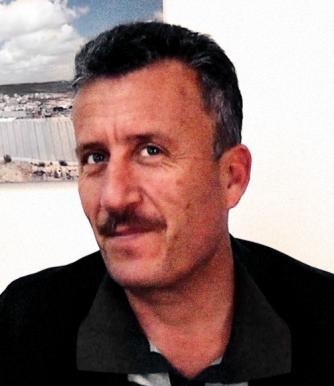 Tamimi, who has been held in custody for over two months, pleaded not guilty to the charges against him and held a defiant speech explaining his motivation for organizing civil resistance to the Occupation. (Full statement below)
After more than two months in custody, the trial of Bassem Tamimi, a 44 year-old protest organizer from the West Bank village of Nabi Saleh, finally commenced yesterday. Tamimi, who is the coordinator for the Nabi Saleh popular committee, pleaded not guilty to the charges laid against him.
In a defiant speech handed before a crowded courtroom, Tamimi proudly owned up to organizing the protest in the village saying, “I organized these peaceful demonstrations to defend our land and our people.” Tamimi also challenged the legitimacy of the very system which trys him, saying that “Despite claiming to be the only democracy in the Middle East you are trying me under military laws […] that are enacted by authorities which I haven’t elected and do not represent me.” (See Tamimi’s full statement at court bellow).
Tamimi was interrupted by the judge who warned him that it was not a political trial, and that such statements were out of place in a courtroom. Tamimi was cut short and not allowed to deliver his full statement.
After Tamimi finished reading his shortened statement, the judge announced that the hearing’s protocol has been erroneously deleted. However he refused to submit the full written statement to the stenographer. She went on to dictate a short summary in her own words for official record.
The indictment against Tamimi is based on questionable and coerced confessions of youth from the village. He is charged with’ incitement’, ‘organizing and participating in unauthorized processions’,’ solicitation to stone-throwing’, ‘failure to attend legal summons’, and a scandalous charge of ‘disruption of legal proceedings’, for allegedly giving youth advice on how to act during police interrogation in the event that they are arrested.
The transcript of Tamimi’s police interrogation further demonstrates the police and Military Prosecution’s political motivation and disregard for the suspect’s rights. During his questioning, Tamimi was accused by his interrogator of “consulting lawyers and foreigners to prepare for his interrogation”, an act that is in no way in breach of the law.
Tamimi’s full statement:
Your Honor,I hold this speech out of belief in peace, justice, freedom, the right to live in dignity, and out of respect for free thought in the absence of Just Laws.
Every time I am called to appear before your courts, I become nervous and afraid. Eighteen years ago, my sister was killed in a courtroom such as this, by a staff member. In my lifetime, I have been nine times imprisoned for an overall of almost 3 years, though I was never charged or convicted. During my imprisonment, I was paralyzed as a result of torture by your investigators. My wife was detained, my children were wounded, my land was stolen by settlers, and now my house is slated for demolition.
I was born at the same time as the Occupation and have been living under its inherent inhumanity, inequality, racism and lack of freedom ever since. Yet, despite all this, my belief in human values and the need for peace in this land have never been shaken. Suffering and oppression did not fill my heart with hatred for anyone, nor did they kindle feelings of revenge. To the contrary, they reinforced my belief in peace and national standing as an adequate response to the inhumanity of Occupation.
International law guarantees the right of occupied people to resist Occupation. In practicing my right, I have called for and organized peaceful popular demonstrations against the Occupation, settler attacks and the theft of more than half of the land of my village, Nabi Saleh, where the graves of my ancestors have lain since time immemorial.
I organized these peaceful demonstrations in order to defend our land and our people. I do not know if my actions violate your Occupation laws. As far as I am concerned, these laws do not apply to me and are devoid of meaning. Having been enacted by Occupation authorities, I reject them and cannot recognize their validity.
Despite claiming to be the only democracy in the Middle East you are trying me under military laws which lack any legitimacy; laws that are enacted by authorities that I have not elected and do not represent me. I am accused of organizing peaceful civil demonstrations that have no military aspects and are legal under international law.
We have the right to express our rejection of Occupation in all of its forms; to defend our freedom and dignity as a people and to seek justice and peace in our land in order to protect our children and secure their future.
The civil nature of our actions is the light that will overcome the darkness of the Occupation, bringing a dawn of freedom that will warm the cold wrists in chains, sweep despair from the soul and end decades of oppression.
These actions are what will expose the true face of the Occupation, where soldiers point their guns at a woman walking to her fields or at checkpoints; at a child who wants to drink from the sweet water of his ancestors’ fabled spring; against an old man who wants to sit in the shade of an olive tree, once mother to him, now burnt by settlers.
We have exhausted all possible actions to stop attacks by settlers, who refuse to adhere to your courts’ decisions, which time and again have confirmed that we are the owners of the land, ordering the removal of the fence erected by them.
Each time we tried to approach our land, implementing these decisions, we were attacked by settlers, who prevented us from reaching it as if it were their own.
Our demonstrations are in protest of injustice. We work hand in hand with Israeli and international activists who believe, like us, that had it not been for the Occupation, we could all live in peace on this land. I do not know which laws are upheld by generals who are inhibited by fear and insecurity, nor do I know their thoughts on the civil resistance of women, children and old men who carry hope and olive branches. But I know what justice and reason are. Land theft and tree-burning is unjust. Violent repression of our demonstrations and protests and your detention camps are not evidence of the illegality of our actions. It is unfair to be tried under a law forced upon us. I know that I have rights and my actions are just.
The military prosecutor accuses me of inciting the protesters to throw stones at the soldiers. This is not true. What incites protesters to throw stones is the sound of bullets, the Occupation’s bulldozers as they destroy the land, the smell of teargas and the smoke coming from burnt houses. I did not incite anyone to throw stones, but I am not responsible for the security of your soldiers who invade my village and attack my people with all the weapons of death and the equipment of terror.
These demonstrations that I organize have had a positive influence over my beliefs; they allowed me to see people from the other side who believe in peace and share my struggle for freedom. Those freedom fighters have rid their consciousness from the Occupation and put their hands in ours in peaceful demonstrations against our common enemy, the Occupation. They have become friends, sisters and brothers. We fight together for a better future for our children and theirs.
If released by the judge will I be convinced thereby that justice still prevails in your courts?
Regardless of how just or unjust this ruling will be, and despite all your racist and inhumane practices and Occupation, we will continue to believe in peace, justice and human values. We will still raise our children to love; love the land and the people without discrimination of race, religion or ethnicity; embodying thus the message of the Messenger of Peace, Jesus Christ, who urged us to “love our enemy.” With love and justice, we make peace and build the future.
Background
Bassem Tamimi is a veteran Palestinian grassroots activist from the West Bank village of Nabi Saleh, north of Ramallah. He is married to Nariman Tamimi, with whom he fathers four children – Wa’ed (14), Ahed (10), Mohammed (8) and Salam (5).
As a veteran activist, Tamimi has been arrested by the Israeli army 11 times to date and has spent roughly three years in Israeli jails, though he was never convicted of any offence. He spent roughly three years in administrative detention, with no charges brought against him. Furthermore, his attorney and he were denied access to “secret evidence” brought against him.
In 1993, Tamimi was falsely arrested on suspicion of having murdered an Israeli settler in Beit El – an allegation of which he was cleared entirely. During his weeks-long interrogation, he was severely tortured by the Israeli Shin Bet in order to draw a coerced confession from him. During his interrogation, and as a result of the torture he underwent, Tamimi collapsed and had to be evacuated to a hospital, where he laid unconscious for seven days.
As one of the organizers of the Nabi Saleh protests and coordinator of the village’s popular committee, Tamimi has been the target of harsh treatment by the Israeli army. Since demonstrations began in the village, his house has been raided and ransacked numerous times, his wife was twice arrested and two of his sons were injured; Wa’ed, 14, was hospitalized for five days when a rubber-coated bullet penetrated his leg and Mohammed, 8, was injured by a tear-gas projectile that was shot directly at him and hit him in the shoulder. Shortly after demonstrations in the village began, the Israeli Civil Administration served ten demolition orders to structures located in Area C, Tamimi’s house was one of them, despite the fact that it was built in 1965.
Legal background
On the March 24th, 2011, a massive contingent of Israeli Soldiers raided the Tamimi home at around noon, only minutes after he entered the house to prepare for a meeting with a European diplomat. He was arrested and subsequently charged.
The main evidence in Tamimi’s case is the testimony of 14 year-old Islam Dar Ayyoub, also from Nabi Saleh, who was taken from his bed at gunpoint on the night of January 23rd. In his interrogation the morning after his arrest, Islam alleged that Bassem and Naji Tamimi organized groups of youth into “brigades”, charged with different responsibilities during the demonstrations: some were allegedly in charge of stone-throwing, others of blocking roads, etc.
During a trial-within-a-trial procedure in Islam’s trial, motioning for his testimony to be ruled inadmissible, it was proven that his interrogation was fundamentally flawed and violated the rights set forth in the Israeli Youth Law in the following ways:
- Despite being a minor, he was questioned in the morning following his arrest, having been denied sleep.
- He was denied legal counsel, although his lawyer appeared at the police station requesting to see him.
- He was denied his right to have a parent present during his questioning.
- He was not informed of his right to remain silent, and was even told by his interrogators that he is “expected to tell the truth”.
- Only one of four interrogators present was a qualified youth interrogator.
While the trial-within-a-trial procedure has not yet reached conclusion, the evidence already revealed has brought a Military Court of Appeals to revise its remand decision and order Islam’s release to house arrest.
Over the past two months, the army has arrested 24 of Nabi Saleh’s residents on protest related suspicions. Half of those arrested are minors, the youngest of whom is merely eleven.
Ever since the beginning of the village’s struggle against settler takeover of their lands in December of 2009, the army has conducted 71 protest related arrests. As the entire village numbers just over 500 residents, the number constitutes approximately 10% of its population.
Tamimi’s arrest corresponds to the systematic arrest of civil protest leaders all around the West Bank, as in the case of the villages Bil’in and Ni’ilin.
Only recently the Military Court of Appeals has aggravated the sentence of Abdallah Abu Rahmah from the village of Bilin, sending him to 16 months imprisonment on charges of incitement and organizing illegal demonstrations. Abu Rahmah was released on March 2011.
The arrest and trial of Abu Rahmah has been widely condemned by the international community, most notably by Britain and EU foreign minister, Catherin Ashton. Harsh criticism of the arrest has also been offered by leading human rights organizations in Israel and around the world, among them B’tselem, ACRI, as well as Human Rights Watch, which declared Abu Rahmah’s trial unfair, and Amnesty International, which declared Abu Rahmah a prisoner of conscience.
The nuclear lobby in trouble as Germany exits nuclear power
By Andrew McKillop – VHeadline – June 5, 2011
Chancellor Angela Merkel surprised many, and stunned the nuclear lobby in other countries with her May 30th announcement of a complete shut down of all Germany’s reactors by January 1st, 2022. This includes the early shutdown of 14 among Germany’s total of 17 reactors, well before that date. At present, nuclear power covers around 22 percent of German electricity consumption.
The German chancellor has, in nine months, gone from calling nuclear power plants a safe, reliable and economical “bridge” to renewable energy, with her coalition government easing regulatory constraints on extending reactor lifetimes, to pushing the biggest and fastest nuclear exit strategy in any country using nuclear power. The international nuclear lobby, already easing off in its constant PR and advertising effort because of the Fukushima disaster, has reacted in sometimes strange ways to Germany’s historic and courageous decision.
To be sure, critics of the decision can claim it is ‘only political’: Merkel has political rivals among the Social Democrats and the anti-nuclear Greens, and cynics can say her ‘atomic epiphany’ following the Fukushima disaster is simple opportunism…
French reaction to the German decision has verged on the hysterical. German-French relations were already at a low point because of Germany’s refusal to join president Sarkozy’s war initiative in Libya and German trade surpluses with France, which continue to mount. At the highest level, including spokespersons of Sarkozy’s ruling UMP political party, the German decision has been called “betrayal” of France’s claimed leading role in the fight against climate change by massive use of supposedly low-carbon, safe and economical nuclear power.
Critics are however forced to move along to technical, economic and industrial factors which, they claim, will make the Merkel plan both technically difficult and a grave economic handicap for Germany, whose export-oriented, trade surplus economic status is the envy of most other G8 countries, except Japan, envied by the USA, France, UK and Italy. Of these, three are still committed to nuclear power, but Italy has recently decided to abandon any restart or relaunch of nuclear power, and obtains zero percent of its electricity from the atom.
CABLES AND ALTERNATIVE SUPPLIES
The ‘technological challenge’ claim is that Germany must rapidly carry out expansion of Germany’s electricity-delivery network costing at least 10 billion-euro ($14.4 billion), and start work on an even more expensive Smart Grid, as well as import more nuclear electricity from France. While the first two needs are rational, and existed before any decision to exit nuclear power, the need – or even the possibility – of importing more nuclear electricity from France is in fact zero. The reason is simple: French electric power exports are steadily shrinking as France itself imports more and more power. On a year-round basis, France imports slightly more electricity from Germany, than vice versa.
In winter 2010-2011, French net imports of electricity attained 9,600 MW, the output of nearly 10 of its 58 reactors when able to fully deliver their design capacity. This itself is decreasingly possible. EDF’s attempt, in early winter 2010 to operate all 58 reactors simultaneously, under full media coverage, was a failure because several reactors were unable to reach their design capacity. With ever increasing French national power needs to meet air conditioning and cooling energy demand in summer, the country’s ability to export power will continue to decline for years ahead, making it for the least unlikely, and risky for Germany to count on French nuclear electricity to plug the gap in power supplies.
The main claim of non-German critics of the exit plan is that very heavy spending is needed on cables to connect proposed but not planned or funded, new large-scale offshore wind farms, with per-kiloWatt capital costs as high as 5,000 euro ($7,000) excluding power cables. This is of course a very high level of initial capital cost – but is also the same as French nuclear power plants, called ‘new generation’ such as the French EPR being built, very slowly and at extreme high cost, in Finland.
Germany’s large-size offshore windfarms, if they are built, would be located in the North Sea, delivering power to Germany’s ‘manufacturing belt’, located in the south. As the nuclear lobby never fails to mention, offshore windfarms are ‘leading edge technology’ and expensive, therefore making the German exit strategy uneconomic and unworkable, but offshore wind is most surely not the only non-nuclear power supply alternative available to Germany.
Others notably include natural gas-fueled power plants, typically costing less than 600 euro per kiloWatt ($850 per kW), and around $ 1,000 per kW with full carbon sequestration, able to utilise cheap shale and fracture gas and coal seam gas extracted ‘in situ’ without any coal mining operations. Gas turbine plants can also utilise pipeline gas, the costs of which will tend to fall as shale and “frac’ gas, and coalseam gas supplies rise in Europe. Interestingly, French political opposition to shale and ‘frac’ gas development in France, which has very large resources of this gas, is extreme high. The environmental case is showcased, but the rationale is also advanced that cheap gas supplies would menace the credibility and apparent low cost of French nuclear power, by providing a serious alternative.
In Germany, this alternative supply can be drawn on, if necessary by importing gas from neighboring Poland, which has prioritized the national development of shale and coalseam gas. The environmental impacts of shale gas can be compared with those of Fukushima, and presented to the general public.
SUBSIDIZED POWER
Large subsidies or power price support for German industrial users is claimed to be necessary, following the exit decision. If not, this claim goes on, Merkel’s decision to exit nuclear power will stunt growth in Europe’s largest economy, can tilt Germany into trade deficit, raise inflation and trigger a retreat into further debt that will make the euro more certain to collapse. Ironically, it is Germany’s relative economic strength due to its large trade surpluses that presently ‘defends the euro’, far more than fiscal deficit-riddled France with its aging and increasingly dangerous nuclear power plants.
Importing French nuclear power, when or if it might be available would also be expensive. French electric power prices, although well behind German prices, are officially set to rise at least 30 percent by 2014.
The reason is simple: nuclear power plant costs, especially the vast dismantling and decommissioning costs of its increasingly aged – and therefore dangerous – reactor fleet. No firm cost figures are supplied by the French government or its nuclear corporate elite on this subject, but several billion euro per reactor, and a timespan of at least 10 years per reactor, are likely. During this extended period and with no surprise, decommissioning cost will most certainly rise further – inevitably raising electricity prices and/or taxes paid by French consumers, and the price for any consumers of imported French power.
What pro-nuclear critics of Merkel’s decision call her ‘atomic epiphany’ was on one hand driven by the entirely democratic and largely spontaneous wave of opposition to nuclear power, following the Fukushima disaster. In Germany, where 250,000-person anti-nuclear demonstrations are commonplace, ignoring this would be electoral suicide, completely unlike the tepid and ambivalent reaction from France’s supine general public, subjected to constant pro-nuclear bias in all French media, especially the State-owned TV channels and radio stations.
Merkel’s exit strategy was on the other hand also driven by far less-evident and obvious factors, including the 180-degree turn on nuclear power by “Corporate Germany”, or ‘Germany AG’.
German corporate reaction was another surprise to non-German critics. Corporate response to the decision was almost euphoric. Following the Merkel announcement, Germany’s DAX stock market index showed its biggest one-day rise in weeks, May 31st. Explanations may seem complex, because as recently as Autumn 2010 German corporate chiefs were heavily insisting that nuclear reactor operating lifetime extensions must be provided more easily by Merkel’s coalition government. In particular the CEOs of the two largest nuclear power using utilities, E.On and RWE, and the Deutsche Bank president publicly threatened a probable complete halt to corporate investment in alternative energy, if Merkel did not extend nuclear plant lifetimes, and at least as important, if she continued with her government’s plan to impose special new nuclear plant operating taxes.
Merkel’s coalition government had made it clear that in return for longer operating lifetimes, nuclear plant operators would pay new taxes designed to help Germany fight its massive fiscal deficits. These taxes, or nuclear special levy, was set on a base able to reach as high as 2 billion euro per year, which would almost wipe out the overall subsidies received from government, by the nuclear sector. Other than making any increase of the reactor fleet impossible, the sector would also have to shoulder the almost open-ended, but coming costs of reactor dismantling and decommissioning.
By late 2010, the calculations and the negotiating stances of German corporate leaders had therefore changed – well before the Fukushima disaster. This, and rising German popular protests, only triggered the 180-degree changes that were coming.
In brief and like anyplace else, nuclear power is so expensive that Corporate Germany or ‘Germany AG’ seeks any way to get consumers and taxpayers to share the burden of decommissioning and dismantling the country’s aging plants. These are aging in the exact same way as those of France, USA, Japan and UK – the ‘old nuclear nations’ with nuclear plants dating back in some cases to the 1960s. Corporate Germany had already accepted that an improved power network to avoid potential blackouts was needed, especially due to Germany’s burgeoning windfarm capacity and aging power transport infrastructures. Paying for this, and for reactor decommissioning became at least as important to Corporate Germany as power price subsidies to the largest users, especially the very profitable car makers in the south, notably Daimler AG and Bayerische Motoren Werke (BMW) AG, and their equipment suppliers including Siemens AG (SIE) and Swiss ABB Ltd.
For Merkel, the nuclear exit strategy will be a test case on whether an export based industrialized nation can rely far more on clean energy without eroding corporate production and profit. To be sure, the exporter nation called China with the world’s biggest trade surplus, although busily building nuclear plants, presently obtains an unimpressive 2 percent of its electricity from the atom, proving that nuclear energy is in no way critical and basic to achieving the status of ‘industrial exporter country’
NUCLEAR POWER PROTECTS THE CLIMATE AND SAVES OIL
Especially in France, but not the USA where shale and “frac” gas and coalseam gas already cover about 40 percent of national gas supply, the gas-alternative to nuclear power is especially criticized. Well-known and exaggerated claims for ‘low carbon’ nuclear, versus ‘dirty gas’ are wheeled out on France’s 5 State-owned TV channels almost daily.
Compared with nuclear power which is intensely dependent on oil for mining uranium, shipping and processing uranium into fuel rods, transporting and storing nuclear wastes, building and servicing nuclear plants, and dismantling them, natural gas-fueled electricity produces about the same overall CO2 emission per unit kWh output. The data and analyses provided by defenders of “low carbon nuclear” theses carefully omit the large oil-energy subsidies, and therefore CO2 emissions produced by nuclear power when “full cycle” analysis is made. They of course never mention the open-ended costs, and enduring risks of decommissioned nuclear plants.
Critics of Germany’s exit strategy fail to mention the “cheap gas” alternative to nuclear power, except to claim it is environmentally and climatically dangerous, simply because it is the biggest and cheapest available alternative.
Defenders of nuclear power also make a point of ignoring the drastic environmental damage caused by nuclear power ‘over the horizon’, in low-income African countries, such as Niger, where France sources a large part of its uranium needs. The French semi-private nuclear corporation Areva’s uranium mines in Niger are a copybook example of destroying the environment and exploiting low-paid workers “out of sight – out of mind” in a faraway developing country, with disastrous mine worker health and safety conditions, while claiming this “protects the environment and climate”.
Critics claim Germany must build new and costly high-volume lines to France, to raise imports of nuclear-origin electricity from France’s 58 nuclear reactors. Doing this, Germany would only import unsafe, unreliable, uneconomic, inadequate and environmentally dirty nuclear power supplies from a country that is increasingly unable to satisfy its own national peak power demands, due to its over-reliance on nuclear power.
Critics of the environmental impact of fossil-based electric power (imagining of course that uranium is somehow not a fossil mineral), who loudly defend “clean” nuclear power, like James Hansen, or James ‘Gaia’ Lovelock will of course not be giving their well-paid nuclear pep talks at the edge of Fukushima’s total exclusion zone. This is now being extended due to deadly radiation extending at least 50 – 70 kilometres from the ruined power plants which will spew as much as 50 – 250 times the radiation released by the Hiroshima atom bomb of 1945, making forced evacuation needed far beyond the initially hoped-for 20 kilometres.
Already, some 90,000 to 125,000 Japanese have been forcibly evicted from their homes, farms and places of work due to “clean, cheap and safe” nuclear power. These Japanese victims of nuclear power can be asked if they think nuclear power ‘protects the environment and mitigates climate change’, in the same way as mass protestors against nuclear power in Germany. The fight against nuclear power has scored a massive victory in Germany.
Background:
German people in unprecedented rebellion against government
By Jane Burgermeister – November 8, 2010
What is Irresponsible and Provocative — Israel’s Blockade of Gaza or The Gaza Flotilla?
By Ann Wright | opednews.com | June 3, 2011
 In the latest Israeli diplomatic attempt to stop the Gaza Freedom Flotilla, Israel leaned on the Obama administration to put heavy pressure on the Government of Turkey to refuse to allow Turkish ships to join the international citizen activist initiative to end Israel’s illegal blockade of Gaza. Israeli diplomats have been intimidating — threatening and cajoling countries in Europe, Canada and the United States in the past six weeks to dissuade their citizens from participating in the flotilla and to forbid ships to depart from their countries.
U.S. says challenging Israel’s naval blockade of Gaza is “irresponsible and provocative”
On June 2, 2011 State Department spokesperson Mark Toner stated in the State Department’s daily press briefing that the United States told the Government of Turkey that a flotilla of ships sailing to Gaza to challenge the Israeli blockade would be an “act of provocation.” Toner said “We have made clear through the past year that groups and individuals who seek to break Israel’s maritime blockade of Gaza are taking irresponsible and provocative actions that entail a risk to their safety.”
Toner also said that “there are established and efficient mechanisms for getting humanitarian assistance through to Gaza, and that’s been our message consistently.”
As one of the organizers of the US Boat to Gaza called “Audacity of Hope,” one of the many ships from 22 organizing nations that will be filled with citizens from 70+ countries, I would have to say that Mr. Toner and the State Department don’t seem to have a clue about the goal of this flotilla.
The primary purpose of the flotilla is to bring massive international attention to the illegal and inhuman Israeli blockade of 1.5 million Palestinians in Gaza so that citizens will force their governments (primarily Israel’s chief defender the United States) to convince Israel that ending the blockade would be in its best security interest.
If Israel will end the blockade of Gaza and allow Palestinians to have freedom to travel, to have freedom to commerce to import and export and to live in dignity with human rights instead of absolute oppression through total control by Israel of virtually every aspect of life in Gaza, then the flotilla would not have to sail.
What are the “irresponsible and provocative actions?”
To use Mr. Toner’s phrase, the “irresponsible and provocative actions” are NOT the flotilla, but the Israeli government’s illegal blockade of Gaza, Israel’s 22-day attack on Gaza that two years ago killed 1,400 and wounded 5,000 and left much of Gaza in rubble and Israel’s relentless construction of illegal settlements that have reduced by one half the land allocated to Palestine in the 1947 creation of the state of Israel through the partition of the Palestine Mandate that left 800,000 Palestinians dispossessed and homeless.
The “irresponsible and provocative actions” are the Israeli apartheid walls that separate Palestinians from their agricultural lands, schools and businesses and the inhumane and degrading Israeli checkpoints that Palestinians must pass through on their own Palestinian land.
If the US government is really concerned about Israeli security, I would hope that finally it would forcefully and relentlessly demand that the Israeli government end their inhumane treatment of the Palestinians. … Full article
Latin American Union of News Agencies formed to “look at ourselves with our own eyes”
AVN | June 5, 2011
Nine Latin American countries will promote regional news integration through the creation of the Latin American Union of News Agencies (ULAN).
This organization is comprised of the following Latin American news services: Agencia Venezolana de Noticias (AVN), Notimex (Mexico), Prensa Latina (Cuba), Agencia Pública de Noticias del Ecuador y Suramérica (Andes), Télam (Argentina), Agencia Guatemalteca de Noticias, Agencia de Información Pública de Paraguay, Agencia Bolivariana de Información (Bolivia) and Agencia de Noticias de Brasil.
The three committees established by the ULAN statute will be headed by Brazil, Cuba and Mexico.
Argentina is in charge of designing the digital portal of the Union – which will feature news, photos and videos – and Cuba will coordinate the training of journalists.
The main goals of the ULAN are “to promote a much stronger voice for our region within a global context” and to encourage exchange and cooperation in the field of communications amongst Southern countries in order to provide a view which represents our own reality.
During a program broadcast by Venezuela’s state-run TV station Venezolana de Television (VTV), Sergio Fernández, director of Argentina’s Télam and appointed as president of the ULAN for two years, said that “up until now, the flow of information transmitted throughout the world has been dominated by a few.”
Fernández stressed that in Latin America just four media groups broadcast over 82% of the news reported in the region. Hence the need to create the ULAN, proposed in October 2010 during the World Congress of News Agencies, held in Buenos Aires, Argentina, to promote the democratization of communication and to contribute to the regional integration of the Latin American people.
Venezuela – he adds – paved the way with the enactment of the Law on Social Responsibility in Radio and Television in December 2004. This Law is an initiative followed by other countries and represents a way of redefining the role of the media.
“Until not so very long ago the mass media, which has enormous political and economic interests, greatly influenced a situation of absolute privilege, the debate of ideas, systematizing society, distorting reality and did not speak about themselves,” Fernández says.
Therefore, another major goal of the ULAN is to promote a cultural change for Latin American journalists, to avoid media reports from the Northern countries in order to see what’s happening in the region and to understand that “we will have many more points of convergence and closeness to our Latin American brothers and sisters with whom we share identity, culture, history.”
Secretary General’s Office
Venezuela, through the Agencia Venezolana de Noticias (AVN) (Venezuelan News Agency in English), will hold the ULAN Secretary General’s Office by unanimous decision.
The AVN President, Freddy Fernandez, stressed the need to “look at ourselves with our own eyes” in terms of information.
Fernández thinks that just as the commercial media devote their pages to the elite, with the people only appearing in the disaster and crime sections, hegemonic news agencies only report on Latin America when a tragedy occurs or in order to demonize political and social processes.
He added that the history of the region was told with the cameras mounted on the settlers’ ships. “It would have been different if they had installed the cameras on the shores of our continent.” […]
The training of journalists will take place in Cuba, Uzeta highlighted, also confirming that training programs in social networking will take place in Mexico as a way of linking reporters to the wider community through resources such as Facebook, Twitter and YouTube.
Finally, Uzeta concludes that teleSUR is “showing the other side of the coin,” in contrast with the U.S. broadcaster CNN, in cases such as the military aggression against Libya.
Edited for Venezuelanalysis.com by Rachael Boothroyd
Palestinians engage with Egyptian public in bid to open Rafah crossing
Saleh Naami | Ahram Online | 5 June 2011
Palestinian sources predict an escalation in protests in Gaza to put pressure on Egyptian authorities to re-open Rafah border crossing.
A Palestinian official in Gaza told Ahram Online that if the Egyptian government does not solve the current problems in Rafah, hundreds of thousands of Gazans will organise a mass march towards the border crossing to force its opening, possibly leading to clashes.
“The Palestinians are working with Egyptian rights groups, media, political forces and the Youth movements’ leaders to exert heavy pressures on the Egyptian government in order not to restore restrictions on the Rafah crossing,” he said.
The official added that Palestine has high expectations of Egypt’s new political order and are waiting for fundamental changes in its border security policy.
He noted that Israel and the US are putting a lot of pressure on the Egyptian leadership to keep in place the restrictions implemented during the Mubarak regime, adding that some elements within security and intelligence prefer to maintain this policy.
“The Egyptian officials who administrate the crossing show us [the Palestinians] that they have no intention to fully open the border and carry out the Egyptian government’s decision to make the Palestinians’ lives easier,” the official added.
Private Israeli guard opens fire on protesters, protester hit by shrapnel
4 June 2011 | Ni’lin
A private Israeli guard opened live fire on protesters marching on an illegal quarry near the West Bank village of Shuqba.
The march was organized by the Ni’lin and Budrus popular committees and commenced at noon. Dozens of Palestinian and Israeli activists marched toward the illegal quarry to stop the further confiscation of Palestinian lands from the nearby villages of Ni’lin, Qibya, Shuqba and Shebteen.
As demonstrators were marching towards the quarry, an Israeli security guard opened fire. Villagers had not even arrived to the designated spot of protest, the quarry, before live ammunition was shot. The injured protester from Budrus was evacuated to the hospital for necessary treatment.
After some time, 3 three Israeli military jeeps arrived and began firing tear gas canisters at the protest. Many suffered from gas inhalation and a few olive trees caught on a fire.
The quarry, owned by an Israeli commander, rests on lands confiscated from Palestinian villages. The demonstrators hope to deter further confiscation, since the quarry continues to be expanded illegally.
Featured Video
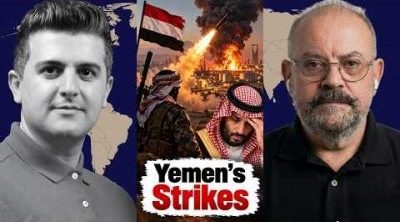
Elijah Magnier: Yemen’s strikes are shattering Saudi Arabia’s long-term strategy
or go to
Aletho News Archives – Video-Images
From the Archives
British weapons and personnel doing much of the killing in Yemen
Press TV – June 18, 2019
A detailed report published by the Guardian newspaper has shown how Britain is massively contributing to Saudi Arabia’s devastating war on Yemen as it suggests that London is not only supplying the bombs that fall on Yemenis, but it provides the personnel and expertise that keep the war going.
The comprehensive report by Arron Merat published on Tuesday showed that Britain was doing much of the killing in Yemen as the country continues to provide Saudi Arabia with everything it needs to turn its southern impoverished neighbor into a graveyard.
“Every day Yemen is hit by British bombs – dropped by British planes that are flown by British-trained pilots and maintained and prepared inside Saudi Arabia by thousands of British contractors,” said Merat in the report. … continue
Blog Roll
 Aletho News
- Racist Seinfeld Dances for Joy as Bibi Unveils His New Map
- A West Bank War for Netanyahu’s Election Campaign, Could It Backfire?
- Yemen denounces European Parliament’s ‘hypocritical’ push to blacklist Ansarullah
- Qalibaf: UAE’s UN bid aims to ‘clear the runway’ for ‘Greater Israel’, whitewash genocide
- Pakistan reopens Iran border after boosting security: Report
- Why are so many Brazilians voting for Flávio Bolsonaro?
- Democrats Put Anti-Russia Agenda Ahead of American Workers
- Elijah Magnier: Yemen’s Strikes Are Shattering Saudi Arabia’s Long-Term Strategy
- Pentagon designates Chinese cultural centers national security threat
- Israel Demolishes Home Of Lebanese Journalist Whose Viral Film Exposed Pager Attack
- If Americans Knew
- An error has occurred; the feed is probably down. Try again later.
- No Tricks Zone
- Sudden Stratospheric Warming, Powerful El Niño Combination May Lead To Extreme Europe Cold, Energy Crisis!
- Two New Studies Find Thwaites Glacier Melt Cannot Be Driven By Human Activity Or A Warming Ocean
- E-Cars Reduce CO2 Emissions By Only 41% Compared To Internal Combustion Engine Vehicles
- Predictions Made By Renowned Climate Professor Over Past Decades Have Been Proven To Be Poor
- New Study Suggests Large Regions Of The Pacific Ocean Have Been Cooling For The Last 80 Years
- Germany’s Green Energy Debacle: High Energy Costs Force Kahla Porzellan to Close After 182 Years!
- New Study: 50 Years Of The Most Aggressive ‘Net Zero’ Policies Can Only Affect The Global Climate By 0.03°C
- US September “Heat” Was No Record…Many Records Set Decades Ago
- Latest European Green Energy Debacle; Portugal’s Largest Flagship Solar Park Insolvent!
- Green Energy Debacle: German Expert Professor Fritz Vahrenholt Warns Of Severe Economic And Social Consequences

