Israeli troops attack 4 separate anti-Wall protests, injuring 16 demonstrators
By IMEMC & PNN | April 23, 2011
On Friday, 16 civilians were injured and four abducted as Israeli troops attacked the weekly anti-wall protests in the villages of Bil’in, Nil’in and al-Nabi Saleh, in central West Bank as well as the village of al-Ma’sara, in the south.
In Bil’in, 15 protesters were injured when troops attacked the weekly march. This week’s protest in Bil’in ended a three day conference on nonviolent resistance in Palestine. The Conference began on Wednesday in Bil’in, and attracted hundreds of supporters from around the world, including Italian parliamentarian Luisa Morgantini and the parents of Rachel Corrie, who was killed by the Israeli military in 2003.
Dubbed the Sixth International Conference on the Palestinian Popular Struggle, the annual conference was dedicated this year to Italian activist Vittorio Arrigoni, who was killed last Friday allegedly by a Salafist (right-wing political Islamist) group in Gaza.
The conference was aimed at building and strengthening ties between Palestinian, Israeli and international activists working against the Israeli military occupation in Palestine. The conference was attended by a number of Palestinian officials in addition to members of the European Parliament, and hundreds of international and local peace and human rights activists.
On Friday midday, international and Israeli activists joined the villagers and marched toward the wall built on farmers’ lands by the Israeli army. Israeli soldiers stopped protesters before they reached the wall and fired tear gas and rubber-coated steel bullets at them to force them back. 15 protesters were injured including a journalist and three international supporters. The marchers continued forward and reached the gate of the wall, as they have done on every Friday since early 2005.
Soldiers then forced the non-violent demonstrators back into the village, then stormed the village, firing tear gas at houses. Many were treated for the effects of tear gas inhalation.
In 2009 the Israeli High Court of Justice ruled in favor of Bil’in residents and ordered the military to reroute the wall giving back to the village half of the land originally expropriated to build the wall. The military has still not adhered to the court order.
In the nearby village of Nil’in, many were treated for the effects of tear gas inhalation also on Friday during the anti wall protest. Troops attack the villagers using tear gas as soon as they reached the gate of the wall which separates the farmers from their agricultural lands.
Also Friday, two locals and two internationals were abducted when troops attacked the weekly protest against the wall and settlements in the village of an-Nabi Saleh. Palestinians, together with international and Israeli supporters, marched to their lands, where Israel is presently trying to build a new settlement. Troops fired tear gas at them to force them back into the village.
In the southern West Bank, the villagers of al-Ma’ssara, along with their international and Israeli supporters, protested the Israeli wall being built on local farmers’ lands. Israeli soldiers attacked the protesters using tear gas, preventing the march from reaching the construction site of the Wall; many participants in the non-violent demonstration were treated for the effects of tear gas inhalation.
A response to the killers of Vittorio Arrigoni (and to my family)
By Pam Bailey | Mondoweiss | April 21, 2011
When the news first broke that Vittorio Arrigoni, the Italian who had been volunteering in Gaza with the International Solidarity Movement, had been kidnapped and murdered, the response in the U.S. and international media was similar to this comment by Charles Glass in The National: “After what happened to this brave young man, how many others will volunteer to take his place – when it may mean death to those who love them?”
The New York Times commented: “(The murder) raised embarrassing questions for Hamas about the security it says it has restored…. It also raises the specter of a growing boldness on the part of more extreme, virulently anti-Western Islamic groups in Gaza, which would pose a challenge not only to Hamas but to foreign activists promoting the Palestinian cause.”
No wonder that both my sister and my daughter, who had come to support my increasingly frequent trips to Gaza, now are discouraging me from continuing my work there. “I have to admit that now, with things becoming more dangerous in Gaza every day (from all sides–for example, Vik being killed by the very people he was trying to help), I completely understand why your daughters would be hoping that you don’t go back,” wrote my sister. Another friend, who had visited Gaza with me on one of my first trips, put it even more bluntly: “I would never have thought that the people he was supporting and helping would turn on him.”
I am sure this reaction is exactly what Vik’s killers – whoever they are–had been hoping for.
Whether the murder was committed by collaborators with Israel or religious extremists who abhor Western influence and/or want to make Hamas look bad, the motive seemed to be – at least in part — to scare off other internationals who might think to come to Gaza, whether via the next flotilla (planned for late May) or other route. Although no one knows — and we may never know – the true motivation of Vik’s killers, Israel has certainly worked overtime in the last few months to stop the next flotilla from reaching the shores of Gaza. The newspaper Ha’aretz reported last month that Israeli Defense Forces chief of staff Gabi Ashkenazi has threatened that if the boats try to reach Gaza, “forcing” the military to attack, “there may be no alternative to deploying snipers to minimize troop casualties.” Meanwhile, the Jerusalem Post reported that the IDF will deploy attack dogs from its Oketz canine units. Likewise, Israel has not been shy about assassinating individuals it doesn’t like (the most recent example is the murder of Hamas official Mahmoud Mabhouh in Dubai).
However, whoever committed this gut-wrenching crime, and whatever their motivation, they are not Gaza (and the murderers of Juliano Mer-Khamis– the popular director of the Jenin Freedom Theater — are not the West Bank – or Palestine). After all, should Americans be judged by Timothy McVeigh, or the Unabomber? When word began spreading like wildfire that Vik had been murdered, my friends from Gaza – and many whom I barely knew, but were just connections on Facebook – messaged me to apologize on behalf of their entire people. One email I received was titled “WE ARE SO SORRY.”
Even those who didn’t know Vik felt the need to express their deep sorrow and shame; in fact, they were the majority of the individuals who reached out to me. Sameeha Elwan, a young blogger in Gaza, wrote: “All of us were agonized by the news of his abduction, spending the whole night anticipating and hoping that morning would bring us the news of his release…(But) morning brought us mourning. The first unconfirmed news of his death came at 2 a.m., leaving us all speechless and confused…’Did you know him personally?’many asked me today in the funeral that was held by Gazans in honor of Vittorio. In fact, I did not meet him in person, as was the case of so many Palestinians who were there…(But) to know how brave Vittorio was, I only had to look around, and see the agony and anger in the faces of hundreds of people…”
Vik’s death was considered a national tragedy in Gaza – indeed, throughout Palestine. I can’t help but compare this to how Americans would react if a foreigner in their midst –albeit one who was there in solidarity with them – was randomly slain. I doubt it would elicit the same outpouring of grief, or that Americans who didn’t even know him would feel a personal responsibility for the perpetrators. Even when my purse was apparently stolen one night by a coffeehouse, everyone I knew felt compelled to apologize – going out of their way to track it down.
This is the reason that in the eight months I lived in Gaza – five months in 2010 and three this year, coming home barely two weeks before Vik’s death – I felt safe and literally “embraced.” Crime can happen anywhere; yes, Gaza is a “hot spot,” and may be more dangerous than most, but not because of the Palestinians. I am not unlike the other international volunteers who are drawn to Gaza, or to Palestine in general. We know the spirit of the people there; we see inside their collective heart. And we agree with Sameeha when she writes, “No matter who was behind this vicious crime against humanity, he is not the least Palestinian.”
So to my friends and family who ask why I want to continue to return to the region, when “the people I help may turn on me,” I say no, they will never turn on me. And if I am ever in danger, they will have my back. They may not always be able to protect me from the criminal elements that are present everywhere, but I know they would lay down their lives for mine.
And to Vik’s killers, I say you will never win. Because we will keep coming back.
Pam Bailey is an American who has been on several of the Codepink delegations to Gaza. She then lived in Gaza for five months last year and three months this year.
31 injured in Sulaymanieh, Iraq
Press TV – April 19, 2011
At least 31 people have been injured in fresh clashes that erupted between protesters and security forces in Iraq’s semi-autonomous Kurdistan region.
Three of the injured were shot at with live bullet near Sulaymaniyah University, located 260 kilometers (161 miles) north of Baghdad, a Press TV correspondent reported on Tuesday.
A number of journalists have also been arrested.
The clashes came after around 100 people were wounded in Peeramard Street in the city on Monday.
Meanwhile, Kurdish regional Prime Minister Barham Saleh on Tuesday offered to step down from the party leadership in protest.
On Sunday, at least 35 people, including seven policemen, were injured after police and protesters clashed in the region’s second largest city of Sulaymanieh.
Thousands of people have spilled out into the streets to protest against corruption and lack of freedom in recent months.
President of Iraq’s Kurdistan region Massoud Barzani announced plans last month to shake up the regional government and enact reforms, but demonstrators demanded more reforms.
‘Bahrain police abduct 6 female teachers’
Press TV – April 19, 2011

Teachers join anti-government protesters on February 20, 2011 in Manama, Bahrain.
Bahrain police have abducted six female teachers from school in Muharraq following the regime’s crackdown on anti-government protesters.
The teachers were kidnapped on Tuesday, witnesses said.
On Monday, Bahraini security forces arrested eight teachers and several pupils in the town of Hamad.
Meanwhile, the Bahraini education ministry formed a committee tasked with taking action against school officials taking part in anti-government protests and strikes.
Reports said some heads of schools, administration staff as well as teachers have already been summoned for questioning.
To express solidarity with the ongoing revolution, thousands of teachers, called by the Bahrain Teachers Society, went on a strike in February and again during in March.
People in Bahrain have been protesting since February 14, demanding an end to the rule of the Al Khalifa dynasty.
Demonstrators maintain that they will hold their ground until their demands for freedom, constitutional monarchy as well as a proportional voice in the government are met.
Bahraini forces with the help of Saudi, the UAE and Kuwaiti troops have cracked down on the anti-regime protesters. Many people have gone missing since the beginning of the revolution.
International Solidarity Movement Committed to Staying in Gaza
18 April 2011 | ISM GAZA
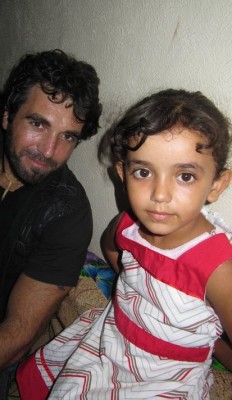 Following the murder of our comrade and friend Viktor, we, activists of the International Solidarity Movement, would like to reiterate our commitment to remaining in Gaza. We will continue to work with and live among the Palestinian population as we continue the work which Vik was so committed too.
In these days of mourning, Palestinians have organized numerous memorials for Vik; they constantly remind us how sorry they are to have lost him, of how they loved him, his closeness, his affection, and his indignation at what is happening here in Gaza. We know that the group that perpetrated this horrible crime does not in any way represent the Palestinian society. The Palestinians of Gaza are our friends, our colleagues, and our reason for being here; we will continue to stand by their side.
As we had done when Vittorio was with us, we will continue to stand alongside the Palestinian people, we will continue to struggle against the occupation, we will continue to accompany farmers to their lands along the border, we will continue to participate in demonstrations, and we will continue to tell the world what happens here in the Gaza Strip, Palestine. We think that Victor would agree with Che Guevara when he said, “Don’t cry for me if I die, do what I was doing and I will live on in you.” The best way to honor Vik is to continue the work that he was doing. In particular we will soon begin crewing a boat whose mission is to monitor the violation of human rights in Palestinian waters. This boat will have its maiden voyage on April 20: Vik had strongly backed this project and he had enthusiastically participated in its realization. Vik has been an inspiration to all of us, we all hope to live up to his example. In a documentary about him, Vik said he would have liked to be remembered by Nelson Mandela’s quote; “A victor is merely a dreamer who never stops dreaming.” Your dreams are our dreams; we will never forget you, Vik.
Contact Persons:
Adie Mormech (In Switzerland, English and French) 0041799407215
Inge Neefs (In Gaza, English, French, Dutch) 00972597738436
Silvia Todescini (In Gaza, Italian) 00972595447660
Mohammed Al Zaeem (In Gaza, Arabic) 00972597355082
Sulaymanieh Protest leaves 35 injured
Press TV – April 17, 2011
Clashes between police and protesters in Iraq’s semi-autonomous Kurdish region have left at least 35 people injured, including seven policemen, reports say.
In recent months, protests have flared up in the region’s second largest city of Sulaymanieh, where thousands of people have spilled out into the streets to protest against corruption and a lack of freedom.
Police fired shots, used tear gas and batons to disperse the protesters on Sunday.
Seven protesters also suffered bullet wounds and some others were hurt by batons or tear gas, Reuters quoted police and witnesses as saying.
Rekawt Hama Rasheed, general director of the health office in Sulaymanieh, said that seven policemen suffered exposure to tear gas.
Several people were also taken into custody, including journalists, but the exact figure is not known, he said.
Two journalists were among the wounded, one of them a photographer, who was shot while covering the clashes, said Rahman Gharib, an editor at the Kurdish weekly newspaper Hawalati.
Kurdistan is dominated by just two parties, the PUK and the regional president’s Kurdistan Democratic Party (KDP).
President of Iraq’s Kurdistan region Massoud Barzani had announced plans last month to shake up the regional government and enact reforms, but demonstrators wanted more reforms.
Palestinian Prisoners’ Day
Tania Kepler for the Alternative Information Center | 17 April 2011
 Today, 17 April, is Palestinian Prisoners’ Day. The day commemorates the release of Palestinian prisoner Mahmoud Hijazi in the first prisoners’ exchange between the Palestinians and the Israelis in 1974.
This year Palestinian Prisoners’ Day comes in the midst of a wave of mass and arbitrary arrests by the Israeli military forces in the West Bank village of Awarta, following the murders of 5 family members in the nearby settlement of Itamar.
So far more than 500 men, women and children have been arrested, questioned, detained, and asked to sign statements in Hebrew, a language they do not understand.
While most villagers were released within hours of their arrest, 50 still remain in detention without charges, including two children, according to the Al Mezan Center for Human Rights.
The situation for Palestinians in Israeli prisons is grim. According to ADDAMEER, the Palestinian Prisoners’ Rights NGO, over 6,800 Palestinians, from the West Bank, Gaza, East Jerusalem, and 1948 Palestine, are currently imprisoned by the Israeli state. Of those, over 300 are children, 34 are women, 18 are elected Palestinian representatives and almost 300 are ‘Administrative Detainees’ – that is they have been interned without trial not having been charged with any crime or seeing the secret evidence against them.
The prisoners are being detained in 17 prisons and detention centers; such as, Nafha, Ramon, Ashkelon, Beersheba, HaDarom, Gilboa, Shata, Al-Ramla, Damon, Hasharon, Naqab, Ofer and Megiddo.
Over four decades of illegal Israeli military occupation, Palestinians from all walks of life have been illegally detained by Israel. Since the beginning of the occupation in 1967, over 650,000 Palestinians have been detained by Israel, reports ADDAMEER.
An estimated 10,000 Palestinian women have been arrested and detained since 1967 under Israeli military orders, which govern nearly every aspect of life in the occupied Palestinian territory. As of 1 February 2011, 36 Palestinian women remain in Israel’s prisons and detention centers, including 3 women in administrative detention. The two prisons in which Palestinian women are detained are located outside the 1967 occupied territory, in direct contravention of the Fourth Geneva Convention.
Sign this petition to free all Palestinian Women Prisoners in Israeli Jails:
http://www.thepetitionsite.com/6/free-Palestinian-women-political-prisoners/
Yemeni women stage massive protest
Press TV – April 16, 2011
In Yemen, thousands of outraged women have defended their right to protest in the capital and other cities over remarks made by President Ali Abdullah Saleh.
President Saleh had earlier said that it was un-Islamic for women to join men in demonstrations against him, Reuters reported.
In response, around 5,000 women took to the streets in Sana’a on Saturday. The protesters, who have filed a complaint against Saleh for disrespecting women’s rights, marched from University Square to the office of Attorney General Abdullah al-Olafi.
Similar protests were held in the industrial city of Taizz, south of the capital, Sana’a. Sit-ins were also held there and in the city of Ibb.
Women argue that their participation in the demonstrations is religiously sound, and that the president is exploiting religion after failing to stop the protests through employing tribes and security forces.
The demonstrators continue to call on Saleh to step down after nearly three months of protests. While Saleh says civil war could break out if he steps down before an orderly transition, the protesters say they want him out immediately.
Meanwhile, a local Yemeni newspaper has revealed that Saleh will step down from power in 30 days upon the designation of a new vice president. This is according to a timetable set by the US and EU ambassadors.
Vik: a friend, a brother, a humanist
By Eva Bartlett | In Gaza | April 15, 2011

I first heard of Vik before arriving in Gaza. Vik had just been injured by IOF water canoning which shattered the windows of the fishing boat he was accompanying. Vik had some injuries from the shattered glass.
When I met Vik he was nothing but humble and humour. A compassionate man, living to do good and do anything for Palestinian justice. Others knew him better and longer, and told me of Viks arrests by the IOF, deportation, and other interesting stories. But above all, what shone, aside from his intelligble English and random Italian curses, was his humanism.
He was taken from Gaza, briefly, by the IOF navy, when they kidnapped 15 Palesitnian fishermen and 3 accompanying activists, including Vik, in November 2008, from Palestinian waters. At the time of his abduction, he was electrically shocked while peacefully avoiding abduction by diving into Gazas cold waters.
He returned to Gaza, via Free Gaza again, before Israel began its war on Gaza. He continued to write and report from the enclosed, bombed Strip.
Stay human, he always said. And so was the title of his book on the Israeli massacre of Gaza in 2008-2009. Stay human.
Viks blog, Guerilla Radio, gave voice to Palestinians who have strong voices but are denied the microphone.
During the Israeli war on Gaza, we all worked together, riding in ambulances, documenting the martyred and the wounded, the vast majority (over 83%) civilian. Vik was always on the phone, Italian media taking his words and printing them for the public to see.
Aside from the loss of a compassionate, caring human, activist, and friend, I am saddened by the group that did this. Surely they knew Vik was with them, for them. But in every society, including my own, there are extremists, people who act with misguided guidance.
Vik was there, among the war casualties, among the on-going martytrs unspoken in the corporate media, celebrating Palestines beauty and culture, dancing Dabke at my wedding celebration.
He was there to joke with us, to counsel us, to smoke shisha by the sea…He wrote the truth, spoke the truth, stayed human.
Vik, my brother, allah yerhamek, bless you for your humanity and your great contribution to Palestinian justice. I will miss you, your smile, your humble, fun personality.
Yatikalafia ya Vitorrio.

Featured Video

Death Spikes & Rising Cancer In Our Youth Explained
or go to
Aletho News Archives – Video-Images
From the Archives
Politicians lie
By Mazin Qumsiyeh | Popular Resistance | August 18, 2013
There is no way to say this truth nicely: Politicians lie. That includes Japanese, American, Egyptian, Israeli, and Palestinian politicians! Is there something more common sense than that? Yet, so many citizens around the world believe their own politicians or wistfully acknowledge lies but think it is part of the job needed to run things. They believe even when politicians contradict themselves blatantly. This phenomenon is rather remarkable. It is a dissonance and disconnect from reality that many seem oblivious to. It is very dangerous because it can lead to accepting rationales for going to war. These can be deadly wars that lead to millions of lives lost as happened in what was called World War 1 and WW2. Even when incredible and declassified evidence abound, politicians continue to lie and old mythologies refuse to die. Here are just a few of the countless lies told to us over the past few decades… continue
Blog Roll
 Aletho News
- China pushes back against US on Cuba, Iran
- Ukrainian Soldiers, Potential Mercenaries: Have Gun, Will Travel!
- Burnham’s UN debut… A masterclass in British disinformation
- Iran flights continue despite US aviation sanctions
- Global Tipping Points Lead the World Into a State of Entropy
- The day-after at the White House: USA and Xi Jinping
- The Geopolitical Balance in the Red Sea: The UAE Being Displaced by New Players
- Iraqi resistance group vows to stage airport sit-ins over Iran aerial blockade
- Turkish parliament to review Saudi-Pakistan defense pact next month
- DEATH SPIKES & RISING CANCER IN OUR YOUTH EXPLAINED
- If Americans Knew
- Deconstructing Netanyahu’s pants-on-fire UN rant – Daily Update
- Trump betrayed voters with his campaign lies and prioritized a foreign country once he took office
- Netanyahu calls Israel’s war in Gaza ‘opposite of genocide’ in UN speech to near-empty hall
- Settler Kidnappings: Torture, Sexual Abuse and Terrorisation of Palestinian Abductees as Israel Deepens Annexation of West Bank
- Gaza winter nears as 162,000 tents become unusable, raising fears of humanitarian crisis
- Netanyahu says, “It’s the opposite of genocide”; UN says Gaza economy is world’s ‘most severe crisis on record’ – Daily Update
- Israel’s US-Backed Assault on Gaza Has Created the ‘World’s Most Severe Economic Crisis on Record’: UN
- ‘Protecting U.S. Citizens’… From Israel
- ‘This is where I live now, the back of a truck’: a day in the life of a grandmother in Gaza
- In UN Speech, Iran’s President Displays Pictures of Children Killed by US, Brings Attention to Israel’s Nuclear Arsenal
- No Tricks Zone
- New Study: Earth And Venus Surface Warmth Largely Explained By Convection And Lapse Rate, Not CO2 Or Radiation
- 2025 Nature Paper Claiming Worsening Global Drought Gets RETRACTED …Heavily Flawed
- New Study: ‘Global Drought Shows No Detectable Recent Acceleration Under Climate Warming’
- Economic Masterminds: German Socialists Suggest Taxing Productivity Gains Stemming From Using AI
- The South China Sea Has Not Been Cooperating With The Climate Change Narrative
- Energy Crisis: Germany Enters Heating Season With Historically Low Gas Reserve Fill Levels
- New Study: The Antarctic Ice Sheet Gained Mass From 2020-2024 Due To Staggering Snow And Ice Accumulation
- Study: Ocean Heating Rates From Thousands Of Years Ago ‘Dwarf’ Modern Ocean Heating Rates
- Climate Extremists Target, Attack Large-Scale Power Grid Infrastructure In Germany!
- New Study: Antarctic Ice Melt Has Contributed Less Than 1 Centimeter To Sea Level Rise In The Last 30 Years

