Iran, Russia can cooperate to contain US: Ayatollah Khamenei
Press TV – September 7, 2018
Leader of the Islamic Revolution Ayatollah Seyyed Ali Khamenei says the developments in Syria and the US defeat in the Arab country show that Washington can be contained.
The Leader made the remarks in a Friday meeting with Russian President Vladimir Putin, who traveled to Tehran to participate in a key trilateral summit on Syria, hosted by Iranian President Hassan Rouhani and also attended by Turkish leader Recep Tayyip Erdogan.
“Cooperation between Iran and Russia on the Syrian issue is a prominent example and a very good experience of bilateral cooperation,” the Leader said.
Ayatollah Khamenei added that the two countries can expand cooperation on global issues, saying, “One of the cases that the two sides can cooperate with each other is to contain the US, because it is a danger to humanity and it is possible to contain it.”
The Leader stated that the Americans suffered a real defeat in Syria and failed to achieve their goals.
Ayatollah Khamenei also said sanctions imposed by the US on Iran, Russia and Turkey are a very strong common ground for strengthening cooperation, and urged Tehran and Moscow to develop political and economic relations and follow up on the agreements of the summit in Tehran.
The Leader stressed the importance of pursuing non-dollar transactions in trade.
Europeans did not fulfill JCPOA commitments: Ayatollah Khamenei
Elsewhere in his remarks, Ayatollah Khamenei said Iran has so far remained committed to a multilateral nuclear agreement, officially known as the Joint Comprehensive Plan of Action (JCPOA), reached between Iran and the P5+1 group of countries in 2015.
“But the Europeans did not carry out their duties, and it is not acceptable that we completely fulfill our commitments within the JCPOA while they don’t,” the Leader pointed out.
The Leader praised the Russian president’s approach to the nuclear deal, adding that the Islamic Republic would adopt a stance on the JCPOA which would meet its national interests.
Although the US now raises Iran’s missile program and regional developments, their problem with the Islamic Republic relates to issues beyond them, Ayatollah Khamenei said.
The Leader added that the US has been seeking to topple the Islamic Republic over the past 40 years, but Iran has managed to make substantial advancements during this period.
“The resistance of the Islamic Republic and its advances are another successful example that the US can be contained,” Ayatollah Khamenei said.
The Leader also pointed to the deplorable situation of the Yemeni people and their killing at the hands of Saudi Arabia, adding, “The Saudis will definitely fail to achieve a result in Yemen and will not be able to bring the resilient Yemeni people to their knees.”
During the meeting, which was also attended by Iranian First Vice President Es’haq Jahangiri, the Russian president said he held very fruitful and good negotiations with President Rouhani on mutual issues of interest, including the situation in Syria.
Iran and Russia discussed the expansion of relations in all fields, particularly in the economic and trade sectors, Putin added.
He said the US is putting obstacles, including banking restrictions, in the way of the development of Tehran-Moscow relations, and added that Washington is making a strategic mistake by limiting financial transactions.
The Russian president expressed regret that the remaining sides to the JCPOA failed to fulfill their commitments under the deal after the US withdrawal.
He said although the Europeans announce that they are seeking ways to keep the nuclear accord alive, they are following the US due to their dependence on Washington.
US Inmates Strike to End ‘Prison Industrial Slave Complex’
Sputnik – August 22, 2018
Prisoners in 17 US states are striking on Tuesday, August 21, on the anniversary of the death of Black Panther prison organizer George Jackson. Inmates are engaging in work stoppages and hunger strikes, among other methods, in a bid to push for better conditions, more rights and an end to prison slavery.
The strike will continue until September 9, the anniversary of the 1971 uprising at Attica Correctional Facility in New York.
A prisoner who helped organize the strike told Sputnik News in April that they’re looking to dismantle the “prison industrial slave complex.” He is incarcerated at Lee Correctional Facility in South Carolina, which saw the deadliest event in US prison history in the past 25 years on April 15. Seven people were killed and more than 20 were injured during the revolt. The strike is meant to protest that violence, as well as poor living conditions in US prisons and the practice of slave labor there.
The 13th Amendment to the United States Constitution abolished slavery — at least that’s what most Americans think. In reality, it forbade “slavery [and] involuntary servitude, except as a punishment for crime.”
That means that in effect, slavery is an ongoing phenomenon in America. Prisoners make all kinds of goods, typically for a rate spanning between zero and a few dollars a day. License plates, textiles, Starbucks coffee cups and many consumer products of are made, at a subsidized rate, often for large corporations, by prisoners. California’s detained workforce has more than 2,000 inmates battling wildfires, including almost 60 minors. They’re making $3 a day as they risk their lives, yet are also forbidden from joining fire departments after their release.
Karen Smith of the Incarcerated Workers Organizing Committee (IWOC), a group formed in 2014 “as a result of the prison organizing that’s been going on since 2010,” by formerly incarcerated members of the Industrial Workers of the World (IWW) union, spoke with Sputnik News on the eve of the strike.
“It became apparent to the IWW that this struggle that incarcerated, working-class brothers and sisters were engaged in was our struggle, and needed a cohesive group to address its needs and to organize alongside them,” she said.
Groups including IWOC, the Free Alabama Movement, Jailhouse Lawyers Speak and Fire Inside have been working with prisoners to organize the strike, which forced all 11 prisons run by the New Mexico Department of Corrections into lockdown Tuesday afternoon.
At the Hyde Correctional Institution in North Carolina, three prisoners were designated as strike organizers and are “facing threats of administrative repression,” IWOC said in a statement.
“Retaliation comes in the form of physical abuse, restricted movement, getting sentenced to solitary confinement — getting your status changed; here in Florida it’s called ‘closed management,” Smith told Sputnik. “Many people who were at the forefront of the prisoner resistance movement here in Florida were labelled a ‘security threat group’ and placed in closed management,” she said before the strike.
“Some of them have been set up with knives and cellphones placed in their belongings, or near them in their dorm, and now are placed in closed management for a year and a half, meaning solitary confinement. Restricted commissary. Phone calls, maybe once a week. They only get to shower at very limited times. And they get taken out one hour a day, if that even happens. I get tons of reports that that doesn’t happen. Or, they go to a slightly larger cage, or a small yard, for an hour before they get put back into confinement. People have lost their visitation [rights]; I’ve lost my visitation rights. People’s personal property is taken, which is, you know, huge when all you have is the photos of your family — the case that you might be in the middle of working on, which so many incarcerated people are — fighting for the freedom.”
Prisoners have 10 demands in 2018. The first and foremost is an improvement to conditions in prisons so that they “recognize the humanity of imprisoned men and women. “Prisoners are tired of the conditions that are breeding violence. Prisoners are tired of the conditions that are breeding hopelessness, and at the end of the day we feel this system, it needs to be changed,” the prisoner at Lee told Sputnik News.
He began by noting the “restrictions” placed on prisoners and the “collective punishment” prison officials hand down over individual infractions. He bemoaned that prisoners are “being warehoused” with “no movement.”
“All they see of their former lives,” Smith said, “is the sky.”
“To get outside and to have sunshine and fresh air, that is a minimal human right,” she said. “And movement already being restricted to a dorm, or a nine by seven cell, for a year and a half, that does immeasurable damage to a person. It also feeds into the dehumanization that the system relies on: breaking people down, separating them from each other, isolating them. People who are already marginalized, already isolated in a lot of ways.”
When it comes to criminals, “it’s easy to sweep their needs aside.”
Americans consider them “less than, this sort of subhuman status that criminals have in our society. The fact that there’s so many of them, people with felony convictions, I think now it can’t be ignored. This label, ‘criminal,’ has been used to oppress and exploit people since the dawn of this country and before that, definitely since the end of slavery in our country,” Smith told Sputnik News.
The strike also calls for the rescinding of three pieces of legislation passed in the 1980s and 1990s that prisoners say rob them of proper channels to address their grievances and prohibit them from ever receiving rehabilitation and parole, thereby making them “sentenced to death by incarceration.” The inmate Sputnik News spoke with said that part of what’s causing tensions in prisons is people being handed “forever sentences” over petty offenses.
Another listed demand calls for an end to “racial overcharging, over-sentencing and parole denials,” noting that black people convicted of crimes against white victims are particularly targeted this way, especially “in southern states.” Other demands call for more rehabilitation services and voting rights.
“Work stoppages are just one of the forms of direct action that prisoners engage in; the others being boycotts, sit-ins, hunger strikes. I think work strikes — it’s a commodity that incarcerated people have access to. They’re forced to work. So it’s a leverage. The prison system relies on them for it to run,” Smith said.
“One of the things we decided, is that part of this is to be work stoppages. What we know is that we have to figure out how to economically impact the system; we’ve got to that point,” the incarcerated man said.
Prisoners are refusing to make telephone calls, which come at huge financial costs, and foregoing use of the commissary, which helps them eat enough food in the face of small portions served by the cafeteria. Prisoners complain of being extorted by commissary prices. According to prison reporter Brian Sonenstein of Shadowproof, a can of soup can cost more than $15.
“We feel that economic boycott, which is why we call for boycott as well through our strike, is more than enough and sufficient to make a serious statement. Usually during the month of August prisoners in certain states and counties already start boycotting anyways; it’s just not publicized a lot,” the prisoner at Lee said. “A lot of prisoners are refusing the little luxuries that we usually have here. We start to forsake those things. So this is one reason we definitely wanted to do it, because we feel like it’s the next right step to take, the next right step to get prisons into the mindframe of stop spending, stop letting these people exploit our families, our friends and even ourselves. Stop exploiting us, because our money, our family, is what keeps the system going. It’s all based on dollars. Everything at the end of the day is based on money. I wish I could say it was based on restorative justice, but it’s not. It’s based on money.”
He added that boycotts “build up the collective struggle.”
The uprising at Lee, the inmate there told Sputnik News, came after 10 days of things reaching a boiling point. “Bad food, bad attitudes from the officers, bad attitudes from the occupants, no movement. They’re constantly taking from us, constantly locking us down — these are the things that began to fill the atmosphere,” he said.
According to the inmate, the violence broke out after guards set up a “gladiator match” between inmates. Guards “watched the bodies pile up” from behind a fence, he said. As he understands it, it’s “policy” in South Carolina.
Similar reports from Oklahoma of guards setting up a “gladiator school” have also surfaced recently, Sputnik News reported.
“With the gang situation, in Florida, we see them shipping people to camps in order to stir conflict to ‘take care’ of people,” Smith told Sputnik News.
Traci Fant of the prison advocacy group Freedom Fighters Upstate South Carolina told local media that since the uprising, inmates at Lee “can’t urinate or defecate in the toilet, because they have to drink the toilet water.” One video posted to Facebook by the group shows inmates inside Lee complaining of the smell of urine and feces, and trash cluttering the hallways.
“At Florida State prison, which is right up the road where our death row is housed, prisoners in several wings in the confinement dorms, which are two-man cells, their toilets are controlled by a flush button that is on the wall at the end of their unit, which the officer has control of, and they use it as a punishment,” Smith said. “They will not flush the toilets, and people are sitting their own feces and urine with hundred-degree temperatures in Florida for days.”
In May, South Carolina officials responded to the uprising by instituting a drone surveillance system. The drones, equipped with night vision and heat-sensing capabilities, add to the already expensive security infrastructure, which includes two guard towers — constructed in part by inmates — at a cost of $237,000. It’s difficult to understand why the drones are viewed as necessary at Lee, as the prison already had a $2.2 million camera system, also with night vision and heat sensing tech, that covers the entire prison.
“The response to that tragedy that left seven dead and so many injured was to ramp up technology to interrupt cell phone signals,” Smith said. “That’s their response to that tragedy; that’s what they see as wrong with that situation: not the deaths, not the violence. That’s status quo in the prison system. It’s the fact that word got out about it.”
Smith noted the discrepancy in spending further: “You can’t get food that is decent or even unspoiled, yet they have those rods for prisoners to walk around that will go off if there’s a cellphone within distance. Major technology that’s interrupting communication [is paid for], yet aspirin is their entire healthcare system at most.”
She called on people to support the strike by spreading the word and contacting prison officials to complain. Currently, IWOC is holding call-in campaigns to do just that. “We need to change our culture,” she said, “Here in Florida, we have a whole unique beast that we’re fighting, where prison guards are actual Ku Klux Klan members, and it’s not criminal for guards to boil people alive — those are what our headlines look like down here.”
“Without outside support, the inside movement dies,” she said. “They don’t have a chance, because nobody is paying attention, and if we don’t take it upon ourselves to pay attention and to contribute to the narrative — and the narrative is being shaped solely by prison administrators, and the people who profit off of prisoners. That narrative has been sold to use for decades, and it’s time that we take it over and have it represent the actual needs of the people.”
The strike follows a long line of similar protests in prisons. In January and February, prisoners in Florida went on strike in a move called Operation PUSH. In 2016, prisoners went on strike in 24 states on September 9.
“The prison resistance movement has been around forever; since — I always like to say — since the Africans came off the slave boats here, the prison resistance movement has been around. It only solidified with the 13th Amendment of the United States Constitution,” the prisoner at Lee said. “There has been a fighting element in the prisons ever since then. There’s been strikes and boycotts.”
“We all consider it part of a budding movement that’s continuing on until — in my viewpoint, we’re looking for abolition at the end of the day,” he said. “Prisoners are tired of the conditions that are breeding violence. Prisoners are tired of the conditions that are breeding hopelessness, and at the end of the day, we feel this system, it need to be changed.”
Corbyn attacked for Islamist hand-sign, claims it was in solidarity with Cairo massacre victims
RT | August 15, 2018
Jeremy Corbyn has found himself involved in a row after a picture of him making a sign linked to the Muslim Brotherhood surfaced. His spokesperson said it was done in solidarity with the victims of a 2013 massacre in Egypt.
The picture, published by the Daily Telegraph and reportedly taken in Finsbury Park Mosque in 2016, shows Corbyn with four outstretched fingers and his thumb tucked in against his palm. The hand-gesture is called Rabbi’ah and used by the Muslim Brotherhood (MB) in a sign of solidarity with ex-Egyptian President Mohammed Morsi and the victims of the Rabaa massacre.
Morsi, who was democratically elected following the Arab Spring and the subsequent fall of dictator Hosni Mubarak, was overthrown by, now-president, Abdel Fattah el-Sisi in a July 2013 coup d’etat.
A spokesperson for Corbyn said he had been “standing up for democracy” when he used the Rabbi’ah symbol, telling the paper: “The four fingered gesture is a well-known symbol of solidarity with the victims of the 2013 Rabaa massacre in Cairo.”
The hand gesture stems from the August 2013 massacre, when Egyptian security forces under the command of el-Sisi raided two Morsi supporter camps in Cairo; including one in Rabaa al-Adawiya Square where the gesture gets its name. Human Rights Watch, who described the raids as “one of the world’s largest killings of demonstrators in a single day in recent history,” estimated that a minimum of 817 people and more likely at least 1,000 died during the dispersal.
The Islamist MB is a transnational organization which originated in Egypt, before spreading across the Arab world. Its brand of political Islam has influenced groups such as Hamas in Gaza, and cites Turkey and Qatar amongst its supporters. The organisation is listed as a terrorist group by countries including Saudi Arabia, Egypt, Russia and Syria
In 2003 the Supreme Court of Russia listed MB as a terrorist organisation for its role the creation of a largely Chechen Islamic extremist group, which has committed multiple terrorist attacks on Russia
While it is not considered a terrorist group by the UK, upon the conclusion of an investigation into the MB ex-British prime minister David Cameron said aspects of the group’s ideology “run counter to British values of democracy.”
Internet Censorship: Appeal to Reinstate “American Everyman”

OffGuardian | August 15, 2018
Just a week or so after Spotify, Google, Apple and Facebook made the curiously synchronized move to kick Alex Jones and InfoWars off their platforms, and just days after Facebook shut down Venezuelan news network TeleSur’s facebook page (for the second time), the war on the free internet has opened up another front.
Small independent blogs are being shut down, seemingly without reason and certainly without explanation.
AmericanEveryman.com has been closed without notice or warning, according to the blog’s owner Scott Creighton. Allegedly for violating WordPress’ “terms of service”, although they have apparently been entirely vague about how.
Other such blogs – fellowshipofminds.com and jaysanalysis.com – have suffered the exact same fate, on the exact dame day. There is undeniably a push to silence dissent and purge it from the internet. There may well be dozens – even hundreds – of other examples.
If you object to censorship, of any kind, please fill out a form on automattic.com and request that these blogs are reinstated.
Please support our friends who wish to do nothing but tell the truth. If enough of us make an appeal, they will listen.
… and if this website disappears, well, you know what happened.
Hezbollah’s Reasons of Victory: Its Strategies and Readiness
By Sondoss Al Asaad | American Herald Tribune | August 11, 2018
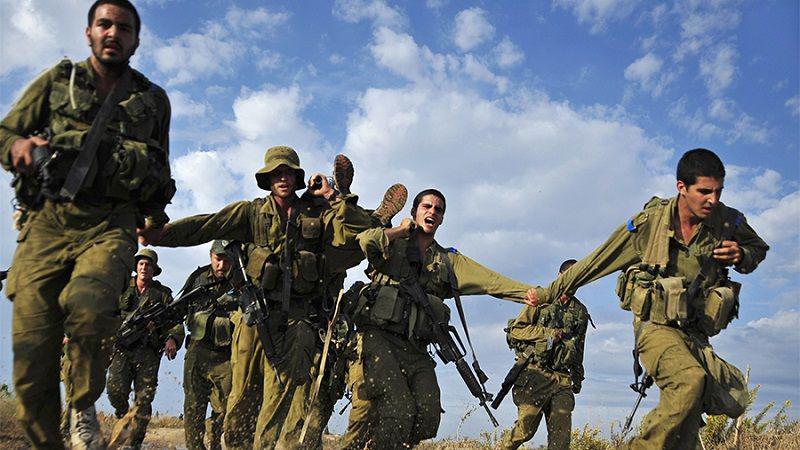
On the 14th of August 2006, the Lebanese resistance of Hezbollah announced its great victory over the Zionists. In that aggressive war, the Zionists had already set three goals. First, to eliminate the arsenal of Hezbollah rockets, i.e. to destroy its long-range and medium-range missile capability. Second, to assassinate Hezbollah Secretary-General Sayyed Hassan Nasrallah. Third, to destroy the resistance’s infrastructure.
Earlier, Hezbollah thwarted these goals as its leadership showed a remarkable coherence and an unexpected command and control system. The ‘Operation of Khallet Warda,’ in Aayta al-Shaab, on the morning of the 13th of July 2006, during which two Zionist soldiers had been captured; was comprehensively analyzed by the resistance.
Judge Eliyahu Winograd, who chaired 2006 Lebanon’s War Inquiry, mentioned that the Zionist decision-makers’ political, military, and security failures, during the war, have been notable. Obviously, the enemy’s lack of strategic planning reflects the major imbalance regarding its system of command and control. Besides, the enemy admits on various occasions that the superiority of Hezbollah’s command and control system is comprehensive and can hardly be beaten.
Due to the absence of readiness, Hezbollah has been able to penetrate the Zionists’ internal front and to heavily bombard it; causing material damages and the displacement of the northern settlers. Whilst as for Hezbollah’s community, everyone knows his duties, the measures, the procedures, and the alternative plans. This level of organization is highly prearranged. Secrecy and the thorough readiness by Hezbollah at the security, civil, health, political and media levels is also distinguished.
Following the 2000 liberation, the resistance has been working hard to fortify its internal front, by both its leaders and cadres. It had taken advantage of its previous experience in 1993 and 1996 and developed its capabilities to meet any unexpected challenge. Undoubtedly, in the case of regular resistance movements or armies, as soon as leadership disintegrates; brigades and squads surrender. In order to avoid this, Hezbollah makes sure that every individual knows the entire process, how, where, why and when.
The Zionists can scarcely understand Hezbollah’s command and sophisticated control system and the strength of its communications network. It can neither break the resistance’s chains nor can it weaken its movement. Hezbollah’s leadership have many alternatives during the time of war. In addition, there is always many possible plans and answerers to the ‘What if’ questions.
For instance, when Hezbollah’s former Secretary General Sayyed Abbas al-Musawi was assassinated in 1992, the resistance operations accelerate and escalate in southern Lebanon as for Hezbollah there are many alternatives. Indeed, what the enemy considers an obstacle that must be removed is, to the resistance, a new opportunity to ferociously confront them.
In the aftermath of 2000, Hezbollah developed its missile capabilities, both quantitatively and qualitatively. This is one of the reasons for the flexibility of the resistance. In addition, it is the reason why the enemy failed during 2006 to destroy Hezbollah’s medium and long-range missiles.
Hezbollah’s leadership demonstrated the coherence of its command and control system and had already prepared enough answers and possibilities. In a direct response to the enemy’s bombardment of the resistance front positions, Hezbollah’s commanders held an assessment meeting. They met to assess the readiness and prepare answers to the ‘What if’ question. At a press conference, following the operation, Sayyed Nasrallah highlighted that the resistance has a good grip on the rules of the game.
On the following day, some 40 Zionist hostile jets took off; with smart US-made bombs, and they shortly issued signals, which means that they accurately achieved their targets. The reality was quite different. From the Zionist perspective, the final crushing of the resistance is only a matter of time for they thought that its leadership has been weakened and that Sayyed Nasrallah has fled to Damascus.
The resolution of the war had already been taken by the Zionist entity. For its part, the resistance was fully ready to confront and plans for evacuating the citizens had been already set. The enemy launched broad and subsequent attacks on Hezbollah positions throughout southern Lebanon and demolished all bridges over the Litany River. It targeted civilians, destroyed the resistance’s headquarters in Beirut’s Southern Suburb and deployed its naval units.
The enemy estimated that the war would not last long and considered that Hezbollah would not be able to respond to attacks. However, on 14 July 2006, the resistance retaliated against the hostile barge, which had attacked the Southern Suburb.
The surprise tactic has been long utilized by Hezbollah throughout the years of confronting its enemy, despite its possession of technological and huge reconnaissance aircraft and satellites. The enemy also cannot predict what kind of surprises or defense operation could be carried out by the resistance “To Haifa and beyond Haifa,” as stressed by Sayyed Nasrallah.
During a televised speech, Sayyed Nasrallah unveiled its first distinguished surprise, saying, “The surprises that I have already promised you has begun, look at the hostile Zionist barge it is burning.” The bombing of the barge was a severe shock and a clear sign that it would severely be punished by the resistance for hitting Lebanese residential areas and infrastructure.
Before the July 2006 war, the Zionists envisioned Hezbollah as the upgraded version of Palestinian resistance of the 1980s. In the evidence, they managed their wars depending on this version, including The Operation Accountability in 1993, The Operation Grapes of Wrath in 1996, The Liberation Process in 2000 up to The July 2006 war. However, Hezbollah has established its own concepts. It has adopted a special ideology associated with the doctrine of Wilayat al-faqih’s concepts.
These concepts maintain that the resistance is a national revolutionary movement of the people, who are oppressed. Therefore, the resistance and the people are a unified solid whole; one body known as the resistance society. The resistance has promoted and reinforced its front. It has a unified internal and military front while the enemy has not considered this during the July 2006 war.
Marching for Peace: From Helmand to Hiroshima
By Maya Evans | Dissident Voice | August 5, 2018
I have just arrived in Hiroshima with a group of Japanese “Okinawa to Hiroshima peace walkers” who had spent nearly two months walking Japanese roads protesting U.S. militarism. While we were walking, an Afghan peace march that had set off in May was enduring 700km of Afghan roadsides, poorly shod, from Helmand province to Afghanistan’s capital of Kabul. Our march watched the progress of theirs with interest and awe. The unusual Afghan group had started off as 6 individuals, emerging out of a sit-in protest and hunger strike in the Helmand provincial capital Lashkar Gah, after a suicide attack there created dozens of casualties. As they started walking their numbers soon swelled to 50 plus as the group braved roadside bombs, fighting between warring parties and exhaustion from desert walking during the strict fast month of Ramadan.
The Afghan march, which is believed to be the first of its kind, is asking for a long-term ceasefire between warring parties and the withdrawal of foreign troops. One peace walker, named Abdullah Malik Hamdard, felt that he had nothing to lose by joining the march. He said: “Everybody thinks they will be killed soon, the situation for those alive is miserable. If you don’t die in the war, the poverty caused by the war may kill you, which is why I think the only option left for me is to join the peace convoy.”
The Japanese peace walkers marched to specifically halt the construction of a U.S. airfield and port with an ammunition depot in Henoko, Okinawa, which will be accomplished by landfilling Oura Bay, a habitat for the dugong and unique coral hundreds of years old, but many more lives are endangered. Kamoshita Shonin, a peace walk organizer who lives in Okinawa, says:
People in mainland Japan do not hear about the extensive bombings by the U.S. in the Middle East and Afghanistan, they are told that the bases are a deterrent against North Korea and China, but the bases are not about protecting us, they are about invading other countries. This is why I organised the walk.
Sadly, the two unconnected marches shared one tragic cause as motivation.
Recent U.S. war crimes in Afghanistan include the deliberate targeting of civilian wedding parties and funerals, incarceration without trial and torture in Bagram prison camp, the bombing of an MSF hospital in Kunduz, the dropping of the ‘Mother of all bombs’ in Nangarhar, illegal transportation of Afghans to secret black site prisons, Guantanamo Bay prison camp, and the extensive use of armed drones. Elsewhere the U.S. has completely destabilised the Middle East and Central Asia, according to The Physicians for Social Responsibility, in a report released in 2015, stated that the U.S. interventions in Iraq, Afghanistan and Pakistan alone killed close to 2 million, and that the figure was closer to 4 million when tallying up the deaths of civilians caused by the U.S. in other countries, such as Syria and Yemen.
The Japanese group intend to offer prayers of peace this Monday at Hiroshima ground zero, 73 years to the day after the U.S. dropped an atomic bomb on the city, instantly evaporating 140,000 lives, arguably one of the worst ‘single event’ war crimes committed in human history. Three days later the U.S. hit Nagasaki instantly killing 70,000. Four months after the bombing the total death toll had reached 280,000 as injuries and the impact of radiation doubled the number of fatalities.
Today Okinawa, long a target for discrimination by Japanese authorities, accommodates 33 U.S. military bases, occupying 20% of the land, housing some 30,000 plus U.S. Marines who carry out dangerous training exercises ranging from rope hangs suspended out of Osprey helicopters (often over built-up residential areas), to jungle trainings which run straight through villages, arrogantly using people’s gardens and farms as mock conflict zones. Of the 14,000 U.S. troops currently stationed in Afghanistan, many to most would have trained on Okinawa, and even flown out directly from the Japanese Island to U.S. bases such as Bagram.
Meanwhile in Afghanistan the walkers, who call themselves the ‘People’s Peace Movement’, are following up their heroic ordeal with protests outside various foreign embassies in Kabul. This week they are outside the Iranian Embassy demanding an end to Iranian interference in Afghan matters and their equipping armed militant groups in the country. It is lost on no-one in the region that the U.S., which cites such Iranian interference as its pretext for building up towards a U.S.-Iran war, is an incomparably more serious supplier of deadly arms and destabilizing force to the region. They have staged sit-in protests outside the U.S., Russian, Pakistani and U.K. embassies, as well as the U.N. offices in Kabul.
The head of their impromptu movement, Mohammad Iqbal Khyber, says the group have formed a committee comprised of elders and religious scholars. The assignment of the committee is to travel from Kabul to Taliban-controlled areas to negotiate peace.
The U.S. have yet to describe its long term or exit strategy for Afghanistan. Last December Vice President Mike Pence addressed U.S. troops in Bagram: “I say with confidence, because of all of you and all those that have gone before and our allies and partners, I believe victory is closer than ever before.”
But time spent walking doesn’t bring your destination closer when you don’t have a map. More recently U.K. ambassador for Afghanistan Sir Nicholas Kay, while speaking on how to resolve conflict in Afghanistan said: “I don’t have the answer.” There never was a military answer for Afghanistan. Seventeen years of ‘coming closer to victory’ in eliminating a developing nation’s domestic resistance is what is called “defeat,” but the longer the war goes on, the greater the defeat for Afghanistan’s people.
Historically the U.K. has been closely wedded to the U.S. in their ‘special relationship’, sinking British lives and money into every conflict the U.S. has initiated. This means the U.K. was complicit in dropping 2,911 weapons on Afghanistan in the first 6 months of 2018, and in President Trump’s greater-than-fourfold average increase on the number of bombs dropped daily by his warlike predecessors. Last month Prime Minister Theresa May increased the number of British troops serving in Afghanistan to more than 1,000, the biggest U.K. military commitment to Afghanistan since David Cameron withdrew all combat troops four years ago.
Unbelievably, current headlines read that after 17 years of fighting, the U.S. and Afghan Government are considering collaboration with the extremist Taliban in order to defeat ISKP, the local ‘franchise’ of Daesh.
Meanwhile UNAMA has released its mid-year assessment of the harm done to civilians. It found that more civilians were killed in the first six months of 2018 than in any year since 2009, when UNAMA started systematic monitoring. This was despite the Eid ul-Fitr ceasefire, which all parties to the conflict, apart from ISKP, honoured.
Every day in the first six months of 2018, an average of nine Afghan civilians, including two children, were killed in the conflict. An average of nineteen civilians, including five children, were injured every day.
This October Afghanistan will enter its 18th year of war with the U.S. and supporting NATO countries. Those young people now signing up to fight on all sides were in nappies when 9/11 took place. As the ‘war on terror’ generation comes of age, their status quo is perpetual war, a complete brainwashing that war is inevitable, which was the exact intention of warring decision makers who have become exceedingly rich of the spoils of war.
Optimistically there is also a generation who are saying “no more war, we want our lives back”, perhaps the silver lining of the Trump cloud is that people are finally starting to wake up and see the complete lack of wisdom behind the U.S. and its hostile foreign and domestic policies, while the people follow in the steps of non-violent peace makers such as Abdul Ghafoor Khan, the change is marching from the bottom up.

Okinawa to Hiroshima Peace Walk (Photo by Maya Evans)
Maya Evans coordinates Voices for Creative Nonviolence UK and has visited Afghanistan 9 times since 2011. She is a writer and a Councillor for her town in Hastings, England.
Following Israel’s participation: Glasgow pledges to reject military exhibits
MEMO | August 2, 2018
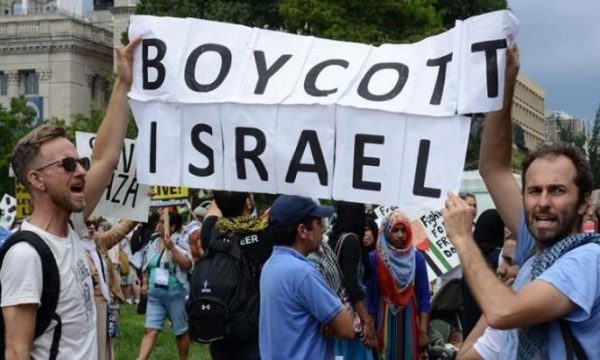
The city council of Glasgow, Scotland, has vowed not to sponsor any future military exhibitions in response to months of widespread protests against its decision to sponsor the Conference on Subsea Defence Technology. The city council also promised to “reconsider its guidelines” to ensure that they would reflect “Glasgow’s respect of human rights”.
This pledge came after the formation of a popular campaign to put pressure on the city council, a coalition that included the Scottish Palestinian Solidarity Campaign (SPSC), the Scottish Campaign for Nuclear Disarmament (CND), Scotland against Militarism, as well as the Anti-Arms trading Campaign.
The military exhibition, which included Israeli weapon manufacturers, was held in Glasgow in late July under the sponsorship of BAE Systems and Babcock, the two major arms companies responsible for renewing the UK’s Trident program for the development, activation, and sale of nuclear weapons despite Glasgow’s declaration of being a nuclear-free Council in December 2017.
The exhibition that the city hosted stated Israel Defence, a media organisation promoting the arms industry in Israel, as an official media partner. The presentation was nevertheless attended by the Israeli company DSIT Solutions, involved in the ongoing brutal Israeli siege on the Gaza Strip.
Israeli arms companies regularly market their weapons as “tested” and “field tested”, meaning that they are tested on the Palestinian people and then exported to facilitate the suppression of the army and police forces in the rest of the world.
The National Chairperson of the Scottish Palestinian Solidarity Campaign (SPSC), Sofiah MacLeod, welcomed the city council’s statement and added that the campaign would work with other coalition members to ensure that the city council would implement its pledge.
MacLeod added that the popular pressure on Glasgow City Council and the House of Advisers would continue because the council still manages the Strathclyde pension fund known for its investment in arms factories and other companies that have been complicit in Israeli violations of Palestinian rights.
The Palestinian Boycott, Divestment and Sanctions (BDS) National Committee welcomed the campaign’s success, according to its coordinator in Gaza, Abdul Rahman Abu Nahl. He said: “Such news increase our determination to step up our campaigns against companies involved in Israel’s human rights violations. What has been happening in local councils in Scotland, Ireland, Spain, and Italy is a new indication of the growing impact of the BDS movement around the world and the growing isolation of the occupation and apartheid Israeli state.”
The Scottish Palestinian Solidarity Campaign (SPSC) continues to work with various groups such as the Unison Scotland and the Scottish Friends of Palestine, in the “Time to Divest” campaign to push local Scottish authority retirement funds to dispose of contracts of companies complicit in violations of Palestinian human rights. These banks include Hapoalim, the largest Israeli bank, which funds the construction of illegal settlements on usurped Palestinian lands, as well as companies like Hewlett-Packard (HP) and DXC.
Israel deports Freedom Flotilla activists
Ma’an – August 1, 2018
BETHLEHEM – Gaza’s National Committee for Breaking the Siege announced on Wednesday that the Israeli authorities began deporting several of the international solidarity activists, who were aboard the Al Awda ship of the Freedom Flotilla.
Gaza’s National Committee confirmed that the activists deportation back to their countries, comes two days after being detained following an attack by Israeli naval forces on the ship in international waters.
Zaher Birawi, head of the committee, said in a statement that a number of international activists have already been deported on Tuesday, including a Malaysian professor, Dr. Mohd Afandi Salleh, and on Wednesday the rest would also be deported.
Birawi stressed that many of the activists rejected to be voluntarily deported, preferring to delay it for more than 72 hours, the legal deadline for accepting voluntary deportation from the country.
Birawi continued that the activists are attempting to delay their deportation, in order to appear before an Israeli court to expose the unjust practices of Israeli naval forces who attacked the humanitarian ship in international waters, and to later prosecute Israel for its actions.
The committee quoted the testimonies of some of the activists as being exposed to “beatings and violence” including the ship’s captain, his assistant, and other solidarity activists.
Swedish human rights activist, Divina Levrini, who was among international detainees, said in a statement that she declares a hunger strike, as a form of protest against the treatment she received by Israeli forces and against the harsh conditions she is going through while being detained in the Israeli Givon prison.
Levrini had conducted an interview with Ma’an in July, while aboard the Freedom Flotilla ship, in which she discussed the Flotilla’s intention on raising awareness about the Israel-Gaza conflict and on breaking the illegal and inhumane Israeli blockade of Gaza.
In addition, two days prior, Israeli authorities already released two Israeli activists on bail. One of the released activists, Zuhr Chamberlain Regev, confirmed that several activists were beaten by Israeli forces before being dragged out of the ship to be detained. She continued by saying that “people on board were tasered and hit by masked Israeli soldiers. We did not get our passports or belongings before we got off the boat. Do not believe reports of peaceful interception.
Concerns over Freedom Flotilla activists ‘beaten, dragged’
Ma’an – July 31, 2018
Gaza’s National Committee for Breaking the Siege expressed its concern for the safety of international solidarity activists who were aboard the Al Awda Freedom Flotilla ship when it was attacked by Israel in international waters.
The Freedom Flotilla members were detained by Israeli naval forces on Sunday and are still being held in the Israeli Givon prison in al-Ramla in central Israel.
The National Committee confirmed that Dr. Swee Chai Ang, a British activist, author, and orthopedic surgeon, suffered injuries due to being assaulted on board by masked Israeli naval forces.
Sources also confirmed that several activists were beaten by Israeli forces before being dragged out of the ship to be detained.
Head of the International Committee of the Red Cross (ICRC), Zaher Birawi, said that this information contradicts Israel’s statements and claims that the detention of the activists was peaceful and that no one was harmed.
Birawi holds Israel fully responsible for the safety of the activists, pointing out that Israel must provide them with medical care and demanded Israel to immediately release them.
He stressed that Israel will be prosecuted for the “crime of kidnapping” the Freedom Flotilla ship and its activists, who did not impose a threat to Israel’s security.
Birawi requested Israel to also return media equipment belonging to journalists who were aboard the ship.
On Monday, Israeli authorities released two Israeli activists on bail, who were identified as Jonathan Shapira and Zuhr Chamberlain Regev, while the remaining 20 international activists were not given the option of release upon bail.
Regev said in a statement that “people on board were tasered and hit by masked Israeli soldiers. We did not get our passports or belongings before we got off the boat. Do not believe reports of peaceful interception.”
Israel charged both, Regev and Shapira, with attempting to enter Gaza and conspiracy before being released on bail.
In 2010, one of the Freedom Flotilla ships was attacked by Israeli naval forces in international waters. The ship, which was carrying aid to Gaza, was attacked while being unarmed, killing 10 pro-Palestinian activists and injuring dozens of other peaceful activists.
The Freedom Flotilla ship peacefully sailed towards the shores of Gaza, with aim to draw the world’s attention to the unjust siege and intending on breaking Israel’s nearly 12-year blockade of the Gaza Strip.
Freedom Flotilla Boat to Gaza, Al-Awda, hijacked by Israeli occupation forces
Samidoun Palestinian Prisoner Solidarity Network – July 29, 2018
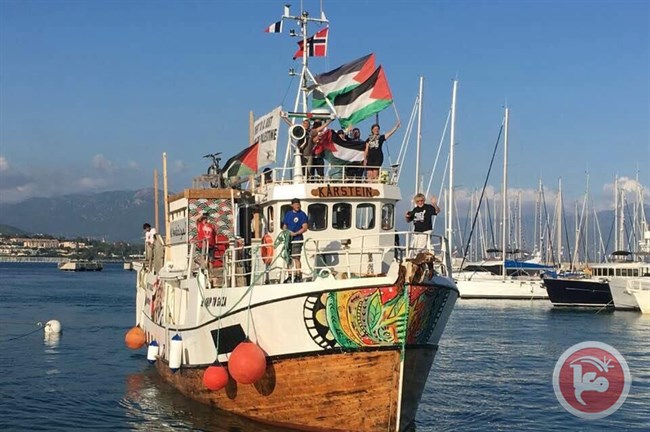
The motor vessel Al Awda (The Return), traveling in international waters towards Palestinian waters, 49 nautical miles from the port in Gaza City, has been contacted by the Israeli Occupation Forces navy and warned. The Israeli navy claims our ship is breaking international law and threatens that they will use “any measures necessary” to stop us. In fact, the only “necessary measures” would be to end the blockade of Gaza and restore freedom of movement for all Palestinians. At last news from on board, Al Awda maintains her course towards Gaza, where the crew and participants hope to arrive this evening around 21:00 local time.
A number of warships have appeared, so an attack, boarding and capture appear to be imminent, and we anticipate that all communications with the vessel will be lost shortly.
Al Awda is sailing under a Norwegian flag, carrying 22 people and a cargo of medical supplies, including #Gauze4Gaza. Passengers and crew on board are from 16 nations, including human rights supporters, journalists and crew, along with €13,000 worth of urgently needed medical supplies. The boat itself, a former fishing vessel from Norway, is a gift to Palestinian fishers in Gaza.
Four boats left Scandinavia in mid-May and have since stopped in 28 ports building support for a ‘Just Future for Palestine’, that demands Israel end its ongoing breaches of international law and the twelve-year blockade of Gaza, thereby enabling the only closed port in the Mediterranean to open and for people to have their right to freedom of movement.
Al Awda is being followed by the Swedish-flagged yacht, Freedom, which is also carrying medical supplies along with people from a number of nations. We anticipate that it will reach a similar area where the IOF attacked Al Awda within the next two days. Two smaller sailing boats that traveled from Scandinavia and sailed through the canal system in Netherlands, Belgium and France visiting inland ports, participated in the mission until Palermo.
“The Freedom Flotilla Coalition calls on the Norwegian Government, the national governments of those aboard Al Awda and the Freedom, other national governments, and relevant international organizations to act immediately” said Torstein Dahle of Ship to Gaza Norway, part of the Freedom Flotilla Coalition. “The international community must assume its responsibilities and demand that Israeli authorities ensure the safety of those on board, the speedy delivery of our gifts to the Palestinian people in Gaza, an end to the illegal blockade of Gaza, and to stop impeding our legal right of innocent passage to Gaza to deliver our gift of much-needed medical supplies”.
More information about the ‘Right to a Just Future for Palestine’ flotilla and the FFC:
Web: https://jfp.freedomflotilla.org/ Facebook: https://www.facebook.com/FreedomFlotillaCoalition Twitter: @gazafflotilla
For US citizens, please call the US Department of State and demand that the State of Israel be held accountable for piracy–and demand that the medical supplies for Gaza on Al Awda be sent from Ashdod harbor to Gaza as provided by international law.
Call/email/tweet for release of US participant Joe Meadors
Mike Pompeo, Secretary of State
Tel: +1 202 647 4000 (ask for Israel & Palestine desk, and American Citizen Services, and/or Operations Center
Email: pompeom@state.gov
Website: http://state.gov
Twitter: @SecPompeo
Also call:
US Embassy in Israel
U.S. Embassy Jerusalem
14 David Flusser
Jerusalem 9378322, Israel
Phone: 02-630-4000 (ask for Ambassador, American Citizen Services and/or Duty Officer)
@usembassyjlm
Branch Office Tel Aviv
71 HaYarkon Street
Tel Aviv 6343229, Israel
Phone: 03-519-7575 (ask for Ambassador, American Citizen Services and/or Duty Officer)
Israel challenges the world: I am an Apartheid state, what are you going to do about it?
By Professor Kamel Hawwash | MEMO | July 23, 2018
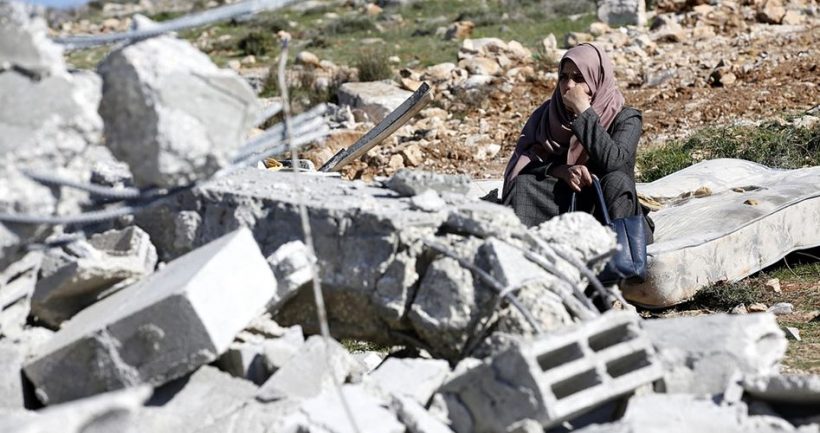
Remember the date, 19 July 2018 is when Israel’s pretense of democracy, the Knesset passed the Nation State Bill, which could more aptly be called, the “Jewish State Apartheid Law” where Jews dominate the Israeli Palestinian Arabs who are lesser than them, even if they are citizens. I deliberately did not say Israeli Jews because the law gives all rights in historic Palestine to Jews, not only in Israel but across the world, including those Jews that do not identify with the state.
My mother, who was born in Jerusalem before Israel was created, has no rights in the Holy city or her homeland but a Jewish lady with no connection to Israel can “return”, to a place she does not come from. The invaders, since they were not invited into our homeland, have enshrined the right to have my Palestinian homeland as theirs in law and also annulled my mother’s right to return, which is enshrined not in state but in international law. I can hear cries of “this is the Jewish homeland because we were here thousands of years ago”, really? If Jews – and it is only Zionists – believe they are entitled to return after thousands of years -which I reject – then how can they deny Palestinians the right to return after 71 years? In fact UN resolution 194 enshrined in international law gives Palestinians the Right of Return but there is no reference in international law to Jews having a “right to return” to historic Palestine.
Let me be clear, I am not denying Jewish, Christian or Muslim connection to holy sites in historic Palestine. However, Palestinians reject the notion of singling Jews out for a “right of return” to our homeland now and forever. No other people are afforded the right to a freehold on a plot of land forever and Jews should be no different.
Israel’s prime minister pushed the adoption of this bill now as he sees an opportunity to make major wins while US President Trump is in office and has given Israel carte blanche to implement any policies it wishes.
“A hundred and twenty-two years after [the founder of modern Zionism Theodore] Herzl made his vision known, with this law we determined the founding principle of our existence,” Benjamin Netanyahu said, adding that this is a “defining moment” for Israel. “Israel is the nation state of the Jewish people, and respects the rights of all of its citizens.”
What Netanyahu did not tell us was where exactly are the borders of this state? What rights do its non-Jewish but indigenous Palestinian citizens have within its internationally recognised borders? Netanyahu and supporters of Israel should remember that the 20 per cent “minority” that they form would not have been a minority if it had not been for the ethnic cleansing of 750,000 of their brothers and sisters in 1948. Had they not been forced out through Jewish terror, their numbers would have been equal if not larger than the Jewish Israelis that now reside in historic Palestine. It would have been Jews that formed the minority.
Netanyahu also failed to explain the status of the occupied Palestinians who are not afforded citizenship in this state. What rights do they have? They are not citizens of Israel or Palestine.
Much has been written since the Nation State Law was approved, but there has been insufficient outrage. The law has mostly been seen at worst as “controversial”. Israel has challenged the world to say no to state racism and Apartheid but the world has only expressed concern that the law could impede the now long dead peace process and wait for it, the two-state solution. Netanyahu challenged the world and the world is not ready for a fight for basic equality between citizens of a state.
Through its silence, the world arguably agrees that historic Palestine is homeland only for Jews. It agrees that the indigenous Palestinians have no rights, except those that the Jewish state agrees to give them out of the goodness of its heart and only if Israeli Jews agree. Jews can build settlements only for Jews and admissions committees can decide whether to allow the people whose land it is, the Palestinians, to live amongst them. They can decide whether Palestinian children can play in kindergartens with Jewish children and whether they can swim together in one pool.
By confirming “United Jerusalem” as their eternal capital, Israeli Jews can decide for how long Al-Aqsa Mosque can remain, majestically from a Palestinian point of view, on the “Jewish Jerusalem” skyline. Who can forget the image of the notorious Palestinian hater and so called US Ambassador David Friedman beaming as he held a poster showing a Jewish temple in place of the Dome of the Rock?
Perhaps the US has already obtained assurances from some Arab and Muslim leaders that since Muslims already have two holy mosques in Makkah and Madina and Jews do not have one, that it would be acceptable to give Al-Haram Al-Sharif up for that purpose. After all it seems protection from the Iranian “threat” carries a heavy price. The installation of the Jewish temple could be part of the “deal”. I of course do not know if that is the case, but we live in bizarre times.
Israel has already curtailed the calling of the Muslim call for prayer, the Athan, because it disturbs the illegal Jewish settlers. Now, the language in which the call is made, Arabic, has been demoted from an official language of the state to having “a special status”. Another attack on the indigenous Palestinians.
If Israel was not a racist endeavour when created, it is now most certainly a racist state, unless of course a new definition of racism has been created which gives exception to the self-proclaimed Jewish state. A racist state deserves to be criticised, ostracised and isolated until it repents and removes all its racist laws. This law is only one of tens of laws that already discriminate against non-Jews.
However, what is most bizarre is that confirmation by Israel that it is a racist entity through the passing of the law could, according to the so called IHRA definition of anti-Semitism label as anti-Semites anyone daring to call it a racist or Apartheid entity.
There is no excuse for the world’s lack of action against racist Israel.
How can the US, the land of the free, support it now? The Zionist and Israel apologist Trump trio of Greenblatt, Kushner and Friedman have not issued any statement on this law. They, especially Greenblatt who is effectively tweeting for Israel, helped Israel with recognition of Jerusalem as Israel’s capital and are working to deny Palestinian refugees their right to return. Their vision for peace almost supports the rapid implementation of the new law rather than condemn it.
The EU has, true to form, talked the talk but not walked the walk, expressing concern but no condemnation.
The Palestinian leadership has sleepwalked into this, typically with no strategy to counter it. The appropriate response to the passing of the law in the early hours of the 19th of July should have been for the PLO to declare an end to the disastrous Oslo Accords, to dissolve the Palestinian Authority with an immediate effect including an end to the immoral security coordination with the Apartheid state. The PLO has been mandated to de-recognise Israel by its Palestine National Council. That time has come. How can the Palestinians continue to recognise an Apartheid state which also denies all their rights and then sit with its representatives to negotiate a two-state solution which this law prohibits?
It is time for the Palestinians to review their struggle and adopt a call for equal rights for all who inhabit historic Palestine and a return for the refugees to their homes. The struggle would continue until these rights are realised.
All states, but particularly those that claim to be western style democracies, should have severed relations with Apartheid Israel, including those Arab states that have established relations with it.
As for the rest of those that support Israel both as individuals and organisations, enough is enough. This Israel is not a state that anyone can support or declare a friend. In particular, “friends of Israel” groups in UK political parties should shut themselves down or rename themselves appropriately as “Friends of Apartheid Israel”. That is what it should say on the tin. Honourable and Right Honourable members should then resign from these racism-supporting groups and instead join the BDS movement.
If Apartheid Israel is tolerated, next it will be Apartheid Myanmar and the door will be open for other states to court Apartheid. For the sake of our children let us not allow racism to be tolerated anywhere.
Featured Video

Trita Parsi: Israel Set a Trap for Total War in the Region
or go to
Aletho News Archives – Video-Images
From the Archive
Zionism’s Violent Legacy
By Donald Neff | Washington Report On Middle East Affairs | January 1996
On January 4, 1948, Jewish terrorists drove a truck loaded with explosives into the center of the all Arab city of Jaffa and detonated it, killing 26 and wounding around 100 Palestinian men, women and children.[1] The attack was the work of the Irgun Zvai Leumi – the “National Military Organization,” also known by the Hebrew letters Etzel – the largest Jewish terrorist group in Palestine. The Irgun was headed by Revisionist Zionist Menachem Begin and had been killing and maiming Arabs, Britons and even Jews for the previous ten years in its efforts to establish a Jewish state.
This terror campaign meant that at the core of Revisionist Zionism there existed a philosophical embrace of violence. … continue
Blog Roll
 Aletho News
- Trita Parsi: Israel Set a Trap for Total War in the Region
- Trump’s Iran war is on an Israeli leash
- Saudi oil boss issues global supply warning
- Riyadh Says Its Oil System Is Intact. The Numbers Say Otherwise.
- Trump and Netanyahu Want to “Finish the Job” on Iran
- US ‘one-sided dictation’ not Iran’s beliefs makes rational talks impossible: Baghaei
- Iran’s Next Strike May Not Explode. It Could Shut You Down /Col Doug Macgregor
- Iran: US political targets legitimate if assassinations return
- Iraq shuts key border crossing with Iran under US pressure: Report
- Undersea Internet cables could be targeted in retaliation for attacks on Iran: IRGC deputy chief
- If Americans Knew
- The Israel Lobby’s Changing Fortunes
- AIPAC has become such a political liability that it’s shifting to a more “nimble” approach to buying politicians
- At least 160 Israeli settler attacks in 2 weeks
- Will Gaza’s Ancient Christian Community Disappear Forever?
- Israel’s vision of regional security rests on keeping Arab states weak
- Heidi Levine recounts how Palestinian youths helped save her in settler attack
- DAILY UPDATE: Latest essential news on Palestine, Israel, & region
- Trump’s Intensifying Sabotage of the ICC, for Israel’s Sake
- Israeli military detain US and UK volunteers in West Bank including Democratic NY politician Brad Lander
- Americans at National Conservatism Conference held in Israel this year criticize Israel
- No Tricks Zone
- E-Cars Reduce CO2 Emissions By Only 41% Compared To Internal Combustion Engine Vehicles
- Predictions Made By Renowned Climate Professor Over Past Decades Have Been Proven To Be Poor
- New Study Suggests Large Regions Of The Pacific Ocean Have Been Cooling For The Last 80 Years
- Germany’s Green Energy Debacle: High Energy Costs Force Kahla Porzellan to Close After 182 Years!
- New Study: 50 Years Of The Most Aggressive ‘Net Zero’ Policies Can Only Affect The Global Climate By 0.03°C
- US September “Heat” Was No Record…Many Records Set Decades Ago
- Latest European Green Energy Debacle; Portugal’s Largest Flagship Solar Park Insolvent!
- Green Energy Debacle: German Expert Professor Fritz Vahrenholt Warns Of Severe Economic And Social Consequences
- Two More Paleo Reconstructions Affirm Meters-Higher Sea Levels Across Ireland, Brazil 7000-6000 Years Ago
- New Study: Earth And Venus Surface Warmth Largely Explained By Convection And Lapse Rate, Not CO2 Or Radiation

