‘Human rights abusers’ invited to ‘non-lethal’ weapons show, condemned by activists
RT | March 7, 2016
Activists have denounced a Home Office sponsored security fair, warning that Britain is selling tear gas and other crowd control tools to some of the world’s most oppressive regimes.
Among the governments invited to take part in the fair in Farnborough, Hampshire, 30 miles southwest of London, are Bahrain, Saudi Arabia, Israel, United Arab Emirates (UAE), Egypt and Turkey, the Guardian reported on Saturday.
Police and security officials from 79 countries are expected to participate in the fair later this week, according to the list, which was released under a Freedom of Information request.
Since Prime Minister David Cameron took office in 2010, the UK has approved 126 licenses connected with the sale of tear gas and other irritants, according to the Campaign Against the Arms Trade (CAAT).
Also approved were 75 licenses for crowd control ammunition such as rubber bullets, 79 for “acoustic” crowd control – known as sound grenades – and 259 licenses for riot shields.
CAAT spokesman Andrew Smith told the paper: “There are serious questions to be asked about the impact of the so-called ‘non-lethal’ arms industry. These risks become even more important when these weapons are being sold to human rights abusers and dictatorships.”
“A number of the countries in attendance routinely practice torture, arbitrary detention and other appalling acts of violence. The UK should not be arming these regimes and selling them the means to oppress and kill.”
“[The event] undermines the UK’s claims to be promoting human rights while strengthening the position of repressive regimes.”
Defending the trade show, the Home Office said: “A thriving security industry is vital to help cut crime and protect the public and so it is important these products and services can be showcased and expertise shared.”
Described by organizers as “the perfect place to see the latest security equipment and technology in a secure environment,” the Security and Policy fair will be held behind closed doors, with all visitors “pre vetted to strict Home Office criteria.”
Homeless Man Owes Government Over $110,000 In Fines For Being Homeless
By John Vibes | TrueActivist | March 4, 2016
The recent case of a homeless man racking up massive fines has exposed the widespread police practice of fining homeless people for being homeless.
Émilie Guimond-Bélanger, a social worker at the Droits Devant legal clinic in Montreal spoke to the media about a case that she worked on where a homeless man racked up over $110,000 in tickets.
“It was shocking. We’ve never seen someone with so many tickets,” Émilie told CBC.
The man had over 500 tickets, which amounted to over $110,000 in fines. The fines were mostly for things that homeless people can’t control, such as sleeping in the subway or asking people for money.
“He had received around 500 of them [tickets]. I could see that most of the time he would receive many in the same week, sometimes by the same officers as well,” she said.
“It’s very common, to a point where I would say it’s a systematic experience for homeless people,” she added.
On a daily basis, Émilie deals with at least two cases where people owe at least $10,000 for the crime of being homeless.
According to a study published in 2012, the homeless population of Montreal owe over $15 million in fines.
“It’s a huge amount of money that would stress out anyone who has that as a burden. So you can just imagine how it’s difficult for a person to then think about rehabilitation in society when they have such a heavy debt,” she said, “it affects them a lot. Some of them feel like there are good citizens in society — and then there’s them,” Émilie said.
It was recently reported that politicians in Los Angeles are seeking to ban homeless people from sleeping in their cars, and even RV’s.
As we reported late last year, Florida police arrested a group of charity workers for breaking a newly-imposed law against feeding the homeless. Among those charged was a 90-year-old homeless advocate.
Ethnic cleansing of Shuhada Street in occupied al-Khalil (Hebron)
International Solidarity Movement | March 6, 2016
Hebron, occupied Palestine – Since the 1994 Ibrahimi Mosque Massacre, the majority of Shuhada Street – once the thriving Palestinian market and main thoroughfare connecting north and south al-Khalil (Hebron) – has been closed to Palestinians. They are completely barred from accessing it, except for a small stretch in the Tel Rumeida neighbourhood.

Photos of the same portion of Shuhada street – a thriving market before 1994, now an empty street where no Palestinians are allowed to enter (published by B’Tselem)
This tiny strip that is legally still accessible for Palestinians is restricted by the recently ‘renovated’ Shuhada checkpoint at the beginning of the street and ends where the street begins to border the illegal settlement of Beit Hadassah, beyond which Israeli forces assure that no Palestinians exist. Further down Shuhada street, clearly marked with yet another military post barring anyone who might attempt to enter the street, are even more Israeli settlements – all illegal under international law – located directly in the city center of al-Khalil.
The settlements on Shuhada Street are connected via a settler-only road to the much larger settlement of Kiryat Arba on the outskirts of al-Khalil; settlers can also reach the illegal Tel Rumeida settlement easily by traversing the tiny stretch of Shuhada Street still open to some Palestinians and the road leading up into Tel Rumeida from Shuhada checkpoint, now encompassed within the closed military zone. While Palestinians are allowed to walk on this part of Shuhada Street, Palestinian vehicles, including ambulances, are forbidden from driving there. Since Israeli authorities declared the area part of a closed military zone on 1st November 2015, the already barely existent access has been further restricted – Isreali forces only allow entry to Palestinians registered with them residents, while any Israeli settler, regardless of whether they are residents or not, can pass freely and without ever being harassed, stopped, detained, arrested, or threatened by the ever-present military forces.

Map of the city center of al-Khalil including Shuhada Street (the longest street marked in red) by B’Tselem
At the line demarcated by Daboya checkpoint (Checkpoint 55), where the illegal settlements on the street begin and Palestinians are no longer allowed, a steep flight of stairs leads up to Qurtuba school and into the Tel Rumeida neighbourhood. These stairs, the only way for Palestinians to continue traveling in the same direction above the street as they are not allowed to continue down Shuhada Street itself, have been closed by the Israeli forces with a metal gate since November 2015.

Stairs with the closed gate leading down to Shuhada Street
Even though this gate is currently not locked, Israeli forces deny any Palestinian, except for the students and teachers of Qurtuba school during school-time, to use these stairs. As a result Palestinian residents of this neighbourhood, once they have passed Shuhada checkpoint – an ordeal that can take several hours – have been denied to reach their homes by walking down Shuhada Street and the stairs leading up to Qurtuba school, forcing them instead to take a much longer detour around. With yet another way denied for Palestinans, navigating the maze of Israeli military-enforced checkpoints, complete bans on travel, roads where Palestinians cannot drive, settler-only roads, closed military zones and new arbitrary closures has become even more arduous.
Israeli forces are thereby also clearly working to minimise the number of Palestinians who will actually use this last portion of Shuhada Street – now a complete dead-end – as they bar Palestinians not only from going farther down the closed street but also declare the stairs, formerly an alternate route, yet another closed zone. This illustrates the Israeli attempts to rid Shuhada Street entirely of Palestinians. Ethnic cleansing in al-Khalil, and all across Israeli-occupied Palestinian lands is not a sudden, headline-grabbing event; it progresses gradually as Palestinians are restricted in certain areas, barred from driving there, prohibited from even being there, forced out to facilitate the expansion of the illegal settlements. Ethnic cleansing happens slowly, by erecting new and ‘fortifying’ existing checkpoints, advancing one more closure at a time.
Texas’ Annual Roundup of the Working Poor
By Trisha Trigilio | ACLU of Texas | March 4, 2016
March 5th marks the beginning of the annual Great Texas Warrant Roundup. It sounds like quite a lot of fun, another cowboy extravaganza from a state famous for its stock shows and rodeos.
But what it is, in practice, is a shakedown of Texas’s working poor.
The Great Texas Warrant Roundup is an annual statewide collaboration of courts and law enforcement agencies. Their goal is to collect payment of overdue fines and fees from Texans who have outstanding warrants for unpaid traffic tickets and to arrest and jail those who can’t pay. What little press is dedicated to the Roundup focuses on praising cities for the so-called “amnesty” period that precedes it.
The state’s unreasonable traffic ticket scheme and the devastation it can wreak on low-income Texans receive considerably less attention.
Depending on the jurisdiction, a ticket for failing to signal a lane change — the trooper’s justification for Sandra Bland’s tragic traffic stop — will cost you around $66. But the state tacks on $103 in court costs and a host of fees, some bordering on Kafkaesque. Texas will charge you a public defender fee, even though courts refuse to appoint a public defender for traffic ticket cases. If your fine is already too expensive to afford, Texas charges a fee to put you on a payment plan. You’ll even pay an “administrative fee” for the privilege of handing money over to the court. For people who are too poor to pay their traffic fines, a $66 fine can balloon to over $500 because of these court costs and fees, as well as late fines and warrant fees when towns try to arrest the poor (at times illegally) to collect money they simply do not have.
If you can’t afford to keep up with these fees, the state will suspend renewal of your driver’s license (add another $30 for the License Renewal Suspension Fee), and you’ll be unable to register your car, making it illegal for you to drive to the job you need to take care of your kids and pay off your spiraling debt. An expired registration means you’re certain to be pulled over and put back at square one, with new tickets, new fines, new fees, and no hope.
Case in point: Valerie Gonzales, one of the original plaintiffs represented by the Texas Fair Defense Project in a class action lawsuit against the City of Austin. Valerie is a 31-year-old mother of five children with disabilities. She and her family live in poverty. After receiving two traffic tickets nine years ago, not only had Valerie’s tickets multiplied and her fines ballooned into the thousands of dollars, she lost a job after she was unconstitutionally jailed without the benefit of a court-appointed attorney.
When people like Valerie are arrested in the coming warrant roundup, judges across Texas will follow their usual plan of demanding a payment in exchange for liberty. Without asking questions about financial circumstances, judges literally order people to turn over all the money they happen to be holding when they are arrested. “Give me what’s in your pockets” is not a phrase that should be uttered in a courtroom. What’s worse, when the working poor don’t have enough money to hand over, judges send them to jail without a fair hearing or a second thought.
Jailing people for debt is both unjust and profoundly counterproductive. Not only does it deprive people of their liberty and separate them from their children and families, it also renders them incapable of paying off their fines and costs the taxpayer (by conservative estimates) $51 per person per day of incarceration. It’s in everyone’s best interests to keep Texans with their families and out of jail.
There are sensible alternatives. Courts can consider ability to pay before assessing unmanageable fines or waive debts for people who have made a genuine effort to pay what they can. So why don’t they?
This is what makes the roundup so nefarious. Courts are hoping that the threat of jail will frighten people into turning over whatever they can scrape together in exchange for protection from arrest. Rather than praising amnesty, we should address the systemic injustices that keep low-income Texans in perpetual debt to the state.
UK suppresses documents on Gitmo ‘torture collusion’

Press TV – March 6, 2016
The British government is withholding key documents which could shed light on allegations of UK’s involvement in the torture of detainees in Guantanamo prison, according to a new report.
A number of files have been recently found which reveal confidential exchanges between top former US and UK authorities on the torture and rendition of detainees.
Based on a lawsuit by a British parliamentary group, the US administration is obliged to make public documents which relate to Britain’s involvement.
Former Guantanamo detainees have previously said British officials have either been present at, or submitted questions for, “extreme” interrogation by US officials, according to the Independent.
The documents indicate that former UK prime minister Tony Blair and former US president George W. Bush had been in consultation about the treatment of detainees at the US-run prison in Cuba.
Now, the US State Department is said to have reported that all related documents have been withheld from public disclosure.
At least 12 documents, found in the US State Department’s search, relate to interventions by British politicians and officials over the treatment of detainees and torture techniques.
The State Department has reported, “After reviewing the documents, the UK Government’s Foreign and Commonwealth Office requested that all 12 documents be withheld in full from public disclosure.”
Guantanamo was established by former president Bush in 2002 as a prison for alleged foreign terrorism suspects following the September 11, 2001, attacks in the US.
As many as 775 suspects are said to have been brought to the facility ever since its establishment.
US President Barack Obama had promised to close the Guantanamo Bay prison in his 2008 election campaign, citing its damage to America’s reputation abroad. However, he has so far failed to deliver on that pledge due to stiff opposition from Congress.
A US Senate report in December 2014 revealed that the CIA used a wide array of torture as part of its interrogation methods against Guantanamo prisoners.
Honduran protesters clash with police over activist killing
Press TV – March 5, 2016
Fresh protests have broken out in Honduras during a mourning ceremony for an indigenous environmental activist who was recently shot dead after receiving numerous death threats.
More than 1,000 people converged on Friday at the memorial service for renowned environmentalist Berta Caceres as her coffin was turned over to her family at a labor union headquarters.
The ceremony, however, turned into a protest rally, with the participants shouting “Justice!”
Reports say clashes erupted between the protesters and security forces, who intervened to disperse the crowd.
The demo came less than a day after rock-throwing students clashed with riot police at the University of Honduras in the capital Tegucigalpa amid outrage over the government’s failure to protect the high-profile activist who had repeatedly been threatened with assassination.
She was shot dead in the early hours of Thursday at her home in the western town of La Esperanza.
A 45-year-old mother of four, Caceres gained prominence for leading the indigenous Lenca people in a struggle against a hydroelectric dam project that would have flooded a massive region of native lands and cut off water supplies to hundreds of local people.
She continued with her efforts against the project despite receiving numerous death threats, winning the 2015 Goldman Environmental Prize.
The family of Caceres has accused government officials of trying to mask her death as a random murder, insisting that she was assassinated due to her efforts against environmental destruction by major mining and hydroelectric companies.
Meanwhile, the Civic Council of Indigenous and People’s Organization (COPINH), which was founded by Caceres, revealed that other members had received death threats from “hit men” allegedly hired by energy company DESA, whose hydroelectric project is being opposed by the group.
“In the past six months, Berta had been the target of constant, intensifying threats, shots fired on her car, and verbal and written threats from the army, the police, the mayor (in the project site) and DESA,” the COPINH said.
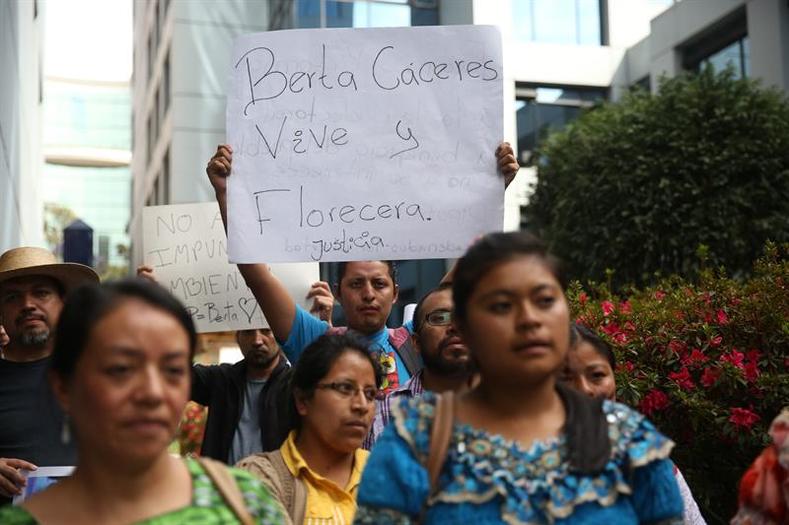
Demonstrators in Guatemala City carry a sign reading “Berta Caceres lives and will flourish” after news of her assassination and in solidarity with Honduran movements on March 3, 2016. Photo:EFE
OCHA condemns Israel for declaring W. Bank areas “firing zone”
Palestinian Information Center – March 5, 2016
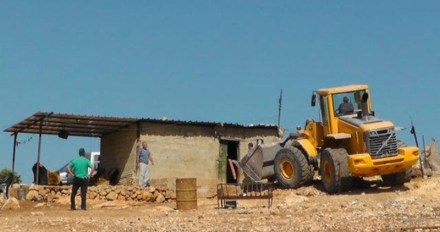
OCCUPIED JERUSALEM – The UN Office for the Coordination of Humanitarian Affairs (OCHA) has strongly denounced Israel for declaring 18 percent of the West Bank territory, particularly in Area C, “a shooting zone.”
38 Palestinian communities are located in this area, where the Israeli army continually demolishes homes.
OCHA also warned that the expansion of this Israeli shooting zone would considerably affect the lives of marginalized and disadvantaged groups (Bedouins) in these areas.
The UN organization underlined that international law and humanitarian law prohibit such Israeli practices in the occupied Palestinian territories.
It noted that the Israeli army had demolished, since the start of 2016, 323 Palestinian homes and structures in different areas of the West Bank, most of them in Area C.
Those demolitions led to the displacement of about 440 Palestinians, more than half of them children, and rendered about 17,000 without any means of livelihood.
Copyright © The Palestinian Information Center
Israeli authorities demolished 183 Palestinian buildings in February
MEMO | March 4, 2016
The Israeli authorities demolished around 97 homes and 86 facilities in the West Bank in February under the pretext of “illegal construction”, according to a statistical report released Thursday by the Applied Research Institute Jerusalem (ARIJ).
The Palestinian institute also said that demolition orders and orders to stop construction were issued to a further 139 houses and facilities.
An estimated 653 dunums of Palestinian land in various parts of the West Bank is also facing confiscation orders.
Ghassan Doughlas, a Palestinian official who monitors settlement activity in the northern West Bank, has said there has been an escalation in the policy of demolishing homes and institutions in 2016.
In an interview with Quds Press, Doughlas stressed that the demolitions aim to displace Palestinians in order to “bring the settlers on the ruins of the Palestinians’ homes”.
“The occupation has used the demolition policy as a way to put pressure on the Palestinians so to empty the region classified as Area C in the West Bank,” adding that the demolitions are part of a policy of “collective punishment”.
Indigenous Governor in Colombia Assassinated

Politician and member of the Yanacona community, William Alexander Joiner, was shot three times and killed Wednesday. | Photo: ONIC
teleSUR – March 3, 2016
An Indigenous lawmaker from Colombia’s southern department of Cauca was shot and killed Wednesday, in what officials think may have been a targeted or political assassination.
William Alexander Joiner, a lawmaker from the municipality of Rio Blanco and member of the Yanacona community, was shot by passing motorcyclists while in the capital of Cauca, Popoyan.
Eyewitnesses reported that the Indigenous governor was shot three times by three riders in the city’s historical center. Joiner was taken to University Hospital, San Jose de Popayan, where he later died.
Col. Pedro Rodelo Asfora, commander of the Metropolitan Police of Popoyan, said a reward of US$3,000 (10 million pesos) will be offered for anyone with information leading to the identification of the culprits.
Colonel Asfora said officials do not believe allegations that it was a robbery, and have not ruled out the possibility that it may have been a targeted attack.
The National Indigenous Organization of Colombia (ONIC), and its offices across the country, have condemned Joiner’s killing, saying it is part of a larger strategy to exterminate Indigenous leaders and people.
The ONIC, with its 47 subsidiaries across the country, as well as the National Indigenous Movement have demanded that the relevant authorities be assigned to investigate the crime, and that the culprits do not go unpunished.
Bogus arrest of 12 year old boy in Hebron
International Solidarity Movement | March 3, 2016
Hebron, Occupied Palestine – On the 28th of February around 4:00pm, 12 year old Palestinian boy, Sayed Seder was arrested by 10 heavily armed Israeli soldiers whilst playing football with his friends on the street in front of his family home. The Israeli army claim that he was arrested under allegations he was throwing stones at the guard tower which watches over Al-Shallalah Street and the illegal Israeli settlement that has been built directly behind the street and family home.
Sayed’s father, Abed, went down to confront the soldiers after Sayed’s friends came running up to the family home, explaining to the father what was happening.
When Abed approached the soldiers to ask them what exactly they were arresting his son for, the soldiers responded by informing him that it was because he was seen throwing rocks at the guard tower above. However, the street is lined with a protective type of fencing above the shops roofs that prohibits objects being thrown up or in the most common cases, being thrown down by illegal Israeli settlers who live above. Abed put the argument forward that it would have been pointless for his son to have been throwing stones with this protective barrier in place. Perhaps the logic of this made too much sense and the arresting soldier quickly changed his story and then began to tell Abed his son was being arrested for stealing a settler child’s football whilst pointing to the ball that Sayed and his friends were playing with. Abed informed the soldier that the ball Sayed and his friends were playing with was in fact a ball that he had purchased for Sayed from a shop in Halhoul just recently. The soldier who was evidently lying and knowingly falsely accusing Sayed of the above allegations ignored any more of Abed’s protests and continued to arrest Sayed.

Al-Shallalah street where Sayed was arrested
From this point Sayed was marched to the Shuhada street entrance gate and taken through while his parents and friends were forced to stand back and watch. Sayed was then taken to the local military base on Shuhada street. Upon entering the military base he was reportedly handcuffed and blindfolded. The blindfold remained on for around 30 minutes before being taken off, assuming that it was put on so he could not get a full view of what was happening inside the military compound for security purposes. Sayed alleges that teenage settlers who were allowed into the compound then beat him while the Israeli army simply stood back and did nothing.

Protective fencing installed above Al-Shallalah street and the guard tower
Sayed was later released from custody at around 9pm to Palestinian authorities where he complained of pain in his kidneys. His father arrived shortly after and took Sayed to hospital where doctors examined him. While the doctors could not find physical wounds that would require further attention they did note that Sayed was severely traumatised from the event and was in a state of shock.
Just 3 months ago the Israeli army arrested one of Abed’s other sons who is 10 years old. The reason for the arrest was that he too was suspected of throwing stones at the military. As Abed didn’t believe this and objected he too was arrested with his 10 year old son. They were detained for 6 hours and released without charge.
One significant fact is that Abed’s house backs onto the illegal Israeli settlement of Beit Hadasa. Abed used to sell artisans out of the family home but has had to stop because of ongoing harassment both physical and verbal to himself and to his customers from the settlers that occupy the land next to his home. The front of Abed’s house has been covered in barbed wire by the Israeli military and is adorned with bags of dirty hummus, eggs and other foul items thrown down by the illegal settlers. The army has also boarded up the windows of his family home (without his permission) that overlook Beit Hadasa.

Abed’s home and the illegal Israeli settlement of Beit Hadasa

The barbed wire at the entrance to Abed’s house with rubbish thrown down by settlers
While harassment from the settlers in Hebron is often considered an unfortunate normality to most Palestinians living under occupation, the army’s continued bogus charges and harassment of Abed and his family give one the impression that the Zionist regime is using a tactical ploy to get Abed and his family out of their home for further settlement expansion.
Official: Israel obstructs Jordan agricultural exports to the OPT
MEMO | March 3, 2016
 Israel has been obstructing Jordanian agricultural exports to the Occupied Palestinian Territories under the pretext that Jordanian products do not conform to Israeli specifications, leading to exports completely stopping in 2015 and early 2016, a Jordanian official revealed.
Salah Al-Tarawneh, assistant secretary-general of the Jordanian ministry of agriculture for marketing and information, said in remarks to Quds Press that the Palestinian Authority asked last month to import tomatoes from Jordan but the Israeli side refused to allow their entry under the pretext that they contain viruses.
Al- Tarawneh explained that although the PA has repeatedly asked the Israeli side to increase agricultural trade with Jordan to meet its needs, Israel has continually refused under the pretext that Jordanian products do not conform to Israeli specifications.
According to data from the Jordanian ministry of agriculture, Jordan’s exports of vegetables and fruits to PA controlled areas completely stopped in 2015.
During the same year, Jordan’s agricultural exports to Israel amounted to more than 20,000 tons of vegetables and 5,000 tons of fruit.
Featured Video
Trita Parsi: Israel Set a Trap for Total War in the Region
or go to
Aletho News Archives – Video-Images
Book Review
Why the War on Conspiracy Theories Is Bad Public Policy
By Kevin Barrett • Unz Review • February 1, 2019
 A Review of Conspiracy Theories and Other Dangerous Ideas by Cass Sunstein (based on an earlier paper co-authored with Adrian Vermeule); In Defense of Troublemakers: The Power of Dissent in Life and Business by Charlan Nemeth; and Conspiracy Theories and the People Who Believe Them, edited by Joseph E. Uscinski
On January 25 2018 YouTube unleashed the latest salvo in the war on conspiracy theories, saying “we’ll begin reducing recommendations of borderline content and content that could misinform users in harmful ways—such as videos promoting a phony miracle cure for a serious illness, claiming the earth is flat, or making blatantly false claims about historic events like 9/11.”
At first glance that sounds reasonable. Nobody wants YouTube or anyone else to recommend bad information. And almost everyone agrees that phony miracle cures, flat earthism, and blatantly false claims about 9/11 and other historical events are undesirable.
But if we stop and seriously consider those words, we notice a couple of problems. First, the word “recommend” is not just misleading but mendacious. YouTube obviously doesn’t really recommend anything. When it says it does, it is lying. … continue
Blog Roll
 Aletho News
- Araghchi blasts ‘parasitic’ alliance as US taxpayers pay for Israel’s war on Iran
- Easy fix for Europe’s chaos? Stop fueling war against Russia
- Putin’s key remarks on peace talks and Europe’s ‘schizophrenia’
- Trita Parsi: Israel Set a Trap for Total War in the Region
- Trump’s Iran war is on an Israeli leash
- Saudi oil boss issues global supply warning
- Riyadh Says Its Oil System Is Intact. The Numbers Say Otherwise.
- Trump and Netanyahu Want to “Finish the Job” on Iran
- US ‘one-sided dictation’ not Iran’s beliefs makes rational talks impossible: Baghaei
- Iran’s Next Strike May Not Explode. It Could Shut You Down /Col Doug Macgregor
- If Americans Knew
- DAILY UPDATE: Latest essential news on Palestine, Israel, & region
- The Israel Lobby’s Changing Fortunes
- AIPAC has become such a political liability that it’s shifting to a more “nimble” approach to buying politicians
- At least 160 Israeli settler attacks in 2 weeks
- Will Gaza’s Ancient Christian Community Disappear Forever?
- Israel’s vision of regional security rests on keeping Arab states weak
- Heidi Levine recounts how Palestinian youths helped save her in settler attack
- DAILY UPDATE: Latest essential news on Palestine, Israel, & region
- Trump’s Intensifying Sabotage of the ICC, for Israel’s Sake
- Israeli military detain US and UK volunteers in West Bank including Democratic NY politician Brad Lander
- No Tricks Zone
- E-Cars Reduce CO2 Emissions By Only 41% Compared To Internal Combustion Engine Vehicles
- Predictions Made By Renowned Climate Professor Over Past Decades Have Been Proven To Be Poor
- New Study Suggests Large Regions Of The Pacific Ocean Have Been Cooling For The Last 80 Years
- Germany’s Green Energy Debacle: High Energy Costs Force Kahla Porzellan to Close After 182 Years!
- New Study: 50 Years Of The Most Aggressive ‘Net Zero’ Policies Can Only Affect The Global Climate By 0.03°C
- US September “Heat” Was No Record…Many Records Set Decades Ago
- Latest European Green Energy Debacle; Portugal’s Largest Flagship Solar Park Insolvent!
- Green Energy Debacle: German Expert Professor Fritz Vahrenholt Warns Of Severe Economic And Social Consequences
- Two More Paleo Reconstructions Affirm Meters-Higher Sea Levels Across Ireland, Brazil 7000-6000 Years Ago
- New Study: Earth And Venus Surface Warmth Largely Explained By Convection And Lapse Rate, Not CO2 Or Radiation

