‘Pattern’ of Abuse by Colombian Soldiers Raises Questions Over US’ Continued Funding for Forces
Sputnik – July 7, 2020
The rapes of two young, Indigenous girls by soldiers in rural Colombia have shed light on the role that the US plays in expanding and training the Colombian military, two activists told Sputnik.
Nathalie Hrizi, an educator, a political activist and the editor of Breaking the Chains, told Radio Sputnik’s Loud & Clear on Tuesday that the sexual assaults of the two minors highlight a continued pattern of abuse at the hands of Colombian service members.
“Essentially, these two rapes have raised attention to what is a pattern in Colombia and a pattern associated with the human rights abuses and violations of the Colombian military,” Hrizi told show host Nicole Roussell.
“And so there have been protests … really, the Indengenous community are those that have been organizing.”
One of the assaults involved an 11-year-old girl from Colombia’s Embera tribe and has since seen seven soldiers from an army garrison in western Colombia arrested after admitting to the minor’s abduction and rape.
The second case was revealed in recent weeks by the Peace and Reconciliation Foundation, a Colombian think tank, which detailed the September 2019 abduction and repeated rape of a 15-year-old from the country’s Nukak Maku tribe. Both assaults have led to widespread protests across Colombia.
Speaking to Radio Sputnik’s Loud & Clear on Tuesday, Hrizi explained that the Embera tribe is located in an autonomous territory near a military station.
“That rape has been really, in the eyes of the public, connected to another rape that happened in September to another Indigenous girl in a different area. She’s a 15-year-old girl in the Guaviare area,” Hrizi explained.
“On September 8, soldiers abducted her, and they kept her for five days … they raped her and denied her food and water … that has not really received any real widespread acknowledgment until more recently because of the way the Colombian military is organized,” Hrizi added.
Since 2016, at least 118 members of the Colombian army have been investigated over accusations that they sexually abused minors, Colombian General Eduardo Zapateiro revealed on July 1, Reuters reported. The Colombian army, which has battled for decades against leftist guerilla forces, as well as criminal gangs formed by former members of right-wing paramilitary groups, has long been accused of human rights violations.
It’s important to note “the power of this Indigenous protest movement and the really important ways in which that movement is drawing connections between violence against women and broader abuses of power, whether at the hands of the military, police, rich people or otherwise, and that very much includes the role of the US in expanding and training the Colombian military,” Hannah Dickinson, an associate professor at Hobart and William Smith Colleges and an organizer with the Geneva Women’s Assembly, told Sputnik.
According to a report by Defense News, the US military has helped train Colombia’s soldiers for decades, despite widespread condemnation of human rights abuses by the Colombian military.
“In 1999, the US aid to Colombia jumped from $3 billion to $7.5 billion, and civic and human rights organizations in Colombia have been documenting cases of sexual violence against Indigenous women for the past 12 years,” Dickinson explained.
Turkish troops, allied militants cut off drinking water to people in Syria’s Hasakah, environs
Press TV – July 5, 2020
Turkish military troops and allied militants have once again cut off drinking water supplies to about a million people living in and around the northeastern Syrian city of Hasakah by stopping a border water pumping station, a report says.
In an interview with Syria’s official news agency, SANA on Sunday, Director General of Hasakah Water Company Mahmoud al-Ukla said that Turkish soldiers and Ankara-backed militants stopped Alouk Water Station on Saturday evening and barred workers of the station from entering the facility.
The major water station is located in the vicinity of the border town of Ra’s al-Ayn, which Turkish troops and their allied militants seized in October 2019 during the so-called Peace Spring Operation.
Ukla warned that the inhumane move was threatening the lives of inhabitants of the city and its surrounding residential neighborhoods in northeastern Hasakah province.
He added that the criminal act came as the people of the affected areas are in the utmost need for the water from the Alouk station, the only source for guaranteeing the drinking water for them.
The water station has so far been forced to stop several times by the invading Turkish troops and their allied militants.
Back in March, the Syrian foreign ministry sent two identical letters to the chief of the United Nations and the UN Security Council in protest against the repeated inhumane move. It noted at the time that the Turkish military forces shelled the water station during their cross-border military operation last October, putting it out of service.
Furthermore, Syrian officials, accordingly, presented a briefing to the UNSC in February, informing the international body of a water outage in Hasakah.
UN Warns Many Will “Starve to Death” in Yemen as Saudi Fuel Blockade Hinders COVID-19 Battle
By Ahmed AbdulKareem | MintPress News | June 26, 2020
SANA’A, YEMEN — The streets of Sana’a have retained much of their character throughout the past six years of war. This, despite the ever-present threat of Saudi bombardment and the myriad viruses methodically working their way through the population, most recently COVID-19. The afternoon rush hour still brings out the buses, taxis and private vehicles that choke Haddah Street in northern Sana’a. Horns blare at junctions as drivers switch lanes, looking for any advantage they can find in a ritual that, until recently, brought a sense of welcome normalcy to a country faced with constant uncertainty. But six years of war have finally caught up with one of the last semblances of routine in Yemen.
In move undertaken by Saudi Arabia that is sure to exacerbate the country’s already-dire situation, the oil-rich U.S. ally is preventing oil tankers from delivering much-needed fuel to Yemen’s hospitals, water pumps, bakeries, cleaning trucks, and gas stations, plunging it, particularly its northern districts, into an acute fuel crisis.
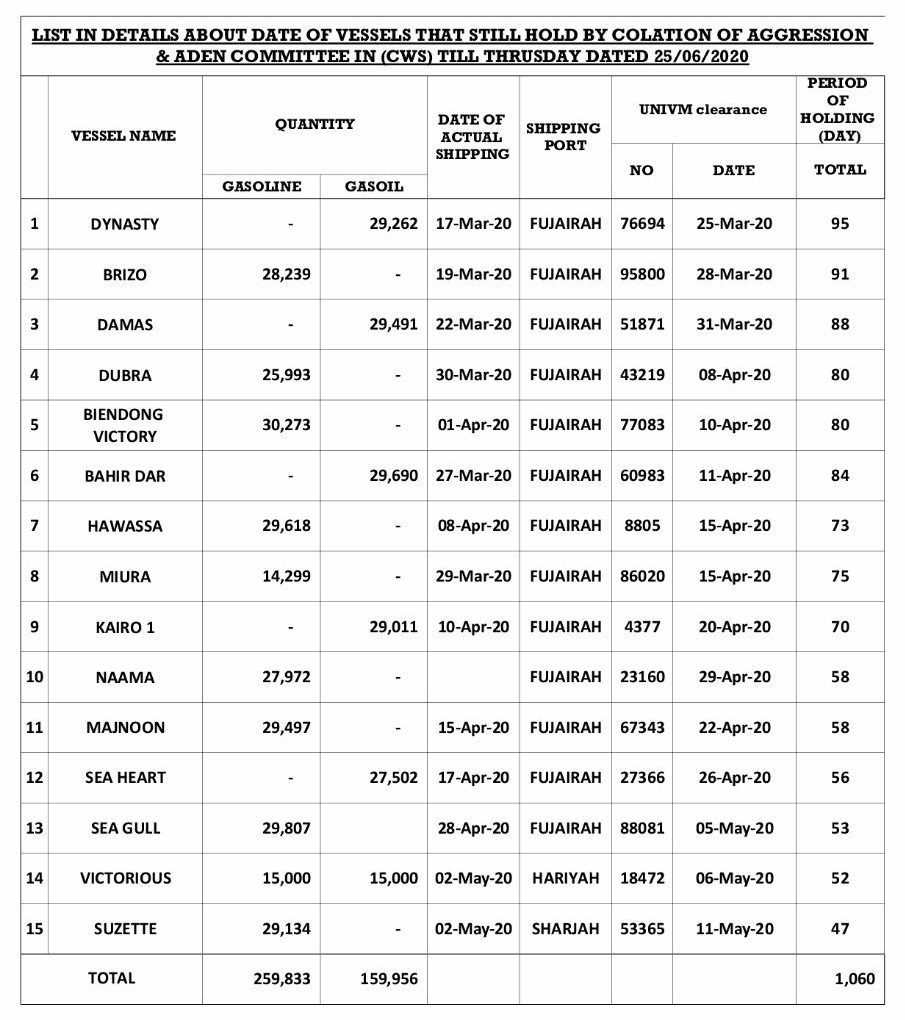
According to a statement released by the Yemen Oil Company, at least 15 tankers carrying over 419,789 tons of fuel have been trapped at sea for over a month despite being checked and issued permits by both the Saudi-led Coalition and the United Nations. Now, the situation in the war-torn country is no longer tolerable.
The CEO of Yemen Oil said in a press conference held in the front of the United Nation office in Sana’a on Wednesday that the company’s remaining reserves won’t last for more than a few days. A statement issued by the company’s branch in Hodeida confirmed that its reserve stock had reached a critical stage and is no longer sufficient to supply the most important sectors in the country.
“One of the biggest threats in the past 100 years”
This is not the first time that Saudi Arabia has triggered a fuel crisis in Yemen, however, this blockade is significantly larger than previous ones and comes at a time when Yemen is battling COVID-19, which is spreading rapidly across the country. “It is the worse than what we expected to happen,” taxi driver Mohammed Abdullah Masoud said from beneath his mask, bags under his tired eyes. He had been waiting in line for two days for petrol. His older brother died last week from COVID-19 and he is now responsible for providing his brother’s wife and children with food and medicine as they stay quarantined at home. “My brother’s family needs bread and some vegetables. Nobody except me can provide them with essential necessities to stay alive. If I don’t have the fuel by the end of the day, something bad could happen to them.” he told MintPress.
The Saudi fuel blockade has not only forced thousands of Yemenis already struggling against an unprecedented explosion of famine, disease, and epidemics to wait for days in lines as far as the eye can see, it has also left water pumps, hospital generators, and transport vehicles without fuel and that lack of fuel has accelerated the spread of the COVID-19 as empty generators shut down facilities including an oxygen factory, hospital, nurseries, and a kidney failure center, all which need uninterrupted and stable electricity 24 hours a day.
Cholera, dengue fever, and malaria rates have also spiked, particularly in Hodeida, Sadaa, and Hajjah where summer temperatures can reach 129 degrees and the lack of fuel has left residents unable to escape the heat as the generators used to power air conditioners sit idle.
The price of food and medicine is also skyrocketing and the already negligible crops in Yemen are at risk of dehydration as farmers are unable to power the wells and pumps needed o to irrigate their fields. At least 80 percent of Yemen’s 28 million-strong population is reliant on food aid to survive in what the United Nations has called the world’s worst humanitarian crisis and the decimation of the remaining agricultural sector is likely to increase that figure.
On Wednesday, Mark Lowcock, the United Nations Under-Secretary-General for Humanitarian Affairs and Emergency Relief Coordinator, told a closed UN Security Council meeting that many more people are likely to starve to death, succumb to COVID-19 and die of cholera, adding that the coronavirus was spreading rapidly across Yemen and about 25 percent of the country’s confirmed cases have died – “five times the global average.”
He added, “We have never before seen in Yemen a situation where such a severe acute domestic economic crisis overlaps with a sharp drop in remittances and major cuts to donor support for humanitarian aid – and this of course is all happening in the middle of a devastating pandemic.” For her part, UN Humanitarian Coordinator Lise Grande described COVID-19 in Yemen as “one of the biggest threats in the past 100 years.”
The Saudi blockade comes amid sustained Saudi-coalition bombing runs. Warplanes have been hovering over Sana’a and other provinces and have targeted several areas in Bydha, al-Jawf, Marib, and Sana’a, killing and injuring dozens of people. On Thursday, at least five people were killed and dozens were injured when Saudi warplanes destroyed four cars traveling on public roads in Radman and Qaneih.
The only effective option
Despite the challenges, Yemenis have strong morale and a seemingly unbreakable will to continue to withstand the Saudi ambitions for their country. “We die silently but with glory. We will never give in to Saudi Arabia,” 37-years-old Hamid told MintPress as he stood in a fuel line at a gas station in Sana’a. It has become a weekly ritual for Hamid, who queues in line for hours to get 30 liters of fuel every seven days. Hamid and the others waiting in line were gleefully checking their social media feeds and celebrating news reports that explosions were taking place in the Saudi capital following attacks bu the Houthi-led Yemeni Army.
In retaliation for the fuel embargo and the continued airstrikes on their country, the Houthi-led Yemeni army carried out large-scale attacks on a number of strategic sites in Saudi Arabia using a barrage of ballistic and winged missiles and drones which targeted the headquarters of the Saudi Defense Ministry and the General Intelligence Agency as well as King Salman Air Base, among other military targets in the capital Riyadh and the southern regions of Najran and Jizan. For many, retaliation against the Kingdom represents the only effective option to quell the Saudi attacks and blockade on their country.
Mohammed Abdulsalam, the spokesman and chief negotiator for Ansar Allah, the political wing of the Houthis, emphasized that the operation was aimed at restoring stability to the country and securing an end to the Saudi-led blockade. He said that Yemenis have no option but to confront and resist Saudi Arabia and urged international bodies to pressure the Saudi regime into ending the offensive.
The Saudi-led coalition has acknowledged the attacks but claims that the missiles and drones were intercepted and destroyed but provided no evidence to back that claim. Coalition spokesman Colonel Turki al-Malki called the strike a “deliberate and systematic operation to target civilians and civilian objects,” adding later that the coalition had “ intercepted” eight bomb-laden drones and three ballistic missiles. A high-ranking Houthi official told MintPress that the raids did indeed hit their intended targets, adding the army used a new weapon in the attack that will be soon be revealed.
The United States and other countries, including France and Britain, condemned the attack on their Saudi ally. They have thus far remained silent on the recent Saudi attacks and fuel blockade on Yemen which preceded the attacks on Saudi Arabia. Yemenis have accused Western countries of abandoning their much-touted commitment to human rights in exchange for Saudi arms deals. “We are killed by weapons belong[ing] to these countries, and get nothing from them except dirty statements that offend their [own] people,” a Yemeni tribal leader who spoke on condition of anonymity for fear of reprisals, told MintPress in response to the U.S. condemnation.
For their part, Ansar Allah censured statements condemning their retaliatory attacks. Abdulsalam said that “condemnations of our operations are no longer effective. They come within the framework of political courtesies and are in part funded by Saudi Arabia.” He insisted that Western countries should instead pressure the kingdom to stop the war. “The American administration practices the most heinous looting of Saudi money,” he added, “The statement of the American mission in Saudi Arabia following our operation is a kind of blackmail, nothing else.”
The Yemeni attacks are the tip of the iceberg as multiple high-ranking officials in the Houthi-backed Yemeni Army revealed to MintPress that they are preparing more attacks against targets in Saudi Arabia, including on oil facilities, royal palaces, military bases, airports, Saudi oil carriers, and other “sensitive targets” that they declined to mention. The consequences for Saudi Arabia will be dire until the blockade is lifted and the offensive comes to an end, they promise. “We should not let Saudi Arabia starve us and carry on enjoying stability and wealth.”
The Saud-led Coalition is heavily backed by Western countries, especially the United States, Britain, and Frace, which have used systematic economic strangulation as a weapon of war — targeting jobs, infrastructure, the agricultural sector, fuel and water pumping stations, factories, and the provision of basic services, as well as imposing a land, sea, and air embargo.
Meanwhile, as a direct result of the oil blockade, many Yemeni officials say that they are already seeking assistance from Iran, hoping that the Iranian government will come to their aid as they did in Venezuela, where six Iranian vessels carried fuel, food, and medicine to Caracas in defiance of U.S. sanctions. They asked Ansar Allah to work with Iran to circumvent the blockade and supply the vital facilities in the country with fuel. If such a move is carried out, Tehran will no doubt win the hearts and minds of Yemenis wary of any foreign intervention, all thanks to the Saudi-led coalition and the United States which in large part are carrying out the war with hopes to limit “Iranian influence” in Yemen.
Ahmed AbdulKareem is a Yemeni journalist. He covers the war in Yemen for MintPress News as well as local Yemeni media.
‘Antisemitic conspiracy theory’ tweet sees Long-Bailey booted from UK Labour shadow cabinet
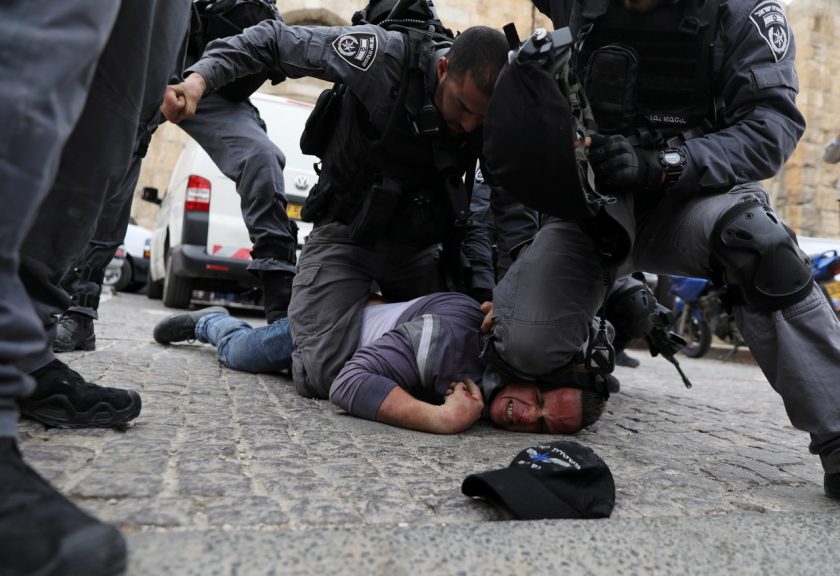
Israeli police officers detain Palestinian protestor outside the compound housing al-Aqsa Mosque in Jerusalem’s Old City March 12, 2019. © Reuters/Ammar Awad
RT | June 25, 2020
The UK Labour Party’s “antisemitism crisis” has claimed another victim, as shadow education secretary Rebecca Long-Bailey is fired for sharing an article containing a so-called “antisemitic conspiracy theory.”
“This afternoon Keir Starmer asked Rebecca Long-Bailey to step down from the shadow cabinet,” a spokesman for the Labour leader said, claiming that an article she shared earlier on Thursday contained an antisemitic conspiracy theory.
The statement went on to say that Starmer, who took over the party plagued with accusations of antisemitism, has been “clear that restoring trust with the Jewish community is a number one priority,” adding, “antisemitism takes many different forms and it is important that we all are vigilant against it.”
Long-Bailey shared an Independent interview with Maxine Peake on Twitter. In it, the actress says: “The tactics used by the police in America, kneeling on George Floyd’s neck, that was learnt from seminars with Israeli secret services.” It was later updated to include a denial by the Israeli police that this is the case, and a reference to an Amnesty International report about US law enforcement travel to Israel for training was removed.
Long-Bailey shared an Independent interview with Maxine Peake on Twitter. In it, the actress says: “The tactics used by the police in America, kneeling on George Floyd’s neck, that was learnt from seminars with Israeli secret services.” It was later updated to include a denial by the Israeli police that this is the case, and a reference to an Amnesty International report about US law enforcement travel to Israel for training was removed.
Amnesty International has said that Israeli forces train US law enforcement and partake in police exchange programs. In the wake of Floyd’s murder a number of articles circulated, reporting that Minnesota cops received Israeli training in Chicago in 2012. Israeli soldiers have been photographed leaning on Palestinians’ chests and necks, although Israel Police spokesman Mickey Rosenfeld denies this is a tactic they use. It of course isn’t proven that the police officer who killed Floyd was taught how to lean on people’s necks by Israeli police.
Long-Bailey tweeted an explanation for her retweet, saying she shared the article because of Peake’s “significant achievements and because the thrust of her argument is to stay in the Labour Party. It wasn’t intended to be an endorsement of all aspects of the article.”
She later added that she agreed on the wording of her explanation with the Labour Party Leader’s Office, but was “subsequently instructed to take both this agreed clarification and my original retweet down.” She said she couldn’t do this without issuing a press statement of clarification and asked to discuss it with Starmer but “sadly he had already made his decision.”
The Jewish Board of Deputies among a number of other groups which called out Long-Bailey’s tweet. Before she was fired, it released a statement slamming the politician’s “pathetic” response to criticism of her tweet and questioning her “suitability” for her role.
Why the assault on a diplomat in Israel should come as no surprise
By Jonathan Cook | June 22, 2020
An Israeli diplomat filed a complaint last week with police after he was pulled to the ground in Jerusalem by four security guards, who knelt on his neck for five minutes as he cried out: “I can’t breathe.”
There are obvious echoes of the treatment of George Floyd, an African-American killed by police in Minneapolis last month. His death triggered mass protests against police brutality and reinvigorated the Black Lives Matter movement. The incident in Jerusalem, by contrast, attracted only minor attention – even in Israel.
An assault by Israeli security officials on a diplomat sounds like an aberration – a peculiar case of mistaken identity – quite unlike an established pattern of police violence against poor black communities in the US. But that impression would be wrong.
The man attacked in Jerusalem was no ordinary Israeli diplomat. He was Bedouin, from Israel’s large Palestinian minority. One fifth of the population, this minority enjoys a very inferior form of Israeli citizenship.
Ishmael Khaldi’s exceptional success in becoming a diplomat, as well as his all-too-familiar experience as a Palestinian of abuse at the hands of the security services, exemplify the paradoxes of what amounts to Israel’s hybrid version of apartheid.
Khaldi and another 1.8 million Palestinian citizens are descended from the few Palestinians who survived a wave of expulsions in 1948 as a Jewish state was declared on the ruins of their homeland.
Israel continues to view these Palestinians – its non-Jewish citizens – as a subversive element that needs to be controlled and subdued through measures reminiscent of the old South Africa. But at the same time, Israel is desperate to portray itself as a western-style democracy.
So strangely, the Palestinian minority has found itself treated both as second-class citizens and as an unwilling shop-window dummy on which Israel can hang its pretensions of fairness and equality. That has resulted in two contradictory faces.
On one side, Israel segregates Jewish and Palestinian citizens, confining the latter to a handful of tightly ghettoised communities on a tiny fraction of the country’s territory. To prevent mixing and miscegenation, it strictly separates schools for Jewish and Palestinian children. The policy has been so successful that inter-marriage is all but non-existent. In a rare survey, the Central Bureau of Statistics found 19 such marriages took place in 2011.
The economy is largely segregated too.
Most Palestinian citizens are barred from Israel’s security industries and anything related to the occupation. State utilities, from the ports to the water, telecoms and electricity industries, are largely free of Palestinian citizens.
Job opportunities are concentrated instead in low-paying service industries and casual labour. Two thirds of Palestinian children in Israel live below the poverty line, compared to one fifth of Jewish children.
This ugly face is carefully hidden from outsiders.
On the other side, Israel loudly celebrates the right of Palestinian citizens to vote – an easy concession given that Israel engineered an overwhelming Jewish majority in 1948 by forcing most Palestinians into exile. It trumpets exceptional “Arab success stories”, glossing over the deeper truths they contain.
During the Covid-19 pandemic, Israel has been excitedly promoting the fact that one fifth of its doctors are Palestinian citizens – matching their proportion of the population. But in truth, the health sector is the one major sphere of life in Israel where segregation is not the norm. The brightest Palestinian students gravitate towards medicine because at least there the obstacles to success can be surmounted.
Compare that to higher education, where Palestinian citizens fill much less than one per cent of senior academic posts. The first Muslim judge, Khaled Kaboub, was appointed to the Supreme Court only two years ago – 70 years after Israel’s founding. Gamal Hakroosh became Israel’s first Muslim deputy police commissioner as recently as 2016; his role was restricted, of course, to handling policing in Palestinian communities.
Khaldi, the diplomat assaulted in Jerusalem, fits this mould. Raised in the village of Khawaled in the Galilee, his family was denied water, electricity and building permits. His home was a tent, where he studied by gaslight. Many tens of thousands of Palestinian citizens live in similar conditions.
Undoubtedly, the talented Khaldi overcame many hurdles to win a coveted place at university. He then served in the paramilitary border police, notorious for abusing Palestinians in the occupied territories.
He was marked out early on as a reliable advocate for Israel by an unusual combination of traits: his intelligence and determination; a steely refusal to be ground down by racism and discrimination; a pliable ethical code that condoned the oppression of fellow Palestinians; and blind deference to a Jewish state whose very definition excluded him.
Israel’s Foreign Ministry put him on a fast track, soon sending him to San Francisco and London. There his job was to fight the international campaign to boycott Israel, modelled on a similar one targeting apartheid South Africa, citing his own story as proof that in Israel anyone can succeed.
But in reality, Khaldi is an exception, and one cynically exploited to disprove the rule. Maybe that point occurred to him as he was being choked inside Jerusalem’s central bus station after he questioned a guard’s behaviour.
After all, everyone in Israel understands that Palestinian citizens – even the odd professor or legislator – are racially profiled and treated as an enemy. Stories of their physical or verbal abuse are unremarkable. Khaldi’s assault stands out only because he has proved himself such a compliant servant of a system designed to marginalise the community he belongs to.
This month, however, Israeli Prime Minister Benjamin Netanyahu himself chose to tear off the prettified, diplomatic mask represented by Khaldi. He appointed a new ambassador to the UK.
Tzipi Hotovely, a Jewish supremacist and Islamophobe, supports Israel’s annexation of the entire West Bank and the takeover of Al Aqsa mosque in Jerusalem. She is part of a new wave of entirely undiplomatic envoys being sent to foreign capitals.
Hotovely cares much less about Israel’s image than about making all the “Land of Israel”, including the occupied Palestinian territories, exclusively Jewish.
Her appointment signals progress of a kind. Diplomats such as herself may finally help people abroad understand why Khaldi, her obliging fellow diplomat, is being assaulted back home.
The Unheard Message
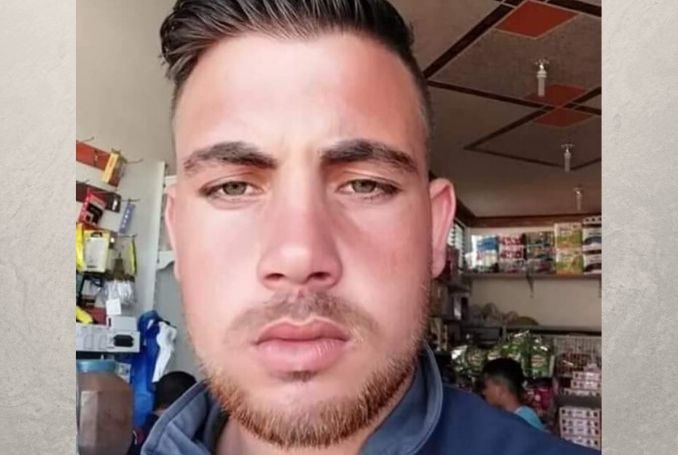
Ayesh Shat, 23, was killed by an Israeli sniper while protesting for Palestinian refugees’ Right of Return in 2018. (Photo: Supplied)
By Haneen Shat | The Palestine Chronicle | June 20, 2020
Dear “israel”,
How are you? Do I have to ask this question? I am sorry for I do not know how to start. Would you like me to ask another one?
Dear “israel”,
Do you really know what the word “loss” means? Do you really understand the meaning of sorrow and sadness? You know nothing of that and all that you know is the terror, blood, wars, massacres, and genocides that you commit against innocent people who did nothing to you except demand their rights as human beings. “Loss” is when you talk and laugh with one of your beloveds at your home in the morning, and you do not know if you will see them again in the evening. “Loss” is the voice you used to hear that no longer exists.
“Loss” is that day, October 26, 2018, when my brother, like hundreds of other Palestinians, went out in the Great March of Return to call for his right to return. He went out to tell the whole world our cause and that we are still here. He cried loudly that we as Palestinian refugees want to remind the international community of our demand for implementation Paragraph 11 of UN Resolution 194 calling for the return of Palestinian refugees to their homes at the earliest possible date. He cried, but the Israeli soldier did not want to hear his voice, so he shot my brother dead. The Israeli bullet penetrated my brother’s body and murdered him.
When they brought his body home, they did not know how to show it to my mama. My mama, like thousands of Palestinian mothers, was ready to sacrifice her son for the sake of our homeland, yet, at least, she wished that she could have a last look at him while he was alive.
My brother’s body laid in front of my mama’s eyes; she could not move; she was looking at him and her heart was bleeding. Her tears were falling silently. Everyone surrounded her and tried to calm her by saying words such as, “Be patient. God has chosen him to reward with paradise!” However, I am sure mama’s mind was just with my brother. She could not hear anything. She was looking at him for the last time. After this moment, there will be no kisses, no hugs, so she had to live every second with him.
When they were about to take his body, with a broken heart mama cried, “Leave him. Leave him. Let me see him more. Let me kiss him more.” They left him for a minute; she did what she asked for. How can a minute separate staying and leaving, death and life? The last words mama said were, “Ma assalama, ya habibi– goodbye, my love.” Then she blacked out.
His name was Ayesh, which in Arabic means “he is alive.” But you “israel”, you murdered him at a very young age. He was just 23. He went. Without return, he went. He will never come back, yet he is still alive in our hearts, and in the message he left behind him.
Do you not remember my brother as you have slaughtered thousands of Palestinians in cold blood? My brother is not a number you count. This letter is not a message you hear.
“Loss” is that moment when my mother, in a very cold winter night, took the picture of my martyr brother off the wall, put it next to her and covered it with her comforter so that he would not feel cold. And with tears, repeated, “Ma assalama, ya habibi.”
Dear “israel,”
They say that Gaza is a prison. Do not believe them. In prison, there is a specific period that the prisoner spends and then he is free. Here in Gaza, which they claim is a prison, this does not happen. Here, we are trying to get out but we fail. We are trying to fly but before we start, you, “israel”, break our wings. Gaza is more than a prison.
Last year, two other youths from Gaza and I were selected to represent Palestine in the “Youth Forum in the Arab Region” which took place in Tunisia. I was eager to see what the world looks like outside, to know what the word “Abroad” means. I had so many plans for what I would do there, outside of Gaza. Yet, my dream was shattered; we could not travel because of you, “israel”. You did not give us permission to pass Erez, the crossing you created to isolate Gaza from the rest of Palestine.
You did not want the voice of Palestine to be there; her voice disturbs you, as you always try to wipe her map and flag. But still, do not be happy. If we cannot fly, it is enough that the birds fly in the sky of Palestine.
Dear “israel”:
Do you remember what happened in 1948? Wait! Am I still calling you “dear”? I apologize. I apologize to myself. I apologize to my mama, to my papa, to my beloved ones. I apologize to my “Falasteen – Palestine”, my dear “Falasteen“. I apologize for calling you “dear”. That word which implies love and respect, for you do not know love, dignity, or peace. You do not know any of these. You only know torture and massacres that do not respect human rights. Have you noticed that I have not capitalized any of your letters? It is because you say “israel” means “to wrestle with God.” But you do not wrestle with God in Palestine. There is no God in your army. I will use the upper-case I in “israel” when you decide to stand up for God, for justice, for human beings, and let us return to our homes.
There are no best wishes.
(Edited by Nicholas Vincenzo Barney. Barney is on Twitter: https://twitter.com/nictamerr)
– Haneen Shat is a young journalist from Gaza City. After graduating from Gaza University in English Literature, Haneen has begun a career in journalism, hoping one day to be able to travel outside of Gaza and share the Palestinian cause with the world. Haneen is on twitter: https://twitter.com/Haneen_Gaza1998.
Caesar Tries to Suffocate 17 Million Syrians
By Rick Sterling | Dissident Voice | June 19, 2020
Since 2011, the US and allies have promoted, trained and supplied militants trying to bring about “regime change” in Damascus. Having failed in that effort, they have tried to strangle Syria economically. The goal has always been the same: to force Syria to change politically. This month, June 2020, the aggression reaches a new level with extreme sanctions known as the Caesar Syria Civilian Protection Act.
The new law is fraudulent on two counts. It is called “Caesar” in reference to a 2014 propaganda stunt involving an anonymous Syrian who was alleged to be a military photographer. He claimed to have 55,000 photos showing about eleven thousand victims of Syrian government torture. As the Christian Science Monitor said at the time, the “Caesar” report was “A well-timed propaganda exercise funded by Qatar.” A 30 page analysis later confirmed that the “Caesar” report was a fraud with nearly half the photos showing the OPPOSITE of what was claimed: they documented dead Syrian soldiers and civilian victims of “rebel” car bombs and attacks.
The Caesar Syrian Civilian Protection Act is also fraudulent by claiming to “protect civilians.” In reality, it punishes and hurts the vast majority of the 17 million persons living in Syria. It will result in thousands of civilians suffering and dying needlessly.
Pre-Existing Sanctions
The US has been hostile to Syria for many decades. Unlike Anwar Sadat of Egypt, Syria under Hafez al Assad refused to make a peace treaty with Israel. Syria was designated a “state sponsor of terrorism” and first sanctioned by the U.S. in 1979.
After the US invasion and occupation of Iraq in 2003, Syria accepted about one million Iraqi refugees and supported the Iraqi resistance in various ways. In retaliation, the US escalated punishing sanctions in 2004.
In 2010, US Secretary of State Hillary Clinton pressured Syria to change their foreign policy and be more friendly to Israel. Syrian President Bashar al Assad pointedly declined. Twelve months later, when protests and violence began in Syria in 2011, the US, Europe and Gulf monarchies (Qatar, Saudi Arabia, United Arab Emirates) quickly supported the opposition and imposed more sanctions.
In 2016, after five years of crisis and war, a report on the humanitarian impact of sanctions on Syria was prepared for the United Nations Economic and Social Commission for Western Asia. It noted that “U.S. and E.U. sanctions on Syria are some of the most complicated and far-reaching sanctions regimes ever imposed.” The 30 page report went on document with case studies how humanitarian aid which is supposed to be permitted is effectively stopped. The sanction regulations, licenses, and penalties make it so difficult and risky that humanitarian aid is effectively prevented. The report concluded with thirteen specific recommendations to allow humanitarian and development aid.
But there was not relaxation or changes in the maze of rules and sanctions to allow humanitarian relief. On the contrary, as the Syrian government was expelling terrorists from east Aleppo, southern Damascus, and Deir Ezzor, the US and EU blocked all aid for reconstruction. The US and allies were intent to NOT allow Syria to rebuild and reconstruct.
In 2018, the United Nations Special Rapporteur, Idriss Jazairy, prepared a report on the negative impact of unilateral coercive measures on human rights in Syria. He noted, “Unilateral coercive measures on agricultural inputs and outputs, medicines, on many dual use items related to water and sanitation, public electricity and transportation, and eventually on rebuilding schools, hospitals and other public buildings and services, are increasingly difficult to justify, if they ever were justifiable.”
Before 2011, 90% of pharmaceutical needs were filled by Syrian factories. Those factories which remain have trouble getting raw materials and cannot get replacement parts for equipment. For example an expensive dialysis machine or MRI machine from Siemens or General Electric is rendered useless because Syria cannot import the spare part or software. On paper, they can purchase this but in reality they cannot.
Over 500,000 civilians returned to Aleppo after the terrorists were expelled at end of 2016. But reconstruction aid is prohibited by US sanctions and UN rules. They can receive “shelter kits” with plastic but rebuilding with glass and cement walls is not allowed because “reconstruction” is prohibited. This article describes numerous case examples from war torn Aleppo.
The author had a personal experience with the impact of sanctions. A Syrian friend could not get hearing aid batteries for a youth who was hard of hearing. Sanctions prevented him from being able to order the item because financial transactions and delivery is prohibited without a special license. A stockpile of the specialized batteries was easy to purchase in the USA but took almost a year to get to the destination in Syria.
US Economic Bullying and Terrorism
The Caesar Act extends the sanctions from applying to US nationals and companies to any individuals and corporations. It claims the supra-national prerogative to apply US laws to anyone. “Sanctions with respect to foreign persons” include blocking and seizing the property and assets of a person or company deemed to have violated the US law. This is compounded by a fiscal penalty which can be huge. In 2014, one of the largest international banks, BNP Paribas, was fined $9 Billion for violating US sanctions against Cuba, Iran and Sudan.
The Caesar Act claims the Syria Central Bank is a “primary money laundering” institution and thus in a special category. It aims to make it impossible for Syrian companies to export and import from Lebanon. It will make it extremely difficult or impossible for Syrians abroad to transfer money to support family members in Syria.
In addition to these extraordinary attacks, the US is undermining and destabilizing the Syrian currency. In October 2019, the Syrian currency was trading at about 650 Syrian pounds to one US dollar. Now, just 8 months later, the rate is 2,600 to the US dollar. Part of the reason is because of the threat of Caesar sanctions.
Another reason is because of US pressure on the main trading partner, Lebanon. Traditionally, Lebanon is the main partner for both imports and exports. In spring 2019 US Secretary of State, Mike Pompeo, threatened Lebanon if they did not change their policies. It was blatant interference in Lebanese internal affairs. In Fall 2019 street protests began, and the Lebanese and Syrian banking crisis also began.
With the devaluation of their currency, prices of many items have risen dramatically. Agricultural, medical, industrial and other raw materials and finished goods are almost impossible to acquire.
The shortage of food is compounded because wheat fields in North East Syria, the bread basket of Syria, have been intentionally set on fire. In the past week, sectarian groups in Lebanon have blocked World Food Program trucks carrying food aid to Syria. Meanwhile, in eastern Syria, the US and its proxy militia control and profit from the oil fields while the Syrian government and civilians struggle with a severe shortage oil and gas.
James Jeffrey and US Policy
In a June 7 webinar, the Special Representative for Syria Engagement, Ambassador James Jeffrey, brazenly stated the US policy. The US seeks to prevent Syria from rebuilding. He said, “We threw everything but the kitchen sink …. into the Caesar Act.”
The exception to punishing sanctions are 1) Idlib province in the North West, controlled by Al Qaeda extremists and Turkish invading forces and 2) north east Syria controlled by US troops and the proxy separatists known as the “Syrian Democratic Forces”. The US has designated $50 million to support “humanitarian aid” to these areas. Other US allies will pump in hundreds of millions more in aid and “investments.” US dollars and Turkish lira are being pumped into these areas in another tactic to undermine the Syrian currency and sovereignty.
In contrast, the vast majority of Syrians — about 17 million – are being- suffocated and hurt by the extreme sanctions.
The US has multiple goals. One goal is to prevent Syria from recovering. Another goal is to prolong the conflict and damage those countries who have assisted Syria. With consummate cynicism and amorality, the US Envoy for Syria James Jeffrey described his task: “My job is to make it a quagmire for the Russians.” Evidently there has been no significant change in foreign policy assumptions and goals since the US and Saudi Arabia began interfering in Afghanistan in 1979.
In his 2018 “End of Mission” statement the United Nations Special Rapporteur was diplomatic but clear about the use of unilateral coercive sanctions against Syria: “the use of such measures may be contrary to international law, international humanitarian law, the UN Charter and the norms and principles governing peaceful relations among States.”
Caesar and the Democrats
The economic and other attacks on Syria have been promoted by right wing hawks, especially fervent supporters of Israel. Eliot Engel, chairman of the Congressional Foreign Affairs Committee, pushed to get the Caesar Act into law for years. This was finally done by embedding it in the humongous 2020 National Defense Authorization Act.
In a hopeful sign that times may be changing, a progressive candidate named Jamaal Bowman may unseat Engel as the Democratic candidate in the upcoming election. Eliot Engel is supported by Hillary Clinton and other foreign policy hawks. Jamaal Bowman is supported by Bernie Sanders.
While this may offer hope for the future, the vast majority of Syrians continue as victims of US foreign policy delusions, hypocrisy, cynicism and cruelty.
Rick Sterling is an investigative journalist who has visited Syria several times since 2014. He lives in the SF Bay Area and can be reached at rsterling1@gmail.com.
Cut Overseas Police Training Programs

Photograph Source: Lorie Shaull from St Paul, United States – CC BY-SA 2.0
By Jeremy Kuzmarov | CounterPunch | June 15, 2020
The police killing of George Floyd in Minneapolis has ignited protests across the United States and calls to demilitarize and defund the police.
A similar demand should be made to cut overseas police training programs including in Afghanistan.
The U.S. government has long adopted overseas police training as a cornerstone of nation building and counterinsurgency programs.
The idea is that American police will instill professional and democratic standards, including a respect for civil liberties among foreign counterparts and help stabilize violence prone countries.
The Floyd killing has exposed, however, that American police lack professional and humane standards and need to be retrained and reformed. They are ill suited to improve other countries’ police.
In Afghanistan, where the U.S. has spent an estimated $87 billion dollars over nineteen years training security forces, the police are notorious for corruption, sectarianism, incompetence and brutality.
In an interview quoted in the Afghanistan Papers, Thomas Johnson, a Navy official who served as a counterinsurgency adviser in Kandahar province, said that Afghans viewed the police as predatory bandits, calling them “the most hated institution” in Afghanistan.
This latter outcome resulted in part from the militarized tactics promoted by American advisers and their importation of police technologies which could be used for repressive ends.
In Honduras, where the U.S. expanded police aid following a 2009 coup d’états that ousted the mildly progressive José Manuel Zelaya, American trained units have been implicated in torture and drug related corruption, and carried out predawn raids of activists involved in protesting contested elections.
These units were trained under an initiative promoted by President Obama and extended by Trump that provided hundreds of millions of dollars for law enforcement training and assistance, mostly under the War on Drugs.
In the early 1960s, the Kennedy administration created the United States Agency for International Development’s infamous Office of Public Safety (OPS), to modernize the police forces in countries considered vulnerable to communist subversion.
Headed by CIA agent Byron Engle, who combined a deep commitment to civilian police work with an appreciation for the darker areas of political police intelligence, the OPS initially employed liberal reformers.
As political policing gained primacy, however, OPS agents became contemptuous of human rights and imported policing technologies that were used to hunt down dissidents and violently quell protests.
Charles Maechling Jr., staff director of the Special Group on Counterinsurgency under Kennedy, acknowledged that in failing to “insist on even rudimentary standards of criminal justice and civil rights, the United States provided regimes having only a façade of constitutional safeguards with up-dated law enforcement machinery readily adaptable to political intimidation and state terrorism. Record keeping in particular was immediately put to use tracking down student radicals and union organizers.”
By 1973, the OPS was abolished by Congress because of its connection to torture carried out by U.S. trained police forces in South Vietnam and Brazil.
Many OPS veterans subsequently returned to work for police forces back in the U.S., where some continued to promote tactics that encouraged police abuse, including in the suppression of urban riots.
Unfortunately, there is a long pattern of abuse in American police forces, that overseas police programs have helped to compound.
As momentum grows for a transformation of the police, activists should be demanding an end to the practice of exporting police repression and a change to the American approach towards foreign policy more broadly.
Jeremy Kuzmarov is the author of The Russians are Coming, Again: The First Cold War as Tragedy, the Second as Farce (Monthly Review Press, 2018) and Obama’s Unending Wars: Fronting for the Foreign Policy of the Permanent Warfare State (Atlanta: Clarity Press, 2019).
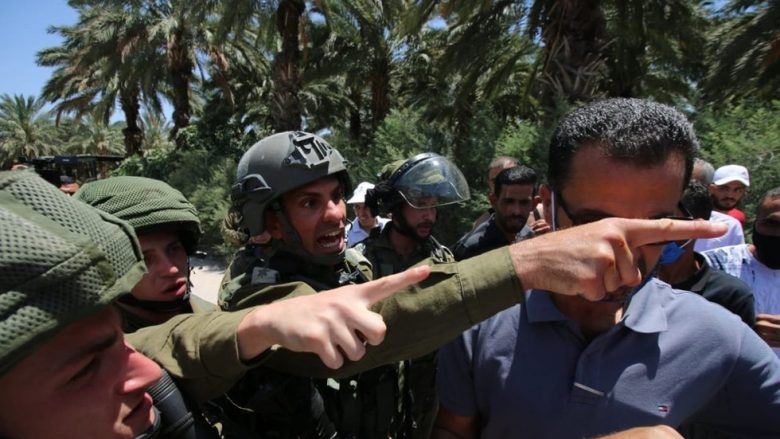
Israeli forces detain RT’s Redfish stringer while covering rally against Jordan Valley annexation in West Bank
© Twitter / Redfish
RT – June 12, 2020
It was the last shooting day for a small Redfish crew working on a documentary about Israel’s plans to annex some parts of the West Bank, including the Jordan Valley. Producer Ahmad Al-Bazz and a cameramen stringer, Ameen Nayfeh, set out to the small village of Zubaidat to cover a small protest staged by locals opposing the annexation.
At first, it seemed that it was going to be a regular filming day. “When we arrived the IDF [Israeli Defense Forces] were surrounding the village. We managed to enter and nobody stopped us,” Al-Bazz told RT. The soldiers took the journalists’ IDs and press cards but quickly returned the documents.
“It was not a huge protest, yet, there were some tense moments,” Nayfeh said, adding that the Israeli military were “very aggressive.”
“They were pushing the people and were shouting and swearing,” he recalled, adding that the IDF soldiers threw a stun grenade in a small crowd of demonstrators consisting of just between 50 and 70 people.
The crew had already stopped filming and were standing aside when they somehow drew the attention of the IDF. “An officer came to us, he was pointing his finger at us and he was very violent in his body language,” Nayfeh said. The journalists sought to explain they were at the scene on official business but even a document confirming they were “a crew working for RT” apparently failed to persuade the officer.
“He ordered his soldiers to take me,” Nayfeh told RT. “I was surrounded by six or seven soldiers.”
“They took the camera and I was afraid they would break it. They said I will come with them and I will ‘have a good time.’” The man was eventually released only after he agreed to hand over his camera’s memory card to the IDF.
It is not the first such incident since the IDF began cracking down on media working in the Palestinian territories. The Israelis have gone as far as to raid local TV and radio broadcasters over the past few years while accusing them of “inciting” violence. During one such raid in 2017, a local RT provider was shut down.
The latest example comes as Israeli Prime Minister Benjamin Netanyahu actively pushes for the annexation of the Jordan Valley as well as some other Palestinian territories in the Israeli-occupied West Bank. Netanyahu has set July 1 as the starting date for cabinet discussions on the issue.
Yet, he apparently has some trouble getting approval for the plan from his allies in Washington and even his coalition partners at home.
Israelis Trained the Minnesota Cop How to Kill
By Paul Craig Roberts | Institute For Political Economy | June 2, 2020
Precisely as I reported Minnesota police received Israeli training. The knee-on-neck is an Israeli restraint hold that Israeli forces use for breaking Palestinian necks. I doubt the Minneapolis cop intended to kill Floyd. He probably thought he was just using a restraint technique. In so many of the cases of police-inflicted death and injury there is no need for restraint. People are not resisting. Maybe the cops just want to practice their training.
Another main cause of police-inflicted death and injury are the middle of the night home invasions, sanctioned by courts and local authorities. There is absolutely no reason for these invasions. They are nothing but murder weapons.
The real murderers of George Floyd were the Israelis who taught the Minnesota cops the knee-on-neck restraint technique. The irresponsible court rulings that permit unannounced home invasions have also killed a lot of people. The police have been turned into killers by their absurd and inappropriate training. The cop will pay the price for his wrongful training just as did George Floyd.
It is pure idiocy to let those responsible for these practices off the hook and to run around shouting “racism.” Knee-on-neck is a restraint technique taught to the police. It is not racism. The technique should not have been taught to American police, and people who are not resisting should not be restrained. George Floyd died because of wrongful police training, not because of racism.
Minnesota cops ‘trained by Israeli forces in restraint techniques’
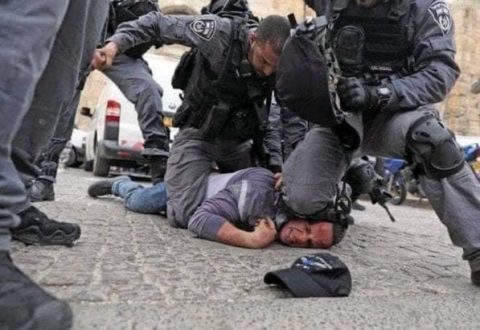
Israeli police officers detain a Palestinian protestor on March 12, 2019.
By Jon Collins – Morning Star– June 1, 2020
Officers from the US police force responsible for the killing of George Floyd received training in restraint techniques and anti-terror tactics from Israeli law-enforcement officers.
Mr Floyd’s death in custody last Monday, the latest in a succession of police killings of African Americans, has sparked continuing protests and rioting in US cities.
At least 100 Minnesota police officers attended a 2012 conference* hosted by the Israeli consulate in Chicago, the second time such an event had been held.
There they learned the violent techniques used by Israeli forces as they terrorise the occupied Palestinian territories under the guise of security operations.
The so-called counterterrorism training conference in Minneapolis was jointly hosted by the FBI.
Israeli deputy consul Shahar Arieli claimed that the half-day session brought “top-notch professionals from the Israeli police” to share knowledge with their US counterparts.
It is unclear whether any of the officers involved in the incident in which Mr Floyd was killed attended the conference.
Israeli forces broke necks
But in a chilling testimony, a Palestinian rights activist said that when she saw the image of Derek Chauvin kneeling on Mr Floyd’s neck, she was reminded of the Israeli forces’ policing of the occupied territories.
Neta Golan, the co-founder of International Solidarity Movement (ISM) said: “When I saw the picture of killer cop Derek Chauvin murdering George Floyd by leaning in on his neck with his knee as he cried for help and other cops watched, I remembered noticing when many Israeli soldiers began using this technique of leaning in on our chest and necks when we were protesting in the West Bank sometime in 2006.
“They started twisting and breaking fingers in a particular way around the same time. It was clear they had undergone training for this. They continue to use these tactics — two of my friends have had their necks broken but luckily survived — and it is clear that they [Israel] share these methods when they train police forces abroad in ‘crowd control’ in the US and other countries including Sudan and Brazil.”
Israeli training of US police is widespread
The training of US police officials by Israeli forces is widespread.
Even Amnesty was compelled to report that hundreds of police from Florida, New Jersey, Pennsylvania, California, Arizona, Connecticut, New York, Massachusetts, North Carolina, Georgia, Washington state and Washington DC had been flown to Israeli for training.
Thousands more have been trained by Israeli forces who have come to the US to host similar events to the one held in Minneapolis. According to the somewhat selective rights organisation, many of these trips are taxpayer-funded, while others are privately funded.
Since 2002 the Anti-Defamation League, the American Jewish Committee’s Project Interchange and the Jewish Institute for National Security Affairs have paid for police chiefs, assistant chiefs and captains to train in Israel and the Occupied Palestinian Territories (OPT), it said.
The Minneapolis Police Department was contacted for comment.
*(embedded links added by If Americans Knew)
[IAK notes: Anoka County (north Minneapolis region) Sheriff James Stuart traveled to Israel last December for a similar training.]
Featured Video
Chinese jet fuel and the myth of energy independence
or go to
Aletho News Archives – Video-Images
Book Review
Former Insiders Criticize Iran Policy as U.S. Hegemony
By GARETH PORTER | CounterPunch | February 27, 2013
“Going to Tehran” arguably represents the most important work on the subject of U.S.-Iran relations to be published thus far.
Flynt Leverett and Hillary Mann Leverett tackle not only U.S. policy toward Iran but the broader context of Middle East policy with a systematic analytical perspective informed by personal experience, as well as very extensive documentation.
More importantly, however, their exposé required a degree of courage that may be unparalleled in the writing of former U.S. national security officials about issues on which they worked. They have chosen not just to criticise U.S. policy toward Iran but to analyse that policy as a problem of U.S. hegemony. … continue
Blog Roll
 Aletho News
- What is fueling unrest across the EU?
- Why no power can undermine Iran’s eternal dominance over the Strait of Hormuz
- Is The War Against Iran Over?
- Iran war will leave long-term ‘scar’ on Wall Street, investors warn
- How Iran decimated US power projection in West Asia: Military lessons of 40-day war
- Iran’s report details US-Israeli war crimes in targeting schools, hospitals, livelihoods
- NATO’s Slow Fracture: How Trump’s Iran War Exposed the Instrument of Hegemony
- Chinese jet fuel and the myth of energy independence
- Ukraine Sea Drone Fired From Libya Hit Russian Tanker in Mediterranean
- IRGC: Iranian forces launched no attacks during ceasefire hours
- If Americans Knew
- Military aid to Israel emerges as the latest political litmus test for Democrats
- The only Palestinian children’s rights organization closes following years-long Israeli campaign against it
- ‘I Can’t Forget the Smell’: Lebanese Reel After Israel Kills Over 300 in Single Day
- DNC Shoots Down Resolutions Calling Out AIPAC and Limiting Arms to Israel
- TCN: Is Israel Blackmailing President Trump?
- Israel killed at least 303 Lebanese yesterday – who were they? Daily Update
- Amnesty: Urgent – Protect Lebanese civilians from brutal escalation in Israeli attacks
- Is The War Against Iran Over?
- Inside the Israeli army’s propaganda wing
- Hundreds of Gaza Amputees Stranded in Legal Limbo
- No Tricks Zone
- An Inconvenient Tree: Uncovered In Alps… Europe Much Warmer Than Today 6000 Years Ago
- New Study Reports A 60% Slowdown In Greenland’s Ice Loss Rate In The Last Decade
- Low Intensity Tornado Wrecks Major Solar Farm, Creating A Potential Toxic Dump
- New Study Finds Warming Saves Lives…Cold Temperatures 12 Times More Deadly Than Excess Heat
- German Science Blog Accuses PIK Climate Institute Of Hallucinating Climate Tipping Points
- Devastating Assessment Of Comirnaty Vaccine By Former Senior Pfizer Europe Toxicologist
- New Study: CO2 Is ‘Effectively Negligible’ As An Explanatory Climate Change Factor Since 2000
- Former Pfizer Toxicologist Dr. Helmut Sterz Tells Bundestag Hearing Pfizer Vaccine Should Have Never Been Approved
- Energy Expert: Germany’s Nuclear Phaseout Was A “500 Billion Euro Mistake”
- New Research: South Australia’s Mid-Holocene Sea Surface Temperatures Were 4°C Warmer Than Today
 Aletho News