Badee Dwaik of the #AlKhalil4 on the “daily torture” of Israeli imprisonment

Photo via Badee Dwaik
Samidoun Palestinian Prisoner Solidarity Network – April 15, 2017
Palestinian organizer Badee Dwaik, co-founder of the Human Rights Defenders group that has been coordinating actions and popular organizing to confront settlements and occupation in al-Khalil, was recently seized by Israeli occupation forces with three of his colleagues in the #DismantleTheGhetto movement, Anan Odeh, Ishaq al-Khateeb and Younis Arar.
The four organizers, swiftly known as the #alKhalil4, were participating in a Land Day protest on Thursday 30 March when they were attacked by occupation forces. Following his release, Dwaik spoke with Samidoun Palestinian Prisoner Solidarity Network about his experience under arrest and interrogation. He noted that he had previously been arrested, interrogated and jailed on multiple occasions, but that this experience highlighted intensified repression. In fact, only one month prior, on 24 February 2017, Israeli occupation forces had invaded Dwaik’s home and threatened him with arrest.
The four organizers were part of an action that involved planting olive trees, where they were attacked by settlers. Despite the attack, they continued marching to the center of their city of al-Khalil, which has been subject to forcible closure by the Israeli occupation and its settlers. As the demonstration continued, occupation forces declared the area a closed military zone and picked Dwaik, Dana, Arar and Khateeb out of the crowd of about 50, accusing them of participating in an “illegal demonstration.”
Dwaik noted the presence among the harassing settlers of the notorious Ofer Ohana, who was also present for the extrajudicial execution of Abdel-Fattah Al-Sharif by Israeli occupation soldier Elor Azariya. The murder of al-Sharif came to light as it was videotaped by Imad Abu Shamsiya, co-founder of Human Rights Defenders. Ohana was videotaped kicking a knife near the body of Sharif and referring to Sharif and his fellow slain Palestinian, Ramzi al-Qasrawi, as “the trash.” Dwaik noted that Ohana has threatened Abu Shamsiya and Dwaik and repeatedly harasses them as they carry out tours of al-Khalil with internationals.
The four were arrested under false pretenses, Dwaik said. They were accused of being in the street, said Dwaik, even though three of the four were standing on a grassy hill and one of the four, Anan Odeh, was off to the side of the road. At the present time, while the four were released on bail, they continue to face allegations in Israeli military court – where Palestinians are convicted at a rate of over 99 percent – of “disturbing the public peace of the area,” organizing an “illegal action,” attempting to escape from the army, and “blocking the street.”
Dwaik noted that he denied all allegations under interrogation and refused to sign any paperwork or confessions. He and his fellow organizers were taken by occupation forces to the Kharsina military camp near Kiryat Arba settlement. Dwaik, who has diabetes, was sent to a medical worker; he stated that he needed medicine for his diabetes, but that the medical worker gave him two cold tablets but nothing to address his actual medical condition.
Later, Dwaik reported, he was taken to Shaare Tzedek hospital from 11:00 pm to 3:30 am, during which he received medical tests. He was told that he would receive insulin, but when Dwaik explained that his diabetes is treated with medication, they told him they would sell him a tablet. However, they still did not provide his medication and he was instead told that he would receive medication in jail.
Dwaik was then sent to the Etzion detention center (jail), where he reported that he was subject to an experience seemingly designed for humiliation and subjugation. The jail officers demanded Dwaik strip down, including removing his underwear. As he refused to remove his underwear, the jail officers demanded him to repeatedly move about and stand up and sit down in an attempt to humiliate him. He was then told that he would be left there until the morning without clothes. However, when he still refused to remove his underwear, he was finally given his clothes and put in the room with his fellow detainees.
The conditions at Etzion and other detention centers, where Palestinians are often held under interrogation and prior to being transferred to the major prisons, have been repeatedly highlighted by former prisoners for their unsuitability for human life. Palestinian prisoners have even launched hunger strikes to demand to be moved to regular prisons and have repeatedly reported beatings and assaults in the Etzion jail.
When he arrived in Etzion, he was told that his belongings would be registered; however, the jailers refused to register his belt and instead confiscated it; Dwaik noted, “I have been arrested many times before, but was never ordered to remove underwear or had my belt confiscated.” Among his belongings was also 42 NIS ($11.50 USD), which was registered at the time. Dwaik noted that he was denied cigarettes despite being registered as a smoker; when he questioned this, he was told that he was “being punished” because he refused to remove his underwear the night before.
Dwaik particularly highlighted the unlivable conditions in Etzion. The room where he was sent contained five or six bunk beds, but the beds were blank and had no mattresses; instead, Dwaik said, prisoners are forced to fold blankets beneath them to serve as makeshift mattresses. These blankets, Dwaik noted, are unclean and pose a danger to health; they are used by many prisoners and are rarely washed. The Palestinians detained in Etzion are served leftover food from the army’s meals, often significantly later when the food is sparse and cold. The cells themselves are in a very poor condition and insects are visible inside the room, as well as mice and other vermin. “Some people get stuck in the detention centers for long periods of time, even 2 months, and it is a form of daily torture,” Dwaik said.

Photo via Badee Dwaik
Dwaik noted that there are no books or recreation time for detainees held in Etzion, and that some other prisoners had reported the shower areas being closed for four or five days at a time. Despite the earlier interactions with medical staff, he still did not receive diabetes medication. Instead, he was told that he would be sent to Ofer prison in the afternoon.
He noted that Palestinian prisoners are often left without food because they are transported to the military court or from jail to jail during mealtimes; no replacement meals are provided. This is such a common problem that it is even included among the demands of Palestinian prisoners in the large hunger strike planned to begin on 17 April, Palestinian Prisoners’ Day.
Ofer is a large Israeli prison and the only major Israeli occupation prison (rather than detention centers and interrogation centers) inside the West Bank. The prison has 10 sections of about 120 people each, for a total of approximately 1,200 prisoners, Dwaik reported. Most are political prisoners, but Palestinians arrested for “non-political” charges by the Israeli occupation – such as, for example, Palestinian workers seized for working inside Palestine ’48 without a permit – are also held in the prison. During his short time in Ofer, he was repeatedly transferred from one section to another. While in the prison, he saw a number of fellow Palestinian prisoners, including imprisoned BDS campaigner Salah Khawaja and youth organizer Hassan Karajah, both of whom greeted the international activists working for their freedom and that of their fellow prisoners.
The case of the four was brought before the military court in Ofer on Sunday, 2 April. While Dwaik and Dana were brought to the military court, he noted that their fellow #alKhalil4 detainees, al-Khateeb and Arar, weren’t even brought before the military court. During the hearing, the military prosecutor urged that the four be held for five additional days for further interrogation, stating that there is a “secret file against” Dwaik, the framework that is used to order Palestinians to imprisonment without charge or trial under administrative detention. Dwaik noted that this was also the first time that a “secret file” had been raised against him despite numerous arrests. While the military court judge refused to release the four – as demanded by their lawyer – he ordered them held only one more day and a new military court hearing the following day, Monday, 3 April.
He noted the degrading experience of waiting for a military court hearing to begin. “You are moving from room to room all the time and you are shackled hand and foot all the time. We had to wait on Monday from 8 am to 3 pm as we are handcuffed. They only take off the handcuffs when you’re in the military court, then they handcuff you again and shackle your feet. It is a system that is meant to humiliate,” Dwaik said.
Dwaik noted that on Monday, as he entered the military court in Ofer, he saw Palestinian student Kifah Quzmar, who was exiting the military court, having been ordered to six months in administrative detention. Quzmar told Dwaik of his sentence and expressed his greetings to the organizations and people around the world engaged in the campaign for his release.
In addition, Dwaik noted, some international observers in Palestine attempted to attend the military court hearing for the four, but were barred from entering. Journalist Amira Hass attended the hearing along with the representative of Defence for Children International in al-Khalil. In the military court hearing on Monday, the alleged “secret file” went unmentioned; instead, the military prosecutor now demanded 7,000 NIS ($1912 USD) from each of the four as bail. Dwaik stated that he does not have the money for such a high bail and that he would stay in jail instead; negotiations then ensued and a bail of 3,500 NIS ($956 USD) was set for each of the four. He noted that #DismantleTheGhetto campaigners and supporters donated to cover the bail, which was paid around 3:00 pm; however, the four were not released until 10:30 pm.
During their release, Dwaik noted, “they push you with their guns and don’t let you check that you even have your belongings.” He lost his belt, and the 42 NIS ($11.50) he had when entering prison was stolen. Throughout his time in Israeli jail, he never received any medicine for his diabetes.
Dwaik noted that “all of the Palestinian political organizations support the #DismantleTheGhetto campaign, and all of the NGOs that support human rights. This is why we were targeted, because this is a unified Palestinian campaign with many actions.”
“We need more work for the Palestinian cause and people to keep building support for Palestine. The #DismantleTheGhetto campaign in al-Khalil is part of these efforts,” Dwaik said. He stated that Palestinian prisoners need international support and that many will be launching a strike on 17 April, noting that Samidoun and other groups have an important role to play in building solidarity with the prisoners. “Palestinian prisoners are struggling for their dignity and freedom every day,” Dwaik said, “from the 13-year-old children like Shadi Farrah to the veterans who have spent 30 years behind bars.”
24 Palestinian journalists imprisoned; freed journalist Omar Nazzal barred from Jerusalem, travel and banking
Samidoun Palestinian Prisoner Solidarity Network – April 6, 2017
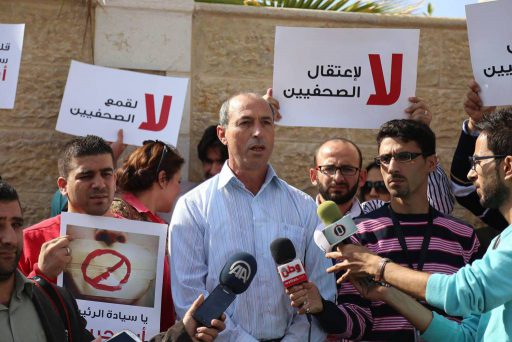
Palestinian journalist and former prisoner Omar Nazzal recently reported on his Facebook page about a series of restrictions that have been issued by Israeli occupation forces against him through military orders. Nazzal was released from administrative detention on 20 February after 10 months of imprisonment without charge or trial; since that time, he has been slapped with a two-year travel ban preventing him from leaving occupied Palestine; banned from Jerusalem and Palestine ’48 for 99 years; and forbidden from opening bank accounts until further notice.
Nazzal was seized by Israeli occupation forces in April 2016 as he attempted to enter Jordan through the Karameh/Allenby crossing en route to the European Federation of Journalists conference in Sarajevo, Bosnia and Herzegovina. He is a member of the Secretariat of the Palestinian Journalists Syndicate and president of the Assembly of Democratic Journalists. His detention was internationally condemned by the EFJ, the International Federation of Journalists and other international associations.
There are currently 24 Palestinian journalists imprisoned in Israeli jails, the Palestinian Media Assembly reported on 2 April on March violations of the rights of journalists by the Israeli occupation. They include the five journalists of Sanabel Radio, who have been imprisoned since August 2016, when occupation forces invaded the radio station, abducting all of the staff present. Nine journalists were arrested in March, including Samah Dweik, Hassan Sawan, Mohammed Abed Rabbo, Khaleda Ghosheh, Raed Abu Remaileh (since released) and Mohammed Batrakh, Ayoub Sawan, Asim Mustafa and Musab al-Said (all still detained.)
Palestine TV correspondent Ahmed Shawar was injured by rubber-coated metal bullets as he covered a demonstration against settlements and the apartheid wall in Kufr Qaddoum. In addition, multiple photographers were injured in Nabi Saleh by Israeli occupation forces, including Rasha Herzallah, Hamza Shalash, Essam Rimawi, Mohammed Turkman, Majdi Shtayyeh, Abbas Momani and Saleh Hamad. In Kafr Malek, Nasser Shyoukhi and Abdel-Kader Bilbeisi were injured after inhaling tear gas. In addition, Israeli occupation forces attacked and confiscated several print shops, including Nahda in Tulkarem, Ibn Khaldoun in Tulkarem and Dozan in Bethlehem.
Israeli occupation forces stormed the home of Palestinian cartoonist Osama Nazzal on 27 March, smashing his paintings on the wall and drawing tools as well as confiscating other artwork.
Israeli settler attempts to run over Palestinians near Hebron
Ma’an – April 7, 2017
HEBRON – Two Palestinians from the Hebron-area village of Beit Ummar were lightly injured Friday after an Israeli settler attempted to run them over on a main road connecting the southern occupied West Bank city of Hebron to Jerusalem.
Local activist Muhammad Awad told Ma’an that an Israeli settler was driving on the road, located near Beit Ummar, when the settler attempted to to run over Palestinians Muhammad Basem Khader al-Alami, 25, and Saed Samir Hassan al-Salibi, 20.
“The Israeli settler drove very fast with his car towards the two, who noticed the settler’s car rushing towards them at the last moment, causing them to fall on the side of the street, while the Israeli settler escaped,” Awad said, describing the scene to Ma’an.
An Israeli army spokesperson said they were looking into reports.
The incident came a day after Israeli settlers from the illegal settlement of Yitzhar in the northern West Bank closed a Nablus-area road in protest, calling for “revenge” on Palestinians after an alleged car-ramming attack was carried out earlier in the day near the illegal Israeli Ofra settlement in Ramallah, which killed an Israeli soldier and wounded another moderately.
Incidents involving Israeli settlers hitting Palestinians in the occupied Palestinian territory are a relatively regular occurrence, and are usually treated by Israeli security forces as accidents, even in cases when witnesses claim the car rammings were deliberate.
Many Palestinian activists and rights groups have accused Israel of fostering a “culture of impunity” for Israeli settlers and soldiers committing violent acts against Palestinians.
Between 500,000 and 600,000 Israelis live in Jewish-only settlements across occupied East Jerusalem and the West Bank in violation of international law, with announcements of settlement expansion earlier this year sparking condemnation from the international community.
According to the United Nations Office for the Coordination of Humanitarian Affairs (OCHA), there were a total of 107 reported settler attacks against Palestinians and their properties in the West Bank and occupied East Jerusalem in 2016.
Western sanctions against Syria block humanitarian relief
Dr Alexander Yakovenko | RT | April 4, 2017
Russia strongly opposes sanctions imposed by the US and EU on Syria, which punish ordinary Syrians and prevent the delivery of aid to a country facing an unprecedented humanitarian crisis.
The sanctions and war have severely destabilized the Syrian economy, transforming a once prosperous country into an aid-dependent nation. They block access to aid, particularly medicines. Medical equipment, fuel, food, building materials, are desperately needed today.
A report by the UN Economic and Social Commission for Western Asia describes the sanctions as some of the most complicated and far-reaching ever imposed. For example, sanctions on Syrian banks have made the transfer of money into the country nearly impossible, preventing, among other things, aid groups from paying local staff and suppliers. Pharmaceutical factories that haven’t been destroyed by the fighting have been forced to shut down because of the sanctions-related restrictions on raw materials and foreign currency. US trade restrictions on Syria prescribe items that contain 10 percent or more of US content, including medical equipment, which is banned from sale to Syria.
According to independent reports, the sanctions became the main reason for the shortage of goods and rampant inflation, plunging over 80 percent of Syrians into poverty.
The work of Syrian charities and humanitarian organizations is severely impeded under the pretext that they have links to the people from the so-called inner circle of President Bashar Assad. One can recall the campaign in the British media criticizing the UN for cooperating with the Syrian Government in the distribution of humanitarian aid.
Unfortunately, on March, 20 the EU imposed a new set of sanctions on Syria, showing disregard for the aspirations of the Syrians for the better future. The statements of our Western partners about the need to alleviate the suffering of the Syrian people contradicts their sanction policy. We hope that common sense and compassion will prevail over political and ideological considerations.
The West has been wrong on Syria from start to finish. Maybe, now is the time to bring its narrative in line with reality on the ground and the real needs of Syrians.
Dr Alexander Yakovenko, Russian Ambassador to the United Kingdom of Great Britain and Northern Ireland, Deputy foreign minister (2005-2011). Follow him on Twitter @Amb_Yakovenko
Mumia Abu Jamal to Begin Receiving Hepatitis C Treatment

Mumia Abu Jamal | Photo: Campaign to Bring Mumia Home
teleSUR | March 31, 2017
U.S. revolutionary activist Mumia Abu Jamal will begin receiving treatment for hepatitis C next week, Philly Voice reports, citing recently-released court papers.
Jamal, who is serving a life sentence at the Mahanoy State Correctional Institution in Philadelphia, has been demanding treatment since 2015, when he suffered from a renal failure.
Now, he will receive antiviral medication that consists of one pill per day for 12 to 24 weeks, Philly Voice adds. The medication has an estimated 90-percent cure rate.
The Pennsylvania Department of Corrections, DOC, was ordered on Monday to begin providing medication after it lost its appeal to withhold treatment in the state’s Third Circuit court.
“For the last 53 days, the DOC, prison medical staff, and Legal Department have stood in contempt of court following the order to treat Mumia,” Jamal’s legal representatives wrote in a statement.
“The DOC in defiance of the Injunction filed a stay, hoping the 3rd Circuit Court of Appeals would bail them out and block Mumia’s treatment.”
The ruling marks a major victory for Mumia and others in similar circumstances. Now, thousands of prisoners who suffer from hepatitis C will be able to receive treatment because the federal court order sets a precedent, Prison Radio reports.
The treatment, however, will not solve all of his medical problems. Mumia, who suffers from cirrhosis of the liver, is now at greater risk for other health complications and potential liver cancer. This is a direct consequence of being denied treatment for two years, according to his legal representatives.
“We must stay vigilant,” they wrote in a statement.
“We must insist that the treatment be given and completed in full, and we need to support the lawsuits Abu-Jamal vs. Kerestes and Abu-Jamal vs. Wetzel as they continue to hold the Pennsylvania DOC accountable.”
Jamal, a former member of the Black Panther Party, was arrested and charged with killing white police Officer Daniel Faulkner in Philadelphia in December 1981. One year later, he was tried, convicted and sentenced to death.
In 2011, the United States Supreme Court declared the death penalty unconstitutional in his case, and he was re-sentenced to life in prison without parole. He and many activists have maintained that he is innocent.
Palestinian former prisoner Mazen Fuquha assassinated in Gaza
Samidoun Palestinian Prisoner Solidarity Network – March 25, 2017
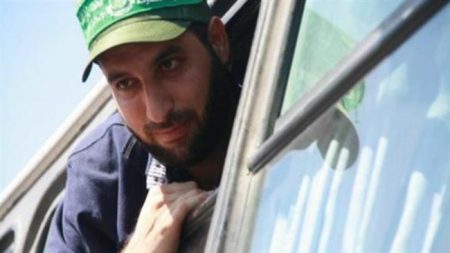
Former Palestinian prisoner, released in the 2011 Wafa al-Ahrar prsoner exchange, Mazen Fuquha, was assassinated with four shots to the head with a silenced gun yesterday evening, 24 March, outside his home in Tal al-Hawa, south of Gaza City in the Gaza Strip, Palestine. Fuquha, 38, is from Tubas in the West Bank, and was forcibly displaced to Gaza after the prisoner exchange.
Fuquha was well-known as a leader in Hamas, and was sentenced to nine life sentences before his release, accused of participation in the armed Palestinian resistance. His father spoke with Asra Voice radio station, and said that the Israeli occupation army had broken into the family home in Tubas on multiple occasions and threatened his son, demanding the father tell his son to stop his activity.
Palestinian political parties and resistance factions condemned the killing of Fuquha and placed responsibility for the crime with the Israeli occupation forces. Internal security police in Gaza are investigating the killing and seeking evidence as to how the assassination was carried out.
Khalil al-Hayya of Hamas said that “the only beneficiary of this assassination is the occupation; the martyr Fuquha had no quarrels with anyone.” The Popular Front for the Liberation of Palestine denounced the killing as a “cowardly crime” of the occupation that attempts to target Palestinian resistance, emphasizing the importance of protecting Palestinian fighters. The Islamic Jihad movement said in a statement that the assassination is a “treacherous crime on the agenda of the occupation and carrying the fingerprints of its terror.”
Fuquha grew up in Tubas before attending An-Najah National University in Nablus, where he became involved with the Islamic Bloc and later the Hamas movement. He was arrested three times by Palestinian Authority security and by the Israeli occupation army on 5 August 2002 after a siege that lasted six hours. He was accused of organizing Palestinian armed actions and was sentenced to nine life sentences, and was one of the high-profile prisoners released in the Wafa al-Ahrar exchange. Nearly 60 prisoners released in the exchange, including the longest-serving prisoner Nael Barghouthi, have been targeted for re-arrest and the reimposition of their former sentences by Israeli occupation forces.
Accused ETA Militant Extradited to Spain Despite Torture Claims

Former Basque politician Nekane Txapartegi, Sept. 2016 | Photo: Berria
teleSUR | March 23, 2017
Swiss officials announced on Thursday they would extradite a former Basque politician and purported ETA activist to Spain after denying her request for asylum given allegations she was brutally tortured while in a Spanish prison.
Nekane Txapartegi had fled to Switzerland after a 2007 conviction for supporting the Basque separatist group ETA’s activities, later claiming asylum on the basis that she had been suffocated with a plastic bag, raped, beaten and subjected to electroshock treatment while in a Spanish prison after a 1999 arrest.
At the time of her arrest, Txapartegi was an elected city councilor in Asteasu in the Basque region of northern Spain and was later elected mayor while still in prison awaiting trial.
After several years underground in Switzerland, Txapartegi was arrested in Zurich, Switzerland in April 2016 on an international warrant and has been in detention awaiting the judgment in her asylum request case.
The World Organization Against Torture had intervened in Txapartegi’s case noting that her confession of supporting illegal ETA activities had been extracted via torture, allegations supported by a prison doctor who examined Txapartegi after her detention and found injuries consistent with torture.
In 2010 a Spanish court found four police officers guilty of torturing suspected ETA militants, sentencing them to prison and ordering them to pay compensation to their victims.
The ETA was founded in 1959 in response to Spanish dictator Francisco Franco’s brutal repression of Basque culture and independent politics.
For over 40 years the ETA carried out clandestine attacks on police and military officials as well as Francoist politicians, sometimes killing civilians in the process.
The ETA was eventually labeled a terrorist organization by both the Spanish and U.S. governments for its fight to achieve Basque independence.
In 2011, the ETA declared a permanent ceasefire.
Land Rights Activist Shot Dead in Brazilian Hospital
teleSUR | March 22, 2017
Waldomiro Costa Pereira, an activist with the Landless Workers Movement, MST, was killed Monday when gunmen stormed a hospital in Parauapebas in northeastern Brazil’s Para state, activists said in a statement.
Five armed men burst into a small town hospital in the Brazilian Amazon, surrounded security guards and shot dead the prominent land rights activist, in the latest deadly attack on land campaigners.
The motive for Pereira’s murder was unclear, the MST said, but the activist had been recovering in the hospital from a previous assassination attempt.
“This is yet another murder of workers in the state of Para,” the MST said in a statement. “Impunity has become commonplace as has the action of criminal militia groups,” the group said, adding that Pereira was a longtime activist in the “struggle for agrarian reform.”
At the time of his killing, Pereira was not active with the MST and was instead devoting his time to advising the local government on agriculture, the activist group said.
Local officials in the city of Parauapebas condemned the murder and police said they were investigating the killing, the Folha de Sao Paulo newspaper reported.
Conflicts over territory are common in Brazil where 1 percent of the population owns nearly half of the nation’s land, according to a 2016 study from the University of Windsor in Canada.
Brazil has become one of the world’s most dangerous countries for land rights activists, with 61 killed in 2016, the highest level since 2003, according to Brazil’s Pastoral Land Commission.
Australia finds no funds diverted in World Vision probe, further debunking Israeli claims against al-Halabi
Samidoun Palestinian Prisoner Solidarity Network – March 22, 2017
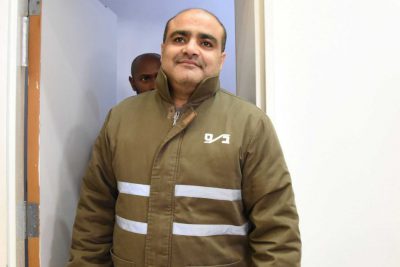
In yet another blow to the propaganda-driven case against Palestinian aid worker Mohammed al-Halabi, the Australian Department of Foreign Affairs and Trade reported on Tuesday, 21 March that “an internal review into World Vision funding in Gaza has uncovered nothing to suggest any diversion of government aid funding to Hamas.”
Al-Halabi was seized by Israeli occupation forces at the Beit Hanoun/Erez crossing and in August 2016, Israeli officials, including Prime Minister Benjamin Netanyahu, went on a propaganda offensive, claiming that Halabi had redirected World Vision funds to the Palestinian resistance organization, Hamas. Israeli occupation officials declared that he had diverted $43 million in charitable funds to the Palestinian resistance, including a video from Prime Minister Benjamin Netanyahu accusing Palestinians of not caring about their people. The amounts cited dwarfed the actual budget to which al-Halabi had access, by all accounts. These seemingly impossible claims were made after nearly a month of interrogation, during which Halabi was subjected to torture and inhumane treatment.
The claims against Halabi were accompanied by similarly touted claims against civil engineer Waheed Bursh, a contractor with the UN Development Program, also accused of redirecting resources to the Palestinian resistance – in his case, rubble from the Israeli bombing of Gaza. However, despite the large-scale publicity surrounding Borsh’s arrest, he was released seven months later, indicating that no serious charges were ever made. He was cited as a “witness” againat al-Halabi, and later confirmed that he completely denied any allegations against the aid worker.
“The news DFAT found no evidence of the misuse of World Vison funds comes as Mr Halabi’s trial continues in Israel. He has rejected a plea deal offered by Israeli authorities and has pleaded not guilty, claiming he is innocent of all charges,” reported the Australian Brodcasting Corporation. The plea agreement he rejected would have seen him imprisoned for three years, a short sentence which again indicates a lack of serious charges or evidence in the case.
Indeed, rather than presenting any evidence to back up the widely-publicized public claims against World Vision and Halabi, Israeli occupation officials have instead submitted additional, lesser charges against Halabi that have no relation to diverting funds or his work with World Vision; two such charges are those of “passing information to the enemy” and of “aiding and abetting the enemy in a time of war,” with the enemy in question being Palestinians in Gaza. Al-Halabi is, himself, of course, a Palestinian living under occupation and siege in Gaza.
He is also charged with giving small donations of his own money, rather than redirecting World Vision funds, to charities and mosques in Gaza. ABC notes that “One incident detailed accuses El Halabi of allegedly giving ‘300 Israeli shekels on a monthly base to a charity managed by Hamas’…Another says the defendant transferred ‘hundreds of shekels during 2015-2016 to a mosque managed by Hamas’… No details are given of the ‘millions’ of dollars Israeli intelligence officials initially accused El Halabi of diverting.” 100 NIS is approximately $26 USD.
“So far, our own ongoing forensic audit has not uncovered any money subverted and to hear DFAT say their investigation hasn’t either is consistent and is very good news,” said Tim Costello of World Vision.
Despite the severe lack of evidence or credibility for Israeli claims in this case, World Vision’s work in Gaza – and government funding from the Australian and German governments – have been shut down. Over 100 Palestinian workers for World Vision have lost their jobs in Gaza in an area already suffering from massive unemployment and poverty.
Israeli forces detain Palestinian, confiscate vehicles in northern Jordan Valley
Ma’an – March 22, 2017
TUBAS – Israeli forces on Wednesday morning detained a young Palestinian man in the village of Ibziq in the northern Jordan Valley region of the occupied West Bank and confiscated a tractor and a private vehicle in the area.
Muataz Bisharat, an official who monitors settlement activity in the Jordan Valley, told Ma’an that Israeli forces, escorted by several Israeli Civil Administration jeeps, detained Mahmoud Muhammad al-Hroub, 23, and confiscated a tractor belonging to his father and a vehicle belonging to Hayil Turkman.
The confiscated vehicles were taken to the Nahal military site in the al-Maleh area of the Jordan valley, Bisharat said.
A spokesperson from Israel’s civil administration declined to comment on the incident.
Bisharat highlighted that Israeli forces had confiscated at least three tractors from the surrounding areas, which are located in Area C — the more than 60 percent of the West Bank under full Israeli security and civilian control — during the past two months.
Palestinian residents of the Jordan Valley regularly face evacuations and interruption due to Israeli military exercises on or near their land. The Jordan Valley district of Tubas is one of the occupied West Bank’s most important agricultural centers.
The majority of the Jordan Valley is under full Israeli military control, while at least 44 percent of the total land in the Jordan Valley has been reappropriated by Israeli forces for military purposes and training exercises.
According to the Palestinian nonprofit the Applied Research Institute – Jerusalem (ARIJ), using data from the Palestine Ministry of Wall and Colonization Affairs, the group reported that more than 400,000 dunams (98,842 acres) of the 720,000 dunams (177,916 acres) that make up the total area of the Jordan Valley has been transformed into closed military and firing zones, with at least 27,000 dunams (6,672 acres) confiscated for illegal Israeli settlement building.
Featured Video
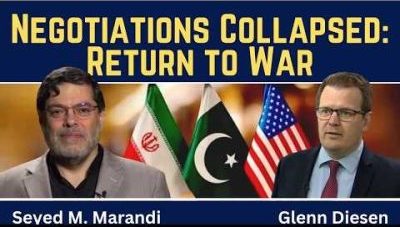
Seyed M. Marandi: Negotiations Collapsed – Return to War
or go to
Aletho News Archives – Video-Images
From the Archives
The US-Iran Scenario That Most Scares Israel
By Ali Haydar | Al-Akhbar | October 9, 2013
Israeli Prime Minister Benjamin Netanyahu issued a series of threats toward Iran and its interlocutors in the West, including the US, as serious negotiations on Iran’s nuclear program seem more plausible.
As a possible rapprochement looms between the US and Iran, Netanyahu has attempted to impose impossible Israeli conditions on the negotiators, such as the full dismantling of Iran’s nuclear program, not to mention threatening military force.
Whatever the deal that could materialize between Iran and the West, Israel is going to find itself before an open-ended path. One can foresee three possible scenarios… continue
Blog Roll
 Aletho News
- Trump’s desperate bombasts amount to war crimes
- Most Israelis oppose Iran ceasefire, reject talks: Poll
- Iran to charge ships from ‘hostile’ nations to cross Hormuz – security chief
- UK, Spain reject Trump’s new scheme to blockade Hormuz Strait
- Russian frigate ‘resurfaces’, chases off NATO pirates days after Kiev ‘sank’ it
- Ukraine Targets Russian Merchant Fleet With NATO Intel Support – Presidential Aide
- Russia’s ‘shadow fleet’ makes mockery of UK naval power
- Ukraine plans to attack Russian ships with Norwegian support
- US’s ‘Very Foolish’ Double Blockade of Hormuz Strait Makes Absolutely No Sense: Here’s Why
- China issues rules on countermeasures against foreign states’ unlawful extraterritorial jurisdiction
- If Americans Knew
- Israeli prison authorities are blocking hundreds of solidarity postcards being sent to female Palestinian prisoners
- ‘I wished for death’: Sexual violence in Israel’s prisons is an ‘organized state policy’
- Israeli army shoots, kills 9-year-old girl in her Gaza classroom
- Israel is attacking Lebanon to sabotage the Iran ceasefire, but the media is hiding its true motivation
- Israel’s restriction of aid into Gaza leads to critical shortages in bread, baby formula, and water
- Critical shortages in Gaza, Lebanon in ruins, “piracy” in Iran – Daily Update
- US-Iran ceasefire negotiations make zero progress – Daily Update
- Pro-Israel ‘Thinktanks’ and Individuals who Influence U.S. Foreign Policy
- Mearsheimer reveals how Israel dictates US policies on Iran, Gaza – video
- After killing 350+, Israel still has a “score to settle” with Lebanon before ceasefire – Daily Update
- No Tricks Zone
- Cave Discovery Reveals Today’s Desert Climates Were Recently Far Warmer, Wetter, Teeming With Life
- German Expert: Heat Dome Led To Record Temps In Western USA…Warmer In 1934, 1936
- New Study: No Linear Warming Or Glacier Retreat Along Northern Antarctic Peninsula Since 1980s
- An Inconvenient Tree: Uncovered In Alps… Europe Much Warmer Than Today 6000 Years Ago
- New Study Reports A 60% Slowdown In Greenland’s Ice Loss Rate In The Last Decade
- Low Intensity Tornado Wrecks Major Solar Farm, Creating A Potential Toxic Dump
- New Study Finds Warming Saves Lives…Cold Temperatures 12 Times More Deadly Than Excess Heat
- German Science Blog Accuses PIK Climate Institute Of Hallucinating Climate Tipping Points
- Devastating Assessment Of Comirnaty Vaccine By Former Senior Pfizer Europe Toxicologist
- New Study: CO2 Is ‘Effectively Negligible’ As An Explanatory Climate Change Factor Since 2000
 Aletho News