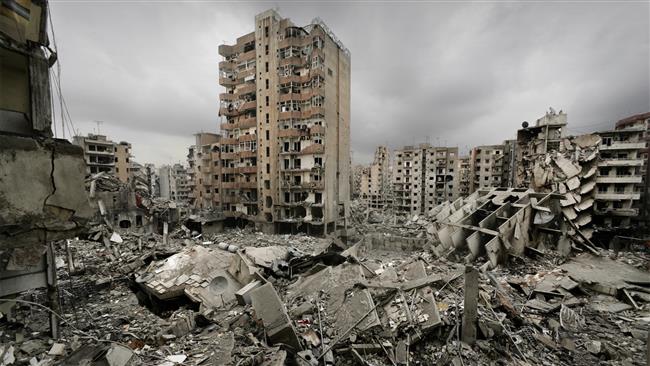
Cambodians are responding with outrage to the U.S. government’s demand that the country repay a nearly 50-year-old loan to Cambodia’s brutal Lon Nol government, which came to power through a U.S.-backed coup and spent much of its foreign funds purchasing arms to kill its own citizens, according to Cambodia’s current prime minister Hun Sen.
While the U.S. was backing the Lon Nol government, it was also strafing the Cambodian countryside with bombs—a carpet-bombing campaign that would eventually see over 500,000 tons of explosives dropped on the small Asian country, killing hundreds of thousands of civilians and leaving a legacy of unexploded ordnance.
“[The U.S.] dropped bombs on our heads and then they ask us to repay. When we do not repay, they tell the IMF [International Monetary Fund] not to lend us money,” Hun Sen said at an Asia-Pacific regional conference earlier this month.
“At the same time the U.S. was giving weapons to Lon Nol, it was bombing the Cambodian countryside into oblivion and creating millions of refugees fleeing into Phnom Penh and destroying all political fabric and civil life in the country,” former Australian ambassador to Cambodia Tony Kevin told Australia’s ABC.
“And all of this was simply to stop the supplies coming down to South Vietnam, as it was then, from the north,” Kevin added. “So the United States created a desert in Cambodia in those years, and Americans know this.”
Hun Sen has argued that the U.S. has no right to demand repayment of its “blood-stained” funds.
“Cambodia does not owe even a brass farthing to the U.S. for help in destroying its people, its wild animals, its rice fields, and forest cover,” wrote former Reuters correspondent James Pringle for The Cambodia Daily.
In fact, during his tenure as prime minister Hun Sen has asked the U.S. to drop the “dirty debt” several times, but American leaders have refused.
“[The] U.S. would not drop it. It would have been so easy to forgive the repayment, it would have been easy to refinance it for education like they did in Vietnam,” the reporter Elizabeth Becker, who covered the Cambodian genocide in the 1970s, toldAl Jazeera.
“The U.S. intervention in Cambodia was easily the most controversial that we had in that era,” Becker said. “[The U.S.] dragged Cambodia into the Vietnam War for hopes that by expanding it they could win, the complications now are that even 50 years later, the Khmer Rouge legacy is horrible.”
“The U.S. owes Cambodia much more in war debts that can be repaid in cash,” Becker argued to The Cambodia Daily.
It is the leakiest of times in the Executive Branch. Last week, Wikileaks published a massive and, by all accounts genuine, trove of documents revealing that the CIA has been stockpiling, and lost control of, hacking tools it uses against targets. Particularly noteworthy were the revelations that the CIA developed a tool to hack Samsung TVs and turn them into recording devices and that the CIA worked to infiltrate both Apple and Google smart phone operating systems since it could not break encryption. No one in government has challenged the authenticity of the documents disclosed.
We do not know the identity of the source or sources, nor can we be 100% certain of his or her motivations. Wikileaks writes that the source sent a statement that policy questions “urgently need to be debated in public, including whether the CIA’s hacking capabilities exceed its mandated powers and the problem of public oversight of the agency” and that the source “wishes to initiate a public debate about the security, creation, use, proliferation and democratic control of cyber-weapons.”
The FBI has already begun hunting down the source as part of a criminal leak investigation. Historically, the criminal justice system has been a particularly inept judge of who is a whistleblower. Moreover, it has allowed the use of the pernicious Espionage Act—an arcane law meant to go after spies—to go after whistleblowers who reveal information the public interest. My client, former NSA senior official Thomas Drake, was prosecuted under the Espionage Act, only to later be widely recognized as a whistleblower. There is no public interest defense to Espionage Act charges, and courts have ruled that a whistleblower’s motive, however salutary, is irrelevant to determining guilt.
The Intelligence Community is an equally bad judge of who is a whistleblower, and has a vested interest in giving no positive reinforcement to those who air its dirty laundry. The Intelligence Community reflexively claims that anyone who makes public secret information is not a whistleblower. Former NSA and CIA Director General Michael V. Hayden speculated that the recent leaks are to be blamed on young millennials harboring some disrespect for the venerable intelligence agencies responsible for mass surveillance and torture. Not only is his speculation speculative, but it’s proven wrong by the fact that whistleblowers who go to the press span the generational spectrum from Pentagon Papers whistleblower Daniel Ellsberg to mid-career and senior level public servants like CIA torture whistleblower John Kiriakou and NSA whistleblower Thomas Drake to early-career millennials like Army whistleblower Chelsea Manning and NSA whistleblower Edward Snowden. The lawbreaker does not get to decide who is a whistleblower.
Not all leaks of information are whistleblowing, and the word “whistleblower” is a loaded term, so whether or not the Vault 7 source conceives of him or herself as a whistleblower is not a particularly pertinent inquiry. The label “whistleblower” does not convey some mythical power or goodness, or some “moral narcissism,” a term used to describe me when I blew the whistle. Rather, whether an action is whistleblowing depends on whether or not the information disclosed is in the public interest and reveals fraud, waste, abuse, illegality or dangers to public health and safety. Even if some of the information revealed does not qualify, it should be remembered that whistleblowers are often faulted with being over- or under-inclusive with their disclosures. Again, it is the quality of the information, not the quantity, nor the character of the source.
Already, the information in the Vault 7 documents revealed that the Intelligence Community has misled the American people. In the wake of Snowden’s revelations, the Intelligence Community committed to avoid the stockpiling of technological vulnerabilities, publicly claiming that its bias was toward “disclosing them” so as to better protect everyone’s privacy. However, the Vault 7 documents reveal just the opposite: not only has the CIA been stockpiling exploits, it has been aggressively working to undermine our Internet security. Even assuming the CIA is using its hacking tools against the right targets, a pause-worthy presumption given the agency’s checkered history, the CIA has empowered the rest of the hacker world and foreign adversaries by hoarding vulnerabilities, and thereby undermined the privacy rights of all Americans and millions of innocent people around the world. Democracy depends on an informed citizenry, and journalistic sources—whether they call themselves whistleblowers or not—are a critical component when the government uses national security as justification to keep so much of its activities hidden from public view.
As we learn more about the Vault 7 source and the disclosures, our focus should be on the substance of the disclosures. Historically, the government’s reflexive instinct is to shoot the messenger, pathologize the whistleblower, and drill down on his or her motives, while the transparency community holds its breath that he or she will turn out to be pure as the driven snow. But that’s all deflection from plumbing the much more difficult questions, which are: Should the CIA be allowed to conduct these activities, and should it be doing so in secret without any public oversight?
These are questions we would not even be asking without the Vault 7 source.
Jesselyn Radack is a national security and human rights attorney who heads the “Whistleblower & Source Protection” project at ExposeFacts. Twitter: @jesselynradack
A few months back, Europhysics News, the science journal that published the new study “On the Physics of High Rise Building Collapse”, by Jones et al (republished here on OffG), published an interesting range of follow up letters to the editor. Less widely publicised has been an announcement in the same edition from its editors that reads like a declaration of political censorship.
The small collection of “letters to the editor” published in a recent edition of Europhysics Newsas a follow-up to the Jones et al paper “On the Physics of High Rise Building Collapse” is revelatory on several levels. Not only for the range of views expressed, but also, and perhaps most significantly, as a statement on the level of censorship and self-censorhip currently deemed acceptable in academia.
The letter that received most attention in the alt media is from a “member of the NIST technical staff during the period 1997 – 2011,” and alleging “the more I investigated, the more apparent it became that NIST had reached a predetermined conclusion by ignoring, dismissing, and denying the evidence.” He calls on NIST to “openly share all evidence, data, models, computations, and other relevant information unless specific and compelling reasons are otherwise provided.” Which seems an eminently rational and reasonable demand.
Thoughts from a former NIST employee
I was a member of the NIST technical staff during the period 1997- 2011. I initially joined the High Performance Systems and Services Division and later became a member of what was, at the time, the Mathematical and Computational Sciences Division of the Information Technology Laboratory. My fellow NIST employees were among the finest and most intelligent people with whom I have ever worked.
I did not contribute to the NIST WTC investigation or reports. But in August of this year, I began to read some of those reports. As I then watched several documentaries challenging the findings of the NIST investigation, I quickly became furious. First, I was furious with myself. How could I have worked at NIST all those years and not have noticed this before? Second, I was furious with NIST. The NIST I knew was intellectually open, non-defensive, and willing to consider competing explanations.
The more I investigated, the more apparent it became that NIST had reached a predetermined conclusion by ignoring, dismissing, and denying the evidence. Among the most egregious examples is the explanation for the collapse of WTC 7 as an elaborate sequence of unlikely events culminating in the almost symmetrical total collapse of a steel-frame building into its own footprint at free-fall acceleration.
I could list all the reasons why the NIST WTC reports don’t add up, but others have already done so in extensive detail and there is little that I could add. What I can do, however, is share some thoughts based on common sense and experience from my fourteen years at NIST.
First, if NIST truly believes in the veracity of its WTC investigation, then it should openly share all evidence, data, models, computations, and other relevant information unless specific and compelling reasons are otherwise provided. For example, would the release of all files and calculations associated with the ANSYS collapse initiation mod- el jeopardize public safety to an extent that outweighs the competing need for accountability?
Second, in its reports, NIST makes a great show of details leading to collapse initiation and then stops short just when it becomes interesting. The remainder of the explanation is a perfunctory statement that total collapse is inevitable and obvious. It is easy to see through this tactic as avoid- ance of inconvenient evidence. In response to any challenges, NIST has provided curt explanations from its Public Affairs Office. There were many contributors to the NIST WTC investigation: Why not let them openly answer questions in their own voice with the depth of knowledge and level of detail that follows from the nuts and bolts of their research?
Lastly, awareness is growing of the disconnect between the NIST WTC reports and logical reasoning. The level of interest in “15 years later” is a good example. Due to the nature of communication in today’s world, that awareness may increase approximately exponentially. Why not NIST blow the whistle on itself now while there is still time?
Truth is where our healing lies.
Peter Michael Ketcham, USA
The 9/11 Truth community has, understandably, promoted the above letter as evidence for the crumbling of NIST’s official position on 9/11. But we think the following announcement is in many ways the most relevant to our current time. In the era of “propornot”, campus censorship and the promotion of “anti-free-speech” as the new badge of the Left, below is the official statement by the editors of Europhysics News itself (our emphasis):
The editors respond
It is the policy of EPN to publish by invitation. Prospective authors are suggested by members of our Editorial Advisory Board, who cover various disciplines and come from different countries.
This particular Feature article ‘On the physics of High Rise Building Collapses’, followed the same route. We expected this topic to be of wide interest to our readers and thus invited the suggested authors to submit their manuscript. EPN does not have a formal review/rejection policy for invited contributions.
In the present case we realized that the final manuscript contained some speculations and had a rather controversial conclusion. Therefore a ‘Note from the editors’ was added, stressing that the content is the sole responsibility of the authors and does not represent an official position of EPN.
Since some controversy remains, even among more competent people in the field, we considered that the correct scientific way to settle this debate was to publish the manuscript and possibly trigger an open discussion leading to an undisputable truth based on solid arguments. Therefore we asked NIST, as principal investigator of the WTC collapse, to send us a reaction to the article. Their response can be found elsewhere on these pages.
It is shocking that the published article is being used to support conspiracy theories related to the attacks on the WTC buildings. The Editors of EPN do not endorse or support these views.
In future, prospective authors will be asked to provide an abstract of the proposed article, as well as an indication of other related publications to allow the editors to better assess the content of the invited articles.
It’s hard to read this as anything but a wholesale rejection of its own decision to publish this “controversial” paper, and an announcement that all future papers will be vetted for political content as well as scientific validity, and that certain authors and/or dissenting opinions will be suppressed. Whatever your opinions on 9/11, and however you view the Jones et al paper, this must disturb you.
We did email Europhysics News to ask them for some clarification. We’ll let our readers know when/if they respond.
Say Ann Arbor and people will think of Michigan football, with the second biggest stadium in the entire world, behind only North Korea’s Rungrado May Day Stadium. The annual marijuana rally, Hash Bash, may also come to mind.
Downtown is filled with hip cafés, trendy shops, comfy brewpubs and sophisticated restaurants. These kids have money, I thought as I roamed around, searching for cheap beer. In-state tuition, in turns out, is $28,776, and out of state is $59,784. Michigan has plenty of international students, most notably Chinese.
At Curtain Call, the 30-something bartender, Chris, was from Hawaii. Her dad owned a Maui bar close enough to the beach for surfers to down a few at dawn before hitting the waves. Sounded like paradise. Chris couldn’t work for her old man, however, because he was so cheap, so she ended slinging beer in Ann Arbor. Chris had originally gone there to study biochemistry at the university.
This was her first Friday night off in eleven years, Chris confessed, “I don’t know what to do with myself.”
“You should go somewhere and drink.”
“It’s been eleven years since I can do that!”
“That’s interesting.”
“For me, it doesn’t matter if it’s one drink or ten drink, I’ll still get a headache in the morning.”
“You should drink ten then!”
We laughed.
Jewish, Chris told me Ann Arbor’s best deli was Zingerman’s.
In my late 20’s, I took a girl to a Philly diner. I ordered chicken liver, a favorite to this day. Maria looked at me in horror, “What the fuck are you eating?! Chicken shit?!”
Did I tell you that Jews have been most instrumental in my life? In college, my three most supportive professors, Boris Putterman, Stephen Berg and Eileen Neff, were Jews, with Berg and Neff practically my surrogate parents, they nurtured me so much. Berg bought a painting of mine to put over his fireplace, and lent me money several times. My fiction publisher, Dan Simon, is Jewish, and Jewish Ron Unz has treated me better than any other webzine editor. Novelist Matthew Sharpe has talked me up in the fiction world. I can go on and on. Hell, my first date was with a Jewish girl, and I even lost my virginity to a Jew! I traveled through remote northwest Vietnam with photographer Mitch Epstein, and with 6-9 Lloyd Luntz, explored the Mekong Delta. Jews swarm me, fill my head, course through my veins. I can go on and on.
My next time at Curtain Call, I chatted with a 28-year-old who wished he was 25. “My last birthday, I said it was the 3rd anniversary of my 25th.”
Overhearing this, a guy down the bar shouted, “I wish I was 50!”
Another old head jumped in, “I wish I was 60!”
With two friends threatening suicide, I brought up the topic to this just-arrived, incipient man who’s already mourning his lost youth. “Don’t do it before you’re 50!” I joked.
Outside the FederalBuilding on Liberty Street, I ran into two people protesting the Dakota Access Pipeline. Their signs, “I STAND WITH STANDING ROCK,” “CAN’T DRINK OIL / WATER IS LIFE / #NODAPL” and “BE A TSUNAMI,” among others.
Jeff’s a retired lawyer, and Mary’s a former elementary school teacher who worked at Crazy Wisdom, a tea room and bookstore. This month’s book picks include Mediumship: An Introductory Guide to Developing Spiritual Awareness and Intuition, Magicians of the Gods: Fingerprints of the Gods, Rest in Power: The Enduring Life of Trayvon Martin and The Education of Will: a Mutual Memoir of a Woman and her Dog.
I asked what they were about. Jeff, “If you feel connected to Mother Earth, then you’re going to protect Mother Earth, and you’re going to relate to the Native Americans, and what they stand for. We don’t own any of this. We think we own it, but that’s an illusion.”
Ellen, “People will say I’m not doing it, but we’re all one, so we are all doing it. We live in homes that use electricity and gas. The America first mindset has been going on for a while. Not enough of us realize that we are one with the rest of the world. If they starve, so do we. Our hearts do, even if our bodies are not. I feel responsible for the world.”
“So what are you doing personally to help?” I asked.
“Personally, I am keeping my temperature lower. I’m using less water. I am signing every petition that comes my way that I believe in. I’m contributing money to the bigger organizations that I feel can, perhaps, get their voice heard more than I can.
“So many people don’t know any different, and so they assume that everything they’re doing is fine. Many people don’t know that a lot of people in the world are suffering. They just don’t understand, and if they do know, they don’t care. It’s not their own family.
“My own stepson and his family, they work at home, they love their children, they’re good people, but he says, ‘This is my world.’ It’s his home and his family.”
Jeff, “I think the culture is so isolating. You get in your car and you drive around. You look at your phone all day. We do things that separate us, you know.
“Look where we are, close to Detroit, where they make automobiles. For me, I don’t particularly enjoy driving around in a car all day.”
I brought up the election. Ellen, “What happened is a huge amount of people who felt like they didn’t have a voice, and it was a contemptuous voice, were given it by he who should not be president. And, they feel really good now, but nothing is really going to happen for them, but they were heard. To be heard is going to be enough for them for a while.
“I do yoga with a quite introspective man, and he thinks something went wrong with America this time. It’s been building up, and I’ll admit that Hillary was a part of it too, but this election is proof positive that we are fucked!”
Jeff, “People need to speak up, and not be afraid to speak up, you know, whatever their conscience is. I’m not a fan of the media at all. People will try to steer you in their direction. You need the courage to stand alone and be a voice, a different voice. It takes courage to do it.”
Ellen, “It does, it does, and courage isn’t something Americans have in huge, ah, commodity.”
College towns proliferate in approved political statements, so in Ann Arbor, I saw a “Black Lives Matter” banner at a church, “Black Lives Matter” signs outside homes, a rainbow flag in front of a church with “God is still speaking” and a “WITH ISRAEL WE STAND” sign at a liquor store, etc. A house displayed a “PEACE” rainbow flag and a bed sheet painted with “WE SUPPORT OUR MUSLIM NEIGHBORS.”
Nowhere did I see “STOP BOMBING MUSLIMS,” “STOP SUPPORTING THE TERROR STATE OF ISRAEL” or “STOP SLANDERING AND PROVOKING RUSSIA.”
A progressive American is mostly a jerked puppet who’s outraged solely at preselected triggers. At his Deir Yassin Remembered website, lifelong Ann Arbor resident Henry Herskovitz explains:
Jackie Robinson and Jewish Power
Emotions naturally flare at watching the PBS special shown on MLK day of the career of baseball icon Jackie Robinson. Who could not grow emotional when reminded that Jackie and wife Rachel were bumped twice from the planes carrying them to a spring training camp in Florida? What outrage is felt by viewers recognizing that this discrimination they experienced came merely because of the color of their skin and nothing else!
Yes, we get it. And we feel for the Robinsons; their plight was genuine. Racial discrimination still exists in America.
But what about Muhammed Ali, my friend and sandwich shop operator in the Balata refugee camp near Nablus, Palestine? Muhammed grew up in Haifa, graduated high school there and earned a technical degree before being bumped, not just from an airplane, but from his home town. Yes, he cannot return to Haifa and swim in the Mediterranean the way his family did before him. He cannot even travel to the Haram esh-Sharif/Noble Sanctuary to practice his religion. Like Jackie Robinson, Muhammed is the wrong “color”: neither ethnic Jew, secular Jew, nor religious Jew.
Isn’t there a story here as well, PBS? Perhaps even more compelling than Robinson’s, because Muhammed has yet to break his “color” barrier. Hello, Hollywood, isn’t his story worthy—at least—of a two-hour documentary?
Born Jewish, Herskovitz soured on his tribe after a trip to Israel. He saw firsthand the gross brutality of the illegally founded terror state. Back in Ann Arbor, Herskovitz wanted to give a presentation to his synagogue, Beth Israel, but the rabbi nixed the idea. Outraged, Herskovitz has staged an anti-Israel protest outside Beth Israel each Saturday for 13+ years. Though Herskovitz loves to ride his motorcycle long distance, he always come back in time to stand with his signs. A small band join him.
Last year, I visited Herskovitz at home and saw anti-Israel messages everywhere, including on the salt shaker, the fridge, the car, the garage and even the fireplace’s ember screen. To some neighbors’ dismay, Herskovitz paid to have “STOP US AID TO ISRAEL” and “LIBERATE PALESTINE / END ISRAEL” incised into the sidewalk outside his house.
Herskovitz routinely wears an anti-Israel T-shirt and baseball cap, and on his car are several anti-Israel stickers.
In 2015, Herskovitz and his allies paid for a billboard in Detroit, “AMERICA FIRST NOT ISRAEL.” Herskovitz:
The strategy behind this billboard’s statement, ‘America First, Not Israel’, is to drive a wedge between those who feel American interests are not served by fighting wars for Israel, and the Israel-firsters in this country who manipulate our leaders into the false premise that Israel is the ally of the United States.
Charges of anti-semitism quickly flooded in, and the message was taken down, so it was put up at another, more out of the way spot, until this second billboard company was also pressured to remove it. Henry:
Jewish Power Never Sleeps
Like Michigan rust on vehicles, Jewish Power remains relentless at getting its way. Just when Witness for Peace was to announce the installation of a local billboard—sponsored by sister organization Deir Yassin Remembered and carrying our message “America First, Not Israel”—we get “the call”. The billboard […] was taken down by Adams Outdoor Advertising one week after installation, effectively terminating a three-month contract.
That’s how long it took for Jewish Power to pressure Adams’ executives into seeing things their way. The call came from General Manager Mike Cannon, who admitted to receiving phone calls asking that the billboard be taken down. Mike claimed he was not the one who made the decision, and provided the phone number of Vice President of Human Resources Brian Grant to field my questions.
Brian developed a mantra for the conversation we shared: “the decision to remove the billboard was a collective decision and was made because the message did not meet Adams’ company standards. We removed the billboard and refunded your money. And that’s all I can say.” Brian fell back on this mantra at least a half dozen times during our 20-minute discussion. And reminded me that, since a clause in the contract allowed Adams to terminate at any time, there was no “breach of contract”.
Q: What were the company standards?
A: [Brian was not going to go into that.]
Q: How do you square the fact that the message was initially approved by Adams?
A: It should not have been approved; due diligence was not applied.
Q: Who were the people complaining about the billboard?
A: [Would not answer that.]
Q: What were the organizations calling for the billboard to be taken down?
A: [See above.]
Q: Would the decision to pull the billboard have been the same had the message been simply America First?
A: Well, you’re asking a hypothetical.
Q: You mean Adams would NOT run a billboard saying America First?
A: [No answer.]
And so it goes. By deception shall you make war. DYR and WfP lose the round; Jewish Power wins. We move on.
When Russia Today reported on this billboard controversy, the first commenter said, “Calling Americans to put interest of America ahead of Isreal is branded as anti semitic ? That goes to prove how much the zionist wants the americans to be brain dead!”
Brainwashed, Americans also cringe at “Jewish power,” but it’s OK so declare and celebrate “black power,” “Latino power,” “gay power” or “women’s power,” etc. Aren’t AIPAC, the flushing of the U.S.S. Liberty down the memory hole, the abject kowtowing of DC politicians to Tel Aviv and our endless war against Israel’s enemy all examples of Jewish power?
But you’re dead wrong, anti-semite! As eternal victims everywhere, Jews are always powerless, so only Jew haters would dare to suggest otherwise.
“Are you a Jew hater?” I asked Herskovitz. His answer:
“Hate” is a term used by my opponents, not by me. “Hate speech” is used by the Hasbara folks as an epithet thrown at their perceived enemies. Like “Holocaust Denier,” the users of these terms do not define them, but merely slime those whose voices they want to silence. I’m a “hater” because Mark Potok of the Southern Poverty Law Center says I am. Could Mr. Potok be a child molester because I make the claim?
I try not to play defense. My experience in these matters tells me that once I start down the slippery slope of “denial,” or defending my position, this tactic merely fuels opponents’ appetite for further questions. It answers nothing. The best defense is a good offense.
Even if I were to admit a hatred of an ethnic/religious group, an interesting question arises. Assume this group was Irish Protestants, and I said I hated them. Who would care? But admitting to hating Jews is another story altogether. Perhaps the phrase “To learn who rules over you, simply find out who you are not allowed to criticize” makes sense when used in this context.
And the question becomes rather ludicrous when you consider that I love my sister, her children and grandchildren; ditto for my Virginia cousins, their children and grandchildren. I’m even scheduled to attend a Bat Mitzvah of one of these kids this summer. If you were to tell this group I’m a Jew hater, you would not be believed.
So no, Herskovitz has no beef with ordinary Jews, or he would have to disown his entire family, but haven’t Jewish policy makers, media masters, opinion shapers and bankers used their disproportionate sway over the makeup and direction of this country to harm not just their Muslim enemies, but ordinary Americans?
In putting up the billboard, “AMERICA FIRST / NOT ISRAEL,” Herskovitz merely wants our country to serve its own citizens, and not be distorted, corrupted, discredited and destroyed by a foreign agenda, and I, as an American, can’t help but concur.
The WikiLeaks exposure of thousands of documents relating to the Central Intelligence Agency’s (CIA) hacking program, which was expanded dramatically under President Barack Obama between 2013 and 2016, has created something of a panic in the users of cell phones, online computers and even for smart television viewers. The documents describe “more than a thousand hacking systems, trojans, viruses and other ‘weaponized’ malware” and one document even identifies attempts to enable CIA controllers to take control of automobiles that have “On Star” or similar satellite interactive features.
According to analysts who have gone through the documents, any electronic device that is connected to the internet is reported to be vulnerable to being taken over and “weaponized,” manipulated through its microphone or camera function even if it appears to be turned off. Apple, Google, Android and Microsoft products were among the technologies that were targeted, with the security systems being constantly probed for vulnerabilities. When a flaw was discovered it was described as “zero day” because the user would have zero time to react to the detection and exploitation of the vulnerability.
And they are indeed everywhere. Ron Paul has described a woman’s test on the Amazon marketed interactive voice controlled device called Alexa, asking it if it were reporting to the CIA. Alexa, which allegedly cannot tell a lie, refused to answer.
According to Wikipedia, “Alexa is an intelligent personal assistant developed by Amazon Lab126, made popular by the Amazon Echo. It is capable of voice interaction, music playback, making to-do lists, setting alarms, streaming podcasts, playing audiobooks, and providing weather, traffic, and other real time information.” One reviewer observed “In a good but scary feature, Amazon Echo can learn a person’s habits over time. It will get used to the way a person talks, his/her habits and routines and will save all the data in the cloud.”
Alexa demonstrates that CIA and NSA intrusion into the lives of ordinary people is not unique. In the cyber-sphere there are many predators. Amazon has apparently run special sales to get Alexa devices into as many homes as possible, presumably for commercial reasons, to have a machine in one’s home that will eventually replace the cookies on computers that collect information on what people are interested in buying. The company’s president Jeff Bezos also recently completed a deal worth $600 million for Amazon to provide cloud hosting services for the Agency. And there are, of course, two clear conflicts of interest in that deal as Bezos is selling a device that can be hacked by the government while he also owns The Washington Post newspaper, which, at least in theory, is supposed to be keeping an eye on the CIA.
But spying for profit and spying by the government are two different things and the WikiLeaks revelations suggest that the CIA has had a massive program of cyberespionage running for a number of years, even having created a major new division to support the effort called the Directorate for Digital Innovation, with an operation component called the Center for Cyber Intelligence. Media reports also suggest that a major hub for the operation was the American Consulate General in Frankfurt Germany, where the Agency established a base of operations.
First of all, it is necessary to make an attempt to understand why the CIA believes it needs to have the capability to get inside the operating systems of phones and other devices which rely on the internet. It should be pointed out that the United States government already has highly developed capabilities to get at phones and other electronics. It is indeed the principal raison d’etre of the National Security Agency (NSA) to do so and the FBI also does so when it initiates wiretaps during criminal and national security investigations.
Beyond that, since the NSA basically collects all electronic communications in the United States as well as more of the same fairly aggressively overseas, it would seem to be redundant for the CIA to be doing the same thing. The CIA rationale is that it has a different mission than the NSA. It exists to conduct espionage against foreign intelligence targets, which frequently requires being able to tap into their personal phones or other electronic devices by exploiting vulnerabilities in the operating systems. As the targets would be either sources or even prospective agents, the Agency would have to protect their identity in the highly compartmented world of intelligence, making outsourcing to NSA problematical.
This need to develop an independent capability led to the development of new technologies by the CIA working with its British counterparts. There were apparently successful efforts to target Samsung “smart” televisions, which would use their speakers to record conversations even when the set was turned off. The project was called “Weeping Angel,” and other hacking programs were called “Brutal Kangaroo,” “Assassin,” “Hammer Drill,” “Swindle,” “Fine Dining” and “Cutthroat,” demonstrating that government bureaucrats sometimes possess a dark sense of humor.
Being able to enter one’s home through a television would be considered a major success in the intelligence world. And the ability to access cell phones at source through obtaining full control of the operating system rather than through their transmissions means that any security system will be ineffective because the snoopers will be able to intrude and hear the conversation as it is spoken before any encryption is applied. CIA and its British allies were reportedly able to take control of either Android or i-Phones through vulnerabilities in their security systems by using their attack technologies.
WikiLeaks claims to have 8,761 documents detailing efforts to circumvent the security features on a broad range of electronic devices to enable them to be remotely tapped, the information having apparently been passed to WikiLeaks by a disgruntled government contractor, though the Russians are perhaps inevitably also being blamed. The U.S. government has apparently been aware of the theft of the information for the past year and one presumes it has both done damage control and is searching for the miscreant involved. Also, there have been security fixes on both Apple and Android phones in the past year that might well have rendered the attack technologies no longer effective.
So many will shrug and wonder what the big deal is. So the CIA is tapping into the electronics of suspected bad guys overseas. Isn’t that what it’s supposed to do? That question has to be answered with another question: How do we know if that is all the CIA is doing? Technology that can attack and take control of a telephone or television or computer overseas can also do the same inside the United States. And the Agency can always plausibly claim that a connection with a suspect overseas leads back to the U.S. to enable working on related targets on this side of the Atlantic.
Another issue is the possibility to engage in mischief, with potentially serious consequences. The WikiLeaks documents suggest that the CIA program called UMBRAGE had been able to acquire malware signatures and attack codes from Russia, China, Iran and other places. It does that so it can confuse detection systems and preserve “plausible denial” if its intrusion gets caught, disguising its own efforts as Russian or Chinese to cast the blame on the intelligence services of those countries. It has been alleged that the hack of the Democratic National Committee computers was carried out by Moscow employed surrogates and part of the evidence produced was signature malware that had left “fingerprints” linked to Russian military intelligence in Ukraine. What if that hack was actually done by the CIA for domestic political reasons?
Critics have also pointed out that President Obama in 2014 had come to an agreement with major communications industry executives to share with manufacturers information regarding the vulnerabilities in their systems so they could be addressed and made secure. This would have benefited both the industry and the general public. The agreement was obviously ignored in the CIA case and is just another sign that one cannot trust the government.
However, the real downside regarding the CIA hacking is something that might not even have occurred yet. It is an unfortunate reality that government spying operations largely lack regulation, oversight or any effective supervision by Congress or anyone else outside the agencies themselves. Even if knowledge about communications vulnerabilities has not been employed illegally against American targets or to mislead regarding domestic hacks, the potential to use those capabilities once they are in place will likely prove too hard to resist. As such, no home or work environment will any more be considered a safe place and it is potentially, if not actually, the greatest existing threat to Americans’ few remaining liberties.
New revelations from Wikileaks’ ‘Vault 7’ leak shed a disturbing light on the safeguarding of privacy. Something already known and largely suspected has now become documented by Wikileaks. It seems evident that the CIA is now a state within a state, an entity out of control that has even arrived at the point of creating its own hacking network in order to avoid the scrutiny of the NSA and other agencies.
Reading the revelations contained in the documents released by WikiLeaks and adding them to those already presented in recent years by Snowden, it now seems evident that the technological aspect regarding espionage is a specialty in which the CIA, as far as we know, excels. Hardware and software vendors that are complicit — most of which are American, British or Israeli — give the CIA the opportunity to achieve informational full-spectrum dominance, relegating privacy to extinction. Such a convergence of power, money and technology entails major conflicts of interest, as can be seen in the case of Amazon AWS (Amazon’s Cloud Service), cloud provider for the CIA, whose owner, Jeff Bezos, is also the owner of The Washington Post. It is a clear overlap of private interests that conflicts with the theoretical need to declare uncomfortable truths without the need to consider orders numbering in the millions of dollars from clients like the CIA.
While it is just one example, there are thousands more out there. The perverse interplay between media, spy agencies and politicians has compromised the very meaning of the much vaunted democracy of the land of the Stars and Stripes. The constant scandals that are beamed onto our screens now serve the sole purpose of advancing the deep interest of the Washington establishment. In geopolitical terms, it is now more than obvious that the deep state has committed all available means toward sabotaging any dialogue and détente between the United States and Russia. In terms of news, the Wikileaks revelations shed light on the methods used by US intelligence agencies like the CIA to place blame on the Kremlin, or networks associated with it, for the hacking that occurred during the American elections.
Perhaps this is too generous a depiction of matters, given that the general public has yet to see any evidence of the hacking of the DNC servers. In addition to this, we know that the origin of Podesta’s email revelations stem from the loss of a smartphone and the low data-security measures employed by the chairman of Hillary Clinton’s presidential campaign. In general, when the 16 US spy agencies blamed Russia for the hacking of the elections, they were never specific in terms of forensic evidence. Simply put, the media, spies and politicians created false accusations based on the fact that Moscow, together with RT and other media (not directly linked to the Kremlin), finally enjoy a major presence in the mainstream media. The biggest problem for the Washington establishment lies in the revelation of news that is counterproductive to the interests of the deep state. RT, Sputnik, this site and many others have diligently covered and reported to the general public every development concerning the Podesta revelations or the hacking of the DNC.
Now what is revealed through Wikileaks’ publications in Vault 7 is the ability of a subsection of the CIA, known as Umbrage, to use malware, viruses, trojans and other cyber tools for their own geopolitical purposes. The CIA’s Umbrage collects, analyzes and then employs software created variously from foreign security agencies, cyber mafia, private companies, and hackers in general. These revelations become particularly relevant when we consider the consequences of these actions. The main example can be seen in the hacking of the DNC. For now, what we know is that the hacking – if it ever occurred – is of Russian origin. This does not mean at all that the Kremlin directed it. It could actually be very much the opposite, its responsibility falling into the category of a cyber false-flag. One thing is for sure: all 16 US intelligence agencies are of the view that “the Russians did it”. That said, the methods used to hack vulnerabilities cannot be revealed, so as to limit the spread of easily reusable exploits on systems, such as the one that hosted the DNC server. It is a great excuse for avoiding the revelation of any evidence at all.
So, with little information available, independent citizens are left with very little information on which to reliably form an opinion on what happened. There is no evidence, and no evidence will be provided to the media. For politicians and so-called mainstream journalists, this is an acceptable state of affairs. What we are left with instead is blind faith in the 16 spy agencies. The problem for them is that what WikiLeaks revealed with Vault 7 exposes a scenario that looks more likely than not: a cyber false-flag carried out by the Central Intelligence Agency using engineered malware and viruses made in Russia and hypothetically linking them back to hacking networks in Russia. In all likelihood, it looks like the Democrats’ server was hacked by the CIA with the clear objective of leaving Russian fingerprints and obvious traces to be picked up by other US agencies.
In this way, it becomes easier to explain the unique views of all 16 spy agencies. Thus, it is far more likely that the CIA intentionally left fake Russian fingerprints all over the DNC server, thereby misleading other intelligence agencies in promoting the narrative that Russia hacked the DNC server. Of course the objective was to create a false narrative that could immediately be picked up by the media, creating even more hysteria surrounding any rapprochement with Russia.
Diversification of computer systems.
The revelations contained in the Wikileaks vault 7 (less than 1 % of the total data in Wikileaks’ possession has been released to date) have caused a stir, especially by exposing the astonishing complicity between hardware and software manufacturers, often intentionally creating backdoors in their products to allow access by the CIA and NSA. In today’s digital environment, all essential services rely on computer technology and connectivity. These revelations are yet more reason why countries targeted by Washington, like China, Russia, Iran and North Korea, should get rid of European and American products and invest in reducing technological dependence on American products in particular.
The People’s Republic has already started down this track, with the replacement of many network devices with local vendors like Huawei in order to avoid the type of interference revealed by Snowden. Russia has been doing the same in terms of software, even laying the groundwork to launch of its own operating system, abandoning American and European systems. In North Korea, this idea was already put into practice years ago and is an excellent tool for deterrence for external interference. In more than one computer security conference, US experts have praised the capabilities of the DPRK to isolate its Internet network from the rest of the world, allowing them to have strong safety mechanisms. Often, the only access route to the DPRK systems are through the People’s Republic of China, not the easiest way for the CIA or NSA to infiltrate a protected computer network.
An important aspect of the world in which we live today involves information security, something all nations have to deal with. At the moment, we still live in a world in which the realization of the danger and effect of hacking attacks are not apparent to many. On the other hand, militarily speaking, the diversification and rationalization of critical equipment in terms of networks and operability (smartphones, laptops, etc) has already produced strong growth in non-American and European manufacturers, with the aim of making their systems more secure.
This strengthening of technology also produces deleterious consequences, such as the need for intelligence agencies to be able to prevent the spread of data encryption so as to always enjoy access to any desired information. The birth of the Tor protocol, the deployment of Bitcoin, and apps that are more and more encrypted (although the WikiLeaks documents have shown that the collection of information takes place on the device before the information is encrypted) are all responses to an exponential increase in the invasion of privacy by federal or American government entities.
We live in a world that has an enormous dependence on the Internet and computer technology. The CIA over the years has focused on the ability to make sure vulnerable systems are exploited as well as seeking out major security flaws in consumer products without disclosing this to vendors, thereby taking advantage of these security gaps and leaving all consumers with a potential lack of security. Slowly, thanks to the work and courage of people like Snowden and Assange, the world is beginning to understand how important it is to keep personal data under control and prevent access to it by third parties, especially if they are state actors. In the case of national security, the issue is expanded exponentially by the need to protect key and vital infrastructure, considering how many critical services operate via the Internet and rely on computing devices.
The wars of the future will have a strong technological basis, and it is no coincidence that many armed forces, primarily the Russian and Chinese, have opted in recent years toward training troops, and conducting operations, not completely relying on connectivity. No one can deny that in the event of a large-scale conflict, connectivity is far from guaranteed. One of the major goals of competing nations is to penetrate the military security systems of rival nations and be able to disarm the internal networks that operate major systems of defense and attack.
The Wikileaks revelations are yet another confirmation of how important it is to break the technological unipolar moment, if it may be dubbed this way, especially for nations targeted by the United States. Currently Washington dictates the technological capacities of the private and government sectors of Europe and America, steering their development, timing and methods to suit its own interests. It represents a clear disadvantage that the PRC and its allies will inevitably have to redress in the near future in order to achieve full security for its vital infrastructure.
Saturday March 11 marks the sixth anniversary of the triple-disaster in north-east Japan – the earthquake, tsunami and the Fukushima nuclear disaster.
And the news is not good. Scientists are wondering how on earth to stabilise and decontaminate the failed reactors awash with molten nuclear fuel, which are fast turning into graveyards for the radiation-hardened robots sent in to investigate them.
The Japanese government’s estimate of Fukushima compensation and clean-up costs has doubled and doubled again and now stands at ¥21.5 trillion (US$187bn; €177bn).
Indirect costs – such as fuel import costs, and losses to agricultural, fishing and tourism industries – will likely exceed that figure.
Kendra Ulrich from Greenpeace Japan notes in a new report that “for those who were impacted by the worst nuclear disaster in a generation, the crisis is far from over. And it is women and children that have borne the brunt of human rights violations resulting from it, both in the immediate aftermath and as a result of the Japan government’s nuclear resettlement policy.”
Radiation biologist Ian Fairlie summarises the health impacts from the Fukushima disaster: “In sum, the health toll from the Fukushima nuclear disaster is horrendous. At the minimum:
+ Over 160,000 people were evacuated most of them permanently.
+ Many cases of post-trauma stress disorder (PTSD), depression, and anxiety disorders arising from the evacuations.
+ About 12,000 workers exposed to high levels of radiation, some up to 250 mSv
+ An estimated 5,000 fatal cancers from radiation exposures in future.
+ Plus similar (unquantified) numbers of radiogenic strokes, CVS diseases and hereditary diseases.
+ Between 2011 and 2015, about 2,000 deaths from radiation-related evacuations due to ill-health and suicides.
+ An, as yet, unquantified number of thyroid cancers.
+ An increased infant mortality rate in 2012 and a decreased number of live births in December 2011.”
Dr Fairlie’s report was written in August 2015 but it remains accurate. More than half of the 164,000 evacuees from the nuclear disaster remain dislocated. Efforts to restore community life in numerous towns are failing. Local authorities said in January that only 13% of the evacuees in five municipalities in Fukushima Prefecture have returned home after evacuation orders were lifted.
As for Japan’s long-hyped ‘nuclear restart’: just three power reactors are operating in Japan; before the Fukushima disaster, the number topped 50.
A nuclear power ‘crisis’?
Nuclear advocates and lobbyists elsewhere are increasingly talking about the ‘crisis’ facing nuclear power – but they don’t have the myriad impacts of the Fukushima disaster in mind: they’re more concerned about catastrophic cost overruns with reactor projects in Europe and the US.
‘Environmental Progress’, another US pro-nuclear lobby group connected to Shellenberger, has a webpage dedicated to the nuclear power crisis. Among other things, it states that 151 gigawatts (GW) of worldwide nuclear power capacity (38% of the total) could be lost by 2030 (compared to 33 GW of retirements over the past decade), and over half of the ageing US reactor fleet is at risk of closure by 2030.
As a worldwide generalisation, nuclear power can’t be said to be in crisis. To take the extreme example, China’s nuclear power program isn’t in crisis – it is moving ahead at pace. Russia’s nuclear power program, to give one more example, is moving ahead at snail’s pace, but isn’t in crisis.
Nonetheless, large parts of the worldwide nuclear industry are in deep trouble. The July 2016 World Nuclear Industry Status Report provides an overview of the troubled status of nuclear power:
+ nuclear power’s share of the worldwide electricity generation is 10.7%, well down from historic peak of 17.6% in 1996;
+ nuclear power generation in 2015 was 8.2% below the historic peak in 2006; and
+ from 2000 to 2015, 646 gigawatts (GW) of wind and solar capacity (combined) were added worldwide while nuclear capacity (not including idle reactors in Japan) fell by 8 GW.
US nuclear industry in crisis
The US nuclear industry is in crisis, with a very old reactor fleet – 44 of its 99 reactors have been operating for 40 years or more – and no likelihood of new reactors for the foreseeable future other than four already under construction.
Last September, Associated Pressdescribed one of the industry’s many humiliations: “After spending more than 40 years and $5 billion on an unfinished nuclear power plant in northeastern Alabama, the nation’s largest federal utility is preparing to sell the property at a fraction of its cost.
“The Tennessee Valley Authority has set a minimum bid of $36.4 million for its Bellefonte Nuclear Plant and the 1,600 surrounding acres of waterfront property on the Tennessee River. The buyer gets two unfinished nuclear reactors, transmission lines, office and warehouse buildings, eight miles of roads, a 1,000-space parking lot and more.”
Japanese conglomerate Toshiba and its US-based nuclear subsidiary Westinghouse are in crisis because of massive cost overruns building four AP1000 reactors in the US – the combined cost overruns amount to about US$11.2bn (€10.7bn) and counting.
Toshiba said in February 2017 that it expects to book a US$6.3bn (€5.9bn) writedown on Westinghouse, on top of a US$2.3bn (€2.1bn) writedown in April 2016. The losses exceed the US$5.4bn (€5.1bn) Toshiba paid when it bought a majority stake in Westinghouse in 2006.
Toshiba says it would likely sell Westinghouse if that was an option – but there is no prospect of a buyer. Westinghouse is, as Bloomberg noted, “too much of a mess“ to sell. And since that isn’t an option, Toshiba must sell profitable businesses instead to stave off bankruptcy.
Toshiba is seeking legal advice as to whether Westinghouse should file for Chapter 11 bankruptcy. But even under a Chapter 11 filing, Reutersreported, “Toshiba could still be on the hook for up to $7 billion in contingent liabilities as it has guaranteed Westinghouse’s contractual commitments” for the US AP1000 reactors.
The Toshiba/Westinghouse crisis is creating a ripple effect. A few examples:
+ the NuGen (Toshiba/Engie) consortium has acknowledged that the plan for three AP1000 reactors at Moorside in the UK faces a “significant funding gap“ and both partners reportedly want out of the project;
+ Toshiba recently announced its intention to pull out of the plan for two Advanced Boiling Water Reactors at the South Texas Plant, having booked writedowns totaling US$638m (€605m) on the project in previous years.
The French nuclear industry is in crisis
The French nuclear industry is in its “worst situation ever“, former EDF director Gérard Magnin said in November 2016. The French government is selling assets so it can prop up its heavily indebted nuclear utilities Areva and EDF.
The current taxpayer-funded rescue of the nuclear power industry may cost the French state as much as €10bn (US$10.5bn), Reutersreported in January, and in addition to its “dire financial state, Areva is beset by technical, regulatory and legal problems.”
France has 58 operable reactors and just one under construction. French EPR reactors under construction in France and Finland are three times over budget – the combined cost overruns for the two reactors amount to about€12.7bn (US$13.4bn).
Bloomberg noted in April 2015 that Areva’s EPR export ambitions are “in tatters“. Now Areva itself is in tatters and is in the process of a government-led restructure and another taxpayer-funded bailout.
On March 1, Areva posted a €665m (US$700m) net loss for 2016. Losses in the preceding five years exceeded €10bn (US$10.5 bn). A large majority of a €5bn (US$5.3bn) recapitalisation of Areva scheduled for June 2017 will come from French taxpayers.
On February 14, EDF released its financial figures for 2016: earnings fell 6.7%, revenue declined 5.1%, net income excluding non-recurring items fell 15%, and EDF’s debt remained steady at €37.4bn (US$39.4bn). All that EDF chief executive Jean-Bernard Levy could offer was the hope that EDF would “hit the bottom of the cycle“ in 2017 and rebound next year.
EDF plans to sell €10bn (US$10.5 bn) of assets by 2020 to rein in its debt, and to sack up to 7,000 staff. The French government provided EDF with €3bn (US$3.2bn) in extra capital in 2016 and will contribute €3bn towards a €4bn (US$4.2bn) capital raising this year.
On March 8, shares in EDF hit an all-time low a day after the €4bn capital raising was launched; the stock price fell to €7.78, less than one-tenth of the €86.45 high a decade ago.
Costs of between €50bn and €100bn (US$53-106bn) will need to be spent by 2030 to meet new safety requirements for reactors in France and to extend their operating lives beyond 40 years.
EDF has set aside €23bn (US$24.3bn) to cover reactor decommissioning and waste management costs in France – less than half of the €54bn (US$57bn) that EDF estimates will be required. A recent report by the French National Assembly’s Commission for Sustainable Development and Regional Development concluded that there is “obvious under-provisioning” and that decommissioning and waste management will likely take longer, be more challenging and cost much more than EDF anticipates.
EDF is being forced to take over parts of its struggling sibling Areva’s operations – a fate you wouldn’t wish on your worst enemy. And just when it seemed that things couldn’t get any worse for EDF, a fire took hold in the turbine room of one of the Flamanville reactors on February 9 and the reactor will likely be offline until late March at an estimated cost of roughly €1.2m (US$1.27m) per day.
Half of the world’s nuclear industry is in crisis and/or shutting down
Combined, the crisis-ridden US, French and Japanese nuclear industries account for 45% of the world’s ‘operable’ nuclear reactors according to the World Nuclear Association’s database, and they accounted for 50% of nuclear power generation in 2015 (and 57% in 2010).
Countries with crisis-ridden nuclear programs or phase-out policies (e.g. Germany, Belgium, and Taiwan) account for about half of the world’s operable reactors and more than half of worldwide nuclear power generation.
The Era of Nuclear Decommissioning (END)
The ageing of the global reactor fleet isn’t yet a crisis for the industry, but it is heading that way.
Perhaps the best characterisation of the global nuclear industry is that a new era is approaching – the Era of Nuclear Decommissioning (END). Nuclear power’s END will entail:
+ a slow decline in the number of operating reactors (unless growth in China can match the decline elsewhere);
+ countless battles over lifespan extensions for ageing reactors;
+ an internationalisation of anti-nuclear opposition as neighbouring countries object to the continued operation of ageing reactors (international opposition to Belgium’s reactors is a case in point);
+ a broadening of anti-nuclear opposition as citizens are increasingly supported by local, regional and national governments opposed to reactors in neighbouring countries (again Belgium is a case in point, as is Lithuanian opposition to reactors under construction in Belarus);
+ many battles over the nature and timing of decommissioning operations;
+ many battles over taxpayer bailouts for companies and utilities that haven’t set aside adequate funding for decommissioning;
+ more battles over proposals to impose nuclear waste repositories on unwilling or divided communities; and
+ battles over taxpayer bailouts for companies and utilities that haven’t set aside adequate funding for nuclear waste disposal.
As discussed in a previous article in The Ecologist, nuclear power is likely to enjoy a small, short-lived upswing in the next couple of years as reactors ordered in the few years before the Fukushima disaster come online. Beyond that, the Era of Nuclear Decommissioning sets in, characterised by escalating battles – and escalating sticker-shock – over lifespan extensions, decommissioning and nuclear waste management.
In those circumstances, it will become even more difficult than it currently is for the industry to pursue new reactor projects. A positive feedback loop could take hold and then the industry will be well and truly in crisis.
Nuclear lobbyists debate possible solutions to the nuclear power crisis
Michael Shellenberger from the Breakthrough Institute argues that a lack of standardisation and scaling partly explains the “crisis that threatens the death of nuclear energy in the West”. The constant switching of designs deprives the people who build, operate and regulate nuclear plants of the experience they need to become more efficient.
Shellenberger further argues that there is too much focus on machines, too little on human factors:
“Areva, Toshiba-Westinghouse and others claimed their new designs would be safer and thus, at least eventually, cheaper, but there were always strong reasons to doubt such claims. First, what is proven to make nuclear plants safer is experience, not new designs. …
“In fact, new designs risk depriving managers and workers the experience they need to operate plants more safely, just as it deprives construction companies the experience they need to build plants more rapidly.”
1/ ‘Consolidate or Die’: “If nuclear is going to survive in the West, it needs a single, large firm – the equivalent of a Boeing or Airbus – to compete against the Koreans, Chinese and Russians.”
2/ ‘Standardize or Die’: He draws attention to the “astonishing” heterogeneity of planned reactors in the UK and says the UK “should scrap all existing plans and start from a blank piece of paper”, that all new plants should be of the same design and “the criteria for choosing the design should emphasize experience in construction and operation, since that is the key factor for lowering costs.”
3/ ‘Scale or Die’: Nations “must work together to develop a long-term plan for new nuclear plant construction to achieve economies of scale”, and governments “should invest directly or provide low-cost loans.”
Wrong lessons
Josh Freed and Todd Allen from pro-nuclear lobby group Third Way, and Ted Nordhaus and Jessica Lovering from the Breakthrough Institute, argue that Shellenberger draws the wrong lessons from Toshiba’s recent losses and from nuclear power’s “longer-term struggles” in developed economies.
They argue that “too little innovation, not too much, is the reason that the industry is on life support in the United States and other developed economies”. They state that:
+ The Westinghouse AP1000 represents a fairly straightforward evolution in light-water reactor design, not a radical departure as Shellenberger claims.
+ Standardisation is important but it is not a panacea. Standardisation and building multiple reactors on the same site has limited cost escalation, not brought costs down.
+ Most of the causes of rising cost and construction delays associated with new nuclear builds in the US are attributable to the 30-year hiatus in nuclear construction, not the novelty of the AP1000 design.
+ Reasonable regulatory reform will not dramatically reduce the cost of new light-water reactors, as Shellenberger suggests.
They write this obituary for large light-water reactors: “If there is one central lesson to be learned from the delays and cost overruns that have plagued recent builds in the US and Europe, it is that the era of building large fleets of light-water reactors is over in much of the developed world.
“From a climate and clean energy perspective, it is essential that we keep existing reactors online as long as possible. But slow demand growth in developed world markets makes ten billion dollar, sixty-year investments in future electricity demand a poor bet for utilities, investors, and ratepayers.”
A radical break
The four Third Way / Breakthrough Institute authors conclude that “a radical break from the present light-water regime … will be necessary to revive the nuclear industry”. Exactly what that means, the authors said, would be the subject of a follow-up article.
The answers came in a follow-up article on February 28. The four authors want a thousand flowers to bloom, a bottom-up R&D-led nuclear recovery as opposed to top-down, state-led innovation.
They don’t just want a new reactor type (or types), they have much greater ambitions for innovation in “nuclear technology, business models, and the underlying structure of the sector” and they note that “a radical break from the light water regime that would enable this sort of innovation is not a small undertaking and will require a major reorganization of the nuclear sector.”
To the extent that the four authors want to tear down the existing nuclear industry and replace it with a new one, they share some common ground with nuclear critics who want to tear down the existing nuclear industry and not replace it with a new one.
Shellenberger also shares some common ground with nuclear critics: he thinks the UK should scrap all existing plans for new reactors and “start from a blank piece of paper“. But nuclear critics think the UK should scrap all existing plans for new reactors and not start from a blank piece of paper.
Small is beautiful?
The four Third Way / Breakthrough Institute authors argue that nuclear power must become substantially cheaper – thus ruling out large conventional reactors “operated at high atmospheric pressures, requiring enormous containment structures, multiply redundant back-up cooling systems, and water cooling towers and ponds, which account for much of the cost associated with building light-water reactors.”
Substantial cost reductions will not be possible “so long as nuclear reactors must be constructed on site one gigawatt at a time. … At 10 MW or 100 MW, by contrast, there is ample opportunity for learning by doing and economies of multiples for several reactor classes and designs, even in the absence of rapid demand growth or geopolitical imperatives.”
Other than their promotion of small reactors and their rejection of large ones, the four authors are non-specific about their preferred reactor types. Any number of small-reactor concepts have been proposed.
Small modular reactors (SMRs) have been the subject of much discussion and even more hype. The bottom line is that there isn’t the slightest chance that they will fulfil the ambition of making nuclear power “substantially cheaper” unless and until a manufacturing supply chain is established at vast expense.
And even then, it’s doubtful whether the power would be cheaper and highly unlikely that it would be substantially cheaper. After all, economics has driven the long-term drift towards larger reactors.
As things stand, no country, company or utility has any intention of betting billions on building an SMR supply chain. The prevailing scepticism is evident in a February 2017 Lloyd’s Register report based on “insights and opinions of leaders across the sector” and the views of almost 600 professionals and experts from utilities, distributors, operators and equipment manufacturers.
The Lloyd’s Register report states that the potential contribution of SMRs “is unclear at this stage, although its impact will most likely apply to smaller grids and isolated markets.” Respondents predicted that SMRs have a “low likelihood of eventual take-up, and will have a minimal impact when they do arrive”.
The Third Way / Breakthrough Institute authors are promoting small reactors because of the spectacular failure of a number of large reactor projects, but that’s hardly a recipe for success. An analysis of SMRs in the Bulletin of the Atomic Scientists sums up the problems:
“Without a clear-cut case for their advantages, it seems that small nuclear modular reactors are a solution looking for a problem. Of course in the world of digital innovation, this kind of upside-down relationship between solution and problem is pretty normal. Smart phones, Twitter, and high-definition television all began as solutions looking for problems.
“In the realm of nuclear technology, however, the enormous expense required to launch a new model as well as the built-in dangers of nuclear fission require a more straightforward relationship between problem and solution. Small modular nuclear reactors may be attractive, but they will not, in themselves, offer satisfactory solutions to the most pressing problems of nuclear energy: high cost, safety, and weapons proliferation.”
Small or large reactors, consolidation or innovation, Generation 2/3/4 reactors … it’s not clear that the nuclear industry will be able to recover – however it responds to its current crisis.
Dr Jim Green is the national nuclear campaigner with Friends of the Earth Australia and editor of the Nuclear Monitor newsletter, where a longer version of this article was originally published. jim.green@foe.org.au
Nuclear Monitor, published 20 times a year, has been publishing deeply researched, often critical articles on all aspects of the nuclear cycle since 1978.
You know that awful feeling of doom when bad news makes your blood run cold? It’s happened to me at least four times already this year,
when Theresa May invited Trump on a state visit to the UK when he’d been in office only five minutes and clearly ought to be on probation for at least two years;
when the British Government announced it was going to whoop it up for the centenary of the Balfour Declaration;
when the British Government announced it had invited Israel’s chief criminal Netanyahu to those Balfour celebrations; and
when news came the other day that a member of the British Royal Family might break precedent and formally visit Israel later this year.
That fourth one had the Times of Israel crowing with delight. Its report succeeds in portraying Prince Charles as the perfect stooge while Boris Johnson is having a bad hair day as usual. Such a visit would, of course, legitimise Israel as an illegal occupying power and destroy the last shred of British credibility in the Middle East and indeed the rest of the civilised world. But that counts for nothing among the bird-brains that run our country.
Let’s remember how this Balfour lunacy began, Arthur Balfour (later Lord Balfour) being British foreign secretary at the time and a Zionist convert.
His Declaration of 1917 – actually a letter to the most senior Jew in England, Lord Rothschild – pledged assistance for the Zionist cause with total disregard for the consequences to the native majority in the land the Zionists had targeted: Palestine.
Calling itself a declaration of sympathy with Jewish Zionist aspirations, it said: “His Majesty’s Government view with favour the establishment in Palestine of a national home for the Jewish people, and will use their best endeavours to facilitate the achievement of this object, it being clearly understood that nothing shall be done which may prejudice the civil and religious rights of existing and non-Jewish communities….”
Balfour also wrote: “In Palestine we do not propose even to go through the form of consulting the wishes of the present inhabitants of the country. The four powers are committed to Zionism and Zionism, be it right or wrong, good or bad, is rooted in age-long tradition, in present needs, in future hopes, of far profounder import than the desires and prejudices of the 700,000 Arabs who now occupy that land.”
The “running sore in the East” and how it turned septic
Obviously there was opposition. Lord Sydenham warned: “The harm done by dumping down an alien population upon an Arab country may never be remedied. What we have done, by concessions not to the Jewish people but to a Zionist extreme section, is to start a running sore in the East, and no-one can tell how far that sore will extend.”
Well, we know now, a hundred years on.
So what was behind it? I like the account of Jewish businessman Benjamin Freedman who gave a speech at the Willard Hotel, Washington, in 1961. He told his audience that Britain, in WW1, was in dire straits thanks to the success of the German U-boats. She was alone, almost out of ammunition and on the edge of starvation. Germany offered peace terms, and while Britain chewed it over the Zionists of Germany (representing the Zionists of Eastern Europe who wanted an end to the Czar) came to London and said: “We will guarantee to bring the United States into the war as your ally, to fight with you on your side, if you will promise us Palestine after you win the war.” And that was the bargain Britain struck, in October 1916, overturning earlier pledges to the Arabs for their help.
And having done their bit, the Zionists wanted a ‘receipt’ – written confirmation of Britain’s pledge. Hence Balfour’s infamous ‘declaration’ in November the following year, a grubby note addressed to Lord Rothschild promising to pay off the Zionists with land that wasn’t Britain’s to give.
When the war was over a large delegation of Jews attended the Paris Peace Conference in 1919. According to Freedman, who was there, when the Great Powers carved up the losers’ territories – German and Ottoman – the Jewish delegation claimed Palestine, producing Balfour’s promissory note.
In August 1917, while the Palestine deal was still being discussed but before Balfour issued his Declaration, Lord Montague penned an important memorandum to the British Cabinet. Montague, only the second Jew to serve in a British cabinet, was Minister of Munitions in 1916 when, said Freedman, Britain was running out of ammunition. He wanted to place on record that in his opinion the policy of the British Government was anti-Semitic because it would provide a rallying ground for anti-Semites in every country in the world. “Zionism has always seemed to me to be a mischievous political creed, untenable by any patriotic citizen of the United Kingdom,” he said. He assumed that Zionism meant that Mahommedans and Christians were to make way for the Jews and that Jews would be put in all positions of preference.
Montague argued that there was no such thing as a Jewish nation, and he was well aware of the unpopularity of the Jewish community. “We have obtained a far greater share of this country’s goods and opportunities than we are numerically entitled to…. Many of us have been exclusive in our friendships and intolerant in our attitude….”
As for the Balfour Declaration itself he felt the Government was carrying out the wishes of a Zionist organisation “largely run by men of enemy descent or birth”. Furthermore, he said, “I would be almost tempted to proscribe the Zionist organisation as illegal and against the national interest.” His message to Lord Rothschild was that the Government should help Jews in Palestine enjoy liberty of settlement and life on equal terms with inhabitants who hold other religious beliefs, but go no further.
The insane Declaration was followed 30 years later by another monstrous betrayal when the Great Powers pushed the United Nations into cruelly partitioning Palestine, again without consulting those who lived there. Worse still, the UN did nothing to halt the Jewish terror spree and land grab that followed. Justice groups are now saying it’s time the British Government, which accepted the mandated responsibility for the Holy Land up to 1948, had the good manners to admit its part in the catastrophe and say sorry for the needless damage and suffering caused to Palestinian Arabs who once considered themselves Britain’s allies. That would be a reasonable starting point for dealing with the horrendous situation today.
Celebrating Balfour amounts to praising the thieves for keeping what they stole. Those who cannot stomach such a cowardly betrayal of Christian and Arab communities in the Holy Land may consider signing a petition addressed the the Queen’s private secretary asking that she does not travel to Israel at this time. It points out that the situation vis-à-vis Palestine is regarded by the Foreign Office as “unfinished business” and a royal visit would not only add insult to injury to the Palestinians but embroil Her Majesty in a controversy that could damage the international standing of the British Monarchy.
The time for the Royal Family to start being nice to Israel is when Israel starts being nice to its Palestinian neighbours, honours its obligations under the UN Charter, ends its illegal occupation and shows proper regard for international and humanitarian law.
JERUSALEM – Five Palestinians said they were pulled from their vehicles, violently assaulted, and detained by Israeli forces at a checkpoint in occupied East Jerusalem, after returning home from southern Israel where they had attempted to welcome home their relative who had just been released from Israeli prison.
Moussa Darwish was set to be released from Ktziot prison in the Negev region on Sunday after completing a 12-year sentence, but the newly freed man found Israeli intelligence officers waiting for him outside the prison, who immediately redetained him.
Israeli forces prevented the group of family and friends from approaching Darwish, after they had traveled from Issawiya in East Jerusalem and arrived to the prison.
However, Darwish’s friends and relatives — Ahmad Darwish, 52, Ibrahim Darwish, 42, Mansour Darwish, 28, Muhammad Ubeid, 25, and Saeb Dirbas, 23 — said that upon their return to Jerusalem, their three vehicles were “ambushed” by Israeli forces who had set up a flying checkpoint at the entrance to the city.
In an interview with Ma’an on Wednesday, Mansour Darwish, the former prisoner’s cousin, said that their group encountered a crippling traffic jam caused by the checkpoint.
“When we tried to pass the checkpoint, our cars were stopped one after the other. Without even asking for our IDs or driving licenses, they made us step outside, and officers from the Israeli police special Yasam unit started to beat us violently — and we had no idea why.” … continue
Introduction: US militarism expanded exponentially through the first two decades of the Twenty-First Century, and was embraced by both Democratic and Republican Presidents. The mass media’s hysteria towards President Trump’s increase in military spending deliberately ignores the vast expansion of militarism, in all its facets, under President Obama and his two predecessors, Presidents ‘Bill’ Clinton and George Bush, Jr.
We will proceed in this essay to compare and discuss the unbroken rise of militarism over the past seventeen years. We will then demonstrate that militarism is an essential structural feature of US imperialism’s insertion in the international system.
Militarism
Vast increases in military spending have been a constant regardless of who was President of the United States, and regardless of their popular campaign rhetoric to curb military spending in favor of the domestic economy.
Under ‘Bill’ Clinton, the war budget increased from $302 billion in 2000 to $313 billion in 2001. Under President George W. Bush (Jr.), military spending jumped from $357 billion in 2002 to $465 billion in 2004, to $621 billion in 2008. Under President Obama (the ‘Peace Candidate’), military spending soared from $669 billion in 2009 to $711 billion in 2011 and then apparently declined to $596 billion in 2017. Currently, the newly installed President Trump is asking for an increase to $650 billion for 2018.
Several observations are in order: Obama’s military budget in 2017 excluded spending in several ‘Defense-related’ departments of government, including a $25 billion increase for the Energy Department’s nuclear weapons program. Obama’s total for military spending for 2017 adds up to $623 billion or $30 billion less than Trump’s proposal. Moreover, Obama’s military spending for Overseas Contingency Operations (OCO), which is not listed in the annual budget proposals, included the cost of US wars in Afghanistan, Iraq, Syria, Yemen, Libya and numerous other countries and had skyrocketed during his term. Indeed, Obama’s eight years in office exceeded George W. Bush’s military spending by over $816 billion dollars.
President Trump’s proposed increase in military spending is in line with the Democratic President’s trajectory – contrary to the claims of the mass media. Clearly both Republicans and Democrats have massively increased their reliance on the US military as the driving force of world power. While Obama’s 2017 budget included $7.5 billion for ‘ISIS operations’ (an increase of 50%) and $8 billion for cyber warfare and (counter) terrorism, the largest increase was for stealth warplanes, nuclear submarines and aircraft carriers, clearly aimed at Russia, China and Iran. The Navy and Air Force got three quarters of the budget.
Under Obama, the US escalation of weaponry was not directed at ‘terrorist groups’ but, instead, at Russia and China. Washington has been intent on bankrupting Russia – in order to return it to the vassalage of the pre-Putin decade. The CIA – Obama – and the Republican Party’s ferocious campaign against Trump is based on his overtures toward Russia. The centerpiece of the decades-long US quest for uni-polar domination now depends on stripping Trump of his power and appointments, which in part or whole, are seen as undermining the entire structure of US military-driven imperialism as had been pursued by the previous four administrations.
Trump’s increase in military spending is apparently intended to be a ‘bargaining chip’ in his plan to expand US economic opportunities – cutting deals with Russia, renegotiating trade with China, East Asia (Singapore, Taiwan and South Korea) and Germany, all of which comprise the bulk of the US trillion-dollar annual trade deficit.
Trump’s repeated setbacks, the constant pressure on his appointees and the toll inflicted by the mass media on every aspect of his persona and personal life, even in the face of a historic increase in the stock market across the board, indicates a deep division among US oligarchs over power and ‘who governs’. Not since the onset of WWII have we witnessed fundamental cleavages over foreign policy. Previous conceptions of partisan debates are out of date. The financial press (the Financial Times and the Wall Street Journal ) is openly aligned with the militarists, while the financial marketers on Wall Street support Trump’s pro-business domestic policies and conciliatory overtures to Russia and China. Most of the propaganda mills, dubbed ‘think tanks’, with their stables of academics, ‘experts’, editorialists, and liberal and neoconservative ideologues promote military aggression against Russia. Meanwhile, the populist social media, grass roots Trump supporters, domestic manufacturers and the nation’s Chambers of Commerce press for domestic tax cuts and protectionist measures.
The Army is pro-Trump and favors his concept of regional wars for economic gains. In contrast, the CIA, the Navy and Air Force, which benefited significantly from Obama’s lopsided war budgets, pursue a policy of global military confrontations with Russia and China and multiple wars against their allies, such as Iran, regardless of the devastation such a policy will have on the domestic economy.
Donald Trump’s concept of imperialism is based on exporting products and capturing markets while attracting multinational corporation capital back to the US for re-investing their profits (currently over one trillion held overseas) in the domestic market. He opposes economic and military alliances that have increased US trade deficits and debt in contrast to the previous administrations of militarists who accepted crippling trade deficits and disproportionate US spending on military intervention, bases and sanctions against Russia and its allies.
President Trump’s goal of making Western Europe pay a greater share of NATO (and thus reduce Europe’s dependence on US military spending) has been rejected by both political parties. Every one of Trump’s small steps toward improving relations to Russia has aroused the ire of the uni-polar military imperialists who control the leadership of the Democrats and the Republicans.
Militarist imperialism has offered a few tactical concessions to Russia’s allies – the unstable agreements with Iran and Lebanon and the flimsy peace accords in Ukraine. At the same time Washington is expanding its military bases from the Nordic-Baltic regions to Asia. It threatens support for military coups in Brazil, Venezuela and Ukraine.
The strategic purpose of these bellicose moves is to encircle and destroy Russia as a potential independent counter-weight to US global dominance.
President Trump’s initial policy has been to build ‘fortress America’: Increasing the military budget, building up police and military power along the Mexican border and within the oil rich Gulf States. Trump’s agenda would strengthen the military in Asia and elsewhere in order to enhance the US’ economic bargaining position in bilateral negotiations with the aim of enlarging its export markets.
Conclusion
The United States is witnessing a deadly confrontation between two sharply polarized imperialisms.
Militarism, the established form of US imperialism is deeply entrenched within the permanent state apparatus. This includes the 17 intelligence agencies, the propaganda departments, the Air Force and Navy, as well as the high tech sector and the commercial capitalist elites who have benefited from foreign imports and foreign low cost skilled labor at the expense of US workers. Their record is one of disastrous wars, lost markets, declining wages, deteriorating living standards and the relocation of well-paid jobs abroad. At best, they have secured a few, weak vassal regimes at an enormous cost.
The Trump regime’s attempt to fashion a strategic imperialist alternative revolves around a more nuanced approach: He seeks to use military power to enhance the domestic labor market and secure mass support for overseas economic intervention.
First and foremost, Trump realizes that Russia cannot be isolated from its markets in Europe and defeated by sanctions. This led him to propose negotiating a global agreement for large-scale trade deals, which would favor US banks, oil, agriculture and upscale industries. Secondly, Trump supports ’social imperialism’, whereby US exports markets, based on local US industries, labor and banks, would lead to higher wages and profits for American businesses and workers. US imperialism would not depend on costly and failed military invasions, but on overseas ‘invasions’ by US industries and banks who would then return their profits to the US for investment and further boost the stock market already stimulated by his stated plans for deregulation and tax cuts.
President Trump’s transition to this new imperial paradigm faces a formidable adversary which has so far succeeded in blocking his agenda and threatens to overthrow his regime.
From the beginning, Trump has failed to consolidate state power, an error which undermined his administration. While his election victory gave him the Office of the Presidency, his regime is only one aspect of state power, which is vulnerable to immediate erosion and ouster by the independent coercive and legislative branches, intent on his political demise. The other government branches are filled with holdovers from the Obama and previous regimes – and are deeply committed to militarism.
Secondly, Trump failed to mobilize his elite supporters and mass base around an alternative media. His ‘early morning Tweets’ are a flimsy counter-weight to the concentrated mass media attack on his governance.
Thirdly, while Trump moved successfully to secure international support with Japan and England, he backed off from dealing with Russia– which will be central to undermining his imperial adversaries.
Fourthly, Trump has failed to connect his immigration policies with an effective new program of domestic employment and he failed to expose and capitalize on the draconian anti-immigrant policies waged under the Obama administration, during which millions were imprisoned and expelled.
Fifthly, Trump failed to clarify the link between his pro-market economic policies and military spending and how they are linked to a totally different paradigm.
As a consequence, the success of the liberal-neo-conservative militarist assault on the new president has put his central strategy in retreat. Trump is under siege and on the defensive. Even if he survives this concentrated onslaught, his original conception of ‘re-making’ American imperial and domestic policy is in tatters and the pieces will blend the worst of both worlds: Without expanding overseas markets for American products and a successful domestic jobs program, the prospects are for President Donald Trump to revert to overseas wars and usher in a market collapse.
The selection of Lt. General H. R. McMaster as Trump’s new National Security Advisor to replace Michael Flynn appears to be the coup de grâce to Trump’s efforts to achieve rapprochement with Russia. McMaster has received profuse praise from all types of mainstream figures: conservatives and liberals, Democrats and Republicans. McMaster’s expressed hostile view of Russia is the fundamental reason for this celebration since Michael Flynn was noted, and condemned for, his Russia-friendly attitude and connections. McMaster has stated that Russia’s goal is “to collapse the post-World War II, certainly the post-Cold War, security, economic, and political order in Europe, and replace that order with something that is more sympathetic to Russian interests.”[1] McMaster sees Russia as being among a number of enemies that threaten the U.S. He maintains: “Geopolitics has returned, as hostile, revisionist powers—Russia, China, North Korea and Iran—annex territory, intimidate our allies, develop nuclear weapons, and use proxies.” McMaster describes this conflict in Manichean terms. “We are engaged today, as General George C. Marshall’s generation [World War II and the Cold War] was engaged, against enemies who pose a great threat to all civilized peoples.”[2]
Secretary of Defense James Mattis, who is likewise widely praised in the mainstream, also considers Russia to be an enemy that needs to be staunchly opposed. Although Rex Tillerson was considered to be friendly toward Russia in his capacity as Exxon Mobil CEO, he has expressed more critical views of Russia since he was selected for the position of Secretary of State. Moreover, he has been largely absent from any role in shaping U.S. foreign policy.[3]
But what about Iran? Trump, during his presidential campaign, depicted that nation as a major threat to the United States and insisted that the nuclear agreement with Iran was “the worst deal ever negotiated.” Flynn held an even more hostile view toward Iran, which he presented in his recent book, The Field of Fight: How We Can Win the Global War Against Radical Islam and Its Allies, that was co-authored by the notorious neocon Iranophobe par excellence Michael Ledeen. It would seem, however, that Flynn’s departure will not make the administration’s stance toward Iran more favorable.
Mattis has been ultra-hawkish on Iran. In a speech at the Center for Strategic and International Studies on April 22, 2016, Mattis said that Iran was “the single most enduring threat to stability and peace in the Middle East,” contending that Iran’s hegemonic goals had not changed since the Islamic regime came to power in 1979.[4]
Mattis maintains that Iran is using the turmoil of the Islamic State to achieve its goals: “I consider ISIS nothing more than an excuse for Iran to continue its mischief. Iran is not an enemy of ISIS. They have a lot to gain from the turmoil in the region that ISIS creates. And I would just point out one question for you to consider: What is the one country in the Middle East that has not been attacked by ISIS? One, and it’s Iran. Now, there’s got – that is more than just happenstance, I’m sure.”[5] In short, Mattis cryptically implies that Iran is even cooperating with ISIS. Since ISIS kills Shiites and Iran is playing a major role in fighting ISIS, this conspiracy theory would seem to be something out of Alice and Wonderland, though this was also held by Flynn and Ledeen, but they are regarded as rather flaky.
Mattis continued that “as the commander in CENTCOM [U.S. Central Command, August 2010 to March 2013] with countries like Syria, Lebanon, Iraq, Pakistan, Afghanistan, Yemen, every morning I woke up and the first three questions I had . . . had to do with Iran and Iran and Iran. . . . Their consistent behavior since 1979 through today shows no sign of changing. . . . They’ve increased the flow of arms . . . into Saudi Arabia, explosives into Bahrain, and arms into Yemen. In fact, in the last three months— February, March and April [2016]— the French Navy, the Australian Navy, and the U.S. Navy have all seized arms shipments each month . . . . [but] the idea that we’re catching all the arms shipments, that’s a flight of fantasy.”[6]
Mattis advocated a militant U.S. policy in the Middle East, which would consist of amplifying what it already has been doing. For instance, he stated that “in the region we work with our partners in the GCC [Gulf Cooperation Council],” which is comprised of Bahrain, Kuwait, Oman, Qatar, Saudi Arabia, and the United Arab Emirates (UAE). It should be noted that all these countries are autocracies of one degree or another and some—such as Bahrain–face serious internal opposition. Thus, working with these countries means helping to prop up the existing regimes, which the U.S. has already been doing to some extent. Also, it might mean that the U.S. would be more involved in the Sunni-Shiite war which has little to do with American interests. This would entail the continuation and expansion of U.S. military support for the Saudis’ bombing and naval embargo of Yemen, which is causing a major humanitarian catastrophe with a significant proportion of the population facing starvation. And, private groups within Saudi Arabia, Qatar, and Kuwait, if not those governments themselves, have been the principal backers of radical jihadis—including, at times, ISIS—who have served as those countries proxies in the war against the Shiites. Objective observers would almost certainly discern that it is the Sunni-controlled members of the GCC who have been far more involved in destabilizing the Middle East than has Shiite Iran. Nonetheless, with his focus on Iran, Mattis also advocates a “very robust” U.S. naval presence in the region, cooperation with allies in a missile defense, and an increase in funding for intelligence on Iran, which would also involve closer cooperation with the spy agencies of America’s regional allies.
It was Mattis’ obsession with Iran as head of CENTCOM that ultimately caused President Obama to force his retirement in 2013.[7] However, while Trump, during the campaign, said that his “[n]umber one priority is to dismantle the disastrous deal with Iran.”[8] Mattis has taken a moderate view toward the nuclear accord. Although critical, he maintains that the U.S. should continue to honor the agreement while emphasizing that it is strictly an arms control deal, which does not imply rapprochement with Iran. He compares it to the arms control agreements the U.S. made with the Soviet Union during the Cold War where the U.S. would continue to treat it as an enemy.
As alluded to earlier, McMaster also sees Iran as a significant American enemy, though he does not appear to be so monomaniacally hostile toward it as does Mattis. McMaster contends that Iran “has been fighting a proxy war against us since 1979.” In his view, Iran is “applying the Hezbollah model broadly to the region, a model in which they have weak governments in power that are reliant on Iran for support, while they create militias and other groups outside of that government’s control that can be turned against that government if that government takes action against Iranian interests. You see this, I think, to a certain extent in Iraq.” He holds that if “we pull the curtain back on it,” we would see “Iranian subversion and the use of pressure on the [Iraqi] government to ensure that that government remains wholly sympathetic to Iranian interests. And this is an effort, I think, to retard many of the reforms that would try to build back into the Iraqi government and security forces a multi-sectarian population that would have improved legitimacy, and that would lead eventually to the consolidation of security gains as we continue the campaign against ISIL.”[9]
During the presidential campaign, Trump talked about jettisoning America’s broad global strategy that has militarily entangled the country in wars and alliances that do not serve its own vital interests. Instead, he said he would pursue an American First strategy that would focus on what benefitted the U.S., but he did not show how taking a harder stance toward Iran could possibly fall into this new paradigm. It seems incongruous.
It should seem obvious that the reason Iran is opposed to the United States has much to do with the fact that the United States has acted as its enemy. Moreover, as will be pointed out shortly, throughout the 20th century, Iran has been victimized by the great powers. In the United States, it is often maintained that Israel deserves special treatment because of the past victimization of Jews. For example, this has been used to justify the very creation of Israel at the expense of the Palestinians and the existence of Israel’s nuclear arsenal. U.S. foreign policy experts should, at the very least, recognize that Iran’s recent history of victimization would shape its view of international affairs. It is especially odd that purported military scholars such as Mattis and McMaster do not evince this knowledge. “Know your enemy” is a maxim derived from Sun Tzu’s The Art of War, a famous work on military strategy that the two generals would be expected to have read. And maybe they do know about Iran’s past but realize that expressing knowledge of inconvenient history that militates against the current mainstream narrative can prevent one from having a successful career, something they wish to maintain despite their mainstream media reputations for “speaking truth to power,” reputations they would be apt to forfeit if they pushed the envelope too far.
Let us now look briefly at the history of Iran. As in other Third World countries, Iranians, who have a proud heritage extending back to the ancient world, do not want to be dominated by outside powers, and this feeling is quite intense because during the 20th century, their country had been treated as a pawn by the great powers. It had been controlled by Britain and Russia from the latter part of the 19th century through World War I, and because of wartime deprivations caused by those two occupying powers, lost a large percentage of its population. According to historian Mohammed Gholi Majd: “World War One was unquestionably the greatest calamity in the history of Persia, far surpassing anything that happened before. It was in WWI that Persia suffered its worst tragedy in its entire history, losing some 40% of its population to famine and disease, a calamity that was entirely due to the occupation of Persia by the Russian and British armies, and about which little is known. Persia was the greatest victim of WWI: no country had suffered so much in absolute and relative terms. . . [T]here are indications that 10 million Persians were lost to starvation and disease. Persia was the victim of one of the largest genocide [sic] of the twentieth century.”[10]
Similarly, Iran was occupied by Britain and the Soviet Union during World War II. And the U.S. played a significant role in the coup that overthrew the legally-established Mossadegh government (Mossadegh was appointed not elected as is often claimed) in Iran in 1953 and essentially made Mohammad Reza Shah Pahlavi the autocratic ruler of Iran. Even assuming the most benign American motivation—that American policymakers were motivated by the fear of a pro-Soviet Communist takeover rather than by the ambition to acquire oil—would not make Iranians feel better about their country being used as a pawn by an outside power once again. Furthermore, the U.S. influence over Iranian politics during the rule of the Shah was so palpable that most people considered him an American puppet. Given Iran’s historical experience, it is quite natural that Iran fears the American empire and would like a reduction of its influence in the Middle East, just as the young United States wanted to keep the European powers away from the Americas, a view which was embodied in the Monroe Doctrine.
America’s backing of the Shah’s rule certainly contributed to the anti-American revolutionary rhetoric put forth by the Islamic regime after the 1979 revolution. This revolutionary stance especially resonated with the region’s Shiite minority and thus engendered fear among the Sunni ruling elites.
Fear of an internal Shiite revolt in Iraq—one Middle East country where the Shiites were in the majority—along with the desire to take advantage of the revolutionary chaos in Iran to grasp some of its territory motivated Iraq’s Saddam Hussein to launch an attack on Iran on September 22, 1980. After initial success, Iraq was soon put on the defensive. Fearing that Iran might defeat Iraq, the United States, although officially neutral, was providing substantial support to Iraq by the mid-1980s, which included military intelligence and war materiel. And the United States deployed in the Persian Gulf its largest naval force since the Vietnam War, the purpose of which was purportedly to protect oil tankers, but which engaged in serious attacks on Iran’s navy.
Significantly, the U.S. also played a role in Iraq’s use of illegal chemical weapons.U.S. satellite intelligence facilitated Iraqi gas attacks against Iranian troop concentrations. Moreover, Washington allowed Iraq to purchase poisonous chemicals, and even strains of anthrax and bubonic plague from American companies, which were subsequently identified as key components of the Iraqi biological warfare program by a 1994 investigation conducted by the Senate Banking Committee.[11] The United States also prevented or weakened UN resolutions condemning Iraq for using chemical weapons. It should be stressed that although Iran has rhetorically advocated the overthrow of other regimes and provided some military aid to groups that take such positions, its greatest military involvement (other than the defensive war with Iraq) has been to counter offensive moves by Saudi Arabia and the Gulf sheikdoms. Thus, Iran has become militarily involved in Iraq to help the Iraqi government defend itself from the ISIS military juggernaut, which, at least initially, had been bankrolled by wealthy private sources in, and very probably the governments of, Saudi Arabia and the small Gulf sheikdoms, especially Qatar. If the Iranians had not become extensively involved in the defense of Iraq, it is quite conceivable that Baghdad would have fallen to ISIS.
Iranian aid to the secular Assad regime in Syria also should be classified as defensive. For three decades, Syria has been Iran’s most valuable ally in the Middle East. Although many in the West portrayed the revolt against Assad’s Baathist dictatorship as a fight for democracy, from early on radical Sunni Jihadists—who seek the establishment of an Islamic caliphate based on sharia law–have proven to be the most effective fighters. And Saudi Arabia, as well as Qatar and other oil-rich Gulf sheikdoms, have been supporting these anti-democratic rebels from the outset.
The removal of the Assad regime would be a serious blow to Iran’s security. Assad’s Syria has provided a conduit for arms from Iran to Hezbollah. With Iranian arms, Hezbollah plays a critical role in Iran’s strategy to deter, and if necessary, retaliate against an Israeli attack on it. Obviously, Israel would prefer that Iran not have this capability.
Currently, in Yemen, Iran is providing some support for the Houthis, who champion the Zaidi Shiites against the Sunni forces loyal to President Abdrabbuh Mansour Hadi. To avoid any false interpretations here, it should be pointed out that Zaidi Shiism is quite different from that of the Iranian variety.[12] Zaidis make up one-third of the population of Yemen and had lived under their own rulers in mountainous North Yemen for almost 1,000 years until 1962. Since that time they have engaged in several rebellions to regain autonomy.[13] It should be added that the Houthi rebels also have been supported by units of the Yemeni army that remained loyal to former President Ali Abdullah Saleh, who was removed from power during the Arab Spring. That President Hadi, the recognized head of Yemen, is some type of democratic, or even the legitimately-elected, head of state, is highly questionable, however. As Dan Murphy wrote in the Christian Science Monitor, “Saudi and the US insist that only Hadi is the legitimate ruler of Yemen, that legitimacy drawn from a 2012 single-candidate referendum that gave him 99.6 percent support.”[14]
Houthi victories in what was essentially a civil war brought a Saudi-led coalition of Sunni states to engage in bombing attacks on the Houthis, claiming that they were Iranian proxies whose victory would expand Iranian power in a strategic region of the Middle East. The U.S. has been actively supporting the Saudi war coalition against Yemen, being engaged in such activities as refueling Saudi warplanes and working with them in selecting targets in a bombing campaign that has so far killed thousands of civilians. The Saudis and their allies have also maintained an air and sea blockade officially aimed at curtailing arms shipments to the Houthis, but also stopping goods vital for civilians. All of this has contributed to a humanitarian crisis.[15]
However, it is not apparent that the Houthis are proxies of Iran or that Iran has the intention or capability of allowing them to achieve an all-out victory in Yemen. While Iran undoubtedly provides the Houthis some types of military aid, this would have to be quite limited since it has not been easy to detect. Moreover, much of the weaponry used by the Houthis has been provided by high-level military supporters of ex-President Saleh who had access to government supplies.[16]
Also, in 2015, Iran presented a four-point plan to end the conflict that called for an immediate cease-fire, humanitarian aid, dialogue, and the formation of an inclusive national unity government. This was rejected by the Yemeni government of President Hadi and the Saudis (with whom the U.S. concurs) who essentially demanded that before any peace talks take place the Houthis must disarm and turn over to the Hadi government all the cities that they have taken. Obviously, such a de facto surrender by the Houthis would eliminate their bargaining position and thus would not [only] fail to address any of their grievances but likely lead to their suffering retribution for rebelling.[17] In short, the Iranian effort in Yemen does not appear as an effort to achieve dominance of the country but rather an effort to restrain the expansion of Saudi power outside its borders.
As Trita Parsi and Adam Weinstein summarize their article, “Iranian Hegemony Is a Figment of America’s Imagination,” “Exaggerating the military or ideological power of Iran may serve the goal of pushing the United States to take military action against Iran. But a singular focus on Iran — while deliberately ignoring the role of Saudi Arabia and Qatar and their spread of Salafism — will neither provide stability for the Middle East nor further any of Washington’s other interests in the region.”[18]
In sum, Iran is acting no differently than a country of its size, power, security interests, and historical experience would be expected to act. However, there is no apparent reason that Iran would be a threat to American interests, even if these interests are viewed from the traditional foreign policy establishment’s globalist perspective. Some of Iran’s key concerns harmonize with those of the United States, such as maintaining the flow of oil to the industrial world (which has been hindered by American-instigated sanctions) and combating Sunni jihadist radicals (ISIS and al-Qaida) who threaten regional stability. This convergence of interests has been recognized by leading figures in the American traditional foreign policy establishment, which was exemplified in the study, Iran: Time for a New Approach, produced by a Council of Foreign Relations-sponsored task force in 2004. The task force [which] was co-chaired by former National Security Advisor Zbigniew Brzezinski and former CIA director Robert M. Gates (who would become Secretary of Defense in December 2006) advocated dialog and incremental engagement with Iran.
Also, in 2006, Congress created an independent, bipartisan commission called the Iraq Study Group, which was co-chaired by President George H. W. Bush’s close associate and former Secretary of State James A. Baker and by former Democratic Congressman Lee H. Hamilton. On Iran, the Iraq Study Group advocated rapprochement rather than destabilization and regime change, as had been sought by the neocons who had held sway in the George W. Bush administration. Iran and Syria were to be made integral partners of an international Iraq Support Group, which would work for the stabilization of that country.
Although alternatives to an anti-Iran policy have been made in the past, which would better reflect a real America First policy, Trump, unfortunately, holds an opposite position–that the U.S. needs to take a more belligerent stance–and in this he has been reinforced by Mattis and McMaster. And while the mainstream media anathematizes almost everything else Trump proposes, it sees little wrong with his Iran policy. This makes it apparent that a significant portion of the neocon agenda has become the mainstream position on U.S. Middle East policy, but this is an issue that cannot be dealt with in this already lengthy article.
An Israeli minister says “life in Lebanon today is not bad” compared to Syria, adding Tel Aviv should target civilians in a future war with the country and send it “back to the Middle Ages.”
Education Minister Naftali Bennett has said all aspects of life in Lebanon must be targeted in a future war with Hezbollah, because the resistance movement is now an important part of the Lebanese people.
“Today, Hezbollah is embedded in sovereign Lebanon. It is part of the government and, according to the president, also part of its security forces,” Israeli newspaper Haaretz quoted Bennett as saying on Sunday.
The daily referred to statements made a month ago by Lebanon’s President Michel Aoun who ruled out outside pressures to disarm Hezbollah.
“As long as Israel occupies land and covets the natural resources of Lebanon, and as long as the Lebanese military lacks the power to stand up to Israel, [Hezbollah’s] arms are essential,” Aoun said.
“The Lebanese institutions, its infrastructure, airport, power stations, traffic junctions, Lebanese Army bases – they should all be legitimate targets if a war breaks out,” Bennett said.
“Life in Lebanon today is not bad – certainly compared to what’s going on in Syria. Lebanon’s civilians, including the Shia population, will understand that this is what lies in store for them,” he added.
Bennett said heavily targeting civilian infrastructure, along with additional air and ground action by the Israeli troops, will shorten the campaign as it will accelerate international intervention.
“That will lead them to stop it quickly – and we have an interest in the war being as short as possible,” he said.
Bennett’s approach is not new for the Israeli officials. In 2008, the head of the Israeli army’s Northern Command, who currently serves as the army’s chief of staff, Gadi Eisenkot, presented the “Dhahiya doctrine.”
This picture shows the aftermath of Israeli bombing of residential buildings in Dhahiya in southern Beirut in August 2006.
It referred to Israel’s heavy bombardment of the densely-populated Shia quarter in southern Beirut in the 2006 war because buildings in the neighborhood were identified with Hezbollah.
Haaretz said Hezbollah was able to launch more than 1,000 rockets into Israel in a single day of fighting, leaving Tel Aviv with either no or limited solution to confront them.
Bennett said hunting rocket launchers during a war is almost impossible, adding Hezbollah has learned to deploy them in a more sophisticated manner, thus the regime must hit civilian targets.
“If Hezbollah fires missiles at the Israeli home front, this will mean sending Lebanon back to the Middle Ages,” he said.
Bennett served as a reserve officer and commanded an elite unit sent deep into southern Lebanon to find Hezbollah’s rocket-launching squads during the second Israeli war on Lebanon in 2006, which ended after 33 days.
Many Israeli leaders admitted that the war marked a defeat for Tel Aviv, dealing another serious blow to its military’s myth of invincibility.
Last week, Israel’s Minister of Military Affairs Avigdor Lieberman said at a Knesset committee meeting that the Lebanese army was now “a subsidiary unit of Hezbollah.”
Hezbollah fighters are currently helping Syrian troops confront Takfiri terrorists and prevent the conflict from spilling over into Lebanon.
In a series of interviews with Lebanese media last month, President Aoun said Hezbollah operations “complement the actions of the army and do not contradict them.”
“They are a major part of Lebanon’s defense,” he said.
Dr. Anthony Fauci’s private diary reveals a “mind-numbing” contradiction between what the former top U.S. infectious disease official knew about COVID-19 and what he told the public, senior White House adviser Peter Navarro, Ph.D., said last week on “American Thought Leaders.”
“I show, actually, how a prosecution can and should happen … at the state level, most likely,” Navarro said. “He should wind up in prison, and we’ve got the receipts in this book to put him there.”
Navarro said Fauci repeatedly acknowledged important facts in private, then publicly pursued policies that contradicted those facts — with devastating consequences.
“What he says many times privately in his diary is so at odds with both his public behavior and public statements that it’s mind-numbing,” Navarro said.
Navarro examines the lasting damage caused by lockdowns and other pandemic policies, and the ongoing toll of long COVID.
His book also addresses questions about vaccine safety, including why healthy young people faced COVID-19 vaccination mandates despite concerns about myocarditis, and why women were not warned about miscarriage risks linked to the shots. … continue
This site is provided as a research and reference tool. Although we make every reasonable effort to ensure that the information and data provided at this site are useful, accurate, and current, we cannot guarantee that the information and data provided here will be error-free. By using this site, you assume all responsibility for and risk arising from your use of and reliance upon the contents of this site.
This site and the information available through it do not, and are not intended to constitute legal advice. Should you require legal advice, you should consult your own attorney.
Nothing within this site or linked to by this site constitutes investment advice or medical advice.
Materials accessible from or added to this site by third parties, such as comments posted, are strictly the responsibility of the third party who added such materials or made them accessible and we neither endorse nor undertake to control, monitor, edit or assume responsibility for any such third-party material.
The posting of stories, commentaries, reports, documents and links (embedded or otherwise) on this site does not in any way, shape or form, implied or otherwise, necessarily express or suggest endorsement or support of any of such posted material or parts therein.
The word “alleged” is deemed to occur before the word “fraud.” Since the rule of law still applies. To peasants, at least.
Fair Use
This site contains copyrighted material the use of which has not always been specifically authorized by the copyright owner. We are making such material available in our efforts to advance understanding of environmental, political, human rights, economic, democracy, scientific, and social justice issues, etc. We believe this constitutes a ‘fair use’ of any such copyrighted material as provided for in section 107 of the US Copyright Law. In accordance with Title 17 U.S.C. Section 107, the material on this site is distributed without profit to those who have expressed a prior interest in receiving the included information for research and educational purposes. For more info go to: http://www.law.cornell.edu/uscode/17/107.shtml. If you wish to use copyrighted material from this site for purposes of your own that go beyond ‘fair use’, you must obtain permission from the copyright owner.
DMCA Contact
This is information for anyone that wishes to challenge our “fair use” of copyrighted material.
If you are a legal copyright holder or a designated agent for such and you believe that content residing on or accessible through our website infringes a copyright and falls outside the boundaries of “Fair Use”, please send a notice of infringement by contacting atheonews@gmail.com.
We will respond and take necessary action immediately.
If notice is given of an alleged copyright violation we will act expeditiously to remove or disable access to the material(s) in question.
All 3rd party material posted on this website is copyright the respective owners / authors. Aletho News makes no claim of copyright on such material.