Open Letter to American Liberals
I would love to share, my liberal friend, in your sense of incredulity about the election of Donald Trump to the presidency of United States. I would love to stand with you in the sense of woundedness that, while certainly painful up front, carries with it the secondary compensation of a warm and nurturing solidarity. I would love to sit with you and fulminate in righteous anger about the unparalleled vulgarity and cruelty of Trump and his followers.
As much as I’d like to do these things, I won’t. Why?
Because I know you, perhaps better than you even dare to know yourself. I know you well because I have watched you with great and detailed care over the last three decades and have learned, sadly, that you are as much if not more about image and self-regard as any of the laudable values you claim to represent.
I have watched as you accommodated yourself to most of the retrograde social forces you claim to abhor. I have seen you be almost completely silent before the world’s greatest evil, unprovoked war, going so far as to embrace as your presidential candidate this year a person who cold-bloodedly carried out the complete destruction of Libya, a real country with real people who love their children like you and me, in order—as the Podesta emails make clear—to further her personal political ambitions.
I watched as you stood silent before this same person’s perverse on-camera celebration of the murder by way of a bayonet thrust to the anus of the leader of that once sovereign country, and before the tens of thousand of deaths, and hundreds of thousands of refugees, that war provoked.
I watched during the last eight years as you sought refuge in the evanescent qualities of skin color and smooth speechmaking so as to not to confront the fact that your “liberal” president was almost totally lacking in actionable convictions regarding the values you claim to be about.
I watched as you didn’t say a peep as he bailed out bankers, pursued whistleblowers and deported desperate and downtrodden immigrants in heretofore unimaginable numbers.
And I didn’t hear the slightest complaint (unlike those supposedly stupid and primitive libertarians) as he arrogated to himself the right to kill American citizens in cold blood as he and he alone deemed fit.
I monitored you as you not only completely normalized Israel’s methodical erasure of the Palestinian people and their culture, but made cheering enthusiastically for this campaign of savagery the ultimate litmus test for social and political respectability within your ranks.
I watched as you breezily dispatched the memories of the millions of innocent people destroyed by U.S. military aggression around the world and damaged police brutality here at home in order to slavishly imitate the unceasing orgy of uniform worship set in motion by the right and its media auxiliaries in the wake of September 11th, 2001.
In short, since 1992, I have watched as you have transformed a current of social thought once rooted in that most basic and necessary human sentiment—empathy—into a badge of cultural and educational superiority. And because feeling good about yourself was much more important to you than actually helping the afflicted, you signed off, in greater or lesser measure to almost all of the life-sapping and dignity-robbing measures of the authoritarian right.
And now you want me to share in your sense of shock and incredulity?
No, thanks, I’ll save my tears for all of the people, ideas and programs you heedlessly abandoned along the road to this day.
Thomas S. Harrington is a professor of Hispanic Studies at Trinity College in Hartford, Connecticut and the author of the recently published book, Livin’ la Vida Barroca: American Culture in a Time of Imperial Orthodoxies.
November 13, 2016
Posted by aletho |
Militarism, Progressive Hypocrite, Timeless or most popular, War Crimes | Hillary Clinton, Israel, Libya, Obama, Palestine, United States, Zionism |
Leave a comment
The immediate impact of Donald Trump’s victory among those of us who favored his candidacy over Hillary Clinton’s was triumphalism on the day after. This euphoric mood was very well captured on a special edition of the Russia Today’s “Cross Talk” show, which registered an audience of more than 110,000 on-line viewers, a number which is rare if not unprecedented.
But much of the potential for positive change which came with Trump’s victory will be dissipated if all of us do not do what Barack Obama and Donald Trump did a couple of days ago: reach out to shake hands with political opponents, who will remain opponents, and nonetheless move forward together in a constructive manner.
If left to its own devices, the U.S. foreign policy establishment will continue doing what it has done since Nov. 8: wishing away the whole Trump victory. At present, these think tank scholars and major media columnists are in denial, as we see from op-eds published by The New York Times and other anti-Trump mainstream media. They question his mandate for change and his ability to execute change. They offer to hold his hand, bring him to his senses and ensure that his election (at least regarding its message about trying to cooperate with Russia on shared goals such as fighting terrorism) was in vain.
These spokesmen for the Establishment choose to ignore that Trump’s first moves after winning were to reward those in his party who had first come out in support of him and who stood by him in the worst days of the campaign, of which there were many. I note the rising stars of Mike Pence and Rudy Giuliani, among others. This makes it most improbable that he will also reward those who did everything possible to stymie his candidacy, first, and foremost the neoconservative and liberal interventionist foreign policy loudmouths.
Perhaps to comfort themselves, perhaps to confuse us, these foreign policy elitists say Trump is interested mainly in domestic affairs, in particular rebuilding American infrastructure, canceling or modifying Obamacare. They call him an isolationist and then fill in the content of his supposed isolationism to suit their purposes. They propose to give him a speed course on why continued global hegemony serves America’s interests and the interests of his electorate.
Yet, the record shows that Trump formulated his plans for U.S. military and foreign policy explicitly during the campaign. He said he would build up the U.S. military potential. He spoke specifically of targets for raising the number of men and women under arms, raising the construction of naval vessels, modernizing the nuclear arsenal. These plans are cited by the Establishment writers today as contradicting Trump’s thinking about getting along with all nations, another major motif of his campaign rhetoric. They propose to help him iron out the contradictions.
Explaining Trump’s Contradictions
But the answer to the apparent contradictions could well be that Trump was saying what he had to say to get elected. Consistency has not been at the center of Trump’s style. I maintain that the apparent contradictions were intentionally planted by Trump to secure the support of unsophisticated patriots while a very well integrated program for the way forward has been there in his pocket all the time.
Expanding U.S. military might will cost a lot, at the same time Trump has said he will not raise taxes nor raise debt. This means, in fact, reallocation of existing budgets. The most obvious place to start will be to cut back on the number of U.S. military bases abroad, which now number more than 600 and which consume $600 billion annually in maintenance costs.
The Russian politician Vladimir Zhirinovsky recently described this spending rather colorfully when reassuring his compatriots that the U.S. is not as powerful as it appears. Said Zhirinovsky, a lot of the Pentagon’s allocations go to buying toilet paper and sausages, not military muscle as such. Moreover, the bases abroad tend to create local, regional and global grievances against the United States that, in turn, increase the need for still more bases and military expenditures.
If Trump begins by cutting back on the bases now surrounding and infuriating the Russian Federation, he would take a big step towards relaxation of international tensions, while saving money for his other security and domestic priorities.
Trump also has said he will require U.S. allies to pay more for their defense. This particularly concerns Europe, which is prosperous, but not carrying its weight in NATO despite years of exhortations and cajoling by the George W. Bush and Barack Obama administrations. The U.S. pays two-thirds of the NATO’s bills. Trump has declared that this is unacceptable.
The Pentagon budget represents a bit over 4 percent of GDP, whereas in Europe only several countries have approached or crossed the 2% of GDP minimum that the U.S. and NATO officials have called for. As a practical matter, given the ongoing stagnation of the European economies, widespread heavy indebtedness and the ongoing national budgets operating at deficits that exceed the guidelines of the European Central Bank, it is improbable (read impossible) for Europe to step up to bat and meet U.S. demands.
This will then justify the U.S. withdrawal from NATO that figures at the sidelines of the wish list of Trump supporters, not isolationism per se. Trump supporter and military analyst Andrew Bacevich wrote recently in Foreign Affairs that the U.S. may well pull out of NATO completely in the early 2020s.
As a fallback, the Establishment spokesmen speculate on how the President-elect will be taken in hand by members of his own party and by their own peers so that his wings are clipped and his directional changes in U.S. foreign and defense policy are frustrated before they are even rolled out during the 100 days of the new administration.
Very likely, that same foreign policy establishment will resume its howling in the wind if they are proven wrong after Trump’s Inauguration on Jan. 20, 2017, and he proceeds precisely down the path of policies that he clearly enunciated during the campaign.
Why do I think that Trump as President will follow through on the foreign policy promises of Trump, the candidate? There is a simple explanation. His announced policies regarding accommodation with Russia, renunciation of “regime change” as a U.S. government priority abroad and the like were all set out by Trump during the campaign in the full knowledge they would bring him lots of well-organized criticism and gain him few votes, given the electorate’s focus on domestic policy issues.
He also knew that his positions, including condemning President George W. Bush’s invasion of Iraq, would cost him support within his own party leaders, which is what happened. He even weathered Hillary Clinton calling him a “puppet” of Russian President Vladimir Putin during the third presidential debate and other McCarthyistic innuendo portraying him as some kind of Manchurian Candidate.
A Clash over Wars
Thus, we may assume that once he is in the saddle, he will not shy away from implementing these clearly stated policies. The impending clash between a foreign policy establishment with its supercilious attitude toward the new incumbent in the Oval Office and a determined President pulling in the other direction will surely create political tension and prompt many angry op-eds in Washington.
Accordingly, I have some constructive recommendations both to my fellow Trump supporters and to Trump’s opponents in the foreign policy establishment and mass media. I earnestly ask the editors of Foreign Affairs magazine and their peer publications serving the international-relations expert community to finally open their pages and give equal time for high quality contributions by followers of the “realist” school, who have been systematically excluded over the past several years as the New Cold War set in.
I address the same message to the mainstream electronic and print media, which has engaged in a New McCarthyism by blacklisting commentators whose views run counter to the Washington consensus and also publicly denigrating them as “tools of Putin.”
To put it in terms that anyone in the Russian affairs field and even members of the general public will understand, we need a six-to-nine month period of Glasnost, of open, free and very public debate of all those key international security issues which have not been discussed due to the monopoly power of one side in the argument.
I am calling for genuinely open debate, which allows for opinions that clash with the bipartisan “group thinks” that have dominated the Democratic and Republican elites. This concerns firstly the question of how to manage relations with Russia and China. Without any serious consideration of where the West’s escalating hostilities have been leading, we have been plunging forward blindly, stumbling towards a potential nuclear war — precisely because alternative policy views were kept out.
For those of us who have been part of the silenced opposition to the Washington consensus of the Bush and Obama years, we must engage with our intellectual opponents. Only in this way can we strengthen our reasoning powers and the quality of our policy recommendations so that we are fully prepared to deal with the fateful questions under review.
Gilbert Doctorow is the European Coordinator of The American Committee for East West Accord Ltd. His most recent book, Does Russia Have a Future? was published in August 2015.
November 13, 2016
Posted by aletho |
Economics, Militarism, Timeless or most popular | Donald Trump, European Union, NATO, New York Times, Russia, United States |
Leave a comment
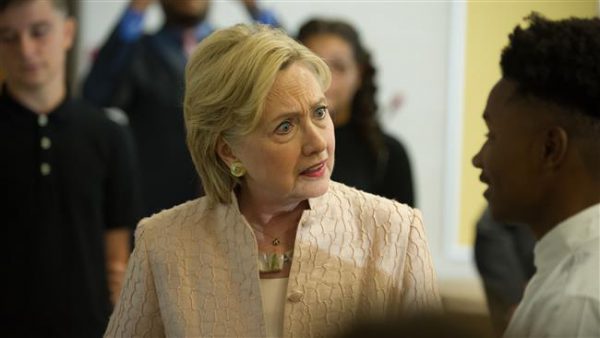
Hillary Clinton called half of Trump voters “a basket of deplorables”. In all the discussions I have had with American “liberals”, they explained to me that Trump supporters were mostly uneducated white men.
However, I am old enough to remember an era when the all the leftwing parties, socialist or communist, and even American Democrats, were based on the workers or the “working class” or the “common man”. Nobody thought to inquire whether they had university degrees or to investigate whether or not their opinions were politically correct on issues such as racism, sexism or homophobia.
What defined the workers as progressive subjects was their economically exploited condition and not some ideological orthodoxy or moral purity.
At the end of the 1970s a great change took place within leftwing parties. They were increasingly dominated by academics and their ideology changed radically from that of the classical left.
Far from aiming to establish some form of socialism, or merely of social justice, the left turned into the champion of the fight for equal opportunity, against discrimination and prejudice, and – with the rise of globalization – the opening of markets.
The more or less mythical hero of the left was no longer the proletarian but the marginal, the migrant, the foreigner, the dissident, or the rebel – even if he happened to be a religious fanatic that no leftist intellectual would have anything to do with. One recalls how Jean-Jacques Rousseau made fun of those who pretend to love the Tartars in order to avoid loving their neighbors.
Little by little a new class alliance formed: the one percent as it is called, or more realistically the richest ten percent who benefit from globalization are allied with the middle class intelligentsia to sell us globalization in the name of “openness to others” and which flaunt the specter of racism or sexism to attract minorities and certain feminists (for although women are not a minority, certain feminist demands are similar to those of minorities).
But that alliance was extremely unnatural in socio-economic terms, because the main victims of globalization are the least qualified workers, often women or members of minorities.
The left’s pro-globalization bias led it astray step by step. First it gave up all effort at regulating the economy, satisfying itself with claiming to share the fruits of growth fairly by ensuring “equal opportunity”. But in the real world, inequalities grew far more than the economy.
They also imagined that international law could be abolished and that a certain “international community” – in practice the United States and its allies – would maintain world order by military means. Again, in the real world that only created chaos, refugees and resistance to that American order. In fact, in the long term, the American population itself came down with a strange disorder, “war fatigue”. Except for a minority of ideologues, hardly anyone in the United States wants to bear the costs of an empire (see the Boston Globe for a lucid analysis of those costs).
The protests of the victims of globalization had to be dealt with. The trick was to use the ideology of tolerance: any objection to globalization was labeled racism, xenophobia. Intellectuals took up the “fight against racism” with enthusiasm, with an eye to preserving their own privileged social position, sheltered from the economic storms of globalization.
In the United States, it was enough to stigmatize bad thoughts; in Europe, they were taken to court.
All that had to explode sooner or later, just as the Berlin Wall came down and the USSR collapsed, and for the same reasons: a self-satisfied but fairly incompetent elite, isolated from social realities, which claims to do what is best for the people without consulting them, and which finally doesn’t even deliver the promised benefits, ends up provoking rebellion against itself.
First the Brexit, then Trump. Whatever one may think of that individual, the worse the things said about him by American “liberals”, the more they expose the enormity of their defeat. After years of political correctness and sermons on feminism and antiracism, what can be more humiliating than the election of someone as demonized by feminists and antiracists as Trump?
For ardent supporters of the European Union, globalization and humanitarian wars, the victory of Trump has an effect comparable to that of the Polish worker strikes on the ruling Communist Party; they exposed the discontent even in the proletariat that theoretically exercised its dictatorship. The election of Trump shows the revolt of the American population in the very citadel of free markets and imperialism.
It remains to be seen whether Trump will carry out the progressive aspects of his program; protectionism and peace with Russia. Those are the aspects that most infuriate the oligarchy, much more than his rude remarks and contradictions. Those are thus the aspects that will require the most intelligence and determination if they are to be realized.
A left which dares take a close look at its past errors should do all it can to push Trump in that direction, rather than to alienate the population still more by once again mounting its high horse of moral superiority and selling its soul to the leaders of the Democratic Party responsible for their own defeat.[1]
A french version of this article was previously published.
[1] Sanders seems to go in that direction : « To the degree that Mr. Trump is serious about pursuing policies that improve the lives of working families in this country, I and other progressives are prepared to work with him » http://www.sanders.senate.gov/newsroom/press-releases/sanders-statement-on-trump
JEAN BRICMONT teaches physics at the University of Louvain in Belgium. He is author of Humanitarian Imperialism. He can be reached at Jean.Bricmont@uclouvain.be
November 12, 2016
Posted by aletho |
Economics, Supremacism, Social Darwinism, Timeless or most popular | BREXIT, United States |
Leave a comment
So, there it is: Brexit, as I had earlier suggested, was no extraneous “flash in the pan,” but a manifestation of wider and deeper discontents in Western society. Let us be clear: not only did 60 million Americans vote for Donald Trump, but a further 13 million, who voted for Bernie Sanders (in the primaries) similarly voted for strategic change – albeit from within a different political orientation.
I do not intend, here, to attempt any post-mortem on the U.S. election, but rather to try to see what may stand hidden behind the Brexit and Trump events – obscured for now by their overly prominent presence on the forestage of the media and politics.
The first concerns Donald Trump: Unsurprisingly, his personal foibles and his billionaire background have become the focus of a hostile media who question whether he has the ability to bring about strategic change, or not. This is an important question, but still it misses the point. The point here is that there are few – very few – opportunities for elected officials to challenge the status quo – especially when Western centrist parties have patently conspired to offer voters mere nuanced variants of the same “progressive,” liberal, globalized agenda.
In short, there evidently has been a constituency building up, so exasperated at the imperviousness of the elites to the true situation of this constituency, that they want the status quo gone, by whomsoever’s hand is there. Whomsoever: that is the point. It was never some sort of chief executive beauty contest: Would Bernie Sanders have been an ideal President? Would Nigel Farage have been one? Will Trump be able to deliver a new era? — we do not know (but should not foreclose on that possibility). The Whomsoever aspect rather speaks to the depth of alienation that lay latent in American society.
But the message that is in danger of being obscured by the outsize focus on the outsize personality of Mr. Trump is precisely that the “discontents” at democracy, at cultural “identity” politics, at globalization and its sufferings, will not simply disappear now. Mr. Trump will succeed or fail, but the uprising will persist in one form or another – and is likely to spread to other parts of Europe, leaving the latter in turmoil and politically incapacitated.
Profound Alienation
It represents a profound alienation. We should not expect any early return of the liberal world, should Mr. Trump somehow fail.
Nor should Mr. Trump be viewed as some sort of outlandish political freak. In fact, he fits quite closely to one of the mainstream orientations of American conservatism. It is an orientation that is, by instinct, doubtful of grandiose schemes of political or social re-engineering, preferring to take human nature as it is; it is more inclined to focus on domestic needs, rather than uncertain foreign adventures; is financially conservative; is not economically determinist; and tends to see the family as the indispensable building-block of society. It is a Zeitgeist that sees other countries (say Russia or China) as normal countries with whom one should talk, and to pursue common interests.
That Trump should be regarded as some bizarre oddity, rather than as being in the line of Burke and thrice Presidential contender Pat Buchanan (who admits to a certain paternity, as it were) – speaks more to the success of the neoconservative hijack of American conservatism beginning in the 1960s than reflects the historic spectrum of this intellectual current.
One might say that the neoconservatives were never Conservative, in the sense that neoliberals were never Liberal, in the traditional understanding of these terms. What is new is that the President-elect seems to have put together a new Republican constituency of half the American electorate. And this new constituency is not just one of “red-necks” (white, blue-collar workers). It has cut across social classes and ethnic divisions. Even Wall Street traders (supposedly aligned with the Clintons) reportedly were enthusiastically yelling “lock her up” during Mrs. Clinton’s concession speech – and college-educated women only gave Mrs. Clinton a 6 percent edge over those who voted Trump.
It is possible “that this election [originally] was intended to facilitate the triumphant return of the neoconservative-neoliberal paradigm all wrapped up in ‘new packaging.’ For various reasons, the decision was made to assign this role to Hillary Clinton,” according to the Oriental Review.
Perhaps this was because she was viewed as well placed to fuse the liberal-interventionist and the neoconservative trends to the Clintonite “cultural identity politics” base – or possibly, simply because it was “her turn” at the Presidency. If so, it has failed spectacularly.
The Clinton Failure
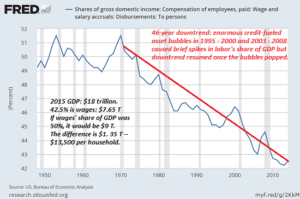
Why did it fail? One aspect of the discontent (as I have outlined before – see here) relates to the slow demise of our financialized, neoliberal, debt-driven growth model. For many in America and Europe, the reality has not been one of economic prosperity, but one of anxiety – and for the first time in the post-World War II era – a sense that the next generations’ prospects will be much tougher, and worse, than ours were.
Here (no friend to Trump) is Naomi Klein’s assessment: “They will blame James Comey and the FBI. They will blame voter suppression and racism. They will blame ‘Bernie or bust’ and misogyny. They will blame third parties and independent candidates. They will blame the corporate media for giving him the platform, social media for being a bullhorn, and WikiLeaks for airing the laundry.
“But this leaves out the force most responsible for creating the nightmare in which we now find ourselves … [financialized] neoliberalism. Here is what we need to understand: a hell of a lot of people are in pain. Under neoliberal policies of deregulation, privatization, austerity and corporate trade, their living standards have declined precipitously. They have lost jobs. They have lost pensions. They have lost much of the safety net that used to make these losses less frightening. They see a future for their kids even worse than their precarious present.
“At the same time, they have witnessed the rise of the Davos class, a hyper-connected network of banking and tech billionaires, elected leaders who are awfully cozy with those interests, and Hollywood celebrities who make the whole thing seem unbearably glamorous. Success is a party to which they were not invited, and they know in their hearts that this rising wealth and power is somehow directly connected to their growing debts and powerlessness.
“For the people who saw security and status as their birthright – and that means white men most of all – these losses are unbearable. Donald Trump speaks directly to that pain. The Brexit campaign spoke to that pain.”
Here it is represented visually:
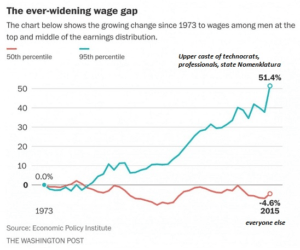
Of course, this was not the case for the urban élites:
Cultural Resistance
The second aspect to the present discontent has been cultural oppression (or, in the rhetoric of the Democratic Party, “identity politics” – one of the mainstays of the Clintonite electoral base). Its roots are complex, and lie with philosophic currents emerging out of Germany during WWII that somehow fused with American Trotskyist intellectual thinking (which then migrated to the Right). But, in gist, this current of political thought borrowed from the emerging discipline of psychology the concept of clearing the human mind – shocking it, or forcing it into becoming the “clean slate” on which a new mental program could be written by the psychiatric (or political) therapist respectively.
The political aim here was to eliminate totalitarian thinking, and fascist mental “programming,” and to replace it with a liberal-democracy circuit board.
Indeed, the U.S. Immigration and Nationality Act of 1965 was promoted by this intellectual group precisely in furtherance of the notion that concepts such as “national culture” would become meaningless as a result of immigrant cultural dilution. By the 1970s and 1980s, the objective had evolved to implant the idea that there was really no politics to modernity (Fukuyama’s End of History) since all governance somehow had boiled down to technocracy: ensuring effective liberal market functioning — a matter best left to experts.
In political terms, the “clearing” of the mind’s inherited cultural clutter was to be achieved by cultural wars of political correctness. The class war had become discredited, but there were other “victims” on whose behalf war could be waged: the war on gender discrimination, on racism, on denial of gay rights and sexual orientation stereotyping, on verbal micro-aggressions, on sexist language, or any ideas or language which disturbed the individual’s sense of “safe space” were used as tools to clear away old cultural “brush” of inherited national culture, and open the way for an American-led, globalized world.
The ostensible factor linking all these notions of victim “wars” was that their antonym amounted either to fascism or authoritarianism. The problem with this has been that any white American blue-collar worker who attended church, who believed in family life, and was patriotic, became potentially a fascist, a racist, a sexist or a bigot.
Many ordinary Americans (and Europeans) disdain this “cultural” war which places him or her (according to Hillary Clinton), in the “‘basket of deplorables’ Right? Racist, sexist, homophobic, xenophobic, islamophobic, you name it,” and who looked upon his or her community as representing nothing more than a “fly-over” state in the view of the U.S. coastal élites.
The deplorables have now risen up. Donald Trump’s salty language was no liability – it was an electoral asset by thumbing his nose at this correctness, and at so-called ”snowflake” sensibilities. Trump’s ‘incorrectness’ touched on a deep vein of resentment within American traditional society.
Not only does “flyover America” resent being termed “deplorables,” they feel too clearly the disdain in which the American and European elites hold them – and dislike their arrogance in suggesting that there is only one rational, sensible way of doing things, and that they – the elites, being the experts and a part of the Davos set – should tell the rest of us what it is: (despite their decades of failures).
High Emotions
Emotions are high on both sides. To gain a sense of how bitterly the cultural war will be fought, listen to this from the partly-Soros-funded populist mobilization movement Azaaz (linked to America’s Move On organization): “Dear Mr. Trump: This is not what greatness looks like. The world rejects your fear, hate-mongering, and bigotry. We reject your support for torture, your calls for murdering civilians, and your general encouragement of violence. We reject your denigration of women, Muslims, Mexicans, and millions of others who don’t look like you, talk like you, or pray to the same god as you. Facing your fear we choose compassion. Hearing your despair we choose hope. Seeing your ignorance we choose understanding. As citizens of the world, we stand united against your brand of division.”
In short, with Brexit and the Trump victory, we are witnessing an historic point of inflexion. As I noted in mid-October (quoting British political philosopher John Gray): “If the tension between [the globalization project on one hand] and the [sovereign] nation state, [on the other] was one of the contradictions of Thatcherism … From Bill Clinton and Tony Blair onward, the center-left embraced the project of a global free market with an enthusiasm as ardent as any on the right. If globalization was at odds with social cohesion, society had to be re-engineered to become an adjunct of the market. The result was that large sections of the population were left to moulder in stagnation or poverty, some without any prospect of finding a productive place in society.”
“If Gray is correct that when globalized economics strikes trouble, people will demand that the state must pay attention to their own parochial, national economic situation (and not to the utopian concerns of the centralizing elite), it suggests that just as globalization is over – so too is centralization (in all its many manifestations).”
Well, the global trend does not seem to be going in the Avaaz direction. It seems rather to be heading toward prioritizing the recovery of the state, of state sovereignty, and of state engagement in the pursuit of economic policies appropriate to the particular circumstances of the state, and in the state’s ultimate responsibility for the welfare of the community as a whole.
The question is what does this mean geo-strategically? And, secondly, can and will, Trump be able to deliver the new era? The short answer is that this new era seems to presage a period of political volatility, financial volatility and in Europe and the Middle East, the prospect of continued political “shock.”
It is clear that Mr. Trump is not a globalist. It is also clear that he is aware of some of the dangers of the present global monetarist policy. He has spoken of the U.S. Federal Reserve creating “big ugly bubbles” and that the next economic and financial crisis has been “kicked down the road” by Fed Chairwoman Janet Yellen – and clearly awaits whomsoever becomes U.S. President on Jan. 20, 2017.
Painted into a Corner
But three decades of debt-led, financialized “growth policies” leave the President-elect effectively painted into a corner: global debt has spiraled; the bubbles are there still (kept afloat by Central Bank coordinated intervention), and bubbles are infamously difficult to deflate gently; zero or negative interest rates are undermining many a business model, but cannot easily be foregone, without crashing the bond market; and QE (printing money) is systematically eating away at consumer purchasing power through the dilution of its newly created purchasing power, and the latter’s re-direction from “main street” into the financial sector – lifting nominal asset values – but creating no tangible wealth.
America and Europe effectively are in debt-deflation. How then to grow incomes so that producers of goods and services can also afford then subsequently to purchase these goods and services? Trump’s answer is to spend on domestic infrastructure projects. This may help a bit, but is unlikely – in itself – to lift and float the entire U.S. economy.
The reality is that there is no obvious global engine of growth (now that China’s “industrial revolution” has stalled at best). Every nation now is in search of new engines of growth. And it is not easy to imagine that Europe or America will succeed in retrieving all those jobs lost through globalization. Indeed, the attempt so to do – in, and of itself – might just precipitate a further deceleration of world trade, and a consequent decline in output.
In brief, the global economy may see a brief “honeymoon period” thanks to a likely spurt of U.S. fiscal indulgence and a concomitant psychological lift, stemming from – at least – the U.S. construction sector enjoying something of a boom. But ultimately the very economic crisis which Mr. Trump anticipates may prove to be the only way to cut the Gordian knot in which three decades of unprecedented debt and money printing have fettered us.
And if he is to steer through the expected crisis, Mr. Trump will have to eschew the Siren voices of the present elites telling him “TINA” (there is no alternative, but to continue as before).
Where Mr Trump might look for an early (and relatively easy) success however, may be in foreign policy. As “Nixon went to China,” so Trump can go to Russia and China, and begin to treat them as normal nations with whom it is possible to find an intersection of interests (as well as areas of disagreement).
This would be revolutionary. It could change the geo-strategical map. And as President Putin keeps repeating … the door is open (at least for now). Nothing is forever in politics.
Alastair Crooke is a former British diplomat who was a senior figure in British intelligence and in European Union diplomacy. He is the founder and director of the Conflicts Forum, which advocates for engagement between political Islam and the West.
November 12, 2016
Posted by aletho |
Economics, Supremacism, Social Darwinism, Timeless or most popular | Avaaz, BREXIT, Donald Trump, UK, United States |
Leave a comment
Political establishments in Washington and Europe are in shock over Donald Trump’s US presidential win. And it’s far from over. Europe is bracing itself as elections loom in several member states.
Germany and France could be next big shocks. If their pro-EU governments should fall, then the European bloc as we know it is over.
The era of popular revolt is upon us. Disaffected and defiant, the mass of citizens are fed up with unresponsive, unrepresentative governments, on both sides of the Atlantic, that seem to only serve an unelected oligarchy.
First we had the Brexit vote to leave the European Union earlier this year. Now, we have the election of the “anti-politician” business tycoon Donald Trump who becomes the 45th president of the US with no prior experience of elected office.
Britain’s Daily Express called his election this week a “Trump Tsunami” – a monumental wave now heading across the Atlantic to the shores of Europe. “EU braces for ‘revolution’ amid Austria, Italy, France and German elections,” reports the Express.
Trump’s stunning victory – which overturned all mainstream media predictions – was greeted with jubilation by populist parties across Europe. Nigel Farage, who led the Brexit campaign for the United Kingdom Independence Party, said he was gratefully “passing on the mantle” to Trump.
There were similar ecstatic congratulations from France’s National Front leader Marine Le Pen, and from a raft of other populist leaders in the Netherlands, Germany, Denmark, Austria, Hungary and Slovakia. Le Pen hailed Trump’s victory as proof that “anything is possible for the people”. While Hungary’s premier Viktor Orban called it a “great day for democracy”.
The glee among populist parties was in sharp contrast to the sombre response from the two incumbent governments that might be viewed as the pillars of the European Union – Germany and France.
Trump’s breakthrough election came as a complete shock to Chancellor Angela Merkel and President Francois Hollande.
France’s ambassador the United Nations Gerard Araud expressed it most succinctly when the tweeted on news of the result: “A world is collapsing before our eyes.” The diplomat quickly deleted the post, probably realizing he would later reap recriminations. But the sense of trepidation in his brief words was palpable.
While other European leaders, such as European Commission President Jean-Claude Juncker and European Council President Donald Tusk, kept to polite protocol of offering perfunctory congratulations to President-elect Trump, Merkel and Hollande adopted a bizarre condescending sniffiness.
Merkel said she would work with the new president provided he “adhered to the values of democracy and equality”. Hollande said he respected the choice of the American people but that he would be “vigilant” in future relations with a Trump administration. The French president called for a “united Europe of values” to challenge Trump.
The conceited European view of the Trump election was echoed by foreign affairs commissioner Federica Mogherini, who said that the EU must now be a “superpower for peace”, standing up for democratic principles.
Critics would riposte that the EU hasn’t done much standing up for democratic values in its supine dealings with Turkish autocratic President Recep Tayyip Erdogan in his latest crackdown against his country’s independent media. Nor has the EU been a beacon of virtue in its support for US-led regime-change machinations across the Middle East and North Africa, as well as indulging the Saudi and other Gulf Arab dictatorships with copious arms exports.
What is really unnerving the German and French leaders is that the Trump victory lends momentum to similar populist opposition parties within their borders. Both countries are holding national elections over the next year. Already, in regional elections during the past year, the Alternative for Deutschland (AfD) and National Front have made major inroads against the governing parties.
In the wake of Trump’s breakthrough, it is now being reported that Marine Le Pen may even win the French presidency – a result that would have seemed impossible only a few years ago. With Socialist president Hollande’s public approval rating languishing at record lows, few people would exclude a shock upset.
Merkel’s fourth bid for the chancellery as head of the Christian Democratic Union might be a little more secure, but in the coming months the “Trump Effect” – as her advisers are warning of – might translate into another landmark defeat.
Merkel and Hollande’s pious reaction to Trump’s presidential win shows that these two leaders and their ruling circles still don’t get it. The implicit moralistic tone deprecating Trump’s supporters as “right-wing rabble” shows that the incumbent European rulers are missing the plot of what is happening.
True, elements of support for Trump and populist parties across Europe are tinged with reactionary racist and xenophobic views. But it is a grave mistake to simply dismiss them. The rise in opposition to economic globalization that has enriched the few while impoverishing the masses is correlated with opposition to rampant immigration of cheap labor. Economic globalization as ordained by the oligarchy is also correlated with illegal wars overseas for elite-driven regime change, which, in turn, has fed into an influx of refugees from war-torn countries.
To be anti-immigrant is not necessarily an expression of racism or xenophobia. It is more fundamentally a legitimate opposition to political and economic disenfranchisement that has been imposed on societies by a self-serving, self-enriching elite who control political parties like puppets.
The European Union has for years been subservient to Washington’s “Atlanticism” whereby supposedly sovereign European states have become nothing more than vassals to US hegemony. Washington dictates neoliberal capitalist globalization, Europe obeys. Washington dictates criminal regime-change wars in the Middle East, Europe obeys. Washington dictates reckless NATO expansion and hostility towards Russia, Europe obeys.
The popular revolts sweeping the US and Europe are thus far amorphous and characterized in the establishment media as “right-wing”. But what is underway is perhaps best understood as a pent-up revenge by the masses against pampered and decadent elites who for too long have denied people a fair livelihood. The elites are only too willing to wage wars in foreign countries allegedly for “democracy and human rights” while depriving their own people a modicum of living.
Donald Trump has tapped into that groundswell of popular discontent. He may not deliver on his promises of economic renewal for the masses, but what he gets right is that ideologically driven hostility against Russia and “liberal crusades” for democracy in the Middle East have become repugnant to a Western public oppressed by an effete oligarchy.
Trump promises a radical new beginning in Washington. One which no longer pushes Atlanticist projects of economic globalization, wars and NATO expansionism.
In this new global outlook, Atlanticist politicians in Europe like Germany’s Merkel and France’s Hollande are suddenly left without geopolitical moorings. The tide of history is changing and they are being left high and dry.
With Brexit and Trump there seems to be a long overdue renewal of democracy – albeit reactionary in some forms to date.
The old order with its pretensions of “liberal values” is being assailed. And Merkel, Hollande and their Atlanticist ilk sound uncannily like the ill-fated Marie-Antoinette and Louis XVI.
November 12, 2016
Posted by aletho |
Supremacism, Social Darwinism, Timeless or most popular | Angela Merkel, BREXIT, European Union, François Hollande, NATO |
Leave a comment
Part 1: Introduction
For the last 30 years, I have witnessed and experienced the severe restraints on any free and balanced discussion of the facts. This reluctance to criticize any policies of the Israeli government is because of the extraordinary lobbying efforts of the American-Israel Political Action Committee and the absence of any significant contrary voices.
— Former U.S. President Jimmy Carter [1]
How the Interviews Came About
The Marxian thesis that the dominant culture and ideology of a society (here referred to as Social Base or just Base) are those of the dominant class (here referred to as System) is a sharp tool to probe how political systems work and how they stay in power. Does this tool work in the U.S. model? Certainly, in the United States, the relation between the System and its Social Base has been regular since the inception of the thirteen colonies. Because of that sustained regularity, System and Base acted in convergent patterns of dependency. In historical perspective, it was not possible for the System to transform those colonies into states, and thereafter expand its conquests to form a continental empire without a solid social base that shared its purpose and visions for expansion. From that time onward, an ideological symbiosis ran between the System and the Base. Not only that, but each time the System modifies direction, philosophy, or ideology, the Base would adapt by modifying its attitudes and perception.
The patterns of ideological association between the U.S. System and its Social Base extended into modern times, and the yardstick to measure them is the presidential elections. If you look at voters’ turnout since 1960, you will notice that a relative-to-large majority of Americans had voted in those elections. My interpretation of the vote in relation to Marx’s thesis is the following. Voting for a system that is known for its aggressive imperialist policies, crimes around the world, overthrowing foreign governments not in line with Washington, and countless military interventions and invasions that left millions of people dead means one thing: Voting for that system while knowing its attributes, policies, and actions amounts to active sharing in its ideology, culture, and violence.
Caveat! That does not necessarily mean that all voters share the System’s imperialistic values of violence and destruction of foreign peoples. The pertinent meaning of voting interpreted in relation to the System’s foreign policy objectives versus the objectives of the Base resides in two concepts. Discarding immediately the notion that the Base has been cohabitated by the system, the first concept has it that the Base has given a mandate to the System to carry out its ideology of empire and imperialism based on the undeclared condition to spare the people from the horrors of foreign wars. A dichotomy sets in here. The System has its way of life, and the Base has its own. The second concept has to do with the basic tenets of colonialism. Meaning, if the System could be successful to obtain unspecified benefits through wars, then the base could share in these benefits despite aversion to violence and opposition to the institution of war as a means to resolve problems between nations.
A question: Would abstaining from voting resolve the issue of “active sharing” in the policies of the system? This subject is open for debate . . .
The relation between the American System and its Base was uniform up to a certain point in history (late 1920s). Until that point, the American state was still busy completing its structural transformation into a big power status. That uniformity, however, managed to keep the patterns of the political power unchanged. To be exact, despite persistent immigration that should have altered the relations between the Base and government, as well as the composition of the latter, the dominance of the traditional ruling elites was 1) not open for challenge, and 2) shaped by an exclusive American Anglo-Saxon experience.
But when Franklyn D. Roosevelt showed signs of surrender to the Zionist pressure on the issue of establishing a “Jewish” state in Palestine, he opened a large crack in the System. That was the first time in U.S. history where the powerful American imperialist state yielded to a foreign ideology that was not part of its basic project. With that, a movement with a limited religious social base began penetrating the files and ranks of the U.S. power. The rest is history. As a result, the unrelenting entrenchment inside the political structures of the United States coupled with accumulated changes in the configuration of the U.S. power, the dominant American System itself fell under the domination of one of its social factions—American Jewish Zionists.
When Franklyn D. Roosevelt showed signs of surrender to the Zionist pressure on the issue of establishing a “Jewish” state in Palestine, he opened a large crack in the System.
As a group, American Jewish Zionists have all attributes of an independent establishment. They possess efficient organizational structures, have a monolithic political presence across the American system, and they know how to finance their activities with U.S. tax money. I must note that their alignment with the global agenda of U.S. imperialism is a two-point expedient. The first is focused on being recognized as earnest operators at the service of America’s interests. The second is tactical. To reap, on behalf of Israel, the benefits of alignment with slogans such as “Israel is our only trusted ally in the Middle East”.
The American Jewish Zionist experience is agenda driven. As such, their domestic and foreign agendas have precedence over any other Jewish-related consideration.
On the domestic front, the focus could not be more evident: to consolidate Zionism in the United States and turn it into a means to 1) perpetuate Israel as an American national issue, and 2) make of them the principal factor in defining American politics. You can notice the endeavor clearly during U.S. elections when the Zionist media question whether this or that candidate is good for the Jews, and for Israel. Today, voicing dissent against the policies of American Jewish Zionism or criticizing Israel amounts to crime. Jimmy Carter experienced this firsthand. When he published his book: Palestine: Peace not Apartheid, American Jewish Zionists unleashed the fire of hell upon him.
As for the Jewish Zionist foreign agenda, this is clear-cut and leaves no space for misunderstanding. It aims to induce, control, or lead the United States to 1) adopt hostile policies toward the Arab nations because due to their rejection of the Zionist state, and 2) undertake military actions against any country that appears as posing a potential or direct threat to Israel. Equally important, it demands that the United States keep denying the Palestinians rights for nationhood through American diplomacy. What is the rationale? Recognition of the Palestinian national rights means the invalidation of the Zionist state and its claim on Palestine.
Because the Jewish Zionist control of the U.S. System is real and dominant, how does the American society figure vis-à-vis this dominance? Based on observations of the American society and its multiple cultural and ideological patterns, there can be but one answer: Zionism is not the dominant culture and ideology of the American people. It is, however, the dominant culture and ideology of the U.S. political system.
OBSERVATIONS
First, despite gargantuan Zionist propaganda apparatuses directed to the American people, Jewish Zionists have consistently failed to create interest or sympathy for Zionist issues and for Israel,
Second, due to historically developed indifference to foreign issues, a majority of Americans have only vague ideas on what Zionism is,
Third, to establish roots for their political dominance, Jewish Zionist activists invariably focus not on the American people, but on ways to control the American system from inside by controlling first the institutions that matter: White House and Congress.
Fourth, this control did not happen because of elections. It is preponderantly due to the practice of appointing Jewish Zionists to important positions inside the administrations,
Fifth, among the stratagems employed by Zionists when they run for elective offices, one was particularly effective: Take advantage of the reverence of the population for the idea of election. To do that, Jewish Zionist candidates rarely, if ever, talk about Israel or Zionism. Instead, they only debate matters of interest to the voters. Once elected though, promoting Israel via American legislations becomes the top hidden agenda,
Sixth, and to conclude this particular argument, the fact that one administration after another succumbed to the diktat of Jewish Zionists (thus indirectly to Israel) in matters of foreign policy and wars proves that the culture and praxis of those administrations are those of the dominant ideology and culture—Zionism.
Another point to discuss is the expansion of the Jewish Zionist power. By all accounts, such an expansion is not a phenomenon but an incremental process. In his book, The Arabists: The Romance of an American Elite, Robert D. Kaplan defined the issue that I framed as a process in terms of gradual replacement of traditional diplomatic elites with new ideological elites that had no interest in the ways of the old school of diplomacy. Kaplan was unambiguous. He called these new elites by their names: Irish-Americans and Jewish-Americans.
Kaplan’s viewpoint on this replacement is important to our discussion. He argued that the old elites approached the U.S.-Arab relations with an open mind and readiness for dialog, all while keeping an eye on the U.S. imperialist interests. His argument opens the door for a veritable conclusion. The two groups of post-WWII American society that Kaplan mentioned had in fact changed the dynamics of U.S. foreign policy. (It is public knowledge that both groups are known for their hostility toward Arabs and Muslims—each for his own set of religious, political, and ideological rationales.). As for the successive shares of African-Americans and Hispanics in the making of the national policy of the United States, this is another argument.
As a witness to history, in early 2012, I began drafting a comprehensive analysis on the role of American Jewish Zionists in the making of U.S. policies and wars in the Arab world. In May of that year, as my work became broad in scope, I decided to seek more views on the subject. I came up with the idea to conduct several interviews where I pose the same questions. While some of the prospective interviewees declined, and others accepted but then withdrew, three prominent thinkers acclaimed for their knowledge, scholarship, and outstanding political activism graciously gave me their views.
They are Francis Boyle, a professor of international law, University of Illinois, College of Law; James Petras, a professor emeritus, University of Binghamton, New York; Canadian writer and former co-editor of the online publication of Dissident Voice Kim Petersen. Professors Boyle and Petras answered my questions via phone conversations, and, Petersen via email correspondence.
However, in the weeks following the interviews, my work swelled up to such a length that it became unsuitable for internet publishing. In short, I was unable to honor my commitment to publish the interviews as planned. Today, as I thank Prof. Francis Boyle, Prof. James Petras, and Kim Petersen for sharing their invaluable insight, I apologize to them for the delay in putting the interviews out there to read.
INTRODUCTION
The turning point in the emergence of Jewish Zionism as a dominant American political force came about when Iraq invaded Kuwait. (Discussing the origins and strategic complications of that invasion goes beyond the scope of this introduction.) The Jewish Zionist establishment seized the occasion, mobilized its omnipresent propaganda operatives, and led colossal media campaigns to promote military actions against Iraq. To bring their war mania to fruition, they unleashed their “experts” in all directions. They talked about Iraq’s “formidable” military capabilities and about Saddam’s one-million-man standing army ready to invade Saudi Arabia and seize its oil. They told stories about Saddam Hussein’s personal life, his bunkers, and his mortal “nuclear threats” to Israel. And they talked about Iraq’s threats to U.S. interests and “allies” in the Middle East. . . . Here is a brief account of those events.
On July 25, 1990, Iraqi president Saddam Hussein met with U.S. ambassador to Iraq, April Glaspie. It is on record that Glaspie gave Hussein an unambiguous but indirect greenlight to resolve Iraq’s problems with Kuwait militarily. On August 2, Iraq invaded Kuwait. On August 3, George H. W. Bush ordered the freezing of Iraqi and Kuwaiti assets and immediately placed Iraq under hermetic embargo. Considering the prompt, extraordinary anti-Iraq measures that the United States took in the first 24 hours of that invasion, one wonders what was pushing the U.S. to move so quickly on Iraq knowing that only two days earlier, this was conducting a U.S. proxy against Iran. The observation that the U.S. did not take similar actions when Iraq invaded Iran in 1980, or when Israel invaded Lebanon in 1982 raises many questions. What were the U.S. rationales in taking such measures? Who conceived them? Did the U.S. entrap Iraq? Why? . . .
The atmosphere that followed the invasion was surrealistic. Like a lightning bolt, U.S. imperialist and Zionist forces instantly mobilized their media, talking heads, retired generals, and bogus experts on the Middle East. The deafening uproar they made and all lies they told about atrocities committed by Iraq in Kuwait hid a definite scheme: Incite for war. In the period August 2, 1990 – January 14, 1991, Israelis and Jewish Zionists from all fields appeared en mass and in every possible medium available to urge the Bush regime to give up diplomacy in favor of war. On January 15, 1991, a 30-member “coalition” in which the U.S. had the lion share—ninety-seven percent of the total force—attacked Iraq. By every standard and minutia of details, the war on Iraq in 1991 was an American War.
At the end of a war that destroyed one of Israel’s Arab adversaries, George H. W. Bush might have thought of himself as America’s “laureate hero”. He did not predict though that his temporary freezing of the U.S. loan guaranties to Israel, would have unleashed the Jewish Zionist establishment against him. The fact that he lost to Bill Clinton (who opposed Bush’s freeze, and who stated that Israel was the “only country that paid back its debts”) indicated that American Jewish Zionists had finally reached their objective: To perfect ways to control the U.S. politics from the inside. In retrospect, it can be said that George H. W. Bush was the last non-Zionist American president. From Bill Clinton forward, U.S. presidents and their vice president became pawns in the Jewish Zionist play of power.
Now, as the United States was preparing for war with Iraq to “liberate” Kuwait, thousands of antiwar activists and intellectuals from a wide spectrum of political convictions spoke loudly against it. But no one could have ever beaten Patrick J. Buchanan’s memorable words about how American Jewish Zionists and Israel were pushing for that war. He said, ”There are only two groups that are beating the drums for war in the Middle East – the Israeli Defense Ministry and its amen corner in the United States.” [2] With that, Buchanan hit the proverbial nail on the head. A.M. Rosenthal, a ringleader of U.S. Zionist journalism could not bear what he heard. In a rebuttal, he unleashed an acerbic attack against Buchanan. His weapon of argument, so to speak, was the stale and trite accusation of “antisemitism”.
Whining, Rosenthal twisted Buchanan’s clear words and went on to imply that Buchanan was in effect engaging in an “anti-Jewish” tirade. He re-interpreted Buchanan’s words and cast them in a standard Zionistic fashion. He wrote that Buchanan’s intention was ”The Jews are trying to drag us into war. Only Jews want war. Israeli Jews want war to save Israel’s hide. American Jews who talk of military action against Iraq want war because it would suit Israeli interests. They are willing to spill American blood for Israeli interests.” [3]
By inserting the word, “Jew” in his reply, Rosenthal and the New York Times behind him spat on the face of U.S. political reality under the tight grip of Zionism. We need not waste our breath on Rosenthal’s petty tactic. His clear objective was to distract from the central issue, which is, Buchanan’s opposition to the planned war against Iraq was unrelated to the religious denomination of those who were promoting it. Rather he was unmistakably referring to their political identity.
Still, Buchanan was honest. He pointed the finger to Israel and its “Amen corner” because that was the truth. The fact that most Israelis and “Amen corners” happened to be of Jewish faith was nonissue. To conclude, it is evident that Buchanan, a dreamer of an American “republic” not “empire”, could not stand by idle while seeing the United States sheepishly fastened to the yoke of Zionism and gutlessly prostrating before a tiny settler state, Israel.
Buchanan did not stop there. Truthful and resolute, he dared to describe in categorical terms the pitiful condition of the U.S. Congress vis-à-vis Israel and American Jewish Zionists. He dubbed it as “An Israeli-occupied territory” [4]. Buchanan powerfully hit the target in such a way that countless cowardly American politicians would dare not think, let alone say. Notice that Buchanan had placed Israel before its U.S. “amen corner”. I view this as a statement. He clearly implied that Israel is the primary decision maker. Did that also imply that U.S. Zionist groups (amen corner) are puppets moved by Israel? Most likely, if so, which has more power in setting the U.S. world agenda and policies: Israel or American Jewish Zionists? Dialectically, the answer should be Israel by means of its “amen corner’.
Now, in December 1991, Jim Lehrer (a former co-anchor of The Macneil/Lehrer NewsHour, and later sole anchor of The NewsHour with Jim Lehrer) interviewed Pat Buchanan. It is important to mention, that Jim Lehrer has monopolized a significant position funded by federal tax money for over 30 years starting in 1975. Is that an issue? Yes, and to debate it, the following applies. Whenever a specific group of people, be they Christian, Muslim, Jewish, atheist, duopoly party apparatchiks, etc., keeps an important public post for such a long duration, the implication is unescapable: the group controls that post because of its embedded importance. . . . But more important, they have the power to keep it.
Nonetheless, when a specific group continues to hold, throughout time, important positions inside public corporations, agencies, and branches of the U.S. government, a paradigm emerges. Either the group controls said corporations directly—that is why it is able to do what they want. Or, it controls them indirectly by controlling first who appoints the board of trustees and sets corporate policies and appointees. At any rate, considering this type of control, the assumption that such group has power over the government and its public corporations is reasonable.
Additionally, the issue of monopoly of news is critical in another respect. It means that someone within the context of U.S. imperialism has decided that the U.S. public discourse must conform to predetermined patterns. In these patterns, issues such as Israel, Zionism, Palestine, U.S. imperialism in the Middle East, wars, etc., are designed to move only on linear grounds without ever touching the core of the matter.
Before continuing, I must state that Lehrer’s political views are not a subject to discuss vis-à-vis his program. For one, the NewsHour program is not about the personal views of presenters—it is about information prepared for the public from a public corporation. Second, whether Lehrer had sympathies for Israel or Zionism is nonissue because most viewers expect neutral discussions regardless of who delivers them. Nevertheless, a situation such as this has a consequence affecting the special relations between the narrated news/comments, the people who deliver them, and the people who hear them.
Firstly, planning news delivery to attain specific results is a good technique for those in the business of indoctrination. Psychology and perception are the areas of expertise that news planners depend on to disseminate certain news and analyses. To be sure, these planners know that most viewers have no special or personal stakes on events happening in other countries. Still, the immediate consequence that controlled news and commentaries could generate is easy to predict. They also know they can seep to the viewers pre-conceived ideas through pleasant dialogs, affable manners, appearance of neutrality, and clever circumlocutions.
To be fair to Lehrer, he was consistent in making intelligent questions. However, he was also consistent at doing something else. He would calibrate his questions in such a way as not to reveal new truths or solicit critical replies that could go beyond boundaries deliberately conceived so as not to be crossed. It is pragmatic to say that the observance of these boundaries would nicely serve the Zionist and imperialist discourse. In essence, a practice thusly followed is a preemptive mechanism of control cloaked as a professional presentation.
Now, in his interview, Lehrer played dumb when he asked Buchanan about his bold characterization of the Congress. He phrased his question as follows, “You have also said that Congress is an Israeli-occupied territory. Now, what do you mean by that?” [Italics are mine]
COMMENT: Semantically as much as politically, Buchanan’s figure of speech was terse and unequivocal. He plainly meant that the Congress observes Israel’s agenda and acts accordingly. There was no need for Buchanan to say anything further because what he said had (and still has) basis in verifiable facts. With a question such as, “what do you mean by that” Lehrer was not seeking a rational reply from Buchanan. The form and content of the question had the objective of wanting to entrap Buchanan, make him retract, or at least contradict himself to show inconsistency. In essence, Lehrer had simply tried to deny that Israel controls the Congress through its “amen corner” because his “what do you mean” indicated astonishment rather than request for explanation. [5]
To wrap up the issue, without exclusion, any denial of the Jewish Zionist control of the United States is a farce. Take Abraham H. Foxman of the infamous Anti-Defamation League as an example. Foxman authored a master‑deceptive propaganda book that he called, “The Deadliest Lies: The Israeli Lobby and the Myth of Jewish Control. [Italics are mine]. First, Foxman lied. He knew very well that the Jewish [Zionist] control is not a myth but a pervasive reality. Second, but most important, the problem is not the abstract “Jewish control” but the specific—Jewish Zionist control. This can be explained using a current universal truth: hundreds of thousands of Jews from all nationalities actively oppose Zionism on political, religious, ethical, historical, and ideological grounds.
Foxman’s denial means one of two things. Either he is a parochial charlatan when the subject is the undisputed power of American Jewish Zionism, or he is very ignorant of the history of Zionism in the United States, which is impossible. Either way, Foxman’s business is propaganda, demagogy, and deception. Incidentally, Foxman’s denial looks very similar to what some Arabs do in the Middle East. Villagers—but even some city folks—try to fend off “envy” by following an eon-old superstition. They fix a drawing on a wall in their shops or homes showing the palm of an open hand with an open eye in its center. It appears that Foxman and his associates have their own superstition. By decrying the “deadliest lies” against American Jewish Zionists, they try to fend off the accusation or the “envy” that Jews—specifically, Jewish Zionists—have power and influence.
Of substance, did Foxman not learn or did anyone inform him about what John Foster Dulles told William Knowland (a pro-Zionist senator from California) back in February 1957? In an exchange about the proposed sanctions to get Israel out of Egyptian territory occupied by Israel in the Suez War, Dulles pronounced these prophetic words, “We cannot have all our policies made in Jerusalem . . .” [6]. That was in 1957. Today, all those who deride or deny the charge that Israel has a say on U.S. foreign policy and wars in the Middle East must prove that those who are making this charge are misinformed or just lying.
Interestingly, years after Buchanan made that statement, the successive events proved his sharp assessment and political perspicacity. Two people vindicated his characterization of Capitol Hills as an Israeli-occupied territory” and both used his words to make the point. The first is a former CIA officer Philip Giraldi, and the second is Philip Weiss, founder of MondoWeiss website. In an article he wrote in 2011, Giraldi pointed to the Congress as, “It’s Still Occupied Territory“. Weiss titled a piece he wrote in 2015 as such: “Capitol Hill — still Israeli-occupied territory“.
At this point, do American Jewish Zionists control the United States? Do they control it as polity or only the political system? Do they have real influence in setting U.S. foreign policy and wars against the Arab and Muslim nations? Or maybe all this talk is no more than baseless allegations?
NEXT
Part 2: Discussion
Part 3: Interview with Francis Boyle
Part 4: Interview with James Petras
Part 5: Interview with Kim Petersen
NOTES
- Jimmy carter, Speaking frankly about Israel and Palestine, Los Angeles Times, 8 December 2006
- Pat Buchanan, The McLaughlin Group, Aug 26, 1990, quoted in the Washington Report on Middle East Affairs, What They Said: Israel and Its “Amen Corner”, February 1992
- ON MY MIND; Forgive Them Not, The New York Times, 14 September 1990
- Quoted in the Washington Report on Middle East Affairs, Is Congress an Israeli-Occupied Territory?, July 1995
- The Washington Report on Middle East Affairs, What They Said: Israel and Its “Amen Corner”, Feb. 1992
- David Tal, editor, The 1956 War: Collusion and Rivalry in the Middle East, Frank Cass Publishers, 2001, p. 40
November 11, 2016
Posted by aletho |
Ethnic Cleansing, Racism, Zionism, Mainstream Media, Warmongering, Timeless or most popular, Wars for Israel | Iraq, Israel, Jim Lehrer, Middle East, Palestine, PBS, United States, Zionism |
Leave a comment
November 11 is Armistice Day / Remembrance Day. Ninety-eight years ago, on the 11th hour of the 11th day of the 11th month of 1918, fighting ceased in the “war to end all wars.” People went on killing and dying right up until the pre-designated moment, impacting nothing other than our understanding of the stupidity of war.
Thirty million soldiers had been killed or wounded and another seven million had been taken captive during World War I. Never before had people witnessed such industrialized slaughter, with tens of thousands falling in a day to machine guns and poison gas. After the war, more and more truth began to overtake the lies, but whether people still believed or now resented the pro-war propaganda, virtually every person in the United States wanted to see no more of war ever again. Posters of Jesus shooting at Germans were left behind as the churches along with everyone else now said that war was wrong. Al Jolson wrote in 1920 to President Harding:
“The weary world is waiting for
Peace forevermore
So take away the gun
From every mother’s son
And put an end to war.”
Believe it or not, November 11th was not made a holiday in order to celebrate war, support troops, cheer the 16th year of occupying Afghanistan, thank anybody for a supposed “service,” or make America great again. This day was made a holiday in order to celebrate an armistice that ended what was up until that point, in 1918, one of the worst things our species had thus far done to itself, namely World War I.
World War I, then known simply as the world war or the great war, had been marketed as a war to end war. Celebrating its end was also understood as celebrating the end of all wars. A ten-year campaign was launched in 1918 that in 1928 created the Kellogg-Briand Pact, legally banning all wars. That treaty is still on the books, which is why war making is a criminal act and how Nazis came to be prosecuted for it.
“[O]n November 11, 1918, there ended the most unnecessary, the most financially exhausting, and the most terribly fatal of all the wars that the world has ever known. Twenty millions of men and women, in that war, were killed outright, or died later from wounds. The Spanish influenza, admittedly caused by the War and nothing else, killed, in various lands, one hundred million persons more.” — Thomas Hall Shastid, 1927.
According to pre-Bernie U.S. Socialist Victor Berger, all the United States had gained from participation in World War I was the flu and prohibition. It was not an uncommon view. Millions of Americans who had supported World War I came, during the years following its completion on November 11, 1918, to reject the idea that anything could ever be gained through warfare.
Sherwood Eddy, who coauthored “The Abolition of War” in 1924, wrote that he had been an early and enthusiastic supporter of U.S. entry into World War I and had abhorred pacifism. He had viewed the war as a religious crusade and had been reassured by the fact that the United States entered the war on a Good Friday. At the war front, as the battles raged, Eddy writes, “we told the soldiers that if they would win we would give them a new world.”
Eddy seems, in a typical manner, to have come to believe his own propaganda and to have resolved to make good on the promise. “But I can remember,” he writes, “that even during the war I began to be troubled by grave doubts and misgivings of conscience.” It took him 10 years to arrive at the position of complete Outlawry, that is to say, of wanting to legally outlaw all war. By 1924 Eddy believed that the campaign for Outlawry amounted, for him, to a noble and glorious cause worthy of sacrifice, or what U.S. philosopher William James had called “the moral equivalent of war.” Eddy now argued that war was “unchristian.” Many came to share that view who a decade earlier had believed Christianity required war. A major factor in this shift was direct experience with the hell of modern warfare, an experience captured for us by the British poet Wilfred Owen in these famous lines:
If in some smothering dreams you too could pace
Behind the wagon that we flung him in,
And watch the white eyes writhing in his face,
His hanging face, like a devil’s sick of sin;
If you could hear, at every jolt, the blood
Come gargling from the froth-corrupted lungs,
Obscene as cancer, bitter as the cud
Of vile, incurable sores on innocent tongues,
My friend, you would not tell with such high zest
To children ardent for some desperate glory,
The old Lie; Dulce et Decorum est
Pro patria mori.
The propaganda machinery invented by President Woodrow Wilson and his Committee on Public Information had drawn Americans into the war with exaggerated and fictional tales of German atrocities in Belgium, posters depicting Jesus Christ in khaki sighting down a gun barrel, and promises of selfless devotion to making the world safe for democracy. The extent of the casualties was hidden from the public as much as possible during the course of the war, but by the time it was over many had learned something of war’s reality. And many had come to resent the manipulation of noble emotions that had pulled an independent nation into overseas barbarity.
However, the propaganda that motivated the fighting was not immediately erased from people’s minds. A war to end wars and make the world safe for democracy cannot end without some lingering demand for peace and justice, or at least for something more valuable than the flu and prohibition. Even those rejecting the idea that the war could in any way help advance the cause of peace aligned with all those wanting to avoid all future wars — a group that probably encompassed most of the U.S. population.
As Wilson had talked up peace as the official reason for going to war, countless souls had taken him extremely seriously. “It is no exaggeration to say that where there had been relatively few peace schemes before the World War,” writes Robert Ferrell, “there now were hundreds and even thousands” in Europe and the United States. The decade following the war was a decade of searching for peace: “Peace echoed through so many sermons, speeches, and state papers that it drove itself into the consciousness of everyone. Never in world history was peace so great a desideratum, so much talked about, looked toward, and planned for, as in the decade after the 1918 Armistice.”
Congress passed an Armistice Day resolution calling for “exercises designed to perpetuate peace through good will and mutual understanding … inviting the people of the United States to observe the day in schools and churches with appropriate ceremonies of friendly relations with all other peoples.” Later, Congress added that November 11th was to be “a day dedicated to the cause of world peace.”
While the ending of warfare was celebrated every November 11th, veterans were treated no better than they are today. When 17,000 veterans plus their families and friends marched on Washington in 1932 to demand their bonuses, Douglas MacArthur, George Patton, Dwight Eisenhower, and other heroes of the next big war to come attacked the veterans, including by engaging in that greatest of evils with which Saddam Hussein would be endlessly charged: “using chemical weapons on their own people.” The weapons they used, just like Hussein’s, originated in the U.S. of A.
It was only after another world war, an even worse world war, a world war that has in many ways never ended to this day, that Congress, following still another now forgotten war — this one on Korea — changed the name of Armistice Day to Veterans Day on June 1, 1954. And it was six-and-a-half years later that Eisenhower warned us that the military industrial complex would completely corrupt our society. Veterans Day is no longer, for most people, a day to cheer the elimination of war or even to aspire to its abolition. Veterans Day is not even a day on which to mourn or to question why suicide is the top killer of U.S. troops or why so many veterans have no houses at all in a nation in which one high-tech robber baron monopolist is hoarding $66 billion, and 400 of his closest friends have more money than half the country.
It’s not even a day to honestly, if sadistically, celebrate the fact that virtually all the victims of U.S. wars are non-Americans, that our so-called wars have become one-sided slaughters. Instead, it is a day on which to believe that war is beautiful and good. Towns and cities and corporations and sports leagues call it “military appreciation day” or “troop appreciation week” or “genocide glorification month.” OK, I made up that last one. Just checking if you’re paying attention.
World War One’s environmental destruction is ongoing today. The development of new weapons for World War I, including chemical weapons, still kills today. World War I saw huge leaps forward in the art of propaganda still plagiarized today, huge setbacks in the struggle for economic justice, and a culture more militarized, more focused on stupid ideas like banning alcohol, and more ready to restrict civil liberties in the name of nationalism, and all for the bargain price, as one author calculated it at the time, of enough money to have given a $2,500 home with $1,000 worth of furniture and five acres of land to every family in Russia, most of the European nations, Canada, the United States, and Australia, plus enough to give every city of over 20,000 a $2 million library, a $3 million hospital, a $20 million college, and still enough left over to buy every piece of property in Germany and Belgium. And it was all legal. Incredibly stupid, but totally legal. Particular atrocities violated laws, but war was not criminal. It never had been, but it soon would be.
We shouldn’t excuse World War I on the grounds that nobody knew. It’s not as if wars have to be fought in order to learn each time that war is hell. It’s not as if each new type of weaponry suddenly makes war evil. It’s not as if war wasn’t already the worst thing every created. It’s not as if people didn’t say so, didn’t resist, didn’t propose alternatives, didn’t go to prison for their convictions.
In 1915, Jane Addams met with President Wilson and urged him to offer mediation to Europe. Wilson praised the peace terms drafted by a conference of women for peace held in the Hague. He received 10,000 telegrams from women asking him to act. Historians believe that had he acted in 1915 or early in 1916 he might very well have helped bring the Great War to an end under circumstances that would have furthered a far more durable peace than the one made eventually at Versailles. Wilson did act on the advice of Addams, and of his Secretary of State William Jennings Bryan, but not until it was too late. By the time he acted, the Germans did not trust a mediator who had been aiding the British war effort. Wilson was left to campaign for reelection on a platform of peace and then quickly propagandize and plunge the United States into Europe’s war. And the number of progressives Wilson brought, at least briefly, to the side of loving war makes Obama look like an amateur.
The Outlawry Movement of the 1920s—the movement to outlaw war—sought to replace war with arbitration, by first banning war and then developing a code of international law and a court with the authority to settle disputes. The first step was taken in 1928 with the Kellogg-Briand Pact, which banned all war. Today 81 nations are party to that treaty, including the United States, and many of them comply with it. I’d like to see additional nations, poorer nations that were left out of the treaty, join it (which they can do simply by stating that intention to the U.S. State Department) and then urge the greatest purveyor of violence in the world to comply.
I wrote a book about the movement that created that treaty, not just because we need to continue its work, but also because we can learn from its methods. Here was a movement that united people across the political spectrum, those for and against alcohol, those for and against the League of Nations, with a proposal to criminalize war. It was an uncomfortably large coalition. There were negotiations and peace pacts between rival factions of the peace movement. There was a moral case made that expected the best of people. War wasn’t opposed merely on economic grounds or because it might kill people from our own country. It was opposed as mass murder, as no less barbaric than duelling as a means of settling individuals’ disputes. Here was a movement with a long-term vision based on educating and organizing. There was an endless hurricane of lobbying, but no endorsing of politicians, no aligning of a movement behind a party. On the contrary, all four — yes, four — major parties were compelled to line up behind the movement. Instead of Clint Eastwood talking to a chair, the Republican National Convention of 1924 saw President Coolidge promising to outlaw war if reelected.
And on August 27, 1928, in Paris, France, that scene happened that made it into a 1950s folk song as a mighty room filled with men, and the papers they were signing said they’d never fight again. And it was men, women were outside protesting. And it was a pact among wealthy nations that nonetheless would continue making war on and colonizing the poor. But it was a pact for peace that ended wars and ended the acceptance of territorial gains made through wars, except in Palestine. It was a treaty that still required a body of law and an international court that we still do not have. But it was a treaty that in 88 years those wealthy nations would, in relation to each other, violate only once. Following World War II, the Kellogg-Briand Pact was used to prosecute victor’s justice. And the big armed nations never went to war with each other again, yet. And so, the pact is generally considered to have failed. Imagine if we banned bribery, and the next year threw Sheldon Adelson in prison, and nobody ever bribed again. Would we declare the law a failure, throw it out, and declare bribery henceforth legal as a matter of natural inevitability? Why should war be different? We can and must be rid of war, and therefore incidentally we can and must be rid of bribery, or — excuse me — campaign contributions.
November 11, 2016
Posted by aletho |
Militarism, Timeless or most popular | Kellogg-Briand Pact, United States |
Leave a comment
Poor liberals – for years you have toiled in vain for the betterment of humanity. Martyring yourselves for the greater good, you have attained a new level of sophistication and moral superiority, the likes of which we may never see again. It makes me weep such tears of bitterest woe, seeing your saintly queen of benevolence, fail to be anointed Queen Mass Murderer of The Earth.
Every four years you come out of hibernation, and run about the country like so many chickens with their heads cut off, ranting and raving about how we all have to vote for the Democratic presidential candidate, or else the world will come to an end. We will be enslaved to a redneck, who dropped out of high school and works in a gas station, or a KKK guy – or worse!
In actuality, the real problem is that when you look in the mirror, you see an educated person, a literate person, an articulate person. You see someone who is wise, cultured, unequivocally left wing, logical, and above all rational. This person you are looking at does not exist. This person does not exist, any more than if I were to look in the mirror, and believe I was looking at a hippopotamus or a water buffalo.
In certain circles, this is often referred to as insanity. You might want to talk to your therapist about that.
And this person might have existed in 1963. But that person, who had ideals, who may have genuinely stood against imperialism and militarism, and who may have once cared about education and unions, is no more. For you have degenerated into such a mindless piece of degenerate insouciant flotsam, that I cannot help but look upon thy face with horror.
Let’s take a brief look at some of the wondrous things American liberals, led by Hillary and Obama, these two magnificent whoring knaves of oligarchy, have accomplished over the past eight years.
You bombed Libya off the face of the earth, thereby destroying not only a country which boasted the highest standard of living in Africa, but which also led to the destabilization of the entire region, when your beloved freedom fighter barbarians raided the government military stockpiles.
You overthrew the democratically elected government of Viktor Yanukovych, putting a gang of Banderite ultranationalists and Neo-Nazis in power, who immediately moved to strip the Russian language of its official status, and who let loose a horrific orgy of violence against the people of the Donbass. Victoria Nuland, a neocon gal pal of Saint Hillary, and one of the principal architects of this monstrous illegal coup, is known to all Russians, yet you probably never heard of her. (Perhaps this is because the only thing that matters to you is getting a Democrat into the Oval Office. What they actually do, once they get there, is apparently of no interest to you whatsoever.)
You sent thousands of troops to Afghanistan, and are no closer to defeating the Taliban, than you were at the beginning of Obama’s first term in office.
And just a few months ago, Saints Obama and Hillary signed off on an arms deal worth more than 115 billion dollars with Saudi Arabia, one of the most authoritarian and reactionary regimes on earth. Undoubtedly, they will use these weapons to arm jihadist barbarians in other countries, as well as genocide the people of Yemen – yet another liberal slaughterhouse you have insouciantly and mindlessly slept through. Undoubtedly, women’s rights have improved dramatically there, as you can’t marry an underage girl after her village was relentlessly bombed with American weapons, and she is presently dead.
And then there are the countless drone massacres in Afghanistan, Pakistan, Somalia, and Yemen. Perhaps blowing up soccer games and wedding parties has helped these people to embrace the wonders of multiculturalism and diversity? And let’s not forget the fascist coup in Honduras, and a far right coup in Brazil: these acts of barbarism also bear the mark of the liberal, the Imaginary Leftist, the most incorrigible knave in human history.
And this brings us to perhaps your most glorious humanitarian intervention of all: arming and funding bloodthirsty jihadi criminal gangs, assigned with the task of overthrowing the Assad regime. And with the blessing of the American liberal, they have embarked on a crusade to also exterminate Syrian civilization in the process. Please, liberals, do not make me vomit onto my computer, by talking about all the suffering children in Aleppo. The real barbarians who have made these children suffer, have been running the White House for the past eight years, and it was you who put them there in the first place.
Poor liberals – you have done nothing in thirty years, except burn all your own books, outsource and offshore jobs, while supporting all the most reactionary possible foreign policies. I’m sure you must be in tears, now that Hillary won’t be imposing a no-fly zone over Syria any time soon; but there are actually billions of people in the world that would greatly appreciate it, if the ICBMs stay just right where they are.
(And speaking of Russia: what are we to make of the shocking Neo-McCarthyism and Russophobia, which formed the bedrock of Saint Hillary’s campaign? Is this yet another example of her irrefutable leftist credentials? Of her tolerance and ideals?)
And is it not indubitable and ironic, that while you support these barbaric and insane wars of aggression – which cost trillions and trillions of dollars – your own kids increasingly graduate from college and cannot find jobs?
You are so divorced from reality, so drugged with the narcotic of identity politics, and indifferent to the sufferings of your fellow Americans, as well as the sufferings of those whose countries are destroyed by your wars of aggression, that you are simply no longer living in the reality based world; and sadly, haven’t been for a very long time.
Perhaps there is a place where American liberals fight racism, sexism, and carry out humanitarian interventions, which bring an end to genocide, persecution of minorities, and authoritarian regimes: in your mind.
Where are your patronizing airs now? Your smugness?
You will blame this ignominious defeat on the evil white guys, the racists, the Russians, the perverts, the sexists, and those wishing to restore patriarchy, but alas, dear liberals: you have nobody to blame but yourselves.
David Penner has taught English and ESL within the City University of New York and at Fordham. He can be reached at: penadam@hotmail.com.
November 11, 2016
Posted by aletho |
Militarism, Timeless or most popular, War Crimes | Hillary Clinton, Obama, United States |
Leave a comment
On November 9, Americans woke up to the announcement that they have narrowly avoided the apparent worst-case scenario, i.e. a Hillary Clinton presidency. Most researchers and activists of good will were happy if not outright ecstatic that the wicked witch of the West was finally gone, hopefully for good. Others simply acknowledged that a change in power would take place in January, 2017 but argue that there will be no discernible difference between a Trump administration and the Obama administration just as the Bush-Obama years were those of a seamless transition.
But while we may take some temporary relief in knowing that we avoided the absolute worst-case scenario, it is time to ask, “what now?” We are faced with Donald Trump as President in 2017. So what do we do? Join the Trump team and become a cult follower? Support him until he does something terrible or commits a series of terrible decisions? Start attacking him immediately?
Certainly, complacency should not be an option. Simply sitting back because the outcome was “not as bad as it could have been” is entirely useless and counterproductive.
First, it is imperative that activists and people of good will must recognize that a Trump victory is not necessarily a victory for the American people. A Hillary defeat, although positive, does not equal a win for America, at least not in those simplistic terms.
Now is a time for organization and action.
Activists, activist organizations, and all people of good will must immediately begin to prepare themselves for a new phase in a battle that they have been (or at least should have been) fighting all along. They must begin to put aside petty differences with one another and begin looking at areas of common concern. They must continue their individual battles but must form alliances with one another in order to fight in a united front under a common umbrella. Whether the cause is related to guns, the drug war, war, GMOs, or some other issue, these individuals and organizations must come to understand the concept of enlightened mutual self interest.
Many of these groups currently do not work together over petty squabbles or simple laziness. We need individuals who are willing to establish connections with these groups and act as a uniting factor between them. This, of course, includes individual activists as well as groups. Essentially, we need someone who will be the unifying factor by establishing contacts, finding policies that unify these groups, and helping unite them (acting as the central figure) in current fights for (or against) legislation and for strategically offensive legislative action. These individuals will need to be active and willing to engage in dialogue with widely varying groups, remaining respectful of their perspectives and personal agreements/disagreements with some of their policies. Eventually, these coalitions can be brought together across the barriers of their issues for demands of interest to all.
As for the demands, any movement that seeks to bring about positive change must have a list of requirements in the form of demands or else the movement itself is dead from the start. A list of demands and a set of steady principles are absolutely necessary to the success and the continued life of any movement. For those struggling with the idea of what demands should be central to any resistance movement going forward, please see my article, “A Real New Deal For America – 43 Points.”
Where Trump and his administration are willing to forward any points of our agenda, we should be there to push him along. Where he is willing to forward the agenda of the Anglo-American system, we must be willing to fight him tooth and nail.
We must also remember that the magnitude of what we face as a people is much bigger than a President, as should be clear to anyone who is even slightly informed should be aware. Regardless, it is time that the American people become active and engaged and that activists no longer sit idly by, navel gazing and castrated by egos and selfish interests, but that they immediately begin to join forces and fight for the change they want to see.
Brandon Turbeville – article archive here – is the author of seven books, Codex Alimentarius — The End of Health Freedom, 7 Real Conspiracies, Five Sense Solutions and Dispatches From a Dissident, volume 1 and volume 2, The Road to Damascus: The Anglo-American Assault on Syria, and The Difference it Makes: 36 Reasons Why Hillary Clinton Should Never Be President.
November 11, 2016
Posted by aletho |
Solidarity and Activism, Timeless or most popular | United States |
Leave a comment
Alleged humanitarian efforts have always been a rather important aspect of the state propaganda campaign carried out by the White House and its media. We’ve seen Washington using its pocket NGOs to fight against the alleged “humanitarian crimes” of the Syrian government, Russia, Iran, North Korea, Venezuela, Cuba and other states that Washington declared its enemies.
This large-scale campaign that is said to be driven by “common human values” has been supported by a number of modern American oligarchs.
Among those “humanitarian champions” one may find the founder of Microsoft and, perhaps, one the richest businessmen in the world, Bill Gates, who likes to be represented as a benevolent philanthropist of some sort. By using the so-called “Bill and Melinda Gates Foundation,” this richest man on earth is trying to put on a mask of the official representative of the US political elites that is carrying on the fight against poverty, food shortages and diseases in Africa and other poor regions of the world.
However, in reality such “activities” of Bill Gates and the White House are focused on the use of progress to reverse the effect of humanitarian projects, namely to reduce the population of the planet, or, in other words – to pursue eugenics.
This statement is confirmed by Gates’ remarks to the invitation-only Long Beach, California TED2010 Conference, in a speech titled, “Innovating to Zero!” Along with the scientifically absurd proposition of reducing manmade CO2 emissions worldwide to zero by 2050, approximately four and a half minutes into the talk, Gates declares, “First we got population. The world today has 6.8 billion people. That’s headed up to about 9 billion. Now if we do a really great job on new vaccines, health care, reproductive health services, we lower that by perhaps 10 or 15 percent.” (emphasis added).
Thus, one of the most powerful men in the world has openly declared that he expects vaccines to reduce the world population. Mind you, that when Bill Gates speaks about vaccines, he knows what he is talking about. In January 2010 at the World Economic Forum in Davos, Gates announced that over the next decade his foundation would allocate 10 billion dollars to develop and deliver new vaccines to developing countries.
We’ve heard this position on the control over the world population by pursuing the “reduction of the number of third-world inhabitants” before. Australian microbiologist and Nobel Price laureate Macfarlane Burnet in 1947 urged the Australian government to develop and unleash biological weapons against “over-populated countries of Southeast Asia.” In particular, during a closed meeting in 1947 with The New Weapons and Equipment Development Committee microbiologist recommended to create a group with a mandate to create secret biological weapons components that could affect food in such a way that it would allow Canberra to control the population of Indonesia and other Asian countries.
A similar objective was pursued by the secret program code-named Project Coast, during which US intelligence agencies started testing such viruses as Ebola and Marburg fevers on the South African black population. The US Centers for Disease Control was delivering those viruses from its secret laboratories to Africa in a bid to create biological and chemical weapons, which were aimed at sterilizing and even exterminating the black population of this African country, while murdering political opponents of the apartheid.
Today, in the age of high-tech novelties, Bill Gates has pioneered the electronic direction of eugenics, offering to implant the “undesired” part of the population with an electronic remotely controlled chip that would deprive women of reproductive capacity for a total of 16 years.
However, this is hardly the whole truth about the “humanitarian concerns” of the White House and its “humanitarian patrons”, who, under the guise of fighting for the greater good, continue searching ways to control the population of the planet, using both the advances of modern science and armed conflicts, like those that we’ve witnessed in Iraq, Afghanistan, Libya and other countries.
November 11, 2016
Posted by aletho |
Ethnic Cleansing, Racism, Zionism, Science and Pseudo-Science, Social Darwinism, Timeless or most popular | Africa, Bill Gates, Human rights |
Leave a comment
Opportunities should not be squandered. It is especially important at a time when the overall political relationship between Washington and Moscow has tumbled to a nadir. Donald Trump’s victory and the expected drastic changes in US foreign policy open up new prospects for the improvement of bilateral relations.
It is useless to make predictions without the new president announcing who his foreign policy advisers will be. But it is possible to define in general terms what could and should be done to change the tide.
With arms control and non-proliferation in doldrums, the tensions over Ukraine, the standoff between Russia and NATO and the failure to cooperate efficiently in Syria, the mission seems to be more of a tall order, but it would be a great mistake to waste time.
The next president needs to accept that Moscow cannot simply be defeated or contained but it can be engaged through a comprehensive balance of cooperation and competition. Mr. Trump is savvy when it comes to the economy but in order to tackle the relationship with Russia he’ll have to go outside of his comfort zone as the divisions are mainly related to security issues. However, his business experience resulting in a pragmatic and business-like approach to foreign policy issues may be just exactly what is required to mark a new page in the Russia-US relationship.
Steps to prevent backsliding on nuclear disarmament must be taken during the Donald Trump’s tenure. This is a key issue to shape the global nuclear security landscape. Setting aside the existing differences over other issues to take the bull by the horn and achieve progress on strategic nuclear arms control regime is the only way to go about it.
The problem is aggravated by the fact that Russia and the US have not had meaningful negotiations on this issue for almost three years, much like it was in the days of the Cold War when there were no contacts to discuss it in the period from 1983 to 1985.
Currently, the New Strategic Arms Reduction Treaty (New START) is in force. The treaty expires in February 2021, just three years after the parties are required to complete reductions in 2018. It can be prolonged for 5 years more if the parties agree. It remains unclear whether the United States and Russia can establish a new arms control regime.
If the two leading nuclear powers slide into a nuclear arms race, it will also adversely affect China’s interests and make it adjust its own nuclear policies – quite a headache for the new US commander-in-chief.
The future of the 1987 Intermediate-range Nuclear Forces (INF) treaty – a landmark Cold War-era agreement – has become a very contentious issue. Time is running out. The INF is a pillar of European security, if it is weakened or discarded, the whole system will collapse. Russia says the Mk 41 vertical launching system for SM-3 missile interceptors based in Romania (and slated for deployment in Poland in 2018) is similar to those on US Navy ships and can launch cruise missiles. This is a flagrant violation of the treaty which bans the use of such launchers. There are other problems related to the compliance with the treaty as both sides blame each other for failure to abide by its provisions. Donald Trump will have to deal with this problem on his watch. For instance, the new administration could offer transparency measures regarding the vertical launch boxes allowing to verify if they really hold interceptors, not cruise missiles.
The agenda of the president-elect includes NATO deployments in Eastern Europe to make Russia consider stationing short-range missiles near its borders that could be used in both nuclear and conventional scenarios. This development would increase Russia’s emphasis on tactical nuclear weapons (TNW), sending the Russia-NATO security relationship into a downward cycle.
The ballistic missile defense (BMD) is a threat to global stability. No progress in other areas is achievable without coming to agreements on the BMD.
To begin with, the new administration could make some steps to make sure that BMD systems do not undermine Russia’s assured second-strike capability. The interceptors could be located in geographic areas to make the interception of Russian intercontinental ballistic missiles (ICBMs) impossible. Radars could be redeployed not to provide substantial coverage of Russia. Anyway, the problem is too acute to be shelved. Donald Trump’s administration will have to deal with it one way or another.
The parties could launch regular discussions of the overall direction of ballistic missile programs, exchange intelligence and review developments assessing the missile threats and ways to counter them. Transparency is the best confidence building measure. US forward-deployed conventional strike assets with standoff range – boost-glide systems in particular – add to the problem.
It might be sensible to discuss the implications of conventionally armed cruise missiles for the strategic nuclear balance. Hypersonic missiles are very destabilizing weapons that should be covered by appropriate agreements. Some formal limitations would enhance security and mitigate the concerns of Russia, which feels threatened and has to respond.
If the problem of US conventional first strike superiority is not addressed – no agreement of tactical nuclear weapons is possible. Introducing limits is appropriate. The final goal in each and every case should be a formal binding agreement.
Military activities and conventional forces is another burning issue the Trump administration has to grapple with. Germany has recently come up with a proposal to start talks on a new Russia-NATO arms control agreement to comprise regional caps on armaments, transparency measures, rules covering new military technology such as drones, and the ability to control arms even in disputed territories.
Russia and the US could join together to convene a conference, presumably under the auspices of the Organization for Security and Cooperation in Europe with the full involvement of all relevant states.
With all the problems in existence and the proposed ways to tackle them, Russia and the US could scope out the issues and agree on how formal negotiations should be conducted.
Exploratory arms control discussions would help establish a useful venue for dialogue on other pressing problems. The agenda could be broadened to regional conflicts, with Ukraine and Syria discussed as separate issues. Enhancing the forums, like the Organization for Security and Co-operation in Europe (OSCE) and the NATO-Russia Council would be a step in the right direction. Achieving tangible progress on one issue could lead to positive results in other areas.
Donald Trump has said he is ready to ally with Russia in the fight against Islamic State. It could be a good start. The post-war crisis management is a key area where both countries could be allies as they are fighting the same enemy. International cooperation is crucial for success in Syria, Iraq and Libya. Russia and the United States leading the process would become a historic milestone to benefit all.
Cooperation in the Middle East and North Africa would change the Russia-West relationship for the better.
Lifting the anti-Russian sanctions so unpopular among US allies would greatly enhance the prospects for success. «Clearly the chances of sanctions being lifted on Russia have risen substantially», Charles Robertson, Renaissance Capital’s global chief economist, said. «That would improve the investment climate for Russia».
With the sanctions lifted, the parties could apply efforts to improve economic cooperation – the weak point of bilateral relationship. Actually, economy has never been high on the Russia-US agenda. Donald Trump is an experienced businessman, he could spur the process.
The president-elect is the right person to turn the tide in the Russia-US relations because he is independently minded and not tied to Washington’s establishment. He can avoid specific bureaucratic pitfalls and keep neocons and liberal hawks from positions of power something his predecessor has failed to do. As the presidential race has showed, he can see a problem from the other side’s perspective. What if Russia deployed forces and BMD installations near the US borders? He has imagination to understand such things. Donald Trump seems to possess the needed leadership traits to stand up to pressure and do things his way. His election victory is an opportunity not to miss. Normalizing relations with Russia will be a great foreign policy success – a historic legacy to make him go down in history as a great president.
November 10, 2016
Posted by aletho |
Economics, Militarism, Timeless or most popular | Africa, Donald Trump, Middle East, NATO, Russia, United States |
Leave a comment
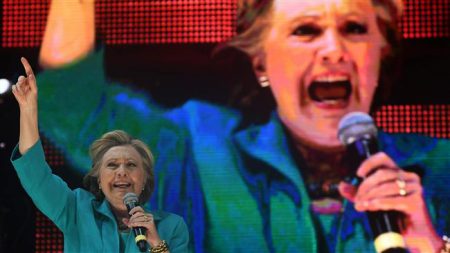
“There’s no place like home.”
That’s the lesson. Even when home is Kansas.
The real meaning of this election is not, as bitterly disappointed Hillary supporters still maintain with tears in their eyes and fear in their throats, a victory for racism and sexism.
The real meaning of this upset is that Wall Street’s globalization project has been rejected by the citizens of its homeland.
This has major implications for the European nations that have been dragged along into this ruinous project.
Hillary Clinton was the candidate of the military industrial complex and international finance capital. She designed herself to be the figurehead of those forces, as queen of regime change. She aspired to be the one to remake the world in the image Wall Street dictates. It was a project enthusiastically and expensively supported by the one percent who profit from arms contracts and the trade deals they write themselves for their own interests.
To distract from the genuine significance of her candidacy, the Clinton campaign appealed to the desire for respectability of educated city dwellers, portraying Trump supporters as racist yokels motivated by a hateful desire to scapegoat minorities as revenge for their own inadequacies. They were “deplorables”, and you wouldn’t want to be one of them, would you?
Trump was sexist, because he referred to certain women as “bimbos”. Elizabeth Warren called him out for this, on a platform where Hillary sat listening, mouth wide open in delight – she who had referred to Bill’s girlfriends as “bimbo eruptions”. Sleaze and hypocrisy drowned out policy discussions. The worst the Clinton campaign could come up with was an eleven-year-old locker room exchange – just words, hardly comparable to Bill’s chronic actions.
Still, millions who were taken in by the Clinton campaign line are devastated, terrified, convinced that the only reason Trump won was the “racism” and “sexism” of that lower caste in globalized society: white heterosexual working class males.
But no, Virginia, there were other reasons to vote for Trump. Racism and sexism are surely low on the list.
Trump voters were scandalized by Hillary’s lies and corruption. Many of them would have voted for Bernie Sanders if they had the choice. That choice was taken away from them by Democratic Party manipulators who were sold on their own advertising campaign to elect “the first woman President.” A brand new product on the Presidential election market! Be the first to vote for a woman President! New, improved!
Bernie’s success already showed that millions of people didn’t want that woman. But the Democratic Party manipulators and their oligarch sponsors went right ahead with their plans to force Hillary Clinton on an unwilling nation. They brought this defeat on themselves.
Contrary to what you could believe by reading the New York Times, there were even intellectuals who voted for Trump, or at least refused to vote for Hillary, for the simple reason that Trump appears less likely to lead the world into its third and final Great War. He said things giving that impression, but such statements were ignored by mainstream media as they worked overtime to inflate the ogre image. No war with Russia? You must be a Putin puppet!
Trump voters had several reasons to vote for Trump other than “racism”. Most of all, they want their jobs back, jobs that have vanished thanks to the neoliberal policy of transferring manufacturing jobs to places with low wages.
But racism is the only motive recognized by the globalized elite for rejecting globalization. British citizens who voted to leave the European Union in order to recover their traditional democracy were also stigmatized as “racist” and “xenophobe”. Opposition to racism and xenophobia is the natural moral defense of a project of global governance that deprives ordinary citizens of any important power of decision.
This extraordinarily vicious campaign has brought out and aggravated sharp divisions within the United States. The division between city and countryside is most evident on the electoral maps. But these real divisions are exacerbated by a campaign that portrayed Donald Trump as a racist madman, a new Hitler about to bring fascism to America. The antiracism of this campaign, denouncing “hate”, has actually spawned hate.
No, Virginia, Trump is not Hitler. He is the Wizard of Oz. He is a showman who pulled off an amazing trick thanks to the drastic moral and intellectual decline of the American political system.
He is neither as dangerous as his opponents fear, nor as able to “make American great again” as his supporters hope. He is the Lesser Evil. What will become of him in Washington is anybody’s guess.
November 9, 2016
Posted by aletho |
Economics, Militarism, Timeless or most popular | Donald Trump, European Union, Hillary Clinton, UK, United States |
Leave a comment

 Aletho News

