In 2011 I sat on a panel discussion at King’s Books in Tacoma, Washington, on the subject of the effect of the wars in Iraq and Afghanistan on soldiers and their families. My prepared remarks were a discussion of the impact of repeated deployments on the families I saw on the labor and delivery floor where I worked, but during the discussion after I was startled to hear a forceful call for the re-reinstatement of the draft from one of my fellow panelists- a call that met with widespread cheers from the audience.
Since then I’ve seen many, many more calls for a draft from ostensibly anti-interventionist voices, most recently in Andrew Bacevich’s latest book. The underlying premise of these calls, sometimes made explicit and sometimes not, is that a draft would stop America’s lust for war and foreign interventions because it would force the burdens of war to be spread more equally. The draft has been damned, and rightly so, for being a form of slavery and at times a particularly murderous one at that, but even those who might get the vapors at the idea of seeing American solders as slaves cannot deny the simple historical fact that the draft has never, ever- not once- stopped or slowed or in any way inhibited the conduct of a war.
The first American war fought with conscription was the first American war, the Revolution, and it was fought all the way to its conclusion. The next war fought with conscripts, the Civil War, claimed more American lives than any other and while the draft helped provoke some riots, most notably a draft protest turned anti-black pogrom in New York City, that war too was fought all the way to the bloody finish. The First and Second World Wars as well were fought largely with draftees and fought to the bitter end, in the latter case with the immolation of two major cities by a hideous new weapon delivered by aircraft in part manned by draftees.
Korea and especially Vietnam form what the pro-draft lobby thinks of as the lynchpin of their case. The conventional narrative of resistance to the war in Vietnam is of Middle America tiring of seeing its sons’ lives destroyed by Westmoreland’s war of attrition and rising up, of LBJ allegedly saying “If I’ve lost Cronkite, I’ve lost Middle America.” Supposedly the marches in the streets somehow persuaded the American government to leave Vietnam. What this narrative leaves out is what actually stopped the American war in Vietnam–the Vietnamese.
The American Revolution, the Civil War, the World Wars- for the American government, these were all victorious wars. Victory is very popular; victorious wars, however obviously aggressive or absurdly unjust, rarely generate any significant resistance. But in Vietnam, America was not winning. America was losing, and badly. Middle America was in the streets against Vietnam, it is true, but they weren’t there because Johnny was coming home in a box. They were there because Johnny was losing.
The pro-draft narrative of domestic resistance to the Vietnam War is at heart a racist, imperialist narrative, denying the Vietnamese their place as actors in their own history, giving pride of place to white Americans holding signs in the street over Vietnamese peasants giving their lives to drive out yet another imperialist power coming to lord over their country. What stopped the Vietnam War was not a college kid with a sign; it was a rice farmer with an AK-47. Americans only get upset about draftees dying when they are dying in a losing war, and credit for resistance to such wars goes not to Americans at home but to the victims of the American government abroad.
The idea that if only everyone had to share the burden, war would be less popular seems intuitive and appealing, but history reveals it to be deluded. Victory makes wars popular, and defeat makes them unpopular. To try to stop the war machine from inside the imperial center, we must do whatever we can to gum up its works, be it counter-recruiting, supporting GI resistance, spreading awareness about the costs of militarism, tax resistance, or anything else that might help. And while we might debate their ultimate aims as Communists in Vietnam or Islamic radicals in Iraq, we must always remember that the people who do the most to stop the war machine are the people who take up arms against it.
Jonathan Carp is a member of Iraq Veterans Against the War and a nurse. He lives in Tacoma, WA.
Here I sit, in West Virginia, staring down at January 1, 2014.
That’s when my health insurance policy expires and I have a decision to make — renew or not renew?
Right now, I’m paying about $7,000 a year in premiums for a monster deductible and yearly out of pocket of about $15,000 for myself and my family.
My health insurance company informed me yesterday that my premium will be doubled to $14,000 on January 1.
I’ve been trying to get onto the Obamacare web site now for ten days to search for an alternative. No luck. I made it through four pages yesterday — then got a message saying I’d have to wait because there was too much traffic. When I clicked the continue button, it wiped out the information I had typed into the first three pages.
But even if I do get onto the exchanges, it’s probably not going to matter.
I read in a newspaper that Highmark is the only health insurance company on the exchange in West Virginia. Yesterday, I called Highmark and spent an hour on the phone with a nice young man — but the results were not good. The skimpiest plan is going to cost me more than I’m paying now for a higher deductible and out of pocket result.
Thank you Obamacare.
My insurance agent told me yesterday I had only one alternative — wait for six years until Medicare kicks in and keep fighting for single payer.
Obviously, the Democrats and anyone who defends them are not going to be of any help in the next round. They are irrevocably tied to President Obama and Obamacare and even those Democrats nominally in favor of single payer refuse to criticize it for the industry written law that it is.
I agree with Dr. Quentin Young of Physicians for a National Health Program when he says that Obamacare should have been defeated because it enshrines and solidifies corporate domination of the health care system.
But what to do next? Well, first thing is to watch a movie called Healthcare — The Movie. It’s a short documentary — 62 minutes — but packs a big punch. The movie was produced by a husband wife team — the wife Canadian — Laurie Simons — and the husband American — Terry Sterrenberg.
The movie toggles back and forth between the USA and Canada — with Americans struggling with bankruptcy, death from lack of health insurance and the dark cloud of health insurance armageddon menacing their lives from cradle to an often early grave.
The Canadians, by contrast, are living in a relative health care nirvana, thanks in large part to Tommy Douglas, a boxer and Premier of Saskatchewan who stood up to the red baiting being dished out at the time by the Canadian medical establishment. Douglas emerged victorious and his efforts resulted in the creation of Canada’s single payer Medicare for all. The movie is narrated by actor Kiefer Sutherland — Tommy Douglas’ grandson.
The film features great historic clips — including a remarkable scene where a CBC television show host asks the question — who is the greatest Canadian? And then, in reality show format, puts it up to a vote.
“After six weeks, ten finalists, and more than a million votes,” the CBC host says, “it ended tonight with one name. And I have the envelope here. The greatest Canadian as decided by you is — Tommy Douglas.”
Imagine that — the country says that Tommy Douglas, the father of single payer in Canada, is greater than its greatest hockey player — Wayne Gretzky.
Tommy Douglas’ courageous act — standing up for the people of Canada against the vicious attacks of the powers that be — has resulted in a system that delivers health care for all Canadians — no complex bills, no deductibles, no deaths from lack of health insurance, no medical bankruptcies — all funded by a progressive tax system.
The movie profiles Canadians with serious medical illness — who come out financially unscathed — no bills, no bankruptcy, no health related financial worries.
And then compares those Canadians to the suffering human beings south of the border.
The movie does a good job of making us Americans feel like crap compared to our cousins up north.
Check out this sequence, for example:
How many people in the United States die each year because they have no health insurance?
45,000
How many people in Canada die each year because they have no health insurance?
Zero.
How many people go bankrupt each year in the United States because of medical expenses?
922,819
How many people go bankrupt each year in Canada because of medical expenses?
Zero.
How many Americans do not have health insurance?
50 million.
How many Canadians do not have health insurance?
Zero.
How many Americans go without medical care because of costs?
115 million.
How many Canadians go without medical care because of costs?
Zero.
One of the stars of this film is a young American from Portland, Oregon named Lindsay Caron.
“I was a free-lance artist for a long time,” Caron says. “I gave that up to go sit in an office and file papers so that I could have health care. And it amazed me that other people in other countries never had to think about that. I kept hearing that Canada’s system was broken, and that Canadians were flocking over the border to get US care. And so I wanted to go to Canada with a camera and ask a couple hundred people. I bought a ticket up to Vancouver, Canada. I rented camera equipment. And I took my bicycle. I thought maybe I would stay in Vancouver for a couple of days and cycle on back to Portland. I ended staying there the whole week. I got up in the morning, set up a camera on the street and just start asking people questions.”
Caron finds out what polls in Canada consistently confirm — that the vast majority of Canadians would never in a thousand years give up their Medicare coverage for the nightmare south of the border.
It all came about because Tommy Douglas had the guts to stand up to the political and medical establishment and do what is right for the Canadian people.
Canada did it.
There is no reason we can’t do it.
It’s simply a matter of reordering our priorities.
Let’s put aside, for a moment, our millions of copies of Grand Theft Auto 5 and start playing a new game — Grand Theft — Health Insurance.
The goal of the game is to become a boxer, like Tommy Douglas — and fight back against the insurance industry and its Frankenstein monster — Obamacare.
Toiling in terrible conditions, no salaries for months, passports confiscated by employers – that’s the horrendous reality for migrant workers helping with preparations for the World Cup 2022 in Qatar, as revealed by German filmmaker, Peter Giesel.
He and his cameraman were detained and imprisoned after they tried to investigate the story. The two went to Qatar following the publication of a report in the Guardian, claiming that workers are enduring appalling labor abuses.
Giesel said that they were arrested in their hotel rooms on October 3 and taken to police headquarters. There, all their equipment was impounded, and police then took the filmmakers to the State Security prison in the suburbs of Doha.
RT exclusively interviewed filmmaker Peter Giesel to find out about their experiences, and what they witnessed while covering the issue in Doha.
“We were there, in those separate cells, in [sic] the total of 21 hours. We were treated quite well, we got good food, to be honest, but the bad thing about those 21 hours was that we weren’t allowed a single phone call: not to our embassy, not to our families, no one was there to tell us what the charge was really, so we were kind of desperate in there, not having any contact with the outside world,” Giesel stressed.
Prior to their confinement, he and his cameraman met with migrant workers who told them about their plight.
One of the men interviewed worked for 12 years as an air conditioning specialist, but, as Giesel indicated to RT, “ironically, his accommodation itself doesn’t even have a fan.”
The man hasn’t been getting his salary and bonuses for a number of years, and his main difficulty is to fight a case against his boss and his firm: the employer took his passport from him, and the 35-year-old worker hasn’t made the money necessary to return home, “the devilish circle”, as Peter Giesel put it to RT.
Another group of guys – there were four of them – weren’t paid for seven months in a row and were trying to file a case when Giesel met them.
As the filmmaker explained, one of the main issues surrounding migrant workers is that they are employed under the so-called kafala system, which is “a law basically stating that every migrant worker that comes into Qatar has to find his own personal sponsor meaning his boss, the firm or corporation he’s working for.”
“And that sponsor has to take care of him legally and medically, but obviously, most of the sponsors take their passports away from the migrant workers. That puts maybe tens of thousands of them in a miserable situation. They can’t make any money to go home, so they’re trapped down there.”
Moreover, migrant employees can’t rely on outside forces such as their countries’ embassies, according to Giesel.
“I had a chance to sneak into the Nepalese embassy and do my recordings down there. It seems to be some kind of chaos: the bureaucracy not only in the embassies, but also in the Qatari system might be too overwhelming for those 1.4 million migrant workers to be treated fairly,” he told RT.
Despite the disastrous situation, Giesel is certain that the World Cup in Doha won’t be canceled, as “there’s just too much money involved in it. There are sponsorships, contracts ready, most of them signed already, there’s big political money, there’s big infrastructural money. Right now, there are billions spent down there in Doha to put up the streets, to put up new shopping malls, to put up new stadiums indeed.”
The FIFA President, responding to the outrage, said that he would speak with the country’s emir about the situation, but “we can’t be the ones who change it.”
Giesel said that they were detained in their hotel rooms on October 3 and taken to police headquarters. There, all their equipment was taken from them, and police then took the filmmakers to the State Security prison in the suburbs of Doha.
Finally, when asked why migrants continue to come to Qatar despite the difficulties, Giesel simply said that they “make more money out there.”
“Although the salaries average an estimated $350 a month, even for specialist workers, it’s more than in their home countries: Nepal, Bangladesh…” Giesel told RT.
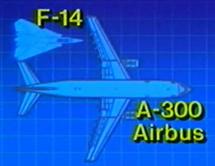
Toward the end of the war, on July 3, 1988, a U.S. Navy ship called the Vincennes was exchanging fire with small Iranian ships in the Persian Gulf. The U.S. Navy kept ships there, and still does, to protect oil trade routes. As the American and Iranian ships skirmished, Iran Air Flight 655 took off from nearby Bandar Abbas International Airport, bound for Dubai. The airport was used by both civilian and military aircraft. The Vincennes mistook the lumbering Airbus A300 civilian airliner for a much smaller and faster F-14 fighter jet, perhaps in the heat of battle or perhaps because the flight allegedly did not identify itself. It fired two surface-to-air missiles, killing all 290 passengers and crew members on board.
Fisher – who based his post on a new TIME magazine piece noting a number of valid Iranian grievances with the West – writes that the “horrible incident” helped cement Iranian enmity toward the United States government, but intimates that the whole episode was just a random mistake, an innocent fluke, albeit with tragic and long-lingering consequences. To this end, he quotes notoriouswar propagandistKenneth Pollack of the Brookings Institute’s Saban Center, presumably because Pollack was the most egregiousserialfabricator Fisher could find with a quick Google search of “Iran Air Flight 655” and “accident.”
Quoting from Pollack’s 2004 compendium of conventional wisdom and glaring inaccuracies, “The Persian Puzzle,” Fisher adds, “The shoot-down of Iran Air flight 655 was an accident, but that is not how it was seen in Tehran. The Iranian government assumed that the attack had been purposeful… Tehran convinced itself that Washington was trying to signal that the United States had decided to openly enter the war on Iraq’s side.”
Fisher recounts this story in order to explain why Iranian officials and diplomats might not view their American counterparts as trustworthy interlocutors when it comes to diplomacy over its nuclear program. He writes, “If Iran believes that the United States is so committed to its destruction that it would willingly shoot down a plane full of Iranian civilians, then Tehran has every incentive to assume we’re lying in negotiations.”
Yet, both Pollack’s explanation and Fisher’s insinuation grossly decontextualize and sanitize the American role in the later stage of the Iran-Iraq War in general, and the destruction of Flight 655 in particular. To claim that – in mid-1988, no less – Tehran had to somehow “convince itself” that the Reagan administration was merely attempting to enter the war as a combatant, in aggressive and lethal support of Saddam Hussein’s Iraq, is bizarre. Iran didn’t have to invent such a scenario; it was already an established fact.
As one senior U.S. officer told ABC’s Nightline, “We became forward air controllers for the Iraqi Air Force.”
In July 1987, the CIA began a reconnaissance program, code-named Eager Glacier, that, as reported by John Barry in Newsweek some years later, “sent spy planes and helicopters flying over Iranian bases… Navy SEALs, manning Mark III patrol boats, were stationed on two giant floating barges, and special operations helicopter units first the Little Birds of the army’s Delta Task Force 160, later joined by the specially built gunship Warriors of Task Force 118–roamed the gulf by night.”
The purpose of this kind of American firepower in the Persian Gulf was clear. Lando writes, “Their mission was to destroy any Iranian gunboats they could find. Other small, swift American vessels, posing as commercial ships, lured Iranian naval vessels into international waters to attack them. The Americans often claimed they attacked the Iranian ships only after the Iranians first menaced neutral ships plying the Gulf. In some cases however, the neutral ships which the Americans claimed to be defending didn’t even exist.”
By August 1987, the U.S. Navy was conducting direct military attacks on Iranian aircraft and sea vessels. In early August, the Financial Times reported that “a carrier-borne F-14 Tomcat fighter unleashed two missiles at an Iranian jet spotted on its radar which had flown too close for comfort to an unarmed US surveillance aircraft.” On September 23 of that year, the Washington Post reported, “U.S. Navy commandos yesterday boarded and captured the Iranian navy ship that was attacked by American helicopters Monday in the Persian Gulf,” killing three Iranian sailors. An additional 26 Iranian crew members were detained. The same day, “the U.S. frigate involved in the attack fired warning shots at an Iranian hovercraft as it sped toward U.S. warships gathered near the disabled Iranian vessel, officials said.”
A few weeks later, in early October, three Iranian ships were sunk by the U.S. Navy; later that month the Americans attacked two Iranian oil platforms. In April 1988, not only did a U.S. warship fire missiles at Iranian jets over the Persian Gulf, but two more oil platforms were destroyed and at least six Iranian ships were either crippled or sunk by American naval forces.
Fifteen years after these events, the International Criminal Court determined that “the actions of the United States of America against Iranian oil platforms on 19 October 1987 (Operation Nimble Archer) and 18 April 1988 (Operation Praying Mantis) cannot be justified as measures necessary to protect the essential security interests of the United States of America.”
Then, on July 3, 1998, shortly after taking off from Bandar Abbas, the Dubai-bound Iran Air Flight 655 was blown out of the sky on the orders of U.S. Navy Commander William C. Rogers III of the USS Vincennes, a Ticonderoga class AEGIS guided missile cruiser. The two surface-to-missiles fired at the Iranian Airbus A300B2, a commercial flight that traveled along the same route every morning, obliterated the aircraft in broad daylight, killing all 290 civilians on aboard, including 66 children under the age of 12.
U.S. government white-washing was swift.
In a statement issued soon after the attack, U.S. President Ronald Reagan called the incident “a terrible human tragedy,” but justified it as “a proper defensive action by the U.S.S. Vincennes” after “the aircraft failed to heed repeated warnings.”
Reporting on the downing of Iran Air Flight 655 an Associated Press report claimed on July 3, 1988 that the “Pentagon said U.S. Navy forces in the gulf sank two Iranian patrol boats and downed an F-14 fighter jet in the Strait of Hormuz on Sunday during an exchange of fire.” Iran disputed this version of events, insisting that plane attacked had been a civilian airliner and that nearly 300 civilians on board had been killed in the assault. AP noted, “U.S. Navy officials in the gulf denied the Iranian claim.”
In reaction to Iranian statements, President Reagan reportedly quipped, “Well, I don’t go by what the Iranians say, ever.”
Following the attack on Flight 655, Admiral William J. Crowe Jr., Chairman of the Joint Chiefs of Staff, outlined what he called the “threatening flight profile” of the airplane the U.S. Navy ship had blown up. He told reporters that the Iranian plane had been “outside the prescribed commercial air corridor,” that it “headed directly for Vincennes,” that “there were electronic indications on Vincennes that led it to believe that the aircraft was an F-14” and that the plane was “decreasing in altitude as it neared the ship.”
Crowe also maintained that the Vincennes, which, according to the Washington Post at the time, “was equipped with the most sophisticated radar and electronic battle gear in the Navy’s surface arsenal,” was “outside of Iranian territorial waters” when it fired at the Iranian aircraft.
“We do have some eyewitness reports that saw the vague shape of the aircraft when the missile hit,” Crowe told reporters, “and it looked like it disintegrated.” He also defended Commander Rogers’ actions as “logical”, saying, “The commanding officer conducted himself with circumspection and, considering the information that was available to him, followed his authorities and acted with good judgment at a very trying period and under very trying circumstances.”
The official story was that the crew of the Vincennes mistook the massive, lumbering Airbus for a small, supersonic F-14 Tomcat making attack maneuvers.
The following day, July 4, Reagan issued a report to Congress in which he stated the USS Vincennes had been “operating in international waters of the Persian Gulf” and that following “indications that approximately a dozen Iranian small boats were congregating to attack merchant shipping, the Vincennes sent a Mark III Lamps Helicopter on investigative patrol in international airspace to assess the situation.” The helicopter, Reagan claimed, was fired upon and returned to the ship.
Reagan further declared, “The actions of U.S. forces in response to being attacked by Iranian small boats were taken in accordance with our inherent right of self-defense.” These actions included the downing of Flight 655, which, he said, was “believed to be a hostile Iranian military aircraft.”
In a press briefing on the White House lawn the same day, Reagan claimed that the Iranian airliner had been “lowering its altitude,” indicating an aggressive posture, at the time it was shot down.
The next day, the New York Timeseditorialized that “while horrifying, it was nonetheless an accident,” concluding, “The onus for avoiding such accidents in the future rests on civilian aircraft: avoid combat zones, fly high, acknowledge warnings.”
At the time, a report by Norman Solomon in Extra! revealed how the U.S. “government’s public relations spin quickly became the mass media’s: A tragic mishap had occurred in the Persian Gulf, amid puzzling behavior of the passenger jet. Blaming the victim was standard fare, as reporters focused on the plight of U.S.S. Vincennes commander Capt. Will Rodgers III, whose picture appeared on tabloid covers (7/5/88) with bold headlines: “Captain’s Anguish” (Newsday) and “Captain’s Agony” (New York Post).”
Naturally, if the Iranian military had blown up a Pan Am flight taking off from Dubai, protestations of self-defense probably wouldn’t find many sympathetic ears in the United States; fewer still would empathize with the personal trauma of murderer who gave the order.
Ten days later, on July 13, 1988, Assistant Secretary of State Richard S. Williamson continued to insist that the Vincennes was “at the time of the incident, in international waters.” The next day, speaking in defense of American actions before the United Nations Security Council, Vice President George H.W. Bush declared, “One thing is clear, and that is that the USS Vincennes acted in self-defense.”
Iran’s allegations that the warship was far too technologically advanced to make such a catastrophic mistake were dismissed by the American government. When questioned about the incident, Bush announced, “I will never apologize for the United States of America, ever. I don’t care what the facts are!”
Nearly all of these claims made by U.S. military and government officials about why Flight 655 was fired upon were lies, and the subsequent investigation was effectively one big cover-up, reports in Newsweek and by Nightline later revealed.
There had been no merchant vessel in distress and no helicopter was ever dispatched from the Vincennes, let alone fired upon. The warnings by Vincennes radio operators had not been broadcast to air traffic control frequencies. There had been no visual confirmation of an approaching or attacking aircraft. Iran Air Flight 655 – with its nearly 300 passengers aboard – was well within its flight corridor, flying comfortably at 12,000 feet and steadily climbing. It had been in the air less than seven minutes. At the time it was hit, it was gradually turning away from where the Vincennes was located. It would have landed in Dubai about twenty minutes later. As John Barry reported in 1992:
Captain [Mohsen] Rezaian of Iran Air was calmly reporting to Bandar Abbas that he had reached his first checkpoint crossing the gulf. He heard none of the Vincennes’s warnings. His four radio bands were taken up with air-control chatter. “Have a nice day,” the tower radioed. “Thank you, good day,” replied the pilot. Thirty seconds later, the first missile blew the left wing off his aircraft.
There were other American naval vessels in the area at the time, none of which mistook the Iranian commercial airliner for a jet fighter, but were unable to act quickly enough to save Flight 655. “A few miles away, on the bridge of the Montgomery, crewmen gaped as a large wing of a commercial airliner, with an engine pod still attached, plummeted into the sea,” Barry reported. “Aboard the USS Sides, 19 miles away, Captain [David] Carlson was told that his top radar man reckoned the plane had been a commercial airliner. Carlson almost vomited, he said later.”
Vincennes commander Rogers was himself known to other naval officers as especially trigger-happy. Captain Carlson, who commanded the Sides, a frigate in the same Surface Action Group as the Vincennes, later said that the Flight 655 disaster “marked the horrifying climax to Rogers’ aggressiveness.”
According to the subsequent government review of the downing of Flight 665, and particularly its Aegis targeting system and the “complex network of radar and computers” onboard the Vincennes, TIME magazine reported that “blame fell not on the machines but on the men who were operating them.”
Nevertheless, not a single member of the crew of the Vincennes received official reprimand or opprobrium from the U.S. Navy or government. Moreover, in what can only be described as an act of staggering hubris, following the end of their deployment in 1989, all crew members aboard the Vincennes were awarded combat-action ribbons, while both Commander Rogers and Lieutenant Commander Scott Lustig, the ship’s tactical coordinator for air warfare, were specifically granted the Navy’s Legion of Merit medal for “meritorious service” and “heroic achievement.”
Rogers was honored “for exceptionally meritorious conduct in the performance of outstanding service as commanding officer… from April 1987 to May 1989,” while Lustig received his citation for his “ability to maintain his poise and confidence under fire,” enabling him to “quickly and precisely complete the firing procedure.”
Iran’s only act of retaliation or retribution for the downing of Flight 655 was bringing forth a legal case for responsibility and restitution. The International Court of Justice awarded the victims of the attack $61 million in compensation for unwarranted loss of life. The U.S government has still never officially apologized to the Iranian people for this heinous crime.
Last year, the Iranian Foreign Ministry Iranian Foreign Ministry issued a statement in commemoration of the tragedy. “This inhumane crime is clear proof of the innocence of the Iranian nation,” it read, “and (provides) clear evidence that the United States is not committed to any international legal and ethical principles and norms, and (it) will remain in the historical memory of the Iranian nation.”
The Washington Post‘s Max Fisher concludes his column, writing, “Americans might not know about Flight 655. But Iranians surely do — they can hardly forget about it.”
While he – and TIME’s Michael Crowley – should be commended for reminding (or informing) their readership about the events of July 3, 1988 and its implications today, they should also remember that telling only part of the story – and allowing American aggression, dishonesty and denial to be dismissed uncritically as an “accident” – does a great disservice to the truth.
On Oct 12, tens of thousands of Yemenis took to the streets of Eden in the South of the country, mostly demanding secession from the north. The date is significant, for it marks the 1967 independence of South Yemen, ending several decades of British colonialism. But for nearly five decades since then, Yemen is yet to find political stability, a semblance of economic prosperity, and, most importantly, settle the question of its national identity.
It has been two years and nine months since a large protest has occurred in the Yemeni capital. Sana’a initiated what was quickly named the Yemeni revolution and ignited media frenzy that Yemen had officially joined the so-called Arab Spring. Seeing Yemen as a member of the ‘Arab Spring’ club, as opposed to appreciating the Arab country’s own unique historical and political circumstances, was a media shortcut that failed to explain the vast majority of events that followed the Yemeni youth early protests on Jan 27, 2011.
One of the most significant dates of the massive protests against the 33-year rule of now deposed President Ali Abdullah Saleh and his family’s strong hold over state institutions was Feb 3rd. It was then that both Sana’a and Eden stood united under one banner. It was a momentous day because both cities once served as capitals of two warring countries. The youth of Yemen were able to fleetingly bridge a gap that neither politicians nor army generals managed to close despite several agreements and years of bloody conflicts. But that collective triumph of the Yemeni people was only felt on the streets of the country, overwhelmed by poverty and destitution, but also compelled by hope. That sentiment was never truly translated to a clear political victory, even after Saleh was deposed in Feb 2012.
Since then a National Dialogue Conference (NDC) was convened with representations from various political parties, major tribes, youth movements and delegates representing South and North. Its job was to usher in the process of drafting a constitution by organizing a referendum and general elections. Sep 18, 2013 was recognized as a deadline for these major tasks to be accomplished, but that date slipped away. Even worse, deep divisions began showing between all parties involved. Initially, the dialogue attempted to explore commonalities between delegates representing the ruling General People’s Congress (GPC) and the Joint Meeting Parties (JMP), representing the opposition. However, conflict soon ensued between members of the JMP themselves.
JMP is made of several opposition parties, including the Islamic-leaning Yemeni Congregation for Reform (Islah) whose core supporters are based in the North, and the secularist Yemeni Socialist Party (YSP), based in the South. These two parties hail from entirely different ideological schools of thought, and were not always united by their wish to defeat Saleh’s ruling GPC. There was a time in which the Islah, seen as Yemen’s branch of the Muslim Brotherhood, allied with Saleh to defeat socialists. “The socialist expansion emanating from the South bolstered the Brotherhood’s alliance with Saleh’s regime during the wars for the central regions (1978-1982) against what they called the communist tide,” wrote Farea al-Muslimi for Al-Monitor.
In those years, today’s Republic of Yemen was two different countries: a Marxist-Leninist South Yemen, and North Yemen. After years of conflict in which both sides were used to channel regional rivalries and an international Cold War, they became united on May 22, 1990. Soon after the union, a process of democratization, elections, wealth sharing and more was initiated, but quickly fell apart. Southern leaders began speaking of a conspiracy to deprive their less populated, yet wealthier southern and eastern parts of the country of its resources by the tribal-dominated North. In 1994, political conflict quickly descended into civil war where the South was defeated and thousands of its leaders and military men fled. Efforts at reconciliation fell short. The sense of injustice that southerners continue to feel towards the dominant North is a notion that is challenged by many. But it is real and has never been seriously discussed, let alone resolved through a transparent political medium overseen by a democratic leadership.
The current Yemeni Socialist Party is composed of remnants of the dissolved leadership of South Yemen. Although the Yemeni revolt of Jan 2011 ignited much national fervor throughout the country, talks of succession began resurfacing later on, when Yemenis, especially in the South, began losing faith in the political transition and the National Dialogue Conference. Another contributing factor is the state of utter security chaos experienced throughout Yemen, some of which is al-Qaeda-lead or inspired violence, much of which targets southern towns and activists. Some in the South accuse Sana’a of facilitating or allowing such violence to perpetuate to achieve political ends.
Moreover JMP, which was slated as the united front of the opposition, became a major source of tension, for the socialists deeply mistrust the Islah, and the latter, which strongly objects to any division of the country, is equally suspicious of its supposed political ally. When the Egyptian military overthrew President Mohammed Morsi, Islah’s supporters protested in fury, while the socialists celebrated with utter delight. Trust, indeed, was at an all-time low.
Not that the South is united, for the Southern Movement Hiraak, which advocates a two-state federalism followed by a referendum on the future of the South, is marred by division. Hiraak is composed of many political parties and factions and is torn by competing leaderships. That division was displayed on Oct 12 during the marking of South Yemen’s independence. Some participating factions carried pictures of Egyptian military general Abdul Fatah al-Sisi, who overthrew Morsi, while others waved flags of Lebanon’s Hezbollah. The political divide soon erupted in bloody clashes in Parade Square, in central Eden, where some were reportedly injured.
On Oct 8, only a few days prior to the Eden rallies, President Abd Rabbuh Mansur Hadi, who was installed following the ouster of Saleh, declared the country’s national dialogue was about to bear a long anticipated result. In fact, it was only “a few days away” from establishing a “united and federal Yemen”, a language so carefully used as to sway both sides of the divide. But his anticipated breakthrough seemed irrelevant in the face of compellingly discouraging facts, lead amongst them is that factions affiliated with the Southern Movement are boycotting the talks. Also, the signing of any accords “has been put off as the two representatives of Saleh’s General People’s Congress walked out and the GPC suspended its participation, rejecting any bid to ‘harm the unity of the homeland,’” reported Arab News.
Even if such an accord is ever signed, the National Dialogue Conference cannot enforce any agreement that lacks a clear mandate and popular approval. Uniting a ‘homeland’ around similar ideas as a rebellion continues to brew in the North, a secessionist movement gathers steam in the South, an unending US drone war carries on, rampant militancy moves ahead, and punishing poverty thrives throughout the country, is no easy task. We must ask if under these circumstances, it is even possible at all.
– Ramzy Baroud (www.ramzybaroud.net) is an internationally-syndicated columnist and the editor of PalestineChronicle.com.
There are several ways of expressing a desire for change, and one of these can be through the arts. In the current turmoil of the Middle East, there are also voices that look beyond the mere toppling of regimes, and are expressing their deep concern at the price being paid by ordinary citizens in civil wars and other phenomena of sectarian strife that have become widespread in the region.
It should not come as a surprise that some of these voices come from Palestine, as it has become obvious how the region’s unrest has led to diminished attention for the decades-long plight of the Palestinian people. Besides this, the past years have also split up Palestinian unity along sectarian lines, thus weakening the solid unified stance of the Palestinian people against the illegal Israeli occupation.
I am a Palestinian surgeon and hobbyist musician known by my artist handle ‘Doc Jazz’, and I run a website known as The Musical Intifada, which showcases my large collection of songs supporting the Palestinian cause. I recently wrote a song in Arabic that calls out for unity, and against settling sectarian differences through violence. The song was called ‘Al Jeel Al Jadeed‘, which is Arabic for ‘The New Generation’.
My message was picked up by young Palestinians from Gaza who are known for their activities in social media, among others Shahd and Majed Abusalama, Walaa al Ghussein and Eman Sourani, and a music video was put together for the song. This was largely filmed in Gaza, and directed by inspiring Palestinian artist Shahd Abusalama, in cooperation with cameramen Yazan Abu Dawood and Omar Shala. In total, around 20 youths from Gaza cooperated in the making of the video clip, and their names are listed in the credit roll at the end of it.
The result is a modern and radiant call for unity, providing a fresh, hopeful and positive angle on the situation. It was warmly received by the international community of Palestine-sympathizers, hitting the 5,000 view mark after only 24 hours of its appearance on Youtube. The unusual funky sound of the music, at least by the standards of mainstream Arabic music, proved to be no obstacle for its popularity, rather the opposite.
As is clear from the words of the song, the focus of it steers away from the political dimensions of the issue, and rather focuses on the human element. It calls upon people to embrace one another as equals despite their differences, and to resort to dialogue to settle internal matters instead of embracing methods that include weapons and other forms of violent confrontation.
The song came with translations in Dutch and English, but soon received spontaneous translations in Spanish and French from its supporters in the international community. These were added in Closed Captions (CC) subtitles to the video, enabling listeners from outside of the Arabic world to follow the song and its meanings.
I hope the message will be understood in its proper context. We have a struggle to wage against a belligerent, expansionist and racist entity that calls itself ‘Israel’. Without unity, there is not much we can achieve.
Let us stop giving the Zionist entity the pleasure and advantage of watching us going at each other’s throats, and embrace one another in Palestinian and Arab unity, for better or for worse, in sickness and in health.
– Tariq Shadid is a surgeon living in the Arab Gulf who has been contributing articles to the Palestine Chronicle for many years. Some of these essays have been bundled in the book ‘Understanding Palestine’, which is available on Amazon.com. He also is the founder of the website ‘Musical Intifada’ featuring his songs about the Palestinian cause, on http://www.docjazz.com.
Two recent images encapsulate the message behind the dry statistics of last week’s report by the World Bank on the state of the Palestinian economy.
The first is a poster from the campaigning group Visualising Palestine that shows a photoshopped image of Central Park, eerily naked. Amid New York’s skyscrapers, the park has been sheared of its trees by bulldozers. A caption reveals that since the occupation began in 1967, Israel has uprooted 800,000 olive trees belonging to Palestinians, enough to fill 33 Central Parks.
The second, a photograph widely published last month in Israel, is of a French diplomat lying on her back in the dirt, staring up at Israeli soldiers surrounding her, their guns pointing down towards her. Marion Castaing had been mistreated when she and a small group of fellow diplomats tried to deliver emergency aid, including tents, to Palestinian farmers whose homes had just been razed.
The demolitions were part of long-running efforts by Israel to clear Palestinians out of the Jordan Valley, the agricultural heartland of a future Palestinian state. Ms Castaing’s defiance resulted in her being quietly packed off back to Europe, as French officials sought to avoid a confrontation with Israel.
The World Bank report is a way of stating discreetly what Castaing and other diplomats hoped to highlight more directly: that Israel is gradually whittling away the foundations on which the Palestinians can build an independent economic life and a viable state.
This report follows a long line of warnings in recent years from international bodies on the dire economic situation facing Palestinians. But, significantly, the World Bank has homed in on the key battleground for an international community still harbouring the forlorn hope that the Israeli-Palestinian conflict will end in Palestinian statehood.
The report’s focus is on the nearly two-thirds of the West Bank, known as Area C, that is exclusively under Israeli control and in which Israel has implanted more than 200 settlements to grab Palestinian land and resources.
The World Bank report should be seen as a companion piece to the surprise decision of the European Union in the summer to exclude entities associated with the settlements from EU funding.
Both in turn reflect mounting frustration in European capitals and elsewhere at Israeli intransigence and seeming US impotence. Europeans, in particular, are exasperated at their continuing role effectively subsidising through aid an Israeli occupation with no end in sight.
With Israel and the Palestinians forced back to the negotiating table since July, and after the US secretary of state, John Kerry, warned that this was the “last chance” for a deal, the international community is desperate to exercise whatever small leverage it has on Israel and the US to secure a Palestinian state.
The World Bank’s concern about Area C is justified. This is the location of almost all the resources a Palestinian state will need to exploit: undeveloped land for future construction; arable land and water springs to grow crops; quarries to mine stone and the Dead Sea to extract minerals; and archaeological sites to attract tourism.
With access to these resources, the Palestinian Authority could generate an extra income of $3.4 billion a year, increasing its GDP by a third, reducing a ballooning deficit, cutting unemployment rates that have reached 23 per cent, easing poverty and food insecurity and helping the fledgling state break free of aid dependency. But none of this can be achieved while Israel maintains its chokehold on Area C in violation of the 1993 Oslo accords.
Israel has entrenched its rule in Area C precisely because of its wealth of natural resources. Israel neither wants the Palestinians to gain the assets with which to build a state nor intends to lose the many material benefits it has accrued for itself and the settler population in Area C.
It is its treatment of Area C that gives the lie to Israeli prime minister Benjamin Netanyahu’s claim that he has been pursuing “economic peace” with the Palestinians in lieu of progress on the diplomatic front. Rather, the Palestinian description of Israeli policy as “economic warfare” is much nearer the mark. During the Oslo period, the disparity between Israel’s per capita GDP and that of the Palestinians has doubled, to $30,000. And the World Bank says that the Palestinian economy is rapidly shrinking: the 11 per cent growth that Netanyahu took credit for in 2011 has crashed to 1.9 per cent in the first six months of this year. In the West Bank, GDP has actually contracted, by 0.1 per cent.
Despite its resources, Area C is being starved of Palestinian funds. Investors are averse to dealing with Israeli military authorities who invariably deny them development permits and severely restrict movement. The image of the French diplomat in the dirt is one that symbolises their own likely treatment if they confront Israel in Area C. Palestinian farmers, meanwhile, cannot grow profitable crops with the miserly water rations Israel allots them from their own aquifers.
Aware of the many obstacles to developing Area C, Palestinian officials have simply neglected it, concentrating instead on the densely populated and resource-poor third of the West Bank under their full or partial control.
The hope was that this would change when Kerry announced in the run-up to the renewed talks a plan to encourage private investors to pour in $4 billion to develop the Palestinian economy. But the reality, as the report notes, is that there can be no serious investment in the economic heartland of Area C until Israel’s control ends.
In effect, the World Bank is saying that Kerry’s plan – and the role of the international community’s envoy Tony Blair, the so-called Quatet Representative – is not only misguided, it is positively delusional. The Quartet has been trying to revive the Palestinian economy to usher in the conditions for statehood; the World Bank’s view is that there can be no Palestinian state, let alone economic revival, until Israel is forced out of the territories. The international community has it all back to front.
The idea that a financial lifeline – whether Kerry’s plan or Netanyahu’s economic peace – is going to smooth the path to the conflict’s end is an illusion. Peace, and prosperity, will come only when Palestinians are liberated from Israeli control.
Jonathan Cook is a writer and journalist based in Nazareth, Israel.
The African Union is on a collision course with the International Criminal Court, a tribunal that has indicted only Africans since its founding in 2002. In an extraordinary meeting of the African Union at it headquarters in Addis Abbaba, Ethiopia, the AU took the position that no sitting head of state should be prosecuted by the ICC while still in office. In the immediate term, the AU calls for the postponement of the trial of Kenyan president Uhuru Kenyatta, scheduled to begin in the The Hague, next month. Kenyatta and his deputy president are charged with crimes against humanity stemming from election violence in 2007. Last weekend, President Kenyatta told the African Union that the International Criminal Court “stopped being the home of justice the day it became the toy of declining imperial powers” – a clear reference to the United States and Britain.
And that is the heart of the matter. It is a travesty of justice that the ICC only indicts Africans, but even more importantly, the International Criminal Court also only indicts those politicians that get on the wrong side of the United States and the former colonial powers in Africa. The ICC is a tool of U.S. foreign policy, an instrument of neocolonialism.
Among the apologists for the ICC is South African former archbishop Desmond Tutu, who says African leaders are “effectively looking for a license to kill, maim and oppress their own people without consequence.” Tutu says it all boils down to a question of “who should represent the interests of the victims?” However, in the real world of imperial power, Desmond Tutu’s reasoning is specious, shallow. He might just as well argue for the return of colonial rule, which established its own kind of law and order in Africa. The question is, whose law and whose order? The ICC represents U.S. foreign policy masquerading as law.
Tutu maintains that, without the deterrence of the ICC, African “countries could and would attack their neighbors, or minorities in their own countries, with impunity.” Well, that is, in fact, the case right now in Africa, and it has occurred with the complicity of the ICC, which has sanctioned and morally assisted mass murder and outright genocide by American allies on the continent.
And here lies the great irony. The very nations that most strongly oppose the ICC – Rwanda, Uganda and Ethiopia – have the blood of millions on their hands. Rwanda and Uganda are principally responsible for the death of six million Congolese over the past 17 years, an ongoing genocide armed and financed by the United States and Britain. The Ethiopian regime’s brutality toward its Somali and Omoro ethnic groups has also been described as genocidal. But, because the United States is also deeply complicit in these crimes, there is no threat of prosecution by the International Criminal Court. The court is only deployed against those countries and leaders targeted by the United States.
So, why are Ethiopia, Rwanda and Uganda worried? Clearly, they understand that, if the United States can give impunity, it can also take it away. They remember that Iraq’s Saddam Hussein used to be a U.S. ally, and that Libya’s Muammar Gadaffi and Syria’s Bashar al-Assad cooperated with the U.S. war on terror – until the U.S. turned against them. The worst purveyor of crimes against humanity in Africa and the world is U.S. imperialism. The ICC is a cog in the imperial machinery, which recognizes no law, but only its own interests. You can’t fight U.S. Empire and its crimes and, at the same time, defend the International Criminal Court. They are one and the same.
Nearly half a million people have died from war-related causes in Iraq since the US-led invasion in 2003, according to an academic study published in the United States on Tuesday.
That toll is far higher than the nearly 115,000 violent civilian deaths reported by the British-based group Iraq Body Count, which bases its tally on media reports, hospital and morgue records, and official and non-governmental accounts.
The latest estimate by university researchers in the United States, Canada and Baghdad in cooperation with the Iraqi Ministry of Health covers not only violent deaths but other avoidable deaths linked to the invasion, insurgencies and subsequent social breakdown.
It also differs from some previous counts by spanning a longer period of time and by using randomized surveys of households across Iraq to project a nationwide death toll from 2003 to mid 2011.
Violence caused most of the deaths, but about a third were indirectly linked to the war, and these deaths have been left out of previous counts, said lead author Amy Hagopian, a public health researcher at the University of Washington.
Those included situations when a pregnant woman encountered difficult labor but could not leave the house due to fighting, or when a person drank contaminated water, or when a patient could not get treated at a hospital because staff was overwhelmed with war casualties.
“These are all indirect deaths, and they are significant,” Hagopian told AFP.
The aim of the study was to provide a truer picture of the suffering caused by war, and hopefully to make governments think twice about the harm that would come from an invasion, she said.
“I think it is important that people understand the consequences of launching wars on public health, on how people live. This country is forever changed.”
The research team from the University of Washington, Johns Hopkins University, Simon Fraser University and Mustansiriya University conducted the work on a volunteer basis using pooled internal resources instead of seeking outside funds.
Their tally was compiled by asking adults living in 2,000 randomly selected households in 100 geographic clusters across Iraq if family members had died, when and why.
Researchers used the survey data, which was completed by 1,960 of those chosen, to calculate the death rate before the war and after. When multiplied by the whole population, they returned a number that represented “excess deaths.”
Researchers estimated there were 405,000 excess Iraqi deaths attributable to the war through mid-2011.
They also attempted to account for deaths missed because families had fled the country, an estimated 55,805 total deaths, bringing the total to nearly 461,000. … Full article
Most readers have probably heard of Marc Rich. He was the Jewish criminal who was pardoned by Bill Clinton just prior to the former president’s leaving office in 2001. Rich was the original founder of Glencore, the company whose exploitive activities in the African nation of Zambia are documented in the video above. Some years ago he was indicted for tax fraud, and the film goes into his criminal past in considerable detail. It will probably come as no great surprise that Rich’s pardon was sought by officials of the Israeli government.
Clinton also cited clemency pleas he had received from Israeli government officials, including then-Prime Minister Ehud Barak. Rich had made substantial donations to Israeli charitable foundations over the years, and many senior Israeli officials, such as Shimon Peres and Ehud Olmert, argued on his behalf behind the scenes.[27] (Speculation about another rationale for Rich’s pardon involved his alleged involvement with the Israeli intelligence community.[28][29] Rich reluctantly acknowledged in interviews with his biographer, Daniel Ammann, that he had assisted the Mossad, Israel’s intelligence service,[15][6] a claim that Ammann said was confirmed by a former Israeli intelligence officer.[14] According to Ammann, Rich had helped finance the Mossad’s operations and had supplied Israel with strategic amounts of Iranian oil through a secret oil pipeline.[6] The aide to Rich who had persuaded Denise Rich to personally ask President Clinton to review Rich’s pardon request was a former chief of the Mossad, Avner Azulay.[23][30] Another former Mossad chief, Shabtai Shavit, had also urged Clinton to pardon Rich,[2] whom he said had routinely allowed intelligence agents to use his offices around the world.[3])
Also not surprisingly, the pardon was recommended by our current Attorney General, Eric Holder.
Somewhat less familiar, perhaps, is the name of Ivan Glasenberg. It is Glasenberg who heads Glencore today. Wikipedia lists Glasenberg as a “triple citizen,” that is to say, he reportedly holds citizenship in Israel, Australia, and South Africa. So far as I’m aware, the CEO hasn’t been indicted for anything, but as you’ll see from the video, Glencore has engaged in some highly questionable business practices in regards to its copper mining operations in Zambia. Here it has extracted enormous wealth from the ground—Zambia has been blessed with the third largest copper reserves in the world—yet the country ranks among the poorer nations on earth, with a majority of its citizens subsisting on two dollars a day.
Directed by Christoffer Guldbrandsen, the above documentary is entitled “Stealing Africa.” It was released in November of last year and originally aired on the BBC—which probably explains the omission of the Israeli connection or the absence of any mention of Glasenberg or Rich even being Jewish. Glencore today is called Glencore Xystrata as a result of a merger which took place in May of this year, just a few months after the documentary’s release. Also, just as a matter of interest, Marc Rich died in June of this year. Glasenberg, still among the living, is listed by Forbes as having a net worth of $6.7 billion.
A little bit more on the documentary is available from the website Why Poverty:
In Ruschlikon, a sleepy village in Switzerland, the wealthy residents are receiving more tax revenue than they can use since the arrival of Ivan Glasberg, CEO of commodity giant Glencore. Yet in Zambia, where Glencore owns a majority stake in the country’s biggest copper mining operations, tax is an issue that’s contributing to its poverty…
Glasberg netted $9.6 billion when Glencore went public in 2011. The receipt of of his taxes overwhelmed the public coffers of Ruschlikon so much that the mayor decided to lower the town’s tax rate by 7%.
Not so fortunate for the residents of copper-rich Zambia – where Glencore owns a 73% stake in the Mopani Copper Mines (one of the biggest mining operations in the country).
Unfortunately, Zambia’s copper resources have not made the country rich. Virtually all Zambia’s copper mines are owned by corporations. In the last ten years, they’ve extracted copper worth $29 billion but Zambia is still ranked one of the twenty poorest countries in the world.
So why hasn’t copper wealth reduced poverty in Zambia yet made the residents of Ruschlikon better off? Once again it comes down to the issue of tax, or in Zambia’s case, tax avoidance and the use of tax havens.
The film also gives us some insight into why so many governments, particularly in poorer parts of the world, seemingly do nothing to stop rampant corporate abuses. This is true even in Zambia, which ironically at present has what appears to be a fairly decent government—with some committed officials striving to act in the public interest. But the problem is, quite simply put, Glencore is more powerful.
Director Christoffer Guldbrandsen
Producer Henrik Veileborg
Produced by Guldbrandsen Film
On September 30th, as he was about to fly from Brazil to Denver, Colorado, where he had been invited to attend and address a German Studies conference, the German novelist Ilija Trojanow (pronounced “llya Troyanov”) was informed that he would not be allowed to board the flight on which he was booked.
He was told, after some 45 minutes of waiting while his passport and various computer screens were examined, that his case was “special” and that no further explanation was available. To this date, none has been offered.
But the explanation was and is obvious to anyone aware of Mr. Trojanow’s recent political history, in the context of the Obama administration’s increasingly jaundiced and vehement campaign against whistleblowers and critics of its surveillance-state apparatus. Despite the President’s absurdly facile talk of “welcoming the debate” on NSA data-gobbling and Orwellian tactics, the war on internet freedom is reaching a new high point. The US government is determined to achieve full access to all digital data, and has no intention of compromising with its critics, of which internationally known intellectuals appear to represent a particularly worrisome species.
Asked how the scholars at the conference in Denver had reacted to the government’s action in blocking his entry, Trojanow said that they were “…enormously angry. A great deal of prepared work was carried out in vain. Now they want to write an open letter. It is, obviously, ironic that this should happen in connection with – of all things — an event that was intended to bring the USA and Germany together. The theme of the seminar was ‘transnationalism’”.
Less than two weeks earlier, on September 18th, an open letter to German Chancellor Angela Merkel accompanied by the signatures of 67,000 supporters — including a number of prominent literary and legal figures – had been delivered to the Chancellery in Berlin by Trojanow’s friend and fellow novelist Juli Zeh, its initiator. One of the first signatures was Trojanow’s. The two are co-authors of the book “Angriff auf die Freiheit” (“Freedom Under Attack”), published in 2010 by DTV Deutscher Taschenbuch, the subtitle of which translates to “Security Madness, Surveillance State and the Dismantling of Civil Rights.” Three years before the Snowden revelations, Mr. Trojanow, a native Bulgarian whose family fled political persecution there in the dark ages of Eastern Bloc state repression, had become a prominent critic of policies in the West that had an all-too-familiar smell. The Snowden documents and emerging NSA scandal now brought new urgency to this work.
The German Chancellor and leader of the Christian Democratic Union, who as opposition leader during the Social Democratic/Green Party coalition government,and later as Chancellor, had given George W. Bush uncritical support for his Iraq policies among many others, was staying true to form in the face of Snowden’s assertion that Germany’s intelligence services were deeply involved in the surveillance scandal. After weeks of evasion and “salami” tactics by which admissions regarding the Snowden charges were made piecemeal once they could no longer be denied; after a highly-publicized trip to Washington by her Interior Minister (analogous to Minister of Homeland Security in the USA), who was photographed at the table with top American intelligence officials, and returned to assure Germans that the US took the issue very seriously and had guaranteed him that no German laws were being broken; after an appearance by Merkel’s Minister of the Chancellery before a special investigative committee to which he had been summoned by an outraged opposition in the German Bundestag (an appearance generally assessed to have been characterized by flippant and insubstantial responses to penetrating questions regarding German complicity alleged by Snowden); after a press conference in which the Chancellor blithely declared that she “preferred to wait and see” what the truth about the allegations might be; and after declaring in a vaguely irritated tone in a TV debate with her Social Democratic challenger in the eminent election – on almost the same day that the letter and petition were presented in Berlin — that she “had no reason to mistrust the NSA,” Merkel was comfortably reelected on September 22nd despite the fact that more than two-thirds of Germans had been polled as being unsatisfied with the government’s response to the scandal. While the conservatives in Berlin and the Obama administration may have breathed a sigh of relief, someone in Washington was apparently not yet ready to forget about Trojanow’s work in the actions which had produced the following document (translated from the original German for Mr. Trojanow by myself):
Honored Madame Chancellor,
Since Edward Snowden made public the existence of the PRISM program, the media have turned their attention to the biggest wiretapping scandal in modern German history. We citizens have, through published reports, become aware that foreign intelligence services — even in the absence of any concrete grounds for suspicion – skim and record our telephone and electronic communications. Through the storage and evaluation of metadata, our contacts, friendships and relationships are apprehended. Our political positions, our “movement profiles” and, in fact, even our daily moods and emotional status are transparent to the security authorities. The “transparent man” has thus become reality.
We have no defenses. There is no means of redress or airing of grievances, no opportunity for access to the files. While our private lives are made transparent, the secret services assert a right to a maximum of opacity regarding their methods. In other words: we are experiencing an historic attack upon our democratic rule of law, namely, the reversal of the principle of a “presumption of innocence” into a millionfold general suspicion.
Madame Chancellor, you stated in your summer press conference that Germany is “not a surveillance state.” Since the Snowden revelations, however, we have no choice but to say: unfortunately, it is. In the same connection you summarized your approach to the investigation of the PRISM affair with the apt phrase: “I prefer to wait and see what happens.”
But we do not wish to wait. It is increasingly difficult to avoid the impression that this behavior by the American and British intelligence services is tacitly accepted by the German government. For that reason we ask you: is it politically desirable that the NSA conducts surveillance of German citizens in a manner that is forbidden to the German authorities by the constitution and the German Federal Constitutional (Supreme) Court? Do the German intelligence services profit from information received from the US authorities, and is that the reason for your hesitant reaction? How can it be justified that the BND (“Bundesnachrichtendienst”, federal intelligence authority) and the Verfassungsschutz (“Constitutional Protection”, federal domestic intelligence agency) deploy the NSA spy-program XKeyScore, for which there is no legal basis, in the surveillance of search engines? Is the German Federal Government in the process of taking a detour around the rule of law, instead of defending it?
We call upon you to tell the people of this nation the full truth about the electronic spying. And we want to know what the federal government proposes to do against it. You are charged by the constitution with protecting Germany’s citizens from harm. Madame Chancellor, what is your strategy?
/ Juli Zeh / Ilija Trojanow / Carolin Emcke / Friedrich von Borries /Moritz Rinke / Eva Menasse / Tanja Dückers / Norbert Niemann / Sherko Fatah / Angelina Maccarone / Michael Kumpfmüller / Tilman Spengler / Steffen Kopetzky / Sten Nadolny / Markus Orths / Sasa Stanisic / Micha Brumlik / Josef Haslinger / Simon Urban / Kristof Magnusson / Andres Veiel / Feridun Zaimoglu / Ingo Schulze / Falk Richter / Hilal Sezgin / Georg Oswald
(Translation from the German original: Gregory Barrett)
Trojanow was awarded the 2006 Prize of the Leipzig Book Fair for his adventure novel “Der Weltensammler” (“The Collector of Worlds”). He delivered the laudatory speech for the Nobel Prizewinner Herta Müller at the ceremony marking her acceptance of the Franz Werfel Human Rights Prize. In Salvador da Bahia, Brazil, he had been a guest writer at the invitation of the Goethe Institute. On October 5th he was to speak at the conference of the German Studies Association in Denver about his most recent novel “EisTau” (“Ice Thaw”). Ms. Zeh is best known to the German-speaking public as the author of several novels including “Adler und Engel” (“Eagles and Angels”), which has been translated into 31 languages, and “Nullzeit” (“Zero Hour” or “Out of Time”), but also holds impressive law degrees and has worked at the United Nations. The forum afforded the two highly-respected intellectuals in various media, from the powerful news magazine “Der Spiegel,” to the national public radio network Deutschlandradio, to popular national television talk shows may well be making the Merkel government nervous about the possibility that the surveillance issue — which had appeared to be fading in the public consciousness as the Chancellor and her allies had hoped — could still catch fire with the help of the continued revelations being parceled out by Snowden, Glenn Greenwald and a growing network. Such coverage has given the German writers’ campaign a visibility seldom granted to the usual suspects on the German left.
Appeals to the German government for mediation and clarity following the US refusal to allow Mr. Trojanow’s entry into the land of the free have, predictably, been without success at this writing. The novelist himself immediately applied for a new US visa and is determined to elicit a clear statement about the grounds for the ban.
Meanwhile, Trojanow and Zeh are working on a new international appeal, with which they hope to generate broad-based resistance to the massive destruction of civil- and privacy rights worldwide represented by the NSA’s new technological might. There are links already in place to the London-based group “Index on Censorship” and many other groups including Amnesty International, Liberty, the Electronic Frontier Foundation and the Russian PEN Center. The German writer-activists hope to bring more Americans into their network as well. The signs may be auspicious, too, for legislative activity at the European level: in late September a 36-page report prepared for the European Union stated that “…Prism seems to have allowed an unprecedented scale and depth in intelligence gathering, which goes beyond counter-terrorism and beyond espionage activities carried out by liberal regimes in the past. This may lead towards an illegal form of total information awareness where data of millions of people are subject to collection and manipulation by the NSA.” It went on to point out that “…there are no privacy rights for non-Americans under Prism and related programmes” and that the US probably places “no limitations on exploiting or intruding a non-US person’s privacy.” However, those of us who have watched for many years as the European Parliament and EU Commission have taken one principled position after another against US policies, only to buckle later under pressure, are under no illusion that things will be much different this time. The stark contrast between the Merkel government’s initial protestations of concern over PRISM and other NSA programs for public consumption, and its subsequent low-to-no profile on the issue, demonstrates that below the surface, the European interest in maintaining its often obsequious posture as regards its mighty ally will once again trump other concerns in the absence of a public outcry. Ilija Trojanow and his partners, however, hope to keep the urgency of the issue alive in the international political and literary spheres.
“It is more than ironic that an author who for years has been speaking out about the dangers of surveillance and the secret state within the state should be denied entry into the ‘land of the brave and the free,’ ” writes Trojanow. “No more than a minor, individual case, to be sure: but it’s indicative of the consequences of a disastrous development and it reveals the naivety of the attitude of many citizens who comfort themselves with the mantra, ‘But it’s got nothing to do with me’. That might still be the case – however, the net is tightening. For these citizens the secret services are still just a rumor, but in the not-so-distant future the knock on the door will be very real indeed.”
Gregory Barrett is a translator and musician living in Germany.
Slava Zilber: Sam, three years ago, you appeared on Talk Nation Radio with David Swanson and spoke about the case of the GCHQ whistleblower Katharine Gun. You pointed out that the people involved in the spying on the UN and the people authorizing the Iraq War were not held accountable:
“Virtually everybody who went along with the war, whether it is Kerry or Clinton, of course, the Bush administration themselves has falsified their own records in terms of why, what they did, when they did, why they did it, to the extent that they’ve been scrutinised at all.”
You also address it in a recent article. And recently, Joe Biden has been lying about his position on the Iraq War. How can such an important issue escape meaningful scrutiny? … continue
This site is provided as a research and reference tool. Although we make every reasonable effort to ensure that the information and data provided at this site are useful, accurate, and current, we cannot guarantee that the information and data provided here will be error-free. By using this site, you assume all responsibility for and risk arising from your use of and reliance upon the contents of this site.
This site and the information available through it do not, and are not intended to constitute legal advice. Should you require legal advice, you should consult your own attorney.
Nothing within this site or linked to by this site constitutes investment advice or medical advice.
Materials accessible from or added to this site by third parties, such as comments posted, are strictly the responsibility of the third party who added such materials or made them accessible and we neither endorse nor undertake to control, monitor, edit or assume responsibility for any such third-party material.
The posting of stories, commentaries, reports, documents and links (embedded or otherwise) on this site does not in any way, shape or form, implied or otherwise, necessarily express or suggest endorsement or support of any of such posted material or parts therein.
The word “alleged” is deemed to occur before the word “fraud.” Since the rule of law still applies. To peasants, at least.
Fair Use
This site contains copyrighted material the use of which has not always been specifically authorized by the copyright owner. We are making such material available in our efforts to advance understanding of environmental, political, human rights, economic, democracy, scientific, and social justice issues, etc. We believe this constitutes a ‘fair use’ of any such copyrighted material as provided for in section 107 of the US Copyright Law. In accordance with Title 17 U.S.C. Section 107, the material on this site is distributed without profit to those who have expressed a prior interest in receiving the included information for research and educational purposes. For more info go to: http://www.law.cornell.edu/uscode/17/107.shtml. If you wish to use copyrighted material from this site for purposes of your own that go beyond ‘fair use’, you must obtain permission from the copyright owner.
DMCA Contact
This is information for anyone that wishes to challenge our “fair use” of copyrighted material.
If you are a legal copyright holder or a designated agent for such and you believe that content residing on or accessible through our website infringes a copyright and falls outside the boundaries of “Fair Use”, please send a notice of infringement by contacting atheonews@gmail.com.
We will respond and take necessary action immediately.
If notice is given of an alleged copyright violation we will act expeditiously to remove or disable access to the material(s) in question.
All 3rd party material posted on this website is copyright the respective owners / authors. Aletho News makes no claim of copyright on such material.
 It was the Vietnamese Who Stopped the US War Machine


 Aletho News

