According to the Washington Post, documents released by Edward Snowden provide insight into the so-called “black budget” of the CIA, NSA, and other off-the-books funded entities. Since 9/11 hundreds of billions of dollars have been spent on building a massive intelligence machine that still cannot provide the president with adequate intelligence. It seems the “black budget” has a lot more to do with enriching contractors and building bureaucratic empires than fighting terrorism.
U.S. spy agencies have built an intelligence-gathering colossus since the attacks of Sept. 11, 2001, but remain unable to provide critical information to the president on a range of national security threats, according to the government’s top-secret budget.
The $52.6 billion “black budget” for fiscal 2013, obtained by The Washington Post from former intelligence contractor Edward Snowden, maps a bureaucratic and operational landscape that has never been subject to public scrutiny. Although the government has annually released its overall level of intelligence spending since 2007, it has not divulged how it uses the money or how it performs against the goals set by the president and Congress.
A time of austerity? Where were all these budget hawks during the votes for this? Austerity is just for kids who need food stamps, roads and bridges, and the long term unemployed. Disgusting.
The summary provides a detailed look at how the U.S. intelligence community has been reconfigured by the massive infusion of resources that followed the 2001 attacks. The United States has spent more than $500 billion on intelligence during that period, an outlay that U.S. officials say has succeeded in its main objective: preventing another catastrophic terrorist attack in the United States.
The result is an espionage empire with resources and a reach beyond those of any adversary, sustained even now by spending that rivals or exceeds the levels at the height of the Cold War.
No wonder they kept it a secret. $500 billion to build our own electronic prison? Combine that with the money spent on Homeland Security and it seems there is always money for elite interests, just not for the 99%.
The black budget details over a dozen federal agencies with their snouts in the secret trough. The top five beneficiaries being: the CIA, NSA, National Reconnaissance Office, National Geospatial-Intelligence Program, and the Department of Defense’s General Defense Intelligence Program. With the four main spending categories being: data collection, data analysis, management, facilities and support, and data processing and exploitation. Read electronic spying with a special focus on the internet.
The Nobel Peace Prize Laureate himself, Obama, weighed in on the human rights abuses being carried out by the U.S. trained and funded General Abdel Fattah el-Sisi in Egypt on August 23 saying “We care deeply about the Egyptian people,” and “We deplore violence against civilians.” These statements came after a vicious attack on protestors on August 14 that Human Rights Watch called, “most serious incident of mass unlawful killings in modern Egyptian history.”
The day of the Egyptian security forces attack on the non-violent protestors John Kerry did his best to conjure up indignation in response to the events. In the stiff and passionless manner of a marionette, which is convincing only in that he is “deeply concerned” with not forgetting his lines, he stated, “The violence is deplorable.”
So one would imagine this peacenik president who is deeply troubled by the violence in Egypt would unleash the hoards of humanitarians to protect the Egyptian civilians he cares so much about. But instead Obama stated, “America cannot determine the future of Egypt. That’s a task for [Egyptians].”
Then on August 19 Chuck Hagel changed the tone slightly (he’s the Secretary of Defense, so he has to sound tough) by focusing on America’s impotence in regards to Egypt. He stated, “[The U.S.’] ability to influence the outcome in Egypt is limited” and that “All nations are limited in their influence in another nation’s internal issues”.
On August 22 the LA Times echoed much the same stating, “Obama’s inability to ease the crisis reflects America’s diminished ability to influence political outcomes in [Egypt].”
The media continued the theme of failing U.S. influence in Egypt by focusing on the fact that the three richest monarchies in the gulf pledged $12 billion in cash and loans to Egypt. The Wall Street Journalwrote, ‘The U.S.’s closest Middle East allies undercut American policy in Egypt by encouraging the military to confront the Muslim Brotherhood rather than reconcile, U.S. and Arab officials said.’
The idea we’re supposed to have about Obama’s policy towards Egypt couldn’t be clearer: Obama would really love to stop all that awful violence in Egypt, but unfortunately America just isn’t powerful enough to save everyone. Come on, Obama isn’t superman.
The consistency with which the mainstream media adhered to this message demonstrates the strict discipline the major newspapers maintain in their role as ideological managers.
But just as the population of most of the planet was about to collectively erupt in simultaneous celebration at the end of American military hegemony, Obama stated he was considering a military strike on Syria.
We’re supposed to swallow that the situation in Egypt is beyond the realm of American power, but Syria, where the U.S. has significantly less influence, is within the capabilities of the U.S.
Apparently the forecast of the decline of American power from the mainstream media was a bit premature. Perhaps there is a lesson here: whatever the mainstream media is saying about U.S. foreign policy, you can be almost certain it’s not true.
However, it is true that U.S. power has been in decline since the end of World War II when it was at its most powerful, but the U.S. still is far and away the most powerful country in the world. This will likely be the case for a long time to come.
In order to understand the cynicism of Obama’s rhetoric, one must be familiar with the U.S.’ long record of support for brutal dictators with awful human rights records. This is especially the case in Egypt where the U.S. supported Anwar El Sadat beginning in the early 1970s, and also supported his successor Hosni Mubarak until nearly the end of the 2011 protests.
If the Peace Laureate president had any sincerity with regards to stopping the human rights abuses in Egypt he could pressure the military government there. With Egypt’s small economy (a GDP of around 260 billion dollars) the military government could be easily bought, or enticed with a long stalled IMF deal and debt forgiveness. This is especially true because the Egyptian economy has suffered serious unemployment and inflation for years.
Even if the U.S. didn’t want to spend a dime on Egypt it could take Turkey’s suggestion and bring the issue of violence against civilians to the UN Security Council and Arab League with the hopes of influencing the military government.
The U.S. could also assert its influence on its close allies the Gulf States and Israel. But the U.S. is fine with the military government in Egypt and allows the aid from the Gulf States to reach Egypt.
Another instructive element to the political crisis in Egypt was the Obama administration’s fake attempts to resolve the situation diplomatically.
The New York Timesreported that Chuck Hagel made, “17 personal phone calls” to the Egyptian military government, but they “failed to forestall” the crisis. Perhaps Hagel would have had more luck if he tried contacting the General el-Sisi on Facebook.
The next act in the made for New York Times special was the diplomatic trip of John McCain and Lindsey Graham to Egypt on behalf of Obama. The New York Timesreports Graham spoke to John McCain about General el-Sisi saying, “If this guy’s voice is indicative of the attitude, there’s no pulling out of this thing.”
This conjures up the image of the Egyptian military commander as a runaway train and all the bros from Washington are pulling as hard as they can on the break, but somehow the general is just too strong for them.
You see it’s imperative that the media portray the U.S. as powerless to stop the violence of dictators the U.S. likes. However, when the U.S. doesn’t care for the leader, be they democratically elected like Hamas in 2006, or Chavez in 2002, or a dictator like Saddam, Qaddafi, or Assad, then the U.S. is capable of anything, usually devastating violence.
Just when you think there is not a sensible member of the U.S. government John McCain stated that he recommended the U.S. cut aid to Egypt. But the reason he gave for why he recommended this was telling. He said, “[the U.S.] has no credibility. ”We know that the administration called the Egyptians and said, ‘look, if you [have] a coup, we’re going to cut off aid because that’s the law.’ We have to comply with the law. And … this administration did not do that after threatening to do so.”
McCain’s reasoning for supporting a cut to aid has nothing to do with protecting human rights in Egypt, but is solely about American credibility. The logic is this: if the U.S. makes threats, we have to follow threw with them. This is the same logic used when raising a child, which tells us much about how the U.S. views its relationship to Egypt and much of the rest of the world.
When we put aside the dark theatrics of the Obama administration’s rhetoric it is obscenely obvious that el-Sisi and the Egyptian military have very close connections to the U.S. and serve U.S interests.
For decades the Egyptian leaders have played an important role for the U.S. by allowing U.S./Israel to act with impunity against the Palestinians.
The closeness of the ties between the Egyptian military and the U.S. is demonstrated by the fact that General el-Sisi spent a year at the Army War College in Pennsylvania in 2006. The same Army War College trains 500-1000 Egyptian military officers every year.
Since 1979 Egypt has received the 2nd most bilateral aid, behind only Israel, totaling 68 billion dollars. The U.S. buys relationships with the militaries of countries like Egypt to insure influence.
This is why Obama has allowed and will continue to allow the human right abuses to continue in Egypt. Despite his pretty talk and composed outrage, he actually is just fine with protestors being gunned down in the street, the brutal repression of a political party (Muslim Brotherhood), the prevention of freedom of speech, and the destruction of Egypt’s brief experiment with democracy (which resulted from the sacrifice of 800 hundred lives with 6,000 injured and 12,000 hauled before military courts).
Obama is A okay with military curfews and a state of emergency. Obama has no problem with attacks on Christian churches, attacks on journalists, and “Nightmare scenes that Egyptians could never have imagined could take place in [their] country.” Obama sees nothing wrong with tear gas being fired into hospitals, and Islamists being portrayed as terrorists or even animals.
Obama has no problem with any of this because he knows he can count on el-Sisi to follow U.S. orders. Egyptian civil society’s destruction simply makes controlling the country easier for the U.S. […]
Whether or not the U.S. knew about the military coup ahead of time the U.S. seems to be following a predictable PR plan.
1. The Obama administration strongly condemns the violence and calls for a return to democracy. 2. There is a semantic battle waged over whether or not to classify the events as a coup. 3. When it looks bad to support a thug overtly, you engage in superficial detachment from the leader of the coup. (This is the canceling of the joint military operations) 4.Then if necessary, as in the 2009 coup to the somewhat progressive Manuel Zelaya in Honduras, cut some amount of aid as a slap on the wrist, but then quietly restore it later.
Obama’s policies are all predictable. It’s the same story once again: the U.S. destroys yet another country. The revolution in Egypt is back at square one. Morsi is detained and Mubarak has been released from prison. The U.S. has done its best to destroy the progress of the Arab Spring.
But more protests are being called for in Egypt on Friday, August 30. The question is can Egypt regain the spirit of the January 25 revolution and continue to fight for basic rights? Perhaps for us as Americans the more important question is how much longer will Americans tolerate the dark theatrics of our government’s foreign policy? When we witness the immense bravery of the Egyptians challenging their government and getting massacred don’t we have a responsibility to challenge our government when the risks for us are far less? As Americans we must work to protect victims of U.S. violence, and the best way for us to do that is to get off the Internet and get in the street.
It is conventional wisdom in U.S. government officialdom and among our mainstream punditry that popular opinion in Iran has absolutely no impact on the decision-making of that country’s leadership. The common refrain is that the policies, namely with regard to foreign affairs and national security, pursued by Iran’s political and military elite have little relation to – and are often at odds with – the will of the Iranian people.
Despite this assumption, in fact, most public opinion polls of Iranian citizens demonstrate a wide range of perspectives and attitudes, much like that of any other diverse and informed population, and consistently find that government policies track closely with public opinion, especially when it comes to foreign policy, relations with the West, sanctions, perceptions of the United States government and the nuclear program.
There are naturally large segments of the Iranian population who disagree with their government’s handling of many different issues, from the economy to international relations, just as there are anywhere. One need only look at public opinion polls here in the United States to see similar, if not far more striking, public opposition to official policies.
Nevertheless, the politicians and the media continue to push the idea that Iran is an anomaly in this regard – a dictatorial authoritarian state in no way beholden to its oppressed citizenry; a virtual security state in which government officials make life and death decisions of war and peace with no regard to the will of the masses.
Before the recent Iranian presidential election this past Spring, Secretary of State John Kerry presaged, “Ultimately, the Iranian people [will] be prevented not only from choosing someone who might have reflected their point of view, but also taking part in a way that is essential to any kind of legitimate democracy.”
Once Western observers were shocked by the result of the June 14 vote – the election of moderate cleric Hassan Rouhani – the White House issued a statement of congratulations to the Iranian people for “making their voices heard.”
“It is our hope that the Iranian government will heed the will of the Iranian people and make responsible choices that create a better future for all Iranians,” it read.
With the bloody civil war in Syria now driving headlines and drawing battle lines over the alleged use of chemical weapons, this perception has once again been articulated when it comes to Iran’s continuing support of the Syrian government and efforts to avoid the escalation of military conflict in the region.
Writing this week for the U.S.-government funded Radio Free Europe/Radio Liberty, reporter Golnaz Esfandiari remarked:
Iran’s support for Syria, which has already come under criticism by many Iranians, could become even more unpopular as more and more countries point the fingers at the Syrian regime over the suspected chemical attack on August 21.
That does not mean that Iran will discontinue its support for Syria — public opinion doesn’t count for much in a country like Iran — and for now Iran appears to be determined to stand by Assad.
The implications here are obvious. We are told that the Iranian public doesn’t support its own government’s policies on Syria, and the Iranian government simply doesn’t care, instead forging ahead with what a Western readership is supposed to immediately dismiss as destructive and wrongheaded policy.
The very same day that Esfandiari published her story, U.S. State Department deputy spokesperson Marie Harf – Jen Psaki’s late summer pinch-hitter – defended the Obama administration’s increased threats of military intervention – mostly likely in the form of airstrikes – on behalf of anti-Assad rebels, which may occur in a matter of days.
During her daily press briefing, Harf was asked whether she was “aware that most – in fact, if not all – public polls show that the American people, by a very large majority, oppose to any kind of intervention? Should that factor in in any kind of decision?”
The reporter posing the question was referring to a new Reuters/Ipsos poll, conducted between August 19 and 23 and released the previous day, which found that a mere 9 percent of respondents currently supported American military intervention in Syria. According the Washington Post, “this is the lowest support for intervention since the poll began tracking opinion on the issue.”
So, considering countries like Iran – y’know, the brutal, myopic, dictatorial kind – supposedly don’t make foreign policy calculations based upon public opinion (in contrast, presumably, to noble, responsive democratic nations like the United States), how did Ms. Harf reply?
I think the President’s been clear that he makes decisions about our national security based on what’s best for national security interests of this country, and I think it’s clear here that there are core national security interests at stake for the United States. Clearly, the mass-scale use of chemical weapons or a potential proliferation of these weapons flagrantly violates an important international norm and therefore threatens American security.
Apparently, what is demanded of other nations simply doesn’t apply when it comes to our own policy-making.
Back in June, Obama spokesman Jay Carney explained that, when it comes to Syria, “the ultimate goal here is to bring about a political transition — one that results in a governing authority that respects the rights of all Syrians” and “that reflects the will of the Syrian people — all of the Syrian people.” The Obama administration, he said, is “working with our partners and allies and the opposition to help bring that about.”
Yet earlier that same month, Carney told the press just how the governing authority of his own boss – the Commander-in-Chief of the United States – would react to the will of the American people when it comes to arming Syrian rebels or possible militarily enforcing a no-fly zone against Assad’s air force. “The President makes a decision about the implementation of national security options based on our national security interests,” Carney said, “not on what might satisfy critics at any given moment about a policy.”
A reporter followed up. “Public opinion would not factor into that?,” he asked. In response, Carney was clear:
Of course not. What does factor in is what’s in the national security interests of the United States and what has the best chance of working — not satisfying an urge to do something today, but beyond today and next week and the following week — what actually has the potential to help bring us closer to the achievement of the goal.
A similar statement was made almost exactly a year ago by then-Israeli Defense Minister Ehud Barak when faced with popular protests and polling data reflecting strong Israeli opposition to a potential military attack on Iran. “The prime minister, defense minister and foreign minister have the authority…and the decision will be made as necessary by the government of Israel. That’s how it is and how it needs to be — not a group of civilians or even newspaper editorials,” Barak declared.
It is obvious that stark issues of foreign policy not be left solely to the whims of public opinion; every military decision can not be made via popular referendum. This is not the issue. The issue, rather, is that American rhetoric with regard to how other nations should operate is wholly disregarded when it comes to our own expectations for ourselves or our allies.
Meanwhile, in a striking blow to the Obama administration’s efforts to assemble a willing coalition to attack Assad’s military installations, the British Parliament voted today against immediate involvement in a military strike against Syria. The decision, won by a margin of just 13 votes, was primarily based on outstanding questions regarding the ultimate culpability for the recent use of chemical weapons based on available evidence.
Reacting to the vote, British Prime Minister David Cameron said that, despite his personal belief “in the need for a tough response to the use of chemical weapons” he would respect the will of the representatives. “It is clear to me that the British Parliament, reflecting the views of the British people, does not want to see British military action,” he said. “I get that, and the government will act accordingly.”
The rumored air strikes would drag the United States across a major threshold of direct military involvement, without any serious prospect of ending the conflict or protecting Syrian civilians (at least from non-chemical attacks). They likely would not accomplish more than momentarily appeasing the whimsical gods of credibility. The attack would almost certainly lack a Security Council mandate. Meanwhile, the response from Arab public opinion to another U.S. military intervention has been predictably hostile; even the very Arab leaders who have been aggressively pushing for such military action are refraining from openly supporting it. And nobody really believes that such strikes will actually work.
According to the New York Times, even in the face of “a stinging rejection” of military action “by America’s stalwart ally Britain and mounting questions from Congress,” unnamed U.S. “administration officials made clear that the eroding support would not deter Mr. Obama in deciding to go ahead with a strike.”
Like his much-maligned predecessor, a lack of solid evidence and respect for legality may not deter this new Decider from launching another war, logic and democracy be damned.
In response to Bashir Assad’s crossing of a “red line” by allegedly using chemical weapons against his own people, Secretary of State John Kerry cites his own fatherly feelings as justification for the all-but-inevitable looming US military intervention in Syria. “As a father, I can’t get the image out of my head, of a father who held up his dead child, wailing …”
Hopefully CNN will try extra hard to sanitize the war footage from Syria once the bombing starts, now that we know how badly dead Syrian kids upset Kerry. Because you can be sure there are a lot more dead Syrian kids on the way.
Of course, Kerry’s sensitivity to dead children is a bit like Carter having a problem with liver pills. This is the same John Kerry who served in Vietnam, and who backed two attacks on Iraq and one on Afghanistan, is it not? One of the most iconic images in the history of journalism is a little girl, naked and burning, running down a Vietnamese road after a chemical weapons attack by the United States. And the US all but condemned Al-Jazeera as a terrorist organization for airing images of Iraqi children incinerated in the American attack in 2003.
For that matter, US “redlining” of a country for using chemical weapons is also a bit odd. In the same press conference, Kerry spoke of holding Iraq accountable for violating international, historically established norms. But the US itself has quite a history of violating such norms. In WWII, for instance, the U.S. holds pride of place not only for the firebombing of Dresden and Tokyo, but for being the first and only military power in history to burn hundreds of thousands of civilians alive with atomic weapons in the Japanese cities of Hiroshima and Nagasaki.
As for chemical weapons, aren’t Agent Orange and napalm — the liquid fire used on that screaming little girl mentioned above — supposed to count? The cumulative effect of US chemical weapons use in Indochina is millions dead during the war in South Vietnam, Laos and Cambodia — and millions more dead of cancer and genetic defects in the decades since.
While we’re on the subject of chemical weapons, the story just came out — at about the worst possible time for the US, as it’s rolling out its propaganda for another war — that the US actively aided Iraq’s Saddam Hussein in targeting Iranian troops with nerve gas. It was known for some time that the Reagan administration had shared intelligence with Iraq at the same time it was using chemical weapons in the Gulf War. But it turns out Washington was supplying intelligence in full knowledge that that intelligence would be used to identify Iranian troop concentrations for targeting with nerve agents. Iran was preparing for the strategic exploitation of a huge hole in Saddam’s defenses, which might well have turned the tide of the war and led to enormous Iranian gains at the mouth of the Tigris and Euphrates, increasing military pressure on Kuwait and other Arab Gulf states.
The overall American policy arc in Iraq from the ’80s on seems to be: 1) Help Saddam to make war on his neighbors; 2) help Saddam use weapons of mass destruction against his neighbors; 3) encourage Saddam to invade Kuwait; 4) bomb the hell out of Saddam in 1991 for invading Kuwait and making war against his neighbors; 5) bomb the hell out of Saddam in 2003 for possibly still having weapons of mass destruction.
In short, the United States simply does not give a rip about Saddam, Assad, or anyone else using chemical weapons or committing war crimes of any kind. The US routinely supports regimes that engage in war crimes — and then publicly condemns them for war crimes only when they stop taking orders from Washington or otherwise become a liability. War crimes by official enemies are just a propaganda point for selling wars to the public.
Consumer advisory: Don’t buy a used war from this man.
The twin crises in Syria and Egypt have marked the emergence of a new superpower coalition in the Middle East, the odd-couple alliance of Israel and Saudi Arabia, with Jordon serving as an intermediary and the Persian Gulf oil sheikdoms playing a supporting role.
The potential impact of this new coalition can barely be overstated, with Israel bringing to the table its remarkable propaganda skills and its unparalleled influence over U.S. foreign policy and Saudi Arabia tapping into its vast reservoir of petrodollars and exploiting its global financial networks. Together the two countries are now shaping international responses to the conflicts in Syria and Egypt, but that may only be the start.
Though Israel and Saudi Arabia have had historic differences – one a Jewish religious state and the other embracing the ultraconservative Wahhabi version of Sunni Islam – the two countries have found, more recently, that their interests intersect.
Both see Iran, with its Shiite rulers, as their principal regional rival. Both are leery of the populist Islamic movements unleashed by the Arab Spring. Both sided with the Egyptian military in its coup against the elected Muslim Brotherhood government, and both are pleased to see Syrian President Bashar al-Assad facing a possible military assault from the United States.
While the two countries could be accused of riding the whirlwind of chaos across the Middle East – inviting a possibility that the sectarian divisions and the political violence will redound negatively to their long-term interests – there can be little doubt that they are enjoying at least short-term gains.
In recent months, Israel has seen its strategic position enhanced by the overthrow of Egypt’s populist Muslim Brotherhood President Mohamed Morsi, a political change that has further isolated the Hamas-led Palestinians in Gaza. Meanwhile, in Lebanon, the Shiite movement of Hezbollah has come under increasing military and political pressure after sending militants into Syria to support the embattled Assad regime.
Assad is an Alawite, a branch of Shiite Islam, and has been a longtime benefactor of Hezbollah, the political-military movement that drove Israeli forces out of southern Lebanon and has remained a thorn in Israel’s side. The growing sectarian nature of the Syrian civil war, with Sunnis leading the fight against Assad, also served to drive a wedge between Hamas, a Sunni movement, and two of its key benefactors, the Syrian government and its Iranian allies.
In other words, Israel is benefiting from the Sunni-Shiite divisions ripping apart the Islamic world as well as from the Egyptian coup which further weakened Hamas by re-imposing the Gaza blockade. Now, Israel has a freer hand to dictate a political solution to the already-weak Palestinian Authority on the West Bank when peace talks resume.
A Method to Neocon Madness
Giving Israel this upper hand has long been the goal of American neoconservatives, although they surely could not have predicted the precise course of recent history. The idea of “regime change” in Iraq in 2003 was part of a neocon strategy of making a “clean break” with frustrating negotiations in which Israel was urged to trade land for peace with the Palestinians.
The plan to dump negotiations in favor of confrontations was outlined in a 1996 policy paper, entitled “A Clean Break: A New Strategy for Securing the Realm” and prepared by prominent neocons, including Richard Perle and Douglas Feith, for Benjamin Netanyahu’s campaign for prime minister.
In the document, the neocons wrote: “Israel can shape its strategic environment, in cooperation with Turkey and Jordan by weakening, containing, and even rolling back Syria. This effort can focus on removing Saddam Hussein from power in Iraq – an important Israeli strategic objective in its own right — as a means of foiling Syria’s regional ambitions.” [See Consortiumnews.com’s “The Mysterious Why of the Iraq War.”]
The neocons failed to persuade President Bill Clinton to invade Iraq in the late 1990s, but their hopes brightened when George W. Bush became president in 2001 and when the American people were whipped into a state of hysteria by the 9/11 attacks.
Still, it appears that the neocons believed their own propaganda about the Iraqis welcoming American troops as liberators and accepting a U.S. puppet as their new leader. That, in turn, supposedly was to lead Iraq to establish friendly ties with Israel and give the U.S. military bases for promoting “regime change” in Syria and Iran.
In 2002, as President Bush was winding up to deliver his haymaker against Saddam Hussein, neocons passed around a favorite joke about where to go next after conquering Iraq. Should it be Syria or Iran, Damascus or Tehran? The punch line was: “Real men go to Tehran!”
However, the Iraq War didn’t work out exactly as planned. Bush did succeed in ousting Hussein from power and enjoyed watching him marched to the gallows, dropped through a trapdoor and hanged by the neck until dead. But the U.S. occupation touched off a sectarian bloodbath with Hussein’s Sunni minority repressed by the newly empowered Shiite majority. Sunni extremists flocked to Iraq from around the Middle East to kill both Iraqi Shiites and Americans.
The end result of the Iraq War was to transform Iraq from a Sunni-ruled authoritarian state into a Shiite-ruled authoritarian state, albeit still a place where sectarian bombings are nearly a daily occurrence. Yet, one of the principal beneficiaries of the Iraq War was Iran with its Shiite theocratic government unexpectedly finding itself with a new Shiite ally replacing a longtime Sunni enemy, Saddam Hussein, all thanks to the United States.
Widening Violence
But the Iraq War had another consequence. It exacerbated sectarian tensions across the region. Saudi Arabia and other Persian Gulf oil states that had supported Hussein in his war with Iran in the 1980s, were shocked to see Iran now have a “Shiite crescent” of influence extending through Iraq and Syria to the Shiite enclaves in Lebanon.
The Saudi monarchy was shaken, too, by the popular uprisings known as the Arab Spring. Egypt’s President Hosni Mubarak, a longtime Saudi ally, was ousted and replaced by a democratically elected government led by the populist Muslim Brotherhood.
Though the Muslim Brotherhood was Sunni, too, the movement represented a mix of Islam and democratization, which posed a threat to the Saudi princes who live pampered lives of unimaginable wealth and privilege. On a personal level, these playboys confine their wives to humiliating conditions out of the Middle Ages while the men sample the pleasures of lavish European resorts or fly in Scandinavian prostitutes for parties.
Yet, while the Arab Spring sent shivers down the spines of the oil sheiks of the Persian Gulf – and even brought a Saudi military intervention to put down a Shiite-led democratic uprising in Bahrain – the political upheavals also presented an opportunity to Saudi geopolitical strategists, the likes of Prince Bandar bin Sultan, the former ambassador to the United States and now head of Saudi intelligence.
By supporting rebels and militants in Syria, for instance, the Saudis and the other oil sheiks saw a chance to reverse Iran’s geopolitical gains. And, by funneling billions of dollars to the Egyptian generals, the Persian Gulf monarchists countered any pressure for restraint from the United States.
Increasingly, too, the interests of Saudi Arabia and Israel began crisscrossing, sparking a relationship that the Jordanian monarchy helped broker and encourage. Jordan has strong security ties to Israel and is dependent on the largesse of the Persian Gulf royals, making it a perfect matchmaker for this unlikely hook-up.
According to intelligence sources, Jordan has been the principal site for bilateral contacts between Israelis and Saudis, a behind-the-scenes alliance that finally went public with their joint support for the Egyptian coup. While Saudi Arabia arranged the finances for Egypt’s new military regime, Israel deployed its potent lobby in Washington to dissuade President Barack Obama from labeling the coup a coup, which would have forced a shutoff of U.S. military aid.
New Superpower
Now, this new powerhouse combo is teaming up on Syria, where the Saudis and other Persian Gulf states have been financing the rebels seeking to destabilize and possibly overthrow the Assad government, while the Israelis have been deploying their political and propaganda assets to increase international pressure on Assad.
Both the Saudis and the Israelis stand to benefit from having Assad’s regime bled over time into either a weakened state or its demise. For Saudi Arabia, regime change in Syria that would mark a strategic victory against its chief rival Iran.
Israel also would like to see Iran undercut and isolated, but there is the additional benefit of hurting Hezbollah and further alienating the Palestinians from important sources of support, i.e. Iran and Syria. That gets Israel closer to the neocon vision of leaving desperate Palestinians with little choice but to accept whatever “peace” terms that Israel chooses to dictate.
There is, of course, a potential downside for Israel and the West. Since Saudi Arabia and the Gulf states are arming some of the most radical Islamists fighting in Syria, including groups affiliated with al-Qaeda, one outcome of the Syrian civil war could be a new haven for Islamic terrorism in the heart of the Middle East. In the 1980s, Saudi Arabia was the principal funder for Osama bin Laden and his jihadists who traveled to Afghanistan to fight the Soviets before turning their hatred and suicidal tactics against the United States.
The emerging Saudi-Israeli alliance also may have serious ramifications for global geopolitics. The combination of Saudi Arabia’s extraordinary financial and economic clout and Israel’s equally extraordinary capacity to pull political and propaganda strings, especially inside the United States, could mean that a new superpower has stepped onto the international stage.
Its arrival may be heralded by whether Saudi Arabia and Israel can jointly yank the United States into the Syrian civil war.
Investigative reporter Robert Parry broke many of the Iran-Contra stories for The Associated Press and Newsweek in the 1980s. You can buy his new book, America’s Stolen Narrative, either in print here or as an e-book (from Amazon and barnesandnoble.com).
The US charge against Syria is being driven by Damascus’ alleged use of chemical weapons against civilians. While Washington is quick to intervene on moral grounds, its own checkered past regarding WMDs may put the world’s policeman under the spotlight.
“Nobody disputes – or hardly anybody disputes – that chemical weapons were used on a large scale in Syria against civilian populations,” US President Barack Obama told a briefing Wednesday. “We have looked at all the evidence, and we do not believe the opposition possessed … chemical weapons of that sort.”
It is this charge, so far unsubstantiated by UN inspectors, that underpins Western attempts to intervene militarily in Syria.
“If we are saying in a clear and decisive but very limited way, we send a shot across the bow saying, ‘Stop doing this,’ this can have a positive impact on our national security over the long term,” Obama said.
On Monday, US Secretary of State John Kerry was more emphatic in stressing the ethical basis for intervention.
“Let me be clear: The indiscriminate slaughter of civilians, the killing of women and children and innocent bystanders, by chemical weapons is a moral obscenity.”
The obscenity of such attacks is a reality Kerry is all too familiar with, as the decorated war veteran served at a time when the US was engaged in a decade of chemical warfare in Vietnam.
From 1962 to 1971, the US military sprayed an estimated 20 million gallons of defoliants and herbicides over Vietnam, Laos and Cambodia in a bid to deprive the Vietcong of food and cover.
The Vietnamese government estimates that 400,000 people were killed or maimed and 500,000 children born with birth defects as a result of the so-called ‘rainbow herbicides.’
Christopher Busby, an expert on the health effects of ionizing radiation and Scientific Secretary of the European Committee on Radiation Risk, said it was important to make the distinction that defoliants such as Agent Orange are not anti-personnel weapons designed to kill or deform people, and are thus “not quite the same as using a nerve gas or something that is intended against personnel.”
“But nevertheless, it had a very serious effect, and they shouldn’t have used it because they must have known that it would have these side-effects,” Busby said. “At least, when they were using it they must have learned that there would be these side-effects, and they should have stopped using them at this or that point. But they didn’t.”
A similar legacy was left by the deployment of white phosphorous and depleted uranium following the US-led 2003 invasion of Iraq.
Busby said that while the genotoxic effects of white phosphorous were debatable, the deadliness of depleted uranium was beyond question.
“All of the genetic damage effects that we see in Iraq, in my opinion, were caused by… depleted uranium weapons. And also [non]-depleted uranium weapons of a new type. And these are really terrible weapons. These are weapons whic have absolutely destroyed the genetic integrity of the population of Iraq,” he said.
The people of Fallujah, where some of the most intense fighting during the Iraq war took place, have since suffered a veritable health crisis.
Four studies on the health crisis in the city were published in 2012. Busby, an author and co-author of two of them, described Fallujah as having “the highest rate of genetic damage in any population ever studied.”
There is a case to be made that in terms of Agent Orange, White Phosphorous and depleted uranium, the often deadly consequences have been a side-effect rather than the goal of their deployment.
While Washington currently argues that the use of chemical weapons is a “red line” that requires a swift and immediate military response to deter future crimes against humanity, the US has a checkered record on the issue, said former CIA analyst Ray McGovern, citing the time when then-US ally Saddam Hussein deployed chemical weapons against Iran during the Iran-Iraq War – with US knowledge.
“We had the famous picture of Donald Rumsfeld shaking hands with Saddam Hussein,” McGovern told RT. “That happened the day after the first public announcement that the Iraqis had used mustard gas against the Iranians. So [turning a] blind eye, yeah, in spades.”
“The problem is that we knew what was going on, and there is a Geneva Convention against the use of chemical warfare. Our top leaders knew it,” McGovern continued. “The question is: had they no conscience, had they no shame?”
CNN is bringing back Crossfire next month, but viewers on August 27 got a taste of what they might expect: The left thinks we should bomb Syria, while the right thinks we should have started that a long time ago.
On the show The Lead, guest host John Berman moderated a “debate” between conservative S.E. Cupp and left-leaning Van Jones.
“Look, I want to commend the president for finally following through on our red line threats,” Cupp declared–before explaining that Obama’s plan was too timid:
We should absolutely intervene to stop the genocide of more than 100,000 people. We should absolutely intervene to stop Al-Qaeda and Islamic extremism from jihadizing yet another conflict. It is absolutely our obligation, and instead we do the bare minimum to save face and pat ourselves on the back for our civility and our diplomacy. I think it’s pathetic.
OK, and from the left? Jones said:
This president has now said there is a red line. It was not clear before whether the line was crossed. It’s crossed, he’s moving forward. I think we need to stand behind this president and send a clear message to Assad that this type behavior is not acceptable.
And:
If you kill Assad right now, wonderful. You have a huge power vacuum. Who is going to fill it? Listen, people have a nostalgia for 1953 when the U.S. could just sort of thump out dictators like in Iran. This is not the world we live in. It is a tough neighborhood over there, and the idea that we should have a more bloodthirsty and reckless president, I reject.
I’m not sure what “thumping out dictators like in Iran” is supposed to mean; in 1953, the United States supported a coup against Iran’s elected president.
But back to Syria: The American public is generally and overwhelmingly skeptical of military strikes on Syria. But in CNN‘s left/right debate, that point of view seems to be missing entirely.
[Jerry] Dobson, a professor of geography at Kansas University [KU], is the lead researcher on one of 14 projects to win grants this year from the Minerva Research Initiative, a U.S. Department of Defense effort to learn more about other parts of the world through social-science research. He and other researchers will receive about $1.8 million over three years to study indigenous communities throughout Central America, with a possibility to apply for renewal and receive a total of $3 million over five years. […] “There are too many instances where misunderstanding of other areas has cost us,” Dobson said. From Vietnam to Iraq and Afghanistan, he says, the United States may have fared better in many of its conflicts over the past half-century with more knowledge about the culture and politics of other parts of the world.
Yes, the Bowman expeditions are back, rebooted by a Department of Defense Minerva grant, and soon to arrive in all seven Central American countries. To study which indigenous peoples, exactly? Usually in academia such things are not secret, but this project involves the US military. After reading Erickson’s story I wrote Professor Dobson to ask for a copy of his research proposal. In reply to my request, he sent me a link to one of his peevish essays. I thanked him for the piece and asked for the proposal again; he replied by asking if I had read his essay—which, I gather, he sees as a scathing rebuke of critical scholars like me, hence an answer in itself. That’s the thing about collaborating with the military: it makes you more cloistered and secretive. The fraternal romance of power creeps in. Pretty soon you don’t share basic information about your research with other scholars, even when the work is funded from the public and motivated, ostensibly, by a need to create an “informed public.”
In fairness to Professor Dobson, he has reason to be defensive. His work has come under sharp criticism (see Joe Bryan’s essay, e.g., and its links). I recently published a book, Geopiracy: Oaxaca, militant empiricism, and geographic thought, that examines how Dr. Dobson and other geographers from the University of Kansas went to Mexico to map indigenous lands with funds from the US military and, according to the communities they studied, failed to mention the source of their funds and their ties to the US military. I won’t recapitulate the whole story (you can read Jeremy Crampton’s review here), but it’s worth remembering that the controversy started when indigenous communities in Oaxaca discovered the ties between the Bowman expeditions and the US military. They rebelled, publishing a trio of public denunciations of the project, such as this 2009 letter from the community of San Miguel Tiltepec, Oaxaca:
[The geographers] never informed us that the data they collected in our community would be given to the Foreign Military Study Office (FMSO) of the Army of the United States, nor did they inform us that this institution was one of the sources of financing for the project. Because of this, we consider that our General Assembly was tricked by the researchers, in order to draw out the information the[y] wanted. The community did not request the research[;] it was the researchers who convinced the community to carry it out. Thus, the research was not carried out due to the community’s need, it was the researchers […] who designed the research method in order to collect the type of information that truly interested them. […] [W]e wish to express to the public […] our complete disagreement with the research carried out in our community, since we were not properly informed of the true goals of the research, the use of the information obtained, and the sources of financing [for the entire statement, see Zoltan Grossman’s website].
The ‘Oaxaca controversy’ shocked many by revealing US military collaboration with academic geographers. With his NSF/Minerva grant, Professor Dobson is again spearheading the military front within the discipline. Although to read the coverage of his work in LJWorld, it seems the sole motivation is cultural understanding.
Thanks to the Public Records Office at the University of Kansas, I was able to obtain a copy of the proposal that won Dr. Dobson the $3 million. As a scholarly proposal it is not worth serious discussion. The text is comprised mainly of recycled bits of Bowman Expedition doggerel; superficially it resembles an NSF proposal, but the analytical architecture is just shoddy. For instance, their research hypothesis is: “certain land tenure and land use practices will mean significant level of cultural resilience, with associated benefits, such as environmental conservation and tourism development…” (p 4). Yet these “certain” practices are never defined and the brief theoretical discussion on land tenure relies mainly on a handful of US military sources. Their methodology is to vacuum up as much material about indigenous communities as they can obtain and repackage everything into one giant “ArcGIS database of digital maps, data, and statistics” (p 5).
Nevertheless, the proposal contains these useful hints about the project. Their fieldwork is based out of the Department of Anthropology at the National Autonomous University of Honduras (or UNAH) where they are collaborating with anthropologist Dr. Silva Gonzalez (p 5). They aim to study all the municipalities in Central America where at least 30% of the population is indigenous as classified by language (p 7). Presumably this means that they will conduct considerable fieldwork in Guatemala – home to the largest percentage of indigenous people in Central American – although, curiously, Honduras is the only country singled out for fieldwork in the proposal.
Less ambiguous are their promises about the project’s usefulness to the US military. The proposal’s one-page ‘abstract’ includes this statement:
Impact on DoD Capabilities and Broader Implications for National Defense: The proposed research addresses recognized deficiencies in U. S. foreign policy, military strategy, and foreign intelligence. DoD will gain new capabilities to conduct human geographic research, similar to but more advanced than those employed extensively in World Wars I and II. DoD will benefit directly and abundantly from the openly-reported research and the geographic information disseminated and from a greatly improved pool of regional experts, an improved labor pool, and a better informed public in times of future political debates and conflict [my italics].
Never mind a weak analytical argument; this is the stuff that wins Minerva grants.
The Minerva program emerged out of the DoD circa 2007, i.e. the same era as the Bowman expeditions. Through Minerva the DoD seeks to derive ideas and data about potential targets from US-based social scientists. To do so, the Pentagon has teamed up with NSF (which engages the scholars and handles the money). The funding isn’t enormous – a few million dollars per grant – but these are times when money is scarce and even research proposals rated as ‘excellent’ are not necessarily funded by NSF. Ironically, the competitiveness of normal NSF (scientific) funding increases the prestige value of the Minerva (military) grants. And the NSF helps some Minerva applicants assuage their fears that they are not actually conducting military research. But make no mistake; it is the DoD’s money and they shape the agenda. They will also certainly get the ArcGIS database being built by the Kansas geographers.
Geographers have not been at the forefront of the Minerva program; Dr. Dobson’s was, I believe, the only geography proposal funded in this year’s batch. Among geographers there is practically nothing written on Minerva, but perhaps Dobson’s grant will change that (the Social Science Research Council has posted a useful overview on Minerva with some good essays, such as this one by Priya Satia at Stanford). To grasp something of the psychology of those geographers working with the US military today, we are best served by studying the recent pair of extraordinary papers published by Trevor Barnes on Walter Christaller’s work for the Nazi regime (including this one, coauthored with Claudio Minca, in Annals of the AAG 103(3)). And in times of Bowman redux, we should reread the late Neil Smith’s outstanding biography of Isaiah Bowman, American Empire:
[C]iting the ‘growing influence of geography among military men,’ [Bowman] even urged the War Department [today’s Department of Defense] to send some officers to the AGS [sponsor of today’s Bowman expeditions] to advance their studies in ‘the field of geography as applied to military operations’. He hedged about whether Latin American governments should be informed. What became of these plans tendering geography for the purpose of government spying is not clear. There have always been social scientists who have collaborated with government intelligence organizations, and from the time of the Roman geographer Strabo to the current CIA [headed by Petraeus], geography as a scholarly pursuit has traditionally operated as a handmaiden to the state. But the great majority of scholars have traditionally frowned on collusion with military intelligence operations, and scholarly associations often carry explicit prohibitions against spying. […] What is remarkable about Bowman’s injudicious peddling of geography and the services of the AGS is the lack of any sense that his eager cooperation with Military Intelligence, the government’s premier spy agency of this period, in any way compromises his scientific integrity or endangers scientists (pp. 89-90).
The Bowman Expeditions represent only one side-project for the US state/military and a small one at that. Thanks to Edward Snowden, the NSA’s spying has been exposed and we’ve learned how hundreds of thousands of people in the US have been subject to government surveillance. The situation is much worse when we consider US state surveillance of the rest of the world. The task of systematically collecting geospatial data and conducting routine surveillance around the world for the US state/military falls to the National Geospatial-Intelligence Agency (NGA), an organization that has not received the scrutiny given to the NSA. (On the NSA revelations and the NGA, see Jeremy Crampton’s excellent essay at the Society and Space website.) No less worrying are the myriad military programs to improve how the US armed forces – particularly the Army – ‘uses’ human geography as a weapon. As I have discussed elsewhere, these are geographical projects of much greater significance than the Bowman expeditions and led by people who are more dangerous than Professor Dobson.
We are witnessing an unprecedented attempt by one state to collect data – much of it geocoded – from multiple sources (data mining, satellites, outright spying, and much more), reaching into the most intimate spaces of our lives and saturating our very means of communication. The US government has constructed an unparalleled platform for geospatial data collection and analyses, capable of mapping people’s movements and communications across the entire planet. All of this has potential military ‘applications’, meaning the potential to harm people, including US citizens (since we can have little faith that these tools cannot be used on civilians through police, FBI, or other agencies). The capacity of the US state/military to locate, follow, track, and kill people is without precedent and without equal, and that is the point. Given the extraordinary record of violence carried out by the US government over the past century – from Vietnam to Iraq and Afghanistan – one would have to have an almost religious faith in the infallibility of US leadership and the rightness of their ideology not to look at the government’s military/intelligence capacities and feel enraged at the injustices already committed—and the many more to come.
What are we to do? One way to answer this question, as Professor Dobson reminds us, is to ask how we can “reduce international misunderstandings.” His approach is to militarize those misunderstandings by providing maps and data to the Pentagon. There is another way, one elaborated beautifully by Edward Said in a 1991 interview. Allow me to quote at length:
There’s only one way to anchor oneself [as an intellectual], and that is by affiliation with a cause, a political movement. There has to be identification not with the secretary of state or the leading philosopher of the time but with matters involving justice, principle, truth, conviction. Those don’t occur in a laboratory or a library. For the American intellectual, that means, at bottom, that the relationship between the United States and the rest of the world, now based upon profit and power, has to be altered to one of coexistence among human communities that can make and remake their own histories and environments together. … [Unfortunately, even] inside the university, the prevalence of norms based upon domination and coercion is so strong because the idea of authority is so strong, whether it’s derived from the nation-state, from religion, from the ethnos, from tradition. … Part of intellectual work is understanding how authority is formed. Authority is not God-given. It’s secular. And if you can understand that, then your work is conducted in such a way as to be able to provide alternatives to the authoritative and coercive norms that dominate so much of our intellectual life, our national and political life, and our international life above all.
If we are going to criticize the formation of authority and provide alternatives to the norms that dominate intellectual life, we have no choice: we must confront the US military.
Any US military action taken in response to suspected chemical weapons attacks in Syria would need to be approved by the UN Security Council, international envoy Lakhdar Brahimi said on Wednesday.
“I think international law is clear on this. International law says that military action must be taken after a decision by the Security Council. That is what international law says,” he told a press conference in Geneva.
“I must say that I do know that President Obama and the American administration are not known to be trigger-happy. What they will decide I don’t know. But certainly international law is very clear.”
The United States and its allies built their case Wednesday for likely military action against the Syrian government in the war-torn country over an alleged chemical attack on August 21, despite stern warnings from Russia.
The ramp-up of military language came as UN inspectors began a second day of investigating the sites of the alleged chemical weapons attack that killed hundreds of people.
The ground for a Western military intervention in Syria was being set out by US Vice President Joe Biden, who for the first time said last week’s attack, thought to have killed hundreds, could only have been perpetrated by President Bashar al-Assad’s forces.
“[US President Barack Obama] believes and I believe that those who use chemical weapons against defenseless men, women and children should and must be held accountable,” he said.
US Defense Secretary Chuck Hagel said the American military was already prepared to act if Obama gave the order –though White House aides said no final decision had been taken.
“We have moved assets in place to be able to fulfill and comply with whatever option the president wishes to take,” Hagel told the BBC. “We are ready to go, like that.”
The Syrian government strongly denies the claims leveled against it.
“Many facts tend to prove the innocence of the Syrian government, which has been subject to false accusations,” Syrian ambassador to the UN Bashar al-Jaafari told state media.
Jaafari said such facts also showed that “armed groups have used chemical weapons in order to bring about military intervention and aggression against Syria.”
Jaafari said such facts also showed that “armed groups have used chemical weapons in order to bring about military intervention and aggression against Syria.”
The West and Turkey “have enabled terrorist groups to create a laboratory for chemical weapons on Turkish territory with materials provided by Turkey, Saudi Arabia and Qatar… and to bring these chemical weapons to Syria for use,” he alleged.
A team of United Nations inspectors reached rebel-held territory outside Damascus on Wednesday, opposition activists said.
“They have reached the town of Maleiha and are now with the rebel escorts, soon they will head to towns where the strikes happened and begin their inspections,” activist Salam Mohammed said, speaking to Reuters via Skype.
The team of arms experts boarded a convoy of six vehicles in Damascus, the photographer said. It was unclear which site they were intending to visit.
This came a day after the experts suspended their mission for one day over safety concerns.
The inspectors braved sniper fire when they began their mission on Monday but still managed to visit two field hospitals in Moadamiyet al-Sham, southwest of Damascus, and collect evidence of last week’s suspected chemical attacks.
But they were unable carry out a planned visit to a second site in Eastern Ghouta, on the Syrian capital’s northeastern outskirts, on Tuesday because their safety could not be guaranteed.
Britain joined the US in saying government forces were behind the strikes, and Prime Minister David Cameron said London and its allies had to consider whether targeted military action was required to “deter and degrade the future use of chemical weapons.”
French President Francois Hollande said his country was “ready to punish” those behind the chemical attacks and that he would meet the Syrian opposition’s leader on Thursday.
Moscow, Assad’s most powerful ally, again warned a military solution would destabilize the Middle East, and Syria’s envoy to the UN blamed rebels in the country for launching the attack to provoke international intervention.
Speaking to UN-Arab League envoy for Syria Lakhdar Brahimi, Russian Foreign Minister Sergei Lavrov said “a military solution will lead only to a further destabilization of the situation in the country and the region,” his ministry said.
Senior officials in Washington told NBC news that possible strikes against targets in Syria could take place as early as Thursday.
Analysts expect to see cruise missiles launched from US and allied submarines, ships and possibly planes, firing into Syria from outside its waters and airspace.
A military campaign in Syria is expected to be limited in scope, likely to last only several days and to target military sites but not the chemical weapons stocks themselves, sources in Washington said.
An official in Syria’s main opposition National Coalition said the group expects a Western military intervention and it has been consulted over targets, which included airports, military bases and arms depots.
“It’s a question of days and not weeks,” said Ahmad Ramadan, adding that “there have been meetings between the Coalition, the (rebel) Free Syrian Army and allied countries.”
During a news conference on Tuesday, Syria’s Foreign Minister Walid Muallem said Damascus would defend itself.
“We have two options: either to surrender, or to defend ourselves with the means at our disposal,” he said. “The second choice is the best. We will defend ourselves.”
As the Obama administration manufactures its “case” for military aggression against Syria in the coming days or weeks, we want to highlight an interview that Hillary did with Zeinab al-Saffar when we were in Beirut earlier this summer; the interview is now available on Al Mayadeen’s Web site, see here. Hillary’s account of how the United States self-servingly demonizes non-Western countries that get in its way seems highly applicable to the current discussion—it hardly merits the label “debate”—about attacking something in Syria, ostensibly because of claims that the Syrian government used chemical weapons against civilians last week in Ghouta, an eastern suburb of Damascus. The frame for such demonization, Hillary notes, is inevitably driven by and bound up with
“the United States’ way of going to war. The United States doesn’t go to war, it says, to protect its interests. The United States says it’s going to war to ‘liberate’ peoples—whether they’re liberating people in Cuba, Vietnam, Iraq, and prospectively Iran. And the way the American people is conditioned to accept it (and, essentially, world opinion as well) is that American experts put out a narrative about these various countries—whether it’s Cuba, Vietnam, Iraq, or now Iran—they put out a narrative about how repressive that society is, how illegitimate its government is in terms of its domestic politics, and how irrational it is in its foreign policy. We’ve seen this in country after country that the United States has invaded or tried to invade to overthrow its government.”
Of course, no one anticipates that President Obama is about to order a U.S.-led invasion of Syria. But, since Obama’s foolish declaration in August 2011 that Syrian President Bashar al-Assad “must go,” the United States has been committed to the Syrian government’s overthrow. And the demonization of Syria’s government as repressive, illegitimate, and irrational has proceeded apace, exactly along the lines described by Hillary. Now the demonization focuses on unsubstantiated allegations of the Syrian government’s use of chemical weapons as a justification for the United States to use military force against it—just as concocted claims about Saddam Husayn’s weapons of mass destruction were central to building the case for invading Iraq in 2003.
Make no mistake, U.S. military action against Syria will be fragrantly illegal (not that President Obama’s senior advisors, most members of Congress, or much of the American public will care). Nevertheless, the Obama administration is gearing up for precisely such action—and for entirely self-generated reasons. It was Obama who declared that Assad “must go.”It was Obama who declared that chemical weapons use was a “red line.”It was Obama who put himself in a position where he can’t entertain the possibility that Syrian oppositionists used chemical weapons, because that would destroy his administration’s Syria policy. And because Obama took these ill-considered and illegal positions, he must now use American military power to preserve his “credibility.”
Obama took these positions, the “credibility” of which he must now defend by engaging in overt aggression, in no small part because American foreign policy elites believe that bringing down the Assad government will undermine the Islamic Republic of Iran. In her interview for Al Mayadeen, Hillary discusses the evolution of our own thinking about the Islamic Republic, how America should engage it, and what are the real obstacles to a more realistic and effective American posture toward Tehran.
In particular, she charts the progress from our earlier advocacy of a U.S.-Iranian “grand bargain” (whereby America would “talk Iran into agreeing with American positions on Hizballah, on the nuclear issue, on the Palestinian issue, on a range of things”) to our recognition that “something much more profound and deep” is required—that the United States needs “to come to terms with and accept” a fiercely independent Islamic Republic, in much the same way that President Richard Nixon and Henry Kissinger came to terms with and accepted the People’s Republic of China in the early 1970s. She also recounts the attacks we have faced—first from the right, when we were criticizing President George W. Bush’s handling of Iran policy, followed by much of the left, when we began making the same criticisms of Obama’s posture toward Iran. In this context, Hillary argues that our biggest offense has been to challenge the deeply held American myth “that Iranians were demanding to be liberated by the United States, but not liberated by an American tank, but by the great American ideas and great American values, that everyone wants, deep in their heart, to be secular liberals…if you questioned that in the United States, as we did, you really were vilified.”
Our experience strongly suggests that the biggest obstacles to genuine revision of U.S. policy toward the Islamic Republic are some fundamental aspects of American political culture. As Hillary points out, “to accept an Islamist political order, [the United States] would have to give up the pursuit of hegemony, the pursuit of dominance. This idea that we can use the excuse of what’s called American exceptionalism—that the United States is a unique force for good in the world—to invade other countries to ‘liberate’ them, we’d have to give that up, because we’d have to recognize that there is some legitimacy to other political orders, particularly ones that are Islamist. And that’s especially relevant in the Middle East that is so important in geostrategic terms.”
The problem, though, is that “hegemony may be nice in theory—if you could get it, if you could rule the world, that might be a nice idea for some Americans in theory—but you cannot get it in the Middle East, because you are up against Islam. You cannot do it; you cannot defeat that. For the United States to have any strategic influence in this vital part of the world, we argue in our book, we have to come to terms with that—just as we could not defeat one billion people in China who wanted to have their independence. It’s a very similar situation.”
But it seems that United States is not yet ready to come to terms with this reality. And so, in another vain attempt to get at the Islamic Republic of Iran, America is about to engage in illegal aggression against one of the Middle East’s most avowedly secular governments—a government that, like the Islamic Republic, actually fights the kind of violent (and anti-American), al Qaida-affiliated extremism that some U.S. “allies” work so hard to promote.
In George Orwell’s classic dystopian novel 1984, Winston Smith, the protagonist, is a clerk for the Records Department at the Ministry of Truth. Winston’s job is to rewrite Oceania’s history, news article by news article, as official party policy changes. The idiom “down the memory hole” comes from this portion of Orwell’s book and refers to the destruction of Winston’s efforts, after making revisions.
When one knew that any document was due for destruction, or even when one saw a scrap of waste paper lying about, it was an automatic action to lift the flap of the nearest memory hole and drop it in, whereupon it would be whirled away on a current of warm air to the enormous furnaces which were hidden somewhere in the recesses of the building. — George Orwell, 1984, Chapter 4
The website NewsDiffs.org shows us how this function exists today, in the real world, where articles by major news organizations are rapidly revised dozens of times following publication and without editors providing any explanatory note. By comparing and contrasting these revisions, what goes down the proverbial memory hole, along with what simply does not make it to publication, readers are provided with a keen insight into how major news outlets operate as the Records Department for dominant power systems in the West.
According to NewsDiffs the article has gone through 22 revisions since yesterday. While some of them were for simple grammar corrections, like changing “to” to “too,” many of the changes were considerable, and offered a hawkish, pro-war, bias to the U.S. and its Western allies, particularly Washington’s usual partners: the United Kingdom and Israel.
The first major change was the addition of this remark made by U.K.’s Foreign Secretary William Hague: “Is it possible to respond to chemical weapons without complete unity on the U.N. Security Council? I would argue yes it is, otherwise it might be impossible to respond to such outrages, such crimes, and I don’t think that’s an acceptable situation.”
Already readers can see how the “paper of record” is shaping the article as a public relations piece on behalf of those who have been working tirelessly for years on bringing down the government in Syria. Worse, no space is provided to point out that, unless in response to a specific armed attack, use of force without a U.N. mandate is unlawful. Nor is space given to question the difference between “possible” and “legal.” Is it possible the West would violate international law? The historical record is affirmative.
The next significant revision included comments added by Israeli officials that it was “crystal clear” that Assad’s forces used chemical weapons. The evidence? None is provided.
The next two major revisions were updates about how the U.N. inspector team came under sniper fire (here and here). While the two edits show confusion as to who was likely behind the attacks it is noted that the U.N. convoy was being “escorted by Syrian security forces.” No commentary is provided as to what interests the rebels may have in preventing the investigation. This could have been an important moment to do so, especially considering that The Wall Street Journal reported earlier that the U.S. was trying to stop the investigation.
Then there are the past incidences we have reported on: Washington signing off on a plan to use chemical weapons and then blame it on the Syrian government, as well as rebel fighters getting caught with sarin nerve gas in Turkey (see here and here).
In another significant revision space is provided to the U.S. Secretary of Defense Chuck Hagel and his argument for intervention: “if there is any action taken, it will be in concert with the international community and within the framework of legal justification.”
The pattern continues: the NYT article is a morphing argument for war.
The following change provides space to Russia to warn against the use of military force and to indicate that the rebels might have been behind alleged chemical attack. But, this, like Syria’s account, doesn’t make it to the final edit that we have to-date.
[President Assad] said government troops would have risked killing their own forces if they had used chemical weapons. “This contradicts elementary logic,” news reports quoted him as saying. It is “not us but our enemies who are using chemical weapons,” he said, referring, as he usually does, to antigovernment rebels as “the terrorists.” [emphasis added]
And in the next edit the entire reference above is stricken out, leaving no space for the Syrian government to comment on the matter. While nearly all of the article has been given to anti-Assad officials to make threats, or shed crocodile tears over the war’s tragic costs, there is but one one-sentence paragraph that alludes to the possibility that the rebels were behind the attack, and even it is carefully constructed to cast doubt on the possibility:
“Obama administration officials said that Mr. Kerry’s statement was calculated to rebut the claims made by Syria and its longtime patron, Russia, that the rebels were somehow responsible for the chemical weapons attack, or that Mr. Assad had made an important concession by giving the United Nations investigators access.” [emphasis added]
Finally, the article is headlined as “Kerry cites evidence . . .,” but the final revision states: “In the coming days, officials said, the nation’s intelligence agencies will disclose information to bolster their case that chemical weapons were used by Mr. Assad’s forces.” In other words, no evidence is ever cited, just promised to be given later, much like was said with the last accusation that proved fruitless.
What we witness is the evolution of an article, not into a journalistic piece of integrity, truth, or impartial coverage, but into a mouthpiece for those who want war, and have invested years into the making. The Syrian conflict has been going for nearly three years, all during which the U.S. and its allies have been seeking to bring down the Assad government, turning a blind-eye to the crimes of the rebels, and thwarting efforts to reach a peaceful solution. The NYT article was so far revised and rewritten nearly two dozen times, with only minimal space provided to what could best be described as the “enemy” side of the conflict, and done so with contempt, showing that just as Washington has taken sides on the conflict, so too has the New York Times.
The recent acts of political violence in the Middle East’s Levant are not unrelated.
Car bombings in the predominantly Shia southern Beirut suburb of Dahiyeh; twin bombings targeting Sunni mosques in the northern Lebanese city of Tripoli; an alleged chemical weapons attack in the suburbs of Damascus blamed on the Syrian government; a secret IDF operation across the Lebanese border foiled by Hezbollah; rockets lobbed by an Al Qaeda-related group into Israel; an IDF airstrike on a pro-Damascus Palestinian resistance group base in Lebanon…
From one perspective, the common thread is the crisis in Syria, where a 29-month conflict has cemented divisions in the rest of the region and set the stage for an existential fight on multiple battlefields between two highly competitive Mideast blocs.
From another perspective, the common thread drawing these disparate crime scenes together is the “culprit” – one who has strong political interest, material capabilities and the sense of urgency to commit rash and violent actions on many different fronts.
In isolation, none of these acts are capable of producing a “result.” But combined, they are able to instill fear in populations, stir governments into action, and in the short term, to create the perception of a shift in regional “balances.”
And no parties in the Mideast are more vested right now in urgently “correcting” the regional balance of power than the Kingdom of Saudi Arabia and the state of Israel – both nations increasingly frustrated by the inaction of their western allies and the incremental gains of their regional rivals Iran, Syria, Hezbollah and now Iraq.
Worse yet, with every passing month the “noose of multilateralism” tightens, as rising powers Russia, China and others offer protective international cover for those foes. Israel and Saudi Arabia are keenly aware that the age of American hegemony is fast declining, and with it, their own regional primacy.
Common foes, common goals
At the helm of efforts to “correct” the imbalance is Prince Bandar bin Sultan bin Abdul Aziz al-Saud, the US’s longtime go-to man in Riyadh – whose 22-year reign as Saudi Arabia’s ambassador to Washington provided him with excellent contacts throughout the Israeli political and military establishment
Like Israel, Bandar has long been a vocal advocate of curtailing the regional influences of Iran and Syria and forging a neocon-style “New Middle East” – sometimes to his detriment.
When he all but disappeared from public view in 2008, one of the reasons cited for Bandar’s “banishment” from the royal circle of influence was that he had “meddled in Syrian affairs, trying to stir up the tribes against the Assad regime, without the king’s approval.”
The frustrated Bandar, who at the time officially headed Saudi’s National Security Council, was also notably absent when Saudi King Abdullah paid a highly visible visit to the Syrian president in late 2009 to renew relations after four years of bitter tensions.
All that changed with the Arab uprisings in early 2011. Regime-change in Syria – according to an acquaintance who visited various prominent Saudi ministers (all key royals) in 2012 – suddenly become a national priority for the al-Saud family. According to this shocked source, the Saudis had come to believe that if the battle for control over Syria “is lost,” the kingdom would lose its Shia-dominated Eastern Province where its vast oil reserves are concentrated.
That year marked Bandar’s return to influence in the kingdom, and within short order he was promoted to head the powerful Saudi Intelligence Agency, known for its myriad links into the underworld of global jihadis.
But the kingdom’s once-reliable western powerhouse ally, the United States, appeared to be withdrawing from the region. Highly sensitive to the fall-out over its aggressive interventions in Afghanistan and Iraq, Washington was shying away from the kind of overt leadership that the Saudis desperately needed to re-establish their equilibrium in the region.
Which is where Bandar comes into the picture. The former ambassador to Washington has the kind of relationships that go deep – no Saudi knows how to twist American arms better than he. But to push western allies in the desired direction, the Saudis were in need of an influential and opportunistic ally that was also passionately fixated on the same set of adversaries. That partner would be Israel.
“We have also picked up first hand accounts of intra-family tension over policy towards Israel. Some princes, most notably National Security Advisor Bandar Bin Sultan bin Abdulaziz, are reportedly pushing for more contact with Israel. Bandar now sees Iran as a greater threat than Israel.”
Bandar’s ascendancy to his current position suggests more than ever that the Saudis, at least for now, have put aside their reservations over dealing with Israel. And Iran’s election of a moderate new President Hassan Rouhani has brought urgency to the Saudi-Israeli relationship – both fearing the possibility of a US-Iranian grand bargain that could sink their fortunes further.
Putting wheels into motion
For Riyadh and Tel Aviv, Syria is the front-line battle from which they seek to cripple the Iranians in the region. None have been as ferocious in lobbying Washington on the issue of Syrian “chemical weapons use” and “red lines” as this duo – perhaps even setting up false flag operations to force its hand. Since last Winter, says the Wall Street Journal:
“The Saudis also started trying to convince Western governments that Mr. Assad had crossed what President Barack Obama a year ago called a “red line”: the use of chemical weapons. Arab diplomats say Saudi agents flew an injured Syrian to Britain, where tests showed sarin gas exposure. Prince Bandar’s spy service, which concluded in February that Mr. Assad was using chemical weapons, relayed evidence to the US, which reached a similar conclusion four months later.”
“By stating that Syrian President Bashar al-Assad had used chemical weapons, Brig. Gen. Itai Brun, the director of Israel’s Military Intelligence Research Department, cornered the Americans. Washington finally — and very tentatively — admitted that such weapons had been used. If Israeli Prime Minister Benjamin Netanyahu planned to ambush the Americans, it was a phenomenal success. From an Israeli standpoint, this was a chance to test America’s supposed “red line.”
The Russians, however, have stood in the way of every effort to draw the US into intervening directly in Syria. In the past year, the Saudis and Israelis have tag-teamed Moscow, by turns cajoling, threatening and dangling incentives to shift the Russians from their immovable position.
Just last month, Bandar beat a path to Moscow to test Russian President Vladimir Putin’s appetite for compromise. According to leading Lebanese dailyAs-Safir, a private diplomatic report on the Saudi prince’s visit claims that Bandar employed a “carrot-and-stick” approach to wrest concessions from Putin on Syria and Iran.
In what has to be the most delusional statement I’ve heard in a while, Bandar allegedly told the Russian president: “There are many common values and goals that bring us together, most notably the fight against terrorism and extremism all over the world.” He continued with a threat:
“I can give you a guarantee to protect the Winter Olympics in the city of Sochi on the Black Sea next year. The Chechen groups that threaten the security of the games are controlled by us, and they will not move in the Syrian territory’s direction without coordinating with us. These groups do not scare us. We use them in the face of the Syrian regime but they will have no role or influence in Syria’s political future.”
According to the report, Putin responded to Bandar thus: “We know that you have supported the Chechen terrorist groups for a decade. And that support, which you have frankly talked about just now, is completely incompatible with the common objectives of fighting global terrorism that you mentioned. We are interested in developing friendly relations according to clear and strong principles.”
Bandar ibn Israel: a terror Frankentein
Chechen jihadis have, of course, turned up in Syria to fight alongside their brethren from dozens of other countries against the government of Syrian President Bashar al-Assad in the past two years.
The Saudi links go beyond jihadis though. Seventeen months ago in Homs – and barely a month after the battle over Baba Amr – 24 Syrian rebels groups sent an email to the externally-based Syrian National Council, complaining about the rogue behavior of the Saudi-funded Al Farouq Battalion. This is the group to which the infamous lung-eating Syrian rebel once belonged.
Alleging that Al Farouq was responsible for killing at least five rebels and fomenting violence against civilians and other fighters, the group wrote:
“The basis of the crisis in the city today is groups receiving uneven amounts of money from direct sources in Saudi Arabia some of whom are urging the targeting of loyalist neighborhoods and sectarian escalation while others are inciting against the SNC. They are not national, unifying sources of support. On the contrary, mature field leaders have noted that receiving aid from them [Saudi Arabia] entails implicit conditions like working in ways other than the desired direction.”
In a reprisal of his role in Afghanistan where he helped the CIA arm the Mujahedeen – who later came to form the backbone of the Taliban and Al Qaeda – Bandar is now throwing funding, weapons and training at the very same kinds of Islamist militants who are establishing an extreme version of Sharia law in territories they hold inside Syria.
Says an analyst at a Beirut-based think tank:
“These fighters, many of whom are ideologically aligned with Al Qaeda, are much more pragmatic today. They are ready to take funding, facilities and arms from the Saudis (who previously they targeted). There is no concept of a main enemy – it could be the US, Russians, Iranians, Saudis, Muslim Brotherhood. Their only priority is to use the new situation of instability in the region to form a core territorial base. They now think in Syria they have a real opportunity to regenerate Al Qaeda that they didn’t have since their defeat in Iraq. In the Sinai too. Through a central Syrian base they are ready to converge with other regional actors from which they will move into Lebanon, Iraq and other places.”
“Some of them know Bandar for a long time,” says the analyst. “There have always been Saudi intelligence officers dedicated to oversee jihadist groups in Afghanistan, Bosnia, Kashmir, Chechnya.”
Though the Saudis tell Washington that their goal is to keep extremists out of power in Syria, elements in the US administration remain uncomfortable about where this could end. Says the Wall Street Journal, quoting a former official concerned about weapons flowing into jihadi hands: “This has the potential to go badly” – an understatement, if ever there was one.
Using Lebanon as a lever
Whereas western powers have sought to maintain stability on the Lebanese front, the Saudis – who lost influence in the Levantine state when Hezbollah and its allies forced the dissolution of a Riyadh-backed government in early 2011 – are not as inclined to keep the peace.
Paramount for Bandar’s Syria plans is halting the battlefield assistance Hezbollah has provided for the Syrian army in key border towns which had become supply routes for rebels.
To punish Hezbollah and weaken its regional allies, the Saudis have used their own alliances in Lebanon to hammer daily at the Shia resistance group’s role in Syria. One easy route is to sow sectarian tensions in multi-sect Lebanon – a tactic at which the conservative Wahhabi Saudis excel. Pitting Sunni against Shia through a series of well-planned acts of political violence is child’s play for Saudis who have decades of expertise overseeing such acts – just look at the escalation of sectarian bombings in Iraq today for example.
This does not necessarily mean that Riyadh is involved in planning these operations though.
Says the Beirut analyst: “The escalation may be Saudi-run, but not necessarily the deed itself. (When they back these Islamist extremists in Lebanon), they know the software of these people. They know they will attack Shia and moderate Sunni, use rockets, car bombs, etc. They empower these groups being conscious of the consequences. These guys are predictable. And the Saudis also have some trusted men among these groups who will act in a way that will conform to Saudi interests and projects.”
The diplomatic report on the Bandar’s Moscow visit concludes: “It is not unlikely that things [will] take a dramatic turn in Lebanon, in both the political and security senses, in light of the major Saudi decision to respond to Hezbollah’s involvement in the Syrian crisis.”
Two bombings: one, targeting a Shia neighborhood, the second aimed at Sunni residents. On another front, the IDF launches a secret mission across the Lebanese border, swiftly thwarted by a Hezbollah counterattack. Soon after, an Al Qaeda linked group called the Abdullah Azzam Brigades (AAB), which last year acknowledged its fight against the Syrian state, launches four rockets into Israeli territory. Israel does not retaliate against this Salafist militia though. The IDF choses instead to strike at the Popular Front for the Liberation of Palestine (PFLP), a group that supports the Resistance in Lebanon and Syria.
It appears that Israel, like the Saudis, has a message to relay to Lebanon: Hezbollah should stay out of Syria or Lebanon will bear the consequences.
The escalation of violence in the region – from Lebanon to Iraq – is today very much a Bandar-Israel project. And the sudden escalation of military threats by Washington against the Assad government is undoubtedly a result of pressures and rewards dangled by this duo.
While Putin may have told Bandar to take a hike when the he offered to purchase $15 billion in weapons in exchange for a compromise on Syria and Iran, the British and French are beggars for this kind of business. Washington too. With $65 billion in arms sales to the kingdom in process, the Obama administration is prostituting Americans for cold, hard cash.
Let there be no mistake. Bandar ibn Israel is going for gold and will burn the Middle East to get there.
Sharmine Narwani is a commentary writer and political analyst covering the Middle East. You can follow Sharmine on twitter @snarwani.
1. “There is a huge gap between us (Jews) and our enemies, not just in ability but in morality, culture, sanctity of life, and conscience. They are our neighbors here, but it seems as if at a distance of a few hundred meters away, there are people who do not belong to our continent, to our world, but actually belong to a different galaxy.” Israeli president Moshe Katsav. The Jerusalem Post, May 10, 2001
2. “The Palestinians are like crocodiles, the more you give them meat, they want more”…. Ehud Barak, Prime Minister of Israel at the time – August 28, 2000. Reported in the Jerusalem Post, August 30, 2000
3. ” [The Palestinians are] beasts walking on two legs.” Menahim Begin, speech to the Knesset, quoted in Amnon Kapeliouk, “Begin and the Beasts”. New Statesman, 25 June 1982.
4. “The Palestinians” would be crushed like grasshoppers … heads smashed against the boulders and walls.” Isreali Prime Minister (at the time) in a speech to Jewish settlers New York Times April 1, 1988
5. “When we have settled the land, all the Arabs will be able to do about it will be to scurry around like drugged cockroaches in a bottle.” Raphael Eitan, Chief of Staff of the Israeli Defence Forces, New York Times, 14 April 1983.
6. “How can we return the occupied territories? There is nobody to return them to.” Golda Maier, March 8, 1969.
This site is provided as a research and reference tool. Although we make every reasonable effort to ensure that the information and data provided at this site are useful, accurate, and current, we cannot guarantee that the information and data provided here will be error-free. By using this site, you assume all responsibility for and risk arising from your use of and reliance upon the contents of this site.
This site and the information available through it do not, and are not intended to constitute legal advice. Should you require legal advice, you should consult your own attorney.
Nothing within this site or linked to by this site constitutes investment advice or medical advice.
Materials accessible from or added to this site by third parties, such as comments posted, are strictly the responsibility of the third party who added such materials or made them accessible and we neither endorse nor undertake to control, monitor, edit or assume responsibility for any such third-party material.
The posting of stories, commentaries, reports, documents and links (embedded or otherwise) on this site does not in any way, shape or form, implied or otherwise, necessarily express or suggest endorsement or support of any of such posted material or parts therein.
The word “alleged” is deemed to occur before the word “fraud.” Since the rule of law still applies. To peasants, at least.
Fair Use
This site contains copyrighted material the use of which has not always been specifically authorized by the copyright owner. We are making such material available in our efforts to advance understanding of environmental, political, human rights, economic, democracy, scientific, and social justice issues, etc. We believe this constitutes a ‘fair use’ of any such copyrighted material as provided for in section 107 of the US Copyright Law. In accordance with Title 17 U.S.C. Section 107, the material on this site is distributed without profit to those who have expressed a prior interest in receiving the included information for research and educational purposes. For more info go to: http://www.law.cornell.edu/uscode/17/107.shtml. If you wish to use copyrighted material from this site for purposes of your own that go beyond ‘fair use’, you must obtain permission from the copyright owner.
DMCA Contact
This is information for anyone that wishes to challenge our “fair use” of copyrighted material.
If you are a legal copyright holder or a designated agent for such and you believe that content residing on or accessible through our website infringes a copyright and falls outside the boundaries of “Fair Use”, please send a notice of infringement by contacting atheonews@gmail.com.
We will respond and take necessary action immediately.
If notice is given of an alleged copyright violation we will act expeditiously to remove or disable access to the material(s) in question.
All 3rd party material posted on this website is copyright the respective owners / authors. Aletho News makes no claim of copyright on such material.
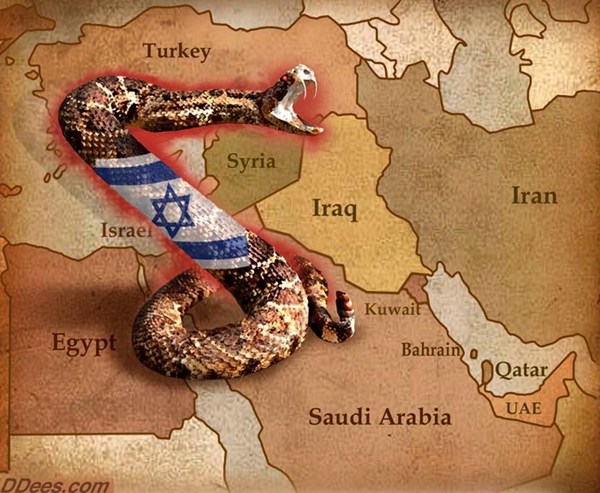
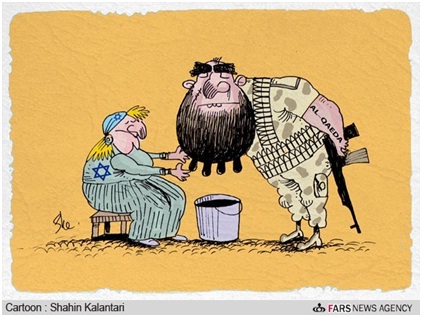
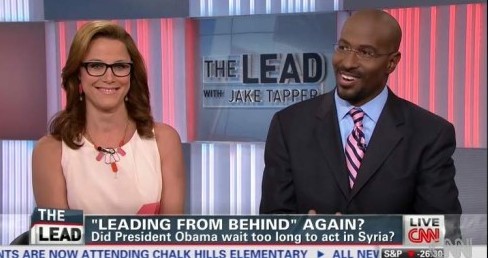 CNN is bringing back Crossfire next month, but viewers on August 27 got a taste of what they might expect: The left thinks we should bomb Syria, while the right thinks we should have started that a long time ago.

 Aletho News

