“Tehran has developed technical expertise in a number of areas – including uranium enrichment, nuclear reactors, and ballistic missiles – from which it could draw if it decided to build missile-deliverable nuclear weapons,” reads Director of National Intelligence James R. Clapper’s April 2013 report to the Senate Committee on Armed Services.
Then comes the statement usually ignored by mass media: “We do not know if Iran will eventually decide to build nuclear weapons.”
The fact that Iran is not producing a nuclear bomb – nay, hasn’t even decided if it wants to – has not deterred the US government from slapping the Islamic Republic with the most punishing unilateral sanctions in history.
While the Iranian economy struggles to adjust to periodic US sanctions “upgrades,” a significantly devalued currency and restrictions in global financial transactions have suddenly challenged even Iran’s famed adaptability to these kinds of externally-imposed pressures.
But something is awry. There is no implosion in Iran. How is that possible with off-the-chart hikes in the price of basic goods, unaffordable housing in congested urban areas, increased youth unemployment? Instead, Iranians who love nothing better than to complain about government and economy, have grumpily rallied against these foreign efforts to pit population against state.
According to results of a Gallup poll in February, 85 percent of Iranians claim sanctions have hurt their livelihood either “a great deal” or “somewhat.” But 70 percent of those polled blame external parties (the US, western European countries, Israel, and the UN) for this suffering; remarkably, only 10 percent blame their government and their leaders. Instead of sanctions forcing a change in Iran’s calculation about pursuing nuclear enrichment – which is a stated US goal – 65 percent of Iranians favor a continuation of the country’s nuclear power capabilities.
As former head of the International Atomic Energy Agency (IAEA) Mohamed El Baradei astutely observed before leaving his 11-year post: “The line was, ‘Iran will buckle under pressure.’ But this issue has become so ingrained in the Iranian soul as a matter of national pride. They talk about their nuclear program as if they had gone to the moon.”
Instead of changing tack and identifying novel ways to gain favor with Iran’s population while pressuring their leaders, the US administration went off the rails last week and upped the sanctions ante – targeting for the first time Iran’s rial currency and its auto industry, a large source of domestic jobs.
No – there can no longer be any mistake about what that means. Washington isn’t trying to change Iran’s “calculations” about “its nuclear program.” It is trying to break Iran’s back.
“Let Them Try”
“US power and reach is in decline,” says Alaeddin Boroujerdi, who heads the Majlis’ (parliament) foreign affairs and national security committees, and cheerily expects to out-maneuver, out-last, and out-smart the Americans.
As with all decision makers in Iran, any discussion of US sanctions gets you a slow smile and a political lesson.
“The new realities in Iran don’t seem to be apparent to the US after 33 years. They’re still focused on regime change, sanctions, cyber war, military operations. The result of this strategy has been to the US detriment (financially draining) and to our advantage,” explains Boroujerdi.
In this period, “Iran gained incredible technology. The US didn’t want us to have nuclear capability – and we have done so from the basics to where we are now in a peaceful nuclear program. They tried to restrict our knowledge and our development. In these three decades we obtained advanced technologies ourselves – building and launching satellites, developing nanotechnology from scratch, developing a domestic arsenal of weapons,” he continued.
“We used Iranian brainpower, our youth; we have attained the unattainable – we changed the process. How many other countries could have done this?”
That’s the crux of it. David vs Goliath. The nimble, determined developing nation upstart facing down the global bully and a crumbling Empire. That image can inspire passion here in Iran – which may explain some of those earlier Gallup numbers and the upward tick in polling data for presidential candidates who talk tough on negotiations with the US.
In short, many Iranians feel the US and other Western nations want to stunt their independence, development, and scientific progress – keeping the country “backward and needy;” a dumping ground for stale Western products and services in exchange for the petrodollars of a one-commodity economy.
“Nuclear” Saves Lives in Iran
I visit a University of Tehran campus that houses the first nuclear medicine center in the country. This is the teaching nexus from which most of the nation’s nuclear medicine specialists graduate. It is a relatively new specialty – a few decades old – but already there are 130 nuclear medicine centers around Iran and an equal number of specialized doctors.
“Nuclear medicine is a real peaceful use of nuclear energy,” explains Dr. Mohsen Saghari who heads the center and is also the president of the Iranian Society of Nuclear Medicine. “We basically use radioactive materials for diagnostics and therapeutic purposes – we do all the treatments and scans (bone, heart, liver, spleen, renal, breast, thyroid, lungs) at this facility.”
As I quickly learned, nuclear medicine is several things: For the purpose of diagnostics, when administered into the body these radiopharmaceuticals can “image” disease at the cellular level, thereby detecting illness earlier than via x-ray, CT-Scans or MRIs, for instance, which rely on the visible manifestation of disease for detection to be possible.
It is like radiology from the inside – instead of the external radiation passing through your body to capture an image from an x-ray, in nuclear medicine, external cameras capture images from the radiation emitted by a radiopharmaceutical administered into a patient.
Nuclear medicine is also used for the purpose of therapeutic treatment. These are specialized drugs that emit short distances of radiation thereby reducing undesirable side effects.
At the center that day, I saw maybe 20 patients and family members in a seating area awaiting a scan or outpatient treatment, mostly for thyroid cancers and hyperthyroidism, according to the medical professional who took me on a tour.
“Most of the procedures we do here are complementary, but in a few cases, they are the only procedures and nothing else can substitute them,” says Saghari. “But because of sanctions we have problems. If we want radioactive materials or equipment, they won’t sell them to us.”
So Iran decided to make its own.
Most of his center’s radioactive materials are produced by the Atomic Energy Organization of Iran, which fuels up those nuclear reactors that make people in Washington and Tel Aviv all wobbly-kneed and shrill.
Saghari showed me a sealed vial – or “cold kit” – that contained a few pinches of a powdered substance. Iran makes that part of the drug too because the newer US (unilateral) sanctions have made it hard for Iranians to trade in Western currencies and transact through most banks. The vial remains sealed until radioactive material is injected into it – which then makes it an active radiopharmaceutical used in diagnostics and treatment.
As my notes recall, 90 percent of these diagnostic procedures require a synthetically-produced chemical element called Technetium, which is produced at Iran’s nuclear plants via a process using 20 percent enriched uranium and then extracted from the nuclear rod fuels to create the necessary medical isotopes.
Says Saghari, “Even in the black market, the importation of chemotherapies and high-tech medications have largely stopped with the latest rounds of sanctions.”
So Iran relies on its own nuclear power plants to fill in – and eventually altogether replace – imports. “Sometimes we get shortages, at the present time they can produce.”
Not a lot of countries produce radiopharmeceuticals. Saghari named just Canada, the US, England, France, Russia and China. Like others leading the charge toward self-sufficiency in Iran, he anticipates that one day Iran will be producing competitive, lower-cost radiopharmeceuticals for export.
“Each week we see 20 to 24 new thyroid cancer patients – last month I had 94 inpatients, 876 diagnostic scans performed and 700 outpatients for thyroid illnesses,” he says, flicking through some administrative papers to try to give me an accurate count. “Every year in Iran about one million people get referred for diagnostic and therapeutic procedures.”
“So of course we are going to make it ourselves,” insists Saghari.
Baa, Baa, Cloned Sheep
A 2010 Canadian report on the “geo-political shift in knowledge creation” claims scientific output has grown 11 times faster in Iran than the global average – faster than in any other country in the world. I recall reading this tidbit three years ago and wondering how that could be right. In previous trips to Iran, I couldn’t say that I ever noted visible signs of ‘unusual progress.’
I don’t think most Iranians think much about this either. Discussing my interviews with friends and acquaintances during my visit, most seemed surprised, even shocked that this much development was going on under their noses. The Iranian government, good or bad, suffers acutely from an inability to communicate its value propositions to the wider population. Which really, quite frankly, cripples it when faced with the well-oiled spin-machines of hostile Western and Arab states seeking to vilify the Islamic Republic.
Every Iranian has an opinion on the country’s nuclear energy program for the simple reason that this is the one ‘development project’ they all know about…so rarely is it out of the international headlines.
This kind of hyper-scientific growth is essential, says Dr. Hamid Gourabi, president of the Royan Institute, a leader in stem cell and reproductive biomedicine in Iran: “Scientific progress can make countries independent – and apply pressure on others.”
If you think his message has political undertones, you are right. It is something I hear in all my meetings. “After the revolution, we decided instead of being dependent on oil, we should diversify into sciences and other areas.”
Royan, a quasi-governmental institute, was established to solve a basic problem: young Iranian couples with fertility problems were having to travel outside the country and spend large sums of money to conceive. The organization started with very basic fertility treatments in 1991 and two years later the first in vitro fertilization (IVF) child was born in Tehran. With a 40 percent success rate, the institute now does more than 4,000 cycles every year – in Europe there are less than ten clinics that perform more than 1,000.
Royan was playing catch-up with some of its early endeavors. In 2006 it cloned its first sheep, followed by two transgenic kid goats called Shangool and Mangool (named after popular children’s characters in Iran), and then by calves – each using slightly different biotechnologies.
Gourabi’s institute is not ultimately interested in replicating other’s successes though – it wants to forge its own way. He tells me about some important thinking that went on in Iran during the presidency of Mohammad Khatami from 1997-2005: “We wanted to expand in sciences, technologies – Khatami didn’t think Iran could advance ‘car-making’ for example – we wanted to go into areas where Iran can bring leadership.” But, he says, ultimately, “the scientific community is the main impetus behind this – they push the government.” Then he adds with a twinkle that Iran’s Supreme Leader “Khamenei has a huge interest in science.”
Since then Royan has branched out in all sorts of directions. Stem cell research is today the most advanced part of what the group does, and Iran, according to Gourabi, is now only the 8th nation in the world to produce scientific output on stem cells.
He also confirms that “sanctions have been a key motivator” for the rush to development. “One of the products we need cost us a million dollars to import. Now we produce it ourselves, it costs us very little. Iran sells biotech to other countries – we offer a lower cost than most companies.”
Gourabi, whose institute has been denied laser technology-based products by the US’ restrictive sanctions regime, says with some confidence: “We will end up producing these drugs for ourselves, so pirating and patent-busting becomes prolific. And they (the West) lose a good market for their products.”
He’s not worried about isolation either: “Sanctions do affect our work – time is important in science and sanctions cause delays – but we are contributing in a big way to the global scientific community now, and this collaboration helps us.”
Nanotechnology 101
A decade ago, Iranian decision makers and scientists were trying to solve a large problem: “In less than 100 years, we will run out of all these oil resources. How do we have an economy then?”
The prevalent thinking was that Iran needed to develop sectors that would help it create a “knowledge-based economy” where it could establish itself as a global leader. The country had underperformed on IT and biotech, so it took its time in studying the potential of nanotechnology. Three years later it decided to plunge in.
“Our mission was to be among the top 15 countries in the world in all rings of the ‘value chain’ – all the way from developing the human resources to commercialization and wealth creation,” say Dr. Seyed Mehdi Rezayat and Dr. Ali Beitollahi, senior officials at The Iran Nanotechnology Initiative Council (INIC).
“Today, more than 14,000 are engaged in Iran’s nanotech industry – a decade ago you couldn’t count the number of people on two hands who understood what it meant,” laughs Beitollahi.
The data starts flowing. In the past five years, Iran has registered 95 patents for nanotechnology products and processes. Dozens of Iranian universities have been corralled into creating graduate and doctoral programs in advanced nanotech. Because of sanctions and embargos, Iranians are making sophisticated machinery that they otherwise would have bought. Twenty five Iranian companies have now commercialized nano equipment because nobody would sell it to them.
In a short time, the Islamic Republic has become one of only six nations involved in nanotech standardization – all others are Western countries (US, UK, Canada, Germany) with the exception of Japan.
The applications in nanotech are broad. From eco-efficiencies like coating glass that keeps heat out, to strengthening building materials in earthquake prone areas, to creating cancer drugs to water filtration and desalinization.
“In high-tech you can get much more advanced benefit than from commercial technologies,” says Rezaiat. “Every kilogram of cement is just a few cents. The main cost of things is knowledge and technology, so why should a country like Iran stick to cement?”
“We learned a lot of lessons from our previous lack of achievement,” he reflects, adding, “We used to buy turnkey projects and we didn’t even know what was inside.” Now, says Rezaiat, “Nano has become a model for the country. We started from scratch – we will look, learn about everything.”
Why Washington Fears Iran?
A rigorous report published last week on Iran sanctions by the Congressional Research Service (CRS) says the following:
“There is a growing body of opinion and Iranian assertions that indicates that Iran, through actions of the government and the private sector, is mitigating the economic effect of sanctions. Some argue that Iran might even benefit from sanctions over the long term by being compelled to diversify its economy and reduce dependence on oil revenues. Iran’s 2013-2014 budget relies far less on oil exports than have previous budgets, and its exports of minerals, cement, urea fertilizer, and other agricultural and basic industrial goods are increasing substantially.”
A year ago I wrote an article titled “How Iran Changed the World.” In it I warn that continued economic pressures on Iran will produce the unintended consequence of undermining Western hegemony very decisively.
The US, after all, is aggressively challenging the Islamic Republic at a time when the entire Western financial and economic order is teetering on the brink of collapse, with no apparent safety net in sight.
Iran is an extremely resourceful country of 78 million people, a huge export market for any nation keen to bolster its treasuries, and has major strategically valuable commodities – oil and gas – that people are keen to buy.
The tighter the sanctions, the more likely that Iran and its trading partners will seek innovative ways around them. In effect, by putting the screws on this important country (Iran is today the head of the 118-nation Non-Aligned Movement and increasingly protected by the emerging BRICS economies), the US is encouraging the development of alternative financial and economic practices that will fundamentally undermine – perhaps even destroy – its own global order.
Every global power throughout history has ended its reign at the hands of an adversary, whether on the battlefield or in a grand power play that goes wrong. What Washington rightfully fears is that its three-decade-long tussle with the Islamic Republic is unwinnable – which is nothing short of defeat for the world’s last superpower.
Unable to get off its current trajectory of escalation, the US continues to seek new, illogical, increasingly indefensible ways to squeeze Iran’s population. But the fact is that sanctions simply don’t work: Iran is not going to stop its nuclear enrichment. Iranians aren’t going to eject their government.
This will not end well for the US. Iran…I’m not so worried about.
This is the second in a two-part series on my 2012 research trips to Iran to discover what makes the Islamic Republic so resilient in the face of Western economic and political pressures. You can read Part 1, “Why Arabs Need Iran” here.
Sharmine Narwani is a commentary writer and political analyst covering the Middle East. You can follow Sharmine on twitter @snarwani.
A lot of people in the US media are asking why America’s most famous whistleblower, 29-year old Edward Snowden, hied himself off to the city state of Hong Kong, a wholly owned subsidiary of the People’s Republic of China, to seek at least temporary refuge.
Hong Kong has an extradition treaty with the US, they say. And as for China, which controls the international affairs of its Hong Kong Special Administrative Region, while granting it local autonomy to govern its domestic affairs, its leaders “may not want to irritate the US” at a time when the Chinese economy is stumbling.
These people don’t have much understanding of either Hong Kong or of China.
As someone who has spent almost seven years in China and Hong Kong, let me offer my thoughts about why Snowden, obviously a very savvy guy despite his lack of a college education, went where he did.
First of all, forget about Hong Kong’s extradition treaty. When it comes to deciding whether someone will be extradited, particularly for a political crime, as opposed to a simple murder or bank heist, the decision will be made in Beijing, not in a Hong Kong courtroom. Second, Hong Kong has a long history of providing a haven to dissidents — even to dissidents wanted by the Chinese government. Consider, for example, the Chinese labor movement activist Han Dongfang, who was the subject of a massive dragnet after the Tiananmen protests, but who successfully fled to Hong Kong before the handover of the place from Britain to China, and is continuing to monitor Chinese labor strife and protest from his home on Hong Kong’s Lamma Island. Hong Kong also has a public that is very supportive of democratic values — certainly more so than the majority of American citizens. Hong Kong people may not be paying too much attention to Snowden’s situation right now, but if the US were to actively seek to extradite him, I am confident that the place would erupt in support for him, including the local media.
As for China, while the issue that has Snowden on the run — exposing an Orwellian spying program targeting the American people and run by the super-secret National Security Agency — is certainly not one that the Chinese like to discuss in terms of their own locked-down society, you can bet that the folks in the Propaganda Bureau in Beijing, and in the inner circle of the government, are rubbing their hands with glee both at the incredible embarrassment their harboring of Snowden causes the hypocritical US, and at the trove of intelligence information he has, which they may be able ultimately to lure him into disclosing if they treat him well.
Then too, there is the matter of the Confucian concept of gift-giving and mutual obligations. It was, I am sure, no accident that Snowden chose the weekend that President Obama was hosting a summit in California with China’s new president Xi Jinping to disclose his identity as the NSA whistleblower who exposed the national spying program to the Guardian and the Washington Post. In doing that, he gave President Xi an incredible gift — the chance to hold the upper hand in his negotiations with a hugely embarrassed and compromised Obama over issues like Chinese computer hacking of US corporate and government secrets, and theft of intellectual property. For of course it is clear that the NSA is at least as active in hacking Chinese computers and spying on Chinese communications.
Such a gift as that is not easily ignored or forgotten in Chinese culture. President Xi owes Snowden a lot, and I believe he will honor that debt by seeing that Snowden is protected from any threat that might be posed to him by a vindictive or frightened US government.
But Snowden isn’t relying solely on Chinese cultural values to protect himself.
He was also careful to send a powerful message of warning to the US officials in the videoed public interview he gave outing himself. As he told interviewer Glenn Greenwald, “I had access to the full rosters of everyone working at the NSA, the entire intelligence community, and undercover assets all over the world. The locations of every station, we have what their missions are and so forth. If I had just wanted to harm the US? You could shut down the surveillance system in an afternoon.”
That one line at the end had to make the folks in Langley and at NSA headquarters sit up straight or to head to the bar for a stiff one! And indeed he could. And I will guarantee you, Snowden being as smart as he is, that he has already taken that information and dispersed it to a number of trusted people, perhaps including Greenwald, with instructions that they should put it all out on the Web if anything happens to him, such as his being kidnapped or disappeared or terminated. It’s a wonderful insurance policy and one that would not have escaped him. Nor would he have bothered to discover that he had all that information available to him if he hadn’t thought that he might need it.
It would be a relatively easy matter for the high-tech spooks at the NSA to retrace Snowden’s electronic trail to see if he really did download all that super-secret information and really could blow up the entire US spy machine. If they find out that he really has that information, he’s basically untouchable.
The real question is not what they are going to do to Snowden. It’s what we Americans are going to do now that we know how truly insane and totalitarian our government has become.
Will we go back to watching our sports teams and our reality TV programming, and forget about the fact that we no longer have any privacy in our lives, that our elected leaders and our judges are operating on the assumption that if they get out of line the fascist machine at the NSA that works in service of the corporate elite will blackmail or destroy them with its access to all their communications. Or will we rise up and demand an end to this high-tech tyranny in the name of a fraudulent “War” on Terror?
Snowden exiled himself and gave up a great job in Hawaii in the hope that we would rise up when we learned that our democracy has been hijacked.
Former Republican presidential candidate Ron Paul appeared on CNN tonight to tell Piers Morgan why he objects to the NSA surveillance program. Morgan directly asked Paul if he would have actually ended surveillance programs if he were president. Paul said he would still want intelligence gathering, but it would be done in a more transparent way, maintaining that the current surveillance program are unquestionably unconstitutional. He directly told NSA defenders that they are simply “justifying dictatorship.”
Paul dismissed the use of a FISA court as a significant enough of a check on the executive branch. He said this program is undeniably “destroying the Constitution,”, and posed a question to anyone who defends the widespread surveillance.
“What should the penalty be for the people who destroy the Constitution? They’re always worrying about how they’re going to destroy the American citizens who tell the truth, to let us know what’s going on, but we ask the question: what is the penalty for people who deliberately destroy the Constitution and rationalize and say, ‘Oh, we have to do it for security.’ Well, frankly, you end up losing–you lose your security and you lose your freedoms too.”
He told NSA defenders that the nation is on a “very dangerous course,” and when they try to say there’s nothing wrong with such massive intelligence gathering, “you’re justifying dictatorship!”
The Israeli Government passed Sunday [June 9, 2013] the “Anti-Terror Bill”, authorizing harsher punishment against individuals suspected or convicted of aiding armed groups in the country, and anywhere in the world.
Several human rights groups in Israel and around the world voiced serious concerns regarding direct human rights violations, especially since this law strengthens and “legalizes” Administrative Detention orders confining hundreds, and even thousands, behind bars for extended periods without charges or trial.
The bill passed during a vote at the Israeli Ministerial Committee for Legislation, headed by Israeli Justice Minister, Tzipi Livni.
It not only targets those “convicted of terror attacks”, but also those who express support, emphasize and “incite terror activities” in addition to those believed to be engaged in preparations to carrying out violent acts.
Part of the penalties that this bill proposed include sentencing individuals for a life term without the possibility of parole, and allows the Police, the Security Services and all related agencies to confine “suspects” up to 30 days without granting them the right to any legal representation.
The passed bill also allows Israel to seize property of armed groups and individuals, in addition to preventing them from traveling abroad when there are no arrest warrants against them.
Israeli daily Haaretz has reported that the new legislation, would replace the “national state of emergency regulations” that Israel enforced after its establishment in the historic land of Palestine in 1948. Those regulations affect civil, security and economic issues.
The law particularly targets Palestinians and the indigenous Arab population in Israel, as those facing charges of “security or criminal violations”, whether in civil or military courts, would be facing very harsh sentences.
Head of the Meretz opposition party, Zahava Gal-On, said that Israel is denying human rights under the guise of combating terror.
She said that the emergency law applied in the country since the British occupation of Palestine, “cannot just be replaced with legislation that is anti-democratic”.
Also, the Association for Civil Rights in Israel (ACRI) slammed the bill, described it as anti-democratic, and warned that its provisions could turn legal organizations and law-abiding persons into terrorists just because they are suspected of aiding or practicing terror.
The Arabs48 news website reported that, under the new law, persons who even express support for groups labeled by Israel as “hostile” or “terrorist” could be imprisoned up to three years. It also considers financial support to these organizations as an “act of terror”.
Arabs48 added that the new bill increases the years of life-terms from 30 to 40 years.
It stated that the Israeli Prosecutors Office said that Price Tag attacks have not been labeled as acts of terror, as the Office believes that boosting intelligence activity and adequate training to police officers dealing with those attacks could put an end to those attacks.
The Israeli Government Legal Advisor stated that, legally, there is nothing stopping the government from describing and declaring Price Tag attacks as acts of terror.
In an Editorial Published on June 9, Haaretz said that the core of this bill has serious and extremely wide definitions for a terrorist organization, or terrorist acts, and added that once an organization, including a charity group, is labeled as a terrorist group, the moral base and all legal measures are destroyed.
Obama National Security Council adviser Samantha Power has been named the new U.S. ambassador to the United Nations. That news prompted a piece in the New York Times (6/9/13) headlined “A Golden Age for Intervention?” by Neil MacFarquhar. The article raises some of the usual issues surrounding Power’s work– most prominently the notion that the United States should use military intervention in the name of humanitarianism.
MacFarquhar writes that Power
wants the system to work. As flawed as the Security Council is, she has often said, its endorsement amplifies international approval for controversial action. She criticized the American invasion of Iraq because it lacked the council’s stamp, among other reasons.
But what did Samantha Power actually say about the Iraq War before it happened?
Power was prominent in elite foreign policy discussions at the time; her 2002 book A Problem from Hell: America and the Age of Genocide won a Pulitzer the following year.
MacFarquhar makes it sound like Power had multiple reasons she opposed the war. But it’s difficult to find such evidence.
On March 10, 2003, she appeared on MSNBC‘s Hardball to debate pro-war writer Jonathan Chait–whom she agreed with on a few points.
Indeed, it was somewhat difficult to say what Power’s position was overall:
An American intervention likely will improve the live of the Iraqis. Their lives could not get worse, I think it’s quite safe to say.
The issue, though, is whether the United States can be, in a sense, the unilateral guardian of human rights and whether the intervention itself won’t have destabilizing consequences, both in terms of our security, the very security in whose name we’re really launching this intervention, and in the name of international principles like human rights, international justice, international stability.
Power seemed especially concerned about how the ramifications of the war on U.S. standing in the world:
It legitimates the go-it-alone approach and it sort of reinforces the impression of us as an outlaw nation, which is ironic because, of course, Saddam’s regime is far more an outlaw nation than ours.
So Power certainly did not support the way the United States was launching the war. But that’s not really the same as opposing the war; it’s wishing for more effective management of the war.
And host Chris Matthews closed the segment trying to get Power to take a position:
MATTHEWS: Is this a just war, Samantha?
POWER: It will have a just result locally and probably a very unjust result…
MATTHEWS: Is it a just war?
POWER: I don’t think we can be the guardians of justice…
MATTHEWS: No, I–so it’s not a just war?
POWER: We haven’t fought it yet, Chris. I mean, you know, you can’t say whether…
MATTHEWS: Well, you have to decide about a war before you start it, not afterwards. Is this a just war…
POWER: No, you can’t weigh in on proportionality, on discrimination, on whether we actually follow through and actually look out for the rights of the Iraqis…
(CROSSTALK)
POWER: … after the war. We don’t know that now.
MATTHEWS: But in its outset, is it a just war?
POWER: It’s not being fought for human rights reasons. I don’t know who–why–I mean, it would be great if human rights were a necessary condition.
At that time, bonafide critics of the Iraq War were much clearer than that, and it’s hard to find much else that would suggest that Power had a particularly clear anti-war case she made publicly–though she did, like many others, come around to articulating a more forceful critique of the Bush administration by the time that administration was almost over.
Weeks after the war started, a Los Angeles Times article (4/10/03) on Power included this assessment of Iraq:
“That’s what’s so great about the fall of Saddam Hussein. Now we can actually put our money and power where our might has been so far. We can demonstrate what we have claimed all along, that this war is about them,” she said, referring to the Iraqi people.
“The hard work is just beginning, in Iraq and also in restoring U.S. credibility as a global actor. I hope the book provides the spirit in which that can be done.”
Some of Power’s most pointed critics–like writer and lawyer Chase Madar–have argued that Power does not forcefully critique U.S. policies that have encouraged and enabled massive crimes against humanity, preferring instead to talk about instances where the United States could have taken steps to intervene militarily in a given crisis and didn’t.
But in the case of Iraq, at a time when the themes of her celebrated book were very much a part of the debate over whether or not to go to war, it was hard to determine where Power stood.
A great number of Hezbollah’s opponents have transformed into sworn enemies bent on the group’s destruction. This could signal a confrontation, whose theater will be my small country or my bigger one.
Many victims could fall. And since the situation is extremely dangerous, I find myself, once again, compelled to attempt an explanation of Hezbollah’s current reality.
Those who want to act rationally will hopefully understand and listen to what I say, even if they decide to go ahead with the final confrontation.
Today, Hezbollah is a major regional power. It has been so for the past decade. With the liberation of 2000 and Israel’s defeat in Gaza, then the US defeat in Iraq, followed by the failure of the plan to control Lebanon after the assassination of Rafik Hariri, then the July 2006 war, Hezbollah went through – or was forced into – several trials and theaters. It expanded its expertise, increased its influence, and doubled its capacity.
Knowingly and unknowingly, Hezbollah became synonymous with the rejection of all things US and Europe, whether Arab or not.
In addition, Hezbollah has institutions comparable to those of states, not local organizations. It has a structure allowing it to function in all aspects of life. Notwithstanding its ability to succeed here or there, Hezbollah is now a security and military force, which represents a fulcrum in the axis against the West and its acolytes in the region.
With the expansion of its multifarious capacities, Hezbollah is now a source of power for all those who stand by it. This is what the Palestinians realized in their conflict with the Israeli occupation. It is what the Iraqi resistance against the US occupation found out. And now, it is what the Syrian army is experiencing against the armed groups.
In each experience, Hezbollah, which learned and absorbed a great deal of the Israeli enemy’s experience, knows how to recast a threat into an opportunity and a crisis into an opening for a new reality.
What is most important in those experiences is Hezbollah’s ability to produce the appropriate political discourse for each stage. Therefore it can introduce mechanisms allowing it to continue mobilizing a new generation for its forces. After a quarter of a century of military experience, its fighters are still in their early twenties.
Does anyone who wants a feud imagine what it means in real life, being able to maintain the ability to renew one’s human military capacity? And what if this went hand in hand with an enormous burgeoning at the level of military systems, security capabilities, and logistical capacity?
Today, Hezbollah is abhorred by a not-so-small number of Arabs and Muslims. Yet it does not worry about its popular legitimacy. It never linked its struggles or position with obtaining prior approval from those who everyone knows are not fit to hire a government employee, let alone make a strategic choice.
This issue helped the party avoid the kind of collapse that faces political forces based on such calculations. They wither as soon as the cover of this or that state is lifted.
However, when Hezbollah decided, openly and blatantly, to penetrate the heart of the battle against the armed groups in Syria, it did so with awareness of its new role. It is not an objective reaction or a tit-for-tat service provided to the Syrian regime after a quarter century of support.
The new role of Hezbollah is to lead a Levantine – if not Arab – current, aiming to redraw the political, economic, and social map of a country of 75 million Arabs. Hezbollah can be a lever, but cannot produce a complete transformation and never claimed so.
Common sense says that this mission seeks to regain the individual and collective rights of Arabs to resist the occupation of the US, Israel, or their agents in the Levant. The mission aims to revive the real national identity of all Arabs.
In the first phase, it requires the elimination of all narrow viewpoints, whether we call it “an independent national decision” or “my country first.” This means all of the people of the Levant, from Palestine and Jordan, to Lebanon and Syria, to Iraq, Turkey, and the Arabian Gulf.
As a consequence, I advise anyone who wants to get rid of Hezbollah to start acting as if the issue is no longer related to military and security groups, a neighborhood or two, or a border strip monitored by an international police force or the like.
I am speaking of a current with a mix of leftists and Syrian and Arab nationalists. It has a tremendous base of poor who aspire for full independence that protects their cultural and social diversity, before the political and the administrative. It is this diversity that will eliminate the thought of takfiris led by the Saudis and their relatives.
This is Hezbollah’s new address. Get to know it well – God forbid – before you begin fighting it.
A US editor has alleged he overheard security officials saying that the NSA leaker and the Guardian columnist who broke his story should be “disappeared.” Leaker Edward Snowden said that American spies often prefer silencing targets over due process.
“In Dulles UAL lounge listening to 4 US intel officials saying loudly leaker & reporter on #NSA stuff should be disappeared recorded a bit,” the Atlantic’s Washington-based editor-at-large Steve Clemons tweeted on Sunday.
According to Clemons, four men sitting next to him at the airport “were loud. Almost bragging” while discussing an intelligence conference they had just attended hosted by the Intelligence and National Security Alliance.
Clemens said he was unsure of the men’s identities or which agency they worked for, and told the Huffington Post that one of them was wearing “a white knit national counter-terrorism center shirt.” Clemons also recorded part of their conversation and snapped some photos, hoping that “people in that bz will know them.”
“But bad quality,” he noted about the quality of the photos. “Was a shock to me and wasn’t prepared,” he wrote on Twitter.
The source behind the revelation of the top-secret NSA surveillance program, dubbed one of the most significant intelligence leaks in US history, was uncovered late last week. Snowdon, a former CIA technical contractor and NSA consultant, had asked the Guardian to reveal his identity. He has fled to Hong Kong in a bid to escape retaliation by the US.
“The NSA has built an infrastructure that allows it to intercept almost everything. With this capability, the vast majority of human communications are automatically ingested without targeting. If I wanted to see your emails or your wife’s phone, all I have to do is use intercepts. I can get your emails, passwords, phone records, credit cards,” Snowden told the Guardian.
When asked for his reaction to the alleged comments that reporter Glenn Greenwald and the 29-year-old leaker himself should be “disappeared,” Snowden told the newspaper: “Someone responding to the story said ‘real spies do not speak like that.’ Well, I am a spy and that is how they talk. Whenever we had a debate in the office on how to handle crimes, they do not defend due process – they defend decisive action. They say it is better to kick someone out of a plane than let these people have a day in court. It is an authoritarian mindset in general.”
Snowdon earlier explained that he had sacrificed his life and $200,000-a-year career out of his desire to protect “basic liberties” in order to “send a message to government that people will not be intimidated.”
The whistleblower leaked top-secret documents that revealed the existence of the US National Security Agency’s extensive Internet spying program PRISM, which records digital communications and allows for real-time online surveillance of US citizens. PRISM apparently gives US intelligence agencies direct access to files stored on the servers of major Internet companies – including Google and Facebook – in order to identify and target potential terror suspects.
Last week we saw dramatic new evidence of illegal government surveillance of our telephone calls, and of the National Security Agency’s deep penetration into American companies such as Facebook and Microsoft to spy on us. The media seemed shocked.
Many of us are not so surprised.
Some of us were arguing back in 2001 with the introduction of the so-called PATRIOT Act that it would pave the way for massive US government surveillance—not targeting terrorists but rather aimed against American citizens. We were told we must accept this temporary measure to provide government the tools to catch those responsible for 9/11. That was nearly twelve years and at least four wars ago.
We should know by now that when it comes to government power-grabs, we never go back to the status quo even when the “crisis” has passed. That part of our freedom and civil liberties once lost is never regained. How many times did the PATRIOT Act need renewed? How many times did FISA authority need expanded? Why did we have to pass a law to grant immunity to companies who hand over our personal information to the government?
It was all a build-up of the government’s capacity to monitor us.
The reaction of some in Congress and the Administration to last week’s leak was predictable. Knee-jerk defenders of the police state such as Senator Lindsey Graham declared that he was “glad” the government was collecting Verizon phone records—including his own—because the government needs to know what the enemy is up to. Those who take an oath to defend the Constitution from its enemies both foreign and domestic should worry about such statements.
House Intelligence Committee Chairman Mike Rogers tells us of the tremendous benefits of this Big Brother-like program. He promises us that domestic terrorism plots were thwarted, but he cannot tell us about them because they are classified. I am a bit skeptical, however. In April, the New York Timesreported that most of these domestic plots were actually elaborate sting operations developed and pushed by the FBI. According to the Times report, “of the 22 most frightening plans for attacks since 9/11 on American soil, 14 were developed in sting operations.”
Even if Chairman Rogers is right, though, and the program caught someone up to no good, we have to ask ourselves whether even such a result justifies trashing the Constitution. Here is what I said on the floor of the House when the PATRIOT Act was up for renewal back in 2011:
“If you want to be perfectly safe from child abuse and wife beating, the government could put a camera in every one of our houses and our bedrooms, and maybe there would be somebody made safer this way, but what would you be giving up? Perfect safety is not the purpose of government. What we want from government is to enforce the law to protect our liberties.”
What most undermines the claims of the Administration and its defenders about this surveillance program is the process itself. First the government listens in on all of our telephone calls without a warrant and then if it finds something it goes to a FISA court and gets an illegal approval for what it has already done! This turns the rule of law and due process on its head.
The government does not need to know more about what we are doing. We need to know more about what the government is doing. We need to turn the cameras on the police and on the government, not the other way around. We should be thankful for writers like Glenn Greenwald, who broke last week’s story, for taking risks to let us know what the government is doing. There are calls for the persecution of Greenwald and the other whistle-blowers and reporters. They should be defended, as their work defends our freedom.
Two recently released reports, one by the Congressional Research Service (CRS) and one by the Government Accountability Office (GAO), show that not only is the number of private contractors in Afghanistan increasing, but the Pentagon is also unable to tell what they are even doing there. Citing the reports, David Francis of the Fiscal Timespoints out that there are now 108,000 private contractors in Afghanistan (over 30,000 of whom are Americans), far more than the 65,700 U.S. troops still there, and the number was counted at 110,404 last month. That amounts to 1.6 contractors for every American soldier, roughly 18,000 of which are private security contractors.
Although the U.S. presence in Afghanistan is ostensibly winding down towards an eventual handover to Afghan security forces, as Francis argues, “the increase in the contractors to troop ratio is yet another indication that although the vast majority of troops are leaving Afghanistan, a private army will remain in the country for years.”
According to the CRS, the U.S. wars in Iraq and Afghanistan show the increasing reliance of the military on private contractors. But replacing the military with private contractors is not necessarily a good thing. Highlighting the abuses committed by private military contractors, Angela Snell of the University of Illinois College of Law has called this trend a “convenient way for the U.S. government to evade its legal obligations, including the responsibility to protect the human rights of civilians in war and peace, by allowing private individuals, rather than official state actors, to perform services on behalf of the U.S. military.”
Not only does the growing use of private contractors give lie to the idea of a withdrawal from the country, but they are also very costly. Although still dwarfed by the ever-mounting total costs of the wars in Iraq and Afghanistan, CRS reports that “over the last six fiscal years, DOD [Department of Defense] obligations for contracts performed in the Iraq and Afghanistan areas of operation were approximately $160 billion and exceeded total contract obligations of any other U.S. federal agency.”
Moreover, Francis points out that the CRS and GAO did not just measure the number of contractors and the cost, but the reports also assessed the Pentagon’s ability to monitor the work of contractors. And the results are damning. According to Francis, taken together the reports:
“Amount to yet another indictment of how the Pentagon deals with private workers. CRS found that the Pentagon lacked the ability to document the work each contractor is performing. It also found even when the government has information on contractors, it’s often inaccurate and doesn’t reflect the actual work being done. This leaves the Pentagon unable to determine if the hundreds of billions it’s spending are leading to effective results.”
So despite the increasing number of private contractors being used and the hundreds of billions of dollars being spent on them, the Pentagon is not even able to determine what they are doing or whether it is effective. As CRS reports, the information the Pentagon has on private contractors is probably not reliable enough to be used to make decisions “at the strategic level,” thus hindering its ability to tell whether the work of contractors is contributing to “achieving the mission.”
The U.S.-led wars in Iraq and Afghanistan have been massive, and destructive, wastes of lives and money. Although the U.S. and its allies say that they plan to remove combat troops from Afghanistan by 2014, this will in no way be the end of the West’s presence in the country. Francis reports that much of the work currently done by the military will be done by the private contractors after the military leaves. So while the attention paid to Afghanistan is likely to continue to dwindle even further, as has been the case in Iraq, as the military withdrawal picks up, the foreign occupation, by what one analyst has called “a de facto army,” looks set to continue on.
British Respect party MP George Galloway has slammed the government’s small payment of £3,000 apiece to Kenyan victims of torture and mistreatment under British colonial rule during the 1950s.
On Press TV’s weekly program Comment, Galloway reviewed the torture Kenyans experienced during the Mau Mau uprising against British colonial rule, explaining that a recent compensation of around £20 million to 5,000 victims is not enough.
“Now that sounds like a lot of money [£20 million] but it actually works out at £3,000 compensation each”, Galloway said.
“We’re talking about men who were castrated by the British colonial administration in Kenya. I’m talking about women who were multiply raped and sexually abused, for that kind of torture. £3,000 ain’t much,” he added.
Galloway also said that British Foreign Secretary William Hague did not accept the legal liability for British colonizers’ brutal crimes in Kenya.
At least 10,000 people died during the 1952-1960 Mau Mau uprising against British colonial rule, with some sources giving far higher estimates.
Moreover, Galloway highlighted that the British government still has “hundreds of thousands” of uncompensated victims of British imperial crimes around the world.
Let me begin with some background not covered in the film. Dirty War derives from “La Salle Guerre”, the term the French applied to their counter-terror campaign in Algeria, circa 1954-1961. Algeria wanted independence, and France resisted.
Like subject people everywhere, the Algerians were badly outgunned and resorted to guerrilla tactics including “selective terrorism,” a hallmark of the Viet Minh, who fought the French until 1954, when America claimed Vietnam as its rightful property. Viet Minh tactics were derived largely from Mao’s precepts for fighting a People’s War.
Selective terrorism meant the murder of low-ranking officials – collaborators – who worked closely with the people; policemen, mailmen, teachers, etc. The murders were gruesome – a bullet in the belly or a grenade lobbed into a café – designed to achieve maximum publicity and demonstrate to the people the power of the nationalists to strike crippling blows against their oppressors.
Whether the Great White Fathers are French or American or English, they agree that putting down a People’s War means torturing and slaughtering the people – despite the fact that most people are not engaged in terrorism or guerrilla action and have no blood on their hands.
As John Stockwell taught us years ago, Dirty War means destabilizing a targeted nation through covert methods, the type the CIA has practiced around the world for 66 years. Destabilizing means “hiring agents to tear apart the social and economic fabric of the country.
“What we’re talking about is going in and deliberately creating conditions where the farmer can’t get his produce to market; where children can’t go to school; where women are terrified inside their homes as well as outside; where government administered programs grind to a complete halt; where the hospitals are treating wounded people instead of sick people; where international capital is scared away and the country goes bankrupt.”
Economic warfare – strangling nations like Cuba, Iraq and Iran in Medieval fashion – is a type of Dirty Warfare beloved by the Great White Fathers who control the world’s finances. Though no less deadly than atomic bombs, or firebombing Dresden, it is easier to sell to the bourgeoisie.
You’ll hear no mention of this in Scahill’s film, nor will you hear any references to Phil Agee, or the countless others who have explained Dirty War to each generation of Americans since World War Two.
You will not hear about psychological warfare, the essence of Dirty War.
America’s first was terror guru was Ed Lansdale, the advertising executive who made Levi’s blue jeans a national craze in the 1930’s. He applied his sales skills to propaganda in the OSS and after WW II, concocted a new generation of psywar tactics as an agent of the Office of Policy Coordination assigned to the Philippines under military cover. Lansdale’s bottomless black bag of dirty tricks included a “skull squadron” death squad that roamed the countryside, torturing and murdering Communist terrorists.
One of Lansdale’s counter-terror “psywar” tactics was to string a captured Communist guerrilla upside down from a tree, stab him in the neck with a stiletto, and drain his blood. The terrorized Commies fled the area and the terrified villagers, who believed in vampires, begged the government for protection.
Lansdale referred to his sadism as “low humor,” an excuse borrowed liberally by American officialdom during the Abu Ghraib prison scandal.
Lansdale formalized “black propaganda” practices to vilify the Communists: one of his Filipino commando units would dress as rebels and commit atrocities, and then another unit would arrive with cameras to record the staged scenes and chase the “terrorists” away.
Lansdale brought his black propaganda and passion for atrocity to Saigon in 1954, along with a goon squad of Filipino mercenaries packaged as “Freedom Company.”
Under Lansdale’s guidance, Freedom Company sent Vietnamese commandoes into North Vietnam, under cover as relief workers, to activate stay-behind agent nets and conduct all manner of sabotage and subversion. Disinformation was a Lansdale specialty, and his agents spread lurid tales of Vietminh soldiers’ disemboweling pregnant Catholic women, castrating priests, and sticking bamboo slivers in the ears of children so they could not hear the Word of God.
In the South, with the help of the American media, Lansdale re-branded the heroic Vietminh as the beastly Viet Cong.
Lansdale’s greatest innovation, still used today, was to conduct all manner of espionage and terror under cover of “civic action.” As a way of attacking Viet Minh agents in the South, Lansdale launched “Operation Brotherhood,” a Filipino paramedical team patterned on the typical Special Forces A team. With CIA money, Operation Brotherhood built medical dispensaries that the CIA used as cover for terror operations, as depicted in the book and movie The Quiet American.
Levis never went out of fashion, nor did Lansdale’s dirty tricks. Think Saddam Hussein killing babies in their incubators. Such disinformation invariably works on an American public looking for any excuse to rationalize its urge for racist genocide.
Think Argo and Zero Dark Thirty and every Rambo and Bruce Willis films.
Only Americans were fooled by the propaganda, and the Vietnamese quickly caught on. So the CIA in 1956 launched the Denunciation of Communists campaign, which compelled the Vietnamese people to inform on Commies or get tortured and murdered. The campaign was managed by CIA agents who could arrest, confiscate land from, and execute Communists and their sympathizers on the CIA’s master list. In determining who was a Communist, the CIA used a three-part classification system: A for dangerous party members, B for less dangerous party members, and C for loyal citizens.
As happened later in the Phoenix program, the threat of an A or B classification was used to extort innocent civilians, while category A and B offenders were put to work building houses and offices for CIA officers and their lackeys. And, of course, the puppet Vietnamese President used his CIA created, funded and trained security forces to eliminate his political rivals.
As Lansdale confessed, “it became a repressive tool to liquidate any opponent.”
“This development was political,” Lansdale observes. “My first inkling came when several families appeared at my house one morning to tell me about the arrest at midnight of their men-folk, all of whom were political figures. The arrests had a strange aspect to them, having come when the city was asleep and being made by heavily armed men who were identified as ‘special police’.”
Lansdale complained, but he was told that a “U.S. policy decision had been made. We Americans were to give what assistance we could to the building of a strong nationalistic party that would support Diem. Since Diem was now the elected president, he needed to have his own party.”
How We Got To Scahill’s Dirty War
By 1962, as the US expanded its Dirty Wars in the Far East and South America, the military replaced its Office of Special Operations with an up-dated Special Assistant for Counter-insurgency and Special Activities (SACSA). SACSA assigned unconventional warfare forces to the CIA and regular army commanders, who initially resisted.
The development of psychological warfare and special operations is explained in Michael McClintock’s Instruments of Statecraft. For the CIA politics behind it, see Burton Hersh’s The Old Boys.
In 1965 Lansdale went back to Vietnam to run the Revolutionary Development Cadre Program as the CIA’s “second station” with a staff of CIA officers, Green Beanies, and Daniel Ellsberg. Vietnam was a laboratory and the CIA was experimenting with Pacification, aka “the Other War.”
In 1967, the CIA created the Phoenix program to coordinate everyone in its Dirty War. Phoenix combined existing counterinsurgency programs in a concerted effort to neutralize the civilians running the shadow government. Neutralize means to kill, capture, or make to defect. Central to Phoenix was that it targeted civilians. “By analogy,” said Ogden Reid, a member of a congressional committee investigating Phoenix in 1971, “if the Union had had a Phoenix program during the Civil War, its targets would have been civilians like Jefferson Davis or the mayor of Macon, Georgia.”
Under Phoenix, due process was nonexistent. South Vietnamese civilians whose names appeared on CIA blacklists were kidnapped, tortured, detained without trial, or murdered on the word of an informer. Phoenix managers imposed a quota of 1,800 neutralizations per month on the saps running the program in the field, opening it up to abuses by corrupt security officers, policemen, politicians, and racketeers. One CIA officer described Phoenix as, “A very good blackmail scheme for the central government. `If you don’t do what I want, you’re VC.”‘
Because Phoenix assassinations (totaling 25,000+) were often conducted at night while its victims were home sleeping, Phoenix proponents describe the program as a “scalpel” designed to replace the “bludgeon” of My Lai-style search and destroy operations, air strikes, and artillery barrages that indiscriminately wiped out entire villages and did little to “win the hearts and minds” of the people. But that was just propaganda and Phoenix was, among other things, an instrument of counter-terror – the psywar tactic in which enemy agents were brutally murdered along with their families and neighbors as a means of terrorizing the people into a state of submission. Such horrendous acts were, for propaganda purposes, often made to look as if they had been committed by the enemy.
This practice is at the heart of the film I will be reviewing.
As noted, conventional soldiers hated Phoenix. General Bruce Palmer, commander of the U.S. Ninth Infantry Division in 1968, objected to the “involuntary assignment of U.S. Army officers to the program. I don’t believe that people in uniform,” he said, “who are pledged to abide by the Geneva Conventions, should be put in the position of having to break those laws of warfare.”
Palmer’s was such a charming sentiment. By 2004, Obama advisor Lt. Col. David Kilcullen, in an article for Small Wars Journal, was calling for a “global Phoenix Program.” Tom Hayden wrote an article for The Nation about Kilcullen in 2008 titled “Reviving Vietnam War Tactics”.
Fact is, Phoenix never went out of fashion. As McClintock notes, “Counterinsurgency and indeed all aspects of special warfare doctrine had developed a reasonable level of political sophistication by the mid-1970s, acknowledging the necessity of combining military and civil initiatives.”
By 1975 SACSA had expired, the nation had internalized its humiliating defeat in Vietnam, and the CIA, wounded by the Church Committee hearings, went underground. The age of counter-terror began. Central and South America were the new laboratories. The CIA forged secret alliances with proxy nations like Israel and Taiwan, whose agents taught Latin American landowners how to organize criminals into death squads which murdered and terrorized labor leaders, Human Rights activists, and all other enemies of the Great White Fathers.
To compensate for the reduction in size of its paramilitary Special Operations Division, the CIA formed its Office of Terrorism. Meanwhile, the military branches beefed up their terror capabilities, all of which glommed together in December 1980 in the Joint Special Operations Command (JSOC). Steve Emerson chronicles this development in detail in Secret Warriors (1988).
JSOC’s mission, conducted on the Phoenix model with the CIA, is identifying and destroying terrorists and terror cells worldwide. Paramilitary personnel are often exchanged between JSOC and CIA.
By the early 1980s, CIA and military veterans of the Phoenix program were running counter-insurgency and counter-terror ops worldwide.
General Paul Gorman, who commanded U.S. forces in Central America in the mid-1980′s, defined this advanced form of Dirty War as “a form of warfare repugnant to Americans, a conflict which involves innocents, in which non-combatant casualties may be an explicit object.” (Toledo Blade 1 Jan 1987)
All of which brings me to my review.
Dirty Wars
Dirty Wars is a post-modern film by Jeremy Scahill, about himself, starring himself in many poses.
The film owes more to Sergio Leone and Kathryn Bigelow than Constantinos Gavras. Scahill certainly is no Leslie Cockburn: there is no Tony Poe telling how the CIA facilitates heroin shipments; no Richard Secord suing him for unraveling the financial intrigues of the CIA’s secret operators. The CIA is rarely mentioned.
There is no reference to the Guerra Sucia in Argentina.
Scahill is no Franz Fallon documenting the devastating psychological effects of racism on society. There are no cameos by Jean-Paul Sartre advocating violent retribution on Hollywood, no mingling with the Taliban in their caves as they conspire against their Yankee oppressors at the Sundance Film Festival.
We get the first taste of his self-indulgent idiocy when he says it is “hard to tell” when the Dirty War began. He does tell us, however, that he is on the “front lines” of the war on terror.
Scahill (hereafter JS) brags that he wasn’t going to find the front lines in Kabul, although he could have, if he knew where to look. Instead he just looks around furtively on his way to the scene of a war crime. We see a close-up of his face.
The endless close-ups artfully convey the feeling that our hero is utterly alone, on some mythic journey of self-discovery, without a film crew or interpreters. There is no evidence that anyone went to Gardez to make sure everyone was waiting and not toiling in the fields or tending the flocks, or whatever they do. And we’ll never find out what the victims do. The stage isn’t big enough for JS and anyone else.
This is a major theme throughout the story – JS is doing all this alone and the isolation preys on him. He bears this heavy burden alone, with many soulless looks.
Initially, there is no mention that journalist Jerome Starkey reported what happened in Gardez. JS is too busy establishing himself as the courageous super-sleuth. As we drive along the road, he reminds us how much danger he is in. Two journalists were kidnapped here, he says. This area is “beyond” NATO control. He must get in and out before nightfall or the Taliban will surely kill him like the Capitalist dog he is.
In my drinking days, we referred to this type of behavior as grandiosity. Telling everyone how you defied death, so the guys would talk about your exploits in the bars, and the girls would fall at your feet. For JS, this formula is working – a visit to his Facebook page reveals scores of “Millennial girls” wringing their hands and fretting for his safety as he strides across America’s secret battlefields in search of the truth. His carefully crafted Wiki bio furthers the legend.
Using the material gathered by Starkey (whom he eventually acknowledges), JS shows that in February 2010, American soldiers murdered five people in Gardez, including two pregnant women, and tried to cover it up by digging the bullets out of the targeted man’s body. He interviews the surviving family members. They weep. Violin music plays. They seem more like props than human beings.
JS ingenuously asks various Afghan and American officials, why the cover-up? The officials suggest that the targeted man was working for the Taliban – and if you play that double-game, you risk your family and friends. The Chairman of the Joint Chiefs of Staff tells JS they were in the wrong place at the wrong time. He says there will be no investigation.
Cut to Capitol Hill where, by his own account, JS has greatness thrust upon him. “It is imperative,” he tells Chairman John Conyers, “that Congress investigates this shadow war to examine its legality.”
What, one wonders, was Conyers thinking? Forty-two years earlier, after hearing testimony from Bart Osborn and Michael Uhl about the Phoenix program, Conyers and three other U.S. representatives stated their belief that “The people of these United States … have deliberately imposed on the Vietnamese people a system of justice which admittedly denies due process of law …. In so doing, we appear to have violated the 1949 Geneva Convention for the protection of civilian peoples.”
His testimony, JS tells us, “throws him into the public arena,” ever so reluctantly. He revisits his Blackwater testimony and shows pictures of himself with numerous celebrities on TV.
B-takes of Scahill walking among the common folk in Brooklyn, plotting his next move. Haunted by the horror of Gardez, he files FOIA requests and discovers that William McRaven is head of the Joint Special Operations Command (JSOC). He’s stunned. He’s been a national security reporter for over a decade, and he’s never heard of JSOC before. It’s covert. The story has been hidden in the shadows, he says.
This was the turning point of the film for me. For a National Security correspondent, this is an admission akin to a botanist saying he’d never heard of flowers. It’s an admission that fairly sums up the sorry state of reporting in America today. Has JS ever read a book?
JS discovers that Gardez is not an isolated incident, and that JSOC rampages across Afghanistan with “unprecedented authority.” He talks to a former JSOC soldier about its activities in Iraq, where it had hit lists and conducted night raids. This revelation, and the fact that McRaven took responsibility for Gardez, leads JS to conclude that JSOC is responsible for Gardez. It certainly wasn’t Congress, which according to JS, has no control over JSOC. JSOC money comes from rich donors.
JS learns that JSOC is not only in Afghanistan, but that it operates worldwide, and that its hit lists get bigger all the time. And we hear, for the first time, the catchy phrase, “the world is a battlefield.”
At this point JS decides, with the help of The Nation brain trust, to investigate JSOC in Yemen where CIA drones are wiping out people by the score.
B-take of JS sipping tea thoughtfully. He’s going to talk to the most powerful man in South Yemen. We view the scene of a drone strike: 46 killed, including five pregnant women. A woman in a black veil says her entire family, save one daughter, were wiped out. Violin music. But there’s no cover-up here. In fact, Obama personally kept the journalist in prison who reported the strike.
What will Obama do to JS?
Once again, we fear for JS. Luckily he lives to talk to Rachel Maddow and Morning Joe. The greatness thrust upon him forces him onto TV shows everywhere. There he is with Amy Goodman!
More close-ups. We count the pores on his nose, the hairs in his eyebrows. We feel the fear. He gets a strange call. Someone tells him JSOC tortures people without telling the CIA or regular army, which are too busy torturing people to care.
As he studies the hit lists, he comes across radical America Muslim, Anwar al-Awlaki. After talking to Tony Schaffer, he realizes JSOC targets Muslims and that is why, along with the US invasion of Iraq, Awlaki is pissed off. Awlaki is an American but is inciting people to revolution in Yemen, so Yemen allows the CIA to kill him.
Note – the CIA is mentioned maybe twice in the film. Apparently it is so covert it escaped his notice.
We see JS in an exotic location. An airplane lands. JS is back in the USA. He’s been traumatized by what he’s seen. He tells anyone who will listen that the US cannot kill its way to peace, as if peace is the objective. The war on terror, he concludes, is creating enemies, which of course is the objective.
Before the American people can rally to JS’s clarion call, Obama sends some guys to kill Osama bin Laden. This is too much of a coincidence to ignore. Was it done to subvert his investigation? In any event, McRaven and JSOC are now heroes. He meets a knowledgeable person who tells him the Dirty War will go on forever. He tells us about signature strikes that kill people randomly (but not that the CIA conducts them) and that the war on terror is out of control.
Pictures of JS pointing to countries on a map where JSOC operates. He decides to visit Somalia, where JSOC is snatching bodies and taking them to ships in the Arabian Sea, and outsourcing its Dirty War to mercenaries. He visits mercenaries wearing camo fatigues. There are no other journalists here, it is too dangerous. Someone hands JS a flak jacket. Someone tells him they bury traitors alive. The tension soars. He’s surrounded by armed men. There’s a gunshot. He ducks behind sandbags.
We wonder who arranged for JS to meet these guys? Where did he get an interpreter? What’s the quid pro quo?
JS goes to a hospital morgue and look at a mutilated body. After which he wants to go home. But he learns that Awlaki’s son has been killed and reluctantly he returns to Yemen.
I liked this part of the film. It seemed genuine. We see home videos of Awlaki’s son doing youthful happy things. JS tries to understand why the US would deliberately kill a 16 year old kid? Which is a good question. Perhaps America is ruled by a murderous Cult of Death.
We see pictures of young girls smiling, and we revert back to the contrived scenes and monologue that drag the documentary down into gratuitous self-promotion. JS says he never had any idea where the story would lead, as if all this happened magically, like a rabbit pulled out of a hat.
The film ends and I wonder what he could have produced if he hadn’t melodramatized and spent so much time and film on close-ups. I wonder what he could have done if he’d read a few history books.
Ultimately, the film is so devoid of historical context, and so contrived, as to render it a work of art, rather than political commentary. And as art, it is pure self-indulgence.
And in this sense, it is a perfect slice of modern American life.
JERUSALEM – Israel on Friday banned 25 Al-Aqsa compound guards from the vicinity of the mosque for varying periods of time.
Samer Qweider was banned from entering Al-Aqsa until the end of Ramadan for allegedly verbally abusing rightists who tried to get into the compound.
Qweider told Ma’an that on May 28 he was banned from entering the compound for six days, and accordingly he returned to his job on Monday. After two days of working regularly he was told by Israeli police he was not allowed to enter the compound until Ramadan ends in mid-August.
Another guard, Fadi Bakeer, said that Israel wanted to “silence” the guards, and added that any guard who tried to stop rightists from entering the holy compound would be banned.
A religious department worker said that guards are pressured, arrested, beaten, banned, and fined. He added that his department has pleaded for King Abdullah II of Jordan for help.
Israeli authorities have allowed the Jordanian leadership a degree of control over the holy Muslim site as well as the Church of the Holy Sepulcher due to its historical connections to Jerusalem.
Israel seized the West Bank including East Jerusalem from Jordan in the Six-Day War of 1967.
Recycling was introduced, worldwide, as a tool to teach citizens to become compliant.
Forcing citizens to sort their rubbish into up to nine separate bags or boxes every week had absolutely nothing to do with ‘saving the planet’ and everything to do with teaching citizens (through a mixture of fines and shame) to behave ‘responsibly’ i.e. to do as they were told without looking too closely at the rationale of what they were being told to do.
The recycling never had anything to do with protecting the planet, of course. Most of the rubbish sorted, washed and collected in the UK was taken abroad, by lorry or ship or train, and burnt or dumped. It was, quite simply, impractical and not cost effective to recycle the material that had been collected. And, of course, collecting the sorted rubbish involved massive costs in terms of cash and pollution.
Today, the recycling business has reached an apogee of lunacy. Councils introduce ever more complex rules and fees. They refuse to take away much of the waste that is collected. And those wanting to take their rubbish to a ‘recycling’ centre will probably have to make an appointment and answer a host of questions.
It is no surprise that fly-tipping has become a major problem. The biggest causes of plastic in the sea are dumped fishing gear and plastic waste (much of it officially designated as recycled) which has been dumped by ships.
The good news, however, is that in Britain, recycling rates are falling. More and more people have become aware that the whole recycling movement was just another piece of manipulative trickery.
This site is provided as a research and reference tool. Although we make every reasonable effort to ensure that the information and data provided at this site are useful, accurate, and current, we cannot guarantee that the information and data provided here will be error-free. By using this site, you assume all responsibility for and risk arising from your use of and reliance upon the contents of this site.
This site and the information available through it do not, and are not intended to constitute legal advice. Should you require legal advice, you should consult your own attorney.
Nothing within this site or linked to by this site constitutes investment advice or medical advice.
Materials accessible from or added to this site by third parties, such as comments posted, are strictly the responsibility of the third party who added such materials or made them accessible and we neither endorse nor undertake to control, monitor, edit or assume responsibility for any such third-party material.
The posting of stories, commentaries, reports, documents and links (embedded or otherwise) on this site does not in any way, shape or form, implied or otherwise, necessarily express or suggest endorsement or support of any of such posted material or parts therein.
The word “alleged” is deemed to occur before the word “fraud.” Since the rule of law still applies. To peasants, at least.
Fair Use
This site contains copyrighted material the use of which has not always been specifically authorized by the copyright owner. We are making such material available in our efforts to advance understanding of environmental, political, human rights, economic, democracy, scientific, and social justice issues, etc. We believe this constitutes a ‘fair use’ of any such copyrighted material as provided for in section 107 of the US Copyright Law. In accordance with Title 17 U.S.C. Section 107, the material on this site is distributed without profit to those who have expressed a prior interest in receiving the included information for research and educational purposes. For more info go to: http://www.law.cornell.edu/uscode/17/107.shtml. If you wish to use copyrighted material from this site for purposes of your own that go beyond ‘fair use’, you must obtain permission from the copyright owner.
DMCA Contact
This is information for anyone that wishes to challenge our “fair use” of copyrighted material.
If you are a legal copyright holder or a designated agent for such and you believe that content residing on or accessible through our website infringes a copyright and falls outside the boundaries of “Fair Use”, please send a notice of infringement by contacting atheonews@gmail.com.
We will respond and take necessary action immediately.
If notice is given of an alleged copyright violation we will act expeditiously to remove or disable access to the material(s) in question.
All 3rd party material posted on this website is copyright the respective owners / authors. Aletho News makes no claim of copyright on such material.
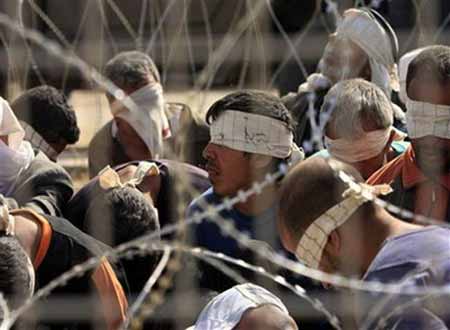

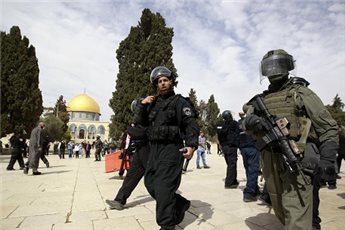
 Aletho News

