It is fitting that on the same day as this headline appeared, “Pro-Israeli US lawmakers urge bombing Syria air bases, arming militants, invasion” I delivered the following remarks to the United Nations International Meeting on the Question of Palestine:
From Cynthia McKinney: Remarks at the UN International Meeting on Palestine in Addis Ababa, Ethiopia
My name is Cynthia McKinney and I served as a Member of the U.S. Congress for 12 years. During my time in Congress, I strove to make respect for human rights a central feature in the formulation of U.S. foreign policy. Amid minor successes, I have to say that my efforts while, broadly appreciated by many, failed miserably. That failure stems in part from the peculiarities of U.S. politics that allow policy formulation to deviate from and in many cases become diametrically opposed to the values of the people of the U.S. Sadly, what we in the U.S. call “special interests” are able to buy public policy by way of campaign contributions and misleading media campaigns. These “special interests” are aided and abetted in the U.S. by a concentrated media that has no obligation according to U.S. court decisions to tell the public the truth. In other words, U.S. media have won in U.S. court the right to knowingly lie to the people they ostensibly serve. I will briefly delve into this unusual and anti-”democratic” state of affairs now controlling in the U.S. once again before I conclude my remarks.
After my tenure in Congress, I became involved in international human rights activism. During Israel’s Operation Cast Lead (which was its war against Hamas and others), I joined with a group of human rights activists who tried to deliver medical supplies to the people of Gaza; the Israeli Military stopped us. While in international waters, an Israeli Defense Forces warship rammed the pleasure boat that I was on with the other volunteers, and totally destroyed our boat. Neither the medical supplies nor us volunteers reached Gaza.
Approximately six months later, we, the volunteers from the first thwarted effort, reassembled in order to make another attempt to reach Gaza by sea, traveling through international waters, with the hopes of entering into Palestine by way of Gaza’s territorial waters. By this time, Operation Cast Lead had ended, President Barack Obama had been sworn in, and he had appealed publicly for an easing of the Israeli blockade of Gaza. Gazans had made an appeal for school supplies for the children still reeling from the trauma of three weeks of what the United Nations called “one of the most violent episodes in the recent history of the Palestinian territory.” So, some of us answered that call with school supplies for the children and building supplies for the adults so that Gaza could rebuild from the devastation after Operation Cast Lead. On this effort to answer a humanitarian call for help, I, along with 20 other volunteers, was kidnapped by the Israeli military while in international waters, our boat was seized, we were taken by an extremely circuitous route to Israel where we never intended to go, and I was incarcerated in an Israeli prison for 7 days. Sadly, what I witnessed while in Israeli prison pointed to Israel as an apartheid state and the gross mistreatment of, particularly, Ethiopian women who had been lured to the “Holy Land” for job opportunities that vaporized because they were not of the correct religion. In addition to that, my observation at the time was that Ethiopian Jews are used as an important pillar–even enforcer, ironically, of Israeli apartheid. I can expand on this aspect of my observations later if there are specific questions or requests for more information from this body or from individuals in attendance at this Conference.
Needless to say, for a second time, I was prevented from entering Gaza. Upon hearing of my ordeal, Member of Parliament George Galloway who was in Cairo leading “Viva Palestina USA,” contacted me and invited me to come to Cairo and enter Gaza by land, which I did. Upon entering Gaza, I was able to see the destruction inflicted on the people by Israel’s Operation Cast Lead. I scooped up a bit of the soil and put it in this container. Sadly, as noted in the Goldstone Report and admitted by the Israeli Defense Forces, this Gaza soil is probably contaminated with whatever remains of the chemicals that were used by the Israelis against the people of Gaza: chemicals ranging from white phosphorus to inert metals. And while I unsuccessfully tried to pass legislation in Congress to end the use of depleted uranium in U.S. munitions because of the health effects, the Goldstone Report mentions that allegations were made that Israel used depleted uranium during Operation Cast Lead, which also might be in this soil. The United Nations Division for Palestinian Rights is also aware that civilian targets were bombed and totally destroyed. I visited a few of those targets.
One stop on my private tour of the destruction in Gaza was the American International School and amid the rubble I spotted a bright yellow something that I couldn’t quite make out what it was. So, I climbed through the jutted shards of concrete and exposed rebar to retrieve the object. This is that object: an English language children’s art book stamped with the initials of the American International School in Gaza, “AISG.” I was standing in what was left of the School’s library.
Another stop on my tour of the effects of Israel’s Operation Cast Lead was a neighborhood school, not nearly as big and grand as the American School. There, I could see the path of one missile that blew a hole clear through several walls of the school. There were markings on the chalkboard, including the Star of David. I saw several cans of peanuts on the floor. This is one of them. It is written in Hebrew. The Israeli soldiers blew up the school and then sat down in its ruins and enjoyed peanuts and drew religious and political markings on the chalkboard.
Both boats that I was on were seized by the Israelis and destroyed by them. The humanitarian aid on the boats did not reach Gaza and only token aid was delivered by the land convoy to the Al Shifa Hospital in Gaza, the bulk of it stranded in Egypt, not allowed into Gaza by the Egyptians or the Israelis.
What is amazing is not only that this happens over and over again, but that Israeli leaders who commit war crimes and crimes against humanity, leave office, and are never held accountable for their policies, as was done by victims of Augusto Pinochet, and as is being done currently by the International Criminal Court. Another aspect of this impunity is that Israel continues to receive U.S. weapons and technology which it uses against civilians in contravention of U.S. law. As these weapons are used or become outdated, the U.S. replenishes Israel’s weapons stock every year.
One measure of this impunity is brought to bear by the pro-Israel Lobby that operates in the political sphere of the U.S. I am a former Member of Congress because pro-Israel sympathizers known as the “pro-Israel Lobby” ensured my ouster from Congress and that of many other Members of Congress who dared to try and draw attention to U.S. law, Israel’s human rights violations, Israel’s misuse of U.S. weapons, or any other inconvenient facts that were better buried and left unknown.
What many of you might not know, because these things just aren’t discussed as widely as they should be, is that many of those Members of Congress who were put out of office by the pro-Israel Lobby were the stolen children of Africa, descendants of Africans trafficked in the Trans-Atlantic Slave Trade. I will call the names of a few and tell you where you can find information about them as they tell their own stories:
· Gus Savage, Member of Congress from Chicago, Illinois was targeted for defeat by the pro-Israel Lobby because he dared to engage in foreign relations within the purview of a Member of Congress on the African Continent, in Egypt among other places. He recounted his ordeal on the Floor of the House of Representatives and revealed the secrets of the pro-Israel Lobby on the Congressional Record where students and others interested in this topic can find his words today.
· Earl Hilliard, Member of Congress from Birmingham, Alabama was the first Black Member of Congress to serve the people of Alabama since the U.S. Civil War’s Reconstruction Era. He was ejected from the Congress by the pro-Israel Lobby because he, like Gus Savage, traveled to Africa, and in particular to Libya. He also traveled to Lebanon and learned of new weapons for that time, that had been used there by Israel. For this transgression, Earl Hilliard had to go. He is interviewed in a Dutch documentary that is available on youtube where he describes the vicious campaign that was run against him by the pro-Israel Lobby.
· And then, there’s me. Just this month, I published a book entitled Ain’t Nothing Like Freedom, in which I describe just a few of the tactics that were used against me by the pro-Israel Lobby to destroy my career in Congress.
· These three political “take-downs” were very publicly done in order to send a message to others who might also be inclined to speak up out of moral conviction, as Savage, Hilliard, and I did.
· This weeding out also occurs on the local level with state and local elected officials like my father and others targeted for defeat because of the potential threat to the interests of the pro-Israel Lobby that they pose.
· In addition, on a public and private level, targeted individuals have to endure soft repression that makes life difficult. All of this needs to be put on the record if one is to fully understand the power of the pro-Israel Lobby and the pall that it casts on the political process in the U.S. and from what I have been told, also in Europe.
· Finally, the political landscape for Blacks in the U.S. is negatively affected by this weeding out process, because their strongest and most outspoken authentic leaders are vulnerable to the challenges from candidates that are well funded by outside “special interests.”
In light of this, I would like to put this thought to you: can you even imagine what U.S. policy would be like at the United Nations if the will of the people were carried out without the interference of the pro-Israel Lobby? The Durban World Conference Against Racism was a watershed that could be revisited time and time again with U.S. support and participation, except that powerful Lobbies want otherwise. I know, it’s hard to imagine things differently. But it is not hard for me and that is one vision that keeps me going: U.S. policy made in the image of the values of the people of the U.S. At a Conference whose theme is African solidarity with the Palestinian people, I thought it was important to mention not only how the pro-Israel Lobby skews politics in the U.S. against the Palestinians, but also against African-descendants inside the U.S.
I focus on this important aspect of policy-making by focusing on who gets to make the policy because I believe that this is one key reason why Palestinians are forced to suffer while, at best platitudes and delay, serve as the effective policies of the US and European countries.
The short version of this tragic story is that pro-Israel forces inside the U.S. are willing to use their money to buy political influence and protection for Israel across the political spectrum while the same cannot be said of pro-peace, pro-justice forces. I liken the situation to game day when one team shows up in beautiful new uniforms with all of the latest and best equipment, primed and ready to execute its strategy in the game of play, while the other team doesn’t even show up on the pitch. I believe that one remaining untested justice frontier is the political battleground in U.S. and European capitals. It is inside these essential capitals that pro-Israel Lobbies have become comfortable operating with very little opposition from the other side.
I am tired of losing when, I believe, we really do not have to lose. I fundamentally believe that the people of this world are good and want peace. I have spoken to Afghanis and Pakistanis, to Yemenis and to Somalis, Palestinians and Americans, and I find them to be peace-loving peoples.
So, how do we move from where we are to where we need to be? That is the fundamental question. I focus on the political because the political creates the legal. And the political creates impunity.
Just in my personal experiences, I have outlined breaches of international humanitarian law, international human rights law, international law, and U.S. law by the occupying power: Israel.
I served as a juror on the Bertrand Russell Tribunal on Palestine that recently concluded its Sessions with a finding that both the U.S. and Europe are guilty of contributing to the atmosphere of impunity with which apartheid Israel carries out its policies against Palestinians and anyone who stands in its way.
I also recently served as an Official Observer as the Kuala Lumpur War Crimes Commission received testimony from Palestinians on their treatment inside Israel as well as in the Occupied Territories.
Through my service with both of these organizations, I have met too many courageous Palestinians and Israelis who want to live peacefully with each other and who put their lives and their livelihoods on the line every day for peace and the rule of law. I do believe that much of the suffering could be alleviated if we would put sufficient energy and resources behind putting out in public view how the pro-Israel Lobby misdirects U.S. and European policies and prevents pro-peace and justice politicians from ever having the opportunity to put those values, along with our basic human dignity, permanently on the table for public debate.
Finally, I am not Palestinian. I am not Arab. I am not Muslim. But I am human. And that is enough for me to acknowledge the dignity of others who are oppressed and to epitomize what this Conference is all about: African Solidarity with the Palestinian People for the Achievement of its inalienable rights, including the sovereignty and independence of the State of Palestine.
As documented by the Associated Press and other journalists, the NYPD has built a program dedicated to the total surveillance of Muslims in the greater New York City era.
Officers have routinely monitored restaurants, bookstores and mosques and created detailed records of innocent conversations they’ve both had with individuals and eavesdropped on.
The NYPD has also sent paid infiltrators into mosques, student associations and beyond to take photos, write down license plate numbers and keep notes on people for no reason other than because they are Muslim.
Partnering civil rights attorneys filed papers in federal court seeking to stop the NYPD from creating dossiers on innocent Muslim New Yorkers and end the Police Department’s ability to initiate investigations into Muslim New Yorkers when there is no belief that they have engaged or are about to engage in unlawful activity or an act of terrorism.
The filing is part of the Handschu v. Special Services Division proceeding, a decades-old federal case that has produced a series of court orders regulating NYPD surveillance of political and religious activity.
Istanbul – At a press conference attended by nearly a hundred Turkish and foreign reporters, Murat Karayilan, acting leader of the Kurdistan Workers’ Party (PKK), announced his group’s plan for reconciliation with the Turkish government.
Karayilan said the PKK fighters inside Turkey, who number about 2,000, would begin withdrawing on May 9. Karayilan then called on the government of PM Recep Tayyip Erdogan to fulfill its part in finding a political solution to the Kurdish question.
Karayilan warned his group would pull out from the peace deal if PKK fighters were harassed or attacked by the Turkish army and police during their withdrawal, which is expected to take place gradually over two months.
Two main conditions for reconciliation with Turkey, Karayilan said, were the release of all the group’s prisoners, including PKK leader Abdullah Öcalan, and constitutional amendments to officially recognize the Kurdish identity.
Sources quoted PKK leaders as saying that the group, in agreement with the Turkish authorities, established special committees to coordinate the withdrawal agreement with the Turkish side. The Turkish government, for its part, has instructed its military and police not to engage any PKK militants and to cease all military operations in the country’s southeast and along the border with northern Iraq.
Meanwhile, there were reports in the press that large numbers of Kurdish youths have been making their way to PKK camps in northern Iraq’s Kandil mountains to train for the next phase of political work inside Turkey.
These developments were enough to stir up Turkish public opinion as the government came under sharp attacks from the opposition parties, particularly the Nationalist Movement Party (MHP).
MHP leaders accused Erdogan and his government of betraying Turkey. They claimed that the Turkish PM was conspiring with Washington against what they termed the unity of the nation, the Turkish state, and the secular system.
They also claimed that the PKK was seeking self-rule in southeast Turkey, a first step toward establishing an autonomous entity on par with the Kurdistan Regional Government (KRG) in northern Iraq.
In the meantime, the opposition leaders argued, the Kurds in Syria will never accept a return to its pre-crisis conditions, regardless of the conflict’s outcome. If the Syrian regime falls, then the new government will have to accept a Washington-imposed federal system.
This helps explain the election of Ghassan Hitto, an ethnic Kurd, as head of the Syrian interim government, and before him, Abdul-Basset Sida as head of the opposition Syrian National Council.
If the regime survives, it would have to strike a deal with the Kurds, who would demand self-rule in northeast Syria. Syrian Kurds represent 40 percent of the northeast’s population, whereas in northern Iraq, they represent around 95 percent.
In southeast Turkey, the demographics are not much different than Syria, with Kurds accounting for about 60 percent of the population.
These demographic calculations have prompted capitals that have a stake in the Kurdish question to speak of a scenario that Öcalan proposed years ago, before he was kidnapped by US intelligence in Nairobi and handed over to Ankara in February 1998.
Öcalan’s idea centered on a democratic confederation among four autonomous Kurdish regions in Turkey, Iran, Syria, and Iraq, given that an independent Kurdish state was unlikely to see the light for many seasons, as Öcalan said at the time. Proceeding from this vision, the PKK has been active among the Kurdish populations of Syria and Iran.
The White House, along with the European Union, has officially blessed Turkish reconciliation with the PKK. To many observers, this is reminiscent of the Sykes-Picot Agreement, which designated Western spheres of influence in the Middle East after the collapse of the Ottoman Empire.
These observers purport that the West, after settling scores in Syria, will be seeking to redraw the regional map.
Around five hours after leaving Bariloche our bus suddenly stops in the middle of nowhere. “Leleque. La comunidad,” the driver announces. “We’ve arrived muchacha”. Outside, fields stretch towards mountains and the eye struggles to fix on the horizon. There is nothing resembling a town or even village outside the bus, only a tiny improvised wooden gate and a sign on a huge white canvas that says: “Comunidad Santa Rosa. Territorio Mapuche recuperado” (Santa Rosa community, Recovered Mapuche territory).
A sign on the fence reads: ‘Santa Rosa community. Recovered Mapuche territory.’ (Photo: Fabio D’Errico)
Here, in a forgotten place, lost in the very heart of Patagonia, we have arrived at the point of a now globally-famous conflict: Santa Rosa de Leleque, where the indigenous Mapuche community is engaged in a long struggle to reclaim land they say is rightfully theirs from one of the world’s most recognisable clothing brands.
The Benetton Case
When we arrive, Santa Rosa de Leleque is bustling with people, as it has been for the last six years. Not only is this is the week of Kamaruko, the main religious festival of the Mapuches, but it is also the anniversary of the recovery of this stretch of land by the Curiñanco – Rúa Nahuelquir family and 30 other community members on 14th February, 2007.
“They’ve been evicting us from our land for many years, using physical power and law of those who had invaded our territories,” Rosa Rúa Nahuelquir leaves her kitchen utilities for a while as she talks. “But we know we are stronger, because the truth is on our side and we will stand for it, no matter what it costs us.”
Dancing and celebrating around the fire. (Photo: Fabio D’Errico)
Atilio Curiñanco y Rosa Rúa Nahuelquir first entered the territory now called Santa Rosa de Leleque in August 2002. They planned to return to their ancestral land and start a new life after long years of working in the factories of Texcom and Frigorífico in nearby Esquel. And so began a long legal struggle with the global corporation Benetton Group over 535 hectares of remote land in the province of Chubut, Argentina.
The Curiñanco – Rúa Nahuelquir family claims the territory as part of that which originally belonged to their ancestors before the colonisation of Patagonia in the 19th century. Benetton Group, meanwhile, insists on the land certificate issued in 1991, when the corporation purchased over 900,000 hectares from the British company The Argentine Southern Land Company Limited (CTSA).
Atilio Curiñanco recalls: “We presented a written statement at the police station of Esquel after consulting with the Autarkic Institute for Colonisation and Rural Development (IAC), which verbally confirmed that the space was public and abandoned for many years.” According to Curiñanco, many other campesinos from nearby territories used the space to gather wood it was all dusty and windy and required a lot of work to make the piece of land productive. However, only a few days after they had entered the territory, local police made inquiries about the “land usurpation” and soon returned with a legal claim by CTSA.
In October of that year, the Curiñanco – Rúa Nahuelquir family was forcefully evicted from Leleque, having all their belongings either confiscated or destroyed. In 2004, the family travelled to Italy to meet Luciano Benetton, who offered around 2,500 hectares of the land to all indigenous communities in the region as a donation. “We obviously refused the offer, as Benetton wasn’t eligible to donate something he didn’t own,” Rosa Nahuelquir says, indignantly.
Benetton later proposed a donation of the same amount of land to the Argentine government who could distribute it among indigenous communities. In 2005, the government of the province of Chubut also refused the offer, announcing that the 2,500 hectares were unproductive and saying it would not enter into any conflict with the inhabitants of the territory.
In February 2007, the couple came back to Leleque with 30 other community members and began to build a house. CTSA immediately accused them of damaging the territory, though the penal court found the claim illegitimate. In the five years since, the family has faced many more legal claims from CTSA with charges for property destruction and eviction orders, the latest coming in February this year. The family has repeatedly rejected these claims, based on their need to cultivate plants, raise domestic animals, and build basic living conditions to survive. “How could I let my family die from hunger because of someone else’s cruel decision?” Curiñanco asks rhetorically.
Mapuche vs Benetton. (Photo: Fabio D’Errico)
Mapuche in Argentine
The ‘Mapuche vs Benetton’ case has attracted a lot of attention from global and local human rights organisations, the media, political parties, fixing an unflattering spotlight on a range of problems – from land conflicts to racism and equality.
The Argentine state included indigenous rights in the Constitution only in 1994, when it recognised “the legal capacity of these communities to the possession and property of land that they have traditionally occupied.” Yet those who have tried to exercise this right face long legal battles against powerful foes. Benetton is just one in a long list of corporations and celebrities engaged in land conflicts with the Mapuches – others include Levi Strauss & Co, Grupo Loma Negra, Jane Fonda, Ted Turner, Emanuel Ginóbili, Marcelo Tinelli, Lopez Rey and many others.
In the 2013 annual report issued by The Observatory of Human Rights of Indigenous peoples (ODHPI), investigators say about 347 Mapuches are currently involved in lawsuits related to the land conflicts just in the province of Neuquen. “They [the government] make us feel as foreigners in this country, but at the same time they give out all lands to the foreigners!” claims Ruben Curricoy, a Mapuche activist from Bariloche. The ODHPI report, which focuses on Neuquen, Rio Negro and Chubut this year, adds: “Territorial dispossession continues to be the main obstacle for indigenous people to survive and develop in Patagonia as autonomous population.”
To understand the power and complexity of today’s land struggles in Patagonia, it is important to remember the history of Argentina and the treatment of indigenous people. You need go no further than Argentina’s $100-bill for a reminder of the infamous ‘desert campaign’ run by president Julio Argentino Roca in 1878 – 1885, which empowered Argentina as a leading agricultural country via the genocide of indigenous people who were evicted from their lands and killed. Back then, those families that invested in the campaign were handsomely rewarded, as one family descendant, who preferred not be named, recalls: “A beneficiary would be asked to look forward and take all the land that his eye was able to capture. And believe me, some people used to have a very good vision.”
Curricoy is quick to give other historic examples: “The government talks about 30,000 disappeared people during the dictatorship period. It’s not true. They only count disappeared huincas (a ‘white person’ in the Mapusungun language), while our people were dying in much higher numbers. I admire the fight of Madres de Plaza de Mayo, however, I can’t imagine an indigenous mother being heard by society. Only because she is not as white as a huinca.”
Indigenous people from all over Argentina marched to and in Buenos Aires to proclaim their heritage and be heard by the government during the Bicentennial celebrations (Photo: Beatrice Murch)
Even with recent advances, many in the Mapuche community still feel as though they are misunderstood. Curricoy remembers a visit to the Casa Rosada during the country’s bicentenary celebrations in 2010, when President Cristina Fernandez de Kirchner made a joke about the use of modern facilities after one of the delegate’s cell phone rang. “That was a turning point and made it clear that indigenous people were still excluded from this country really,” says Curricoy.
The ODHPI report concludes: “the government bodies that are supposed to respond to the legal claims of indigenous people don’t perform their work” and in some cases even contradict the law. The report emphasises on the overall support that the government shows to private companies, speculating in such industries as exploitation of natural resources, tourism, and construction at the cost of indigenous people. In addition, the recent reforms to the Civil Code, proposed by the government, “will provoke more evictions and prosecutions for land usurpation” according to the ODHPI report.
Communitarian vs Private Property
With the provinces in desperate need of foreign investments and incomes, it is hard to imagine local governments supporting those who have no intention to exploit the land for commercial interests, like the Mapuche community, whose whole philosophy is built on protection of mapu, the land.
Atilio Curiñanco digs his land in Patagonia. (Photo: Fabio D’Errico)
Sharing is one of the fundamental values among the Mapuche – in the Mapusungun language there are no such words as ‘no’ and ‘property’ – and this further complicates the land conflicts involving Mapuch communities. “We don’t have land certificates, because the ones we need don’t exist,” explains Ruben Curricoy. “We were offered individual deeds, which imply higher taxes and a lot of restrictions. Moreover, individual forms of property go against our philosophy of a communitarian form of life.”
According to the Mapuches, a ‘communitarian property certificate’ would include all members of the community and prevent selling of the land. Every member in this type of property has the same rights and opportunities to use the land. As the leadership style among Mapuches is horizontal, no one would have special privileges in decision-making and distribution.
“However, it is sad to see so many villages that can’t grow territorially with the population growth, so our future generations basically don’t have land to live and work on. And how would they, when on the left you have one owner and on the right another one?” Curricoy shakes his head.
The Struggle for Identity
For Gustavo Macayo, former lawyer of the Curiñanco – Rúa Nahuelquir family, the Benetton case is especially important in creating awareness of the Mapuche struggle. “This case has placed the whole situation with the foreign land ownership into a very important point and opened so many profound questions of Argentine society, questions that had never been asked.” Moreover, according to Macayo, those historical, ethical and juridical questions had always been hidden and silenced before the legal studies around the case of Leleque came into light.
“The problem goes outside of the small territory of Leleque. It includes at least three provinces in the south, where the Mapuche population counts on big numbers and is becoming aware of their land rights,” adds Macayo.
Curiñanco hopes the notoriety of his family’s case has also helped some younger generations rediscover their ethnicity. While many in Buenos Aires would probably be surprised that the ‘People of the Earth’ use cell phones, drive cars, watch TV, speak Spanish among themselves, and do most activities considered ‘normal’ for Westerners, some differences between the cultures remain very obvious.
Emmanuel Maripi from Comodoro Rivadavia is 21 and has diverse roots that include European and indigenous ancestors. He discovered he was Mapuche when he turned 18, and since then has started learning deeper about the culture of his grandparents and practicing traditional customs. This year’s Kamaruko was his first one and, a musician, he learnt a few Mapuche’ songs to perform them at the festival. “I live my life in the city in the same way as any other person of my age,” Emmanuel shares during a break between performances. “I study, work, hang out with my friends, take part and organise events related to music. At the same time, I see that a big part of my identity belongs to Mapuche society, and now I always try to find some time to spend close to the nature and understand better who I am as a Mapuche.”
“However, we also see other examples, when our people give up or even criticise us,” Curiñanco says sadly. “Some of them even don’t consider themselves Mapuches and feel ashamed of their roots.
Atilio Curiñanco holds the mate as he discusses the plight of the Mapuche in Patagonia. (Photo: Fabio D’Errico)
“Many of them live in the cities where they are marginalised pretty quickly, and bring the fame to the whole ethnicity as criminalised and dangerous,” Curricoy joins the conversation and brings examples of big cities like Buenos Aires, Bariloche that count with a large number of Mapuche’ descendants.
Conversely, those that visit the Mapuche community in Leleque are always welcomed. “We’ve got visitors from all the parts of the world,” señora Rosa Rúa Nahuelquir recalls, “journalists, human rights defenders, artists, and a lot of policemen.” At this last word, she smiles ironically. “Our doors are open to everyone, regardless if the person is Mapuche or huinca and we never know if we can trust all these visitors. But we do anyway. We never learn from our mistakes…”
She is right. In eight days we spent in Santa Rosa de Leleque, each day was highlighted with an external visit. Every person was received warmly and invited to share meals, mate and conversations with the inhabitants.
Some visitors become lifelong friends, like Florencia Santucho, director of Argentina’s Independent Film Festival for Human Rights. Santucho has supported Curiñanco – Rúa Nahuelquir family since 2003. Nine years ago she produced a documentary called MariciWeu that narrates the story of the Curiñanco – Rúa Nahuelquir family and raises questions regarding their human rights’ violations. Not only she is perceived as a friend in this community, but also as one more Mapuche who continuously learns and incorporates parts of their culture in her own life.
“When you understand the Mapuche vision of the world you won’t have any more questions,” Santucho assures. “Recovering the land is a part of the ‘cosmovision’, which allows Mapuches to gain power in other aspects of their identity. Talking about Atilio Curiñanco, she shares: “He used to be a very timid person who never spoke a lot and didn´t seem confident at all. Now, I observe him as the person with a decent and firm position, and I am sure it comes thanks to his struggle for the land, for identity and connection with the Earth. Ñoque Mapu (Mother Earth) sees that and rewards with even more power.”
Where Civilisations Collide
“The powerful always have more rights, but we have different values that don’t fit into the western way of life,” Curiñanco looks at the Ruta 40 in only few metres from his house. “Some people consider us backward for our views and principles, but having another was of thinking doesn’t mean you shall destroy it with rules that go against our vision.”
The newest house under the stars. (Photo: Fabio D’Errico)
Leleque now symbolises a spot, where two civilizations clash with their fundamental differences. On the one side is the owner of a big corporation with a network of over 6,500 stores, a total income of 2 billion euro a year, and over 900,000 hectares of Patagonian lands. On the other side is the Mapuche community, which believes in a communitarian type of lifestyle and simple, self-sustaining living.
“In the last ten years we’ve observed how Benetton was trying to avoid this case and show it as something small and less important. And I believe they will keep with that strategy,” Macayo speaks about the future of the case. “The Mapuches will do all they can to bring more problems to the surface, starting with the essential one – colonisation.”
Meanwhile, the Curiñanco – Rúa Nahuelquir family deals with another criminal suit filed by CTSA, who have now targeted INAI, an institution that works with indigenous people, and provides the legal support to the Mapuche family. At the moment Supreme Court is in charge of it, which might take two or three more years due to the complexity of the issue.
“We will obviously continue the fight, as there is no way back,” Curiñanco firms his position. His eyes sparkle and his voice gets stronger. “This is our land and we are responsible for it. It has given so much to us that it would be a crime not to take care of it…”
As we talk, on the other side of the room little Rosita, a granddaughter in the Curiñanco – Rúa Nahuelquir family, is learning some basic Italian words from Fabio, an Italian photographer who arrived in Leleque with his personal project. She absorbs the new language rapidly, and soon they are speaking basic Italian and then switch to Spanish and even teaches some Mapusungun in terutnr. It’s a small scene that depicts a wider hope that dialogue is always possible between our civilisations, even though it requires a lot of will from both sides.
Under current U.S. law, all our publicly traded corporations must annually disclose exactly what they pay their top executives. So why do all those CEO pay scorecards we see every spring show such different results?
USA Todayfound an 8 percent hike in 2012 CEO pay while TheNew York Times detected an 18.7 percent increase. Towers Watson, a corporate consulting firm, announced that CEO pay growth “slowed considerably,” rising at just a 1.2 percent rate last year.
What explains all these wildly divergent results? Let’s start with how corporations pay their top execs. This can get tricky.
Most executive pay today comes as stock-related compensation. Stock “options” give executives the right, down the road, to buy shares of their company stock at today’s share price. If that share price jumps, the execs can buy low and sell high. Instant windfall.
“Restricted” stock awards, on the other hand, give executives actual shares of stock, not just an option to buy them. Execs do have to wait a few years before they can actually claim these shares. No big deal. The shares will still have value in future years even if a company’s stock takes a hit.
But how should we value all this share-related compensation right now? Should CEO pay scorekeepers estimate how much stock awards granted this year will be worth in years to come? Or should scorekeepers only tally stock-related awards when execs actually profit personally from them?
Different executive pay scorekeepers give different answers. Scorekeepers also keep score on different sets of corporations. USA Today‘s new scorecard for 2012 tallies pay at 170 firms, the New York Times at just 100.
Given all this, do we have any single stat that tells us what we need to know? We do. That stat: the divide between worker and top executive pay.
America’s big-time CEOs, labor researchers at the AFL-CIO report, are now making 354 times the pay of average U.S. workers, the “largest pay gap in the world.”
Three decades ago, in 1982, American CEOs averaged just 42 times more than average U.S. workers. Two decades ago, in 1992, the gap stood at 201 times. A decade ago: 281 times.
The overall trend line, in other words, couldn’t be clearer. How can we reverse it? Identifying the specific pay gap between individual CEOs and their own workers would be a good first step.
Corporations have had to publish, for decades now, how much they pay their top execs. They haven’t had to reveal publicly how much — or how little — they pay their workers. The Dodd-Frank Wall Street Reform and Consumer Protection Act enacted in 2010 changes this dynamic, at least on paper.
Dodd-Frank requires corporations to annually disclose the gap between what they pay their CEOs and their most typical workers. But a corporate lobbying blitz has kept the Securities and Exchange Commission from writing the regulations needed to enforce this disclosure mandate.
Why do our biggest corporations so fervently oppose disclosing their CEO-worker pay ratios? Disclosure by itself, after all, won’t shove down CEO pay levels. But disclosure could open the door to other steps that could curb CEO pay excess.
Lawmakers could, for instance, choose to deny government contracts or tax breaks to corporations that pay their top executives over 25 or even 50 times what their own workers are making.
Far-fetched? Current law already denies government contracts to companies that discriminate by race or gender in their employment practices. As a society, we’ve concluded that our tax dollars must not go to corporations that widen racial or gender inequality.
So why should we let our tax dollars enrich corporations that widen our economic divide?
On April 24, Frank Barat, a Palestine solidarity activist and co-coordinator of last year’s Russell Tribunal on Palestine, was stopped at Ben Gurion International Airport by the Shabak, Israel’s internal security service, and subjected to four hours of interrogation and nearly a full day’s detention before being deported back Belgium. His “crime”? To have visited Israel while a supporter of Palestinian rights. Here, he describes what took place.
“WRITE YOUR e-mail addresses, your mobile phone number, your house phone, the name of your father and the name of your grandfather on this piece of paper” were the first words the Israeli security officer told me when I sat in front of him in his office.
As anyone involved in solidarity work with the Palestinian people will tell you, landing at Ben Gurion airport in Tel Aviv, Israel, and having-to-face questioning by the authorities is never an exciting prospect. In the last couple of months, a few activists have been turned back. Due to my work with the Russell Tribunal on Palestine, I knew even before I arrived in front of the immigration desk that I was a likely target for hard questioning from the Shabak, Israel’s internal security service.
I was coming to Palestine to visit old friends and also to take part in a conference on political prisoners organized in Ramallah as part of my role as coordinator for the Russell Tribunal. Due to the fact that Israel controls all the West Bank borders of Palestine, one has to go through Israeli officials in order to reach the occupied Palestinian territories. (Now, only Gaza–via the Rafah border crossing with Egypt–is accessible without too much Israeli interference.)
So I wrote the requested details on the piece of paper in front of me–except that I put an alternative e-mail address, being fully aware that what the officer in front of me wanted was information about other people involved with solidarity work in Palestine and abroad. Mapping networks has in recent years been vigorously pursued by Israel.
The line of questioning, at first, stuck to my travel plans. Six days in Tel Aviv without a travel guide was too much to bear for the man. He then quickly moved to my personal details and asked me to log on to my e-mail account, which is apparently less illegal (in Israel anyway) than I thought (see here and here).
He started to get upset when my inbox opened and there was no message in it. He told me repeatedly, “I know you have another e-mail address. Give it to me.” “I only have this one,” was the answer I stuck with throughout the whole process. I was taken to various offices throughout the whole interrogation process and spoke to a few people, who asked, again and again, the same questions.
– – – – – – – – – – – – – – – –
I HAD to wait for long periods between each interrogation. Palestine and political activity only were raised after about three hours of questioning. I was sort of relieved to hear the word because I knew deep down that the Shabak agent had known about my work on the Palestine issue from minute one. He even asked me at one point, “What will Google tell me if I search for your name?”
The goal, however, was somewhere else. The goal was to exhaust me into giving information about workmates, colleagues and various people I knew in Israel/Palestine. The exhaustion part worked. I was clearly on my knees at 4 a.m., having had no sleep for 24 hours and faced with several unfriendly people questioning me. But they never got what they really wanted–my e-mail account and its content. After four hours of questioning, the verdict came (there were five people in the room, including me, at this time): “You lied to me. So you won’t get in. You will now be deported back. Your flight is in 23 hours.”
Still, right after telling me this, the officer tried one more time, telling me that he was my friend, here to help me and that if I collaborated he might change his decision. I was at this point taken to a room where I was body searched thoroughly (by a young man with an apologetic look on his face), and where my carry-on bag (the only piece of luggage I brought) was fully checked, in and out, approximately three times, including passing through X-rays.
At roughly 4.30 a.m., I was put in a van, alone, and driven to my next destination: the deportation center. Why we stopped, for about 10 minutes, in between airplanes on the tarmac is a question that remains unanswered. He told me before he dropped me off that I would be deported in 23 hours. “You’re lucky,” said the man. “Some people have to wait for a week here.”
The next 23 hours were the longest in my life. With no means to know what the time was, it took forever. My cellmate, a 21-year-old Ukrainian man who spoke no English at all and came to Israel in search of a better future, and I were allowed two 10-minute breaks outside, under surveillance of course, and managed to catch a glimpse of the palm trees and the sunshine that we were at this point longing for. We were then joined by two older Ukrainians as well as a Chinese man.
What I did not know at the time was that a friend in Israel, at 9 a.m. on Tuesday morning, had contacted the office of Israeli lawyer Gabi Lasky to ask her to try to get more information regarding my whereabouts–did I enter? Was I being deported? Detained? They did not want to say anything. It took many hours for Gabi to get confirmation that I was in the detention center at the airport. Over the phone, Gabi later told me that the authorities are making life harder and harder for lawyers and that they are being more difficult every day.
I was put back on a plane, escorted by an immigration official, my bag full of security tags, paraded in front of the other passengers, at 1 a.m. the next day. The fact that the main air hostess was Arab and smiled at me when the immigration official handed her my passport felt, I have to say, very good at the time.
– – – – – – – – – – – – – – – –
WHILE THIS was an extremely unpleasant experience, it is crucial to put things into a broader context. The pressure, fear and humiliation I often felt during this time–the scare tactics used by the Shabak (“Tell me the truth, or you’re going to jail right now”) and the short time spent in jail–are nothing compared to what the Palestinians are going through every day. Right now, more than 4,500 Palestinian political prisoners are rotting in Israeli jails. A few of them have started “hunger strikes” and are slowly dying, while the “international community” (understood as the Western states, the European Union and the United Nations) is doing nothing to come to their rescue.
It is crucial to keep highlighting this. The inconvenience felt by a privileged international citizen should not overshadow the reason at the core of his activism: To acknowledge the right of the Palestinian people to resist their far more powerful occupier and to do so until the systematic and institutionalized apartheid system put in place by Israel ends; to expose the active role played by third parties (states, institutions and corporations) in supporting Israel’s occupation; and to highlight Israel’s impunity regarding countless resolutions passed by the UN General Assembly and the UN Security Council that have been, so far, never followed by any concrete action.
It is our role as global actors involved in a global struggle for justice, freedom and dignity for all people, regardless of their ethnicity, political orientations, or countries of origin, to show solidarity with those people stripped of their rights. The breaking down of human civilization in sub-categories of human beings (privileges come depending on where you were born, while this act was simply an accident of nature), the slow crumbling of any “common decency,” solidarity and compassion showed by people towards others, can be reversed and is not ineluctable.
This can only happen if we all unite towards this goal.
New York Times columnist Tom Friedman doesn’t understand how on earth the Boston bombers could rationalize their act of violence–and believes that some aspects of Muslim culture must answer for it.
According to reports of the interrogation of Dzhokhar Tsarnaev, the brothers were motivated in part by the U.S. wars in Iraq and Afghanistan. And this has the Times columnist scratching his head about the problem with Muslims:
This is a popular meme among radical Muslim groups, and, to be sure, some Muslim youths were deeply angered by the U.S. interventions in the Middle East. The brothers Tsarnaev may have been among them.
But what in God’s name does that have to do with planting a bomb at the Boston Marathon and blowing up innocent people? It is amazing to me how we’ve come to accept this non sequitur and how easily we’ve allowed radical Muslim groups and their apologists to get away with it.
A simple question: If you were upset with U.S. wars in Iraq and Afghanistan, why didn’t you go out and build a school in Afghanistan to strengthen that community or get an advanced degree to strengthen yourself or become a math teacher in the Muslim world to help its people be less vulnerable to foreign powers? Dzhokhar claims the Tsarnaev brothers were so upset by something America did in a third country that they just had to go to Boylston Street and blow up people who had nothing to do with it (some of whom could have been Muslims), and too often we just nod our heads rather than asking: What kind of sick madness is this?
Friedman goes on to claim that we “must ask a question only Muslims can answer,” which is: “What is going on in your community that a critical number of your youth believes that every American military action in the Middle East is intolerable and justifies a violent response?”
It is worth asking questions about how different communities or societies react to violence. After the 9/11 attacks, the United States bombed and occupied Afghanistan, based on the argument that the government of that country had tolerated the presence of Al-Qaeda and thus must bear the retribution. As a result, many thousands of people who had nothing to do with terrorism were killed.
Or on to the invasion of Iraq, which was sold as part of a “Global War on Terror” following the 9/11 attacks as well, even though there was never a connection between Iraq and the terrorist attacks. So why did the United States invade Iraq? Tom Friedman explained it to Charlie Rose on May 30, 2003.
To Friedman, there was a “terrorist bubble” in that part of the world, and “we needed to go over there and take out a very big stick…and there was only one way to do it.” He added:
What they needed to see was American boys and girls going house to house, from Basra to Baghdad, and basically saying: “Which part of this sentence don’t you understand? You don’t think, you know, we care about our open society, you think this bubble fantasy, we’re just gonna to let it grow? Well, Suck. On. This.” That, Charlie, is what this war is about. We could have hit Saudi Arabia; it was part of that bubble. Could have hit Pakistan. We hit Iraq because we could.
Israeli forces on Monday demolished Palestinian homes and water wells in East Jerusalem and the West Bank, as settlers confiscated land near Hebron to build a new outpost, local media reported.
In occupied East Jerusalem, Israeli forces razed two apartments in the Tur neighborhood after several attempts by the owners to reverse the demolition order failed.
The authorities evicted 24 members of the Ghaith family, including five children and an elderly woman, from the two apartments ahead of the demolition, Rushi Ghaith, one of the owners, told Palestinian news agency Ma’an.
The apartments were scheduled for demolition in December but the family secured a court-ordered injunction to stop it from going ahead, Ghaith said.
The Ghaith family lawyer said they had successfully stalled attempts to raze the apartments since September 2004, when Israeli authorities handed down the demolition notice because the home was built without a licensing permit. The family’s case to reverse the demolition order is ongoing.
Ghaith said the family has been fined 80,000 Israeli shekels (about $22,000) since the case began.
Meanwhile Israeli soldiers demolished water wells south of Hebron in al-Fawar refugee camp, as settlers from the nearby Ma’oun settlement seized land west of Yatta in preparation for the establishment of new outposts.
Abdul Hadi Hantash, an expert on settlement policies in the southern West Bank, said that the Ma’oun settlers seized land of one of the hills southwest of their original outpost.
Hantash told reporters that the wells the soldiers destroyed were used for agricultural purposes and irrigation.
He added that the continued confiscation of land and demolition of Palestinian structures, including the bulldozing of homes and uprooting of trees, are part of the Israeli government’s illegal settlement expansion program.
Israeli demolitions of Palestinian homes and other structures in the occupied West Bank occur almost daily under the pretext of building without a permit.
According to the United Nations, 33 percent of all Palestinian homes in East Jerusalem lack Israeli-issued building permits, which are difficult to obtain, potentially placing at least 93,100 residents at risk of displacement.
Roughly 94 percent of Palestinian applications for building permits are rejected, according to the Israeli Committee Against House Demolitions.
The group estimates that Israeli authorities have demolished about 27,000 Palestinian structures in the West Bank since 1967.
This picture shows Canada’s Prime Minister Stephen Harper (R) and Israeli Prime Minister Benjamin Netanyahu shaking hands after a joint press conference on Parliament Hill, Ottawa, March 2, 2012.
The world is taking note of the ruling Conservatives’ shameful betrayal of Canada’s once admirable reputation as a fair country, sincerely working on the world stage to improve the lot of the disadvantaged and suffering.
In the UN Human Rights Council’s Universal Periodic Review, Canada was criticized to such an extent that the Council decided to send the Special Rapporteur on the Rights of Indigenous Peoples, and representatives of the Committee on the Elimination of Discrimination Against Women and the Inter-American Commission on Human Rights, to investigate.
Minister of Foreign Affairs spokesman Joseph Lavoie dismissed complaints by
*China of “widespread racial discrimination”,
*Iran of “child sexual exploitation and trafficking, the right to food, discriminatory law and regulation against indigenous people and minority groups including Muslim, Arab and African communities”,
*Pakistan of “increased poverty and unemployment rate among immigrant communities”,
*Egypt of “racial profiling in law-enforcement action”, and
*Cuba of “racism and xenophobia” in Canada,
insisting that “Canada has a track record of being a human rights leader, at home and around the world.”
The visits come at an awkward moment for the Conservatives, as it makes a public display of victimizing Muslims as part of a campaign to ram through the “Combating Terrorism Act” (Bill S-7), which gives the state extraordinary powers to detain suspects without any charges and without any legal protections for up to a year.
This sorry state of Canadian political life is the fruit of the Conservatives’ slavish obedience to every US whim, and of its decision to abandon any pretense of an independent foreign policy, making all decisions in consultation with Israeli advisers under the public security cooperation “partnership” signed in 2008 by Canada and Israel to “protect their respective countries’ population, assets and interests from common threats”. Israel security agents now officially assist Canada’s security services, the RCMP and CSIS, in profiling Canadian citizens who are Muslims and monitoring individuals and/or organizations in Canada involved in supporting the rights of Palestinians and other such nefarious activities. Even the usually timid UN is appalled.
The past two weeks of public spectacle could be lifted from a perverse Alice-in-Wonderland scenario. The latest claim to have uncovered a dastardly scheme by Muslim furriners plotting to explode weapons of mass destruction came just a week after the now legendary Boston bombing. Both incidents were dramatically unfolded to a gullible public as classic ‘good vs evil’, though neither holds water.
Canadian authorities boasted Monday afternoon that, working in concert with the FBI and other US national security agencies, they had broken up a terrorist conspiracy involving an “Iranian-based al-Qaeda cell”. The announcement, made at an RCMP press conference, came out of the blue, just days after the Boston bombing, and a few days after the House of Commons agenda was changed to debate final reading of the draconian anti-terrorism legislation.
On cue, US Ambassador to Canada David Jacobson hailed the action as “the result of extensive cross-border cooperation” showing “that we face serious and real threats.” The men were arrested in a Hollywoodesque fashion–Chiheb Esseghaier while eating at McDonald’s in Montreal’s main train station; Raed Jason, by scores of police armed with rifles and accompanied by search-dogs at his workplace in the Toronto borough of North York. They were charged with conspiracy to bomb a New York-bound Via passenger train, though the RCMP conceded that there had never been an imminent threat of an attack or even a definite plan, that Esseghaier and Jaser have been under police radar since last August (based on a year-old tip from an imam), and that their alleged crimes date back to last year.
The reason for their delayed and then sudden arrest is beyond a doubt the notorious Bill S-7, a bill that was forced on Canada by Big Brother in post-911 2001, and which was not renewed in 2007 thanks to Liberal opposition (they originally passed it and then had enough sense to oppose it). The Conservative government suddenly changed the House of Commons agenda as US authorities placed Boston under martial law. The Canadian copycat arrests clearly are intended to add a Canadian pretext for proceeding with Bill S-7, while showing that “We are all Americans now.”
This episode calls to mind the terrorist scare in 2006, when the RCMP staged the dramatic arrest of 18 young Muslims, whom they accused of preparing extensive terrorist attacks, including blowing up the parliament buildings. During the trial, it emerged that the “Toronto 18” was riddled with police agents, one providing the arms instruction at a “terrorist training camp” while another providing harmless bomb-making ingredients. Nevertheless, eleven were convicted and most given lengthy prison terms.
When Esseghaier, a Tunisian-born Montreal PhD student in nanotechnology, told the judge, “These conclusions are being reached based on facts that are nothing but words and appearances,” he was told to shut up, and the hearing was shut down. Jaser’s lawyer John Norris said his client was “in a state of shock and disbelief” and “intends to defend himself vigorously”. Norris took exception to the police’s attempt to present his client as a non-Canadian, noting that the Palestinian refugee has lived with his family in Canada for the past twenty years.
Is it just possible that UN Human Rights Council members read the ‘news’, are appalled, and are genuinely concerned about what’s happening to human rights in Canada?
Canadians’ plight is bad enough, but this recent orchestration of Islamophobia has another angle, just as appalling. The RCMP assertion that these damn furriners acted under the “direction and guidance” of “al-Qaeda elements located in Iran” is a blatant falsehood, as Iran (like Iraq before the US invasion) is probably the most anti-al-Qaeda country in the world. The fundamentalist al-Qaeda delights in killing Shia, was (and is?) supported by the US and financed by Canada’s enlightened Saudi oil-millionaire allies. So it’s not just a question of stripping Canadians of their rights, but of adding toxic fuel to the US-Israeli fires intended to launch war against peaceful (pro-Palestinian) Iran.
The RCMP admitted that they had no evidence of Iranian government involvement, but still… (nudge, nudge, wink, wink). When Canada broke off diplomatic relations with Tehran last autumn, Foreign Minister John Baird labeled Iran “the most significant threat to global peace and security in the world today”. All Iranian Foreign Ministry spokesman Ramin Mehmanparast had to do was to point to the hypocrisy and cynicism of Canada’s government backing the campaign to overthrow the Syrian government -a campaign in which some of insurgents are openly aligned with al-Qaeda: “The same [al-Qaeda] current is killing people in Syria while enjoying Canada’s support.”
And what about the latest hit on the American 911 funny bone? Tamerlan Tsarnaev was under surveillance for four years by the FBI, who were asked by the Russian government to arrest him in 2010 (which they did not do). They do admit to interviewing him in 2011 and sifting through his computer files, but, remarkably for someone allegedly radicalized by the internet, they found nothing of concern. It’s not clear why Russia let him go to visit his parents in the center of terrorism (Dagestan) in Russia in 2012, where purportedly he received some form of terror training or further Islamist indoctrination. Nor how he managed to attend a workshop next door in hostile Georgia organized by the “Fund of the Caucasus” (which works with the US rightwing thinktank the Jamestown Foundation) focused on destabilizing the Caucasus region.
Were both the FBI and the Russian FSB asleep? Was Tamerlan an FBI operative? Was he set up to do the bombing, or did he go AWOL on the FBI? Is this Chechen connection intended to frighten Russia into acquiescing to US-Israeli plans for Syria? “This [official] scenario is simply impossible in the real world,” writes former UK Ambassador Craig Murray. In an interview with Russia Today, Tamerlan’s mother said, “‘They were set up, the FBI followed them for years.” Is this international intrigue-intended to scare both Russia and Iran into abandoning the beleaguered Syrian government -really what Canadian domestic human rights and foreign policy should be based on? Why should we trust Ambassador Jacobson’s blah-blah about “serious threats”?
Canadians are left with security forces eager to show they are doing something, a craven government intent on passing a draconian bill to take away freedoms, and a foreign policy based on a US-Israel obsession with finding some spark to ignite the latest war craze -attack Iran. The supposed pretext -Iran’s nuclear energy program- is after all wearing a tad thin. Peter Osborne in the Telegraph explained how the West has turned down one serious offer after another by Iran (two in 2005 alone), and argues that it is western rather than Iranian intransigence that prevents a deal being struck today. So if no one believes the cry of “Wolf!” on that boondoggle, then the next best thing is “al-Qaeda”. Hell, Bush got away with it against Iraq in 2003; maybe it will work again.
Iran poses only an ideological threat -telling the truth to the US-Israeli tyrant and inspiring Arab Springs.
As for being killed by a bona fide terrorist, the odds are 1 in 20 million, while every year, 4,600 Americans are killed in workplace-related accidents, and more than 30,000 are killed by gun violence. Every 28 hours a black person is killed by police, security guards or vigilantes. On Boston Marathon Day, six Pakistanis died in a drone strike, while scores were killed in car bombs in Iraq. I won’t even begin to recount the daily horrors inflicted by the US in Afghanistan.
Not that these latter crimes against humanity -committed by us- justify retributive violence in any religion, especially Islam. “You shall not be treacherous, you shall not deceive, you shall not mutilate, you shall not kill children.” But the fact that we in the West are unconcerned with preventing senseless deaths at home, and are unaware or don’t care about the murders committed daily in our name abroad, does not bode well for the future. Only when we stop perpetrating violence will violence against us end.
Let us be clear. The United States can verify absolutely nothing about the use of chemical weapons (CWs) in Syria. Any suggestion to the contrary is entirely false.
Don’t take it from me – here is what US officials have to say about the subject:
A mere 24 hours after Washington heavyweights from the White House, Pentagon, and State Department brushed aside Israeli allegations of chemical weapons use in Syria, US Secretary of Defense Chuck Hagel and the White House changed their minds. They now believe “with varying degrees of confidence” that CWs have been used “on a small scale” inside Syria.
For the uninitiated, “varying degrees of confidence” can mean anything from “no confidence whatsoever” to “the Israelis told us” – which, translated, also means “no confidence whatsoever.”
Too cavalier? I don’t think so. The White House introduced another important caveat in its detailed briefing on Thursday:
“This assessment is based in part on physiological samples. Our standard of evidence must build on these intelligence assessments as we seek to establish credible and corroborated facts. For example the chain of custody is not clear so we cannot confirm how the exposure occurred and under what conditions.”
“The chain of custody is not clear.” That is the single most important phrase in this whole exercise. It is the only phrase that journalists need consider – everything else is conjecture of WMDs-in-Iraq proportions.
I asked a State Department spokesperson the following: “Does it mean you don’t know who has had access to the sample before it reached you? Or that the sample has not been contaminated along the way?”
He responded: “It could mean both.”
Chuck Hagel expands on that jaw-dropping admission: “We cannot confirm the origin of these weapons.” Although he goes on to conclude anyway: “but we do believe that any use of chemical weapons in Syria would very likely have originated with the Assad regime.”
Four-year-olds shouldn’t have confidence in the US intelligence community at this point. Yet we are supposed to believe that the Syrian government must be behind a chemical weapons attack because Hagel says so.
Let’s consider the facts. The Syrian government has clearly stated it would not use chemical weapons during the crisis “regardless of the developments” unless “Syria faces external aggression.”
The US and other western states have warned for more than a year now that as the government of Bashar al-Assad begins to “topple,” the likelihood of using CWs as a desperate last measure will increase.
The White House reiterated this point yesterday: “Given our concern that as the situation deteriorated and the regime became more desperate, they may use some of their significant stockpiles of chemical weapons.”
Assad’s government is clearly not on its last leg. If anything, the Syrian army has made tremendous gains in the past few weeks by thwarting rebel plans to storm Damascus, pushing them out of key surrounding suburbs, and cutting off their supply lines in different parts of the country.
This recent reversal of fortunes tends to validate the observations of those who have met with Assad and say the president remains confident that he can repel rebel forces whenever and wherever he chooses to do so.
Which frankly removes a major “motive” from any calculation by the Syrian government to use chemical weapons against civilians.
The constant reference to CWs in this conflict is suspect – there is no conceivable military advantage to be gained from the use of these munitions. Writing for Foreign Policy in December, Charles Blair says using CWs against rebels makes no tactical or strategic sense:
“The regime would risk losing Russian and Chinese support, legitimizing foreign military intervention, and, ultimately, hastening its own end. As one Syrian official said, ‘We would not commit suicide.’”
In fact, there is plenty of evidence that the government has calibrated its military responses throughout this conflict to avoid scenarios that would create a pretext for foreign military intervention on “humanitarian grounds.”
Just as there is evidence aplenty that rebel forces will go to great lengths to create a pretext for foreign intervention that would help them oust Assad.
On March 19, a suspected chemical weapons attack near Aleppo prompted the Syrian government to ask the United Nations to launch an investigation. Witnesses reported the “smell of chlorine in the air,” which led to speculation that this could have been a rebel-led attack given that opposition militias had seized Syria’s only chlorine gas bottling plant, east of Aleppo, that August.
The use of chlorine gas-based explosives by insurgents was seen not so long ago in Iraq, where attacks against both authorities and civilians are traceable to 2006. US military spokespeople, at the time, claimed that insurgent tactics had become deadlier, seeking to draw maximum attention and impose widespread suffering.
The Iraq connection and insurgent tactics there are important to the Syrian conflict because of the influx of jihadist rebels flooding over the Iraqi border, bringing with them experience and know-how from fighting the US occupation. That border also allegedly hosts training camps for groups in both countries allied with al-Qaeda – a development that has come to light since a recent announcement linking al-Nusra Front to al-Qaeda’s central group.
The White House’s allegations on Thursday specified a sarin gas connection to at least one other suspected chemical weapons attack in Syria. Even if this were true, a clear-cut connection linking the use of a CW explosive to the Syrian government is not at all inevitable. In 2004, an IED roadside bomb – a common insurgent tactic – containing the nerve agent was detonated in Iraq. There are no guarantees whatsoever that chemical munitions have not found their way into the hands of rogue elements – or in fact that they are not producing them in small quantities themselves.
At this point, almost everything being discussed in relation to chemical weapons inside Syria is conjecture – and to be honest – highly suspect.
The Times of London (which is behind a paywall so I cannot link to it) just published a detailed and timely “investigation” of an alleged CW attack in Aleppo, claiming: “the Syrian regime prefers to gas its opponents in this small-scale way, testing the elasticity of President Obama’s ‘red line.’”
The article then goes on to describe the harrowing account of what appears to be a sarin gas attack from a victim, witnesses, and medical staff. But experts are now questioning these accounts, saying that the evidence is “far from conclusive.”
In reference to the video of the alleged CW attack referenced by The Times, Jean Pascal Zanders, a senior researcher at the European Union Institute for Security Studies, tells McClatchy News that there are red flags in the footage.
“Why only one person?” he said, referring to the video showing one patient it said was a victim. “Why do I find the hospital setting, again, unlike what I would expect in a case of chemical exposure? Why is the guy ‘foaming’ in the hospital, considering the rapid action of sarin.” Zanders explained that without an antidote, death is possible within one minute after exposure to sarin.”
The Times article then gets even stranger. To quote:
“In the chaos of Syria’s civil war, no hospital in the rebel-held areas has the facilities to test which gas was used. Yet medical sources in northern Syria have told The Times that in the immediate aftermath of the attack a team from “an American medical agency” arrived at the hospital in Afrin. They took hair samples from the casualties for testing at ‘an American laboratory.’
It is likely that these samples formed part of the evidence cited by the US Defence Secretary yesterday.”
Really? A CW attack takes place in the middle of the night in Aleppo, and in its “immediate aftermath” an “American medical agency” arrives to collect samples for testing?
There’s more…
In an interview with CNN’s Christiane Amanpour, Free Syrian Army Chief of Staff General Salim Idriss says that Israel is knowledgeable about the Syrian government’s use of CWs, because the Mossad has agents in the country: “Israel has this information because there are many, many members of security services who are now very active in Syria.”
Idriss is, of course, referencing the statements by Israel this week that kicked off all the recent speculation on Syrian CWs:
Israeli army intelligence analyst Brig. Gen. Itai Brun has been quoted far and wide on this issue, mainly referencing the April Aleppo incident highlighted by The Times and debunked by experts.
It is likely that all the speculation in the past few days revolves around an incident that is looking more and more like the “false flag” operations anti-rebel Syrians have been warning about this past year. Given where the “evidence” is coming from, and the alleged presence of a western or American “medical agency” present on the ground, it is quite remarkable that Washington went full-press on this.
It is almost as bad as the account in 2011 of a middle-aged, Iranian-American, ex-car dealer who, by virtue of some familial relationship with a member of Iran’s Revolutionary Guard, decided to collude with a Mexican drug cartel to plot the assassination of the Saudi ambassador in Washington at a popular DC eatery.
Having just passed the ten year anniversary of an Iraqi invasion and occupation based entirely on false and falsified data on Weapons of Mass Destruction, western media needs not to be asking about “red lines” as much as for iron-clad evidence.
Sharmine Narwani is a commentary writer and political analyst covering the Middle East. You can follow Sharmine on twitter @snarwani.
You may not know it from reading or listening to the major U.S. media, but the rest of the world has been steeped in news coverage of a former Guatemalan head of state recently on trial in a national court (though proceedings are currently on hold) for genocide and crimes against humanity. The accused, General Efraín Ríos Montt, was one of the most vicious mass killers the United States—or Israel—ever produced.
Known as “Brother Efraín,” a fundamentalist convert of the California-based “Church of the Word” (Verbo), Rios Montt thanked his God in heaven for anointing him as Guatemala’s president, but on earth he thanked Israel for establishing his March 1982 military coup. Israeli press reported that 300 Israeli advisors helped execute the coup, which succeeded so smoothly, Brother Efraín told an ABC News reporter, “because many of our soldiers were trained by Israelis.” Through the height of la violencia (“the violence”) or desencarnacíon (“loss of flesh, loss of being”), between the late 1970s to early 1980s, Israel assisted every facet of attack on the Guatemalan people. Largely taking over for the United States on the ground in Guatemala (with Washington retaining its role as paymaster, while also maintaining a crucial presence in the country), Israel had become the successive governments’ main provider of counterinsurgency training, light and heavy arsenals of weaponry, aircraft, state-of-the-art intelligence technology and infrastructure, and other vital assistance.
At the time, Rios Montt defended his war against the “guerrilla,” indistinguishable from civilian noncombatants, in this way: “Look, the problem of the war is not just a question of who is shooting. For each one who is shooting there are ten working behind him.” Rios Montt’s press secretary added: “The guerrillas won over many Indian collaborators. Therefore, the Indians were subversives, right? And how do you fight subversion? Clearly, you had to kill Indians because they were collaborating with subversion. And then they say, ‘You’re massacring innocent people’. But they weren’t innocent. They had sold out to subversion” (Witness to Genocide, Survival International, 1983, p. 12). Or, as one of Brother Efaín’s Verbo pastors explained to a delegation of Pentecostals from California about the regime’s awesome benevolence: “The army doesn’t massacre Indians,” the Verbo pastor assured the visitors. “It massacres demons, and Indians are demons possessed; they are communists.”
A February 1983 CBS Evening News with Dan Rather program reported, Israel “didn’t send down congressmen, human rights activists or priests” to strengthen Israel’s special relationship with Guatemala. Israel “taught the Guatemalans how to build an airbase. They set up their intelligence network, tried and tested on the [Israeli-occupied Palestinian] West Bank and Gaza, designed simply to beat the Guerilla.” Time magazine (03/28/83) chimed in that Guatemalan army “outposts in the jungle have become near replicas of Israeli army field camps.” At one of these Israeli outposts replicated in Huehuetenango (among the areas hardest hit by the genocide, with the second highest number of massacres registered by a UN truth commission), Time continues: “Colonel Gustavo Menendez Herrera pointed out that his troops are using Israeli communications equipment, mortars, submachine guns, battle gear and helmets.” Naturally, as Army Chief of Staff Benedicto Lucas García had stated previously: “The Israeli soldier is a model and an example to us.”
Today’s Guatemalan power elite, firmly rooted in the same lineage of death squads that ravaged the country for decades, continues to gaze on this legacy with adoration. “If there is thriving agriculture—it’s an Israeli contribution,” hailed Guatemala’s Congressional speaker in 2009 when his government body bestowed its highest honor to Israel, adding further praise for Israel having shared its “rich experience” in security, education, and medicine over the years.
Investigative journalist Allan Nairn interviewed current Guatemalan President Otto Perez Molina when Molina was Rios Montt’s commander carrying out the genocide in the Nebaj area. At one point in the filmed 1982 interview, Molina shows Nairn one of his army’s artillery mortars, answering that the brand of weapon and its ammunition were provided by Israel.
Apart from lasting accolades by Guatemala’s leaders, Israel’s participation in the repression is remembered somewhat differently by its victims, and by the children of its victims. An inter-generational memory is invoked in ongoing coalition work by students in the United States. Activists include undocumented students and young citizens alike, of Palestinian and Maya-Huehuetenango descent. Activities by organized groups cross-pollinate throughout related social struggles. They resonate from the curves of history and offer us ways to move full circle to justice.
One such bend in history can be found in a refugee-led movement that focused on the Right of Return among tens of thousands of displaced Guatemalans who, for a generation, had been living in refugee camps throughout Southern Mexico. Voices of the Guatemalan movement defended a range of issues, from de-militarization of the country to gender equality within the camps. María García Hernández, co-founder of a refugee women’s organization called Mama Maquín, described the standpoint of her group: “The Guatemalan refugee and returnee women are clear about the fact that land is the most important family possession that we have. Land is…a space where we can live and work, defend our rights and pass on our culture, customs and languages to our daughters and sons.” Such sentiment and connection to the land resounds with those of the Palestinian struggle for liberation and return.
García Hernández, whose community called for “all women of the world to fight together for a world with equality and justice,” added reflections of resilience in confronting the present and the future: “We face, with our families, the challenges of coping with the losses of war and exile….All women and men can help search for ways great and small to lead us to a resolution of our most urgent needs and the wish of all humanity to have a world of justice and peace.”
Another innocent customer unfortunately has been sued for defamation, simply for leaving a negative review of a company on eBay. The Ohio-based company, Med Express, had sent a customer in South Carolina a package that required additional postage to be paid. She chose to express her dissatisfaction with the service on eBay’s seller feedback. Med Express apologized, offered reimbursement, and asked her to revise her review; when she wouldn’t, they decided to sue.
The customer’s truthful review is, by definition, not defamation—yet definitions and truth tend not to matter in this sort of lawsuit, known as a strategic lawsuit against public participation, or SLAPP. Recipients of negative opinions sometimes try curbing free speech by threatening expensive and inconvenient defamation lawsuits, forcing targets into settling—and into silence. (Med Express also tried suing eBay, though the auction site is relieved from liability over its users actions in this case thanks to CDA 230.)
As Public Citizen’s Paul Alan Levy notes in his analysis of this case:
If Ohio had an anti-SLAPP statute, a lawsuit like this would never be filed, and if it was filed, it would be quickly dispatched because the certainty of an attorney fee award in response to a special motion to strike would give local lawyers an incentive to represent the customer on a strictly contingent fee basis.
In other words, cases like this reinforce the need for strong anti-SLAPP laws. These laws provide remedies that allow innocent free speakers to quickly shoot down these frivolous lawsuits without having to worry about legal fees.
Currently 28 states have anti-SLAPP laws, and that isn’t enough. Free speech should never be threatened by deep pockets. EFF is pushing Congress to support a strong federal anti-SLAPP bill, which would grant strong protections to targets of these absurd lawsuits across the nation, and you can push Congress too.
The volcanic mineral medicine will not patent — for the toxic burden medicine will not name
Lies are Unbekoming – October 30, 2026
Zeolite is old. It is in Roman concrete that has held for two thousand years. It’s in the water filters of ancient cisterns. It’s in the stomachs of Pacific livestock whose keepers knew, somehow, that this grey crumbling rock made the animals healthier. It’s in Soviet clinical protocols from the 1960s. It’s in the standard emergency response to the Chernobyl explosion.
In 1986, after the Chernobyl reactor failure, the Soviet Union manufactured and distributed natural zeolite at industrial scale — for soil remediation, for livestock feed, for human consumption, for the cleanup itself. Karl Hecht, who had been director of the Institute for Experimental and Clinical Pathophysiology at the Charité of Humboldt University Berlin, spent the six decades after that building the clinical research base — on silicon’s role in human health, on zeolite’s clinical safety, on its applications in ageing. In 2018, Pavelić and colleagues published a comprehensive clinical safety review of natural clinoptilolite in Frontiers in Pharmacology. In 2019, Mastinu analysed its binding affinities. In the Western medical literature, these works sit largely uncited.
What has not been treated at book length, until now, is how a volcanic mineral with six decades of Soviet clinical work behind it, two major peer-reviewed Western reviews, and ongoing clinical use across the former Eastern Bloc, remains almost entirely absent from Western medical practice — and what the toxic burden it’s meant to address actually is.
The Zeolite Book gathers the Soviet clinical record, the Western peer-reviewed studies, three contemporary practitioner voices, and three serious counterviews into one honest treatment. That’s why the book runs to seven appendices. 288 pages, four parts, three practitioner voices, three counterviews, seven appendices. The honest treatment is the argument.
This site is provided as a research and reference tool. Although we make every reasonable effort to ensure that the information and data provided at this site are useful, accurate, and current, we cannot guarantee that the information and data provided here will be error-free. By using this site, you assume all responsibility for and risk arising from your use of and reliance upon the contents of this site.
This site and the information available through it do not, and are not intended to constitute legal advice. Should you require legal advice, you should consult your own attorney.
Nothing within this site or linked to by this site constitutes investment advice or medical advice.
Materials accessible from or added to this site by third parties, such as comments posted, are strictly the responsibility of the third party who added such materials or made them accessible and we neither endorse nor undertake to control, monitor, edit or assume responsibility for any such third-party material.
The posting of stories, commentaries, reports, documents and links (embedded or otherwise) on this site does not in any way, shape or form, implied or otherwise, necessarily express or suggest endorsement or support of any of such posted material or parts therein.
The word “alleged” is deemed to occur before the word “fraud.” Since the rule of law still applies. To peasants, at least.
Fair Use
This site contains copyrighted material the use of which has not always been specifically authorized by the copyright owner. We are making such material available in our efforts to advance understanding of environmental, political, human rights, economic, democracy, scientific, and social justice issues, etc. We believe this constitutes a ‘fair use’ of any such copyrighted material as provided for in section 107 of the US Copyright Law. In accordance with Title 17 U.S.C. Section 107, the material on this site is distributed without profit to those who have expressed a prior interest in receiving the included information for research and educational purposes. For more info go to: http://www.law.cornell.edu/uscode/17/107.shtml. If you wish to use copyrighted material from this site for purposes of your own that go beyond ‘fair use’, you must obtain permission from the copyright owner.
DMCA Contact
This is information for anyone that wishes to challenge our “fair use” of copyrighted material.
If you are a legal copyright holder or a designated agent for such and you believe that content residing on or accessible through our website infringes a copyright and falls outside the boundaries of “Fair Use”, please send a notice of infringement by contacting atheonews@gmail.com.
We will respond and take necessary action immediately.
If notice is given of an alleged copyright violation we will act expeditiously to remove or disable access to the material(s) in question.
All 3rd party material posted on this website is copyright the respective owners / authors. Aletho News makes no claim of copyright on such material.


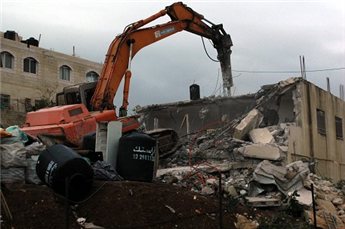
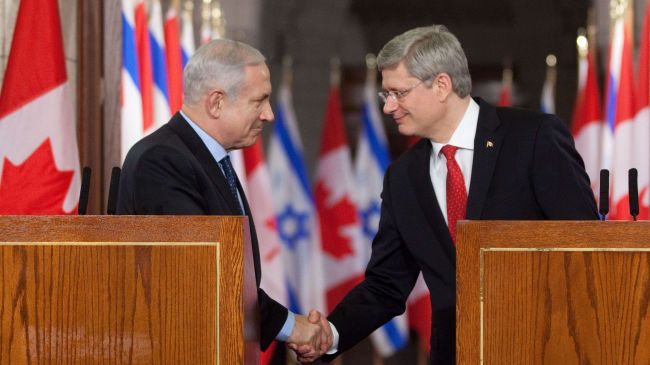
 Zeolite is old. It is in Roman concrete that has held for two thousand years. It’s in the water filters of ancient cisterns. It’s in the stomachs of Pacific livestock whose keepers knew, somehow, that this grey crumbling rock made the animals healthier. It’s in Soviet clinical protocols from the 1960s. It’s in the standard emergency response to the Chernobyl explosion.
 Aletho News

