More facts have come to light in the case of Gilad Atzmon and his banning by the Islington Town Council from performing at a jazz concert on December 21, 2018. The original scenario was that one e-mail from one person calling Atzmon an antisemite somehow persuaded the Islington council to take the drastic step of removing Atzmon from a town-owned venue. Many who heard the story felt this was a rash decision which would surely be reversed when the facts were brought to light. But the Council voted to uphold its decision and Atzmon was indeed not allowed to play.
Now it appears that the single complainant – Martin Rankoff – was not just an anonymous fan of Israel but the UK director of Likud-Herut. Herut (or ‘freedom’) was Israel’s founding nationalist party from 1948 until it later merged with Likud. It is a militant and extreme Zionist organization whose roots go in a straight line from Ze’ev Jabotinsky and Menachem Begin up to Benjamin Netanyahu today. Jabotinsky and Begin helped form the Irgun terrorists in 1937. Irgun committed notorious massacres in Palestine leading up to and during the Nakba (or ‘catastrophe’) of 1947-1948. These include the bombing of the King David Hotel in Jerusalem in 1946, killing 91 people, and the massacre at Deir Yassin in 1948 in which 254 unarmed Palestinian villagers were brutally murdered as an incentive for other Palestinians to leave. On its web site Likud-Herut UK lists Jabotinsky and Begin as “visionaries.” Likud-Herut is a member of the World Zionist Organization and the Zionist Federation of the UK who believe in “the inalienable right of all Jews to live and settle in all parts of the Land of Israel.”
In a letter to the New York Times in 1948 Albert Einstein, Hannah Arendt, and others compared Herut to the Nazis and Fascists who had just been defeated in World War II. Referring to this letter, Ramzy Baroud recently wrote, “the ‘Nazi and Fascist’ mentality that defined Herut in 1948 now defines the most powerful ruling class in Israel. Israel’s leaders speak openly of genocide and murder, yet they celebrate and promote Israel as if an icon of civilization, democracy and human rights.”
–
The history of Herut and Likud tells us a great deal about who the people are who complained about Atzmon to Islington Town Council. When Atzmon moved to appeal his being banned, formidable opponents again appeared in the form of the Simkins Law firm, one of the most expensive law practices in Britain, with not one but two partners at Simkins being put on the case. These are Gideon Benaim and Tom Iverson. Benaim recently became well known in Britain for winning an invasion of privacy suit against the BBC on behalf of pop singer Cliff Richard, who said he spent £3.4m ($4.3 million) on the case. Clearly, representation by Simkins doesn’t come cheap. Also listed in Benaim’s resumé as a client is the Las Vegas Sands Corporation which likely has no problem with Simkins’ fees either. The Sands casino is owned by billionaire Sheldon Adelson, who, as it happens, is a primary sponsor of the Likud Party in Israel, led by Benjamin Netanyahu. Adelson owns the newspaper Israel Hayom, a mouthpiece for Netanyahu and Likud.
American businessman and investor Sheldon Adelson with Prime Minister Benjamin Netanyahu at the ceremony of a laying of a cornerstone for new Medicine Faculty buildings at the Ariel University in the West Bank, on June 28, 2017. Photo by Ben Dori/Flash90
It now appears that Atzmon’s banning was not the result of a casual complaint; it was an intentional attack on a well-respected supporter of Palestinian human rights by the Likud organization, directly represented by Martin Rankoff. The attack was followed up by the hiring of a lawyer who has worked for Likud godfather Sheldon Adelson. The connection to these powerful forces may explain why Islington Town Council leader Richard Watts, without any delay or attempt at negotiation, took the step of going straight to a decision to hire an expensive law firm. This is while Islington is facing serious austerity and shortage of funds in its own operating budget. Islington has a population of about 206,000 people. This very month, 43 of those people were counted in one survey as homeless and sleeping on the streets.
Regarding the financial problems of his borough and others around London, Richard Watts, told The Independent in October 2018 :
“unprecedented” funding pressures and demand for adult and children’s social care and homelessness services was “pushing councils to the limit”.
“As a result less money is being spent on the other services that keep our communities running such as libraries, local roads, early intervention and local welfare support,” he added.
Yet, to Watts and his fellow councilors in Islington, backing partisans for a foreign country -Israel- took precedence over the pressing needs of the people whom they are supposed to represent. Either Watts was inexcusably careless with scarce town funds or a deal was made and he knew that he could depend on Likud-Herut to back him. Or, like politicians all across Europe and the US facing the power of the Israel lobby, he knew he couldn’t afford to say no.
According to Simkin’s web site, Gideon Benaim “has extensive expertise in the areas of defamation, privacy, harassment and copyright.” Perhaps it is not a coincidence that immediately after Islington brought in Simkins, identical statements from an unnamed Labour spokesman describing Atzmon as “a vile antisemite” appeared in both the BBC and The Guardian. Perhaps a lawyer experienced in defending people against defamation and harassment would also know how to perpetrate these things. Perhaps this was Benaim’s opening move. Character assassination is a common tactic in cases that have a weak legal foundation, such as this one, as it goes a long way to convicting the accused before their case ever reaches a courtroom.
The involvement of Likud-Herut in the attack on Gilad Atzmon, and Islington’s official backing of that attack, constitutes a monumental scandal. This wasn’t just a stupid mistake; it was a hit. It is an affront to reason that an an arch-racist organization like Likud, who from the beginning have stood for the removal of the people of Palestine from their own land by means of terror, murder, and forced expulsion, could possibly claim they they were defamed by someone pointing out these very crimes. There is a case of defamation here for sure – the defamation of Gilad Atzmon. For Zionists, defamation is nothing more than a tool to destroy opponents who can’t be dealt with by other means. We are long since tired of truth tellers being accused of antisemitism. We’re tired of national and local resources being used to prop up the criminal state of Israel. Coercion by advocates for Israel is at the center of this issue in Islington, as it is in many other towns and many other countries. For the sake of Palestine and our own sovereignty, it has to be called out and stopped.
On September 11, 2001 a third World Trade Center high-rise building, WTC 7 (47 stories) also completely collapsed some hours after WTC 1 and 2. The building was not hit by a plane and had fires on some floors.
The collapse was sudden, symmetrical and at free-fall acceleration (confirmed officially by NIST). This means the building collapsed through the path of greatest resistance (itself) without any resistance (free-fall).
According to the laws of physics, this is consistent with controlled demolition. The planning and setup of controlled demolition takes weeks to months and requires unrestricted access through building security.
World Trade Center Building 7 (WTC 7) Collapse Footage (1:06) *
The third high-rise to collapse on 9/11 and was not hit by a plane
Other facts on that day include:
The discovery of nano-thermite explosive in the WTC building dust
Extreme temperatures as high as 2,760’C (5000’F) compared to a maximum possible temperature of 1,000’C (1,800’F) for jet-fuel ignited office fires
Various forms of molten metal
Many first-responder testimonies of explosions
Seismic analysis indicating explosive events before plane impacts and before building collapses and
Horizontal ejection of human bone fragments.
These facts are in-conflict with the official explanation and are all consistent with the controlled demolition hypothesis.
The 9/11 Commission Report made no mention of WTC 7. The NIST investigation stated a “new phenomenon” had occurred where a high-rise building collapsed due to fire – a first in the history of tall building fires where no building has ever fully collapsed due to fire, with many examples of much larger and longer-lasting fires.
Many issues with the official investigations have been reported including the 9/11 Commissioners themselves stating they didn’t get to the truth (see Official Investigations).
Further facts include:
Significant anomalies of the air defense
A stand-down order of the air defense
Multiple war games occurring simultaneously and directly related to the event
Suspicious accounts of the activities of several officials in charge
Evidence of government agency complicity and
Insider trading confirmed during the days prior.
These facts come from credible sources including many scientific and academic papers published in peer-reviewed journals (see Evidence-Based Facts).
There is also a relevant historical context that includes:
“Operation Northwoods” – an earlier US plan to deceptively orchestrate violent terrorism on US cities and blame it on an enemy as justification for war – a “false flag” operation
A US plan to invade 7 countries in 5 years
The Project for a New American Century calling for a “new Pearl Harbor event” to expand US global superiority
The manufacture of an external threat for political gain
The fabricated justification for the Iraq War
A pattern of fabrications for US engagement in war
US government-created domestic terrorism
US support of international terrorism
A history of false flag terrorism by governments
A history of US “State Crimes Against Democracy”, and
Bush, Cheney and Rumsfeld convicted as war criminals.
There are credible explanations as to why we in the West resist this information, including a ‘cultural taboo’ regarding possible ‘conspiracy theories’ (see Psychology ).
Many credible people who have spoken out include:
Ferdinando Imposimato – Honorary President of the Supreme Court of Italy
Dr. Tun Mahathir Mohamad – former Prime Minister of Malaysia
Dr. Paul Craig Roberts – former Assistant Secretary of the US Treasury and former Associate Editor of the Wall Street Journal
Bill Christison – former senior CIA National Intelligence Officer and Director of the CIA’s Office of Regional and Political Analysis
Who gets to write the history textbooks? Where do the history teachers learn about history? What documents are allowed into the historical record, and what documents are excluded? These are not merely academic questions, they go right to the heart of the question of history itself. Join James Corbett for today’s edition of The Corbett Report and an in-depth exploration of the formation of the historical record about World War One.
For those with limited bandwidth, CLICK HERE to download a smaller, lower file size version of this episode.
For those interested in audio quality, CLICK HERE for the highest-quality version of this episode (WARNING: very large download).
This 1996 interview with Gary Webb took place after his “Dark Alliance” newspaper series made waves across the country for piecing together the puzzle of the US crack epidemic.
The pipeline of CIA backed drug smuggling into the country and money smuggling out of the country to support the Nicaraguan Contras was wide open from the mid 1970s on, with players using everything from their shoes to freighters to move cocaine.
Webb was widely smeared by the CIA’s favorite newspapers (The New York Times, the Washington Post, The LA Times ) shortly after this interview.
He was eventually vindicated, but not before his career was destroyed. He was found dead of an apparent suicide in 2005. The price of being a whistleblower?
The operation “Northern Shield” was launched with great fanfare by the Israeli occupier on December 4, allegedly aimed at “exposing and neutralizing the cross-border attack tunnels that Hezbollah dug from Lebanon to Israel”. Indeed, the Lebanese Resistance has repeatedly promised to no longer be on a defensive position in case of aggression or war, and carry the fighting inside occupied Palestine, or even to liberate Galilee. Spokesmen of the Israeli government ostensibly congratulated themselves on what they presented as thwarting the plans of the dreaded Hassan Nasrallah.
Israeli propaganda and its docile Western media relays presented the operation as a large-scale military offensive that would strike a huge blow to the Party of God, as if the Zionist entity had entered Lebanese territory (or was about to do so), whether on land or underground. A speech by the Hezbollah Secretary General was announced for the same day by the Israeli and Western media, which would have seemed to confirm the importance of the Israeli operation. And given Hezbollah’s silence, it was ultimately said that this silence was due to the shock in which the Lebanese Resistance found itself after this surprise operation that would have ruined its most secret plans.
But what is it all really about? First and foremost, it is ridiculous to equate drilling and excavation work taking place inside occupied Palestine, and not encroaching in any way on Lebanese territory, with some kind of offensive, or even a military operation. Heavy construction, earthworks and fortification work on the northern border of Israel have been conducted by the IDF since 2015, with the aim of creating a Maginot-kind line of defense against Hezbollah (to emphasize its anachronistic character, Al-Manar nicknamed it The Wall of Illusion).
If the Israeli and Western media refrained from any mediatization on this subject, it is because these works of engineering did not serve the propaganda of Israel, underlining on the contrary its weakness: the Zionist entity is indeed cornered to a defensive position for the first time in its existence. But Hezbollah itself has clearly boasted about this upheaval, notably by organizing a media tour in April 2017 to expose the Israeli measures to the world. The promise of February 16, 2011, in which Hassan Nasrallah announced to his fighters that they must be ready to receive, one day, the order to liberate Galilee, has indeed been taken very seriously by Israel. Even more so after the war in Syria, where Hezbollah has acquired and demonstrated its offensive capabilities by liberating vast areas of territory from the presence of ISIS, leading battles that, by their nature, extent and deployed personnel and weapons, are no longer guerrilla warfare. Hezbollah’s offensive capabilities have never been based on the existence of tunnels, as evidenced already by the cross-border capture of Israeli soldiers in July 2006, and are now more similar to operations launched by conventional armies, as Hassan Nasrallah pointed out in an interview on August 19, 2016:
When Hezbollah intervenes in the war in Syria, and fights as a very large formation, and with very different armaments, or as part of a very large formation with various armaments, and participates in major and very extensive offensive operations, when he manages to repel armed men (ISIS terrorists), who are not normal combatants, especially foreigners, fighters of such a level (of commitment, ready to die), when Hezbollah expels them from very large geographical areas, it means that Hezbollah gains an offensive experience, a vast experience of liberation of territory through continuous and direct military operations, and not through guerrilla warfare. And Hezbollah did not have such experience before the war in Syria.
This is where Israel is frightened and terrified. Because what Hezbollah does in Syria, if a war is launched against it, it will do it in Galilee. […] If Hezbollah emerged from the (2006) July war as a regional power, it will emerge from this war (in Syria) as a true military power representing a force capable to liberate (huge) territories not only through guerrilla warfare, but even in a war that looks much more like the classic wars (between national armies).
Hezbollah is not Hamas, and believing that their strategies and tactics are the same while their abilities and experiences are immeasurable is both an illusion and a hoax to which, of course, Hassan Nasrallah did not deign reply.
Why was this show-operation launched now? Netanyahu, who is altogether Prime Minister, Minister of Defense, Minister of Foreign Affairs and Minister of Health, is more discredited than ever in Israel, because of the recent military failure against Gaza –after which his Minister of Defense Avigdor Lieberman resigned, almost taking down his government–, and of his innumerable legal probes, which led the Israeli police to ask, at the beginning of December, his indictment as well as that of his wife in an umpteenth corruption case. The Israeli opposition, from the first days, openly expressed doubts as to the true goals of the Operation “Northern Shield”, as did Tzipi Livni, who denounced the overdramatization of this operation:
We are not now in a situation where our soldiers are behind enemy lines. We are talking about engineering activity within the sovereign territory of the state of Israel. Netanyahu is blowing the incident out of proportion. He made a defensive engineering event into a dramatic military operation. This was done for one of two reasons — either the Prime Minister is himself panicking, or he wants to sow panic to justify his actions both in delaying elections and abandoning the residents of southern Israel [against the rockets of Gaza].
But we must not rely on the Western media to bring to our knowledge this easily accessible data. For them, only the official Israeli propaganda is worthy of credit.
More weak than ever, Netanyahu wants to present himself as a strong man against Hezbollah, but the operation launched against alleged tunnels, a preposterous maneuver to divert the attention of the Israeli press and public opinion, reveals only the powerlessness of Israel against the Party of God. Hezbollah is well aware that Netanyahu will not dare to launch a war of aggression against Lebanon, and that against Hezbollah, Israel has no other recourse than Washington’s sanctions and its own appeals to international institutions –these same institutions and laws trampled on by Tel Aviv for decades– to condemn the alleged violations of Israeli sovereignty by Hezbollah –while Israel continues to violate Lebanese airspace daily– and take action against him.
In the face of such childishness –the Israeli army is more likely to find Digletts and other underground Pokemon than operational tunnels of Hezbollah–, Hassan Nasrallah was wary not to provide any fuel to Netanyahu’s show: any speech on his part would have added credibility to this hyped pseudo-operation. Hezbollah media and Lebanese civilians took care of responding, widely ridiculing the operation, mocking Israel on social media, and picnicking with family on the border to taunt Israeli soldiers on the war footing.
A clip called “We’ll meet up in Haifa”, subtitled in Hebrew, was directed by a Lebanese artist, parodying an Israeli song. Hezbollah fighters can be seen reaching Haifa by tunnel, and spying on Netanyahu in his own home.
For its part, Hezbollah’s war media published a picture of Israeli troops taken from behind, inside Israeli territory, while they were facing the Lebanese border, thus proving that even when the enemy is on high alert, its territory remains easily accessible.
Moreover, Hezbollah fighters have stolen two FN MAG machine guns under the noses of Israeli soldiers (the Israeli media have widely reported this theft), weapons that will certainly reappear in their hands at the most opportune moment to humiliate the Israeli army and its government.
And on December 12, Hezbollah released this video subtitled in Hebrew and recalling the reality of the situation: it is Israel that fears Hezbollah and takes all measures to guard against it, not the other way around.
It is unlikely that the confrontation between Israel and Hezbollah will turn into war in the near future. But psychological warfare continues to rage, and the electronic battalions of Hassan Nasrallah demonstrate day after day their superiority.
Gerry Docherty, co-author with Jim MacGregor of Hidden History: The Secret Origins of the First World War, joins us for an in-depth discussion about the real origins of WWI. In this wide-ranging discussion, Docherty reveals the machinations of the Secret Elite that ensnared Europe, and, ultimately, the world, in war. We also talk about the teaching of history and who controls the historical narrative on key global events.
A week of rain, wind and heavy fog along the Western Front finally breaks and for a moment there is silence in the hills north of Verdun. That silence is broken at 7:15 AM when the Germans launch an artillery barrage heralding the start of the largest battle the world had ever seen.
Thousands of projectiles are flying in all directions, some whistling, others howling, others moaning low, and all uniting in one infernal roar. From time to time an aerial torpedo passes, making a noise like a gigantic motor car. With a tremendous thud a giant shell bursts quite close to our observation post, breaking the telephone wire and interrupting all communication with our batteries. A man gets out at once for repairs, crawling along on his stomach through all this place of bursting mines and shells. It seems quite impossible that he should escape in the rain of shell, which exceeds anything imaginable; there has never been such a bombardment in war. Our man seems to be enveloped in explosions, and shelters himself from time to time in the shell craters which honeycomb the ground; finally he reaches a less stormy spot, mends his wires, and then, as it would be madness to try to return, settles down in a big crater and waits for the storm to pass.
Beyond, in the valley, dark masses are moving over the snow-covered ground. It is the German infantry advancing in packed formation along the valley of the attack. They look like a big gray carpet being unrolled over the country. We telephone through to the batteries and the ball begins. The sight is hellish. In the distance, in the valley and upon the slopes, regiments spread out, and as they deploy fresh troops come pouring in. There is a whistle over our heads. It is our first shell. It falls right in the middle of the enemy infantry. We telephone through, telling our batteries of their hit, and a deluge of heavy shells is poured on the enemy. Their position becomes critical. Through glasses we can see men maddened, men covered with earth and blood, falling one upon the other. When the first wave of the assault is decimated, the ground is dotted with heaps of corpses, but the second wave is already pressing on.
This anonymous French staff officer’s account of the artillery offensive that opened the Battle of Verdun—recounting the scene as an heroic French communications officer repairs the telephone line to the French artillery batteries, allowing for a counter-strike against the first wave of German infantry—brings a human dimension to a conflict that is beyond human comprehension. The opening salvo of that artillery barrage alone—involving 1,400 guns of all sizes—dropped a staggering 2.5 million shells on a 10 kilometer front near Verdun in northeastern France over five days of nearly uninterrupted carnage, turning an otherwise sleepy countryside into an apocalyptic nightmare of shell holes, craters, torn-out trees and ruined villages.
By the time the battle finished 10 months later, a million casualties lay in its wake. A million stories of routine bravery like that of the French communications officer. And Verdun was far from the only sign that the stately, sanitized version of 19th century warfare was a thing of the past. Similar carnage played out at the Somme and Gallipoli and Vimy Ridge and Galicia and a hundred other battlefields. Time and again, the generals threw their men into meat grinders, and time and again the dead bodies lay strewn on the other side of that slaughter.
But how did such bloodshed happen? For what purpose? What did the First World War mean?
The simplest explanation is that the mechanization of 20th century armies had changed the logic of warfare itself. In this reading of history, the horrors of World War One were the result of the logic dictated by the technology with which it was fought.
It was the logic of the siege guns that bombarded the enemy from over 100 kilometres away. It was the logic of the poison gas, spearheaded by Bayer and their School for Chemical Warfare in Leverkusen. It was the logic of the tank, the airplane, the machine gun and all of the other mechanized implements of destruction that made mass slaughter a mundane fact of warfare.
But this is only a partial answer. More than just technology was at play in this “Great War,” and military strategy and million-casualty battles were not the only ways that World War I had changed the world forever. Like that unimaginable artillery assault at Verdun, the First World War tore apart all the verities of the Old World, leaving a smouldering wasteland in its wake.
A wasteland that could be reshaped into a New World Order.
For the would-be engineers of society, war—with all of its attendant horrors—was the easiest way to demolish the old traditions and beliefs that lay between them and their goals.
This was recognized early on by Cecil Rhodes and his original clique of co-conspirators. As we have seen, it was less than one decade after the founding of Cecil Rhodes’ society to achieve the “peace of the world” that that vision was amended to include war in South Africa, and then amended again to include embroiling the British Empire in a world war.
Many others became willing participants in that conspiracy because they, too, could profit from the destruction and the bloodshed.
And the easiest way to understand this idea is at its most literal level: profit.
War is a racket. It always has been.
It is possibly the oldest, easily the most profitable, surely the most vicious. It is the only one international in scope. It is the only one in which the profits are reckoned in dollars and the losses in lives.
A racket is best described, I believe, as something that is not what it seems to the majority of the people. Only a small “inside” group knows what it is about. It is conducted for the benefit of the very few, at the expense of the very many. Out of war a few people make huge fortunes.
In the World War [I] a mere handful garnered the profits of the conflict. At least 21,000 new millionaires and billionaires were made in the United States during the World War. That many admitted their huge blood gains in their income tax returns. How many other war millionaires falsified their tax returns no one knows.
How many of these war millionaires shouldered a rifle? How many of them dug a trench? How many of them knew what it meant to go hungry in a rat-infested dug-out? How many of them spent sleepless, frightened nights, ducking shells and shrapnel and machine gun bullets? How many of them parried a bayonet thrust of an enemy? How many of them were wounded or killed in battle?
As the most decorated Marine in the history of the United States at the time of his death, Smedley Butler knew of what he spoke. Having seen the minting of those tens of thousands of “new millionaires and billionaires” out of the blood of his fellow soldiers, his famous rallying cry, War Is A Racket, has resonated with the public since he first began—in his own memorable words—”trying to educate the soldiers out of the sucker class.”
Indeed, the war profiteering on Wall Street started even before America joined the war. Although, as J.P. Morgan partner Thomas Lamont noted, at the outbreak of the war in Europe “American citizens were urged to remain neutral in action, in word, and even in thought, our firm had never for one moment been neutral; we didn’t know how to be. From the very start we did everything we could to contribute to the cause of the Allies.” Whatever the personal allegiances that may have motivated the bank’s directors, this was a policy that was to yield dividends for the Morgan bank that even the greediest of bankers could scarcely have dreamed of before the war began.
John Pierpont Morgan himself died in 1913—before the passage of the Federal Reserve Act he had stewarded into existence and before the outbreak of war in Europe—but the House of Morgan stood strong, with the Morgan bank under the helm of his son, John Pierpont Morgan, Jr., maintaining its position as preeminent financier in America. The young Morgan moved quickly to leverage his family’s connections with the London banking community and the Morgan bank signed its first commercial agreement with the British Army Council in January 1915, just four months into the war.
That initial contract—a $12 million purchase of horses for the British war effort to be brokered in the US by the House of Morgan—was only the beginning. By the end of the war, the Morgan bank had brokered $3 billion in transactions for the British military—equal to almost half of all American supplies sold to the Allies in the entire war. Similar arrangements with the French, Russian, Italian and Canadian governments saw the bank broker billions more in supplies for the Allied war effort.
But this game of war financing was not without its risks. If the Allied powers were to lose the war, the Morgan bank and the other major Wall Street banks would lose the interest on all of the credit they had extended to them. By 1917, the situation was dire. The British government’s overdraft with Morgan stood at over $400 million dollars, and it was not clear that they would even win the war, let alone be in a position to repay all their debts when the fighting was over.
In April 1917, just eight days after the US declared war on Germany, Congress passed the War Loan Act extending $1 billion in credit to the Allies. The first payment of $200 million went to the British and the entire amount was immediately handed over to Morgan as partial payment on their debt to the bank. When, a few days later, $100 million was parceled out to the French government, it, too, was promptly returned to the Morgan coffers. But the debts continued to mount and throughout 1917 and 1918, the US Treasury—aided by the Pilgrims Society member and avowed Anglophile Benjamin Strong, president of the newly-created Federal Reserve—quietly paid off the Allied powers’ war debts to J.P. Morgan.
DOCHERTY: What I think is interesting is also the bankers’ viewpoint here. America was so deeply involved in the war financing. There was so much money which could only really be repaid as long as Britain and France won. But had they lost, the loss on the American financial stock exchange’s top market—your great industrial giants—would have been horrendous. So America was deeply involved. Not the people, as is ever the case. Not the ordinary citizen who cares. But the financial establishment who had, if you like, treated the entire thing as they might a casino and put all the money on one end of the board and it had to come good for them.
So all of this is going on. I mean, I personally feel that the American people don’t realize just how far duped they were by your Carnegies, your J. P. Morgans, your great bankers, your Rockefellers, by the multi-multimillionaires who emerged from that war. Because they were the ones who made the profits, not those who lost their sons, their grandsons, whose lives were ruined forever by war.
After America officially entered the war, the good times for the Wall Street bankers got even better. Bernard Baruch—the powerful financier who personally led Woodrow Wilson into Democratic Party headquarters in New York “like a poodle on a string” to receive his marching orders during the 1912 election—was appointed to head the newly-created “War Industries Board.”
With war hysteria at its height, Baruch and the fellow Wall Street financiers and industrialists who populated the board were given unprecedented powers over manufacture and production throughout the American economy, including the ability to set quotas, fix prices, standardize products, and, as a subsequent congressional investigation showed, pad costs so that the true size of the fortunes that the war profiteers extracted from the blood of the dead soldiers were hidden from the public.
Spending government funds at an annual rate of $10 billion, the board minted many new millionaires in the American economy—millionaires who, like Samuel Prescott Bush of the infamous Bush family, happened to sit on the War Industries Board. Bernard Baruch himself was said to have personally profited from his position as head of the War Industries Board to the tune of $200 million.
The extent of government intervention in the economy would have been unthinkable just a few years before. The National War Labor Board was set up to mediate labor disputes. The Food and Fuel Control Act was passed to give the government control over the distribution and sale of food and fuel. The Army Appropriations Act of 1916 set up the Council of National Defense, populated by Baruch and other prominent financiers and industrialists, who oversaw private sector coordination with the government in transportation, industrial and farm production, financial support for the war, and public morale. In his memoirs at the end of his life, Bernard Baruch openly gloated:
The [War Industries Board] experience had a great influence upon the thinking of business and government. [The] WIB had demonstrated the effectiveness of industrial cooperation and the advantage of government planning and direction. We helped inter the extreme dogmas of laissez faire, which had for so long molded American economic and political thought. Our experience taught that government direction of the economy need not be inefficient or undemocratic, and suggested that in time of danger it was imperative.
But it was not merely to line the pockets of the well-connected that the war was fought. More fundamentally, it was a chance to change the very consciousness of an entire generation of young men and women.
For the class of would-be social engineers that arose in the Progressive Era—from economist Richard T. Ely to journalist Herbert Croly to philosopher John Dewey—the “Great War” was not a horrific loss of life or a vision of the barbarism that was possible in the age of mechanized warfare, but an opportunity to change people’s perceptions and attitudes about government, the economy, and social responsibility.
In every warring country there has been the same demand that in the time of great national stress production for profit be subordinated to production for use. Legal possession and individual property rights have had to give way before social requirements. The old conception of the absoluteness of private property has received the world over a blow from which it will never wholly recover.
All countries on all sides of the world conflict responded in the same way: by maximizing their control over the economy, over manufacturing and industry, over infrastructure, and even over the minds of their own citizens.
Germany had its Kriegssozialismus, or war socialism, which placed control of the entire German nation, including its economy, its newspapers and, through conscription—its people—under the strict control of the Army. In Russia, the Bolsheviks used this German “war socialism” as a basis for their organization of the nascent Soviet Union. In Canada, the government rushed to nationalize railways, outlaw alcohol, institute official censorship of newspapers, levy conscription, and, infamously, introduce a personal income tax as a “temporary war time measure” that continues to this day.
The British government soon recognized that control of the economy was not enough; the war at home meant control of information itself. At the outbreak of war, they set up the War Propaganda Bureau at Wellington House. The bureau’s initial purpose was to persuade America to enter the war, but that mandate soon expanded to shape and mold public opinion in favour of the war effort and of the government itself.
On September 2, 1914, the head of the War Propaganda Bureau invited twenty-five of Britain’s most influential authors to a top secret meeting. Among those present at the meeting: G.K. Chesterton, Ford Madox Ford, Thomas Hardy, Rudyard Kipling, Arthur Conan Doyle, Arnold Bennett and H.G. Wells. Not revealed until decades after the war ended, many of those present agreed to write propaganda material promoting the government’s position on the war, which the government would get commercial printing houses, including Oxford University Press, to publish as seemingly independent works.
Hillaire Belloc later rationalized his work in service of the government: “It is sometimes necessary to lie damnably in the interests of the nation.” War correspondent William Beach Thomas was not so successful in the battle against his own conscience: “I was thoroughly and deeply ashamed of what I had written for the good reason that it was untrue … the vulgarity of enormous headlines and the enormity of one’s own name did not lessen the shame.”
But the Bureau’s efforts were not confined to the literary world. Film, visual art, recruitment posters; no medium for swaying the hearts and minds of the public was overlooked. By 1918, the government’s efforts to shape perception of the war—now officially centralized under a “Minister of Information,” Lord Beaverbrook—was the most finely-tuned purveyor of propaganda the world had yet seen. Even foreign propaganda, like the infamous Uncle Sam that went beyond a recruitment poster to become a staple of American government iconography, was based on a British propaganda poster featuring Lord Kitchener.
Control of the economy. Control of populations. Control of territory. Control of information. World War One was a boon for all of those who wanted to consolidate control of the many in the hands of the few. This was the vision that united all those participants in the conspiracies that led to the war itself. Beyond Cecil Rhodes and his secret society, there was a broader vision of global control for the would-be rulers of society who were seeking what tyrants had lusted after since the dawn of civilization: control of the world.
World War One was merely the first salvo in this clique’s attempt to create not a re-ordering of this society or that economy, but a New World Order.
GROVE: What World War One allowed these globalists, these Anglophiles, these people who wanted the English-speaking union to reign over the whole world, what it allowed them to do, was militarize American thinking. And what I mean by that is there was a whistle blower called Norman Dodd. He was the head researcher for the Reese committee that looked into how nonprofit foundations were influencing American education away from freedom. And what they found was the Carnegie [Endowment] for International Peace was seeking to understand how to make America a wartime economy, how to take the state apparatus over, how to change education to get people to continually consume, how to have arms production ramp up.
And then once this happened in World War one, if you look at what happened in the 1920s you’ve got people like Major General Smedley Butler who is using the US military to advance corporate interest in Central and South America and doing some very caustic things to the indigenous people, insofar as these were not American policies really before the Spanish-American War in 1898. Meaning that going and taking foreign military action was not part of the diplomatic strategy of America prior to our engagement with the British Empire in the late 1800s. And as it ramped up after Cecil Rhodes’s death. So what these people gained was the foothold for world government from which they could get through globalism, what they called a “New World Order.”
The creation of this “New World Order” was no mere parlor game. It meant a complete redrawing of the map. The collapse of empires and monarchies. The transformation of the political, social and economic life of entire swathes of the globe. Much of this change was to take place in Paris in 1919 as the victors divvied up the spoils of war. But some of it, like the fall of the Romanovs and the rise of the Bolsheviks in Russia, was to take place during the war itself.
In hindsight, the fall of the Russian Empire in the midst of the First World War seems inevitable. Unrest had been in the air since Russia’s defeat by the Japanese in 1905, and the ferocity of the fighting on the eastern front, coupled with the economic hardship—which hit Russia’s overcrowded, over-worked urban poor particularly hard—made the country ripe for revolt. That revolt happened during the so-called “February Revolution” when Czar Nicholas was swept from power and a provisional government installed in his place.
But that provisional government—which continued to prosecute the war at the behest of its French and British allies—was competing for control of the country with the Petrograd Soviet, a rival power structure set up by the socialists in the Russian capital. The struggle for control between the two bodies led to riots, protests and, ultimately, battles in the street.
Russia in the spring of 1917 was a powder keg waiting to explode. And in April of that year, two matches, one called Vladimir Lenin and one called Leon Trotsky, were thrown directly into that powder keg by both sides of the Great War.
Vladimir Lenin, a Russian communist revolutionary who had been living in political exile in Switzerland, saw in the February Revolution his chance to push through a Marxist revolution in his homeland. But although for the first time in decades his return to that homeland was politically possible, the war made the journey itself an impossibility. Famously, he was able to broker a deal with the German General Staff to allow Lenin and dozens of other revolutionaries to cross through Germany on their way to Petrograd.
Germany’s reasoning in permitting the infamous “sealed train” ride of Lenin and his compatriots is, as a matter of war strategy, straightforward. If a band of revolutionaries could get back to Russia and bog down the provisional government, then the German Army fighting that government would benefit. If the revolutionaries actually came to power and took Russia out of the war altogether, so much the better.
But the curious other side of this story, the one demonstrating how Lenin’s fellow communist revolutionary, Leon Trotsky, was shepherded from New York—where he had been living well beyond the means of his income as a writer for socialist periodicals—through Canada—where he was stopped and identified as a revolutionary en route to Russia—and on to Petrograd, is altogether more incredible. And, unsurprisingly, that story is mostly avoided by historians of the First World War.
One of the scholars who did not shy away from the story was Antony Sutton, author of Wall Street and the Bolshevik Revolution, whose meticulous research of State Department documents, Canadian government records and other historical artifacts pieced together the details of Trotsky’s unlikely journey.
ANTONY C. SUTTON: Trotsky was in New York. He had no income. I summed his income for the year he was in New York; it was about six hundred dollars, yet he lived in an apartment, he had a chauffeured limousine, he had a refrigerator, which was very rare in those days.
He left New York and went to Canada on his way to the revolution. He had $10,000 in gold on him. He didn’t earn more than six hundred dollars in New York. He was financed out of New York, there’s no question about that. The British took him off the ship in Halifax, Canada. I got the Canadian archives; they knew who he was. They knew who Trotsky was, they knew he was going to start a revolution in Russia. Instructions from London came to put Trotsky back on the boat with his party and allow them to go forward.
So there is no question that Woodrow Wilson—who issued the passport for Trotsky—and the New York financiers—who financed Trotsky—and the British Foreign Office allowed Trotsky to perform his part in the revolution.
After succeeding in pushing through the Bolshevik Revolution in November of 1917, one of Trotsky’s first acts in his new position as People’s Commissar for Foreign Affairs was to publish the “Secret Treaties and Understandings” that Russia had signed with France and Britain. These documents revealed the secret negotiations in which the Entente powers had agreed to carve up the colonial world after the war. The stash of documents included agreements on “The Partition of Asiatic Turkey” creating the modern Middle East out of the remnants of the Ottoman Empire; “The Treaty With Italy” promising conquered territory to the Italian government in exchange for their military aid in the campaign against Austria-Hungary; a treaty “Re-Drawing the Frontiers of Germany” promising France its long-held wish of reacquiring Alsace-Lorraine and recognizing “Russia’s complete liberty in establishing her Western frontiers;” diplomatic documents relating to Japan’s own territorial aspirations; and a host of other treaties, agreements and negotiations.
One of these agreements, the Sykes-Picot Agreement between Britain and France, which was signed in May 1916, has grown in infamy over the decades. The agreement divided modern-day Turkey, Jordan, Iraq, Syria and Lebanon among the Triple Entente and, although the revelation of the agreement caused much embarrassment for the British and the French and forced them to publicly back away from the Sykes-Picot map, served as the basis for some of the arbitrary lines on the map of the modern-day Middle East, including the border between Syria and Iraq. In recent years, ISIS has claimed that part of their mission is to “put the final nail in the coffin of the Sykes-Picot conspiracy.”
Other territorial conspiracies—like the Balfour Declaration, signed by Arthur Balfour, then acting as Foreign Secretary for the British Government, and addressed to Lord Walter Rothschild, one of the co-conspirators in Cecil Rhodes original secret society—are less well-known today. The Balfour Declaration also played an important role in shaping the modern world by announcing British support for the establishment of a Jewish homeland in Palestine, which was not under British mandate at the time. Even less well known is that the document did not originate from Balfour but from Lord Rothschild himself, and was sent to fellow Round Table conspirator Alfred Milner for revision before being delivered.
GROVE: So this was Lord—he’s known as Lord Walter Rothschild, and professionally he’s a zoologist. He inherits a lot of wealth and a very high status family. He pursues his art and his science and his scientific theories and research and he has zoological museums and he’s collecting specimens. And he’s famously the Rothschild that’s riding the the giant tortoise and leading him around with a piece of lettuce on his stick, and there’s a piece of lettuce hanging out of the tortoises mouth. And I’ve always used that: here’s the metaphor for the bankers, like they’re leading people around with stimulus-response, this turtle, this tortoise can’t ask questions. It can’t question its obedience. So that’s Lord Rothschild.
Why is he important? Well he and his family are some of the early financiers and backers of Cecil Rhodes and promoters of his last will and testament. And in the question of America being brought back into the British Empire, there are newspaper articles—there is one in 1902 where Lord Rothschild is saying, you know, “this would be a good thing to have America back in the British Empire.” He’s also the Lord Rothschild to whom the Balfour Declaration is addressed.
So in 1917 there’s a letter of agreement sent from the British government—from Arthur Balfour—to Lord Rothschild. Now Lord Rothschild and Arthur Balfour, they know each other. They have a long history together and there’s a lot of Fabian socialists in this whole story of what led up to World War One. Specifically with Balfour, he’s acting as an agent of the British government, saying “We are gonna give away this land that’s not really ours, and we’re gonna give it to you guys in your group.” The problem is the British had also promised that same land to the Arabs, so now the Balfour Declaration is going against some of the foreign policy plans that they’ve already promised to these other countries.
The other interesting thing about the Balfour Declaration is it just had its hundredth anniversary so they last year had a site that had the whole history of the Balfour Declaration. You could see the originals from Lord Rothschild and going to Lord Milner for changes and coming through Arthur Balfour and then being sent back as an official letter from the monarchy, basically. So that’s interesting. But there’s also interviews where the current Lord Rothschild—Lord Jacob Rothschild—comments on his ancestors’ history and how they brought about the Jewish state in 1947-48 because of the Balfour Declaration.
So there’s a lot of history to unpack there but most people again they’re not aware of the document let alone the very interesting history behind it let alone what that really means in the bigger story.
Over two decades after Cecil Rhodes launched the secret society that would engineer this so-called “Great War,” the likes of Alfred Milner and Walter Rothschild were still at it, conspiring to use the war they had brought about to further their own geopolitical agenda. But by the time of the armistice in November 1918, that group of conspirators had greatly expanded, and the scale of their agenda had grown along with it. This was no small circle of friends who had embroiled the world in the first truly global war, but a loosely-knit network of overlapping interests separated by oceans and united in a shared vision for a new world order.
Milner, Rothschild, Grey, Wilson, House, Morgan, Baruch and literally scores of others had each had their part to play in this story. Some were witting conspirators, others merely seeking to maximize the opportunities that war afforded them to reach their own political and financial ends. But to the extent that those behind the WWI conspiracy shared a vision, it was the same desire that had motivated men throughout history: the chance to reshape the world in their own image.
INTERVIEWER: Just tell us again: why?
SUTTON: Why? You won’t find this in the textbooks. Why is to bring about, I suspect, a planned, controlled world society in which you and I won’t find the freedoms to believe and think and do as we believe.
DOCHERTY: War is an instrument of massive change, we know that. It is an instrument of massive change in particular for those who are defeated. In a war where everyone is defeated, then it’s simply an element of massive change and that’s a very deep, thought-provoking concept. But if everyone loses, or if everyone except “us”—depending on who the “us” are—loses, then “we” are going to be in a position to reconstruct in our image.
RAICO: Altogether in the war, who knows, some 10 or 12 million people died. People experienced things—both in combat and the people back home understanding what was happening—that dazed them. That stunned them. You know, it’s almost as if for a few generations, the peoples of Europe had been increased, sort of like a flock of sheep by their shepherds. Through industrialization. Through the spread of liberal ideas and institutions. Through the decrease of infant mortality. The raising of standards of living. The population of Europe was enormously greater than it had ever been before. And now the time came to slaughter some part of the sheep for the purposes of the ones who were in control.
For the ones in control, World War One had been the birth pangs of a New World Order. And now, the midwives of this monstrosity slouched towards Paris to take part in its delivery.
THE END (OF THE BEGINNING)
All over the world on November 11, 1918, people were celebrating, dancing in the streets, drinking champagne, hailing the armistice that meant the end of the war. But at the front there was Many soldiers believed the Armistice only a temporary measure and that the war would soon go on. As night came, the quietness, unearthly in its penetration, began to eat into their souls. The men sat around log fires, the first they had ever had at the front. They were trying to reassure themselves that there were no enemy batteries spying on them from the next hill and no German bombing planes approaching to blast them out of existence. They talked in low tones. They were nervous.
After the long months of intense strain, of keying themselves up to the daily mortal danger, of thinking always in terms of war and the enemy, the abrupt release from it all was physical and psychological agony. Some suffered a total nervous collapse. Some, of a steadier temperament, began to hope they would someday return to home and the embrace of loved ones. Some could think only of the crude little crosses that marked the graves of their comrades. Some fell into an exhausted sleep. All were bewildered by the sudden meaninglessness of their existence as soldiers – and through their teeming memories paraded that swiftly moving cavalcade of Cantigny, Soissons, St. Mihiel, the Meuse-Argonne and Sedan.
What was to come next? They did not know – and hardly cared. Their minds were numbed by the shock of peace. The past consumed their whole consciousness. The present did not exist-and the future was inconceivable.
Little did those troops know how right they were. As the public rejoiced in the outbreak of peace after four years of the bloodiest carnage that the human race had ever endured, the very same conspirators that had brought about this nightmare were already converging in Paris for the next stage of their conspiracy. There, behind closed doors, they would begin their process of carving up the world to suit their interests, laying the groundwork and preparing the public consciousness for a new international order, setting the stage for an even more brutal conflict in the future, and bringing the battle-weary soldiers’ worst fears for the future to fruition. And all in the name of “peace.”
The French General, Ferdinand Foch, famously remarked after the Treaty of Versailles that “This is not a peace. It is an armistice for 20 years.” As we now know, his pronouncement was precisely accurate.
The armistice on November 11, 1918 may have marked the end of the war, but it was not the end of the story. It was not even the beginning of the end. It was, at best, the end of the beginning.
“Russian missiles are a danger” – the alarm was sounded by the Secretary General of NATO, Jens Stoltenberg, in an interview with Maurizio Caprara published in the Corriere della Sera*, three days before the “incident” in the Sea of Azov which added fuel to the already incandescent tension with Russia. “There are no new missiles in Europe. But there are Russian missiles, yes”, began Stoltenberg, ignoring two facts.
First: as from March 2020, the United States will begin to deploy in Italy, Germany, Belgium, and Holland (where B-61 nuclear bombs are already based), and probably also in other European countries, the first nuclear bomb with precision guidance in their arsenal, the B61-12. Its function is primarily anti-Russian. This new bomb is designed with penetrating capacity, enabling it to explode underground in order to destroy the central command bunkers with its first strike. How would the United States react if Russia deployed nuclear bombs in Mexico, right next to their territory? Since Italy and the other countries, violating the non-proliferation Treaty, are allowing the USA to use its bases, as well as its pilots and planes, for the deployment of nuclear weapons, Europe will be exposed to a greater risk as the first line of the growing confrontation with Russia.
Second: a new US missile system was installed in Romania in 2016, and another similar system is currently being built in Poland. The same missile system is installed on four warships which, based by the US Navy in the Spanish port of Rota, sail the Black Sea and the Baltic Sea close to Russian territory. The land-based installations, like the ships, are equipped with Lockheed Martin Mk41 vertical launchers, which – as specified by the manufacturer himself – are able to launch “missiles for all missions: either SM-3’s as defence against ballistic missiles, or long-range Tomahawks to attack land-based objective”. The latter can also be loaded with a nuclear warhead. Since it is unable to check which missiles are actually loaded into the launchers parked at the frontier with Russia, Moscow supposes that there are also nuclear attack missiles, in violation of the Intermediate-Range Nuclear Forces Treaty, which forbids the installation of intermediate- and short-range missiles on land bases.
On the contrary, Stoltenberg accuses Russia of violating the INF Treaty, and sends out a warning:
“We can not allow the Treaties to be violated without punishment”.
In 2014, the Obama administration accused Russia, without providing the slightest proof, of having tested a Cruise missile (SSC-8) from a category forbidden by the Treaty, announcing that “the United States are considering the deployment of land-based missiles in Europe”, in other words, the abandon of the INF Treaty. This plan, supported by the European allies of NATO, was confirmed by the Trump administration: in the fiscal year of 2018, Congress authorised the financing of a programme of research and development for a Cruise missile to be launched from a mobile platform.
Nuclear missiles of the Euromissile type, deployed by the USA in Europe during the 1980’s and eliminated by the INF Treaty, are capable of hitting Russia, while similar nuclear missiles deployed in Russia can hit Europe but not the USA. Stoltenberg himself, referring to the SSC-8’s that Russia had deployed on its own territory, declared that they are capable of reaching most of Europe, but not the United States. This is how the United States defends Europe.
And in this grotesque affirmation by Stoltenberg, who attributes to Russia “the highly perilous idea of limited nuclear conflict”, he warns:
“All atomic weapons are dangerous, but those which can lower the threshold for use are especially so”.
This is exactly the warning sounded by US military and scientific experts about the B61-12’s which are on the verge of being deployed in Europe:
“Low-powered, more accurate nuclear weapons increase the temptation of using them, even to using them first instead of as a retaliation”.
Why is the Corriere della Sera not going to interview them?
Source: PandoraTV
This article was originally published in Italian on Il Manifesto.
Translated by Pete Kimberley
Manlio Dinucci is a Research Associate of the Centre for Research on Globalization.
Note
*The Corriere della Sera is a historical Italian daily newspaper, founded in Milan in 1876. Published by RCS MediaGroup, it is the most important Italian daily in terms of distribution and the number of readers.
Fifty-five years ago, on November 22, 1963, John F. Kennedy was assassinated. Although there has been a great deal written about this event over the years, I want to draw attention to one exceptionally important article, originally delivered as a talk on November 20, 1998. Vincent Salandria gave this talk in Dallas at the invitation of the Coalition on Political Assassinations. (See Sources.)
Salandria had been a high school teacher at the time of the assassination (he later became a lawyer) and was one of the first people in the US to write essays expressing dissent from the government narrative of lone gunman Lee Harvey Oswald, maverick leftist.
In his 1998 talk Salandria went through over a dozen of the famous obstacles to the government story—the grassy knoll witnesses, the “magic bullet,” the testimony of the doctors at Parkland Hospital, and so on—but he did not let himself get sidetracked into detailed debates on any of these. By 1998 he had already seen, and participated in, 35 years of such debates. He had long ago concluded that, “the national security state at the very highest level of its power killed President John F. Kennedy for his efforts at seeking to develop a modus vivendi with the Soviets and with socialist Cuba.”
In 1998 he felt it was time to warn researchers about the danger of wasting time in “false debates,” where the essential facts had clearly been established and the wrangling served only the purposes of the assassins. Rather than repeat the debates, Salandria decided in 1998 to outline his basic approach. I will call this the Salandria Approach. I draw attention to it because I believe it helps us find our feet when we tackle not only the JFK killing but many of the killings in the 21st century’s War on Terror.
Here are Salandria’s words:
I began to sift through the myriad facts regarding the assassination which our government and the US media offered us. What I did was to examine the data in a different fashion from the approach adopted by our news media. I chose to assess how an innocent civilian-controlled US government would have reacted to those data. I also envisioned how a guilty US national security state which may have gained control of and may have become semi-autonomous to the civilian US governmental structure would have reacted to the data of the assassination.”
He adds that,
only a guilty government seeking to serve the interests of the assassins would consistently resort to accepting one improbable conclusion after another while rejecting a long series of probable conclusions.”
Let us take two cases from Salandria’s list of over one dozen in order to see what he was getting at.
The Grassy Knoll
Dozens of witnesses thought there were shots from an extended grassy rise, containing several structures, situated west of the famous Texas School Book Depository Building. Salandria, refusing to get drawn into the familiar debate, says:
Let us assume arguendo [for the sake of argument] that all of the eyewitnesses who had concluded that shots were fired from the grassy knoll were dead wrong. But an innocent government could not and would not at that time have concluded that these good citizens were wrong and would not have immediately rushed to declare a far-fetched single assassin theory as fact.”
Note that Salandria’s emphasis is not on the details of the grassy knoll discussion but on the method the government followed in its investigation. And he is right, both about the immediate claim that Oswald acted alone— presented, as he explains, by a government representative on November 22 itself—and about the identical statement presented later by the Warren Commission.
In both cases the claim flew in the face of the eyewitness evidence. For example, despite the fact that there are references to dozens of witnesses to shots from the grassy knoll in the 26 volumes of evidence appended to the Warren Report, the Commission itself displayed little interest in them. And when the Commission dismissed every single one of the grassy knoll witnesses to protect its lone gunman theory it did so without bothering to make a sustained argument.
It chose instead to play a credibility game. It pronounced:
No credible evidence suggests that the shots were fired from the railroad bridge over the Triple Underpass, the nearby railroad yards or any place other than the Texas School Book Depository Building” Warren Report, p. 61
In other words, the Commission decided to gather together into one great agglomeration the credibility of its seven well dressed and high-ranking white men associated with government and use this to crush the credibility of the “good citizens” who were present in the Plaza and witnessed, with their senses, the unfolding of events.
It was a breathtaking move. But in what way could it be said to characterize an innocent government? How could any serious investigator pretend to solve an evidential problem by playing a credibility game? Standard practice in a homicide investigation would be to find all witnesses, to interview them, and to record their statements impartially, making sure to ask each one of them where they thought the shots came from and why they reached their conclusion. How would the opinions of congressmen, spies and the like possibly be relevant to the case when these gentlemen declined to offer adequate counter-evidence or to give a serious argument to support their peculiar conclusion?
Readers who have never had the opportunity to see and hear for themselves the good citizens in question may benefit from Mark Lane’s documentary:
Well, where, in such a case, does the Salandria Approach lead us? We have no choice but to conclude that the Warren Commission’s investigation was not what we would expect from “an innocent civilian-controlled US government.”
It was more characteristic of “a guilty government seeking to serve the interests of the assassins.” There was a predetermined perpetrator and an insistence on the guilt of this perpetrator, while evidence suggestive of a conspiracy was systematically ignored, distorted or suppressed.
Suppose we were to apply the Salandria Approach to events of the 21st century–to the eyewitnesses at the World Trade Center on September 11, 2001, for example? We have over 150 witnesses who reported that they saw, heard or felt explosions at the time of the beginning of destruction of the Twin Towers. (See Sources for assertions in this and the following paragraph.)
Their testimony constitutes very significant support for the theory that the Trade Center was blown up and did not undergo collapse from structural failure caused by airplane collision. We are not simply talking about loud sounds here. We are talking about sounds that experienced firefighters suspected were caused by bombs. We are talking about patterns of explosions seen pulverizing the buildings. We are talking, in some cases, about witnesses who say these explosions threw them through the air. Now, avoiding the debates about the details of this testimony, let us follow Salandria and ask: What did the government’s 9/11 Commission do with these eyewitness accounts, all of which were in its possession?
The answer is that it called for no comprehensive search for eyewitnesses (neither did the FBI, as far as I can discover), nor did it have such witnesses asked the appropriate questions. It devoted to these witnesses a single line in the roughly 585 pages of its Report. And that single line is both dismissive and extremely misleading.
What about the National Institute of Standards and Technology, assigned by government the task of looking in detail at the destruction of the Trade Center and sorting out the reasons for its destruction? In the thousands of pages of its reports on the Twin Towers we find not a single mention of the explosion witnesses. Despite NIST’s pride in its interviewing techniques, and despite its access to all the relevant information, it somehow missed over 150 witnesses. It made no attempt to find them, to sort out their testimony, or to discover how their words might illumine the mystery of the so-called “collapses.”
We should recall that the efforts of the 9/11 Commission and NIST were mere follow-through. A strenuous attempt to promote the structural failure hypothesis was begun on the very day of September 11, 2001, in the absence of serious evidence in its favour and in bold contradiction to what large numbers of witnesses were saying. (Sources)
When we adopt the Salandria Approach we must, to paraphrase Salandria, conclude that, “an innocent government could not and would not at that time have concluded that these good citizens were wrong and would not have immediately rushed to declare a far-fetched [structural failure] theory as fact.”
The Magic Bullet
In his essay Salandria explains the absurdity of the single bullet (“magic bullet”) theory, according to which one bullet passed entirely through the president’s body and then caused all of Governor Connally’s wounds, emerging after its adventure in near-pristine condition. This bullet evidently had no difficulty changing direction in mid-air, nor did it balk at losing mass in Connally’s body and then regaining this mass at the end of its journey. Salandria concludes:
“our Cold War government in the context of the assassination had declared a moratorium on the science of physics.”
Remember: the issue before us is not merely he single bullet theory itself but the behavior of government representatives in investigating this hypothesis. So it is in those moments when we read the Warren Commission transcripts and watch counsel Arlen Specter leading and pressuring witnesses into accepting the single bullet theory that we realize we are seeing the handiwork of a guilty state.
Now, what might we find if we were to apply the Salandria Approach to the destruction of the World Trade Center? To restrict ourselves, for the sake of this discussion, to World Trade 7, what would the approach of an innocent government to this building destruction look like? Would we not expect a thorough search for eyewitnesses?
Would not all of the recoverable steel be preserved carefully and made accessible to civilian experts? Would there not be a serious attempt to explain evidence of corrosion and vaporization of the steel? Would there not be the most rigorous examination of the Trade Center dust, searching for evidence that would allow ascertainment of temperatures reached during the building’s destruction and searching as well for residue of explosives and incendiaries?
Would there not be frank astonishment at the fact that the descent of this 47-storey building, not hit by a plane, began rapidly, symmetrically, and at free fall acceleration? Would not physicists openly debate this astounding event, troubled by the fact that the vertical columns of this well constructed steel-framed high-rise offered no resistance whatsoever when, for mysterious reasons, the collapse began?
Surely an innocent government sincerely probing for the truth would not choose, instead of taking the path outlined above, to construct a computer simulation that, even with manipulation, could not replicate the historical event clearly preserved on video? Surely investigators would not bring the simulation to an abrupt end before it was able to represent total collapse, and surely they would not refuse to release the complete data set used in their simulation, claiming it might compromise national security? (Sources)
When we ask these questions and contemplate the answers we see at once what game NIST has been playing in its account of World Trade 7. In the 21st century there is, perhaps, no more obvious demonstration that the US government, for the sake of its War on Terror, has “declared a moratorium on the science of physics.”
There is an entire organization, Architects & Engineers for 9/11 Truth, which has taken as its task for over a decade the pointing out of such violations of the laws of physics in the US government’s account of the September 11, 2001 crime. The organization is to be praised for its creativity and persistence. Yet the false debate continues, and the intelligentsia continues to insist that the Emperor is well dressed, thank you very much.
Political Implications of Grassy Knolls and Magic Bullets
There is something I have always found arresting about the grassy knoll, and my concerns extend to the suppressed witnesses of September 11. In both cases we have ordinary folks—people like ourselves—who are, supposedly, citizens of a democracy. They are also, as far as we can tell, of sound mind and body, able to perceive with their senses and assess with their minds. Yet, all of a sudden, when their bodies and minds tell them something that conflicts with a government dictum, they are considered by government of no more political competence than cattle. I find it hard to think of a greater insult to these “good citizens” and to the notion of democracy, and I find it hard to think of a more brash assertion of the principle of authority.
This is why witnesses from the grassy knoll and the World Trade Center should be at the centre of the current debate about state deception and its relation to democracy.
As for magic bullets in Dealey Plaza and the mysterious collapse of World Trade 7, they are, I suggest, of comparable political importance to the abused witnesses. We face a collection of gentlemen in suits and ties (seven gentlemen in the Warren Commission and ten in the 9/11 Commission) telling us that their stories are more potent than the laws of the universe. How poor must be our self-confidence that we can put up with this guff? How defective must be our educational systems if they produce citizens who accept this?
Here we are, then, at the 55th anniversary of the murder of a president who was moving away from Cold War thinking and entering a different path. As we reflect on the direction in which his assassins have steered the United States of America, to the detriment of all of us, US citizens and otherwise, let us reflect on Salandria’s words:
By coming to understand the true answer to the historical question of who killed President Kennedy and why, we will have developed a delicate and precisely accurate prism through which we can examine how power works in this militarized country. By understanding the nature of this monumental crime, we will become equipped to organize the struggle through which we can make this country a civilian republic in more than name only.”
Graeme MacQueen is the former director of the Centre for Peace Studies at McMaster University. He is a member of the 9/11 Consensus Panel, former co-editor of the Journal of 9/11 Studies, and an organizer of the 2011 Toronto Hearings, the results of which have been published in book form as The 9/11 Toronto Report. He is a Research Associate of the Centre for Research on Globalization (CRG).
Sources
The Salandria essay that is the basis of my article, “The JFK Assassination: A False Mystery Concealing State Crimes,” can be found here.
3. The list of 156 eyewitnesses to explosions in the Twin Towers can be found here. A discussion of the method used to arrive at the list as well as the treatment of these witnesses by the 9/11 Commission and NIST can be found in my article, “Eyewitness Evidence of Explosions in the Twin Towers” in The 9/11 Toronto Report, ed. James Gourley, International Center for 9/11 Studies, 2012.
For a discussion of Kennedy’s turn away from the Cold War see James Douglass’s brilliant JFK and the Unspeakable: Why He Died and Why It Matters (New York: Simon and Schuster, 2008).
Manlio Dinucci in this carefully documented Pandora TV production focuses on US-NATO military deployment in Italy and around the World in what might described as “Global NATO”.
Manlio Dinucci, distinguished Italian author, geopolitical analyst and geographer is a Research Associate of the Centre for Research on Globalization CRG).
“Colonel” Edward Mandell House is on his way to meet with King George V, who ascended to the throne after Edward VII’s death in 1910. Accompanying him is Edward Grey, British foreign secretary and acolyte of the Milner Group. The two speak “of the probability of an ocean liner being sunk” and House informs Grey that “if this were done, a flame of indignation would sweep across America, which would in itself probably carry us into the war.”
An hour later, at Buckingham Palace, King George V inquires about an even more specific event.
“We fell to talking, strangely enough, of the probability of Germany sinking a trans-Atlantic liner, . . . He said, ‘Suppose they should sink the Lusitania with American passengers on board. . . .’”
And, by a remarkable coincidence, at 2:00 that afternoon, just hours after these conversations took place, that is precisely what happened.
The Lusitania, one of the largest passenger liners in the world, is en route from New York to Liverpool when it is struck by a torpedo from a German U-boat. She sinks to the bottom in minutes, killing 1,198 passengers and crew, including 128 Americans. The disaster—portrayed as a brazen, unexpected attack on an innocent passenger liner—helps to shift public opinion about the war in the US. To the average American, the war suddenly doesn’t feel like a strictly European concern.
Every aspect of the story was, as we now know, a deception. The Lusitania was not an innocent passenger liner but an armed merchant cruiser officially listed by the British Admiralty as an auxiliary war ship. It was outfitted with extra armour, designed to carry twelve six-inch guns, and equipped with shell racks for holding ammunition. On its trans-Atlantic voyage the ship was carrying “war materiel”—specifically, more than 4 million .303 rifle bullets and tons of munitions, including shells, powder, fuses and gun cotton—“in unrefrigerated cargo holds that were dubiously marked cheese, butter and oysters.” This secret manifest was officially denied by the British government for generation after generation but in 2014—a full 99 years after the event—internal government documents were finally released in which the government admitted the deception.
And, most remarkably of all, by Edward Mandell House’s own account both Edward Grey and King George V himself were discussing the sinking of the Lusitania just hours before the event took place.
It’s a story that provides a window into the secret society’s years-long campaign to draw the United States into World War I. But in order to understand this story, we have to meet Edward Mandell House and the other Milner Group co-conspirators in America.
Strange as it might seem, there were no shortage of such co-conspirators in the US. Some, like the members of the influential Pilgrims Society, founded in 1902 for the “encouragement of Anglo-American good fellowship”—shared Rhodes’ vision of a united Anglo-American world empire; others were simply lured by the promise of money. But whatever their motivation, those sympathetic to the cause of the Round Table included some of the wealthiest and most powerful people in the United States at the time.
Many of these figures were to be found at the heart of Wall Street, in the banking and financial institutions revolving around J.P. Morgan and Company. John Pierpont Morgan, or “Pierpont” as he preferred to be called, was the nucleus of turn-of-the-century America’s banking sector. Getting his start in London in 1857 at his father’s merchant banking firm, the young Pierpont returned to New York in 1858 and embarked on one of the most remarkable careers in the history of the world.
Making his money financing the American robber barons of the late 19th century—from Vanderbilt’s railroads to Adolph Simon Ochs’ purchase of TheNew York Times to the buyout of Carnegie Steel—Morgan amassed a financial empire that, by the 1890s, wielded more power than the United States Treasury itself. He teamed up with his close allies, the House of Rothschild, to bail out the US government during a gold shortage in 1895 and eased the Panic of 1907 (which he helped to precipitate) by locking 120 of the country’s most prestigious bankers in his library and forcing them to reach a deal on a $25 million loan to keep the banking system afloat.
As we saw in “Century of Enslavement: The History of the Federal Reserve,” Morgan and his associates were only too happy to use the banking crises they helped to create to galvanize public opinion toward the creation of a central bank. . . so long as that central bank was owned and directed by Wall Street, of course.
But their initial plan, the Aldrich Plan, was immediately recognized as a Wall Street ploy. Morgan and his fellow bankers were going to have to find a suitable cover to get their act through Congress, including, preferably, a President with sufficient progressive cover to give the new “Federal Reserve Act” an air of legitimacy. And they found their ideal candidate in the politically unknown President of Princeton University, Woodrow Wilson, a man who they were about to rocket straight into the White House with the help of their point man and Round Table co-conspirator, Edward Mandell House.
GROVE: Woodrow Wilson was an obscure professor at Princeton University who from reading all that I’ve read about him wasn’t the smartest guy but he was smart enough to pick up when other people had good ideas and then he bumps into this guy named Colonel House.
Colonel House, he grew up in Beaumont, Texas, and Colonel House’s dad was like a Rhett Butler type of smuggler privateer pirate during the Confederate war with the Union. So Colonel House: first of all, he’s not a colonel. It’s just like a title he gave himself to make him seem more than he was. But he did come from a politically connected family in the south that were doing business with the British during the Civil War. So Colonel house in the early 1900’s makes Woodrow Wilson his protege and Colonel house himself is being puppeted by a few people and the layers of the Anglo-American establishment above him and so we are left with the public persona of Woodrow Wilson. And here he is.
And he’s got this, you know, this whole new Federal Reserve System that’s going to come in during his administration which was also kind of a precursor to getting America into the war because it changed our financial dependency from being self-reliant and printing our own debt-free money to being indentured to international bankers who charged us as they print money out of thin air and charged future generations for it.
The election of Woodrow Wilson once again shows how power operates behind the scenes to subvert the popular vote and the will of the public. Knowing that the stuffy and politically unknown Wilson would have little chance of being elected over the more popular and affable William Howard Taft, Morgan and his banking allies bankrolled Teddy Roosevelt on a 3rd party ticket to split the Republican vote. The strategy worked and the banker’s real choice, Woodrow Wilson, came to power with just forty-two percent of the popular vote.
With Wilson in office and Colonel House directing his actions, Morgan and his conspirators get their wish. 1913 saw the passage of both the federal income tax and the Federal Reserve Act, thus consolidating Wall Street’s control over the economy. World War One, brewing in Europe just eight months after the creation of the Federal Reserve, was to be the first full test of that power.
But difficult as it had been for the Round Table to coax the British Empire out of its “splendid isolation” from the continent and into the web of alliances that precipitated the war, it would be that much harder for their American fellow travelers to coax the United States out of its own isolationist stance. Although the Spanish-American War had seen the advent of American imperialism, the thought of the US getting involved in “that European war” was still far from the minds of the average American.
“There is nothing reasonable in such a war as that for which Europe has been making ready, and it would be folly for this country to sacrifice itself to the frenzy of dynastic policies and the clash of ancient hatreds which is urging the Old World to its destruction.”
The Sun was by no means unique in its assessment. A vote taken among 367 newspapers throughout the United States in November of 1914 found just 105 pro-Ally and 20 pro-German papers, with the vast majority—242 of them—remaining firmly neutral and recommending that Uncle Sam stay out of the conflict.
Once again, just as they did in Britain, the cabal was going to have to leverage its control of the press and key governmental positions to begin to shape public perception and instill pro-war sentiment. And once again, the full resources of these motivated co-conspirators were brought to bear on the task.
One of the first shells in this barrage of propaganda to penetrate the American consciousness was the “Rape of Belgium,” a catalogue of scarcely believable atrocities allegedly committed by the German forces in their invasion and occupation of Belgium at the start of the war. In a manner that was to become the norm in 20th century propaganda, the stories had a kernel of truth; there is no doubt that there were atrocities committed and civilians murdered by German forces in Belgium. But the propaganda that was spun from those kernels of truth was so over-the-top in its attempts to portray the Germans as inhuman brutes that it serves as a perfect example of war propaganda.
RICHARD GROVE: The American population at that time had a lot of German people in it. Thirty to fifty percent of the population had relations back to Germany, so there had to be this very clever propaganda campaign. It’s known today as “babies on bayonets.” So if you have no interest in World War I but you think it’s interesting to study propaganda so you don’t get fooled again, then type it into your favorite search engine: “babies on bayonets, World War I.” You’ll see hundreds of different posters where the Germans are bayonetting babies and it brings about emotions and it doesn’t give you the details of anything. And emotions drive wars, not facts. Facts are left out and deleted all the time in order to create wars, so I think that putting facts back in might help prevent wars. But I do know that they like to drive people on emotion. The babies on bayonets getting America into World War one, that’s a key part of it.
GERRY DOCHERTY: Children who had their arms chopped off. Nuns that were raped. Shocking things, genuinely shocking things. The Canadian officer who was nailed at Andrew’s cross on a church door and left there to bleed to death. These were the great myths peddled in order to defame and bring down the the whole image of any justification for German action and try and influence America into war.
DOCHERTY: That’s not to say that there weren’t atrocities on both sides. War is an atrocious event and there are always victims. Absolutely. And I offer no justification for it. But the lies, the unnecessary abuse of propaganda.
Even when in Britain they decided that they would put together the definitive volume of evidence to present it to the world, the person they asked to do this just so happened to have been former British ambassador to the United States, a man called Bryce you who was very well-liked in the States. And his evidence was published and put forward and there were screeds of stories after stories. But then later it was discovered that in fact the people who took the evidence hadn’t been allowed to speak to any of the Belgians directly but in fact what they were doing is they were listening to a middleman or agents who who had supposedly taken these stories.
And when one of the official committee said “Hold on, can I speak to someone directly?” “No.” “No?” He resigned. He wouldn’t allow his name to be put forward with the [official report]. And that’s the extent to which this is false history. It’s not even even acceptable to call it fake news. It’s just disgusting.
The campaign had its intended effect. Horrified by the stories emerging from Belgium—stories picked up and amplified by the members of the roundtable in the British press, including the influential Times and the lurid Daily Mail, run by Milner ally Lord Northcliffe—American public opinion began to shift away from viewing the war as a European squabble about an assassinated archduke and toward viewing the war as a struggle against the evil Germans and their “sins against civilization.”
The culmination of this propaganda campaign was the release of the “Report of the Committee on Alleged German Outrages,” better known as “The Bryce Report,” compiled for “His Britannic Majesty’s Government” and presided over by Viscount James Bryce, who, not coincidentally, was the former British Ambassador to America and a personal friend of Woodrow Wilson. The report was a sham, based on 1,200 depositions collected by examiners who “had no authority to administer an oath.” The committee, which was not allowed to speak to a single witness itself, was tasked merely with sifting through this material and deciding what should be included in the final report. Unsurprisingly, the very real atrocities that the Germans had committed in Belgium—the burning of Louvain, Andenne and Dinant, for example—were overshadowed by the sensationalist (and completely unverifiable) stories of babies on bayonets and other acts of villainy.
The report itself, concluding that the Germans had systematically and premeditatedly broken the “rules and usages of war” was published on May 12, 1915, just five days after the sinking of TheLusitania. Directly between these two events, on May 9, 1915, Colonel House—the man who Wilson called his “second personality” and his “independent self”—wrote a telegram, which the President dutifully read to his cabinet and was picked up by newspapers across the country.
“America has come to the parting of the ways, when she must determine whether she stands for civilized or uncivilized warfare. We can no longer remain neutral spectators. Our action in this crisis will determine the part we will play when peace is made, and how far we may influence a settlement for the lasting good of humanity. We are being weighed in the balance, and our position amongst nations is being assessed by mankind.”
But despite this all-out propaganda assault, the American public was still largely against entering the war. It was in this context that the same group of Wall Street financiers who had maneuvered Wilson into the White House presided over the 1916 presidential election, one that the country knew would decisively conclude America’s neutrality in the war or its decision to send forces to engage in European combat for the first time in history.
The bankers left nothing to chance. Wilson, who would predictably follow House’s lead on all matters including war, was still their preferred candidate, but his competitor, Charles Evan Hughes, was no less of a Wall Street man. Hughes’ roots were as a Wall Street lawyer; his firm represented the New York, Westchester, and Boston Railroad Company for J.P. Morgan and Company and the Baptist Bible class that he led boasted many wealthy and influential members, including John D. Rockefeller, Jr.
The affable Hughes was stiff competition for the wooden and charmless Wilson, but such was the importance of American neutrality that “He Kept Us Out of War” actually became the central slogan of the campaign that saw Wilson return to the White House.
DOCHERTY: And then, of course, came the famous election of 1916. Wilson wasn’t popular, but Wilson, simply—he had no kind of public persona which warmed people. On the contrary, he was a cold fish. He had dubious links with several of those who are powerful in Wall Street. But his propaganda for the election was “He Kept Us Out of War.” “He was a man, vote for Wilson, he kept us out of war.” And then having promised that he would continue to keep America out of war, and in fact of course within months America was was thrown into the war by its own government.
“He Kept Us Out of War.” But just as in the British election of 1906—which saw the British public overwhelmingly voting for Henry Campbell-Bannerman’s Liberal Party and their platform of peace only to get the Milnerites in the cabinet entering secret agreements to bring about war—so, too, was the American public duped at the ballot box in 1916.
In fact, in the fall of 1915, over one year before the election even took place, Wilson’s string-puller, Edward Mandell House, was engaged in a secret negotiation with Edward Grey, the Milnerite heading Britain’s foreign office. That negotiation—long hidden from the public but finally revealed when House’s papers were published in 1928—shows the lengths to which Grey and House were willing to go to draw America into the war on the side of the Allies and against the Germans.
On October 17, 1915, House drafted a letter to Grey which he called “one of the most important letters I ever wrote.” Before sending it, he split it into two separate, coded messages, to ensure it would not be readable if it were intercepted. In it, he laid out a plan to steer the US into war with Germany under the false pretense of a “peace conference.”
Dear Sir Edward :
. . . In my opinion, it would be a world-wide calamity if the war should continue to a point where the Allies could not, with the aid of the United States, bring about a peace along the lines you and I have so often discussed.
It is in my mind that, after conferring with your Government, I should proceed to Berlin and tell them that it was the President’s purpose to intervene and stop this destructive war, provided the weight of the United States thrown on the side that accepted our proposal could do it.
I would not let Berlin know, of course, of any understanding had with the Allies, but would rather lead them to think our proposal would be rejected by the Allies. This might induce Berlin to accept the proposal, but, if they did not do so, it would nevertheless be the purpose to intervene. . . .
Perhaps realizing the gravity of what was being proposed, Woodrow Wilson, the man who would later be elected for his ability to keep America out of war, merely added the word “probably” to House’s assurance that America would join the war.
The negotiations for this plan continued throughout the fall of 1915 and winter of 1916. In the end, the British government balked at the proposal because the thought that the Germans might actually accept peace—even a peace of disarmament brokered by the US—was not enough. They wanted to crush Germany completely and nothing less than total defeat would be sufficient. Another pretense would have to be manufactured to embroil the US in the war.
When, on the morning of May 7, 1915, House assured Grey and King George that the sinking of the Lusitania would cause “a flame of indignation [to] sweep across America,” he was correct. When he said it would “probably carry us into war,” he was mistaken. But in the end it was the naval issue that eventually became the pretext for America’s entry into war.
The history books of the period, following the familiar pattern of downplaying Allied provocations and focusing only on the German reactions, highlight the German policy of unrestricted submarine warfare which led to the downing of the Lusitania. The practice, which called for German U-boats to attack merchant ships on sight, was in contravention of the international rules of the sea at the time, and was widely abhorred as barbaric. But the policy was not instituted out of any insane blood lust on the part of the Kaiser; it was in response to Britain’s own policy of breaking international rules of the sea.
At the outbreak of war in 1914 the British had used their position of naval superiority to begin a blockade of Germany. That campaign, described as “one of the largest and most complex undertakings attempted by either side during the First World War,” involved the declaration of the whole of the North Sea as a war zone. As a so-called “distant blockade,” involving the indiscriminate mining of an entire region of the high seas, the practice was in direct violation of the Declaration of Paris of 1856. The indiscriminate nature of the blockade—declaring the most basic of supplies, like cotton, and even food itself to be “contraband”—was a violation of the Declaration of London of 1909.
More to the point, as an attempt to starve an entire country into submission, it was a crime against humanity. Eventually reduced to a starvation diet of 1,000 calories a day, tuberculosis, rickets, edema and other maladies began to prey on those Germans who did not succumb to hunger. By the end of the war the National Health Office in Berlin calculated that 763,000 people had died as a direct result of the blockade. Perversely, the blockade did not end with the war. In fact, with Germany’s Baltic coast now effectively added to the blockade, the starvation actually continued and even intensified into 1919.
Faced with protestations from the Austrian ambassador about the illegality of the British blockade, Colonel House, now America’s de facto president, merely observed: “He forgets to add that England is not exercising her power in an objectionable way, for it is controlled by a democracy.”
This double standard was not the exception but the rule when it came to those in America’s East coast establishment who were hungry to see the US join the Allies on the battlefields of Europe. As historian and author Ralph Raico explained in a 1983 lecture, it was these double standards that led directly to America’s entry into the war.
RALPH RAICO: The Wilson administration now takes the position which will ultimately lead to war. The German government is to be held strictly accountable for the death of any Americans on the high seas regardless of circumstances.
The Germans say, “Well let’s see if we can live with this. As long as you’re willing to put pressure on the British to have them modify their violations of international law—that is, they’re placing food on the list of contraband materials, which had never been done before. The British ,as you know, take your merchant ships off the high seas on the way to Rotterdam because they say anything that goes to Rotterdam is going to go to Germany, so they take American ships off the high seas. The British have put cotton—cotton!—on the list of contraband, confiscating these materials. They interfere with letters going to the continent because they think there’s military intelligence possibly involved. The British are imposing in many ways on Americans, so if you hold them responsible, we’ll behave ourselves as far as submarines go.”
This was not to be the case and the attitude of the Americans towards British violations of neutral rights were quite different. One reason is that the American ambassador to London, Walter Hines Page, was an extreme Anglophile. One time, for instance, he gets a message that the British have to stop interfering with American mail shipments to neutral ports, and the American ambassador goes to the British Foreign Minister Edward grey and says, “Look at the message I’ve just got from Washington. Let’s get together and try to answer this. This was his attitude. The British were never to help or were never held to the same standard as the Germans.
At home, Theodore Roosevelt, who in previous years had been a great friend of the kaiser’s and a great admirer of Germany, now says we have to get into this war right away. Besides that there’s a campaign for preparedness for building up the American army, the American Navy, drilling American citizens in combat techniques. There’s a kind of hysteria, really, that travels over the country considering that there’s—at this time certainly no chance—no chance of some kind of immediate threat to the United States.
And people like Roosevelt and Wilson begin talking in a very unfortunate way. Wilson says, for instance, “in America we have too many hyphenated Americans”—of course he meant German-Americans, Irish-Americans—”and these people are not totally loyal to our country.” Already scapegoats are being looked for and public opinion is being roused.
And this diplomatic negotiation, the exchange of memos goes on for the next few years. In January of 1917, the Americans are not having been able to budge the British in the least on any British violation of American rights; the British blockade intensifying; the Germans really feeling hunger in a very literal sense, especially the people on the on the home front; the Kaiser is persuaded by his Admirals and Generals to begin unrestricted submarine warfare around the British Isles.
The American position by this time had solidified, had become a totally rigid one, and when all is said and done when you go through all of the back-and-forth memoranda and notes and principles established, the United States went to war against Germany in 1917 for the right of Americans to travel in armed belligerent merchant ships carrying munitions through war zones. Wilson’s position was that even in that case the Germans simply had no right to attack the ship as long as there are Americans on the ship. Shall I repeat that? Armed belligerent—that is to say, English—armed English merchant ships carrying munitions could not be fired upon by the Germans as long as there were American citizens on board. And it was for the right of Americans to go into the war zone on such vessels that we finally went to war.
After months of deliberations and with the situation on the home front becoming increasingly desperate, the German military commanders decided to resume their unrestricted submarine warfare in 1917. As expected, US merchant ships were sunk, including four ships in late March alone. On April 2, 1917, Woodrow Wilson made his historic speech calling for Congress to declare war on Germany and commit US troops to European battlefields for the first time.
The speech, made over one hundred years ago by and for a world that has long since passed away, still resonates with us today. Embedded within it is the rhetoric of warfare that has been employed by president after president, prime minister after prime minister, in country after country and war after war right down to the current day. From it comes many of the phrases that we still recognize today as the language of lofty ideals and noble causes that always accompany the most bloody and ignoble wars.
With a profound sense of the solemn and even tragical character of the step I am taking and of the grave responsibilities which it involves, but in unhesitating obedience to what I deem my constitutional duty, I advise that the Congress declare the recent course of the Imperial German Government to be in fact nothing less than war against the government and people of the United States.
[…]
The world must be made safe for democracy. Its peace must be planted upon the tested foundations of political liberty. We have no selfish ends to serve. We desire no conquest, no dominion. We seek no indemnities for ourselves, no material compensation for the sacrifices we shall freely make. We are but one of the champions of the rights of mankind. We shall be satisfied when those rights have been made as secure as the faith and the freedom of nations can make them.
Four days later, on April 6, 1917, the US Congress issued a formal declaration of war against the Imperial German Government.
NARRATOR: Inside the White House, President Woodrow Wilson conferred with advisers and signed the proclamation of war against Germany. [. . .] everywhere there was cheering and waving of flags. Hindsight or cynicism might make us smile at the thought that this war was sometimes called That Great Adventure. Never again would we see our entry into a major conflict excite so many to such heights of elation. Naive? Probably. But here was a generation of young men not yet saturated by the paralyzing variety of self analysis and the mock sciences. They believed!
All along the Western front, the Allies rejoiced. The Yanks were coming.
House, the Milner Group, the Pilgrims, the Wall Street financiers and all of those who had worked so diligently for so many years to bring Uncle Sam into war had got their wish. And before the war was over, millions more casualties would pile up. Carnage the likes of which the world had never seen before had been fully unleashed.
The trenches and the shelling. The no man’s land and the rivers of blood. The starvation and the destruction. The carving up of empires and the eradication of an entire generation of young men.
Why? What was it all for? What did it accomplish? What was the point?
To this day, over 100 years later, we still look back on the horrors of that “Great War” with confusion. For so long we have been told non-answers about incompetent generals and ignorant politicians. “It’s the senselessness of war,” the teachers of this fraudulent and partial history have told us with a shrug.
But, now that the players who worked to set the stage for this carnage have been unmasked, these questions can finally be answered.
Media interest in Saudi Arabian connections to the crimes of 9/11 has centered on calls for the release of the 28 missing pages from the Joint Congressional Inquiry’s report. However, those calls focus on the question of hijacker financing and omit the most interesting links between the 9/11 attacks and Saudi Arabia—links that implicate powerful people in the United States. Here are twenty examples. … continue
This site is provided as a research and reference tool. Although we make every reasonable effort to ensure that the information and data provided at this site are useful, accurate, and current, we cannot guarantee that the information and data provided here will be error-free. By using this site, you assume all responsibility for and risk arising from your use of and reliance upon the contents of this site.
This site and the information available through it do not, and are not intended to constitute legal advice. Should you require legal advice, you should consult your own attorney.
Nothing within this site or linked to by this site constitutes investment advice or medical advice.
Materials accessible from or added to this site by third parties, such as comments posted, are strictly the responsibility of the third party who added such materials or made them accessible and we neither endorse nor undertake to control, monitor, edit or assume responsibility for any such third-party material.
The posting of stories, commentaries, reports, documents and links (embedded or otherwise) on this site does not in any way, shape or form, implied or otherwise, necessarily express or suggest endorsement or support of any of such posted material or parts therein.
The word “alleged” is deemed to occur before the word “fraud.” Since the rule of law still applies. To peasants, at least.
Fair Use
This site contains copyrighted material the use of which has not always been specifically authorized by the copyright owner. We are making such material available in our efforts to advance understanding of environmental, political, human rights, economic, democracy, scientific, and social justice issues, etc. We believe this constitutes a ‘fair use’ of any such copyrighted material as provided for in section 107 of the US Copyright Law. In accordance with Title 17 U.S.C. Section 107, the material on this site is distributed without profit to those who have expressed a prior interest in receiving the included information for research and educational purposes. For more info go to: http://www.law.cornell.edu/uscode/17/107.shtml. If you wish to use copyrighted material from this site for purposes of your own that go beyond ‘fair use’, you must obtain permission from the copyright owner.
DMCA Contact
This is information for anyone that wishes to challenge our “fair use” of copyrighted material.
If you are a legal copyright holder or a designated agent for such and you believe that content residing on or accessible through our website infringes a copyright and falls outside the boundaries of “Fair Use”, please send a notice of infringement by contacting atheonews@gmail.com.
We will respond and take necessary action immediately.
If notice is given of an alleged copyright violation we will act expeditiously to remove or disable access to the material(s) in question.
All 3rd party material posted on this website is copyright the respective owners / authors. Aletho News makes no claim of copyright on such material.

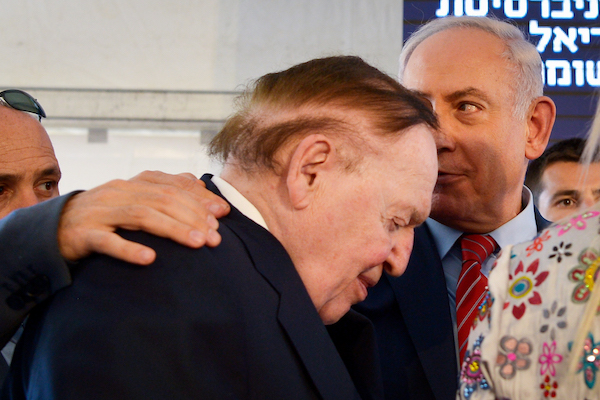

 “Russian missiles are a danger” – the alarm was sounded by the Secretary General of NATO, Jens Stoltenberg, in an interview with Maurizio Caprara published in the Corriere della Sera*, three days before the “incident” in the Sea of Azov which added fuel to the already incandescent tension with Russia. “There are no new missiles in Europe. But there are Russian missiles, yes”, began Stoltenberg, ignoring two facts.
 Aletho News
