President Ghani says Afghan government fulfilled all commitments for Taliban peace talks
Press TV – September 2, 2020
Afghanistan’s President Ashraf Ghani says the government has fulfilled all its commitments for peace negotiations with the Taliban.
“The government has fulfilled all its commitments in the peace process that the international community had hoped for,” the president said at a meeting with a team of government-backed negotiators at the presidential palace on Wednesday, his office reported.
On Monday, Kabul resumed the release of Taliban prisoners, a pre-condition to negotiations.
“The release of Taliban prisoners is a clear demonstration of the government’s commitment to peace.”
Afghanistan’s Loya Jirga, or grand assembly of elders, has already approved the release of 400 imprisoned Taliban militants, who had been involved in serious crimes in Afghanistan, for the sake of peace talks.
A senior government official, who asked not to be named, told AFP on Wednesday that at least 200 inmates have been freed since Monday and the process “will continue today too.”
In return, the Taliban have freed four Afghan commandos and are expected to release two more on Wednesday, according to a Taliban official.
Meanwhile, Ghani’s spokesman Sediq Sediqqi said in a posting on Twitter, “We expect the Taliban to live up to their commitments on the release of the remaining captives.”
The prisoner swap was agreed to in a deal between the Taliban and the United States. The agreement was signed in the Qatari capital, Doha, on February 29.
Under the deal, the Taliban agreed to halt their attacks on international forces in return for the US military’s phased withdrawal from Afghanistan and the prisoner exchange with the government in Kabul.
The Afghan government, which was not a signatory to the accord, was required to release up to 5,000 Taliban prisoners. The militants, for their part, were obliged to free 1,000 government captives.
Ghani said a “critical stage of peace” had been reached, noting that the talks would help reduce violence and finalize a permanent ceasefire.
Meanwhile, Kabul has dispatched a “small technical team” to Qatar to prepare for negotiations.
Najia Anwari, spokeswoman for the State Ministry for Peace Affairs, told AFP that the government’s negotiators will also leave for Doha “very soon.”
A Pakistani Olive Branch Extended In Efforts to End the Afghani Conflict
By Vladimir Odintsov – New Eastern Outlook – 30.08.2020
In the face of the obvious failure of US policy in Afghanistan, Pakistan has stepped up its efforts to peacefully resolve the Afghani conflict.
On August 24, at the invitation of Pakistani Foreign Ministry, a delegation of the Taliban (movement banned in the Russian Federation – ed.), headed by Mullah Abdul Ghani Baradar arrived from Doha, capital of Qatar, to meet both civilian and military representatives of Pakistan. Its purpose was to discuss the latest developments in the peace process in Afghanistan and further steps in this direction, improving the security situation for civilians in Afghanistan as well as trade between the two neighboring countries, as confirmed by Taliban spokesman Suhail Shaheen on his Twitter.
This meeting was already the third of its kind: previously the parties met in October 2019 at the Pakistani Foreign Ministry and in February this year in Doha. This third visit of the Taliban delegation, as intended by those behind it, should contribute to resolving the contradictions that have arisen in recent days on the eve of the intra-Afghan peace talks that did not start on August 20 and were postponed to a later date, and were part of the agreement signed in Doha in February between the Taliban and the United States. Pakistani Foreign Minister Shah Mahmood Qureshi emphasized in his statement that Islamabad invited the Taliban to emphasize the importance of negotiations, adding that negotiations are “the only way forward” in Afghanistan. “It is the Afghanis who need reconciliation, and our task is mediating,” he said. “The main goal is to ensure peace, and the next stage should be the beginning of an intra-Afghan dialogue.”
In a statement in connection with this meeting, the Pakistani Foreign Ministry highlighted Islamabad’s positive contribution to the peace and reconciliation process in Afghanistan, which culminated in the signing of a peace agreement between the US and the Taliban in Doha on February 29, 2020. Therefore, Pakistani officials are confident that Afghani stakeholders must seize this historic opportunity to secure a comprehensive political negotiated solution to the Afghani conflict. Islamabad called on the international community to step up its participation in the reconstruction and economic development of Afghanistan, by creating the necessary economic opportunities and conditions conducive to the return of Afghani refugees to their homeland.
Islamabad leaping to action in the peaceful resolution of the Afghani crisis is in part due to Washington’s unrelenting criticism of Pakistan for “insufficient efforts to counter Afghani anti-government forces,” which the US State Department has repeatedly noted in its reports. In particular, the United States emphasizes how Pakistan failed to prevent a number of attacks by militants from its territory against Afghanistan, and makes minimal efforts to suppress the activities of terrorist organizations. At the same time, it is especially clear Islamabad only conducted anti-terrorist operations against those militants who carried out attacks specifically on Pakistani territory. This critical position has been repeatedly voiced by the current Afghani authorities close to the United States, accusing Islamabad of supporting the Taliban and other militants operating in the weakly defended border, indicating, in particular, that Taliban leaders are based in cities along the Pakistani-Afghani border, including Quetta and Peshawar.
Washington’s latest accusations against Islamabad were voiced in the annual report on terrorism published by the US State Department on June 24. In it, in particular, it was noted that Pakistan is a haven for terrorists and terrorist groups operating in South Asia, such as the Haqqani Network, Lashkar-e-Tayyiba and aysh-e-Mohammad (all banned in the Russian Federation), and the government of Prime Minister Imran Khan and the Pakistani army have been accused of inaction. In addition, the State Department’s Trafficking in Persons Report indicated that religious minorities and children are frequent victims of the slave trade in Pakistan.
For these reasons and for alleged “insufficient support by the Pakistani authorities for the American strategy on South Asia” in 2018, the United States refused to provide financial assistance to Islamabad in the amount of $300 million. This has already caused Islamabad’s harsh discontent with such assessments of Washington’s actions by Pakistan, since the indicated amount was supposed to be not help, but compensation for funds already spent by this country on countering terrorism.
However, today everyone is already well aware that Washington’s criticism of Pakistan in recent years is primarily due to the desire of the current American authorities to shift the blame for the apparent failure of their policy in Afghanistan to a third party, including the deaths here of more than two thousand American soldiers as well as over 20 thousand injuries, hundreds of billions of dollars worthlessly spent on goals incomprehensible to the public, which was more than enough to have long ago made Afghanistan a flourishing state in many ways. An important factor in such attacks by the Donald Trump administration on the Pakistani authorities is also the establishment of closer bilateral relations between Pakistan and China, as a result of which the traditional ties between America and Pakistan have all but disintegrated.
Although it is still early to speak into the results of the third meeting of Pakistani representatives and the Taliban, it is nevertheless obvious that the negotiations that took place in the current situation were very necessary in hopes to settle the Afghani conflict. And once again it was Islamabad who extended the olive branch in an effort to achieve peace in Afghanistan.
US Forced to Flee Afghanistan, Iraq and Now Syria
By Valery Kulikov – New Eastern Outlook – 28.08.2020
Multiple missile strikes carried out in recent weeks on American military facilities and overseas bases in Afghanistan, Iraq, and Syria indicate that a growing number of people living in countries that have endured American military invasions have had enough of America’s intervention and are fed up with Washington’s policy.
The level of dissatisfaction among the Afghan people with the US military presence in Afghanistan has already received extensive coverage in the media, and US Secretary of State Mike Pompeo has even been forced to declare that the US will pull all of its troops out of Afghanistan by May 2021.
Outside Afghanistan, anti-American sentiment has long prevailed among people living in Syria and Iraq, which has not only been voiced through peaceful means, such as holding anti-American protests or appealing to the UN to demand the American troops be withdrawn.
Powerful explosions sparked a raging fire in the late hours of July 28 at the Majid al Tamimi Airbase in Iraq, where both Iraqi and American soldiers are stationed. This was the second strike to be carried out within the space of the same day. In an attack earlier that day, three rockets were launched on the territory of the US Camp Taji base located north of Baghdad.
On August 10, an explosion near the Iraqi border with Kuwait hit convoys supplying US-led coalition forces with military equipment. On the same day, another rocket attack struck near the US Embassy in Baghdad. The actual territory of the American Embassy was hit by missiles on July 5, and after another attack on the embassy on June 11, Washington was forced to negotiate reducing the US military presence in Iraq with Baghdad.
The Iraqi media notes that attacks on American military facilities are carried out on almost a weekly basis in Iraq, and although there are no casualties or people left injured in many of these attacks according to official data, the infrastructure of the military facilities has suffered material damage. At the same time, the threat of far more serious attacks being carried out in the near future has not been dismissed by the US.
According to the al-Hadath TV channel based in Dubai, Iraq and the United States came to an agreement on August 22 in response to the significant increase in the number of protests being held in Iraq against the US military presence in the country, agreeing to relocate American troops and equipment from Camp Taji north of Baghdad to Erbil — the capital of the Kurdistan Region in northern Iraq. Almost all the troops are now known to have been moved to the military base in Erbil, in what was the largest withdrawal of US troops from an American military base in the Middle East.
There are also more and more reports coming from Syria about missile attacks on US military bases, especially in the northeast of the country in the al-Hasakah and Deir ez-Zor governorates. The Syrian Al-Watan newspaper reported that one of these attacks targeted a US military base in the town of al-Shaddadah, the administrative center of the al-Hasakah governorate in northeastern Syria, which was hit by rockets in early August. In May, the Syrian Arab News Agency (SANA) reported that another armed attack was carried out on the US military using machine guns and grenades, in which at least eight people were injured.
In some articles, observers claim that the American facilities targeted in these attacks are being used as infrastructure to protect oil fields and for the illegal production of Syrian oil. For instance, one of these attacks carried out in mid-August targeted an American military base near the Conoco gas field (north of the Deir ez-Zor governorate), which is controlled by the US and Kurdish armed groups. As anti-American sentiment gains momentum, and with periodic attacks being carried out on American targets in Syria, the United States has already begun drafting a special combat unit in Syria to protect oil fields east of the Euphrates. According to local sources, this special unit includes ethnic Arabs drafted from the ranks of the militia fighters in the Washington-backed Syrian Democratic Forces (SDF), which is militarily led by the People’s Protection Units (YPG), a mainly Kurdish militia which forms the backbone of the SDF. However, local tribes are increasingly taking a stand against the presence of American armed forces and their SDF henchmen in Syria. According to Al-Masdar News, one of these clashes took place on August 17, when fighters from the Al-Baggara tribe reportedly drove SDF forces out of the village of Jadid Baggara in a rural part of Deir ez-Zor governorate in eastern Syria. It is indeed the eastern regions of Syria where numerous protests are being held against military occupation and new US sanctions, which are trying to put the Syrian government in a difficult position to prevent Damascus and its allies from working together to rebuild their vision of Syria.
Given these circumstances, US President Donald Trump has been repeating his intention to withdraw troops from Afghanistan, Iraq and Syria more and more frequently. Donald Trump made another remark about withdrawing US troops from Iraq at a press briefing on August 19 that was streamed on the White House Twitter account. In Trump’s opinion, the US army should never have gone into the Middle East, and he recalled that the United States is continuing to reduce the number of American troops stationed in Afghanistan.
It should not be forgotten that during a speech Donald Trump gave on June 13, addressed to graduates of the United States Military Academy (USMA) in West Point, New York, he said: “We are restoring the fundamental principles that the job of the American soldier is not to rebuild foreign nations […].” In Trump’s own words, there is now “a renewed, clear-eyed focus on defending America’s vital interests.”
However, on June 9, Donald Trump informed members of Congress from both the Senate and the House of Representatives that Washington will continue operations against DAESH, al-Qaeda, the Taliban and other related groups listed as terrorist organizations and based in Afghanistan, Iraq, Syria, Yemen, Jordan, Lebanon, Turkey, Somalia, Kenya, Djibouti and Niger.
Yet considering how people living in Afghanistan, Iraq and Syria have railed against the presence of US troops and military bases in their countries, one could expect to see similar acts of protest in the very near future in other countries around the world where more than 600 US military bases are hosted.
Democrats’ election platform demands end to ‘forever wars’ — most of which were launched last time Biden held office
By Helen Buyniski | RT | August 17, 2020
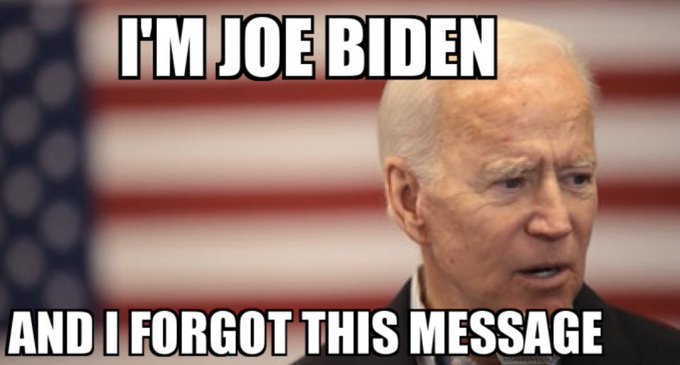
The Democratic Party’s 2020 electoral platform includes a call to end the US’ “forever wars” – which sounds great, except that a Democratic president started many of those wars and the party has stonewalled efforts to end them.
“Democrats know it’s time to bring nearly two decades of unceasing conflict to an end,” the platform, released in draft form on Monday and expected to be approved by Democratic leaders later this week, reads.
It’s a relatively uncontroversial statement in itself: at nearly 19 years and counting, the US war in Afghanistan is the longest conflict in American history. The various satellite wars that have sprung up as part of the “War on Terror” have devastated large swathes of the Middle East – and the US itself, which has spent upwards of $6 trillion on fighting them while much of the country slid into a permanent recession – over the past two decades.
However, the responsibility for many of those satellite conflicts lies with Democrat Barack Obama’s administration, which liberally bombed Syria, Libya, Pakistan, Yemen, and Somalia in addition to Afghanistan and Iraq, turning the already-disastrous two-front War on Terror of his predecessor George W. Bush into a regional quagmire. Democratic candidate Joe Biden was Obama’s vice president, cheering those wars on and defending his boss’ decisions. Now, the party wants Americans to believe only he can put an end to them.
The 2020 platform promises a “durable and inclusive political settlement in Afghanistan” along with an end to US support for the Saudi-led war in Yemen and a repeal of the threadbare 2001 Authorization for Use of Military Force (AUMF) that has been repeatedly (mis)used to excuse US interventions in the Middle East under the guise of fighting terrorism. All great ideas, but the party has been here before.
Despite receiving the Nobel Peace Prize shortly after his inauguration, Obama didn’t bring the peace he promised in his 2008 campaign – he just made war more palatable to the liberals who had previously protested against it. By dramatically expanding the US drone program and cloaking murderous airstrikes in the warm fuzzy rhetoric of spreading democracy and “responsibility to protect,” Obama, his Secretary of State Hillary Clinton, and the Democrats in his administration took the wars out of sight, and out of mind for the average American.
Even while taking credit for “ending” the war in Iraq, launched in 2003 on the fraudulent pretext that leader Saddam Hussein was amassing weapons of mass destruction and/or was somehow involved in the 9/11 terror attacks, Obama subsequently returned US troops to Iraq under the pretext of fighting the Islamic State terror group (IS, ISIS/ISIL). However, IS is widely considered an outgrowth of the US’ botched Iraq policy, which destabilized the region by flooding the country with many of the suddenly-unemployed (but still well-armed) remnants of Saddam Hussein’s military. At the same time, the CIA has a long history of supporting terror groups that dovetail with its political aims, from arming and training al-Qaeda’s predecessors to fight the Soviets in Afghanistan to arming and training so-called “moderate rebels” whose tactics are often indistinguishable from ISIL or al-Qaeda to take out the Syrian government. Terrorism has thrived amid the war “against” it.
That the Democrats should campaign in 2020 on ending forever wars suggests they might have learned something from 2016, when then-candidate Donald Trump pledged to do just that, luring disaffected liberals who couldn’t bring themselves to vote for notorious warmonger Hillary Clinton. Her flippant dismissal of the brutal murder of Libyan leader Muammar Gaddafi – “We came, we saw, he died!” – remains chilling years after she helped reduce the country with the highest standard of living on the African continent to a failed state where slaves are sold in open markets.
But while Trump has profoundly failed to keep his end-the-wars promise, instead increasing the number of drone strikes beyond Obama’s sky-high levels, even Trump’s minimal efforts to withdraw troops from Syria and Afghanistan have been ferociously opposed by the Democrats.
Indeed, the only foreign policy acts the self-styled #Resistance has praised from their political nemesis have been his bombings of Syria in response to extremely dubious reports of gas attacks by the Assad government. CNN’s Fareed Zakaria claimed the strike represented the day Trump “became president of the United States.”
The disingenuous call to end the military quagmires is far from the only lofty pledge embedded in the Democrats’ platform, which alternates between eye-rolling social-justice pandering and common-sense measures with broad appeal.
The party has also pledged to “end the Trump Administration’s politicization of the armed forces,” improve healthcare for veterans, “root out systemic racism from our military justice system,” and “prioritize more effective and less costly diplomatic, intelligence and law enforcement tools” over military invasions in conducting foreign policy.
It remains to be seen which, if any, of those promises they will keep.
Helen Buyniski is an American journalist and political commentator at RT. Follow her on Twitter @velocirapture23
US intelligence saying IRAN is paying bounties to kill Americans in Afghanistan is pure parody
By Scott Ritter | RT | August 18, 2020
It was Russia in June, now it’s Tehran. Don’t US analysts understand that Taliban fighters really don’t need any more motivation to target American troops? This is simply politicized (un)intelligence that isn’t fooling anyone.
According to CNN, the Iranian government has paid “bounties” to the Haqqani network, a terrorist group with close links to the Taliban, for six attacks on US and coalition forces in Afghanistan in 2019, including one on December 11 which targeted Bagram Air Base, north of Kabul, which wounded four US personnel.
This explosive allegation was contained in a Pentagon briefing document which was reviewed by CNN. While the bounties mentioned were attributed to an unnamed “foreign government,” CNN claims that sources “familiar with” the intelligence named the country as Iran. These bounties, and the attacks on US personnel they underwrote, played a role in the deliberations that led to the assassination of Major General Qassem Soleimani, the head of the Iranian Quds Force, by US forces in early January 2020, the network reported.
The CNN report comes on the heels of similar allegations regarding “bounties” paid by Russian military intelligence to the Taliban, likewise for the purpose of underwriting attacks on US and coalition personnel in Afghanistan. The Russian bounty story has since turned out to have been based upon uncorroborated raw intelligence deemed by senior US officials as being too poorly sourced to be actionable by the president or his senior advisers. The intelligence was leaked to the press regardless, in what appeared to be an effort to undermine President Trump’s ongoing efforts to forge a peace agreement with the Taliban and to embarrass him in the leadup to the 2020 presidential election.
At first blush, it appears that the CNN reporting is cut from the same cloth as was the Russian “bounty” story. First and foremost (as the CNN reports notes), the Haqqani network did not, and does not, need financial incentives from outside agencies to motivate it to carry out attacks against US and/or coalition targets. As such, even if payments were in fact sent from Iran to the Haqqani network, the likelihood that they were linked to the December 11 attack, or any other, is virtually nil.
The linkage attributed to the December 11 attack on Bagram Air Base and the decision by the US to assassinate Qassem Soleimani is likewise tenuous. In the days, weeks and months following the Soleimani assassination, the Trump administration was called to task by Congress and the media about its justification for the Soleimani strike. While a great deal of weight was given to a rocket attack on K-2 Air Base in Iraq on December 27 that killed a US civilian contractor, there was no mention at any time about any Iranian “bounty” scheme ongoing inside Afghanistan, despite the fact that a direct correlation between such a “bounty” and the need to kill Soleimani would have been a stronger argument in favor of the attack on the Iranian general.
US intelligence has claimed that Iran has been providing “modest” amounts of armaments to the Taliban on an ongoing basis since 2007, something both the Taliban and Iran deny. According to statements made by US intelligence spokespersons in November 2019, this assistance was beefed up in 2015 to assist the Taliban in confronting Islamic State (IS, formerly ISIS) inside Afghanistan. No mention was made of any “bounty” scheme, although Secretary of State Mike Pompeo did link the Iranian assistance to an attack on US forces in May 2019.
While there is evidence to suggest that Iran and the Taliban enjoyed some sort of a relationship dating back to 2007, this relationship seemed focused on supporting Taliban forces based out of western Afghanistan, along the border with Iran; there was no evidence that this relationship included the payment of “bounties” for targeting US personnel.
Moreover, there was no suggestion that at the time of the December 27, 2019 attack on Bagram Air Base, Iran was providing support to the Haqqani network, a Sunni terrorist organization with close links to Pakistani intelligence and which operates out of the Pakistani city of Quetta. Indeed, the first indication of an Iranian connection to the Haqqani network came in the aftermath of the signing of the US-Taliban peace agreement in February 2020, when fringe elements of the Taliban, including allies within the Haqqani network, broke away in order to continue the struggle against the US in Afghanistan.
Even this reporting is sketchy – the alleged Iranian-Taliban-Haqqani cooperation was in the “early stages of forming,” not indicative of the kind of maturity that would have had to exist to sustain any viable bounty scheme. Moreover, any cooperation that was still in its infancy in February 2020, could not have been the basis of an arrangement regarding an attack that took place in December 2019. Finally, an Iranian-Haqqani bounty scheme would fly in the face of the public commitment by the Haqqani network in support of the US-Taliban peace agreement. In short, the CNN report fails on matters of fact and logic.
The timing of the CNN report provides the greatest insight as to why such a poorly sourced and thinly argued claim would be made against Iran at this time, coming as it does on the heels of the US losing a major vote in the UN Security Council concerning the lifting of an arms embargo against Iran.
This embarrassing defeat, in which the US was only able to garner a single additional vote in support of its resolution, has set the stage for an even greater confrontation at the UN over so-called “snap-back” sanctions the US seeks to impose on Iran.
The Iran-Haqqani bounty allegation was leaked by persons in the US intelligence community who have no qualms about injecting manufactured and/or misleading intelligence into the American news cycle at a critically sensitive time, with less than 90 days remaining until the 2020 US presidential election. Instead of seeking to embarrass President Trump, this leak is designed to bolster the Trump administration’s argument that Iran is a threat worthy of sustaining a major confrontation at the Security Council which could threaten the legitimacy and viability of that organization.
In the end, the motives behind an intelligence leak are irrelevant. The US intelligence community, through its repeated use of well-timed leaks to influence policy by deceiving the American public about the truth, has shown itself to be a highly politicized institution that operates at the whim of nameless partisan operatives, and not in the best interests of the United States.
That it can still ask for and receive a budget in excess of $80 billion per year is a harsh indictment of just how decrepit the US system of government has become, where a blind eye continues to be turned when it comes to the blatant abuse of intelligence for purposes other than what it was intended for.
Scott Ritter is a former US Marine Corps intelligence officer and author of ‘SCORPION KING: America’s Suicidal Embrace of Nuclear Weapons from FDR to Trump.’ He served in the Soviet Union as an inspector implementing the INF Treaty, in General Schwarzkopf’s staff during the Gulf War, and from 1991-1998 as a UN weapons inspector. Follow him on Twitter @RealScottRitter
Afghanistan’s grand assembly approves freeing of 400 Taliban prisoners
Press TV – August 9, 2020
Afghanistan’s Loya Jirga, or grand assembly of elders, has approved the release of 400 imprisoned Taliban militants who had been involved in serious crimes in Afghanistan, removing the final obstacle to negotiations between the Afghan government and the militants.
After three days of deliberation, the elders approved the release of the 400 militant prisoners on Sunday.
Former president Hamid Karzai told the convention, “This is a very happy day. Based on the information I have, the intra-Afghan talks would begin within two to three days after the release of the 400 Taliban prisoners.”
Chief negotiator Abdullah Abdullah, who is the head of Afghanistan’s High Council for National Reconciliation (HCNR), said, “The decision of the Loya Jirga has removed the last excuse and obstacles on the way to peace talks. We are on the verge of peace talks.”
Kabul and the Afghan Taliban have been involved in a prisoner exchange for a couple of months. The prisoner swap was an Afghan government obligation under a deal between the United States and the Taliban that was struck in February. Kabul was excluded from the talks, and the obligation was imposed on it.
The exchange has been regarded as a first step toward broader talks between the government and the Taliban. The prospect of the talks was dimmed after Kabul refused to free hundreds of inmates involved in serious crimes. Last month, Afghan President Ashraf Ghani said he had “no authority” under the country’s constitution to release the remaining inmates because of their involvement in serious crimes. Ghani said the decision on the release of those militants had to be made by the Loya Jirga.
Under the deal with the Taliban, the US will start a phased withdrawal of its troops from Afghanistan. US Defense Secretary Mark Esper announced on Saturday that a sizable number of US troops would be pulled out of Afghanistan before the end of November.
The United States invaded Afghanistan and toppled a Taliban regime in 2001 under the pretext of fighting terrorism following the September 11 attacks.
Official data shows that bombings and other assaults by the Taliban have surged 70 percent since the militant group signed the deal with the United States.
Alleged war crimes by British Special Forces in Afghanistan set to have major repercussions
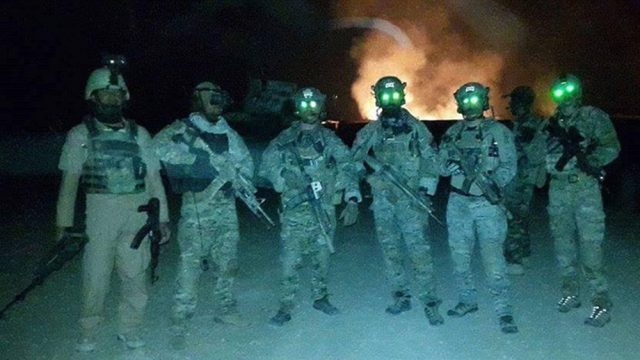
Members of the Special Air Service and its sister unit, the Special Boat Service, were active in Afghanistan during the British military presence in the war-torn country.
Press TV | August 2, 2020
New evidence has come to light that British Special Forces in Afghanistan routinely committed war crimes by shooting dead unarmed civilians.
The fresh material follows an investigation by BBC Panorama which focuses on the concerns of the Special Forces top brass that the units under their command were routinely killing unarmed men and women as part of their operations.
At their height, the operations, dubbed the “night raids”, occurred on a virtually nightly basis and were ostensibly targeted at senior echelons of the Taliban militant movement.
The new documents – held by the courts – were recently released to the solicitors Leigh Day as part of an active case at the High Court, which is set to rule on whether allegations of unlawful killing by British Special Forces were originally investigated properly.
The original complainant in the case is Afghan national, Saifullah Ghareb Yar, who claims four members of his family were “assassinated” by UK Special Forces in the early hours of February 16, 2011.
The case is of seminal importance especially in the light of the British government’s consistent refusal to properly investigate alleged war crimes committed by British troops – both regular and Special Forces – in Iraq and Afghanistan.
The situation has deteriorated to the point that the International Criminal Court (ICC) intervened back in November 2019 by stating its willingness to investigate the British military for the first time.
The ICC’s intervention has been widely interpreted as a major embarrassment to the British government and military alike.
Taliban Group Says Completed Release of 1,000 Afghan Prisoners Under Agreement With US
Sputnik – 31.07.2020
KABUL – The Taliban movement has completed the release of 1,000 Afghan prisoners as per the Doha deal agreed with Washington, Suhail Shaheen, a spokesman for the Taliban’s political office in Qatar, said on Friday.
“According to the Doha Agreement, in which the Islamic Emirate promised to release 1000 prisoners in exchange for 5,000 prisoners, this number was completed by us today,” Shaheen said.
Earlier in the day, the Taliban completed the process by releasing 82 prisoners in the Afghan provinces of Herat, Farah, Ghor, Nimroz, Zabul and Balkh, the spokesman added.
The Afghan government and the Taliban committed to releasing each other’s prisoners — 5,000 and 1,000, respectively — as part of a peace deal negotiated by the group and the United States in the Qatari capital of Doha on 29 February, with the outlook to launch intra-Afghan talks. Kabul has so far freed only 4,400 detainees, according to the Taliban.
Earlier this week, Shaheen said that the Taliban would release the remaining Afghan prisoners before the Muslim sacrifice festival of Eid al-Adha, which starts on Friday, as a goodwill gesture. The movement expects the peace talks with the Afghan government to start in August following the release of the prisoners.
Taliban say will free Afghan government inmates before Eid al-Adha
Press TV – July 30, 2020
The Taliban militant group says it will release the remaining Afghan government prisoners before Eid al-Adha (the Feast of Sacrifice) as a “goodwill gesture.”
Suhail Shaheen, a spokesman for the Taliban’s office in Qatar, said in a statement on Twitter on Thursday that the militant group had decided to release the 1,000 prisoners before Eid al-Adha, which marks the culmination of the annual Hajj pilgrimage.
Shaheen called on the Afghan government to complete the release of the 5,000 Taliban prisoners that has been underway in a gradual format as part of a prisoner swap between the two sides.
Afghan President Ashraf Ghani said on Tuesday that his government would soon complete the release of the 5,000 Taliban prisoners in order to demonstrate its commitment to peace.
He also said negotiations between the Afghan government and the Taliban militant group were expected to begin “in a week’s time,” following the completion of the prisoner exchange.
The prisoner swap has been an Afghan government obligation under a deal between the United States and the Taliban that was struck in February. The Afghan government, which was not a signatory to the accord, was required to release up to 5,000 Taliban prisoners. The militants, for their part, were obliged to free 1,000 government captives.
The exchange has been regarded as a first step toward broader talks between the government and the militants. Its implementation had faced hurdles since the deal was signed.
The deal envisages a complete withdrawal of US forces from Afghanistan, and the Taliban pledged not to attack American and other foreign forces. They made no such pledge in relation to the Afghan government and people.
The Taliban on Tuesday declared a three-day ceasefire for the Muslim holiday of Eid al-Adha, starting Friday. Kabul welcomed the announcement with a note of caution.
The truce announcement has been welcomed by the public and officials in Afghanistan and they have called for a lasting ceasefire in the war-ravaged country.
The militants declared a similar three-day ceasefire at the end of the holy fasting month of Ramadan in May. That truce prompted widespread relief across Afghanistan, but it was short-lived, with the militants resuming deadly attacks straight afterwards.
Official data shows that bombings and other assaults by the Taliban have surged 70 percent since the militant group signed the deal with the United States.
War Crimes and War Criminals: Who Will Be Held Accountable?
By Philip Giraldi | Strategic Culture Foundation | July 23, 2020
There is something unique about how the United States manipulates the “terrorism” label to avoid being accused of carrying out war crimes. When an indigenous militia or an armed insurgency like the Taliban in a country like Iraq or Afghanistan attacks American soldiers subsequent to a U.S. invasion which overthrew the country’s government, it is considered by Washington to be an act of “terrorism.” Terror attacks de facto permit a carte blanche response, allowing virtually anything as retaliation against the parties involved or countries that support them, including the assassination of foreign government officials. But for the attacker, whose perspective is quite different, the incident often could reasonably be described as legitimate resistance to a foreign occupier and much of the world might agree with that assessment.
So, it all comes down to definitions. The United States covers its version of reality through liberal use of the Authorization for Use of Military Force (AUMF) which more-or-less gives a blanket approval to attack and kill “terrorists” anywhere at any time. And how does one become a terrorist? By being included on the U.S. government’s heavily politicized annual list of terrorist groups and material supporters of terrorism. That was the argument that was used by the United States when it killed Iranian General Qassem Soleimani in January, that his organization, the Qods Force, was on the “terrorist” lists maintained by State and the Treasury Department and he was therefore held to be guilty of any and all attacks on U.S. military carried out by Qods or by presumed Iranian surrogate militias.
The case made to justify killing Soleimani was considered deeply flawed at the time it took place. Because the United States says something is legal due to a law Congress has passed does not make it so, just as most of the world would consider the U.S. profile killings by drone in Afghanistan and elsewhere, based on nothing more than the assumption that someone on the ground might be a “terrorist,” to be little more than war crimes.
It has recently been revealed that the Trump Administration has issued a so-called “finding” to authorize the CIA to conduct more aggressive cyberattacks against infrastructure and other targets in countries that are considered to be unfriendly. The finding specifically named Iran, North Korea, China and Russia as approved targets and it is of particular interest because it basically left it up to the Agency to decide whom to attack and to what degree. As Washington is not at war with any of the countries named and is essentially seeking to damage their economies directly, the activity undertaken by CIA has constituted acts of war and, by widely accepted legal definition, attacks on countries that are not actually threatening are war crimes.
To counter the negative publicity about Trump Administration actions and to establish a possible casus belli, Washington has been floating numerous stories alleging Iranian, Russian and Chinese “aggression.” The ridiculous story about Russia paying Afghans bounties to kill American soldiers was quickly debunked, so the White House and the captive media are now alleging that Moscow hacker/spies are seeking to steal proprietary information dealing with the development of a coronavirus vaccine. The agitprop coming out of Washington to blame Russia for nearly everything notwithstanding, opinion polls suggest that most of the world considers Washington to be the primary source of global instability, rejecting the assertion by Secretary of State Mike Pompeo that the U.S. is a “force for good.”
So, it is reasonable to suggest that the United States has been guilty of many war crimes in the past twenty years and has only been shielded from the consequences due to its ability to control the message combined with its power in international fora and its unwillingness to cooperate with the International Criminal Court (ICC) in the Hague.
But the willingness of the international community to look the other way in support of the war crimes double standard appears to be changing. The ICC, which has had its investigators denied entry to the United States, has been investigating Israeli war crimes even as it also looks at developments in Afghanistan and Iraq involving U.S. forces. Trump’s ban on entry by ICC personnel includes their families even if they are American citizens and it also protects Israel in that ICC investigators looking into the possible war crimes committed by Israeli soldiers and officers as well as the relevant Jewish state’s government officials will also be sanctioned and denied entry into the U.S. In practical terms, the Trump Administration is declaring that Israeli and U.S. soldiers will be regarded as one and the same as they relate to dealings with the ICC, a conceit that is little known to the American public.
The Israelis have responded to the threat from the ICC by compiling a secret list of government officials and military officers who might be subject to ICC issued arrest warrants if they travel in Europe for war crimes committed in Lebanon and Syria as well as of crimes against humanity directed against Palestinians. The list reportedly includes between 200 and 300 names.
That Israel is making a list of people who might be vulnerable to accusations of having possibly committed war crimes is a de facto admission by the government that such crimes were in fact committed. The ICC will soon decide whether to move on the December request by ICC Prosecutor Fatou Bensouda to investigate both Israel and Hamas over suspicions of war crimes in Gaza and Jerusalem as well as on the occupied West Bank beginning in 2014. The investigation would include “crimes allegedly committed in relation to the use by members of the IDF of non-lethal and lethal means against persons participating in demonstrations beginning in March 2018 near the border fence between the Gaza Strip and Israel, which reportedly resulted in the killing of over 200 individuals, including over 40 children, and the wounding of thousands of others.”
Given the time frame, Israeli government officials and military officers would likely be the first to face scrutiny by investigators. According to Haaretz, the list would almost certainly include “Prime Minister Benjamin Netanyahu; former defense ministers Moshe Ya’alon, Avigdor Lieberman and Naftali Bennett; former Israel Defense Forces chiefs of staff Benny Gantz and Gadi Eisenkot, and current Chief of Staff Aviv Kochavi; and the former and current heads of the Shin Bet security service, Yoram Cohen and Nadav Argaman, respectively.”
One wonders who would be included on a comparable list for the United States. There are a lot of lying politicians and sly generals to choose from. As both Israel and the United States do not recognize the authority of the ICC and will almost certainly refuse to participate in any fashion if the charges of war crimes and crimes against humanity ever actually make it to the court, any discussion of lists are at this point merely travel advisories for war criminals. The United States will push back and will inter alia certainly attempt to discredit the court using whatever weapons are available, to include sanctions against the nations that support any investigation and trial.
One nevertheless has to hope that the court will persevere in its effort to expose the crimes that continue to be committed by the U.S. and Israel in both Palestine and Afghanistan. Embarrassing Washington and Jerusalem in a very visible and highly respected international forum might be the only way to change the direction of the two nations that more than any other insist that “might makes right.”
The US Government Is Stealing A Significant Part Of Its Own Aid To Afghanistan
By Grigory Trofimchuk | One World | July 6, 2020
Despite the statements of the US President D. Trump on the need for an early withdrawal of the US military from Afghanistan, the interest of the Pentagon, the CIA, and the industrial complex in maintaining a military presence in this country is obvious. We are talking about the use of American financial aid flows to Afghanistan for selfish purposes.
For almost two decades of the Afghan campaign and the presence of the NATO and US contingent, Washington formally allocated large-scale funds not only for security assistance, but also for the civil reconstruction and development of this country.
Since 2001, approximately $130 billion was sent to Afghanistan. However, not all the money reached the country in need.
A significant part of the “aid” remained in the United States in the form of kickbacks, as evidenced, in particular, by the numerous reports of the US Inspector General for the Reconstruction of Afghanistan, J.Sopko. This is also confirmed by an article about US corruption in Afghanistan on the Turkish “Aydinlik”.
As a result, corruption schemes for appropriating funds allocated to Afghanistan by the Americans themselves only worsened the already difficult economic situation in the country, which is trying to recover from military and political turmoil.
The question arises as to how those involved in the contract manage to retain a significant share of all tranches. The fact is that for the distribution of financial assistance to Afghanistan, there is a multi-level system of contracts, with the participation of American contractors and subcontractors.
To assign financial aid to Afghanistan, first of all, USAID is used, through which corrupt officials take about 50% of financial flows. For example, in the case of the program for the advancement of women in Badakhshan and Khost provinces, the share of appropriated funds reached 90-95%.
As a standard scheme, USAID transfers funds for the project to an Afghan agency that justifies its deliberately inflated cost to the local Ministry of Finance. After the contract is cashed out, half of this amount is given to USAID-related individuals. Grants from the World Bank and the International Monetary Fund are probably used in the same way, but in smaller amounts due to the greater number of witnesses in international organizations.
The very scale of American financial assistance, the feasibility of which is ambiguously assessed within the United States, also raises questions. In a report to the US Congress in February 2020, the above-mentioned J.Sopko noted that the amount of aid allocated significantly exceeds the capabilities of the Afghan economy.
According to the Inspector General, the amount of funds should be from 15 to 45% of the country’s GDP, while in 2007 and 2010, US grants to Afghanistan amounted to more than 100% of Afghanistan’s GDP. Obviously, such spending is not effective, but creates opportunities for plunder. At the same time, attempts by American politicians to reduce spending on Afghanistan are met with resistance from the military, who are interested in maintaining a significant source of income, as well as contractors involved in this area.
On March 23, 2020, U.S. Secretary of State Mike Pompeo announced a $1 billion reduction in aid to Kabul due to the inability of two presidential contenders (A. Ghani and A. Abdul) to agree on power-sharing over highly questionable election dates. However, there is no confirmation that Washington is fulfilling the promises of the head of the Department of State. Recently, Democrat Senators even asked US Secretary of Defense M. Esper to report on cost reduction.
However, the report was not provided. Apparently, the Pentagon leaves this issue open, and the military clearly does not want to cut aid by reducing its articles.
The American defense industry has a special interest in the funds allocated to Afghanistan. Purchases and deliveries of goods to US and NATO contingents, as well as to Afghan security forces, are often carried out without regard to economic expediency and at inflated prices that are favorable to American manufacturers.
So, instead of building a factory in Afghanistan that would produce cartridges for M-4 and M-16 rifles at 12 cents apiece, Washington continues to buy cartridges from its suppliers for the needs of the Afghan security forces at the price of 57 cents apiece. In addition, the US military refused Russian kerosene at 94 cents per litre, buying it in Greece at $1.4 per litre. In order to maintain control, the United States provides financial assistance to the Afghan security forces through its own fund, not international structures.
American contractors on civil projects use the same principle with overstating the real cost of goods and services, including those supplied through USAID. For example, recently, not without their participation, the Ministry of Health of Afghanistan sold about 10,000 tests for coronavirus at a price of $48 each when their real cost is no more than $5.
The most “tasty” contracts are the supply of oil products and the supply of the Afghan army and the NATO contingent with weapons, military equipment and uniforms, which are lobbied by American congressmen whose wives get good positions on the boards of directors of the respective companies. At the same time, the real recipients of kickbacks are engaged in dirty work and are not “advertised”.
It is not surprising that American aid to Afghanistan, despite its astronomical size (the amount of aid exceeded the funds allocated under the Marshall Plan for the reconstruction of post-war Europe), only allows the American military and contractors involved in its distribution to enrich themselves, while in Afghanistan the result of such assistance is not felt and its effectiveness, in general, is almost zero.
Recently, the media reported on the attempt of the top leadership of Afghanistan to redirect the flow of foreign financial assistance to themselves.
In April 2020, President Ghani bypassed the Parliament and announced the reform of the Ministry of Finance and the re-subordination of a number of its departments responsible for budget issues, state duties, and customs duties to the presidential administration.
However, the Department of State criticized Ghani’s decision as “corrupt”. It is noteworthy that immediately after such comments, the Afghan President withdrew his initiative. The political dependence of Kabul on Washington plays into the hands of US corruption schemes. The Americans clearly do not want to lose control over external financial flows to Afghanistan and do not allow even their wards to distribute them.
Featured Video
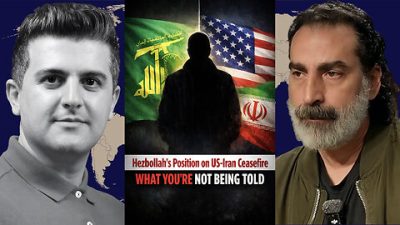
Laith Marouf: Hezbollah’s position on US-Iran ceasefire
or go to
Aletho News Archives – Video-Images
From the Archives
The Dirty Little Secret behind the “Global Terrorism Index”
The Omission of Israeli Terrorism in the Occupied Palestinian Territories
By Karin Brothers | Global Research | December 6, 2014
… The Israeli settlements — all of which are illegal – have been identified as a major impediment to peace. The refusal of a major “global” terrorism report to name the Israeli settlers as one of the groups most responsible for terrorism not only misrepresents a major source of regional violence but exposes the Global Terrorism Index as a propaganda tool that supports a U.S. agenda.
In recent years, governments have been attempting to thwart terrorism by blocking supportive fund-raising. When it comes to Israeli settlements, however, the US and Canada actually encourage fund-raising by giving organizations (such as Christian Friends of Israeli Communities (CFOIC) and the Jewish National Fund) financial support in the form of donor tax-deductions.
Charities which provide funds for the Israeli settlements should be regarded as terror-financing organizations. They should not only lose their tax-deductible status, but they should be banned because they support the violation of international humanitarian law. The terror-financing laws that are being strictly enforced for Muslim charities should be applied to Christian and Jewish charities as well. … Read full article
Blog Roll
 Aletho News
- The ‘Opposition Party’ Has Done Nothing to Stop the Iran War and Much to Goad Trump Into Continuing It
- Moscow backs Tehran on status of Lebanon in US-Iran deal
- How UK Regulator Ofcom Quietly Bypassed International Law to Police American Speech
- The Black Cube Files: How Former Mossad Operatives Flipped a Nation
- Laith Marouf: Hezbollah’s position on US-Iran ceasefire: What you’re not being told
- Israel’s priority lies in destroying chances of peace between Iran, US: Ex-UN nuclear chief
- Ceasefire for all or for none: Iran shuts Hormuz over Lebanon attacks
- Strait of Hormuz is Iran’s ‘nuclear weapon’ that forced US retreat: Medvedev
- Energy crisis will last for months – Kremlin envoy
- Europe’s quiet role in the war on Iran
- If Americans Knew
- This is ceasefire? Israel’s biggest massacre yet in Lebanon, another journalist killed in Gaza – Daily Update
- Tucker Carlson on Israel: This Is the Behavior of an Ally? Really?
- Gazans face a triple crisis: severe shortages of water and bread, healthcare in tatters
- NY Times reports how Netanyahu took the US into Iran War
- A sigh of relief over Iran, but Gaza and Lebanon in dire straits – Daily Update
- Thousands dead and neighborhoods razed to the ground: Aid agencies fear southern Lebanon is becoming the new Gaza
- The war the US is fighting for Israel could cost trillions
- ‘Cigarette Burns, Nail Wounds’: Toddler Tortured in Gaza to Coerce Father
- Trump Says US Sent ‘a Lot of Guns’ to Protesters in Iran
- Israeli forces destroy 17 UN peacekeeper cameras in south Lebanon
- No Tricks Zone
- An Inconvenient Tree: Uncovered In Alps… Europe Much Warmer Than Today 6000 Years Ago
- New Study Reports A 60% Slowdown In Greenland’s Ice Loss Rate In The Last Decade
- Low Intensity Tornado Wrecks Major Solar Farm, Creating A Potential Toxic Dump
- New Study Finds Warming Saves Lives…Cold Temperatures 12 Times More Deadly Than Excess Heat
- German Science Blog Accuses PIK Climate Institute Of Hallucinating Climate Tipping Points
- Devastating Assessment Of Comirnaty Vaccine By Former Senior Pfizer Europe Toxicologist
- New Study: CO2 Is ‘Effectively Negligible’ As An Explanatory Climate Change Factor Since 2000
- Former Pfizer Toxicologist Dr. Helmut Sterz Tells Bundestag Hearing Pfizer Vaccine Should Have Never Been Approved
- Energy Expert: Germany’s Nuclear Phaseout Was A “500 Billion Euro Mistake”
- New Research: South Australia’s Mid-Holocene Sea Surface Temperatures Were 4°C Warmer Than Today
 Aletho News