US intelligence saying IRAN is paying bounties to kill Americans in Afghanistan is pure parody
By Scott Ritter | RT | August 18, 2020
It was Russia in June, now it’s Tehran. Don’t US analysts understand that Taliban fighters really don’t need any more motivation to target American troops? This is simply politicized (un)intelligence that isn’t fooling anyone.
According to CNN, the Iranian government has paid “bounties” to the Haqqani network, a terrorist group with close links to the Taliban, for six attacks on US and coalition forces in Afghanistan in 2019, including one on December 11 which targeted Bagram Air Base, north of Kabul, which wounded four US personnel.
This explosive allegation was contained in a Pentagon briefing document which was reviewed by CNN. While the bounties mentioned were attributed to an unnamed “foreign government,” CNN claims that sources “familiar with” the intelligence named the country as Iran. These bounties, and the attacks on US personnel they underwrote, played a role in the deliberations that led to the assassination of Major General Qassem Soleimani, the head of the Iranian Quds Force, by US forces in early January 2020, the network reported.
The CNN report comes on the heels of similar allegations regarding “bounties” paid by Russian military intelligence to the Taliban, likewise for the purpose of underwriting attacks on US and coalition personnel in Afghanistan. The Russian bounty story has since turned out to have been based upon uncorroborated raw intelligence deemed by senior US officials as being too poorly sourced to be actionable by the president or his senior advisers. The intelligence was leaked to the press regardless, in what appeared to be an effort to undermine President Trump’s ongoing efforts to forge a peace agreement with the Taliban and to embarrass him in the leadup to the 2020 presidential election.
At first blush, it appears that the CNN reporting is cut from the same cloth as was the Russian “bounty” story. First and foremost (as the CNN reports notes), the Haqqani network did not, and does not, need financial incentives from outside agencies to motivate it to carry out attacks against US and/or coalition targets. As such, even if payments were in fact sent from Iran to the Haqqani network, the likelihood that they were linked to the December 11 attack, or any other, is virtually nil.
The linkage attributed to the December 11 attack on Bagram Air Base and the decision by the US to assassinate Qassem Soleimani is likewise tenuous. In the days, weeks and months following the Soleimani assassination, the Trump administration was called to task by Congress and the media about its justification for the Soleimani strike. While a great deal of weight was given to a rocket attack on K-2 Air Base in Iraq on December 27 that killed a US civilian contractor, there was no mention at any time about any Iranian “bounty” scheme ongoing inside Afghanistan, despite the fact that a direct correlation between such a “bounty” and the need to kill Soleimani would have been a stronger argument in favor of the attack on the Iranian general.
US intelligence has claimed that Iran has been providing “modest” amounts of armaments to the Taliban on an ongoing basis since 2007, something both the Taliban and Iran deny. According to statements made by US intelligence spokespersons in November 2019, this assistance was beefed up in 2015 to assist the Taliban in confronting Islamic State (IS, formerly ISIS) inside Afghanistan. No mention was made of any “bounty” scheme, although Secretary of State Mike Pompeo did link the Iranian assistance to an attack on US forces in May 2019.
While there is evidence to suggest that Iran and the Taliban enjoyed some sort of a relationship dating back to 2007, this relationship seemed focused on supporting Taliban forces based out of western Afghanistan, along the border with Iran; there was no evidence that this relationship included the payment of “bounties” for targeting US personnel.
Moreover, there was no suggestion that at the time of the December 27, 2019 attack on Bagram Air Base, Iran was providing support to the Haqqani network, a Sunni terrorist organization with close links to Pakistani intelligence and which operates out of the Pakistani city of Quetta. Indeed, the first indication of an Iranian connection to the Haqqani network came in the aftermath of the signing of the US-Taliban peace agreement in February 2020, when fringe elements of the Taliban, including allies within the Haqqani network, broke away in order to continue the struggle against the US in Afghanistan.
Even this reporting is sketchy – the alleged Iranian-Taliban-Haqqani cooperation was in the “early stages of forming,” not indicative of the kind of maturity that would have had to exist to sustain any viable bounty scheme. Moreover, any cooperation that was still in its infancy in February 2020, could not have been the basis of an arrangement regarding an attack that took place in December 2019. Finally, an Iranian-Haqqani bounty scheme would fly in the face of the public commitment by the Haqqani network in support of the US-Taliban peace agreement. In short, the CNN report fails on matters of fact and logic.
The timing of the CNN report provides the greatest insight as to why such a poorly sourced and thinly argued claim would be made against Iran at this time, coming as it does on the heels of the US losing a major vote in the UN Security Council concerning the lifting of an arms embargo against Iran.
This embarrassing defeat, in which the US was only able to garner a single additional vote in support of its resolution, has set the stage for an even greater confrontation at the UN over so-called “snap-back” sanctions the US seeks to impose on Iran.
The Iran-Haqqani bounty allegation was leaked by persons in the US intelligence community who have no qualms about injecting manufactured and/or misleading intelligence into the American news cycle at a critically sensitive time, with less than 90 days remaining until the 2020 US presidential election. Instead of seeking to embarrass President Trump, this leak is designed to bolster the Trump administration’s argument that Iran is a threat worthy of sustaining a major confrontation at the Security Council which could threaten the legitimacy and viability of that organization.
In the end, the motives behind an intelligence leak are irrelevant. The US intelligence community, through its repeated use of well-timed leaks to influence policy by deceiving the American public about the truth, has shown itself to be a highly politicized institution that operates at the whim of nameless partisan operatives, and not in the best interests of the United States.
That it can still ask for and receive a budget in excess of $80 billion per year is a harsh indictment of just how decrepit the US system of government has become, where a blind eye continues to be turned when it comes to the blatant abuse of intelligence for purposes other than what it was intended for.
Scott Ritter is a former US Marine Corps intelligence officer and author of ‘SCORPION KING: America’s Suicidal Embrace of Nuclear Weapons from FDR to Trump.’ He served in the Soviet Union as an inspector implementing the INF Treaty, in General Schwarzkopf’s staff during the Gulf War, and from 1991-1998 as a UN weapons inspector. Follow him on Twitter @RealScottRitter
Afghanistan’s grand assembly approves freeing of 400 Taliban prisoners
Press TV – August 9, 2020
Afghanistan’s Loya Jirga, or grand assembly of elders, has approved the release of 400 imprisoned Taliban militants who had been involved in serious crimes in Afghanistan, removing the final obstacle to negotiations between the Afghan government and the militants.
After three days of deliberation, the elders approved the release of the 400 militant prisoners on Sunday.
Former president Hamid Karzai told the convention, “This is a very happy day. Based on the information I have, the intra-Afghan talks would begin within two to three days after the release of the 400 Taliban prisoners.”
Chief negotiator Abdullah Abdullah, who is the head of Afghanistan’s High Council for National Reconciliation (HCNR), said, “The decision of the Loya Jirga has removed the last excuse and obstacles on the way to peace talks. We are on the verge of peace talks.”
Kabul and the Afghan Taliban have been involved in a prisoner exchange for a couple of months. The prisoner swap was an Afghan government obligation under a deal between the United States and the Taliban that was struck in February. Kabul was excluded from the talks, and the obligation was imposed on it.
The exchange has been regarded as a first step toward broader talks between the government and the Taliban. The prospect of the talks was dimmed after Kabul refused to free hundreds of inmates involved in serious crimes. Last month, Afghan President Ashraf Ghani said he had “no authority” under the country’s constitution to release the remaining inmates because of their involvement in serious crimes. Ghani said the decision on the release of those militants had to be made by the Loya Jirga.
Under the deal with the Taliban, the US will start a phased withdrawal of its troops from Afghanistan. US Defense Secretary Mark Esper announced on Saturday that a sizable number of US troops would be pulled out of Afghanistan before the end of November.
The United States invaded Afghanistan and toppled a Taliban regime in 2001 under the pretext of fighting terrorism following the September 11 attacks.
Official data shows that bombings and other assaults by the Taliban have surged 70 percent since the militant group signed the deal with the United States.
Alleged war crimes by British Special Forces in Afghanistan set to have major repercussions
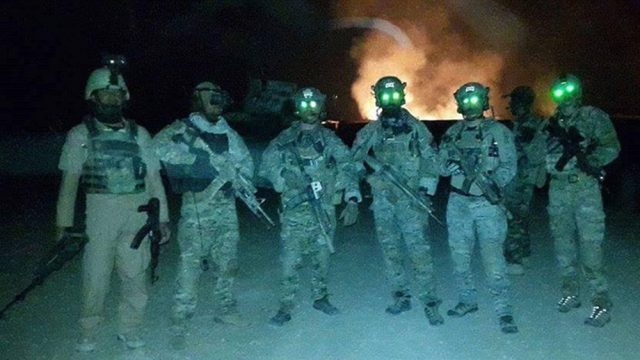
Members of the Special Air Service and its sister unit, the Special Boat Service, were active in Afghanistan during the British military presence in the war-torn country.
Press TV | August 2, 2020
New evidence has come to light that British Special Forces in Afghanistan routinely committed war crimes by shooting dead unarmed civilians.
The fresh material follows an investigation by BBC Panorama which focuses on the concerns of the Special Forces top brass that the units under their command were routinely killing unarmed men and women as part of their operations.
At their height, the operations, dubbed the “night raids”, occurred on a virtually nightly basis and were ostensibly targeted at senior echelons of the Taliban militant movement.
The new documents – held by the courts – were recently released to the solicitors Leigh Day as part of an active case at the High Court, which is set to rule on whether allegations of unlawful killing by British Special Forces were originally investigated properly.
The original complainant in the case is Afghan national, Saifullah Ghareb Yar, who claims four members of his family were “assassinated” by UK Special Forces in the early hours of February 16, 2011.
The case is of seminal importance especially in the light of the British government’s consistent refusal to properly investigate alleged war crimes committed by British troops – both regular and Special Forces – in Iraq and Afghanistan.
The situation has deteriorated to the point that the International Criminal Court (ICC) intervened back in November 2019 by stating its willingness to investigate the British military for the first time.
The ICC’s intervention has been widely interpreted as a major embarrassment to the British government and military alike.
Taliban Group Says Completed Release of 1,000 Afghan Prisoners Under Agreement With US
Sputnik – 31.07.2020
KABUL – The Taliban movement has completed the release of 1,000 Afghan prisoners as per the Doha deal agreed with Washington, Suhail Shaheen, a spokesman for the Taliban’s political office in Qatar, said on Friday.
“According to the Doha Agreement, in which the Islamic Emirate promised to release 1000 prisoners in exchange for 5,000 prisoners, this number was completed by us today,” Shaheen said.
Earlier in the day, the Taliban completed the process by releasing 82 prisoners in the Afghan provinces of Herat, Farah, Ghor, Nimroz, Zabul and Balkh, the spokesman added.
The Afghan government and the Taliban committed to releasing each other’s prisoners — 5,000 and 1,000, respectively — as part of a peace deal negotiated by the group and the United States in the Qatari capital of Doha on 29 February, with the outlook to launch intra-Afghan talks. Kabul has so far freed only 4,400 detainees, according to the Taliban.
Earlier this week, Shaheen said that the Taliban would release the remaining Afghan prisoners before the Muslim sacrifice festival of Eid al-Adha, which starts on Friday, as a goodwill gesture. The movement expects the peace talks with the Afghan government to start in August following the release of the prisoners.
Taliban say will free Afghan government inmates before Eid al-Adha
Press TV – July 30, 2020
The Taliban militant group says it will release the remaining Afghan government prisoners before Eid al-Adha (the Feast of Sacrifice) as a “goodwill gesture.”
Suhail Shaheen, a spokesman for the Taliban’s office in Qatar, said in a statement on Twitter on Thursday that the militant group had decided to release the 1,000 prisoners before Eid al-Adha, which marks the culmination of the annual Hajj pilgrimage.
Shaheen called on the Afghan government to complete the release of the 5,000 Taliban prisoners that has been underway in a gradual format as part of a prisoner swap between the two sides.
Afghan President Ashraf Ghani said on Tuesday that his government would soon complete the release of the 5,000 Taliban prisoners in order to demonstrate its commitment to peace.
He also said negotiations between the Afghan government and the Taliban militant group were expected to begin “in a week’s time,” following the completion of the prisoner exchange.
The prisoner swap has been an Afghan government obligation under a deal between the United States and the Taliban that was struck in February. The Afghan government, which was not a signatory to the accord, was required to release up to 5,000 Taliban prisoners. The militants, for their part, were obliged to free 1,000 government captives.
The exchange has been regarded as a first step toward broader talks between the government and the militants. Its implementation had faced hurdles since the deal was signed.
The deal envisages a complete withdrawal of US forces from Afghanistan, and the Taliban pledged not to attack American and other foreign forces. They made no such pledge in relation to the Afghan government and people.
The Taliban on Tuesday declared a three-day ceasefire for the Muslim holiday of Eid al-Adha, starting Friday. Kabul welcomed the announcement with a note of caution.
The truce announcement has been welcomed by the public and officials in Afghanistan and they have called for a lasting ceasefire in the war-ravaged country.
The militants declared a similar three-day ceasefire at the end of the holy fasting month of Ramadan in May. That truce prompted widespread relief across Afghanistan, but it was short-lived, with the militants resuming deadly attacks straight afterwards.
Official data shows that bombings and other assaults by the Taliban have surged 70 percent since the militant group signed the deal with the United States.
War Crimes and War Criminals: Who Will Be Held Accountable?
By Philip Giraldi | Strategic Culture Foundation | July 23, 2020
There is something unique about how the United States manipulates the “terrorism” label to avoid being accused of carrying out war crimes. When an indigenous militia or an armed insurgency like the Taliban in a country like Iraq or Afghanistan attacks American soldiers subsequent to a U.S. invasion which overthrew the country’s government, it is considered by Washington to be an act of “terrorism.” Terror attacks de facto permit a carte blanche response, allowing virtually anything as retaliation against the parties involved or countries that support them, including the assassination of foreign government officials. But for the attacker, whose perspective is quite different, the incident often could reasonably be described as legitimate resistance to a foreign occupier and much of the world might agree with that assessment.
So, it all comes down to definitions. The United States covers its version of reality through liberal use of the Authorization for Use of Military Force (AUMF) which more-or-less gives a blanket approval to attack and kill “terrorists” anywhere at any time. And how does one become a terrorist? By being included on the U.S. government’s heavily politicized annual list of terrorist groups and material supporters of terrorism. That was the argument that was used by the United States when it killed Iranian General Qassem Soleimani in January, that his organization, the Qods Force, was on the “terrorist” lists maintained by State and the Treasury Department and he was therefore held to be guilty of any and all attacks on U.S. military carried out by Qods or by presumed Iranian surrogate militias.
The case made to justify killing Soleimani was considered deeply flawed at the time it took place. Because the United States says something is legal due to a law Congress has passed does not make it so, just as most of the world would consider the U.S. profile killings by drone in Afghanistan and elsewhere, based on nothing more than the assumption that someone on the ground might be a “terrorist,” to be little more than war crimes.
It has recently been revealed that the Trump Administration has issued a so-called “finding” to authorize the CIA to conduct more aggressive cyberattacks against infrastructure and other targets in countries that are considered to be unfriendly. The finding specifically named Iran, North Korea, China and Russia as approved targets and it is of particular interest because it basically left it up to the Agency to decide whom to attack and to what degree. As Washington is not at war with any of the countries named and is essentially seeking to damage their economies directly, the activity undertaken by CIA has constituted acts of war and, by widely accepted legal definition, attacks on countries that are not actually threatening are war crimes.
To counter the negative publicity about Trump Administration actions and to establish a possible casus belli, Washington has been floating numerous stories alleging Iranian, Russian and Chinese “aggression.” The ridiculous story about Russia paying Afghans bounties to kill American soldiers was quickly debunked, so the White House and the captive media are now alleging that Moscow hacker/spies are seeking to steal proprietary information dealing with the development of a coronavirus vaccine. The agitprop coming out of Washington to blame Russia for nearly everything notwithstanding, opinion polls suggest that most of the world considers Washington to be the primary source of global instability, rejecting the assertion by Secretary of State Mike Pompeo that the U.S. is a “force for good.”
So, it is reasonable to suggest that the United States has been guilty of many war crimes in the past twenty years and has only been shielded from the consequences due to its ability to control the message combined with its power in international fora and its unwillingness to cooperate with the International Criminal Court (ICC) in the Hague.
But the willingness of the international community to look the other way in support of the war crimes double standard appears to be changing. The ICC, which has had its investigators denied entry to the United States, has been investigating Israeli war crimes even as it also looks at developments in Afghanistan and Iraq involving U.S. forces. Trump’s ban on entry by ICC personnel includes their families even if they are American citizens and it also protects Israel in that ICC investigators looking into the possible war crimes committed by Israeli soldiers and officers as well as the relevant Jewish state’s government officials will also be sanctioned and denied entry into the U.S. In practical terms, the Trump Administration is declaring that Israeli and U.S. soldiers will be regarded as one and the same as they relate to dealings with the ICC, a conceit that is little known to the American public.
The Israelis have responded to the threat from the ICC by compiling a secret list of government officials and military officers who might be subject to ICC issued arrest warrants if they travel in Europe for war crimes committed in Lebanon and Syria as well as of crimes against humanity directed against Palestinians. The list reportedly includes between 200 and 300 names.
That Israel is making a list of people who might be vulnerable to accusations of having possibly committed war crimes is a de facto admission by the government that such crimes were in fact committed. The ICC will soon decide whether to move on the December request by ICC Prosecutor Fatou Bensouda to investigate both Israel and Hamas over suspicions of war crimes in Gaza and Jerusalem as well as on the occupied West Bank beginning in 2014. The investigation would include “crimes allegedly committed in relation to the use by members of the IDF of non-lethal and lethal means against persons participating in demonstrations beginning in March 2018 near the border fence between the Gaza Strip and Israel, which reportedly resulted in the killing of over 200 individuals, including over 40 children, and the wounding of thousands of others.”
Given the time frame, Israeli government officials and military officers would likely be the first to face scrutiny by investigators. According to Haaretz, the list would almost certainly include “Prime Minister Benjamin Netanyahu; former defense ministers Moshe Ya’alon, Avigdor Lieberman and Naftali Bennett; former Israel Defense Forces chiefs of staff Benny Gantz and Gadi Eisenkot, and current Chief of Staff Aviv Kochavi; and the former and current heads of the Shin Bet security service, Yoram Cohen and Nadav Argaman, respectively.”
One wonders who would be included on a comparable list for the United States. There are a lot of lying politicians and sly generals to choose from. As both Israel and the United States do not recognize the authority of the ICC and will almost certainly refuse to participate in any fashion if the charges of war crimes and crimes against humanity ever actually make it to the court, any discussion of lists are at this point merely travel advisories for war criminals. The United States will push back and will inter alia certainly attempt to discredit the court using whatever weapons are available, to include sanctions against the nations that support any investigation and trial.
One nevertheless has to hope that the court will persevere in its effort to expose the crimes that continue to be committed by the U.S. and Israel in both Palestine and Afghanistan. Embarrassing Washington and Jerusalem in a very visible and highly respected international forum might be the only way to change the direction of the two nations that more than any other insist that “might makes right.”
The US Government Is Stealing A Significant Part Of Its Own Aid To Afghanistan
By Grigory Trofimchuk | One World | July 6, 2020
Despite the statements of the US President D. Trump on the need for an early withdrawal of the US military from Afghanistan, the interest of the Pentagon, the CIA, and the industrial complex in maintaining a military presence in this country is obvious. We are talking about the use of American financial aid flows to Afghanistan for selfish purposes.
For almost two decades of the Afghan campaign and the presence of the NATO and US contingent, Washington formally allocated large-scale funds not only for security assistance, but also for the civil reconstruction and development of this country.
Since 2001, approximately $130 billion was sent to Afghanistan. However, not all the money reached the country in need.
A significant part of the “aid” remained in the United States in the form of kickbacks, as evidenced, in particular, by the numerous reports of the US Inspector General for the Reconstruction of Afghanistan, J.Sopko. This is also confirmed by an article about US corruption in Afghanistan on the Turkish “Aydinlik”.
As a result, corruption schemes for appropriating funds allocated to Afghanistan by the Americans themselves only worsened the already difficult economic situation in the country, which is trying to recover from military and political turmoil.
The question arises as to how those involved in the contract manage to retain a significant share of all tranches. The fact is that for the distribution of financial assistance to Afghanistan, there is a multi-level system of contracts, with the participation of American contractors and subcontractors.
To assign financial aid to Afghanistan, first of all, USAID is used, through which corrupt officials take about 50% of financial flows. For example, in the case of the program for the advancement of women in Badakhshan and Khost provinces, the share of appropriated funds reached 90-95%.
As a standard scheme, USAID transfers funds for the project to an Afghan agency that justifies its deliberately inflated cost to the local Ministry of Finance. After the contract is cashed out, half of this amount is given to USAID-related individuals. Grants from the World Bank and the International Monetary Fund are probably used in the same way, but in smaller amounts due to the greater number of witnesses in international organizations.
The very scale of American financial assistance, the feasibility of which is ambiguously assessed within the United States, also raises questions. In a report to the US Congress in February 2020, the above-mentioned J.Sopko noted that the amount of aid allocated significantly exceeds the capabilities of the Afghan economy.
According to the Inspector General, the amount of funds should be from 15 to 45% of the country’s GDP, while in 2007 and 2010, US grants to Afghanistan amounted to more than 100% of Afghanistan’s GDP. Obviously, such spending is not effective, but creates opportunities for plunder. At the same time, attempts by American politicians to reduce spending on Afghanistan are met with resistance from the military, who are interested in maintaining a significant source of income, as well as contractors involved in this area.
On March 23, 2020, U.S. Secretary of State Mike Pompeo announced a $1 billion reduction in aid to Kabul due to the inability of two presidential contenders (A. Ghani and A. Abdul) to agree on power-sharing over highly questionable election dates. However, there is no confirmation that Washington is fulfilling the promises of the head of the Department of State. Recently, Democrat Senators even asked US Secretary of Defense M. Esper to report on cost reduction.
However, the report was not provided. Apparently, the Pentagon leaves this issue open, and the military clearly does not want to cut aid by reducing its articles.
The American defense industry has a special interest in the funds allocated to Afghanistan. Purchases and deliveries of goods to US and NATO contingents, as well as to Afghan security forces, are often carried out without regard to economic expediency and at inflated prices that are favorable to American manufacturers.
So, instead of building a factory in Afghanistan that would produce cartridges for M-4 and M-16 rifles at 12 cents apiece, Washington continues to buy cartridges from its suppliers for the needs of the Afghan security forces at the price of 57 cents apiece. In addition, the US military refused Russian kerosene at 94 cents per litre, buying it in Greece at $1.4 per litre. In order to maintain control, the United States provides financial assistance to the Afghan security forces through its own fund, not international structures.
American contractors on civil projects use the same principle with overstating the real cost of goods and services, including those supplied through USAID. For example, recently, not without their participation, the Ministry of Health of Afghanistan sold about 10,000 tests for coronavirus at a price of $48 each when their real cost is no more than $5.
The most “tasty” contracts are the supply of oil products and the supply of the Afghan army and the NATO contingent with weapons, military equipment and uniforms, which are lobbied by American congressmen whose wives get good positions on the boards of directors of the respective companies. At the same time, the real recipients of kickbacks are engaged in dirty work and are not “advertised”.
It is not surprising that American aid to Afghanistan, despite its astronomical size (the amount of aid exceeded the funds allocated under the Marshall Plan for the reconstruction of post-war Europe), only allows the American military and contractors involved in its distribution to enrich themselves, while in Afghanistan the result of such assistance is not felt and its effectiveness, in general, is almost zero.
Recently, the media reported on the attempt of the top leadership of Afghanistan to redirect the flow of foreign financial assistance to themselves.
In April 2020, President Ghani bypassed the Parliament and announced the reform of the Ministry of Finance and the re-subordination of a number of its departments responsible for budget issues, state duties, and customs duties to the presidential administration.
However, the Department of State criticized Ghani’s decision as “corrupt”. It is noteworthy that immediately after such comments, the Afghan President withdrew his initiative. The political dependence of Kabul on Washington plays into the hands of US corruption schemes. The Americans clearly do not want to lose control over external financial flows to Afghanistan and do not allow even their wards to distribute them.
How the Pentagon failed to sell Afghan government’s bunk ‘Bountygate’ story to US intelligence agencies
By Gareth Porter | The Grayzone | July 7, 2020
The New York Times dropped another Russiagate bombshell on June 26 with a sensational front-page story headlined, “Russia Secretly Offered Afghan Militants Bounties to Kill U.S. Troops, Intelligence Says.” A predictable media and political frenzy followed, reviving the anti-Russian hysteria that has excited the Beltway establishment for the past four years.
But a closer look at the reporting by the Times and other mainstream outlets vying to confirm its coverage reveals another scandal not unlike Russiagate itself: the core elements of the story appear to have been fabricated by Afghan government intelligence to derail a potential US troop withdrawal from the country. And they were leaked to the Times and other outlets by US national security state officials who shared an agenda with their Afghan allies.
In the days following the story’s publication, the maneuvers of the Afghan regime and US national security bureaucracy encountered an unexpected political obstacle: US intelligence agencies began offering a series of low confidence assessments in the Afghan government’s self-interested intelligence claims, judging them to be highly suspect at best, and altogether bogus at worst.
In light of this dramatic development, the Times’ initial report appears to have been the product of a sensationalistic disinformation dump aimed at prolonging the failed Afghan war in the face of President Donald Trump’s plans to withdraw US troops from it.
The Times quietly reveals its own sources’ falsehoods
The Times not only broke the Bountygate story but commissioned squads of reporters comprising nine different correspondents to write eight articles hyping the supposed scandal in the course of eight days. Its coverage displayed the paper’s usual habit of regurgitating bits of dubious information furnished to its correspondents by faceless national security sources. In the days after the Times’ dramatic publication, its correspondent squads were forced to revise the story line to correct an account that ultimately turned out to be false on practically every important point.
The Bountygate saga began on June 26, with a Times report declaring, “The United States concluded months ago” that the Russians “had covertly offered rewards for successful attacks last year.” The report suggested that US intelligence analysts had reached a firm conclusion on Russian bounties as early as January. A follow-up Times report portrayed the shocking discovery of the lurid Russian plot thanks to the recovery of a large amount of U.S. cash from a “raid on a Taliban outpost.” That article sourced its claim to the interrogations of “captured Afghan militants and criminals.”
However, subsequent reporting revealed that the “US intelligence reports” about a Russian plot to distribute bounties through Afghan middlemen were not generated by US intelligence at all.
The Times reported first on June 28, then again on June 30, that a large amount of cash found at a “Taliban outpost” or a “Taliban site” had led U.S. intelligence to suspect the Russian plot. But the Times had to walk that claim back, revealing on July 1 that the raid that turned up $500,000 in cash had in fact targeted the Kabul home of Rahmatullah Azizi, an Afghan businessmen said to have been involved in both drug trafficking and contracting for part of the billions of dollars the United States spent on construction projects.
The Times also disclosed that the information provided by “captured militants and criminals” under “interrogation” had been the main source of suspicion of a Russian bounty scheme in Afghanistan. But those “militants and criminals” turned out to be thirteen relatives and business associates of the businessman whose house was raided.
The Times reported that those detainees were arrested and interrogated following the January 2020 raids based on suspicions by Afghan intelligence that they belonged to a “ring of middlemen” operating between the Russian GRU and so-called “Taliban-linked militants,” as Afghan sources made clear.
Furthermore, contrary to the initial report by the Times, those raids had actually been carried out exclusively by the Afghan intelligence service known as the National Directorate of Security (NDS). The Times disclosed this on July 1. Indeed, the interrogation of those detained in the raids was carried out by the NDS, which explains why the Times reporting referred repeatedly to “interrogations” without ever explaining who actually did the questioning.
Given the notorious record of the NDS, it must be assumed that its interrogators used torture or at least the threat of it to obtain accounts from the detainees that would support the Afghan government’s narrative. Both the Toronto Globe and Mail and the United Nations Assistance Mission in Afghanistan (UNAMA) have documented as recently as 2019 the frequent use of torture by the NDS to obtain information from detainees. The primary objective of the NDS was to establish an air of plausibility around the claim that the fugitive businessman Azizi was the main “middleman” for a purported GRU scheme to offer bounties for killing Americans.
NDS clearly fashioned its story to suit the sensibilities of the U.S. national security state. The narrative echoed previous intelligence reports about Russian bounties in Afghanistan that circulated in early 2019, and which were even discussed at NSC meetings. Nothing was done about these reports, however, because nothing had been confirmed.
The idea that hardcore Taliban fighters needed or wanted foreign money to kill American invaders could have been dismissed on its face. So Afghan officials spun out claims that Russian bounties were paid to incentivize violence by “militants and criminals” supposedly “linked” to the Taliban.
These elements zeroed in on the April 2019 IED attack on a vehicle near the U.S. military base at Bagram in Parwan province that killed three US Marines, insisting that the Taliban had paid local criminal networks in the region to carry out attacks.
As former Parwan police chief Gen. Zaman Mamozai told the Times, Taliban commanders were based in only two of the province’s ten districts, forcing them to depend on a wider network of non-Taliban killers-for-hire to carry out attacks elsewhere in the province. These areas included the region around Bagram, according to the Afghan government’s argument.
But Dr. Thomas H. Johnson of the Naval Postgraduate School, a leading expert on insurgency and counter-insurgency in Afghanistan who has been researching war in the country for three decades, dismissed the idea that the Taliban would need a criminal network to operate effectively in Parwan.
“The Taliban are all over Parwan,” Johnson stated in an interview with The Grayzone, observing that its fighters had repeatedly carried out attacks on or near the Bagram base throughout the war.
With withdrawal looming, the national security state plays its Bountygate card
Senior U.S. national security officials had clear ulterior motives for embracing the dubious NDS narrative. More than anything, those officials were determined to scuttle Trump’s push for a complete withdrawal from Afghanistan. For Pentagon brass and civilian leadership, the fear of withdrawal became more acute in early 2020 as Trump began to demand an even more rapid timetable for a complete pullout than the 12-14 months being negotiated with the Taliban.
It was little surprise then that this element leapt at the opportunity to exploit the self-interested claims by the Afghan NDS to serve its own agenda, especially as the November election loomed. The Times even cited one “senior [US] official” musing that “the evidence about Russia could have threatened that [Afghanistan] deal, because it suggested that after eighteen year of war, Mr. Trump was letting Russia chase the last American troops out of the country.”
In fact, the intelligence reporting from the CIA Station in Kabul on the NDS Russia bounty claims was included in the Presidential Daily Brief (PDB) on or about February 27 — just as the negotiation of the U.S. peace agreement with the Taliban was about to be signed. That was too late to prevent the signing but timed well enough to ratchet up pressure on Trump to back away from his threat to pull all US troops out of Afghanistan.
Trump may have been briefed orally on the issue at the time, but even if he had not been, the presence of a summary description of the intelligence in the PDB could obviously have been used to embarrass him on Afghanistan by leaking it to the media.
According to Ray McGovern, a former CIA official who was responsible for preparing the PDB for Presidents Ronald Reagan and George H.W. Bush, the insertion of raw, unconfirmed intelligence from a self-interested Afghan intelligence agency into the PDB was a departure from normal practice.
Unless it was a two or three-sentence summary of a current intelligence report, McGovern explained, an item in the PDB normally involved only important intelligence that had been confirmed. Furthermore, according to McGovern, PDB items are normally shorter versions of items prepared the same day as part of the CIA’s “World Intelligence Review” or “WIRe.”
Information about the purported Russian bounty scheme, however, was not part of the WIRe until May 4, well over two months later, according to the Times. That discrepancy added weight to the suggestion that the CIA had political motivations for planting the raw NDS reporting in the PDB before it could be evaluated.
This June, Trump’s National Security Council (NSC) convened a meeting to discuss the intelligence report, officials told the Times. NSC members drew up a range of options in response to the alleged Russian plot, from a diplomatic protest to more forceful responses. Any public indication that US troops in Afghanistan had been targeted by Russian spies would have inevitably threatened Trump’s plan for withdrawal from Afghanistan.
At some point in the weeks that followed, the CIA, Defense Intelligence Agency and National Security Agency each undertook evaluations of the Afghan intelligence claims. Once the Times began publishing stories about the issue, Director of National Intelligence John Ratcliffe directed the National Intelligence Council, which is responsible for managing all common intelligence community assessments, to write a memorandum summarizing the intelligence organizations’ conclusions.
The memorandum revealed that the intelligence agencies were not impressed with what they’d seen. The CIA and National Counter-Terrorism Center (NCTC) each gave the NDS intelligence an assessment of “moderate confidence,” according to memorandum.
An official guide to intelligence community terminology used by policymakers to determine how much they should rely on assessments indicates that “moderate confidence” generally indicates that “the information being used in the analysis may be interpreted in various ways….” It was hardly a ringing endorsement of the NDS intelligence when the CIA and NCTC arrived at this finding.
The assessment by the National Security Agency was even more important, given that it had obtained intercepts of electronic data on financial transfers “from a bank account controlled by Russia’s military intelligence agency to a Taliban-linked account,” according to the Times’ sources. But the NSA evidently had no idea what the transfers related to, and essentially disavowed the information from the Afghan intelligence agency.
The NIC memorandum reported that NSA gave the information from Afghan intelligence “low confidence” — the lowest of the three possible levels of confidence used in the intelligence community. According to the official guide to intelligence community terminology, that meant that “information used in the analysis is scant, questionable, fragmented, or that solid analytical conclusions cannot be inferred from the information.”
Other intelligence agencies reportedly assigned “low confidence” to the information as well, according to the memorandum. Even the Defense Intelligence Agency, known for its tendency to issue alarmist warnings about activities by US adversaries, found no evidence in the material linking the Kremlin to any bounty offers.
Less than two weeks after the Times rolled out its supposed bombshell on Russian bounties, relying entirely on national security officials pushing their own bureaucratic interests on Afghanistan, the story was effectively discredited by the intelligence community itself. In a healthy political climate, this would have produced a major setback for the elements determined to keep US troops entrenched in Afghanistan.
But the political hysteria generated by the Times and the hyper-partisan elements triggered by the appearance of another sordid Trump-Putin connection easily overwhelmed the countervailing facts. It was all the Pentagon and its bureaucratic allies needed to push back on plans for a speedy withdrawal from a long and costly war.
Gareth Porter is an independent investigative journalist who has covered national security policy since 2005 and was the recipient of Gellhorn Prize for Journalism in 2012. His most recent book is The CIA Insider’s Guide to the Iran Crisis co-authored with John Kiriakou, just published in February.
Russia-Baiting Is the Only Game in Town
Washington again becomes hysterical
By Philip Giraldi • Unz Review • July 7, 2020
There is particular danger at the moment that powerful political alignments in the United States are pushing strongly to exacerbate the developing crisis with Russia. The New York Times, which broke the story that the Kremlin had been paying the Afghan Taliban bounties to kill American soldiers, has been particularly assiduous in promoting the tale of perfidious Moscow. Initial Times coverage, which claimed that the activity had been confirmed by both intelligence sources and money tracking, was supplemented by delusional nonsense from former Obama National Security Advisor Susan Rice, who asks “Why does Trump put Russia first?” before calling for a “swift and significant U.S. response.” Rice, who is being mentioned as a possible Biden choice for Vice President, certainly knows about swift and significant as she was one of the architects of the destruction of Libya and the escalation of U.S. military and intelligence operations directed against a non-threatening Syria.
The Times is also titillating with the tale of a low level drug smuggling Pashto businessman who seemed to have a lot of cash in dollars lying around, ignoring the fact that Afghanistan is awash with dollars and has been for years. Many of the dollars come from drug deals, as Afghanistan is now the world’s number one producer of opium and its byproducts.
The cash must be Russian sourced, per the NYT, because a couple of low level Taliban types, who were likely tortured by the Afghan police, have said that it is so. The Times also cites anonymous sources which allege that there were money transfers from an account managed by the Kremlin’s GRU military intelligence to an account opened by the Taliban. Note the “alleged” and consider for a minute that it would be stupid for any intelligence agency to make bank-to-bank transfers, which could be identified and tracked by the clever lads at the U.S. Treasury and NSA. Also try to recall how not so long ago we heard fabricated tales about threatening WMDs to justify war. Perhaps the story would be more convincing if a chain of custody could be established that included checks drawn on the Moscow-Narodny Bank and there just might be a crafty neocon hidden somewhere in the U.S. intelligence community who is right now faking up that sort of evidence.
Other reliably Democratic Party leaning news outlets, to include CNN, MSNBC and The Washington Post all jumped on the bounty story, adding details from their presumably inexhaustible supply of anonymous sources. As Scott Horton observed the media was reporting a “fact” that there was a rumor.
Inevitably the Democratic Party leadership abandoned its Ghanaian kente cloth scarves, got up off their knees, and hopped immediately on to their favorite horse, which is to claim loudly and in unison that when in doubt Russia did it. Joe Biden in particular is “disgusted” by a “betrayal” of American troops due to Trump’s insistence on maintaining “an embarrassing campaign of deferring and debasing himself before Putin.”
The Dems were joined in their outrage by some Republican lawmakers who were equally incensed but are advocating delaying punishing Russia until all the facts are known. Meanwhile, the “circumstantial details” are being invented to make the original tale more credible, including crediting the Afghan operation to a secret Russian GRU Army intelligence unit that allegedly was also behind the poisoning of Sergei and Yulia Skripal in Salisbury England in 2018.
Reportedly the Pentagon is looking into the circumstances around the deaths of three American soldiers by roadside bomb on April 8, 2019 to determine a possible connection to the NYT report. There are also concerns relating to several deaths in training where Afghan Army recruits turned on their instructors. As the Taliban would hardly need an incentive to kill Americans and as only seventeen U.S. soldiers died in Afghanistan in 2019 as a result of hostile action, the year that the intelligence allegedly relates to, one might well describe any joint Taliban-Russian initiative as a bit of a failure since nearly all of those deaths have been attributed to kinetic activity initiated by U.S. forces.
The actual game that is in play is, of course, all about Donald Trump and the November election. It is being claimed that the president was briefed on the intelligence but did nothing. Trump denied being verbally briefed due to the fact that the information had not been verified. For once America’s Chief Executive spoke the truth, confirmed by the “intelligence community,” but that did not stop the media from implying that the disconnect had been caused by Trump himself. He reportedly does not read the Presidential Daily Brief (PDB), where such a speculative piece might indeed appear on a back page, and is uninterested in intelligence assessments that contradict what he chooses to believe. The Democrats are suggesting that Trump is too stupid and even too disinterested to be president of the United States so they are seeking to replace him with a corrupt 78-year-old man who may be suffering from dementia.
The Democratic Party cannot let Russia go because they see it as their key to future success and also as an explanation for their dramatic failure in 2016 which in no way holds them responsible for their ineptness. One does not expect the House Intelligence Committee, currently headed by the wily Adam Schiff, to actually know anything about intelligence and how it is collected and analyzed, but the politicization of the product is certainly something that Schiff and his colleagues know full well how to manipulate. One only has to recall the Russiagate Mueller Commission investigation and Schiff’s later role in cooking the witnesses that were produced in the subsequent Trump impeachment hearings.
Schiff predictably opened up on Trump in the wake of the NYT report, saying “I find it inexplicable in light of these very public allegations that the president hasn’t come before the country and assured the American people that he will get to the bottom of whether Russia is putting bounties on American troops and that he will do everything in his power to make sure that we protect American troops.”
Schiff and company should know, but clearly do not, that at the ground floor level there is a lot of lying, cheating and stealing around intelligence collection. Most foreign agents do it for the money and quickly learn that embroidering the information that is being provided to their case officer might ultimately produce more cash. Every day the U.S. intelligence community produces thousands of intelligence reports from those presumed “sources with access,” which then have to be assessed by analysts. Much of the information reported is either completely false or cleverly fabricated to mix actual verified intelligence with speculation and out and out lies to make the package more attractive. The tale of the Russian payment of bribes to the Taliban for killing Americans is precisely the kind of information that stinks to high heaven because it doesn’t even make any political or tactical sense, except to Nancy Pelosi, Chuck Schumer, Adam Schiff and the New York Times. For what it’s worth, a number of former genuine intelligence officers including Paul Pillar, John Kiriakou, Scott Ritter, and Ray McGovern have looked at the evidence so far presented and have walked away unimpressed. The National Security Agency (NSA) has also declined to confirm the story, meaning that there is no electronic trail to validate it.
Finally, there is more than a bit of the old hypocrisy at work in the damnation of the Russians even if they have actually been involved in an improbable operation with the Taliban. One recalls that in the 1970s and 1980s the United States supported the mujahideen rebels fighting against the Soviet presence in Afghanistan. The assistance consisted of weapons, training, political support and intelligence used to locate, target and kill Soviet soldiers. Stinger missiles were provided to bring down helicopters carrying the Russian troops. The support was pretty much provided openly and was even boasted about, unlike what is currently being alleged about the Russian assistance. The Soviets were fighting to maintain a secular regime that was closely allied to Moscow while the mujahideen later morphed into al-Qaeda and the Islamist militant Taliban subsequently took over the country, meaning that the U.S. effort was delusional from the start.
So, what is a leaked almost certainly faux story about the Russian bounties on American soldiers intended to accomplish? It is probably intended to keep a “defensive” U.S. presence in Afghanistan, much desired by the neocons, a majority in Congress and the Military Industrial Complex (MIC), and it will further be played and replayed to emphasize the demonstrated incompetence of Donald Trump. The end result could be to secure the election of a pliable Establishment flunky Joe Biden as president of the United States. How that will turn out is unpredictable, but America’s experience of its presidents since 9/11 has not been very encouraging.
Philip M. Giraldi, Ph.D., is Executive Director of the Council for the National Interest, a 501(c)3 tax deductible educational foundation (Federal ID Number #52-1739023) that seeks a more interests-based U.S. foreign policy in the Middle East. Website is https://councilforthenationalinterest.org, address is P.O. Box 2157, Purcellville VA 20134 and its email is inform@cnionline.org.
US ‘Made-Up’ Claims of Russia-Taliban Collusion Aim to Derail Peace Process, Group Says
Sputnik – 06.07.2020
Late last month, The New York Times, citing anonymous US intelligence sources, published an article claiming that Russian military intelligence offered bounties to Taliban-linked militants for attacks on American soldiers in Afghanistan and that US President Donald Trump had been informed about this.
The Taliban believes that claims of its collusion with Russia were made up by intelligence services in Kabul and are aimed at derailing the Afghan peace process, Suhail Shaheen, an official representative of the movement’s political bureau in Qatar, said on Monday.
“We continue our own investigation based on the information in the media. these accusations are false, they are groundless and were launched by an intelligence agency in Kabul to derail and postpone the peace process as well as the formation of a new government,” Shaheen said.
The New York Times reported in June that some units of Russian military intelligence allegedly incentivised the Taliban to attack international coalition troops in Afghanistan.
Russian presidential Spokesman Dmitry Peskov and the Foreign Ministry said the reports were a lie. The White House and the Pentagon said that there did not appear to be any proof for the claims made in the article .
BOUNTYGATE: Scapegoating Systemic Military Failure in Afghanistan
By Scott Ritter | Consortium News | July 5, 2020
On the morning of Feb. 27, Beth Sanner, the deputy director of national intelligence for mission integration, arrived at the White House carrying a copy of the Presidential Daily Brief (PDB), a document which, in one form or another, has been made available to every president of the United States since Harry Truman first received what was then known as the “Daily Summary” in February 1946.
The sensitivity of the PDB is without dispute; former White House Press Secretary Ari Fleischer once called the PBD “the most highly sensitized classified document in the government,”while former Vice President Dick Cheney referred to it as “the family jewels.”
The contents of the PDB are rarely shared with the public, not only because of the highly classified nature of the information it contains, but also because of the intimacy it reveals about the relationship between the nation’s chief executive and the intelligence community.
“It’s important for the writers of the presidential daily brief to feel comfortable that the documents will never be politicized and/or unnecessarily exposed for public purview,” former President George W. Bush observed after he left office, giving voice to a more blunt assessment put forward by his vice president who warned that any public release of a PDB would make its authors “spend more time worried about how the report’s going to look on the front page of The Washington Post.”
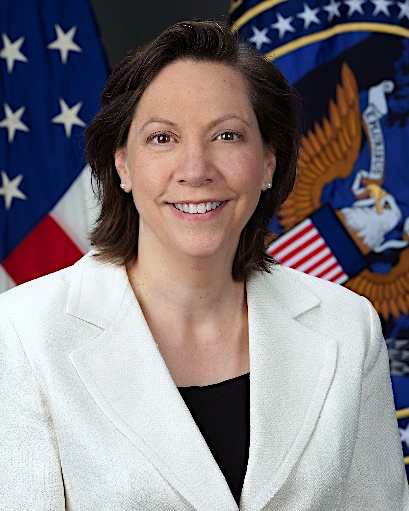
Beth Sanner
Sanner’s job was the same for those who had carried out this task under previous presidents: find a way to engage a politician whose natural instincts might not incline toward the tedious, and often contradictory details contained in many intelligence products. This was especially true for Donald J. Trump, who reportedly disdains detailed written reports, preferring instead oral briefings backed up by graphics.
The end result was a two-phased briefing process, where Sanner would seek to distill critical material to the president orally, leaving the task of picking through the details spelled out in the written product to his senior advisors. This approach was approved beforehand by the director of national intelligence, the director of the CIA and the president’s national security advisor.
Sanner, a veteran CIA analyst who previously headed up the office responsible for preparing the PDB, served as the DNI’s principal advisor “on all aspects of intelligence,” responsible for creating “a consistent and holistic view of intelligence from collection to analysis” and ensures “the delivery of timely, objective, accurate, and relevant intelligence.”
If there was anyone in the intelligence community capable of sorting out the wheat from the chaff when it came to what information was suited for verbal presentation to the president, it was Sanner.
No copy of the PDB for Feb. 27 has been made available to the public to scrutinize, nor will one likely ever be.
However, based upon information gleaned from media reporting derived from anonymous leaks, a picture emerges of at least one of the items contained in the briefing document, the proverbial “ground zero” for the current crisis surrounding allegations that Russia has paid cash bounties to persons affiliated with the Taliban for the purpose of killing American and coalition military personnel in Afghanistan.
Links Between Accounts
Sometime in early January 2020 a combined force of U.S. special operators and Afghan National Intelligence Service (NDS) commandos raided the offices of several businessmen in the northern Afghan city of Konduz and the capital city of Kabul, according to a report in The New York Times. The businessmen were involved in the ancient practice of “Hawala.” It is a traditional system for transferring money in Islamic cultures, involving money paid to an agent who then instructs a remote associate to pay the final recipient.
Afghan security officials claim that the raid had nothing to do with “Russians smuggling money,” but rather was a response to pressure from the Financial Action Task Force (FATF), an international body established in 1989 whose mission is, among other things, to set standards and promote effective implementation of legal, regulatory and operational measures for combating money laundering and terrorist financing.
This explanation, however, seems more of a cover story than fact, if for no other reason than that the FATF, in June 2017, formally recognized that Afghanistan had established “the legal and regulatory framework to meet its commitments in its action plan,” noting that Afghanistan was “therefore no longer subject to the FATF’s monitoring process.”
The joint U.S.-Afghan raid, according to the Times, was not a takedown of the Halawa system in Afghanistan—a virtually impossible task—but rather a particular Halawa network run by Rahmatullah Azizi, a one-time low-level Afghan drug smuggler-turned-high profile businessman, along with a colleague named Habib Muradi.
Azizi’s portfolio is alleged by the Times, quoting a “friend,” to include serving as a contractor for U.S. reconstruction programs, managing undefined business dealings in Russia, which supposedly, according to unnamed U.S. intelligence sources quoted by the Times, included face-to-face meetings with officers from Russian Military Intelligence (GRU), and serving as a bagman for a covert money laundering scheme between the Taliban and Russia.
Some thirteen persons, including members of Azizi’s extended family and close associates, were rounded up in the raids. Both Azizi and Muradi, however, eluded capture, believed by Afghan security officials to have fled to Russia.
Based in large part on information derived from the interrogation of the detainees that followed, U.S. intelligence analysts pieced together a picture of Azizi’s Halawa enterprise—described as “layered and complex”, with money transfers “often sliced into smaller amounts that routed through several regional countries before arriving in Afghanistan.”
What made these transactions even more interesting from an intelligence perspective, were the links made by U.S. analysts between Azizi’s Halawa system, an electronic wire transfer, a Taliban-linked account, and a Russian account that some believed was tied to Unit 29155 (a covert GRU activity believed to be involved with, among other activities, assassinations). The transactions had been picked up by the National Security Agency (NSA), the U.S. intelligence agency responsible for monitoring communications and electronic data worldwide.
The discovery of some $500,000 in cash by U.S. special operators at Azizi’s luxury villa in Kabul was the icing on the cake—the final “dot” in a complex and convoluted game of “connect the dots” that comprised the U.S. intelligence community’s assessment of the alleged Russian (GRU)-Taliban-Azizi connection.
The next task for U.S. intelligence analysts was to see where the Russian (GRU)-Taliban-Azizi connection took them. Using information gathered through detainee debriefings, the analysts broke down money Azizi received through his Halawa pipeline into “packets,” some comprising hundreds of thousands of dollars, which were doled out to entities affiliated with, or sympathetic to, the Taliban.
According to Afghan security officials quoted by the Times, at least some of these payments were specifically for the purpose of killing American troops, amounting to a price tag of around $100,000 per dead American.
The game of “connect the dots” continued as the U.S. intelligence analysts linked this “bounty” money to criminal networks in Parwan Province, where Bagram Air Base—the largest U.S. military installation in Afghanistan—is located. According to Afghan security officials, local criminal networks had carried out attacks on behalf of the Taliban in the past in exchange for money. This linkage prompted U.S. intelligence analysts to take a new look at an April 9, 2019 car bomb attack outside of Bagram Air Base which killed three U.S. Marines.
This information was contained in the PDB that was given to Trump on Feb. 27. According to standard procedure, it would have been vetted by at least three intelligence agencies—the CIA, the National Counterterrorism Center (NCC), and the NSA. Both the CIA and NCC had assessed the finding that the GRU had offered bounties to the Taliban with “moderate confidence,” which in the lexicon used by the intelligence community means that the information is interpreted in various ways, that there are alternative views, or that the information is credible and plausible but not corroborated sufficiently to warrant a higher level of confidence.
The NSA, however, assessed the information with “low confidence,” meaning that they viewed the information as scant, questionable, or very fragmented, that it was difficult to make solid analytic inferences, and that there were significant concerns or problems with the sources of information used.
Floating in the Bowl
All of this information was contained in the PDB carried into the White House by Sanner. The problem for Sanner was the context and relevance of the information she carried. Just five days prior, on Feb. 22, the U.S. and the Taliban had agreed to a seven-day partial ceasefire as prelude to the conclusion of a peace agreement scheduled to be signed in two days’ time, on Feb. 29.
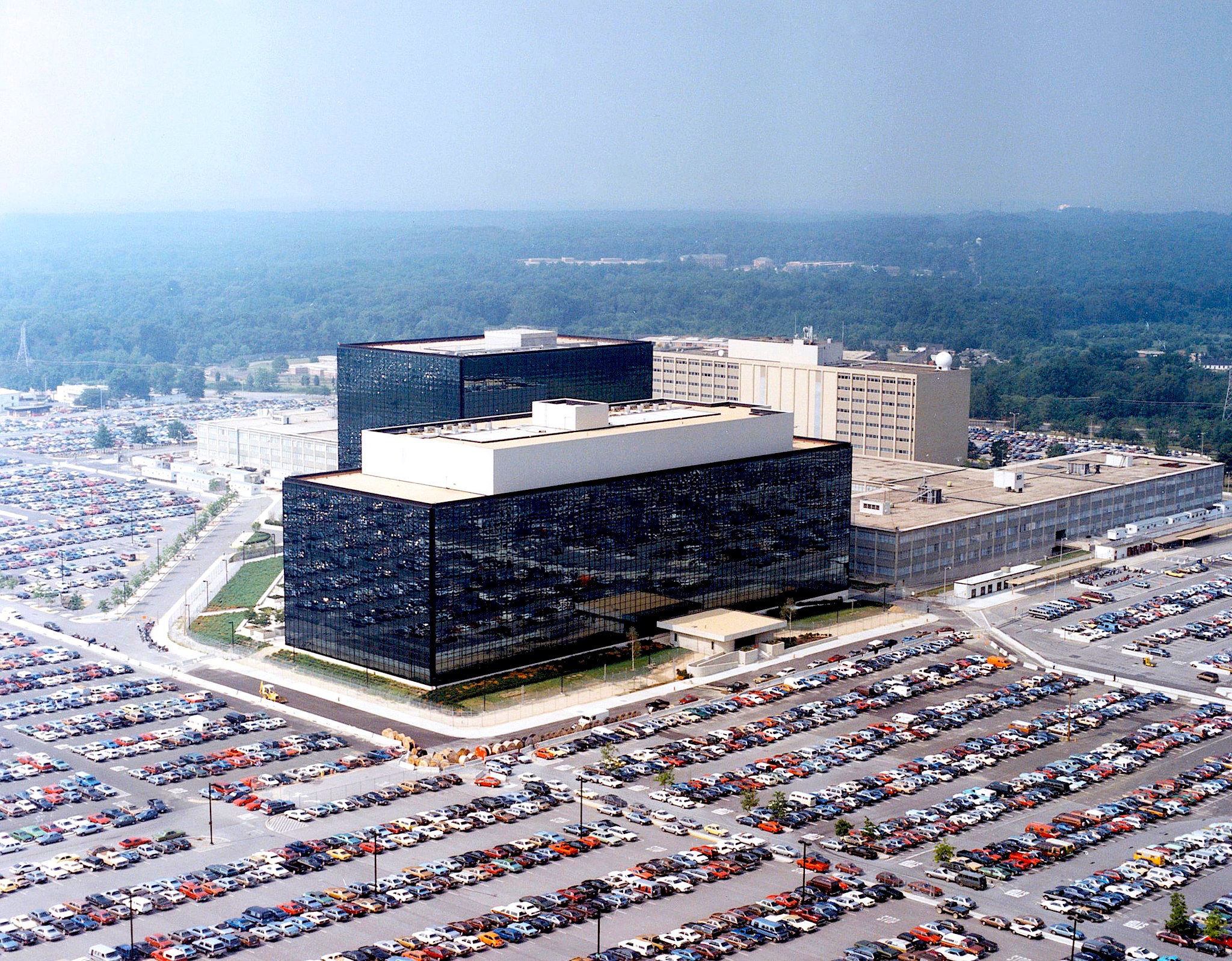
NSA HQ, Fort Meade, Maryland. (Wikimedia Commons)
The U.S. Representative for Afghanistan Zalmay Khalilzad, was in Doha, Qatar, where he was hammering out the final touches to the agreement with his Taliban counterparts. Secretary of State Mike Pompeo was preparing to depart the U.S. for Doha, where he would witness the signing ceremony. The information Sanner carried in the PDB was the proverbial turd in the punchbowl.
The problem was that the intelligence assessment on alleged Russian GRU “bounties” contained zero corroborated information. It was all raw intelligence (characterized by one informed official as an “intelligence collection report”), and there were serious disagreements among the differing analytical communities—in particular the NSA—which took umbrage over what it deemed a misreading of its intercepts and an over reliance on uncorroborated information derived from detainee debriefs.
Moreover, none of the intelligence linking the GRU to the Taliban provided any indication of how far up the Russian chain of command knowledge of the “bounties” went, and whether or not anyone at the Kremlin-let alone President Vladimir Putin-were aware of it.
None of the information contained in the PDB was “actionable.” The president couldn’t very well pick up the phone to complain to Putin based on a case drawn solely from unverified, and in some cases unverifiable, information.
To brief the president about an assessment which, if taken at face value, could unravel a peace agreement that represented a core commitment of the president to his domestic political base—to bring U.S. troops home from endless overseas wars—was the epitome of the politicization of intelligence, especially when there was no consensus among the U.S. intelligence community that the assessment was even correct to begin with.
This was a matter which could, and would, be handled by the president’s national security advisors. Sanner would not be briefing the president in person on this report, a decision that Trump National Security Adviser Robert O’Brien agreed with.
Blaming Russia
Ending America’s nearly 19-year misadventure in Afghanistan had always been an objective of President Trump. Like both presidents before him whose tenure witnessed the deaths of American service members in that hard, distant and inhospitable land, Trump found himself confronting a military and national security establishment convinced that “victory” could be achieved, if only sufficient resources, backed by decisive leadership, were thrown at the problem.
His choice for secretary of defense, James “Mad Dog” Mattis, a retired Marine general who commanded Central Command (the geographical combatant command responsible for, among other regions, Afghanistan) pushed Trump for more troops, more equipment, and a freer hand in taking on the enemy.
By the Fall of 2017, Trump eventually agreed to the dispatch of some 3,000 additional troops to Afghanistan, along with new rules of engagement, which would allow greater flexibility and quicker response times for the employment of U.S. air strikes against hostile forces in Afghanistan.
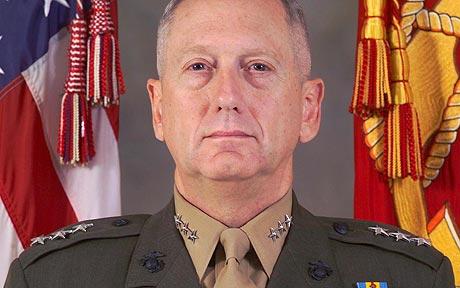
Mattis: Got what he wanted
It took little more than a year for the president to come to grips with a reality that would be reflected in the findings of Special Inspector General for Afghanistan Reconstruction John Sopko, that there had been “explicit and sustained efforts by the U.S. government to deliberately mislead the public…to distort statistics to make it appear the United States was winning the war when that was not the case.”
In November 2018, Trump turned on “Mad Dog”, telling the former Marine General “I gave you what you asked for. Unlimited authority, no holds barred. You’re losing. You’re getting your ass kicked. You failed.”
It was probably the most honest assessment of the War in Afghanistan any American president delivered to his serving secretary of defense. By December 2018 Mattis was out, having resigned in the face of Trump’s decision to cut American losses not only in Afghanistan, but also Syria and Iraq.
That same month, U.S. diplomat Khalilizad began the process of direct peace talks with the Taliban that led to the Feb. 29 peace agreement. It was a dispute over Afghan peace talks that led to the firing of National Security Advisor John Bolton. In September 2019—Trump wanted to invite the Taliban leadership to Camp David for a signing ceremony, something Bolton helped quash. Trump cancelled the “summit”, citing a Taliban attack that took the life of an American service member, but Bolton was gone.
Taking on Failure
One doesn’t take on two decades of systemic investment in military failure that had become ingrained in both the psyche and structure of the U.S. military establishment, fire a popular secretary of defense, and then follow that act up with the dismissal of one of the most vindictive bureaucratic infighters in the business without accumulating enemies.
Washington DC has always been a political Peyton Place where no deed goes unpunished. All president’s are confronted by this reality, but Trump’s was a far different case—at no time in America’s history had such a divisive figure won the White House. Trump’s anti-establishment agenda alienated people across all political spectrums, often for cause. But he also came into office bearing a Scarlet Letter which none of his predecessors had to confront—the stigma of a “stolen election” won only through the help of Russian intelligence.
The “Russian interference” mantra was all-pervasive, cited by legions of anti-Trumpers suddenly imbued with a Cold War-era appreciation of global geopolitics, seeing the Russian Bear behind every roadblock encountered, never once pausing to consider that the problem might actually reside closer to home, in the very military establishment Trump sought to challenge.
Afghanistan was no different. Prior to stepping down as the commander of U.S. forces in Afghanistan in September 2018, Army General John Nicholson sought to deflect responsibility for the reality that, despite receiving the reinforcements and freedom of action requested, his forces were losing the fight for Afghanistan.
Unable or unwilling to shoulder responsibility, Nicholson instead took the safe way out—he blamed Russia.
Scapegoating
“We know that Russia is attempting to undercut our military gains and years of military progress in Afghanistan, and make partners question Afghanistan’s stability,” Nicholson wrote in an email to reporters, seemingly oblivious to the history of failure and lies being documented at that moment by Sopko.
In March 2018 Nicholson had accused the Russians of “acting to undermine” U.S. interests in Afghanistan, accusing the Russians of arming the Taliban. But the most telling example of Russian-baiting on the part of the general occurred in February 2017, shortly after President Trump was inaugurated. In an appearance before the Senate Armed Services Committee, Nicholson was confronted by Sen. Bill Nelson, a Florida Democrat and ardent supporter of the U.S. intervention in Afghanistan.
“If Russia is cozying up to the Taliban—and that’s a kind word—if they are giving equipment that we have some evidence that the Taliban is getting…and other things that we can’t mention in this unclassified setting? And the Taliban is also associated with al-Qaida? Therefore Russia is indirectly helping al-Qaeda in Afghanistan?” Nelson asked.
“Your logic is absolutely sound, sir,” was Nicholson’s response.
Except it wasn’t.
Russia has a long and complicated history with Afghanistan. The Soviet Union invaded Afghanistan in 1979, and over the course of the next decade fought a long and costly war with Afghan tribes, backed by American money and arms and a legion of Arab jihadis who would later morph into the very al-Qaeda Sen. Nelson alluded to in his question to General Nicholson.
By 1989 the Soviet Empire was winding down, and with it its disastrous Afghan War. In the decade that followed, Russia was at odds with the Taliban government that arose from the ashes of the Afghan civil war that followed in the wake of the withdrawal of Soviet forces.
Moscow threw its support behind the more moderate forces of the so-called Northern Alliance and, after the al-Qaeda terror attacks on the U.S. on Sept. 11, 2001, was supportive of the U.S.-led intervention to defeat the Taliban and bring stability to a nation that bordered the Central Asian Republics of the former Soviet Union, which Russia viewed as especially sensitive to its own national security.
Realized US Was Losing the War
Fourteen years later, in September 2015, Russia was confronted by the reality that the U.S. had no strategy for victory in Afghanistan and, left to its own devices, Afghanistan was doomed to collapse into an ungovernable morass of tribal, ethnic and religious interests that would spawn extremism capable of migrating over the border, into the former Soviet Central Asian Republics, and into Russia itself.
Russia’s concerns were shared by regional countries such as Pakistan and China, both of which faced serious threats in the form of domestic Islamist extremism.
The capture of the northern Afghan city of Konduz, followed by the rise of an even more militant Islamist group in Afghanistan known as the Islamic State-Khorassan (IS-K), both of which occurred in September 2015, led the Russians to conclude that the U.S. was losing its war in Afghanistan, and Russia’s best hope was to work with the prevailing side—the Taliban—in order to defeat the threat from IS-K, and create the conditions for a negotiated peace settlement in Afghanistan.
None of this history was mentioned by either Gen. Nicholson or Sen. Nelson. Instead, Nicholson sought to cast Russia’s involvement in Afghanistan as “malign”, declaring in a Dec. 16, 2016 briefing that:
“Russia has overtly lent legitimacy to the Taliban. And their narrative goes something like this: that the Taliban are the ones fighting Islamic State, not the Afghan government. And of course … the Afghan government and the U.S. counterterrorism effort are the ones achieving the greatest effect against Islamic State. So, this public legitimacy that Russia lends to the Taliban is not based on fact, but it is used as a way to essentially undermine the Afghan government and the NATO effort and bolster the belligerents.”
Absent from Nicholson’s comments is any appreciation surrounding the creation of IS-K, and the impact it had on the Taliban as a whole.
The formation of IS-K can be causally linked to the disarray that occurred within the internal ranks of the Taliban in the aftermath of the death of Mullah Omar, the founder and moral inspiration of the organization. The struggle to pick a successor to Omar exposed a Taliban fractured into three factions.
One, representing the mainstream faction of the Taliban most closely linked to Mullah Omar, wanted to continue and expand upon the existing struggle against the Government of Afghanistan and the U.S.-led coalition, which supported and sustained it in an effort to re-establish the Emirate that ruled prior to being evicted from power in the months after the terror attacks of 9/11.
Another, grounded in the ranks of Pakistani Taliban, wanted a more radical approach which sought a regional Emirate beyond the borders of Afghanistan.
A third faction had grown tired of years of fighting and viewed the passing of Mullah Omar as an opportunity for a negotiated peace settlement with the Afghan government. IS-K emerged from the ranks of the second group, and posed a real threat to the viability of the Taliban if it could motivate large numbers of the Taliban’s most fanatic fighters to defect from the ranks of the mainstream Taliban.

Mujahideen who fought Soviets, Aug. 1985 (Wikimedia Commons)
For the Russians, who witnessed the growing potency of the Taliban as manifested in its short-lived capture of Konduz, the biggest danger it faced wasn’t a Taliban victory over the U.S.-dominated Afghan government, but rather the emergence of a regionally-minded Islamist extremist movement that could serve as a model and inspiration for Muslim men of combat age to rally around, allowing the violent instability to fester locally and spread regionally for decades to come. The mainstream Taliban were no longer viewed as a force to be confronted, but rather contained through co-option.
In a statement before U.S. troops in December 2016, then-President Barack Obama openly admitted that “the U.S. cannot eliminate the Taliban or end violence in that country [Afghanistan].” Russia had reached that conclusion more than a year prior, following the Taliban capture of Konduz.
A year before Obama made this announcement, Zamir Kabulov, Russia’s special representative to Afghanistan, noted that “Taliban interests objectively coincide with ours” when it came to limiting the spread of the Islamic State in Afghanistan, and he acknowledged that Russia had “opened communication channels with the Taliban to exchange information.”
For its part, the Taliban was at first cold to the thought of cooperating with the Russians. A spokesperson declared that they “do not see a need for receiving aid from anyone concerning so-called Daesh [Islamic State] and neither have we contacted nor talked with anyone about this issue.”
Many of the Taliban leadership had a history of fighting against the Soviets in the 1980s and were loath to be seen as working with their old enemies. The rise of IS-K in Afghanistan, however, created a common threat that helped salve old wounds, and while the Taliban balked at any overt relationship, the Russians began a backchannel process of discreet diplomatic engagement. (Kabulov had a history of negotiations with the Taliban dating back to the mid-1990’s).
By November 2018 this effort had matured into what was called the “Moscow Format”, a process of diplomatic engagement between Russia and Afghanistan’s neighbors which resulted in the first-ever dispatch of a Taliban delegation to Moscow for the purpose of discussing the conditions necessary for peace talks to be held about ending the conflict in Afghanistan.
When President Trump terminated the U.S.-Taliban peace negotiations in September 2019, it was the “Moscow Format” that kept the peace process alive, with Russia hosting a delegation from the Taliban to discuss the future of the peace process.
The Russian involvement helped keep the window of negotiations with the Taliban open, helping to facilitate the eventual return of the U.S. to the negotiating table this February, and played no small part in the eventual successful conclusion of the Feb. 27, 2020 peace agreement—a fact which no one in the U.S. was willing to publicly acknowledge.
Bad Intelligence
The Intelligence Collection Report that found its way into the Feb. 27 PDB did not appear in a vacuum. The singling out of the Hawala network operated by Rahmatullah Azizi was the manifestation of a larger anti-Russian animus that had existed in the intelligence collection priorities of the U.S. military, the CIA and the Afghan NDS since 2015.
This animus can be traced to internal bias that existed in both U.S. Central Command and the CIA against anything Russian, and the impact this bias had on the intelligence cycle as it applied to Afghanistan.
The existence of this kind of bias is the death knell of any professional intelligence effort, as it destroys the objectivity needed to produce effective analysis.
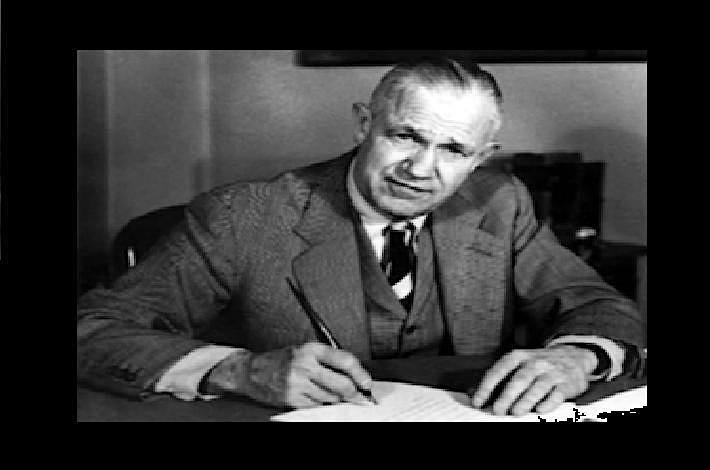
Sherman Kent
Sherman Kent, the dean of U.S. intelligence analysis (the CIA’s Center for Intelligence Analysis is named after him), warned of this danger, noting that while there was no excuse for policy or political bias, the existence of analytic or cognitive bias was ingrained in human condition, requiring a continuous effort by those responsible for overseeing analytical tasks to minimize.
Kent urged analysts “to resist the tendency to see what they expect to see in the information,” and “urged special caution when a whole team of analysts immediately agrees on an interpretation of yesterday’s development or a prediction about tomorrow’s.”
Part of a Litany of Intel Failures
The nexus of theory and reality was rarely, if ever, achieved within the U.S. intelligence community. From exaggerated Cold War estimates of Soviet military capability (the “bomber” and “missile” gaps), the underestimation of Viet Cong and North Vietnamese military capability, a failure to accurately predict the need for, and impact of, Gorbachev’s policies of reform in the Soviet Union, the debacle that was Iraqi WMD, a similar misreading of Iran’s nuclear capability and intent, and the two decade failure that was (and is) the Afghanistan experience, the U.S. intelligence community has a track record of imbuing its analysis with both political and cognitive bias—and getting it very, very wrong about so many things.
The Russian bounty story is no exception. It represents the nexus of two separate analytical streams, both of which were amply imbued with policy bias; one, representing America’s anger at not being able to control the fate of Russia in the aftermath of the collapse of the Soviet Union, and the second, America’s total misread of the reality of Afghanistan (and the Taliban) as it related to the Global War on Terror (GWOT).
For the first decade or so, these streams lived separate but equal lives, populated by analytical teams whose work rarely intersected (indeed, if truth be told, the Russian/Eurasian “house” was frequently robbed of its best talent to feed the insatiable appetite for more and better “analysis” driven by the GWOT enterprise.)
The election of Barack Obama, however, changed the intelligence landscape and, in doing so, initiated processes which allow these two heretofore disparate intelligence streams to drift together.
Under President Obama, the U.S. “surged” some 17,000 additional combat troops into Afghanistan in an effort to turn the tide of battle. By September 2012, these troops had been withdrawn; the “surge” was over, with little to show for it besides an additional 1,300 U.S. troops killed and tens of thousands more wounded. The “surge” had failed, but like any failure rooted in Presidential policy, it was instead sold as a success.
That same year the Obama administration suffered another policy failure of similar magnitude. In 2008, Russian President Vladimir Putin swapped places with Prime Minister Dmitri Medvedev, and when Obama took office, his team of Russian experts, led by a Stanford professor named Michael McFaul, sold him on the concept of a “reset” of U.S.-Russian relations, which had soured under eight years of the Bush Presidency.
But the “reset” was decidedly one-sided—it placed all of the blame for the bad blood between the two nations on Putin, and none on two successive eight-year presidential administrations, led by Bill Clinton and George W. Bush, which saw the U.S. expand the NATO alliance up to Russia’s borders, abandon foundational arms control agreements, and basically behave like Russia was a defeated foe whose only acceptable posture was one of acquiescence and subservience.
This was a game Russia’s first President, Boris Yeltsin, only seemed too happy to play. His hand-picked successor, Vladimir Putin, however, would not.
With Medvedev installed as president, McFaul sought to empower Medvedev politically—in effect, to give him the “Yeltsin” treatment—in hopes that an empowered Medvedev might be able to muscle Putin out of the picture.
For any number of reasons (perhaps most important being Putin had no intention of allowing himself to be so squeezed, and Medvedev was never inclined to do any squeezing), the Russian “reset” failed. Putin was reelected as president in March 2012. McFaul’s gambit had failed, and from that moment forward, U.S.-Russian relations became a “zero sum game” for the U.S.—any Russian success was seen as a U.S. failure, and vice versa.
In 2014, after watching a duly elected, pro-Russian Ukrainian president, Viktor Yanukovych, removed from office by a popular uprising which, if not U.S. sponsored, was U.S. supported, Putin responded by annexing the Russian-majority Crimean peninsula and supporting pro-Russian secessionists in the breakaway Donbas region of Ukraine.
This action created a schism between Russia and the U.S. and Europe, resulting in the implementation of economic sanctions against Russia by both entities, and the emergence of a new Cold War-like relationship between Russia and NATO.
In 2015 Russia followed up its Ukraine action by dispatching its military into Syria where, at the invitation of the Syria government, it helped turn the tide on the battlefield in favor of Syria’s embattled president, Bashar al-Assad, against an assortment of jihadist groups.
Overnight, the intelligence backwater that had been Russian/European affairs was suddenly thrust front and center on the world stage and, with it, into the heart of American politics. The McFaul school of Putin-phobia suddenly became dogma, and any academic who had published a book or article critical of the Russian president was elevated in status and stature, up to and including a seat at the table in the senior-most decision-making circles of the U.S. intelligence community.
The Russians were suddenly imbued with near super-human capability, up to and including the ability to steal an American presidential election.
After the failure of the Obama surge in Afghanistan, and the withdrawal from Iraq at the end of 2011 of all U.S. combat troops, the mindset throughout the Central Command area of operations was “stability.” This was the command guidance and pity the intelligence analyst who tried to raise a red flag or inject a modicum of reality into the intelligence enterprise whose mission it was to sustain this sense of stability.
Indeed, when the Islamic State roared out of the western deserts of Iraq to establish itself in eastern Syria, dozens of CENTCOM intelligence analysts officially complained that their senior management was purposefully manipulating the analytical product produced by CENTCOM to paint a deliberately misleading “rosy” picture of truth on the ground out of fear of angering the Commanding General and his senior staff.
For anyone who has spent any time in the military, the importance of command guidance, whether written or verbal, when it comes to establishing both priorities and approach, cannot be overstated. In short, what the general wants, the general gets; woe be the junior officer or analyst who didn’t get the memo.
By 2016, the commander of U.S. forces in Afghanistan, Gen. Nicholson, wanted to see Russians undermining U.S. policy objectives in Afghanistan. The poisonous culture that existed inside CENTCOM’s intelligence enterprise was only too happy to comply.
The corruption of intelligence at “ground zero” ended up corrupting the entire U.S. intelligence community, especially when there was a systemic desire to transfer blame for the failure of U.S. policy in Afghanistan anywhere other than where it belonged—squarely on the shoulders of U.S. policy makers and the military that did their bidding.
And there was a beefed-up Russia/Eurasia intelligence apparatus looking for opportunities to foist blame on Russia. Blaming Russia for U.S. policy failure in Afghanistan became the law of the land.
The consequences of this political and cognitive bias is subtle, but apparent to those who know what to look for, and are willing to take the time to look.
Following the leak to The New York Times about the Russian “bounty” intelligence, members of Congress demanded answers about the White House’s claim that the information published by the Times (and mimicked by other mainstream media outlets) was “unverified.”
Rep. Jim Banks, who sits on the Armed Services Committee as one of eight Republican lawmakers briefed by the White House on the substance of the intelligence regarding the alleged Russian “bounties”, tweeted shortly after the meeting ended that, “Having served in Afghanistan during the time the alleged bounties were placed, no one is angrier about this than me.”
Bank’s biography notes that, “In 2014 and 2015, he took a leave of absence from the Indiana State Senate to deploy to Afghanistan during Operations Enduring Freedom and Freedom’s Sentinel.”
Banks’ timeline mirrors that offered by a former senior Taliban leader, Mullah Manan Niazi, who told U.S. reporters who interviewed him after the Russian “bounty” story broke that “the Taliban have been paid by Russian intelligence for attacks on U.S. forces—and on ISIS forces—in Afghanistan from 2014 up to the present.”
Niazi: shady character (ToloNews/YouTube)
Niazi has emerged a key figure behind the crafting of the “bounty” narrative, and yet his voice is absent from The New York Times reporting, for good reason—Niazi is a shady character whose acknowledged ties to both the Afghan Intelligence Service (NDS) and the CIA undermine his credibility as a viable source of information.
Officials, speaking anonymously to the media, have stated that “the bounty hunting story was ‘well-known’ among the intelligence community in Afghanistan, including the CIA’s chief of station and other top officials there, like the military commandos hunting the Taliban. The information was distributed in intelligence reports and highlighted in some of them.”
If this is true, and some of this information found its way into the intelligence report referred to by Rep. Banks, then the U.S. intelligence community has been selling the notion of a Russian bounty on U.S. troops since at least 2015—coincidentally, the same time Russia started siding with the Taliban against IS-K.
Seen in this light, claims that Bolton briefed President Trump on the “bounty” story in March of 2019–nearly a full year before the PDB on it was delivered to the White House—don’t seem too far-fetched, except for one small detail: what was the basis of Bolton’s briefing? What intelligence product had been generated at that time which rose to a level sufficient enough to warrant being briefed to the president of the United States by his national security advisor?
The answer is, of cours–none. There was nothing; if there was, we would be reading about it with enough corroboration to warrant a White House denial. All we have is a story, a rumor, speculation, a “legend” promoted by CIA-funded Taliban turncoats that had seeped itself into the folklore of Afghanistan enough to be assimilated by other Afghans who, once detained and interrogated by the NDS and CIA, repeated the “legend” with sufficient ardor to be included, without question, in the intelligence collection report that actually did make into a PD–on Feb. 27, 2020.
There is another aspect of this narrative that fails completely, namely the basic comprehension of what exactly constitutes a “bounty.”
“Afghan officials said prizes of as much as $100,000 per killed soldier were offered for American and coalition targets,” the Times reported. And yet, when Rukmini Callimachi, a member of the reporting team breaking the story, appeared on MSNBC to elaborate further, she noted that “the funds were being sent from Russia regardless of whether the Taliban followed through with killing soldiers or not. There was no report back to the GRU about casualties. The money continued to flow.”
There is just one problem—that’s not how bounties work. Bounties are the quintessential quid pro quo arrangement—a reward for a service tendered. Do the job, collect the reward. Fail to deliver—there is no reward. The idea that the Russian GRU set up a cash pipeline to the Taliban that was not, in fact, contingent on the killing of U.S. and coalition troops, is the antithesis of a bounty system. It sounds more like financial aid, which it was—and is. Any assessment that lacked this observation is simply a product of bad intelligence.
The Timing
Whoever leaked the Russian “bounty” story to The New York Times knew that, over time, the basics of the story would not be able to stand up under close scrutiny—there were simply too many holes in the underlying logic, and once the totality of the intelligence leaked out (which, by Friday seemed to be the case), the White House would take control of the narrative.
The timing of the leak hints at its true objective. The main thrust of the story was that the president had been briefed on a threat to U.S. forces in the form of a Russian “bounty,” payable to the Taliban, and yet opted to do nothing. On its own, this story would eventually die out of its own volition.
On June 18, the U.S. fulfilled its obligation under the peace agreement to reduce the number of troops in Afghanistan to 8,600 by July 2020. By June 26, the Trump administration was close to finalizing a decision to withdraw more than 4,000 troops from Afghanistan by the fall, a move which would reduce the number of troops from 8,600 to 4,500 and thus pave the way for the complete withdrawal from U.S. forces from Afghanistan by mid-2021.
Both of these measures were unpopular with a military establishment that had been deluding itself for two decades that it could prevail in the Afghan conflict. Moreover, once the troop level had dropped to 4,500, there was no turning back—the total withdrawal of all forces was inevitable, because at that level the U.S. would be unable to defend itself, let alone conduct any sort of meaningful combat operations in support of the Afghan government.
It was at this time that the leaker chose to release his or her information to The New York Times, perfectly timed to create a political furor intended not only to embarrass the president, but more critically, to mobilize Congressional pushback against the Afghan withdrawal.
On Thursday, the House Armed Services Committee voted on an amendment to the National Defense Authorization Act which required the Trump administration to issue several certifications before U.S. forces could be further reduced in Afghanistan, including an assessment of whether any “state actors have provided any incentives to the Taliban, their affiliates, or other foreign terrorist organizations for attacks against United States, coalition, or Afghan security forces or civilians in Afghanistan in the last two years, including the details of any attacks believed to have been connected with such incentives”—a direct reference to the Russian “bounty” leak.
The amendment passed 45-11.
This, more than anything else, seems to have been the objective of the leak. The irony of Congress passing legislation designed to prolong the American war in Afghanistan in the name of protecting American troops deployed to Afghanistan should be apparent to all.
The fact that it is not speaks volumes to just how far down the road of political insanity this country has travelled. On a weekend where America is collectively celebrating the birth of the nation, that celebration will be marred by the knowledge that elected representatives voted to sustain a war everyone knows has already been lost. That they did so on the backs of bad intelligence leaked for the purpose of triggering such a vote only makes matters worse.
Scott Ritter is a former Marine Corps intelligence officer who served in the former Soviet Union implementing arms control treaties, in the Persian Gulf during Operation Desert Storm, and in Iraq overseeing the disarmament of WMD.
Featured Video
Seyed M. Marandi: US-Iran War Inevitable: Kuwait and Bahrain May Fall
or go to
Aletho News Archives – Video-Images
From the Archives
Oil and the Israel Lobby
Reknowned economist M. Shahid Alam offers this excellent critique of Noam Chomsky’s defective analysis of the relative influence of Oil versus the Israel lobby over US foreign policy: … continue
Blog Roll
 Aletho News
- ICC ignored ‘very well-documented’ NATO crimes – ex-Libyan minister
- SNSC secretary dismisses US response to Iran’s conditions as ‘inadequate’
- Sanaa says Taiz roads open, secure for residents, warns Saudi forces
- Iraqi resistance group urges Saudi leadership to admit defeat, lift Yemen siege
- Trump’s Retreat: How Al-Aqsa Flood Took Down the US Empire
- Israel’s Military Actions in Lebanon Grossly Violate International Law — Lavrov
- Seyed M. Marandi: US-Iran War Inevitable: Kuwait and Bahrain May Fall
- Leaders Condemn Ansarallah Attack on Saudi Arabia While Ignoring Illegal War Against Yemen
- Leaked: Britain’s Covert Iraqi Psyops Network
- Yemeni Armed Forces Warn Airlines Against Using Saudi Airports, Exempt Mecca and Medina
- If Americans Knew
- After Oct 7, IDF policy allowed civilian casualties for even the lowest-ranking targets
- Israel’s Destruction of Southern Lebanon Intensified After the Cease-Fire
- The Last-Minute Decision That Gave Israel Its Name
- The American Conservative: How Trump Made the World Go Nuclear
- Meet the US generals and admirals advancing Israeli policy
- Opinion: Why news organizations should boycott Israel
- The Israeli witch hunt of Sami Abu Shehadeh exposes the lie of the ‘Jewish and democratic’ state
- No state has a ‘right’ to exist – least of all Israel
- Testimonies about Gaza’s civilian death toll expose Israel’s atrocities – Daily Update
- How Israel Conquered the Latin American Right
- No Tricks Zone
- New Study Suggests Large Regions Of The Pacific Ocean Have Been Cooling For The Last 80 Years
- Germany’s Green Energy Debacle: High Energy Costs Force Kahla Porzellan to Close After 182 Years!
- New Study: 50 Years Of The Most Aggressive ‘Net Zero’ Policies Can Only Affect The Global Climate By 0.03°C
- US September “Heat” Was No Record…Many Records Set Decades Ago
- Latest European Green Energy Debacle; Portugal’s Largest Flagship Solar Park Insolvent!
- Green Energy Debacle: German Expert Professor Fritz Vahrenholt Warns Of Severe Economic And Social Consequences
- Two More Paleo Reconstructions Affirm Meters-Higher Sea Levels Across Ireland, Brazil 7000-6000 Years Ago
- New Study: Earth And Venus Surface Warmth Largely Explained By Convection And Lapse Rate, Not CO2 Or Radiation
- 2025 Nature Paper Claiming Worsening Global Drought Gets RETRACTED …Heavily Flawed
- New Study: ‘Global Drought Shows No Detectable Recent Acceleration Under Climate Warming’

