Me Too is producing some results. At long last. Victims of sexual assault by men in superior positions of power are speaking out. Big time figures in the entertainment, media, sports and political realms are losing their positions – resigning or being told to leave. A producer at 60 Minutes thinks Wall Street may be next.
Sexual assaults need stronger sanctions. Only a few of the reported assaulters are being civilly sued under the law of torts. Even fewer are subjects of criminal investigation so far.
Perhaps the daily overdue accounting, regarding past and present reports of sexual assaults will encourage those abused in other contexts to also blow the whistle on other abuses. Too often, there are not penalties, but instead rewards, for high government and corporate officials whose derelict and often illegal decisions directly produce millions of deaths and injuries.
A few weeks ago, former secretaries of state Madeleine Albright and Condoleezza Rice shared a stage at the George W. Bush Institute, reflecting on their careers to widespread admiration. What they neglected to mention were the devastated families, villages, cities and communities and nations plunged into violent chaos from the decisions they deliberately made in their careers.
In a 1996 interview, Madeleine Albright, then secretary of state under Bill Clinton, was asked by Lesley Stahl of CBS 60 Minutes about the tens of thousands of children in Iraq whose deaths were a direct result of Clinton-era sanctions designed to punish Baghdad and whether it was worth it (At that time, Ms. Stahl had just visited these wasting children and infants in a Baghdad hospital). Secretary Albright replied in the affirmative.
Condoleezza Rice, secretary of state under George W. Bush, pushed for the criminal and unconstitutional invasion of Iraq, which resulted in over one million Iraqi deaths, millions of refugees, a broken country and sectarian violence that continues to this day. She has said she often thinks about this mayhem and feels some responsibility. Yet one wonders, as she collects huge speech fees and book advances from her position at Stanford University, whether she might consider donating some of her considerable resources to charities that support those Iraqis whose lives were destroyed by the illegal interventions she advocated.
Then there is lawless Hillary Clinton, who, against the strong advice of Secretary of Defense Robert Gates and without any Congressional authorization, persuaded Barack Obama to support a destabilizing regime overthrow in Libya– which has since devolved into a failed state spreading death, destruction and terror in Libya to its neighboring countries. Clinton, who is at large touting her new book and making millions of dollars in book royalties and speech fees to applauding partisan audiences, should also consider making donations to those who have been harmed by her actions.
Relaxing in affluent retirement are George W. Bush and Dick Cheney, the butchers of millions of innocent Iraqis and Afghans. They too are raking it in and receiving ovations from their partisans. No prosecutors are going after them for illegal wars of aggression that were never constitutionally declared and violated our federal laws, international treaties and the Geneva Conventions.
As these ex-officials bask in adulation, the American people are not being shown the burned corpses, charred villages, and poisoned water and soil created by their “public service.” Nor are they exposed to the immense suffering and broken hearts of survivors mourning their deceased family members. Americans never hear the dreaded 24/7 whine of the omnipresent drones flying over their homes, ready to strike at the push of a button by remote operators in Virginia or Nevada. Nor do they hear the screams and sobbing of the victims of unbridled military action, fueling ever-greater hatred against the US.
Corporate executives also get rewarded for the mayhem they unleash by selling dangerously defective cars (e.g. GM, Toyota and VW recently) or releasing deadly toxins into the air and water or presiding over preventable problems in hospitals that a Johns Hopkins School of Medicine study reported is talking 5000 lives a week in this country.
What’s the difference? Because the cause and effect by officials pushing lethal politics, openly carried out with massive armed forces, do so at a distance in time and space (the Nuremberg principles after World War II, which included adherence by the US, addressed this problem). They lather their massive violent, unlawful actions with lies, cover-ups and deceptions, as was the case in 2002-2003 in Iraq. They wrap the flag around their dishonorable desecrations of what that flag stands for and the lives of US soldiers whom they sent there to kill or die.
These officials overpower the rule of law with the rule of raw power – political, economic and military.
For centuries patriarchal mayhem has exploited women in the workplace or the home. Raw power – physical, economic and cultural, regularly, overpower the legal safeguards against wrongful injury, rape and torture, both in the household and at work.
Sporadic assertions of a punishing public opinion will not be enough in either sphere of humans abusing humans. That is why the rule of law must be enforced by the state, and through private civil actions.
When The Hague-based International Criminal Court (ICC) announced it was planning to investigate alleged war crimes in Afghanistan, the timing seemed appropriate.
The announcement by the ICC on November 3 came within days of a deadly airstrike by US forces in northern Afghanistan, which UN officials say killed ten civilians.
But the history of the intergovernmental court since it was set up some 15 years ago gives pause to hope that it might deliver justice in Afghanistan. For many critics, the ICC is a byword for self-serving Western political control, either whitewashing crimes or smearing designated opponents. A pertinent question is: why has it taken the ICC so long to investigate alleged crimes in Afghanistan’s war?
The Pentagon claimed the air raid near the city of Kunduz on November 4 killed only Taliban militants. However, last week the United Nations Assistance Mission in Afghanistan (UNAMA) provided a very different version of events. UNAMA said extensive interviews with local residents and medics show that at least ten civilians died in the airstrike.
The incident would, therefore, be a prime case to investigate. ICC chief prosecutor Fatou Bensouda has promised an investigation into any alleged war crimes in Afghanistan would be “independent, impartial and objective.”
As a Reuters report stated, the ICC “could examine the role of US forces” in Afghanistan, which have been occupying the country for the past 16 years since October 2001, following the 9/11 terror attacks in Washington DC and New York City.
US torture practices conducted during CIA interrogations and renditions could also be probed, according to reports. An earlier announcement by the ICC said it would be looking into alleged violations committed by three parties: US military, Afghan security forces, and Taliban militants.
If the ICC did carry out an earnest probe into alleged war crimes in Afghanistan, it would have its work cut out – even if it just restricted itself to incidents involving US forces and the CIA.
Two years ago, in October 2015, the northern city of Kunduz was the location of another apparent atrocity committed by the US air force. A hospital run by the French-based Medecins Sans Frontieres (MSF) was bombed and machine-gunned by US aircraft, killing 42 medical staff and patients. MSF condemned the attack as a violation of the Geneva Convention – a war crime. Though, the Pentagon maintained that its forces made a mistake while targeting militants.
There is very little clarity on the number of Afghan civilians who have been killed by US forces over the past 16 years, from gun battles, house raids, drone strikes, and airstrikes. One estimate puts the total number of civilian deaths in the war at over 31,000. Many of them are victims of Taliban shootings, and bombings or operations carried out by the US-backed Afghan security forces.
Nevertheless, there are abundant incidents involving civilians being killed by US operations in what could merit war crimes prosecutions. This is especially so given the renewal of American military operations in the country ordered by President Trump in August this year – three years after the US forces were officially supposed to wind down.
Trump’s defense secretary James Mattis, on a trip to the Afghan capital Kabul in September, warned that US airstrikes would be ramped up in the coming months. Already this year, the UN reports that there was a surge in civilian casualties from American-backed air raids. The situation has an ominous resonance with how civilian casualties have escalated from increased US airstrikes in Iraq and Syria under the Trump administration’s wider authorization to the Pentagon to mount operations.
So, it seems clear that if the ICC were to open prosecution cases in Afghanistan it would, to say the least, be kept busy. However, critics of the ICC say that its intentions are not motivated by seeking justice.
It’s a political move, says international criminal lawyer Christopher Black.
Since its establishment in 2002, the international court has come in for much criticism that it is a “political tool” of the United States and European allies. Virtually all of the court’s prosecutions and indictments have been against African leaders. For example, Omar Bashir (Sudan), Uhuru Kenyatta (Kenya), Muammar Gaddafi (Libya), and Laurent Gbagbo (Ivory Coast) are among those indicted by the ICC.
The US is not a member of the 123-nation ICC. Neither are Russia, China, and India. However, the US exerts a controlling influence over the court’s prosecution office via European governments and the European Union, which are dominant in the administration of the ICC.
“The United States and its European allies use the ICC as a means of political control, not for justice,” says Christopher Black who is registered on the defense counsel for the court, but who has vociferously criticized its political subservience.
Black says the ICC has a similar function to several other ad hoc international tribunals, such as those which purportedly investigated war crimes in Rwanda and former Yugoslavia.
“These courts serve to cover-up actual crimes committed by Western powers while criminalizing political enemies of the West,” says Black.
In the case of former Yugoslavia, he points out, the Hague-based court did not examine the putative crimes of NATO bombing Belgrade in 1999. It only went after former Yugoslav President Slobodan Milosevic whom Washington and the European governments wanted to criminalize to justify NATO’s illegal intervention in the Balkans.
With regard to Afghanistan, the declared intention of the ICC to divide its investigations between US and Afghan parties raises the suspicion the court will seek to mitigate violations carried out by American forces by embroiling other criminal actors.
Even if the ICC were to find US forces guilty of war crimes, it is doubtful that Washington would take any notice of such rulings.
As Christopher Black points out too, the focus of any forthcoming investigation is misplaced in its entire framework. “The focus of a war crimes investigation should be looking at the way the US launched this military occupation back in 2001. A case can be made that the US is guilty of the supreme crime of war of aggression. All other violations stem from Washington committing the ultimate crime of going to war in Afghanistan.”
He says the ICC planned investigation is a piecemeal approach which will serve to conceal the primary responsibility of the US in Afghanistan.
So why then would the ICC bother to set up such a probe into Afghanistan?
The answer is simply to salvage much-needed credibility for the court. Because of its lop-sided focus in prosecuting African leaders, the ICC has come under fire from African members for “double standards” and serving as a neocolonial instrument for Western powers.
Beginning last year, several African nations threatened to walk away from the ICC, including Kenya, Namibia, South Africa, Gambia, and Uganda. Last month, Burundi formally completed its withdrawal from the ICC.
In other words, the court is in danger of imploding from lack of credibility. Hence, the announcement to go into Afghanistan is an attempt to salvage authority and public image by appearing to, at last, investigate alleged American war crimes.
“This is all about giving the ICC some badly needed credibility as it unravels in the face of a mass African walk-out,” says lawyer Christopher Black.
As such US and NATO states have nothing to fear from this proposed war crimes investigation in Afghanistan. It’s a cover-up and a sham driven by political interests, not by justice.
Finian Cunningham (born 1963) has written extensively on international affairs, with articles published in several languages. Originally from Belfast, Ireland, he is a Master’s graduate in Agricultural Chemistry and worked as a scientific editor for the Royal Society of Chemistry, Cambridge, England, before pursuing a career in newspaper journalism. For over 20 years he worked as an editor and writer in major news media organizations, including The Mirror, Irish Times and Independent. Now a freelance journalist based in East Africa, his columns appear on RT, Sputnik, Strategic Culture Foundation and Press TV.
During an interview with Al Jazeera television, former Afghan President Hamid Karzai linked the emergence of Islamic State group in the region to U.S. interventions.
“In my view, under the full (United States) presence, surveillance, military, political, intelligence, Daesh has emerged,” he said.
Karzai also noted that that the United States is colluding with Islamic State group in Afghanistan in order to allow the terrorist group to thrive in the war-torn country, according to PressTV.
“And for two years, the Afghan people came, cried loud about their suffering, of violations. Nothing was done,” Karzai said.
A year after securing control over large swaths of territory in Iraq and Syria in 2014, Islamic State group began to establish itself in the eastern province of Nangarhar in Afghanistan. From there the group has carried major attacks on the Central Asian country.
Karzai went on to assert that after the U.S. military dropped the GBU-43/B MOAB — the largest non-nuclear bomb detonated since World War II — in Nangarhar’s Achin District, Islamic State group fighters seized control of “the next district.” It was the first time the U.S. military dropped the 21,600 pound bomb, which contains an Australian made explosive called H6 and has an explosive equivalent to 11 tons of TNT, according to Inverse.
The incident “proves to us that there is a hand” aiding the emergence of Islamic State group and “that hand can be no one else but them (the United States) in Afghanistan,” Karzai concluded.
He condemned the U.S. government for using Afghanistan as a “testing ground for new and dangerous weapons” and welcomed a recent call by Fatou Bensouda, the chief prosecutor of the International Criminal Court, to open an inquiry into war crimes committed in Afghanistan.
“She’s right to open an investigation,” Karzai said, adding that he will cooperate with the investigation, even if it probes his own complicity in such crimes.
The ICC prosecutor’s decision to pursue a probe into alleged war crimes in Afghanistan is “completely political” and won’t amount to anything, law professor Francis Boyle believes. He said it will be a “cold day in hell” before any Americans are prosecuted.
The International Criminal Court’s chief prosecutor, Fatou Bensouda, announced last week that her request to launch an investigation had been handed over to a pre-trial court. She said that if her request is granted, the probe will focus “upon those most responsible for the most serious crimes committed in connection with the situation in Afghanistan.”
However, Francis Boyle, an international law professor at the University of Illinois, told RT that while Bensouda is likely to get approval for the investigation, the move is simply a “propaganda stunt.” He added that Bensouda has no desire to go after any Americans who committed war crimes.
“You have to understand, this is all political,” said Boyle. He noted that the African country of Burundi has already pulled out of the ICC, and South Africa has voiced the same intention.
“So she’s in a position and the court is in a position that almost all of Africa is going to pull out of the ICC because the only people in the dock over there are black, tin-pot dictators from Africa,” Boyle said. He called the court a “Western, racist, imperial tool” which is being used against Africa.
Because of this, the so-called “white man’s court” will not be going after Americans, Boyle said. “It will be a cold day in hell” before we see Bensouda doing so, he added. Boyle noted that the ICC has “never gone after the Americans, the NATO states, Britain, Israel, despite clear-cut jurisdiction to do so.”
Boyle went on to accuse the US government of committing a Nuremberg crime against peace by “invading Afghanistan and attacking it and blowing them back to the Stone Age and killing a million Afghans.” He added that “I doubt very seriously Bensouda is going to deal with any of that.”
“The United States illegally and criminally invaded Afghanistan and attacked and destroyed them… and then they set up all these torture campus over there, they’ve been torturing these poor people forever. And at a minimum, the United States has probably killed a million Afghanis [sic] since October 2001,” he said.
“The Americans should have been investigated a decade ago at least,” said Boyle, who filed an ICC complaint against former US President George W. Bush, Vice President Dick Cheney, and Secretary of State Condoleezza Rice, among others, in 2010, over their policy of “extraordinary rendition perpetrated upon about 100 human beings.” He added that “the American government knows full well they’ll be able to sabotage her [Bensouda], stop her. Nothing’s going to come of it.”
However, Boyle predicted that Bensouda would likely come back with a verdict that it was actually the Taliban who was responsible for crimes. “Or she might apportion blame, but that’s ridiculous too…if you read all the United Nations reports of human rights violations coming out of Afghanistan, they all blame the Taliban. And it’s a joke.”
Although the ICC statement doesn’t name specific parties that would be subject to the investigation, a report released by the prosecutor’s office last year said there is “reasonable basis” to believe crimes were committed by US military forces deployed to Afghanistan, and in secret detention facilities operated by the CIA. It also points the finger at the Taliban and Afghan government forces.
Boyle noted that although the US can technically be prosecuted by the court – despite not being a member – the ICC “pretty much do what they’re told to do,” citing money received from Europe, Japan, and South Korea, as well as the influence of America.
Meanwhile, the United Nations mission in Afghanistan said earlier on Thursday that at least 10 civilians may have been killed in an airstrike in the north city of Kunduz last week, despite a US military investigation stating that no evidence of civilian deaths had been found.
Boyle previously served on the board of Amnesty International USA and drafted legislation for the Biological Weapons Convention, known as the Biological Weapons Anti-Terrorism Act of 1989, which was signed into law after being unanimously approved by both chambers of the US Congress.
The two-day visit by Pakistani army chief General Qamar Javed Bajwa to Tehran (November 6-7) must be noted as a significant event. Bajwa was received by President Hassan Rouhani, Foreign Minister Mohammad Javad Zarif and Defence Minister General Amir Hatami, apart from top military commanders.
This might have been the first time that a visiting Pakistani army chief met the commander of the elite Islamic Revolutionary Guards Corps (IRGC). Of course, the IRGC can be described as the Praetorian Guards of the Islamic regime and it functions under the supervision of the Supreme Leader Ali Khamenei, but its special forces wing known as the Quds Force (under its charismatic commander General Qasem Soleimani) undertakes sensitive missions abroad. Quds Force reports directly to Supreme Leader Ali Khamenei.
Without doubt, General Bajwa’s meeting with the commander of the IRGC General Mohammad Ali Jafari in Tehran on Tuesday becomes an event of exceptional importance. The Trump administration recently ‘sanctioned’ the IRGC.
At the meeting with Bajwa, Jafari offered to share the IRGC’s ‘experiences’ with the Pakistani military. To quote Jafari, “Having 40 years of the experience of resistance against enemies’ threats, the Islamic Republic of Iran is ready to transfer its defense and popular resistance experiences to Pakistan.” He warned that the ‘regional (Muslim) nations and states are facing the US and the Zionist regime’s enmity and certain attempts have also been made to foment insecurity in Pakistan, which should be confronted by reliance on popular forces along with Armed and security forces.’ (FARS)
Indeed, enhanced security and military cooperation between Iran and Pakistan was repeatedly stressed by both sides. Notably, IRNA cited President Rouhani as saying that Iran is ‘determined’ to expand military cooperation in various areas such as training, joint exercises, military industry as well as exchange of experiences’. Rouhani added that terrorism, sectarian and ethnical differences are two main problems in the Muslim countries and ‘some global powers’ have a role in fueling them. He said that big powers are against unity and brotherhood between Muslim countries.
Bajwa assured his Iranian interlocutors that Pakistan will not allow any third country to interfere in its relations with Iran. An ISPR press release in Islamabad on Bajwa’s meetings said, “Leaders of both sides agreed to stay engaged for enhanced bilateral cooperation while jointly working to assist in bringing positive developments in other issues concerning the region.”
All in all, both Iran and Pakistan sense the need to draw closer to try to harmonise their regional policies even as they are circling the wagons to counter growing US pressure. The mounting tensions between Iran on one hand and the nascent US-Saudi-UAE-Israeli axis on the other hand make it imperative for Tehran to preserve peace and tranquility on its eastern border with Pakistan. For Pakistan too, Iran’s positive neutrality vis-à-vis its rivalries with India is useful and necessary. (Tehran Times )
Both Iran and Pakistan are stakeholders in the developing situation in Afghanistan. They share disquiet over the prospect of an open-ended US military presence in Afghanistan and harbor suspicions regarding American intentions. Yet, it remains to be seen if in a clean break from the past, Tehran and Islamabad can indeed work together on the Afghan problem – although the recent trend of targeted anti-Shi’ite attacks by new insurgent groups such as the Islamic State Khorasan (possibly with US/Saudi/Israeli backing) must be worrying Iran and Pakistan alike.
Bajwa’s discussions in Tehran dwelt on cooperation in intelligence sharing. Clearly, regional alignments work to Pakistan’s advantage, especially on two templates: India’s close ties with the US and Israel (which Tehran surely watches closely); and, the rising hostility between Iran and the US-Israeli-Saudi axis. On the contrary, Pakistan faces a challenging trapeze act, what with a Saudi-UAE axis preparing for a no-holds-barred showdown with Iran regionally.
To be sure, the growing Iran-Pakistan proximity will be welcomed by China and Russia. Iran is keen to participate in the Belt and Road Initiative. Similarly, the $30 billion energy agreements signed between Russia and Iran a week ago (during President Vladimir Putin’s visit to Tehran) have been interpreted as a move by Moscow to build up strategic assets in the Persian Gulf. The Russian Energy Minister Alexander Novak was quoted as mentioning Gazprom’s plan to build pipeline(s) to supply gas to India and/or Pakistan from the Persian Gulf.
Only Tehran could have punctured US President Donald Trump’s massive ego with just a delicate deflection by the wrist. It all began in the weekend with an innocuous media disclosure in Iran that Trump had sought a meeting with President Hassan Rouhani during the latter’s visit to New York in September to address the UN General Assembly, but the latter spurned the overture summarily. On Sunday Iranian Foreign Ministry spokesman Bahran Qassemi commented crisply, “A request indeed was made by the US side, but it wasn’t accepted by President Rouhani.”
Of course, Washington went into a tizzy with White House struggling to deny the Iranian report at first, but belatedly realizing, perhaps, that a lie might boomerang, allowed the State Department spokesperson to tamely confirm it on Tuesday. Trump’s request was apparently transmitted to the Iranian side when the US secretary of state Rex Tillerson and his Iranian counterpart Mohammed Javed Zarif were closeted together on the sidelines of a meeting of the foreign ministers of the P5+1 and Iran to review the implementation of the Iran nuclear deal in September.
The episode speaks volumes about Trump, the man and the statesman – and his times in the White House and the US foreign policies in such extraordinary times. Countries such as India or China must draw appropriate conclusions. Indian analysts, in particular, are still crowing about Tillerson’s recent rhetoric at the CSIS conjuring up from thin air a quadripartite alliance between the US, Japan, India and Australia to contain China, while Trump on the other hand is preparing for a momentous state visit to China looking for some foreign-policy trophy as outcome in his barren presidency.
The point is, Trump could so blithely befool the wily Saudi King Salman and the pompous Israeli Prime Minister Benjamin Netanyahu in one go, sending them into wild ecstasy that he is about to go after the jugular veins of the Iranian leaders, while in reality also desiring to cultivate them on the quiet or at least keep open a line of communication to them – and, perhaps, even do some business with Tehran for ‘America First’.
The bad part is that the US is also intruding into India’s Iran policies. Did India have to cut back oil imports from Iran and replace it with US shale oil? For the US (or Israel), it is important that India-Iran relations remain sub-optimal for as long as their own relationships with Iran remain problematic. India’s interests, on the other hand, lie in forging a strategic partnership with Iran that can be highly productive and beneficial for advancing its development strategy as well as for strengthening regional security. To borrow the American expression, Iran is India’s ‘natural partner’.
Nothing brings this home as when Iran’s Supreme Leader Ali Khamenei proposed to the visiting Russian President Vladimir Putin at a meeting in Tehran on Wednesday that a transportation corridor could be built connecting the Iranian port of Chabahar with St-Petersburg. India cannot miss the point that Russia and Iran could be meaningful partners in fostering regional connectivity. Simply put, geography dictates geopolitics and geo-economy.
The bottom line is that the Iranian snub to Trump also highlights its strategic defiance of the US’ attempts to (re)impose hegemony in what the Americans call the ‘Greater Middle East’ – stretching from the Levant to the Central Asian steppes. Delhi should pay serious attention to the remark by Khamenei to Putin yesterday when he said that the “good cooperation” between Iran and Russia in Syria has proved “meaningful” and bore “important results”, and above all, “this cooperation showed that Tehran and Moscow can realize common goals in difficult situations.” (Tehran Times )
Khamenei didn’t specifically refer to Afghanistan, but the thought couldn’t have been far from his mind. The US’ plans to consolidate an open-ended military presence in Afghanistan is actually aimed at encircling Iran and Russia and containing them. It is useful to recall in this context that the then Iranian and Russian foreign ministers – Ali Akbar Velayati and Evgeniy Primakov – had worked closely together to bring the Tajik civil war to an end in 1997. Equally, Iran and Russia were on the same page in supporting the Northern Alliance in Afghanistan during 1997-2001.
No doubt, the preference of Tehran and Moscow once again will be to carry Delhi along with them in the struggle for strengthening regional security and stability through regional initiatives – as Khamenei’s remark on connecting Chabahar with St. Petersburg implies.
US and NATO representatives keep trying to convince the world that Afghanistan is not a corruption-ridden quagmire of violence, and US Defence Secretary, General Mattis, told reporters in Kabul on September 28 that “uncertainty has been replaced by certainty” because of new US policy, and that “the sooner the Taliban recognizes they cannot win with bombs, the sooner the killing will end.”
At the same press conference NATO’s Secretary General Jens Stoltenberg said that following a Taliban attack on Kabul airport that day, which he described as “a sign of weakness, not of strength,” he “would like to commend the Afghan Security Forces which are handling these kinds of attacks and it is yet another example of how professional they are, how committed they are and how they are able to handle this kind of security threat.” (In September the US Air Force dropped more bombs on Afghanistan “than in any other month for nearly seven years.”)
In the following month, from October 17 to 23, there were six major insurgent attacks which demonstrated that the militants are far from weak:
At least 71 people were killed and hundreds wounded in suicide and gun attacks on police and soldiers in Ghazni and Paktia Provinces… Some 50 soldiers were killed in a Taliban assault on a military base in Kandahar province… A suicide bomber blew himself up in a Shiite mosque during evening prayers in Kabul, killing 56 people and wounding 55 others and another suicide bombing killed at least 33 people at a mosque in the central province of Ghor… A further suicide bomber killed 15 army officer cadets travelling in a bus in Kabul, and four policemen were killed in a Taliban attack on a security post in Ghazni province.
So the carnage continues, as do the visitors, and the New York Timesreported that on October 23, the same day as the Ghazni policemen were killed, US Secretary of State Rex Tillerson “made a secret two-hour visit” and the Washington Postnoted he “flew from Doha to Bagram [the massive US base]” while “a total news blackout was imposed until after they left the country and returned to Qatar.”
The Times was forthright in stating how shocking it is “that top American officials must sneak into this country after 16 years of war, thousands of lives lost and hundreds of billions of dollars spent” and considered the furtive two-hour stopover to be “testimony to the stalemate confronting the United States because of a stubborn and effective Taliban foe that is increasingly ascendant.” But deception capers went further than disguising the visit itself.
It was noted by the BBC that both the Afghan and US governments said the meeting between Mr Tillerson and Afghanistan’s President Ghani took place in Kabul, as tweeted by the State Department (“Today, Secretary of State Rex Tillerson met with #Afghanistan’s President @ashrafghani in Kabul”). And this was right and proper, because visiting foreign government representatives should call on heads of state and not vice versa, and it seemed that appropriate civility had been observed.
Except that it hadn’t, because Tillerson didn’t go to the President’s office in Kabul, but spent his entire two hours at the heavily guarded US air base at Bagram. He didn’t dare travel the 50 kilometres from Bagram to Kabul to meet President Ghani, but President Ghani had to travel to Bagram to meet with him, which tells us a great deal about how Washington regards Afghanistan and its elected president. And then the attempt to have the world believe that the meeting took place in Kabul didn’t work out.
The deception collapsed because of a difference in a photograph of the meeting. According to the Times, “a press release from the US embassy in Afghanistan includes a photo with the wall above the two men’s heads cropped out” by photoshopping, but another photograph showed a clock on the wall displaying international time, which indicated that the photograph was taken at the US base and not in the President’s office in Kabul. (A helpful State Department spokesperson suggested that “the Afghan Government changed those photos probably to make it aesthetically more pleasing” which at least added a little humour to an otherwise gruesome farce.)
It isn’t clear what the visit was supposed to achieve, given that the Tillerson-Ghani meeting lasted less than an hour, although there was an eight-minute “media availability” at which four questions were asked by the six American journalists who were travelling with Tillerson in his aircraft. No Afghan reporters were permitted to be present, a decision indicative of the character of the visit as a whole, and it can hardly be expected that their exclusion would be regarded with approval by the Afghan government or media The conduct of this visit gave the Taliban and all other anti-American elements in the country a boost that is unquantifiable but is bound to be substantial.
Which takes us to another disastrous episode in US-Afghanistan relations, in May 2014, at which there were no aesthetically displeasing clocks in photographs when President Obama visited Afghanistan, because there was no meeting between him and the then Afghan Head of State, President Karzai.
Like Mr Ghani with the Tillerson visit, Mr Karzai had not been told in advance that Obama was coming to Afghanistan, but when eventually he was informed of his arrival he refused to travel to Bagram to call on him. A US official said that President Karzai had been “offered a meeting with Mr Obama during the brief visit but declined… We did offer him the opportunity to come to Bagram, but we’re not surprised that it didn’t work on short notice.”
The condescending contempt of that statement and the arrogance of the US attitude did not escape the citizens of Afghanistan, and the Wall Street Journalobserved that “Afghans praised President Hamid Karzai for refusing to meet with President Barack Obama during a brief visit to their country.” But it is disgraceful that the President of the United States (and any Washington administration official, such as Tillerson) can visit Afghanistan without informing its president beforehand. It wouldn’t work with France or China or Tahiti — but it seems that Afghanistan isn’t important enough to matter.
The ultimate insult of the Obama visit was that he brought “country music star Brad Paisley with him to provide entertainment for the troops,” which may have added to the vexation of President Karzai whose office issued a statement that “The president of Afghanistan said he was ready to warmly welcome the president of the United States in accordance with Afghan traditions but had no intention of meeting him at Bagram.”
Three years ago the president of Afghanistan made it clear that the president of the United States had failed to observe international custom and common courtesy and would be treated appropriately for his patronising conduct. But things have changed since then, and when a US official now visits Afghanistan, and scorns custom and courtesy, the current president of Afghanistan has to ignore the condescension and bow his knee by obeying orders to go to the visitor’s security cocoon in the Bagram base.
It is a sad commentary on the state of affairs in Afghanistan that after sixteen years of US military operations and expenditure of over 800 billion dollars it is unsafe for the Secretary of State to visit the place unless his travel is kept entirely secret from the world — including the president of the country he is visiting. But it is even more appalling that the United States treats Afghanistan like a US colony, as evidenced by the fact that the US Secretary of State can summon the Afghan president to meet him in a US military base, rather than paying him basic respect as he would to a national leader anywhere else in the world.
Washington has not yet learned that winning wars and influencing people takes more than brute force. Trump declared in August that “Our troops will fight to win. We will fight to win. From now on, victory will have a clear definition… preventing the Taliban from taking over Afghanistan.” But he’ll never do that if the United States continues to behave like a colonial master.
In 1973 Irving Kristol, the godfather of the Neoconservative movement, made a stunning statement which is still relevant to understanding the Israeli influence in US foreign policy. Kristol said:
“Senator McGovern is very sincere when he says that he will try to cut the military budget by 30%. And this is to drive a knife in the heart of Israel… Jews don’t like big military budgets. But it is now an interest of the Jews to have a large and powerful military establishment in the United States…
“American Jews who care about the survival of the state of Israel have to say, no, we don’t want to cut the military budget, it is important to keep that military budget big, so that we can defend Israel.”
Read the statement again very carefully. A big military budget, said Kristol, is only good for Israel, not America or much of the Western World. In other words, precious American soldiers who go to the Middle East to fight so-called terrorism are just working for Israel, not for America.
So, whenever the Neocons use words such as “democracy” or “freedom,” they are essentially conning decent Americans to support Israel’s perpetual wars. John Tirman, Principal Research Scientist and Executive Director of the Center for International Studies at Massachusetts Institute of Technology, is saying similar things in his book The Death of Others.[1]
In fact, warmongers like Henry Kissinger do not consider American soldiers as decent human beings. Kissinger said very explicitly that military men are “dumb, stupid animals to be used as pawns in foreign policy.”[2]
People like Kissinger have been killing those “dumb, stupid animals” like chickens in the Middle East for decade. Keep in mind that at least 4,486 American soldiers have already lost their precious lives in Iraq.[3] At least 6,845 Americans died and 900,000 were wounded in Iraq and Afghanistan.[4] In the space of eight years alone, the Iraq war has taken the lives of at least 116,000 civilians.[5] Under Obama, at least 2,500 Americans died in Iraq and Afghanistan.[6] And what have those soldiers received in return? Well…
“The wars in Afghanistan and Iraq have produced more disability claims per veteran than other wars on the books, including Vietnam, Korea and World War II. While Vietnam extracted a far higher death toll – 58,000 died in that war – the total number of documented disabilities suffered by recent veterans is approaching that of the earlier conflict, according to VA documents.”[7]
This is just the tip of the iceberg. If you think that the Zionist project has always been in the business of rebuilding countries it has literally destroyed, think again. Tirman writes:
“The money that did finally arrive in Afghanistan, if not siphoned off by President Karzai and his allies, frequently aided American or other foreign contractors who were in some cases doing the work Afghans could do. Even the best intentions were skewed. ‘Instead of giving aid money for Afghan schools to the Ministry of Education, for example, the U.S. Agency for International Development (USAID) funds private American contractors to start literacy programs for adults,’ wrote Ann Jones, a veteran of Afghan reconstruction. ‘As a result, Afghan teachers abandon the public schools and education administrators leave the Ministry for higher paying jobs with those contractors, further undermining public education and governance.’
“In several locales, the contractors and USAID workers felt compelled to spend money faster than it could usefully be absorbed; private American firms would not get renewed contracts if their financial ‘burn rate’ left over funds at the end of the year, leading to shoddy workmanship and other waste. Frequently, outright fraud and failed projects were the result. To a troubling extent, Afghanistan also witness the uneasy marriage of security and development–projects like building roads but were essential to the U.S. military.
“The failure of both security and development in Afghanistan is attributable to the social and political dynamics that were misread by U.S. officials… By framing the deaths of innocents as mistakes, the U.S. sought to avoid the deeper moral and legal questions as to whether it was attacking legitimate military targets; whether such actions satisfied the proportionality rule; and whether its ground forces were placing themselves at sufficient risk in order to mitigate the horrors of war for innocent civilians.’
“The typical story was a U.S. warplane or helicopter killing ‘terrorists’ that turned out to be no more than civilians at a social gathering. A dispute over who was killed and why would occasionally be visible in the Western press, with villagers claiming civilians were the victims and the military spokesman insisting they were terrorists. Evidence would be brought forward, typically by eyewitnesses, and the American or NATO commanders would retreat to the safe confines of ordering an investigation into the ‘tragic incident.’”[8]
Neocon hawks like Max Boot know that American soldiers are dying by the thousands for Israel. As a result, Boot proposed what seemed to be a diabolical project in 2005, and here it is:
“The military would do well today to open its ranks not only to legal immigrants but also to illegal ones and, as important, to untold numbers of young men and women who are not here now but would like to come.
“No doubt many would be willing to serve for some set period in return for one of the world’s most precious commodities — U.S. citizenship.”
Did you catch that? The U.S. military should open its ranks to everyone, both legal and illegal, so that they can go ahead and die in the Middle East. Boot never told the American people about the cost of this diabolical plan. He never told people that no country on earth can survive with that principle.
What we are seeing here is that the deaths of American soldiers in the Middle East aren’t enough for Boot. He has to enlist other Goyim in his essentially Talmudic plan. If people like Max Boot aren’t dangerous to America and much of the world, then no one is. It was good that Tucker Carlson told Boot to pick up a decent job like house painting.
[1] John Tirman, The Deaths of Others: The Fate of Civilians in America’s Wars (New York: Oxford University Press, 2011).
[2] Quoted in Bob Woodward and Carl Bernstein, The Final Days (New York: Simon & Schuster, 1976), 194.
[3] H. A. Goodman, “4,486 American Soldiers Have Died in Iraq. President Obama Is Continuing a Pointless and Deadly Quagmire,” Huffington Post, November 17, 2014.
[4] H. A. Goodman, “6,845 Americans Died and 900,000 Were Injured in Iraq and Afghanistan. Say ‘No’ to Obama’s War,” Huffington Post, February 12, 2015.
[5] David Blair, “Iraq war 10 years on: at least 116,000 civilians killed,” Telegraph, March 15, 2013.
[6] Tessa Stuart, “Some 2,500 Americans Have Died in Afghanistan and Iraq Under Obama,” Rolling Stone, May 30, 2016.
[7] Chris Adams, “Millions went to war in Iraq, Afghanistan, leaving many with lifelong scars,” McClatchy Newspapers, March 14, 2013.
Recently, the Islamic State’s purported “terror franchises” in Afghanistan and Pakistan have claimed a spate of bombings against the Shi’a and Barelvi Muslims who are regarded as heretics by Takfiris. But to contend that the Islamic State is responsible for suicide blasts in Pakistan and Afghanistan is to declare that the Taliban are responsible for the sectarian war in Syria and Iraq.
Both are localized militant outfits and the Islamic State without its Baathist command structure and superior weaponry is just another ragtag, regional militant outfit. The distinction between the Taliban and the Islamic State lies in the fact that the Taliban follow Deobandi sect of Sunni Islam which is a sect native to South Asia and the jihadists of the Islamic State mostly belong to Wahhabi denomination.
Secondly, and more importantly, the insurgency in the border regions of Afghanistan and Pakistan is a Pashtun uprising which is an ethnic group native to Afghanistan and northwestern Pakistan, while the bulk of the Islamic State’s jihadists is comprised of Arab militants of Syria and Iraq.
The so-called “Khorasan Province” of the Islamic State in the Af-Pak region is nothing more than an alliance of several breakaway factions of the Taliban and a few other inconsequential local militant outfits that have adopted the name “Islamic State” to enhance their prestige, but that don’t have any organizational and operations association, whatsoever, with the Islamic State proper in Syria and Iraq.
Conflating the Islamic State either with Al-Qaeda, with the Taliban or with myriads of ragtag, local militant groups is a deliberate deception intended to mislead public opinion in order to exaggerate the threat posed by the Islamic State which serves the scaremongering agenda of security establishments.
Regardless, the only difference between the Afghan jihad back in the ‘80s that spawned Islamic jihadists such as the Taliban and Al-Qaeda for the first time in history and the Libyan and Syrian civil wars, 2011-onward, is that the Afghan jihad was an overt jihad: back then, the Western political establishments and their mouthpiece, the mainstream media, used to openly brag that the CIA provides all those AK-47s, rocket-propelled grenades and stingers to Pakistan’s intelligence agencies, which then distributes those deadly weapons amongst the Afghan so-called “freedom fighters” to combat the Soviet troops in Afghanistan.
After the 9/11 tragedy, however, the Western political establishments and corporate media have become a lot more circumspect, therefore this time around they have waged covert jihads against the Arab-nationalist Gaddafi regime in Libya and the anti-Zionist Assad regime in Syria, in which Islamic jihadists (aka terrorists) have been sold as “moderate rebels” with secular and nationalist ambitions to the Western audience.
Since the regime change objective in those hapless countries went against the mainstream narrative of ostensibly fighting a war against terrorism, therefore the Western political establishments and the mainstream media are now trying to muddle the reality by offering color-coded schemes to identify myriads of militant and terrorist outfits operating in Syria: such as the red militants of the Islamic State and Al-Nusra Front which the Western powers want to eliminate; the yellow Islamic jihadists, like Jaysh al-Islam and Ahrar al-Sham, with whom the Western powers can collaborate under desperate circumstances; and the green militants of the Free Syria Army (FSA) and a few other inconsequential outfits which together comprise the so-called “moderate” Syrian opposition.
If we were to draw parallels between the Soviet-Afghan jihad during the ‘80s and the Syrian civil war of today, the Western powers used the training camps located in the Af-Pak border regions to train and arm Afghan “Mujahideen” against the Soviet troops in Afghanistan.
Similarly, the training camps located in the border regions of Turkey and Jordan are being used to provide training and weapons to Sunni Arab militants to battle the Shi’a-dominated Syrian regime with the collaboration of Turkish, Jordanian and Saudi intelligence agencies.
During the Afghan jihad, it is a known historical fact that the bulk of the so-called “freedom fighters” was comprised of Pashtun Islamic jihadists, such as the factions of Jalaluddin Haqqani, Gulbuddin Hekmatyar, Abdul Rab Rasul Sayyaf and scores of other militant outfits, some of which later coalesced together to form the Taliban movement.
Similarly, in Syria, the majority of the so-called “moderate rebels” is comprised of Sunni Arab jihadists, such as Jaysh al-Islam, Ahrar al-Sham, al-Nusra Front, the Islamic State and myriads of other militant groups, including a small portion of defected Syrian soldiers who go by the name of Free Syria Army (FSA).
Moreover, apart from Pashtun Islamic jihadists, various factions of the Northern Alliance of Tajiks and Uzbeks constituted the relatively “moderate” segment of the Afghan rebellion, though those “moderate” warlords, like Ahmad Shah Massoud and Abul Rashid Dostum, were more ethnic and tribal in character than secular or nationalist, as such.
Similarly, the Kurds of the so-called “Syrian Democratic Forces” can be compared to the Northern Alliance of Afghanistan. The socialist PYD/YPG Kurds of Syria, however, were allied with the Baathist regime against the Sunni Arab jihadists for the first three years of the Syrian civil war, i.e. from August 2011 to August 2014.
At the behest of American stooge in Iraqi Kurdistan, Massoud Barzani, the Syrian Kurds have switched sides in the last three years after the United States policy reversal and declaration of war against one faction of the Syrian opposition, the Islamic State, when the latter overstepped its mandate in Syria and overran Mosul and Anbar in Iraq in June 2014, from where the US troops had withdrawn only a couple of years previously in December 2011.
Regarding the creation and composition of the Islamic State, apart from training and arms which have been provided to Syrian militants in the training camps located in the Turkish and Jordanian border regions adjacent to Syria by the CIA in collaboration with Turkish, Jordanian and Saudi intelligence agencies, another factor that has contributed to the stellar success of the Islamic State is that its top cadres are comprised of former Baathist military and intelligence officers from the Saddam era.
According to reports, hundreds of ex-Baathists constitute the top and mid-tier command structure of the Islamic State who plan all the operations and direct its military strategy. The only feature that differentiates Islamic State from all other insurgent groups is its command structure which is comprised of professional ex-Baathists and its state-of-the-art weaponry that has been provided to all the Sunni Arab militant outfits fighting in Syria by the intelligence agencies of the Western powers, Turkey, Jordan and the Gulf states.
Moreover, it is an indisputable fact that morale and ideology plays an important role in battle, and well-informed readers must also be aware that the Takfiri brand of most jihadists these days has been directly inspired by the puritanical Wahhabi-Salafi ideology of Saudi Arabia, but ideology alone is not sufficient to succeed in battle.
Looking at the Islamic State’s astounding gains in Syria and Iraq in 2014, a question arises, where do its recruits get all the training and state-of-the-art weapons that are imperative not only for hit-and-run guerrilla warfare but also for capturing and holding large swathes of territory?
According to a revelatory December 2013 news report [1] from The National newspaper affiliated with the UAE government which supports the Syrian opposition: it is clearly mentioned that along with AK-47s, rocket-propelled grenades and other military gear, the Saudi regime also provides machine gun-mounted Toyota pick-up trucks to every batch of five jihadists who have completed their training in the training camps located at the border regions of Jordan.
Once those militants cross over to Daraa and Quneitra in southern Syria from the Jordan-Syria border, then those Toyota pick-up trucks can easily travel all the way to Raqqa and Deir al-Zor and thence to Mosul and Anbar in Iraq.
Moreover, it is clearly spelled out in the report that Syrian militants get arms and training through a secret command center based in the intelligence headquarters’ building in Amman, Jordan, that has been staffed by high-ranking military officials from 14 countries, including the US, European nations, Israel and the Gulf Arab States to wage a covert war against the government in Syria.
Finally, unlike al Qaeda, which is a transnational terrorist organization that generally employs anti-colonial and anti-West rhetoric to draw funds and followers, the Islamic State and the majority of Sunni Arab militant groups fighting in Syria are basically anti-Shi’a sectarian outfits. By the designation “terrorism” it is generally implied and understood that an organization which has the intentions and capability of carrying out acts of terrorism on the Western soil.
Although the Islamic State has carried out a few acts of terrorism against the Western countries, such as the high profile Paris, Brussels and Manchester attacks, but if we look at the pattern of its subversive activities, especially in the Middle East, it generally targets the Shi’a Muslims in Syria and Iraq. A few acts of terrorism that it has carried out in the Gulf Arab states were also directed against the Shi’a Muslims in the Eastern province of Saudi Arabia and Shi’a mosques in Yemen and Kuwait.
Sources and links:
[1] Syrian rebels get arms and advice through secret command center in Amman:
Late this morning, outraged emails started pouring in. My correspondents reported “getting sick” and having their “heart ache”. The cause of all that? They had just watched Trump’s speech at the UN. I sighed and decided to watch the full speech for myself. Yeah, it was painful.
You can read the full (rush, not official) text here or watch the video here. Most of it is so vapid that I won’t even bother posting the full thing. But there are a few interesting moments including these:
“We will be spending almost $700 billion on our military and defense. Our military will soon be the strongest it has ever been”
This short sentence contains the key to unlock the reason behind the fact that while the US military is extremely good at killing people in large numbers, it is also extremely bad at winning wars. Like most Americans, Trump is under the illusion that spending a lot of money “buys” you a better military. This is completely false, of course. If spending money was the key to a competent military force, the US armed forces would have already conquered the entire planet many times over. In reality, they have not won anything meaningful since the war in the Pacific.
Having surrounded himself with “Mad Dog” kind of “experts” on warfare, Trump is now reusing that old mantra about how money buys you victory and this is something extremely important. This kind of magical thinking signals to the countries most threatened by the US that the Americans are unable to engage in a basic “lessons learned” kind of exercise, that history teaches them nothing and that, just like all this predecessors, Trump conflates handing out money to the Military Industrial Complex with preparing for war. Frankly, this is good news: let the Americans spend themselves into bankruptcy, let them further neglect their military and let them continue to believe that this kind of magical thinking will bring them to victory.
[Sidebar: for the record, I have met and studied with plenty of excellent, well-educated, honorable, courageous and patriotic American officers and the kind of money-centered hubris I describe above is in no way directed at them, if only because they know even much better than I how bad the situation really is. There are plenty of highly-educated officers in the US armed forces who understand history and who know that money brings corruption, not victory. But they are mostly kept at ranks no higher than Colonel and you will often find them in military teaching institutions and academies. Having studied with them and become good friends with many of them, I feel sorry for them and I know that if they had the means to stop this insanity they would]
America does more than speak for the values expressed in the United Nations charter. Our citizens have paid the ultimate price to defend our freedom and the freedom of many nations represented in this great hall. America’s devotion is measured on the battlefields where our young men and women have fought and sacrificed alongside of our allies. From the beaches of Europe to the deserts of the Middle East to the jungles of Asia, it is an eternal credit to the American character that even after we and our allies emerge victorious from the bloodiest war in history, we did not seek territorial expansion or attempt to oppose and impose our way of life on others.
The only question here is whom exactly Trump’s speech-writers are aiming that nonsense at? Do they really think that there is anybody out there who sincerely believes this? If the target audience are US middle schools then, yes, okay. But does anybody believe that US middle school students listen to UN speeches?! Okay, maybe senile folks also believe that, I sure know a few who will swallow it up and ask for more, but why speak to that audience from a UN podium? Is it not embarrassing when such nonsense is greeted in total silence instead of a standing ovation from all the putatively grateful countries out there who are so deeply grateful for all these altruistic and heroic sacrifices. My only explanation for why this kind of nonsensical drivel was included in this speech is that it has become part of the ritual of typical American “patriotic liturgy”: big hyperbolic sentences which mean nothing, which nobody takes seriously or even listens to, but who have to be included “because they have to”. This reminds me of the obligatory Lenin quote in any and all Soviet speeches and statements, they also were basically filtered out by any thinking person, everybody knew that, but that’s how things went on then. It is really sad, and scary, to see how much the US of the 2017 looks like the Soviet Union of the 1980s.
The United States has great strength and patience, but if it is forced to defend itself or its allies, we will have no choice but to totally destroy North Korea.
Wow! Now that is a sentence which could only be written by a person utterly unaware of the impact it will have on the intended audience (in theory, all of mankind, this is the UN, after all). Totally destroy North Korea. I wonder how this will be received in South Korea and Japan. No, I don’t mean by the puppet regimes in Seoul and Tokyo, but by the people. Will they simply dismiss it as hot air or will they be horrified. I bet for the former reaction. It is much more psychologically comfortable to dismiss it all under the heading “nah, that’s crazy shit, they don’t mean it and they sure as hell ain’t gonna do it” rather than think for just a few minutes about the implications and consequences of such a threat. And let me be clear here: the United States most definitely do have the means to totally destroy North Korea. For one thing, they already did so during the Korean war, and they can easily repeated that today. That does not mean that they can win a war against the DPRK. There is a huge difference between laying waste to a country and winning a war against it (see Israel vs Hezbollah). The only way to meaningfully win a war against the DPRK is to invade it, and that the Americans cannot do, not even close. In contrast, the DPRK probably has the means to invade at least the northern part of South Korea, including Seoul. At the very least, they can totally destroy it. Along with much of Japan. I wonder if the US decided to one day “protect” South Korean and Japan by “totally destroying North Korea”, will they be totally shocked when they realize that the South Koreans and the Japanese will turn out not to be grateful for such a “protection”?
Last month I announced a new strategy for victory in the fight against this evil in Afghanistan. From now on, our security interests will dictate the length and scope of military operation, not arbitrary benchmarks and timetables set up by politicians. I have also totally changed the rules of engagement in our fight against the Taliban and other terrorist groups.
What we see here is undeniable evidence that far from being “real warriors” or “strategists” the military gang around Trump (Mattis, McMaster, Kelly, etc.) are either primitive grunts or folks who owe their rank to political protection. Why do I say that? Because none of what Trump describes as a “strategy for victory” is, in fact, a strategy. In fact, the US has not had anything remotely resembling a strategy in Afghanistan for years already. If it wasn’t so sad, it would be laughable, really. What we really see here is the total absence of any strategy and, again, a total reliance on magical thinking. Ask yourself a basic question: have you ever heard from any Trump administration or any US General anything which would suggest to you that these guys have i) a clear goal in mind ii) an understanding of what it would take to achieve this goal and iii) a timeframe to achieve this goal and iv) an exit strategy once this goal is achieved? No? Well, that is not your fault, you did not miss anything. They really don’t have it. The amazing reality is that they don’t even have a goal defined. How one achieves “victory” when no goal is even defined is anybody’s guess.
[Sidebar: without going into a lengthy discussion of Afghanistan, I would say that the only chance to get anything done, any viable result at all, is to negotiate a deal with all the parties that matter: the various Afghan factions, of course, but also with the Taliban, Pakistan, Iran and even Russia. Pakistan and Iran have a de-facto veto power over any outcome for Afghanistan. This may not be what the US would want, but this is the reality. Denying reality is just not a smart approach to these issues, especially if “victory” is the goal]
In Syria and Iraq, we have made big gains toward lasting defeat of ISIS. In fact, our country has achieved more against ISIS in the last eight months than it has in many, many years combined. The actions of the criminal regime of Bashar al-Assad, including the use of chemical weapons against his own citizens, even innocent children, shock the conscience of every decent person. No society could be safe if banned chemical weapons are allowed to spread. That is why the United States carried out a missile strike on the airbase that launched the attack.
When I heard these words I felt embarrassed for Trump. First, it is absolutely pathetic that Trump has to claim as his success the victories which the Syrians, the Russians, the Iranians and Hezbollah have achieved against the Wahabi-crazies of Daesh/al-Qaeda/al-Nusra/etc, especially since the latter are a pure creation of the US CIA! The truth is that it was the Americans who created this Wahabi monster and that they aided, protected, financed, trained and armed it through all these years. The US also viciously opposed all the countries which were serious about fighting this Wahabi abomination. And now that a tiny Russian contingent has achieved infinitely better results that all the power of the mighty CENTCOM backed by the Israeli and Saudi allies of the US in the region, The Donald comes out and declares victory?! Pathetic is not strong enough a word to describe this mind-bogglingly counter-factual statement. And then, just to make things worse, The Donald *proudly* mentions the failed attack against a Syrian air force base which had nothing to do with a false flag fake chemical attack. Wow! For any other political leader recalling such an event would be a burning embarrassment, but for The Donald it is something he proudly mentions. The hubris, ignorance and stupidity of it all leaves me in total awe…
Next The Donald went on a long rant about how bad Maduro and Venezuela were, which was terrible, but at least predictable, but then he suddenly decided to share this outright bizarre insight of his:
The problem in Venezuela is not that socialism has been poorly implemented, but that socialism has been faithfully implemented. From the Soviet Union to Cuba to Venezuela, wherever true socialism or communism has been adopted, it has delivered anguish and devastation and failure.
Since when did Trump become an expert on political science and world history anyway? Who does he think he is lecturing? Yet another US middle school classroom?! Does he not realize that a good number of the countries represented at the UN consider themselves Socialist?! Furthermore, while I don’t necessarily disagree with the notion that Socialist and Communist ideas have often been a disaster in the 20th century, Socialism in the 21st century is an entirely different beast and the jury is still very much out on this issue, especially when considering the social, political, economic, ecological, psychological and even spiritual disaster Capitalism is now proving to be for much of the planet. Being the President of a country as dysfunctional as the US, Trump would be well-advised to tone down his arrogant pontifications about Socialism and maybe even open a book and read about it.
I won’t even bother discussing the comprehensively counter-factual nonsense Trump has spewed about Iran and Hezbollah, we all know who Trump’s puppet-masters are nowadays so we know what to expect. Instead, I will conclude with this pearl from The Donald:
In remembering the great victory that led to this body’s founding, we must never forget that those heroes who fought against evil, also fought for the nations that they love. Patriotism led the Poles to die to save Poland, the French to fight for a free France, and the Brits to stand strong for Britain.
Echoing the nonsense he spoke while in Poland, Trump is now clearly fully endorsing that fairytale that “The West” (in which Trump now hilariously includes Poland!) has defeated Hitler and saved the world. The truth is that the Nazis were defeated by the Soviets and that all the efforts of the Poles, French, Brits and even Americans were but a minor (20% max) sideshow to the “real event” (Those who still might believe in this nonsense can simply read this). Yet again, that the Americans would feel the need to appropriate for themselves somebody else’s victory is, yet again, a clear sign of weakness. Do they expect the rest of the planet to buy into this nonsense? Probably not. My guess is that all they want is to send a clear messages to the Comprador elites running most countries that this is the “official ideology of the AngloZionist Empire” and if they want to remain in power they better toe the line even if nobody takes this stuff seriously. Yup, back to a 1980s Soviet kind of attitude towards propaganda: nobody cares what everybody else really thinks as long as everybody continues to pretend to believe the official propaganda.
[Sidebar: When my wife and I watched this pathetic speech we starting laughing about the fact that Trump was so obscenely bad that we (almost) begin to miss Obama. This is a standing joke in our family because when Obama came to power we (almost) began to miss Dubya. The reason why this is a joke is that when Dubya came to power we decided that there is no way anybody could possibly be worse than him. Oh boy where we wrong! Right now I am still not at the point were I would be missing Obama (that is asking for a lot from me!), but I will unapologetically admit that I am missing Dubya. I do. I really do. Maybe not the people around Dubya, he is the one who truly let the Neocon “crazies in the basement” creep out and occupy the Situation Room, but at least Dubya seemed to realize how utterly incompetent he was. Furthermore, Dubya was a heck of a lot dumber than Obama (in this context being stupid is a mitigating factor) and he sure did not have the truly galactic arrogance of Trump (intelligence-wise they are probably on par)].
In conclusion, what I take away from this speech is a sense of relief for the rest of the planet and a sense of real worry for the US. Ever since the Neocons overthrew Trump and made him what is colloquially referred to as their “bitch” the US foreign policy has come to a virtual standstill. Sure, the Americans talk a lot, but at least they are doing nothing. That paralysis, which is a direct consequence of the internal infighting, is a blessing for the rest of the planet because it allows everybody else to get things done. Because, and make no mistake here, if the US cannot get anything constructive done any more, they retain a huge capability to disrupt, subvert, create chaos and the like. But for as long as the US remains paralyzed this destructive potential remains mostly unused (and no matter how bad things look now, Hillary as President would have been infinitely worse!). However, the US themselves are now the prime victim of a decapitated Presidency and a vindictive and generally out of control Neocon effort to prevent true American patriots to “get their country back” (as they say) and finally overthrow the regime in Washington DC. Step by step the US is getting closer to a civil war and there is no hope in sight, at least for the time being. It appears that for the foreseeable future Trump will continue to focus his energy on beating Obama for the status of “worst President in US history” while the Neocons will continue to focus their energy on trying to impeach Trump, and maybe even trigger a civil war. The rest of us living here are in for some very tough times ahead. As they say in Florida when a hurricane comes barreling down on you “hunker down!”.
On August 31, US Secretary of Defense James Mattis signed an order to deploy additional US troops in Afghanistan. He noted that this decision was made in accordance with the overall strategy in South Asia that was approved by US President Donald Trump. This means that the number of American soldiers dispatched in the Islamic Republic of Afghanistan will reach a total of 14,500.
It should be noted that even though Washington unleashed armed aggression against Afghanistan back in 2001 under the pretext of combating terrorism, today Americans appear indifferent to Islamic State (ISIS) militants operating there, and have focused almost solely on fighting the Taliban. However, unlike the Taliban, the sole goal of which is to regain control over their country by pushing US troops out, ISIS militants have repeatedly stated their intention is to expand their area of operations across the whole of Central Asia, which presents a major to challenge to regional players as well as Russia and China. It is no coincidence that Moscow and Beijing have recently stepped up their diplomatic efforts in Afghanistan in a bid to prevent these radicals from infiltrating their borders.
Britain, in spite of bitter resistance from the Labor Party, is going to increase its military efforts in Afghanistan as well, although London has a disastrous track record of operations in this Central Asian state. British Minister of Defense Michael Fallon was delighted to hear the recent announcement by the Pentagon on Afghanistan. In a bid not to lag behind, the UK government was quick to announces its intentions to deploy special forces from the 22nd SAS regiment in Afghanistan to strengthen the 500 men strong task force operating in this country. Those elite forces are believed to be engaged in covert missions on the ground. However, Afghanistan is not the only state where those forces will be operating, since Iraq, Libya, and Tunisia are also on the list.
As representatives of the British military intelligence told the Sunday Times in late August, the Taliban has allegedly recreated underground cells in every major Afghan city. Somehow, London believes, that if this information is true, the elite troops dispatched to the region will be somehow able to prevent a massive offensive by the Taliban.
However, as it’s been noted by the former president of Afghanistan Hamid Karzai in a interview for a major Russian media platform: “Washington’s new strategy will not lead to peace and stability in Afghanistan, it will only intensify the fighting and bloodshed.” Ex-president Hamid Karzai also told Izvestia that the White House tries to deny peace and prosperity to the people of Afghanistan by intensifying military operations across the country with the help of the notorious military contractors like Academi, which violates the sovereignty of Afghanistan.
This gloomy assessment has been proven true by the recent announcement of the United Nations Mission to Afghanistan, which stated that on August 30 yet another series of air strikes carried out by the US coalition resulted in at least 28 women and children, while leaving more than 16 more injured.
However, peaceful citizens of Afghanistan are not the only victims of this senseless war. As it’s been recently reported by the New York Times, at least 18 CIA operatives lost their lives in Afghanistan in recent years. This figure can easily be compared to a similar death rate in Vietnam and Laos conflicts.
The US armed aggression against Afghanistan has resulted in more than 2,500 US servicemen losing their lives, according to the independent website iCasualties.org, while some 20,000 more were wounded over the course of the conflict. Such casualties were inflicted upon US forces in spite of the massive deployment supported by US intelligence agencies who secretly transported Hamid Karzai into the country at the beginning of the conflict, thus guaranteeing Kabul’s compliance with Washington’s policies.
One has to state that, regrettably, neither Washington nor London has learned anything over the course of this 16-years long war, since by sending more servicemen to Afghanistan they will continue transforming this country into a massive cemetery for Afghan citizens and US coalition soldiers alike.
Clearly the US has escalated the pivotal role of the military in the making of foreign and, by extension, domestic policy. The rise of ‘the Generals’ to strategic positions in the Trump regime is evident, deepening its role as a highly autonomous force determining US strategic policy agendas.
In this paper we will discuss the advantages that the military elite accumulate from the war agenda and the reasons why ‘the Generals’ have been able to impose their definition of international realities.
We will discuss the military’s ascendancy over Trump’s civilian regime as a result of the relentless degradation of his presidency by his political opposition.
The Prelude to Militarization: Obama’s Multi-War Strategy and Its Aftermath
The central role of the military in deciding US foreign policy has its roots in the strategic decisions taken during the Obama-Clinton Presidency. Several policies were decisive in the rise of unprecedented military-political power.
The massive increase of US troops in Afghanistan and their subsequent failures and retreat weakened the Obama-Clinton regime and increased animosity between the military and the Obama’s Administration. As a result of his failures, Obama downgraded the military and weakened Presidential authority.
The massive US-led bombing and destruction of Libya, the overthrow of the Gadhafi government and the failure of the Obama-Clinton administration to impose a puppet regime, underlined the limitations of US air power and the ineffectiveness of US political-military intervention. The Presidency blundered in its foreign policy in North Africa and demonstrated its military ineptness.
The invasion of Syria by US-funded mercenaries and terrorists committed the US to an unreliable ally in a losing war. This led to a reduction in the military budget and encouraged the Generals to view their direct control of overseas wars and foreign policy as the only guarantee of their positions.
The US military intervention in Iraq was only a secondary contributing factor in the defeat of ISIS; the major actors and beneficiaries were Iran and the allied Iraqi Shia militias.
The Obama-Clinton engineered coup and power grab in the Ukraine brought a corrupt incompetent military junta to power in Kiev and provoked the secession of the Crimea (to Russia) and Eastern Ukraine (allied with Russia). The Generals were sidelined and found that they had tied themselves to Ukrainian kleptocrats while dangerously increasing political tensions with Russia. The Obama regime dictated economic sanctions against Moscow, designed to compensate for their ignominious military-political failures.
The Obama-Clinton legacy facing Trump was built around a three-legged stool: an international order based on military aggression and confrontation with Russia; a ‘pivot to Asia’ defined as the military encirclement and economic isolation of China – via bellicose threats and economic sanctions against North Korea; and the use of the military as the praetorian guards of free trade agreements in Asia excluding China.
The Obama ‘legacy’ consists of an international order of globalized capital and multiple wars. The continuity of Obama’s ‘glorious legacy’ initially depended on the election of Hillary Clinton.
Donald Trump’s presidential campaign, for its part, promised to dismantle or drastically revise the Obama Doctrine of an international order based on multiple wars, neo-colonial ‘nation’ building and free trade. A furious Obama ‘informed’ (threatened) the newly-elected President Trump that he would face the combined hostility of the entire State apparatus, Wall Street and the mass media if he proceeded to fulfill his election promises of economic nationalism and thus undermine the US-centered global order.
Trump’s bid to shift from Obama’s sanctions and military confrontation to economic reconciliation with Russia was countered by a hornet’s nest of accusations about a Trump-Russian electoral conspiracy, darkly hinting at treason and show trials against his close allies and even family members.
The concoction of a Trump-Russia plot was only the first step toward a total war on the new president, but it succeeded in undermining Trump’s economic nationalist agenda and his efforts to change Obama’s global order.
Trump Under Obama’s International Order
After only 8 months in office President Trump helplessly gave into the firings, resignations and humiliation of each and every one of his civilian appointees, especially those who were committed to reverse Obama’s ‘international order’.
Trump was elected to replace wars, sanctions and interventions with economic deals beneficial to the American working and middle class. This would include withdrawing the military from its long-term commitments to budget-busting ‘nation-building’ (occupation) in Iraq, Afghanistan, Syria, Libya and other Obama-designated endless war zones.
Trump’s military priorities were supposed to focus on strengthening domestic frontiers and overseas markets. He started by demanding that NATO partners pay for their own military defense responsibilities. Obama’s globalists in both political parties were aghast that the US might lose it overwhelming control of NATO; they united and moved immediately to strip Trump of his economic nationalist allies and their programs.
Trump quickly capitulated and fell into line with Obama’s international order, except for one proviso – he would select the Cabinet to implement the old/new international order.
A hamstrung Trump chose a military cohort of Generals, led by General James Mattis (famously nicknamed ‘Mad Dog’) as Defense Secretary.
The Generals effectively took over the Presidency. Trump abdicated his responsibilities as President.
General Mattis: The Militarization of America
General Mattis took up the Obama legacy of global militarization and added his own nuances, including the ‘psychological-warfare’ embedded in Trump’s emotional ejaculations on ‘Twitter’.
The ‘Mattis Doctrine’ combined high-risk threats with aggressive provocations, bringing the US (and the world) to the brink of nuclear war.
General Mattis has adopted the targets and fields of operations, defined by the previous Obama administration as it has sought to re-enforce the existing imperialist international order.
The junta’s policies relied on provocations and threats against Russia, with expanded economic sanctions. Mattis threw more fuel on the US mass media’s already hysterical anti-Russian bonfire. The General promoted a strategy of low intensity diplomatic thuggery, including the unprecedented seizure and invasion of Russian diplomatic offices and the short-notice expulsion of diplomats and consular staff.
These military threats and acts of diplomatic intimidation signified that the Generals’ Administration under the Puppet President Trump was ready to sunder diplomatic relations with a major world nuclear power and indeed push the world to direct nuclear confrontation.
What Mattis seeks in these mad fits of aggression is nothing less than capitulation on the part of the Russian government regarding long held US military objectives – namely the partition of Syria (which started under Obama), harsh starvation sanctions on North Korea (which began under Clinton) and the disarmament of Iran (Tel Aviv’s main goal) in preparation for its dismemberment.
The Mattis junta occupying the Trump White House heightened its threats against a North Korea, which (in Vladimir Putin’s words) ‘would rather eat grass than disarm’. The US mass media-military megaphones portrayed the North Korean victims of US sanctions and provocations as an ‘existential’ threat to the US mainland.
Sanctions have intensified. The stationing of nuclear weapons on South Korea is being pushed. Massive joint military exercises are planned and ongoing in the air, sea and land around North Korea. Mattis twisted Chinese arms (mainly business comprador-linked bureaucrats) and secured their UN Security Council vote on increased sanctions. Russia joined the Mattis-led anti-Pyongyang chorus, even as Putin warned of sanctions ineffectiveness! (As if General ‘Mad Dog’ Mattis would ever take Putin’s advice seriously, especially after Russia voted for the sanctions!)
Mattis further militarized the Persian Gulf, following Obama’s policy of partial sanctions and bellicose provocation against Iran.
When he worked for Obama, Mattis increased US arms shipments to the US’s Syrian terrorists and Ukrainian puppets, ensuring the US would be able to scuttle any ‘negotiated settlements’.
Militarization: An Evaluation
Trump’s resort to ‘his Generals’ is supposed to counter any attacks from members of his own party and Congressional Democrats about his foreign policy. Trump’s appointment of ‘Mad Dog’ Mattis, a notorious Russophobe and warmonger, has somewhat pacified the opposition in Congress and undercut any ‘finding’ of an election conspiracy between Trump and Moscow dug up by the Special Investigator Robert Mueller. Trump maintains a role as nominal President by adapting to what Obama warned him was ‘their international order’ – now directed by an unelected military junta composed of Obama holdovers!
The Generals provide a veneer of legitimacy to the Trump regime (especially for the warmongering Obama Democrats and the mass media). However, handing presidential powers over to ‘Mad Dog’ Mattis and his cohort will come with a heavy price.
While the military junta may protect Trump’s foreign policy flank, it does not lessen the attacks on his domestic agenda. Moreover, Trump’s proposed budget compromise with the Democrats has enraged his own Party’s leaders.
In sum, under a weakened President Trump, the militarization of the White House benefits the military junta and enlarges their power. The ‘Mad Dog’ Mattis program has had mixed results, at least in its initial phase: The junta’s threats to launch a pre-emptive (possibly nuclear) war against North Korea have strengthened Pyongyang’s commitment to develop and refine its long and medium range ballistic missile capability and nuclear weapons. Brinkmanship failed to intimidate North Korea. Mattis cannot impose the Clinton-Bush-Obama doctrine of disarming countries (like Libya and Iraq) of their advanced defensive weapons systems as a prelude to a US ‘regime change’ invasion.
Any US attack against North Korea will lead to massive retaliatory strikes costing tens of thousands of US military lives and will kill and maim millions of civilians in South Korea and Japan.
At most, ‘Mad Dog’ managed to intimidate Chinese and Russian officials (and their export business billionaire buddies) to agree to more economic sanctions against North Korea. Mattis and his allies in the UN and White House, the loony Nikki Hailey and a miniaturized President Trump, may bellow war – yet they cannot apply the so-called ‘military option’ without threatening the US military forces stationed throughout the Asia Pacific region.
The Mad Dog Mattis assault on the Russian embassy did not materially weaken Russia, but it has revealed the uselessness of Moscow’s conciliatory diplomacy toward their so-called ‘partners’ in the Trump regime.
The end-result might lead to a formal break in diplomatic ties, which would increase the danger of a military confrontation and a global nuclear holocaust.
The military junta is pressuring China against North Korea with the goal of isolating the ruling regime in Pyongyang and increasing the US military encirclement of Beijing. Mad Dog has partially succeeded in turning China against North Korea while securing its advanced THADD anti-missile installations in South Korea, which will be directed against Beijing. These are Mattis’ short-term gains over the excessively pliant Chinese bureaucrats. However, if Mad Dog intensifies direct military threats against China, Beijing can retaliate by dumping tens of billions of US Treasury notes, cutting trade ties, sowing chaos in the US economy and setting Wall Street against the Pentagon.
Mad Dog’s military build-up, especially in Afghanistan and in the Middle East, will not intimidate Iran nor add to any military successes. They entail high costs and low returns, as Obama realized after the better part of a decade of his defeats, fiascos and multi-billion dollar losses.
Conclusion
The militarization of US foreign policy, the establishment of a military junta within the Trump Administration, and the resort to nuclear brinkmanship has not changed the global balance of power.
Domestically Trump’s nominal Presidency relies on militarists, like General Mattis. Mattis has tightened the US control over NATO allies, and even rounded up stray European outliers, like Sweden, to join in a military crusade against Russia. Mattis has played on the media’s passion for bellicose headlines and its adulation of Four Star Generals.
But for all that – North Korea remains undaunted because it can retaliate. Russia has thousands of nuclear weapons and remains a counterweight to a US-dominated globe. China owns the US Treasury and its unimpressed, despite the presence of an increasingly collision-prone US Navy swarming throughout the South China Sea.
Mad Dog laps up the media attention, with well dressed, scrupulously manicured journalists hanging on his every bloodthirsty pronouncement. War contractors flock to him, like flies to carrion. The Four Star General ‘Mad Dog’ Mattis has attained Presidential status without winning any election victory (fake or otherwise). No doubt when he steps down, Mattis will be the most eagerly courted board member or senior consultant for giant military contractors in US history, receiving lucrative fees for half hour ‘pep-talks’ and ensuring the fat perks of nepotism for his family’s next three generations. Mad Dog may even run for office, as Senator or even President for whatever Party.
The militarization of US foreign policy provides some important lessons:
First of all, the escalation from threats to war does not succeed in disarming adversaries who possess the capacity to retaliate. Intimidation via sanctions can succeed in imposing significant economic pain on oil export-dependent regimes, but not on hardened, self-sufficient or highly diversified economies.
Low intensity multi-lateral war maneuvers reinforce US-led alliances, but they also convince opponents to increase their military preparedness. Mid-level intense wars against non-nuclear adversaries can seize capital cities, as in Iraq, but the occupier faces long-term costly wars of attrition that can undermine military morale, provoke domestic unrest and heighten budget deficits. And they create millions of refugees.
High intensity military brinkmanship carries major risk of massive losses in lives, allies, territory and piles of radiated ashes – a Pyrrhic victory!
In sum:
Threats and intimidation succeed only against conciliatory adversaries. Undiplomatic verbal thuggery can arouse the spirit of the bully and some of its allies, but it has little chance of convincing its adversaries to capitulate. The US policy of worldwide militarization over-extends the US armed forces and has not led to any permanent military gains.
Are there any voices among clear-thinking US military leaders, those not bedazzled by their stars and idiotic admirers in the US media, who could push for more global accommodation and mutual respect among nations? The US Congress and the corrupt media are demonstrably incapable of evaluating past disasters, let alone forging an effective response to new global realities.
During World War I, for security reasons the Australian Government pursued a comprehensive internment policy against enemy aliens living in Australia.
Initially only those born in countries at war with Australia were classed as enemy aliens, but later this was expanded to include people of enemy nations who were naturalised British subjects, Australian-born descendants of migrants born in enemy nations and others who were thought to pose a threat to Australia’s security.
Australia interned almost 7,000 people during World War I, of whom about 4,500 were enemy aliens and British nationals of German ancestry already resident in Australia.
During World War II, Australian authorities established internment camps for three reasons – to prevent residents from assisting Australia’s enemies, to appease public opinion and to house overseas internees sent to Australia for the duration of the war.
Unlike World War I, the initial aim of internment during the later conflict was to identify and intern those who posed a particular threat to the safety or defence of the country. As the war progressed, however, this policy changed and Japanese residents were interned en masse. In the later years of the war, Germans and Italians were also interned on the basis of nationality, particularly those living in the north of Australia. In all, just over 20 per cent of all Italians resident in Australia were interned. … continue
This site is provided as a research and reference tool. Although we make every reasonable effort to ensure that the information and data provided at this site are useful, accurate, and current, we cannot guarantee that the information and data provided here will be error-free. By using this site, you assume all responsibility for and risk arising from your use of and reliance upon the contents of this site.
This site and the information available through it do not, and are not intended to constitute legal advice. Should you require legal advice, you should consult your own attorney.
Nothing within this site or linked to by this site constitutes investment advice or medical advice.
Materials accessible from or added to this site by third parties, such as comments posted, are strictly the responsibility of the third party who added such materials or made them accessible and we neither endorse nor undertake to control, monitor, edit or assume responsibility for any such third-party material.
The posting of stories, commentaries, reports, documents and links (embedded or otherwise) on this site does not in any way, shape or form, implied or otherwise, necessarily express or suggest endorsement or support of any of such posted material or parts therein.
The word “alleged” is deemed to occur before the word “fraud.” Since the rule of law still applies. To peasants, at least.
Fair Use
This site contains copyrighted material the use of which has not always been specifically authorized by the copyright owner. We are making such material available in our efforts to advance understanding of environmental, political, human rights, economic, democracy, scientific, and social justice issues, etc. We believe this constitutes a ‘fair use’ of any such copyrighted material as provided for in section 107 of the US Copyright Law. In accordance with Title 17 U.S.C. Section 107, the material on this site is distributed without profit to those who have expressed a prior interest in receiving the included information for research and educational purposes. For more info go to: http://www.law.cornell.edu/uscode/17/107.shtml. If you wish to use copyrighted material from this site for purposes of your own that go beyond ‘fair use’, you must obtain permission from the copyright owner.
DMCA Contact
This is information for anyone that wishes to challenge our “fair use” of copyrighted material.
If you are a legal copyright holder or a designated agent for such and you believe that content residing on or accessible through our website infringes a copyright and falls outside the boundaries of “Fair Use”, please send a notice of infringement by contacting atheonews@gmail.com.
We will respond and take necessary action immediately.
If notice is given of an alleged copyright violation we will act expeditiously to remove or disable access to the material(s) in question.
All 3rd party material posted on this website is copyright the respective owners / authors. Aletho News makes no claim of copyright on such material.
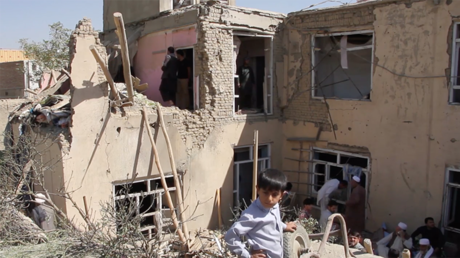

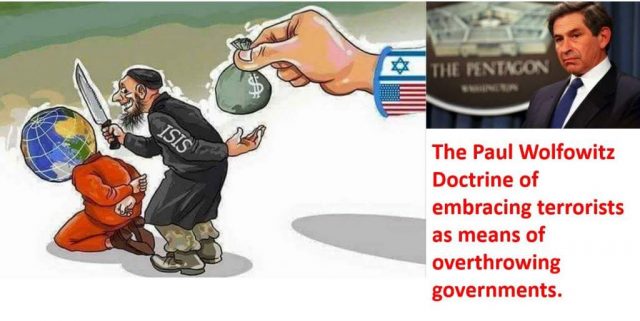
 Aletho News
 Aletho News