Biden regime obstructing ‘Ukraine aid’ audits
By Drago Bosnic | July 18, 2023
In late November 2022, Washington DC admitted that it was unable to account for approximately $20 billion in weapons sent to the Kiev regime. At the time, the newly elected Republican-dominated Congress vowed to conduct “impending audits” as soon as they took over in January. Officially, the GOP wanted audits to determine and then release information on the massive weapons shipments from the United States to the Kiev regime and how much of that “aid” was ending up “where it’s supposed to be”. Republicans promised to “hold the government accountable” for spending US taxpayers’ dollars for the sake of the deeply corrupt Kiev regime.
At the time, major news media, such as Fox News, claimed that the Biden administration inspected only 10% of approximately 22,000 weapons sent to the Kiev regime from late February to November. However, oversight issues also extended to other “theaters of operation”, such as Taiwan, where approximately $19 billion in weapons sales for China’s breakaway island province were “missing”. In late August, a Defense News report claimed there was a $14 billion backlog in weapons sales to Taiwan. However, the November data indicated that the actual number was nearly $19 billion in delayed deliveries, according to The Wall Street Journal.
“US government and congressional officials fear the conflict in Ukraine is exacerbating a nearly $19 billion backlog of weapons bound for Taiwan, further delaying efforts to arm the island as tensions with China escalate,” the WSJ report claimed. “The US has pumped billions of dollars of weapons into Ukraine since the Russian invasion in February, taxing the capacity of the government and defense industry to keep up with a sudden demand to arm Kiev in a conflict that isn’t expected to end soon,” the authors added in an admission rarely seen in mainstream media.
And yet, close to eight months since promising to conduct the aforementioned “impending audits”, the Republican-dominated Congress never did anything of sorts, while the so-called “aid” has swelled to over $170 billion, according to the data released by the Neo-Nazi junta itself. Strangely, the troubled Biden administration has been successful in preventing Congress from creating an inspector general’s office that would finally provide the much-needed oversight for the massive weapons shipments to the Kiev regime. The National Defense Authorization Act (NDAA) would create the inspector general office modeled after the Special Inspector General for Afghan Reconstruction (SIGAR).
The issues US government experienced during the existence of SIGAR is what likely caused the GOP-dominated Congress to keep postponing its “impeding audits”, despite clear promises it would conduct them. It can even be argued that much of the electorate voted for Republicans precisely because of their promises to heavily scrutinize the so far “unquestionable commitment” to provide the massive amount of “aid” to the Kiev regime. And indeed, the regular reports issued by SIGAR were a source of great embarrassment for any administration in Washington DC during America’s decades-long invasion of Afghanistan. These issues later greatly contributed to the humiliating US defeat in August 2021.
The Afghan-era inspector general John Sopko detailed the unchecked, all-present corruption that led to numerous failures during the truly unprovoked US aggression in Afghanistan. Sopko’s quarterly reports regularly embarrassed US and NATO officials who tried to present the supposed “improvement” of the operational situation as true. He has warned that “an inspector general’s official for the Ukraine war needed to be established to prevent a repeat of the situation American aid created in Afghanistan, which saw massive corruption”. Considering that the “Ukraine aid” is orders of magnitude greater than anything Afghanistan ever got, the scale of corruption in Kiev is virtually impossible to overstate.
“There is an understandable desire amid a crisis to focus on getting money out the door and to worry about oversight later, but too often that creates more problems than it solves,” he wrote in a report submitted to Congress earlier this year, adding: “Given the ongoing conflict and the unprecedented volume of weapons being transferred to Ukraine, the risk that some equipment ends up on the black market or in the wrong hands is likely unavoidable. You’re bound to get corrupt elements of not only the Ukrainian or the host government, but also of US government contractors or other third-party contractors to try to steal the money. There’s just so much money going in, and it’s hard to keep track of.”
Still, the troubled Biden administration keeps insisting that an inspector general for Ukraine would be an “unnecessary hurdle” as the Pentagon is “already monitoring transfers“.
“This expansion is both unnecessary and unprecedented, as oversight of US assistance for the benefit of a country’s people is already provided by the Inspectors General for the Department of State and United States Agency for International Development,” the White House stated.
And yet, according to a June report issued by the Pentagon inspector general, a number of issues with US weapons shipments to the Neo-Nazi junta were found.
“DoD [Department of Defense] personnel did not have the required accountability of the thousands of defense items that they received and transferred at Jasionka, [Poland],” the report claimed, adding: “We observed that DoD personnel did not fully implement their standard operating procedures to account for defense items and could not confirm the quantities of defense items received against the quantity of items shipped for three of five shipments we observed.”
The political West has sent tens of billions worth of weapons to the Kiev regime since before Russia launched its strategic counteroffensive against NATO aggression in Europe. This includes everything from small arms and tactical reconnaissance drones to heavy armor and very likely nuclear-capable fighter jets in the near future. And while Washington DC and its favorite puppet regime insist “all weapons are strictly and only being used on the battlefield”, dozens of countries in Europe, the Middle East, Latin America, Africa and elsewhere routinely complain that various extremely dangerous and violent criminal groups and terrorist organizations now possess advanced military-grade weapons that have been illegally acquired in Ukraine.
Drago Bosnic is an independent geopolitical and military analyst.
How the Taliban crushed the CIA’s heroin bonanza in Afghanistan
The Taliban has not once, but twice eradicated Afghanistan’s poppy cultivation, the world’s largest source of heroin.
By William Van Wagenen | The Cradle | July 7, 2023
In the aftermath of the chaotic US and UK withdrawal from Afghanistan in August 2021, Pakistani journalist Hamid Mir warned in the Washington Post of the dangers of “ignoring one important consequence of the Taliban takeover: the coming boom in Afghanistan’s narcotics trade.”
Mir then boldly predicted that, “in the next few years, a flood of drugs from Afghanistan may become a bigger threat than terrorism.”
This projection of an international drug trade boom seemed plausible, considering the longstanding accusations that the Taliban funded their two-decade insurgency against the occupying forces by controlling opium production. In fact, it was believed that 95 percent of heroin used in Britain originated from Afghan opium.
It comes as a surprise then, that a June 2023 report published by Alcis, a British-based geographic information services firm, revealed that the Taliban government had all but eliminated opium cultivation in the country, wiping out the base ingredient needed to produce heroin. This outcome mirrored a similar move by the Taliban in 2000 when they were in power the first time.
Ironically, instead of praising Kabul’s new leaders for quashing the source of illicit drugs, the international community responded to this development with criticism. Even the US Institute for Peace (USIP), which is funded by the US government, argued that “The Taliban’s successful opium ban is bad for Afghans and the world.”
Such western displeasure towards the Taliban’s efforts to dismantle the global heroin trade may seem perplexing at first glance.
However, a closer examination of events in Afghanistan reveals a different perspective. Under the guise of the “War on Terror,” the 2001 US and UK invasion was driven in part by the desire to restore the heroin trade, which the Taliban had abruptly terminated just a year earlier.
The western powers sought to reestablish the lucrative flow of billions of dollars that the heroin trade provided to their financial systems. In fact, “For 20 years, America essentially ran a narco-state in Afghanistan.”
‘Dollar for Dollar’
To understand the origins of the Afghan heroin trade, a review of US involvement in the central Asian nation is necessary, beginning in 1979 when the CIA embarked on a covert program to undermine the pro-Soviet Afghan government in Kabul.
The US covertly supported an umbrella of Muslim guerrilla fighters known as mujahideen, with the hope that provoking an insurgency would entice the Soviet Army to intervene. This calculated move would force the Soviets into occupying Afghanistan and engaging in a protracted and costly counter-insurgency campaign, thereby weakening the Soviet Union over time.
To accomplish this, the CIA turned to its close allies, Saudi Arabia and Pakistan, for help. Saudi Prince Bandar bin Sultan facilitated a meeting between CIA Director William Casey and Saudi King Fahd, in which the Saudis committed to matching “America dollar for dollar supporting the mujahedeen.”
The US and Saudi Arabia, with help from Pakistani’s Inter-Services Intelligence (ISI), set up training camps for the mujahideen in Pakistan, and supplied them with advisors, weapons, and cash to fight the Soviets.
Gulbaddin Hekmatyar, the founder of the Hizb-i-Islami militia, was among the most prominent mujahideen leaders, receiving some $600 million in aid from the CIA and its allies.
Journalist Steve Coll writes in his Pulitzer Prize-winning book Ghost Wars that Hekymatyar recruited from the most radical, anti-western, transnational Islamist networks to fight with him, including Osama bin Laden and other Arab volunteers. CIA officers “embraced Hekmatyar as their most dependable and effective ally,” and “the most efficient at killing Soviets.”
Caravans of opium
Aid to Hekymatyar and other mujahideen leaders was not limited to cash and weapons. According to renowned historian Alfred McCoy:
“1979 and 1980, just as the CIA effort was beginning to ramp up, a network of heroin laboratories opened along the Afghan-Pakistan frontier. That region soon became the world’s largest heroin producer.”
The process involved smuggling raw opium gum to Pakistan, where it was processed into heroin in laboratories run by the ISI. The finished product was then discreetly transported via Pakistani airports, ports, or overland routes.
By 1984, Afghan heroin supplied a staggering 60 percent of the US market and 80 percent of the European market, while devastatingly creating 1.3 million heroin addicts in Pakistan, a country previously untouched by the highly-addictive drug.
McCoy states further that, “caravans carrying CIA arms into that region for the resistance often returned to Pakistan loaded down with opium.” Reports from 2001 cited by the New York Times confirmed that this occurred “with the assent of Pakistani or American intelligence officers who supported the resistance.”
In May 1990, the Washington Post reported that the US government had for several years received, but declined to investigate, reports of heroin trafficking by its allies, including “firsthand accounts of heroin smuggling by commanders under Gulbuddin Hekmatyar.”
Rise of the Taliban
When the Soviets did finally withdraw in 1989, the country fell into civil war as the major CIA-backed factions began fighting among themselves for control of the country. Mujahideen leaders became warlords and committed terrible atrocities against the local population while fighting amongst themselves.
It was during this anarchy that religious students from the madrassas (seminary schools), the Taliban, emerged with the help of Pakistani intelligence to take control of the country in 1996, subsequently inheriting the opium trade, which continued unhindered for several years.
In July 2000, however, Taliban leader Mullah Omar ordered a ban on all opium cultivation. Remarkably, the Taliban successfully slashed the opium harvest by 94 percent, reducing yearly production to only 185 metric tons.
Five months later, in December 2000, the US and Russia used the UN Security Council to impose harsh new sanctions on Afghanistan, citing the Taliban’s refusal to hand over Al-Qaeda leader Osama bin Laden following the bombing of the USS Cole in Yemen, in which 17 US sailors were killed. Bin Laden had taken refuge in the Islamic Emirate in 1996 after he was expelled from Sudan.
The New York Times reported that US officials sought to impose the new sanctions, despite warnings from the UN that “a million Afghans could face starvation in coming months because of a drought and continued civil war.”
Following the attacks on 11 September, 2001, Bush administration officials demanded the Taliban hand over Bin Laden once again. Mullah Omar insisted the US first provide evidence of Bin Laden’s guilt, but President Bush refused this request and ordered the US air force to begin bombing Afghanistan on 7 October.
In the wake of the bombing, Mullah Omar dropped the demand for evidence, and offered to hand over Bin Laden to US ally Pakistan for trial. Bush administration officials once again refused.
Journalist and author Scott Horton highlights in his book Fool’s Errand a peculiar aspect of the US campaign: the lack of a clear focus on capturing or eliminating Bin Laden. In fact, President Bush had already stated on 25 September that success or failure should not be defined solely by capturing Bin Laden.
Horton notes further that US planners made no initial effort to hunt down Bin Laden and the foreign Arab fighters supporting him. Instead, head of US Central Command, General Tommy Franks prioritized partnering with Afghan warlord Rashid Dostum to take control of the north of the country, and establish a “land link” to Uzbekistan.
Turning to the warlords
To also capture the capital, Kabul, and other key cities in the south, Alfred McCoy notes the CIA:
“Turned to a group of rising Pashtun warlords along the Pakistan border who had been active as drug smugglers in the south-eastern part of the country. As a result, when the Taliban collapsed, the groundwork had already been laid for the resumption of opium cultivation and the drug trade on a major scale.”
Though US forces were too late to prevent Bin Laden’s escape to Pakistan, the US bombing campaign came just in time for the beginning of poppy planting season. Poppies are planted in the autumn so that the juice from the plant, from which opium is extracted, can be harvested in spring.
McCoy clarified further that, “the Agency (CIA) and its local allies created ideal conditions for reversing the Taliban’s opium ban and reviving the drug traffic. Only weeks after the collapse of the Taliban, officials were reporting an outburst of poppy planting in the heroin-heartlands of Helmand and Nangarhar.”
In December, one of these rising Pashtun warlords, Hamid Karzai, was appointed Chairman of the Afghan Interim Administration and later president.
By the spring of 2002, large amounts of Afghan heroin were once again being transported to Britain via daily flights from Pakistani airports. The Guardian observed the case of a 13-year-old girl who was stopped after she stepped off a Pakistan International Airlines flight from Islamabad to London carrying 13kgs of heroin with a street value of £910,000.
Industrial scale
Thanks to the “land link” established by General Franks, heroin also immediately began flowing north from Mazar-e-Sharif, under CIA ally Rashid Dostum’s control, to Uzbekistan and then to to Russia and Europe.
The flow of heroin was witnessed by Craig Murray, the British Ambassador to Uzbekistan, who explained that Dostum, an ethnic Uzbek, facilitated the smuggling of heroin from Afghanistan to Uzbekistan, where it was then shipped up the railway line, in bales of cotton, to Moscow and then Riga. As Murray noted:
“Opium is converted into heroin on an industrial scale, not in kitchens but in factories. Millions of gallons of the chemicals needed for this process are shipped into Afghanistan by tanker… The four largest players in the heroin business are all senior members of the Afghan government – the government that our soldiers are fighting and dying to protect.”
‘A hands off approach’
In addition to Dostum, Afghan President Hamid Karzai’s younger brother, Ahmed Wali Karzai, quickly secured a prominent role in the Afghan heroin trade.
Credible reports emerged that Wali Karzai was deeply involved in the heroin trade, however, according to the New York Times, the incidents were never investigated, “even though allegations that he has benefited from narcotics trafficking have circulated widely in Afghanistan.”
Senior officials at the US Drug Enforcement Agency (DEA) and the office of the Director of National Intelligence (DNI) complained that the Bush “White House favored a hands-off approach toward Ahmed Wali Karzai because of the political delicacy of the matter.”
The Times later reported that according to a top former Afghan Interior Ministry official, a major source of Wali Karzai’s influence was his control over key bridges crossing the Helmand River on the route between the opium-growing regions of Helmand Province and Kandahar. This allowed Karzai to charge huge fees to drug traffickers to allow their drug-laden trucks to cross the bridges.
Like Dostum and Hekmaytar, Wali Karzai built his heroin empire while on the CIA payroll. The agency began paying Karzai in 2001 to recruit an Afghan paramilitary force that operated at the agency’s direction in and around Kandahar and to rent a large compound for use as the base of the Kandahar Strike Force. The CIA also appreciated Karzai’s help in communicating and sometimes meeting with Afghans loyal to the Taliban.
Karzai also served as the head of Kandahar’s elected provincial council. According to a senior US military officer in Kabul quoted by the Times, “Hundreds of millions of dollars in drug money are flowing through the southern region, and nothing happens in southern Afghanistan without the regional leadership knowing about it.”
The blame game
In late 2004, as reports of Karzai’s involvement in the heroin trade were emerging, Alfred McCoy writes that “the White House was suddenly confronted with troubling CIA intelligence suggesting that the escalating drug trade was fueling a revival of the Taliban.”
A proposal from Secretary of State Colin Powell to fight the heroin trade was resisted by US ambassador to Afghanistan, Zalmay Khalilzad, and then-Afghan finance minister Ashraf Ghani. As a compromise, the Bush administration used private contractors for poppy eradication, an effort that New York Times journalist Carlotta Gall later described as “something of a joke.”
Additionally, reports of a 2005 cable sent by the US embassy in Kabul to Powell’s successor, Secretary of State Condoleezza Rice, viewed Britain as being “substantially responsible” for the failure to eradicate poppy cultivation. British personnel chose where the eradication teams worked, but those areas were often not the main growing areas, and “the British had been unwilling to revise targets.”
The cable also faulted President Karzai, who “has been unwilling to assert strong leadership.” The State Department nevertheless defended him, saying, “President Karzai is a strong partner, and we have confidence in him,” despite reports of his brother’s key role in the heroin trade.
But the problem went beyond Wali Karzai. A UN report for the World Bank published in February 2006 concluded the Afghan heroin trade was operating with the assistance of many top Afghan government officials and under the protection of the Afghan Ministry of Interior.
As evidence of CIA and Afghan government involvement in the heroin trade grew, the focus of the western media shifted towards blaming the Taliban for using drug profits to fund their insurgency against foreign forces.
However, historian Peter Dale Scott challenged this narrative, citing UN estimates that the Taliban’s share of the Afghan opium economy was a fraction compared to that of supporters of the Karzai government. Scott emphasized that the largest share of the drug trade was controlled by those aligned with the Afghan government.
The surge
In early 2010, the Obama administration announced a “surge” of 33,000 US troops to help pacify the country, with a particular focus on key districts known for poppy cultivation. One such district was Marja in Helmand province, which McCoy referred to as “the world’s heroin capital.”
Despite the surge’s mission, US commanders seemed unaware of Marja’s significance as a hub for heroin production, fueled by the surrounding opium fields that accounted for 40 percent of the world’s illicit opium supply.
In September 2010, eight months after the start of the surge, “unsubstantiated” reports emerged that British soldiers were involved in trafficking heroin out of Afghanistan using military aircraft at airports in Camp Bastion and Kandahar.
Camp Bastion, jointly operated by the UK and the US, was located near Lashkar Gah, another major center of poppy cultivation. In 2012, it was alleged that poppy cultivation was taking place just outside the base’s perimeter, with British soldiers providing protection to farmers against Afghan security forces.
By late 2014, British and US forces withdrew from Camp Bastion, handing it over to Afghan forces, who renamed it Camp Shorabak. However, according to a UN report, “the opium-growing area around Britain’s main base in Afghanistan nearly quadrupled between 2011 and 2013.”
Despite the withdrawal, opium exports from Camp Shorabak apparently continued, and a small number of British military personnel returned in 2015 in what was described by the Ministry of Defense as an advisory role.
In 2016, Obaidullah Barakzai, a member of the National Assembly of Afghanistan, claimed, “It’s impossible for a few local drug smugglers to transfer opium in thousands of kilos. This is the work of the Americans and British. They transport it by air from Camp Shorabak.”
After US forces chaotically withdrew from Afghanistan in August 2021, the Taliban once again succeeded in eliminating poppy cultivation, showing it was far from a “dedicated drug cartel” after all.
Follow the money
In November 2021, an opium merchant claimed that “All the profits go to the foreign countries. Afghans are just supplying the labor.”
Peter Dale Scott noted that according to the UN, some $352 billion in drug profits had been absorbed into the western financial system, including through the US’ largest banks in 2009. As a result, Scott said the “United States involvement in the international drug traffic links the CIA, major financial interests, and criminal interests in this country and abroad.”
In 2012, the Daily Mail reported that HSBC, Britain’s biggest bank, faced up to £640million in penalties for allowing “rogue states and drugs cartels to launder billions of pounds through its branches,” and for becoming “a conduit for criminal enterprises.”
The billions in profits flowing from the Afghan heroin trade into western banks have now been eliminated by the Taliban not once, but twice in the past two decades.
Taliban leader Mullah Omar’s pronouncement in July 2000 that poppy cultivation was “un-Islamic” was, therefore, a more likely cause of the US sanctions imposed in December of the same year, and of the US invasion of Afghanistan a year later, than was any US desire to apprehend Bin Laden and dismantle Al-Qaeda.
In March 2002, just six months after the bombing and invasion of Afghanistan, a journalist asked President Bush, “Where’s Osama bin Laden?” Bush replied, ‘I don’t know. I don’t really think about him very much. I’m not that concerned.”
The Afghan drug trade serves as a stark reminder of the intricate connections between geopolitics, illicit economies, and global finance, and the need for greater transparency and accountability in addressing these complex issues.
The historical evidence also challenges the simplistic narrative that the Taliban largely controlled the Afghan drug trade, highlighting the dominant role played by the US-backed Afghan government and its allies in the CIA.
Taliban successfully eradicates poppy cultivation: Report

Toor Khan (right) razing a poppy field to the ground along with fellow Taliban members. (Photo Credit BBC)
The Cradle | June 8, 2023
The Taliban government of Afghanistan has carried out “truly unprecedented reductions in poppy cultivation” in 2023, according to a new analysis published by Alcis, a UK-based geographic information services firm specializing in geospatial data collection, statistical analysis and visualization.
The poppy reduction followed a ban on drugs in Afghanistan issued in April 2022 by Taliban leader Mullah Haibatullah, only seven months after the Islamic movement took power following the August 2021 US military withdrawal from the country.
Alcis reports that an effective ban on poppy cultivation is in place and that opium production in 2023 will be negligible compared to 2022. High resolution imagery analyzed by the firm shows that in the province of Helmand, poppy cultivation was reduced from 120,000 hectares in 2022 to less than 1,000 hectares in 2023. This amounts to the largest reduction in poppy cultivation ever recorded in the country, including after the Taliban banned poppy production in 2000, one year before losing power following the 2001 US invasion.
As a result, wheat cultivation now dominates provinces in the south and southwest, where some 80% of Afghanistan’s total poppy crop had previously been grown.
The Taliban announced the ban on poppy cultivation in April 2022, but allowed the harvest of the poppy crop planted in the fall of 2021, fearing that banning or destroying it so close to the harvest season and after farmers had invested considerable time and resources in their poppy fields would provoke widespread unrest.
The Taliban then banned the planting of new poppy crops moving forward and destroyed any poppy fields planted after that time in violation of the ban.
Over the course of the summer of 2022, the Taliban also targeted the methamphetamine industry by destroying the ephedra crop and ephedrine labs across the country.
These findings were confirmed by journalists from the BBC, who traveled to Afghanistan this month while embedded with Taliban members destroying remaining poppy fields with sticks.
The BBC noted that the loss of supply of Afghan heroin may lead to increases in the “synthetic drugs, which can be far more nasty than opium,” among US and European drug users.
The BBC noted further that “opium was also grown freely in areas controlled by the US-backed former Afghan regime, something the BBC witnessed prior to the Taliban takeover in 2021.”
Indeed, the heroin trade has played a role in the conflicts plaguing the war-torn country since the 1970s.
In the late 1970s and in the 1980s, the CIA relied on Pakistan’s Inter-Services Intelligence Agency (ISI) and its Afghan mujahideen clients to wage war against the Soviet-backed Afghan government, and against Soviet forces which occupied the country in support of the government.
According to historian Alfred McCoy, the ISI, and mujahideen soon became key players in the burgeoning cross-border opium traffic.
McCoy writes that “The CIA looked the other way while Afghanistan’s opium production grew from about 100 tonnes annually in the 1970s to 2,000 tonnes by 1991. In 1979 and 1980, just as the CIA effort was beginning to ramp up, a network of heroin laboratories opened along the Afghan-Pakistan frontier. That region soon became the world’s largest heroin producer. By 1984, it supplied a staggering 60% of the US market and 80% of the European.”
McCoy writes further that, “Caravans carrying CIA arms into that region for the resistance often returned to Pakistan loaded down with opium – sometimes, reported the New York Times, ‘with the assent of Pakistani or American intelligence officers who supported the resistance.’”
As reporting from journalist Gary Webb showed, the CIA was transporting weapons by plane to its proxy army in Nicaragua, the Contras, while the planes returned to the US loaded with cocaine, during this same period. Declassified US government documents later acknowledged that US officials relied on the drug trade to fund arms purchases for the Contras.
The Soviet withdrawal from Afghanistan in 1989 was followed by years of chaos as warlords competed for control of the country. In 1996, the Taliban came to power and imposed a measure of order on the country. In 2000, the Islamic movement banned poppy production.
However, US forces invaded Afghanistan in October 2001 and quickly toppled the Taliban. Poppy cultivation and the heroin trade flourished.
In 2004, Antonio Maria Costa, Executive Director United Nations Office on Drugs and Crime, reported that opium cultivation increased by two-thirds that year and had spread to all 32 provinces, “making narcotics the main engine of economic growth” in the country.
In 2010, a growing Taliban insurgency prompted President Obama to launch his Afghan surge, which sent an additional 17,000 US troops to the country. The surge was launched at Marja, a remote market town in Helmand province.
Alfred McCoy writes that, “As waves of helicopters descended on its outskirts spitting up clouds of dust, hundreds of marines sprinted through fields of sprouting opium poppies toward the village’s mud-walled compounds. Though their targets were the local Taliban guerrillas, the marines were, in fact, occupying one of the capitals of the global heroin trade.”
McCoy noted further that the US-backed “Afghan army seemed to be losing a war that was now driven – in ways that eluded most observers – by a battle for control of the country’s opium profits. In Helmand province, both Taliban rebels and provincial officials are locked in a struggle for control of the lucrative drug traffic.”
As Simon Spedding of the University of South Australia observed, “The simple facts are that opium production was high under the US-influenced government of Afghanistan of the 1970s, decreased 10-fold by 2001 under the Taliban, and then increased 30-fold and more under the US to the same level as in the 1970s … These are facts, whereas the idea that the CIA runs opium from Afghanistan would be a conspiracy theory—unless, you thought about the United Nations statistics or happened to have been to Afghanistan.”
The Middle East and US Terrorist Activities
By Viktor Mikhin – New Eastern Outlook – 08.06.2023
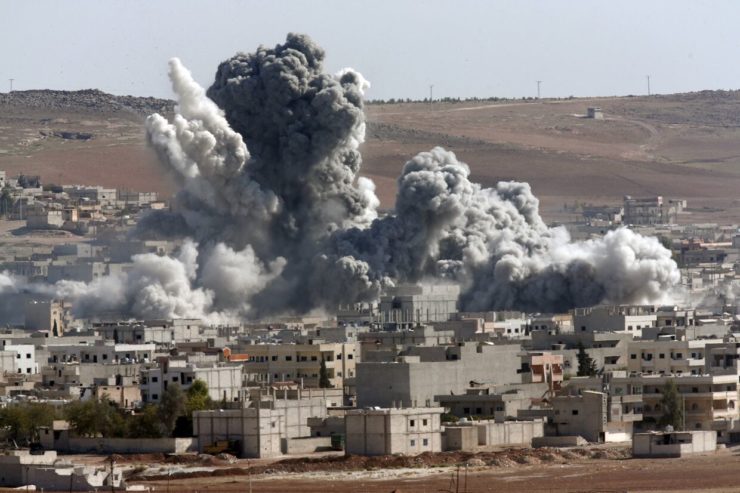
Incredibly high civilian casualty rates from American-led military adventurism in Afghanistan, Iraq, Pakistan, Syria, Yemen, Libya, and Somalia have been revealed in a new research by Brown University’s The Cost of War Project in the State of Rhode Island. The report provides direct data on the victims of the war in which nearly a million people were killed by the US efforts.
According to the study, another important aspect that has indirectly killed several million more people is the military destruction of the economy, public services, infrastructure and the environment, which increases the death toll long after the bombs have been dropped and increases over time. The report estimates that these factors contributed to more than 3.5 million deaths. This aspect requires more research, and the project specifically emphasizes that “the many long-term and underestimated consequences of war” need to be explored in more detail.
Another study shows that the number of direct casualties from wars that killed nearly a million people is an understatement, which the report again refers to by saying that “the exact death toll remains unknown.” In another section of the project’s report on the Iraqi death toll, it says that “estimates of the Iraqi war death toll have been particularly inconsistent. The Lancet 2006 estimated that approximately 600,000 Iraqis died as a result of military violence between 2003 and 2006.” The report goes on to say that the controversy over conflicting reports about the death toll in Iraq stems from news reports estimates, with some exaggerating the death toll while those who supported the illegal invasion downplayed the death toll.
The project cites a report in The Lancet that says the death toll in Iraq since 2003 and in the next three years alone reached 600,000 Iraqis. Various unbiased studies have been conducted, concluding that more than one million Iraqis were killed as a result of the US invasion and occupation of Iraq from 2003 to 2011.
Even the one million mark in Iraqi deaths could be considered an understatement when there were daily reports of almost daily terrorist bombings that killed hundreds of Iraqis. And then, add to that the US and DAESH era from 2014 to 2017, when hundreds of thousands more people were killed, and it’s not hard to imagine that over a million Iraqis have died and continue to die today as a result of the US so-called “war on terror.”
There is no doubt that the US military presence has brought nothing but insecurity and instability to West Asia. In January 2018, Leader of the Islamic Revolution in Iran, Ayatollah Sayyid Ali Khamenei said: “What is important is that the corruptive presence of the US in this region must end… They (Americans) have brought war, discord, sedition and destruction to this region; they brought about destruction of infrastructures. Of course, they do this everywhere in the world… It must be stopped.”
The Cost of War Project’s latest study also warns that “these wars continue to affect millions of people around the world, who live with their consequences and die from them.” The report focuses on the impact of the wars unleashed by the United States on women and children, who “bear the brunt of these ongoing consequences.”
The report notes that while some people have died in combat, many more, especially children, have died as a result of the negative effects of wars, such as the spread of disease and damage to public services. “More research is needed on the impact of the destruction of public services by war, especially outside the health care system, on public health,” the report says. “Damage to water and sanitation systems, roads and commercial infrastructure such as ports, for example, has significant and important negative consequences.”
The study says that the wars and conflicts the United States has fought or been involved in under the pretext of supposedly fighting terrorism since September 11, 2001, clearly show that the consequences of the ongoing violence of war are so vast and complex that they cannot be measured. It should be noted that after the 9/11 attacks, the US waged wars and fomented conflicts, especially in West Asia, under the pretext of fighting terrorism. However, as a result of US military adventurism, there has been an extremely dramatic increase in terrorist groups that had no presence in West Asia or countries such as Somalia prior to Washington’s military intervention in the region.
In other words, the so-called “war on terror” has had the opposite effect from the stated goal of Pentagon’s campaign of instability in West Asia, which has allowed terrorism to flourish. In other words, and many experts agree, the presence of US troops and US policies in the Middle East and other parts of the world have only led to the direct growth of terrorism and terrorist organizations that have destabilized peace and tranquility in those parts of the world.
The report states that the damage and continued deaths caused by the wars mean that those who have unleashed them must take responsibility, including financial responsibility for repairing the damage caused. Suffice it to recall how the American clown of a Secretary of State Colin Powell shook some test tube of incomprehensible white powder on the UN podium and hysterically frightened the whole world with unthinkable troubles from Saddam Hussein. And that was the reason for the barbaric and unjustifiable attack on sovereign Iraq in 2003, from which the Iraqis are still unable to recover and rebuild their state.
Iraqis, and indeed millions of other people, still suffer from distress, pain and trauma in both current and former war zones, according to the study, which calls on the United States as well as its allies to ease the continuing loss and suffering of millions and provide the required “reparations, though not easy, and cheap.” It is something “imperative,” the report notes.
The project correctly and very justifiably blames the US for its role in the military adventurism it embarked on after 9/11, particularly the casualties inflicted during the American two-year war and the 20 year of occupation of Afghanistan. The report focuses on Afghanistan as an example of how people, particularly women and children, the most vulnerable in society, are dying because, despite the indiscriminate withdrawal (or rather shameful flight) of US troops, the damage Washington has done to Afghanistan’s vital services, such as its health sector, sanitation and other infrastructure over 20 years of war and occupation, means that Afghans are still dying today. “Although the United States withdrew military forces from Afghanistan in 2021, officially ending the war that began with its invasion 20 years ago, Afghans are suffering and dying from war-related causes today more often than ever,” the report notes alarmingly.
The Cost of War Project says that much more research is needed to gather more adequate data “to guide life-saving actions.” “More research is needed on the impact of the destruction of public services by war, especially outside the health care system, on public health,” the report notes. “Damage to water and sanitation systems, roads and commercial infrastructure such as ports, for example, has significant consequences.”
In the case of Somalia, for example, the US intervention and the ensuing war prevented the delivery of humanitarian aid, which, according to the study, exacerbated the famine. This is a natural disaster that could have been mitigated if the US had instead chosen to spend a huge amount of money on humanitarian aid programs instead of radicalizing the local population (and increasing terrorism and bloodshed) by bombing civilians with drones. The section of the report reads: “While all belligerents must be held accountable, in the causation sections this report addresses the relevant consequences of the actions of the United States, as the primary power responsible for all these crimes.”
Critics argue that if the United States had not fought wars against West Asian countries or provoked conflicts in the region, other parties would not have participated in any combat missions. In this case, the US should be solely responsible for the disturbing direct and indirect death toll resulting from its provocative and illegal military measures. Washington’s policy of intimidation, military adventurism and terrorism against peace-loving nations of the world must end. And this is the will and aspiration of peoples who want to live in peace and prosperity, without wars and aggressions, and to follow the path of building a new multipolar world, actively promoted by Russian President Vladimir Putin.
British special forces deployed to 19 countries since 2011 – Report
RT | May 23, 2023
The UK has sent its special forces to 19 countries since 2011, according to a report by Action on Armed Violence (AOAV). These British operatives trained foreign militants, carried out assassinations, and reportedly fought alongside child soldiers.
In a report published on Tuesday, AOAV stated that British operatives have been deployed to fight or surveil hostile forces in Algeria, Cyprus, Estonia, France, Iraq, Kenya, Libya, Mali, Nigeria, Pakistan, the Philippines, Russia, Somalia, the Strait of Hormuz between Iran and Oman, Sudan, Syria, Ukraine, and Yemen.
Some of these deployments were into locations in which British troops were already fighting, as was the case in Afghanistan and Iraq. However, UK Special Forces (UKSF) continued their operations in both countries long after regular forces withdrew. In Afghanistan, hundreds of civilian deaths were attributed to night raids by British and American special forces between 2009 and 2012.
While parliament authorized military action in Afghanistan and Iraq, UKSF have deployed to other active conflict zones without the assent of lawmakers. Three days before parliament voted against a deployment to Syria in 2013, UKSF and MI6 operatives were on the ground targeting Syrian air defense installations and calling in American airstrikes, the report stated. Within months, they were training anti-government militants while assassinating Islamic State fighters.
In Yemen, UKSF operatives conducted raids on Al Qaeda-linked militants, but, in some cases, fought alongside jihadists who had been recruited by Saudi Arabia and the UAE to attack Houthi rebels. Up to 40% of these jihadi forces, AOAV noted, were child soldiers.
Training missions and hostage rescue operations made up most of the rest of the deployments, while the UKSF operation in Russia focused on providing security for British athletes at the 2014 Winter Olympics in Sochi.
Recently leaked Pentagon documents suggest that the UK has deployed 50 special forces personnel to Ukraine since Russia launched its military operation last February. Prior to the leak, multiple media outlets reported the presence of British and American special forces in Ukraine, while one general told The Times last year that as many as 300 British commandos were conducting “discrete operations” alongside Kiev’s forces.
“The extensive deployment of Britain’s Special Forces in numerous countries over the past decade raises serious concerns about transparency and democratic oversight,” said AOAV Director Iain Overton. “The lack of parliamentary approval and retrospective reviews for these missions is deeply troubling.”
Up to 4.5 Million Dead in ‘Post-9/11 War Zones’ – Study
By Will Porter | The Libertarian Institute | May 16, 2023
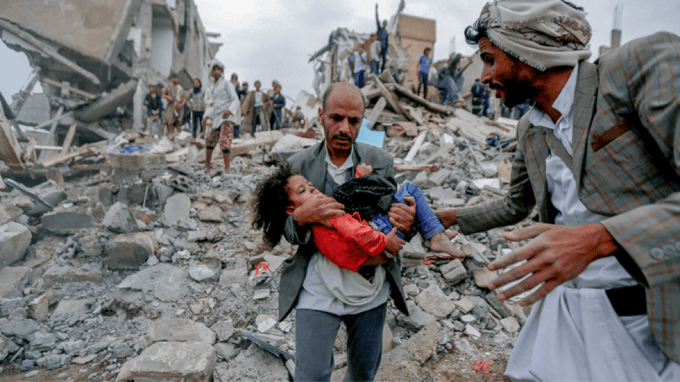
The far-reaching effects of America’s War on Terror may have contributed to the deaths of some 4.5 million people, according to new research by Brown University’s ‘Costs of War’ project. While many of the fatalities were the direct result of violent conflict, indirect causes such as economic collapse and food insecurity have taken a far greater toll.
Published on Monday, the study examines the long-term impact of the “post-9/11 wars” and the “devastating indirect toll” inflicted in Afghanistan, Iraq, Pakistan, Syria, Yemen, Libya and Somalia – all nations subject to US military intervention since 2001.
“Some of these people were killed in the fighting, but far more, especially children, have been killed by the reverberating effects of war, such as the spread of disease,” the paper said. “These latter indirect deaths – estimated at 3.6-3.7 million – and related health problems have resulted from the post-9/11 wars’ destruction of economies, public services, and the environment.”
Though the researchers acknowledged that the true total figure remains unknown, the study reviews a wide range of factors contributing to mortality. Those include economic collapse and the resulting loss of livelihood for local residents, the destruction of health infrastructure and public services, environmental contamination, as well as other cultural effects of war that can lead to further violence down the line.
“While this research does not ascribe blame to any single warring party or factor, and neither does it suggest the full death count is quantifiable, a reasonable and conservative estimate suggests that at least 4.5 million people have died in the major post-9/11 war zones,” the study concluded.
It went on to stress that “body counts are complicated and controversial,” and that tallying deaths from indirect causes is even more difficult, suggesting its figures are merely a tentative estimate based on a variety of sources.
The researchers found staggering levels of child malnutrition in some of the affected countries, with Afghanistan and Yemen topping the list. In the wake of Washington’s two-decade military occupation, more than 3 million Afghan children are now experiencing wasting, a symptom of severe, potentially life-threatening malnutrition.
Last year, Doctors Without Borders warned of a “worrying increase” in Afghanistan’s malnutrition rates, citing “the suspension of international aid” as among the primary causes. A special representative for the United Nations, Dr. Ramiz Alakbarov, described the situation as “almost inconceivable,” adding that up to 95 percent of Afghans were “not eating enough food, with that percentage rising to almost 100 percent for female-headed households.”
UN emergency aid coordinator Martin Griffiths has also attributed the crisis in Afghanistan, in part, to international sanctions and the seizure of government bank accounts following the Taliban’s sudden rise to power in the summer of 2021.
The study found that more than 2 million children in Yemen were also suffering from wasting following eight years of brutal bombings by Saudi Arabia and its allies, which have all but crippled the country’s healthcare sector. Riyadh has received indispensable support from the United States throughout the conflict despite countless reports of attacks on civilians and infrastructure, including hospitals, clinics, homes, factories, farms and bridges. A UN estimate in late 2021 suggested some 377,000 people had been killed in Yemen since the war erupted in 2015, with 70 percent thought to be children under the age of 5.
The Costs of War authors said the study aimed to “convey the scale of the suffering” in the war-torn nations, stating the “urgent need to mitigate the damage” inflicted by US military interventions and their long-term and indirect consequences. They added that additional research is needed on the subject, voicing hopes such work could “prevent further loss of life,” as America’s post-9/11 wars “are ongoing for millions around the world who are living with and dying from their effects.”
Taliban: Territory Will Not Be Used Against Russia, Central Asia
Sputnik – 16.04.2023
MOSCOW – A delegation of the Russian Foundation for Islamic Culture, Sciences and Education has received assurances from a senior Taliban official that the movement will not let Afghan territory to be used against Russia, a member of the delegation, Magomedbashir Albogachiev, told Sputnik.
“On Sunday, our delegation in Kabul held a meeting with Maulavi Abdul Kabir, Afghanistan’s deputy prime minister for political affairs. He asked us to tell the Russian leadership that the Taliban movement will not let use its territory against Russia or the countries of Central Asia,” Albogachiev said.
According to Albogachiev, the Afghan deputy prime minister said that Afghanistan was “extremely interested” in building comprehensive trade and economic ties with Russia, which is an issue currently complicated by the absence of a clear logistical route.
Earlier in the week, Russian Foreign Minister Sergey Lavrov took part in the fourth meeting of the foreign ministers of Afghanistan’s neighboring countries in the Uzbek city of Samarkand, with the officials discussing the situation in Afghanistan and ways to develop a common regional approach to improving it. Lavrov said at a press conference after the meeting that practically all of the participating countries agreed on the necessity to maintain and develop contacts with the Taliban movement.
China releases position paper on Afghan issue to help reconstruction
Regional countries expect China to play a more active role: expert
By Liu Xin and Ding Yazhi – Global Times – April 12, 2023
China released an 11-point paper to fully elaborate its position on the Afghan issue and express firm support for the reconstruction of the war-torn country on Wednesday – the same day as Chinese State Councilor and Foreign Minister Qin Gang started a two-day visit to Uzbekistan where he will also attend the fourth Foreign Ministers’ Meeting among the Neighboring Countries of Afghanistan in Samarkand.
Analysts noted that China is taking concrete measures to push further coordination on the Afghan issue and together with regional countries to help with Afghanistan’s reconstruction and revitalization.
The paper, titled “China’s Position on the Afghan Issue,” lists China’s adherence to the “Three respects” and “Three nevers,” as the first point. These are respect for Afghanistan’s independence, sovereignty and territorial integrity, to respect the independent choices made by the Afghan people, and to respect the religious beliefs and national customs of Afghanistan. China never interferes in Afghanistan’s internal affairs, never seeks selfish interests in Afghanistan and never pursues so-called sphere of influence.
Afghanistan is in a crucial period of moving from turbulence to stabilization. To fully outline China’s policy and propositions in a systematic way and build consensus and synergy among countries in the region and elsewhere on stabilizing and helping Afghanistan, the foreign ministry released China’s Position on the Afghan Issue, Chinese Foreign Ministry spokesperson Wang Wenbin said at a press conference on Wednesday.
Wang noted that the fourth Foreign Ministers’ Meeting among the Neighboring Countries of Afghanistan will be held in Samarkand on Thursday and China is willing to work with neighboring countries to help Afghan to walk on the path for stable development and to realize regional peace and prosperity.
State Councilor and Foreign Minister Qin will attend the fourth Foreign Ministers’ Meeting among the Neighboring Countries of Afghanistan in Samarkand, Uzbekistan and visit Uzbekistan from Wednesday to Thursday, according to information from the Foreign Ministry.
Observers said that the paper on the Afghan issue came on the heels of a 12-point positon paper on Ukraine crisis which was released in February, also highlighting China’s consistent stance in seeking and making peaceful solutions for heated geopolitical issues.
Qin will meet with the President of Uzbekistan Shavkat Mirziyoyev and hold talks with Acting Foreign Minister Bakhtiyor Saidov. They will exchange views on bilateral relations, high-level exchanges between the two sides and international and regional issues of shared interest, according to Foreign Ministry.
Qin’s visit will further deepen mutually beneficial cooperation and bilateral relations with Uzbekistan and Central Asian countries to inject stability in the region amid global spillover effects of the Ukraine crisis, analysts said.
The Wednesday paper which collectively and thoroughly elaborates China’s stance on the Afghan issue will help coordinate neighboring countries’ stance and push a different way from the West and the US in solving conflicts within Afghanistan through political dialogue, Zhu Yongbiao, director of the Center for Afghanistan Studies at Lanzhou University, told the Global Times on Wednesday.
The international community, especially regional countries, expect China to play a more active role on the Afghan issue given its selfless assistance to Afghanistan people, Zhu noted.
The third Foreign Ministers’ Meeting among the Neighboring Countries of Afghanistan was held in Tunxi, East China’s Anhui Province in 2022 and foreign ministers or high-level representatives from China, Iran, Pakistan, Russia, Tajikistan, Turkmenistan, and Uzbekistan drafted a joint statement and an initiative in pooling resources and coordinating to increase their support for Afghanistan, analysts said.
The paper released on Wednesday showcases China’s efforts in promoting mechanism of the foreign ministers of Afghanistan neighboring countries a step forward to bring more light to Afghanistan reconstruction, Hu Shisheng, director of the Institute for South Asian Studies at the China Institutes of Contemporary International Relations, told the Global Times.
Hu noted that currently, Afghanistan is facing new historical changes – after the withdrawal of the US and Western troops, the country has seen no proxy wars and more autonomy.
However, the situation is fragile and can be reversed at any time. And the sanctions imposed by the US and the West are squashing Afghanistan’s chances of future development. While China and regional countries are working to help Afghanistan regain the capability to revitalize itself, the US and Western countries should also take their due responsibility, said Hu.
The Wednesday paper urged the US to live up to its commitments and responsibilities to Afghanistan and noted that “by seizing Afghanistan’s overseas assets and imposing unilateral sanctions, the US, which created the Afghan issue in the first place, is the biggest external factor that hinders substantive improvement in the humanitarian situation in Afghanistan.”
Zhu noted that more efforts from the international community are required given the current problems in Afghanistan, including the Afghan Taliban interim government’s ban on women’s access to education, domestic and regional measures on countering terrorism and Afghanistan’s fight against narcotics.
All these topics will be discussed on Thursday during State Councilor and Foreign Minister Qin and other foreign ministers’ meeting from neighboring countries, said Zhu, noting that a stable Afghanistan not only fits the interests of Afghanistan people but will also contribute to regional stability, creating favorable conditions for countries in the region to seek better development.
British ex-soldier turned journalist charged with spying in Afghanistan
The Cradle | April 9, 2023
The Afghan government detained three British nationals under suspicion of spying for their country; one of those accused was a former soldier stationed in Afghanistan, now supposedly working as a journalist, according to TOLOnews.
According to a source cited by the news site, the former soldier was stationed in the southern province of Helmand, a deeply contested area of Afghanistan, during the occupation.
“If they come here illegally, or violated the laws of Afghanistan or worked as spies for other countries, it is considered a crime, and any country has the right to detain such foreign nationals and introduce them to the relevant organizations,” said Sarwar Niazai, a military analyst.
The former soldier Kevin Cornwell and another British national were detained by the Taliban-led government on 11 January 2023, both supposedly carrying illegal firearms. A total of three UK citizens are currently detained in Afghanistan.
Toryalai Zazai, a Taliban combat veteran, told the Afghan news channel that “the country should be rescued from the spies, the country should be rescued from the intelligence circles. The Islamic Emirate should not allow these invader countries to send their intelligence representatives to our country.”
Meanwhile, UK Home Secretary Suella Braverman said, “If there are British citizens abroad, then the UK government is going to do whatever it takes to ensure that they are safe,” in response to the arrests.
Journalists around the world face increasing endangerment as the profession has become intertwined with foreign intelligence services to carry out their work.
Operation Mockingbird is perhaps the most well-known activity undertaken by the CIA during the cold war to manipulate news organizations to shape the coverage of events.
In addition, the CIA program aimed to collect intelligence via journalists by either infiltrating news organizations or bribing individuals.
Carl Bernstein unveiled the secret operation by the CIA in 1977, uncovering the depth of the program, which included the recruitment of journalists in various institutions around the world.
Following the damning revelations, the CIA admitted to having recruited at least 400 Journalists and 25 organizations worldwide.
“To this day, the CIA still attempts to monitor and manipulate public opinion through this despicable practice. The so-called truth that underpins a news story, from the perspective of the U.S. government, is not worth mentioning at all, with news media just being used as a tool to safeguard the country’s hegemony in the world,” writes the People’s Daily Online.
Meanwhile, a Russian court charged Wall Street Journal reporter Evan Gershkovich with espionage on 7 April.
Gershkovich, who denied the charges, said he only maintained journalistic activities in Russia and did not work as a spy for a foreign intelligence service.
The White House commented on the situation, saying it will “do everything we can” to ensure his release.
Evan is not a spy; Evan has never been a spy,” White House press secretary Karine Jean-Pierre said on Tuesday.
Featured Video

Rewriting the risk? Inside the government’s vaccine safety messaging
or go to
Aletho News Archives – Video-Images
Book Review
“Davos Can Really Replace the UN”
Inside the book that maps the architecture behind global governance — from the Epstein files to the Pact for the Future
Lies are Unbekoming | April 1, 2026
On June 13, 2019, the United Nations and the World Economic Forum signed a partnership deal to “accelerate the implementation of the 2030 Agenda for Sustainable Development.” That same evening, WEF president Börge Brende — Norway’s former Foreign Minister — had dinner with Jeffrey Epstein at Epstein’s Manhattan townhouse. The Epstein files, released January 2026, contain an exchange between the two from the previous year. Epstein to Brende: “Davos can really replace the UN. C21, cyber, crypto . genetics… intl coordination.” Brende back to Epstein: “Exactly — we need a new global architecture. World Economic Forum (Davos) is uniquely positioned — public private.”
The next day, the UN General Assembly adopted the framework for restructuring global governance.
That sequence — the partnership signing, the Epstein dinner, the candid admission about replacing the UN with a public-private architecture, and then the formal adoption — opens Jacob Nordangård’s The Digital World Brain. Pages two and three. Footnoted to the UN resolution number, the Epstein files, and the General Assembly record.
I keep coming back to it because it captures what this book does that almost nothing else in the independent research space manages. I’ve followed Jacob’s work for years now and interviewed him about his research. Each book peels back another layer of the same institutional architecture, and each time I think he’s reached the limit of what can be documented, the next one goes further. Nordangård doesn’t speculate. He doesn’t editorialize much. He lays institutional actions next to each other in chronological order and lets the pattern announce itself. … continue
Blog Roll
 Aletho News
- The End of NATO
- 37 days of war on Iran cost US staggering $42bln, tracker shows
- Baghdad tells Asian refiners, traders to begin loading Iraqi crude amid Iranian exemption
- Under fire, Moscow and Tehran close ranks
- Iran, US receive Pakistan-mediated plan for ceasefire then final deal
- Iran submits demands for end to war as mediators scramble ahead of Trump deadline
- Iran Threatens Retaliatory Strike on Stargate AI Project in UAE
- US sent ‘a lot’ of arms to Iranian protesters – Trump
- Barak Ravid Launders Deception To Allow Trump To Back Off Of His Power Plant Threat – Again
- REWRITING THE RISK? INSIDE THE GOVERNMENT’S VACCINE SAFETY MESSAGING
- If Americans Knew
- Trump poised to “blow everything up” (ie. commit war crimes) in Iran – Daily Update
- In Iran, Israel-US take aim at “reason, research, and freedom of thought” – Daily Update
- US loses planes over Iran, Israel downgrades Lebanon war goals – Daily Update
- Israel Is Blocking Palestinians from Easter at Church Where Jesus Resurrected
- Plot to assassinate Palestinian activist follows harassment campaign promoted by Zionist groups and elected officials
- Prominent New York synagogue hosts presentation on why U.S. Jews should support the ethnic cleansing of Gaza
- Tapper vs. Piker: Is the CNN Anchor Auditioning for David Ellison?
- Shouldn’t Democrats Be Able to Condemn Genocide?
- Israel-US kill negotiators, destroy civilian structures, but Iran’s military capabilities still largely intact – Daily Update
- ‘War crime’: Global condemnation as Israeli ministers celebrate death penalty law targeting Palestinian prisoners
- No Tricks Zone
- An Inconvenient Tree: Uncovered In Alps… Europe Much Warmer Than Today 6000 Years Ago
- New Study Reports A 60% Slowdown In Greenland’s Ice Loss Rate In The Last Decade
- Low Intensity Tornado Wrecks Major Solar Farm, Creating A Potential Toxic Dump
- New Study Finds Warming Saves Lives…Cold Temperatures 12 Times More Deadly Than Excess Heat
- German Science Blog Accuses PIK Climate Institute Of Hallucinating Climate Tipping Points
- Devastating Assessment Of Comirnaty Vaccine By Former Senior Pfizer Europe Toxicologist
- New Study: CO2 Is ‘Effectively Negligible’ As An Explanatory Climate Change Factor Since 2000
- Former Pfizer Toxicologist Dr. Helmut Sterz Tells Bundestag Hearing Pfizer Vaccine Should Have Never Been Approved
- Energy Expert: Germany’s Nuclear Phaseout Was A “500 Billion Euro Mistake”
- New Research: South Australia’s Mid-Holocene Sea Surface Temperatures Were 4°C Warmer Than Today
 Aletho News