Putin affirms Taliban as allies against terrorism
Al Mayadeen | July 4, 2024
Russian President Vladimir Putin affirmed the Taliban’s role as allies in the fight against terrorism during a press briefing on Thursday.
Despite the Taliban being under UN sanctions for terrorism, Putin acknowledged their control over Afghanistan and stressed the necessity of maintaining relations with the country’s real political forces.
“The Taliban movement have made certain commitments … but in general we have to assume that the Taliban control the power in the country. And in that sense, the Taliban are certainly allies for us in fight against terrorism,” Putin stated, noting ongoing signals of cooperation from the Taliban on counterterrorism efforts.
Regarding Afghanistan’s potential full membership in the Shanghai Cooperation Organization (SCO), Putin remarked that this decision concerns all SCO members, and not solely Russia.
Russia-Belarus Union State Unified Parliament
Switching focus, Putin addressed internal matters, including the creation of a unified parliament for the Union State of Russia and Belarus.
He described it as a matter of time, suggesting readiness for deeper integration, potentially including a common currency in the future.
“We also have intra-parliamentary structures and intergovernmental ones. Is it necessary now to move, as it was initially stated, to the creation of a unified parliament? It is a matter of time,” Putin told reporters.
Turko-Russian Relations
Furthermore, Putin expressed Russia’s keen interest in developing relations with Turkey, despite challenges.
“In general, on both sides there is interest in this… natural [interest], related not to the fact that someone is standing in our way, but to the real development of events in Turkey,” Putin told reporters, acknowledging Turkish President Recep Tayyip Erdogan’s political will as conducive to strengthening Ankara-Moscow ties.
Ending Ukraine Conflict
Conclusively, on the topic of resolving the Ukraine conflict through mediators, Putin asserted that while Russia remains open to negotiations, a resolution solely through mediation appears unlikely due to the complexities involved.
“We have always been in favor of negotiations, you know it well, we have never given up on them. The question of finalizing the conflict with the help of mediators and only through them seems to me unlikely. First of all, because it is unlikely that a mediator will be empowered to sign final documents,” Putin told reporters.
Ukraine’s highly unpopular military conscription produces ‘ghost soldiers’ and widespread corruption
By Dmitri Kovalevich | Al Mayadeen | June 27, 2024
The end of June marked one month since Ukraine adopted a new law on military conscription that significantly limits the rights of Ukrainians. During this time, Ukrainian media has been full of reports, daily and even hourly, of ‘kidnappings’, as many Ukrainians put it, by military conscription officers from the streets and neighborhoods of the country of military-age men (25 and older) deemed fit for battle. Fighting between enlistment officers and civilians resisting their work is increasing, as is the publicizing of it all in Ukraine media.
Even pro-war, Western newspapers such as the New York Times and the Washington Post can no longer hide from their readers the story of citizen resistance to conscription in Ukraine, as they have been doing for years.
Tension in Ukraine over forced conscription is growing daily. The Ukrainian military is promoting (and enforcing through conscription) its idea that justice demands that all Ukrainian men submit to the horrors of war, just as its soldiers have done for more than two years in direct confrontation with the Russian armed forces and in direct confrontation with the self-defense forces in Donbass for eight years before that. The Kiev regime launched a civil war against the people of Donbass (today the Russian Federation republics of Donetsk and Lugansk) in the spring of 2014, seeking to crush the deep-going opposition there to the far-right paramilitary coup of February 2014 that overthrew Ukraine’s elected president and legislature.
In response to the conscription terror unfolding daily in the streets and neighborhoods of the country, Ukrainian military vehicles are now being set on fire every day in various cities. Local residents believe the targeted vehicles to be transporting military enlistment officers, not ordinary soldiers. One result is that rank-and-file military personnel are increasingly placing notices on their transport vehicles reading ‘Not military recruiters’. As they conduct their work, lone military enlistment officers are coming under attack far to the rear of the front lines, even in western Ukraine.
The Ukrainian telegram channel ‘Skeptic‘ comments on the confrontations, writing, “People do not understand who, exactly, is appearing before them in uniform: is it a simple military man, or is it military enlistment officer? The forced conscription being carried out by the authorities at the hands of military recruiters leads people to take illegal actions. Along with simple efforts to avoid the conscription officers, people are increasingly fighting back with their bare hands when cornered, risking their lives or their freedom in order to do everything possible to avoid going to the war front and suffering the fate of so many before them who have lost their lives or their health.
“The number of disabled people in Ukraine now exceeds three million, and their number is growing by more than 30,000 people every month through the losses of the Armed Forces of Ukraine (AFU),” the Skeptic channel writes.
On June 11, Ukrainians were stirred by media broadcasting a mass brawl in the city of Odessa between ambulance drivers and the military enlistment officers who were trying to conscript one of them. Dozens of ambulance drivers from all over the city came to the aid of their colleague, at which point several civilian vigilantes joined with the recruiters in beating the ambulance drivers with baseball bats.
According to a report in the widely-read, Ukraine media outlet Strana, the vigilantes were members of voluntary police assistance squads. These have been established since 2022. Private security companies often enroll their employees in such units. In fact, these are paramilitary formations dedicated to assisting military enlistment officers and police to seize eligible conscripts. A ‘bonus’ for the members of such vigilante groups is that they are accorded protection against conscription.
The Strana report explains, “In addition, cooperation with military enlistment officers and the police gives the members of the ‘assistance detachments’ many ways for illegal earnings. For example, they often act as intermediaries in giving bribes to the enlistment officers – naturally, for a certain percentage. There are also schemes to issue, for a fee, taxi cab passes for nighttime travel [which is supposed to be forbidden]. The struggle for such financial flows periodically causes serious clashes between the ‘assistance detachments’ in Odessa.”
The terror inflicted by military recruiters against civilians is dictated not so much by the desire for ‘justice’ on the military front [equality in military service] as by common corruption. ‘Failures’ to issue conscription notices and erasing of computerized conscription data on Ukrainians liable for military service can cost several thousand dollars. Even some children of military commissars are involved in such illegal business in order to avoid service. In mid-June, for example, the son of the head of one of the military enlistment offices in the Vinnytsia region was detained after he was found to be arranging travel abroad for men seeking to escape the country at prices approaching the equivalent of US$20,000. During searches of the son’s premises, authorities found conscription notices and copies of passports of more than a dozen men of the age of military service, plus a lot of cash, including US dollars. He is now facing a possible jail sentence of eight years and the loss of his personal property. It is illegal for men of military age to leave Ukraine unless they have special permission (care of a frail elder, for example).
Ukrainians also know that military recruiters are choosing not to patrol and raid certain vacation spots or shopping locations frequented by wealthy Ukrainians. One restaurant owner told Strana on condition of anonymity, that this is happening largely due to large bribes. A restaurant owner in Odessa told the publication, “Each chain of shopping malls negotiates independently with military recruiters; not directly but through the mediation of the regional governing administration. Naturally, for large payoffs. I can’t tell you the amount of payment for the ‘security zone’, but the sums start from 5-10 thousand dollars and more, per month, depending on the size of the shopping center and its popularity.”
“Each network of shopping and entertainment centers negotiates independently with the military registration and enlistment offices, but not directly. They negotiate through mediation by the regional city administration. Naturally, for large payoffs I cannot say what is the exact fee for protection in a ‘security zone’, but the amounts start at 5,000 to 10,000 [U$] each month, depending on the size of the shopping complex and its popularity.”
Despite all the uproar taking place in Ukraine over conscription, the results on the front line are barely visible, writes a correspondent on Telegram from the ‘Kholodnyi Yar ‘unit of the AFU. “This is partly due to the fact that newly conscripted soldiers are merely replacing the dead and wounded. Corruption and fictitious servicemen who exist only on paper are partly to blame.”
The ‘First War News’ Telegram channel writes on June 18, “In Donetsk region, the accountant of one of the military units along with two other unit members organized a scheme to enter fictitious data about the participation of soldiers in combat operations in order to collect the bonuses for direct military action for all three participants in the scheme.”
A similar scheme operated in Afghanistan during the U.S.-led occupation of the country from 2001-2012. Al Jazeera reported back in 2021 why the Afghan army that was built up painstakingly for years by the occupation forces fell apart so quickly. Its report explained, “First, there was widespread corruption in Afghanistan’s defense and interior ministries, where funds, ammunition, and food deliveries were stolen before reaching the soldiers on the ground… Furthermore, some commanders embezzled money by submitting fund requests for the salaries of ‘ghost soldiers’; that is, soldiers who had never actually signed up for the military. As all this was happening, the soldiers of the Afghan comprador army were left unpaid and frequently denied for months at a time permission to visit their families on leave.
Unsurprisingly, the Afghan armed forces under Western tutelage had one of the highest desertion and casualty rates of armies in the world. One estimate placed the army’s monthly attrition rate at 5,000, while the monthly recruitment rate was 300 to 500.
The Ukrainian telegram channel ‘Kartel’ describes how similar schemes are taking place in the AFU. “The simplest schemes are those involving ghost soldiers. Fictitious recruits are enrolled and sent to the frontline and the salaries and bonuses go into the commanders’ pockets. Secondly, commanders record of non-existent ‘destruction’ of enemy equipment in order to earn bonuses. Thirdly, they sell places in the rear and in reserve units, and fourthly, they sell vacations and sick leaves to soldiers”.
The underground Ukrainian Marxist organization Workers’ Front of Ukraine (WFU) wrote on Telegram on June 13 about the corruption that has permeated much of the AFU. “If you want to be dismissed, you must pay up. If you are found guilty of a crime or misdemeanor, you must pay up. If you don’t want any trouble, you must pay up. Tens of millions of hryvnias are leaking out of the state budget through payments to so-called ‘gray souls’ [ghost soldier] schemes, for which the military unit receives allowances.
“The alcohol trade is also blossoming. If you are caught drinking too much vodka sold to you by your officers, you are fined, further boosting corrupt earnings. And so on. In one of the buildings of the ‘second headquarters’ a mining farm has been organized, the electricity bills of which are covered by our taxes.”
The Ukrainian Telegram channel ‘Resident‘ writes on June 17 that, in essence, the ever-tightening law on military conscription is transforming military recruiters into a new economic elite, and a deeply corrupt elite at that. The already tense atmosphere in Ukrainian society due to conscription is being aggravated by all the reports of corruption and bribery. And despite the corruption scandals, military enlistment officers actually remain quite untouchable in Ukraine. They have become the unspoken and unassigned decision-makers of the fates of tens, hundreds of thousands of human beings in Ukraine. They are assigned the power to manage this diminishing number of potential military recruits, and they are managing this ‘resource’ in their own, personal interest.
In earlier times, Ukrainians paid bribes to officials for any old certificate or license. They would pay bribes for the right to receive medical care from doctors or even for a necessary conveyance in an ambulance. They would pay bribes to the police to avoid a fine for a traffic violation. Now they are paying bribes for the simple act of walking down the street, working, shopping, getting married, or adopting a child–all in order not to end up in a bombed-out foxhole at the frontline.
Recently, fugitive conscription evaders have begun to stage mass breakthroughs in large groups through the Transcarpathia region in western Ukraine and across the border. The region is Ukraine’s gateway westward into the European Union.
On June 9, 32 people traveling in a transport truck bearing fake military license plates broke through the border to Hungary. The truck was full of fugitives and simply drove off-road at top speed into the neighboring territory. The truck was tracked down by Hungarian border guards and soon after, the fugitives surrendered to the Hungarian authorities near the village of Barabash. Local residents claimed in comments to local media that the fugitives were various Ukraine law enforcement officers who were facing assignments to the war front.
Ukrainian soldiers and officers are also, increasingly, complaining about the ineffective military tactics of their high command. The soldiers are reduced to fighting for every house and every scrap of forested land, even in the most unfavorable situations. This is due to the extreme pressure on military authorities to demonstrate ‘effectiveness’ to the U.S. and NATO military leadership in order for Ukraine may continue receiving military funding and weapons from them.
Ukrainian battalion commander Ivan Mateyko stated in an interview with the Focus newsmagazine that military units are being severely punished for abandoning their positions. For the sake of its public relations, the AFU does not withdraw people even from the last, surrounded house in a village so that the village may still be said by superior officers to be under ‘Ukrainian’ control. “Losing a military position is punished, even when you are holding the last house in a village because as long as you are in that house, the village is considered ours. It doesn’t matter how many people die for the sake of holding that house. It doesn’t matter that that house has been surrounded for a week, cannot safely receive supplies, and cannot safely evacuate the wounded and dead,” he said.
According to Mateyko, when the situation is a stalemate and there are not enough soldiers to mount an adequate defense, commanders decide to indiscriminately send everyone into battle. He believes that commanders are sending people to their deaths in such circumstances out of fear of losing their positions or fear of being penalized.
Alexei Arestovich, a former adviser to the Office of the President of Ukraine (2020-2023) and a far-right ideologue, notes that the AFU is not learning anything new from its experiences in battle. He compares this to the army of the Soviet Union in Crimea during World War Two. He writes on Telegram, “They tried different methods, from mechanical to moral and psychological from 1941 onward. [Nazi Germany occupied Crimea, after bitter struggle, from late 1941 until liberation in 1944.] By 1943-1944, they had learned to fight. The difference between the Red Army of 1941 compared to the Red Army of 1944 is the difference between heaven and earth. They tried, tried, and tried again. After 30 unsuccessful attempts, the 31st attempt would succeed.”
Arestovich asks, “How does Ukraine’s army today compare? Our valiant armed forces do not want to learn, nothing happens. I am looking at this and asking myself, ‘During two and a half years of struggle against our original [sic] enemy, what changes have occurred in the armed forces? Even organizational changes, reflecting accumulated experience? This army has long been driven by inertia and is simply wearing itself out without trying to make sense of events, without trying to draw any conclusions.”
A leader of the neo-Nazi paramilitary battalion ‘Azov’, Dmytro Kukharchuk, believes that Kiev is losing its war. He believes the Russian Federation has no need at all to sue for peace as it is in a much more favorable position. “Yes, we are losing this war now. It’s obvious. We are losing territories, we are losing the best people. Many people say: ‘Everything is going fine and soon we will conclude a peace treaty with Russia.’ But the main question is, why does the Russian Federation need to negotiate peace?” According to him, the strategy of a creeping offensive (war of attrition) which the Russian army has chosen is serving it very well, while the consequences for Ukraine are not only unpleasant, they are critical.
Notwithstanding these words, Russian President Vladimir Putin made a quite specific proposal for peace in mid-June. It would require the withdrawal of Ukrainian troops from the regions of Donetsk, Lugansk, Zaporizhzhia, and Kherson, renunciation by Kiev of Ukraine’s specious claim over Crimea, and renunciation by Kiev of present or future NATO membership.
The U.S. administration and then Ukraine quickly rejected this proposal, as if on cue. The key stumbling block is not so much control of the regions presently under Russia’s control, but future NATO membership for Ukraine. NATO is using Ukraine as a proxy force in this war and toward the goal of NATO membership.
Former Ukrainian journalist and today a political exile, Rostyslav Ishchenko, comments on June 18: “Russia has declared the need to create a unified security system in Eurasia, without the participation of non-Eurasian states. For the first time, albeit indirectly, Moscow has raised the issue of NATO’s liquidation, since without the U.S. military presence in Europe, the bloc loses its meaning and the USA becomes a non-Eurasian power.”
For his part, NATO head Jens Stoltenberg is promising that Ukraine will join NATO as soon as it defeats Russia, which is to say ‘never’. Despite the grim military situation facing the Ukraine regime, Western leaders are instructing Kiev to refrain from any negotiations with Russia.
Oleh Soskin, a former adviser to Leonid Kuchma (the second, post-Soviet Ukraine president from 1995 to 2004 and today a political analyst) has recently written on Telegram that the West is quite satisfied with the killing of Ukrainian citizens at the hands of the country’s capitalist elite. “They are all very satisfied with the fact that this Zelensky, A.Yermak [head of the Office of the President of Ukraine], D.Arahamiya [head of the legislature faction of Zelensky’s political machine], R.Stefanchuk [speaker of the legislature] and, naturally, D. Shmygal [prime minister since 2020] are very good at using Ukrainians as weapons and cannon fodder.”
Indeed, the Ukraine regime is acquiring yet more funding and weapons from the West and sending yet more Ukrainians to their deaths in order to please the elites of the NATO countries.
From time to time, I personally witness clashes taking place between civilians and Ukrainian military enlistment officers. I have witnessed outraged women trying to wrestle their sons and husbands out of the clutches of military conscriptors. “Let Zelensky go to the trenches!,” they shout. “Let him send his own children off to war! Let Biden himself fight the Russians!” Needless to say, this sharp, civilian erosion of support for Kiev’s and NATO’s war does not bode well for either.
US-Waged Middle East Wars Were ‘Pointless and Genocidal,’ Reflects Navy Veteran
By Svetlana Ekimenko – Sputnik – 08.06.2024
Whether it is Joe Biden, the current incumbent of the White House, or those preceding him, like 44th president Barack Obama, manipulative militaristic rhetoric results in senseless wars waged and paid for by the US, a US Navy veteran told Sputnik, recalling his own rueful experience.
Joe Biden slipped into his default mode of manipulating historical facts and crowd emotions in his D-Day anniversary remarks on Friday.
Russia was typically presented as ‘the enemy’, while the US on the ‘right side of history’ as it continues to fuel the Ukraine proxy conflict.
Biden had no qualms about drawing a cynical comparison: if we do not help Ukraine against Russia, we will betray the memory of our grandfathers who fought the Nazis.
“We will not walk away. Because if we do, Ukraine will be subjugated and it will not end there. Ukraine’s neighbors will be threatened, all of Europe will be threatened,” claimed Biden. The Democrat added that to “surrender” would mean “forgetting what happened here on these hallowed beaches. Make no mistake, we will not bow down. We will not forget.”
At the same ceremony, US Defense Secretary Lloyd Austin was more blunt, saying that, “if the troops of the world’s democracies could risk their lives for freedom then surely the citizens of the world’s democracy can risk our comfort for freedom now.”
Austin is an old hand at dissimulating when it comes to Washington’s true goals in pursuing the Ukraine ‘project.’ Testifying in front of the House Armed services Committee, he claimed the long-term strategy for propping up the neo-Nazi regime in Kiev was to make sure Ukraine remains “a democratic, independent, sovereign country.” He served up the batch of outright lies without batting an eye.
With his recent rhetoric, Biden may as well have taken a page from the pretentious and meaningless language used by former president Barack Obama in his speech at West Point Military Academy in May 2010. Obama explained why it was necessary to send 30,000 more US troops to Afghanistan without any clear strategy.
“We toppled the Taliban regime, now we must break the momentum of a Taliban insurgency and train Afghan security forces. We have supported the election of a sovereign government, now we must strengthen its capacities,” he said. We know only too well when and how the Afghan debacle ended for the US, with America’s humiliating withdrawal from Kabul in August 2021.
The US launched its invasion of Afghanistan in October 2001, weeks after the 9/11 terrorist attacks. At the time, Washington justified the move on the basis that Osama bin Laden had masterminded the attacks, and that the Taliban had offered sanctuary to members of al-Qaeda. The US invasion and occupation claimed the lives of thousands of US soldiers, and more than 100,000 Afghan troops, police, and civilians.
Before entering the White House, then-Senator Obama had campaigned on a vow to give the US military a new mission: ending the war in Iraq.
The US-led coalition invaded Iraq in 2003 without a UN mandate, falsely accusing then-Iraqi president Saddam Hussein of possessing weapons of mass destruction. That war cost the lives of over 4,700 US and allied servicemen, and hundreds of thousands — or even millions — of Iraqis.
One of those who fell for Obama’s campaign rhetoric has regretted it for the rest of his life.
Mike James, a navy veteran and a Mass Communication Specialist Petty Officer who served in Iraq in 2008, told Sputnik he was “inspired by all of Obama’s rhetoric” to join the military.
“I was 25 years old when I joined the military. So I was a little bit older than most of my peers,” he recalled.
“Leading up to that time was the end of the Bush presidency, and Obama was campaigning as the president who was going to end the wars, … on drawing down the war [in Iraq],” James said. “So I thought that it would be a good time to join the military. And I was inspired by all of Obama’s rhetoric. I joined the military.”
The gullible young man who set off to boot camp in 2008 was in for a rude awakening. He ended up witnessing both of the “pointless, genocidal wars.”
“I thought, man, both of these wars that I participated in were stupid and pointless,” James said. “And all the Iraqis and all the Afghans that I met were nice people, gracious people, hospitable people. And for me to show up as an Imperial stormtrooper was wholly inappropriate and, frankly, genocidal.”
While he “never fired a shot in combat,” instead using his camera to document what was going on around him, the former naval officer said he felt “complacent,” an “actor in these imperial genocidal projects.”
“I fundamentally regret it. It’s embarrassing. I don’t brag that I’m a veteran. I don’t talk to people about my veteran status unless they ask,” said James.
‘Complacent actor’ in US’ ‘imperial genocidal projects’
To this day, Navy veteran Mike James regrets ending up being complacent in senseless wars waged by the US in Afghanistan and Iraq.
Turning to Washington’s current belligerent stance amid the ongoing NATO proxy war in Ukraine, James speculated that the “age of the American military hegemony is over”. Furthermore, he noted that from what he could see around him, the Western economy, “built on its ability to inflict violence anywhere in the world at any given time” was on a cliff edge.
“Everything is propped up on that… I mean, there’s very little industry around me of all the people I know. I don’t see factory workers like I don’t see people going out and getting jobs and doing well,” James noted. “Everybody I know, everybody I see is, is just barely hanging on in this economy. Everybody’s piled on with debt with loans and car bills and just trying to get by.”
“The true believers within the Pentagon and the military brass and the contractors, all these fascistic private contractors that are ruling the world right now, once they realize… that it’s over, I can just see the bottom dropping out on this thing and the economy really changing for the worse,” he concluded.
Australia jails whistleblowers for telling the truth
By Maryanne Demasi, PhD and Magdalene L. D’Silva, BA/LLB, LLM, MA | May 15, 2024
On May 14, 2024, David McBride, a 60-year-old former military lawyer, was sentenced to five years and eight months in prison with a non-parole period of 27 months, for ultimately blowing the whistle on alleged war crimes committed by other Australian soldiers in 2013.
McBride initially tried to raise his concerns internally with the Australian Defence Force (ADF), but became unsatisfied with the process, so he set up a website and uploaded a trove of secret documents.

Former military lawyer David McBride
When ADF officials found the website containing classified material, they wrote to McBride reminding him of his duty not to disclose it, prompting him to take it down. No action was taken against McBride for his website leak and the Court noted in sentencing that those leaks gave rise to very little risk.
It was only after McBride leaked the material to ABC journalists who aired them in the ‘Afghan Files’ story alleging Australian soldiers did ‘kill people unnecessarily’ that McBride was arrested, interviewed and charged.
Federal police raided the ABC’s Sydney headquarters in 2019, searching for evidence of a leak, but decided against charging the journalists.
In 2023, McBride pleaded guilty to several charges, including stealing secret classified military documents and leaking them to journalists. However McBride couldn’t rely on those documents in his legal defence when the Australian government stopped them from being adduced as evidence on national security grounds.
McBride argued there was a “culture of cover-up” at the command level of the Australian Army. While most soldiers acted ethically, he said some were needlessly investigated and others were protected after allegedly, “put(ting) a gun to someone’s head and blow(ing) their head away” even if they were unarmed or handcuffed.
McBride says he felt a moral obligation to bring these issues to light, believing the Australian public deserved to know the truth about their country’s military actions.
The years-long legal battle which has now landed McBride in prison, has sparked acrimonious debates about the need for an independent Whistleblower Protection Authority in Australia, and the media’s vital role in making powerful institutions accountable.
Human rights whistleblower lawyers said McBride’s punishment sends a chilling message to potential whistleblowers. They contend the Australian government should protect those who expose wrongdoing, not punish them.
Critics argued, however, that McBride was entitled and self-interested. Prosecutors suggested McBride had abandoned the internal investigation he initiated without waiting for the result, violated his signed confidentiality acknowledgments as a military lawyer, and compromised the lives of soldiers and their families while potentially harming Australia’s national security and international relations.
The Brereton Inquiry, commenced by the ADF before McBride’s whistleblowing leaks, found credible information that Australian Special Forces had unlawfully killed people in Afghanistan.
It also appears no harm has been demonstrated because of McBride’s actions, though the ACT Supreme Court said in sentencing, that potential harm to Australia’s defence personnel, their families, Australia’s national security and international relations, still exists.
In sentencing McBride, ACT Supreme Court Justice David Mossop said that while he was a person of good character strongly devoted to duty, from his time in Afghanistan he was unable to accept that his opinions about the ADF may be incorrect.
Justice Mossop considered McBride knew he was committing a criminal offence when disclosing the information but hoped he would have a (public interest) defence. McBride had legal duties and constraints as a soldier and lawyer serving the Army, but no specific duty to disclose the secret information to outsiders when there were other legitimate ways he could have raised his concerns.

ACT Supreme Court Justice David Mossop
Justice Mossop also said McBride had no remorse and still believed he did the right thing, so he sentenced McBride to prison to deter him from disclosing anymore military information and to deter other people ‘with strong opinions’ who are also under a legal duty not to disclose information, from doing so.
McBride abandoned his defence of a higher duty to act in the public interest even if it involves disobeying orders, when the Court ruled this out. Yet he remained defiant, justifying his actions saying, “I served my country. I stand tall and I believe I did my duty and I see this as a beginning to a better Australia.”
In the lead up to his sentencing, he added “So long as people believe I stood up for what I believed in, I can go to jail with my head held high.”
Independent MP Andrew Wilkie was outraged by McBride’s prison sentence, saying that governments “hate people shining a light on official misconduct.”
He added, “They consistently want to punish the whistleblower, and they consistently want to send a signal to would be whistleblowers to shut up, to not break ranks, to not cause problems for governments.”
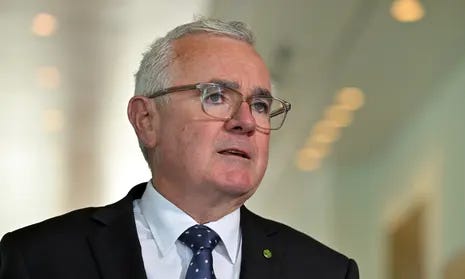
AAP: Independent MP Andrew Wilkie
Daniela Gavshon, Australian Director of Human Rights Watch, said McBride’s sentencing shows that Australia’s whistleblowing laws need exemptions in the public interest.
“It is a stain on Australia’s reputation that some of its soldiers have been accused of war crimes in Afghanistan, and yet the first person convicted in relation to these crimes is a whistleblower not the abusers,” Gavshon said in a statement.
Many regard whistleblowing as morally courageous, especially when done in the public interest, as McBride claimed he did. But whistleblowing is a dangerous endeavour in Australia because of the significant legal and personal risks.
Compared to the US, where whistleblower protections are considered more robust, McBride’s case demonstrates the protracted and costly legal battles faced by whistleblowers in Australia, when up against institutions with unlimited resources.
It’s now feared McBride’s prosecution and sentencing will deter other whistleblowers from disclosing information because Australia’s laws arguably do not protect whistleblowers like McBride, who try internal reporting channels first but then find them inadequate.
While there must be a balance between national security concerns and the public’s right to know about the actions of their government and military, McBride’s case means other Australians thinking about whistleblowing, risk imprisonment too, especially where there is low trust in internal reporting channels and no alternative external reporting channel.
Australia’s Government has already announced plans to bolster public whistleblowing protections. But that won’t help McBride whose imprisonment highlights the urgent need for clear guidance and protection when disclosing information to prevent more serious harms, and the vital need for a free press if and when internal whistleblowing channels, fail.
Prior to being imprisoned, McBride recorded the following video:
Iran, India move forward with port deal in face of US sanctions
The Cradle | May 13, 2024
India expects to secure a “long-term arrangement” with Iran to manage the Iranian port of Chabahar, Reuters reported on 13 May, as India seeks to expand exports to central Asia and Europe.
India has been developing part of the port in Chabahar on Iran’s southeastern coast to export goods to Iran, Afghanistan, and central Asian countries while bypassing Pakistani ports in Karachi and Gwadar. India and Pakistan have been enemies since the partition of British-occupied India created the Muslim state of Pakistan in 1947.
Thus far, India has managed the Chabahar port under short-term contracts, which must be renewed regularly. The uncertainty about future operations this has caused, and the complications of engaging in trade with Iran due to US sanctions, has discouraged significant investment in the port.
“As and when a long-term arrangement is concluded, it will clear the pathway for bigger investments to be made in the port,” Indian Foreign Minister S Jaishankar told reporters in Mumbai.
A source speaking with Reuters said Indian Shipping Minister Sarbananda Sonowal is traveling to Iran to witness the signing of a “crucial contract” that would ensure a long-term lease of the port to India.
The contract is expected to last ten years and will give India management control over a part of the port.
Expanded trade via the Chabahar port will help India expand trade to both central Asia and Europe.
Business Standard reports that Chabahar is also part of the proposed International North–South Transport Corridor (INSTC), a mixed sea and land transport route linking the Indian Ocean and the Persian Gulf to the Caspian Sea via Iran and onward to northern Europe via Saint Petersburg in Russia.
Exporting goods through the INSTC via Chabahar Port is expected to reduce transit times between India and Europe by 15 days compared to the Suez Canal route.
Chabahar will also allow Iran to bypass US sanctions and allow Afghanistan better access to the Indian Ocean.
US sanctions on Iran have similarly delayed construction of a pipeline to transport Iranian natural gas to energy-stricken Pakistan.
The stalled pipeline deal, signed in 2010, envisaged the supply of 750 million to a billion cubic feet per day of natural gas from Iran’s South Pars gas field to Pakistan for 25 years.
Last month, Islamabad said it would seek a US sanctions waiver to proceed with the pipeline. However, US officials publicly said they did not support the project and warned Pakistan about the risk of sanctions in doing business with Tehran.
A Warped View of Patriotism on Pat Tillman
By Jacob G. Hornberger | FFF | April 24, 2024
A recent op-ed in the Los Angeles Times demonstrates what is a warped interpretation of the term “patriotism.” The op-ed is about former football player Pat Tillman, who was killed in Afghanistan twenty years ago. It’s written by Bill Dwyre, a former sports editor for the Times.
Dwyre reminds us that Tillman was motivated to join the military after the 9/11 attacks. He gave up a $3.6 million football contract to join the U.S. military and was hoping to be sent to Afghanistan to fight the terrorists.
Dwyre writes, “It was a can’t-miss story of patriotism. Americans applauded from the safety and comfort of our homes and communities.” (Since he uses the pronoun “our,” presumably Dwyre fell into the “safety and comfort” group rather than the “patriot” group.)
Unfortunately, however, Dwyre doesn’t explain why Tillman’s act was one of “can’t miss” patriotism. Apparently for him it’s a self-evident truth.
No declaration of war
The U.S. Constitution is the supreme law of the land. It is the higher law that we the people impose on government officials. We are expected to obey their laws, and they punish us when we fail to do so. By the same token, they are supposed to obey our law, the Constitution.
The Constitution requires a congressional declaration of war as a prerequisite to a president’s waging war against any other nation-state. If a president and his army wage war without a congressional declaration of war, they are acting in violation of the law.
It is undisputed that President Bush did not secure a congressional declaration of war from Congress before he ordered his military to invade Afghanistan. That made their war illegal under our form of government.
How can participating in an illegal war be considered “patriotic”? Dwyre doesn’t explain that.
The U.S. was the aggressor under Nuremberg
Moreover, the common perception is that Bush invaded Afghanistan because the Taliban regime, which was governing the country, had been complicit in the 9/11 attacks by having knowingly harbored Osama bin Laden, who U.S. officials suspected had orchestrated the attacks.
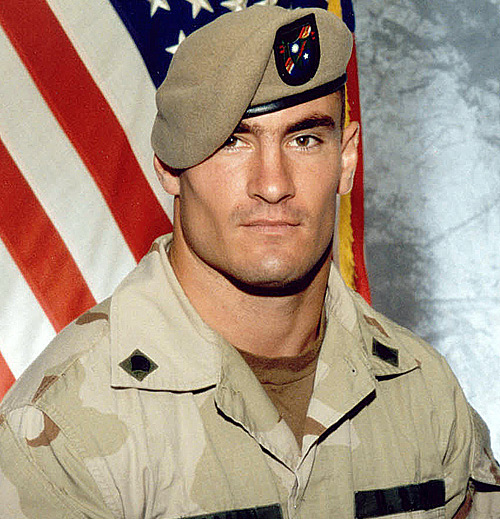
Not so. Bush initiated his war because the Taliban regime refused to comply with his unconditional demand to deliver bin Laden into the hands of the Pentagon and the CIA. Yet, there was no extradition treaty between Afghanistan and the United States and, therefore, Afghanistan was operating within its rights under international law to refuse Bush’s unconditional extradition demand.
Nonetheless, knowing that the Pentagon and the CIA would torture bin Laden into confessing to the crime, Afghanistan offered to deliver him to an independent nation for a fair trial. In making the offer, Afghanistan sought the same amount of proof that would be required in a normal extradition hearing. The U.S. government refused the offer, perhaps because it was unable to provide such proof.
Therefore, given that Afghanistan had the authority under international law to refuse Bush’s extradition demand, that makes Bush’s invasion illegal under the war-of-aggression provision of the Nuremberg War Crimes Tribunal.
How can participation in an unconstitutional and illegal war be considered “patriotic”? Unfortunately, Dwyre fails to explain.
If one assumes that the 9/11 attackers were the ones who did the attacking (as compared to the attacks being an “inside job,” as some believe), it’s worth pointing out that they were motivated by the death and destruction that the U.S. government’s foreign policy had wreaked in the Middle East. But of course, a real “patriot” does not bring up that discomforting fact and instead blindly supports the government’s claim that the terrorists attacked us out of hatred for our “freedom and values.”
Tillman’s opposition to the Iraq War
One of the fascinating aspects of Dwyre’s op-ed glorifying Tillman’s patriotism is what he leaves out of the op-ed. Tillman was an outspoken opponent of Bush’s invasion and war of aggression against Iraq. Dwyre doesn’t even mention that, which is revealing.
Keep in mind, after all, that Bush’s war on Iraq was also waged without a congressional declaration of war, making it illegal under our form of government. Bush’s claim that he was waging to war to enforce UN resolutions falls flat because only the UN can enforce its resolutions. The fact is that the U.S. war on Iraq was an even clearer case of a war of aggression under the Nuremberg principles than the U.S. war on Afghanistan.
Despite Tillman’s fierce objections to the U.S. war on Iraq, the U.S. military nonetheless ordered him to “serve” in Iraq, which he did. Keep in mind though that every U.S. soldier takes an oath to support and defend the Constitution and is under a legal and moral obligation to refuse to obey unlawful orders. Tillman chose to obey the unlawful order to deploy to Iraq.
U.S. government lies
After his “service” in Iraq, Tillman was deployed to Afghanistan, where he continued to speak out against the U.S. war on Iraq. It was there that he was killed. As Dwyre points out, the U.S. military initially lied about his death, claiming falsely that he was killed by enemy fire. In fact, what actually happened is that he was killed by his own men in what was described as “friendly fire.”
In 2006, Tillman’s brother, Kevin Tillman, wrote a scathing op-ed on truthdig.com, in which he echoed his brother Pat’s view of the Iraq war: “Somehow American leadership, whose only credit is lying to its people and illegally invading a nation, has been allowed to steal the courage, virtue and honor of its soldiers on the ground.”
Why would’t Dwyre mention Pat Tillman’s (and his brother’s) fierce opposition to the U.S. war on Iraq in his op-ed? My hunch is that it’s because he considers opposition to U.S. wars to be unpatriotic and, therefore, Tillman’s apparent lack of “patriotism” with respect to Iraq doesn’t fit conveniently within his patriotism narrative. Under Dwyre’s warped interpretation of patriotism, apparently it’s only those who blindly support the U.S. national-security state’s foreign wars and its interventionist foreign policy who should be considered “patriots.” Apparently, those who reject such wars and choose instead to remain in the “safety and comfort” of their homes instead of fighting them should be considered non-patriots.
Imperial Assisted Suicide

By John Weeks | The Libertarian Institute | March 11, 2024
The United States Imperial Government (USIG) claims to be keeping the peace, underwriting the liberal, rules-based international order and safeguarding the global security architecture. This is not true. What the USIG is actually doing is killing people, helping get lots of people killed, and assisting foreign states as they commit corporate suicide. Israel’s ongoing, “plausibly genocidal” slaughter in Gaza and the West Bank is the latest example of this.
The United States is an empire and empire is murder-suicide. Since 9/11, U.S. soldiers have directly killed more than 400,000 civilians and indirectly contributed to the deaths of more than four million civilians. Meanwhile, more soldiers who served in the U.S. government’s Global War On Terror have committed suicide than have been killed in combat. Four times more.
The American People have not escaped suffering as the USIG and its empire have dished out catastrophic devastation in Afghanistan, Somalia, Iraq, Pakistan, Egypt, Yemen, Libya, Syria, and Mali. The cost of living has exploded. Our infrastructure is in shambles. Public trust in government has collapsed. The military’s “recruitment landscape” is in free fall. And things are so bad at home the government has found a new job: attacking “tent cities” filled with “under-sheltered” people. Murder-suicide.
Then there are the vassal or “client” states. In the propaganda, the empire defends these states from…whatever. But in reality, it helps these states murder people all while creating the conditions for these states to kill themselves. This has been demonstrated recently in Afghanistan (state committed suicide), Ukraine (state is trying to commit suicide) and Israel (state is thinking about committing suicide).
In October, 2001, the USIG invaded Afghanistan and smashed the Taliban-controlled state. In its place was installed a new state with a new military, which Libertarian Institute Director Scott Horton describes:
“The new regime was also largely a coalition government of ethnic minorities, the Tajiks, Uzbeks, and Hazaras, being leveraged against the 40 percent plurality Pashtuns, dominant in the east and south of the country where the Taliban are from.”
This coalition regime could not exist without billions of U.S. dollars in its coffers, U.S. boots on the ground, and U.S. air power in the sky. As predicted by Horton, as soon as U.S. forces began their withdrawal from Afghanistan, the Afghan state (along with its military) immediately killed itself. The Taliban resurrected their state which the U.S. had smashed almost twenty years earlier.
In February 2014, the USIG backed a violent, neo-Nazi led coup in Ukraine. Instead of smashing the entire state, the coup overthrew President Viktor Yanukovych’s administration. Unlike Afghanistan’s anti-Taliban government in a box, the Ukrainian government under new management was capable of existing without a massive U.S. military presence. It was not, however, capable of winning a war with Russia. It took eight years, but the USIG managed to provoke a war with Russia.
Ukraine has been defeated but the imperial wizards in DC refuse to admit this truth and seek peace. There could have been a peace deal two years ago, when it was still fashionable for Americans to fly the Ukrainian flag outside their front doors, but the USIG crushed it. The Ukrainian state is bleeding out and continuing the war at this point puts the entire Ukrainian nation at risk. Russia could seize all of Ukraine and downgrade it from sovereign nation to a Russian aircraft carrier.
Israel has been fortunate to never have its state murdered or regime changed by the USIG. Quite the opposite; Israel has intervened in USIG affairs to a shocking extent. The Israel lobby wields massive influence in Washington DC, so much so that President Joe Biden is risking his re-election chances by refusing to stop producing Israel’s “plausibly genocidal” mass killing spree in Gaza.
This gleeful and live streamed spree of sadism has not been good for Israel. Its state is provoking the global community to view it as a deranged pariah, including the great powers of Russia and China. Even within America, the people want a ceasefire. We want it to stop.
Meanwhile, Israeli society is cracking. Approximately 200,000 Israelis have been displaced from their homes in the south and north of the country. The IDF has suffered thousands of casualties, the economy is destabilized, and fear has blanketed the land.
And now Israel is planning an invasion of southern Lebanon. Such an invasion would be a hoped for but unexpected gift to Hamas. Experts such as Col. Douglas Macgregor, Col. Lawrence Wilkerson, Lt. Col Daniel Davis, Alastair Crooke, John Mearsheimer and Robert Pape have all warned against the invasion. They have argued that Israel risks catastrophic fallout from such a move, from mass causalities to provoking a regional war and even suffering strategic defeat.
Israel supporters seem confident in its security state, despite its massive failure on October 7. Tel Aviv appears to be operating with the assurance that the U.S. military will step in with strike packages and boots on the ground if and when needed. And yes, DC will let American cities die while it views Israel as too big to fail.
But the empire is beset by incompetence and anyone who paid attention to the self-immolation of the Afghan state and the slow suicide of the Ukrainian state knows this isn’t going to end well.
Taiwan, watch your six.
Russia’s victory in Ukraine resonates in Central Asia
BY M. K. BHADRAKUMAR | INDIAN PUNCHLINE | FEBRUARY 25, 2024
Russia’s stunning victory in the battle of Avdeevka and the rout of the Ukrainian military, boosts the credibility of Russia as provider of security for the Central Asian region. The point is not lost on the erudite Central Asian mind that Russia has single-handedly put the NATO on the back foot.
This becomes a defining moment, as it complements the comfort level stemming out of the new normalcy in Afghanistan, thanks to Russia’s effective diplomatic engagement with the Taliban.
Yet another vicious cycle of western propaganda is petering out — predicated on the false assumptions that Russia’s influence in Central Asia is in “decline” (Wilson Centre); that the Central Asian states are “are emerging from Russia’s shadow and asserting their independence in ways not seen since the collapse of communism in 1991” (Financial Times ); that in the wake of the war in Ukraine, Central Asian leaders “might well be now considering how long Putin will be able to remain in power in Russia” (Radio Free Europe / Radio Liberty).
In reality, the economic performance of the region in 2023 registered an impressive GDP growth of 4.8%. And Russia contributed to this success story. The Ukraine war led to the vacation of western firms from the Russian market, which created new opportunities for regional states. At the same time, the conditions under sanctions prompted Russian firms and capital and Russian citizens to relocate their businesses to the Central Asian region.
Central Asian entrepreneurs haven’t missed the lucrative opportunities to source Western goods and technology for the Russian market — walking a very tight rope by ensuring compliance with Western sanctions, while also nurturing their interdependence and integration with Russian markets. The recovery of the Russian economy and its 3.6% growth last year created business opportunities for Central Asian countries.
Moscow’s policies aim at a ‘Renaissance’ in the region’s relations with Russia. The new thinking in Moscow meant that Putin took a hands-on role to maintain a high momentum of contacts with the Central Asian leaderships at a personal level, making use of all available formats of interaction bilateral as well as regional. The Russian approach allowed space for the regional states to adopt a ‘neutral’ stance on the war.
A comprehension problem for outsiders is very often that the Central Asian attitudes are seldom in overt mode, and under specific circumstances (such as Ukraine war), they need to be discerned in terms of preferences. Thus, the political message out of the May 9 parade in Moscow last year when all the Central Asian presidents joined Putin at the ceremonies on the Red Square was a massive gesture of support for Russia — and for Putin personally.
Throughout 2023, the Central Asian states found themselves targeted in an unprecedented diplomatic effort by the West to uphold the sanctions against Russia. The US Secretary of State Antony Blinken and French President Emmanuel Macron visited the region. Two historic summits in the ‘C5+1’ format were hosted by President Joe Biden and German Chancellor Olaf Scholz respectively in Washington and Berlin.
But the western interlocutors refused to see the writing on the wall. Blinken’s Kazakh counterpart told him that Astana ‘does not feel any threats or risks from the Russian Federation.’ The joint statements issued after the two ‘C5+1’ summits did not even mention Ukraine!
Putin’s new thinking puts the great game on the back burner and instead prioritises the accretion of content in Russia’s relations with the Central Asian states, especially in economic and humanitarian spheres. This approach has palpably dissipated the ‘Big Brother’ syndrome. Putin’s meetings with his counterparts from Tajikistan, Uzbekistan and Kazakhstan in Kazan on Wednesday took place in a palpably relaxed atmosphere. (here, here and here)
Interestingly, Emomali Rahmon, Tajik president, wished not only Putin’s success “in everything you do” but his “nerves of steel” as well. Kassym-Jomart Tokayev, Kazakh president underscored meaningfully that “under your (Putin’s) distinguished leadership, Russia has achieved notable, impressive successes. In fact, your statements and actions are shaping the global agenda.” Tokayev’s remark is particularly noteworthy, as western analysts had spotted him as a potential mutineer against Putin in the steppes!
However, in the final analysis, if Russia’s security relationship with the Central Asian region has transformed during the past couple of years, it is because Moscow’s coordinated efforts to forge ties with the Taliban has gained traction lately. They helped diminish the threat perceptions regarding Afghanistan in the Central Asian region.
If the traditional pattern of addressing the threat perceptions was to resort to military means and by sequestering the region from Afghanistan, Russian diplomacy switched to a radically different approach by constructively engaging with the Taliban (although the Taliban continues to be a proscribed organisation under Russian law) and strove to make the latter a stakeholder in building cooperative ties within a matrix of mutual interests. It paid off.
Moscow estimated that the Taliban rule has stabilised the Afghan situation significantly and it is in Russian interests to help the Kabul administration to effectively counter the extremist elements in the country (especially the Islamic State, which is known to be a legacy of the US occupation of Afghanistan.) Russia leveraged its influence with the Central Asian states to ensure that western-backed anti-Taliban ‘resistance’ forces did not get sanctuaries.
Of course, the strategic objective is that the western intelligence will not be able to manipulate free-wheeling Afghan elements to destabilise the Central Asian region or the Caucasus all over again.
Taliban has been most receptive to the Russian overtures aimed at strengthening the Afghan statehood. Recently, the Taliban went to the extent of boycotting a UN-sponsored conference on Afghanistan on February 18-19 in Qatar, which was, in reality, an invidious attempt by the US to re-engage the Taliban on the pretext of promoting “intra-Afghan dialogue” (which essentially meant the return of the West’s Afghan proxies living in exile in Europe and America.)
To be sure, the Taliban saw through the western game plan to rebuild their intelligence network in Afghanistan and countered it by setting conditions for its participation in the Doha conference, including that it be the sole representative of Afghanistan at the meeting. The Taliban also opposed the appointment of a UN special envoy to Afghanistan, whose main task would be to promote “intra-Afghan dialogue”.
The Taliban’s Foreign Ministry, in a statement ahead of the Doha meeting, accused the international community of “unilateral impositions, accusations, and pressurisation.” The most interesting part of the pantomime playing out in Doha was that at the Taliban’s request, the Russian delegation that participated in the Doha meeting refused to meet the so-called ‘civil society representatives’ from Afghanistan. It signalled that Russia has begun working with the Taliban as the de facto rulers of Afghanistan.
Indeed, the Central Asian states heartily welcome this brilliant diplomatic initiative by Russia to strengthen regional security and stability. The region’s confidence level vis-a-vis the Taliban rulers has already reached a point that at the meeting with Putin in Kazan on Wednesday, Uzbek president Mirziyoyev raised the “important question” of Uzbekistan and Russia moving ahead with the construction of a new railway via Afghanistan connecting Central Asia with the adjacent regions and the world market.
Top Iranian, Kyrgyz security officials voice opposition to West’s interference in region
Press TV – February 16, 2024
Top security officials of Iran and Kyrgyzstan have raised their objection to the West’s interference in the domestic affairs of regional countries and its efforts to impose its demands and will on them.
Secretary of Iran’s Supreme National Security Council (SNSC) Ali Akbar Ahmadian and Secretary of the Security Council of the Kyrgyz Republic Marat Imankulov held a meeting in Bishkek on Friday.
The two sides voiced concern over measures by certain Western countries to finance terrorist groups in Afghanistan and their bids to step up acts of terror in Central and West Asia.
They also discussed ways to promote cooperation in various political, security and military fields, especially in the fight against terrorist groups such as Daesh.
Ahmadian invited his Kyrgyz counterpart to travel to Iran which was accepted by Imankulov.
The SNSC secretary is in the Kyrgyz capital at the head of a delegation to take part in the 6th Summit of Secretaries and Advisors of National Supreme Councils of regional countries on Afghanistan.
Top security officials of regional countries, including Iran, Russia, China, India, Tajikistan, Kyrgyzstan, Kazakhstan, Uzbekistan and Turkmenistan, are scheduled to discuss Afghanistan’s most important security and political issues and their impacts on the region.
When You Realize You’ve Been Had
BY JOHN LEAKE | COURAGEOUS DISCOURSE | FEBRUARY 6, 2024
In Dante’s Inferno, the 9th and final circle of hell, “the lowest, blackest, and farthest from heaven,” is reserved those guilty of treachery against those in whom they have cultivated a bond of trust.
I often thought about this in 2013, when I was living in Menlo Park, California and became friends with a man of who was a benefactor of the VA hospitals in Menlo Park and in Palo Alto. He was especially concerned about young soldiers who’d suffered traumatic brain injuries in Afghanistan and Iraq.
On a few occasions we made the rounds and visited patients who’d sustained this kind of injury. The strangest were those who had retained motor skills and seemed to recognize us, but who also seemed completely indifferent to us. Some had suffered from speech impairment and seemed frightened of us. A nurse told me that it was common for this kind of patient to have developed a passionate interest in Facebook and to spend most of his waking hours scrolling through it.
In 2013, it was hard for me to fathom that hundreds of thousands of young men in the United States—many with wives and small children—had sustained Traumatic Brain Injuries. Many could still function in their day to day lives, but suffered irritability, frequent headaches, and a feeling of disconnection from their family and friends. On the extreme end of the scale were the completely disabled, doomed to spend the rest of their lives in VA hospitals.
In 2017, Lindquist, Love, et al. published Traumatic Brain Injury in Iraq and Afghanistan Veterans: New Results from a National Random Sample Study. As the opening of the report states:
Traumatic brain injury (TBI) has been called a “signature injury” of Iraq and Afghanistan Conflicts. The Defense and Veterans Brain Injury Center (DVBIC) reports nearly 350,000 incident diagnoses of TBI in the U.S. military since 2000. Among those deployed, estimated rates of probable TBI range from 11–23%.
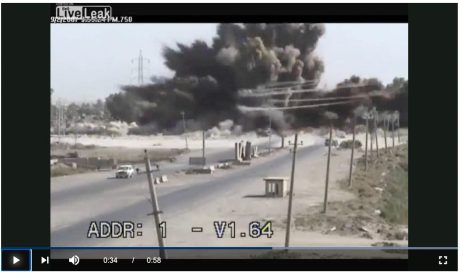
I thought it notable that the U.S. military was, apparently, completely unprepared for roadside bombs constructed to focus the blast on particular sections of road as a convey is passing by. It wasn’t so much shrapnel and other missiles striking the head as the supersonic, explosive shockwave that does the brain damage. Click on the video below to see an example of a large roadside bomb blasting a U.S. convoy.
I got to be pals with a psychiatrist who worked at the VA. In public, around his colleagues, he tried to put on an optimistic face about it. In private, over our occasional dinners, he seemed very despondent that anything could be done for these guys.
“No one really knows what to do about these injuries,” he told me. “A lot of doctors who work at the VA will talk to you about promising new therapies, but most of them are more interested in getting grant money for their pet projects than in doing anything for their patients.”
I wondered how many of these young men ultimately realized that the United States government had lied to them—that their mission in Iraq had never been about protecting the American people from a hostile foreign dictator and his alleged terrorist network—but rather to pursue the mad dreams of insane old men in Washington.
This morning I thought about my VA experiences in a decade ago when I saw that the same cabal of old hawks in Washington are now beating the drums of war against Iran—a nation three times the size and with twice the population of Iraq.
I wonder if Joe Biden or Lindsay Graham or Jake Sullivan are even aware of the 350,000 men who suffered Traumatic Brain Injuries in the course of Washington’s disastrous military adventures in the Middle East twenty years ago. I sort of doubt it.
Understanding that one has been deceived is one of the most painful experiences in life. It begins with an uneasy feeling of cognitive dissonance — a sinking feeling that someone you have trusted has not been honest about an important matter. Later it dawns on you that you’ve been had. It’s a traumatic experience, and the greater the deception, the harder it is to recover from it. At root of the trauma, I suppose, is the feeling that you put your faith, heart and soul into something that wasn’t real.
Because most Americans have been insulated from the disastrous consequences of its government’s Forever War policy, they are apparently slow to recognize that they are constantly being conned by the terrible men and women who run the U.S. government—selfish, ambitious, power-hungry men and women who do not care at all about the citizenry they are supposed to represent and serve.
China, Russia pip US to the Taliban hearth
BY M. K. BHADRAKUMAR | INDIAN PUNCHLINE | FEBRUARY 6, 2024
The diplomatic recognition of the Taliban government in Afghanistan on January 31, 2024 by China must be bracketed with two other far-reaching regional policy moves by Beijing in the post-cold war era —the Shanghai Five in 1996 — later renamed as Shanghai Cooperation Organisation in 2001— and the Belt and Road Initiative announced by President Xi Jinping in 2013.
A regional security architecture is emerging with the above three legs reinforcing, supplementing and interchanging in a creative response to the rapidly transforming international environment. If the SCO marked China’s return to Central Asia after nearly a century and the BRI creates massive strategic depth for China’s global rise, the move on Afghanistan has geopolitical characteristics in relation to the Asian Century.
At its most obvious level, Beijing has outwitted the US’ surreptitious, attempts in the recent months to return to Afghanistan after its humiliating military defeat and exit in 2021. The Biden Administration produced in the public domain a back-dated document titled Integrated Country Strategy for Afghanistan on the same day that Xi Jinping received the letter of credentials from the Taliban ambassador at the Great Hall of the People in Beijing on January 30.
The document contained the following core elements:
- “Predatory powers like Iran, China and Russia seek strategic and economic advantage (in Afghanistan) or at a minimum to put the US at a disadvantage;
- “Even as, –- and for as long as –- the United States does not recognise the Taliban as the legitimate government of Afghanistan, we must build functional relationships that fulfil our (US) objectives”;
- “With diaspora Afghans, we discourage support for a new armed conflict through resistance group proxies in Afghanistan — more violence or regime change is not the solution to the Taliban”;
- “we must simultaneously pump unprecedented amounts of humanitarian assistance into the country, convince the Taliban to adopt international economic norms and advocate tirelessly for education”;
- “With the Taliban we advocate for consular access…”
The document is a shameful retreat from the thundering US rhetoric that unless the Taliban fulfilled its conditions, Washington would ostracise the government in Kabul and freeze its bank accounts. Apparently, the Biden administration no longer insists on its demands and is knocking at Kabul gates for entry.
Interestingly, the document, while taking note of the human rights conditions in Afghanistan and the absence of a broad-based government in Kabul, acknowledges that regime change is no longer an option. It calls on the diaspora Afghans (who are largely in the West) to reconcile with the Kabul government, and seeks a consular presence for the US in Afghanistan.
The US is nervous about the Russian and Chinese approaches vis-a-vis the Taliban government. Conceivably, we need to reassess the US invitation to the Pakistani army chief Gen. Asim Munir to pay a 5-day visit to America in end-December, engaging in discussions with senior officials, including Secretary of State Antony Blinken and Secretary of Defence General Lloyd Austin. Going back even further, it is also necessary to contextualise the ouster of former Pakistani prime minister Imran Khan (“Taliban Khan”) from power by the military, with American support. Pakistan’s role becomes crucial as Central Asian states harmonise with Russia and China. (See my blog Decoding Iran’s missile, drone strikes, Indian Punchline, Jan. 18, 2024)
Sensing the American moves to return to Central Asia and reboot the great game, Russia and China are determined to stay two steps ahead in engaging with the Taliban government. Most certainly, China’s diplomatic recognition of the Taliban government is in coordination with Russia. On the same day that Xi Jinping received the credentials letter from the Taliban ambassador, the special envoys of Russia and China visited Kabul and took part in a meeting under the rubric Regional Cooperation Initiative convened by the Taliban government which was attended by diplomats from Russia, China, Iran, Pakistan, India, Uzbekistan, Turkmenistan, Kazakhstan, Turkey and Indonesia. Taliban acting foreign minister Amir Khan Muttaqi addressed the meeting.
All the same, the Chinese decision to recognise the Taliban government cannot be seen through the prism of the great game. In the economic sphere, China is already a big stakeholder in Afghanistan and its equity is growing. Equally, Kabul is an enthusiastic votary of the Belt and Road and potentially, Afghanistan is another gateway for China to the Gulf region and beyond. China is planning a direct road link connecting Xinjiang with Afghanistan via Wakhan Corridor.
At long last, the construction work on the missing link in the China-Kyrgyzstan-Uzbekistan railway is also commencing — a new strategic Eurasia logistic network along the Belt and Road route that can connect Afghanistan with both China and the European market.
Indeed, the geopolitical significance of the China-Afghanistan normalisation is to be measured in global terms in the contemporary world situation. A friendly government in Kabul gives China enormous strategic depth to push back the US’ hostile moves in Asia-Pacific.
The bottom line is that China is establishing formal links with a militant Islamist movement that once harboured Osama bin Laden and that is happening at a time when the US is demonising the resistance movements in the Muslim Middle East and has unleashed a vicious boring campaign against them in Syria, Iraq and Yemen. Of course, the resistance movements in the Muslim Middle East will draw inspiration from China’s example.
Equally, the participation of 9 regional states — Indonesia and India, in particular — in the regional meeting hosted by the Taliban government in Kabul is an assertion of the Asian Century. Addressing the meeting in Kabul, Taliban’s foreign minister Muttaqi emphasised that these nations “should hold regional dialogues to increase and continue the positive interaction with Afghanistan.” Muttaqi asked the participants to take advantage of emerging opportunities in Afghanistan for the development of the region and to also “coordinate the management of potential threats”.
He stressed the need for positive interactions with the countries of the region and asked the diplomats to convey the Taliban’s message of a “region-oriented initiative” to their countries so that Afghanistan and the region can jointly take advantage of new opportunities for the benefit of all. Reports in the Afghan media quoted Muttaqi as saying that the meeting was focused on discussions for establishing a “region-centric narrative aimed at developing regional cooperation for a positive and constructive engagement between Afghanistan and regional countries”. (here)
Without doubt, China has now shown the way that the era of imperialism is buried forever and erstwhile colonial powers should realise that their dubious methods of “divide and rule” no longer works.
The State Department’s Integrated Country Strategy for Afghanistan is quintessentially old wine in a new bottle. Reading between the lines, the US hopes to revive its interventionist policies in Afghanistan for geopolitical purposes, while shedding crocodile tears over the human rights situation. Its strategic calculus is a morbid mix of geopolitics and Neo-mercantilism.
However, Taliban is unlikely to fall for it, being witness to the US’ bombing campaign against Muslim nations on an industrial scale that harks back to the two-decade long western occupation of Afghanistan.
The back-dated state department document is a knee-jerk reaction by the Biden Administration as word spread that Beijing is moving towards diplomatic recognition of the Taliban government with the active support of Moscow and Beijing aiming at creating a firewall to prevent further manipulation of the Afghan situation by the West. Short of an outright recognition, Moscow has extended a vital lifeline for Kabul.
It was no coincidence that Xi Jinping received the new Taliban ambassador at the Great Hall of the People in Beijing on the very same day that the Taliban government unveiled its regional initiative.
India Jumps on Washington’s ‘China Containment’ Bandwagon
By Salman Rafi Sheikh – New Eastern Outlook – 15.12.2023
China’s fast-expanding global influence – especially, in the context of the Gaza war – has already emerged as a key issue for Washington. The US is already in a state of denial, and China’s rising global status is turning into too big an issue for New Delhi to handle without entering into a formal anti-China alliance being put together by the US. Therefore, there is an added incentive for New Delhi to reinforce its alliance with the US in an even more anti-China way. This was the major development out of the fifth annual US-India “2+2 dialogue” held on November 10, 2023, in India. As a result, India is reinforcing Washington’s global position on almost all key flashpoints, ranging from Ukraine, and Palestine to the Indo-Pacific region.
The joint statement that came out of New Delhi points in this direction. The statement noted both countries as “natural and trusted partners” seeking “to promote a resilient, rules-based international order with respect for international law, including the UN Charter, sovereignty and territorial integrity” and taking steps to develop a joint approach to “developments in the Indo-Pacific, Middle East, Ukraine among other regions. The ministers expressed mutual deep concern over the war in Ukraine and its tragic humanitarian consequences”.
The joint vision is a prelude to a strategic alliance between New Delhi and Washington. For decades, India championed ‘non-alignment’. But, in the wake of profound shifts in the world due to the two ongoing military conflicts in Eastern Europe (Ukraine) and the Middle East (Palestine), the geopolitical landscape is shaking badly, forcing a great many countries to adjust their positions.
The fact that India is essentially reinforcing Washington’s position against China (and even Russia vis-à-vis Ukraine) means that India is also supporting Washington against two of its key competitors with a view to neutralising their bid to make the world multipolar. This is the key part of India’s shifting foreign policy. Where India might have previously sensed a place for itself in a multipolar world, that dream remains far from close to being realised within today’s polarised global context. Its reason is that the struggle between the US and China, on the one hand and between Russia and NATO, on the other hand, has strengthened US rivals far more than it has benefitted the US. The fact that China is gaining influence means the gap between India and China is, instead of shrinking, fast expanding. China’s economy is already five times larger than India’s, with a GDP of US$ 17.7 trillion versus India’s GDP of US$ 3.2 trillion. The same goes for both countries’ military power.
It makes sense for India to, at least for now, drive its growth and rise within a bipolar world. And, to achieve that, New Delhi has decided to shake hands with Washington. It needs to have Washington on its side in order to neutralise what New Delhi sees as China’s hegemonic rise in Asia and beyond.
With a view to presenting a competition to China, both Washington and New Delhi are also targeting Afghanistan, where the Taliban appear to have developed strong working ties with Beijing. Notably, the logic of Beijing’s normalised ties with the Taliban is underpinned by non-interference in questions and issues of Afghanistan’s politics and society under Taliban rule. While short of recognition, the Taliban’s ties with Beijing – and the fact that Kabul has been successful in largely preventing terror attacks on Chinese interests in Afghanistan – has strengthened the group’s claims to power. For China, these ties matter because Afghanistan is a strategic territory within Beijing’s BRI projects. Therefore, China became the first country to appoint a formal ambassador to Kabul in October, and both countries are already talking about opening the Wakhan Corridor to boost trade and ultimately open a new territorial link between China and Central Asia via Afghanistan.
However, the US and India see these developments differently. Whereas Washington sees it as yet another diplomatic success for China and a step towards the consolidation of its Silk Roads projects, for India, Beijing’s success means that its hopes for developing any ties with the Taliban have shrunk significantly. There is, therefore, an incentive for New Delhi to join hands with Washington to attack the Taliban because it cannot possibly compete with China in Afghanistan. It is for this reason that Afghanistan featured prominently in the meeting. The joint statement basically sought to de-legitimise the Taliban (to internationally complicate China’s terms of engagement with the group) when it said that,
“The Ministers called on the Taliban to adhere to their commitment to prevent any group or individual from using the territory of Afghanistan to threaten the security of any country, and noted UNSC Resolution 2593 (2021), which demands that Afghan territory not be used to threaten or attack any country or to shelter or train terrorists, or to plan or finance terrorist attacks”.
The statement also targeted the Taliban’s handling of human and women’s rights. This growing convergence could have crucial implications for the future of Asia. India’s growing willingness to toe the US line could significantly militarise Asia. New Delhi is all set to host the next meeting of the QUAD, a group comprising India, the US, Australia, and Japan. Although it is not yet a military alliance, it appears to be moving in this direction due to the recent emphasis we have seen on the security aspect in the “2+2 dialogue”. To quote the joint statement,
“The Ministers reaffirmed the importance of a free, open, inclusive and resilient Indo-Pacific and renewed their shared desire to consolidate their dialogue and collaboration through the Quad. They emphasized the important role of the Quad as a force for global good for the peoples of the Indo-Pacific.”
Being seen as a “force for global good” only implies the idea that the US and India see a lot of geopolitical potential in the alliance in terms of achieving a common global objective, i.e., keeping the US-led “rule-based” international order intact. While the US has long been pushing for making the QUAD a military alliance, India’s close embrace of the US will significantly facilitate this possibility.
Salman Rafi Sheikh is a research-analyst of International Relations and Pakistan’s foreign and domestic affairs.
Featured Video
Seyed M. Marandi: US-Iran War Inevitable: Kuwait and Bahrain May Fall
or go to
Aletho News Archives – Video-Images
From the Archives
Oil and the Israel Lobby
Reknowned economist M. Shahid Alam offers this excellent critique of Noam Chomsky’s defective analysis of the relative influence of Oil versus the Israel lobby over US foreign policy: … continue
Blog Roll
 Aletho News
- ICC ignored ‘very well-documented’ NATO crimes – ex-Libyan minister
- SNSC secretary dismisses US response to Iran’s conditions as ‘inadequate’
- Sanaa says Taiz roads open, secure for residents, warns Saudi forces
- Iraqi resistance group urges Saudi leadership to admit defeat, lift Yemen siege
- Trump’s Retreat: How Al-Aqsa Flood Took Down the US Empire
- Israel’s Military Actions in Lebanon Grossly Violate International Law — Lavrov
- Seyed M. Marandi: US-Iran War Inevitable: Kuwait and Bahrain May Fall
- Leaders Condemn Ansarallah Attack on Saudi Arabia While Ignoring Illegal War Against Yemen
- Leaked: Britain’s Covert Iraqi Psyops Network
- Yemeni Armed Forces Warn Airlines Against Using Saudi Airports, Exempt Mecca and Medina
- If Americans Knew
- Israel’s Destruction of Southern Lebanon Intensified After the Cease-Fire
- The Last-Minute Decision That Gave Israel Its Name
- The American Conservative: How Trump Made the World Go Nuclear
- Meet the US generals and admirals advancing Israeli policy
- Opinion: Why news organizations should boycott Israel
- The Israeli witch hunt of Sami Abu Shehadeh exposes the lie of the ‘Jewish and democratic’ state
- No state has a ‘right’ to exist – least of all Israel
- Testimonies about Gaza’s civilian death toll expose Israel’s atrocities – Daily Update
- How Israel Conquered the Latin American Right
- Agents search Rep. Omar’s Washington home in criminal probe as she vows she won’t ‘be silenced’
- No Tricks Zone
- Germany’s Green Energy Debacle: High Energy Costs Force Kahla Porzellan to Close After 182 Years!
- New Study: 50 Years Of The Most Aggressive ‘Net Zero’ Policies Can Only Affect The Global Climate By 0.03°C
- US September “Heat” Was No Record…Many Records Set Decades Ago
- Latest European Green Energy Debacle; Portugal’s Largest Flagship Solar Park Insolvent!
- Green Energy Debacle: German Expert Professor Fritz Vahrenholt Warns Of Severe Economic And Social Consequences
- Two More Paleo Reconstructions Affirm Meters-Higher Sea Levels Across Ireland, Brazil 7000-6000 Years Ago
- New Study: Earth And Venus Surface Warmth Largely Explained By Convection And Lapse Rate, Not CO2 Or Radiation
- 2025 Nature Paper Claiming Worsening Global Drought Gets RETRACTED …Heavily Flawed
- New Study: ‘Global Drought Shows No Detectable Recent Acceleration Under Climate Warming’
- Economic Masterminds: German Socialists Suggest Taxing Productivity Gains Stemming From Using AI

