Biden Wants $8 Billion In Taxpayer Funds To Shut Down Coal Power In South Africa
By Tyler Durden | Zero Hedge | December 16, 2022
With the UN and other interests already interfering in Africa’s energy development, Joe Biden announced at the US-Africa Business Forum a plan for American taxpayers to shell out at least $8 billion to shut down effective coal fired energy plants in South Africa so they can be replaced with far less effective and far less efficient green energy alternatives.
In other words, the goal of climate change cultists is to use $8 billion of America’s money to diminish South African infrastructure.
The green energy scam continues despite the fact that European nations are now admitting they need more oil and coal based energy, not green tech, after the loss of Russian natural gas resources.
The American taxpayer is now carrying the weight of $94 billion in 2022 for so called “clean energy” initiatives in other nations around the world.
DR Congo Invites Russian Companies to Develop Gas & Oil Fields
By Maria Konokhova – Samizdat – 15.12.2022
Energy is one of the main areas of cooperation between Russia and African countries with a great potential for growth. The head of the African Energy Chamber, Nj Ayuk, recently told Sputnik that Russia could play a leading role in implementing energy projects on the continent.
The Democratic Republic of Congo (DRC) welcomes the possible participation of Russian companies in the development of gas and oil fields in the country, said Joseph Kindundu Mukombo, adviser for economic affairs and communications at the DRC Embassy in Russia.
“The DRC has huge gas and oil reserves, but they are still poorly developed. In July this year, the government announced a tender for the development of 24 oil fields. We hope that Russian companies will participate in the tender. We know that Russia has great expertise and technology in this area,” he stated, speaking at the plenary session of the 20th international forum “Gas of Russia 2022: Turn to the East.”
According to him, Kinshasa hopes cooperation with Russia will eventually lead to the DRC exporting its gas and oil to other countries. However, he underlined that this requires infrastructure development, with which Russia could also help by providing investments and technical assistance.
“As for gas, we have great potential, but it must be developed first. We would like Russia to help us for the benefit of both sides. There is a large territory in the center of the country that needs to be explored, and the DRC is open to cooperation with Russian companies,” the adviser said.
Mukombo explained that the DRC wants experts in the oil and gas sectors who have expertise in transporting energy carriers, to provide assistance, as the country has “limited access” to the sea, while gas fields are located in the center of the continent.
He added that apart from the gas transportation infrastructure, the Central African country also needs gas storage facilities.
“We know that Russia is a powerful country that is competent in building gas pipelines and storage facilities. Our cooperation will allow us [the DRC] to produce, transport, store and export energy resources,” concluded the diplomat.
Earlier, Oleg Ozerov, ambassador at large of the Russian Ministry of Foreign Affairs, stated that energy security will be raised at the second Russia-Africa summit scheduled for July 2023. According to him, the summit is expected to give a new impetus to Russian-African cooperation in areas of mutual interest, including energy, science, investment and trade.
Algeria’s growing influence is putting it in the US crosshairs
By Robert Inlakesh | RT | December 13, 2022
As Algiers continues to play a more prominent role in Middle Eastern and African affairs, will it face US pressure and even regime change attempts for its foreign policy stances that do not align with those of the West?
In September, US Congress members evoked the 2017 Countering America’s Adversaries Through Sanctions Act (CAATSA), to call for sanctions to be placed upon Algeria over weapons deals with Moscow. This plea came shortly after the same argument was made by Republican Senator Marco Rubio in a letter to Secretary of State Antony Blinken.
Since the days of the Cold War, the Algerian state has been outside the orbit of the West, lending its favor instead to national liberation movements and pursuing a more tailor-made foreign policy platform. This pitted it against its western neighbor, Morocco, which opted to align itself with the West. Today, tensions are boiling again between the neighboring North African leaderships over a similar alignment of sorts, especially since Morocco decided to normalize ties with Israel owing to pressure from the administration of then-US President Donald Trump. An arms race has been developing between the two nations since 2015, as both governments find themselves further tied to their East-West allegiances.
Against the backdrop of tensions with its Western-aligned North African neighbor, Algiers has emerged in 2022 as a revived regional player. As the global energy crisis continues amid the West’s standoff with Russia in Ukraine, Algeria has come off well and with more wealth. In the first five months of this year alone, Algeria’s oil and gas earnings skyrocketed by more than 70%, amounting to a total of $21.5 billion. This has given Algiers greater freedom to work on its defense goals and infrastructure projects.
Algeria is making significant strides at building sustainable living and working on projects to provide more jobs to its citizens. One such project is the construction of a futuristic city called Boughezoul. The city will not only house 400 new residents as part of its strategy to eliminate slums and derelict housing, but also seeks to host the Algerian space agency, a new railway station, and a new international airport. Efforts such as these, combined with the revival of military displays on the nation’s independence day, seem to represent a real effort to reassure the population of the government’s intentions after years of mistrust and mass demonstrations.
Along with the ongoing attempts to make the best of the new economic advantages domestically, Algiers also seems fixated on having its own impact on regional affairs. As the nation has cut off ties with neighboring Morocco, due in part to Israel’s intelligence and military influence, as well as the alleged Moroccan backing of Kabylie separatist groups, it now seeks to align itself with Tunisia to a greater degree.
Algeria, the third largest gas supplier to Europe, has attracted significant interest this year, becoming the top supplier now for Italy, as military ties also seem to deepen. In the case of Tunisia, Algeria has granted recognition to the nation’s president, Kais Saied, who relies on Algerian gas and is receiving supplies at a discounted rate. Tunis is facing an acute economic crisis and has been accused of trading its historically cordial relations with Morocco for closer ties with Algeria. The Tunisian president invited Brahim Ghali, the leader of the Polisario Front – a movement that fights for the disputed territory of Western Sahara, against Morocco – to the eighth Tokyo International Conference on African Development that was hosted in Tunisia in August. Inviting the sworn enemy of Morocco to the country triggered the subsequen withdrawal of ambassadors between Tunisia and Morocco. Algeria supports the Polisario Front in its fight over Western Sahara.
For Algerian President Abdelmajid Tebboune, keeping Tunisia on its side is an important issue, as it fears the UAE-Saudi-Egyptian bloc will assert its own dominance over Tunis’ policies. Kais Saied, who seized power in October of 2019, is clearly within the UAE’s sphere of influence, as opposed to his opponents in the Ennahda party that align with Qatar and the Muslim Brotherhood. Due to such a strong influence from Abu Dhabi in North Africa, Algeria is made to play a careful balancing game.
Another major issue that Algiers is now involving itself in is Palestinian reconciliation. It has hosted a number of meetings between rival parties Hamas and Fatah in order to bridge the gap and develop a stronger platform from which to argue for Palestinian statehood. The issue of achieving Palestinian statehood also played out as a central theme in the Arab League summit in November, as Algeria attempted to bolster its position regionally by hosting the meeting.
Despite having to play a careful balancing act, both regionally and internationally, Algeria has emerged this year as a key player in Africa, the Middle East, and beyond. It has even held strong against its former colonizing power, France, forcing President Emmanuel Macron to change his rhetoric about Algiers and has paved the way to dropping French in the education system and opting to adopt the English language instead, eroding France’s influence further.
All the moves being made by Algeria are signaling that it intends to continue along the lines of adopting policies that do not necessarily align with Western interests, sometimes coming into direct conflict with them. This is why threats from US congressmen and senators to impose sanctions on Algeria have begun to raise eyebrows. America’s ambassador to Algeria, Elizabeth Moore Aubin, has refused to answer questions on hypothetically imposing sanctions, opting to focus on what her job entails, which may indicate that such decisions may not be on the immediate minds of high-ranking US officials. However, Republican party officials have certainly stirred the pot. The question now becomes how far Washington will go to punish Algeria for refusing to ditch Moscow and whether the strategy going forward may be to use Morocco against Algeria.
Robert Inlakesh is a political analyst, journalist and documentary filmmaker currently based in London, UK. He has reported from and lived in the Palestinian territories and currently works with Quds News. Director of ‘Steal of the Century: Trump’s Palestine-Israel Catastrophe’.
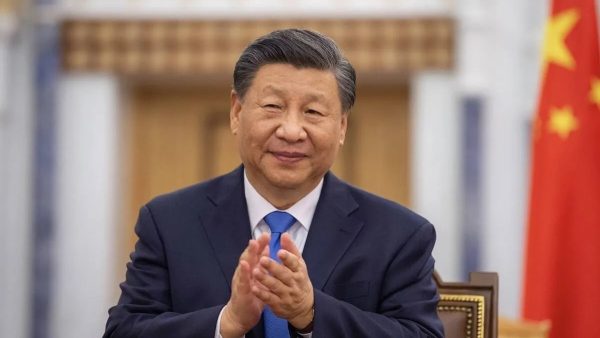
Xi Jinping ends landmark KSA visit by calling on Arab states to embrace multipolar world
The Cradle | December 10, 2022
Chinese President Xi Jinping left Saudi Arabia early on 10 December following a three-day visit that saw him attend three different summits with leaders from across West Asia and Africa.
On Friday night, Xi headed the first China-Arab States Summit, which saw a large majority of Arab League heads of state attend in a bid to strengthen bilateral ties with the Asian giant.
“As strategic partners, China and Arab states should … foster a closer China-Arab community with a shared future, so as to deliver greater benefits to their peoples and advance the cause of human progress,” the Chinese president said during his keynote speech.
Xi also called on Arab states to remain “independent and defend their common interests,” adding that China “supports Arab states in independently exploring development paths suited to their national conditions and holding their future firmly in their own hands.”
“China is ready to deepen strategic mutual trust with Arab states, and firmly support each other in safeguarding sovereignty, territorial integrity and national dignity,” Xi said, noting that the two sides should “jointly uphold the principle of non-interference in other countries’ internal affairs, practice true multilateralism, and defend the legitimate rights and interests of developing countries.”
The Chinese leader also urged leaders from West Asia and Africa to embrace “synergy between their development strategies, and promote high-quality [cooperation in the Belt and Road Initiative].”
Launched nine years ago, the Belt and Road Initiative (BRI) is considered the crown jewel of Xi’s long-term foreign policy agenda. The stated aim of the mega-infrastructure project is to bring capital and infrastructure to Global South countries while dramatically strengthening connectivity for commerce, finance, and culture.
The BRI also aims to secure markets for Chinese companies, stable supplies of inputs for Chinese factories, and productive outlets for China’s large foreign exchange holdings. Close to 150 nations across the globe have signed on to participate in the BRI.
For the first half of 2022, Saudi Arabia was the biggest recipient of China’s finance and investment spending in the BRI.
Ahead of the China-Arab Summit on Friday, the Chinese president met with leaders from the Gulf Cooperation Council (GCC). During this summit, he urged the oil and gas giants to conduct energy sales in the Chinese yuan, potentially divorcing the US dollar from bilateral transactions.
He also vowed to import more oil and natural gas from Gulf Arab states while not interfering in their affairs, a departure from Washington’s long-standing policy of interference and domination.
Xi later took the opportunity to express China’s support for the end of the Israeli occupation of Palestine, and voiced frustration over the “historical injustice” suffered by Palestinians.
“It is not possible to continue the historical injustice suffered by the Palestinians,” the Chinese president said on Friday.
He went on to call on the international community to grant Palestine “full membership in the United Nations” and said Beijing “supports the two-state solution and the establishment of a Palestinian state on the 1967 borders, with East Jerusalem as its capital.”
Beijing’s emergence as a major superpower since the turn of the century has proven to be critically important for Arab states, prompting them to diversify their strategic objectives and balance themselves away from a decades-long Western dependency.
Nigerian Army Preformed Over 10,000 Forced Abortions
By Kyle Anzalone | The Libertarian Institute | December 7, 2022
Nigerian soldiers fighting against a jihadist group regularly ordered women to be given abortions without their consent, according to a new Reuters investigation. The US has provided Nigeria with billions in military aid, weapons and training.
Victims and soldiers told Reuters that women and girls in the custody of Nigeria’s 7 Division were given injections to terminate their pregnancies. Some victims were killed by the abortions, and women who resisted were beaten. It is unclear when the program started,” but had existed since at least 2014.
One of the over thirty survivors that spoke with the outlet said victims – while undergoing abortions – were not provided medical treatment. “That woman was more pregnant than the rest of us, almost six or seven months. She was crying, yelling, rolling around, and at long last she stopped rolling and shouting. She became so weak and traumatized, and then she stopped breathing, she said. Adding, “they just dug a hole, and they put sand over it and buried her.”
The 7 Division operates in the country’s northeast, fighting against the Salafist group Boko Haram. According to the Quincy Institute’s Nick Turse, Nigeria’s military is heavily dependent on America. “Since 2000, the U.S. has provided, facilitated, or approved more than $2 billion in security assistance and military weapons and equipment sales to Nigeria and has conducted more than 41,000 training courses for Nigerian military personnel to support counterterrorism efforts aimed at defeating Boko Haram and the Islamic State,” he wrote in May.
While the Reuters report is shocking, Nigerian armed forces have a history of human rights abuses. “Impunity, exacerbated by corruption and a weak judiciary, remained a significant problem in the security forces, especially in police, military, and the Department of State Services,” the State Department wrote in its 2021 human rights report on Nigeria. Adding, “the military arbitrarily arrested and detained – often in unmonitored military detention facilities – persons in the context of the fight against Boko Haram and ISIS-WA in the North East.”
The abuses have not deterred several American presidents from supporting Abuja. Barack Obama authorized millions in funding to support the Sahel nations’ fight against Boko Haram. Under Donald Trump, American troops conducted multiple training courses for Nigerian soldiers fighting Salafists. President Joe Biden has already authorized a nearly $1 billion sale of attack helicopters to Abuja.
Nigeria denied the claims made by Reuters. The outlet said the 7 Division adopted the tactics out of a belief it would help eliminate Boko Haram. “Central to the abortion program is a notion widely held within the military and among some civilians in the northeast: that the children of insurgents are predestined, by the blood in their veins, to one day take up arms against the Nigerian government and society.” The report continued, “four soldiers and one guard said they were told by superiors that the program was needed to destroy insurgent fighters before they could be born.”
Pentagon exploits post 9/11 laws to wage ‘secret wars’ worldwide: Report
The Cradle | November 9, 2022
A report released last week by the New York University School of Law’s Brennan Center for Justice details how the US Department of Defense (DoD) has been allowed to covertly deploy troops and wage secret wars over the past two decades in dozens of countries across the globe.
Among the nations in West Asia affected by these so-called ‘security cooperation authorities’ are Lebanon, Iraq, Syria, and Yemen; however, they also include many African and Latin American nations.
Known as ‘security cooperation authorities,’ they were passed by the US Congress in the years following the 11 September attacks, and are a continuation of the 2001 Authorization for Use of Military Force (AUMF), a piece of legislation that has been stretched by four successive governments.
According to the report, the AUMF covers “a broad assortment of terrorist groups, the full list of which the executive branch long withheld from Congress and still withholds from the public.”
Following in this tradition, the ‘security cooperation authorities’ being abused by the Pentagon are Section 333 and Section 127e of Title 10 of the United States Code (USC).
Section 333 authorizes the US army to “train and equip foreign forces anywhere in the world,” while Section 127e authorizes the Pentagon to “provide support to foreign forces, paramilitaries, and private individuals who are in turn supporting US counterterrorism operations,” with a spending limit of $100,000,000 per fiscal year.
However, thanks to the vague definition of ‘support’ and ‘training’ in the text of these laws, both Section 333 and Section 127e programs have been abused to target “adversarial” groups under a strained interpretation of constitutional self-defense; they have also allowed the US army to develop and control proxy forces that fight on behalf of – and sometimes alongside – their own.
As a result of this, in dozens of countries, these programs have been used as a springboard for hostilities, with the Pentagon often declining to inform Congress or the US public about their secret operations under the reasoning that the incidents are “too minor to trigger statutory reporting requirements.”
“Researchers and reporters uncovered Section 127e programs not only in Afghanistan and Iraq, but also in Cameroon, Egypt, Kenya, Lebanon, Libya, Mali, Mauritania, Niger, Nigeria, Somalia, Syria, Tunisia, and Yemen,” the report highlights.
Researchers also point out that defense authorities “have given little indication of how [they] interpret Section 333 and 127e.”
Even more concerning, and ignoring the damage caused by these ‘anti-terror’ laws, the US Congress recently expanded the Pentagon’s security cooperation authorities, particularly with Section 1202 of the National Defense Authorization Act (NDAA).
Section 1202 allows the US army to allow “irregular warfare operations” against “rogue states” like Iran or North Korea, or “near-peers,” like Russia and China.
The report comes at a time when the US army and its proxy militias are accused of illegally occupying vast regions of Syria and Yemen, looting oil from the war-torn countries, just over a year after their brutal occupation of Afghanistan ended. Moreover, a former US official on Tuesday revealed that anti-Iran militias are being armed in the Iraqi Kurdistan Region (IKR), where both the CIA and the Mossad are known to operate.
Algeria Applies for BRICS Membership
Samizdat – 07.11.2022
“Algeria [has] made an official application to join BRICS,” media reported, citing Foreign Ministry special envoy Leila Zerrouki.
The president of the North African nation previously said that Algeria may be interested in joining the bloc, adding that it largely meets the conditions for entering BRICS.
This comes after Iran and Argentina earlier this year also announced they were seeking membership in the group. Moreover, BRICS International Forum President Purnima Anand noted that Turkey, Egypt, and Saudi Arabia may “very soon” follow them in applying.
BRICS is an informal association of major developing economies that was formed in 2006 to enhance cooperation between the member nations and elaborate common approaches to global economic challenges. The countries in the bloc represent around 40 percent of the global population and around a quarter of the world’s GDP.
UK-Aided Ukrainian Attempt at Sabotaging Grain Deal to Backfire, Expert Says
Samizdat – 31.10.2022
MOSCOW – Ukraine attacked Russian naval ships that escorted vital grain exports in an attempt to escalate the hunger crisis for the world and blame it on Russia, but the move will likely backfire to make Africa and the Middle East wary of the West and more trustful of Moscow, French political commentator Charles Gave told Sputnik.
Russia quit the UN- and Turkey-brokered grain shipping deal on Saturday after its Black Sea naval ships and civil vessels were attacked in a drone strike that it said was coordinated by the UK. Russia, a leading global grain producer, promised to supply up to 500,000 tonnes of grain to the poorest countries free of charge in the coming months to offset shortfalls from Ukrainian exports.
“The only reason for this drone attack, which is a provocation that really threatens to stop altogether the delivery of grain from Ukraine, is the will to sabotage the grain agreement and present Russia as the arch-villain in the conflict,” Gave said.
He believes, however, that the opposite will likely happen.
“In the end the boomerang effect will probably be that African and Middle East countries will be made much more aware that they can count on Russian grain and that the West, by disrupting the export of grain through the Black Sea, is to blame for this new negative development,” he said.
The attack caused wheat and corn to trade higher on the global stock markets on Monday after the July grain deal saw cereal and vegetable oil prices drop to pre-conflict levels.
Gave, the founder of TVLibertes news channel, said Russia only stood to benefit from the Ukrainian drone strike because it would inflate its grain revenues, while its offer of free grain to those in need would strengthen its image as a reliable partner among the developing countries.
He also called Ukraine’s behavior irresponsible because it risked a deal that had been painstakingly negotiated by Turkey to stage a “public relations exercise and a provocation to create the buzz.”
“I see Russia gaining more and more capacity to influence ‘the rest of the world’ and turn developing countries away from the West,” Gave said. “The consequences are very bad for the countries of destination of the grain export. The West should stop involving itself more and more as a co-belligerent in the conflict and actively support negotiations,” he cautioned.
New African Generation Has Decided to Refuse Western Domination – African Activist
Samizdat -26.10.2022
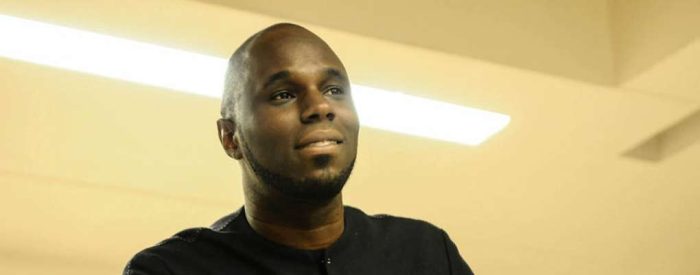
Pan-Africanist political leader and activist Kémi Séba has spoken to Sputnik about Africa’s role in the world and its relations with Russia. He believes that it is not for the West to decide whom Africa builds ties with.
Pan-African activist Kémi Séba, present at the Second International Youth Forum “Russia-Africa: What’s Next?” held on October 24-26 in Moscow, in an interview spoke to Sputnik about the role of Africa in the new world order.
“In this multipolar world, we are witnessing an upheaval in the sense that a new African generation, of which I am a part, has decided to take its destiny into its own hands and to refuse the domination of the West in order to assume its own destiny,” he said.
According to Mr. Séba, “Africa can become a new center of gravity.”
‘Africa is the Sole Messiah of its Destiny’
Having not forgotten the tenets of colonialism, Africa rejects “the neo-liberal Western dictatorship of the Western elite.” The anti-French manifestations that are taking place in several countries on the continent prove that.
“The French government is so arrogant and so negrophobic that it thinks that the protests that are taking place today are just the result of Russian manipulation generating anti-French sentiment. They are so convinced that everything they do is good that they are unable to accept that the colonized people will eventually want to revolt. It is not the Russians who have created this feeling. It is we who created it,” Kémi Séba explained.
He further added: “Africa is the sole Messiah of its destiny.”
Partnership with Russia
According to Mr. Séba, “it is not up to the West to determine with whom Africa should build strong relationships.”
“We want to build relationships with nations that are opposed to Western hegemony. Russia is one of them. But it is not the only one, there is Venezuela, Cuba, China, Turkey, and Iran. They are all part of the challenge process.”
As for the presence of Russian flags, the activist also sees it as “a kind of protest, a provocation of the African peoples because they know that Russia is now a country hated by the Western elites.” “But this does not mean that Russia is our Messiah. We are the Messiahs of our own.”
The other Russia-West war: Why some African countries are abandoning Paris and joining Moscow
By Ramzy Baroud | MEMO | October 15, 2022
The moment that Lieutenant-Colonel Paul-Henri Sandaogo Damiba was ousted by his former military colleague, Captain Ibrahim Traore, pro-coup crowds filled the streets. Some burned French flags; others carried Russian flags. This scene alone represents the current tussle underway throughout the African continent.
A few years ago, the discussion regarding the geopolitical shifts in Africa was not exactly concerned with France and Russia per se. It focused mostly on China’s growing economic role and political partnerships on the African continent. For example, Beijing’s decision to establish its first overseas military base in Djibouti in 2017 signalled China’s major geopolitical move by translating its economic influence in the region to political influence, backed by military presence.
China remains committed to its Africa strategy. Beijing has been Africa’s largest trading partner for 12 years, consecutively, with total bilateral trade between China and Africa reaching $254.3 billion in 2021, according to recent data released by the General Administration of Customs of China.
The US and its Western allies have been aware of and are warning against China’s growing clout in Africa. The establishment of US AFRICOM in 2007 was rightly understood to be a countering measure to China’s influence. Since then, and arguably before, talks of a new “Scramble for Africa” abounded, with new players including China, Russia and even Turkiye entering the fray.
The Russia-Ukraine war, however, has altered geopolitical dynamics in Africa, as it highlighted the Russian-French rivalry on the continent, as opposed to the Chinese-American competition there.
Though Russia has been present in African politics for years, the war – thus the need for stable allies at the United Nations (UN) and elsewhere – accelerated Moscow’s charm offensive. In July, Russia’s Foreign Minister Sergey Lavrov visited Egypt, Ethiopia, Uganda and the Republic of Congo, fortifying Russia’s diplomatic relations with African leaders.
“We know that the African colleagues do not approve of the undisguised attempts of the US and their European satellites. . . to impose a unipolar world order to the international community,” Lavrov said. His words were met with agreement.
Russian efforts have been paying dividends, as early as the first votes to condemn Moscow at the UN General Assembly in March and April. Many African nations remained either neutral or voted against measures targeting Russia at the UN.
South Africa’s position, in particular, was problematic from Washington’s perspective, not only because of the size of the country’s economy, but also because of Pretoria’s political influence and moral authority throughout Africa. Moreover, South Africa is the only African member of the G20.
In his visit to the US in September, South Africa’s President Cyril Ramaphosa defended his country’s neutrality and raised objections to a draft US bill – the Countering Malign Russian Activities in Africa Act – that is set to monitor and punish African governments who do not conform to the American line in the Russia-Ukraine conflict.
The West fails to understand, however, that Africa’s slow but determined shift toward Moscow is not haphazard nor accidental.
The history of the continent’s past and current struggle against Western colonialism and neocolonialism is well known. While the West continues to define its relationship with Africa based on exploitation, Russia constantly reminds African countries of the Soviet’s legacy on the continent. This is not only apparent in official political discourses by Russian leaders and diplomats, but also in Russian media coverage, which is prioritising Africa and reminding African nations of their historical solidarity with Moscow.
Burning French flags and raising Russian ones, however, cannot simply be blamed on Russian supposed economic bribes, clever diplomacy or growing military influence. The readiness of African nations – Mali, Central African Republic and now, possibly, Burkina Faso – has much more to do with mistrust and resentment of France’s self-serving legacy in Africa, West Africa in particular.
France has military bases in many parts of Africa and remains an active participant in various military conflicts, which has earned it the reputation of being the continent’s main destabilising force. Equally important is Paris’s stronghold over the economies of 14 African countries, which are forced to use French currency, the CFA franc, and, according to Frederic Ange Toure writing in Le Journal de l’Afrique, to: “Centralise 50% of their reserves in the French public treasury.”
Though many African countries remain neutral in the case of the Russia-Ukraine war, a massive geopolitical shift is underway, especially in militarily fragile, impoverished and politically unstable countries that are eager to seek alternatives to French and other Western powers. For a country like Mali, shifting allegiances from Paris to Moscow was not exactly a great gamble. Bamako had very little to lose, but much to gain. The same logic applies to other African countries fighting extreme poverty, political instability and the threat of militancy, all of which are intrinsically linked.
Though China remains a powerful newcomer to Africa – a reality that continues to frustrate US policymakers – the more urgent battle, for now, is between Russia and France – the latter experiencing a palpable retreat.
In a speech last July, French President Emmanuel Macron declared that he wanted a: “Rethink of all our (military) postures on the African continent.” France’s military and foreign policy shift in Africa, however, was not compelled by strategy or vision, but by changing realities over which France has little control.
Kenya, Tanzania to Fast-Track Dar es Salaam-Mombasa Gas Pipeline in Bid to Cut Fuel Costs
By Fantine Gardinier – Samizdat – 10.10.2022
During a visit to the Tanzanian port city of Dar es Salaam on Monday, Kenyan President William Ruto and Tanzanian President Samia Suluhu agreed to fast-track construction of a new gas pipeline connecting the city to Mombasa, Kenya’s main port.
“We will now expedite the gas pipeline from Dar es Salaam to Mombasa and eventually to Nairobi so that we can use the resources that we have in our region to lower energy tariffs, both for industry, commercial and domestic purposes,” Ruto said, according to Kenyan online news portal Tuko.
“In the shortest time possible, we can access the gas resources that you have in your country to drive industrialization in our country. I am confident that as the ministers get down to work, they will provide a brief to you and me to fast-track the project,” he told Suluhu.
She and Ruto’s predecessor, Uhuru Kenyatta, signed a memorandum of understanding on the long-awaited pipeline last year, which would extend 373 miles and cost $1.1 billion.
Just days after Ruto took office last month, he was forced to slash fuel subsidies, thanks to an International Monetary Fund (IMF) bailout that included such neoliberal stipulations in its contract. By mid-October, the prices of several types of fuel are expected to increase sharply in Kenya, putting a dent in Ruto’s plans to improve the country’s economic life for millions of Kenyans.
Ruto’s visit, his fourth foreign trip since taking office but his first focused on bilateral deals, is aimed at further bolstering Kenya’s burgeoning trade with Tanzania, its southern neighbor and fellow former British colony.
“We want to double trade, which is doable,” he said. Kenya-Tanzania bilateral trade amounted to nearly $1 billion last year, according to The East African. Years ago, their rivalry led to mountains of trade barriers being imposed, but both countries have labored in recent years to slash them as competition has turned toward cooperation.
“In total, our experts identified 68 barriers which were reviewed and 54 non-tariff barriers were removed and now we want our cabinet secretaries to deal with the remaining 14 so as to ensure there is freewill to trade,” Suluhu said on Monday.
Last month, Suluhu also penned a deal with Mozambican President Felipe Nyusi to expand trade ties as well as defense cooperation, with both nations desiring to quell a cross-border insurgency and re-establish and expand trade.
Last year, Uganda, Tanzania, French-owned oil giant Total, and China National Offshore Oil Corporation (CNOOC) signed a series of deals to build a massive 900-mile-long gas pipeline from western Uganda’s oil fields to the Tanzanian port of Tanga. The East African Crude Oil Pipeline (EACOP) will pass along the southern edge of Lake Victoria, circumventing Kenya before crossing northern Tanzania. It is expected to begin pumping oil in 2025 and cost $10 billion.
In March, Tanzania also announced a massive new liquefied natural gas (LNG) project expected to draw $10 billion in investment. Rising energy costs thanks to a global inflation problem and Western sanctions on Russia, the world’s largest energy exporter, have created problems for nations like Kenya, that import much of their energy, but opportunities for nations like Tanzania, which export it or have untapped reserves.
Western regimes are intent on maintaining energy poverty in Africa
By Ekaterina Blunova – Samizdat – 05.10.2022
Sudanese-British billionaire Mo Ibrahim criticized the West on Monday for obstructing African nations’ effort to develop their own hydrocarbon reserves and constantly ignoring the energy poverty problems of the Global South. What’s behind the Global North’s political short-sightedness and who benefits from the controversy?
Even though Africa boasts roughly 12% and 9% of the world’s oil and natural gas reserves, respectively, most of the continent’s nations suffer from energy poverty. However, once the energy crisis hit Europe, EU governments immediately turned to the African continent, seeking to tap its resources while overlooking the continent’s longstanding problems.
“The West’s exploitation of Africa’s wealth is driven by two factors,” explained Dr. Mamdouh G. Salameh, an international oil economist and a global energy expert. “The first is the old racist view that African people are backward and inferior to Western people and therefore can’t defend themselves or protect their natural resources. In a nutshell, it is doable. The second factor is greed and profit, which are the core of the Western capitalist system of taking advantage of poor and helpless people and exploiting their resources without letting them benefit the slightest from their stolen resources. That is how Western empires were built in Africa and around the world in the 19th and 20th centuries.”
The Central African Countries suffer from severe energy poverty because they neither have the infrastructure (refineries, oil and gas pipelines) to benefit from their vast energy resources and also distribute energy, nor do they have the financial means to build such infrastructure, according to the oil economist. The deplorable state of Africa’s energy infrastructure stems from the fact that the West is by no means interested in the continent’s sustainability, Salameh highlighted.
“The ultimate beneficiary from Africa’s energy poverty, particularly refined products, is Western oil companies,” the energy expert said.
One glaring example is the 4,128 km-long Trans-Saharan gas pipeline. It is supposed to link Nigeria to Algeria, passing through Niger and bring Nigerian and Algerian gas exports to Europe while simultaneously benefiting energy-poor African countries from Nigeria’s and Algeria’s plentiful gas reserves estimated at 206.53 trillion cubic feet (tcf) and 159 tcf respectively, the oil economist explained.
Although this pipeline was conceived in the 1970s, it is still at the drawing board stage despite many memorandums of understanding signed over the years, the latest in mid-February, Salameh pointed out, forecasting that “it won’t see the light of day even in the next 10 years.”
“Western countries have consistently ignored Africa’s energy resources for years declining to offer investments as long as they didn’t need these resources at the time,” he said. “But in the aftermath of the Ukraine conflict and having introduced sweeping sanctions against Russia, the European Union is trying to curry favor with African hydrocarbon producers to reduce its dependence on Russia’s gas and oil supplies.”
The unfolding energy crisis offers new opportunities for Africa to develop oil and gas infrastructure and step up production of hydrocarbons. However, while African business leaders and policy-makers are brushing off the dust from their long-delayed energy projects, Western politicians and environmentalists have raised concerns about climate change issues, insisting that Africa’s consumption of fossil fuels could make matters far worse.
“The West puts so much importance on the climate change agenda in Africa,” said Salameh. “I would hazard two explanations for the West’s attitude. The first explanation is that the West is under the misjudged and erroneous view that any future energy assets – like investing in oil and gas production and building pipelines will end up after 2030 as stranded assets. The second explanation is a more sinister one, with the West wishing to keep African energy resources underground in order to satisfy its own appetite for energy in the future.”
Last month, US climate czar John Kerry discouraged investors from funding long-term gas projects in Africa, warning that they would be unable to recoup their investments beyond 2030. According to Kerry, it will be important to capture the emissions from gas after 2030, as the world is set to reach net-zero emissions in 2050.
On October 3, Sudanese-British billionaire Mo Ibrahim lambasted the West for hypocrisy and a double-standard approach at the “Reuters impact” conference in London. Ibrahim drew attention to the fact that the “Global North” is preventing African nations from developing their own gas reserves over climate change fears, while at the same time seeking opportunities to gain from African resources themselves.
This is not the first time that Ibrahim has lambasted Western policy-makers over their Africa policies. In July 2022, the billionaire’s foundation released “The road to COP27: Making Africa’s case in the global climate debate,” dedicated to the forthcoming 2022 United Nations Climate Change Conference in Egypt scheduled for November, 6-18. The report highlighted that “the current climate agenda is failing Africa” and placed the emphasis on the continent’s people’s right to energy access, given that a staggering 600 million Africans are still lacking it.
“The green agenda is hampering African countries from fully tapping and exploiting their hydrocarbon resources,” said Salameh. “This is a double-edged approach in that it enhances energy poverty in Africa while simultaneously depriving the EU of Africa’s energy resources (…) If African countries don’t have the infrastructure, the technical know-how and the financial resources to benefit from their own vast hydrocarbon resources, how would anyone expect them to develop green energy?”
Meanwhile, the Western green agenda for Africa is “faulty,” according to the energy expert: Africa accounted for only 3.8% of the world’s emissions of carbon dioxide (CO2) from fossil fuels and industry in 2020, which is the smallest share among all world regions.
On the other hand, climate groups who call for an abrupt end to fossil fuels and a sudden adoption of renewable energy fail to recognize the obvious lack of logic in this, continued Salameh.
“On their own, renewables aren’t capable of satisfying global demand for electricity and energy because of their intermittent nature,” the oil economist explained, characterizing a total energy transition as an “illusion.”
The current energy crisis in Europe clearly indicated that the Old Continent can’t rely on renewables alone. Furthermore, EU member states had to restart their coal plants after resorting to an anti-Russia energy embargo over the latter’s special military operation in Ukraine.
“While denying Africa’s right to push ahead with its own energy endeavors, the West would be eager to offer investments and technological know-how to the continent in exchange for receiving the lion’s share of the regional hydrocarbon wealth. The West doesn’t care whether African countries are experiencing severe energy poverty or not as long as it gets its hands on these reserves,” Salameh concluded.
Featured Video
More Iran War fallout: Maritime insurance industry shifts from London to China
or go to
Aletho News Archives – Video-Images
From the Archives
Allies Don’t Need Lobbies
By Jay Knott | Dissident Voice | September 24, 2013
In a recent article on Counterpunch, Rob Urie defended the traditional Marxist analysis of US policy in the Middle East. He argues that support for Israel is driven primarily by economic interest, not the Jewish lobby.
He starts by paying tribute to the idea that Western societies are uniquely racist. He says that the “Western narrative” claims there is an “Arab character”, and that this is “antique racist blather”. He gives no definition of these terms. Further, he establishes his credentials as part of the dominant current in the American left by claiming that “over a million people in Iraq died so ‘we’ in the West can drive SUVs.”1
When he tries to criticize bourgeois economics, he makes it clear he doesn’t understand the developments it has made since Marx’s day, using the mathematical discipline known as “game theory”. He dismisses the basic abstraction of economic theory, the idea of the rational individual, on the grounds that it is “devoid of history, culture and political context”. But abstractions are always devoid of something.
He defends a more concrete economic theory, mostly Marxist, with some input from another theorist of capitalist crisis, Hyman Minsky. This concrete theory leads him to the view that US activity in the Middle East is primarily driven by rational capitalist motives, the need to secure a supply of oil.
“Taking the totality of circumstance — former oil company executives launching war on an oil rich nation on a pretext they publicly proclaimed they didn’t believe shortly before taking office — and that upon launching their war proved to be non-existent, requires a willingness to overlook the obvious — that the war on Iraq was for oil, that is difficult to support.”1
Perhaps I’ve misunderstood him, but based on what he says in the rest of the article, this convoluted sentence seems to argue that, because president Bush and vice-president Cheney attacked Iraq on false premises, and they also said it was all about oil, and they are former oil executives, and Iraq has a lot of oil, it’s difficult to deny US attacks on Iraq are all about oil.
In fact, it’s not hard at all. As Urie points out, at times Bush and co. said that attacking Iraq was “protecting the world’s supply of oil.”1 But, as he also points out, they are congenital liars. Why should we believe them when they say they are trying to “protect” the oil supply? Protect it against what? When politicians “admit” attacks on Middle Eastern countries are wars for oil, they are parroting the neo-con party line, feeding the public, both left and right, with a plausible-sounding pretext. For right-wingers, “it’s a war for oil” is a reason to support war, and for leftists, it’s a way to feel better by complaining impotently about corporate greed. Both approaches help the war drive. … continue
Blog Roll
 Aletho News
- More Iran War fallout: Maritime insurance industry shifts from London to China
- US-Israeli aggression on Iran triggers review of GCC countries’ investment pledges to Washington
- Russia slams UK plan to seize tankers suspected of carrying its oil
- Pakistan ramps up food exports to Persian Gulf nations as war deepens food insecurity
- Iran submits response to US plan, sets terms for war’s end: Tasnim
- US vs Iran: Kharg Island Talk — Bluff or Escalation? Ex-Military Officer Weighs In
- Zelensky unnecessarily involves Ukraine in the Middle East crisis
- Turkish tanker blacklisted by Ukraine hit in drone attack – media
- Canada, the U.S., and NATO: the inescapable trap
- Villains of Judea: Leonid Radvinsky
- If Americans Knew
- ‘No Innocent Children’: Far-right Israeli Lawmaker Defends Killing of Palestinian Family
- Mossad’s promises helped Netanyahu convince Trump that Iran could be toppled
- US Arms Control Official Refuses To Comment When Asked If Israel Has Nuclear Weapons
- Veterans warn US landing could be ‘more Gallipoli than Vietnam’
- Israel may be committing war crimes in Lebanon – Not a ceasefire Day 167
- In the West Bank, life is a constant battle – 3 articles
- Jacob Reses, one of the most powerful pro-Israel operatives in Trump’s Washington
- Israeli-US assaults kill or injure 87 children a day – Not a ceasefire Day 166
- ‘Forever live by the sword’: Understanding Israelis’ massive support for Iran war
- UN’s special rapporteur on human rights says Israel is systematically torturing Palestinians
- No Tricks Zone
- Devastating Assessment Of Comirnaty Vaccine By Former Senior Pfizer Europe Toxicologist
- New Study: CO2 Is ‘Effectively Negligible’ As An Explanatory Climate Change Factor Since 2000
- Former Pfizer Toxicologist Dr. Helmut Sterz Tells Bundestag Hearing Pfizer Vaccine Should Have Never Been Approved
- Energy Expert: Germany’s Nuclear Phaseout Was A “500 Billion Euro Mistake”
- New Research: South Australia’s Mid-Holocene Sea Surface Temperatures Were 4°C Warmer Than Today
- Storing Green Energy To Last Germany 10 Days Would Require A 60-Million Tonne Battery
- New Studies: UK Sea Levels Were 4 Meters Higher Than Today During The Mid-Holocene
- Destructive Green New Deal: German Energy And Metal Group Warns Of Drastic Crisis
- New Study Documents A 20-Year Pause In Arctic Sea Ice Decline – Driven By Internal Variability
- Wake-up Call: Survey Shows Majority Of Germans Now Favor Postponing Climate Targets!
 Aletho News