The US Is Receptive To Kissinger’s Suggestion To Revive Talks With China On A New Détente
BY ANDREW KORYBKO | MAY 19, 2023
Two new narratives were introduced into the West’s information ecosystem over the past week. The first concerns the need to adapt to multipolar processes by engaging more with the Global South, which was expressed by German Chancellor Olaf Scholz, former US National Security Council member Fiona Hill, and Goldman Sachs’ President of Global Affairs Jared Cohen all on the exact same day last Monday. The next narrative complemented this one and came two days later on Wednesday.
Global affairs guru Henry Kissinger’s lengthy interview with The Economist from late April was published on that day, in which he devoted considerable time explaining why the US should revive its talks with China on a New Détente that were unexpectedly derailed by February’s balloon incident. CNN then reported on that same day that “Biden administration looking at arranging high-profile visits to China by senior officials,” which suggests that it was briefed earlier about his proposal and heeded his advice.
The first narrative about engaging more with the Global South complements the second one about reviving talks with China on a New Détente in the sense that the former is one of the three prerequisites for successfully accomplishing the latter, at least according to how American policymakers likely view it. They want to signal that the US won’t voluntarily cede influence in the Global South to China, but instead plans to compete with it there via economic and diplomatic means.
This goal will be greatly advanced through a combination of pragmatic engagement with the Global South’s informal Indian leader, whose Prime Minister visits the US late next month, and coordinating between America’s “Build Back Better World” and the EU’s “Global Gateway” development initiatives. These subgoals also align with Kissinger’s suggestions about cooperating more closely with India as well as crafting an inspirational vision for this century (i.e. merging the West’s development initiatives).
The second prerequisite for successfully negotiating a New Détente with China upon the seemingly impending resumption of this process is to diplomatically displace its envisaged role in the Russian-Ukrainian peace process. In pursuit of this, the US wants to “de-Sinify” the scenario of a ceasefire after the end of Kiev’s NATO-backed counteroffensive, which explains its support of the African-led peace mission that was announced on Tuesday in between Monday and Wednesday’s new narratives.
What’s most interesting about this initiative is that it’s organized by the Brazzaville Foundation, whose French chairman Jean-Yves Olivier is known for his shadow diplomacy over the decades that was documented by Wikipedia. This suggests that their peace mission is secretly organized by France with the US’ tacit approval, if not jointly coordinated with it, which would advance their goal of diplomatically engaging with the Global South in parallel with “de-Sinifying” the Russian-Ukrainian peace process.
Both’s prospects would be bolstered by India’s participation in these efforts, which has its own interests in presenting itself to the world as a peace broker, especially throughout the course of its G20 chairmanship. These two prerequisites for enhancing the odds that the US successfully negotiates a New Détente with China concern the economic and diplomatic spheres respectively, while the third that’ll now be described deals with the military one.
“The US Is Rounding Up Allies Ahead Of A Possible War With China”, while “NATO’s Planned Liaison Office In Japan Will Accelerate The Expansion Of AUKUS+”, both of which will contribute to more effectively containing China in the Asia-Pacific. American policymakers apparently expect that the People’s Republic will accept this emerging regional military reality instead of it serving to preclude the resumption of their talks on a New Détente.
Not only that, but they seem to think that it could even give their side an edge of some sort in those negotiations too, or at least enable the US to speak to China “from a position of strength” as they see it. The message would be that this containment noose could tighten even more if Beijing doesn’t agree to resume such talks, not to mention if they fail to achieve anything tangible, thus making it a form of military blackmail when viewed from this perspective.
Altogether, the introduction of this week’s two complementary narratives into the West’s information ecosystem suggest that this de facto New Cold War bloc’s American leader is recalibrating its grand strategy. Policymakers appear to have concluded that their side can’t restore unipolarity, instead settling for managing multipolar processes in the direction of their interests as much as is realistically possible, to which end they must engage more with the Global South and revive talks with China on a New Détente.
The observations shared in this analysis shouldn’t be interpreted as predicting the success of these policies, but simply as arguments that this approach is indeed being attempted and was almost certainly influenced by Kissinger’s suggestions that he shared in his interview. He and The Economist are close to American policymakers so they likely passed his ideas along to relevant figures, after which they agreed with the gist thereof and subsequently began implementing them this week as proven in this piece.
Bloomberg Wants The West To Punish African States Over Their Preferred Security Partners

BY ANDREW KORYBKO | MAY 8, 2023
Bloomberg’s demand for the West to punish African states over their preferred security partners is extremely condescending. Opinion columnist Bobby Ghosh published a piece about this over the weekend urging to “Make Russia’s Wagner Group a Pariah in Africa”, to which end he’s lobbying for the US and EU to designate it as a terrorist organization so that its clients there can then be sanctioned. This suggests that the West knows what’s better for African states’ security than their own governments do.
According to Ghosh, Wagner is only useful for “reinforc[ing] military rule” in “despot[ic]” states and “disproportionately targeting civilians” in its anti-terrorist operations. In exchange, it supposedly bleeds local partners dry by extracting their resources. He thus predicts that “The arrival of fresh legions of Wagner mercenaries in Africa will make it harder for the West to nudge military governments back toward democracy, and to prevent democratic governments from going in the other direction.”
The reality is altogether different as could have been expected considering how often Mainstream Media (MSM) outlets like Ghosh’s publish the exact opposite of the truth in pursuit of the West’s interests. “Russia’s Newfound Appeal To African Countries Is Actually Quite Easy To Explain” since it simply boils down to Wagner’s “Democratic Security” expertise. This refers to its counter-Hybrid Warfare tactics and strategies that ensure its partners’ sovereignty in the face of related threats from the West.
Its earlier success in the Central African Republic (CAR) inspired Mali’s revolutionary anti-imperialist government to follow in that nearby country’s footsteps. Just last week, neighboring Burkina Faso’s interim leader declared that his state is in a “strategic alliance” with Russia too despite denying that Wagner is on the ground helping the national forces fight terrorism. In all three cases, these Russian-friendly governments enjoy genuine grassroots support for striving to restore their sovereignty.
This means that Ghosh’s demand for the West to designate the CAR and Mali’s Wagner partners as terrorists in order to then punish them with sanctions is anti-democratic, as is the potential deterrent effect that this could have on that group’s cooperation with Burkina Faso and other countries. So long as any given security relationship doesn’t occur at the expense of a third party’s legitimate interests, then there shouldn’t be any pressure put upon either side for their ties with one another.
Wagner is always invited by African authorities to assist their armed forces and hasn’t ever intervened without their permission. Allegations of it committing war crimes are part of the US’ Hybrid War against that group, which was detailed at length by Politico a few days after Ghosh’s piece and analyzed here. Whether by coincidence or collusion, his article advances America’s information warfare interests, with its timing being extra curious since it in hindsight preconditions his audience to accept the US’ narratives.
Regardless of his speculative ties with its military-intelligence services, there’s no denying that the condescending way in which he addresses Africans is very offensive. It’s up to their countries as equal members of the international community to decide for themselves how best to ensure their security and who to partner with to that end, not any third parties like the US, let alone MSM figures like Ghosh. Meddling of the sort that Bloomberg just attempted only further discredits the West in Africans’ eyes.
West’s efforts to isolate Russia have failed – Lavrov
RT | April 29, 2023
The West has failed to isolate Russia, with the majority of the world still interested in maintaining good relations with Moscow, Foreign Minister Sergey Lavrov has said. He also argued that the trend toward multipolarity is irreversible, whether former colonial powers like it or not.
Addressing the World Online Conference on Multipolarity on Saturday, Lavrov said that “Washington’s and its satellites’ efforts to reverse history, to force the international community to live by the invented ‘rules-based order’” are proving to be a fiasco, citing the “total failure” of the West “to isolate Russia.”
According to the foreign minister, a number of countries, which combined are home to 85% of the world’s population, have made it clear that they will not do the bidding of the former colonial powers.
The Russian diplomat said the fact that delegates from several dozen nations “from nearly every continent” attended the online forum shows just how much traction the idea of multipolarity has gained.
Lavrov noted that new global centers are emerging in Eurasia, the Indo-Pacific region, the Middle East, Africa, and Latin America, and that these nations are pursuing independent policies guided by national interests.
According to the foreign minister, developing nations have been steadily expanding their share in the global economy over the past three decades, while the role of the G7 nations has been diminishing.
He also hailed the fact that more and more countries have expressed interest in joining international groups “of the new kind,” such as BRICS and the Shanghai Cooperation Organization (SCO).
Russia, Lavrov explained, champions a multipolar world order based on respect for the UN charter, and a “balance of interests” as opposed to a “balance of fear.”
President Vladimir Putin said on Friday that Moscow will not abide by the “so-called rules” invented and imposed by “certain countries.”
Also on Friday, while addressing members of the SCO, Defense Minister Sergey Shoigu claimed that the West is putting “unprecedented pressure” on independent countries to pit them against Russia and China, and undermine the rise of the multipolar world.
On Monday, Lavrov called for the expansion of Asian, African, and Latin American representation in the UN Security Council, arguing that the West is over-represented in the international body.
Alarms Are Sounding as Mideast Nations Begin to Put Distance From US Influence
Sputnik – 28.04.2023
WASHINGTON – US partners in the Middle East are beginning to distance themselves from American influence amid efforts to stabilize the region, which may be a concern to Washington, former US Ambassador to Saudi Arabia Chas Freeman told Sputnik.
Saudi Arabia recently took diplomatic action to thaw relations with Iran, Syria, and Hamas, while Bahrain and Qatar agreed to resume diplomatic ties. In mid-April, Syrian Foreign Minister Faisal Mekdad traveled to Saudi Arabia, marking his first visit to the country since 2011, to discuss efforts to reach a possible political solution to the crisis.
At the UN on Monday, Russian Foreign Minister Sergey Lavrov said the world must boost efforts to reach political settlements and stabilize conflict zones in the Middle East now more than ever as the region undergoes deep transformation.
Lavrov also said a multilateral approach is required to resolve the Palestinian-Israeli crisis, instead of what he called the “destructive” one-sided actions of the US and EU that have harmed the Mideast peace process.
“The countries of West Asia are coming to see themselves as members of what [Russian political scientist] Sergei Karaganov has called ‘the world majority’ and distancing themselves from the United States,” Freeman said. “All this represents a diminution of American influence that is naturally of concern to Washington.”
The Eastern part of the Arab world, Freeman added, has long been subjected by external powers, but it is now in the midst of a self-driven rearrangement of regional relationships.
“Its major actors have seized control of their own destiny for the first time since Napoleon’s 1798 invasion of Egypt and are seeking their own answers to their region’s problems,” Freeman said.
According to Freeman, the Middle East is now led by assertively independent leaders with their own determination about how their national interests will be best served, and they do not respond well to outside efforts to dictate policy in the region.
“These leaders have learned the hard way that the use of force and covert action not only solves few problems but is often costly and counterproductive,” Freeman said. “The result is a search for peace and stability between the countries of the region without regard to the views of the United States and the former colonial powers.”
Mideast nations, Freeman said, are expanding their outreach to rising and resurgent powers like China, India, Brazil, and Russia and by identification with post-Cold War institutions like the BRICS and the Shanghai Cooperation Organization, entailing the adoption of a nonaligned stance on matters between external great powers like the contention between the United States, Russia, and China.
Freeman is an American retired diplomat and writer who served in the US Foreign Service, and in the departments of State and Defense, in many different capacities over 30 years.
Russian fuel exports surge despite sanctions – Bloomberg
RT | April 27, 2023
Russia is on course to record its highest seasonal export rate of petroleum products in seven years despite Western oil sanctions that took effect in February, Bloomberg reported on Wednesday, citing tanker tracking data from Vortexa.
According to the report, shipments of clean petroleum products, including diesel-type fuel, amounted to 1.9 million barrels a day during the first three weeks of April. If that rate continues for the remainder of the month, it will be the highest for this time of the year since at least 2016, calculations show.
The new data follows multi-year highs reached in March, when shipments were at their highest since the start of 2016.
Russian diesel-type fuel exports were targeted by an EU embargo on seaborne petroleum products that came into force in early February, along with a G7 price cap on the same products. In response, Moscow announced it will cut output by 500,000 barrels a day between March and December.
Despite the sanctions, data shows that Russia has successfully redirected fuel shipments. Most of the country’s petroleum products in April have been shipped to Türkiye as well as North African countries, including Morocco, Tunisia, and Libya.
Russia has also boosted exports to South American countries, most notably Brazil. According to a recent report by Reuters, Russia’s share of Brazilian diesel fuel imports is set to reach 53% in April, compared to just 0.2% a year ago.
A Senior Pentagon Official Strongly Implied Impending “Mission Creep” In Sudan
BY ANDREW KORYBKO | APRIL 23, 2023
The US evacuated a little less than 100 of its diplomats, their families, and a “small number” of other countries’ diplomats from the Sudanese capital of Khartoum on Saturday. The mission was launched from a base in nearby Djibouti, refueled in neighboring Ethiopia, and then spent less than an hour on the ground before departing that war-torn country. That could have closed the book on the US’ military involvement in Sudan had a senior Pentagon official not told reporters about what’s being planned next.
CNN reported that Assistant Secretary of Defense for Special Operations and Low-Intensity Conflict Chris Maier said the following in a call with journalists sometime after the evacuation ended:
“In the coming days, we will continue to work with the State Department to help American citizens who may want to leave Sudan. One of those ways is to potentially make the overland routes out of Sudan potentially more viable.
[The Department of Defense] is at present considering action that may include use of intelligence, surveillance, and reconnaissance capabilities to be able to observe routes and detect threats.
Secondly, the employment of naval assets outside the port of Sudan to potentially help Americans who arrive at the port, and third, the establishment at the US Africa Command in Stuttgart deconfliction cell focused particularly on the overland route.”
Instead of washing its hands of this “deep state” war that risks turning into a civil and even international war, the US is getting drawn into “mission creep” on the pretext of evacuating its remaining citizens.
CNN mentioned in their report that “Officials told staffers (from the State Department) that there could be an estimated 16,000 Americans in Sudan, most of whom are dual nationals.” This means that foreign-born US citizens who returned to their homeland for whatever reason are being exploited as the “justification” for redirecting intelligence, surveillance, and reconnaissance (ISR) capabilities there, possibly deploying naval assets to its main port, and creating a “deconfliction cell” for managing events.
In simple English, the Pentagon will likely use a combination of drones, electronic means, and satellites to spy on the Sudanese Armed Forces’ (SAF) Rapid Support Forces (RSF) opponents, after which they’ll dispatch warships to Port Sudan that’ll be organized by AFRICOM’s newest (warfighting) “cell”. Those vessels can either carry armed aid (irrespective of whether it’s disguised as humanitarian aid) for the SAF and/or be capable of conducting their own offensive actions against the RSF under certain conditions.
The so-called “overland routes out of Sudan” that the Pentagon wants to “make… potentially more viable” could be sold to the public as a “humanitarian corridor” but will in reality function as a means for supplying the SAF. The “deconfliction” element of this equation purely refers to the contact that the US also has with the RSF, whom Undersecretary of State for Management John Bass said on Saturday “cooperated to the extent that they did not fire on our service members in the course of the operation.”
In the emerging context of “mission creep”, the Pentagon could simply warn the RSF not to impede the creation of these “overland routes out of Sudan” just like they stayed out of the way during Saturday’s evacuation under threat of being bombed on “humanitarian” pretexts if they don’t. The American public could easily be manipulated into supporting this action if they’re misled to believe that “Russian-/Wagner-backed insurgents/terrorists are holding approximately 16,000 US citizens hostage in Africa”.
Therein lies the importance of the latest narrative being pushed by the Mainstream Media (MSM) suggesting that this entire conflict is Russia’s fault, the false claims of which were reviewed and analyzed in this piece here. Basically, the US sees an opportunity to proverbially kill multiple birds with one stone on a Russophobic basis, which could ultimately result in them putting Moscow on the backfoot in Africa and securing a symbolic victory in this little-discussed but hugely significant New Cold War front.
Policymakers don’t truly care about those Americans that are stranded in Sudan, especially since the majority of them are thought to be dual nationals, but they see a chance to exploit the “humanitarian” optics as part of a larger power play against Russia. The first step was to safely evacuate US diplomats since it’s those citizens who lives are truly valued by the government after it invested a considerable sum in each of them over the course of their careers. Everyone else is expandable in their view.
Now that its “VIPs” are out of harm’s way, the US can up the ante in Sudan on a “humanitarian” pretext as part of its latest anti-Russian proxy war. There’s still the possibility that it’ll reconsider, but events are quickly moving in that direction as evidenced by what the earlier mentioned senior Pentagon official revealed to the media on Saturday about the US’ impending “mission creep”. If it goes ahead with this scenario, then precedent shows that Sudan might become the next Libya, or perhaps even worse.
Here’s Why The US Is Trying To Pin The Blame For Sudan’s “Deep State” War On Russia
BY ANDREW KORYBKO | APRIL 21, 2023
Debunking The Latest Fake News Narrative
CNN published an exclusive piece on Thursday alleging that “Evidence emerges of Russia’s Wagner arming militia leader battling Sudan’s army”. They claim that satellite imagery shows increased Russian military transport activity between Libya and Syria in the run-up to Sudan’s “deep state” war. According to CNN, this confirms rumors that General Haftar is supplying Rapid Support Forces’ (RSF) leader General Mohamed Hamdan Dagalo (“Hamedti”) with surface-to-air missiles (SAM) on behalf of Wagner.
The Wall Street Journal published their own exclusive piece the day prior on Wednesday alleging that “Libyan Militia and Egypt’s Military Back Opposite Sides in Sudan Conflict”, so these two stories complement one another. Both Hamedti and Wagner have denied these claims, however. The Sudanese Ambassador to Russia also confirmed that “Russia is a friendly country to us so we have been in direct contact with [the] Russian Foreign Ministry since the very beginning of those events last Saturday.”
That diplomat’s reaffirmation of Sudan’s close ties with Russia is especially important since he represents the government that’s internationally recognized as being led by Chief General Abdel Fattah Al-Burhan, who commands the Sudanese Armed Forces (SAF) and is one of the two figures vying for power. At present, Khartoum therefore doesn’t extend credence to the emerging US-led Western Mainstream Media (MSM) narrative that Russia is arming the RSF via Haftar-Wagner, but that could soon change.
Preconditioning The Public For Another Proxy War
Unless the present three-day Eid ceasefire holds and leads to the start of peace talks that ultimately end this “deep state” war, which is unlikely since both sides made clear their intent to completely destroy the other, then this conflict is expected to resume in the near future. Should the SAF fail to defeat the RSF and possibly even be placed on the backfoot, then Burhan might gamble that it’s in his best interests to parrot the MSM’s anti-Russian accusations in an attempt to receive direct Western military support.
That scenario isn’t all that far-fetched either considering that the Associated Press and Politico both cited unnamed officials on Thursday to report that the US is assembling additional troops in nearby Djibouti to prepare for the possible evacuation of Americans from Sudan. This pretext could easily be exploited to arm the SAF and/or attack the RSF, especially if the Pentagon claims that the latter tried stopping its operation by building upon last week’s claim that its forces shot at an armored US diplomatic vehicle.
In the event that Burhan repeats the MSM’s emerging anti-Russian narrative and promises to rubbish Sudan’s naval base deal with Moscow upon defeating the RSF, then the Biden Administration can “justify” its military intervention on the basis of “defending Sudanese democracy from a Kremlin coup”. The public would then be told that the latest conflict was sparked by Russia’s support for the “insurgent” RSF, which the MSM would attribute to its interests in defending Wagner’s mining operations there.
American Meddling In Russian-Egyptian Relations
This would predictably precede an unprecedented but preplanned information warfare campaign painting Russia as a “destabilizing” force in Africa, which would be aimed at counteracting its hitherto highly successful efforts at presenting itself as a force of stability in support of legitimate governments. The purpose of this aforesaid operation would be to erode Russia’s newfound “Democratic Security” appeal across the continent with a view towards reversing the decline of Western influence there.
Furthermore, Burhan’s potentially opportunistic piggybacking on the earlier described emerging anti-Russian narrative could have serous implications for Moscow’s ties with Cairo due to the perception of them backing opposite sides in Sudan’s “deep state” war. Russian-Egyptian relations have recently been beset by scandal upon the latest Pentagon leaks alleging that Cairo abandoned its supposedly secret plan to supply rockets to Moscow under pressure from Washington and agreed to arm Kiev instead.
Considering this context, the scenario of Egyptian-backed Burhan blaming Russia for sparking the latest conflict could therefore lead to the rapid deterioration of Russian-Egyptian ties, especially if Cairo decides to indirectly retaliate against Moscow by curtailing its investment rights in Port Said. Those two signed an additional agreement on this industrial zone last month, which was first approved in 2018 and is supposed to help Russia expand its economic engagement with the broader region.
Punishing The Emirates For Its Close Relations With Russia
That goal could be jeopardized if Egypt decides to punish Russia through these means in response to Burhan opportunistically piggybacking on the MSM narrative in an attempt to obtain direct Western military support against the RSF. Furthermore, the UAE’s ties with Egypt and the US could also become much more complicated in that event too since Abu Dhabi is accused of backing reportedly RSF-allied Haftar, being favorable disposed to that armed Sudanese group, and secretly allying with Russia.
The last-mentioned accusation was brought to the public’s attentions as a result of the previously mentioned Pentagon leaks, which were denied by the UAE but coincided with the weakening of its ties with Washington that are partially over that Gulf country’s growing ones with Moscow. There are more factors at play than just the Russian-Emirati relationship, but the point is that the UAE’s problems with the US could be amplified by the MSM if Burhan accuses Russia of arming the RSF via Haftar-Wagner.
It also deserves mentioning that America’s other ulterior interest in its incipient propaganda campaign against Russia in Sudan is to complicate its geopolitical opponent’s logistical connections with the Central African Republic (CAR), which owes its continued existence as a state to Moscow’s military support. The Kremlin largely relies on transit across Sudan in order to supply its forces and its ally’s there, but this could be cut off if Burhan jumps on the anti-Russian bandwagon and revokes Moscow’s privileges.
The Chadian Connection
Lastly, another strategic factor behind this latest information warfare offensive against Russia is that it could ruin that country’s surprisingly solid relations with regional military heavyweight Chad. As explained in this recent analysis here, N’Djamena ended up expelling the German Ambassador earlier this month for meddling instead of the Russian one despite the US telling its counterparts in late February that Moscow is using Wagner in the CAR and Libya to arm anti-government rebels against it.
The Associated Press cited an African analyst from a Western risk assessment firm in their article on Thursday about 320 SAF troops fleeing to Chad to claim that this development could prompt N’Djamena into taking those forces’ side in Sudan’s “deep state” war. According to Benjamin Hunter, “N’Djamena is likely to oppose (Dagalo) due to fears that RSF dominance in Darfur could empower Chadian Arabs to unseat the (president’s) regime. Many within (Dagalo’s) Rizeigat tribe live across the border in Chad.”
If Chad becomes embroiled in Sudan’s “deep state” war on Burhan’s side, then it might be susceptible to Western suggestions that jumping on the anti-Russian bandwagon like he would have already done in this scenario could lead to them suspending their regime change campaign against N’Djamena. Should that happen, then this regional military heavyweight might also support any potentially forthcoming rebel/terrorist offensive that its historical French partner could soon plot against Russia in the CAR.
Concluding Thoughts
Putting everything together, the US plans to achieve the following strategic objectives by introducing the narrative that Russia is arming the RSF:
1. Entice Burhan to extend credence to these claims in exchange for US military support;
2. Demand that he also rescinds Russia’s naval base rights and cuts off its overflight access to the CAR;
3. Consider direct support to the SAF on the pretext of commencing an “evacuation operation” in Sudan;
4. Discredit Russia and the UAE’s African engagement policies by framing both as “destabilizing forces”;
5. Attempt to provoke a crisis in Russia’s relations with Sudan’s Chadian and Egyptian neighbors;
6. Exploit the above scenario to assemble a regional coalition for pushing back against Russia in Africa;
7. Encourage Chad to support a French-backed rebel/terrorist offensive in the Russian-allied CAR;
8. Plot a copycat proxy war in Russian-allied Mali in order to crush the Kremlin’s influence in the Sahel;
9. Perfect this new Hybrid War method prior to employing it all across the continent;
10. And thus turn Africa into the top proxy war battleground of the New Cold War.
The US therefore has many reasons to push this fake news campaign, though it’s unclear whether it’ll ultimately achieve any of its envisaged objectives or not.
DR-Congo’s Audit & Attempted Renegotiation Of A Chinese Mining Deal Is A Major Move
BY ANDREW KORYBKO | APRIL 17, 2023
Quartz published a concise report earlier this month about the Democratic Republic of the Congo’s (DRC) audit of a Chinese mining deal from the early aughts and attempts to renegotiate its terms more in Kinshasa’s favor. President Tshisekedi claims that his predecessor Kabila agreed to a massively lopsided arrangement, which he claims Beijing hasn’t even perfectly honored. Accordingly, he wants it to pay more taxes as well as invest more in the DRC’s infrastructure like was initially agreed.
This is a major move for several reasons, the first being that the lion’s share of the world’s cobalt reserves (70%) that are indispensable for the green revolution and modern-day technological devices is located in the DRC, almost all of which (80%) is exported to China according to Quartz’s report. Second, China’s positive reputation across Africa is largely based on the perception that it’s a reliable infrastructure investment partner, but the DRC’s latest claims challenge that notion.
The third and fourth reasons why everyone should pay attention to this concern the potential outcome of their planned negotiations. If they successfully agree to new terms, then this could inspire copycat efforts– including those on false pretexts – for pressuring China into revising the terms of other deals elsewhere. Should they fail to agree to new terms, however, then Kinshasa could potentially demand that Beijing sell back its earlier purchased shares in the DRC’s state-run mining firm.
The final reason why all of this is so important is because either outcome could set a precedent that complicates China’s Belt & Road Initiative (BRI) deals across the Global South that have already been under intense scrutiny since the US declared its trade war against the People’s Republic in 2018. While it’s true that some of the unsavory reports and related investigations into those deals were baseless provocations by the US’ intelligence services, others nevertheless have some substance to them.
This means that they should each be approached on a case-by-case basis exactly as the DRC-Chinese one presently is since it’s inaccurate to paint the scrutiny into every deal with the same brush by either dismissing it all as a foreign intelligence provocation or assuming that every criticism is valid. The outcome of this latest audit and attempted renegotiation might set a standard across the Global South in terms of reshaping perceptions about China for better or for worse depending on the ultimate result.
On the one hand, agreeing to renegotiate the deal’s terms would show flexibility on China’s part and thus counteract the weaponized narrative that it’s laid a series of so-called “debt traps” for its partners through BRI. That said, the cumulative effect of potentially setting into motion a series of seemingly never-ending renegotiations on other deals elsewhere could reduce the profitability of its BRI projects, prolong the time that it takes to recoup its investments, and thus imperil this model in the long run.
On the other hand, however, refusing to renegotiate the deal’s terms would feed into the aforesaid weaponized narrative and risk setting the precedent for Kinshasa to demand that Beijing sell back its earlier purchased shares. Instead of setting into motion a series of seemingly never-ending renegotiations on other deals elsewhere, this could catalyze the process whereby BRI states – irrespective of US influence – consider reappropriating Chinese assets just like the DRC might do.
Both outcomes could have outsized consequences for BRI, but the first-mentioned related to successfully renegotiating the DRC-Chinese deal is preferred when all the risks are considered since it would counteract weaponized narratives while also keeping the BRI model alive for the time being. The second scenario could quickly deal immense strategic damage to Chinese interests, especially if US intelligence weaponizes that process, hence why all efforts should be made to avoid it.
It remains to be seen what will happen, but there’s no question that the DRC’s audit and attempted renegotiation of its mining deal with China is a major move that could have far-reaching economic-strategic reverberations in the New Cold War, particularly with respect to its African front. Observers should closely monitor this process for that reason and remain especially alert for any signs of foreign forces like the US’ intelligence agencies and/or media attempting to influence the outcome.
Chad Expelled The German Ambassador A Month After The US Claimed Russia Was Meddling
By Andrew Korybko | April 9, 2023
Chad’s expulsion of the German Ambassador for his “impolite attitude and the non-respect of diplomatic customs”, which reports suggested was a euphemism for his meddling in its internal affairs, wasn’t what the US expected when it reportedly passed along intelligence about Russia in late February. The Wall Street Journal wrote at the time that American officials informed their Chadian counterparts about Moscow’s alleged plots to arm anti-government rebels and even assassinate the president.
There were reasons to be skeptical of this at the time, not least because the Russian Embassy in N’Djamena warned in January about Western efforts to divide these two states, especially after Moscow shared its expectation that the Chadian President will attend summer’s second Russia-Africa Summit. To be sure, bilateral relations have come a long way since their low point in September 2021 when the Chadian Foreign Minister claimed that Wagner posed a threat to his country’s interests.
Its presence in the neighboring countries of the Central African Republic (CAR) and Libya was allegedly being exploited to arm anti-government rebels, according to him, hence why US spies probably thought that Chad would fall for a remixed version of this narrative. His words led to the conclusion that “Chad Wants To Lead The Charge Against Russia’s Inroads In Françafrique” for several self-interested reasons, not least of which was to ensure Paris’ continued support for the authorities amidst rising discontent.
Everything radically changed in Africa over the last 18 months since then, however. France’s “sphere of influence” in the Central and Western parts of the continent has been shattered as a result of Russia’s successful “Democratic Security” policies in the CAR and Mali, with Paris now needing N’Djamena much more than the inverse. Furthermore, not a single African country complied with the West’s demands to sanction Moscow for its special operation in Ukraine, thus exposing the limits of its influence nowadays.
These interconnected developments contributed to changing Chad’s perceptions of Russia’s rising role in Africa, hence the possibility of its president attending summer’s second Russia-Africa Summit. It also accounts for why this country didn’t fall for the US’ claims that Moscow is meddling in its affairs, instead choosing to expel the German Ambassador a little over a month later instead of the Russian one like Washington likely expected would happen after sharing its so-called “intelligence”.
To be clear, there’s still a chance that some influential forces in Chad could do the geopolitical bidding of their country’s traditional French patron by lobbying for decisionmakers to authorize an anti-Russian provocation of some sort, but it’s important to point out that this hasn’t yet happened. The preceding observation extends credence to the conclusion that Chad’s perceptions of Russia are changing for the better, so much so that it didn’t fall for the US’ latest attempt to divide-and-rule them.
This is admittedly impressive since Chad is a bastion of French influence in Africa, but as was earlier written, it’s nowadays the case that France needs Chad more than the inverse after Paris’ “sphere of influence” in the Central and Western parts of the continent was shattered over the last 18 months. N’Djamena can now at least in theory consider demanding more aid and other sorts of benefits from France in exchange for continuing to host its forces without having to do its regional bidding like before.
Chadian officials can also more confidently confront the West since the scenario of the latter initiating any serious deterioration in their ties is no longer all that troubling because their country could just shift towards Russia in that event like the CAR, Mali, and a growing number of others are presently doing. In fact, this pivot could be held above their heads as a Damocles’ sword for squeezing more benefits from that de facto New Cold War bloc, which fears the consequences of pushing Chad into Russia’s arms.
Expelling an ambassador is a major move, however, let alone a traditionally Western-aligned African country doing this to one who represents the EU’s de facto leader. For that reason, this development probably wasn’t the result of a failed effort by Chad to get more money from Germany. Rather, it’s most likely the case that reports about that official’s meddling in his host state’s internal affairs are accurate, hence why N’Djamena took this unprecedented step.
The authorities want to avoid a repeat of last October’s deadly unrest that was officially driven by discontent over them delaying their country’s democratic transition but was exploited by certain forces to carry out a spree of violence across the capital. The West specializes in organizing Color Revolutions so it might have been the case that the recently expelled German Ambassador was trying to initiate another round of similar unrest to pressure the Chadian President against possibly visiting Russia in July.
His attendance at the second Russia-Africa Summit would be a coup de grace for Moscow by proving that its pragmatic engagement with the continent has succeeded in turning the leaders of traditionally Western-aligned countries like Chad into important partners who refuse to do third parties’ bidding. It would be Russia’s top diplomatic victory over the West since NATO began waging its proxy war in Ukraine to have him and other such leaders all meet with President Putin in the latter’s hometown.
Moscow has no reason to meddle in any of these countries’ affairs and thus risk spoiling this opportunity, especially not with Chad, which previously positioned itself as France’s vanguard force for pushing back against Russia all across Paris’ “sphere of influence”. The West, however, has every reason to meddle via disinformation disguised as “intelligence” and the cultivation of Color Revolution pressure in a desperate attempt to preemptively avert its rival’s impending diplomatic victory.
That’s why it was ultimately the German Ambassador that was expelled from Chad and not the Russian one despite the US claiming a little over a month ago that Moscow was plotting to kill its president. He didn’t extend credence to those reports otherwise Russia’s representative would have already been kicked out of the country. By ordering the German Ambassador’s expulsion, however, Chad just signaled that it now fears that its traditional Western partners are the ones who are truly conspiring against it.
RT International extends reach via new platforms
RT | April 7, 2023
RT International is now freely available via satellites operated by the Arab Satellite Communications Organization, which is based in Saudi Arabia, and Egypt’s Nilesat. The channel has also been added to India’s DD Free Dish service.
The Russian news network’s English-language channel is now broadcast by Arabsat’s Badr 4 satellite and the Nilesat 201 satellite. No subscription is required for either service.
Both transmitters predominantly serve audiences in North Africa and the Arab Peninsula. The Badr 4 signal can also be picked up in numerous European countries, according to its stated coverage. Viewers in some parts of Sub-Saharan Africa can likewise tune in to Badr 4 and Nilesat 201.
The receiver settings for the two satellites and the list of places where they are available are as follows:
Badr 4
Position: 26.0°E
Frequency (MHz): 12054
Polarization: V
Modulation: DVB-S (QPSK)
Symbol Rate (SR): 27500
FEC: 5/6
SID: 1850
VPID: 2140
APID: 2255
Albania, Algeria, Andorra, Austria, Bahrain, Belgium, Bosnia and Herzegovina, Bulgaria, Croatia, Cyprus, Czech Republic, Denmark, Djibouti, Egypt, Eritrea, Faroe Islands, France, Gaza Strip, Germany, Gibraltar, Greece, Hungary, Iran, Iraq, Ireland, Israel, Italy, Jordan, Kuwait, Lebanon, Libya, Liechtenstein, Luxembourg, Malta, Monaco, Montenegro, Morocco, Netherlands, North Macedonia, Oman, Palestine (PNA), Poland, Portugal, Qatar, Romania, SADR (Western Sahara), San Marino, Saudi Arabia, Serbia, Serbia (Kosovo), Slovakia, Slovenia, Sudan, Sweden, Switzerland, Syria, Tunisia, Türkiye, UAE, United Kingdom, Vatican City, West Bank, Yemen.
Nilesat 201
Position: 7.0°W
Frequency (MHz): 11958
Polarization: H
Modulation: DVB-S (QPSK)
Symbol Rate (SR): 27500
FEC: 5/6
SID: 839
VPID: 554
APID: 555
Algeria, Bahrain, Cyprus, Djibouti, Egypt, Eritrea, Ethiopia, Gaza Strip, Gibraltar, Iraq, Israel, Jordan, Kenya, Kuwait, Lebanon, Libya, Malta, Mauritania, Morocco, Oman, Palestine (PNA), Qatar, SADR (Western Sahara), Saudi Arabia, Somalia, South Sudan, Sudan, Syria, Tunisia, UAE, Uganda (in some parts), West Bank, Yemen.
Residents of India can now find RT International on the DD Free Dish satellite service operated by state-owned broadcaster Prasar Bharati. The channel was added to its content on April 1.
The US and its allies have been working for years to reduce RT’s international presence, claiming that the outlet serves as an instrument of Russian propaganda. After the conflict in Ukraine escalated last year, many Western nations demanded that platforms ban RT content from being shown on their territory.
READ MORE: Ban on Russian media protects ‘freedom of expression’ – Borrell
RT offers a viewpoint that it believes Western mainstream media outlets fail to present to their audiences, and urges people to “question more” when consuming news. RT programming is available in several languages, including Arabic, English, French, German, Serbian, and Spanish.
Why was Covid so deadly for African Leaders?
The Naked Emperor’s Newsletter | April 5, 2023
Could Covid have been used as an excuse to bump off political rivals in third world countries? Or perhaps they were removed by foreign powers looking for regime change. For example in March 2020, 12 Iranian politicians and officials died from Covid including a member of the clerical body that appoints the supreme leader, Ayatollah Hashem Bathayi Golpayegni. Admittedly, Golpayegni was 78 but Ali Reza Zali, who was leading the campaign against the Covid outbreak, acknowledged that many of those who died were otherwise healthy.
The British Medical Journal (BMJ) produced a short analysis in 2021 looking at why so many African leaders died of COVID-19. They estimated that the average minister was a 60.5 year old male and that the fatality rate in the general population for this demographic was 0.17%. However, amongst worldwide ministers and heads of states this figure was 0.6% which was heavily skewed by Africa with a fatality rate of 1.33%.
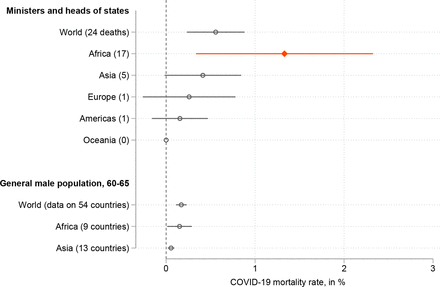
Why, when Africa was barely affected by Covid, were African leaders and ministers disproportionality killed by the disease?
The BMJ found that between 6 February 2020 and 6 February 2021, Covid claimed the lives of 24 national ministers and heads of states around the world. For some reason this didn’t include the Iranian deaths above but putting that aside, 17 of those 24 deaths occurred in Africa.
There was nothing special or different about the demographic of African ministers, “if anything, the African leaders who succumbed to COVID-19 were slightly younger than their seven counterparts on other continents”.
Five suggestions were given as to why the death rate could be so much higher.
- More comorbidities. However, no evidence of this was uncovered;
- Poor healthcare. You would think of all the people in Africa, the leaders of the nation would have access to the best healthcare around;
- General mortality in Africa was higher than reported. This was challenged by the WHO;
- African ministers work environments are busier and, therefore, they are more prone to the circulation of the virus. Even the BMJ say this is a weak hypothesis;
- 50% of the African deaths occurred in Southern Africa and the majority after the more transmissible ‘South African’ variant was reported.
Or was it something else?
John Magufuli
Not included in the report, due to it happening at the time it was published, was the death of another African leader, John Magufuli. Magufuli was president of Tanzania and died in March 2021, aged 61.

The Tanzanian leader had gone missing for two weeks before his death was announced even though the Prime Minister, Kassim Majaliwa, had insisted that the president was “healthy and working hard”. The media speculated that he was in hospital with Covid but when the vice-president, Samia Suluhu announced his death, she said he had died of heart failure.
From the very start, Mr. Magufuli had been a Covid sceptic. The Guardian’s obituary even called him “Tanzania’s Covid-denying president”. He had said how well Tanzania’s economy would do because they weren’t locking down and causing huge harm.
Just over two weeks before his disappearance, the Guardian published an opinion piece titled “It’s time for Africa to rein in Tanzania’s anti-vaxxer president.” The article was sponsored by the Bill & Melinda Gates foundation.
Mr. Magufuli, who had trained as a Chemistry teacher, first saw through the Covid scam when he realised the false positives produced by PCR tests. He sampled a goat, sheep and even a pawpaw fruit, assigned them human names and ages, sent them off for analysis and all came back with a positive Covid test result.
As a result, the president said “There is something happening. I said before we should not accept that every aid is meant to be good for this nation”. At the time of his death, only 21 Tanzanians had died and the president said the country was “Covid-free”. However, the country had stopped testing and recording deaths as ‘with Covid’ so we can’t be sure if this was correct or not.
Masks were laughed at and the government’s advice was to “improve personal hygiene, wash hands with running water and soap, use handkerchiefs, herbal steam, exercise, eat nutritious food, drink plenty of water, and [use] natural remedies that our nation is endowed with”. Whilst in the West, we were told to stop exercising and sit indoors worrying.
The Tanzanian president had also refused to buy “dangerous” foreign vaccines, instead choosing “herbal remedies”. However, even though Western media said this “herbal remedy” lacked scientific evidence, it was in fact made from Artemisia, a plant from Madagascar, shown to fight SARS-CoV-2.
Artemisia is used against malaria and has shown anti-inflammatory effects, including inhibition of interleukin-6 that plays a key role in the development of severe COVID-19. Furthermore, it has been shown to inhibit the viruses invasion and replication, as well as reducing oxidative stress and inflammation and mitigating lung damage. The plant also contains zinc, gallium and selenium, as well as having an antiviral effect.
The week before the president disappeared, ten prominent Tanzanians, including the former Bank of Tanzania Governor, all died from suspected Covid. This led to the WHO calling upon Tanzania to take “robust action”. The president suggested citizens should wear masks but reiterated that the country would not impose a lockdown.
After Magufuli’s death, his vice-president took over the presidency and reversed all his Covid policies.
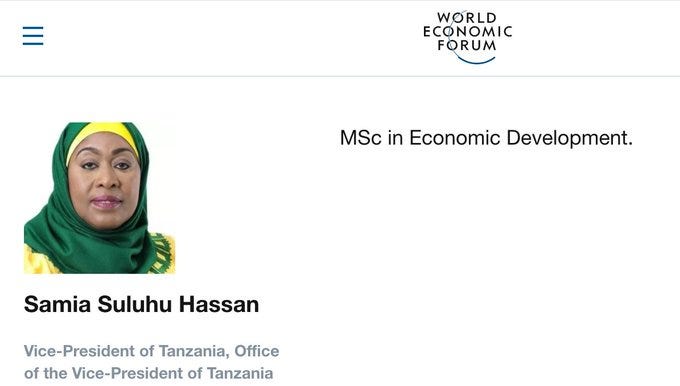
A million doses of Johnson & Johnson vaccine were ordered and a vaccination drive was put in place. A Covid task force was setup, masks had to be worn and lockdowns were enacted.
Pierre Nkurunziza – President of Burundi
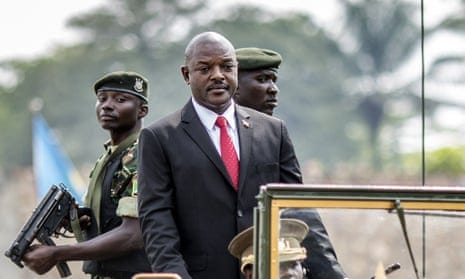
President Nkurunziza died unexpectedly, after a short stay in hospital, aged 55 in June 2020. Again, it was suspected that he had Covid but the official reason given for his death was a heart attack.
A month earlier in May 2020, the president had refused to introduce any social distancing or lockdown rules. After the WHO questioned the country’s Covid statistics, Burundi expelled WHO’s coronavirus team and declared them persona non grata for interfering with pandemic management.
On 30th June, new president Evariste Ndayishimiye announced that Covid was Burundi’s biggest enemy and to fight it required “strict compliance with the barrier measures that the Ministry of Health will now display everywhere across the country”.
Malawi
In April 2020, the high court in Malawi stopped the government from implementing a national lockdown. This had been initiated by a civil society group which challenged president Peter Mutharika who wanted a lockdown to save 50,000 Malawian lives. To date 2,686 Malawians have died with Covid.
However, in January 2021, a number of government ministers died including Minister of Local Government and Rural Development, Lingson Belekanyama; Principal Secretary in the Ministry of Information, Ernest Kantcheche; Transport Minister, Sidik Mia and Foreign Minister, Sibusiso Moyo (the former army general who ousted Mugabe).
Subsequently, the president used these deaths to stress the importance of new restrictions.
Other deaths
As well as the deaths above, which highlight how Covid deaths were used to change Covid policies in their respective countries, other Covid deaths included:
- Ambrose Dlamini, Prime Minister of Eswatini (formerly Swaziland);
- Christian Myekeni Ntshangase, Minister of Public Service in Eswatini;
- Makhosi Vilakait, Minister in Eswatini;
- Mahmoud Jibril, former Libyan Prime Minister and part of rebel government that overthrew Gaddafi;
- Pierre Buyoya, former Burundi president who died in Paris and had just been sentenced to life imprisonment in Burundi over the assassination of his successor, Melchior Ndadye;
- Khalif Mumin Tohow, Justice Minister of Somalia. This was the second Covid death in Somalia;
- Sekou Kourouma, Chief of Staff to Guinean President Alpha Conde;
- Amadou Salif Kebe, Head of Guinea’s electoral commission;
- Victor Traore, Director of Guinea’s Interpol bureau;
- Abba Kyari, Chief of Staff to the President of Nigeria Muhammadu Buhari;
- Mohamed Ben Omar, founder of the Nigerien Social Democratic Party which allied with the President of Nigeria’s party;
- Mahamane Jean Padonou, 2016 Nigerian presidential candidate and special advisor to President Issoufou;
- Ismail Gamadiid, Minister of Climate Change in Somalia;
- Perrance Shiri, part of the Cabinet of Zimbabwe and cousin of Mugabe;
- Ellen Gwaradzimba, Minister of State in Zimbabwe;
- Sibusiso Moyo, Minister of Foreign Affairs in Zimbabwe, noted for announcing the ousting of Mugabe;
- Joel Biggie Matiza, Minister in Zimbabwe and on the US sanctions list;
- Jackson Mthembu, Minister in South Africa. A medical helicopter transporting his doctor crashed, killing all 5 on board, the same day Mthembu died;
- Abdoul Aziz Mbaye, founding member of Senegal’s ruling party;
- Hasan al-Lawzi, Minister of Information in Yemen.
The list could go on and on.
I’m not saying that any of these people were taken out by the WHO or some international organisation that wanted lockdowns or to sell more vaccines. But what I am saying is that, in less transparent countries, Covid provided the perfect cover to get rid of a political opponent or undergo some type of regime or agenda change.
We have seen in the West how politicised the pandemic became and how politicians used the situation to their advantage as much as possible. Unfortunately for many of those Western politicians, killing people you don’t agree with is a little bit harder and more likely to get you put behind bars.
But in many third world countries, including the ones listed above in Africa, this happens a lot. And normally papers such as the Guardian would be rightly outraged. They would claim a coup had taken place or a political assassination.
However, many of the people who would normally be reporting and getting outraged about these deaths joined the cult of Covid. Suddenly, instead of investigating what happened, the political victor only had to write “maybe died of Covid” and Western media just reported “So sad, Covid is so terrible, if only they had been vaccinated”.
I’m sure some of the aforementioned deaths were due to some respiratory virus but maybe now that some ‘journalists’ are coming out of their Covid-induced reporting comas, they will start investigating whether all these politicians really died from Covid or were politically assassinated. The fact that African leaders were almost 8 times more likely to die from Covid than the general population might give them a clue.
Featured Video
Racist Seinfeld Dances for Joy as Bibi Unveils His New Map
or go to
Aletho News Archives – Video-Images
TV Drama Review
Japanese drama projects Japan’s wartime atrocities onto Chinese characters

Global Times | October 25, 2026
By portraying Chinese characters as perpetrators of ruthless violence while casting Japanese Self-Defense Forces (SDF) intelligence operatives as defenders, the season 2 of the Japanese drama Vivant has recently drawn criticism from Chinese netizens, who argue that its depiction turns historical reality on its head while ignoring Japan’s wartime atrocities.
The TBS drama series – a spy suspense story in which an alleged unofficial intelligence unit of the SDF operates across the globe — has attracted a passionate fanbase. Its currently airing season 2 opened with a household rating of 18.8 percent, the highest for a TV drama this year, according toa commentary article by Japanese media Toyo Keizai.
What draws attention is the portrayal of the enemies in the series, the article noted. Scenes in which the Chinese organization subjects kidnapped members of the SDF unit to brutal torture are repeated with unrelenting intensity.
It is rare for Japanese TV dramas to explicitly portray a real-life country as the enemy, the article noted.
Japanese Prime Minister Sanae Takaichi also made a reference to the drama, saying that she has been recording Vivant and hopes to binge-watch it over the year-end and New Year holidays, according to Japanese media outlets.
China’s CCTV News report on Sunday revealed that the drama features scenes in which Chinese personnel cut off the fingers of and stab Japanese intelligence operatives in the abdomen. Such acts bear striking similarities to the torture inflicted on Chinese nationals by invading Japanese troops during the World War II.
The drama distorts the truth by attributing these atrocities to modern Chinese characters. Beneath the surface, it subtly glorifies Japan’s cross-border overseas operations, blurs the functional boundaries of the SDF and implicitly promotes an expansionist narrative, per CCTV News. … continue
Blog Roll
 Aletho News
- EU facing trillion-euro debt hole while seeking more cash for Kiev
- How US, Europe, Persian Gulf states exhausted missile stockpiles, splurged billions to defend Israel
- Up in arms… Koreans reject U.S. empire’s plan to make South Korea the next Ukraine
- Iran, Turkey, Pakistan, Saudi Arabia could advance region-led security framework in Tehran: FM spox
- Netizens condemn Japanese drama for projecting Japan’s wartime atrocities onto Chinese characters
- Racist Seinfeld Dances for Joy as Bibi Unveils His New Map
- A West Bank War for Netanyahu’s Election Campaign, Could It Backfire?
- Yemen denounces European Parliament’s ‘hypocritical’ push to blacklist Ansarullah
- Qalibaf: UAE’s UN bid aims to ‘clear the runway’ for ‘Greater Israel’, whitewash genocide
- Pakistan reopens Iran border after boosting security: Report
- If Americans Knew
- An error has occurred; the feed is probably down. Try again later.
- No Tricks Zone
- Sudden Stratospheric Warming, Powerful El Niño Combination May Lead To Extreme Europe Cold, Energy Crisis!
- Two New Studies Find Thwaites Glacier Melt Cannot Be Driven By Human Activity Or A Warming Ocean
- E-Cars Reduce CO2 Emissions By Only 41% Compared To Internal Combustion Engine Vehicles
- Predictions Made By Renowned Climate Professor Over Past Decades Have Been Proven To Be Poor
- New Study Suggests Large Regions Of The Pacific Ocean Have Been Cooling For The Last 80 Years
- Germany’s Green Energy Debacle: High Energy Costs Force Kahla Porzellan to Close After 182 Years!
- New Study: 50 Years Of The Most Aggressive ‘Net Zero’ Policies Can Only Affect The Global Climate By 0.03°C
- US September “Heat” Was No Record…Many Records Set Decades Ago
- Latest European Green Energy Debacle; Portugal’s Largest Flagship Solar Park Insolvent!
- Green Energy Debacle: German Expert Professor Fritz Vahrenholt Warns Of Severe Economic And Social Consequences

