China is the Rock Upon Which the U.S. World Order Breaks
By Ted Snider | The Libertarian Institute | April 4, 2023
In March, Chinese President Xi Jinping visited Russian President Vladimir Putin in Moscow, where they not only “reaffirm[ed] the special nature of the Russia-China partnership,” but “signed a statement on deepening the strategic partnership and bilateral ties which are entering a new era.” As Xi was leaving the Kremlin, he told Putin that “Together, we should push forward these changes that have not happened for 100 years.” That goodbye was Xi’s not so coded call for the end of the American century.
In his February 7 State of the Union Address, U.S. President Joe Biden got carried away by his excitement and arrogantly and ineptly went off script and called out, “Name me a world leader who’d change places with Xi Jinping. Name me one. Name me one.”
But the deflating truth is that the world is lining up behind China and Russia’s vision of a multipolar world no longer exclusively led by the United States. From Africa and its unanimous attendance at the recent Russia-Africa in a Multipolar World conference, to the Middle East and its long list of countries lining up to join the Chinese and Russian led multipolar organizations BRICS and the SCO, to Latin America and most of Eurasia and Asia, including India, the weight of the world is going to Xi’s place to balance American hegemony and support a multipolar world.
Biden’s outburst was an insult and confrontation that was a personal microcosm of U.S. provocation and confrontation of China on a global level. And it has had a corrosive and dangerous effect. An angry China is not answering America’s phone calls. Biden had hoped to talk to Xi on the phone in mid-March, but Chinese officials are not responding to U.S. requests to arrange the call. Defense Secretary Lloyd Austin’s calls to set up talks with his Chinese counterpart have also not been answered.
China is emerging as the rock upon which the U.S.-led alliance breaks.
China’s growing economic, diplomatic, and political influence is beginning to be more powerfully felt on the world stage. The rapid growth of international organizations that support China and Russia’s multipolar world vision is just one piece of evidence. China’s emergence as an influential broker is another.
Beijing has become a power that can shape the world, leaving Washington out of the process. They shocked the world in March by brokering a region transforming agreement between archrivals Saudi Arabia and Iran. And they upset the U.S. in February by initiating a peace process for the war in Ukraine. Both initiatives left the U.S. out in the cold.
The world is no longer unipolar: a world with multiple poles of power is emerging. China’s foreign policy seeks economic growth that demands the fostering of stability in the world; U.S. foreign policy seeks hegemony that demands hostility and schisms that punish and isolate resisters. The problem with China’s emergence as a broker is that it breaks U.S. hegemony. But it is also that China’s peace plans get in the way of America’s war plans.
The U.S. is not ready for peace in the Russo-Ukrainian War. Though peace plans may serve a devastated Ukraine, they do not serve the larger U.S. goals being served by the devastated Ukraine. The United States is not ready for Ukraine to go to the table and end the war before their larger goals are accomplished. As State Department spokesperson Ned Price said in March 2022, “This is a war that is in many ways bigger than Russia, it’s bigger than Ukraine.”
Biden rejected China’s potential role as a broker in the war, insisting that “the idea that China is going to be negotiating the outcome of a war that’s a totally unjust war for Ukraine is just not rational.” National Security Council spokesman John Kirby said that the U.S. does not believe that a Chinese peace proposal “is a step towards a just and durable peace.” He claims that “We all want to see the war end… And a ceasefire, at this time, while that may sound good, we do not believe would have that effect.” Kirby then added that “we don’t support calls for a ceasefire right now. We certainly don’t support calls for a ceasefire that would be called for by the [People’s Republic of China] in a meeting in Moscow that would simply benefit Russia.”
The U.S. has long insisted that no decisions will be made without Ukraine. But if a Chinese-brokered peace were to succeed, it would be because Ukraine has agreed to it. It is remarkable that it is up to Ukraine to continue the war but not up to Ukraine to end it.
China’s peace plans for the Middle East also get in the way of America’s war plans. A U.S.-led unipolar world demands the isolation of Iran. A key piece of that plan is the establishment and maintenance of a regional coalition against Iran. At the heart of that coalition is Saudi Arabia firmly in the anti-Iran camp. The recent Chinese brokered Saudi-Iran agreement breaks that coalition and mends that schism.
The Saudi-Iran agreement has had immediate effects in the region that further challenge American efforts to shape it in their own way. Fast in the wake of the agreement, Saudi Arabia and Iranian ally Syria agreed to reopen their embassies. And the shift in shape is not just bilateral, but regional. Saudi Arabia’s foreign minister is reported to be on his way to Damascus to formally invite Syrian President Bashar al-Assad to this May’s Arab League summit in Riyadh. The invitation, Syria’s first since 2011, would “formally end Syria’s regional isolation.” On April 1, Syria’s foreign minister went to Cairo for the first official visit in twelve years to begin the process of reinstating Syria in the Arab League.
That “leap forward in Damascus’s return to the Arab fold” frustrates U.S. plans to continue the isolation of Assad and Syria. The U.S. has opposed normalization of relations with Syria by countries in the Middle East. The State Department says their “stance on normalization remains unchanged” despite Saudi Arabia’s new stance and the changes in the region.
China has emerged as a diplomatic force that can broker agreements and shape the world in a way that shatters U.S. hegemony in a unipolar world. Some countries are willing to break with the United States and work with China.
France has communicated to China its “appreciation for China’s positive role in promoting peace talks.” Macron’s Diplomatic Advisor, Emmanuel Bonne, told Wang Yi, China’s Director of the Office of the Central Commission for Foreign Affairs, that “France is ready to make joint efforts with China to facilitate cessation of hostilities and seek a peaceful solution.”
France is a major European NATO ally. China’s emergence as a diplomatic superpower has created a crack in the structure of the U.S.-led alliance.
France is not alone in its willingness to work with China. Where France’s independent position reveals a rift within the U.S.-led alliance, Brazil’s independent position reveals the emergence of other poles in the newly emergent multipolar world.
The independent course charted by Brazil and its willingness to work with America’s rival reveals, not only the loss of U.S. hegemony in its own hemisphere, but the loss of U.S. hegemony globally because partnering with China is partnering with BRICS, the large international organization whose goal is to balance U.S. hegemony of a unipolar world.
Brazilian President Luiz Inácio Lula da Silva has supported China’s efforts at negotiating a peace proposal and criticized the United States for speaking “very few words about peace.” But he has also proposed a joint effort, or a “peace club” that could include BRICS members China, India and Brazil and possibly Indonesia. Indonesia has been a leader in the nonaligned world and was recently welcomed as a guest at the BRICS Foreign Ministers’ Meeting.
China’s diplomatic entry into the war in Ukraine highlights a multipolar world that could shape a post world war and sideline the United States.
As China’s economy and the gravitational pull of its multipolar world grow, and as its force is further felt, not only economically but politically and diplomatically, the U.S. stance may stiffen, and Washington may more solidly confront China, not only by increasing sanctions, but by calling on its allies to do the same.
That call could be a challenging one for America’s European allies to answer. If Seymour Hersh’s reporting is correct, it took cutting Germany off from their Russian oil supply by a historic act of sabotage—an act of war—to keep Germany fully on board in America’s sanction regime on Russia. China has been Germany’s most important trading partner for seven consecutive years. Since the Russian invasion of Ukraine, Germany has only increased its investments in and economic dependence on China. It will be more difficult to pressure Germany to cut economic ties with China than it was to pressure it to cut ties with Russia. And it will be asking a lot of Germany to ask it to cut ties with both.
Dr. Suzanne Loftus, Research Fellow at the Quincy Institute Eurasia Program, told me that, “China is Germany’s most important trading partner. Having to sanction China would put Germany in a very difficult position seeing as how it has already had to sanction another one of its significant trading partners (Russia) and is also struggling with U.S. protectionist policies (Inflation Reduction Act).” Loftus continued “[f]acing difficulties at home, Germany will most likely opt out of having to sanction China if the U.S. started to put pressure on Germany to do so. It would otherwise face too much of an economic shock and increased domestic turmoil as a result.”
A hint of that potential split with the United States was provided in November when German Chancellor Olaf Scholz’s defied Washington by going to Beijing, accompanied by the CEOs of Volkswagen, BMW, BASF, Bayer and Deutsche Bank, in part to discuss trade.
On the eve of his trip, Scholz wrote that “new centers of power are emerging in a multipolar world, and we aim to establish and expand partnerships with all of them.” He said that, though China is an economic power that will “play a key role on the world stage in the future,” this does not “justif[y]… calls by some to isolate China.” Scholz then wrote clearly that “even in changed circumstances, China remains an important business and trading partner for Germany and Europe—we don’t want to decouple from it.”
Future American calls to sanction China could force Europe into a choice between solidity with the U.S.-led alliance and continued economic partnership with China. For the U.S., there is a hazardous forecast that that choice could weaken that solidity.
The growing reality of China’s multipolar world vision, China’s emergence as a broker of peace plans that interfere with American war plans, the world’s shifting of shape that sees important countries willing to work with China, and the need for countries to strengthen trade ties with Beijing all suggest that China could be the rock upon which the U.S.-led alliance breaks.
OPEC: Saudis aren’t afraid of US anymore
BY M. K. BHADRAKUMAR | INDIAN PUNCHLINE | APRIL 4, 2023
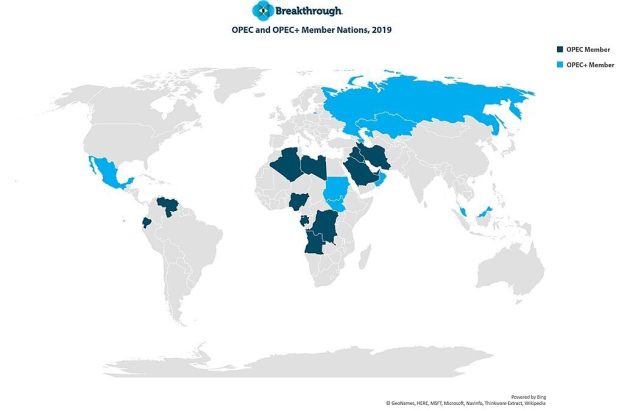
The shock oil production cuts from May outlined by the OPEC+ on Sunday essentially means that eight key OPEC countries decided to join hands with Russia to reduce oil production, messaging that OPEC and OPEC+ are now back in control of the oil market.
No single oil producing country is acting as the Pied Piper here. The great beauty about it is that Saudi Arabia and seven other major OPEC countries have unexpectedly decided to support Russia’s efforts and unilaterally reduce production.
While the 8 OPEC countries are talking about a reduction of one million b/d from May to the end of the year, Russia will extend for the same period its voluntary adjustment that already started in March, by 500,000 barrels.
Now, add to this the production adjustments already decided by the OPEC+ previously, and the total additional voluntary production adjustments touch a whopping 1.6 million b/d.
What has led to this? Fundamentally, as many analysts had forewarned, the Western sanctions against Russian oil created distortions and anomalies in the oil market and upset the delicate ecosystem of supply and demand, which were compounded by the incredibly risky decision by the G7, at the behest of the US Treasury, to impose a price cap on Russia’s oil sales abroad.
On top of it, the Biden administration’s provocative moves to release oil regularly from the US Strategic Petroleum Reserve in attempts to micromanage the oil prices and keep them abnormally low in the interests of the American consumer as well as to keep the inflationary pressures under check turned out to be an affront to the oil-producing countries whose economies critically depend on income from oil exports.
The OPEC+ calls the production cuts “a precautionary measure aimed at supporting the stability of the oil market.” In the downstream of the OPEC+ decision, analysts expect the oil prices to rise in the short term and pressure on Western central banks to increase due to the possible spike in inflation.
What stands out in the OPEC+ decision is that Russia’s decision to reduce oil production by the end of the year has been unanimously supported by the main Arab producers. Independent but time-coordinated statements were made by Saudi Arabia, the UAE, Kuwait, Iraq, Algeria, Oman and Kazakhstan, while Russia confirmed its intention to extend until the end of the year its own production reduction by 500,000 barrels per day, which began in March.
Significantly, these statements have been made precisely by those largest oil producers in OPEC, who have a record of fully utilising their existing quota. Put differently, the reduction in production is going to be real, not just on paper.
Partly at least, the banking crisis in the US and Europe prompted the OPEC+ to intervene. Although Washington will downplay it, in March, Brent oil prices fell to $70 per barrel for the first time since 2021 amid the bankruptcy of several banks in the US and the near-death experience of Credit Suisse, one of the largest banks in Switzerland. The events sparked concern about the stability of the Western banking system and fear of a recession that would affect oil demand.
There is every likelihood that tensions may increase between the US and Saudi Arabia as higher oil prices will push inflation and make it even more difficult for the US Federal Reserve to find a balance between raising the key rate and maintaining financial and economic stability. Equally, the Biden administration must be furious that practical cooperation is still continuing between Russia and the OPEC countries, especially Saudi Arabia, notwithstanding the West’s price cap on Russian oil and Moscow’s decision to unilaterally cut production in March.
However, the Biden administration has only a limited range of options to respond to the OPEC+’s surprise move: one, go for another release of oil from the Strategic Petroleum Reserve; two, pressure US producers to increase domestic oil output; three, back legislation that would allow the US to take the dramatic step of suing OPEC nations; or, four, curb the US’ export of gasoline and diesel.
To be sure, the OPEC+ production cut goes against the Western demand to increase oil output even as sanctions were imposed against Russian oil and gas exports. On the other hand, the disruption in oil supplies from Russia contributed to the rising inflation in the EU countries.
The US wanted the Gulf Arab states to step in and step up oil production. But the latter did not oblige because they felt that there wasn’t enough economic activity in the West and there were clear signs of recession contrary to expectation.
Thus, as a result of the sanctions against Russia, Europe is facing the complex situation of inflation and near-recession known as stagflation. In reality, the adaptive and agile OPEC + read the situation correctly and has shown that it is willing to act ahead of the curve. At a time when the world economy is struggling to grow at a healthy rate, the demand for oil would be relatively less, and it makes sense to cut oil production to maintain the price balance.
All that the Western leaders can complain about is that the OPEC+ cut in oil output has come at an inappropriate time. But the woes of Western economies cannot be laid at the door of OPEC+ as there are inherent problems which are now coming to the surface. For instance, the large scale protests in France against pension reform or the widespread strikes in Britain for higher wages show that there are deep structural problems in these economies, and the governments seem helpless in tackling them.
In geopolitical terms, the OPEC+ move came after a meeting between Russian Deputy Prime Minister Alexander Novak and Saudi Energy Minister Prince Abdulaziz bin Salman in Riyadh on March 16 that focused on oil market cooperation. Therefore, it is widely seen as the tightening of the bond between Russia and Saudi Arabia. In fact, in May, as the largest members of OPEC join Russia in its unilateral reduction, the balance of quotas and the ratio of market shares between and amongst the participants in the OPEC + deal will return to the level set when it was concluded in April 2020.
The big question is, how Moscow might profit from the OPEC+ decision. The rise in crude oil prices particularly benefits Russia. Simply put, the production cuts will tighten up the oil market and thus help Russia to secure better prices for the crude oil it sells. Second, the new cuts also confirm that Russia is still an integral and important part of the group of oil producing countries, despite the western attempts to isolate it.
Third, the consequences of Sunday’s decision are all the greater because, unlike the previous cuts by the OPEC+ group at the height of the pandemic or last October, today, the momentum for global oil demand is up, not down — what with a strong recovery by China expected.
That is to say, the surprise OPEC+ reduction further consolidates the Saudi-Russian energy alliance, by aligning their production levels, thus placing them on equal footing. It is a slap in the face for Washington.
Make no mistake, this is another signal regarding a new era where the Saudis are not afraid of the US anymore, as the OPEC “leverage” is on Riyadh’s side. The Saudis are only doing what they need to do, and the White House has no say in the matter. Clearly, a recasting of the regional and global dynamics that has been set in motion lately is gathering momentum. The future of petrodollar seems increasingly uncertain.
ICC irreversibly crosses the line of legal decency
By Stephen Karganovic | Strategic Culture Foundation | March 29, 2023
Acting at the behest of its political controllers and paymasters, the racist International Criminal Court [ICC], whose principal activity since its founding in 2003 has been the malicious persecution of black African leaders, now, for a change, targets for judicial abuse a distinguished Eurasian figure.
Observers with an attention span of more than fifteen minutes (which would exclude the vast majority in the bamboozled Western countries) should have noticed immediately several glaring anomalies in ICC’s “arrest warrant.”
The warrant purports to be based on humanitarian concern for the welfare of children allegedly transferred illegally from the Donbas. The court officers’ public rationale, however, omits widely known facts regarding the systematic bombardment of civilians in Donetsk and Lugansk since 2014. It ignores the demonstrated death toll of that crime amounting to at least 14,000 victims, including several thousand children. Neither this manifest offence against humanity nor the desire to call to account its obvious perpetrators, the military and political structures of the Kiev Nazi regime, seem to have played any role in the court’s deliberations.
Why not? How can meticulous adherence to the provisions of the Geneva Convention which requires the evacuation of civilians from areas affected by armed conflict (Article 49) be deemed grounds for the issuance of a criminal warrant, while widespread, systematic, and indiscriminate lethal shelling of civilians is passed over in silence, without triggering any prosecutorial reaction?
For that matter, a further question can also be raised with regard to another anomaly, just as glaring. Why have the alleged atrocities in Bucha and Kramatorsk last year apparently been memory holed, to be replaced now by another that has been obviously contrived? If criminal charges were to be pressed, why have the Bucha and Kramatorsk incidents, which at the time of their alleged occurrence were the subject of extraordinary propaganda campaigns, suddenly disappeared from the radar screen? And precisely when they could have served as the most credible foundation for an arrest warrant, assuming there ever was any evidence to support those allegations? Might the fact that both false flag operations were efficiently exposed in the early stages have anything to do with this strange reticence?
How incompetent – or politically corrupt – must a prosecutor be to forego a supposedly open and shut case in favor of a case, and that is putting it very charitably, that is at best legally ambiguous and highly dubious? This question is addressed to the ICC Prosecutor, colonial lackey and consummate opportunist Karim Khan, of course.
Two additional considerations must also be submitted to the judgment of that part of the public whose brains have not yet been fried by propaganda. If the welfare of children is foremost on the minds of ICC staff, what have they got to say about the tsunami of reports that the Kiev junta, desperate to replenish its supply of cannon fodder, is now detaining and kidnapping underage children and with virtually no military training sending them to war, where they have an estimated life expectancy of about four hours?
Rule 136 0f the Convention on the Rights of the Child holds plainly that “Children must not be recruited into armed forces or armed groups.” Additional Protocols I and II, the Statute of the International Criminal Court itself [Art. 8 (b) (xxvi)] and of the Special Court for Sierra Leone put the minimum age for recruitment in armed forces or armed groups at 15, as does the Convention on the Rights of the Child. Are ICC prosecutors capable of reading their own court’s regulations, or do they even care?
Should credible reports of such odious practices, unquestionably in contravention of international conventions which govern the use of child soldiers, not merit at least a full scale ICC investigation?
An equally grave question should be raised concerning the imminent dispatch of hazardous and banned depleted uranium munitions by Great Britain to the armed forces of the Ukrainian junta.
Contrary to the rationalisations of the British Government, depleted uranium munitions are provably detrimental to the environment, as well as to human beings and all forms of animate life in the proximity of their impact. That includes children, of course, who are particularly vulnerable and subject to genetic deformations and painful and lethal illnesses. The catastrophic impact of the use of such munitions in Yugoslavia and Iraq has been extensively studied and well documented over the past several decades. Former UN arms control inspector Scott Ritter has exposed the evils of this practice professionally and competently. It is prohibited by international humanitarian law and if allowed it will constitute a grave threat to life and health both of children and adults in the Ukraine. Would not the warning of arrest warrants for the relevant authorities in the United Kingdom be a suitable response by the ICC in the face of a potential disaster of such magnitude?
It is important to note that the International Criminal Court is a linear extension of the International Criminal Tribunal for the Former Yugoslavia [ICTY] and that its conduct cannot be fully understood without reference to the pattern of lawless behaviour previously exhibited by its model. Indeed, the word “conduct” is in this case a more appropriate terms than “jurisprudence” because neither court has bothered to develop a body of law and legal interpretation in the conventional sense. It is of no significance that ICTY is a manifestly illegal outfit, set up in contravention of the UN Charter, while ICC arguably was properly constituted by international treaty. In their practical operation they have both served as tools of the arrogance of power of global hegemons. Their joint task has been not to uphold the principles of international law, but to demolish them in order to provide a legalistic veneer for the execution of the hegemons’ criminal undertakings.
It is therefore scarcely surprising that the preposterous grounds cited by the ICC for issuing warrants against Russian officials for an alleged act of gross turpitude consisting of the safe evacuation of children from the war zone in the Donbas had an exact analogue in the past behaviour of ICC’s infamous model, the ICTY.
In a nutshell, Serbian defendants in the ICTY Srebrenica trials were routinely charged with a grave breach of international humanitarian law, forced deportation of the civilian population. In mid-July of 1995, three meetings were held between the commander of the UN Protection Force in Srebrenica, Col. Thom Karremans, and the Serbian Commander Gen. Ratko Mladic to consider the issue of civilian refugees assembled in a nearby village. The Serbian side made complete video recordings of those meetings which leave no doubt as to what had in fact transpired. Although the video evidence unambiguously shows that Col. Karremans came to Mladic to convey the request of the UN Command that the refugees be evacuated to safety onto territory where military operations were not taking place, ICTY Prosecution charged Mladic with ordering the expulsion and ethnic cleansing of the refugees. What actually happened is that Gen. Mladic acceded to UN Command’s request, as he had the duty to do under international law since fighting around Srebrenica was still in progress, and as a result the refugees were properly evacuated, as agreed.
For acting in good faith to protect civilians in a zone of conflict, Gen. Mladic was indicted, among other things, for genocide and crime against humanity, deportation.
The exculpatory video evidence was never presented in court in its totality. Snippets taken out of context and appearing to favor the prosecution case were the only parts allowed to be introduced into the evidence. Live testimony by Col. Karremans, who obviously would have been a key witness, was obstructed at every turn by the prosecution with the connivance of the Chamber. Technically, the judges could not be faulted for not taking into account evidence that had not been put before them. In the end, they washed their hands and calmly drew conclusions that were contrary to the facts, but with grave consequences for the defendant.
The Russian targets of ICC’s warrants will never, of course, be in the position of General Mladic. However, the cowboy style of ICTY´s corrupt proceedings, fully assimilated by its subsequent clone, ICC, gives a foretaste of what awaits anyone unlucky enough to fall in its clutches.
ICC, like its precursor ICTY, is a disgrace to law in all its civilised forms. State parties should be encouraged to withdraw from it while it is still possible for them to avoid embarrassment by association.
Xi’s ‘Chilling’ Remarks: A Multipolar World Offers Challenges and Opportunities to the Middle East and Africa
By Ramzy Baroud | MEMO | March 26, 2023
The final exchange, caught on camera between visiting Chinese President Xi Jinping and his Russian host and counterpart, Vladimir Putin, sums up the current geopolitical conflict, still in its nascent stages, between the United States and its Western allies on the one hand, and Russia, China and their allies, on the other.
Xi was leaving the Kremlin following a three-day visit that can only be described as historic. “Change is coming that hasn’t happened in 100 years and we are driving this change together,” Xi said while clasping Putin’s hand.
“I agree,” Putin replied while holding Xi’s arm. ‘Please take care, dear friend,” he added.
In no time, social media exploded by sharing that scene repeatedly. Corporate western media analysts went into overdrive, trying to understand what these few words meant.
“Is that part of the change that is coming, that they will drive together?” Ian Williamson raised the question in the Spectator. Though he did not offer a straight answer, he alluded to one: “It is a chilling prospect, for which the west needs to be prepared.”
Xi’s statement was, of course, uttered by design. It means that the Chinese-Russian strong ties, and possible future unity, are not an outcome of immediate geopolitical interests resulting from the Ukraine war, or a response to US provocations in Taiwan. Even before the Ukraine war commenced in February 2022, much evidence pointed to the fact that Russia and China’s goal was hardly temporary or impulsive. Indeed, it runs deep.
The very language of multipolarity has defined both countries’ discourse for years, a discourse that was mostly inspired by the two countries’ displeasure with US militarism from the Middle East to Southeast Asia; their frustration with Washington’s bullying tactics whenever a disagreement arises, be it in trade or border demarcations; the punitive language; the constant threats; the military expansion of NATO and much more.
One month before the war, I argued with my co-writer, Romana Rubeo, that both Russia and China might be at the cusp of some kind of unity. That conclusion was drawn based on a simple discourse analysis of the official language emanating from both capitals and the actual deepening of relations.
At the time, we wrote,
“Some kind of an alliance is already forming between China and Russia. The fact that the Chinese people are taking note of this and are supporting their government’s drive towards greater integration – political, economic and geostrategic – between Beijing and Moscow, indicates that the informal and potentially formal alliance is a long-term strategy for both nations”.
Even then, like other analysts, we did not expect that such a possibility could be realized so quickly. The Ukraine war, in itself, was not indicative that Moscow and Beijing will grow closer. Instead, it was Washington’s response, threatening and humiliating China, that did most of the work. The visit by then-US House Speaker, Nancy Pelosi, to Taiwan in August 2022 was a diplomatic disaster. It left Beijing with no alternative but to escalate and strengthen its ties with Russia, with the hope that the latter would fortify its naval presence in the Sea of Japan. In fact, this was the case.
But the “100 years” reference by Xi tells of a much bigger geopolitical story than any of us had expected. As Washington continues to pursue aggressive policies – with US President Joe Biden prioritising Russia and his Republican foes prioritising China as the main enemy of the US – the two Asian giants are now forced to merge into one unified political unit, with a common political discourse.
“We signed a statement on deepening the strategic partnership and bilateral ties which are entering a new era,” Xi said in his final statement.
This ‘no-limits friendship‘ is more possible now than ever before, as neither country is constrained by ideological confines or competition. Moreover, they are both keen on ending the US global hegemony, not only in the Asia and Pacific region, but in Africa, the Middle East and, eventually, worldwide as well.
On the first day of Xi’s visit to Moscow, Russia’s President Putin issued a decree in which he has written off debts of African countries worth more than $20 billion. Moreover, he promised that Russia is “ready to supply the whole volume sent during the past time to African countries particularly requiring it, from Russia free of charge ..,” should Moscow decide “not to extend the (grain) deal in sixty days.”
For both countries, Africa is a major ally in the upcoming global conflict. The Middle East, too, is vital. The latest agreement, which normalised ties between Iran and Saudi Arabia is earth-shattering, not only because it ends seven years of animosity and conflict, but because the arbitrator was no other than China itself. Beijing is now a peace broker in the very Middle East which was dominated by failed US diplomacy for decades.
What this means for the Palestinians remains to be seen, as too many variables are still at work. But for these global shifts to serve Palestinian interests in any way, the current leadership, or a new leadership, would have to slowly break away from its reliance on western handouts and validation, and, with the support of Arab and African allies, adopt a different political strategy.
The US government, however, continues to read the situation entirely within the Russia-Ukraine war context. US Secretary of State Antony Blinken responded to Xi’s trip to Moscow by saying that “the world should not be fooled by any tactical move by Russia, supported by China or any other country, to freeze the war (in Ukraine) on its own terms.” It is rather strange, but also telling that the outright rejection of the potential call for a ceasefire was made by Washington, not Kyiv.
Xi’s visit, however, is truly historic from a geopolitical sense. It is comparable in scope and possible consequences to former US President Richard Nixon’s visit to Beijing, which contributed to the deterioration of ties between the Soviet Union and China under Chairman Mao Zedong.
The improved relationship between China and the US back then helped Washington further extend its global dominance, while putting the USSR on the defensive. The rest is history, one that was rife with geostrategic rivalry and divisions in Asia, thus, ultimately, the rise of the US as the uncontested power in that region.
Nixon’s visit to Beijing was described by then-Ambassador Nicholas Platt as “the week that changed the world.” Judging that statement from an American-centric view of the world, Platt was, in fact, correct in his assessment. The world, however, seems to be changing back. Though it took 51 years for that reversal to take place, the consequences are likely to be earth-shattering, to say the least.
Regions that have long been dominated by the US and its western allies, like the Middle East and Africa, are processing all of these changes and potential opportunities. If this geopolitical shift continues, the world will, once again, find itself divided into camps. While it is too early to determine, with any degree of certainty, the winners and losers of this new configuration, it is most certain that a US-western-dominated world is no longer possible.
Tyranny on the waters: The UAE-Israeli occupation of Yemen’s Socotra Island
By Karim Shami | The Cradle | March 24, 2023
Located off the southern coast of Yemen in the Arabian Sea, the Socotra archipelago has become a focal point of regional and international interest because of its strategic proximity to one of the world’s busiest shipping lanes.
On 21 June, 2020, the Yemeni island was militarily occupied by Saudi Arabia’s Emirati coalition partner, which has aggressively pursued a policy of establishing and controlling ports throughout West Asia and the Horn of Africa since 1999.
The archipelago consists of four large islands: Socotra (3,796km2), Abd al-Kuri (130.2km2), Samhah (39.6km2), and Darsah (7.5km2), as well as three small islets.
Socotra, the biggest of the islands, lies 350 km south of the Arabian Peninsula and 95 km from Somalia. It is surrounded by the Gulf of Aden, the Indian Ocean, and the Arabian Sea, and faces the Horn of Africa from the west. Around 20,000 shipping vessels pass around Socotra each year, including 9 percent of the world’s annual global petroleum supply.
The War on Yemen
The assault on Yemen was launched on 26 March, 2015, in an announcement by Saudi Ambassador Adel al-Jubeir from Washington DC, in which he stated that a coalition of ten countries, led by Saudi Arabia and the UAE, would take military action to reinstate the government of Yemeni President Abdrabbuh Mansour Hadi.
Hadi had been ousted in popular protests in 2014, after losing the capital city, Sanaa, to the joint forces of the Ansarallah movement and their allies in the country’s armed forces. Based in northern Yemen, the Ansarallah movement had been advocating for fair representation in the government for a long time.
With US-backing, Saudi Arabia launched “Operation Decisive Storm,” and the air strikes began. Initially expected to last only a few weeks or months – and according to MbS himself, just “a few days” – the Yemeni war has now entered its eighth year and taken on a markedly different shape than the coalition initially contended.
Two years into the war, the Emiratis began pursuing their own hidden agenda of establishing a “self-styled maritime empire” in Yemen, which veered sharply from Riyadh’s objectives. To achieve this goal, Abu Dhabi sought to control the country’s southern coastline and its ports and enlisted the help of a local Yemeni proxy called the Southern Movement.
The Southern Movement was formed by secessionist tribes and groups seeking to divide Yemen along the old partition lines of 1967–1990. However, the movement had to be restructured to match the UAE’s aspirations, and in 2017 it was transformed into the Southern Transitional Council (STC).
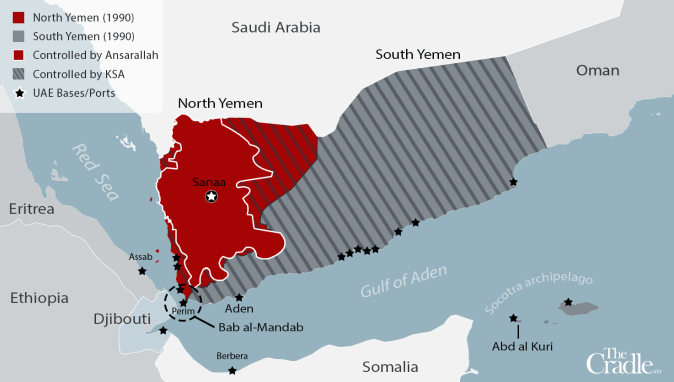
Map of the Emirati-controlled areas and ports in southern Yemen
The significance of Socotra
Socotra Island falls under the territorial jurisdiction of the exiled Hadi government, which to this day – despite his physical absence and the replacement of the “presidency” with an 8-member, Saudi-sponsored Presidential Leadership Council (PLC) – remains Yemen’s internationally-recognized government.
However, on 30 April, 2018, the UAE deployed hundreds of troops with artillery and armored vehicles on the island, which is located 350 km away from the mainland conflict, without any prior coordination with Yemeni authorities.
The Riyadh-backed Yemeni government condemned the Emirati aggression, backed by local islanders protesting against the occupation of their territory. The Saudis were forced to intervene by sending troops and training locals to deter the UAE from seizing the island.
But later that year, UAE General Khalfan al-Mazrouei arrived on Socotra Island and has since been considered its de facto ruler. Under his leadership, the Emiratis gained the loyalty of local tribes by using bribery under the guise of “humanitarian aid.” They offered Socotra residents UAE passports and promised them an improved quality of life.
The STC seizes Socotra
On the morning of 21 June, 2020, the UAE-backed STC separatists forcibly seized control of Socotra and ousted the Saudi-backed, pro-Hadi forces.
The UAE had been planning and preparing for this operation for two years, using its Yemeni proxies to gain full control over the Socotra archipelago. The Emirati flag was raised across the territory, and UAE telecommunication companies replaced Yemeni ones. Consequently, all phone calls from Socotra now register Emirati phone networks.
UAE-Israel normalization
Three months after the seizure of Socotra, the highly-controversial Abraham Accords was signed in Washington DC between Israel and the UAE, along with Bahrain, Morocco, and Sudan. On the Arab side, the normalization thrust was led by Abu Dhabi, which quickly moved to expand its diplomatic, military, and economic ties with Tel Aviv.
Shortly after the signing of the Abraham Accords, reports and images of Israeli “tourists” visiting Socotra began to emerge. According to an Al-Mayadeen report, however, the Israeli visitors were not tourists, but rather, military experts.
Abd al-Kuri Island
In February 2023, Ansarallah released a statement condemning the UAE’s eviction of residents from Abd al-Kuri, the archipelago’s second-largest island. The resistance movement accused Abu Dhabi of carrying out a long-planned operation to transform Socotra into an Israeli-Emirati military and intelligence hub.
These actions by the UAE are not isolated incidents. In another 2022 episode, Ansarallah accused Abu Dhabi of transferring fishermen from the small island of Perim (13 km2) to other parts of the Taiz Governorate. Several months later, satellite imagery revealed the construction of a military base runway on the volcanic Island. Perim is now empty of its original inhabitants, according to media reports.
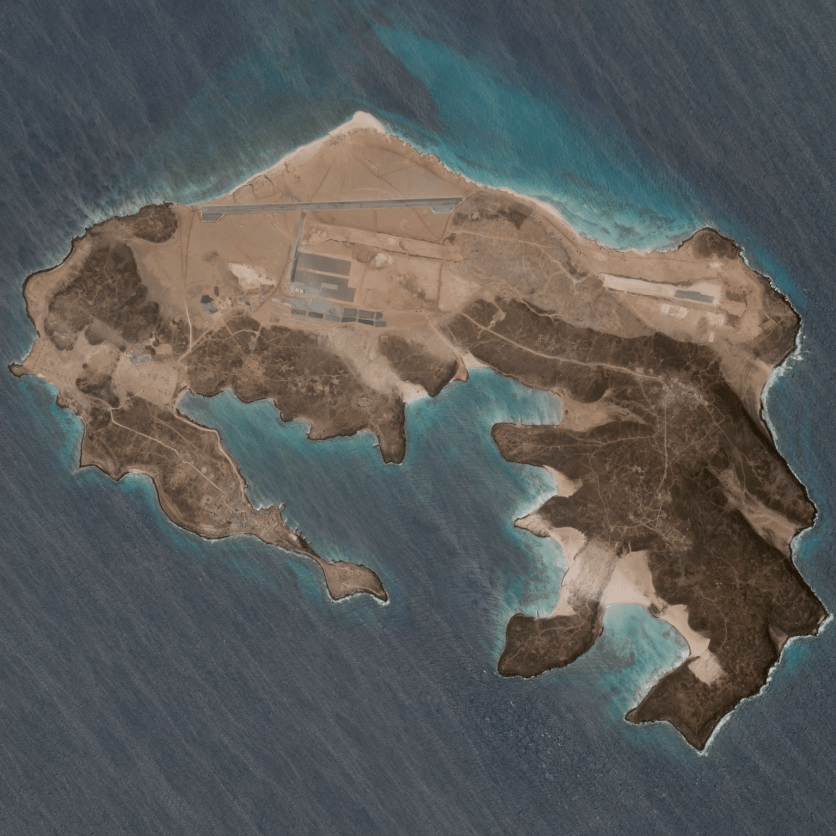
An Emirati military base on Perim Island (Mayyun in Arabic) on the Bab al-Mandab Strait
Perim Island has historically divided the Bab al-Mandab Strait into two waterways – whoever controls the island holds strategic influence over the strait. While Ansarallah’s statement about Emirati designs on Socotra was not entirely new, it raised hackles throughout the Arab world by confirming Israel’s military and intelligence presence on this key Yemeni island.
The UAE’s maritime ambitions
Many have questioned Abu Dhabi’s motivation for seizing Socotra and risking its relationships with Saudi Arabia and neighboring Oman (virtually overnight surrounded by UAE ports and bases). The UAE’s actions may be entirely attributed to the strategic vision of its President Mohammed bin Zayed (MbZ) and his no-longer secret desire to establish an Emirati maritime empire –from the Persian Gulf to the Red Sea – by controlling the region’s key waterways.
The UAE’s economic reliance on these waterways is a clear driver of MbZ’s plans: non-petroleum commodity re-exports make up almost half of Abu Dhabi’s total exports. As such, maritime security is a top priority in the country’s foreign policy calculations.
The UAE currently controls 12 ports off the coast of Yemen, including Aden, Makha, Mukalla, Al-Dabba, Bir Ali, Belhaf, Rudum, Zoubab, Al-Khawkhah, Al-Khouba, Qena, and Al-Nashima. The country is also building a new port in Al-Mahra that will cost an estimated $100 million.
By controlling these ports and the Bab al-Mandab Strait, the UAE can dominate one of the busiest shipping lanes in the world, elevating its position in global and regional trade to a strategic player.
In addition to its aggressive accumulation of Yemeni ports, the UAE also has a significant presence in the Horn of Africa, where it currently controls two ports in Eritrea and one in Somalia. It previously owned a port in Djibouti, but this became a point of territorial friction between the two countries. The UAE’s control over these ports and their strategic location in the region allow it to project its power and expand its influence in East Africa.
Why is Socotra important to Israel?
The UAE and Israel share mutual security concerns over Iran’s regional ascension over the past decade. The Islamic Republic’s naval presence is expanding into many new waterways, and its seaborne activities from the Persian Gulf to the Red Sea alarm both nations. Given Washington’s growing reluctance to engage its armed forces in West Asia, MbZ turned to the region’s military behemoth and main Iranian rival to help him execute his vision. Unlike Israel, no other regional state has the ability to garner unconditional US support – nor the willingness to cavalierly defy international law and territorial integrity.
Abu Dhabi has calculated that it stands to benefit from Israel’s intelligence network and early warning systems, particularly after its cities were subject to unprecedented Ansarallah missile and drone strikes in January 2022.
For Tel Aviv, its physical presence in any Arab state is perceived as a victory, which aligns with its ambitions for regional expansion. By establishing a base on Abd al-Kuri Island, Israel can reinforce its maritime security – around 25 percent of its trade passes through the Bab al-Mandab Strait. Another objective of the Israeli-Emirati military and intelligence hub could be to gather data or engage in espionage activities in the southern Arabian Peninsula and the Horn of Africa.
During the 1973 Arab-Israeli war, Yemen – in partnership with Egypt – blocked the passage of Israeli ships and tankers from accessing the strategic strait, leading to disastrous consequences for Israel.
The tactic could be replicated under Ansarallah Chief Abdel Malak al-Houthi’s leadership, since the movement considers Israel one of its main regional adversaries. While it may seem like a distant possibility, if the war concludes under current Riyadh-Sanaa peace efforts and Ansarallah gains control of Yemen’s south, the movement will enjoy unusual leverage to obstruct Israeli shipments whenever Tel Aviv launches regional aggressions. It should be noted that Ansarallah has already publicly threatened, on several occasions, to strike sensitive Israeli sites with its new missile capabilities.
Moreover, there has been an ongoing “ghost ship war” between Israel and Iran for several years, with occasional reports of Iranian or Israeli ships being attacked in these waterways. Israel’s presence on Socotra Island could provide it with leverage over Iran in their waterway stand-off and enable Tel Aviv to counter Ansarallah inside Yemeni territory.
NATO’s Combined Maritime Forces
It is important to note that the involvement of the US in the Israeli-Emirati collaboration and actions in Yemeni waters is not confirmed. However, it is true that the US has been a maritime security provider for the Persian Gulf monarchies for decades, and its NATO-led Combined Maritime Forces (CMF) have been present in West Asian waters since 1983 – including leading hostile actions against Iraq and Somalia.
The CMF alliance has assumed responsibility for the security of four bodies of water: The Red Sea, Persian Gulf, Arabian Sea, and the Gulf of Aden.
But with China’s rapid rise as a global economic competitor, US policy pivoted further eastward, and Washington has sought to subcontract out its West Asian security policies to its regional allies.
As such, last December, the CMF assigned command of its Red Sea task force to the Egyptian Navy, who took over from US naval forces. In this regard, the UAE, backed by Israel, may be another candidate to lead a NATO-backed naval security operation in the region.

Map of the NATO-led Combined Maritime Forces (CMF) areas of operation in West Asian waterways
Implications for Iran and Saudi Arabia
Any Israeli expansion is likely to alarm Iran and vice versa, potentially leading to direct or proxy clashes in various regional theaters. However, the presence of the UAE – Iran’s second-largest trading partner – in southern Yemen may limit Tehran’s options. Unless Iran perceives a serious security threat from the new “Arab-Israeli alliance,” it is unlikely to take any significant actions that could harm its trade relations with Abu Dhabi.
The war against Yemen has severely damaged Saudi Arabia’s image as a regional powerhouse. During the last few years, all major Saudi cities have been the subject of Ansarallah missile and drone strikes – including the country’s key oil infrastructure.
It has been humiliating for the Persian Gulf’s wealthiest and most heavily militarized state to have its vulnerabilities so completely exposed by West Asia’s poorest nation. In contrast, the UAE has thus far only benefited from the Yemen war and expanded its influence in the region.
Recently, there have been reports of a possible breakthrough in negotiations between Riyadh and Ansarallah, and observers are hoping for an early roadmap to end the conflict during the holy month of Ramadan. Obstacles are aplenty: The UAE is notably absent from the discussions, the Emirati-backed Yemeni separatists – the STC – reject any solution that doesn’t leave them in control of the south, and the US has sought to scuttle any final solution that undermines Washington’s regional leverage.
Liberating the island
Of all the stakeholders with interest in Socotra Island, none are ultimately as important as the Yemeni ones, primarily the UAE-backed STC, the Saudi-backed PLC, and Iran-backed Ansarallah.
In his most recent televised appearance, Ansarallah’s Abdel Malik al-Houthi stated: “We seek to defeat the aggression, whether on the islands, on land or at sea, and from anyone who violates our independence and the sovereignty of our country.” Unlike other leaders, al-Houthi’s threats are usually translated into action and Ansarallah will not hesitate to strike the Israeli-Emirati bases or seize their ships if the aggression continues.
Ansarallah is currently the strongest player in Yemen, controlling more than 80 percent of the country in terms of population density. On the other hand, the PLC is the most vulnerable of the three main Yemeni players, and Riyadh’s recent rapprochement agreement with Tehran has further weakened the group. If an agreement is reached between Riyadh and Sanaa, the PLC will have one of two options: to hand over their weapons or merge into Ansarallah’s armed forces.
On the other side of the spectrum, the UAE-backed STC is worried about ongoing peace talks and fears being left alone to fight head-to-head with Ansarallah-aligned armed forces.
The question now is whether there will be a peace deal between Saudi Arabia and Ansarallah that excludes the UAE and its Yemeni proxies. If that happens, Sanaa’s armed forces will almost certainly turn their big guns on the Emiratis and their Yemeni interests. The Saudis will have already calculated this outcome as they seek to advance a deal with Ansarallah. In this event, it is unlikely that Riyadh will come to Abu Dhabi’s assistance. Their common goals in Yemen ended years ago.
The US’ Rejection Of China’s Peace Plan For Ukraine Exposes Its Warmongering Intentions
By Andrew Korybko | March 24, 2023
Bloomberg cited an unnamed Biden Administration official on Thursday to report that “the US is worried about being backed into a corner over the Chinese proposal. Regardless of the US reservations, dismissing it outright could let China argue to other nations that are weary of the war — and of the economic damage it’s wreaking — that Washington isn’t interested in peace.” Alas, that’s precisely what America has done by acting as if China isn’t a serious mediator and that its peace plan is unrealistic.
By rejecting Beijing’s 12-step proposal, Washington exposed its warmongering intentions for the rest of the world to see and vindicated Moscow’s criticism that it wants to fight this proxy war “to the last Ukrainian”. The majority of the international community that resides in the Global South and which is most adversely affected by the systemic consequences of this conflict, particularly the food and fuel crises catalyzed by Western sanctions, had their perceptions of US soft power shattered once and for all.
Prior to the onset of Russia’s special operation last year that it was forced to commence in defense of its national security red lines in Ukraine after NATO clandestinely crossed them there, a significant share of folks in developing countries still generally had a favorable view of that declining unipolar hegemon. They might not have endorsed every one of its foreign policy moves, but these people still thought that its worldview had some redeeming factors that made it worthy of being listened to at the very least.
The allure of its soft power, particularly in the socio-cultural sphere as propagated by the mass media over the decades, still had a powerful hold over their hearts and minds. Now, however, these same people are directly suffering from the food and fuel crises catalyzed by the West’s unilateral sanctions. To make matters worse, the US signaled through its rejection of China’s peace plan for Ukraine that relief won’t be forthcoming, thus indefinitely perpetuating and thus exacerbating these problems.
It’s one thing for US-inclined folks in the Global South who’ve fallen under the sway of its soft power to oppose some part of its foreign policy regarding a faraway country and another entirely for that same foreign policy to directly affect them and their family. They might still enjoy consuming some of its socio-cultural products and perhaps still cling to believing in the so-called “American Dream” despite the odds of them ever benefiting from it, but their views of the US as a whole will certainly change.
This rapidly emerging outcome represents a latent crisis of the highest importance for the US’ grand strategic interests since the loss of such a critical mass of supporters will hamstring its goals across the Global South. These same people will be less susceptible to its information warfare products against their multipolar governments, thus reducing the chances that forthcoming Color Revolution plots will succeed, to say nothing of them tuning out the US’ fake news about the Sino-Russo Entente.
The combination of hunger pains and rising costs, which are the direct result of the food and fuel crises respectively that the US’ unilateral sanctions are responsible for, can turn anyone against anything even if they were previously the most fervent of believers. This is especially so when it worsens the living conditions of one’s own family, including their children. The arrogance of American policymakers, deluded by the supremacist belief in their system’s supposed “exceptionalism”, blinds them to this.
The aforesaid oversight, which could easily have been foreseen and thus avoided had groupthink not been in effect, is the proverbial straw that broke the camel’s back and turned the Global South against the US en masse. There’s now no credible possibility of America advancing its interests there by information warfare-driven attraction ever again, thus leading to it doubling down on subversion and force out of desperation instead of accepting the loss of its influence in those countries.
Is France going to be able to maintain its position in Africa?
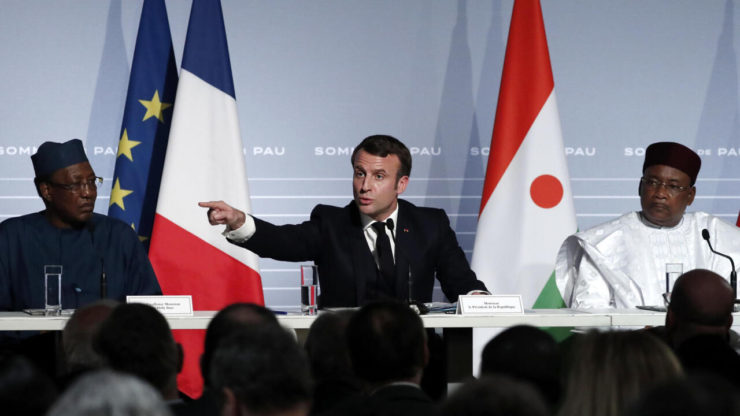
By Pogos Anastasov – New Eastern Outlook – 15.03.2023
On March 1-5, French President Macron visited a number of African countries, leaving observers with a bitter taste in their mouths. Conceived with great fanfare as a presentation of Paris’ ostensibly new course aimed at “equal cooperation” with the African continent, it was remembered only for scandals, public spats with African presidents, and taunts from them that reflected the obvious disadvantage in bilateral relations.
Overall, the visit did not boost Paris’ credibility or strengthen its ties with Africa. Following the significant losses that France has suffered in Africa in recent years, the Elysée Palace should focus on preserving the African diamonds that remain in its crown rather than expanding its influence. And there aren’t many of them anymore. After Mali and Burkina Faso defected from Paris, Morocco is now gradually but steadily shifting from the French to the American camp, further narrowing the maneuvering field for Paris, which must look around and consider how to save what is left. What does it have in its piggy bank?
The richest “chest” in which the French keep the wealth looted from Africans is … the French treasury itself. The scheme of collecting money through the sub-regional economic cooperation organization of West Africa, ECOWAS (almost all its 15 members are former French colonies) is well established and allows almost half their economic potential to be at the service of the French economy.
ECOWAS itself was founded in 1975 on the basis of the Lagos Treaty and initially included 16 countries, but later the only Arab country in its composition, Mauritania, withdrew from it, remaining an associate member. When the organization was founded, the most noble goals were declared – the economic integration of the region, its self-sufficiency with the subsequent transition to a federation, a single citizenship and a single currency. But somehow it so happened that the most advanced element of integration was the creation of its own single currency – the West African CFA franc, which combines the currencies of the eight countries of this association, members of the West African Economic and Monetary Union, formed in 1994 (a number of other countries also use this currency). And “quite by chance” this currency is pegged to the euro, and 50% of foreign exchange reserves of these countries are stored in the French Central Bank, which completely deprives these countries of economic independence. Moreover, attempts by some of these countries to transfer their gold reserves to other jurisdictions are repeatedly unsuccessful, which naturally causes discontent among member countries.
Paris is forced to respond to this and in 2020 proposed a bill to this effect in the French National Assembly, according to which the CFA franc should be replaced by the “eco” already without being tied to the mandatory deposit in France. The draft was approved and ratified. However, it turned out that the pandemic buried it for a long time. In June 2021, ECOWAS revisited it, and a summit of member countries agreed on a five-year “currency convergence” pact, as well as a road map to launch a new monetary unit, now a region-wide one, by 2027.
More recently, on 24 January 2023, the President of Guinea-Bissau, who as of June 2022 is the current President of ECOWAS, pledged to revive the project, while also strengthening internal trade among ECOWAS countries, which currently represents less than 10% of total trade. To what extent this will work is not yet clear. Many suspect Paris that the reform of the CFA franc will be cosmetic and will not change the essence of economic relations between the member countries of the association and France, which actively uses the West African currency in the interests of French and multinational corporations based in its territory, which hold the markets of these states under their control and pump them for profit, including natural resources. Paris’ “Trojan horse” in ECOWAS is Côte d’Ivoire and the puppet regime put there by Paris, which implements French interests in the organization under the guise of African interests.
Whether or not Paris can pull off another trick with currency “reform” is not yet clear. Again, at the instigation of Paris, the membership of ECOWAS member countries where there have been recent coups, such as Guinea, Mali and Burkina Faso, is suspended, and important reforms that affect their core national interests can be carried out by regional organizations without their participation and taking their position into account by allies or, rather, satellites of France, such as Côte d’Ivoire. We can hardly believe that the Elysée Palace will not take advantage of these opportunities.
The other two countries where Paris will try by all means to maintain its influence are Chad and Niger, where strategic reserves of uranium, gold and other minerals are concentrated. In addition, Chad occupies an important strategic position, bordering Libya in the north and Sudan in the east, which makes it an important transit zone involved in both arms and migrant traffic. Chad, too, has a leadership that is questionable in terms of Western democracy — the son of President Idriss Déby, killed two years ago, Mahamat Déby, who heads the Transitional Military Council. But Paris, so sensitive to the issue in Mali and Burkina Faso, pays little attention in this case, because it is “our son of a bitch.”
Even more important for Paris is Niger, where uranium reserves, critical for the French nuclear industry, are being actively exploited. Paris is covered there by Washington, which has a chain of military bases, airfields and reconnaissance centers with UAVs. Of course, Paris will fight for this strategic region of Africa to the end, which, however, does not guarantee success.
In fact, Paris now has only one direction to go in Africa – to further lose its weight and influence. There are more and more reasons for this. France is increasingly uninterested in African states. Its military capabilities are shrinking, the effectiveness of its participation in solving the security problems of the continent is extremely low, which leads more and more states to refuse its assistance. France’s socio-political model is also losing its attractiveness against the background of increasing economic problems of the country, and with them the protests against the internal political and economic line of the Rothschild-appointed Macron. Constant arrogant lectures about the need to comply with democratic norms on the background of the suppression of citizens’ rights and the increasingly police nature of the French state, hits the eyes of Africans, as well as the growing propaganda of LGBT values. In this light, the storage of West African reserves in the Paris treasury looks increasingly anachronistic.
In Africa, they cannot fail to see Paris’s almost complete loss of sovereignty in European affairs, where it has demonstrated its absolute servility and dependence on the course of Washington, in particular with regard to the conflict in Ukraine. In this context, the attempts of Paris to fix the situation by loud slogans about “change of course”, belated repentance for the sins of the times of colonialism, as well as blaming the Wagner PMC for its problems look rather pathetic. The day is not far when France, like other colonialists, will be kicked off the continent as unable to cope with the challenges of the new era. In their place will come other forces that advocate real equal cooperation and its mutually beneficial nature based on the principles of a multipolar world, as well as unambiguously interpreted norms of international law.
Protests greet Macron on Africa tour, Burkina Faso scraps military pact
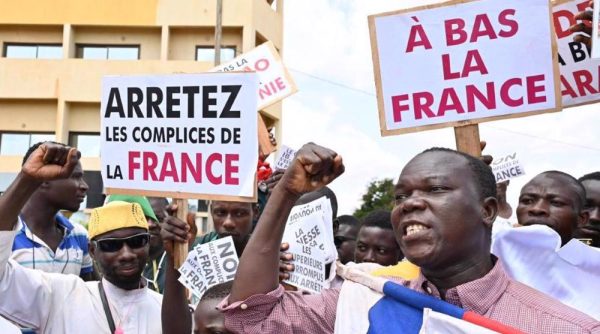
Press TV – March 2, 2023
French President Emmanuel Macron has launched a tour of Africa with a message that France is not after meddling, but the visit revived old colonial wounds, sparking protests.
Macron on Thursday said the era of French interference in Africa was “well over” as he began a four-nation tour of the continent to renew frayed ties.
Anti-French sentiment runs high in some former African colonies. Macron said France harbored no desire to return to past policies of interfering in Africa.
“The age of Francafrique is well over,” Macron said in remarks to the French community in Gabon’s capital Libreville, referring to France’s post-colonization strategy of supporting authoritarian leaders to defend its interests.
“Francafrique” refers to the wave of decolonization in 1960 when France began propping up dictators in its former colonies in exchange for access to resources and military bases.
Macron landed in Gabon on Wednesday, the first stop of the tour that will also take the president to Angola, Congo Republic and the Democratic Republic of the Congo.
“What is Macron doing in Gabon? Is he coming for the forest or to back (President) Ali Bongo?” asked a 39-year-old technician. “If Macron wants to support the Bongo family, we will rise up,” he said. “Gabon is an independent country. It is not France that appoints Gabonese presidents.”
In the Democratic Republic of the Congo (DRC), angry protesters gathered in front of the French embassy in Kinshasa, spray-painting anti-French graffiti on its wall and chanting “Macron is a killer!”
They unfurled banners reading, “Macron is the godfather of DRC balkanization,” “Congolese say no to French policy,” and “Macron is an unwanted guest in DRC”.
More than 3,000 French soldiers are deployed in Senegal, Ivory Coast, Gabon and Djibouti, according to official figures.
Burkina Faso said it has scrapped a 1961 agreement on military assistance with France, only weeks after it told the French ambassador and troops to quit the country.
The Burkinabe foreign ministry advised the French government that the country was “renouncing the technical military assistance agreement reached in Paris on April 24 1961,” according to the correspondence, dated Tuesday.
The ministry said Burkina was giving one month’s notice for “the final departure of all French military personnel serving in Burkinabe military administrations.”
Burkina also gave France a month to pull out a special forces unit of 400 men that was based near the capital. The French flag was lowered on the base last month.
France withdrew the last of its troops from Mali last year, climaxing a break-up that was triggered by angry protests amid rise in Takfiri terrorism.
Majority in France Opposes French Military Presence in Africa, Poll Reveals
By Gleb Chugunov – Sputnik – 02.03.2023
On February 27, President Emmanuel Macron announced France’s new policy towards Africa, which is planning to reduce its military presense on the continent.
More than half of French respondents that took part in a survey held by the French Institute of Public Opinion (IFOP), came out in favor of shutting down all French military bases on the continent, media report.
According to sociologists, the closure of military bases is supported mostly by residents of rural areas (60% of respondents) as well as by people over 65 years of age (57%).
The number of people who took part in the IFOP’s survey is unknown.
As for the political views of the respondents, supporters of the two main opposition parties, the right-wing “National Rally” and the left-wing “La France Insoumise”, are those who favor the withdrawal of the army the most – 72% and 63% accordingly. Approximately 47% of respondents supporting President Macron’s social-liberal “Renaissance” party, back the idea of closing the bases, as do 54% of polled voters of the center-right “The Republicans”.
The survey regarding France ‘s military presence on the continent was held after President Emmanuel Macron announced a shift in his Africa policy, promising to implement a “noticeable reduction” in the French military contingent there. However, he did not give specific information concerning the cuts.
According to the leader, France has decided to start managing its army bases on the continent together with the military departments of African nations. The new military partnerships involve training programs for host countries personnel, France’s assistance to local military authorities, in particular, in the field of intelligence.
This followed the recent French troop withdrawals from African countries in the Sahel region. French forces left Mali on August 15, 2022, after the local government announced that it was terminating defense agreements with France, while Mali’s top officials, including its Foreign Minister, Abdoulaye Diop, accused the European state of supporting terrorist groups inside the African country.
Subsequently, France officially terminated its military operations in Burkina Faso on February 20, due to a significant deterioration in relations between Paris and Ouagadougou, including Burkina Faso’s request for France to recall its ambassador and to withdraw French troops from the African country.
African Nations Reportedly Boost Russian Oil Imports Amid EU Sanctions
By Maria Konokhova – Sputnik – 27.02.2023
Following the onset of Russia’s special military operation in Ukraine, the US-led West embarked on a crusade aimed at isolating the country by sanctioning its economy and political establishment. Among other things, Western sanctions have targeted Russian hydrocarbons.
In recent months, North African countries have ratcheted up imports of diesel and other refined petroleum products from Russia, as the latter is now cut off from the European market, the Wall Street Journal has reported.
The European Union bloc has imposed a ban on the purchase and import of seaborne Russian crude oil starting from December. Moreover, EU member states, which accounted for about 60% of Russian exports of refined petroleum products before the start of the hostilities in Ukraine, have recently reduced these flows.
This month, a EU ban on imports of refined petroleum products from Russia, including diesel and jet fuel, came into effect.
African Countries Step Up to the Plate
According to the newspaper, the barrage of sanctions has forced Moscow to pursue new partnerships and redirect exports away from Europe to alternative markets. It was noted that against this backdrop, North African countries “picked up the slack,” increasing imports from Russia.
The report drew several examples that advocate this notion, citing data from Kpler, a data and analytics company.
First, Tunisia, which had imported almost no Russian petroleum products in 2021, has recently started to receive supplies of diesel, gasoil, gasoline and naphtha from Russia. In January, the country acquired 2.8 million barrels of Russian oil products. This month, it was emphasized that Tunisia was going to import another 3.1 million barrels from Russia.
Along with Tunisia, another North African country, mentioned by the newspaper, significantly enhanced cooperation with Moscow in this field. In 2021, Moroccan imports of Russian diesel stood at around 600,000 barrels. However, this figure swelled to 2 million barrels last month. In February, Morocco is expected to import 1.2 million barrels. It was also noted with no specific details that Algeria and Egypt boosted their imports of Russian oil products as well.
Frustrating Western Efforts to Shun Russian Oil
The newspaper noted that the increase in Tunisia’s and Morocco’s imports from Russia coincided with that of their own exports of refined products to the global market. Therefore, it was assumed, Russian hydrocarbons could be mixed with other petroleum products and re-exported to other countries, including European ones.
The US-based paper stated that this process disguises the ultimate origin of the products and, therefore, undermines Western efforts aimed at cutting off Russian fossil fuels from their economies, and frustrates efforts to end their energy dependence on Russia and limit Moscow’s sources of funds. The newspaper concluded, citing analysts, that if this trend continues, depriving Moscow of revenue would be difficult.
According to the International Energy Agency, Russian oil exports increased to 8.2 mb/d last month ahead of the EU embargo and the G7 price cap on refined products taking effect. The refined-product exports “held steady.” Meanwhile, Moscow’s export revenues were estimated at $13 billiion.
Featured Video
Racist Seinfeld Dances for Joy as Bibi Unveils His New Map
or go to
Aletho News Archives – Video-Images
TV Drama Review
Japanese drama projects Japan’s wartime atrocities onto Chinese characters

Global Times | October 25, 2026
By portraying Chinese characters as perpetrators of ruthless violence while casting Japanese Self-Defense Forces (SDF) intelligence operatives as defenders, the season 2 of the Japanese drama Vivant has recently drawn criticism from Chinese netizens, who argue that its depiction turns historical reality on its head while ignoring Japan’s wartime atrocities.
The TBS drama series – a spy suspense story in which an alleged unofficial intelligence unit of the SDF operates across the globe — has attracted a passionate fanbase. Its currently airing season 2 opened with a household rating of 18.8 percent, the highest for a TV drama this year, according toa commentary article by Japanese media Toyo Keizai.
What draws attention is the portrayal of the enemies in the series, the article noted. Scenes in which the Chinese organization subjects kidnapped members of the SDF unit to brutal torture are repeated with unrelenting intensity.
It is rare for Japanese TV dramas to explicitly portray a real-life country as the enemy, the article noted.
Japanese Prime Minister Sanae Takaichi also made a reference to the drama, saying that she has been recording Vivant and hopes to binge-watch it over the year-end and New Year holidays, according to Japanese media outlets.
China’s CCTV News report on Sunday revealed that the drama features scenes in which Chinese personnel cut off the fingers of and stab Japanese intelligence operatives in the abdomen. Such acts bear striking similarities to the torture inflicted on Chinese nationals by invading Japanese troops during the World War II.
The drama distorts the truth by attributing these atrocities to modern Chinese characters. Beneath the surface, it subtly glorifies Japan’s cross-border overseas operations, blurs the functional boundaries of the SDF and implicitly promotes an expansionist narrative, per CCTV News. … continue
Blog Roll
 Aletho News
- EU facing trillion-euro debt hole while seeking more cash for Kiev
- How US, Europe, Persian Gulf states exhausted missile stockpiles, splurged billions to defend Israel
- Up in arms… Koreans reject U.S. empire’s plan to make South Korea the next Ukraine
- Iran, Turkey, Pakistan, Saudi Arabia could advance region-led security framework in Tehran: FM spox
- Netizens condemn Japanese drama for projecting Japan’s wartime atrocities onto Chinese characters
- Racist Seinfeld Dances for Joy as Bibi Unveils His New Map
- A West Bank War for Netanyahu’s Election Campaign, Could It Backfire?
- Yemen denounces European Parliament’s ‘hypocritical’ push to blacklist Ansarullah
- Qalibaf: UAE’s UN bid aims to ‘clear the runway’ for ‘Greater Israel’, whitewash genocide
- Pakistan reopens Iran border after boosting security: Report
- If Americans Knew
- An error has occurred; the feed is probably down. Try again later.
- No Tricks Zone
- Sudden Stratospheric Warming, Powerful El Niño Combination May Lead To Extreme Europe Cold, Energy Crisis!
- Two New Studies Find Thwaites Glacier Melt Cannot Be Driven By Human Activity Or A Warming Ocean
- E-Cars Reduce CO2 Emissions By Only 41% Compared To Internal Combustion Engine Vehicles
- Predictions Made By Renowned Climate Professor Over Past Decades Have Been Proven To Be Poor
- New Study Suggests Large Regions Of The Pacific Ocean Have Been Cooling For The Last 80 Years
- Germany’s Green Energy Debacle: High Energy Costs Force Kahla Porzellan to Close After 182 Years!
- New Study: 50 Years Of The Most Aggressive ‘Net Zero’ Policies Can Only Affect The Global Climate By 0.03°C
- US September “Heat” Was No Record…Many Records Set Decades Ago
- Latest European Green Energy Debacle; Portugal’s Largest Flagship Solar Park Insolvent!
- Green Energy Debacle: German Expert Professor Fritz Vahrenholt Warns Of Severe Economic And Social Consequences

