Reports emerge about Russian mediation between Khartoum and Juba
MEMO – September 7, 2015
Russia will lead a new round of mediation between Khartoum and Juba to ensure the implementation of the recent agreement struck on bilateral relations between the two sides, an official Sudanese source revealed yesterday.
Sudan News Agency (SUNA) reported that the foreign ministers of Sudan, Moscow and the state of South Sudan will meet in Russia on Thursday to discuss triparty relations between Moscow, Khartoum and Juba as well as the South Sudan-Sudan relations.
SUNA quoted the Sudanese Foreign Minister Ibrahim Ghandour as saying: “The Sudan’s relations with South Sudan is supposed to be better, theoretically, but there are some pending issues between the two states, most importantly, the implementation of the nine cooperation agreements signed by the two presidents, Field Marshal Omar Al-Bashir, the President of the Republic [of the Sudan] and Major General Salva Kiir, president of South Sudan, on the 9th of September in 2012.”
He added that his visit to Russia on Wednesday marks the third anniversary of the Addis Ababa agreement, although only one of the nine agreements was implemented – the agreement on the transfer of South Sudan’s oil through Port Sudan.
Ghandour also noted that his visit, which will take place between 9-11 September, came in response to an invitation from the Russian foreign minister. According to Ghandour, the two ministers will discuss bilateral relation between Russia and the Sudan in all fields; in addition to the coordination of regional and international issues.
The Sudanese foreign minister added that relations between the two countries are developing at both the economic and political levels.
Wars leave 13 million children without school in Mideast: UN
Press TV – September 3, 2015
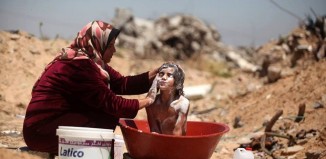
The United Nations has voiced alarm over the “destructive impact” of the deadly wars on children’s education in the Middle East and North Africa (MENA), saying violence has forced at least 13 million kids out of schools there.
In a report released on Thursday on threats to the education system in six violence-torn countries and territories across the region, the United Nation’s children fund UNICEF warned that “the hopes of a generation” would be dashed should kids fail to return to classrooms in conflict zones of both regions.
Syria, Iraq, Yemen and the Palestinian territories in the Middle East as well as Sudan and Libya in North Africa were the main countries the report focused on.
Over 8,850 schools are no longer usable due to the ongoing political instability and violence, said the report.
Peter Salama, the regional director for UNICEF in the MENA region, told AFP that “the destructive impact of conflict is being felt by children right across the region.”
“It’s not just the physical damage being done to schools, but the despair felt by a generation of schoolchildren who see their hopes and futures shattered,” he added.
According to the UN, one in four schools was closed this school year due to violence.
“Even those Syrian teachers who have ended up as refugees in other countries have faced obstacles which prevent them from working,” said the report, adding more than 52,000 teachers have left their posts.
UNICEF said that violence in Iraq has taken a heavy toll on the schooling of at least 950,000 children.
Iraq and Syria have been grappling with a spike in violence fueled by Takfiri terror groups, particularly Daesh, which controls swathes of land in both Arab states.
Elsewhere in the Middle East, the Saudi military has been pounding neighboring Yemen with fatal air raids over the past five months. Civilians as well as the country’s infrastructure have been the main target of Riyadh’s strikes.
The Saudi military campaign has led to the closure of hundreds of schools and colleges in Yemen since late March, according to the report.
UNICEF also said over 280 schools had been damaged and eight “completely destroyed” in the Tel Aviv regime’s 2014 war on the Israeli-blockaded Gaza Strip that left over 2,200 people dead.
In Libya, which is suffering from rising violence after the 2011 overthrow of former dictator Moamar Qaddafi, more than half of those displaced say their children cannot attend classes, while the conflict in Sudan’s Darfur and South Kordofan has also had a severe impact on the country’s creaking school infrastructure, the report said.
Bernie Sanders: I would continue assassination drone program

A US MQ-9 Reaper assassination drone
Press TV – August 30, 2015
Independent Senator Bernie Sanders, who is seeking Democratic nomination for the 2016 US presidential election, says he will continue the Pentagon’s assassination drone program.
In an interview with ABC News on Sunday, Sanders said that he would limit the use of US terror drones, but said that he would not end the targeted killing campaign.
“I think we have to use drones very, very selectively and effectively. That has not always been the case,” Sanders said.
“What you can argue is that there are times and places where drone attacks have been effective,” he added.
“There are times and places where they have been absolutely counter-effective and have caused more problems than they have solved. When you kill innocent people, what the end result is that people in the region become anti-American who otherwise would not have been,” said the junior senator from Vermont.
Since 2001, the United States has been carrying out drone attacks in several countries, including Yemen, Pakistan, Afghanistan and Somalia.
The aerial attacks were initiated by former US President George W. Bush but have been escalated under President Barack Obama.
Former US drone operator Brandon Bryant, who was involved in the killing of more than 1,600 people, revealed earlier this year that aerial strikes are conducted with complete uncertainty.
Bryant, who worked for almost five years in America’s secret drone program bombing targets in Afghanistan and other countries, such as Pakistan and Iraq, said operators lacked visibility and were not sure about the identity of the people they were shooting at.
“We see silhouette, shadows of people, and we kill those shadows,” he said.
The Age of Imperial Wars
From Regional War, “Regime Change” to Global Warfare
By Prof. James Petras | Global Research | August 22, 2015
2015 has become a year of living dangerously.
Wars are spreading across the globe.
Wars are escalating as new countries are bombed and the old are ravaged with ever greater intensity.
Countries, where relatively peaceful changes had taken place through recent elections, are now on the verge of civil wars.
These are wars without victors, but plenty of losers; wars that don’t end; wars where imperial occupations are faced with prolonged resistance.
There are never-ending torrents of war refugees flooding across borders. Desperate people are detained, degraded and criminalized for being the survivors and victims of imperial invasions.
Now major nuclear powers face off in Europe and Asia: NATO versus Russia, US-Japan versus China. Will these streams of blood and wars converge into one radiated wilderness drained of its precious life blood?
Living Dangerously: The Rising Tide of Violent Conflicts
There is no question that wars and military threats have replaced diplomacy, negotiations and democratic elections as the principal means of resolving political conflicts. Throughout the present year (2015) wars have spread across borders and escalated in intensity.
The NATO allies, US, Turkey and the EU have openly attacked Syria with air strikes and ground troops. There are plans to occupy the northern sector of that ravaged country, creating what the Erdogan regime dubs a ‘buffer zone’ cleansed of its people and villages.
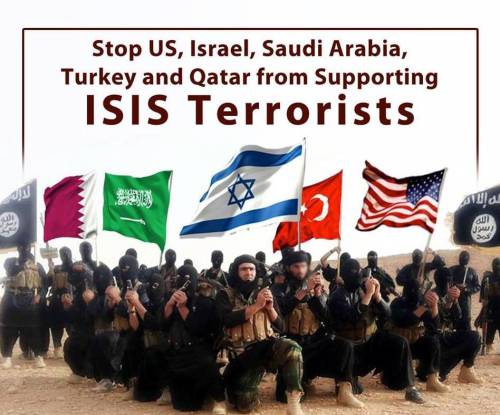
Under the pretext of ‘fighting ISIS’, the Turkish government is bombing Kurds (civilians and resistance fighters) and their Syrian allies. On Syria’s southern border, US Special Forces have accelerated and expanded operations from their bases in Jordan on behalf of the mercenary terrorists – funded by the monarchist Gulf States.
Over 4 million Syrians have fled their homes as refugees and over 200,000 have been killed since the US-EU-Turkey-Saudi-sponsored war against the secular Syrian government was launched four years ago.
Dozens of terrorist, mercenary and sectarian groups have carved up Syria into rival fiefdoms, pillaged its economic and cultural resources and reduced the economy by over ninety percent.
The US-EU-Turkish military intervention extends the war into Iraq, Lebanon and…. Turkey – attacking secular governments, ethnic minority groups and secular civil society.
The feudal, monarchist Saudi Arabia and the United Arab Emirates have invaded Yemen with tanks, launching air strikes against a country without any air defenses. Major cities and towns are devastated. Saudi ground troops and armored carriers are killing and wounding thousands – mostly civilians. The brutal Saudi air and sea blockade of Yemen’s ports have led to a humanitarian crisis, as ten million Yemenis face starvation deliberately imposed by a grotesque and obscenely rich monarchy.
The Yemeni resistance fighters, driven out of the major cities, are preparing for prolonged guerrilla warfare against the Saudi monsters and their puppets. Their resistance has already spread across the frontiers of the absolutist Saudi dictatorship.
The brutal Israeli occupation troops, in collaboration with armed ‘settler’ colonists, have accelerated their violent seizure of Palestinian lands. They have stepped up the ethnic cleansing of Palestinians, Bedouins, Druze and Christian inhabitants replacing their communities with racist ‘Jews-only’ colonial settlements.
Daily assaults against the huge ‘concentration camps’ of Gaza accompany an armed blockade of land, air and water, preventing the reconstruction of the tens of thousands of homes, schools, hospital, factories and infrastructure, destroyed by last year’s Israeli blitzkrieg.
Israel’s continued annexation and ethnic cleansing of Palestinian territory precludes any diplomatic process; colonial wars have been and continue to be Israel’s policy of choice in dealing with its Arab neighbors and captive populations.
Africa’s wars, resulting from earlier US-EU interventions, continue to ravage-the Continent. Somalia, Sudan, Kenya, Libya are riven by bloody conflicts between US-EU backed regimes and armed Islamic and nationalist resistance movements.
Throughout North and Sub-Sahara Africa, US-EU backed regimes have provoked armed upheavals in Libya, Nigeria (Boko Harem), Egypt (ISIS, Moslem Brotherhood et al), Chad, Niger, South Sudan, Somalia and elsewhere.
Imperial client Egyptian and Ethiopian dictators rule with iron fists – financed and armed by their EU and US sponsors.
Imperial wars rage throughout the Middle East and South Asia. Hundreds of experienced Baathist Iraqi military officers, who had been expelled or jailed and tortured by the US Occupation army, have now made common cause with Islamist fighters to form ISIS and effectively occupy a third of Iraq and a strategic swath of Syria.
There are daily bombings in Baghdad undermining its US client. Strategic advances by ISIS are forcing the US to resume and escalate its direct combat role
The US-Baghdad retreat and the defeat of the US-trained Iraqi military in the face of the Baathist-Islamist offensive is the opening salvo of a long-term, large-scale war in Iraq and Syria. The Turkish air-war against the Kurds in Iraq will escalate the war in Northern Iraq and extend it into southeast Turkey.
Closer to ‘home’, the EU-US-backed coup (‘regime change’) in Kiev and the attempt to impose dictatorial-pro-West oligarchic rule in Ukraine have detonated a prolonged civil-national war devastating the country and pitting NATO’s proxies against Russian-backed allies in the Donbas.
US, England, Poland and other NATO powers are deeply committed to pushing war right up to Russia’s borders.
There is a new Cold War, with the imposition of wide-ranging US-EU economic sanctions against Russia and the organizing of major NATO military exercises on Russia’s doorsteps. It is no surprise that these provocations are met with a major counter-response – the Russian military build-up. The NATO power grab in Ukraine, which first led to a local ethnic war, now escalates to a global confrontation and may move toward a nuclear confrontation as Russia absorbs hundreds of thousands of refugees from the slaughter in Ukraine.
The US puppet regime in Afghanistan has faced a major advance of the Taliban in all regions, including the capital, Kabul.
The Afghan war is intensifying and the US-backed Kabul regime is in retreat. US troops can scarcely advance beyond their bunkers.
As the Taliban military advances, its leaders demand total surrender of the Kabul puppets and the withdrawal of US troops. The US response will be a prolonged escalation of war.
Pakistan, bristling with US arms, faces a major conflict along its borders with India and permanent war in its semi-autonomous Northwest frontier states with Islamist and ethnic Pashtu guerrilla movements backed by mass regional political parties. These parties exercise de facto control over the Northwest region providing sanctuary and arms for Taliban militants operating in Afghanistan and Pakistan.
Armed ethno-religious conflicts persist in western China, Myanmar and northern India. There are large-scale popular resistance movements in the militant northeast Thailand opposed to the current military-monarchist dictatorship in Bangkok.
In the 21st century, in South and Southeast Asia, as in the rest of the world, war and armed conflicts have become central in resolving ethnic, social, tribal and regional differences with central states: diplomacy and democratic elections have been rendered obsolete and inefficient.
Latin America – On the Verge
Burgeoning violent extra-parliamentary right-wing movements, intent on overthrowing or ‘impeaching’ elected center-left Latin American governments face major confrontations with the state and its mass supporters.
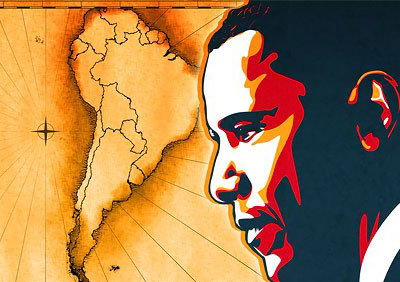 In Ecuador, Venezuela and Brazil, US-backed opposition groups are engaged in violent demonstrations, directed toward ousting the elected regimes. In the case of Ecuador, ‘popular sectors’, including some indigenous leaders and sectors of the trade union movement, have called for an ‘uprising’ to oust President Correa. They seem oblivious of the fact that the hard-right oligarchs who now control key offices in the three principal cities (Guayaquil, Quito and Cuenca) will be the real beneficiaries of their ‘uprisings’.
The resurgent Right envisions violent ‘regime change’ as the first step toward ‘wiping the slate clean’ of a decade of social reforms, independent regional organizations and independent foreign policies.
‘Civil war’ may be too strong a word for the situation in Latin America at this time – but this is the direction which the US-backed opposition is heading. Faced with the mess and difficulty of dislodging incumbent regimes via elections, the US and its local proxies have opted for the choreography of street violence, sabotage, martial law and coups – to be followed by sanitized elections – with US-vetted candidates.
War and violence run rampant through Mexico and most of Central America. A US-backed military coup ousted the popularly elected, independent President Zelaya in Honduras. The ensuing US-proxy regime has murdered and jailed hundreds of pro-democracy dissidents and driven thousands to flee the violence.
The 1990’s US-brokered ‘Peace Accords’ in El Salvador and Guatemala effectively blocked any agrarian reform and income redistribution that might have led to the rebuilding of their civil societies. This has led to over two decades of mass disaffection, the rise of armed ‘gangs’ numbering over 100,000 members and an average of six to ten thousand homicides a year with El Salvador becoming the ‘murder capital of the hemisphere’ on a per capita basis. The annual murder toll under the US-brokered ‘Peace Accords’ now exceeds those killed each year during the civil war.
The real ‘carnage capital’ of the hemisphere is Mexico. Over 100,000 people have been murdered during the decade-long, US-backed ‘war on drugs’ – a war which has become a state-sponsored war on the Mexican people.
The internal war has allowed the Mexican government to privatize and sell the crown jewels of the national economy – the petroleum industry. While thousands of Mexicans are terrorized and slaughtered, the US and EU oil companies are curiously shielded from the drug lords. The same Mexican government, its police, officials and military, who collaborate with the drug lords in dividing up the billions of drug dollars, protect foreign oil companies and their executives. After all, narco-dollars are laundered by banks in New York, Miami, Los Angeles and London to help fuel the speculation!
From Regional to Nuclear Wars
Regional and local wars spread under the shadow of a looming world war. The US moves its arms, planes, bases and operations to the Russian and Chinese borders.
Never have so many US troops and war planes been placed in so many strategic locations, often less than an hour drive from major Russian cities.
Not even during the height of the Cold War, did the US impose so many economic sanctions against Russian enterprises.
In Asia, Washington is organizing major trade, military and diplomatic treaties designed to exclude and undermine China’s growth as a trade competitor. It is engaged in provocative activities comparable to the boycott and blockade of Japan which led to the Second World War in Asia.
Open ‘warfare by proxy’ in Ukraine is perhaps the first salvo of the Third World War in Europe. The US-EU-sponsored coup in Kiev has led to the annexation of Western Ukraine. In response to the threat of violence toward the ethnic Russian majority in Crimea and the loss of its strategic naval base on the Black Sea, Russia annexed Crimea.
In the lead-up to the Second World War, Germany annexed Austria. In a similar manner the US-EU installed a puppet regime in Kiev by violent putsch as its own initial steps toward major power grabs in Central Asia. The military build-up includes the placement of major, forward offensive military bases in Poland.
Warsaw’s newly elected hard-right regime of President Andrzej Duda has demanded that Poland become NATO’s central military base of operation and the front line in a war against Russia.
Wars and More Wars and the Never-ending Torrents of Refugees
The US and EU imperial wars have devastated the lives and livelihoods of scores of millions of people in South Asia, North and Sub-Sahara Africa, Central America, Mexico, the Balkans and now Ukraine.
Four million Syrian refugees have joined millions of Afghan, Pakistani, Iraqi, Yemeni, Somali, Libyan, Palestinian and Sudanese refugees fleeing US-EU bombs, drones and proxy mercenaries ravaging their countries.
Millions of war refugees escape toward safety in Western Europe, joining the millions of economic refugees who have fled free market destitution in Lithuania, Latvia, Estonia, Bulgaria, Romania, Poland, the Balkans and other EU satellites.
Panic among the civilian population of Western Europe sets in as hundreds of thousands cross the Mediterranean, the Aegean and the Balkans.
Droves of refugees perish each day. Tens of thousands crowd detention centers. Local labor markets are saturated. Social services are overwhelmed.
The US builds walls and detention camps for the millions trying to escape the harsh consequences of imperial-centered free markets in Mexico, narco-terror and the fraudulent ‘peace accord’-induced violence in Central America.
As Western wars advance, the desperate refugees multiply. The poor and destitute clamber at the gates of the imperial heartland crying: ‘Your bombs and your destruction of our homelands have driven us here, now you must deal with us in your homeland’.
Fomenting class war between the refugees and ‘natives’ of the imperial West – may not be on the agenda . . . for now, but the future for ‘civil’ society in Europe and the US is bleak.
Meanwhile, more and even bigger wars are on the horizon and additional millions of civilians will be uprooted and face the choice of starving, fleeing with their families or fighting the empire. The ranks of seasoned and infuriated resistance fighters are swelling in Afghanistan, Iraq, Libya, Yemen, Ukraine and elsewhere.
The US and EU are becoming armed fortresses. US police deal with the marginalized citizenry as an occupying army, assaulting African-Americans, immigrants and dissidents – while looting poor communities . . . and protecting the rich…
Conclusion
War is everywhere and expanding: No continent or region, big or small, is free from the contagion of war.
Imperial wars have spawn local wars . . . igniting mass flights in a never-ending cycle. There are no real diplomatic success stories! There are no enduring, viable peace accords!
Some pundits may protest this analysis: They point to the recent US – Cuba rapprochement as a ‘success’. They conveniently forget that the US is still subverting Cuba’s biggest trading partner, Venezuela; that Washington’s major regional proxies are demanding regime change among Cuba’s allies in Ecuador, Brazil and Bolivia and that Washington is increasingly threatening Cuba’s alternative markets in Russia and China. The vision of the US flag flapping in the breeze outside its embassy in Havana does little to cover Washington’s iron fist threatening Cuba’s allies.
Others cite the US – Iran peace accord as a major ‘success’. They ignore that the US is backing the bloody Saudi invasion of neighboring Yemen and the massacre of Shiite communities; that the US has provided Israel with a road map detailing Iran’s entire defense system and that the US [Israel] and EU are bombing Iran’s Syrian ally without mercy.
As for the US – Cuba and Iranian agreements– are they enduring and strategic or just tactical imperial moves preparing for even greater assaults?
The war epidemic is not receding.
War refugees are still fleeing; they have no homes or communities left.
Disorder and destruction are increasing, not decreasing; there is no rebuilding the shattered societies, not in Gaza, not in Fallujah, not in the Donbas, not in Guerrero, not in Aleppo.
Europe feels the tremors of a major conflagration.
Americans still believe that the two oceans will protect them. They are told that placing NATO missiles on Russia’s borders and stationing warships off China’s shores and building electrified walls and laying barbed wire along the Rio Grande will protect them. Such is their faith in their political leaders and propagandists.
What a packet of lies! Inter-continental missiles can ‘rain down’ on New York, Washington and Los Angeles.
It is time to wake up!
It is time to stop the US – EU headlong race to World War III!
Where to start? Libya has been irrevocably destroyed; it is too late there! Syria, Iraq and Afghanistan are aflame. We are being plunged deeper into war while being told we are withdrawing! Ukraine sucks in more guns and more troops!
Can we really have peace with Iran if we cannot control our own government as it dances to the Israelis tune? And Israel insists on war – our waging war for them! As the Israeli war criminal General and Prime Minister Ariel Sharon once told some worried American Zionists: “Trouble with the US? We lead them by the nose…!”
Just look at the terrified families fleeing carnage in the Middle East or Mexico.
What is to be done?
When will we cut our losses and shake off the bonds of these war makers – foreign and domestic?
Europe’s Forgotten History: From Human Zoos to Human Trophies Displayed in Museums Today
By Garikai Chengu | CounterPunch | August 17, 2015
Global outrage was sparked when the Zimbabwean lion, Cecil was killed as a trophy; but to this day, Britain and America continue to display in museums human remains that are human trophies of their massacres and subjugation of indigenous populations.
Britain has recently revealed that it is currently negotiating with Zimbabwe over the repatriation of human remains, belonging to fighters from Zimbabwe’s struggle against British colonisers, currently displayed in the Natural History Museum of London.
On Tuesday, Zimbabwean president, Robert Mugabe, said in a speech that the Zimbabwean liberation war fighters, “whose heads were decapitated by the colonial occupying force, were then dispatched to England, to signify British victory over, and subjugation of, the local population.”
That Thursday night, the British Foreign Office confirmed that “remains of Zimbabwean origin” were on display in a museum in London.
President Mugabe also remarked that, “surely, keeping decapitated heads as war trophies, in this day and age, in a national history museum, must rank among the highest forms of racist moral decadence, sadism and human insensitivity.”
Prior to European and American colonialism, the first museums were founded in Africa and played an essential role in many African civilisations. In fact, museums have been a part of human history for more than 2,000 years.
The tradition of collecting and displaying intriguing items began in Black Ancient Egypt. Most rising Western cultures from the Roman Empire onwards then displayed exotic animals and flora in their museums. The word “museum” comes from the Greek mouseion, meaning “temple built for the muses and museums”, which were originally designed to promote art, science and ingenuity. After the European Dark Ages, the next step in the evolution of museums occurred as a result of the ingenuity of the Black African Moors who conquered and civilized parts of Europe. The study of the natural world was once again encouraged by the Black Moors establishing “curiosity cabinets” across Europe after a millennium of Western ignorance.
Prior to the 19th century, museums tended to be small and private, open only to the aristocracy of a given nation. During the 19th century, the modern museum as we know it began to take shape. With plunder streaming in from all corners of the British Empire, the modern museum was born.

The British Museum, London.
The British Museum was created largely as a repository for artifacts looted from Africa between the 17th and 19th centuries. Such plunder includes many artifacts from Ancient Egypt which prove that the Ancient Egyptians, who established the first museum, were themselves dark-skinned Afroancestrals.
Across the world, one of the consequences of British colonialism was the violent appropriation of cultural artifacts, sacred and precious objects; and one of the legacies is their ongoing display in British museums. For centuries, the museums of Great Britain have served to bolster national white pride and glorify British imperial culture, by displaying a wide array of artifacts looted and plundered during European slavery and colonialism.
One example of the rather grim history of colonial racial terrorism is the long European history of human zoos, which featured Africans and conquered indigenous peoples, displayed in the same way as animals. Men, women and children would be kidnapped, locked up in cages and exhibited in front of European large audiences. Many people died after short stints in captivity and they lived in tortuous conditions. Visitors to the human zoos would often poke the African children with sticks, throw food at them and audiences were permitted to subject the captives to various degrading acts for a fee.
The primitive practice of putting indigenous people on display began during the modern period when explorers like Columbus and Vespucci lured natives back to Europe to be flaunted and paraded like trophies.
In the late 1800’s, Europe had been filled with human zoos in cities like Paris, Hamburg, Antwerp, Barcelona, Warsaw, Milan, and London. Thirty-four million people visited the 1931 World Fair for human zoos in Paris. New York was not morally exempt from such racist and degrading practices. New York City saw these popular exhibits continue into the twentieth century, even after the ends of both World Wars. Millions of Americans attended these spectacles.
Prior to the Second World War, human Zoos in America were at their height and the New York Times reported at the time, “few expressed audible objection to the sight of a human being in a cage. The crowd loved it… It is absurd to make moan over the imagined humiliation and degradation that they suffer.” At a time when America and Britain accepted human zoos as perfectly normal, Adolf Hitler was the one to ban them.
By creating the first mass contact between Whites and Blacks, and by promoting the spectacularization of “The Other”, human zoos were a key factor in the progressive shift in the West from scientific to popular racism.
The primitive European and American practice of exhibiting Africans in zoos continued well into the 1950s. During the 1960s, the baton of state-sanctioned racism towards Africans was passed from Europe’s human zoos into its museums. In fact, historically, museums in Britain have held some of the most reprehensible images of Blacks as barbarians and savages, and the most degrading images of Black women.
A 20 year-old South African woman known as Sarah Baartman would be emblematic of the dark era that gave rise to the popularity of human zoos. She was taken by an exotic animal-dealer to London in 1810. Sarah had a genetic characteristic known as steatopygia; large buttocks and elongated labia. Thousands of British men, women and children would come to human zoos to gawk at her naked body. Sarah’s days were punctuated by rape and scientific examinations. In 1815, Sarah died in abject poverty and her skeleton, sexual organs and brain were put on display at the Museum of Mankind in Paris where they remained for almost a century until 1974. In 2002, President Nelson Mandela formally requested the repatriation of her remains.
If you add up the attendance for every English Premier league football, rugby, basketball and cricket game in Britain this year, the combined total will come to about 30 million people. That’s a big number, but 49 million people will visit British museums this year. Museums are important sites for contestation over grand narratives of history, especially nationalist and imperial history. For more people to see the British state openly flaunting stolen loot in a museum this year than those who will watch sport, shows that cultural imperialism and true primitive racial attitudes are deeply entrenched in British statehood.
During the “Great Scramble” for control over the continent in the late 19th century, art counted among the highest prizes of imperialist plunder. Britain still unashamedly displays thousands of stolen African artifacts worth hundreds of billions of pounds in the British Museum, Liverpool Museum and elsewhere. Many other invaluable stolen artifacts from Africa, Asia and South America are in private British hands. Notably the Benin bronzes, ivories and other ancient works looted by British colonialists, especially during the reprisal attacks launched by the Queen’s soldiers against natives trying to resist imperialism in 1897.
The British Museum has long presented an array of African objects throughout its rooms, and its new African Galleries are second to none. Its ancient Egyptian collection is stunning. And they should be: while African collections in Germany, France and Belgium hold several important pieces, no other nation could match the British when it came to plundering so many art objects of a conquered people over so long a time period.
The British Museum, controls a quarter of a million artifacts from Africa alone, and maintains that looting those artifacts “was legal at the time.” As ever when the West perpetrates a crime against other people, they have a perversely fantastic way of asserting that their actions are completely bona fide, entitled and legal. Arthur Torrington OBE of the British Museums and Libraries Archives Council candidly admits that museums do not “want to accept the objects were stolen because if they do it for one, they’ll have to do it for all.”
The modern British museum may literally have been built on the backs of oppressed indigenous populations and its rooms filled with plundered goods from Europe’s colonial conquests; but in this day and age, the ongoing display of stolen loot and human trophies is unjustifiable in a modern, civilized society.
Garikai Chengu is a scholar at Harvard University. Contact him on garikai.chengu@gmail.com.
George Clooney Opposes War Profiteering While African
By David Swanson | World Beyond War
George Clooney is being paid by the world’s top two war profiteers, Lockheed-Martin and Boeing, to oppose war profiteering by Africans disloyal to the U.S. government’s agenda.
Way back yonder before World War II, war profiteering was widely frowned on in the United States. Those of us trying to bring back that attitude, and working for barely-funded peace organizations, ought to be thrilled when a wealthy celebrity like George Clooney decides to take on war profiteering, and the corporate media laps it up.
“Real leverage for peace and human rights will come when the people who benefit from war will pay a price for the damage they cause,” said Clooney — without encountering anything like the blowback Donald Trump received when he criticized John McCain.
Really, is that all it takes to give peace a chance, a celebrity? Will the media now cover the matter of who funds opponents of the Iran deal, and who funds supporters of the wars in Iraq, Syria, Afghanistan, etc.?
Well, no, not really.
It turns out Clooney opposes, not war profiteering in general, but war profiteering while African. In fact, Clooney’s concern is limited, at least thus far, to five African nations: Sudan, South Sudan, Somalia, the Central African Republic, and the Democratic Republic of Congo, though these are not the only nations in Africa or the world with serious wars underway.
Of the top 100 weapons makers in the world, not a single one is based in Africa. Only 1 is in South or Central America. Fifteen are in Western allies and protectorates in Asia (and China is not included in the list). Three are in Israel, one in Ukraine, and 13 in Russia. Sixty-six are in the United States, Western Europe, and Canada. Forty are in the U.S. alone. Seventeen of the top 30 are in the U.S. Six of the top 10 mega-profiteers are in the U.S. The other four in the top 10 are in Western Europe.
Clooney’s new organization, “The Sentry,” is part of The Enough Project, which is part of the Center for American Progress, which is a leading backer of “humanitarian” wars, and various other wars for that matter — and which is funded by the world’s top war profiteer, Lockheed Martin, and by number-two Boeing, among other war profiteers.
According to the Congressional Research Service, in the most recent edition of an annual report that it has now discontinued, 79% of all weapons transfers to poor nations are from the United States. That doesn’t include U.S. weapons in the hands of the U.S. military, which has now moved into nearly every nation in Africa. When drugs flow north the United States focuses on the supply end of the exchange as an excuse for wars. When weapons flow south, George Clooney announces that we’ll stop backward violence at the demand side by exposing African corruption.
The spreading of the U.S. empire through militarism is most often justified by the example of Rwanda as a place where the opportunity for a humanitarian war, to prevent the Rwanda Genocide, was supposedly missed. But the United States backed an invasion of Rwanda in 1990 by a Ugandan army led by U.S.-trained killers, and supported their attacks for three-and-a-half years, applying more pressure through the World Bank, International Monetary Fund (IMF), and USAID. U.S.-backed and U.S.-trained war-maker Paul Kagame — now president of Rwanda — is the leading suspect behind the shooting down of a plane carrying the then-presidents of Rwanda and Burundi on April 6, 1994. As chaos followed, the U.N. might have sent in peacekeepers (not the same thing, be it noted, as dropping bombs) but Washington was opposed. President Bill Clinton wanted Kagame in power, and Kagame has now taken the war into the Democratic Republic of Congo (DRC), with U.S. aid and weapons, where 6 million have been killed. And yet nobody ever says “We must prevent another Congo!”
What does George Clooney’s new organization say about the DRC? A very different story from that told by Friends of the Congo. According to Clooney’s group the killing in the Congo happens “despite years of international attention,” not because of it. Clooney’s organization also promotes this argument for more U.S. warmaking in the DRC from Kathryn Bigelow, best known for producing the CIA propaganda film Zero Dark Thirty.
On Sudan as well, there’s no blame for U.S. interference; instead Clooney’s crew has produced a brief for regime change.
On South Sudan, there’s no acknowledgement of U.S. warmongering in Ethiopia and Kenya, but a plea for more U.S. involvement.
The Central African Republic gets the same diagnosis as the others: local ahistorical spontaneous corruption and backwardness leading to war.
Clooney’s co-founder of the Sentry (dictionary definition of “Sentry” is “A guard, especially a soldier posted at a given spot to prevent the passage of unauthorized persons”) is John Prendergast, former Africa director for the National Security Council. Watch Prendergast find himself awkwardly in a debate with an informed person here.
Clooney’s wife, incidentally, works for U.S.-friendly dictators and brutal killers in places like Bahrain and Libya.
More nations could soon be spotted by The Sentry. The President of Nigeria was at the U.S. Institute of “Peace” this week pleading for weapons. U.S. troops are in Cameroon this week training fighters.
If the peace organization I work for had 0.0001% the financial support of The Sentry, perhaps the debate would change. So, one thing you can do is support the right antiwar efforts.
Another is to let The Sentry know what it’s missing. It asks for anonymous tips when you spot war profiteering. Have you ever turned on C-Span? If you see something, say something. Let The Sentry know about the Pentagon.
Merkel and the Palestinian Refugee Girl: Why Everyone Missed the Point
By Susan Abulhawa | CounterPunch | July 20, 2015
On Tuesday, July 14, German Chancellor Angela Merkel appeared on a television program called “Good Life in Germany” in which she spoke to local teenagers. Among the audience was 13-year old Reem, a Palestinian refugee who fled their camp in Lebanon four years ago.
In a shaky voice of fluent German, young Reem said, “I have goals like everyone else…I want to go to university.” But, she explained, she and her family are facing deportation. “It’s very unpleasant to see how others can enjoy life, and I can’t myself,” she said, “I want to study like them.”
Chancellor Merkel responded with the standard western fear of immigrants. She said if Germany allows her to stay, there would be thousands of Palestinian refugees, then thousands from “Africa” [that singular large country] who will flood into Germany. “We can’t cope with that,” she said. Young Reem crumbled into sobs and the footage of her interaction with Chancellor Merkel went viral.
Headlines and political analyses across Europe and the US spoke of Merkel’s dry response to a brave young girl, desperate for an education, for a stable life, for something other than lingering fear and uncertainty to frame her life. I read at least 15 opinion pieces on the subject and most of them couched this incident in the much discussed “immigration crisis” across Western Europe. Leftist pundits decried the chancellor as heartless, insisting on Europe’s humanitarian responsibility toward the wretched of the earth. Right leaning pundits reflected Merkel’s sentiments that Europe has enough to worry about and should not be expected to shoulder the world’s problems. Others were simply pragmatic, echoing the words of Eva Lohse, president of the German association of Cities, who cautioned, “we’re reaching the limits of our capacity.”
All these analyses missed the most important point.
Not one of them touched on the fact that Reem is a refugee directly and indirectly because of German actions. Reem, and “thousands upon thousands of Palestinian refugees,” as Merkel put it, are stateless precisely because Germany, along with other western nations, continue to support zionist colonialism that expelled, and continues to expel, native Palestinians from their ancestral homeland.
Reem would not need German “charity” were Germany to insist that the massive military and financial aid it gives to Israel were contingent upon Israel’s adherence to basic tenets of morality and international law that explicitly provide for Reem’s right to live in her native homeland. Reem might not be lost in the world were Germany to make the many lucrative European economic and trade incentives with Israel subject to the dismantling of zionist Apartheid that deems Reem a lesser human, unworthy of her own heritage, home and history.
More than the enormous material support is the favor that Germany provides for Israel to continue its entrenchment of the structural and institutional racism that offers state privilege and entitlement to citizens in accordance with their religion. It because of the political cover that Germany offers Israel to destroy Palestinian life, society and culture with impunity that Reem remains a refugee. Last summer, for example, after Israel slaughtered Palestinians in Gaza from land, air, and sea, the UN Human Rights Council urged the UN to “urgently dispatch an independent, international commission of inquiry to investigate all violations [of international law] in the Occupied Palestinian Territory, including East Jerusalem, particularly in the occupied Gaza Strip, in the context of the military operations conducted since 13 June 2014.” Despite the horrors that Palestinians endured in the course of 51 days, Germany could not muster the most minimal affirmation of Palestinian humanity to vote in favor of such an inquiry.
Watching the footage, those of us with a sense of history seethe at such a spectacle of western paternalism. Merkel’s response to Reem was a perfect display of the breathtaking willful denial of western governments, which are, indeed, creators of refugees. The truth is that our part of the world lay in ruin, fear, and devastation largely because of imperialist western “operations” in pursuit of a hegemony that holds our lives in contempt, utter disregard and disrespect. From Iraq to Palestine to Libya, Germany has played a terrible and pivotal role in the evisceration of us. Together with her western allies, they have made beggars of our mothers, doctors and teachers, and produced generations of traumatized, illiterates into what were once high functioning populations. They destroyed our societies down to their foundations, vanquishing the social mechanisms that marginalize extreme elements, such that into the chaos and gaping misery of our lives now runs amuck a powerful organization of ghoulish fanatics.
So, to the leftist, the right wing, and the pragmatic pundits, I say spare us, please, the self-serving blather about whether you should or should not “help” others. It would be enough to cease the harm caused and perpetuated by the west. At a minimum, try to inject a kernel of honest self-reproach into your discourse on immigration. Examine your role in creating the crises around the world that bring desperate human beings to your shores. Ask why is Reem a refugee, perhaps third or fourth generation, and what is Germany’s role in the boundless tragedy that continues to befall Palestine.
 Susan Abulhawa is a bestselling novelist and essayist. Her new novel, The Blue Between Sky and Water, was released this year and simultaneously published in multiple languages, including German.
Hassan Nasrallah: Israel is terrorism in essence, and the source of all terrorism in the region
~
Speech of the Secretary General of Hezbollah, Sayed Hassan Nasrallah, on the occasion of International Al-Quds Day (Jerusalem), July 10, 2015.
Transcript:
[…] Israel announces its satisfaction with the civil wars ravaging the entire region, and works through its secret services and in different ways to extend these wars. And unfortunately, many countries have been affected by this disaster, and we see what is now being prepared against Algeria, with unfortunately, once again, a sectarian appearance.
At present, I have no detailed information, I do not claim to be a specialist in this matter, but every time that there were problems in some regions, the media spoke of ethnic differences, or ethnic considerations, namely between Arabs and Amazigh (Berber). But I have seen, in recent days, some foreign (Western) channels broadcast in Arabic [BBC Arabic, France 24, etc.] speak of fights between Malikis and Ibadits. That is to say that the West wants to present this as a denominational and sectarian conflict.
This is what (the West) is implementing in the whole of the region.
During this conference (of the Israeli High Command), the impudence of Israelis went as far as calling for an Arab-Israeli alliance to confront terrorism. Conceive of it: Israel calling for an Arab-Israeli alliance to confront terrorism! And what is terrorism for them? Iran and the Resistance movements. Now, so that the imposture not be too blatant, they put Daech (the Islamic State) with us. But of course they did not include the Al-Nusra Front, or Al-Qaeda or other movements like Ansar Bayt al-Maqdis, or Boko Haram or… or… or…
So this hypocrite Israel claims it shows solidarity with Egypt in the Sinai, and it incites the conflict between Egypt and the Gaza Strip, especially with the Hamas movement. In Syria, Israel presents itself as the protector of the Druze, while it fully supports the Al-Nusra Front and armed takfiri groups that threaten all Syrians, not just the Druze. This is pure hypocrisy. This is hypocrisy and deception.
But regardless of the details, Israel that is the mother of terrorism, the source of terrorism, the terrorist country, the entity that was founded by a terrorist organisation, and, to use philosophical concepts, the only state whose very essence is terrorism, whose nature is terrorism, that Israel presents itself as fighting against terrorism? Do you see what times we are in? The Israel that just a year ago, led the most merciless war and perpetrated the most heinous crimes, war crimes and crimes against humanity in Gaza, so that the reports of international institutions that, at all times, exonerated Israel, have failed, this time, to conceal the truth: the number of women and children killed by Israel, the number of houses destroyed, all the blood of Gaza civilians that was spilt. And after that, it dares to present itself as a civilised country, and claims to be part of a project or an Axis fighting against terrorism. Of course, this is the pinnacle of impudence.
And we must be careful not to mislead ourselves, because unfortunately there are people who may sometimes, because of the impact of terrorism on them, say “What do I care, about Israel? My priority, is this terrorism that is attacking me!” For the existing takfiri terrorism today is among the major adversities faced by our (Muslim) Community. Because (these terrorists) do not fight on a political basis, or for a political project, but on the basis of religious affiliation, or current of thought, or sectarian affiliation. And all the killings that are currently taking place throughout the region are committed on this basis, and not on a political basis or for a political struggle.
Well, the last point that shows that Israel is our enemy, who does it consider to be a threat? Who according to him is a threat? There is only one direction, only one country which represents a threat for Israel: after what happened in Syria, this country (Syria) was removed from the list of threats. All that remains is Iran. The Islamic Republic of Iran. That is why we have seen, during the (Israeli) conference of Herzliya, before, and after, that the spirit of Israel is completely obsessed and captured by Iran, by the Islamic Republic: by its nuclear program, the development of its ballistic capacity, its economy, its democracy, the support of its people for its leaders, the health of its leaders and the health of the country… For everything related to Iran, one can see Israel secure its full attention and work on it, both inside and outside of Iran, and at all international forums. The only target for Israel is the Islamic Republic of Iran, and with it, the Resistance movements.
As for Israel, despite all our consideration and our respect for the Resistance movements and for ourselves (there is no harm if we manifest our respect for ourselves!), the Resistance movements have not reached the stage where they are, from Israel’s point of view, an existential danger. It is not shameful to say the truth, and that is the truth. Yes, the Resistance movements now represent a strategic danger, but they have not reached the point of representing an existential threat (to Israel). Today, on the whole of the face of the Earth, the only state, the only entity, the only thing that is considered by Israel as an existential danger to them is the Islamic Republic of Iran. These are undeniable truths. If someone claims things are different, may he come (and expose his analysis to us).
And this is why Israel incites the entire world against Iran: the United States, Congress… Netanyahu is ready to ruin his relations with the White House by urging Congress against Iran… Israel incites the Arabs (against Iran)… And many of these Arab regimes already have, by nature, such calculations, such a mentality, such a vision (hostile to Iran). This is the reality.
Question: does this not represent, today (I raise this point), if we calm somewhat, as Arabs, as Muslims, as Palestinians, as peoples of the region, if someone relaxes a bit and calmly reflects, away from the bullets, the suffering, the screaming, the problems and the Arab channels, and wonders seriously: Why? Why Israel… In all the Arab and Islamic world, worldwide, with its billion and a half Muslims, its states, its armies, its peoples… Israel fears no one, cares about no one, does not pay attention to anyone except Iran. Why Iran? Should we not pose this question on the occasion of the International Day of Al-Quds (Jerusalem)? Why this total hostility against Iran on the part of the Zionists? Why do we see nothing of this sensitivity, this preoccupation, this anxiety, this fear, this precaution, for example on the part of Israel with regard to Saudi Arabia? Or in respect to any other Arab regime? So that no one say that today, Sayed (Nasrallah) was bitter against Saudi Arabia. No, it is a logical and natural question: why?
Today, at this very moment, the Arab countries and the Arab armies buy billions of dollars of aircraft, missiles, artillery, anti-tank weapons, long-range missiles… Israel does not care in the least because there is a certainty, a confidence, a guarantee, not just a written commitment: they have absolute confidence and certainty in this official Arab mentality, and these official Arab regimes, to the point of having no need for guarantees or written commitments. And experience is the best proof: for 67 years, what for example have the Arabs done, most of them? In short, because Israel knows with certainty that the official Arab regimes have sold them Palestine, Al-Quds (Jerusalem) and the Palestinian people. And the proof is what has happened for 67 years and to this day.
Well, this year, they paid a visit to Gaza: have Gazan homes been rebuilt? What is the situation of the wounded of Gaza? Where is the blockade of Gaza? How are the people of Gaza? If a small portion of the billions of dollars being spent on the war against Yemen, the war against Syria, the war against Iraq and the repression of the populations, was spent on Gaza, would we not today have Gaza in a more acceptable situation? Are they not part of Palestine? Are they not part of the (Islamic) Community? And forgive me for expressing myself again like this, but today we are forced to speak in these terms, are they not a part of the Sunni community? Are they not Muslims, who fast and pray? Why are they abandoned? Because there is an official Arab decision to sell Palestine (to Israel). Palestine has no existence (for them). And the Palestinians are subjected to torture and live in ruins because of it.
And because Israel also knows that the takfiri project, which is sponsored by some Arab countries, does not care about Palestine and Al-Quds (Jerusalem), and that its battle is on other fields, and that this takfiri project completely serves Israeli interests and destroyed for them, without them making any effort, Syria and Iraq, it participated in the destruction of Yemen and spreads sectarian and ethnic conflicts among all Muslims and Christians, tearing apart our (Islamic) Community, and tearing through the national and social fabric in each of our countries, and freely (for Israel).
Who then still carries the flag (of the Palestinian cause)? I do not say this to praise Iran, but to come to a stance. I request a stance to be taken. The one who continues to carry the flag, to face the enemy and refuse to recognise the very existence of this entity, even though the negotiations and the agreement on the nuclear issue should be stopped because of this, whether the current discussions in Vienna that last longer than expected or the ones to come. You will remember that Netanyahu asked that the agreement include the recognition of the existence of Israel by Iran. And I tell you: if the entire nuclear dossier should be closed and Iran be given everything it wanted on the nuclear issue, including what she did not even dare to dream, if the condition was (only) the acknowledgment by Iran of Israel’s existence, the Islamic Republic of Iran, the Republic of Imam Khomeini, under the leadership of His Eminence Imam Khamenei, through his government, the Chamber of Deputies and his people, would never accept such a clause, as Iran would leave its religion by doing so. They know that this is Iran.
And because Iran continues to face the enemy, it is Iran who support the Axis of Resistance, its states, its peoples and its countries, politically, morally, materially, financially, in terms of arms, on the roof and in full sunlight (in plain sight). And this is something that nobody dares to do, or, so as not to exaggerate, that many are afraid to do. Despite the severe sanctions that Iran suffered for over 30 years, and the threat of permanent war and bombing of its facilities. Because Iran is such a threat to Israel, and for the project of American domination over the region, military wars have been fought against it in the past, and media wars, political, psychological and economic wars are conducted against it, wars involving the instruments and allies of the United States in the region, who constituted by their acts the best support for Israel for decades.
On this International Day of Al-Quds (Jerusalem), allow me to speak frankly with Muslims, Christians, Arabs, Palestinians, with the Resistance movements, and whoever supports and sustains the Palestinian cause: you cannot be with Palestine but by being alongside the Islamic Republic of Iran. And if you’re the enemies of the Islamic Republic of Iran, then you are the enemies of Palestine and Al-Quds (Jerusalem). Why is this? These are not empty slogans. Because the only hope remaining after God the Exalted and Most High, to recover Palestine and Al-Quds (Jerusalem), is this Islamic Republic, its help and support to the people and the Resistance movements in the region, and primarily to the Palestinian people. As long as the world is divided into poles, military camps and positions, we must be clear and straightforward: if we want to be serious and sincere, if we leave aside the partisanship, if we want to be logical, this is the logical vision: this enemy (Israel) unanimously recognises what I say, there is no one in Israel that says anything else about the Islamic Republic of Iran.
As for attempts to escape this historic and decisive stance on the pretext of the “Persian project”… There is no “Persian project”! It is deception to keep people away from a genuine and sincere ally of the Arabs and Muslims and all peoples of the region, namely Iran. Everything concerning a Safavid project is nothing but empty words, exhumed from ancient history. Everything about evoking an ostensible Shiite crescent (is futile)… And besides, Iran is now accused in Yemen, but the (alleged) crescent would be distorted by such a movement. The crescent was to be Iran-Iraq-Syria-Lebanon: how would the crescent reach Yemen? Who are they trying to fool? These are just lies concocted by the corrupt official Arab mentality which has abandoned Palestine and Al-Quds (Jerusalem), and if anyone approaches to lend a helping hand to Palestine and Al-Quds, they will present them as an enemy, as evidenced by the fact that the Shah (of Iran) was not their enemy when he was an ally of Israel [although he was also Shiite]. But now they want to present Iran as an enemy. How to achieve this? Pretend that there is a Shiite crescent, they want to spread Shiism, it is a Persian project, it is a Safavi project, etc. These are absurd and empty statements.
[…]
Translated from Arabic by Sayed Hasan
Translated from French by Jenny Bright
Featured Video
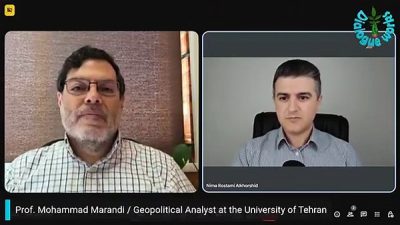
Seyed M. Marandi: U.S. Military DIVIDED? Iran’s Secret Defense EXPOSED
or go to
Aletho News Archives – Video-Images
From the Archives
‘Israel sees Iran as obstacle to its policies’
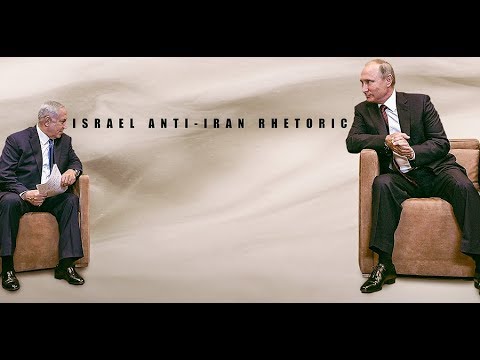
Press TV – August 25, 2017
Prime Minister Benjamin Netanyahu has said that Israel felt threatened by Iran’s growing influence in the Middle East. Netanyahu expressed his Iranophobic view in a meeting with Russian President Vladimir Putin in Russia’s Black Sea resort of Sochi on Wednesday. Press TV has asked Scott Rickard, former American intelligence linguist from Tampa, Florida, and Brent Budowsky, a columnist at The Hill from Washington, to give their thoughts on the issue.
Rickard said Tel Aviv is concerned about the fact that the regime could not carry out its old project to spread sectarian divisions and pave the way for dismemberment of the countries in the Middle East region because of the Iranian-led resistance against Israeli policies, not only in the occupied territories of Palestine but also in the whole region.
“Iran is not a threat to Israel whatsoever. The threat that Israel sees is the fact that their Oded Yinon Plan is being put to a hold by Iran,” the intelligence linguist said on Thursday night.
“They (the Israelis) look at Iran as a threat only because they have no influence on their governments and Iran is autonomous and is not under the Zionist influence,” he added.
Since the victory of the Islamic Republic of Iran in 1979, Tehran has been critical of Israel’s policies in the region, whereas “no leaders [of other states] even dared to speak out against Zionism,” Rickard argued. … continue
Blog Roll
 Aletho News
- Striking Iran’s Infrastructure Would Have Little Military Impact – Report
- What’s Behind U.S./Israeli Strikes On Iranian Pistachio Factories?
- Seyed M. Marandi: U.S. Military DIVIDED? Iran’s Secret Defense EXPOSED
- How I fell foul of the BBC thought police
- The End of NATO
- 37 days of war on Iran cost US staggering $42bln, tracker shows
- Baghdad tells Asian refiners, traders to begin loading Iraqi crude amid Iranian exemption
- Under fire, Moscow and Tehran close ranks
- Iran, US receive Pakistan-mediated plan for ceasefire then final deal
- Iran submits demands for end to war as mediators scramble ahead of Trump deadline
- If Americans Knew
- U.N. experts demand Israel release prominent Gaza doctor after reports of ‘severe torture’
- Israel’s Latest Genocide Is Against the Shias of Lebanon. Why Is the World Silent?
- How Eliot Cohen’s influence over U.S. war-making paved the way for Trump’s war crimes in Iran
- Israelis don’t pay for the weapons we ‘sell’ to them — US taxpayers do
- While Distancing from AIPAC, Most 2028 Democratic Hopefuls Are Still Embracing Israel
- A brief history of the Israeli nuclear program, the open secret at the heart of the Iran war
- Israeli Settlers Killed a Palestinian Farmer on His Own Land, in Front of His Father. Yes, Again
- The US-Israeli War on Science is an Assault on our Future
- 100+ International Law Experts Say US Strikes on Iran Violate UN Charter, Could Be War Crimes
- ‘Vile, Horrifying, Evil’: Trump Threatens to Bomb Nation of 90 Million People ‘Back to the Stone Ages’
- No Tricks Zone
- An Inconvenient Tree: Uncovered In Alps… Europe Much Warmer Than Today 6000 Years Ago
- New Study Reports A 60% Slowdown In Greenland’s Ice Loss Rate In The Last Decade
- Low Intensity Tornado Wrecks Major Solar Farm, Creating A Potential Toxic Dump
- New Study Finds Warming Saves Lives…Cold Temperatures 12 Times More Deadly Than Excess Heat
- German Science Blog Accuses PIK Climate Institute Of Hallucinating Climate Tipping Points
- Devastating Assessment Of Comirnaty Vaccine By Former Senior Pfizer Europe Toxicologist
- New Study: CO2 Is ‘Effectively Negligible’ As An Explanatory Climate Change Factor Since 2000
- Former Pfizer Toxicologist Dr. Helmut Sterz Tells Bundestag Hearing Pfizer Vaccine Should Have Never Been Approved
- Energy Expert: Germany’s Nuclear Phaseout Was A “500 Billion Euro Mistake”
- New Research: South Australia’s Mid-Holocene Sea Surface Temperatures Were 4°C Warmer Than Today
 Aletho News