US general urges Pentagon to boost its African spying missions by 15-fold
Press TV – February 15, 2013
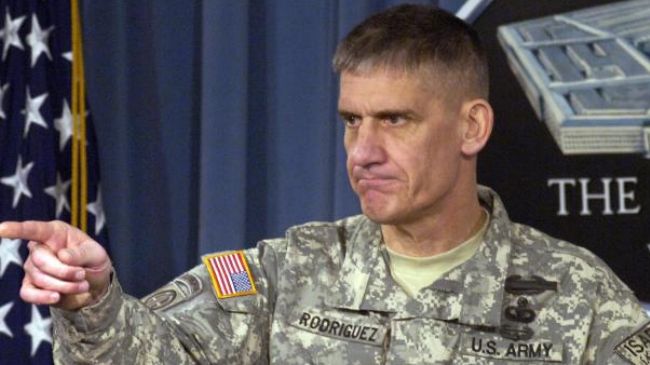
A US general nominated to lead the American military’s Africa Command has called for a 15-fold surge in US spying missions in Africa amid reports of Pentagon’s plans to further expand its growing military presence in the continent.
Army General David Rodriguez estimated in a written statement submitted to the US Senate Arms Services Committee during his confirmation hearing on Thursday that the American military needs to boost its “intelligence-gathering and spying missions in Africa by nearly 15-fold,” The Washington Post reports Friday.
“I believe additional intelligence, surveillance and reconnaissance capabilities are necessary to protect American interests and assist our close allies and partners,” said the four-star general who has previously commanded US-led intervention forces in Panama, Iraq and Afghanistan.
“The recent crises in North Africa demonstrate the volatility of the African security environment,” he added.
Rodrigues further emphasized during the hearing that Africa Command requires additional drones, other spying aircraft and more satellite imagery, adding that the US command currently gets only half of its “stated need” for North Africa and just seven percent of its total “requirements” for the entire continent, the report says.
The surging US military involvement in Africa has emerged despite earlier instructions by the Obama administration for the Pentagon to “pivot its forces and reorient its strategy toward fast-growing Asia,” the daily underlines.
The development comes as the American military has intervened over the past two years in internal conflicts in African nations of Somalia, Libya and Mali, as well as central Africa.
This is while the US Air Force is building its fourth assassination and spying drone base in the poor African state of Niger as American Navy warships are expanding their missions along the coastlines of East and West Africa, according to the report.
Despite insistence by US military authorities that they did not have plans to establish bases or move troops to Africa when they created the Africa Command in 2007, the Pentagon has since built a network of “staging bases,” including assassination drone facilities in Ethiopia and the Seychelles, and “a forward operating base for special operations forces in Kenya,” the report notes.
It further adds that the Pentagon has also expanded its military operations and construction at “the only permanent US base on the continent, Camp Lemonnier in Djibouti, which serves as a hub for ‘counterterrorism missions’ in Somalia and Yemen.”
Now, the daily emphasizes, there is a growing pressure to add even more bases in North and West Africa as the US military is set to build an assassination drone base in the West African country of Niger, which borders Mali, Libya and Nigeria, all nations that the Obama administration claims are threatened by an increasing influx of ‘al-Qaeda-linked’ Muslim militants.
The US Africa Command has been based in Stuttgart, Germany since it was established in 2007. Efforts to move the headquarters to an African country faced hurdles as numerous nations “expressed concern that the Pentagon was seeking to militarize US policy or infringe on their sovereignty,” according to the report.
Related articles
- At Pentagon, ‘pivot to Asia’ becomes ‘shift to Africa’ (stripes.com)
- US plans military war games with African nations in ‘urgent’ mission (ethiotribune.net)
Tanzania’s Shift towards Israel
PressTVGlobalNews | February 12, 2013
Press TV’s documentary program “Tanzania’s shift toward Israel” Looks at how Nyerere’s policies of supporting the oppressed and the Palestinian cause have been abandoned in Tanzania in favor of economic diplomacy advocated by the West.
Tanzania’s Shift towards Israel (I)
Tanzania’s Shift towards Israel (II)
Follow our Facebook on: https://www.facebook.com/presstvchannel
Follow our Twitter on: http://twitter.com/presstv
Follow our Tumblr on: http://presstvchannel.tumblr.com
France’s Mali Debacle
By BARRY LANDO | CounterPunch | January 18, 2013
Paris – Within the next few days, France will have deployed some 2,500 troops to Mali. That’s as large a commitment as France made to what became a profoundly unpopular war in Afghanistan. No one knows how long the troops will be there, but the price tag will surely be tens if not hundreds of millions [or billions rather] of Euros, this to born by a French economy already in woeful shape.
The danger is that President Francois Holland and the French state, may shortly find themselves in the disastrous situation of the hapless coyote in the cartoon, Roadrunner, so intent on chasing his prey that he scurries right over a cliff and suddenly finds himself flailing in mid air, about to plunge to the desert below.
President Holland said the menace of a radical Islamic takeover was so imminent that he had no choice but to intervene—to save not just Mali, but all of Western Africa, and, the French now imply, Europe as well.
Strange thing though, despite the supposed urgency of the situation, France has had precious little luck so far in convincing its European partners to contribute their own troops to the intervention. Indeed, the last thing those countries want, after the traumatic experience of Iraq, Libya and the Afghan crusade, is to become enmeshed in what risks to be an open-ended conflict, on behalf of an unelected Malian government, against a vague assortment of ethnic rebels and jihadis in the desert wilds of North Africa. Thus, so far there have been a lot of pats on the back from France’s allies, offers of logistic support, intelligence, a few troop transports, drones, but that’s it.
“You say, ‘We’ll give you nurses and you go get yourselves killed,’” said French deputy Daniel Cohn-Bendit, railing at his fellow deputies in the European Parliament. “We [Europe] will only be credible if French soldiers are not the only ones getting killed.”
Actually, it was surprising to learn that France, still considered a major military power, doesn’t have the capability to transport a couple of thousand troops and their equipment to North Africa. France even had to rely on an offer from the Italians for tankers to handle in-flight refueling of French fighter jets.
Despite the tepid response from France’s allies, French government spokesman are still reassuring the public that French troops are not going to play the major combat role in the coming ground battles.
The fact is, that even if they wanted to play a major role, there are nowhere near enough French boots on the ground. It’s instructive to speculate on France’s combat strength, using what is known as the “tooth to tail” ratio, that is, the number of support troops in the rear needed to support each combat soldier at the front. For the U.S. military that ratio is about three to one. If we use the same figure for France, that means that out of 2500 French troops deployed to Mali, probably about 600-700—a thousand at best–would actually see front-line combat.
And Mali, don’t forget, is twice the size of France, or Afghanistan or Texas.
The actual down-and-dirty fighting, we are told, is to be done by troops from West Africa, some of whom have finally begun arriving in Mali. But all the reports about those contingents indicate a woeful lack of equipment, morale, and training, particularly in being able to fight a guerrilla war in the desert reaches of the Sahel.
After months of discussion, this week—in the wake of the hostage crisis in Algeria– France’s European allies finally agreed to dispatch 250 troops to help train the Malian army and perhaps other African units. But—unless the fallout from the Algerian disaster changes things–it’s already determined that those European trainers are to be non- combatants. They will not even be advising the Malian soldiers in battle. As one senior EU official made very clear. “We will not go north. We will stay in the training areas,”
By the way, one thing I can never figure out—whether it be Mali or Afghanistan–we‘re always hearing about how the forces being backed by the U.S. and its allies, like France in this case, invariably seem to be poorly trained and equipped and demoralized, despite hundreds of millions of dollars and years of training. [Think Afghanistan where only one out of 23 battalions is able to function independently of U.S. support.]
Meanwhile, the ragtag rebels they’re combating, usually from those same third world countries, like the Taliban in Afghanistan or the Tuareg in Mali are portrayed as dedicated, fierce, battle-hardened warriors, who wreak havoc on their opponents with often the most primitive improvised weapons or suicide bombs. Reports are that it will take many weeks, probably months, before the various African troops will be ready to do any serious fighting. And there are other problems to deal with apart from training and equipment: the danger, for instance, of unleashing Christian soldiers from Nigeria to suppress Islamic rebels in Northern Mali.
Ironically, as I’ve pointed out in a previous blog, while France’s allies are hanging back, the Chinese, who have huge economic interests and construction projects underway in every one of Mali’s neighbors, continue to go about their business, apparently still content to leave the police work to France and Europe and the West African states.
The French, for the record, insist that the groups they are battling in Mali –and now in Algeria–are all lumped together as “terrorists”, linked to al-Qaeda. There is no recognition of the fact that most of the different rebel groups, are mostly driven by strong ethnic and nationalist aspirations, as much as by religion–not that different perhaps, from the Taliban in Afghanistan.
In that case, it’s obvious that the only way this conflict will ultimately be settled is not by somehow eradicating the “terrorists”, but by sitting down to negotiate a deal, as will probably be the case in Afghanistan.
In Mali, such a deal may not be that different from the kind of settlement that was offered the Tuareg years ago after a series of rebellions, but which the Malian government ultimately reneged on.
So, how do the French feel about this?
Estimates are that anywhere from 400,000 to one million French took to the streets of Paris last weekend. A counter-protest, expected to draw hundreds of thousands of other militant French, is now being organized. Tempers are flaring.
What’s the issue?
Mali?
Well, actually, no. It’s whether the French government should legalize gay marriage.
As for the intervention in Mali, at first the French, from all ends of the political spectrum, seemed to be solidly behind their government and their fighting men.
That consensus is already unraveling, and it’s certain that as the intervention drags on, the casualties and costs mount, and France’s European allies still drag their heels, the patriotic surge will flag
Which bring us back to the Roadrunner. At some point the French may suddenly look down to find that their president has taken them over a precipice, and they’re suspended there, gazing in horror at the chasm below.
Related articles
- France Formally Requests US Military Aid for Mali Invasion (economicpolicyjournal.com)
UK terror hypocrisy: Mali vs. Algeria
Press TV – January 19, 2013
British Prime Minister David Cameron called off his long-awaited speech on the relations with the European Union on Friday to deal with the hostage-taking in Algeria as his country actively assisted France in its military intervention in Algeria’s neighbor Mali.
Cameron was outraged by, what he described in an address to the MPs on Thursday, as the Algerian government’s “all guns blazing” tactic against the “terrorist” kidnappers at BP’s In Amenas gas plant because it could endanger British and other western lives.
“I won’t hide, of course I was… we were disappointed not to be informed of the assault in advance,” Cameron told the MPs.
In effect, Cameron was telling Algeria that they are not supposed to be fighting “terrorists” at the cost of British lives while he and his French allies were – and are — exactly killing innocent Malians for the alleged ‘greater good’ they tend to name fighting terrorism.
There are no precise figures on the number of Malian civilians killed in the French Britain-assisted airstrikes near the country’s borders with Algeria but Human Rights Watch said on the second day of the attacks last Sunday that 10 civilians including three children, were killed during airstrikes.
The situation has also been grave enough for international organizations to call for restraint.
“Forces involved in armed attacks should avoid indiscriminate shelling at all costs, and do their utmost to prevent civilian casualties,” said Paule Rigaud, Amnesty International’s Africa deputy director.
However, there has been no such restr aint to the point that United Nations High Commissioner for Refugees (UNHCR) Melissa Fleming warned on Friday “that in the near future there could be up to 300,000 people additionally displaced inside Mali, and over 400,000 additionally displaced in the neighboring countries” many of them escaping indiscriminate attacks on Malian rebels and civilians.
Nor has Cameron advised French president Francois Hollande to hold back attacks to avoid collateral damage to women and children probably because their skins are not as white as the British hostages in Algeria.
This comes as Hollande said on Friday that the attack and hostage crisis in the remote desert gas plant show the French military intervention in Mali was justified.
However, one comes to think that matters are exactly the other way round, especially after the hostage-takers said their move was in response to the French intervention in Mali.
One should also note a report by Amnesty International on brutality on the part of the ally of Britain and France, the Malian government, against the Tuareg ethnic minority where rebels are rooted.
When the conflict originally exploded, Tuaregs were arrested, tortured, bombed and killed by the security forces, “apparently only on ethnic grounds”, Amnesty said in a report on December 21.
Meanwhile, last July, 80 inmates arrested by the Malian army were stripped to their underwear, jammed into a 5 sqm cell and cigarettes were burnt into their bodies.
Also, back in September 2012, 16 Muslim clerics were rounded up at a checkpoint and summarily executed by the Malian army, which is now Britain’s ally.
Indeed, Britain could apparently pat itself on the back for setting the stage for the kidnapping of its own nationals in Algeria by helping the Malian government.
Britain should also answer whether the “botched” Algerian operation to free hundreds of hostages that left a few western hostages killed would have been also botched if the hostages were not white westerners, or if the scenario was one of British forces and its allies pounding Malian targets with huge civilians casualties on people with darker skins.
Preplanned Mali invasion reveals France’s neo-colonialistic agenda
By Finian Cunningham | Press TV | January 14, 2013
The speed and extent with which French warplanes have been deployed over the weekend in the West African country, Mali, point to a well-honed plan for intervention by the former colonial power.
Indeed, such is the careful choreography of this salient military development that one could say that the French have finally given themselves a green light to execute a plan they had been pushing over several months. That plan is nothing less than the neocolonial re-conquest of its former colony in the strategically important West African region.
Within hours of the Malian government requesting military support to counter an advance by rebels from the northern territory, French warplanes began carrying out air strikes on Friday. The attack sorties have reportedly been conducted for at least three consecutive days. Media reports said that French Mirage and Rafale fighter jets had struck across a wide belt of the remote Sahelian country, from Gao and Kidal in the northeast, near the border with Algeria, to the western town of Lere, close to Mauritania.
The warplanes were dispatched from France and also reportedly from Chad. The French government claimed that it had been granted over-flight permission by Algeria. Both North African neighboring countries are also former French colonies.
The air strikes by the French jets on at least six widely dispersed target areas within Mali cover an operational distance of nearly 2,000 kilometers, from east to west. This level of co-ordination indicates several weeks of planning and belies the appearance that the French government was responding in an impromptu fashion to a sudden call for assistance from the Paris-aligned Malian authorities.
In addition, over the weekend some 500 French troops arrived in the southern Malian capital of Bamako and the strategic town of Mopti, which is situated near the rebel-held northern territory.
The dramatic French intervention has all the hallmarks of a meticulous plan that was on a hair-trigger for action. The taking over by rebels last Thursday of the town of Konna, 45 kilometers from Mopti, near the de facto north-south frontier, and the subsequent alarm call from the Malian government in Bamako can therefore be seen as merely a green light for the detailed French plan to swing into action.
Furthermore, the French government has received swift support from other European countries and the United States. Britain has sent RAF CI7 cargo planes from a base in East England to Paris in order to help with French supply of troops, helicopters, trucks other heavy equipment. Washington has said it will provide logistics and communications. Both American and French surveillance drones have been operational in Mali and adjacent countries for months now.
France’s Foreign Minister Laurent Fabius was quick to hail the weekend air strikes a success in halting Malian “terrorists.” Fabius said the French military involvement would be for a “matter of weeks.” However, the extensive mobilization of troops and warplanes and the geopolitical backdrop to the development suggest otherwise. Perhaps mindful of this, Fabius was keen to emphasize that the Mali intervention would not turn out to be “another Afghanistan.”
Officially, Paris, London and Washington have up to now been pushing for an African-led intervention force to take the military lead in assisting the Malian government to quash a separatist rebellion in the northern half of the country. The northern region was taken over last April by Tuareg rebels in league with Islamist militia belonging to Ansar Dine and the Movement for Unity and Jihad in West Africa. The rebels have managed to consolidate their control over the vast and largely desert region around the main city of Timbuktu. Northern Mali covers an area the size of France and is sparsely populated with less than two million people.
West African states, including Nigeria, Senegal, Burkina Faso, Benin and Niger, are charged with assembling an intervention force at the behest of the Western powers. Last month, the United Nations Security Council gave final approval for the West African military mission to shore up the shaky government that is based in Bamako in the far south of the country, thousands of kilometers from the upper northern region.
Following the Security Council vote, diplomats at the UN and in West African capitals were talking about the combined African mission of some 3,500 troops being deployed much later this year, in September at the earliest. This was a view held by Romano Prodi, the UN’s top envoy to Mali, which was reported only days before the French military intervention.
The abrupt side-stepping of the African forces points up the real agenda of the Western powers and France in particular. What we are seeing now, with the rapid, large-scale French deployment, is the true neocolonial nature of this agenda. All the previous talk by Paris, London and Washington on the importance of intervention having “an African face” can be seen as cynical cover for direct Western action.
Only three months ago, President Francois Hollande vowed to French media that there would be “no French boots on the ground” in Mali. Evidently, official calculations have changed.
France and its Western allies have been assiduously taking up the international security threat allegedly posed by the rebels in Mali. Much is being made of alleged links between the Islamist militants and Al Qaeda in the Maghreb. President Hollande has repeatedly warned that French and European security is at risk if the rebels in Mali strengthen their control.
A spokesman for British Prime Minister David Cameron said at the weekend: “Both leaders [Cameron and Hollande] agreed that the situation in Mali poses a real threat to international security given the terrorist activity there.”
American politicians, military chiefs and media have also been waxing lyrical for months on how Mali represents the globe’s new “terror central” and that Western governments must act decisively to defeat the danger.
However, the precise nature of this “Islamist threat” from Mali is never spelled out or evidenced. We are expected to accept the word of Paris, London and Washington – the rogue states that have and are conducting illegal wars in Afghanistan, Iraq, Libya and Syria.
What we do know, however, is that the half century post-colonial borders of Mali are an alien imposition on nomadic peoples in the northern region – cultures that date backed thousands of years. Their rebellion against a remote and up to now indifferent colonialist-appointed administration in Bamako is probably a just cause. The French and its Western allies are therefore maligning an internal dispute within Mali with another specious “war on terror” narrative and in that way these powers are giving themselves a mandate to meddle in that country.
France being the former colonial master and with decades of covert military assets in the region is the “natural” choice among the Western powers to lead a neo-imperialist adventure in this strategically important region.
Mali has abundant riches in natural resources of metals and minerals. It is a major source of gold and uranium, as well as iron, copper, tin and manganese, and also versatile minerals such as phosphates, salt and limestone.
Moreover, the West Africa region has awesome potential for agriculture and oil. The Gulf of Guinea off Ghana and Nigeria is earmarked to become a leading oil and gas supply region to world markets in the coming years.
Military intervention by France and the other Western powers in Mali – under the guise of “defeating terrorism” – is a bridgehead for Western capital and corporations, not only into a resource-rich country, but into a large chunk of the entire African continent. In 2011, NATO’s bombardment of Libya and French subversion of elections in Cote D’Ivoire marked a new beginning of Western neo-imperialism in Africa.
South Africa’s ruling ANC officially endorses Palestine’s boycott movement
Al Akhbar | December 21, 2012
South Africa’s ruling party has officially endorsed Palestine’s Boycott, Divestment, and Sanctions campaign against Israel, making it the first major non-Muslim political faction to throw its weight behind the nonviolent resistance movement.
The African National Congress issued a resolution in support of the boycott campaign making it a part of its official policy, and specifically called for “all South Africans to support the programmes and campaigns of the Palestinian civil society which seek to put pressure on Israel to engage with the Palestinian people to reach a just solution.”
A press release issued by activist group BDS South Africa called the move “the most authoritative endorsement of the Boycott, Divestment and Sanctions (BDS) against Israel campaign.”
Previous moves to support Palestine’s nonviolent resistance movement from state actors have restricted their backing to the boycott of Israeli settlements, shying away from targeting the Jewish state. In September, the Irish parliament voted to ban Israeli settlement imports. Earlier this month, an Israeli newspaper reported that the EU was looking into boycotting settlement goods, after Israel defied calls to stem construction of the illegal houses.
Another clause of the resolution lashed out at Israel’s mistreatment of Africans, which culminated in the mass deportation of South Sudanese this year: “The ANC abhors the recent Israeli state-sponsored xenophobic attacks and deportation of Africans and request that this matter should be escalated to the African Union.”
The move is the latest in a series of actions by the ANC to pressure Israel into ending the Jewish state’s racist policies, particularly against indigenous Palestinians.
This August, South Africa’s Deputy Foreign Minister Ebrahim Ebrahim advised South Africans not to travel to Israel “because of the treatment and policies of Israel towards the Palestinian people.”
Palestine activists have long worked to draw attention to parallels between South Africa’s apartheid period and Palestinian repression under Israel’s ethno-religious-exclusive government system. Palestine’s BDS movement is said to be largely inspired by South Africa’s own boycott movement, which is credited with playing a major role in dismantling apartheid in that country in 1994.
South African Apartheid was declared official policy in 1948, the same year the state of Israel was created and thousands of Palestinians were expelled or put under martial rule.
In 2005, Palestinian civil society issued a call for a campaign of boycotts, divestment and sanctions against Israel until it complies with international law and Palestinian rights. The launch followed a historic ruling at the International Court of Justice that Israel’s apartheid wall, which greatly restricts movement in the West Bank and expropriates large swathes of Palestinian land, be demolished.
The BDS movement has garnered support from activists and labor unions worldwide, as well as from a growing list of artists, including Roger Waters, Elvis Costello, Santana, Cat Power and the late Gil Scott Heron.
Full BDS South Africa Press release
MEDIA RELEASE: S. Africa’s ruling party, the ANC, reaffirms boycott of Israel resolution
South Africa’s ruling party, the African National Congress (ANC), at its 53rd National Conference, reaffirmed a resolution supporting the Palestinian Boycott, Divestment and Sanctions (BDS) against Israel campaign.
In October 2012, the ANC’s International Solidarity Conference (ISC) declared its full support for the Boycott, Divestment and Sanctions (BDS) against Israel campaign (ISC Declaration, page 2, point 10).
Today, Lindiwe Zulu (member of the ANC’s International Relations Sub-Committee and special advisor to President Jacob Zuma) announced at the ANC’s 53rd National Conference plenary session, the ANC’s official endorsement, as captured in Resolution 39 (b), of the ANC’s October International Solidarity Conference (ISC) and all its resolutions, which includes a resolution on BDS. Giving muscle to resolution 39 (b), the ANC has committed to set up a steering committee to implement these ISC resolutions.
In addition, the ANC adopted resolution 35 (g) that specifically called for “all South Africans to support the programmes and campaigns of the Palestinian civil society which seek to put pressure on Israel to engage with the Palestinian people to reach a just solution.” In 2005 Palestinian civil society issued a call to the international community for a program and campaign of boycott, divestment and sanctions (BDS) to be applied against Israel as a way to pressure Israel to end its violations of international law, respect Palestinian human rights and engage in fair negotiations for a just peace.
Mbuyiseni Ndlozi of BDS South Africa welcomed today’s decision: “This reaffirmation by the ANC’s National Conference, its highest decision making body, is by far the most authoritative endorsement of the Boycott, Divestment and Sanctions (BDS) against Israel campaign. The ANC has now taken its international conference resolutions, and officially made it the policy of the ANC. We look forward to working with the ANC and specifically the ISC steering committee to expedite its implementation.”
Another hard-hitting decision on Israel that was adopted by the ANC was resolution 35 (j): “The ANC abhors the recent Israeli state-sponsored xenophobic attacks and deportation of Africans and request that this matter should be escalated to the African Union”. In June this year Israeli anti-African protests turned into full-fledged race riots. Israeli racism and xenophobia against Africans is shared and even encouraged by Israeli politicians including the Israeli Prime Minster, Benjamin Netanyahu, who has said: “If we don’t stop their [African immigrants’] entry, the problem that currently stands at 60,000 could grow to 600,000, and that threatens our existence…and threatens the social fabric of society.” Israel’s Minister of Interior, Eli Yishai, has said that African immigrants “think the country doesn’t belong to us, the white man.” And the Israeli parliamentarian, Miri Regev, has publicly compared Sudanese people to “a cancer”.
Finally, in a blow to the Israeli lobby, the ANC also adopted resolution 35 (c) stating: “The ANC is unequivocal in its support for the Palestinian people in their struggle for self-determination, and unapologetic in its view that the Palestinians are the victims and the oppressed in the conflict with Israel.” In the build up to the ANC’s National Conference the Israeli lobby, including the South African Jewish Board of Deputies, demanded a “balanced” and “nonpartisan” rather than a decisive and solidarity role by the ANC in the Palestinian-Israeli issue.
ISSUED BY MBUYISENI NDLOZI FOR BDS SOUTH AFRICA
Related articles
Pentagon considering Air Force support for intervention in Mali
By Julian Pecquet – The Hill – 12/05/12
The Obama administration hasn’t ruled out having the Air Force play a lead role in transporting troops and equipment for an African-led intervention to dislodge militant Islamists in Mali, the Pentagon’s top Africa official said Wednesday.
The United Nations Security Council is weighing whether to approve a West African force of about 3,300 troops to take over the desert expanses of the country’s northern half, which broke away following a March coup. Mali’s neighbors and western countries are worried that the Texas-sized area has become the world’s largest safe haven for militant Islamists, but U.N. Secretary General Ban Ki-moon has raised questions about the plan’s viability, and the Obama administration favors a cautious approach.
“The logistical planning is still nascent,” the Pentagon’s deputy assistant secretary for Africa, Amanda Dory, told reporters in a short hallway interview after testifying at a Senate hearing on Mali.
“Part of it is related to maneuver and how the force would actually move, and that defines what the logistics would need to be. At this point we haven’t ruled out — or in — what it is that the [Department of Defense] and [U.S. government] support would be.”
Mali and its neighbors oppose any intervention by non-African troops. The United States, however, is involved in advising the Economic Community Of West African States (ECOWAS), which is putting the intervention force together.
Dory said the Pentagon is envisioning training, equipping, advising and supporting the international military force, “but whether it would entail logistics or not, we haven’t determined yet.” … Full article
US vows to make Mali next stop in ‘war on terror’
Press TV – October 28, 2012
Alleging “al-Qaeda” presence in Mali, the United States has vowed to make the West African country, the next stop in its so-called war on terror.
US Secretary of Defense Leon Panetta vowed, at the Pentagon, to eliminate the threat from “al-Qaeda” in northern Mali, Reuters reported on Saturday. He said that he would ensure that al-Qaeda has “no place to hide.”
“Our approach is to make sure that al-Qaeda and elements of al-Qaeda have no place to hide. And we’ve gone after al-Qaeda wherever they are – whether it’s in [the northwestern Pakistan] FATA [Federally Administered Tribal Areas]; whether it’s in Yemen; whether it’s in Somalia; and whether they’re in North Africa,” he noted.
The comments came amid reports that the CIA is currently flying some surveillance drones over northern Mali, and that France is also reportedly sending surveillance aircraft to the African country.
A study, conducted by Stanford and New York Universities, has showed that only one in 50 people killed by US assassination drones in Pakistan — one of the several countries where the US has carried out drone strikes — are militants.
Related articles
- Britain to support African force in bid to recapture northern Mali (phantomreport.com)
US expands drone base in Djibouti to hit Somalia, Yemen
Press TV – October 27, 2012
The US government is expanding its drone base in the East African nation of Djibouti to escalate its assassination strikes in Somalia and Yemen.
The US military has been flying armed drones over both countries from a base in Djibouti and is planning to build a second base in Ethiopia, a report by the Washington Post says.
The report added that the drones on missions over Somalia and Yemen take off or land at the base an average of 16 times per day.
The Lemonnier base has also become home to a squadron of US F-15 fighter jets, which it reports are flying combat missions over Yemen.
The US is also known to operate drones from two other East African countries — Ethiopia and the Seychelles islands.
The base in the Seychelles that was previously used to fly surveillance drones will now host armed drones capable of flying their lethal payloads the more than 1,500 kms that separate the Indian Ocean island chain from Somalia and the African mainland and back.
However, drone operations from Ethiopia and Seychelles are nothing compared to the one at Camp Lemonnier. According to the report Lemonnier is the centerpiece of an expanding US network of drone and surveillance bases in Africa.
Washington has also been carrying out assassination attacks using the unmanned aircraft in other countries including Afghanistan, Libya and Pakistan.
The United States claims the CIA-run strikes are aimed at militants. But witness reports and figures offered by local authorities indicate the attacks have led to massive civilian deaths.
South Africa gold mine fires 8,500 striking workers
Press TV – October 23, 2012
South African miner Gold Fields has sacked over 8000 of striking workers after they refused to return to work at the KDC East mine near the city of Johannesburg, a spokesman says.
“All 8,500 people who were on strike did not come back. They did not return to work, so we have issued dismissal letters to all of them,” spokesman Sven Lunsche announced on Tuesday.
“We have now reached a stage where we can’t hold off anymore. Our hands were forced and we have now done it.”
Lunsche further stated that the workers have 24 hours to appeal their dismissal.
Workers at the last striking mine of the world’s fourth gold producer in Carletonville, southwest of Johannesburg, ignored a final deadline set for 4:00 pm (14:00 GMT).
Tens of thousands working in South African mines –mostly located near the commercial hub of Johannesburg– have been on strike for more than a month.
The strikes have paralyzed production in the country, which accounts for around seven percent of global mine products.
In August, clashes between striking miners and police left 46 miners dead at Lonmin platinum mine in the South African North West Province.
The strikes have damaged South Africa’s reputation as an investment destination.
South Africa possesses nearly 80 percent of the world’s known platinum reserves. The country’s mining sector directly employs around 500,000 people and accounts for nearly one-fifth of the country’s gross domestic product.
Featured Video
Seyed M. Marandi: U.S. Military DIVIDED? Iran’s Secret Defense EXPOSED
or go to
Aletho News Archives – Video-Images
From the Archives
‘Israel sees Iran as obstacle to its policies’
Press TV – August 25, 2017
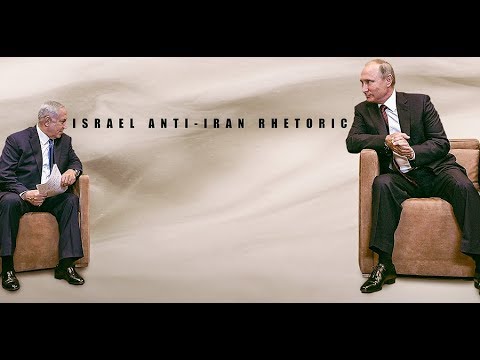
Prime Minister Benjamin Netanyahu has said that Israel felt threatened by Iran’s growing influence in the Middle East. Netanyahu expressed his Iranophobic view in a meeting with Russian President Vladimir Putin in Russia’s Black Sea resort of Sochi on Wednesday. Press TV has asked Scott Rickard, former American intelligence linguist from Tampa, Florida, and Brent Budowsky, a columnist at The Hill from Washington, to give their thoughts on the issue.
Rickard said Tel Aviv is concerned about the fact that the regime could not carry out its old project to spread sectarian divisions and pave the way for dismemberment of the countries in the Middle East region because of the Iranian-led resistance against Israeli policies, not only in the occupied territories of Palestine but also in the whole region.
“Iran is not a threat to Israel whatsoever. The threat that Israel sees is the fact that their Oded Yinon Plan is being put to a hold by Iran,” the intelligence linguist said on Thursday night.
“They (the Israelis) look at Iran as a threat only because they have no influence on their governments and Iran is autonomous and is not under the Zionist influence,” he added.
Since the victory of the Islamic Republic of Iran in 1979, Tehran has been critical of Israel’s policies in the region, whereas “no leaders [of other states] even dared to speak out against Zionism,” Rickard argued. … continue
Blog Roll
 Aletho News
- Iran declares ‘historic victory’ over US, says enemy forced to accept its proposal
- Trump Claims Ceasefire, Reopening of Strait of Hormuz Agreement with Iran
- Israeli tank fire killed UN peacekeeper in Lebanon, UNIFIL investigation finds
- Russia, China block Bahrain-sponsored UN resolution on Strait of Hormuz
- The US-Israeli War on Science is an Assault on our Future
- Trump’s Promise to Bomb Iran ‘Like Never Before’ Faces Brutal Logistics — Expert
- Germany seeks to restrict stays abroad for men of fighting age – Berliner Zeitung
- Evidence points to Ukraine being behind TurkStream attempted sabotage, but that should come as no surprise
- Sri Lanka secures supplies of Russia oil – minister
- Nations across Asia strike direct deals with Iran for Hormuz passage
- If Americans Knew
- Thousands dead and neighborhoods razed to the ground: Aid agencies fear southern Lebanon is becoming the new Gaza
- The war the US is fighting for Israel could cost trillions
- ‘Cigarette Burns, Nail Wounds’: Toddler Tortured in Gaza to Coerce Father
- Trump Says US Sent ‘a Lot of Guns’ to Protesters in Iran
- Israeli forces destroy 17 UN peacekeeper cameras in south Lebanon
- US-Israeli strikes ‘completely destroy’ synagogue in Tehran
- Archbishop for US Military Says Iran War Is Unjust Under Catholic Teaching
- Iranian leaders’ Open Letters to the American People
- Trump says Iranians appreciate bombs, WHO warns of nuclear risks – Daily Update
- U.N. experts demand Israel release prominent Gaza doctor after reports of ‘severe torture’
- No Tricks Zone
- An Inconvenient Tree: Uncovered In Alps… Europe Much Warmer Than Today 6000 Years Ago
- New Study Reports A 60% Slowdown In Greenland’s Ice Loss Rate In The Last Decade
- Low Intensity Tornado Wrecks Major Solar Farm, Creating A Potential Toxic Dump
- New Study Finds Warming Saves Lives…Cold Temperatures 12 Times More Deadly Than Excess Heat
- German Science Blog Accuses PIK Climate Institute Of Hallucinating Climate Tipping Points
- Devastating Assessment Of Comirnaty Vaccine By Former Senior Pfizer Europe Toxicologist
- New Study: CO2 Is ‘Effectively Negligible’ As An Explanatory Climate Change Factor Since 2000
- Former Pfizer Toxicologist Dr. Helmut Sterz Tells Bundestag Hearing Pfizer Vaccine Should Have Never Been Approved
- Energy Expert: Germany’s Nuclear Phaseout Was A “500 Billion Euro Mistake”
- New Research: South Australia’s Mid-Holocene Sea Surface Temperatures Were 4°C Warmer Than Today
 Aletho News