Sustainable Debt Slavery
BY IAIN DAVIS AND WHITNEY WEBB |
UNLIMITED HANGOUT| SEPTEMBER 13, 2022
In this first instalment of a new series, Iain Davis and Whitney Webb explore how the UN’s “sustainable development” policies, the SDGs, do not promote “sustainability” as most conceive of it and instead utilise the same debt imperialism long used by the Anglo-American Empire to entrap nations in a new, equally predatory system of global financial governance.
The UN’s 2030 Agenda for Sustainable Development is pitched as a “shared blueprint for peace and prosperity for people and the planet, now and into the future.” At the heart of this agenda are the 17 Sustainable Development Goals, or SDGs.
Many of these goals sound nice in theory and paint a picture of an emergent global utopia – such as no poverty, no world hunger and reduced inequality. Yet, as is true with so much, the reality behind most – if not all – of the SDGs are policies cloaked in the language of utopia that – in practice – will only benefit the economic elite and entrench their power.
This can clearly be seen in fine print of the SDGs, as there is considerable emphasis on debt and on entrapping nation states (especially developing states) in debt as a means of forcing adoption of SDG-related policies. It is then little coincidence that many of the driving forces behind SDG-related policies, at the UN and elsewhere, are career bankers. Former executives at some of the most predatory financial institutions in the history of the world, from Goldman Sachs to Bank of America to Deutsche Bank, are among the top proponents and developers of SDG-related policies.
Are their interests truly aligned with “sustainable development” and improving the state of the world for regular people, as they now claim? Or do their interests lie where they always have, in a profit-driven economic model based on debt slavery and outright theft?
In this Unlimited Hangout investigative series, we will be exploring these questions and interrogating – not only the power structures behind the SDGs and related policies – but also their practical impacts.
In this first instalment, we will explore what actually underpins the majority of the 2030 Agenda and the SDGs, cutting through the flowery language to deliver the full picture of what the implementation of these policies means for the average person. Subsequent instalments will focus on case studies based on specific SDGs and their sector-specific impacts.
Overall, this series will offer a fact-based and objective look at how the motivation behind the SDGs and Agenda 2030 is about retooling the same economic imperialism used by the Anglo-American Empire in the post-World War II era for the purposes of the coming “multipolar world order” and efforts to enact a global neo-feudal model, perhaps best summarized as a model for “sustainable slavery.”
The SDG Word Salad

The UN educates young people in developing nations to welcome “Sustainable Development” without disclosing the impact it will have on their lives or national economy, Source: UNICEF
Most people are aware of the concept of “Sustainable Development” but, it is fair to say that the majority believe that SDGs are related to tackling problems allegedly wrought by climate disaster. However, the Agenda 2030 SDGs encompass every facet of our lives and only one, SDG 13, deals explicitly with climate.
From economic and food security to education, employment and all business activity; name any sphere of human activity, including the most personal, and there is an associated SDG designed to “transform” it. Yet, it is the SDG 17—Partnerships for Goals—through which we can start to identify who the beneficiaries of this system really are.
The stated UN SDG 17 aim is, in part, to:
Enhance global macroeconomic stability, including through policy coordination and policy coherence. [. . .] Enhance the global partnership for sustainable development, complemented by multi-stakeholder partnerships [. . .] to support the achievement of the sustainable development goals in all countries. [. . .] Encourage and promote effective public, public-private and civil society partnerships, building on the experience and resourcing strategies of partnerships.
From this, we can deduce that “multi-stakeholder partnerships” are supposed to work together to achieve “macroeconomic stability” in “all countries.” This will be accomplished by enforcing “policy coordination and policy coherence” constructed from the “knowledge” of “public, public-private and civil society partnerships.” These “partnerships” will deliver the SDGs.
This word-salad requires some untangling, because this is the framework that enables the implementation of every SDG “in all countries.”
Before we do, it is worth noting that the UN often refers to itself and its decisions using grandiose language. Even the most trivial of deliberations are treated as “historic” or “ground breaking,” etc. There is also a lot of fluff to wade through about transparency, accountability, sustainability and so on.
These are just words which require corresponding action in order to have contextual meaning. “Transparency” doesn’t mean much if crucial information is buried in endless reams of impenetrable bureaucratic waffle that isn’t reported to the public by anyone. “Accountability” is an anathema if even national governments lack the authority to exercise oversight over the UN; and when “sustainable” is used to mean “transformative,” it becomes an oxymoron.
Untangling the UN-G3P SDG Word Salad
The UN Economic and Social Council (ECOSOC) commissioned a paper which defines “multi-stakeholder partnerships” as:
[P]artnerships between business, NGOs, Governments, the United Nations and other actors.
These “multi-stakeholder partnerships” are supposedly working to create global “macroeconomic stability” as a prerequisite for the implementation of the SDGs. But, just like the term “intergovernmental organisation,” the meaning of “macroeconomic stability” has also been transformed by the UN and its specialised agencies.
While macroeconomic stability used to mean “full employment and stable economic growth, accompanied by low inflation,” the UN have announced that isn’t what it means today. Economic growth now has to be “smart” in order to meet SDG requirements.
Crucially, fiscal balance—the difference between a government’s revenue and expenditure—must accommodate “sustainable development” by creating “fiscal space.” This effectively disassociates the term “macroeconomic stability” from “real economic activity.”
Climate change is seen, not just as an environmental problem, but as a “serious financial, economic and social problem.” Therefore “fiscal space” must be engineered to finance the “policy coordination and policy coherence” needed to avert the prophesied disaster.
The UN Department for Economic and Social Affairs (UN-DESA) notes that “fiscal space” lacks a precise definition. While some economists define it simply as “the availability of budgetary room that allows a government to provide resources for a desired purpose,” others express “budgetary room” as a calculation based upon a countries debt-to-GDP ratio and “projected” growth.
UN-DESA suggests that “fiscal space” boils down to the estimated—or projected—“debt sustainability gap.” This is defined as “the difference between a country’s current debt level and its estimated sustainable debt level.”
No one knows what events may impact future economic growth. A pandemic or another war in Europe could severely restrict it, or cause a recession. The “debt sustainability gap” is a theoretical concept based upon little more than wishful thinking.
As such, this allows policy makers to adopt a malleable, and relatively arbitrary, interpretation of “fiscal space.” They can borrow to finance sustainable development spending, irrespective of real economic conditions.
The primary objective of fiscal policy used to be to maintain employment and price stability and encourage economic growth through the equitable distribution of wealth and resources. It has been transformed by sustainable development. Now it aims to achieve “sustainable trajectories for revenues, expenditures, and deficits” that emphasise “fiscal space.”
If this necessitates increased taxation and/or borrowing, so be it. Regardless of the impact this has on real economic activity, it’s all fine because, according to the World Bank:
Debt is a critical form of financing for the sustainable development goals.
Spending deficits and increasing debt are not a problem because “failure to achieve sustainable development goals” would be far more unacceptable and would increase debt even further. Any amount of sovereign debt can be heaped upon the taxpayer in order to protect us from the much more dangerous economic disaster that would allegedly befall us if the SDGs aren’t quickly implemented.
In other words, economic, financial and monetary crises will hardly be absent in the world of “sustainable development.” The rationale outlined above will likely be used to justify such crises. This is the model envisioned by the UN and its “multi-stakeholder partners.” For those behind the SDGs, the ends justify the means. Any travesty can be justified as long as it is committed in the name of “sustainability.”
We are faced with a global policy initiative, affecting every corner of our lives, based upon the logical fallacy of circular reasoning. The effective destruction of society is necessary in order to protect us from something that we are told is to be much worse.
Obedience is a virtue because, unless we adhere to the policy demands imposed upon us, and accept the costs, the climate disaster might come to pass.
Armed with this knowledge, it becomes much easier to translate the convoluted UN-G3P word-salad and figure out what the UN actually means by the term “Sustainable Development”:
Governments will tax their populations, increasing deficits and national debt where necessary, to create financial slush funds that private multinational corporations, philanthropic foundations and NGOs can access in order to distribute their SDG compliance-based products, services and policy agendas. The new SDG markets will be protected by government sustainability legislation, which is designed by the same “partners” who profit from and control the new global SDG-based economy.
“Green” Debt Traps
Debt is specifically identified as a key component of SDG implementation, particularly in the developing world. In a 2018 paper written by a joint World Bank-IMF team, it was noted on several occasions that “debt vulnerabilities” in developing economies are being addressed by those financial institutions “within the context of the global development agenda (e.g., SDGs).”
That same year, the World Bank and IMF’s Debt Sustainability Framework (DSF) became operational. Per the World Bank, the DSF “allows creditors to tailor their financing terms in anticipation of future risks and helps countries balance the need for funds with the ability to repay their debts.” It also “guides countries in supporting the SDGs, when their ability to service debt is limited.”
Expressed differently, if countries cannot pay the debt they incur through IMF loans and World Bank (and associated Multilateral Development Bank) financing, they will be offered options to “repay” their debt through implementing SDG-related policies. However, as future instalments of this series will show, many of these options supposedly tailored to SDG implementation actually follow the “debt for land swap” model (now re-tooled as “debt for conservation swaps” or “debt for climate swaps”) that precede the SDGs and Agenda 2030 by a number of years. This model essentially enables land grabs and land/natural resource theft on a scale never before seen in human history.
Since their creation in the aftermath of World War II, both the World Bank and IMF have historically used debt to force countries, mostly in the developing world, to adopt policies that favour the global power structure. This was made explicit in a leaked US Army document written in 2008, which states that these institutions are used as unconventional, financial “weapons in times of conflict up to and including large-scale general war” and as “weapons” in terms of influencing “the policies and cooperation of state governments.” The document notes that these institutions in particular have a “long history of conducting economic warfare valuable to any ARSOF [Army Special Operations Forces] UW [Unconventional Warfare] campaign.”
The document further notes that these “financial weapons” can be used by the US military to create “financial incentives or disincentives to persuade adversaries, allies and surrogates to modify their behavior at the theater strategic, operational, and tactical levels.” Further, these unconventional warfare campaigns are highly coordinated with the State Department and the Intelligence Community in determining “which elements of the human terrain in UWOA [Unconventional Warfare Operations Area] are most susceptible to financial engagement.”
Notably, the World Bank and the IMF are listed as both Financial Instruments and Diplomatic Instruments of US National Power as well as integral parts of what the manual calls the “current global governance system.”
While they were once “financial weapons” to be wielded by the Anglo-American Empire, the current shifts in the “global governance system” also herald a shift in who is able to weaponize the World Bank and IMF for their explicit benefit. As the sun sets on the imperial, “unipolar” model and the dawn of a “multipolar” world order is upon us. The World Bank and IMF have already been brought under the control of a new international power structure following the creation of the UN-backed Glasgow Financial Alliance for Net Zero (GFANZ) in 2021.
At the COP26 conference that same year, GFANZ announced plans to overhaul the role of the World Bank and IMF specifically as part of a broader plan aimed at “transforming” the global financial system. This was made explicit by GFANZ principal and BlackRock CEO Larry Fink during a COP26 panel, where he specified the plan to overhaul these institutions, saying:
If we’re going to be serious about climate change in the emerging world, we’re going to have to really focus on the reimagination of the World Bank and the IMF.
GFANZ’s plans to “reimagine” these international financial institutions involve merging them with the private-banking interests that compose GFANZ; creating a new system of “global financial governance”; and eroding national sovereignty (particularly in the developing world) by forcing them to establish business environments deemed friendly to the interests of GFANZ members.
As noted in a previous Unlimited Hangout report, GFANZ seeks to use the World Bank and related institutions “to globally impose massive and extensive deregulation on developing countries by using the decarbonization push as justification. No longer must MDBs [multilateral development banks] entrap developing nations in debt to force policies that benefit foreign and multinational private-sector entities, as climate change-related justification can now be used for the same ends.”
Debt remains the main weapon in the arsenal of the World Bank and IMF, and will be used for the same “imperial” ends, only now with different benefactors and a different array of policies to impose on their prey – the SDGs.
The UN’s Quiet Revolution
GFANZ is a significant driver of “sustainable development.” It is, nonetheless, just one of many SDG related “public-private partnerships.” The GFANZ website states:
GFANZ provides a forum for leading financial institutions to accelerate the transition to a net-zero global economy. Our members currently include more than 450 member firms from across the global financial sector, representing more than $130 trillion in assets under management.
GFANZ is formed from a number of “alliances.” The banks, asset managers, asset owners, insurers, financial service providers and investment consultancies each have their own global partnership networks that collectively contribute to the GFANZ forum.
For example, the UN’s Net Zero Banking Alliance affords Citigroup, Deutsche Bank, JPMorgan, HSBC and others the opportunity to pursue their ideas through the GFANZ forum. They are among the key “stakeholders” in the SDG transformation.
In order to “accelerate the transition,” the GFANZ forum’s “Call to Action” empowers these multinational corporations to stipulate specific policy requests. They have decided that governments should adopt “economy-wide net-zero targets.” Governments also need to:
[R]eform [. . . ] financial regulations to support the net zero transition; phase-out of fossil fuel subsidies; pric[e] carbon emissions; mandat[e] net zero transition plans and [set] climate reporting for public and private enterprises by 2024
All of this is necessary, we are told, to avert the “climate disaster” that might happen one day. Therefore, this “global financial governance” policy agenda is simply unavoidable and we should allow private (and historically predatory) financial institutions to create policy aimed at de-regulating the very markets in which they operate. After all, the “race to Net Zero” must happen at break-neck speed and, per GFANZ, the only way to “win” involves scaling “private capital flows to emerging and developing economies” like never before. Were the flow of this “private capital” to be impeded by existing regulations or other obstacles, it would surely spell planetary destruction.
King Charles III, explained the new global SDG economy that will relegate elected governments to “enabling partners.” Then titled Prince Charles, speaking at COP26, in preparation for the GFANZ announcement, he said:
My plea today is for countries to come together to create the environment that enables every sector of industry to take the action required. We know this will take trillions, not billions of dollars. We also know that countries, many of whom are burdened by growing levels of debt, simply cannot afford to go green. Here we need a vast military style campaign to marshal the strength of the global private sector, with trillions at its disposal far beyond global GDP, [. . .] beyond even the governments of the world’s leaders. It offers the only real prospect of achieving fundamental economic transition.
Just as the alleged urgency to implement the SDGs exonerates public policy makers, it also lets the private sector, that drives the antecedent policy agendas, off the hook. The fact that the debt they collectively create primarily benefits private capital is just a coincidence; an allegedly inescapable, consequence of creating the “fiscal space” needed to deliver “sustainable development.”
The UN’s increasing reliance upon these “multi-stakeholder partnerships” is the result of the “quiet revolution” that occurred in the UN during the 1990s. In 1998, then UN Secretary General, Kofi Annan, told the World Economic Forum’s Davos symposium:
The business of the United Nations involves the businesses of the world. [. . .] We also promote private sector development and foreign direct investment. We help countries to join the international trading system and enact business-friendly legislation.
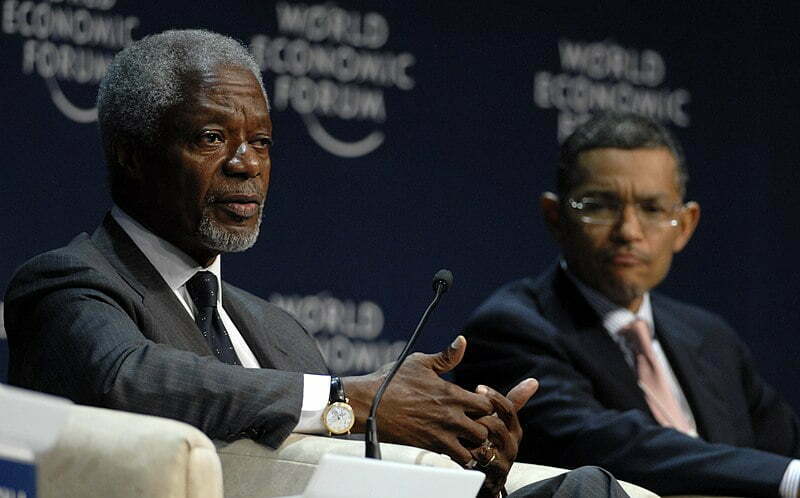
Kofi Annan, Secretary-General, United Nations (1997 – 2006) is a member of the Foundation Board of the World Economic Forum and Co-Chair of the World Economic Forum on Africa. Here, he speaks at the Opening Plenary on Africa and the New Global Economy at the World Economic Forum on Africa 2009 in Cape Town, South Africa, Source: WEF
The 2017 UN General Assembly Resolution 70/224 (A/Res/70/224) decreed that the UN would work “tirelessly for the full implementation of this Agenda [Agenda 2030]” through the global dissemination of “concrete policies and actions.”
In keeping with Annan’s admission, these enacted policies and actions are designed, via “global financial governance,” to be “business-friendly.”
A/Res/70/224 added that the UN would maintain:
The strong political commitment to address the challenge of financing and creating an enabling environment at all levels for sustainable development. [. . .] [P]articularly with regard to developing partnerships through the provision of greater opportunities to the private sector, non-governmental organizations and civil society in general [. . .], in particular in the pursuit of sustainable development [SDGs].
This “enabling environment” is synonymous with the “fiscal space” demanded by the World Bank and other UN specialised agencies. The term also makes an appearance in the GFANZ progress report, which states that the World Bank and Multilateral Development Banks should be used to prompt developing nations “to create the right high-level, cross-cutting enabling environments” for alliance members’ investments in those nations.
This concept was firmly established in 2015 at the Adis Ababa Action Agenda conference on “financing for development.” The gathered delegates from 193 UN nation states committed their respective populations to an ambitious financial investment programme to pay for sustainable development.
They collectively agreed to create:
… an enabling environment at all levels for sustainable development; [. . .] to further strengthen the framework to finance sustainable development.
The “enabling environment” is a government, and therefore taxpayer-funded commitment to SDGs. Annan’s successor and the 9th Secretary General of the UN, António Guterres, authorised a 2017 report on A/Res/70/224 which read:
The United Nations must urgently rise to the challenge of unlocking the full potential of collaboration with the private sector and other partners. [. . .] [T]he United Nations system recognizes the need to further pivot towards partnerships that more effectively leverage private sector resources and expertise. The United Nations is also seeking to play a stronger catalytic role in sparking a new wave of financing and innovation needed to achieve the Goals [SDGs].
While called an intergovernmental organisation, the UN is not just a collaboration between governments. Some might reasonably argue that it never was.
The UN was created, in no small measure, thanks to the efforts of the private sector and the “philanthropic” arms of oligarchs. For instance, the Rockefeller Foundation’s (RF’s) comprehensive financial and operational support for the Economic, Financial and Transit Department (EFTD) of the League of Nations (LoN), and its considerable influence upon the United Nations Relief and Rehabilitation Administration (UNRRA), arguably made the RF the key player in the transition of the LoN into the UN.
In addition, the Rockefeller family, which has long promoted “internationalist” policies that expand and entrench global governance, donated the land on which the UN’s headquarters in New York sits, among other sizeable donations to the UN over the years. It should come as little surprise that the UN is particularly fond of one of their main donors and has long partnered with the RF and praised the organisation as a model for “global philanthropy.”
The UN was essentially founded upon a public-private partnership model. In 2000, the Executive Committee of the UN Educational, Scientific and Cultural Organization (UNESCO) published Private Sector Involvement and Cooperation with the United Nations System:
The United Nations and the private sector have always had extensive commercial links through the procurement activities of the former. [. . .] The United Nations market provides a springboard for a company to introduce its goods and services to other countries and regions. [. . .] The private sector has also long participated, directly or indirectly, in the normative and standard-setting work of the United Nations.
Being able to influence, not only government procurement, but also the development of new global markets and the regulation of the same is, obviously, an extremely attractive proposition for multinational corporations and investors. Unsurprisingly, UN projects that utilise the “public-private” model are the favoured approach of the world’s leading capitalists. For instance, it has long been the favoured model of the Rockefeller family, who often finance such projects through their respective philanthropic foundations.
In the years since its inception, public-private partnerships have expanded to become dominant within the UN system, particularly with regard to “sustainable development.” Successive Secretary Generals have overseen the UN’s formal transition into the United Nations’ Global Public-Private Partnership (UN-G3P).
As a result of this transformation, the role of nation state governments at the UN has also changed dramatically. For instance, in 2005, the World Health Organisation (WHO), another specialised agency of the UN, published a report on the use of information and communication technology (ICT) in healthcare titled Connecting for Health. Speaking about how “stakeholders” could introduce ICT healthcare solutions globally, the WHO noted:
Governments can create an enabling environment, and invest in equity, access and innovation.
As King Charles III noted last year in Glasgow, governments of “democratic” nation have been given the role of “enabling” partners. Their job is to create the fiscal environment in which their private sector partners operate. Sustainability policies are developed by a global network comprised of governments, multinational corporations, non-governmental organisations (NGOs), civil society organisations and “other actors.”
The “other actors” are predominantly the philanthropic foundations of individual billionaires and immensely wealthy family dynasties, such as the Bill and Melinda Gates (BMGF) or the Rockefeller Foundations. Collectively, these “actors” constitute the “multi-stakeholder partnership.”
During the pseudopandemic, many came to acknowledge the influence of the BMGF over the WHO, but they are just one of many other private foundations that are also valued UN “stakeholders.”
The UN is, itself, a global collaboration between governments and a multinational infra-governmental network of private “stakeholders.” The foundations, NGOs, civil society organisations and global corporations represent an infra-governmental network of stakeholders, just as powerful, if not more so, than any power block of nation states.
Public-Private Partnership: An Ideology
In 2016, UN-DESA published a working paper investigating the value of public-private partnerships (G3Ps) for achieving the SDGs. The lead author, Jomo KS, was the Assistant Secretary General in the United Nations system responsible for economic research (2005-2015).
UN-DESA broadly found that G3Ps, in their current form, were not fit for purpose:
[C]laims of reduced cost and efficient delivery of services through [G3Ps] to save tax payers money and benefit consumers were mostly empty and [. . .] ideological assertions. [. . ] [G3P] projects were more costly to build and finance, provided poorer quality services and were less accessible [. . .] Moreover, many essential services were less accountable to citizens when private corporations were involved. [. . .] Investors in [G3Ps] face a relatively benign risk [. . .] penalty clauses for non-delivery by private partners are less than rigorous, the study questioned whether risk was really being transferred to the private partners in these projects. [. . .] [T]he evidence suggests that [G3Ps] have often tended to be more expensive than the alternative of public procurement while in a number of instances they have failed to deliver the envisaged gains in quality of service provision.
Citing the work of Whitfield (2010), which examined G3Ps in Europe, North America, Australia, Russia, China, India and Brazil, UN-DESA noted that these led to “the buying and selling schools and hospitals like commodities in a global supermarket.”
The UN-DESA reports also reminded the UN’s G3P enthusiasts that numerous intergovernmental organisations had found G3Ps wanting:
Evaluations done by the World Bank, International Monetary Fund (IMF) and European Investment Bank (EIB) – the organizations normally promoting [G3Ps] – have found a number of cases where [G3Ps] did not yield the expected outcome and resulted in a significant rise in government fiscal liabilities.
Little has changed since 2016 and yet the UN-G3P insist that public-private partnership is the only way to achieve SDGs. Ignoring the assessment from its own investigators, In General Assembly Resolution 74/2 (A/Res/74/2) the UN declared:
[UN member states] Recognize the need for strong global, regional and national partnerships for Sustainable Development Goals, which engage all relevant stakeholders to collaboratively support the efforts of Member States to achieve health-related Sustainable Development Goals, including universal health coverage [UHC2030] [. . .] the inclusion of all relevant stakeholders is one of the core components of health system governance. [. . . ] [We] Reaffirm General Assembly resolution 69/313 [. . .] to address the challenge of financing and creating an enabling environment at all levels for sustainable development. [We will] provide [. . .] sustainable finances, while improving their effectiveness [. . .] through domestic, bilateral, regional and multilateral channels, including partnerships with the private sector and other relevant stakeholders.
This UN commitment to global public-private partnership is an “ideological assertion” and is not based upon the available evidence. In order for G3Ps to actually function as claimed, UN-DESA stipulated that a number of structural changes would need to be put in place first.
These included careful identification of where a G3P could work. UN-DESA found that G3Ps may be suited to some infrastructure projects but were damaging to projects dealing with public health, education or the environment.
The UN researchers stated that diligent oversight and regulation of pricing and the alleged transfer of risk would be required; comprehensive and transparent fiscal accounting systems were needed; better reporting standards should be developed and rigorous legal and regulatory safeguards were necessary.
None of the required structural or policy changes recommended in the UN-DESA 2016 report have been implemented.
Sustainability for whom?
Agenda 2030 marks the waypoint along the path to Agenda 21. Publicly launched at the 1992 Rio Earth Summit, Section 8 explained how “sustainable development” would be integrated into decision making:
The primary need is to integrate environmental and developmental decision-making processes. [. . .] Countries will develop their own priorities in accordance with their national plans, policies and programmes.
Sustainable development has been integrated with every policy decision. Not only does every country have a national sustainability plan, these have devolved to local government.
It is a global strategy to extend the reach of global financial institutions into every corner of the economy and society. Policy will be controlled by the bankers and the think-tanks that infiltrated the environmental movement decades ago.
No community is free of “global financial governance.”
Simply put, sustainable development supplants decision making at the national and local level with global governance. It is an ongoing, and thus far successful, global coup.
But more than this, it is a system for global control. Those of us who live in developed nations will have our behaviour changed as a psychological and economic war is waged against us to force our compliance.
Developing nations will be kept in penury as the fruits of modern industrial and technological development are denied to them. Instead they will be burdened with the debt foisted upon them by the global centres of financial power, their resources pillaged, their land stolen and their assets seized – all in the name of “sustainability.”
Yet it is perhaps the financialisation of nature, inherent to sustainable development, that is the greatest danger of all. The creation of natural asset classes, converting forests into carbon sequestration initiatives and water sources into human settlement services. As subsequent instalments of this series will show, several SDGs have financialising nature at their core.
As openly stated by the UN, “sustainable development” is all about transformation, not necessarily “sustainability” as most people conceive of it. It aims to transform the Earth and everything on it, including us, into commodities – the trading of which will form the basis of a new global economy. Though it is being sold to us as “sustainable,” the only thing this new global financial system will “sustain” is the power of a predatory financial elite.
Iain Davis is an independent investigative journalist, author and blogger from the UK. His focus is upon widening readers awareness of evidence that the so-called mainstream media won’t report. A frequent contributor to UK Column, Iain’s work has been featured by the OffGuardian, the Corbett Report, Technocracy News, Lew-Rockwell and other independent news outlets. You can read more of his work on his blog: – https://iaindavis.com
Whitney Webb has been a professional writer, researcher and journalist since 2016. She has written for several websites and, from 2017 to 2020, was a staff writer and senior investigative reporter for Mint Press News. She currently writes for The Last American Vagabond.
© 2020-2021 Unlimited Hangout | All Rights Reserved
Seizing Everything: The Theft of the Global Commons – Part 1
By Iain Davis | OffGuardian | October 27, 2021
The people who none of us elect, who ultimately control international finance, all corporate & business activity, government policy and international relations have constructed a system that will enable them to seize the “global commons.”
They are the Global Public Private Partnership (GPPP) and while elected representatives are within their ranks, they don’t set either the agenda or policy. We need to both recognise who the GPPP are and understand the implications of their gambit. How are this group of global stakeholders going to seize the global commons and why should we resist them?
Over the next couple of articles we are going to explore these questions. By recognising what the globalist think tanks and other policy makers mean by the global commons we can begin to appreciate the jaw dropping magnitude of their ambitions.
They consistently use deceptive language to conceal their intentions. Words like ‘inclusive,’ ‘sustainable,’ ‘equity’ and ‘resilience’ are often employed to portray some vague but ultimately duplicitous concept of caring environmentalism. We must unpick their language to fully comprehend their intentions, in the hope that we can resist and deny them.
While we have been distracted and transitioned by the alleged global pandemic, or pseudopandemic, the Global Public Private Partnership (GPPP), who orchestrated the chaos, have been very busy. They have created the asset rating system that will afford them total, global economic control. This is based upon Sustainable Development Goals (SDGs) and utilises Stakeholder Capitalism Metrics (SCM).
This new global economic system is what the politicians mean by “build back better.” It is the essence of the World Economic Forum’s Great Reset.
laying the foundations for a new International Monetary and Financial System (IMFS) was a key to the pseudopandemic. The new IMFS will emerge from the deliberate economic destruction wrought by government policy responses to COVID 19. This was planned.
The phrase “build back better” was first widely popularised by US President Clinton following the 2004 Indonesian tsunami. During the pseudopandemic it has been adopted by politicians globally to signal that the project to seize the “global commons” is underway.
We will need to consider UN Agenda 21 and 2030 in more detail, as these are key to the theft of all resources, but for now we can reference it to understand what “build back better” actually means. This will explain why politicians around the world have used it.
Sustainable Development Goal (SDG) 11 (b) of Agenda 2030 states:
By 2020, substantially increase the number of cities and human settlements adopting and implementing integrated policies and plans towards… adaptation to climate change, resilience to disasters, and develop and implement, in line with the Sendai Framework for Disaster Risk Reduction 2015-2030, holistic disaster risk management at all levels.”
The Sendai Framework for Disaster Risk Reduction (SFDRR), written in 2015, states:
The recovery, rehabilitation and reconstruction phase, which needs to be prepared ahead of a disaster, is a critical opportunity to Build Back Better; recognition of stakeholders and their roles; mobilization of risk-sensitive investment to avoid the creation of new risk;
[…] strengthening of international cooperation and global partnership […] it is necessary to continue strengthening good governance in disaster risk reduction strategies at the national, regional and global levels […] and to use post-disaster recovery and reconstruction to ‘Build Back Better’, supported by strengthened modalities of international cooperation…
Clear vision, plans, competence, guidance and coordination within and across sectors, as well as participation of relevant stakeholders, are needed.. and fosters collaboration and partnership across mechanisms and institutions for the implementation of instruments relevant to disaster risk reduction and sustainable development.
“Build back better” policy was prepared ahead of the arrival of COVID-19. It is part of the planned risk management and preparedness framework for post “disaster” reconstruction. It means the global participation of relevant stakeholders to strengthen international cooperation and global partnerships in order to implement instruments to achieve sustainable development.
SDG 11 (b) was a plan to substantially increase the global number of human settlements adopting “build back better” polices by 2020. This SDG has now been achieved thanks to the COVID-19 pseudopandemic. In particular, the planned “mobilization of risk-sensitive investment,” outlined in the SFDRR, has surged ahead.
Stakeholder Capitalism Metrics – SCM – were devised by the World Economic Forum, who describe themselves as the international organisation for public-private cooperation. When combined with the SDGs outlined in the UN Agenda 21 and 2030 frameworks, SCM enable the GPPP to seize the entire Earth, all its resources and everything on it, including us.
In order to control us we are being transitioned into a technocracy with the biosecurity state acting as the central control mechanism. Public health is the new focus for global security and centralised control of the entire system has been established during, and as a result of, the pseudopandemic.
The news IMFS is designed to tie our biosecurity commitments to Universal Basic Income (UBI or similar state payments) which will be paid with Central Bank Digital Currency (CBDC.)
This will ensure our compliance, as Central Banks will use AI algorithms, combined with population monitoring (track and trace, vaccine passports or some other form of social credit surveillance system), to monitor and control all of our transactions, behaviour and movements.
The dreaded authoritarian knock on the door will be replaced with the dreaded authoritarian beep of a refused card payment. If you can’t buy food with your money it doesn’t really matter how much of it you have. Comply or starve is a distinct possibility.
Over the next couple of articles we are going to explore this “new abnormal.” How it encapsulates the seizure of everything by favoured stakeholder capitalists, as the chosen winning corporations divide up the Earths resources amongst themselves. This is the zenith of the planned “build back better” response to the pseudopandemic.
Throughout the pseudopandemic the World Economic Forum (WEF) have taken the public relations lead on the planned recovery. Their Great Reset is just the repackaging of an idea hundreds, if not thousands of years old.
It is the self-serving belief that some special people are destined, and therefore have the right, to lead the rest of us. They don’t require any kind of legitimate “democratic” mandate or even popular support. Their claimed right to rule is an imperious assumption.
The WEF have claimed the supposed right to direct three key areas of global policy. They intend to do this by assisting world leaders to manage “disruptive change.”
They have put themselves forward as the GPPP front organisation for managing the fourth industrial revolution, addressing global security issues and solving the problems of the global commons. It is important to note that the WEF are not alone in their ambitions, but rather the leading proponents for the wider GPPP policy platform. We will focus on the third sphere of their self-proclaimed authority: control of a global commons.
The United Nations (UN) acts as a policy hub for the GPPP. It allows stakeholders to introduce the policies, formulated by the think tanks, into the nascent global governance structure. The desired policy agendas can be moulded and eventually filtered down to national and then local government administrations across the planet.
In the September 2011 issue of Our Planet the UN offered a description of the global commons as “the shared resources that no one owns but all life relies upon.” In 2013 the UN Systems Task Team expanded on this and published “Global governance and governance of the global commons in the global partnership for development beyond 2015.“
They wrote:
International law identifies four global commons, namely the High Seas, the Atmosphere, the Antarctica and the Outer Space… Resources of interest or value to the welfare of the community of nations – such as tropical rain forests and biodiversity – have lately been included among the traditional set of global commons… while some define the global commons even more broadly, including science, education, information and peace… Stewardship of the global commons cannot be carried out without global governance.”
This habit of expanding the definition of the global commons has continued. In April 2020 The Rothschild backed bank the Global Environment Facility offered a more extensive list of the shared resources all life relies upon:
In order to protect our global commons… humanity must develop new ways of doing business to deliver transformational change in food, energy, urban, and production and consumption systems. It will take coalitions that bring together governments, businesses, finance, and citizens to realize this goal.”
That coalition is the GPPP and citizens are involved, via civil society, only if they agree to promote the agreed policy agenda.
In December 2020 the Secretary General of the UN Antonio Gutteres really fleshed out the global commons concept.
Speaking to an audience gathered at Columbia University, the pivotal academic institution in the development of Technocracy, he said:
To put it simply, the state of the planet is broken… human activities are at the root of our descent towards chaos… the recovery from the pandemic is an opportunity… It is time to flick the ‘green switch’. We have a chance to not simply reset the world economy but to transform it… We must turn this momentum into a movement…
Everything is interlinked – the global commons and global well-being…This means: More and bigger effectively managed conservation areas… Biodiversity-positive agriculture and fisheries… More and more people are understanding the need for their own daily choices to reduce their carbon footprint and respect planetary boundaries… From protests in the streets to advocacy on-line…From classroom education to community engagement…From voting booths to places of work…
We cannot go back to the old normal…We have a blueprint: the 2030 Agenda, the Sustainable Development Goals and the Paris Agreement on climate change… Now is the time to transform humankind’s relationship with the natural world – and with each other.
Again we see the recurrent themes of the GPPP. The planet must be saved from us, we are a pestilence that must be controlled; Covid-19 is, as ever, an opportunity to transform the global economy; our survival and GPPP stewardship of the global commons are one and the same and everything must be transformed.
Not only are the oceans (everything in them and beneath them), the atmosphere (the air we breath), Antarctica (the only continent with a universally respected international treaty protecting it) and the universe up for grabs, GPPP avarice doesn’t end there.
Energy (all natural resources), all productivity and our livelihoods (the workplace), biodiversity (ecosystems and life on Earth), all land (managed conservation areas), agriculture and fisheries (all food), our consumption and behaviour (carbon footprints), where we are allowed to exist (planetary boundaries), our political opinions and system, education, the communities we live in and even our relationships, are all to be controlled and transformed by the GPPP.
The “global commons” is GPPP shorthand for everything. All life, all resources, all land, all water, the air, the stars and all of us. It is their intention to have dominion over all.
The global commons are not fixed. Other aspects of our existence are being added all the time. In June 2021 the WEF wrote the Case for a Digital Commons. Whenever they want to include something else in the list they use the language of sustainable development. It doesn’t matter that this makes no rational sense, the point is to sell the notion with the right buzz-words:
COVID-19 highlighted and accelerated the centrality of digital technology in our lives. Yet the digital ecosystem is one of the most unequal and dysfunctional aspects of our collective lives. How can we build a digital ecosystem that ensures broadly shared participation and prosperity? We argue that shifting our view to see technology infrastructure as a digital commons could point the way forward for an inclusive and sustainable ecosystem with shared social benefit.”
Now they claim the authority to rule the Internet and all digital communication technology. We see once more that the pseudopandemic is the catalyst for this transformation and that government is merely the implementation partner for the GPPP agenda. We are just the tax paying cash cows that will fund the construction of the empire:
In this post-pandemic time of broad economic and social re-envisioning and re-alignment, an emphasis on the digital commons can point the way forward for collective recovery, solidarity and progress… Governments will have to push forward on real regulation of privately controlled systems.. as well as providing funding to allow a sustainable ecosystem of innovation that is not beholden to venture capitalists or large companies.”
It is truly remarkable that a low mortality respiratory disease has provided such an immense opportunity for global transformation.
The leading figures within the GPPP knew that COVID-19 didn’t present much of a threat. In their June 2020 book COVID-19: The Great Reset, the authors Klaus Schwab and Thierry Malleret wrote that the pseudopandemic was:
One of the least deadly pandemics the world has experienced over the last 2000 years… the consequences of COVID-19 in terms of health and mortality will be mild… It does not constitute an existential threat, or a shock that will leave its imprint on the world’s population for decades.”
At the heart of this seizure of everything lies stakeholder capitalism. In December 2019 Schwab wrote What Kind of Capitalism Do We Want.
The “we” referenced in that title was not “us” but rather the GPPP, though the article assumed we all agree on the GPPP’s definition of global problems. Schwab wrote:
Stakeholder capitalism, a model I first proposed a half-century ago, positions private corporations as trustees of society, and is clearly the best response to today’s social and environmental challenges.”
Schwab’s use of the term “trustee” is notable. It has a specific legal definition:
The person appointed, or required by law, to execute a trust; one in whom an estate, interest, or power is vested, under an express or implied agreement to administer or exercise it for the benefit or to the use of another.”
It is not at all evident that global corporations should be entrusted with our society. Many of us would disagree which is one of the main reasons we haven’t been asked. There is no justification for Schwab’s claim.
I speak for no one but myself, but I would wager that most people consider global corporations to be a significant contributor to the social and environmental challenges we face. Why would anyone believe they should determine the alleged solutions?
Schwab’s is a ludicrous assertion. Yet this is the insistence of the stakeholder capitalists. It is also the basis for the UN Sustainable Development Goals and their Agenda 21 and 2030 policy platforms.
Despite their claims of omniscience, the GPPP and their leading proponents, like the WEF and the IMF, are not infallible. They are just people, no different in most regards to anyone else on Earth.
They are collaborating in a huge, though not unprecedented, global effort. Many people have come to think an operation on this scale is impossible. Why they imagine this is hard to say.
We have already had two world wars requiring similar degrees of international cooperation. Arguably more if we consider that whole populations were engaged in these collective efforts.
There are many global corporations that operate tortuously complex international operations. These incorporate global logistics, international finance and cross border regulatory alignment. These world-wide endeavours overwhelmingly rely upon a hierarchical, authoritarian management structure. Only a few, senior board level figures have oversight of the whole system. The GPPP relies upon exactly the same.
However, because ordinary people are leading this organisation, mistakes happen. In September 2020 the WEF produced a promotional video making the point, from their perspective, that “you will own nothing and you will be happy.” This backfired terribly and was a PR disaster. The Video was hastily pulled down, too late to hide the real intention of the GPPP.
However, the original article, upon which the video was based, can still be read. The article was written by the former Danish Environment Minister, climate activist and WEF “young global leader,” Ida Auken. Unlike most of us, she isn’t a disenfranchised constituent. Ida is a carefully selected GPPP spokeswoman.
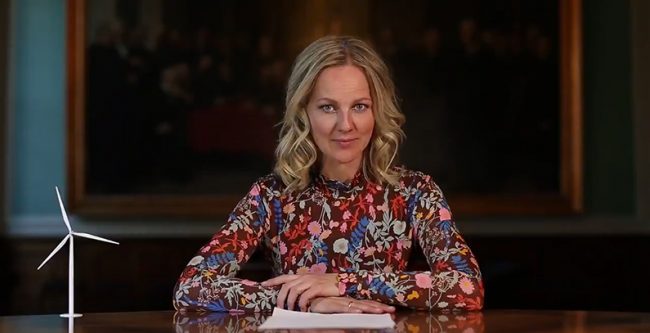
Ida Auken
The title was changed and an explanatory note added. Ida said that her article was not intended to describe her “utopia” and that the intention was to explore the “pros and cons” of a possible near term future:
Everything you considered a product, has now become a service… When AI and robots took over so much of our work, we suddenly had time to eat well, sleep well and spend time with other people… Once in a while I get annoyed about the fact that I have no real privacy. Nowhere I can go and not be registered. I know that, somewhere, everything I do, think and dream of is recorded. I just hope that nobody will use it against me… We had all these terrible things happening: lifestyle diseases, climate change, the refugee crisis, environmental degradation, completely congested cities, water pollution, air pollution, social unrest and unemployment. We lost way too many people before we realized that we could do things differently.”
The offer from the GPPP is clear. In exchange for submitting to their will and allowing them sole possession of everything (the global commons) they will take care of us.
Why, is the obvious question. If they control all of the Earths resources, everything is free and AI and robots do most of the work, why do they need us? What is in it for them? We would no longer be required in such a system. Certainly loosing “way too many people” would suggest at least acknowledgment of a much smaller global population.
We should also note why Ida’s envisaged future becomes necessary. It is, just as we have seen with the COVID 19 opportunity, a response to a set of crises which gives rise to doing “things differently.”
We are already seeing the knock-on effects of the COVID-19 lockdowns and economic destruction. An approaching set of crises over the next few years is a reasonable prediction.
As Schwab noted, there was no existential threat. The consequent disasters we are likely to face will be the result of policy promoted by GPPP representatives, like the World Health Organisation, not a respiratory disease.
It would be easy to dismiss Ida’s musings as simply the wishful thinking of an ideologue. In part, it probably is. However, when we look at Agenda 21 and 2030 an uncomfortable realisation dawns.
While the sustainable development agenda is couched in terms of environmental concerns and apparent humanitarian principles, the detail of the proposed policies presents an entirely different prospect.
The true horror of Ida’s vision is not that she is among the tiny clique GPPP representatives who are committed to constructing this dystopian prison planet, it is that, in Agenda 21 and 2030, the policy framework to make her futurescape a reality already exists.
Make no mistake, the GPPP intend to control every aspect of the Earth and our lives. That is the transformation they are working towards and they have used the pseudopandemic to set that transition in motion. There is no political opposition to the GPPP. They are realpolitik entire. All they need, for their “solutions” to close the trap, is our compliance.
Combined with SDGs, while we have been preoccupied with a low mortality respiratory illness, the GPPP have not only started building, they have partly completed the new global monetary and financial system.
Once installed this will finalise their coup d’état and enable them to seize everything, all under the guise of stewardship of the global commons.
We will explore how this has been done, and the remaining elements needed to accomplish the theft, in Part Two.
You can read more of Iain’s work at his blog In This Together or on UK Column. His new book Pseudopandemic, is now available, in both in kindle and paperback, from Amazon and other sellers. Or you can claim a free copy by subscribing to his newsletter.
Featured Video

America Racing to Strategic Defeat in Iran
or go to
Aletho News Archives – Video-Images
From the Archives
Should Europeans ‘Thank’ the Americans for Destroying Nord Stream?
By Robert Bridge | Strategic Culture Foundation | September 29, 2022
With an investigation continuing into the destruction of the Nord Stream gas pipeline that provided energy supplies to Europe from Russia, there appears to be just one prime suspect, and that should surprise nobody.
Following the sabotage of the Nord Stream 1 and 2 gas pipelines, former Polish Foreign Minister Radoslaw Sikorski already seemed to know the identity of the perpetrator when he tweeted out: “Thank you, USA.”
At first glance, it seemed that Sikorski was speaking sarcastically, berating Washington for carrying out an attack that will have severe repercussions for the people of Europe. After all, how could anyone see any good coming from the termination of Europe’s primary source of gas reserves with winter just around the corner? It was Sikorski’s homeland of Poland, after all, that urged its citizens to collect firewood in the face of dwindling gas reserves.
In fact, the Polish diplomat was speaking one-hundred percent literally… continue
Blog Roll
 Aletho News
- Growing insecurity, soaring prices fuel protests in north as regime bans evacuation: Sources
- Iran denies responsibility for ‘depraved’ attack on Kuwait desalination plant
- Bring The Troops Back. End This War Now!
- Can we please stop calling Israel the ‘only democracy in the Middle East’ now?
- US should start removing its troops from Germany, proposes AfD co-leader Chrupalla
- Iran Red Crescent: 600 educational centers attacked in US-Israeli ‘war crimes’
- Russian Oil Tanker Arrives in Cuba Amid U.S. Blockade
- America Racing to Strategic Defeat in Iran: Lt Col Daniel Davis
- FTC Warns Visa, Mastercard, PayPal, Stripe Over Political Debanking
- Russian tanker approaches Cuba despite US oil blockade
- If Americans Knew
- Will Trump Go Kamikaze?
- Is the University of Florida Shutting Down College Republicans over Israel Criticism?
- Jewish extremist arrested over alleged plot to firebomb Palestinian activist Nerdeen Kiswani’s home
- More than half of Palestinian child detainees have no charges
- The More Murderous Israel Gets, The More We Hear About “Antisemitism”
- Land Day and the Palestinian struggle after 30 months of genocide
- The Iran War Is About Palestine
- Israeli soldiers echo settler ideology, talk of revenge after targeting Palestinians and detaining CNN crew in the West Bank
- Israeli Policies Threaten Future of Christian Schools in Jerusalem
- Former US soldiers argue Israeli policy is now guiding US interests
- No Tricks Zone
- New Study Finds Warming Saves Lives…Cold Temperatures 12 Times More Deadly Than Excess Heat
- German Science Blog Accuses PIK Climate Institute Of Hallucinating Climate Tipping Points
- Devastating Assessment Of Comirnaty Vaccine By Former Senior Pfizer Europe Toxicologist
- New Study: CO2 Is ‘Effectively Negligible’ As An Explanatory Climate Change Factor Since 2000
- Former Pfizer Toxicologist Dr. Helmut Sterz Tells Bundestag Hearing Pfizer Vaccine Should Have Never Been Approved
- Energy Expert: Germany’s Nuclear Phaseout Was A “500 Billion Euro Mistake”
- New Research: South Australia’s Mid-Holocene Sea Surface Temperatures Were 4°C Warmer Than Today
- Storing Green Energy To Last Germany 10 Days Would Require A 60-Million Tonne Battery
- New Studies: UK Sea Levels Were 4 Meters Higher Than Today During The Mid-Holocene
- Destructive Green New Deal: German Energy And Metal Group Warns Of Drastic Crisis
 Aletho News