Research Confirms Statins Are a Colossal Waste of Money
This article was previously published December 8, 2021, and has been updated with new information.
By Dr. Joseph Mercola | June 9, 2022
The lecturer in the featured video, Maryanne Demasi, Ph.D., produced the 2014 Australian Catalyst documentary, “Heart of the Matter: Dietary Villains,” which exposed the cholesterol/saturated fat myths behind the statin fad and the financial links which lurk underneath.
The documentary was so thorough that vested interests actually convinced ABC TV to rescind the two-part series.1 The Australian Heart Foundation, the three largest statin makers (Pfizer, AstraZeneca and Merck Sharp & Dohme) and Medicines Australia, Australia’s drug lobby group, complained2 and got the documentary expunged from ABC TV.
Cholesterol and saturated fat have been the villains of heart disease for the past four decades, despite the many studies showing neither has an adverse effect on heart health.
The entire food industry shifted away from saturated fat and cholesterol, ostensibly to improve public health, and the medical industry has massively promoted the use of cholesterol-lowering statin drugs for the same reason. Despite all of that, the rate of heart disease deaths continues to be high.3 That really should tell us something.
Statins Are a Colossal Waste of Money
Since the release of Demasi’s documentary, the evidence against the cholesterol theory and statins has only grown. As noted in an August 4, 2020, op-ed by Dr. Malcolm Kendrick, a general practitioner with the British National Health Service:4
“New research shows that the most widely prescribed type of drug in the history of medicine is a waste of money. One major study found that the more ‘bad’ cholesterol was lowered, the greater the risk of heart attacks and strokes.
In the midst of the COVID-19 pandemic, almost every other medical condition has been shoved onto the sidelines. However, in the UK last year, heart attacks and strokes (CVD) killed well over 100,000 people — which is at least twice as many as have died from COVID-19.
CVD will kill just as many this year, which makes it significantly more important than COVID-19, even if no one is paying much attention to it right now.”
According to a scientific review5 published online August 4, 2020, in BMJ Evidence-Based Medicine, lowering LDL is not going to lower your risk of heart disease and stroke. “Decades of research has failed to show any consistent benefit for this approach,” the authors note.
Since the commercialization of statin drugs in the late ’80s (lovastatin being the first one, gaining approval in 19876), total sales have reached nearly $1 trillion.7,8 Lipitor — which is just one of several brand name statin drugs — was named the most profitable drug in the history of medicine.9,10 Yet these drugs have done nothing to derail the rising trend of heart disease.
Lowering Cholesterol Does Not Show a Beneficial Impact
According to a press release announcing the BMJ Evidence-Based Medicine review, the analysis found that:11
“… over three quarters of all the trials reported no positive impact on the risk of death and nearly half reported no positive impact on risk of future cardiovascular disease.
And the amount of LDL cholesterol reduction achieved didn’t correspond to the size of the resulting benefits, with even very small changes in LDL cholesterol sometimes associated with larger reductions in risk of death or cardiovascular ‘events,’ and vice versa. Thirteen of the clinical trials met the LDL cholesterol reduction target, but only one reported a positive impact on risk of death …”
In their paper,12 the study authors argue that since dozens of randomized controlled trials looking at LDL-cholesterol reduction “have failed to demonstrate a consistent benefit, we should question the validity of this theory.”
They also cite the Minnesota Coronary Experiment,13 a double-blind randomized controlled trial involving 9,423 subjects that sought to determine whether replacing saturated fat with omega-6 rich vegetable oil (corn oil and margarine) would reduce the death rate from heart disease by lowering cholesterol.
It didn’t. Mortality and cardiovascular events increased even though total cholesterol was lowered by 13.8%. For each 30 mg/dL reduction in serum cholesterol, the death risk rose by 22%. In conclusion, the Evidence-Based Medicine study authors note that:14
“In most fields of science the existence of contradictory evidence usually leads to a paradigm shift or modification of the theory in question, but in this case the contradictory evidence has been largely ignored, simply because it doesn’t fit the prevailing paradigm.”
Deception Through Statistics
If lowering cholesterol doesn’t reduce mortality or cardiovascular events, there’s little reason to use them, considering they come with a long list of adverse side effects. Sure, there are studies claiming to show benefit, but many involve misleading plays on statistics.
One common statistic used to promote statins is that they lower your risk of heart attack by about 36%.15 This statistic is derived from a 2008 study16 in the European Heart Journal. One of the authors on this study is Rory Collins, who heads up the CTT Collaboration (Cholesterol Treatment Trialists’ Collaboration), a group of doctors and scientists who analyze study data17 and report their findings to regulators and policymakers.
Table 4 in this study shows the rate of heart attack in the placebo group was 3.1% while the statin group’s rate was 2% — a 36% reduction in relative risk. However, the absolute risk reduction — the actual difference between the two groups, i.e., 3.1% minus 2% — is only 1.1%, which really isn’t very impressive.
In other words, in the real world, if you take a statin, your chance of a heart attack is only 1.1% lower than if you’re not taking it. At the end of the day, what really matters is what your risk of death is the absolute risk. The study, however, only stresses the relative risk (36%), not the absolute risk (1.1%).
As noted in the review18 “How Statistical Deception Created the Appearance That Statins Are Safe and Effective in Primary and Secondary Prevention of Cardiovascular Disease,” it’s very easy to confuse and mislead people with relative risks.
Statins Sabotage Your Health
A stunning review of statin trials published in 2015 found that in primary prevention trials, the median postponement of death in those taking statins was a mere 3.2 days. While potentially extending life span by 3.2 days, those taking statins are also at increased risk for:
- Diabetes (if taken for more than two years, your risk for diabetes triples)
- Dementia, neurodegenerative diseases and psychiatric problems such as depression, anxiety and aggression
- Musculoskeletal disorders
- Osteoporosis
- Cataracts
- Heart disease
- Liver damage
- Immune system suppression
Oftentimes statins do not have any immediate side effects, and they are quite effective, capable of lowering cholesterol levels by 50 points or more. This is often viewed as evidence that your health is improving. Side effects that develop over time are frequently misinterpreted as brand-new, separate health problems.
Crimes Against Humanity
The harm perpetuated by the promotion of the low-fat, low-cholesterol myth is so significant, it could easily be described as a crime against humanity. Ancel Keys’ 1963 “Seven Countries Study” was instrumental in creating the saturated fat myth.19,20
He claimed to have found a correlation between total cholesterol concentration and heart disease, but in reality this was the result of cherry picking data. When data from 16 excluded countries are added back in, the association between saturated fat consumption and mortality vanishes.
In fact, the full data set suggests that those who eat the most saturated animal fat tend to have a lower incidence of heart disease, which is precisely what other, more recent studies have concluded.
Procter & Gamble Co.21 (the maker of Crisco22), the American Heart Association and the Center for Science in the Public Interest (CSPI) all promoted the fallacy for decades, despite mounting evidence that Keys had gotten it all wrong.
The AHA was issuing stern warnings against butter, steak and coconut oil as recently as 2017.23 That same year, Procter & Gamble partnered with University Hospitals Harrington Heart & Vascular Institute to promote heart health by lowering cholesterol.24
CSPI was also instrumental in driving heart disease skyward with its wildly successful pro-trans fat campaign. It was largely the result of CSPI’s campaign that fast-food restaurants replace beef tallow, palm oil and coconut oil with partially hydrogenated vegetable oils, which were high in synthetic trans fats linked to heart disease and other chronic diseases.
As late as 1988, CSPI praised trans fats, saying “there is little good evidence that trans fats cause any more harm than other fats” and that “much of the anxiety over trans fats stems from their reputation as ‘unnatural.'”25
CSPI and AHA Omit Their Role in Heart Disease Epidemic
Today, you’ll have to dig deep to unearth CSPI’s devastating public health campaign. In an act of deception, they erased it from their history to make people believe they’ve been doing the right thing all along. Their historical timeline26 of trans fat starts at 1993 — the year CSPI decided to change course and start supporting the elimination of the same trans fat they’d spent years promoting.

Similarly, the AHA conveniently omits saturated fat and cholesterol from its history of “lifesaving” breakthroughs and achievements.27 It makes sense, though, considering the AHA’s and CSPI’s recommendations to swap saturated fat for vegetable oils and synthetic trans fat never resulted in anything but an epidemic of heart disease.
The idea that the harms of trans fats were unknown until the 1990s is simply a lie. The late Dr. Fred Kummerow started publishing evidence showing trans fat, not saturated fat, was the cause of heart disease in 1957. He also linked trans fat to Type 2 diabetes.
The Truth About Saturated Fat
In addition to the more recent studies mentioned earlier, many others have also debunked the idea that cholesterol and/or saturated fat impacts your risk of heart disease. For example:
•In a 1992 editorial published in the Archives of Internal Medicine,28 Dr. William Castelli, a former director of the Framingham Heart study, stated:
“In Framingham, Mass., the more saturated fat one ate, the more cholesterol one ate, the more calories one ate, the lower the person’s serum cholesterol. The opposite of what … Keys et al [said] …”
•A 2010 meta-analysis,29 which pooled data from 21 studies and included 347,747 adults, found no difference in the risks of heart disease and stroke between people with the lowest and highest intakes of saturated fat.
•Another 2010 study30 published in the American Journal of Clinical Nutrition found that a reduction in saturated fat intake must be evaluated in the context of replacement by other macronutrients, such as carbohydrates.
When you replace saturated fat with a higher carbohydrate intake, particularly refined carbohydrate, you exacerbate insulin resistance and obesity, increase triglycerides and small LDL particles, and reduce beneficial HDL cholesterol. According to the authors, dietary efforts to improve your cardiovascular disease risk should primarily emphasize the limitation of refined carbohydrate intake, and weight reduction.
•A 2014 meta-analysis31 of 76 studies by researchers at Cambridge University found no basis for guidelines that advise low saturated fat consumption to lower your cardiac risk, calling into question all of the standard nutritional guidelines related to heart health. According to the authors:
“Current evidence does not clearly support cardiovascular guidelines that encourage high consumption of polyunsaturated fatty acids and low consumption of total saturated fats.”
Will Saturated Fat Myth Soon Be Upended?
Nina Teicholz, a science journalist, adjunct professor at NYU’s Wagner Graduate School of Public Service and the executive director of The Nutrition Coalition, is the author of “The Big Fat Surprise: Why Butter, Meat and Cheese Belong in a Healthy Diet,” which reviews the many myths surrounding saturated fat and cholesterol.
In an interview I did with Dr. Paul Saladino and Teicholz, they reviewed the history of the demonization of saturated fat and cholesterol, starting with Keys, and how the introduction of the first Dietary Guidelines for Americans in 1980 (which recommended limiting saturated fat and cholesterol) coincided with a rapid rise in obesity and chronic diseases such as heart disease.
Teicholz also reviewed a paper32 in the Journal of the American College of Cardiology, published online June 17, 2020, which actually admits the long-standing nutritional guideline to limit saturated fat has been incorrect. This is a rather stunning admission, and a huge step forward. As noted in the abstract:
“The recommendation to limit dietary saturated fatty acid (SFA) intake has persisted despite mounting evidence to the contrary. Most recent meta-analyses of randomized trials and observational studies found no beneficial effects of reducing SFA intake on cardiovascular disease (CVD) and total mortality, and instead found protective effects against stroke.
Although SFAs increase low-density lipoprotein (LDL)-cholesterol, in most individuals, this is not due to increasing levels of small, dense LDL particles, but rather larger LDL which are much less strongly related to CVD risk.
It is also apparent that the health effects of foods cannot be predicted by their content in any nutrient group, without considering the overall macronutrient distribution.
Whole-fat dairy, unprocessed meat, eggs and dark chocolate are SFA-rich foods with a complex matrix that are not associated with increased risk of CVD. The totality of available evidence does not support further limiting the intake of such foods.”
Sources and References
- 1 Highstreaks May 21, 2014
- 2 YouTube Dr. Maryanne Demasi: My Experience of Exposing the Statin Con
- 3 Cardiovascular Business August 27, 2019
- 4, 7 RT August 4, 2020
- 5, 12, 14 BMJ Evidence-Based Medicine August 4, 2020 DOI: 10.1136/bmjebm-2020-111413
- 6 News-Medical.net History of Statins
- 8 BMJ January 21, 2018
- 9 Youtube.com Maryanne Demasi, Statin Wars: Have We Been Misled by the Evidence?, 1:40 minutes
- 10 Kiplinger December 1, 2017
- 11 Medical Xpress August 3, 2020
- 13 BMJ 2016;353:i1246
- 15 Youtube.com Maryanne Demasi, Statin Wars: Have We Been Misled by the Evidence?, 14:40 minutes
- 16 European Heart Journal February 1, 2008; 29(4): 499-508
- 17 CTT Collaboration, About
- 18 Expert Review of Clinical Pharmacology March 2015:8(2); 201-210
- 19 Carnivore Aurelius June 16, 2019
- 20 Institute for Science in Society April 13, 2015
- 21 The Atlantic April 26, 2012
- 22 Weston A. Price February 23, 2009
- 23 Los Angeles Times July 23, 2017
- 24 UH Hospitals August 17, 2017
- 25 The Free Library, The Truth About Trans Fat, CSPI 1988
- 26 CSPI Timeline for Trans Fat
- 27 Heart.org Our Lifesaving History
- 28 Archives of Internal Medicine 1992 Jul;152(7):1371-2
- 29 American Journal of Clinical Nutrition 2010 Mar;91(3):535-46
- 30 American Journal of Clinical Nutrition March 2010: 91(3); 502-509
- 31 Annals of Internal Medicine March 18, 2014
- 32 Journal of the American College of Cardiology June 17, 2020 [Epub ahead of print]
The American Heart Association Renders Itself Obsolete With Long-Refuted Dietary Advice
This article was previously published July 5, 2017, and has been updated with new information.
By Dr. Joseph Mercola | June 6, 2022
For well over half-century, a majority of health care officials and media have warned that saturated fats are bad for your health and lead to obesity, high cholesterol and heart disease. The American Heart Association (AHA) began encouraging Americans to limit dietary fat in general and saturated fats in particular as far back as 1961.
Like its previously revised version, the current version of the U.S. Department of Agriculture’s food pyramid, called “MyPlate,”1 more or less eliminates fats altogether, with the exception of a small amount of low-fat or no-fat dairy. According to MyPlate, the food groups are fruits, vegetables, grains, protein and dairy — not the three biological building blocks known as carbohydrates (fruits, vegetables, grains), protein and fats.
All the while, studies have repeatedly refuted the wisdom of these low- to no-fat recommendations. Even so, the AHA has spent the past decade issuing warnings reminiscent of the 1960s all over again.
If you’ve followed the news, you’ve seen bold headlines declaring coconut oil dangerous, and that you should switch from butter to margarine to protect your heart health! How is this even possible? It’s akin to the flat Earth theory that inexplicably gained traction despite clear and indisputable proof that we indeed live on a planetary sphere.
Many have expressed confusion and bewilderment in response to the AHA’s margarine push, and no wonder. Let’s not forget that creating doubt is a core strategy used by industry to delay change. This margarine-promotion also happens to conveniently sync up with news about a vaccine to lower cholesterol2,3 — a strategy that would be unnecessary if people were to just eat healthy saturated fats like coconut oil and butter, and eliminate processed foods and sugar.
The vaccine first made news in 2015,4 but nearly seven years later, in October 2021, researchers were lamenting that the vaccine was still in trials, and that although significant reductions in LDL were observed in mouse studies, there were still concerns about the cost, limitations of shelf-life and safety that were holding it back.5
AHA Sends Out Warning to Cardiologists Around the World
According to the AHA,6 saturated fats such as butter and coconut oil should be avoided to cut your risk of heart disease. Replacing these fats with polyunsaturated fats such as margarine and vegetable oil might cut heart disease risk by as much as 30%, about the same as statins, the AHA claims.
This “Presidential Advisory” was sent out to cardiologists around the world, not just to those in the U.S. Overall, the AHA recommends limiting your daily saturated fat intake to 5 to 6% of daily calories or less.7 According to The Daily Mail :8
“The scientists analyzed all available evidence on the subject and found saturated fat — such as that found in butter, whole milk, cream, palm oil, coconut oil, beef and pork — was linked to an increased risk of heart disease.
Replacing this with polyunsaturated fat — found in spreads and vegetable oils — or monounsaturated oils found in olive oil, avocados and nuts — cuts the risk of heart problems. The study … bolsters NHS advice that saturated fat should be lowered in the diet.
Lead author professor Frank Sacks, of Harvard School of Public Health, said: ‘We want to set the record straight on why well-conducted scientific research overwhelmingly supports limiting saturated fat in the diet to prevent diseases of the heart and blood vessels. Saturated fat increases LDL — bad cholesterol — which is a major cause of artery-clogging plaque and cardiovascular disease’ …
The authors, however, warned that not all margarines and spreads are healthy. They found that some forms of margarine which use ‘trans fats’ — a type of fat which improves shelf life — actually raise the risk of heart disease.”
Victoria Taylor, senior dietitian at the British Heart Foundation, also made sure to note that “lifestyle change should go hand in hand with taking any medication prescribed by your doctor; it shouldn’t be seen as one or the other.” In other words, don’t think you can avoid statins simply by eating right.
Then, referencing coconut oil specifically, the AHA added: “Because coconut oil increases LDL cholesterol, a cause of CVD [cardiovascular disease], and has no known offsetting favorable effects, we advise against the use of coconut oil.”9 USA Today announced that advisory with a June 16, 2017, nonsensical headline, “Coconut Oil Is About as Healthy as Beef Fat or Butter.”10
Why, yes, it is! But what they were trying to claim was that all of these are unhealthy, which is altogether backward and upside-down. It didn’t take long for USA Today to realize its faus pax, though, so it changed the headline June 21, 2017, to “Coconut Oil Isn’t Healthy. It’s Never Been Healthy.”11
While the newspaper noted the “correction” on its webpage, all references to the original headline have been scrubbed from the internet archive, Wayback.12 So much for transparency in newspaper reporting.
On What Evidence Does AHA Base Their Recommendation?
How did the AHA come to the conclusion that they were right about saturated fat 60 years ago and have been right all along? In short, by cherry-picking the data that supported their outdated view. As noted by American science writer Gary Taubes in his extensive rebuttal to the AHA’s advisory:13
“The history of science is littered with failed hypotheses based on selective interpretation of the evidence … Today’s Presidential Advisory … may be the most egregious example of Bing Crosby epidemiology [‘accentuate the positive and eliminate the negative’] that I’ve ever seen … [T]hey methodically eliminate the negative and accentuate the positive until they can make the case that they are surely, clearly and unequivocally right …
[T] he AHA concludes that only four clinical trials have ever been done with sufficiently reliable methodology to allow them to assess the value of replacing SFAs with PUFAs (in practice replacing animal fats [with] vegetable oils) and concludes that this replacement will reduce heart attacks by 30 percent …
These four trials are the ones that are left after the AHA experts have systematically picked through the others and found reasons to reject all that didn’t find such a large positive effect, including a significant number that happened to suggest the opposite …
They do this for every trial but the four, including among the rejections the largest trials ever done: the Minnesota Coronary Survey, the Sydney Heart Study and, most notably, the Women’s Health Initiative, which was the single largest and most expensive clinical trial ever done. All of these resulted in evidence that refuted the hypothesis. All are rejected from the analysis.”
Taubes, an investigative science and health journalist who has written several books on obesity and diet, points out that this advisory document actually reveals the AHA’s longstanding prejudice and the method by which it reaches its conclusions.
In 2013, the AHA released a report14 claiming “the strongest possible evidence” supported the recommendation to replace saturated fat with polyunsaturated fats (PUFAs). This, despite the fact that several meta-analyses, produced by independent researchers, concluded the evidence for restricting saturated fats was weak or lacking.
The advisory document reveals how the AHA could conclude they had the “strongest possible evidence.” Then, as now, they methodically came up with justifications to simply exclude the contrary evidence. All that was left — then and now — were a small number of studies that support their preconceived view of what they think the truth should be.
AHA’s Referenced Studies Are Based on Outdated Science
Would it surprise you to find out that the four studies that made the cut all date from the 1960s and early 1970s? It makes sense, doesn’t it, since those are the eras when the low-fat myth was born and grew to take hold. The problem is nutritional science has made significant strides since then.
As noted by Taubes, one of the studies included was the Oslo Diet-Heart Study,15 published in 1970, in which 412 patients who’d had a heart attack or were at high risk of heart disease were randomized into two groups: One group got a low-saturated fat, high-PUFA diet along with ongoing, long-term “instruction and supervision” while the other group ate whatever they wanted and received no nutritional counseling whatsoever.
“This is technically called performance bias and it’s the equivalent of doing an unblinded drug trial without a placebo. It is literally an uncontrolled trial, despite the randomization. (… [A]ll the physicians involved also knew whether their patients were assigned to the intervention group or the control, which makes investigator bias all that much more likely.)
We would never accept such a trial as a valid test of a drug. Why do it for diet? Well, maybe because it can be used to support our preconceptions,” Taubes writes.
Taubes goes on to state that he was so curious about this Oslo study he bought a monograph published by the original author. In it, the author describes in more detail how he went about conducting his trial. Interestingly, this monograph reveals that the sugar consumption in the treatment group was only about 50 grams a day — an amount Taubes estimates may be about half the per capita consumption in Norway at that time, based on extrapolated data.16
“In this trial, the variable that’s supposed to be different is the [saturated fat]/PUFA ratio, but the performance bias introduces another one. One group gets continuous counseling to eat healthy, one group doesn’t. Now how can that continuous counseling influence health status?
One way is that apparently, the group that got it decided to eat a hell of lot less sugar. This unintended consequence now gives another possible explanation for why these folks had so many fewer heart attacks. I don’t know if this is true. The point is neither did Leren.
And neither do our AHA authorities,” Taubes writes. “All of the four studies used to support the 30 percent number had significant flaws, often this very same performance bias. Reason to reject them.”
Dangerous Advice
Dr. Cate Shanahan,17 a family physician and author of “Deep Nutrition: Why Your Genes Need Traditional Food,” emailed me an even stronger rebuttal, saying, “This message from the AHA is not only false, it is dangerous,” noting that the AHA is actually making false claims since none of the four studies they included in their analysis involved coconut oil.
As an explanatory side note, most of the early studies on coconut oil that found less than favorable results used partially hydrogenated coconut oil, not unrefined virgin coconut oil.18 As always, the devil’s in the details, and hydrogenated oil is not the same as unrefined oil, even when you’re talking about something as healthy as coconut. This little detail is what led to the undeserved vilification of coconut oil in the first place. That said, let’s look at what else Shanahan has to say on the matter:
“Most doctors don’t notice that the medical leadership is making unfounded claims, and the reason they don’t notice is because … articles asserting the existence of human clinical trial evidence against coconut as well as all other foods high in saturated fat, conflate the sources of saturated fat with the saturated fat itself.
Saturated fat does not actually exist in the food chain; what they’re talking about are saturated fatty acids, the components of triglyceride fat, the substance chefs call simply ‘fat.’ We often say things like ‘coconut oil is a saturated fat’ and ‘butter is a saturated fat.’ But it would be more correct to say ‘coconut oil is high in saturated fatty acids.’
Coconut oil, butter, lard, tallow and every other animal fat also contain monounsaturated and even some polyunsaturated fatty acids in addition to saturated fatty acids … The idea is foods contain blends of fatty acids in varying proportion.”
Put another way, most foods contain a blend of fatty acids, not just one. Margarine and shortening also contain saturated fatty acids, yet the AHA makes no mention of this. The harder the margarine, the more saturated fat it tends to contain, in some cases more than butter or lard.
“So, when people eat margarine and shortening, in addition to toxic trans fatty acids they’re also eating saturated fatty acids. And that means that when a study says it’s swapping out saturated fat for vegetable oils, that does not equate to swapping out butter and lard. It could very well be the case that margarine and shortenings were among the foods that got eliminated,” Shanahan says.
“And because most doctors don’t realize that margarine and shortenings contain saturated fatty acids, they also don’t consider it particularly important to wonder whether or not studies like the four core citations mentioned in the Advisory are actually confounded by the fact that the baseline, high-saturated fat diet included a significant amount of margarines and shortenings that contain toxic trans fat.
Because if they did, then that means whatever health benefits were observed in the studies may have nothing to do with the reductions in saturated fat. It’s cutting back on trans fat that makes the difference to health.”
Non-Saturated Fat Recommendations Have Been Followed With Disastrous Results
Since the 1950s, when vegetable oils began being promoted over saturated fats like butter, Americans have dutifully followed this advice, dramatically increasing consumption of vegetable oil. Soy oil, for example, rose by 600% (10,000% from 1900) while butter, tallow and lard consumption halved.
We’ve also dramatically increased sugar consumption, with more than half of Americans consuming over 17 teaspoons a sugar a day in 2021.19 That’s down from the 25 teaspoons a day they were consuming in 2014,20 but it’s still more than the maximum 12 teaspoons recommended by the CDC.
Alas, rather than becoming healthier than ever, Americans have only gotten fatter and sicker. Heart disease rates have not improved even though people have been eating what the AHA suggests is a heart-healthy diet. Common sense tells us if the AHA’s advice hasn’t worked in the last 65 years, it’s not likely to start working now.
As noted by Shanahan, technology that allows us to study molecular reactions is relatively recent, and certainly was not available back in the ‘60s and ‘70s. Modern research is just now starting to reveal what actually happens at the molecular level when you consume vegetable oil and margarine, and it’s not good.
For example, Dr. Sanjoy Ghosh,21 a biologist at the University of British Columbia, has shown your mitochondria cannot easily use polyunsaturated fats for fuel due to the fats’ unique molecular structure.
Other researchers have shown the PUFA linoleic acid can cause cell death in addition to hindering mitochondrial function.22 PUFAs are also not readily stored in subcutaneous fat. Instead, these tend to get deposited in your liver, where they contribute to fatty liver disease, and in your arteries, where they contribute to atherosclerosis.
According to Frances Sladek,23 Ph.D., a toxicologist and professor of cell biology at UC Riverside, PUFAs behave like a toxin that builds up in tissues because your body cannot easily rid itself of it. When vegetable oils like sunflower oil and corn oil are heated, cancer-causing chemicals like aldehydes are also produced.24
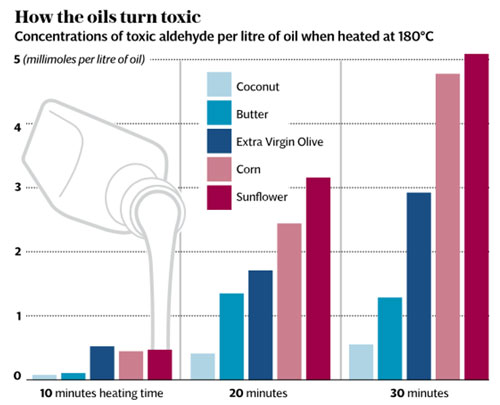
Source: The Telegraph November 7, 2015
Not surprisingly, fried foods are linked to an increased risk of death. In fact, eating fried potatoes more than twice a week was found to double a person’s risk of death compared to never eating fried potatoes.25 Animal and human research has also found vegetable oils promote:
- Obesity and fatty liver26
- Lethargy and prediabetic symptoms27
- Chronic pain/idiopathic pain syndromes (meaning pain with no discernible cause)28
- Migraines29
- Crohn’s disease and ulcerative colitis30
Biochemistry Versus Statistics
According to Shanahan, the idea that PUFAs are healthier than saturated fats falls flat when you enter the field of biochemistry, because it’s “biochemically implausible.” In other words, the molecular structure of PUFA is such that it’s prone to react with oxygen, and these reactions disrupt cellular activity and cause inflammation.31 Oxidative stress and inflammation, in turn, are hallmarks not only of heart disease and heart attacks but of most chronic diseases.32
“Meanwhile, the folks at the AHA claim saturated fat is pro-inflammatory and causes arterial plaque and heart attacks — but there is no biochemically plausible explanation for their argument. Saturated fat is very stable, and will not react with oxygen the way PUFA fat does, not until the fundamental laws of the universe are altered,” Shanahan writes.
“Our bodies do need some PUFA fat, but we need it to come from food like walnuts and salmon or gently processed (as in cold pressed, unrefined) oils like flax and artisanal grapeseed, not from vegetable oils because these are refined, bleached and deodorized, and the PUFA fats are molecularly mangled into toxins our body cannot use.”
The Cholesterol Argument
Researchers have also laid waste to the notion that having high cholesterol is a primary contributor to heart disease in the first place. This is the basic premise upon which the AHA builds its conclusion that saturated fats are bad for you. The idea is that saturated fats raise your cholesterol level, thus raising your risk for heart disease. But again, they use too broad a brush and ignore the details. For example:
•A recent study33 published in The BMJ reanalyzed data from the Minnesota Coronary Experiment (MCE) that took place between 1968 and 1973, after gaining access to previously unpublished data. This was a double-blind, randomized controlled trial to test whether replacing saturated fat with vegetable oil (high in linoleic acid) would lower cholesterol levels, thus reducing heart disease and related deaths.
Interestingly, while the treatment group did significantly lower their cholesterol, no mortality benefit could be found. In fact, for each 30 milligrams per deciliter (mg/dL) reduction in serum cholesterol, the risk of death increased by 22%. Swapping saturated fat for vegetable oil also had no effect on atherosclerosis rates or heart attacks. As noted by the authors:
“Available evidence … shows that replacement of saturated fat in the diet with linoleic acid effectively lowers serum cholesterol but does not support the hypothesis that this translates to a lower risk of death from coronary heart disease or all causes. Findings … add to growing evidence that incomplete publication has contributed to overestimation of the benefits of replacing saturated fat with vegetable oils …”
•The AHA also does not take LDL particle number into consideration. There are large, fluffy LDL particles and small, dense ones. We didn’t have this information in the 1960s, but we sure have it now.
This is yet another crucial detail that makes all the difference in the world, as large LDL particles have been shown to be harmless and do not raise your risk for heart disease. And guess what? Sugar promotes harmful small, dense LDLs while saturated fats found in butter and coconut oil promotes harmless large, fluffy LDLs.34
Is Coconut Oil Healthy or Not?
The short answer is yes, coconut oil is healthy. It’s been a dietary staple for millennia, providing you with high-quality fat that is important for optimal health. It supports thyroid function, normalizes insulin and leptin function, boosts metabolism and provides excellent and readily available fuel for your body in lieu of carbohydrates (which you need to avoid if you want to lose weight).
A really important benefit of coconut oil is related to the fact that the ketones your liver creates from it are the preferred fuel for your body, especially your heart and brain, and may be key for the prevention of heart disease and Alzheimer’s. It truly is a healthy staple that belongs in everyone’s kitchen.
Coconut oil contains medium chain triglycerides (MCTs), and their smaller particle size helps them penetrate your cell membranes more easily. However, MCT oil has a far higher concentration of these shorter chain fats that are more efficiently converted to ketones; C8 or caprylic acid has the best ability to convert to ketones.
MCTs do not require special enzymes and they can be utilized more effectively by your body, thus putting less strain on your digestive system. Normally, a fat taken into your body must be emulsified with bile from your gallbladder before it can be broken down and properly absorbed. Long chain fats therefore frequently end up being stored in your fat cells.
However, your body treats MCTs differently. MCTs bypass the bile and fat storage process and go directly to your liver, where they are converted into ketones. Your liver quickly releases the ketones into your bloodstream where they are transported around your body to be used as fuel. By being immediately converted into energy rather than being stored as fat, MCTs stimulate your body’s metabolism and help promote weight loss.
Coconut Oil Promotes Thyroid Health
Part of coconut oil’s health benefits also relate to its beneficial impact on your thyroid. Unlike many other oils, coconut oil does not interfere with T4 to T3 conversion, and T4 must be converted to T3 in order to create the enzymes needed to convert fats to energy.
Part of what makes processed vegetable oils so damaging to the thyroid is that they oxidize quickly and become rancid, which prevents the fatty acids from being deposited into your cells, thereby impairing the conversion of T4 to T3. This is symptomatic of hypothyroidism. Coconut oil is a saturated fat and therefore very stable and not susceptible to oxidation.
The fact that coconut oil doesn’t go rancid helps boost your thyroid function. Eliminating processed vegetable oils from your diet and replacing them with coconut oil can, over time, help rebuild cell membranes in your liver (where much of the thyroid hormone conversion occurs) and increase enzyme production. This will assist in promoting the conversion of T4 to T3 hormones.
The most common fat in coconut oil is lauric acid, often considered a “miracle” fat because of its unique health-promoting properties. Your body converts lauric acid into monolaurin, which has antiviral, antibacterial and antiprotozoal properties.
Thyroid problems can often be traced back to chronic inflammation, which the lauric acid in coconut oil can help suppress. To obtain the full range of coconut oil’s health and weight loss benefits, I typically recommend 2 to 3 1/2 tablespoons per day for adults.
That said, there is at least one instance where coconut oil is contraindicated due to its lauric acid content. In his book, “The Plant Paradox: The Hidden Dangers in ‘Healthy’ Foods That Cause Disease and Weight Gain,” Dr. Steven Gundry explains how coconut oil may be problematic if you have leaky gut, which is almost universal in individuals who are not paying attention to their lectin intake.
As it turns out, lipopolysaccharide (LPS), an endotoxin, attaches to lauric acid, facilitating its transport past your gut lining into your blood stream. Interestingly, MCT oil does not do this. So, if you have leaky gut, or unless you’re healthy and eating a lectin-free diet, it may be best to avoid coconut oil and use MCT oil instead. Caprylic acid would be best, but neither of these will allow LPS to piggyback into your blood stream. You can learn more about lectins in my interview with Gundry.
Who Pays the AHA?
Science has revealed the low-fat diet to be corporate-promoted misinformation, yet the AHA keeps insisting it’s the heart-healthy choice. Why? As noted by cardiologist Dr. Barbara Roberts in an article in The Daily Beast in 2014,35 “The quick answer: money, honey.” Roberts points out that one of the reasons the AHA clings to “recommendations that fly in the face of scientific evidence” is because of its ties to Big Food.
One of its primary revenue streams is its Heart Check Food Certification Program, which is updated monthly.36 Foods bearing this certification mark are supposed to make it easier for consumers to select products to include in a heart-healthy diet. Companies pay about $700,000 annually for the right to use this mark on their packaging.37
As of May 2022, the AHA endorsed hundreds of foods as heart-healthy, including breads, cereals, pastas and pasta sauces, potatoes, egg substitutes, dried and canned fruits and processed meats.38
In other words, a whole bunch of stuff you really shouldn’t eat if you care about your health in general and your heart in particular is on the list. Processed meats, for example, have been deemed so hazardous there’s no safe limit.39 The AHA also has endorsed Subway sandwiches40 and Cheerios41 in the past and accepts hundreds of millions of dollars in funding from a long list of drug companies.42 As noted by Roberts:43
“Even more problematic are the foods containing added sugar … The AHA recommends that women consume less than 6 teaspoons (100 calories) of sugar a day and less than 9 teaspoons (150 calories) for men.
Yet there are items that get the nod of approval from the Heart Check program despite being near or at the sugar limit, like Bruce’s Yams Candied Sweet Potatoes … Indeed, until 2010, the Heart Check imprimatur was stamped on a drink called Chocolate Moose Attack, which contained more sugar per ounce than regular Pepsi. And until [2014], Heart Check approved many foods with trans fats …”
AHA Was Wrong in the 1960s and Is Still Wrong
Heart disease is primarily caused by chronic inflammation, which is caused by excessive amounts of omega-6 (unbalanced omega-6 to omega-3), dangerous trans fats, processed vegetable oils and excessive sugar in the diet. Saturated fats, on the other hand, have been repeatedly exonerated, with studies showing they do not contribute to heart disease and are in fact a very important source of fuel for your body.
Granted, it’s tough to admit you’ve been wrong for 65-plus years. Such an admission can mar an organization’s reputation. But in trying to turn back the clock to 1960 and promote margarine and vegetable oils over butter and coconut oil, the AHA is proving itself obsolete.
This recommendation is, in my view, professionally irresponsible. It’s completely irrational in the face of modern nutritional science. With it, the AHA has painted itself into a corner from which it cannot extract itself without turning the entire organization upside-down. As noted by Dave Asprey, founder of Bulletproof.com :44
“The AHA campaign is backfiring because of the millions of people who already know that adding undamaged saturated fats into their diets makes them feel better. They can feel the difference in their energy, see it in the mirror, and measure it in their blood work …
These anti-coconut oil AHA guidelines are an orchestrated PR campaign aimed at changing what we eat to match what is in the interests of the AHA’s corporate sponsors, regardless of what recent research suggests.
As the U.S. population gets more educated about the benefits of saturated fats and the harm posed by processed seed and vegetable oils, processed food manufacturers are looking for ways to trick us into eating the cheap, high profit, damaging ‘food’ they create and sell.
That appears to be why they sponsor the [AHA]. These new recommendations are from an industry special interest group that promotes low-fat, high-sugar diets that kill people and has the audacity to label them as ‘heart healthy.’ In fact, the AHA executive leading the charge against coconut oil is the same guy that used to run marketing for Kentucky Fried Chicken and other fast-food chains.”
Sources and References
- 1 MyPlate.gov. Dietary Guidelines for Americans 2020-2025
- 2 BBC News June 20, 2017
- 3 Medical News Today June 20, 2017
- 4 First Report Managed Care. January 13, 2015
- 5 European Heart Journal. Volume 42, Issue 39, 14 October 2021, Pages 4007–4010
- 6 Circulation, AHA Presidential Advisory June 15, 2017
- 7 Heart. Saturated Fat. November 1, 2021
- 8 The Daily Mail June 15, 2017
- 9, 11 USA Today. Coconut Isn’t Healthy. June 21, 2017
- 10, 12 Wayback. USA Today July
- 13 Cardiobrief.org June 16, 2017
- 14 Circulation, AHA/ACC Prevention Guideline November 12, 2013
- 15 Circulation, The Oslo Diet-Heart Study November 1, 1970
- 16 Statista, Per Capita Consumption of Sugar in Norway 1979 to 2015
- 17 Drcate.com
- 18 New York Times March 1, 2011
- 19 CDC. Added Sugars Consumption in Adults. November 28, 2021
- 20 Healthy Food America. 2014
- 21 University of British Columbia, Sanjoy Ghosh
- 22 Biochimica et Biophysica Acta September 10, 2002: 1555(1-3): 160-165
- 23 Breaking News Today. February 24, 2022. How Coconut Oil Can Benefit Your Health
- 24 Telegraph November 7, 2015
- 25 News.com.au June 14, 2017
- 26 Drcate.com, November 15, 2016
- 27 Vancouver Sun December 18, 2014
- 28 Molecular Pain 2016 Mar 10;12
- 29 Pain 013 Nov;154(11):2441-51
- 30 Nutrition Research 008 Apr;28(4):239-44
- 31 Lipid Peroxidation in Vivo, Eva Sodergren
- 32 Curr Biol. 2014 May 19; 24(10): R453–R462
- 33 BMJ 2016;353:i1246
- 34 American Journal of Clinical Nutrition May 1998; 67(5): 828-836
- 35, 43 The Daily Beast May 22, 2014
- 36 Heart.org
- 37, 40 Ancestral Nutrition June 24, 2013
- 38 Heart Check Food Certification Program. May 3, 2022
- 39 Physicians Committee for Responsible Medicine
- 41 YouTube. MotivationalDoc. August 3, 2021
- 42 2018-2019 AHA Support From Pharmaceutical … Companies
- 44 DaveAsprey.com. Why Coconut Oil Is Better Than Vegetable Oil
Why the Low Fat Diet Makes You Fat (and Gives You Heart Disease, Cancer and Tooth Decay)
Book review by Dr Stuart Jeanne Bramhall | February 12, 2015
The Truth About Animal Fat: What the Research Shows
 The Big Fat Surprise: Why Butter, Meat and Cheese Belong in a Healthy Diet lays out the scientific case why our bodies are healthiest on a diet rich in saturated fat from animal products. Analyzing study after study, Nina Teicholz leaves no doubt that the number one cause of the global epidemic of obesity, diabetes and heart disease is the low fat high carbohydrate diet doctors have been pushing for fifty years.
Blaming the Victim
My initial reaction on learning how the low fat diet became official government policy was to feel ripped off and angry. For decades, the medical establishment has been blaming fat people for being obese, portraying them as weak willed and lacking in self control. It turns out the blame lay squarely with their doctors, the American Heart Association (AHA), the US Department of Agriculture (USDA), Congress and the food manufacturers who fund the AHA (Proctor and Gamble, Nabisco, General Foods, Heinz, Quaker Oats and Corn Products Refining Corporation) for foisting a diet on them that increases appetite and weight gain.
The low fat diet is based on a “theory” put forward in the 1950s that heart disease was caused by elevated cholesterol levels – and a few deeply flawed epidemiological studies. In other words, the low fat diet is a giant human experiment the medical profession conducted on the American public while attempting to prove that saturated animal fats cause heart disease. Fifty years of research would show the exact opposite: not only do low fat high carbohydrate diets increase the risk of cardiac death, but they’re also responsible for a myriad of other health problems, with obesity and diabetes being the most problematic.
The studies Teicholz cites also debunk the myth that animal fat increases the risk of breast and colon cancer.
Heart Attacks Rare Prior to 1900
Coronary artery disease and heart attacks were virtually unknown prior to 1900. When Ancel Keys, the father of the low fat diet, began his anti-fat crusade in the 1950s he claimed that industrialization and an improved standard of living had caused Americans to switch from a plant based diet to a diet that was higher in animal fats. This was total rubbish. Prior to 1900, Americans had always eaten a meat-based diet, in part because wild game was much more plentiful in North America than in Europe. Early cookbooks and diaries reveal that even poor families had meat or fish with every meal. Even slaves had 150 pounds of red meet a year, which contrasts unfavorably with 40-70 pounds of red meat in the current American diet.
What changed in the twentieth century was the introduction of cheaper vegetable fats into the American diet, starting with margarine and Crisco in the early 1900s.
Keys was also responsible for the theory, again without research evidence, that high cholesterol levels cause heart disease. This was also rubbish. Fifty years of research negates any link between either total cholesterol or LDL* cholesterol and heart disease. In study after study the only clear predictor of heart disease is reduced HDL. The same studies show that diets high in animal fats increase HDL, while those high in sugar, carbohydrates and vegetable oils reduce HDL.
Teicholz also discusses the role of statins (cholesterol lowering drugs) in this context. Statins do reduce coronary deaths, but this is due to their anti-inflammatory effect – not because of their effect on cholesterol.
Researchers Silenced and Sidelined
For decades, researchers whose findings linked low fat diets with higher rates of heart disease, cancer, stroke and tooth decay were systematically silenced and sidelined. As frequently happens with doctors and scientists who challenge the powerful health industry, their grants were cut off and, in some cases, their careers destroyed.
For fifty years, the medical establishment simply ignored the growing body of research linking the high sugar/carbohydrate component of the low fat diet to heart disease, as well as those linking vegetable oils to cancer. Vegetable oils oxidize when cooked, leading to the production of cancer causing compounds such as aldehyde, formaldehyde and 4-hydroxnonene (HCN). Unsurprisingly diets in which vegetable oils (other than olive oil) are the primary fat are linked with an increased incidence of cancer. Several studies overseas have found high levels of respiratory cancer in fast food workers exposed to superheated vegetable oils.
The Atkins Diet
The Big Fat Surprise includes a long section on the Atkins diet, a popular high fat/protein low carbohydrate weight reduction diet in the 70s and 80s. The use of a high fat low carbohydrate diet for weight loss dates back to 1862 and was heavily promoted by Sir William Osler in his 1892 textbook of medicine. According to Teicholz, recent controlled studies totally vindicate Dr Robert C Atkins, who was ridiculed as a dangerous quack during his lifetime. They also debunk claims that high levels of protein in the Atkins diet cause kidney damage. In addition to being perfectly safe, controlled studies show it to be extremely effective for weight loss and treating diabetes.
The USDA and AHA Quietly Reverse Themselves
As Teicholz points out in her conclusion, the nutrition researchers who blindly pursued their anti-fat campaign – and politicians and corporate funders who supported them – have done Americans an immense disservice by creating a virtual epidemic of obesity and diabetes.
A few years ago, the tide began to turn, largely due to the 29,000 subject Women’s Health Initiative launched in 1993. In 2013, the USDA and AHA quietly eliminated fat targets from the dietary recommendations. Because they made no real effort to publicize their change of heart, many doctors are still giving their patients the wrong dietary advice and hounding them about their cholesterol levels.
Dump the Skim Milk
The take home lesson from this book is that it’s virtually impossible to eat too many eggs or too much red meat, cheese, sausage and bacon. Americans (and their overseas English-speaking cousins) need to dump the skim milk and margarine down the sink because whole milk and butter are better for you. People need to go back to cooking with lard, bacon drippings and butter. Cooking with vegetable oils can give you cancer.
Anyone with a weight problem needs to totally eliminate sugar and carbohydrate (the Atkins diet recommends less than half a slice of bread a day).
And if your doctor hassles you about your cholesterol tell him or her to read this book.
*LDL (low density lipoprotein) is referred to as “bad cholesterol” due to its alleged link to heart disease. HDL (high density lipoprotein) or “good cholesterol” appears to provide some protective effect against heart disease.
Featured Video

John Mearsheimer: US Already lost Iran war – No off-ramp in sight
or go to
Aletho News Archives – Video-Images
Frlom the Archives
With apparently fabricated nuclear documents, Netanyahu pushed the US towards war with Iran
By Gareth Porter | The Grayzone | April 29, 2020
President Donald Trump scrapped the nuclear deal with Iran and continued to risk war with Iran based on Israeli Prime Minister Benjamin Netanyahu’s claim to have proven definitively that Iran was determined to manufacture nuclear weapons. Netanyahu not only spun Trump but much of the corporate media as well, duping them with the public unveiling of what he claimed was the entire secret Iranian “nuclear archive.”
In early April 2018, Netanyahu briefed Trump privately on the supposed Iranian nuclear archive and secured his promise to leave the Joint Comprehensive Plan of Action (JCPOA). That April 30, Netanyahu took the briefing to the public in a characteristically dramatic live performance in which he claimed Israel’s Mossad intelligence services had stolen Iran’s entire nuclear archive from Tehran. “You may well know that Iran’s leaders repeatedly deny ever pursuing nuclear weapons…” Netanyahu declared. “Well, tonight, I’m here to tell you one thing: Iran lied. Big time.”
However, an investigation of the supposed Iranian nuclear documents by The Grayzone reveals them to be the product of an Israeli disinformation operation that helped trigger the most serious threat of war since the conflict with Iran began nearly four decades ago. This investigation found multiple indications that the story of Mossad’s heist of 50,000 pages of secret nuclear files from Tehran was very likely an elaborate fiction and that the documents were fabricated by the Mossad itself. … continue
Blog Roll
 Aletho News
- ‘Heinous crime’: Iran denounces Israeli assassination of 4 Iranian diplomats in Lebanon
- John Mearsheimer: U.S. Already Lost Iran War – No Off-Ramp in Sight
- UK Parliament Plans ISP Blocking and Age Verification Powers
- World cannot remain silent as US and Israel attack ‘heritage of humankind’: Iran
- Emirati billionaire rebukes US senator over call for Gulf states to join war with Iran
- Op. True Promise 4: Iran’s missile blitzkrieg dismantles US war machine in West Asia
- Aramco CEO warns ‘catastrophe’ imminent if Strait of Hormuz remains shut
- What If Iran Says No?
- Trump Threatens to ‘Hit’ Iran ‘Twenty Times Harder’ Over Strait of Hormuz Oil Flows
- Spare the hypocrisy: Baghaei slams Ursula’s support for US
- If Americans Knew
- Israel Decided the War, But Trump’s America Fights and Pays the Bill
- Conscientious Objector Group: Phone ‘Ringing Off Hook’ As Huge Mobilization Underway
- U.S. support for Israel continues to plummet, despite media’s best efforts
- Threats and missiles fly, death tolls soar in Iran, Lebanon, Gaza – Not a ceasefire Day 151
- Lebanon: Israel’s White Phosphorous Use Risks Civilian Harm
- Corporate Media Go All Out To Support The US-Israeli War On Iran
- US-Israel war on Iran is creating a steady growing number of amputees
- Israel planned this war on Iran for 40 years. Everything else is a smoke screen
- The wrong question about the war in Iran
- ‘Your Tax Dollars Being Used to Raise Your Gas Prices’: US-Israel Bomb Major Iranian Oil Depots
- No Tricks Zone
- New Study Documents A 20-Year Pause In Arctic Sea Ice Decline – Driven By Internal Variability
- Wake-up Call: Survey Shows Majority Of Germans Now Favor Postponing Climate Targets!
- Televised! Leading German Political Candidate Tells Schoolchildren CO2 Makes Sun Hotter!
- New Study: A Century Warming Of 1.1°C Is ‘Commonplace’ And ‘Not Unusual’ During This Interglacial
- New Study: ‘Internal Noise’ And Volcanic Forcing Can Trigger 10-15°C Warming Within Decades
- Glaciers Worldwide Are Suddendly Surging, Experts Blame Warming!
- Surprising Discovery: Sahara Is Greening…Billions Of Trees Where Once Thought To Be Barren
- New Research Reaffirms Clouds, Aerosols, And Surface Solar Radiation Are ‘Driving The Climate System’
- Germany: Electric Car Catches Fire At Charging Station, Sets Off Local “Inferno”, Widespread Damage
- New Study: Canada’s New Brunswick Was 1°C Warmer Than Today During The Medieval Warm Period
 Aletho News