Ireland takes UK to human rights court over Hooded Men case
RT | December 4, 2014
The Irish government has asked the ECHR to reexamine the 1978 verdict of the Hooded Men Case. The Northern Irishmen involved seek justice after a new set of previously classified documents point to torture by the UK government in the high-profile case.
The case in question involves torture allegations brought by 14 suspects who said they were subjected to suffering during their detention without trial in 1971 at the Ballykelly British Army Base in County Londonderry.
Liam Shannon, one of the protagonists in the Hooded Men Case, told RT’s ‘In the Now’ that his nightmare began on August 9, 1971, when “hundreds of Catholic men” were arrested by the British Army and taken to detention centers all over Belfast, Northern Ireland, at the height of the troubles there.
From hundreds, Shannon says, 14 people were selected for “in-depth interrogation.”
“That took the form of the use of five techniques. ‘Wall standing’ in the stress position, ‘hooding’, white noise, sleep deprivation, food deprivation and continued beatings,” Shannon told RT host Anissa Naouai.
After the men were released, they brought a legal challenge to the European Court, which in 1978 ruled that the evidence against UK authorities did not constitute torture, but instead was ‘inhuman and degrading treatment’. This judgment is now being challenged.
“We never expected that a government would torture its own citizens and that’s exactly what happened,” Shannon says, as he recalled his pain from his detention. “We were hooded from the word go. We were put into helicopters and told that we were hundreds of feet in the air, and thrown out just to find that we were 3 or 4 feet off the ground.”
Calling it a “very frightening experience,” he said ‘hooding’ continued for seven days straight as the “hoods were never taken off except during interrogation,” when he was repeatedly beaten.
“We were kept hooded, we were beaten. If we couldn’t stand against the wall for any longer… and if you attempted to get off the wall you were severely beaten and put back open again,” Shannon recalls.
All men in the case, Shannon says, suffered psychologically as well as physically from the confinement.
“I actually contracted Crohn’s disease afterwards when I was released from prison, which left me very, very ill for quite some time and left me having to take strong medication for a long time. We also all have sleepless nights, nightmares, cold sweats… everything else that goes along with it.”
A statement by the Irish Foreign Minister Charles Flanagan on Tuesday announced the request by Dublin for the European court to revise its judgment. He said that the government had taken seriously the material in the RTÉ documentary ‘The Torture Files’ in June this year.
“On the basis of the new material uncovered, it will be contended that the ill-treatment suffered by the Hooded Men should be recognized as torture,” Flanagan said. […]
RT’s ‘In the Now’ managed to get a hold of Paul O’Conner from the Pat Finucane Centre (PFC), a human rights advocacy and lobbying entity in Northern Ireland which helped initiate RTE’s documentary.
He told RT that PFC’s research in the British National Archives in London led to “literally thousands of documents” that prove UK government was complicit in torturing the hooded men.
“These documents show that the British government has misled the court. They withheld evidence, they withheld witnesses. They have lied to the court. And with that evidence, we went to Irish State television,” O’Conner said.
Now as victims await the torture recognition verdict, Shannon says all they want is justice.
“It will make a massive difference. It will be some justification for all the years and it will be some benefit psychologically for us. We have to remember that three of our number have since died premature deaths. Their loved ones, their families – it will make a massive difference to them, because they know what happened to their loved ones. Their loved ones were tortured to death,” Shannon told RT.
At the same time O’Conner stressed that torture conclusion by the ECHR will change a number of things. First of all, he says it will prompt a police investigation into the allegations of torture.
“That has not happened and yet we know from the documents which have emerged that senior government ministers were named as having ordered the torture, namely Lord Carrington, then Secretary of State for Defence , in the 1970s,” O’Conner told Naouai.
And most importantly, O’Conner claims the 1978 verdict will cease to be used as a precedent to justify the torture of own citizens.
“This very case has been quoted by the Israeli supreme court in cases involving torture of Palestinians. And in the infamous torture memos that were provided to George Bush in the lead up to Iraq War, the memos which led to the establishing of the Guantanamo Bay, they quote this judgment extensively,” O’Conner says.
Ukraine to use science funding for weapons production – Poroshenko
RT | July 9, 2014
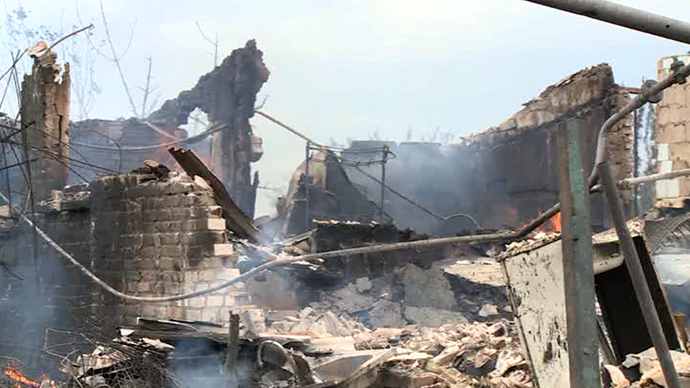 Ukrainian President Petro Poroshenko said he will reduce the country’s “useless” science programs to finance the production of drones and precision weapons.
“There will be no more spending of billions of people’s money, taxpayers’ money on useless research programs, which were used as a tool for theft,” said a statement published on the president’s website early on Wednesday.
“Today, Ukrainian production will be busy making precision weapons systems, Ukrainian drones, everything Ukrainian army needs, starting with bullet proof vests and ending with thermographic cameras,” he said.
The president added that the army’s experience in fighting against self-defense forces in the east of the country will be used when making production decisions.
The Ukrainian military has been fighting against anti-Kiev forces in the east since April.
Some of the latest developments include Ukrainian President Petro Poroshenko confirming plans to “liberate” the eastern cities of Lugansk and Donetsk, the two biggest towns in the country’s east controlled by self-defense forces.
Last week, the army shelled the village of Kondrashovka, killing 12 civilians including a five-year-old.
Nuclear bomb nearly detonated after falling on North Carolina – declassified report
RT | June 11, 2014
 In a scenario that could’ve been extremely devastating, the United States narrowly averted a nuclear disaster in 1961 when an atomic bomb nearly detonated after falling out of a B-52 bomber that broke up in the sky.
According to the Washington Post, the incident took place on January 21, 1961 – less than 20 years after nuclear bombs were dropped on Hiroshima and Nagasaki – and is explained further in a recently declassified report published by the National Security Archives.
When the US Air Force aircraft went into a tailspin and broke up, the two bombs fell towards Goldsboro, North Carolina. The parachute for one of the weapons failed to deploy, and the plane crash had actually pushed the bomb into “armed” mode by the time it hit the ground. Luckily for North Carolina, the plane’s destruction also damaged the switch necessary to trigger detonation.
“The report implied that because Weapon 2 landed in a free-fall, without the parachute operating, the timer did not initiate the bomb’s high voltage battery (“trajectory arming”), a step in the arming sequence,” wrote Bill Burr of the National Security Archives.
“For Weapon 2, the Arm/Safe switch was in the “safe” position, yet it was virtually armed because the impact shock had rotated the indicator drum to the “armed” position. But the shock also damaged the switch contacts, which had to be intact for the weapon to detonate.”
Burr noted in his report just how fine the line was and is between safety and destruction.
“Perhaps this is what Secretary of Defense Robert McNamara had in mind, a few years later, when he observed that, ‘by the slightest margin of chance, literally the failure of two wires to cross, a nuclear explosion was averted,” he wrote.
These details are just the latest to surface about the incident, which was first revealed by nuclear weapons expert Eric Schlosser last year in a book titled, “Command and Control.” Through a Freedom of Information Act request, Schlosser was able to obtain documentation regarding the incident for the first time, and helped shed light on just how close the Air Force came to witnessing an atomic bomb explode on US soil.
As RT reported last year, the documents revealed that three of the four safety switches on the other bomb failed to work properly, meaning, as Schlosser noted, that only “one simple, dynamo-technology, low voltage switch stood between the United States and a major catastrophe.” The parachute on this one deployed, but when the bomb struck the ground the final firing signal triggered, only to be halted by that fourth safety switch.
The bombs contained a payload of four megatons each and could have generated explosions 260 times more powerful than the one that occurred in Hiroshima.
Before the documents related to the Goldsboro incident surfaced, the US government had denied that its nuclear weapons stockpile had ever put the nation at risk.
“The US government has consistently tried to withhold information from the American people in order to prevent questions being asked about our nuclear weapons policy,” Schlosser told the Guardian. “We were told there was no possibility of these weapons accidentally detonating, yet here’s one that very nearly did.”
Wounded Canadian veterans pressed to not criticize military on social media
RT | September 21, 2013
The Canadian Armed Forces requires physically and mentally wounded service members to sign a form agreeing to not criticize senior officers or demoralize other troops on social media sites.
The form is given to wounded soldiers transferred to the Joint Personnel Support Unit (JPSU), which oversees support centers for troops across Canada. The JPSU has received public scrutiny in recent months, as soldiers and staff have been vocal about the lack of resources and dysfunctional support centers.
Service members gave the social media policy form to the Ottawa Citizen, expressing dissatisfaction over what they saw as a threat to their right to voice criticism of the Department of National Defence and Canadian Armed Forces (CAF) for lackluster care.
The JPSU told the Ottawa Citizen that the policy was not made to defer criticism of officials, but rather “to educate our members and personnel on what constitutes the appropriate and inappropriate use of social media and the possible ramifications for a CAF member.”
The “policy on proper comments on social media” forbids posting secret information on websites or forums, but also advises military personnel to avoid disparaging senior officers or CAF members.
In addition, the policy tells service members not to “write anything that might discourage others or make them dissatisfied with their conditions or their employment,” nor to offer “your views on any military subject.”
The policy form indicates that violating the social media rules could damage public trust in the CAF and “destroy team cohesion.”
The form, only six months old, mentions that soldiers in the JPSU can also be held responsible for social media content of friends they have “tagged” on Facebook, Twitter, LinkedIn, blogs and other sites.
While the CAF has a general social media policy for all service members, the Ottawa Citizen said that all personnel they interviewed were never made to sign a form like the one given to JPSU soldiers.
The CAF responded to questions about the form, saying the policy is issued to all JPSU members. However, the spokesperson could not offer specific examples of improper social media use.
“It is important for all CAF members to understand and follow the policies, rules, regulations and standards of conduct that apply to members of the CAF, including the policy on the use of social media,” public affairs officer Navy Lt. Michèle Tremblay wrote to the Ottawa Citizen.
Members of the Canadian military “are encouraged to communicate publicly about their own experiences and expertise, in accordance with the Government of Canada and DND/CAF policy,” Tremblay noted.
If a service member refuses to sign, JPSU staff will note that the individual has been briefed about the unit’s social media policy. Various units have their own way of notifying personnel about CAF protocols, Tremblay said.
“The difference being that the JPSU is asking members to indicate that they have read and understood the policy by signing the form,” she said.
Former CAF officers see the form as a way to intimidate members who were injured for speaking up about substandard treatment.
“It’s not illegal but it’s obviously a threat,” said Ottawa lawyer and former military officer Michel Drapeau, who has represented injured soldiers seeking benefits from the Canadian government. “The criticism about the leadership’s failure to take care of the wounded is obviously hitting home.”
He said that personnel likely feel compelled to sign, and that it would certainly be used against them if they violated the policy.
Retired air force officer Sean Bruyea said the CAF has the right to steer service members’ behavior on social media, but says the JPSU effort goes too far.
“This is right out of something you would see during the Soviet era,” said Bruyea, a critic of how the military and government assists wounded personnel. “This is way over the top.”
Featured Video

Seyed M. Marandi: U.S. Military DIVIDED? Iran’s Secret Defense EXPOSED
or go to
Aletho News Archives – Video-Images
From the Archives
‘Israel sees Iran as obstacle to its policies’
Press TV – August 25, 2017
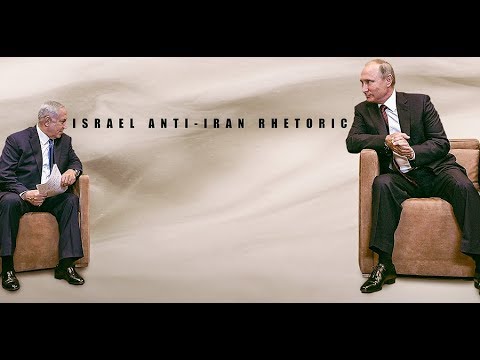
Prime Minister Benjamin Netanyahu has said that Israel felt threatened by Iran’s growing influence in the Middle East. Netanyahu expressed his Iranophobic view in a meeting with Russian President Vladimir Putin in Russia’s Black Sea resort of Sochi on Wednesday. Press TV has asked Scott Rickard, former American intelligence linguist from Tampa, Florida, and Brent Budowsky, a columnist at The Hill from Washington, to give their thoughts on the issue.
Rickard said Tel Aviv is concerned about the fact that the regime could not carry out its old project to spread sectarian divisions and pave the way for dismemberment of the countries in the Middle East region because of the Iranian-led resistance against Israeli policies, not only in the occupied territories of Palestine but also in the whole region.
“Iran is not a threat to Israel whatsoever. The threat that Israel sees is the fact that their Oded Yinon Plan is being put to a hold by Iran,” the intelligence linguist said on Thursday night.
“They (the Israelis) look at Iran as a threat only because they have no influence on their governments and Iran is autonomous and is not under the Zionist influence,” he added.
Since the victory of the Islamic Republic of Iran in 1979, Tehran has been critical of Israel’s policies in the region, whereas “no leaders [of other states] even dared to speak out against Zionism,” Rickard argued. … continue
Blog Roll
 Aletho News
- Iran declares ‘historic victory’ over US, says enemy forced to accept its proposal
- Trump Claims Ceasefire, Reopening of Strait of Hormuz Agreement with Iran
- Israeli tank fire killed UN peacekeeper in Lebanon, UNIFIL investigation finds
- Russia, China block Bahrain-sponsored UN resolution on Strait of Hormuz
- The US-Israeli War on Science is an Assault on our Future
- Trump’s Promise to Bomb Iran ‘Like Never Before’ Faces Brutal Logistics — Expert
- Germany seeks to restrict stays abroad for men of fighting age – Berliner Zeitung
- Evidence points to Ukraine being behind TurkStream attempted sabotage, but that should come as no surprise
- Sri Lanka secures supplies of Russia oil – minister
- Nations across Asia strike direct deals with Iran for Hormuz passage
- If Americans Knew
- Thousands dead and neighborhoods razed to the ground: Aid agencies fear southern Lebanon is becoming the new Gaza
- The war the US is fighting for Israel could cost trillions
- ‘Cigarette Burns, Nail Wounds’: Toddler Tortured in Gaza to Coerce Father
- Trump Says US Sent ‘a Lot of Guns’ to Protesters in Iran
- Israeli forces destroy 17 UN peacekeeper cameras in south Lebanon
- US-Israeli strikes ‘completely destroy’ synagogue in Tehran
- Archbishop for US Military Says Iran War Is Unjust Under Catholic Teaching
- Iranian leaders’ Open Letters to the American People
- Trump says Iranians appreciate bombs, WHO warns of nuclear risks – Daily Update
- U.N. experts demand Israel release prominent Gaza doctor after reports of ‘severe torture’
- No Tricks Zone
- An Inconvenient Tree: Uncovered In Alps… Europe Much Warmer Than Today 6000 Years Ago
- New Study Reports A 60% Slowdown In Greenland’s Ice Loss Rate In The Last Decade
- Low Intensity Tornado Wrecks Major Solar Farm, Creating A Potential Toxic Dump
- New Study Finds Warming Saves Lives…Cold Temperatures 12 Times More Deadly Than Excess Heat
- German Science Blog Accuses PIK Climate Institute Of Hallucinating Climate Tipping Points
- Devastating Assessment Of Comirnaty Vaccine By Former Senior Pfizer Europe Toxicologist
- New Study: CO2 Is ‘Effectively Negligible’ As An Explanatory Climate Change Factor Since 2000
- Former Pfizer Toxicologist Dr. Helmut Sterz Tells Bundestag Hearing Pfizer Vaccine Should Have Never Been Approved
- Energy Expert: Germany’s Nuclear Phaseout Was A “500 Billion Euro Mistake”
- New Research: South Australia’s Mid-Holocene Sea Surface Temperatures Were 4°C Warmer Than Today
 Aletho News