Richard Bilton of the BBC today exposed himself as the most corrupt and bankrupt of state media shills – while pretending to be fronting an expose of corruption. There could not be a more perfect example of the western state and corporate media pretending to reveal the Panama leak data while actually engaging in pure misdirection.
In a BBC Panorama documentary entitled Tax Havens of the Rich and Powerful Exposed, they actually did precisely the opposite. The BBC related at length the stories of the money laundering companies of the Icelandic PM and Putin’s alleged cellist. The impression was definitely given and reinforced that these companies were in Panama.
Richard Bilton deliberately suppressed the information that all the companies involved were in fact not Panamanian but in the corrupt British colony of the British Virgin Islands. At no stage did Bilton even mention the British Virgin Islands.
Company documents were flashed momentarily on screen, in some cases for a split second, and against deliberately unclear backgrounds. There is no chance that 99.9% of viewers would notice they referred to British Virgin Islands companies. But instantly reading a glimpsed document is an essential skill for a career diplomat, and of course I happen to know immediately what BVI or Tortola mean on a document. So I have been back and got screenshots of those brief flashes.
Is it not truly, truly, astonishing the British Virgin Islands were not even mentioned when the BBC broadcast their “investigation” of these documents?
In deliberately obscuring the key role of the British money-laundering base of British Virgin Islands in these transactions, the BBC have demonstrated precisely why the entire database has to be released to the scrutiny of the people, rather than being filtered by the dubious honesty of state and corporate journalists. The BBC targeting of two very low level British minions at the end of their programme does not alter this.
The BBC could also address why their Pacific Quay HQ in Glasgow is leased for £100 million from a hidden ownership company in the Cayman Islands.
On the 5th Anniversary of the catastrophe, Prof Geraldine Thomas, the nuclear industry’s new public relations star, walked through the abandoned town of Ohkuma inside the Fukushima exclusion zone with BBC reporter Rupert Wingfield-Hayes.
Thomas was described as “one of Britain’s leading experts on the health effects of radiation”. She is of the opinion that there is no danger and the Japanese refugees can come back and live there in the “zone”. Her main concern seemed to be how untidy it all was: “Left to rack and ruin,” she complained, sadly.
At one point, Rupert pulled out his Geiger counter and read the dose: 3 microSieverts per hour. “How much radiation would it give in a year to people who came back here,” he asked. Thomas replied: “About an extra milliSievert a year, which is not much considering you get 2mSv a year from natural background”.
“The long term impact on your health would be absolutely nothing.”
Now anyone with a calculator can easily multiply 3 microSieverts (3 x 10⁻⁶ Sv) by 24 hours and 365 days. The answer comes out to be 26 mSv (0.026Sv), not “about 1mSv” as the “leading expert on the health effects of radiation” reported.
I must personally ask if Gerry Thomas is a reliable expert; her CV shows she has published almost nothing in the way of original research, so we must ask how it is the BBC has taken her seriously.
This recalled the day the first reactor exploded in 2011. I was in London, and the BBC asked me to come into the studio and comment. Also present was a nuclear industry apologist, Dr Ian Fells. Like Geraldine Thomas he seemed unconcerned about the radiation: the main problem for him was that the lifts would not work. People would have to climb stairs, he complained.
I said then on that first day that this was a serious accident like Chernobyl, but he and everybody who followed him told the viewers that it was no problem, nothing like Chernobyl.
Some months later, looking back, it became clear I was correct on every point, but I never was invited back to the BBC. I visited Japan, took sophisticated measuring equipment, obtained vehicle air filters, spoke to the Japanese people and advised them to take Calcium tablets to block the Strontium-90.
My vehicle air filter measurements showed clearly that large areas of north east Japan were seriously contaminated – including Tokyo. This was too much for the nuclear industry: I was attacked in the Guardian newspaper by pro-nuclear George Monbiot in an attempt to destroy my credibility. One other attacker was Geraldine Thomas. What she said then was as madly incorrect then as what she is saying now. But the Guardian would not let me respond.
The important evidence for me in the recent BBC clip is the measurement of dose given by Rupert’s Geiger counter: 3microSieverts per hour (3Sv/h). Normal background in Japan (I know, I measured it there) is about 0.1Sv/h. So in terms of external radiation, Ruperts’s measurement gave 30 times normal background.
Is this a problem for human health? You bet it is. The question no-one asked is what is causing the excess dose? The answer is easy: radioactive contamination, principally of Caesium-137. On the basis of well-known physics relationships we can say that 3Sv/h at 1m above ground represents a surface contamination of about 900,000Bq per square metre of Cs-137. That is, 900,000 disintegrations per second in one square metre of surface: and note that they were standing on a tarmac road which appeared to be clean. And this is 5 years after the explosions. The material is everywhere, and it is in the form of dust particles which can be inhaled; invisible sparkling fairy-dust that kills hang in the air above such measurements.
The particles are not just of Caesium-137. They contain other long lived radioactivity, Strontium-90, Plutonium 239, Uranium-235, Uranium 238, Radium-226, Polonium-210, Lead-210, Tritium, isotopes of Rhodium, Ruthenium, Iodine, Cerium, Cobalt 60. The list is long.
The UN definition of ‘radioactively contaminated land’ is 37,000Bq/square meter, and so, on the basis of the measurement made by the BBC reporter, the town of Ohkuma in the Fukushima zone (and we assume everywhere else in the zone) is still, five years after the incident, more than 20 times the level where the UN would, and the Soviets did, step in and control the population.
But the Japanese government wants to send the people back there. It is bribing them with money and housing assistance. It is saying, like Gerry Thomas, there is no danger. And the BBC is giving this misdirection a credible platform. The argument is based on the current radiation risk model of the International Commission on Radiological Protection the ICRP.
Last month, my German colleagues and I published a scientific paper [2] in the peer reviewed journal Environmental Health and Toxicology. It uses real-world data from those exposed to the same substances that were released by Fukushima to show that the ICRP model is wrong by 1,000 times or more. This is a game-changing piece of research. But were we asked to appear on the BBC, or anywhere else? No. What do our findings and calculations suggest will have happened in the five years since the explosions and into the future? Let’s take a look at what has happened since 2011.
The reactors are still uncontrolled five years after the explosions and continue to release their radioactive contents to the environment despite all attempts to prevent this. Concerning the melted fuel, there is no way to assess the condition or specific whereabouts of the fuel though it is clearly out of the box and in the ground.
Meanwhile, robots fail at the extremely high radiation levels found; ground water flowing through the plant is becoming contaminated and is being pumped into storage tanks for treatment; high radiation levels and debris have delayed the removal of spent fuel from numbers 1, 2 and 3 reactor buildings. TEPCO plans to remove debris from reactor 3 and this work has begun. Then they are hoping to remove the fuel rods out of reactors 1 and 2 by 2020 and the work on removing debris from these 2 reactors has not begun yet.
Much of the radioactivity goes into the sea, where it travels several hundreds of km. up and down the coast, destroying sea life and contaminating intertidal sediment. The radionuclides bind to fine sediment and concentrate in river estuaries and tidal areas like Tokyo Bay. Here the particles are re-suspended and brought ashore to be inhaled by those living within 1km of the coast.
From work done by my group for the Irish government on the contaminated Irish Sea we know that this exposure will increase the rate of cancer in the coastal inhabitants by about 30 percent.
The releases have not been stopped despite huge amounts of work, thought and action. The treated water is still highly radioactive and cannot yet be released.
That is a real problem on site with three heavy spent fuel pools still full and largely inaccessible. Collapse of the buildings would lead to coolant loss and a fire or even an explosion releasing huge amounts of radioactivity. So this is one nightmare scenario: Son of Fukushima. A solid wall at the port side may have slowed the water down but diverting the water may cause problems with the ground water pressure on site and thus also threaten subsidence. Space for storing the radioactive water is running out and it seems likely that this will have to be eventually spilled into the Pacific.
Only 10 percent of the plant has been cleaned up although there are 8,000 workers on site at any one time, mostly dealing with the contaminated water. Run-off from storms brings more contamination down the rivers from the mountains.
There are millions of 1-ton container bags full of radioactive debris and other waste which has been collected in decontamination efforts outside the plant and many of these bags are only likely to last a handful of years before degrading and spilling their contents. Typhoons will spread this highly contaminated contents far and wide.
Let’s look at the only real health data which has emerged to see if it gives any support to my original estimate of 400,000 extra cancers in the 200km radius. Prof Tsuda has recently published a paper in the peer review literature identifying 116 thyroid cancers detected over 3 years by ultrasound scanning of 380,000 0-18 year olds.
The background rate is about 0.3 per 100,000 per year, so in three years we can expect 3.42 thyroid cancers. But 116 were found, an excess of about 112 cases. Geraldine says that these were all found because they looked: but Tsuda’s paper reports that an ultrasound study in Nagasaki (no exposures) found zero cases, and also an early ultrasound study also found zero cases. So she is wrong. The thyroid doses were reported to be about 10mSv. On the basis of the ICRP model, that gives an error of about 2000 times.
From the results of our new genetic paper we can safely predict a 100 percent increase in congenital malformations in the population up to 200km radius.
In an advanced technological country like Japan these will be picked up early by ultrasound and aborted, so we will not actually see them, even if there were data we could trust. What we will see is a fall in the birth rate and an increase in the death rate because we know what has been happening and what will happen; we have seen it before in Chernobyl. And just like Chernobyl, the (Western) authorities are influenced by or take their lead from the nuclear industry: the ICRP and the International Atomic Energy Agency, (IAEA) which since 1959 has taken over from the World Health Organization as the responsible authority for radiation and health (Yes!).
They keep the lid on the truth using ill-informed individuals like Geraldine Thomas and, by analogy with New Labour: New BBC. Increasingly I could say “New Britain” as opposed the Great Britain of my childhood, a country I was proud of where you could trust the BBC. I wonder how the reporters like Rupert can live with themselves presenting such misguided information.
Fukushima is far from being over, and the deaths have only just begun.
Christopher Busby is an expert on the health effects of ionizing radiation. He qualified in Chemical Physics at the Universities of London and Kent, and worked on the molecular physical chemistry of living cells for the Wellcome Foundation. Professor Busby is the Scientific Secretary of the European Committee on Radiation Risk based in Brussels and has edited many of its publications since its founding in 1998. He has held a number of honorary University positions, including Visiting Professor in the Faculty of Health of the University of Ulster. Busby currently lives in Riga, Latvia. See also: http://www.chrisbusbyexposed.org, http://www.greenaudit.org and http://www.llrc.org.
In an interview with RT, Russian military analyst Alexander Zhilin said that US media allegations that Russia is pursuing its own interests in Syria are “absolute nonsense”, given that Moscow “cooperates there with the legitimately elected president.”
He also pointed to Washington’s hypocritical statements about the necessity of fighting terrorism, saying they came as the White House continued to use terrorism as a major mechanism of its foreign policy.
“Just think about it: if a country with a military budget exceeding the consolidated budget of all the countries in the world uses terrorism as the main instrument of its foreign policy, fighting terrorism is almost impossible”, Zhilin said.
“My question is: who are you to make such calls? It means Obama who bombed out half the world’s territory must not step down, while Assad must step down, right? It is the wrong approach,” he said.
According to him, Washington currently wages so-called network-centric warfare against Moscow, a military doctrine pioneered by the US Department of Defense in the 1990s. The goal is to translate an information advantage, enabled in part by information technology, into a competitive advantage through the robust computer networking of a well-informed, geographically decentralized force.
“The United States has started a propaganda [war] against Russia, which is why it is creating an anti-Russian coalition with the participation of Saudi Arabia, Turkey and the US private military companies,” he pointed out.
Zhilin expressed regret about foreign media outlets, including CNN and the BBC, being involved in this war and misinforming their readers about Russia’s air campaign in Syria. He recalled that Russia’s “participation in Syria suggests the support of the legitimately elected president,” and that “it was Washington which started the invasion without getting the UN’s go-ahead.”
“You know, I’m very sorry that the BBC and CNN, once respected media outlets, have turned into primitive propaganda and disinformation news agencies,” he said.
Zhilin’s remarks came shortly after CNN reported that the Russian air support had allowed the Syrian Army to begin liberating the strategic city of Aleppo, which was seized by militants several years ago. At the same time, CNN alleged that in Syria, Russia does not only struggle with Daesh militants but also pursues its own interests.
Once again, Russia is being featured as Dr. Evil Incarnate, the villain that regularly plays opposite peace-loving NATO nations, in a BBC program that has Moscow initiating an invasion on Latvia followed up with a nuclear strike on Britain.
And just in time for the military-industrial shopping season.
Since the collapse of the Soviet Union, Russia has failed Western analysts and political pundits in spectacular fashion. Despite a full-court effort to portray Russia as a barbaric, land-grabbing nation obsessed with the idea of restoring imperial real estate, Russia has stubbornly refused to play along.
Why, even dangling the fat bait of Ukraine before Russia’s nose could not get Moscow to react the way NATO had hoped it would.
In fact, while NATO has been hot on the warpath against a number of shell-shocked nations across the Middle East, Central Asia and North Africa, Russia has gone to war on just one (1) occasion, and that was against Georgia, and only after the egomaniacal leader of that tiny Caucasian country tempted fate by stupidly poking the Russian bear first.
Thus, the BBC has apparently found it necessary to contrive an altered state of reality, a veritable twilight zone, to convince its audience of Russia’s ‘real’ intentions: The result is a military contractor’s wet dream, an apocalyptic bunker buster, unsubtly entitled ‘World War Three: Inside the War Room,’ that depicts a sweat-inducing showdown between Russia and NATO and the beginning of WWIII.
It’s probably safe to say I would not be playing plot spoiler by revealing here that Russia has been typecast as the aggressor.
To briefly summarize: After the Russian military rolls over little Latvia for no good strategic reason whatsoever, British military commanders and graying bureaucrats with furrowed brows huddle themselves in a bunker, deciding whether to launch Trident missiles at Russia in response.
The Daily Mail breathlessly described the tax-payer paid performance as “an utterly realistic ‘war game’” which presents “deeply troubling questions, not least with the current political row over Government plans to spend £100 billion replacing our fleet of Trident submarines.”
Eureka! At the very same time UK military contractors are salivating over the prospect of winning billion-dollar contracts to replace the Queen’s collection of Trident nuclear-armed submarines, along comes a state-funded scaremongering film, starring arch-villain Russia to lend some credence to the initiative.
Russian lawmaker Frants Klintsevich told the Russian News Service radio station the film will give NATO an opportunity to remind member states that they should crack open their tattered purses and boost their military spending.
“They [West] have always demonized Russia trying to show that it is uncontrolled and non-European. As for what happens recently… we qualified this a long time ago as an information war, a very serious and a profound one,” said Klintsevich, the first deputy chairman of Federation Council’s committee on defense and security.
“Today the US has a very serious problem of rearmament, the military and industrial sector needs to get financing. A mechanism of the corrupt American elite has been launched. This was in Iraq, is in Syria and around Europe,” the senator said.
Meanwhile, the Kremlin has provided a tongue-in-cheek critique of the BBC film.
“Unfortunately, our colleagues from the BBC have lately resorted to making public products, of quite low-quality. Therefore, we haven’t always been in a hurry to familiarize ourselves with them,” Russian presidential press secretary Dmitry Peskov told reporters when asked whether the Kremlin has stayed up late to catch the film.
“It’s simply not worth the time it takes to watch,” Peskov said.
On the same day the BBC thriller was released, a report by the totally unbiased Rand Corporation – invoking sexed-up memories of Saddam Hussein’s alleged ability to strike the UK in 45 minutes – said that it would take just 60 hours for Russia to occupy Estonia and Latvia, and that’s not taking into account Riga’s rush-hour traffic.
“Across multiple games using a wide range of expert participants in and out of uniform playing both sides, the longest it has taken Russian forces to reach the outskirts of the Estonian and/or Latvian capitals of Tallinn and Riga, respectively, is 60 hours,” Rand said in its report.
“Such a rapid defeat would leave NATO with a limited number of options, all bad.”
It might be worth noting in closing that former RAND chief strategist, Herman Kahn, once forwarded the insane idea of a “winnable” nuclear exchange in his 1960 book ‘On Thermonuclear War.’
This led to Kahn being the inspiration for the title character of Stanley Kubrick’s black comedy satire Dr. Strangelove.
As far as the BBC’s latest anti-Russia production goes, well, it’s just plain strange.
Robert Bridge is the author of the book on corporate power, “Midnight in the American Empire”, which was released in 2013. @Robert_Bridge
If you really want a lesson in how the Western popular press works, this is it.
Without question, Germany is the leading power in Europe. ZDF is its state broadcaster and most popular channel.
Together with sister network ARD; German’s are obliged to pay €17.98 per month to fund it.
This week, during a radio event in Berlin, the retired head of ZDF Bonn, Dr Wolfgang Herles, dropped a bombshell. He admitted the network, and others, takes orders from the government on what, and what not, to report.
Now, you’d expect this kind of story to be splashed across the world’s press, wouldn’t you? A former senior management figure acknowledging that his ex-employers work in tandem with the authorities to control the news agenda in such an important country? If such a revelation was made in a ‘developing’ nation, NATO media would be all over it.
Yet, it’s not. As I write, only London’s Daily Mail and America’s Breitbart and RT have bothered to report this amazing story.
The BBC, a carbon copy of ZDF and ARD in Britain, is busy promoting a documentary about a fake Russian invasion of Latvia. Meanwhile, in Germany itself, RT Deutsch and Munich’s Focus appear to be the only two significant outlets tackling the revelations. This in a country where the Dresden region was once known as the “valley of the stupid” because Western TV signals couldn’t reach much of it during the Cold War.
Well-founded fears
Many people across Europe suspect that most domestic state TV is under fairly direct control of politicians. The BBC, despite its mendacious cultivation of an image of fairness, is a pretty obvious example. It is governed by a Trust, wholly appointed by the Queen on the advice of government ministers of the day. Russia’s most popular station, the First Channel, although partially privately owned, is also administered by state appointees.
What makes Herles’ outburst so significant is his seniority. Before retiring last year, he was a prominent culture editor and presenter. In the 90’s, he hosted his own chat show, ‘Live’, and prior to these ventures, he’d been head of ZDF Bonn. At that time, Bonn was the West German capital. It’s important to understand that ZDF, while available across Germany, is technically owned by the Bundesländer (states).
Thus, Bonn-based Herles would have had far greater understanding of how German politics worked than most in ZDF’s Mainz headquarters, never mind far flung regions.
Turning a blind eye
Since the Cologne sex attacks on New Year’s Eve, there have been strong allegations that German media downplayed, or even ignored, the story. With migrants, predominately Arabic in origin, pouring into the country since last year, highlighting assaults where the alleged perpetrators were of Arab appearance could help turn public opinion against Angela Merkel’s “open-borders” policy. On the other hand, ignoring infractions by newcomers serves to keep Germans ignorant about how Berlin’s scheme could jeopardize their own safety. A lot of people are, understandably, angry about that.
Herles’ admission was prompted by the assertion that ordinary people have lost faith in Germany’s tightly-controlled media. “We have the problem that – now I’m mainly talking about the public [state] media – we have closeness to the government,” he revealed. “Not only because commentary is mainly in line with the grand coalition (CSU, CDU, and SPD), with the spectrum of opinion, but also because we are completely taken in by the agenda laid down by the political class.”
The retired ZDF chief went on to concede that the station took orders on what to broadcast. “The topics about which are reported are laid down by the government,” he confessed. Ironically, the Guardian, with no actual evidence, has prominently published numerous allegations of the Kremlin engaging in this practice. However, it ignores a similar assertion about Germany, which is actually backed up by a credible figure.
Of course, it’s not just the publicly-owned media; their private counterparts are also far from balanced. Bild Zeitung, Germany’s bestselling newspaper, is bound by the charter of its holding company, Axel Springer SE, “to further the unification of Europe.” Moreover, it must “support the Transatlantic Alliance, and solidarity with the United States of America in the common values of free nations.” Even the fairest editor in the world wouldn’t have much leeway under those conditions.
Pan European myopia
As it happens Germany is not alone. Last year, the Times Ireland exposed how Dublin’s state-controlled RTE routinely furnishes questions to government ministers before they appear on air. Incredibly, RTE News, currently helmed by controversial British executive Kevin Bakhurst, responded by attempting to smear The Times.
Meanwhile, in Sweden, the fervently liberal Expressen newspaper this week labeled The Daily Mail ‘racist.’ The British newspaper’s crime? Daring to report facts on the country’s migrant crisis that are precluded in Sweden. Because the domestic media refuse to cover negative stories involving migrants, many Swedes are now forced to access British and Russian media to read news about their country.
Right now, the pro-EU press is struggling to control the narrative. Dismissing rival viewpoints as “propaganda” can only work for so long. Furthermore, turning a blind eye to stories that question EU policy is a tougher proposition in the age of social media.
Last year, Germany’s Der Spiegel magazine closed online comment threads on all articles about migration. Last week, The Guardian followed suit, blocking all posts related to immigration, Islam and race.
These moves aren’t a huge surprise. In recent years, journalists and commentators who refuse to fall-in-line with the liberal European consensus have been increasingly barred from the mainstream media. This stands in marked contrast to previous decades in which debate was actively encouraged and opposing views cherished. Maybe Mikhail Gorbachev wasn’t far off when he warned:”The most puzzling development in politics during the last decade is the apparent determination of Western European leaders to re-create the Soviet Union in Western Europe.”
Bryan MacDonald is a journalist. He worked in Dublin for many years, for Ireland on Sunday and the Evening Herald.
Russian Ambassador to Latvia Alexander Veshnyakov called the World War Three: Inside the War Room (BBC Two) show a ‘dangerous provocation’ that aims to discredit pro-Russian forces in Europe.
The BBC program explores a hypothetical WWIII scenario, where Russia invades Latvia after Russian nationalists boil over their lack of self-determination in Latvia. Russia then launches a nuclear strike on the British military.
“We consider this TV-program a dangerous provocation. I’ve been working in Latvia for 8 years and do not know of any separatist organization here,” Veshnyakov said in an official commentary on the Embassy’s Facebook page.
According to Veshnyakov, the TV program scenario pursues a purely political agenda.
“This scenario is absolutely contrived, going after political goals: first, to engage in an information war to demonize Russia. Second, to justify the needs of the military-political lobby to increase the spending of NATO in Europe more than 4 times. Third, to discredit any political forces in Latvia, in Europe, that treat Russia without bias.”
Relations between Russia and the West worsened in 2014, when the United States, the European Union and some other Western countries accused Moscow of fueling the Ukrainian crisis, and imposed economic sanctions against it.
Russia’s relations with NATO also deteriorated. NATO has been increasing its presence in Eastern Europe since Crimea rejoined Russia in March 2014 following a referendum the West refused to recognize as legitimate, instead blaming Moscow for violating Ukraine’s territorial integrity. Russia has denied the allegations and has repeatedly stated that the bloc’s increased activities near its borders undermine regional and international stability.
NATO-Russia Council’s work was suspended on April 1, 2014, after the alliance’s foreign ministers issued a statement condemning Crimea’s reunification with Russia.
In January, media reports emerged claiming that the alliance was discussing a possible invitation of Russia to the first formal talks since the deterioration of NATO-Russia relations in 2014. NATO chief Jens Stoltenberg had previously brought up the subject of reconvening the NATO-Russia Council to be used as a tool for political dialogue.
During the 1920s General Secretary of the Communist Party of the Soviet Union Josef Stalin formulated what he considered to be the essential contribution of Lenin to Marxist political economy. Leninism, he wrote, is Marxism in the era of proletarian revolution. Since 1989 proletarian and national liberation revolutions throughout the world have been overturned by a general, global counter-revolutionary upsurge. It is a counter-revolutionary upsurge that has seen the onslaught of US colour revolutions, which seek to do away with the bourgeois nation-state itself, the last barrier to the total exploitation of the world by the global corporate and financial elite.
In this essay we have argued that the contemporary form of this counter-revolutionary ideology, of this imperial drive for global domination, is Zionism. One could therefore assert that Zionism is imperialism in the age of capitalist counter-revolution. In other words, Zionism is the very form of contemporary Western imperialism. Therefore, unlike Russian and Chinese imperialism, Western imperialism or Zionism has both a religious and ethnic dimension. Zionism is a Messianic and racist ideology based on Talmudic Judaism.
Zionism, through its control of Western finance capitalism, is striving for global governance. Lenin, writing in 1915, described as ‘indisputable’ the fact that ‘development is proceeding towards monopolies, hence, towards a single world monopoly, towards a single world trust’. But Lenin also pointed out that this drive towards unipolar global power would also intensify the contradictions in the global economy. A cogent example of this today is the low-intensity covert war currently being waged by the United States/Israel against Germany: The Western imperial alliance is turning on itself.
However, no people’s resistance to Zionism can be mounted if the empire continues to outsmart its opponents. The aforementioned General Barnett understands his enemies well. He used to teach Marxism in Harvard university and has written a book comparing the African policies of the German Democratic Republic and the Socialist Republic of Romania. In his book Blueprint For Action, he points out that the father of Fourth Generation Warfare is Mao Tse Tung. Imperial grand strategy is now waging war using techniques developed during the Chinese revolution, one of the greatest anti-colonial struggles in history. The key for anti-imperialist resistance today is, therefore, to understand how to turn the tools of imperialism against imperialism.
Marxism is a useful and indispensable tool but is insufficient for an full understanding of the complexities of the information age in the context of imperial strategy and tactics. Barnett and many other US and Israeli military strategists are keen students of social psychology, and in particular General Boyd’s OODA Loop Theory. The OODA stands for observation, orientation, decision, action. According to Boyd, decision-making occurs in a recurring cycle of observe-orient-decide-act. An entity (whether an individual or an organization) that can process this cycle quickly, observing and reacting to unfolding events more rapidly than an opponent, can thereby “get inside” the opponent’s decision cycle and gain the advantage.
One could see this psychology at work during the Arab Spring. The rigid ideological orientation of the average ‘leftist’ saw the uprisings in Tunisia as proof that people were rebelling against a US-backed dictator and his ‘neo-liberal’ regime. This interpretation was reinforced by strategically placed ‘critics’ of US-foreign policy in the news station of Zionism’s ancillary regime, Qatar, while the initial indifference of the Western press confirmed the interpretation of the Tunisian revolt as a genuine, grass roots uprising against US imperialism.
US and Israeli strategists were capable of doing this through their deep understanding of ‘leftist’ discourse. They also understood that the ‘anti-globalisation’ form of the protest movement would fool genuine critics of US imperialism, thereby impeding their ability to react to the US-orchestrated revolutions in a rational manner.
In the Arab Spring, inverted Marxian dialectics, Systems Theory, Psychology, Military Science and Utility Theory were waged against a feckless and discombobulated anti-war movement who would repeat the sound bites of ‘popular uprising’ and the ‘defeat of US imperialism in the Middle East’ implanted in their minds by one of the most impressive and successful US/Israeli geostrategic operations in modern history.
On the eve of NATO’s bombing of Libya, the BBC predictably called upon an old reliable ‘critic of US foreign-policy’ Noam Chomsky. The veteran American philosopher agreed that the West had a “duty” to “stop the massacres” in Libya thus ensuring there would be no moral outrage among the so-called anti-war movement. The invitation of Noam Chomsky by the Zionist-controlled BBC shows the importance for British intelligence of ideologically disarming potential ‘leftist’ opponents in the run-up to meticulously planned wars of aggression, disguised as ‘humanitarian interventions’.
Given Chomsky’s anarchist ideology, the very ideology instrumentalised by the CIA in colour revolutions, the BBC knew he would go along with their fake ‘popular uprising’ in Benghazi, thus providing justification to wage ‘humanitarian’ warfare in support of the ‘revolution’.
In 2013, a massive military destablisation of Brazil was undertaken by US NGOs, operating under the guidance of the CIA, in order to weaken the popularity of a government moving far too close to Russia and China in the eyes of Washington. Again, the CIA’s ‘Vinegar revolution‘ received full support from most ‘leftist’ quarters. Once again, military geostrategy had triumphed over anti-imperialist analysis.
The current refugee crisis proves that US/Israeli military geostrategy is running circles around its opponents, who, instead of identifying the culprits who are using human beings as weapons, are unwittingly collaborating with Zionism’s plan to inundate Europe with migrants for the purposes of fomenting civil war in the European peninsula, in a desperate effort to prevent Eurasian integration, a prospect inimical to what the Pentagon refers to as ‘full spectrum dominance’, US/Zionist global hegemony.
Those who have joined in the chorus of welcoming the refugees/migrants are unwitting participants in an extension of Zionism’s neo-colonial wars in Africa and the Middle East. They are also complicit in the endorsement and cover-up of a modern slave trade. Opposing imperialism requires study of the logic of its geostrategic operations. Imperialism’s deliberate flooding of Europe with a Wahhabised lumpen-proletariat from a war-torn Southern Hemisphere will not help the cause of labour, the cause of human freedom. Rather, it will contribute to prevent the unification of the European-peninsula with Russia and Asia. It will contribute towards the further colonisation and destruction of independent African and Middle Eastern nations such as Eritrea and Syria.
An example of Marxist Leninist parties’ inability to deal with imperialism’s weaponization of migrants comes from the Communist Party of Great Britain (Marxist Leninist). Their argument in favour of immigration is sound under normal circumstances but they fail to address the problem of when immigration becomes a tool of imperialism, a specific geopolitical strategy aimed at destabilizing both the country of origin and the destination of the migrant.
The recent resolution of the CPGBML is worth reproducing here in full:
This party firmly believes that immigration is not the cause of the ills of the working class in Britain, which are solely the result of the failings of the capitalist system.
Immigration and asylum legislation and controls under capitalism have only one real goal: the division of the working class along racial lines, thus fatally weakening that class’s ability to organise itself and to wage a revolutionary struggle for the overthrow of imperialism.
These controls have the further effect of creating an army of ‘illegal’ immigrant workers, prey to super exploitation and living in dire conditions as an underclass, outside the system, afraid to organise and exercising a downward pull on the wages and conditions of all workers.
The scourge of racism, along with all other ills of capitalism, will only be finally abolished after the successful overthrow of imperialism. But since immigration can no more be abolished under capitalism than can wage slavery, our call should not be for the further control and scapegoating of immigrants, but the abolition of all border controls, as part of the wider fight to uproot racism from the working-class movement and build unity among workers in Britain, so strengthening the fight for communism.
The problem here is that no distinction is made between immigration into imperialist countries and immigration into semi-colonial type countries. For example, Syria has been forced to close its borders due to the passage of terrorists in the service of imperialism. In such circumstances, it would be ludicrous to condemn the Syrian government for erecting fences to protect its borders. Similarly, Hungary, a small country which has just taken modest steps towards escaping from the clutches of US imperialism under the control of the IMF, has decided to erect fences to protect its borders from what it perceives as an attempt by US imperialism to destablize the country. Under these conditions, such a decision is entirely justified. The CPGBML argues correctly that “the scourge of racism, along with all other ills of capitalism, will only be finally abolished after the successful overthrow of imperialism.” The erection of fences in Hungary is part of that fight against imperialism, when migrants are clearly being used as weapons of imperialist strategy against recalcitrant nation-states.
The fact that Zionism is using the refugee crisis to further its imperialist agenda does not mean, however, that all refugees in the world are being used for this purpose. Rather, just as in the Arab Spring where the social inequalities of capitalism were used by imperialism to further the cause of capitalism, so are many refugees coming from the Middle East and Africa being used for the same purpose.
Throughout the world Homo sapiens is being supplanted by homo economicus: a vacuous, brain-washed, rootless cosmopolitan, a deterritorialised and acculturated nomad, hopelessly blown hither and thither by the exigencies of capital. Meanwhile, Zionism continues to stoke up the incessant and utterly fraudulent ‘War on Terror’, with omnipresent mass surveillance of the “nations” (goyim) while at the same time Jews are being encouraged by the Israeli regime to leave Europe for settlement on Arab lands, ruined and depopulated by Zionism’s wars.
The ‘refugee crisis’ is indubitably one more step towards the creation of a Greater Israel. Benjamin Netanyahu recently told the Israeli National News that Israel must become a “world power”.
To politically correct pundits, Victor Orban’s fence might appear inhumane and xenophobic, but at this moment in history the concrete choice presented to us is between temporary fences designed to protect nations from imperialism or Zionist walls built to imprison humanity.
In his talk, Piers Corbyn described the failure of standard meteorology (SM) in outlook, theory, and practice. He included: signals in real meteorology data unexplained by SM; real role of jet stream, stratosphere, electro-jets, magnetosphere, solar wind, solar corona, and the Moon; the total inability of SM to explain: sudden stratospheric warmings and its consequences, tropical storm intensifications, angular momentum concentration in tornadoes; and the need for something else such as electromagnetic plasma explanations; the theoretical basis of non-standard long range weather forecasting on a real planet; a summary on his WeatherAction forecasting skill and examples; and the future of forecasting and meteorology, climate ‘science’ and science in general.
Piers Corbyn began recording weather and climate patterns at the age of five, constructing his own observation equipment. He obtained a first-class honors degree in physics at Imperial College London. In 1969, he became the first president of the Imperial College Students’ Union to be directly elected by the student body. He later studied astrophysics in 1979 at Queen Mary College, London, and then began examining the relationship between Earth’s weather and climate and solar activity. Following many years of weather prediction as an occupation, Piers formed WeatherAction in 1995, where he sells web-accessible long-range monthly forecasts for Britain and Ireland, Europe, and the USA plus special forecasts of ‘Red Weather periods’ and related increases in thunder/tornado and earthquake risk.
Multi-million-dollar advertising money has long been suspected as an unspoken filter for Western news media coverage. If the news conflicts with advertising interests then it is simply dropped.
Western complicity in Yemen’s conflict is a case study. Add to that the celebrity sheen of Hollywood stars Jennifer Aniston and Nicole Kidman. What we then have is an illustration of how ugly realities of killing and war crimes are cosmetically air brushed from public awareness.
Let’s take three major Western media outlets — BBC, CNN, France 24. All are notable for their dearth of news coverage on the bloody conflict in Yemen. On any given day over the past nine months, these channels have rarely given any reports on the daily violence in the Arabian Peninsula country.
Yemen is heading into peace talks in Geneva this week, so there might follow some desultory reports on the said channels. But over the past nine months when the country was being pummeled in an appalling onslaught by foreign powers, the same channels gave negligible reportage.
It also turns out — not coincidentally — that major advertisers on these same news channels include Qatar Airways, Emirates Airlines and Etihad. The latter two advertisers feature screen celebrities Jennifer Aniston and Nicole Kidman, posing as satisfied customers of these Gulf state-owned companies.
Other prominent advertisers on BBC, CNN and France 24 are Turkish Airlines and Business Friendly Bahrain.
This advertising complex has, undoubtedly, a direct bearing on why the three mentioned Western news channels do not give any meaningful coverage of the disturbing events in Yemen.
Notwithstanding there is much that deserves telling about Yemen — if your purpose was journalism and public information.
The poorest country in the Arab region is being bombed by a coalition of states that include the US, Britain and Saudi Arabia, as well as a handful of other Persian Gulf oil-rich kingdoms. The latter include Qatar, the United Arab Emirates and Bahrain.
Thousands of Yemeni civilians — women and children — have been killed in air strikes by warplanes from this foreign military coalition, which claims to have intervened in Yemen to reinstall a regime headed up by a discredited president who was forced into exile in March this year by a popular uprising. The uprising was led by the Yemeni national army allied with guerrilla known as the Houthis.
Out of Yemen’s 24 million population, nearly half are in dire humanitarian conditions from lack of food, water and medicine, according to the United Nations. The suffering is aggravated by a sea and air blockade of Yemen by the Western-Arab military coalition.
Due to Western involvement in a humanitarian disaster unfolding in Yemen, one might think that Western media would be at least giving some coverage. Well, not if you watch BBC, CNN or France 24.
Moreover, there are reliable reports that ground forces fighting against the Houthi rebels and the Yemeni national army are comprised of Western mercenaries — in addition to troops from Saudi Arabia, Bahrain and the UAE.
According to Lebanon’s Al Manar news outlet, foreign mercenaries killed so far in Yemen include French, British and Australian, as well as Colombian and others from Latin America. They have been enlisted by the notorious US-based private security firm, Blackwater, also known as Academi.
The mercenaries are first sent to the United Arab Emirates for training before dispatch to Yemen, reported the New York Times.
What’s more — and this is explosive from a journalistic point of view — the mercenaries being sent to Yemen also comprise Islamist brigades aligned with the self-styled Islamic State (IS) terror network out of Syria. This has been confirmed by senior Yemeni army sources and several Arab region news outlets, such as Yemen’s Masirah TV and Lebanon’s Al Akhbar newspaper.
In Syria, the IS terror group and other jihadist brigades are suspected of being deployed covertly by a US-led coalition for the purpose of regime change against the government of President Bashar al-Assad. The US-led coalition includes Britain, France, Turkey, Saudi Arabia, Qatar and the UAE. Illicit oil smuggling is one stream of income to fund the terror brigades, as Russian intelligence has uncovered.
Washington and its allies claim to be bombing Syria to “degrade and defeat” IS, in the words of President Barack Obama. But, according to the Syrian and Russian militaries, the Western-led coalition is not serious in its stated aims. Indeed, on the contrary, evidence points to the US-led bombing of Syria as being inordinately ineffectual compared with the parallel Russian aerial campaign against the terror groups.
The conclusion is that the West’s “ineffectiveness” in defeating IS is a deliberate policy because IS is actually a covert regime-change asset in Syria.
That conclusion is consistent with how IS and other jihadist mercenaries are being relocated out of Syria to take up military assignment in Yemen in a configuration that sees Washington and London provide air power, along with warplanes from Saudi Arabia and other Arab states; and the same Arab states providing on-the-ground US-trained mercenaries in addition to their own regular armies.
The IS terror brigades are thus integrated with the Western-Arab coalition fighting in Yemen.
According to Brigadier General Ali Mayhoub, of the Syrian Arab Army, hundreds of jihadist mercenaries have been secretly flown out of Syria to Yemen on board civilian airliners belonging to Turkish Airlines, Emirates Airlines and Qatar Airways.
The IS-affiliated mercenaries were flown into Yemen’s southern port city of Aden at the end of October, about three weeks after Russian President Vladimir Putin ordered Russian fighter jets to begin their blistering anti-terror operations in Syria.
It seems more than a coincidence that major commercial companies belonging to Turkey, Qatar, the United Arab Emirates and Bahrain are lucrative sources of advertising revenue for the three Western news channels, BBC, CNN and France 24. Actresses Jennifer Aniston and Nicole Kidman leverage the advertising budget stakes by multiple millions of dollars.
The companies belong to countries — all or partially state-owned — that are involved in sponsoring military campaigns in Yemen and Syria. The more overt military intervention in Yemen has seen a catalogue of war crimes, including the bombing of civilian centres with cluster bombs, such as hospitals and schools.
Amnesty International last week documented “war crimes” carried out by the aerial bombing coalition attacking Yemen, comprising the US, Britain, Saudi Arabia and other Gulf Arab states.
Yet, scarcely any of these gross violations committed in Yemen by the Western-Arab coalition and their connections to terrorist groups in Syria are covered by the three major Western news channels, BBC, CNN and France 24.
Patently, the censorship is correlated with specific sources of commercial advertising income, which is over-riding the Western public interest in knowing what is really going on in Yemen and how their governments are involved in violations of international law, including state-sponsored terrorism.
Ironically, the same Western channels never stop blowing trumpets to their “consumers” of how courageous and ethical they are in “bringing you the stories”. Evidently, as far as Yemen is concerned, the “journalistic commitment” is determined not by truth and much more by advertising money flowing from states complicit in war crimes.
Western news media’s self-declarations of “independence” and “integrity” are like the celebrity adverts that sponsor them. Cosmetic and illusory.
It was with a sense of optimism tinged with experience that I sat down to listen to BBC Environment Analyst Roger Harrabin’s first of his three part series on the climate timed to coincide with forthcoming Paris talks. I know how such programmes are put together, how interviews are solicited, conducted, edited and juxtaposed to form a narrative. I also know the subjectivity involved.
At the start we get an American politician who doesn’t believe that mankind has any influence on the climate and who is also a creationist. Her inclusion concatenated climate change “sceptism” with a denial of evolution. There was no need to have her in the programme at its start except to place in the listener’s minds such an association, which was not shared by anyone else in the programme.
Near the beginning of the programme Roger Harrabin said; “Out and out rejection of climate science has mostly passed.” This is a straw man. In reality, only a very few rejected climate science, and they were regarded by most who took an interest in climate science as being eccentric, irrelevant and wrong. Their importance was often exaggerated as many in the media paraded them as being representative of the “sceptic” movement. For many years anyone who was regarded as having non-mainstream views (often arbitrarily judged) was obliged to go through the ritual of admitting that the world has warmed, that carbon dioxide was a greenhouse gas and that mankind was responsible for the carbon dioxide increase, despite these being commonly accepted and not part of the real debate. A few years ago the presenter on a BBC TV programme introduced Lord Lawson and added that for the purposes of the discussion they are all assuming that carbon dioxide is a greenhouse gas! Thankfully that loaded question had been assigned to the past until Roger Harrabin’s programme that is when Matt Ridley went through this credo.
Matt Ridley is described as a lukewarmer in that he favours the lower end of estimate of transient climate response, TCR (1.5°C – 4.0°C). There is nothing unusual in holding that view as it is held by many “mainstream” climate scientists. So much so that the IPCC reduced the lower bound of TCR from 2.0°C to 1.5°C in response to debates about TCR in the scientific and “sceptic” community.
Later in the programme another contributor introduced another illogical twist. She said she prefers “lukewarmist to climate denial,” as if there was a choice between the two. The implication is that deniers have become lukewarmists which is absurd. Roger Harrabin says Ridley now finds himself inside the IPCC’s big tent but misses the point that it was the IPCC that changed. Interesting isn’t it, Matt Ridley is still a lukewarmer, and not acknowledged as being within the mainstream even when Ridley’s views agree with the IPCC (the epitome of “mainstream” science opinion and “consensus”). Being a “sceptic” or a “lukewarmer” seems to be more about where you come from than the scientific views you hold.
Stubborn, Simplistic
It was also said that the debate about climate science has moved on from the stubborn and simplistic and onto what to do about it. Again, this is incorrect. The main motivation for scientists and “sceptics” is to find out what is exactly going on, and as we find out more we realise that some of we thought was wrong and that there is so much more we don’t know. For example, today we have a different view of decadal climatic variations compared to forced variations than we did a decade ago, and improving our understanding of such variations is essential to contemplating what to do. If anyone thinks the debate has been “stubborn and simplistic” they are mistaken.
Then we have a nice example of doublespeak. A professor states an opinion about climate science and then says there is too much uncertainty to decide if his opinion is correct! Another point is that lukewarmers do not, as a whole, say that the “pause” in annual average surface temperature is because we exaggerated the heating effect of carbon dioxide in the atmosphere. Another contributor was irked by the “media focus” on the “pause.” Presumably she is also somewhat irritated by those scientists who are constantly coming up with explanations for it, more than 35 at my last count, most of which are unreported by the media. She adds that she always knew it would rise in fits and starts so perhaps the real problem was that there was not enough media focus on this in the 1990′s when the world warmed fairly rapidly!
Then we have reference to the loss of sea ice in the Arctic referring to the 2007 low. Perhaps the contributor and the programme’s editor is unaware with what has been happening to Arctic ice cover in the past few years?
Roger Harrabin then talks of those suffering from extreme weather events after the 1°C increase already experienced. This is a controversial area in the journals but is also a subject on which the IPCC has already proclaimed: There is no increase in extreme weather events as a result of climate change.
Roger Harrabin concluded the programme by saying that the world’s warming is largely driven by humans. Yet the IPCC AR5 says; “It is extremely likely that more than half of the observed increase in global average surface temperature from 1951 to 2010 was caused by the anthropogenic increase in greenhouse gas concentrations and other anthropogenic forcings together. The best estimate of the human induced contribution to warming is similar to the observed warming over this period.”
The observed warming since 1950 is about half of the warming observed since pre-industrial times so without mentioning timescales Roger Harrabin’s statement is misleading. It seems that one can refer to post-1950 or pre-industrial periods without qualification to get a good quote.
Thus at the end Roger Harrabin abandons mainstream science and consensus altogether in a programme supposed to be about the science of climate change. Overall the broadcast was an intellectual shambles. It is a rewriting of history worthy of the reporting of the war between Oceania and Eurasia.
Feedback: david.whitehouse@thegwpf.com
The United Nations Climate Change Conference is having its 21st meeting in Paris towards the end of 2015. (Hence COP21 or conference of parties)
We’ve been told this is the ‘last effective opportunity’ to keep global warming to ‘a limit safe for humanity.’
However we are reassured by the fact there have been previous last chances, and this website predicts that COP21 will not be the last ‘last chance.’
Previous ‘Last Chance’ UN climate summit deadlines:
Last chance! – Bonn, 2001 – A Global Warming Treaty’s Last Chance. That teetering edifice that is the Kyoto Protocol gets some emergency repair work this week as delegates from 180 countries gather in Bonn to work out problems that threaten to scuttle the deal altogether. – Time Magazine, 16 Jul 2001
Last chance! – Montreal, 2005 – In an open letter to delegates at the Montreal environmental summit, beginning today, campaigner Mark Lynas explains why action on climate change can no longer be stalled. “I’m scared. For 15 years I’ve watched international progress on climate change get slower and slower, even while the pace of global warming seems to get ever more rapid. With time running out for the global climate, your meeting in Montreal represents a last chance for action.” – The Independent, 28 Nov 2005
Last chance! – Bali, 2007– World leaders will converge on Bali today for the start of negotiations which experts say could be the last chance to save the Earth from catastrophic climate change. Bali could be the last chance to avoid the worst effect of global warming, said Tony Juniper, executive director of Friends of the Earth. – The New Zealand Herald, 3 Dec 2007
—–
2007: Philip Clapp, head of the Washington-based National Environment Trust, says: “Fifteen years of international negotiations have not yet produced a comprehensive agreement that will get developed countries to begin serious reductions.”He adds: “The framework for such an agreement must come out of the Bali meeting. The scientists are telling us that this is the world’s last shot at avoiding the worst consequences of global warming.” – The Independent, 2 Dec 2007
Last chance! – Poznan, Poland, 2008 – The world will “suicide” if it cannot strike a strong climate pact soon, Australian environmental scientist Tim Flannery has warned. Professor Flannery, who is attending a UN climate summit in Poland, expressed dismay at the slow progress. “Resistance is a suicidal tactic,” the former Australian of the year, scientist and author told reporters in Poland. “This round of negotiations is likely to be our last chance as a species to deal with the problem.” The Age, 9 Dec 2008
—–
2008: Humanity is approaching the last chance to prevent catastrophic climate change, according to WWF’s analysis of the latest climate science.The warning comes during UN climate talks in Poznan, Poland.“Governments in Poznan must agree to peak and decline global emissions well before 2020 to give people reasonable hope that global warming can still be kept within limits that prevent the worst,” said Kim Carstensen, leader of WWF’s global climate initiative. – WWF, “Poznan provides last chance to curb climate change” 5 Dec 2008
Last chance! – Copenhagen, 2009 – The world faces a final opportunity to agree an adequate global response to climate change at a U.N.-led meeting in Copenhagen in December, the European Union’s environment chief said on Friday. It is now 12 years since Kyoto was created. This makes Copenhagen the world’s last chance to stop climate change before it passes the point of no return, European Union Environment Commissioner Stavros Dimas told a climate conference in Budapest on Friday. – Reuters, Feb 27 2009
—–
2009: Ban Ki-moon, the United Nations Secretary-General, has warned of “catastrophic consequences” unless a new international agreement on greenhouse gas emissions is reached.Climate change is “simply the greatest collective challenge we face as a human family”, Mr Ban said in a speech on Monday in Seoul. He urged international leaders to reach a deal to limit their countries’ carbon emissions at the UN climate conference in Copenhagen in December. – The Telegraph, 10 Aug 2009
2009: “No one said the road to Copenhagen would be easy. But the agreement we all hope to reach in Copenhagen next year represents the last chance to bring climate change under control before it is too late. There is progress, but we need to step up the pace. With resolve, cooperation and imagination, we can conclude an agreement at the end of next year, delivering the ambitious global action that is needed.” Speech by Stavros Dimas, European Commissioner responsible for environment at a Climate Change Conference, 31 October 2008, Prague
—–
2009: The Copenhagen summit is the world’s last chance to save the planet from “catastrophic” global warming, according to a major study led by Lord Stern of Brentford, the country’s leading authority on climate change.Without an international agreement to limit global warming, temperatures are likely to rise by 9F (5C) by the end of the century – triggering mass migration, warfare and world hunger, according to the report. – The Telegraph, 2 Dec 2009
—–
Last chance! – Cancun, 2010 – A sense of foreboding is one of the few points of general agreement among the 15,000 participants congregating for the next two weeks on this long thin strip of land, marooned between a wide lagoon and the Caribbean Sea. Jairem Ramesh, the Indian environment minister, sees it as the “last chance” for climate change talks to succeed; Connie Hedegaard, the EU’s climate chief, believes a disappointing outcome would “put the whole process in danger”. – The Telegraph (UK), 29 Nov 2010
Last chance! – Durban, 2011 – Rev. Dr. Olav Fyske Tveit, who leads the World Council of Churches, says the upcoming climate conference in South Africa is mankind’s ‘last opportunity’ to address climate change. This week the World Council of Churches general secretary, Reverend Dr Olav Fykse Tveit, called the United Nations UNFCCC COP 17 meeting a “last opportunity for the international community to be responsible in addressing climate change”, and called on the meeting to “act now for climate justice.” – Spero News, 27 Nov 2011
—–
2011: Durban climate change meeting is “the last chance”. Attended by over 200 countries, this week’s major UN conference has been described by many experts as humanity’s last chance to avert the disastrous effects of climate change.Together with around 20 000 delegates from nearly 200 countries, Ferrial Adam, the climate change and energy campaigner for Greenpeace Africa, will be attending the 17th Conference of the Parties (COP17) to the UN Framework Convention on Climate Change, which gets under way in Durban in the next two weeks, towards negotiating a new climate regime. – UCANews, 28 Nov 2011
Last chance! – Doha, 2012– Tomorrow: the earth’s last chance with climate change? Tomorrow, the whole world talks about irreversible global warming as this year’s international climate change summit begins. Participating are 195 countries (almost all of the United Nations). There are two concurrent meetings: the 8th Conference of the Parties to the Kyoto Protocol; and the 18th session of the Conference of the Parties to the United Nations Framework Convention on Climate Change. They will take place from Monday, November 26, 2012 to Friday, December 7, 2012 at the Qatar National Convention Centre in Doha, Qatar. – The Examiner, 25 Nov 2012
—–
Last chance! – Warsaw, 2013 – Is the Warsaw Climate Change Conference a last-chance summit? The Warsaw Climate Change Conference opened on Monday 11th November. After the 2012 failure of Doha, this summit could represent a turning point in the fight against global warming. “Global greenhouse gas emissions need to peak this decade, and get to zero net emissions by the second half of this century,” announced Christiana Figueres, Executive Secretary of the UNFCCC in a press release dated 8th November. “We have the money and technology, the knowledge and the new economic models to get the job done in time,” she confirmed before describing the next two years as “a critical period to act faster on climate.” – Sustainable Mobility, 14 Nov 2013
——
Last chance! – Lima, 2014 – Last chance: Change needed for climate negotiations in Lima 2014. WWF issued the following statement today from Samantha Smith, Leader of WWF’s Global Climate and Energy Initiative, as the UN climate talks drew to a conclusion: “A repeat performance next year would be disastrous, not just for the progress of these negotiations, but more importantly for vulnerable communities everywhere and the natural world on which we all depend…By the time we get to next year’s meeting in Lima, we urgently need to have political will, real commitments, and a clear path to a comprehensive and fair agreement in Paris 2015, where a new global agreement on climate change has to be signed.” – WWF Global, 23 Nov 2013
Last chance! – Paris, 2015: Scientists are calling on world leaders to sign up to an eight-point plan of action at landmark talks in Paris. The key element is the goal to limit global warming to below 2C by moving to zero carbon emissions by 2050. The UN meeting in December is “the last chance” to avert dangerous climate change, according to the Earth League. – BBC News 22 Apr 2015
Ever since allegations that Saddam Hussein’s WMD program were “sexed up” to give the UK reason for joining the 2003 US-led invasion of Iraq, the BBC has been “cowed,” a claim that seemed vindicated following last month’s US attack of an Afghan hospital.
On October 3rd, the US carried out a sustained bombing raid on a Medecins Sans Frontiere hospital in Kunduz, Afghanistan. The attacks continued every 15-minutes for over an hour and involved five separate strafing runs. By the time it was over, at least twenty two people had been killed.
According to Counterpunch : “The hospital was deliberately set ablaze by incendiary weapons, and the people inside not incinerated were killed by a spray of bullets and anti-personnel flechettes.”
US officials initially claimed the attacks were an accident. However, this was refuted by MSF, who pointed out that not only were the US fully aware of the precise coordinates of the hospital, but that they had also called the US army during the strike itself begging them to stop, to no avail.
Eventually, as Media Lens has noted, US officials changed their story, claiming that the attack was justified because the Taliban had been using the hospital as a “base” – effectively admitting that it had indeed been deliberately targeted. MSF completely denied that claim as well, and noted that the claim “amounts to an admission of a war crime.”
So why was it that on October 15th, the BBC News at Ten was still claiming that the hospital had been “mistakenly bombed” by the US – a claim disputed by MSF from the start, and which even US officials themselves later admitted was a lie?
To answer this question requires an appreciation of the way in which the BBC has, over many years, been cowed and intimidated into an attitude of almost total subservience towards the foreign policy agenda of Britain and its allies.
Of course, the BBC has always been an instrument of the British state, established by statute in 1928 and run by a governor appointed by the Prime Minister. As Seumas Milne has pointed out: “There is no point in romanticizing a BBC golden age. The corporation was always an establishment institution, deeply embedded in the security state and subject to direct government control in an emergency…[with] around 40 percent of the staff… vetted by MI5.”
Yet within this framework there was, for a time, some degree of freedom to make programs that challenged the status quo.
Particularly irksome to the Conservative government of the 1980s were three in particular – Maggie’s Militant Tendency, a Panorama special on the influence of the far right in the Conservative party; Real Lives, featuring an extended interview with the Irish republican leader Martin McGuinness; and a documentary about a secret British intelligence satellite. The latter program, which was never broadcast, even triggered a raid by Special Branch on the BBC’s Glasgow offices – but, Milne notes, “By [that] time… preparations to sack the director general were far advanced.”
Thatcher installed the “fiercely anti-union” Marmaduke Hussey as BBC Chairman, and, following discussions with Rupert Murdoch, Douglas Hurd and security advisor Victor Rothschild, forced Alasdair Milne (Seumas’s father) to resign as director general. The move had its intended effect.
As Seumas Milne put it: “This was a No 10 coup by any other name – and one from which the BBC has never fully recovered. Once the government had demonstrated it could not only manipulate the license fee to ensure BBC compliance, but summarily dispatch its leadership at barely one remove, what BBC director general or chair would do anything but bend the knee or jump ship?”
Of course, the message still needs reiterating from time to time.
Shortly after the 2003 invasion of Iraq, BBC Radio Four’s Today program broadcast an interview with the journalist Andrew Gilligan in which he claimed that the British government had “sexed up” its notorious ‘intelligence dossier’ on Iraqi weapons, deliberately including information it “probably knew” was untrue.
We now know such claims were entirely correct.
But Alastair Campbell, Prime Minister Tony Blair’s Director of Communications desperately sought blood. An inquiry was launched, with a suitably supine judge appointed to lead it; Lord Hutton was a former Lord Chief Justice of Northern Ireland, who had presided over the system of notorious ‘Diplock courts’ which abolished the right to trial by jury (The Diplock courts had been an innovation of Brigadier Frank Kitson, whose manual on counter-insurgency instructed that “the activities of the legal services have to be tied into the war effort in as discreet a way as possible). Hutton proved himself true to his mentor’s understanding of ‘judicial neutrality’ – and its disposability in matters of war.
During the inquiry, it was revealed that the wording of the dossier had indeed been altered to make a stronger case for war; that Alastair Campbell had requested these changes himself; and that the serious reservations of Intelligence experts about the intelligence presented was indeed known to the government. Nevertheless, Hutton’s conclusions completely exonerated the government, concluding that Gilligan’s accusation of “sexing up” the dossier was “unfounded”, and that the BBC’s editorial and management processes were “defective”.
Effectively, the BBC was being told: yes, what you reported was true; but how dare you broadcast it? The BBC was breaching another of Brigadier Kitson’s principles – that it is not only “legal services” that “have to be tied into the war effort” – but media as well.
The Director-General, Greg Dyke, and the Chairman Gavyn Davies were forced to resign; whilst those who had fabricated evidence in order to justify an illegal war of aggression got off, and continue to get off, scot-free.
The BBC has been cowed ever since. As a report by the Independent on the Hutton inquiry ten years on noted: “Damage was done to the BBC news room, which caught a chill. If this episode had never happened and Dyke had served a full term in charge, then ‘I think their journalism might have been a bit braver,’ he says. ‘I think the place was really shocked by losing the chairman and director general together over one issue.’”
Kevin Marsh, the Today program editor at the time of Gilligan’s broadcast, agreed there had been what the Independent called a “chilling effect on the BBC’s reporting” and noted that the new Deputy Director General Mark Byford, placed in charge of journalism, was “very cautious”.
Threats to funding are another good way the government can keep the BBC’s reporting ‘in line’ (whilst always, of course, maintaining the appearance of ‘hearty debate’). As already noted, Seumas Milne reports that “manipulating the license fee” had been a means of “ensuring compliance” in the 1980s; and so too today. With the ten-year renewal of the BBC’s charter looming, David Cameron remarked to a busload of journalists shortly before this year’s general election that he was “going to close down” the BBC.
“Some people on the bus regarded it as funny” said BBC Political Editor Nick Robinson, “but they generally didn’t work for the BBC. The people who did regarded it as yet another bit of pressure and a sort of sense of ‘don’t forget who’s boss here’…. We didn’t know at the time, of course, that he would carry on [as Prime Minister], but given that that was a possibility, given the timing of charter renewal … it’s quite a thing to say.”
And it bore results. Even the BBC’s so-called ‘attack dog’, John Humphrys of the Today program, has proved himself extraordinarily adept at avoiding the real issues. When he interviewed David Cameron in the days following the murder of thirty eight tourists at the beach resort of Sousse in Tunisia on June 26th of this year, for example, Britain’s destruction of neighboring Libya was not even mentioned. This is despite the fact that Libya had been the origin of just about every other terrorist attack in North Africa since 2011 – from the Al-Amenas attack in Algeria, to the storming of Timbuktu in Mali in 2012, to the growth of Boko Haram in Nigeria, to the Bardo museum attack in Tunisia itself just three months earlier.
Indeed, the day after that interview, the Tunisian authorities revealed that the Sousse attacker had, too, trained in Libya. But that was no surprise. Every serious analyst knows that the massive increase in the capability of the region’s death squads in North Africa is a direct consequence of Cameron’s war on Libya, which effectively handed control of the entire country – along with its arms depots – over to the region’s paramilitaries.
Does John Humphrys honestly not know any of this? Or does he just understand that he is not to raise it? To question the war on Libya is, it seems, completely taboo on today’s BBC.
However, the Cameron interview did produce results. Of the Al-Qaeda splinter group brought to power by British and US destabilization of Iraq and Syria (again, not mentioned by Humphrys), Cameron said: “I wish the BBC would stop calling it Islamic State.” But that is what they call themselves, Humphrys pleaded. “So-called [Islamic State]…would be better,” Cameron replied. The BBC have referred to them as “the group calling themselves Islamic State” ever since.
On the one hand, of course, Cameron’s argument that they are neither Islamic (as understood by the majority of Muslims), nor are they a state is correct. Yet his indignation is hardly consistent. After all, his own organization, the Conservative Party should, by rights, have fallen foul of the Trade Descriptions Act long ago. Genuine conservatism, as its founder Edmund Burke well understood, was about opposition to radical – and especially revolutionary – change, on the grounds that it undermined stability, tradition and social order.
He was vehemently opposed, for example, to the nature of British colonial rule in India for precisely its destructive impact on a civilization he argued demanded respect. No one who believed in such a philosophy could ever support wars of ‘regime change’ such as those wrought on Afghanistan, Iraq or Libya; yet John Baron was the sole Conservative MP to vote against the attack on Libya. Should the BBC, then, not be referring to Cameron’s organization as the “group calling itself the Conservative Party”?
I recently lodged a formal complaint with the BBC about their coverage of Syria. I was not really expecting it to be upheld – after all, guess who was adjudicating the complaint? None other than the BBC itself (being the only broadcaster officially exempt from investigation by Ofcom, the official regulatory body). But their grounds for rejecting my complaint were most revealing.
I had complained about their broadcasting, without comment, of a claim that President Assad had used chemical weapons in the suburbs of Damascus in August 2013 when, I argued, this was far from proven. The UN investigation team had only found that chemical weapons had been used, but had not attributed blame (and had no brief to do so). However, I pointed out, the leader of a previous UN team, Carla Del Ponte, had earlier in the year suggested that it was the Syrian opposition, not the government, that had been using such weapons.
Furthermore, the authors of an independent investigation by scientists at the Massachusetts Institute of Technology had concluded that “We do not claim to know who was actually behind the attack of 21 August in Damascus. But we can say for sure that neither do the people who claim to have clear evidence that it was the Syrian government.”
The BBC’s response was that whilst “You are right to point out that the UN did not establish that the Syrian government was responsible…. Nevertheless a number of governments concluded that the Syrian government was responsible.” Guess which governments? No prizes here – they mention only three: The UK, the US and France; that is, the three leading cheerleaders and patrons of the terrorist war against Syria, who had been desperate for a legal veneer to a bombing raid on that country since 2011, and who therefore had every interest in portraying the Syrian government as the perpetrator; and at least two of whom had very recent ‘form’ in manipulating intelligence for the purposes of justifying war. Yet, for the BBC, their judgments – which had even been opposed by the authors of the study from which they claimed to have derived them – are, apparently, unassailable. It is as if nothing has been learnt from Iraq.
But, of course, the reality is that the BBC has indeed learned their lessons from Iraq – or rather from Hutton – only too well: foreign policy can be ‘debated’ of course: but only in terms of its wisdom. Its ‘intelligence findings’ must never be questioned – and certainly not its noble aims.
Dan Glazebrook is a freelance political writer who has written for RT, Counterpunch, Z magazine, the Morning Star, the Guardian, the New Statesman, the Independent and Middle East Eye, amongst others. His first book “Divide and Ruin: The West’s Imperial Strategy in an Age of Crisis” was published by Liberation Media in October 2013. It featured a collection of articles written from 2009 onwards examining the links between economic collapse, the rise of the BRICS, war on Libya and Syria and ‘austerity’. He is currently researching a book on US-British use of sectarian death squads against independent states and movements from Northern Ireland and Central America in the 1970s and 80s to the Middle East and Africa today.
By GARETH PORTER | CounterPunch | February 27, 2013
“Going to Tehran” arguably represents the most important work on the subject of U.S.-Iran relations to be published thus far.
Flynt Leverett and Hillary Mann Leverett tackle not only U.S. policy toward Iran but the broader context of Middle East policy with a systematic analytical perspective informed by personal experience, as well as very extensive documentation.
More importantly, however, their exposé required a degree of courage that may be unparalleled in the writing of former U.S. national security officials about issues on which they worked. They have chosen not just to criticise U.S. policy toward Iran but to analyse that policy as a problem of U.S. hegemony. … continue
This site is provided as a research and reference tool. Although we make every reasonable effort to ensure that the information and data provided at this site are useful, accurate, and current, we cannot guarantee that the information and data provided here will be error-free. By using this site, you assume all responsibility for and risk arising from your use of and reliance upon the contents of this site.
This site and the information available through it do not, and are not intended to constitute legal advice. Should you require legal advice, you should consult your own attorney.
Nothing within this site or linked to by this site constitutes investment advice or medical advice.
Materials accessible from or added to this site by third parties, such as comments posted, are strictly the responsibility of the third party who added such materials or made them accessible and we neither endorse nor undertake to control, monitor, edit or assume responsibility for any such third-party material.
The posting of stories, commentaries, reports, documents and links (embedded or otherwise) on this site does not in any way, shape or form, implied or otherwise, necessarily express or suggest endorsement or support of any of such posted material or parts therein.
The word “alleged” is deemed to occur before the word “fraud.” Since the rule of law still applies. To peasants, at least.
Fair Use
This site contains copyrighted material the use of which has not always been specifically authorized by the copyright owner. We are making such material available in our efforts to advance understanding of environmental, political, human rights, economic, democracy, scientific, and social justice issues, etc. We believe this constitutes a ‘fair use’ of any such copyrighted material as provided for in section 107 of the US Copyright Law. In accordance with Title 17 U.S.C. Section 107, the material on this site is distributed without profit to those who have expressed a prior interest in receiving the included information for research and educational purposes. For more info go to: http://www.law.cornell.edu/uscode/17/107.shtml. If you wish to use copyrighted material from this site for purposes of your own that go beyond ‘fair use’, you must obtain permission from the copyright owner.
DMCA Contact
This is information for anyone that wishes to challenge our “fair use” of copyrighted material.
If you are a legal copyright holder or a designated agent for such and you believe that content residing on or accessible through our website infringes a copyright and falls outside the boundaries of “Fair Use”, please send a notice of infringement by contacting atheonews@gmail.com.
We will respond and take necessary action immediately.
If notice is given of an alleged copyright violation we will act expeditiously to remove or disable access to the material(s) in question.
All 3rd party material posted on this website is copyright the respective owners / authors. Aletho News makes no claim of copyright on such material.
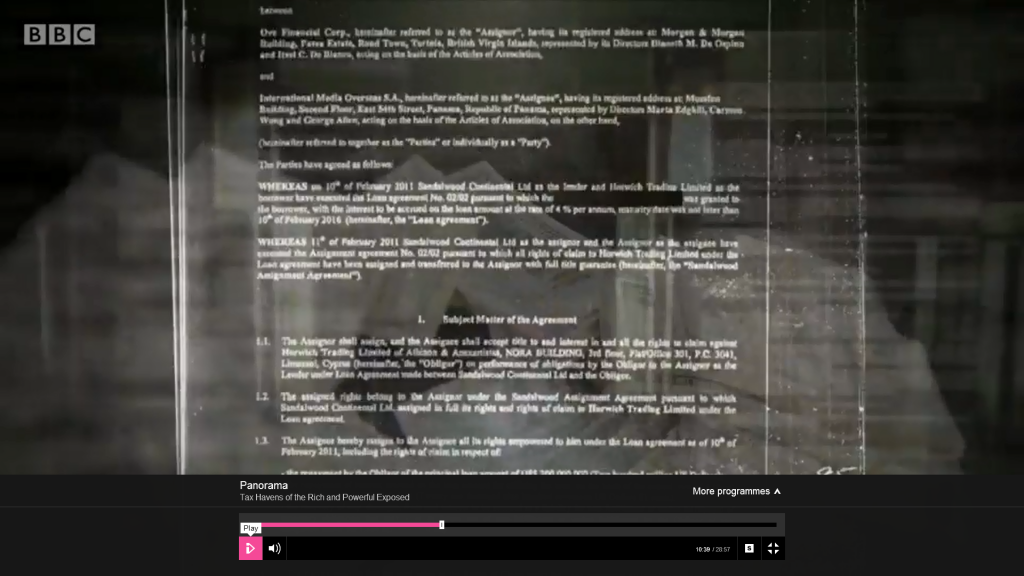

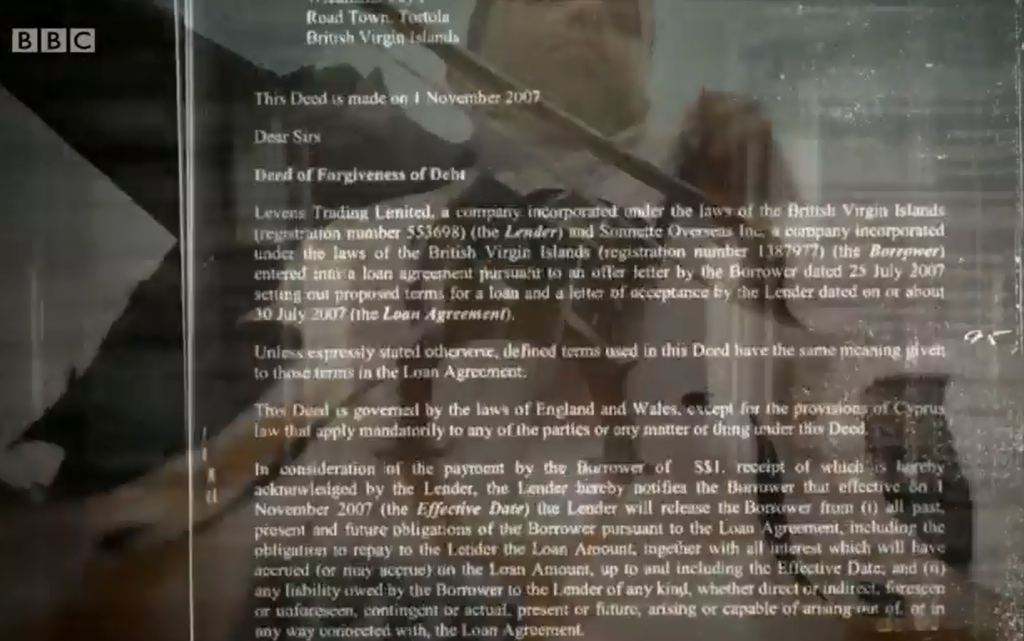

 Aletho News
 Aletho News