Netanyahu uses fake “ancient” coin to justify settlements in West Bank
Palestine Information Center – August 29, 2017
NAZARETH – A coin that was celebrated by Israeli Prime Minister Benjamin Netanyahu as evidence of a historical Jewish link to the West Bank has been found to be fake replica.
Numerous media outlets reported last week on the find of a rare 2,000-year-old half-shekel coin by an eight-year-old girl, Hallel Halevy, in the Israeli illegal settlement of Halamish in the West Bank.
The find excited many Israelis who argued it provided evidence of the historical Jewish connection to the West Bank, usually referred to as Judea and Samaria by Israelis.
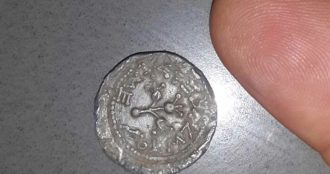 Among those lauding the find, Netanyahu claimed in a Facebook post that “the “2,000-year-old silver coin” was used during the Second Temple period in Jewish history which lasted between 530 BCE and 70 CE.
“This exciting discovery is additional evidence of the deep connection between the people of Israel and its land – to Jerusalem, to our temple, and to the communities in Judea and Samaria,” Netanyahu wrote in his post.
However, on Sunday it was revealed that not only was the coin not ancient, but also was in fact a replica souvenir, regularly made at the Israel Museum, where a small mint at the Youth Wing of the museum is used to create the coins during annual Hanukkah activities organized as part of an educational program for children.
“There is no chance that it is authentic, it is not an ancient coin,” Haim Gitler, chief curator of archaeology and the curator of numismatics at the Israel Museum told The Times of Israel on Sunday. “Even to call it a coin is to exaggerate what it is,” he added.
Netanyahu deleted his Facebook post shortly after that. However, social media users were quick to comment on the news, with many ridiculing Netanyahu mistaking the replica for a historical artifact.
Putin and Netanyahu: The World’s Most Powerful President Meets the World’s Most Powerful Liar
By Adam Garrie | Global Research | August 28, 2017
There is no doubt that Vladimir Putin is the world’s most powerful President. By comparison, while China’s Xi Jinping is highly powerful and intelligent, China’s leadership retains a collective element while in Russia, Vladimir Putin maintains an unwritten but obvious veto power over all major decisions. In the United States, the very idea that Donald Trump is an all-powerful President is now laughable even to most Americans, including those who support Donald Trump.
By the same extrapolation it is abundantly clear that Benjamin Netanyahu, the Israeli leader is the world’s most powerful liar. His power comes from the fact that he is in charge of the highest portion of weapons of mass destruction in the Middle East, including nuclear weapons.
His dishonesty is immediately revealed by his statements about Iran. When speaking in front of the Russian President, Netanyahu said, “… where the defeated Islamic State (Daesh) group vanishes, Iran is stepping in”.
This statement is disingenuous on many levels. First of all, Netanyahu stated to Putin that he felt that Iran is a danger and secondly, that this danger is tantamount to that of Daesh.
Iran has not invaded a country in its modern history and there is no evidence to indicate that this will change. By contrast, Israel occupies Syria and Palestine and formerly occupied Lebanon and Egypt. During the course of Syria’s struggle against Takfiri terrorism, Israel repeatedly bombed Syria illegally. Inversely, Iran’s presence in Syria, like that of Russia, is legal according to international law as it is at the behest of the Syrian government.
Secondly, to equate a state like Iran with Daesh is preposterous. Iran is first of all far more powerful than Daesh has ever been. Daesh is a terrorist group which is quickly crumbling in both Syria and Iraq. Iran is a large state with a professional and highly trained armed forces.
Iran however, uses its military and political influence to fight Takfiri terrorism whose methods, and sinister ideology is anathema to the Iranian Constitution and to the values of the Islamic Revolution.
If one is even slightly interested in fighting Daesh, it logical to thank Iran for its valiant efforts against the wicked group which along with Russia are the only two major non-Arab countries which are combatting a group which has set up base across the Arab world.
During his meeting with Vladimir Putin, Netanyahu also said, “Iran is already well on its way to controlling Iraq, Yemen and to a large extent is already in practice in control of Lebanon”.
This again is a lie. Iran controls Iran and no one else. Iran does not have puppet states in the region in the way that America has had and continues to have puppet states and client states throughout the world. What Iran does have and what it has increasingly, is respect in the Arab world. Iranian forces are in Syria because the Syrian government asked for their assistance in fighting Takfiri terrorism and Iran agreed. Russia finds itself in the same position.
Iran has many supporters and admirers in Baghdad and Iran has helped train Iraqi volunteer units which are fighting and winning the battle against Daesh in Iraq. In Lebanon, Hezbollah is of course a pro-Iranian political party, one which holds two Cabinet level ministers in the Lebanese government. Hezbollah’s military aims are defensive. Their primary goal is to prevent further occupations of Lebanon by Israel. Hezbollah also has worked with the Syrian government to fight Daesh and al-Qaeda.
Israel is a country that has fought wars with all of its neighbours and has occupied most of them. Iran by contrast has occupied none of its neighbours but in the 1980s was the victim of a war that Iraq started with western support. The two situations are objectively incomparable.
One does not have to be ‘pro-Iranian’ to realise this fact. It is a fact that the world acknowledges, including elements of the Arab world which are hostile to Iran.
Vladimir Putin wisely refrained from responding to Netanyahu’s anti-Iranian tirade. The nature of modern Russian diplomacy is to quietly execute its objectives without needlessly entering into arguments with extremists.
Previously, when Netanyahu told historical untruths about Iran, Vladimir Putin did intervene, telling Netanyahu that it is best to focus on modern events rather than ancient history.
Israel’s anti-Iranian rhetoric is increasingly unpopular in the wider world. Even in Europe, most companies and many countries would rather do business with Iran rather than enter into an ideological struggle on Israel’s terms.
Only the United States, Saudi Arabia and Saudi’s client states share Israel’s stance about Iran and none of the Arab countries have the ability or in reality the nerve to start a war with Iran that they would clearly not win.
The great pity is not that Netanyahu continues to tell provocative lies about Iran and the wider region, the pity and the danger is that anyone could still believe him. Iran does not threaten any nation with aggressive war, but if Netanyahu’s impassioned rhetoric foments a war, Iran will defend itself. Those interested in peace ought to ignore Netanyahu and work instead for the important cause of greater peace, cooperation and dialogue, not just in the Middle East but in the wider world.
Copyright © Adam Garrie, Global Research, 2017
The Possible Education of Donald Trump
By Robert Parry | Consortium News | August 25, 2017
Despite the chaos and ugliness of the past seven months, President Trump has finally begun to turn U.S. foreign policy away from the neoconservative approach of endless war against an ever-expanding roster of enemies.
This change has occurred largely behind the scenes and has been obscured by Trump’s own bellicose language, such as his vow to “win” in Afghanistan, and his occasional lashing out with violence, such as his lethal Tomahawk missile strike on a Syrian airfield.
Some Trump advisers also have downplayed the current shift because it may fuel the Democrats’ obsession with Russia-gate as a much-desired excuse to impeach Trump. Every peaceful move that Trump makes is called a sop to Russia and thus an excuse to reprise the dubious allegations about Russia somehow helping to elect him.
Yet, despite these external obstacles and Trump’s own erratic behavior, he has remained open to unconventional alternatives to what President Obama once criticized as the Washington “playbook,” i.e. favoring military solutions to international problems.
In this sense, Trump’s shallow understanding of the world has been a partial benefit in that he is not locked into the usual Washington groupthinks – and he personally despises the prominent politicians and news executives who have sought to neuter him since his election. But his ignorance also prevents him from seeing how global crises often intersect and thus stops him from developing a cohesive or coherent doctrine.
Though little noted, arguably the most important foreign policy decision of Trump’s presidency was his termination of the CIA’s covert support for Syrian rebels and his cooperation with Russian President Vladimir Putin to expand partial ceasefire zones in Syria.
By these actions, Trump has contributed to a sharp drop-off in the Syrian bloodshed. It now appears that the relatively secular Syrian government of President Bashar al-Assad is regaining control and that some Syrian refugees are returning to their homes. Syria is starting the difficult job of rebuilding shattered cities, such as Aleppo.
But Trump’s aversion to any new military adventures in Syria is being tested again by Israeli Prime Minister Benjamin Netanyahu, who is threatening to attack Iranian and Hezbollah forces inside Syria.
Last week, according to Israeli press reports, a high-level delegation led by Mossad chief Yossi Cohen carried Netanyahu’s threat to the U.S. government. The Israeli leader surely has raised the same point directly in phone calls with Trump.
Tiring of Bibi
I was told that Trump, who appears to be growing weary of Netanyahu’s frequent demands and threats, flatly objected to an Israeli attack and brushed aside Israel’s alarm by noting that Netanyahu’s policies in supporting the rebels in Syria contributed to Israel’s current predicament by drawing in Iran and Hezbollah.
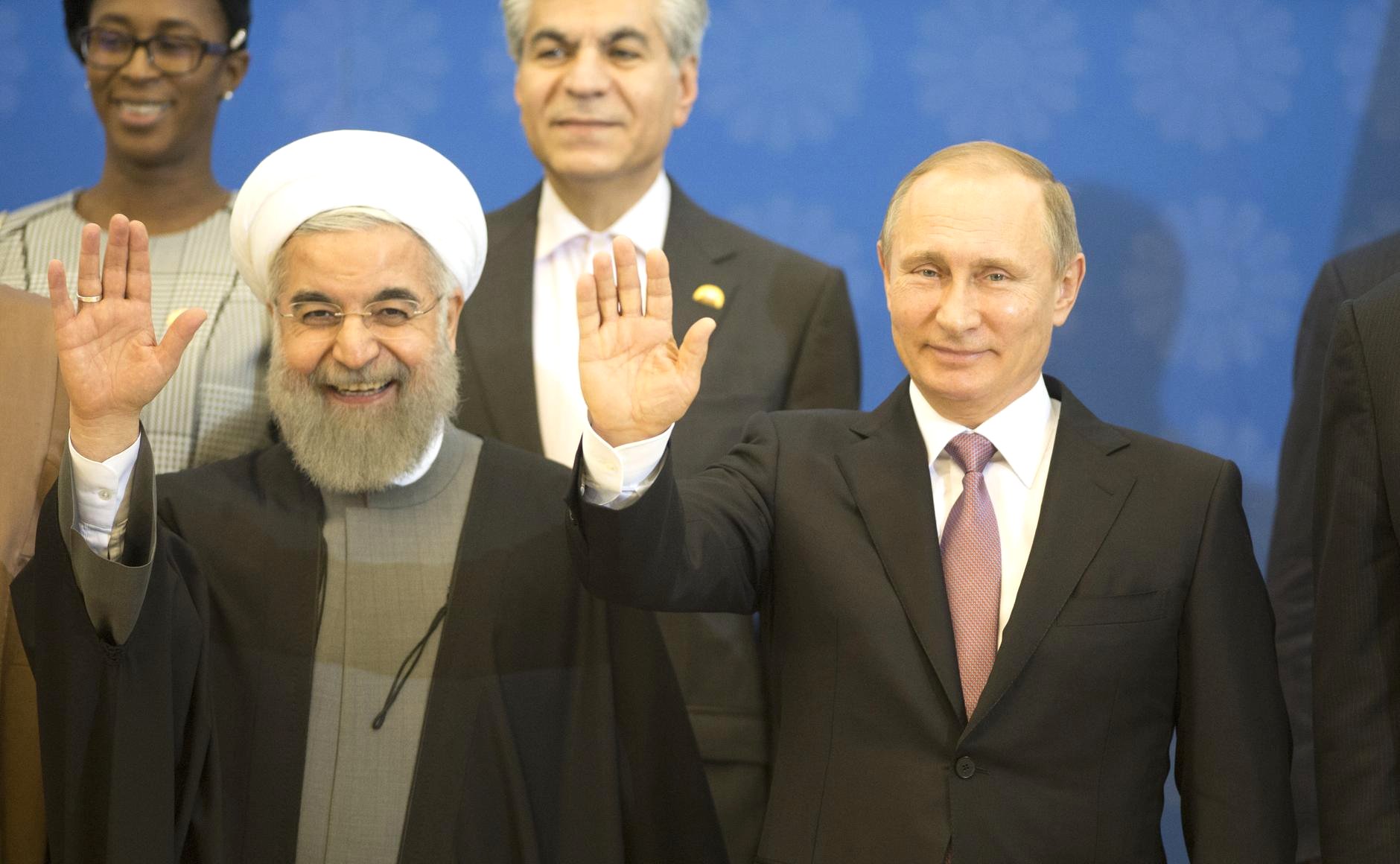
This week, Netanyahu personally traveled to Sochi, Russia, to confront Putin with the same blunt warning about Israel’s intention to attack targets inside Syria if Iran does not remove its forces.
A source familiar with the meeting told me that Putin responded with a sarcastic “good luck!” and that the Russians thought the swaggering Netanyahu appeared “unhinged.”
Still, a major Israeli attack on Iranian positions inside Syria would test Trump’s political toughness, since he would come under enormous pressure from Congress and the mainstream news media to intervene on Israel’s behalf. Indeed, realistically, Netanyahu must be counting on his ability to drag Trump into the conflict since Israel could not alone handle a potential Russian counterstrike.
But Netanyahu may be on somewhat thin ice since Trump apparently blames Israel’s top American supporters, the neocons, for much of his political troubles. They opposed him in the Republican primaries, tilted toward Hillary Clinton in the general election, and have pushed the Russia-gate affair to weaken him.
President Obama faced similar political pressures to fall in line behind Israel’s regional interests. That’s why Obama authorized the covert CIA program in Syria and other aid to the rebels though he was never an enthusiastic supporter – and also grew sick and tired of Netanyahu’s endless hectoring.
Obama acquiesced to the demands of Official Washington’s neocons and his own administration’s hawks – the likes of Secretary of State Hillary Clinton, CIA Director David Petraeus, his successor John Brennan, and United Nations Ambassador Samantha Power.
The Syrian conflict was part of a broader strategy favored by Washington’s neocons to overthrow or cripple regimes that were deemed troublesome to Israel. Originally, the neocons had envisioned removing the Assad dynasty soon after the invasion of Iraq in 2003, with Iran also on the “regime change” menu. But the disastrous Iraq War threw off the neocons’ timetable.
‘Regime Change’ Chaos
The Democratic Party’s liberal interventionists, who are closely allied with the Republican neocons, also tossed in Libya with the overthrow and murder of Libyan leader Muammar Gaddafi in 2011. Then, weapons from Gaddafi’s stockpiles were shipped to Syria where they strengthened rebel fighters allied with Al Qaeda’s Nusra Front and other Islamist groups.
Faced with this troubling reality – that the U.S.-backed “moderate rebels” were operating side by side with Al Qaeda’s Syrian affiliate and its allies – Washington’s neocons/liberal-hawks responded with sophisticated propaganda and devised clever talking points to justify what amounted to indirect assistance to terrorists.
The “regime change” advocates portrayed a black-and-white situation in Syria with Assad’s side wearing the black hats and various anti-Assad “activists” wearing the white hats (or literally White Helmets). The State Department and a complicit mainstream media disseminated horror stories about Assad and – when the reality about Al Qaeda’s role could no longer be hidden – that was spun in the rebels’ favor, too, by labeling Assad “a magnet for terrorists” (or later in cahoots with the Islamic State). For years, such arguments were much beloved in Official Washington.
But the human consequences of the Syrian conflict and other U.S.-driven “regime change” wars were horrific, spreading death and destruction across the already volatile Middle East and driving desperate refugees into Europe, where their presence provoked political instability.
By fall 2015, rebel advances in Syria – aided by a supply of powerful U.S. anti-tank missiles – forced Russia’s hand with Putin accepting Assad’s invitation to deploy Russian air power in support of the Syrian army and Iranian and Hezbollah militias. The course of the war soon turned to Assad’s advantage.
It’s unclear what Hillary Clinton might have done if she had won the White House in November 2016. Along with much of the U.S. foreign policy establishment, she called repeatedly for imposing a “no-fly zone” in Syria to stop operations by the Syrian air force and Russia, a move that could have escalated the conflict into World War III.
But Trump – lacking Official Washington’s “sophistication” – couldn’t understand how eliminating Assad, who was leading the fight against the terrorist groups, would contribute to their eventual defeat. Trump also looked at the failure of similar arguments in Iraq and Libya, where “regime change” produced more chaos and generated more terrorism.
Pandering to Saudis/Israelis
However, in the early days of his presidency, the unsophisticated Trump lurched from one Middle East approach to another, initially following his son-in-law Jared Kushner’s grandiose thinking about recruiting Saudi Arabia to an “outside-in” strategy to settle the Israel-Palestine conflict, i.e., enlisting the Saudis to pressure the Palestinians into, more or less, letting Israel dictate a solution.
Kushner’s “outside-in” scheme was symbolically acted out with Trump making his first overseas visit to Saudi Arabia and then to Israel in May. But I’m told that Trump eventually cooled to Kushner’s thinking and has come to see the Israeli-Saudi tandem as part of the region’s troubles, especially what he views as Saudi Arabia’s longstanding support for Al Qaeda and other terror groups.
Perhaps most significantly in that regard, Trump in July quietly abandoned the CIA’s covert war in Syria. In the U.S., some “regime change” advocates have complained about this “betrayal” of the rebel cause and some Democrats have tried to link Trump’s decision to their faltering Russia-gate “scandal,” i.e., by claiming that Trump was rewarding Putin for alleged election help.
But the bottom line is that Trump’s policy has contributed to the Syrian slaughter abating and the prospect of a victory by Al Qaeda and/or its Islamic State spinoff fading.
So, there has been a gradual education of Donald Trump, interrupted occasionally by his volatile temper and his succumbing to political pressure, such as when he rushed to judgment on April 4 and blamed the Syrian government for a chemical incident in the remote Al Qaeda-controlled village of Khan Sheikhoun.
Despite strong doubts in the U.S. intelligence community about Syria’s guilt – some evidence suggested one more staged “atrocity” by the rebels and their supporters – Trump on April 6 ordered 59 Tomahawk missiles fired at a Syrian air base, reportedly killing several soldiers and some civilians, including four children.
Trump boasted about his decision, contrasting it with Obama’s alleged wimpiness. And, naturally, Official Washington and the U.S. mainstream media not only accepted the claim of Syrian government guilt but praised Trump for pulling the trigger. Later, Hillary Clinton said if she were president, she would have been inclined to go further militarily by intervening with her “no-fly zone.”
As reckless and brutal as Trump’s missile strike was, it did provide him some cover for his July 7 meeting with Putin at the G-20 summit in Germany, which focused heavily on Syria, and also for his decision to pull the plug on the CIA’s covert war.
Saudi-backed Terror
I’m told Trump also has returned to his pre-election attitude about Saudi Arabia as a leading supporter of terror groups and a key provocateur in the region’s disorders, particularly because of its rivalry with Iran, a factor in both the Syrian and Yemeni wars.
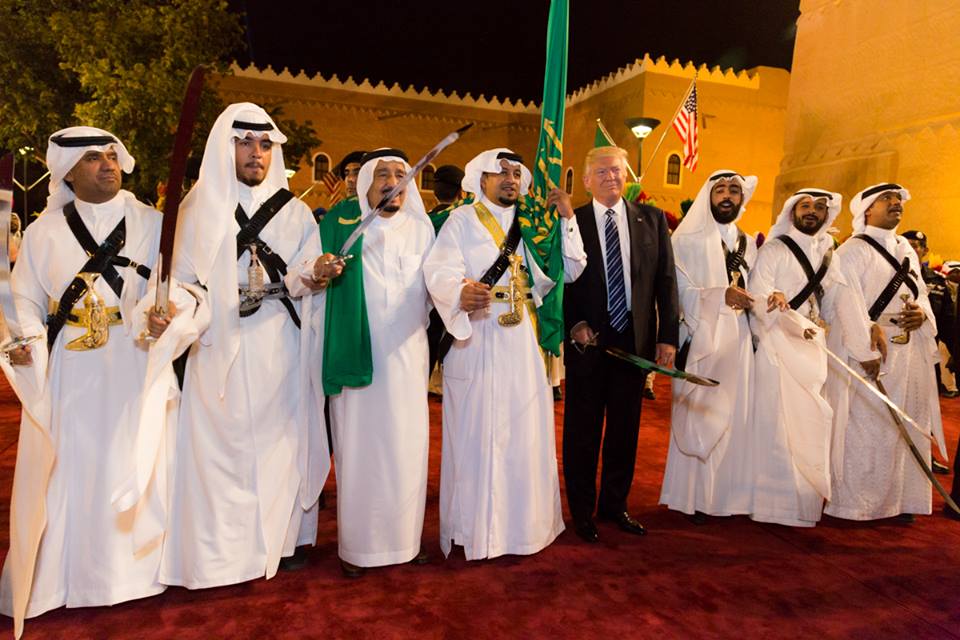
(Official White House Photo by Shealah Craighead)
Though Trump has recited Washington’s bipartisan (and benighted) mantra about Iran being the principal sponsor of terrorism, he appears to be moving toward a more honest view, recognizing the falsity of the neocon-driven propaganda about Iran.
Trump’s new coolness toward Saudi Arabia may have contributed to the recent warming of relations between the Sunnis of Saudi Arabia and the Shiites of Iran, a sectarian conflict dating back 1,400 years. In a surprising move announced this week, the two countries plan an exchange of diplomatic visits.
Even in areas where Trump has engaged in reckless rhetoric, such as his “fire and fury” warning to North Korea, his behind-the-scenes policy appears more open to compromise and even accommodation. In the past week or so, the tensions with North Korea have eased amid backchannel outreach that may include the provision of food as an incentive for Pyongyang to halt its missile development and even open political talks with South Korea, according to a source close to these developments.
On Afghanistan, too, Trump may be playing a double game, giving a hawkish speech on Monday seeming to endorse an open-ended commitment to the near-16-year-old conflict, while quietly signaling a willingness to negotiate a political settlement with the Taliban.
One alternative might be to accept a coalition government, involving the Taliban, with a U.S. withdrawal to a military base near enough to launch counterterrorism strikes if Al Qaeda or other international terror groups again locate in Afghanistan [likely an air base from which to threaten Iran – Aletho News ].
Many of Trump’s latest foreign policy initiatives reflect former White House strategist Steve Bannon’s hostility toward neoconservative interventionism. Secretary of State Rex Tillerson, the former Exxon-Mobil chief executive, also shares a more pragmatic approach to foreign affairs than some of his more ideological predecessors.
Albeit still in their infancy, these policies represent a new realism in U.S. foreign policy that, in many ways, paralleled what President Obama favored but was often unwilling or unable to see through to its logical conclusions, given his fear of Netanyahu and the power of the neocons and their liberal-hawk allies.
Still, some of Obama’s most important decisions – not to launch a major military strike against Syria in August 2013 and to negotiate an agreement with Iran to constrain its nuclear program in 2013-15 – followed a similar path away from war, thus drawing condemnation from the Israeli-Saudi tandem and American neocons.
As a Republican who rose politically by pandering to the GOP “base” and its hatred of Obama, Trump rhetorically attacked Obama on both Syria and Iran, but may now be shifting toward similar positions. Gradually, Trump has come to recognize that the neocons and his other political enemies are trying to hobble and humiliate him – and ultimately to remove him from office.
The question is whether Trump’s instinct for survival finally will lead him to policies that blunt his enemies’ strategies or will cause him to succumb to their demands.
Investigative reporter Robert Parry broke many of the Iran-Contra stories for The Associated Press and Newsweek in the 1980s.
Netanyahu Backs Partitioning Iraq for Kurdish State
teleSUR | August 14, 2017
During a meeting with a U.S. delegation, Israel’s Prime Minister Benjamin Netanyahu expressed interest in partitioning Iraq.
The Prime Minister told the group of 33 congressmen that he favored the establishment of an independent Kurdish state in the Arab country. Israel has a longstanding relationship with the Kurds, who remains one of its few non-Arab allies in the area.
The Jerusalem Post reported that a source who attended the meeting said Netanyahu referred to the Kurds as “brave, pro-Western people who share our values.”
Netanyahu previously spoke on the issue in 2014 when he said in a speech that Israel should “support the Kurdish aspiration for independence.”
Two months ago Iranian Parliament Speaker Ali Larijani warned about bids to break up Iraq, saying the partitioning of Arab countries serves the interests of Israel. “The Zionist regime seeks Iraq’s disintegration,” Larijani accused during a meeting with Iraqi Prime Minister Haider al-Abadi in Tehran.
A report published in the New Yorker magazine in 2004 said Israeli military and intelligence operatives were active in Kurdish areas and providing training for commando units.
According to the report, Israel has been expanding its presence in Kurdistan and encouraging Kurds, its allies in the region, to create an independent state.
Netanyahu slams Ireland’s pro-Palestine stance
Press TV – July 12, 2017
Enraged by Dublin’s financial aid to anti-Israel Palestinian rights groups, Prime Minister Benjamin Netanyahu has lashed out at visiting Irish Foreign Minister Simon Coveney over his country’s pro-Palestine policy.
Netanyahu’s office made the criticism in a statement issued on Tuesday after the premier’s meeting with Coveney in Jerusalem al-Quds.
The premier “expressed his dissatisfaction over Ireland’s traditional stance” on Palestine and urged Coveney to condemn what he called Palestinian “incitement,” the statement read.
He also challenged the top Irish diplomat over Dublin’s assistance to the “NGOs that call for the destruction of Israel,” it added.
Coveney, for his part, said in a news briefing that his discussions with Netanyahu touched on a range of issues, including Israeli settlements, the humanitarian and political situation in the blockaded Gaza Strip and the so-called peace process.
“Of course, we have clear differences on some issues, but these differences are honestly held and openly expressed,” he noted.
Ireland runs Irish Aid, an official overseas development program for overseas development.
A number of Palestinian rights groups, such as Al-Haq, Addameer and the Palestinian Center for Human Rights, are funded by the program.
During his three-day trip, which began on Monday, Coveney is scheduled to meet with Palestinian President Mahmoud Abbas, United Nations officials and representatives from the NGOs funded by Irish Aid.
Speaking prior to his departure for the occupied territories, Coveney said he was “looking forward to hearing a diverse range of views from” the Palestinians, Israelis and NGOs.
“Of course, I will also use the opportunity to make clear Ireland’s concerns about the impact of the continuing occupation and the fact that, as things stand, the prospects of a comprehensive peace agreement remain dim,” he pointed out.
The meeting took place on the same day that Ireland’s South Dublin County Council voted unanimously to fly the Palestinian flag over the County Hall in Tallaght for a month in solidarity with the “oppressed people of Palestine.”
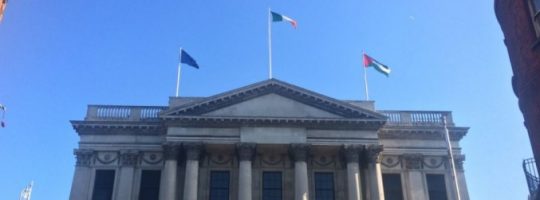
It has become the fourth Irish local authority to make such a move in recent months.
“I am delighted with [the] vote in solidarity with the people of Palestine. It might seem like a very small gesture but I know from the reaction to similar decisions made by other councils that today’s vote will be applauded across Palestine and elsewhere,” said Councilor Enda Fanning.
About 600,000 Israelis live in over 230 settlements built illegally since the 1967 occupation of the Palestinian territories.
Palestinian officials say they want the resolution of the conflict with Tel Aviv based on the so-called two-state solution along pre-1967 boundaries.
However, Netanyahu has on several occasions said Israel should maintain its military occupation of the West Bank under any agreement with the Palestinians.
In recent months, the Tel Aviv regime has stepped up its illegal settlement construction activities in the occupied lands and oppressive measures against the Palestinians, leading to an increase in global anti-Israel sentiment.
Saudi Arabia teams up with Israel in anti-Qatar lobbying in the US Congress
By Abdus Sattar Ghazali – Journal of America – June 10, 2017
US proposed legislation – Palestinian International Terrorism Support Prevention Act of 2017 – threatening to sanction Qatar for its support of the so-called “Palestinian terror” was sponsored by 10 lawmakers who received more than $1m over the last 18 months from lobbyists and groups linked to Israel, Saudi Arabia, and the United Arab Emirates, Al Jazeera reported Friday.
The HR 2712 bill was introduced to the US House of Representatives on May 25, but the text wasn’t available until Friday morning, hours after Saudi Arabia, UAE, and Egypt put 59 people and 12 institutions linked to Qatar on a “terror list”, Al Jazeera said.
HR 2712’s sponsors received donations totaling $1,009,796 from pro-Israel individuals and groups for the 2016 election cycle alone, according data collected by the Center for Responsive Politics, an independent research group tracking money in US politics and its effect on elections and public policy, and then compiled by Al Jazeera.
Sponsors of the bill are: Congressmen Brian Mast (FL-18), Josh Gottheimer (NJ-5), Foreign Affairs Committee Chairman Ed Royce (CA-39) and Foreign Affairs Committee Ranking Member Eliot Engel (NY-16). The bill is co-sponsored by Congressmen Brad Sherman (CA-30), Ileana Ros-Lehtinen (FL-27), Ted Poe (TX-2), Ted Lieu (CA-33), Ted Deutch (FL-22) and Thomas Suozzi (NY-3).
Al Jazeera reported that Royce received $242,143 from pro-Israel sources for the 2016 election cycle, $190,150 went to Engel. Mast, who volunteered with the Israeli military after he finished serving in the US Army, received $90,178.
“Following my service in the U.S. Army, I chose to volunteer alongside the Israeli Defense Forces because our countries share the common ideals of freedom, democracy and mutual respect for all people. Hamas preaches destruction to Israel and death to the values we hold dear in the United States. They have murdered more than 400 Israelis and at least 25 American citizens.” Rep. Mast was quoted as saying.
According to Trita Parsi, the founder of the National Iranian American Council (NIAC), a nonprofit that aims to strengthen the voice of US citizens of Iranian descent, there are similarities between the US-allied Arab nations’ “terror list” and HR 2712 show[ing] growing cooperation between Gulf Arab states and Israel.
“The coordination between hawkish pro-Israel groups and UAE and Saudi Arabia has been going on for quite some time,” Parsi told Al Jazeera. What is new, he continued, is pro-Israel groups such as the Foundation for Defense of Democracies “coming out with pro-Saudi [articles] and lobbying for them on Capitol Hill”.
Parsi was quoted as saying that the sponsors of the bill are traditional pro-Saudi lawmakers, however they are in the pro-Likud camp. Likud is the party of Israeli PM Benjamin Netanyahu.
President is required
The Palestinian International Terrorism Support Prevention Act requires the President to submit to Congress an annual report for the next three years identifying foreign persons, agencies or instrumentalities of a foreign state who knowingly and materially assist Hamas, the Palestinian Islamic Jihad, or an affiliate or successor of one of those organizations.
After identifying the organizations, the President must impose two or more sanctions, including denying
a) Export-Import guarantees,
b) defense support under the Arms Export Control Act,
c) export of munitions to any agreement to which a person identified is a part,
d) export of goods or technology controlled for national security reasons,
e) loans more than $10 million, or
f) seizure of property held within the United States.
The bill also requires the President to report to Congress on each government that provides support for acts of terrorism and provides material support to Hamas, the Palestinian Islamic Jihad, or any affiliate or successor organization, or the President determines to have engaged in a significant transaction to knowingly and materially provide support to Hamas, the Palestinian Islamic Jihad or any affiliate or successor organization.
After identifying the governments, the President must suspend U.S. assistance to that government for one year, instruct the executive directors of each international finance institution to vote against any loan or technical assistance to that government and prohibit any munitions export to that government for one year.
Additionally, the President must prohibit that government’s transactions in foreign exchanges that are subject to the jurisdiction of the United States and prevent that government’s transfers of credits or payments between financial institutions subject to the jurisdiction of the United States.
Important Sections of the HR 2712 Bill
Section 2: Findings and Statement of Policy
Subsections (a)(3) and (4) state that “Hamas has received significant financial and military support” from Qatar and that the Under Secretary of Treasury for Terrorism and Financial Intelligence confirmed that “Qatar, a longtime US ally has for many years openly financed Hamas.” The bill also finds that Qatar hosts a number of high-ranking Hamas officials, including Khaled Mashal.
Subsections (a)(5) through (7) outline Iran’s material and financial support and subsections (8) through (10) detail Iranian support to the PIJ.
Section 3: Imposition of Sanctions with Respect to Foreign Persons and Agencies and Instrumentalities of Foreign States Supporting Hamas, the PIJ, or Any Affiliate or Successor Group
No later than 120 days after H.R. 2712 is enacted—then once a year for no more than three years—the president must report to Congress the foreign persons, agencies, and instrumentalities of foreign states that provide support to the aforementioned groups. Two exceptions are reserved for the president, however. If the president notifies Congress 15 days prior to completing a “significant transaction” with a foreign entity or agency that is in the “national interest” of the United States, the foreign entity or agency may be exempt from sanctions. The other exception is reserved for the president to issue waivers that would exempt a foreign entity or agency from sanctions for 120 days, as long as Congress is notified seven days prior.
Set forth in this bill are sanctions on the following:
- Banking and financing (e.g., extensions of credit, guarantees, insurance, etc.)
- Defense-related sales (including munitions, defense services, and construction services)
- Goods and technologies regulated through the Export Administration or included in the US Munitions List
- Medical, agricultural, and humanitarian goods and services are not included among sanctioned items.
Section 4: Imposition of Sanctions with Respect to Foreign Governments That Provide Material Support to Hamas, the PIJ, or Any Affiliate or Successor Thereof
Much like Section 3, Section 4 sets a 120-day deadline after enactment for the president to report to Congress any governments the Secretary of State has determined “repeatedly provided support for acts of international terrorism.” This report must be resubmitted, with relevant information, every 180 days.
The sanctions set forth in this section include the prohibition or suspension of the following for one year:
- US aid to the foreign government
- Extension of loans and financial or technical services
- Export of items on the US Munitions List or Commerce Control List
- Transactions in foreign exchanges in which the United States has jurisdiction
- Transfers of credit or payments between one or more financial institutions subject to US jurisdiction
- Should the president determine it is in US security interests and notify Congress seven days in advance, he can waive any foreign government sanctions for 180 days.
Section 5: Report on Activities of Foreign Countries to Disrupt Global Fundraising, Financing, and Money Laundering Activities of Hamas, the PIJ, or Any Successor or Affiliate Thereof
This bill outlines a reporting requirement for the president, no later than 180 days after the bill’s enactment. The president must report a list of foreign countries providing support for the aforementioned organizations and further assessments including:
- Steps the foreign government is taking to freeze assets of these groups
- Any reasons the government is not taking adequate steps to freeze assets
- Measures taken by the United States to freeze assets
- List of countries where the aforementioned groups fundraise and steps those countries are taking to disrupt the fundraising efforts
- List of countries from which the groups receive surveillance equipment and what measures are being taken to disrupt the acquisition.
To borrow from Marcus Montgomery, an Analyst at the Washington DC-based Arab Center, the language of HR 2712 is interesting since it introduces sanctions for actions likely already covered under existing legislation. Hamas and the PIJ are both designated Foreign Terrorist Organizations (FTOs) and Specially Designated Global Terrorists (SDGTs) by the State and Treasury Departments, respectively. With that in mind, it is already illegal for US entities or institutions to support such groups. Thus, the sanctions proposed in this bill that pertain to US jurisdiction are redundant.
Formally targeting Iran is redundant as well because Tehran has been declared a state sponsor of terror by the State Department and prohibitions against exports of arms, financial and technical services, and US aid to Iran are already in place.
For Marcus Montgomery, Qatar would be the truly new target under this legislation, but as an ally with which the United States has economic and military ties, it is tough to see many in the Senate agreeing to label Qatar a de facto state sponsor of terror.
Erdogan vows to stand by ‘Qatari brothers’
Interestingly, Turkish President Tayyip Erdogan Friday called for full removal of a Saudi-led blockade of Qatar after approving the deployment of Turkish troops there, saying Riyadh needed to put brotherhood ahead of animosity.
Erdogan said isolating Qatar would not resolve any regional problems and vowed to do everything in his power to help end the regional crisis. “We will not abandon our Qatari brothers,” Erdogan told members of his ruling Justice and Development (AK) Party at a fast-breaking meal on Friday in Istanbul during the Muslim holy month of Ramadan.
“I also have a special request from the Saudi administration. You are the largest and most powerful state in the Gulf. We call you the Custodian of the Holy Places. You especially should work for brotherhood, not animosity. You have to work for bringing brothers together. This is what we expect from Saudi, the Custodian of the Holy Mosques,” Erdogan was quoted by Al Jazeera as saying.
“I say it should be lifted completely,” Erdogan said of the embargo.
Turkey, which has maintained good relations with Qatar, as well as several of its Gulf Arab neighbors, offered food and water supplies to stave off possible shortages. “There are those who are uncomfortable with us standing by our Qatari brothers, providing them with food. I’m sorry, we will continue to give Qatar every kind of support,” Erdogan said, adding that he had never witnessed Doha supporting “terrorism”.
On Wednesday, Turkey’s parliament ratified two deals on deploying troops to Qatar and training the Gulf nation’s security forces. The deal to send Turkish soldiers in Qatar, aimed at improving the country’s army and boosting military cooperation, was signed in April 2016 in Doha.
After an initial deployment of Turkish soldiers at a base in Doha, Turkish fighter jets and ships will also be sent, the mass-circulation Hurriyet newspaper said on its website on Friday.
“The number of Turkish warplanes and Turkish warships going to the base will become clear after the preparation of a report based on an initial assessment at the base,” Hurriyet said.
A Turkish delegation will go to Qatar in the coming days to assess the situation at the base, where about 90 Turkish soldiers are currently based, Hurriyet said adding: there were plans send some 200 to 250 soldiers within two months in the initial stage.
Abdus Sattar Ghazali is the Chief Editor of the Journal of America.
When the Trump Coup-makers Cometh
By Robert Parry | Consortium News | May 18, 2017
So what did you think a U.S.-styled “soft coup” would look like? What we’re seeing regarding the intended removal of President Trump is not that much different from what has happened in dozens of other countries, whether Iran in 1953 or Ukraine in 2014 or Brazil in 2016. This one just has a few extra American touches.
Like other coups, there are often vague and unproven accusations leveled against the target and his or her entourage. Even though hard evidence is usually lacking, “process crimes,” such as making misstatements to prosecutors or obstructing justice, are developed as a substitute under the popular saying: “the cover-up is worse than the crime.” Whatever the case, a complicit media then trumpets alleged wrongdoing into grave and impeachable offenses.
And, if you had any doubts about what is looming, you should read Washington Post columnist E.J. Dionne Jr.’s op-ed, entitled in print editions “A quick end would be better,” which states:
“There is really only one issue in American politics at this moment: Will we accelerate our way to the end of the Trump story, or will our government remain mired in scandal, misdirection and paralysis for many more months — or even years? …
“Nothing could be worse than slow-walking the Trump inquiries. The evidence is already overwhelming that he is temperamentally and intellectually incapable of doing the job he holds. He is indifferent to acquiring the knowledge the presidency demands and apparently of the belief that he can improvise hour to hour. He will violate norms whenever it suits him and cross ethical lines whenever he feels like it.”
The History of Coups
As this American coup against Trump progresses, one commonality of coups around the world – whether “hard coups” of military tanks or “soft coups” of “constitutional” removals – is that the coup’s target is not some perfect human being. He or she has likely made political mistakes or cut some corners or had associates who lined their pockets.
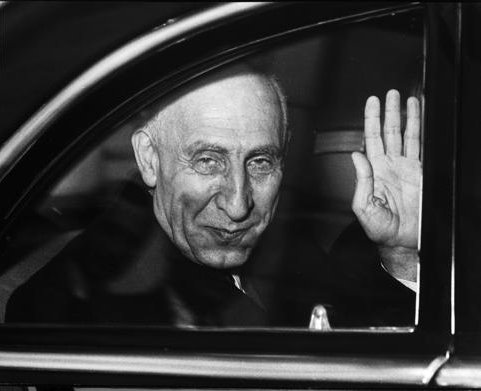
Iranian Prime Minister Mohammad Mossadegh
But the difference between those misdeeds being treated as politics as usual or becoming the stuff of “scandal” has more to do with the interests of powerful interests – a domestic “deep state” or an outside “superpower” – than any evenhanded pursuit of justice.
To say that Trump is an imperfect messenger for whatever populist message he thinks he’s carrying stretches beyond the breaking point any normal definition of the word “imperfect.” Indeed, Trump may be the perfectly imperfect messenger.
Yet, what’s really at stake in any coup is power and the direction that a country will take. In the case of Donald Trump, there appear to be several factors at play: he is regarded by many establishment figures as too incompetent and uncouth to serve as America’s President; he also defies the neoconservative orthodoxy over U.S. foreign policy; and perhaps most significantly, he doesn’t believe in the New Cold War, which will assure the Military-Industrial Complex years of expensive new weapons systems by making Russia the new/old “enemy.”
There is, of course, some truth to all these concerns. Trump is an egotistical buffoon who doesn’t seem to know what he doesn’t know. Often his brain doesn’t connect to his tongue – or his Twitter fingers. He is more a Kardashian “reality star,” saying stuff to get attention and to attract eyeballs, than a sober leader who holds his cards close and chooses his words carefully.
Though many Americans voted for him because they viewed him as a no-nonsense businessman, he was actually someone who ran what amounted to a family business without the kind of accountability that often comes with managing a large public corporation.
Puffing up his own importance, Trump even has bragged about his impunity. During the 2016 campaign, he was revealed as the kind of jerk who boasts about grabbing women by the “pussy” and getting away with it because of his star status and personal power.
So, yes, Trump is both incompetent and uncouth. But he is hardly the first president to bring unseemly personal baggage or an inadequate skill set into the Oval Office. Bill Clinton was known as an insatiable hound dog preying on vulnerable women, and George W. Bush was shockingly unqualified for the demands of the presidency.
While Barack Obama had the intellectual skills and behaved commendably in his personal conduct, he had little experience in managing a complex organization – and it showed in some of his disastrous personnel decisions, such as appointing the hawkish Hillary Clinton as Secretary of State and keeping Bush loyalist Robert Gates as Secretary of Defense.
In other words, Trump’s skill limitations were not by themselves disqualifying. With the proper advice and a modicum of self-control, Trump could have performed acceptably as Chief Executive. But he failed to recruit wise advisers and couldn’t discipline either his tongue or his Twitter fingers.
Even staunch Trump supporters whom I’ve spoken with wish he could have parked his large but fragile ego at the White House gate rather than bringing it into the Oval Office.
Foreign Policy Dissent
Still, Trump’s larger vulnerability was his failure to accept the foreign policy parameters prescribed by the neocon-dominated Establishment. He started out insulting powerful neocons by challenging their self-exculpatory narrative of the Iraq War – that it was a great idea sabotaged by poor execution but then salvaged by the “surge” before being betrayed by Obama.
Trump also belittled some of the neocon champions, such as old-lion Sen. John “No Hero” McCain and rising star Sen. Marco “Little Marco” Rubio. It would have been a neocon dream to have the 2016 campaign a match-up between Marco Rubio and Hillary Clinton, but the former fell to Trump in the primaries and the latter lost to Trump in the general election.
But Trump’s greatest sin was his refusal to buy into Official Washington’s big-ticket Russia-bashing, the goal of making Moscow an implacable enemy that then required massive new spending on both propaganda (supposedly to combat Russian “propaganda”) and military projects (including NATO expansion up to Russia’s borders and new weapons systems to deter Russian “aggression”).
Despite his simple-mindedness (or perhaps because of it), Trump couldn’t understand why the United States had to demonize Russia when he saw many areas of possible cooperation (such as the fight against terrorism).
Trump and a few of his advisers were so out-of-step on the “Russia thing” that Official Washington developed a new groupthink that the only possible explanation was that Trump and his team must be somehow on the Kremlin’s payroll. Any alleged “connection” to Russia – no matter how tenuous or seemingly innocuous – became front-page news.
For instance, retired Lt. Gen. Michael Flynn’s speakers bureau negotiated a relatively modest speaking fee of $45,386 for him to address the tenth anniversary of RT, the Russian network, in December 2015, with RT even whittling down his fee – and that speech became a major cause celebre.
On Dec. 29, 2016, after the election and as the national security adviser-designate, Flynn took a phone call from Russian Ambassador Sergey Kislyak while Flynn was on vacation in the Dominican Republic, and Flynn later offered an incomplete account of the conversation, which the National Security Agency knew because it had intercepted the phone call.
Instead of people shrugging their shoulders and giving Flynn the benefit of the doubt, Obama’s holdovers in the Justice Department literally made a federal case out of it, invoking the archaic and virtually-never-used 1799 Logan Act (which bars private citizens from negotiating with foreigners) and then advancing the absurd argument that somehow the discrepancies in Flynn’s recollection made him vulnerable to Russian blackmail to get Trump to fire Flynn.
Then, Trump’s alleged suggestion to then-FBI Director James Comey that Flynn was a good guy who had served his country and had suffered enough – and that it might be best to “let it go” – has now become the latest argument for impeaching Trump.
In Deep Water
Whether he knows it or not, Trump is now in very deep water and has no idea how to dog-paddle back to the shore. His aides seem to think that a nine-day foreign trip will do him good, but it is more likely to make him grovel before Saudi King Salman and Israeli Prime Minister Benjamin Netanyahu, knowing that any offense that those leaders might take would simply expedite Trump’s political doom.
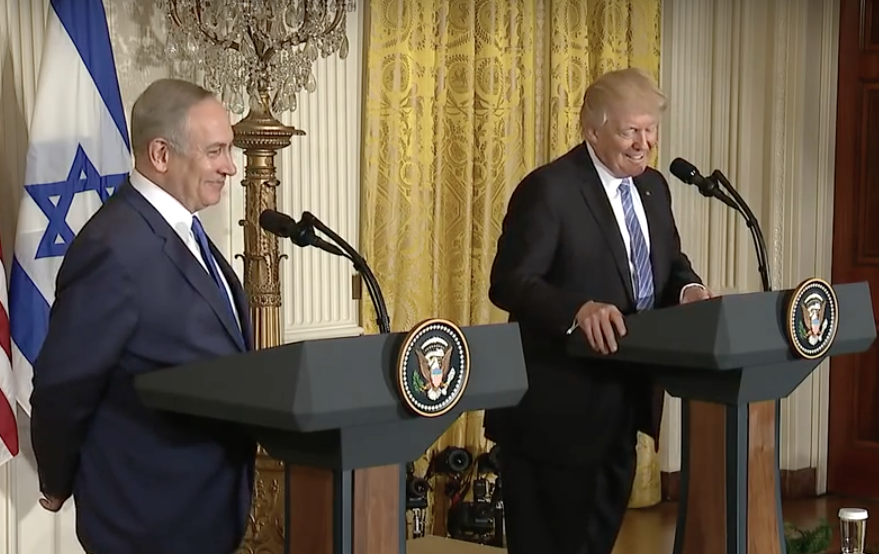
Screen shot from Whitehouse.gov
Trump is surely in no position to tell the Saudis to cut out their covert funding for Al Qaeda and other Sunni terrorist groups – or to insist that they stop bombing Yemen, the poorest country in the Middle East. Nor could Trump dare challenge Netanyahu on the Israeli abuse of the Palestinians, the Prime Minister’s obstruction of the peace process, and his blatant efforts to manipulate U.S. politics in favor of bloody neocon interventions across the region. Trump will be the desperate supplicant hoping for a reassuring pat on the head.
There is one – and perhaps only one – winning move that Trump has left. He could authorize CIA Director Mike Pompeo to prepare for release U.S. intelligence information regarding turning-point moments in recent years, such as the truth about the 2013 sarin incident in Syria and the 2014 Malaysia Airlines shoot-down in eastern Ukraine. [See here and here.]
If – as I’m told – the Obama administration systematically misrepresented the intelligence on those catastrophes to register propaganda gains (against the Syrian government in 2013 and Russia in 2014), the U.S. government’s internal information could shift those key narratives in more peaceful directions.
But whatever the truth is, Trump could shift his own image from a compulsive liar who disdains facts into a champion for transparency and honesty in government. He could turn the tables on The New York Times (which has set itself up as the great hero for Truth) and The Washington Post (which has fashioned a new melodramatic slogan, “Democracy Dies in Darkness”). He could point out their hypocritical lack of aggressiveness in challenging the Obama administration’s excessive secrecy.
Trump would also give his dispirited supporters something to rally around. Many blue-collar voters backed Trump because they thought he was at least addressing their economic fears of lost work and lost status, while Hillary Clinton – in their view – treated them with disregard and disdain, even calling many of them “deplorables.”
But Trump’s promises of recovered jobs were largely hollow. Whatever improvement Americans might be feeling in their pocketbooks, it is more the result of Obama’s careful economic management and the normal recovery from Bush’s Wall Street crash and the Great Recession than anything Trump can or will do.
So, revealing hidden truths – where the American people may have been misled – would not only be the right thing to do for democracy, it also could be the smart thing to do. When the Establishment coup-makers come for Trump – as they now almost certainly will – he can at least say that he tried to do something to return the U.S. government to the American people.
That might not save his presidency but it would at least elevate his purpose and possibly create some positive legacy to attach to the Trump name. As the situation stands now, Trump appears headed for a humiliating exit that won’t just strip him of the presidency but would strip away any luster for the Trump brand.
In other words, his impulsive foray into politics might not just make him one of the most reviled U.S. presidents in history but take down the Trump businesses, too.
Investigative reporter Robert Parry broke many of the Iran-Contra stories for The Associated Press and Newsweek in the 1980s.
Netanyahu: ‘Israel’ Committed to Treating Syrian War Wounded
Al-Manar – April 9, 2017
Israeli Prime Minister Benjamin Netanyahu said Sunday that ‘Israel’ remained committed to treating war wounded from Syria and reaffirmed his support for last week’s US air strike in Syria.
In comments at the start of a cabinet meeting, Netanyahu said “Israel is caring for wounded Syrians as part of a humanitarian effort,” “We will continue to do so.”
Israeli media reported that a proposal to do so had been met with objections from some government and security officials due to logistical difficulties, with the location far from the Zionist entity.
The occupying entity has treated more than 3,000 war wounded militants from Syria in what it describes as a ‘humanitarian gesture’.
It says it treats whoever makes it to the demarcation line regardless of affiliation, though ‘Israel’ is accused of supporting terrorists.
Netanyahu spoke again of his support for last week’s US missile strike against a Syrian airbase.
Trump’s ‘Wag the Dog’ Moment
By Robert Parry | Consortium News | April 7, 2017
Just two days after news broke of an alleged poison-gas attack in northern Syria, President Trump brushed aside advice from some U.S. intelligence analysts doubting the Syrian regime’s guilt and launched a lethal retaliatory missile strike against a Syrian airfield.
Trump immediately won plaudits from Official Washington, especially from neoconservatives who have been trying to wrestle control of his foreign policy away from his nationalist and personal advisers since the days after his surprise victory on Nov. 8.
There is also an internal dispute over the intelligence. On Thursday night, Secretary of State Rex Tillerson said the U.S. intelligence community assessed with a “high degree of confidence” that the Syrian government had dropped a poison gas bomb on civilians in Idlib province.
But a number of intelligence sources have made contradictory assessments, saying the preponderance of evidence suggests that Al Qaeda-affiliated rebels were at fault, either by orchestrating an intentional release of a chemical agent as a provocation or by possessing containers of poison gas that ruptured during a conventional bombing raid.
One intelligence source told me that the most likely scenario was a staged event by the rebels intended to force Trump to reverse a policy, announced only days earlier, that the U.S. government would no longer seek “regime change” in Syria and would focus on attacking the common enemy, Islamic terror groups that represent the core of the rebel forces.
The source said the Trump national security team split between the President’s close personal advisers, such as nationalist firebrand Steve Bannon and son-in-law Jared Kushner, on one side and old-line neocons who have regrouped under National Security Adviser H.R. McMaster, an Army general who was a protégé of neocon favorite Gen. David Petraeus.
White House Infighting
In this telling, the earlier ouster of retired Gen. Michael Flynn as national security adviser and this week’s removal of Bannon from the National Security Council were key steps in the reassertion of neocon influence inside the Trump presidency. The strange personalities and ideological extremism of Flynn and Bannon made their ousters easier, but they were obstacles that the neocons wanted removed.
Though Bannon and Kushner are often presented as rivals, the source said, they shared the belief that Trump should tell the truth about Syria, revealing the Obama administration’s CIA analysis that a fatal sarin gas attack in 2013 was a “false-flag” operation intended to sucker President Obama into fully joining the Syrian war on the side of the rebels — and the intelligence analysts’ similar beliefs about Tuesday’s incident.
Instead, Trump went along with the idea of embracing the initial rush to judgment blaming Assad for the Idlib poison-gas event. The source added that Trump saw Thursday night’s missile assault as a way to change the conversation in Washington, where his administration has been under fierce attack from Democrats claiming that his election resulted from a Russian covert operation.
If changing the narrative was Trump’s goal, it achieved some initial success with several of Trump’s fiercest neocon critics, such as neocon Senators John McCain and Lindsey Graham, praising the missile strike, as did Israeli Prime Minister Benjamin Netanyahu. The neocons and Israel have long sought “regime change” in Damascus even if the ouster of Assad might lead to a victory by Islamic extremists associated with Al Qaeda and/or the Islamic State.
Wagging the Dog
Trump employing a “wag the dog” strategy, in which he highlights his leadership on an international crisis to divert attention from domestic political problems, is reminiscent of President Bill Clinton’s decision to attack Serbia in 1999 as impeachment clouds were building around his sexual relationship with intern Monica Lewinsky.
Screen shot from Whitehouse.gov
Trump’s advisers, in briefing the press on Thursday night, went to great lengths to highlight Trump’s compassion toward the victims of the poison gas and his decisiveness in bombing Assad’s military in contrast to Obama’s willingness to allow the intelligence community to conduct a serious review of the evidence surrounding the 2013 sarin-gas case.
Ultimately, Obama listened to his intelligence advisers who told him there was no “slam-dunk” evidence implicating Assad’s regime and he pulled back from a military strike at the last minute – while publicly maintaining the fiction that the U.S. government was certain of Assad’s guilt.
In both cases – 2013 and 2017 – there were strong reasons to doubt Assad’s responsibility. In 2013, he had just invited United Nations inspectors into Syria to investigate cases of alleged rebel use of chemical weapons and thus it made no sense that he would launch a sarin attack in the Damascus suburbs, guaranteeing that the U.N. inspectors would be diverted to that case.
Similarly, now, Assad’s military has gained a decisive advantage over the rebels and he had just scored a major diplomatic victory with the Trump administration’s announcement that the U.S. was no longer seeking “regime change” in Syria. The savvy Assad would know that a chemical weapon attack now would likely result in U.S. retaliation and jeopardize the gains that his military has achieved with Russian and Iranian help.
The counter-argument to this logic – made by The New York Times and other neocon-oriented news outlets – essentially maintains that Assad is a crazed barbarian who was testing out his newfound position of strength by baiting President Trump. Of course, if that were the case, it would have made sense that Assad would have boasted of his act, rather than deny it.
But logic and respect for facts no longer prevail inside Official Washington, nor inside the mainstream U.S. news media.
Intelligence Uprising
Alarm within the U.S. intelligence community about Trump’s hasty decision to attack Syria reverberated from the Middle East back to Washington, where former CIA officer Philip Giraldi reported hearing from his intelligence contacts in the field that they were shocked at how the new poison-gas story was being distorted by Trump and the mainstream U.S. news media.
Giraldi told Scott Horton’s Webcast: “I’m hearing from sources on the ground in the Middle East, people who are intimately familiar with the intelligence that is available who are saying that the essential narrative that we’re all hearing about the Syrian government or the Russians using chemical weapons on innocent civilians is a sham.”
Giraldi said his sources were more in line with an analysis postulating an accidental release of the poison gas after an Al Qaeda arms depot was hit by a Russian airstrike.
“The intelligence confirms pretty much the account that the Russians have been giving … which is that they hit a warehouse where the rebels – now these are rebels that are, of course, connected with Al Qaeda – where the rebels were storing chemicals of their own and it basically caused an explosion that resulted in the casualties. Apparently the intelligence on this is very clear.”
Giraldi said the anger within the intelligence community over the distortion of intelligence to justify Trump’s military retaliation was so great that some covert officers were considering going public.
“People in both the agency [the CIA] and in the military who are aware of the intelligence are freaking out about this because essentially Trump completely misrepresented what he already should have known – but maybe he didn’t – and they’re afraid that this is moving toward a situation that could easily turn into an armed conflict,” Giraldi said before Thursday night’s missile strike. “They are astonished by how this is being played by the administration and by the U.S. media.”
One-Sided Coverage
The mainstream U.S. media has presented the current crisis with the same profound neocon bias that has infected the coverage of Syria and the larger Middle East for decades. For instance, The New York Times on Friday published a lead story by Michael R. Gordon and Michael D. Shear that treated the Syrian government’s responsibility for the poison-gas incident as flat-fact. The lengthy story did not even deign to include the denials from Syria and Russia that they were responsible for any intentional deployment of poison gas.
The article also fit with Trump’s desire that he be portrayed as a decisive and forceful leader. He is depicted as presiding over intense deliberations of war or peace and displaying a deep humanitarianism regarding the poison-gas victims, one of the rare moments when the Times, which has become a reliable neocon propaganda sheet, has written anything favorable about Trump at all.
According to Syrian reports on Friday, the U.S. attack killed 13 people, including five soldiers at the airbase.
Gordon, whose service to the neocon cause is notorious, was the lead author with Judith Miller of the Times’ bogus “aluminum tube” story in 2002 which falsely claimed that Iraqi leader Saddam Hussein was reconstituting a nuclear-weapons program, an article that was then cited by President George W. Bush’s aides as a key argument for invading Iraq in 2003.
Regarding this week’s events, Trump’s desperation to reverse his negative media coverage and the dubious evidence blaming Assad for the Idlib incident could fit with the “Wag the Dog” movie from 1997 in which an embattled president creates a phony foreign crisis in Albania.
In the movie, the White House operation is a cynical psychological operation to convince the American people that innocent Albanian children, including an attractive girl carrying a cat, are in danger when, In reality, the girl was an actor posing before a green screen that allowed scenes of fiery ruins to be inserted as background.
Today, because Trump and his administration are now committed to convincing Americans that Assad really was responsible for Tuesday’s poison-gas tragedy, the prospects for a full and open investigation are effectively ended. We may never know if there is truth to those allegations or whether we are being manipulated by another “wag the dog” psyop.
Investigative reporter Robert Parry broke many of the Iran-Contra stories for The Associated Press and Newsweek in the 1980s.
Putin rebukes Netanyahu over ‘groundless’ accusations on suspected chemical incident in Syria
RT | April 6, 2017
Russian President Vladimir Putin told Israeli Prime Minister Benjamin Netanyahu in a telephone conversation that it was unacceptable to make “groundless” accusations concerning the alleged chemical weapons incident that took place in Syria earlier this week.
During the phone call initiated by the Israeli side on Thursday, Putin and Netanyahu stressed the importance of boosting international efforts to tackle terrorism, the Kremlin said in a statement.
Both sides “expressed readiness to expand [cooperation] in the interest of assuring stability and security in the Middle East and, first of all, in Syria,” it said.
In particular, Putin “pointed out that it was unacceptable to make groundless accusations against anyone without conducting a detailed and unbiased investigation.”
At least 70 people, including 11 children, were reportedly killed in a suspected chemical incident in the town of Khan Sheikhoun in Iblib province, Syria, on Tuesday. The US and its allies have put the blame on the Syrian government.
Earlier on Thursday, Israeli Defense Minister Avigdor Lieberman told the Yedioth Ahronoth newspaper that he was sure Syrian government forces were behind the “chemical weapons attack” in Idlib.
“The two murderous chemical weapons attacks on civilians in the Idlib region in Syria and on the local hospital were carried out by direct and premeditated order of Syrian President Bashar Assad, with Syrian planes. I say this with 100 percent certainty,” Lieberman said.
The defense minister criticized the ‘international community’ for having “zero” reaction to the incident, stressing that “the world needs to take responsibility and, instead of just talking, needs to do something.”
When asked if Russia was somehow involved in the chemical weapons attack, Liberman replied “we don’t know.”
The Russian Defense Ministry said the Syrian military carried out airstrikes in Khan Sheikhoun on April 4, hitting production facilities where terrorists stored chemicals, which were previously used in Iraq and the Syrian city of Aleppo.
Syrian Foreign Minister Walid Muallem has dismissed any accusations that the Syrian Army deployed chemical weapons in Idlib.
It’s impossible that the army – which has been making significant gains in almost all theaters of the Syrian war – would use banned chemical weapons against its “own people” and even terrorists, the minister said.
Netanyahu levels possible threat at Putin; Moscow summons Israeli ambassador
By Adam Garrie | The Duran | March 18, 2017
Israeli Prime Minsiter Benjamin Netanyahu has emerged after an illegal Israeli air strike on Syrian troops in Palmyra. In his statement, he predictably disregarded international law, but he also made what can only be described as a thinly veiled threat against Russia.
The Israeli leader claimed he was targeting Syrian allied Hezbollah fighters but in reality, it is almost certain the strike hit Syrian Arab Army regulars.
He went on to say,
Just who could ‘everyone’ imply. Could the Israeli leader be threatening Russia?
It seems that he is.
Russia has been a consistent ally of the Syrian Arab Republic in her war against terrorism. Israel, which has been an enemy of Syria since the 1940s, is deeply desirous for regime change in one of the few Arab states left, which still pursues an independent foreign policy, one which is openly pro-Palestine.
As a result of Netanyahu’s provocative remarks, Moscow summoned the Israeli Ambassador to Russia to clarify the remarks. Russia is in a unique position as a power that is an ally of Syria, a traditional friend of Palestine, but also a power that Israel listens to and does not want to overtly upset.
Indeed, Netanyahu was in Moscow just over a week ago. If Israel thinks it is in a position to provoke Russia and threaten Russia into changing its established policy in Syria, they really ought to think again.
One must remain hopeful that the Israeli Ambassador got a stern warning from Russia, something along the lines of, ‘stay out of Syria and stay out of our business in Syria as a legal partner of Damascus’.
Featured Video
Iran’s Next Strike May Not Explode. It Could Shut You Down
or go to
Aletho News Archives – Video-Images
From the Archive
Zionism’s Violent Legacy
By Donald Neff | Washington Report On Middle East Affairs | January 1996
On January 4, 1948, Jewish terrorists drove a truck loaded with explosives into the center of the all Arab city of Jaffa and detonated it, killing 26 and wounding around 100 Palestinian men, women and children.[1] The attack was the work of the Irgun Zvai Leumi – the “National Military Organization,” also known by the Hebrew letters Etzel – the largest Jewish terrorist group in Palestine. The Irgun was headed by Revisionist Zionist Menachem Begin and had been killing and maiming Arabs, Britons and even Jews for the previous ten years in its efforts to establish a Jewish state.
This terror campaign meant that at the core of Revisionist Zionism there existed a philosophical embrace of violence. … continue
Blog Roll
 Aletho News
- Trump’s Iran war is on an Israeli leash
- Saudi oil boss issues global supply warning
- Riyadh Says Its Oil System Is Intact. The Numbers Say Otherwise.
- Trump and Netanyahu Want to “Finish the Job” on Iran
- US ‘one-sided dictation’ not Iran’s beliefs makes rational talks impossible: Baghaei
- Iran’s Next Strike May Not Explode. It Could Shut You Down /Col Doug Macgregor
- Iran: US political targets legitimate if assassinations return
- Iraq shuts key border crossing with Iran under US pressure: Report
- Undersea Internet cables could be targeted in retaliation for attacks on Iran: IRGC deputy chief
- EU sending ‘biased’ observers to interfere in Serbian election – president
- If Americans Knew
- The Israel Lobby’s Changing Fortunes
- AIPAC has become such a political liability that it’s shifting to a more “nimble” approach to buying politicians
- At least 160 Israeli settler attacks in 2 weeks
- Will Gaza’s Ancient Christian Community Disappear Forever?
- Israel’s vision of regional security rests on keeping Arab states weak
- Heidi Levine recounts how Palestinian youths helped save her in settler attack
- DAILY UPDATE: Latest essential news on Palestine, Israel, & region
- Trump’s Intensifying Sabotage of the ICC, for Israel’s Sake
- Israeli military detain US and UK volunteers in West Bank including Democratic NY politician Brad Lander
- Americans at National Conservatism Conference held in Israel this year criticize Israel
- No Tricks Zone
- E-Cars Reduce CO2 Emissions By Only 41% Compared To Internal Combustion Engine Vehicles
- Predictions Made By Renowned Climate Professor Over Past Decades Have Been Proven To Be Poor
- New Study Suggests Large Regions Of The Pacific Ocean Have Been Cooling For The Last 80 Years
- Germany’s Green Energy Debacle: High Energy Costs Force Kahla Porzellan to Close After 182 Years!
- New Study: 50 Years Of The Most Aggressive ‘Net Zero’ Policies Can Only Affect The Global Climate By 0.03°C
- US September “Heat” Was No Record…Many Records Set Decades Ago
- Latest European Green Energy Debacle; Portugal’s Largest Flagship Solar Park Insolvent!
- Green Energy Debacle: German Expert Professor Fritz Vahrenholt Warns Of Severe Economic And Social Consequences
- Two More Paleo Reconstructions Affirm Meters-Higher Sea Levels Across Ireland, Brazil 7000-6000 Years Ago
- New Study: Earth And Venus Surface Warmth Largely Explained By Convection And Lapse Rate, Not CO2 Or Radiation

