Major Latin American Powers, Hungary Block US-EU Push to Isolate Venezuela’s Maduro
By Ilya Tsukanov – Sputnik – 04.08.2024
Venezuelan President Nicolas Maduro was reelected to a third term in office in a showdown with united opposition candidate Edmundo Gonzalez last Sunday, taking 52% of the vote to Gonzalez’ 43%. The US and its allies decried the results, recognized the opposition leader and demanded negotiations for a “peaceful transition of power.”
Efforts by Washington and Brussels to diplomatically isolate President Nicolas Maduro have failed spectacularly after important members of the Organization of American States (OAS) and the European Union rejected efforts to condemn the Venezuelan election results.
In the OAS, major Latin American countries Brazil, Mexico and Colombia abstained from a resolution tabled Wednesday demanding that Caracas release detailed vote tallies and take other steps, including measures to ensure the security of the opposition. The three nations were joined in abstaining from the resolution or being absent from the vote by Barbados, Belize, Bolivia, Grenada, Honduras, St. Kitts and Nevis, St. Lucia, Antigua and Barbuda, the Bahamas, Dominica, St. Vincent and the Grenadines, and Trinidad and Tobago. With 11 OAS members abstaining and five members absent, the resolution failed to attain the required majority to pass.
Permanent Council chairman Ronald Sanders said a consensus could not be reached over a “controversial phrase,” without elaborating.
Across the Atlantic, Hungary blocked a similar proposed joint statement on behalf of the EU’s 27 member countries on purported “numerous flaws and irregularities” in Venezuela’s elections, forcing EU foreign policy czar Josep Borrell to independently issue a statement in the EU’s name.
Hungary’s intransigence is expected to complicate efforts by Brussels to use unanimity among the bloc to justify the leveling of potential new sanctions against Venezuela. Budapest did not explain its motivation for vetoing the EU resolution.
US Secretary of State congratulated Gonzalez for “winning” last Sunday’s vote, with Russia, China, Belarus, Serbia, Iran, Turkiye, Syria, Azerbaijan, North Korea, Vietnam, Madagascar, Namibia, Bolivia, Cuba, Nicaragua and others recognizing the results and congratulating President Maduro for his victory.
China and Brazil Offer Their Own Peace Plan as Western ‘Ukraine Summit’ Fumbles
By Svetlana Ekimenko – Sputnik – 25.05.2024
Moscow was not invited to participate in the “peace conference” that Switzerland will host on June 15-16. Russian officials have noted that it was conceived as another effort to “push through the unworkable ‘peace formula’ that ignores Russian interests.” Furthermore, any negotiating process on Ukraine without Russia’s involvement is “meaningless.”
The upcoming gathering dubbed a Ukraine “peace summit” in Switzerland is being undercut on all sides.
Brazil and China announced a rival initiative on Friday, further demoting Ukrainian President Volodymyr Zelensky’s conference aimed at pushing through his unworkable “peace formula.”
The two countries support an international peace conference “held at a proper time that is recognized by both Russia and Ukraine, with equal participation of all parties as well as fair discussion of all peace plans,” they said in a statement.
The joint document was signed by Celso Amorim, special adviser to Brazilian President Luiz Inacio Lula da Silva, and Chinese Foreign Minister Wang Yi, and stated:
- Dialogue and negotiation are the only viable solution to the Ukraine crisis.
- Conditions should be created for resumption of direct dialogue, with de-escalation until a comprehensive ceasefire is in effect.
- An international peace conference should be held with participation of both Russia and Ukraine.
- Attacks on civilians and civilian facilities must be avoided.
- Targeting nuclear power plants and other peaceful nuclear facilities must be opposed.
- Use of weapons of mass destruction, particularly nuclear weapons and chemical and biological weapons, must be opposed.
- All possible efforts must be made to prevent nuclear proliferation and avoid nuclear crisis.
- The world should not be divided “into isolated political or economic groups,” the two countries stated.
The initiative from Brazil and China came after their presidents refused to attend the Ukraine “peace summit” set for June 15 to 16. The event in Lucerne is plagued by major no-shows. Joe Biden’s attention has been diverted to more pressing issues such as rubbing elbows with Hollywood celebs at his fundraiser.
Besides the leaders of Brazil and China, South Africa has also refused to attend the event. Moscow has dismissed the conference, to which it was not invited, as “meaningless.” Kremlin spokesman Dmitry Peskov said that the conference is clearly not result-oriented, as it is impossible to have effective talks on Ukraine without Russia’s participation.
As far as the upcoming talks in Switzerland are concerned, Russia’s President Vladimir Putin suggested that they constitute an effort by the Kiev regime’s patrons to confer legitimacy on Zelensky now that his legal term as president has expired.
Putin emphasized at Friday’s press conference that Russia remains ready to resume peace negotiations with Ukraine, including based on the draft agreements inked during talks in Belarus and Turkiye in the spring of 2022, but accounting for the current realities on the ground.
Regarding Zelensky’s 10-point peace plan, it is nothing but an ultimatum to Russia, Foreign Minister Sergey Lavrov noted on Wednesday as he chaired a meeting of BRICS sherpas and sous-sherpas in Moscow. He added that the US was imposing Zelensky’s formula on everyone, inviting countries of the Global South to its platforms, such as the upcoming Lucerne meeting.
Russia’s top diplomat also revealed that the Ukrainian president “hysterically” demanded that other nations back his proposed “peace formula” ahead of the gathering.
Could Ukraine resort to terrorism against Russian and pro-Russian targets around the world?
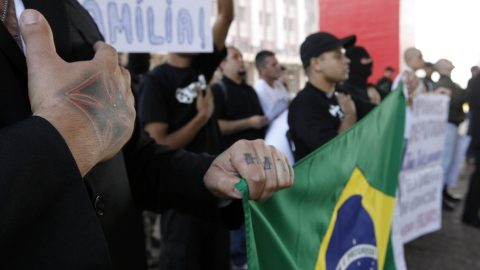
By Raphael Machado | Strategic Culture Foundation | May 5, 2024
On April 26th, it was reported that the Russian embassy in Brazil had received a phone call informing of a bomb presence on the premises. The Military Police of the Federal District was activated and headed to the location to conduct searches.
After several hours of searching, no explosive device was found within or around the embassy. Nevertheless, even if the “alert” was false, the case warrants a deeper investigation, along with reflections on the risks surrounding Russians and “friends of Russia” abroad, given the current geopolitical climate.
In this specific case, despite no explosive device being found, it falls under Brazilian legislation on terrorism, as our laws also encompass the threat of an attack (and mere insinuation constitutes a threat). Hence, “terrorism” is established, regardless of the presence of an actual device at the embassy.
However, it would be imprudent to consider the matter “closed” for several reasons.
Firstly, attention is drawn to the degeneration of the Ukrainian state into a terrorist institutional apparatus, with its security services having been involved in numerous terrorist attacks inside and outside Ukraine.
Ukraine’s degeneration into normalizing terrorism as a state practice accompanies its inability to confront Russia through regular warfare methods. It is predicted that the degradation of the Ukrainian armed forces will be accompanied by a proportional increase in terrorism usage by its security apparatus. Everyone remembers the terrorist attacks that killed Daria Dugina, Vladlen Tatarsky, and the Crocus City Hall attack. Threats to various Russian public figures are constant.
But it is necessary to question whether Ukrainian terrorism (but not only Ukrainian) could extend beyond the Russian-Ukrainian borders and overflow into other nations. Consider, for example, the waves of Russophobia immediately stirred up after the start of the Russian special military operation.
This wave of Russophobia saw not only the cancellation of artistic and academic presentations linked to the Russian World but also physical attacks on some individuals in various countries. Needless to enumerate cases, it suffices to point out that even in Brazil, there were acts of vandalism against Russian Orthodox churches.
To this adds the presence of dozens of Brazilian mercenaries in Ukraine, fighting for Atlanticism. Some of these mercenaries are neo-Nazis, others are neoconservatives, many others are merely useful idiots deceived by unscrupulous influencers on social media. Recently, one of these mercenaries already returned to Brazil, named João Bercle (who, however, according to field information, was never on the front line), stated that Ukraine would “go after” Russians and “defenders of Russia” worldwide, insinuating the possibility of violence fomented, financed, and/or orchestrated from Kiev.
Furthermore, journalist Lucas Leiroz demonstrated in a thread on X that Brazilian President Lula was listed as a “target” on the infamous Myrotvorets website, an authentic “death list” indicating supposed “enemies of Ukraine” to be targeted through terrorist attacks or kidnappings. Many other foreign citizens have also been included on this list.
Well, personalizing the reflection, the author writing this article has indeed received death threats through anonymous accounts on the internet, including threats containing personal information and photos of family members.
Returning, therefore, to the bomb threat at the Russian embassy in Brazil, it is crucial to seriously consider the possibilities, paying attention to future risks.
In any case of such a threat, one must always consider the possibility of it being a troll or a madman or, in general, a person with no specific ideological or collective connections. But the fact that we are in such a geopolitically turbulent period forces us to also insist on other possibilities.
If the origin of the threat is not a troll, then the first suspicion could only fall on Ukrainian security services, such as the SBU and the SZRU, whose involvement in the aforementioned terrorist attacks is at least suspected.
It is notorious that the SBU operates in Brazil, infiltrating the Ukrainian-Brazilian community, which is relatively large, albeit discreet. Years ago, this author learned from a primary source that relatives of Brazilians who fought for the Donbass in Ukraine between 2014-2016 received death threats, with the primary suspicion at the time falling on the SBU.
In this sense, it is evident that the SBU would be the main suspect. And that directly or indirectly.
Indirectly, it is necessary to consider, first of all, Brazilian neo-Nazi groups, most of which have links with analogous organizations in Ukraine and even with the security sectors of that country, such as members of the Misanthropic Division Brazil, especially since some of these Brazilian neo-Nazis fought for the Ukrainian side in the past or went there for training, as reported by the Brazilian mainstream media several times.
The instrumentalization of members of these groups for terrorist attacks against Russian or pro-Russian targets in Brazil would not be particularly difficult. They would require little persuasion and encouragement.
Naturally, if we are still thinking about native Brazilians who could be instrumentalized for this type of terrorism, it would be necessary to observe those who have indeed been engaged in spreading widespread Russophobia and who see Russia as the embodiment of evil.
In this regard, the ferment of neoconservatism and ultraliberalism, proliferated over the last few years in Brazil, with its tendencies toward conspiracy theories, coupled with various behavioral disorders and the possibility of conscious or unconscious cooptation by some intelligence service, opens up the possibility of something in this direction.
Of course, in many of the suspected Ukrainian terrorist actions, some degree of contribution from Western intelligence agencies is suspected.
In this sense, and even considering threats to the President of Brazil, it would be essential to strengthen the counterintelligence work of Brazilian security agencies, as well as to monitor possible connections between neo-Nazi groups or extremist factions of neoconservatism with Ukraine or other intelligence services of NATO countries.
Hamas calls on 18 countries signing hostage release initiative to expose Israel’s crimes
MEMO | April 27, 2024
Rumble blocks Brazil
RT | December 22, 2023
The video sharing service Rumble announced on Friday that it would disable access to all users from Brazil pending its legal challenge of the Brazilian court order to censor certain creators.
Rumble CEO Chris Pavlovski revealed the move in a post on X (formerly Twitter), noting that the court orders clashed with the company’s mission to “restore a free and open Internet.”
“Users with unpopular views are free to access our platform on the same terms as our millions of other users,” Pavlovski wrote. “Accordingly, we have decided to disable access to Rumble for users in Brazil while we challenge the legality of the Brazilian courts’ demands.”
Brazilians who lost their access to Rumble content have only their courts to blame, he added, noting that he hoped the judges would reconsider their decision so that the service could be restored soon.
“I will not be bullied by foreign government demands to censor Rumble creators.”
In a follow-up post, Pavlovski noted that Rumble was “the only company at our scale that holds the line for free speech and American values,” and that he hoped some day other Big Tech companies would do the same. “I will continue to lead by example until that day arrives,” he added.
Journalist Glenn Greenwald, who lives in Brazil and hosts the ‘System Update’ show on Rumble, noted that the Brazilian Supreme Court is “consumed with censoring political speech,” to the point that it banned platforms such as Telegram and WhatsApp for failing to immediately obey their censorship orders.
This is the second time Rumble has suspended service in a country over a censorship row. In November 2022, Pavlovski defied France’s orders to censor certain Russian-language outlets, citing the company’s free speech mission.
Pavlovski, a Canadian tech entrepreneur, founded Rumble in 2013 after seeing YouTube giving priority to influencers after getting acquired by the search engine giant Google. The platform grew in popularity starting in 2020, after a mass purge of dissident voices by Silicon Valley, and continued in 2021 with the influx of US conservatives censored elsewhere.
Brazil not interested in Russia sanctions – ambassador
RT | December 4, 2023
Brazil does not recognize Western sanctions imposed on Russia and is instead looking to increase its business ties with the country, Brasilia’s ambassador to Moscow, Rodrigo de Lima Baena Soares, has said.
In an interview with the RBK news outlet posted on Monday, the diplomat noted that Brazil only recognizes sanctions issued by the UN Security Council, meaning it does not comply with restrictions imposed by some countries on Russia.
Brazil therefore has “normal trade relations” with Moscow and is focused on expanding bilateral commerce, Soares added.
He admitted that sanctions had created “a number of problems” regarding issues of payment, logistics, and insurance, but nonetheless stated that Russia-Brazil bilateral trade had reached record levels.
Given that some countries have stopped trading with Russia, Soares argued it is the ideal time to be “creative to take advantage of the opportunities we have,” suggesting that Russia and Brazil should work to further increase trade turnover.
Moscow has insisted that Western sanctions imposed in response to its military operation in Ukraine have not had the intended effect. Last month, Kremlin spokesperson Dmitry Peskov described the restrictions as “not so painful” for Russia and said they had backfired on those who introduced them.
Russian Foreign Minister Sergey Lavrov has suggested that EU companies have lost at least €250 billion (around $265 billion) due to Western sanctions on Moscow, arguing that even these figures were “very conservative estimates.”
Brazil Censorship Regime: Popular Podcaster Criminally Investigated and Fined $75,000 For Online Speech
By Didi Rankovic | Reclaim The Net | August 5, 2023
One of Brazil’s most popular podcasters, Monark (real name Bruno Monteiro Aiub), is under criminal investigation and has received a fine equivalent to $75,000 for his online conduct.
Critics of the authority’s behavior here – like Brazil-based investigative journalist Glenn Greenwald – see this as a way to completely silence the online personality known as the country’s version of Joe Rogan.
And do this without any due process, as well.
Reports in the Brazilian press say that the decision to fine Monark, whom they refer to as a digital influencer, came from Federal Supreme Court’s Minister Alexandre de Moraes.
Moraes is no stranger to taking an active part in controversial policies and decisions slammed for suppressing free speech on the internet.
In fact, he now has a fairly long history of involvement in this, dating back to the campaign to oust Brazil’s previous president.
In line with this reputation, Moraes’ decision was explained as the podcaster’s failure to comply with a court order, and in addition to the fine, includes blocking his bank account, suspending any new social media accounts, and demonetizing his channels.
In other words, a pretty thorough deplatforming and canceling. And the reason: Moraes says he’s fighting “disinformation” allegedly spread by Monark, as well as his tactic of trying to get his voice heard by creating a new account, once an old one gets banned.
Monark’s defenders, including his lawyer, say that the “crime” he committed is that of having an opinion that is not liked by the government, and that accusations of “instigation of anti-democratic acts” are not true.
On the other hand, the lawyer, Jorge Salomao, notes that in Brazil things like “disinformation and fake news” are not crimes at all, therefore cannot be criminalized, but must be dealt with in civil courts.
Salomao summed the situation up in a statement as, “summarily and unconstitutionally criminalizing thought.”
Meanwhile, Greenwald, who spoke about Monark’s case on his show “System Update,” asserted that censorship is now flourishing in Brazil, illustrated with this example of a podcaster who has over the past couple of years lost the ability to do his job and earn a living.
More than that, Greenwald believes that the West is (ab)using Brazil as a “censorship laboratory, learning how to implement and escalate their totalitarian assault on free expression.”
DC Scholars: Ukraine Conflict Shows World Has Grown Weary of US Hegemony
By Ekaterina Blinova – Sputnik – 24.06.2023
Despite having the largest military budget in the world and being the largest operator of military bases abroad, the US is far from being a global hegemon, argues a DC-based think tank Quincy Institute for Responsible Statecraft.
Over the past decades Washington has demonstrated a capacity for mass destruction – in Korea, Vietnam, Afghanistan, Iraq, Libya and elsewhere – but “it has won no more than Pyrrhic victories” which led to the erosion of trust in Pax Americana both at home and abroad, according to Responsible Statecraft scholars.
The US military spending reached $876.9 billion in 2022, while the nation also operates a whopping 750 foreign military bases. Still, Washington is incapable of persuading the Global South to join anti-Russia sanctions over the latter’s special military operation in Ukraine, the think tank remarks. “If hegemony means the capacity to get other countries to comply with one’s demands, the United States is far from being a global hegemon,” the report notes.
Judging from the so-called Pentagon leak, even some US allies and partners demonstrated hesitance and unwillingness to provide the Kiev regime with shells, jets and armored vehicles. Meanwhile, most nations of the Global South shrugged off the US calls for slapping sanctions on Moscow as contradicting their national interests.
US political observers emphasize that six nations in the Global South – namely, India, Brazil, Turkey, Indonesia, Saudi Arabia, and South Africa – are set to decide the future of geopolitics and insist that the Biden administration needs to win their hearts and minds. At the same time, European commentators argue that developing nations have the right to remain neutral and non-aligned.
For instance, in June 2022, India’s External Affairs Minister Dr S Jaishankar shredded the West’s claim that New Delhi was “sitting on the fence.” According to the minister, India is entitled to its opinion when it comes to the Russo-Ukrainian conflict.
Likewise, the Association of Southeast Asian Nations (ASEAN) has chosen to collaborate with both the US and China, instead of taking sides. Moreover, ASEAN nations are active participants of Beijing’s Belt and Road Initiative (BRI) regardless of Washington’s attempts to maintain its dominance in the region and curb China’s influence in the Asia Pacific.
Per DC scholars, the emerging trend was articulated by Brookings Institution fellow Fiona Hill, former Deputy Assistant to the President of the United States, in May 2023:
“The war in Ukraine is perhaps the event that makes the passing of Pax Americana apparent to everyone. … [Other countries] want to decide, not be told what’s in their interest. In short, in 2023, we hear a resounding no to US domination and see a marked appetite for a world without a hegemon,” she said at a conference in Tallinn, Estonia
According to Hill, the Global South’s resistance to the US and the EU’s demands to slap sanctions on Moscow is nothing short of “an open rebellion.” She noted that “this is a mutiny against what they see as the collective West dominating the international discourse and foisting its problems on everyone else, while brushing aside their priorities on climate change compensation, economic development, and debt relief.”
Western observers also acknowledge that the world’s center of gravity is steadily shifting east, adding that the Biden administration has so far sought to avert this trend by trying to establish “a lasting technological lead over China” and beefing up the US military in Western Pacific.
However, “most developing countries, including emerging powers in the Global South, are no longer willing to make zero-sum choices” between Washington and its geopolitical rivals, DC scholars underscore, urging American policymakers to accept the reality that the US is no longer “the indispensable nation.”
Kiev pressuring Brazil to attend “Peace Summit”
By Lucas Leiroz | June 16, 2023
Kiev continues its work to attract supporters in its campaign against Russia. Now, an aide of president Vladimir Zelensky is pressuring Brazil to take part in the so-called “Global Peace Summit” – an event organized by the regime whose intention will be to unilaterally show the Ukrainian proposal for “peace”, without taking into account Russian interests.
The Head of the Office of the president of Ukraine Andrey Yermak has been speaking to Brazilians in recent days to talk about Ukrainian interest in Brasilia’s participation in a summit organized to promote Kiev’s “peace” proposal. On June 12th, the official spoke to Brazilian journalists linked to CNN and stated that he hopes that Brazil assumes a leadership role in the quest to achieve the “solution” suggested by the regime.
On the occasion, the head of office highlighted the importance of Brazil and other countries of the Global South in the current geopolitical situation and used this argument to suggest that the emerging powers participate actively in the peace dialogue. However, he highlighted what had already been said previously by Ukrainian authorities: no peace proposal that meets Russian interests will be considered by the regime, and it is necessary to unilaterally meet Ukrainian requirements in order to reach any agreement.
During the interview, Yermak also emphasized the role that Brazil plays in what concerns the environmental debate. According to the Ukrainian authorities, Russia is responsible for the (non-existent under international law) crime of “ecocide,” which is why it should be punished and isolated internationally. As evidence of this crime, they point to the recent attack on the Novaya Kakhovka dam, which, according to Ukrainians and Westerners was carried out by Russia. However, until now, nothing substantial has been presented to prove Russian responsibility for the attack, while on the other hand, the Ukrainian military had already stated, months before, that they were planning such an operation.
Two days after the controversial interview for CNN, the Ukrainian aide returned to dialogue with Brazilians, this time with Chief Advisor to the President of the Federal Republic of Brazil Celso Amorim. Both officials had already met before, when Amorim visited Kiev to propose to the Ukrainian authorities the creation of a “peace club” mediated by neutral countries, according to the plan of Brazilian President Lula da Silva. Dialogues around the creation of such group, however, did not develop since Ukraine is only interested in its own “proposals”.
In the telephone call with Amorim, Yermak resumed the points he had already discussed with CNN journalists and emphasized the importance of Brazilian participation in the summit, mainly taking into account environmental factors.
“Of course, we are extremely interested in Brazil’s participation in this summit. We are ready to talk, and it is very important for us to hear your opinion (…) Russia’s destruction of the Kakhovka hydroelectric power plant has shown the extreme relevance of the Ukrainian Peace Formula, in particular the security and environmental clauses”, – he said.
In fact, the Ukrainian attempt to attract support from Brazil and other countries of the Global South is part of a context of seeking legitimacy in the face of global public opinion. Recently, Ukraine’s international image has become increasingly negative, as the regime’s crimes against Russian civilians and undisputed zones of the Federation’s territory have become repeated and undisguised. In addition, the Ukrainian rejection of any attempt at negotiation also worsens the country’s image and makes it clear which side is bellicose and pro-war in this conflict.
With the creation of the “Global Peace Summit”, Kiev plans to show the world that it is really interested in peace and diplomacy. The problem is that obviously “peace” as proposed by the regime does not interest the Russians who will not even be invited to the event, which severely undermines the validity of the Ukrainian proposal. So, as an alternative to try to justify its proposals, Kiev is inviting Brazil and countries from the Global South, thus seeking to improve the acceptability of the event.
In the same sense, by using environmental rhetoric, the neo-Nazi regime is making even more efforts to bring Brazil into the summit, as the South American country has suffered strong international harassment because of the Amazon rainforest, which the US and Europe claim with no evidence that is being destroyed. Yermak hopes to get Brazilian support for the Ukrainian meeting through coercion using ecological arguments, but this plan may also fail.
In 2021, Russia prevented environmental rhetoric from being used against Brazil and other countries of the Global South by vetoing a UN resolution proposed by the West to consider climate change a security issue, which in practice would legitimize international interventions against countries that allegedly violate environmental norms. This would legitimize, for example, Brazil to suffer international intervention in the Amazon. So, in other words, Russia helped Brazil to protect its own sovereignty, making it unlikely that Brasilia will now act against Russia precisely using environmental rhetoric.
The “Peace Summit” is likely to take place, but its results will be insignificant. Peace can only be achieved through an agreement that reflects Russian interests. The countries of the Global South, even if they participate in the event, certainly will not endorse measures that do not attend Russia’s demands.
German FM slammed by Brazilian internet users for comments on Ukraine
By Ahmed Adel | June 14, 2023
German Foreign Minister Annalena Baerbock was severely criticised on Brazilian social media for saying during her official visit to Brazil that poor mothers in the Latin American country do not care about international conflicts because they focus “on the price of rice and beans in the supermarket.”
During her speech at the Getúlio Vargas Foundation in São Paulhhfo, Baerbock suggested that low-income Brazilians would not be concerned about international events as they were focused on guaranteeing their subsistence.
“I would like to say clearly: I fully understand that you here in Latin America perceive the threat of this war differently than we do in Europe, but also question, ‘Where is Ukraine again?’ I fully understand that a mother from Itaquera or Campinas says: ‘For me, the price of rice and beans in the supermarket this week is more important than what happens in a country 11,000 kilometres away’,” said Baerbock.
The reaction was immediate on social media and YouTube channels, with Brazilians applauding the mothers of Itaquera and Campinas for focusing on maintaining life and not sending weapons to sow death.
An article in Folha de São Paulo, in turn, questioned the European commitment to Latin America: “Funny that Europe remembers that Latin America exists only when they are roasting from global warming or are at war. Apart from that, we know very well how they see us.”
Robinson Farinazzo, a Reserve officer of the Brazilian Navy, joined the outrage on his Arte da Guerra channel. He criticised the German minister’s attempt to commit Brazil to the European conflict.
“The West invested $124 billion and gathered a coalition of 28 countries against Russia, sending all kinds of weapons, mercenaries, satellites and, even so, they do not solve the problem. And now they are trying to push the problem to Brazil? Have pity,” said Farinazzo.
“Europe’s problems are not the world’s problems. These stuck-up people, with their noses in the air, have to understand that,” he added.
The reserve officer also noted that Baerbock “left Brazil empty-handed” since she was not even received by Brazilian President Luiz Inácio Lula da Silva or Foreign Minister Mauro Vieira, who was on an official trip to France.
Baerbock fulfilled her agenda in São Paulo and Brasília by meeting with the Secretary General of the Itamaraty (Brazilian Foreign Ministry), Maria Laura da Rocha. The Itamaraty published a joint communiqué expressing commitment to bilateral cooperation and the fight against climate change, demonstrating that Baerbock could not win any concessions from Brazil regarding Ukraine.
During the trip, the German foreign minister called on Brazil to align with Western countries on geopolitical matters, particularly the Ukraine war and China. In return, a closer relationship with Europe was offered. However, this blackmailing is useless since China, and not Germany, is Brazil’s leading trade partner.
“Security and development are not opposites. They depend on each other,” Baerbock said at the Digital Democracy Festival in São Paulo, pointing to the global impact of rising food prices due to the war.
“Let’s reach out and shape a future together that all of us can benefit from,” she added.
The EU-Mercosur trade deal has not been ratified despite being in the works since 1999. Baerbock said at the festival that the main keys to the rapprochement of “like-minded democratic states” would “make it clear that democracies when they work together, can solve global challenges.”
A summit of European, Latin American, and Caribbean leaders on July 17 could invigorate the fruition of the EU-Mercosur trade deal, and it is clear that Baerbock is attempting to leverage this against Brazil so it capitulates and provides aid to Ukraine. However, Brazil is unlikely to be pressured into changing its foreign policy course.
The EU- Mercosur agreement is expected to be signed by the end of this year, whether Baerbock attempts to add unofficial clauses or not. This was effectively confirmed by European Commission President Ursula von der Leyen in her meeting with Lula in Brasília on June 12.
During this meeting, Lula drew attention to the fact that Europe has adopted unilateral laws and rules to impose sanctions on international trade without considering previously established strategic partnerships, as in the case of Brazil. Von der Leyen sidestepped this point and praised Lula, saying he “brought Brazil back to where it belongs – a major global player, a leader in the democratic world.”
In any case, Lula and Brazil do not need platitudes from Germany and the EU. Brazil will instead steer its course without being beholden to any power. This will frustrate the West, but as Latin America’s biggest power, Brazil is responsible for leading by serving its interests first and not the West’s. For this reason, Brasília’s relations with Moscow and Beijing will remain strong despite constant Western pressure.
Ahmed Adel is a Cairo-based geopolitics and political economy researcher.
Brazilian Justice Will Punish Tech Companies That Criticize Government’s Censorship Law
By Christina Maas | Reclaim The Net | May 11, 2023
Brazil’s Supreme Court Justice Alexandre de Moraes, also the president of the country’s Superior Electoral Court, told tech platforms not to campaign against a proposed internet censorship bill.
If they do, he’ll punish them.
Moraes said that the tech companies were undermining Brazil’s democracy.
“The big tech platforms have been challenged and they will be penalized. They will be held accountable, to guarantee the voter’s freedom to vote,” Moraes said, speaking to judges and government employees studying electoral law.
He added that Big Tech platforms, “believe no jurisdiction in the world can oversee them.”
The proposed “Fake News Law” aims to put the responsibility of finding and reporting illegal content on internet platforms.
Non-compliance with the extreme measures would result in fines.
Tech platforms have obviously campaigned against the legislation, claiming it would lead to more censorship.
On Tuesday, Telegram Brazil posted to the Telegram app and said that “democracy is under attack in Brazil,” claiming that the bill would “kill the modern internet” and “put an end to freedom of expression.”
Moraes quickly went further and directly threatened messaging service Telegram with a nationwide ban unless it removed the post on its platform.
Telegram retracted the message and posted a state-ordered message.
Google recently deleted its criticism of the law after the legal threat of fines.
Featured Video
MIT Prof Ted Postol: U.S. Iran Missile War
or go to
Aletho News Archives – Video-Images
Frlom the Archives
Not Ready for the Big Leagues
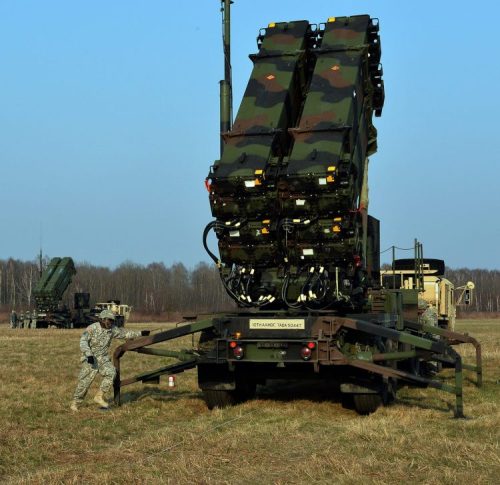
Patriot Missile Launcher
By William Schryver | imetatronink | January 20, 2024
… In an attempt to cover just three large airbases against a series of salvos of 100+ missiles of various types, the entire US stockpile of PAC-3 interceptors could very conceivably be exhausted in little more than a week or two. … continue
Blog Roll
 Aletho News
- MIT Prof Ted Postol: U.S. Iran Missile War
- Unpacking glaring contradictions in US-Zionist justifications for war against Iran
- Iraq and Cuba hit by blackouts amid US pressure and attacks on Iran
- US-Israeli Efforts to Degrade Iran’s Missile Might Failed – Military Researcher
- New American copium: Ghost of Kuwait
- IRGC strikes critical Israeli military sites with Khorramshahr-4 missiles in latest wave
- US racks up billions in losses during first four days of war as Iran pummels key Pentagon assets: Report
- US and Israeli Claims of Depleted Iranian Arsenals are Just Military Propaganda – Expert
- Iran denies attacking Azerbaijan, suggests Mossad involvement
- Iranian Armed Forces say no missile fired from Iran into Turkey
- If Americans Knew
- ‘Dirty Work’ :The truth about how Israel was founded
- Mass Expulsion in Lebanon as Israel Expands War: “We Don’t Know Where to Go”
- Lies, distortions, and propaganda: how the U.S. mainstream media coverage on Iran hides the truth
- Palestinians in Gaza fear famine returning as Israel cuts off food amid Iran war
- AIPAC, other pro-Israel groups enter midterms with $100 million to spend
- Iranian girls killed by ‘double-tap’ strikes on Minab school
- Bari Weiss Is Going Full ‘Propaganda-Palooza’ With the Iran War
- Inside the Pro-Israel Campaign to Stop ‘The Voice of Hind Rajab’ From Winning an Oscar
- After Iran, It’s Turkey
- War rages on Iran, while Israel withholds everything from Gaza – Not a ceasefire Day 146
- No Tricks Zone
- New Study: A Century Warming Of 1.1°C Is ‘Commonplace’ And ‘Not Unusual’ During This Interglacial
- New Study: ‘Internal Noise’ And Volcanic Forcing Can Trigger 10-15°C Warming Within Decades
- Glaciers Worldwide Are Suddendly Surging, Experts Blame Warming!
- Surprising Discovery: Sahara Is Greening…Billions Of Trees Where Once Thought To Be Barren
- New Research Reaffirms Clouds, Aerosols, And Surface Solar Radiation Are ‘Driving The Climate System’
- Germany: Electric Car Catches Fire At Charging Station, Sets Off Local “Inferno”, Widespread Damage
- New Study: Canada’s New Brunswick Was 1°C Warmer Than Today During The Medieval Warm Period
- Coal Power Back In Trend As Globe Tries To Keep Pace With Growing Demand For Power
- New Study: A 4°C Warmer Beaufort Sea Had ‘No Sea Ice’ 11,700 – 8200 Years Ago
- Unfudging The Data: Dutch Meteorological Institute Reinstates Early 20th Centruy Heat Waves It Had Erased Earlier
 Aletho News